Nature Podcast
931 episodes — Page 7 of 19
How to make driverless cars safer — expose them to lots of dangerous drivers
00:46 A new test to get autonomous vehicles on the roadTruly autonomous vehicles, ones that don't require a driver to be present and are driven by AI, aren't yet safe for public use. Part of the reason for this is it has been difficult to train them to deal with rare dangerous situations. Now researchers are unveiling a new approach to present lots of these infrequent events to the AI very rapidly, speeding up the training and testing process.Research Article: Feng et al.News and Views: Hazards help autonomous cars to drive safelyVideo: The driving test for driverless cars08:23 Research HighlightsHow bird-flu is adapting to mammals, and the effect of negative headlines.Research Highlight: Bird-flu virus makes itself at home in Canada’s foxes and skunksResearch Highlight: It’s bad! Awful! Negative headlines draw more readers10:43 Why bat research is taking offBats are known to tolerate a lot of viruses that are deadly to humans without much issue. With the ongoing pandemic, this has driven researchers to dive more into the world of bats in the hopes of applying bats' tolerance to humans. Reporter Smriti Mallapaty has been writing about this renewed interest and she joined us to tell us more.News Feature: Bats live with dozens of nasty viruses — can studying them help stop pandemics? Hosted on Acast. See acast.com/privacy for more information.
How to build a virus-proof cell
00:47 An edited genetic code that prevents viral infectionResearchers have engineered bacteria with synthetic genomes to be immune to viral infection. The team streamlined the bacteria’s genetic code, and re-engineered the protein-producing machinery to insert the wrong amino acid if used by a virus, effectively making the bacteria ‘speak’ a different language to any invaders. It’s hoped that this technique could be used to reduce unwanted sharing of genes from modified organisms.Research article: Nyerges et al.News & Views: Synthetic bacterial genome upgraded for viral defence and biocontainment07:42 Research HighlightsEstimating the methane output of an enormous wetland ecosystem, and how honeybees improve their dance moves with a little help from their elders.Research Highlight: Methane from one of Earth’s largest wetland complexes is set to soarResearch Highlight: Watch them waggle: bees dance better after lessons from elders10:02 How mini-MRI scanners could improve access to imagingMagnetic resonance imaging is a standard technique in clinical care. However many people, particularly those living in low- and middle-income countries have limited access to this technology. To address this, new types of smaller MRI scanners are being designed that are more affordable and practical for use in rural settings or small clinics. We hear from a researcher working on one of these systems about ways improve them and ensure they are available to all.Comment: Five steps to make MRI scanners more affordable to the world18:11 Briefing ChatWe discuss some highlights from the Nature Briefing. This time, how researchers have developed embryos from two male mice and new claims of room-temperature superconductivity.News: The mice with two dads: scientists create eggs from male cellsQuanta Magazine: Room-Temperature Superconductor Discovery Meets With Resistance Hosted on Acast. See acast.com/privacy for more information.
How the Australian wildfires devastated the ozone layer
00:47 Wildfire smoke’s chemical composition enhances ozone depletionSmoke from the devastating Australian wildfires of 2019-2020 led to a reduction in ozone levels in the upper atmosphere, but it’s been unclear how. Now, a team proposes that smoke’s particulate matter can enhance the production of ozone depleting chemicals, matching satellite observations during the Australian fires. The results spark concerns that future wildfires, which are set to grow more frequent with ongoing climate change, will undo much of the progress towards restoration of the ozone layer.Research article: Solomon et al.News & Views: How wildfires deplete ozone in the stratosphere08:27 Research HighlightsA global analysis of bats reveals the species most likely to be hunted by humans, and the stem cells that allow deer antlers to regrow.Research Highlight: Big bats fly towards extinction with hunters in pursuitResearch Highlight: Mice grow ‘mini-antlers’ thanks to deers’ speedy stem cells10:53 Modelling food systems with ‘digital twins’Recent global crises have highlighted the fragility of the interconnected systems involved in getting food from farm to fork. However, siloed datasets have made it hard to predict what the exact impacts of these events will be. In a World View for Nature, researcher Zia Mehrabi argues that precise virtual models like those used in the aerospace industry should be developed for food systems. These so-called ‘digital twins’ could inform global food policy before emergencies unfold.World View: Sims-style ‘digital twin’ models can tell us if food systems will weather crises18:17 Briefing ChatWe discuss some highlights from the Nature Briefing. This time, what the stray dogs of Chernobyl could reveal about the effects of chronic radiation exposure, and the debate surrounding the fate of Pablo Escobar’s ‘cocaine hippos’.News: What Chernobyl’s stray dogs could teach us about radiationNews: Pablo Escobar’s ‘cocaine hippos’ spark conservation rowSubscribe to Nature Briefing, an unmissable daily round-up of science news, opinion and analysis free in your inbox every weekday. Hosted on Acast. See acast.com/privacy for more information.
How an increased heart rate could induce anxiety in mice
00:47 How a racing heart could trigger anxietyAnxiety can make the heart beat faster, but could the reverse be true as well? That question has been much debated, but hard to test. Now, a team has shown that artificially increasing a mouse’s heart rate can induce anxiety-like behaviours, and identified an area in the brain that appears to be a key mediator of this response. They hope that this knowledge could help to improve therapies for treating anxiety-related conditions in the future.Research article: Hsueh et al.News & Views: How an anxious heart talks to the brain08:32 Research HighlightsThe chance discovery of the smallest rock seen so far in the Solar System, and the first brain recording from a freely swimming octopus.Research Highlight: Asteroid photobombs JWST practice shotsResearch Highlight: How to measure the brain of an octopus10:57 How NASA’s DART mission beat expectiationsIn September 2022, NASA’s DART spacecraft smashed into a space rock known as Dimorphos, which orbits a near-Earth asteroid. The aim of the mission was to test whether asteroids could be redirected as a method to protect Earth against future impacts. This week, multiple papers have been published describing what researchers have learnt about the impact and its aftermath. Reporter Alex Witze joined us to round up the findings.News: Asteroid lost 1 million kilograms after collision with DART spacecraftResearch article: Thomas et al.Research article: Daly et al.Research article: Li et al.Research article: Cheng et al.Research article: Graykowski et al.Subscribe to Nature Briefing, an unmissable daily round-up of science news, opinion and analysis free in your inbox every weekday. Hosted on Acast. See acast.com/privacy for more information.
Nature's Take: How Twitter's changes could affect science
Twitter has become indispensable to many scientists. It is a place to share findings, raise their profile, and is even used as a source of data in many studies.In recent months though, the site has been in turmoil after a swathe of policy changes in light of Elon Musk's takeover. Never a stranger to misinformation and abuse, these problems have reportedly gotten worse. Additionally, the ability to use Twitter as a source of data is in peril, and malfunctions are more commonplace.In this episode of Nature's Take we discuss how these changes are affecting the platform and the knock-on effects on science. Hosted on Acast. See acast.com/privacy for more information.
Audio long read: How your first brush with COVID warps your immunity
Imprinting is a quirk of the immune system in which someone’s initial exposure to a virus biases their immune response when they meet the same virus again.Studies are showing how imprinting shapes people’s responses to SARS-CoV-2; those infected with earlier strains can mount weaker responses to a later Omicron infection.This phenomenon is dampening the hope that variant-tailored boosters will markedly reduce transmission of the virus, although researchers agree that variant-tailored boosters are worth getting because they still provide some immunity, and prevent serious illness.This is an audio version of our Feature: How your first brush with COVID warps your immunity Hosted on Acast. See acast.com/privacy for more information.
A twisting microscope that could unlock the secrets of 2D materials
00:45 A new microscope to look for ‘magic’ anglesTo better visualise how electrons are ‘moving’ in materials, a team have developed the Quantum Twisting Microscope. This instrument puts two 2D layers of atoms into close contact, allowing them to interact, which can give useful information about their properties. The microscope can also rotate one of the layers, helping researchers look for so-called ‘magic angles’, where 2D materials like graphene can exhibit extraordinary properties.Research article: Inbar et al.News & Views: A twist in the bid to probe electrons in solids09:55 Research HighlightsHow an extinct insect larvae’s prodigiously long ‘neck’ may have helped it hunt, and surveying the levels at which coastal cities are converting water into land.Research Highlight: Extinct insects hunted like predatory giraffesResearch Highlight: Cities worldwide claw vast amounts of land from the sea12:21 How Russia’s invasion has affected science in UkraineThis week marks the first anniversary of Russia’s invasion of Ukraine. We discuss how science has fared in Ukraine over the past 12 months, and how international collaborations are shaping the future of research in the country.News Feature: The fight to keep Ukrainian science alive through a year of warEditorial: Rebuilding Ukrainian science can’t wait — here’s how to startWorld View: Ukrainian science has survived against the odds — now let’s rebuild together19:52 Briefing ChatWe discuss some highlights from the Nature Briefing. This time, the US Food and Drug Administration’s requirements to increase diversity in clinical trials, and research suggesting that snakes are better listeners than previously thought.Nature News: FDA to require diversity plan for clinical trialsScience Alert: Snakes Can Hear You Better Than You ThinkSubscribe to Nature Briefing, an unmissable daily round-up of science news, opinion and analysis free in your inbox every weekday. Hosted on Acast. See acast.com/privacy for more information.
How 'metadevices' could make electronics faster
00:47 A metadevice for faster electronicsIn the past, increasing the speeds of electronics required designing smaller components, but further reductions in size are being hampered by increasing resistance. To get around this, researchers have demonstrated a ‘metadevice’, which prevents resistance building up by concentrating the flow of signals into specific regions of the device. The hope is that this meta-method could be used to create even smaller electrical components in the future.Research article: Nikoo & Matioli06:27 Research HighlightsHow waiting times for services are higher for people in the US with low incomes, and how your brain hears an alarm while you’re asleep.Research Highlight: Who wastes more time waiting? Income plays a partResearch Highlight: Noise shatters deep sleep thanks to dedicated brain circuit08:52 The research gaps in social media's impact on teen mental healthIn the last ten years, levels of social media use and reported levels of mental health issues among adolescents have both increased. There is much concern that these trends are linked, but hard evidence has been hard to come by. So how can scientists get a better understanding of what’s going on? In a Comment article for Nature, researchers argue that, rather than lumping ‘young people’ into one homogeneous group, future studies should consider where they are in terms of their development, as this could influence the potential impacts of social media use.Comment: How social media affects teen mental health: a missing link19:52 Briefing ChatWe discuss some highlights from the Nature Briefing. This time, we discuss self-burying devices that can plant seeds in remote areas from the air, and scientists’ reactions to a talk by CRISPR-baby researcher He Jiankui.Nature Video: This device corkscrews itself into the ground like a seedNature News: Disgraced CRISPR-baby scientist’s ‘publicity stunt’ frustrates researchers Hosted on Acast. See acast.com/privacy for more information.
This mysterious space rock shouldn’t have a ring — but it does
0:46 The mysterious ring in the distant Solar SystemQuaoar is a small, rocky object that lies beyond Neptune’s orbit. In an unexpected discovery, researchers have shown that this object has its own orbiting ring, similar to those seen encircling planets like Saturn. However, Quaoar’s ring shouldn’t exist, as it is at a distance far outside the theoretical limit at which rings are thought to be stable, and researchers are trying to figure out why.Research article: Morgado et al.News and Views: A planetary ring in a surprising place07:01 Research HighlightsA repurposed skin-disease drug suppresses alcohol consumption in people with alcohol-use disorder, and how volcanic eruptions may have contributed to social unrest in ancient Egypt.Research Highlight: Pill for a skin disease also curbs excessive drinkingResearch Highlight: Volcanic quartet linked to bad times in ancient Egypt09:26 Air pollutionExposure to polluted air has been linked to millions of deaths each year. But while much is known about the sources and impacts of outdoor air pollution, significantly less is understood about the pollution that people are exposed to indoors, despite it causing a significant health burden. In a Comment article for Nature, a group of researchers argue for more research in order to inform future public health initiatives.Comment: Hidden harms of indoor air pollution — five steps to expose them19:52 Briefing ChatWe discuss some highlights from the Nature Briefing. This time, the discovery of a new type of ice, and how caffeine’s kick comes at a cost.Nature News: Scientists made a new kind of ice that might exist on distant moonsThe Conversation: Nope, coffee won’t give you extra energy. It’ll just borrow a bit that you’ll pay for laterSubscribe to Nature Briefing, an unmissable daily round-up of science news, opinion and analysis free in your inbox every weekday. Hosted on Acast. See acast.com/privacy for more information.
How mummies were prepared: Ancient Egyptian pots spill secrets
In this episode:00:47 Chemical analysis of ancient embalming materialsMummification was a significant part of ancient Egyptian culture but, despite decades of research, much is unknown about the substances and methods used during the process. Now a team have analysed the contents of ceramic vessels uncovered in an embalming workshop that dates back to around 600 BC. The results reveal that some substances assumed to be a single thing were actually mixtures, while some came from far outside Egypt, providing a clearer picture of ancient mummification practices.Research article: Rageot et al.News and Views: Recipes for ancient Egyptian mummification09:11 Research HighlightsModelling how fruit wrinkles as it ages, and a trove of ancient animal skulls suggest Neanderthals may have collected hunting trophies.Research Highlight: A chilli’s wrinkles and a cherry’s dimples explainedResearch Highlight: Neanderthals stashed dozens of animal skulls in a cave — but why?11:28 The race to refine CAR-T therapiesCAR-T therapies are a type of cancer immunotherapy in which part of a person’s immune system – their T cells – are engineered to recognise and attack tumours. While these therapies have been shown to be effective at treating certain blood cancers, they are expensive and can have serious side effects. We hear about efforts to tackle these issues and even expand the range of diseases that CAR-T could be used to treat.News Feature: The race to supercharge cancer-fighting T cells19:36 Briefing ChatWe discuss some highlights from the Nature Briefing. This time, why scientists need to agree on what time it is on the Moon, and the liquid-metal robots that can melt and re-form.Nature News: What time is it on the Moon?New Scientist: Metal robot can melt its way out of tight spaces to escapeNature Video: The race to make a variant-proof COVID vaccineSubscribe to Nature Briefing, an unmissable daily round-up of science news, opinion and analysis free in your inbox every weekday. Hosted on Acast. See acast.com/privacy for more information.
Audio long read: The ‘breakthrough’ obesity drugs that have stunned researchers
A new generation of anti-obesity medications are displaying striking results: drastically diminishing weight, without the serious side effects of previous medications.These drugs have raised hopes the weight can be pharmacologically altered in a safe way, but some researchers are concerned about the drugs' high cost, and that these medications could feed into some societies' obsessions with thinness.This is an audio version of our Feature: The ‘breakthrough’ obesity drugs that have stunned researchers Hosted on Acast. See acast.com/privacy for more information.
Amino acid slows nerve damage from diabetes, in mouse study
00:45 The role of serine in diabetic neuropathyNerve damage is a common complication of diabetes, and can even lead to limb amputation. Thus far, the only way for people to slow its onset is by managing their diet and lifestyle. Now though, research in mice shows how the amino acid serine may be key to this nerve damage, suggesting a potential role for the molecule in future therapeutics.Research article: Handzlik et al.News and Views: Serine deficiency causes complications in diabetes06:47 Research HighlightsDNA from chickens is spreading to their wild relatives, and a hidden magma chamber is revealed beneath an underwater volcano.Research Highlight: Chickens’ DNA is fouling the genomes of their wild relativesResearch Highlight: Underwater volcano near Greece is a sleeping menace09:05 Briefing ChatWe discuss some highlights from the Nature Briefing. This time: how the Hubble Telescope is still helping scientists, and the multimillion-dollar trade of paper authorships.Nature News: Why the Hubble telescope is still in the game — even as JWST wowsNature News: Multimillion-dollar trade in paper authorships alarms publishersNature Video: Drowning in seaweed: How to stop invasive SargassumSubscribe to Nature Briefing, an unmissable daily round-up of science news, opinion and analysis free in your inbox every weekday. Hosted on Acast. See acast.com/privacy for more information.
Laser 'lightning rod' diverts strikes high in the Alps
In this episode:00:45 Laser-guided lightningScientists have shown that a specially designed laser can divert the course of lightning strikes in a real-world setting. The team fired the laser into the sky above a communications tower high in the Swiss Alps and altered the course of four strikes. In future they hope that this kind of system could be used to protect large infrastructure, such as airports.Research article: Houard et al.News: This rapid-fire laser diverts lightning strikes09:36 Research HighlightsThe crabs that lean on bacteria to detoxify sulfur from hydrothermal vents, and how a persons’ nasal microbes might exacerbate their hay fever.Research Highlight: Crabs endure a hellish setting — with help from friendsResearch Highlight: Plagued by hay fever? Blame your nasal microbes12:02 Briefing ChatWe discuss some highlights from the Nature Briefing. This time: how “hot mixing” has helped ancient Roman concrete stand the test of time, and the first vaccine for honeybees shows promise.Ars Technica: Ancient Roman concrete could self-heal thanks to “hot mixing” with quicklimeNew York Times: U.S.D.A. Approves First Vaccine for HoneybeesNature Video: 3D printing adds a twist with a novel nozzleSubscribe to Nature Briefing, an unmissable daily round-up of science news, opinion and analysis free in your inbox every weekday. Hosted on Acast. See acast.com/privacy for more information.
The science stories you missed over the past four weeks
In this episode of the Nature Podcast, we catch up on some science stories from the holiday period by diving into the Nature Briefing.We’ll hear: how Brazil’s President Lula has started to make good on his pro-environment promises; a new theory for why giant ichthyosaurs congregated in one place; how glass frogs hide their blood; about a new statue honouring Henrietta Lacks; and why T. rex might have cooed like a dove.Nature News: Will Brazil’s President Lula keep his climate promises?Science News: Mysterious ichthyosaur graveyard may have been a breeding groundThe Atlantic: How Glass Frogs Weave the World’s Best Invisibility CloakBBC News: Statue of Henrietta Lacks will replace Robert E LeeBooks & Arts: The woman behind HeLaEditorial: Henrietta Lacks: science must right a historical wrongNews: Wealthy funder pays reparations for use of HeLa cellsBBC Futures: What did dinosaurs sound like?Subscribe to Nature Briefing, an unmissable daily round-up of science news, opinion and analysis free in your inbox every weekday. Hosted on Acast. See acast.com/privacy for more information.
Science in 2023: what to expect this year
In this episode, reporter Miryam Naddaf joins us to talk about the big science events to look out for in 2023. We'll hear about vaccines, multiple Moon missions and new therapeutics, to name but a few.News: the science events to look out for in 2023 Subscribe to Nature Briefing, an unmissable daily round-up of science news, opinion and analysis free in your inbox every weekday. Hosted on Acast. See acast.com/privacy for more information.
The Nature Podcast’s highlights of 2022
In this episode:00:53 How virtual meetings can limit creative ideasIn April, we heard how a team investigated whether switching from face-to-face to virtual meetings came at a cost to creativity. They showed that people meeting virtually produced fewer creative ideas than those working face-to-face, and suggest that when it comes to idea generation maybe it’s time to turn the camera off.Nature Podcast: 27 April 2022Research article: Brucks & LevavVideo: Why video calls are bad for brainstorming08:29 How the Black Death got its startThe Black Death is estimated to have caused the deaths of up to 60% of the population of Europe. However, the origin of this wave of disease has remained unclear. In June, we heard from a team who used a combination of techniques to identify a potential starting point in modern-day Kyrgyzstan.Nature Podcast: 15 June 2022Research article: Spyrou et al.15:24 Research HighlightsHippos’ habit of aggressively spraying dung when they hear a stranger, and why being far from humans helps trees live a long life.18:36 Higgs boson turns tenTen years ago, scientists announced that they’d found evidence of the existence of the Higgs boson, a fundamental particle first theorised to exist nearly sixty years earlier. We reminisced about what the discovery meant at the time, and what questions are left to be answered about this mysterious particle.Nature Podcast: 06 July 2022Nature News: Happy birthday, Higgs boson! What we do and don’t know about the particle28:28 The open-science plan to unseat big Pharma and tackle vaccine inequityIn this episode of Coronapod we investigated a radical new collaboration between 15 countries — co-led by the WHO, and modelled on open-science — that aims to create independent vaccine hubs that could supply the global south. This project was supported by the Pulitzer Center.Coronapod: 29 July 2022News Feature: The radical plan for vaccine equity40:10 Missing foot reveals world’s oldest amputationIn September, we heard about the discovery of a skeleton with an amputated foot, dated to 31,000 years ago. The person whose foot was removed survived the procedure, which the researchers behind the find say shows the ‘surgeon’ must have had detailed knowledge of anatomy.Nature Podcast: 07 September 2022Research article: Maloney et al.News and Views: Earliest known surgery was of a child in Borneo 31,000 years ago Hosted on Acast. See acast.com/privacy for more information.
The Nature Podcast Festive Spectacular 2022
01:07 “Artemis and Dart”In the first of our festive songs, we celebrate some of the big space missions from this year: Artemis which aims to get people back to the moon, and DART which could help defend the Earth from meteor strikes. 03:51 Redacted Headline challengeIn this year’s festive game, our competitors work together to try and figure out some Nature Podcast headlines where all the words have been removed. Find out how they get on…15:57 Research HighlightsResearch Highlight: Why does fat return after dieting? The microbiome might have a handResearch Highlight: Revealed: massive Maya structures built by vast labour forces18:31 Nature’s 10Every year, Nature’s 10 highlights some of the people who have shaped science. We hear about a few of the people who made the 2022 list.Nature’s 1030:40 “Fairytale of Omicron”In our final song this year, we imagine ourselves in a wintry lab thinking on genetic data from the Omicron variant of coronavirus… Subscribe to Nature Briefing, an unmissable daily round-up of science news, opinion and analysis free in your inbox every weekday. Hosted on Acast. See acast.com/privacy for more information.
COVID deaths: three times the official toll
In this episode:00:47 Estimating pandemic-associated mortalityThis week, a team of researchers working with the World Health Organization have used statistical modelling to estimate the number of excess deaths associated with the COVID-19 pandemic in 2020 and 2021. The work estimates that there were almost 15 million deaths either directly or indirectly attributed to the pandemic, almost three times higher than the official toll.Research article: Msemburi et al.News and Views: Global estimates of excess deaths from COVID-19Editorial: Missing data mean we’ll probably never know how many people died of COVID08:35 Research HighlightsWhy dinosaurs' tail clubs may actually have been used to battle rivals, and the ancient images that make up the earliest known narrative scene.Research Highlight: Dinosaurs bashed each other with built-in tail clubsResearch Highlight: Prehistoric carvings are oldest known story sequence10:55 Understanding the lack of diversity in UK academiaStark figures show that the representation of scientists from minority ethnic groups dwindles at each stage of UK academia. To get a sense of the issue and what can be done to tackle it, we spoke to Mahrukh Shameem, a PhD student and an advocate for equity, diversity and inclusion.News Feature: How UK science is failing Black researchers — in nine stark charts19:43 Briefing ChatWe discuss some highlights from the Nature Briefing. This time, how the text-generating AI OpenGPT could spell the end for student essays, and what the successful test of NASA’s Orion capsule means for the Artemis programme.Nature News: AI bot ChatGPT writes smart essays — should professors worry?Nature News: NASA’s Orion Moon capsule splashes down! Here’s what’s nextSubscribe to Nature Briefing, an unmissable daily round-up of science news, opinion and analysis free in your inbox every weekday. Hosted on Acast. See acast.com/privacy for more information.
Oldest DNA reveals two-million-year-old ecosystem
In this episode:00:45 World’s oldest DNA shows that mastodons roamed ancient GreenlandDNA recovered from ancient permafrost has been used to reconstruct what an ecosystem might have looked like two million years ago. Their work suggests that Northern Greenland was much warmer than the frozen desert it is today, with a rich ecosystem of plants and animals.Research Article: Kjær et al.Nature Video: The world's oldest DNA: Extinct beasts of ancient Greenland08:21 Research HighlightsWhy low levels of ‘good’ cholesterol don’t predict heart disease risk in Black people, and how firework displays affect the flights of geese.Research Highlight: ‘Good’ cholesterol readings can lead to bad results for Black peopleResearch Highlight: New Year’s fireworks chase wild geese high into the sky10:31 Modelling the potential emissions of plasticsWhile the global demand for plastics is growing, the manufacturing and disposal of these ubiquitous materials is responsible for significant CO2 emissions each year. This week, a team have modelled how CO2 emissions could vary in the context of different strategies for mitigating climate change. They reveal how under specific conditions the industry could potentially become a carbon sink.Research Article: Stegmann et al.News and Views: Plastics can be a carbon sink but only under stringent conditionsSubscribe to Nature Briefing, an unmissable daily round-up of science news, opinion and analysis free in your inbox every weekday. Hosted on Acast. See acast.com/privacy for more information.
Gaia Vince on how climate change will shape where people live
In the second episode of Nature hits the books, science writer and broadcaster Gaia Vince joins us to talk about her new book Nomad Century, which looks at how climate change could render large parts of the globe uninhabitable, and how surviving this catastrophe will require a planned migration of people on a scale never seen before in human history.Nomad Century, Gaia Vince, Allen Lane (2022)Music supplied by Airae/Epidemic Sound/Getty images. Hosted on Acast. See acast.com/privacy for more information.
Mysterious fluid from ant pupae helps feed colony
00:45 Inert ant pupae produce a previously unobserved fluidAnt larvae metamorphose into adults by pupating. It was assumed that these inert pupae don’t play a role in the wider ant colony, but a team of researchers have found that they actually secrete a fluid that is consumed by both adult ants and larvae. This fluid is rich in proteins and metabolites, and appears to be an important source of larval nutrition. These secretions have now been seen in the pupae of multiple ant species, suggesting it is an evolutionary ancient behaviour.Research Article: Snir et al.News and Views: A fluid role in ant society as adults give larvae ‘milk’ from pupae07:15 Research HighlightsAncient chefs made bitter plants taste better by soaking and grinding, and an electric fishing-hook attachment that reduces accidental catches of sharks and rays.Research Highlight: Prehistoric rubbish hints that early cooks cared about flavourResearch Highlight: Off the hook: electrical device keeps sharks away from fishing lines09:31 Briefing ChatWe discuss some highlights from the Nature Briefing. This time, how analysing mosquito blood meals could reveal evidence of infection in people and animals, and how prolific data generation has driven the need for new metric unit prefixes.Nature News: Mosquito blood meals reveal history of human infectionsNature News: How many yottabytes in a quettabyte? Extreme numbers get new names Hosted on Acast. See acast.com/privacy for more information.
Audio long read: Science and the World Cup — how big data is transforming football
Big data is playing an increasingly important role in football, with technologies capturing huge amounts of information about players' positions and actions during a match.To make sense of all this information, most elite football teams now employ data analysts plucked from top companies and laboratories. Their insights are helping to steer everything from player transfers to the intensity of training, and have even altered how the game is played.This is an audio version of our Feature: Science and the World Cup: how big data is transforming football Hosted on Acast. See acast.com/privacy for more information.
The satellite-free alternative to GPS
00:45 Precision positioning without satellitesSatellite navigation has revolutionized how humans find their way. However, these systems often struggle in urban areas, where buildings can interfere with weak satellite signals. To counter this, a team has developed an alternative, satellite-free system, which could improve applications that require precise positioning in cities, such as self-driving cars.Research Article: Koelemeij et al.News and Views: Phone signals can help you find your way in cities even without GPS09:19 Research HighlightsHow deforestation is the biggest threat to a rare lemur’s existence, and ultraviolet-activated molecules can kick-start plastic polymerization.Research Highlight: This rare primate will not survive deforestationResearch Highlight: Lights, chemical reaction! Plastics take shape with help from UV light12:16 Briefing ChatWe discuss some highlights from the Nature Briefing. This time, a survey reveals the challenges facing international postgraduate students, and the key takeaways from COP27.Nature Careers: Obstacle race: the barriers facing graduates who study abroadNature News: COP27 climate talks: what succeeded, what failed and what’s nextNew York Times: U.N. Climate Talks End With a Deal to Pay Poor Nations for Damage Hosted on Acast. See acast.com/privacy for more information.
How a key Alzheimer's gene wreaks havoc in the brain
00:46 Artemis 1 is go!NASA’s Artemis 1 mission has successfully reached Earth orbit. After weeks of delays and issues, and a nail biting launch, the rocket marks the first step in a new era of moon exploration, with plans to test a new way to return astronauts to the moon. We caught up with reporter for all-things-space, Alex Witze, for the latest.News: Lift off! Artemis Moon rocket launch kicks off new era of human exploration10:06 Research HighlightsThe unlevel playing field in women’s football, and domed structures provide evidence for a biological origin of stromatolites.Research Article: Okholm Kryger et al.Research Article: Hickman-Lewis et al.12:39 A mechanistic link for an Alzheimer’s geneAlzheimer’s disease is a form of dementia that affects millions of people every year. Whilst the biggest risk factor of late-onset Alzheimer’s is age, there are a number of genes that have been implicated. How exactly these genes underpin this disease is unclear, but new research may now reveal how one of them does so, by affecting the myelination of neurons. The authors hope this work may help uncover treatments for Alzheimer’s.Research Article: Blanchard et al.News and Views: Alzheimer’s risk variant APOE4 linked to myelin-assembly malfunction20:44 Updates from COP27The second week of the 27th UN Climate Change Conference is underway, as policymakers and scientists try to come together to tackle climate change. Flora Graham, senior editor at Nature is in Egypt at the conference and we caught up with her for the latest.News: ‘Actions, not just words’: Egypt’s climate scientists share COP27 hopesNews: Carbon emissions hit new high: warning from COP27Subscribe to Nature Briefing, an unmissable daily round-up of science news, opinion and analysis free in your inbox every weekday. Hosted on Acast. See acast.com/privacy for more information.
Audio long read: She was convicted of killing her four children. Could a gene mutation set her free?
Kathleen Folbigg has spent nearly 20 years in prison after being convicted of killing her four children. But in 2018, a group of scientists began gathering evidence that suggested another possibility for the deaths — that at least two of them were attributable to a genetic mutation that can affect heart function. A judicial inquiry in 2019 failed to reverse Folbigg’s conviction, but this month, the researchers will present new evidence at a second inquiry, which could ultimately spell freedom for Folbigg.This is an audio version of our Feature: She was convicted of killing her four children. Could a gene mutation set her free? Hosted on Acast. See acast.com/privacy for more information.
Molecular cages sift 'heavy' water from near-identical H2O
00:49 Separating heavy water with molecular cagesHeavy water is molecule very similar to H2O but with deuterium isotopes in the place of hydrogen atoms. Heavy water is useful in nuclear reactions, drug design and nutritional studies, but it's difficult to separate from normal water because they have such similar properties. Now, a team have developed a new separation method using tiny molecular cages, which they hope opens up more energy efficient ways to produce heavy water.Research article: Su et al.News and Views: A molecular flip-flop for separating heavy water07:23 Research HighlightsHow dancers can feel the beat even when they can’t hear it, and how climate change might move desert dunes.Research Highlight: Dancers pick up the pace on a bass beat — even though it’s inaudibleResearch Highlight: Desert dunes pose more danger as Earth warms09:25 Monitoring bridge health using crowd dataBridges are vital pieces of infrastructure but their structural health is hard to monitor, requiring either sophisticated sensors or intense surveying by human engineers. Now though, researchers have utilized large amounts of smartphone accelerometer data to check the health of the Golden Gate Bridge. They hope this new technique can be used to effectively and cheaply monitor bridges around the world.Research Article: Matarazzo et al.Communications Engineering special issue: Resilient Infrastructure17:00 COP27 gets underwayThis week the 27th UN Climate Change Conference began, with world leaders, scientists and activists coming together to continue negotiations aimed at reining in global warming. Jeff Tollefson, senior reporter at Nature, joined us to talk about what’s been happening and what to expect, as the conference continues.News: Climate change is costing trillions — and low-income countries are paying the priceNews: As COP27 kicks off, Egypt warns wealthy nations against ‘backsliding’News: COP27 climate summit: what scientists are watchingSubscribe to Nature Briefing, an unmissable daily round-up of science news, opinion and analysis free in your inbox every weekday. Hosted on Acast. See acast.com/privacy for more information.
Audio long read: The controversial embryo tests that promise a better baby
Companies are offering genetic tests of embryos generated by in vitro fertilization that they say allow prospective parents to choose those with the lowest risk for diseases such as diabetes or certain cancers. However, some researchers are concerned about the accuracy and ethics of these tests.This is an audio version of our Feature: The controversial embryo tests that promise a better baby Hosted on Acast. See acast.com/privacy for more information.
Flies can move their rigid, omnidirectional eyes – a little
00:46 How flies can move their eyes (a little)It's long been assumed flies’ eyes don’t move, and so to alter their gaze they need to move their heads. Now, researchers have shown that this isn’t quite true and that fruit flies can actually move their retinas using a specific set of muscles, which may allow them to perceive depth. The team also hope that this movement may provide a window into some of the flies’ internal processes.Research article: Fenk et al.08:54 Research HighlightsHow the 80-year-old wreck of a sunken warship is influencing ocean microbes, and tracing an epilepsy-related gene variant back to a single person from 800 years ago.Research Highlight: A ship sunk during the Second World War still stirs up the seabedResearch Highlight: Families on three continents inherited their epilepsy from a single person11:11 Calls to mandate militaries’ emissions reportingThe eyes of the world will be focused on the UN’s upcoming COP27 conference to see what governments will pledge to do to reduce global emissions. But there’s one sector of countries’ carbon outputs that remains something of a mystery: the emissions of their militaries. We speak to Oliver Belcher, one of a group of researchers who have written a Comment article for Nature, calling for better reporting and greater accountability for these military emissions.Comment: Decarbonize the military — mandate emissions reporting19:07 Briefing ChatWe discuss some highlights from the Nature Briefing. This time: efforts from Middle East countries to cut greenhouse-gas emissions while still supplying fossil fuels; the upcoming demise of NASA’s InSight spacecraft; and new estimates for how long bacteria could survive on Mars.Nature News: The Middle East is going green — while supplying oil to othersNature News: NASA spacecraft records epic ‘marsquakes’ as it prepares to dieNew Scientist: Bacteria could survive just under Mars's surface for 280 million yearsSubscribe to Nature Briefing, an unmissable daily round-up of science news, opinion and analysis free in your inbox every weekday. Hosted on Acast. See acast.com/privacy for more information.
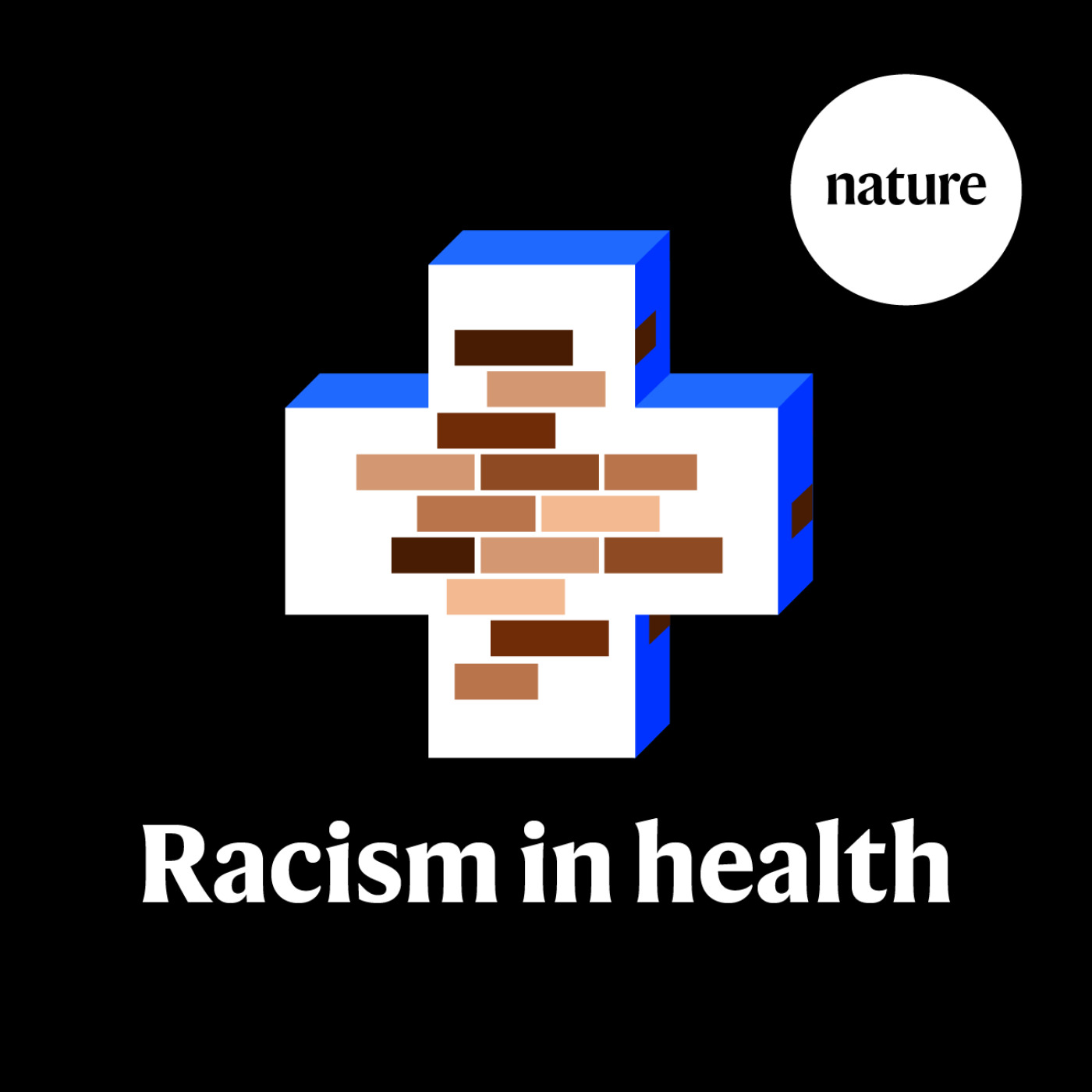
Racism in Health: the harms of biased medicine
When COVID-19 hit it didn't kill indiscriminately. In the US, being Black, Hispanic, or Native American meant you had a much greater risk of death than if you were white. And these disparities are mirrored across the world.In this episode we explore the complex tale behind this disparity. Throughout history, racism and biases have been embedded within medical technology, along the clinicians who use it. Cultural concepts of race have been falsely conflated with biology. The way medicine is taught, has reinforced flawed stereotypes. Disease itself, has been racialised. All of this adds up to barriers to care and worse health outcomes for many people, just because of the colour of their skin.Science and scientists have played an influential part in embedding such racism into medicine But by challenging received wisdom science too has the power to right wrongs, and work towards solutions.Read more of Nature's coverage of racism in science.Click here for our list of sources Hosted on Acast. See acast.com/privacy for more information.
Ancient DNA reveals family of Neanderthals living in Siberian cave
In this episode:00:54 Siberian cave offers first-ever glimpse into Neanderthal familyBy analysing ancient DNA recovered from bone fragments found in two Siberian caves, researchers have identified a set of closely related Neanderthals: a father and daughter, as well as several other more-distant relatives. The work suggests that Neanderthal communities were small, and that females may have left their families to join other groups.Research article: Skov et al.News and Views: The first genomic portrait of a Neanderthal family09:14 Research HighlightsThe robotic falcon that frightens nuisance flocks, and how climate change could lead to power loss in low-income households.Research Highlight: Plagued by problem birds? Call RobotFalcon!Research Highlight: Loss of power looms for some families as climate changes12:32 Briefing ChatWe discuss some highlights from the Nature Briefing. This time, assessing why women are cited less often than men in physics, and uncovering a long-lost star-map from ancient Greece.Science: Women researchers are cited less than men. Here’s why—and what can be done about itNature News: First known map of night sky found hidden in Medieval parchment Hosted on Acast. See acast.com/privacy for more information.
Human brain organoids implanted into rats could offer new way to model disease
In this episode:00:45 Implanted brain organoids could offer new insights into diseaseBrain organoids — lab-grown, self-organizing structures made of stem cells — are used in research to better understand brain development and disease progression. However, these structures lack connections seen in real brains, limiting their usefulness. To overcome this, a team has now transplanted human organoids into the brains of newborn rats, showing that these implanted organoids respond to stimuli and could influence the animals’ behaviour.Research article: Revah et al.News and Views: Human brain organoids influence rat behaviour09:20 Research HighlightsThe subtle timing shift that gives jazz music its ‘swing’, and why hydrogen power could be a cost-effective way to reduce heavy industry emissions in China. Research Highlight: What gives jazz its swing? A delay makes the differenceResearch Highlight: Hydrogen could help China’s heavy industry to get greener11:46 The exoskeleton boot that makes walking more efficientWearable robotic exoskeletons that aid or enhance movement are fast becoming a reality, but there are challenges to overcome — to work best these devices frequently require careful calibration for their user using specialist equipment and time in a lab. Now, a team have created exoskeleton boots that can help people walk faster and more efficiently by learning and adapting to the wearer’s gait as they walk. They hope that this approach could be used to develop personalised assistive devices in the future.Research article: Slade et al.Nature Video: The robot boot that learns as you walkSubscribe to Nature Briefing, an unmissable daily round-up of science news, opinion and analysis free in your inbox every weekday. Hosted on Acast. See acast.com/privacy for more information.
Virtual library of LSD-like drugs could reveal new antidepressants
In this episode:00:46 A virtual chemical library uncovers potential antidepressantsCertain psychedelic drugs are of interest to researchers due to their promising antidepressant effects. To help speed up the discovery of molecules with useful properties, researchers have built a virtual library of 75 million compounds related to these drugs. This approach yielded two molecules that showed antidepressant properties in mice, but without the hallucinogenic activity of psychedelic drugs.Research article: Kaplan et al.Research Briefing: Bespoke library docking for 5-HT2A receptor agonists with antidepressant activity08:25 Research HighlightsResearch suggests that ancient artificial island settlements were hubs of activity for society’s elite, and astronomers spot possibly the most luminous star ever observed.Research Highlight: Ancient DNA suggests that artificial islands were party spots for the eliteResearch Highlight: Scientists face down ‘Godzilla’, the most luminous star known10:42 Nobel NewsFlora Graham from the Nature Briefing joins us to talk about the winners of this year’s Nobel Prizes.Nature News: Geneticist who unmasked lives of ancient humans wins medicine NobelNature News: ‘Spooky’ quantum-entanglement experiments win physics NobelNature News: Chemists who invented revolutionary 'click' reactions win NobelEnter Nature’s ‘Scientist at Work’ photo competition, full details hereSubscribe to Nature Briefing, an unmissable daily round-up of science news, opinion and analysis free in your inbox every weekday. Hosted on Acast. See acast.com/privacy for more information.
Nature's Take: How the war in Ukraine is impacting science
The ongoing war in Ukraine has devastated the global economy, rocked geopolitics, killed thousands of people and displaced millions. Science too has been affected and the impacts on research are being felt more widely than just in Ukraine and Russia.In this episode of Nature's Takes we discuss the war's impact on publishing, international collaborations, climate change and energy, and the destructive impacts on scientists themselves. And as the war continues, we consider the future of science in the face of a new political climate. Hosted on Acast. See acast.com/privacy for more information.
Audio long read: What scientists have learnt from COVID lockdowns
At the beginning of the COVID-19 pandemic, many countries introduced strict lockdowns to help prevent spread of the disease. Since then, researchers have been studying the effects of these measures to help inform responses to future crises.Conclusions suggest that countries that acted swiftly to bring in strict measures did best at preserving lives and their economies, but analysing the competing costs and benefits of lockdowns has been tough, as this work often comes down not to scientific calculations, but value judgements.This is an audio version of our Feature: What scientists have learnt from COVID lockdowns Hosted on Acast. See acast.com/privacy for more information.
A trove of ancient fish fossils helps trace the origin of jaws
In this episode:00:45 Piecing together the early history of jawed vertebratesA wealth of fossils discovered in southern China shed new light onto the diversity of jawed and jawless fish during the Silurian period, over 400 million years ago. Nature editor Henry Gee explains the finds and what they mean for the history of jawed vertebrates like us.Research article: Zhu et al.Research article: Gai et al.Research article: Andreev et al.Research article: Andreev et al.News and Views: Fossils reveal the deep roots of jawed vertebrates09:09 Research HighlightsMice studies help explain why some people with a rare genetic condition have heightened musical abilities, and high-resolution images reveal how bees build honeycomb.Research Highlight: How a missing gene leads to super-sensitivity to soundResearch Highlight: X-rays reveal how bees achieve an engineering marvel: the honeycomb11:27 A lack of evidence in transgender policy makingAround the world, many laws are being proposed – and passed – regarding the rights of transgender people to participate in various aspects of society. We talk to Paisley Currah, who has written a World View for Nature arguing that these policies are frequently not backed up by data, and that policy affecting trans people’s lives needs to take a more evidence-based approach.World View: To set transgender policy, look to the evidenceWatch our video about research trying to crack the nature of consciousness by dosing volunteers with psychedelic drugs and scanning their brains.Subscribe to Nature Briefing, an unmissable daily round-up of science news, opinion and analysis free in your inbox every weekday. Hosted on Acast. See acast.com/privacy for more information.
Huge dataset shows 80% of US professors come from just 20% of institutions
00:46 Inequalities in US faculty hiringIn the US, where a person gained their PhD can have an outsized influence on their future career. Now, using a decade worth of data, researchers have shown there are stark inequalities in the hiring process, with 80% of US faculty trained at just 20% of institutions.Research article: Wapman et al.09:01 Research HighlightsHow wildlife can influence chocolate production, and the large planets captured by huge stars.Research Highlight: A chocoholic’s best friends are the birds and the batsResearch Highlight: Giant stars turn to theft to snag jumbo planets11:42 Briefing ChatWe discuss some highlights from the Nature Briefing. This time, what science says about grieving for a public figure, and why suburban Australians are sharing increasingly sophisticated measures to prevent cockatoos from opening wheelie bins.Nature News: Millions are mourning the Queen — what’s the science behind public grief?The Guardian: ‘Interspecies innovation arms race’: cockatoos and humans at war over wheelie bin raidsSubscribe to Nature Briefing, an unmissable daily round-up of science news, opinion and analysis free in your inbox every weekday. Hosted on Acast. See acast.com/privacy for more information.
Complex synthetic cells bring scientists closer to artificial cellular life
00:46 Synthetic cells made from bacterial bitsFor years researchers have been interested in creating artificial cells, as they could be useful for manufacturing compounds and understanding how life works. Now a new method shows how this can be accomplished using polymer droplets that integrate components of burst bacteria. The synthesised cells are able to perform translation and transcription and have several features that resemble real cells, like a proto-nucleus and a cytoskeleton.Research article: Xu et al.News and Views: Life brought to artificial cells09:33 Research HighlightsA mysterious ancient creature identified from its vomit, and the combination of immunity, diet and bacteria that could protect from metabolic disorders.Research Highlight: The Jurassic vomit that stood the test of timeResearch Highlight: A sugary diet wrecks gut microbes — and their anti-obesity efforts11:42 Briefing ChatWe discuss some highlights from the Nature Briefing. This time, research on the safety of three-person embryos, and the gene that gave our ancestors an edge over neanderthals.Nature News: Embryos with DNA from three people develop normally in first safety studyNature News: Did this gene give modern human brains their edge?Subscribe to Nature Briefing, an unmissable daily round-up of science news, opinion and analysis free in your inbox every weekday. Hosted on Acast. See acast.com/privacy for more information.
Missing foot reveals world’s oldest amputation
00:46 Evidence of ancient surgeryA skeleton with an amputated foot discovered in Borneo has been dated to 31,000 years ago, suggesting that complex surgery might be much older than previously thought. The person whose foot was removed survived the procedure, which the researchers behind the find say shows the ‘surgeon’ must have had detailed knowledge of anatomy, and likely had access to antiseptic compounds.Research article: Maloney et al.News and Views: A surgical dawn 31,000 years ago in Borneo10:12 Research HighlightsMummified reptiles hint at severe drought 250 million years ago, and mapping avalanche risk in remote locations.Research Highlight: Quick-dried Lystrosaurus ‘mummy’ holds clues to mass death in the TriassicResearch Highlight: Avalanches in remote peaks are revealed with old satellites’ aid13:09 Briefing ChatWe discuss some highlights from the Nature Briefing. This time, how extreme heat has likely contributed to Pakistan’s devastating floods, and what the James Webb Space Telescope has revealed about exoplanets so far?Nature News: Why are Pakistan’s floods so extreme this year?Nature News: Webb telescope wows with first image of an exoplanetNature News: Webb telescope spots CO2 on exoplanet for first time: what it means for finding alien lifeSubscribe to Nature Briefing, an unmissable daily round-up of science news, opinion and analysis free in your inbox every weekday. Hosted on Acast. See acast.com/privacy for more information.
Audio long read: Hybrid brains – the ethics of transplanting human neurons into animals
The development of brain chimaeras – made up of human and animal neurons – is an area of research that has hugely expanded in the past five years. Proponents say that these systems are yielding important insights into health and disease, but others say the chimeras represent an ethical grey zone, because of the potential to blur the line between humans and other animals, or to recapitulate human-like cognition in an animal.This is an audio version of our Feature: Hybrid brains: the ethics of transplanting human neurons into animals Hosted on Acast. See acast.com/privacy for more information.
How to make water that's full of holes
In this episode:00:45 How adding pores helps water carry gasAlthough water is an excellent solvent, it’s limited in its ability to dissolve gasses. To overcome this a team have developed ‘porous water’ containing tiny cages that can hold large numbers of gas molecules. The team suggest that this technology could have multiple medical applications, including in the development of artificial blood.Research article: Erdosy et al.News and Views: Suspended pores boost gas solubility in water11:35 Research HighlightsSynthetic ‘nerves’ help mice to walk, and planets orbiting a star that’s due to go supernova.Research Highlight: Stretchy synthetic nerve helps mice give ball a mighty kickResearch Highlight: A massive planet circles a huge star doomed to explode14:16 When did hominins get on their feet?One of humanity's defining characteristics is our ability to walk on two legs. However, when this ability evolved remains a mystery. A paper out this week suggests that the species Sahelanthropus tchadensis was walking on two legs seven million years ago – but others dispute these findings. We hear about the research and the debate surrounding it.News: Seven-million-year-old femur suggests ancient human relative walked uprightResearch article: Daver et al.News and Views: Standing up for the earliest bipedal hominins21:45 Briefing ChatWe discuss some highlights from the Nature Briefing. This time, modelling an enormous, extinct megalodon shark, and a potential way to break down ‘forever chemicals’.The Guardian: Ancient megalodon shark could eat a whale in a few bites, research suggestsNature News: How to destroy ‘forever chemicals’: cheap method breaks down PFASSubscribe to Nature Briefing, an unmissable daily round-up of science news, opinion and analysis free in your inbox every weekday. Hosted on Acast. See acast.com/privacy for more information.
Do protons have intrinsic charm? New evidence suggests yes
00:47 Evidence of a proton’s charmFor decades, scientists have debated whether protons have ‘intrinsic charm’, meaning they contain elementary particles known as charm quarks. Now, using machine learning to comb through huge amounts of experimental data, a team have shown evidence that the charm quark can be found within a proton, which may have important ramifications in the search for new physics.Research article: The NNPDF CollaborationNews and Views: Evidence at last that the proton has intrinsic charm11:26 Research HighlightsHow sea sponges ‘sneeze’ to clean their filters, and why bonobos’ infantile behaviour helps them receive consolation after conflict.Research Highlight: How a sponge ‘sneezes’ mucus: against the flowResearch Highlight: Bonobo apes pout and throw tantrums — and gain sympathy13:52 Briefing ChatWe discuss some highlights from the Nature Briefing. This time, the repeated evolution of the crab body-shape, and why demanding work can lead to mental fatigue.Discover: Evolution Only Thinks About One Thing, and It’s CrabsNature News: Why thinking hard makes us feel tiredSubscribe to Nature Briefing, an unmissable daily round-up of science news, opinion and analysis free in your inbox every weekday. Hosted on Acast. See acast.com/privacy for more information.
Nature's Take: what's next for the preprint revolution
In this first episode of Nature's Take, we get four of Nature's staff around microphones to get their expert take on preprints. These pre-peer-review open access articles have spiked in number over recent years and have cemented themselves as an integral part of scientific publishing. But this has not been without its issues.In this discussion we cover a lot of ground. Amongst other things, we ask whether preprints could help democratise science or contribute to a loss of trust in scientists. We pick apart the relationship between preprints and peer-reviewed journals and tackle some common misconceptions. We ask how preprints have been used by different fields and how the pandemic has changed the game. And as we look to the future, we ask how preprints fit into the discussion around open access and even if they could do away with journals all together. Hosted on Acast. See acast.com/privacy for more information.
Why low temperatures could help starve tumours of fuel
Cold exposure in mice activates brown fat to deny tumours glucose, and the future of extreme heatwaves. 00:45 How cold temperatures could starve tumoursA team of researchers have found that exposing mice to the cold could starve tumour cells of the blood glucose they need to thrive. They showed that the cold temperatures deprived the tumours of fuel by activating brown fat – a tissue that burns through glucose to keep body temperature up. The team also showed preliminary evidence of the effect occurring in one person with cancer, but say that more research is needed before this method can be considered for clinical use.Research article: Seki et al.08:59 Research HighlightsEvidence of the world’s southernmost human outpost from before the Industrial Revolution, and how jumping up and down lets canoes surf their own waves.Research Highlight: Bones and weapons show just how far south pre-industrial humans gotResearch Highlight: How jumping up and down in a canoe propels it forwards11:24 The future of extreme heatwavesClimate scientists have long warned that extreme heat and extreme heatwaves will become more frequent as a result of climate change. But across the world these events are happening faster, and more furiously, than expected, and researchers are scrambling to dissect recent heatwaves to better understand what the world might have in store.News Feature: Extreme heatwaves: surprising lessons from the record warmth Hosted on Acast. See acast.com/privacy for more information.
Massive Facebook study reveals a key to social mobility
00:47 The economic benefits of social connectionsBy looking at data gathered from billions of Facebook friendships, researchers have shown that having more connections with people from higher income groups could increase future incomes by 20%. They also show how such connections can be formed, and how schools and other institutions could help to improve peoples’ opportunities in the future.Research Article: Chetty et al.Research Article: Chetty et al.News and Views: The social connections that shape economic prospectsLink to the data11:06 Research HighlightsHow balloons could help measure quakes on Venus, and the parasitic fungus that tricks flies into mating with fly corpses.Research Highlight: Balloon flotilla detects an earthquake from high in the skyResearch Highlight: The fungus that entices male flies to mate with female corpses13:40 Reviving pig organs hours after deathWhen someone dies, tissues start to irreversibly degrade, but recently this irreversibility has been brought into question by studies showing that some organs can be partially revived several hours after death. Now, working in pigs, researchers have shown it is possible to revive the functions of several organs at once. This could pave the way for improved organ transplantation, but ethicists advise caution.Research Article: Andrijevic et al.News and Views: Improved organ recovery after oxygen deprivationNews: Pig organs partially revived in dead animals — researchers are stunnedSubscribe to Nature Briefing, an unmissable daily round-up of science news, opinion and analysis free in your inbox every weekday. Hosted on Acast. See acast.com/privacy for more information.
Coronapod: the open-science plan to unseat big Pharma and tackle vaccine inequity
Inequity has been a central feature of the COVID19 pandemic. From health outcomes to access to vaccines, COVID has pushed long-standing disparities out of the shadows and into the public eye and many of these problems are global. In this episode of Coronapod we dig into a radical new collaboration of 15 countries - co-led by the WHO, and modelled on open-science. The project, called the mRNA vaccine technology transfer hub, aims to create independent vaccine hubs that could supply the global south, and take on the giants of the pharmaceutical industry in the process. But the road ahead is long - the challenges are complex and numerous, and the odds are stacked against them. But at a time when stakes couldn't be higher, momentum is building and if successful, the tantalising possibility of an end to a dangerous legacy of dependence looms. Can it be done? And if so, what needs to change to make it happen? We ask these questions and more.News Feature: The radical plan for vaccine equityThis project was supported by the Pulitzer Center. Hosted on Acast. See acast.com/privacy for more information.
How humans adapted to digest lactose — after thousands of years of milk drinking
00:45 Working out how the ability to digest milk spreadHumans have been drinking milk for thousands of years, but it seems that they were doing so long before the ability to digest it became prevalent. Then around 2000 years ago, this ability became common in Europe, presenting a mystery to researchers – why then? Now by analyzing health data, ancient DNA, and fats residues from thousands of ancient pots, scientists have worked out what caused this trait to suddenly spread throughout Europe.Research Article: Evershed et al.News and Views: The mystery of early milk consumption in Europe08:56 Research HighlightsHow genes stolen from outside the animal kingdom have altered insects’ abilities, and a dormant black hole beyond the Milky Way gives insights into these objects' origins.Research Highlight: Genes purloined from across the tree of life give insects a boostResearch Highlight: A quiet black hole whispers its origin story11:21 Assessing the addiction potential for therapeutic ketamineKetamine has shown great promise as a fast-acting antidepressant, but there have been concerns about the risks of addiction relating to this therapeutic use. Now, a team have looked in mice to see whether ketamine causes the behavioural and neuronal changes characteristic of addictive substances. They find that ketamine likely has a low addiction risk, which could inform future prescribing decisions in humans.Research article: Simmler et al.News and Views: A short burst of reward curbs the addictiveness of ketamine17:51 Briefing ChatWe discuss some highlights from the Nature Briefing. This time, a report shows a significant decline in Australia’s environment and ecosystems, and how adding a gene greatly increases rice yield.The Conversation: This is Australia’s most important report on the environment’s deteriorating health. We present its grim findingsScience: Supercharged biotech rice yields 40% more grainSubscribe to Nature Briefing, an unmissable daily round-up of science news, opinion and analysis free in your inbox every weekday. Hosted on Acast. See acast.com/privacy for more information.
How researchers have pinpointed the origin of 'warm-blooded' mammals
00:46 When did mammals start to regulate their temperature?The evolution of ‘warm bloodedness’ allowed mammals to live in a more diverse range of habitats, but working out when this occurred has been difficult. To try and pin down a date, researchers have studied the fossilised remains of ancient mammals' inner ears, which suggest that this key evolutionary leap appeared around 230 million years ago.Research Article: Araujo et al.News and Views: Evolution of thermoregulation as told by ear07:14 Research HighlightsA new surgical glue that’s both strong and easy to remove, and southern fin whales return to Antarctica after being hunted to near extinction.Research Highlight: This adhesive bandage sticks strongly — even to hairy skinResearch Highlight: A feeding frenzy of 150 whales marks a species’ comeback09:47 Structure of an enzyme reveals how its so efficientHydrogen dependent CO2 reductase is an enzyme that can convert CO2 from the air into formic acid that can be used as fuel. It also does this extremely efficiently, but nobody has been quite sure how. Now researchers have an idea based on a detailed structural analysis.Research Article: Dietrich et al.17:51 Briefing ChatWe discuss some highlights from the Nature Briefing. This time, the findings of some big biodiversity reports, and how woodpeckers don’t end up with headaches from their pecking.Nature News: More than dollars: mega-review finds 50 ways to value natureNature News: Major wildlife report struggles to tally humanity’s exploitation of speciesScience: Contrary to popular belief, woodpeckers don’t protect their brains when headbanging treesSubscribe to Nature Briefing, an unmissable daily round-up of science news, opinion and analysis free in your inbox every weekday. Hosted on Acast. See acast.com/privacy for more information.
Ancient mud reveals the longest record of climate from the tropics
00:46 A long-term record of climate in the tropicsTo understand the history of the Earth’s climate, researchers often rely on things like ice cores, which contain layered frozen insights of thousands of years of history. However, in the tropics long-term records like these have been absent. Now researchers have uncovered a sediment core in Peru which reveals around 700,000 years of climatic history.Research Article: Rodbell et al.News and Views: Sediment study finds the pulse of tropical glaciers09:40 Research HighlightsThe biological ‘helmets’ that protect shrimp from themselves, and why the colour of wine bottles matters.Research Highlight: ‘Helmets’ shield shrimp from their own supersonic shock wavesResearch Highlight: Why white wine in plain-glass bottles loses its bouquet12:38 The James Webb Space Telescope reveals its first imagesAfter more than two decades of development, the James Webb Space Telescope has broadcast its first images in spectacular detail. We discuss how we got here, what’s next and what these images mean for science.News: Stunning new Webb images: baby stars, colliding galaxies and hot exoplanets21:33 Briefing ChatWe discuss some highlights from the Nature Briefing. This time, we discuss a crystal made out of starfish embryos.Video: How starfish embryos become living crystalsSubscribe to Nature Briefing, an unmissable daily round-up of science news, opinion and analysis free in your inbox every weekday. Hosted on Acast. See acast.com/privacy for more information.
Higgs boson at 10: a deep dive into the mysterious, mass-giving particle
In this Podcast Extra, Nature's Lizzie Gibney and Federico Levi take a deep-dive into the Higgs boson, describing their experiences of its discovery, what the latest run of the Large Hadron Collider might reveal about the particle's properties, and what role it could play in potential physics beyond the standard model.Nature News: Happy birthday, Higgs boson! What we do and don’t know about the particleNature Editorial: Particle physics isn’t going to die — even if the LHC finds no new particles Hosted on Acast. See acast.com/privacy for more information.
Coronapod: detecting COVID variants in sewage
Since early in the pandemic, scientists have searched for signals of SARS-CoV-2 transmission by sampling wastewater. This surveillance method has provided vital information to inform public health responses. But the approach has never been particularly specific - pointing to broad trends rather than granular information such as which variants are spreading where. But now a team from the University of California have created two new tools to sample waste water in much greater detail - and spot variants and their relative concentrations up to two weeks faster than testing-based surveillance methods. In this episode of Coronapod, we discuss the paper and ask how a system like this could help countries around the world respond to the COVID pandemic and beyond.News: COVID variants found in sewage weeks before showing up in tests Hosted on Acast. See acast.com/privacy for more information.