Nature Podcast
931 episodes — Page 12 of 19
Coronapod: Hope and caution greet vaccine trial result, and Trump vs the WHO
01:38 Trump vs the WHOPresident Trump has given the WHO an ultimatum in a tweet, threatening to pull out of the organisation within 30 days unless unclear demands are met. We discuss what this means for the pandemic, the USA and the future of international health cooperation.12:06 Where are we with vaccines?The first results from vaccine trials are in and they are encouraging, but scientists are still urging caution. We hear the lowdown on the types of vaccines being developed and what hope there is of rolling them out any time soon. News: Coronavirus vaccine trials have delivered their first results — but their promise is still unclearNews: The race for coronavirus vaccines: a graphical guideNews: If a coronavirus vaccine arrives, can the world make enough?25:20 One good thingOur hosts pick out things that have made them smile in the last week, including hopeful antibody research, at-home sketch comedy and printable board games.News: Potent human antibodies could inspire a vaccineVideo: Whiskers R we - SNLVideo:The wild affordable world of 1 Player Print’n’Play GamesVideo:MORE of the Very Best Solitaire Print'n'Play GamesVideo: Marble run leagueVideo: BBC goals at home (Only available in the UK)30:04 The latest coronavirus research papersNoah Baker takes a look through some of the key coronavirus papers of the last few weeks.News: Coronavirus research updatesmedRxiv: Saliva is more sensitive for SARS-CoV-2 detection in COVID-19 patients than nasopharangel swabsNature: Effect of non-pharmaceutical interventions to contain COVID-19 in ChinaScience: Changes in contact patterns shape the dynamics of the COVID-19 outbreak in ChinaNew England Journal of Medicine: Hosted on Acast. See acast.com/privacy for more information.
A synthetic eye that 'sees' like a human
This week, crafting an artificial eye with the benefits of a human's, and understanding how disk-galaxies formed by peering back in time.In this episode:00:45 Biomimetic eyeResearchers fabricate an artificial eye complete with a human-like retina. Research Article: Gu et al.; News and Views: Artificial eye boosted by hemispherical retina09:27 Research HighlightsDazzling elephant seals to avoid predation, and helping blind people ‘see’ through brain stimulation. Research Highlight: Mighty seals humbled by prey that flickers and flashes; Research Highlight: Blind people ‘read’ letters traced on their brains with electricity11:36 Early disk-galaxyThere’s an open question about how disk-galaxies form, but now new observations are pointing to an answer, from the very early Universe. Research Article: Neeleman et al.; News and Views: Galaxy disk observed to have formed shortly after the Big Bang17:47 Pick of the BriefingWe pick our highlights from the Nature Briefing, including a HIV ‘vaccine’, and incredibly hardy bacteria. Science: Long-acting injectable drug prevents HIV infections; Quanta Magazine: Inside Deep Undersea Rocks, Life Thrives Without the SunSubscribe to Nature Briefing, an unmissable daily round-up of science news, opinion and analysis free in your inbox every weekday. Hosted on Acast. See acast.com/privacy for more information.
Coronapod: The misinformation pandemic, and science funding fears
With questionable coronavirus content flooding airwaves and online channels, what’s being done to limit its impact? In this episode: 00:57 The epidemiology of misinformationAs the pandemic spreads, so does a tidal wave of misinformation and conspiracy theories. We discuss how researchers' are tracking the spread of questionable content, and ways to limit its impact.News: Anti-vaccine movement could undermine efforts to end coronavirus pandemic, researchers warnNature Video: Infodemic: Coronavirus and the fake news pandemic 17:55 One good thingOur hosts pick out things that have made them smile in the last week, including walks in new places, an update on the Isolation Choir, and a very long music playlist.Video: The Isolation Choir sing What a Wonderful WorldSpotify: Beastie Boys Book Complete Songs22:30 Funding fears for researchersScientists around the world are concerned about the impacts that the pandemic will have on their funding and research projects. We hear from two who face uncertainty, and get an update on the plans put in place by funding organisations to support their researchers.Subscribe to Nature Briefing, an unmissable daily round-up of science news, opinion and analysis free in your inbox every weekday. Hosted on Acast. See acast.com/privacy for more information.
The super-sleuth who spots trouble in science papers, and the puzzle of urban smog
This week, Elisabeth Bik tells us about her work uncovering potential image manipulation, and a new route for particulate pollution formation.In this episode:00:45 Seeing doubleElisabeth Bik spends her days identifying duplicated images in science papers. She tells us about her efforts, and why they’re important. Feature: Meet this super-spotter of duplicated images in science papers; News: Publishers launch joint effort to tackle altered images in research papers08:11 Research HighlightsNew insights on the mysterious Tully Monster, and how football fans can stoke air pollution. Research Highlight: Unmasking the Tully Monster: fossils help to tackle a decades-old mystery; Research Highlight: The meaty link between a city’s football matches and its foul air10:29 Understanding air pollutionParticulate pollution is a serious threat to human health, but the way that new particles form is poorly understood. This week, new research suggests a new mechanism for it to happen. Research article: Wang et al.; News and Views: Airborne particles might grow fast in cities15:09 Pick of the BriefingWe pick some highlights from the Nature Briefing, including the closest discovered black hole to Earth, and how wriggly worms are helping physicists model microscopic processes. National Geographic: Closest black hole to Earth found 'hiding in plain sight'; Physics: Worm ViscositySubscribe to Nature Briefing, an unmissable daily round-up of science news, opinion and analysis free in your inbox every weekday.Other links:Our latest video - Infodemic: Coronavirus and the fake news pandemic Hosted on Acast. See acast.com/privacy for more information.
Coronapod: The dangers of ignoring outbreaks in homeless shelters, plus coronavirus and drug abuse
Outbreaks among those unable to isolate are spreading under the radar. We hear about the researchers scrambling to get a handle on the situation.In this episode:01:02 How is coronavirus spreading in group settings?In order to successfully stop the coronavirus pandemic, researchers have to understand how the virus is spreading among groups unable to isolate. We hear about efforts to uncover levels of infection among homeless populations in the US, and the challenges associated with doing so.News: Ignoring outbreaks in homeless shelters is proving perilous16:49 One good thingOur hosts pick out things that have made them smile in the last week, including a virtual tour of the world, dark humour, and experimental cocktails.Rijksmuseum Masterpieces Up Close20:04 Fears rise at US drug-abuse research instituteNora Volkow is director of the National Institute on Drug Abuse (NIDA). She tells us about her concerns for people living with substance-use disorders during the pandemic, and the damaging effect of lockdowns on NIDA’s research.News: The psychiatrist at the centre of the opioid crisisSubscribe to Nature Briefing, an unmissable daily round-up of science news, opinion and analysis free in your inbox every weekday. Hosted on Acast. See acast.com/privacy for more information.
07 May 2020: Galileo and the science deniers, and physicists probe the mysterious pion
This week, a new way to study elusive subatomic particles - pions, and the story of Galileo remains relevant in a time of modern science denialism.In this episode:00:46 Probing pionsPions are incredibly unstable and difficult-to-study subatomic particles. Now researchers have come up with a clever way to examine them - by sticking them into helium atoms. Research Article: Hori et al.08:28 Research HighlightsA colourful way to cool buildings, and the rapid expansion of cities. Research Highlight: A rainbow of layered paints could help buildings to keep their cool; Research Highlight: Urban sprawl overspreads Earth at an unprecedented speed10:46 The life of GalileoA new biography of Galileo Galilei examines some of the myths about his life and draws parallels with problems facing scientists today. Books and Arts: Galileo’s story is always relevant16:42 Pick of the BriefingWe pick our highlights from the Nature Briefing, including botanical graffiti, and rock-eating bacteria. The Guardian: 'Not just weeds': how rebel botanists are using graffiti to name forgotten flora; Scientific American: Scientists Waited Two and a Half Years to See whether Bacteria Can Eat RockSubscribe to Nature Briefing, an unmissable daily round-up of science news, opinion and analysis free in your inbox every weekday.Other linksVote for us to win a webby! Hosted on Acast. See acast.com/privacy for more information.
Coronapod: What use are contact tracing apps? And new hopes for coronavirus drug remdesivir
The Coronapod team pick through the latest news, plus we hear from the researchers making lemonade out of lockdown lemons.In this episode:01:10 Can contact-tracing apps help?Governments around the world are banking on smartphone apps to help end the spread of the coronavirus. But how effective might these apps might be? What are the risks? And how should they fit into wider public health strategies?Editorial: Show evidence that apps for COVID-19 contact-tracing are secure and effective13:30 Antiviral remdesivir shows promiseEarly results from a US trial of the antiviral drug remdesivir suggest it shortens recovery time for patients with COVID-19. We unpick the findings.News: Hopes rise for coronavirus drug remdesivir16:52 One good thingOur hosts pick out things that have made them smile in the last week, including blooming trust in scientists, cooking experiments, and a neighbourhood coming together to clap for healthcare workers.21:34 Unexpected opportunitiesWe hear from three researchers making the most of lockdown, studying tiny earthquakes, building balcony-based citizen science projects, or enlisting gamers to fight the coronavirus.Fold-it, the protein-folding computer gameVote for us in the 2020 Webby awards!Nature Podcast: Callused feet, and protein-based archaeology Hosted on Acast. See acast.com/privacy for more information.
30 April 2020: A sniff test for consciousness, and how to cut antibiotics use — with vaccines
This week, how the ‘sniff-response’ can help clinicians determine a patient's state of consciousness, and how vaccines could help drive down antibiotic use.In this episode:00:45 Sniffing out consciousnessResearchers have found that the sniff reflex can indicate whether a patient is in a vegetative state, and even the likelihood that they will recover consciousness. Research Article: Arzi et al.08:37 Research HighlightsThe stupefying effect of carbon dioxide, and a chameleon gemstone that tricks your eyes. Research Highlight: Rising carbon dioxide levels will make us stupider; Research Highlight: How a chameleon gemstone changes from red to green11:12 Vaccination and antibiotic usageLooking at data from low- and middle-income countries, researchers have determined that vaccination could prevent millions of infections currently treated by antibiotics. Research Article: Lewnard et al.16:49 Pick of the BriefingWe pick our highlights from the Nature Briefing, including the forgotten mother of climate change science, and a new global study on insect declines. Chemistry World: Eunice Foote: the mother of climate change; Science: Meta-analysis reveals declines in terrestrial but increases in freshwater insect abundancesSubscribe to Nature Briefing, an unmissable daily round-up of science news, opinion and analysis free in your inbox every weekday.Other linksShamini’s latest video on a newly discovered Spinosaurus skeleton, which suggests that it had a fin-like tail that would have helped it swim and hunt.We've been nominated for a Webby award! You can vote for us here. Hosted on Acast. See acast.com/privacy for more information.
Coronapod: The race to expand antibody testing
Benjamin Thompson, Noah Baker, and Amy Maxmen discuss the role of antibody tests in controlling the pandemic, and how public-health spending could curtail an economic crisis. Also on the show, the open hardware community's efforts to produce medical equipment.In this episode:02:08 Betting on antibodiesAntibody tests could play a key role in understanding how the virus has spread through populations, and in ending lockdowns. We discuss concerns over their reliability, how they could be used, and the tantalising possibility of immunity.News: The researchers taking a gamble with antibody tests for coronavirus10:25 Economy vs public health, a false dichotomyJim Yong Kim, former president of the World Bank, argues that strong investment in public health is crucial to halt the ongoing pandemic and to prevent a global financial crisis. We discuss his work with US governors to massively increase contact tracing, and his thoughts on how researchers can help steer political thinking.News Q&A: Why the World Bank ex-chief is on a mission to end coronavirus transmission19:00 One good thing this weekOur hosts talk about staying positive, and pick a few things that have made them smile in the last 7 days, including a tiny addition to the team, a newspaper produced by children in lockdown, and a gardening update.Six Feet of Separation, the newspaper staffed by kids22:51 Open hardwareResearchers are stepping up efforts to design and produce ventilators and personal protective equipment for frontline medical staff. We hear how the open hardware movement is aiding these efforts, and the regulations that teams need to consider if their designs are to make it into use.Technology Feature: Open science takes on the coronavirus pandemicSubscribe to Nature Briefing, an unmissable daily round-up of science news, opinion and analysis free in your inbox every weekday. Hosted on Acast. See acast.com/privacy for more information.
23 April 2020: Denisovan DNA in modern Europeans, and the birth of an unusual celestial object
This week, evidence of ancient hominin DNA in modern human genomes, and the origin of a snowman-shaped object at the edge of the solar system.In this episode:00:45 Intermixing of ancient homininsBy combing through the DNA of over 27,000 modern day Icelanders, researchers have uncovered new insights about the ancient hominin species who interbred with Homo sapiens. Research Article: Skov et al.08:05 Research HighlightsThe scent of lemur love, a hidden Viking trade route, and ‘gargantuan’ hail. Research Highlight: Lemurs’ love language is fragrance; Research Highlight: Vikings’ lost possessions mark a long-hidden early trade route; Research Highlight: Enormous hailstones inspire a new scientific size category: ‘gargantuan’11:44 The origin of ArrokothIn 2019, the New Horizon Spacecraft took images of Arrokoth - an unusual, bi-lobal object found in the Kuiper belt. Now, researchers believe they’ve figured out how it formed. Research Article: Grishin et al.17:29 Pick of the BriefingWe pick some highlights from the Nature Briefing. This week we discuss why the Universe may be lopsided, and why water could actually be two different liquid states. Scientific American: Do We Live in a Lopsided Universe?; Chemistry World: The weirdness of waterSubscribe to Nature Briefing, an unmissable daily round-up of science news, opinion and analysis free in your inbox every weekday. Hosted on Acast. See acast.com/privacy for more information.
Coronapod: Troubling news
Benjamin Thompson, Noah Baker, and Amy Maxmen discuss Trump withholding funds from the WHO, and how COVID-19 kills. We also hear about controlling misinformation while communicating risk.In this episode:01:15 Understanding bottlenecksAfter listening to last week's episode of Coronapod, researchers in the USA were inspired to start collecting data about the challenges facing labs carrying out testing. After more than 4,000 responses to their online survey, we discuss their goals.03:08 A hole in the WHO’s fundingUS President Donald Trump has announced plans to withhold funding for the WHO, pending a review of the organization’s handling of the pandemic. We discuss the decision and ask what it means for the global response to COVID-19.News: Nature's rolling coronavirus news blog05:55 Responding to the immune systemWe investigate the role of the immune system in the death of COVID-19 patients and what this could mean for treatments. Could some therapeutics actually be undermining the body’s ability to fight the virus?News: How does COVID-19 kill? Uncertainty is hampering doctors’ ability to choose treatments13:54 One good thing this weekOur hosts pick out things that have made them smile in the last 7 days, including seasonal memories from Sierra Leone, a trip to the supermarket, and the 99-year old war veteran who has raised millions for charity.BBC News: Coronavirus: Capt Tom Moore's NHS fundraiser hits £17m18:33 Communicating complex dataClearly communicating risks and evidence is key for governments and other organisations if they are to best inform the public during the pandemic. But what is the best way to do it? We hear the methods that communications experts and behavioural scientists recommend to keep the public informed, and keep misinformation at bay.Subscribe to Nature Briefing, an unmissable daily round-up of science news, opinion and analysis free in your inbox every weekday. Hosted on Acast. See acast.com/privacy for more information.
Coronapod: An untapped resource
Benjamin Thompson, Noah Baker, and Amy Maxmen discuss the labs struggling to get involved in diagnostic testing, and should you be wearing a mask?In this episode:02:07 A drive to diagnoseMany research labs are pivoting from their normal work to offer diagnostic testing for COVID-19. We discuss how to go about retooling a lab, the hurdles researchers are facing and why, in some cases, tests are not being taken up.News: Thousands of coronavirus tests are going unused in US labs14:18 Masking the issue?There has been conflicting advice on whether people should wear masks to protect themselves during the pandemic. We look at some of the take home messages from the debate.Research article: Leung et al.News: Is the coronavirus airborne? Experts can’t agree18:36 One good thing this weekOur hosts pick out things they’ve seen that have made them smile in the last 7 days, including a local superhero, and a caring choir who have release their first song.Reuters: Spider-Man to the rescue! Superhero jogger cheers kids in EnglandVideo: The Isolation Choir sing Wild Mountain Thyme22:08 Accelerating vaccine developmentAround the world, research groups are rushing to create a vaccine against the coronavirus. We hear about one group’s effort, and how vaccine development is being sped up, without sacrificing safety steps.News: If a coronavirus vaccine arrives, can the world make enough? Subscribe to Nature Briefing, an unmissable daily round-up of science news, opinion and analysis free in your inbox every weekday. Hosted on Acast. See acast.com/privacy for more information.
09 April 2020: A plastic-recycling enzyme, and supercooled molecules
This week, a new enzyme speeds up the breakdown of plastic bottles, and a method to cool molecules to a fraction above absolute zero.In this episode:01:18 A PET recycling enzymeResearchers have engineered an enzyme that effectively breaks down the plastic PET into its constituent monomers. This could allow for more complete recycling of bottles and clothes. Research Article: Tournier et al.06:41 Research HighlightsThe shocking lengths humans will go to to satisfy their curiosity, and the reasons for elevated methane emissions at Oktoberfest. Research Highlight: Humans opt to brave electric shock to satisfy their curiosity; Research Highlight: Munich’s Oktoberfest is a real gas09:15 Supercool moleculesResearchers have used a technique called ‘collision cooling’ to chill molecules to a few millionths of a degree above absolute zero, which could allow observations of difficult-to-study quantum mechanics. Research Article: Son et al.14:46 Research HighlightsNeither supermassive, nor super small, the mystery of the elusive intermediate sized black-hole has been solved. Research Highlight: Elusive middle-weight black hole is caught shredding a star Subscribe to Nature Briefing, an unmissable daily round-up of science news, opinion and analysis free in your inbox every weekday. Hosted on Acast. See acast.com/privacy for more information.
Coronapod: Ramping up responses
Benjamin Thompson, Noah Baker, and Amy Maxmen discuss the latest on the British response, and what low- and middle-income countries have done to prepare for the pandemic.In this episode:01:33 Testing in the UKThis week, the UK health secretary announced plans to further ramp up testing for COVID-19, with the aim of preforming 100,000 tests a day in England by the end of April. We discuss these plans and why testing remains a key weapon in the fight against the virus.11:37 Pandemic preparation in poorer countriesCOVID-19 cases have started to be reported in many low- and middle-income countries. We hear how a few of these nations are preparing and what might happen if these efforts fail.News article: How poorer countries are scrambling to prevent a coronavirus disaster26:43 One good thing this weekAs our hosts end another week of working from home, they pick out things they’ve seen that have made them smile in the last 7 days.Video: Samuel L. Jackson reads Stay the F*** at homeEvening Standard: Medical fetish site says it's giving scrubs to NHS hospital amid coronavirus crisisNPR: U.K. Family's Lockdown-Themed Rendition Of 'Les Mis' Is A Delight Twitter: Patrick Stewart reads one of Shakespeare’s sonnets each day28:54 The effect of the COVID-19 outbreak on research animalsWith stay-at-home orders in effect in many parts of the world, scientists are making difficult decisions to safeguard the welfare of their lab animals. We hear from one researcher who plans to care for his fruit flies at home, and another who has had to euthanize many of the mouse colonies used in his institution’s research.News: Cull, release or bring them home: Coronavirus crisis forces hard decisions for labs with animalsSubscribe to Nature Briefing, an unmissable daily round-up of science news, opinion and analysis free in your inbox every weekday. Hosted on Acast. See acast.com/privacy for more information.
02 April 2020: Dating an ancient hominid skull, and an ancient Antarctic rainforest
This week, reassessing the age of the ‘Broken Hill skull’, and unearthing evidence of an ancient forest near the South Pole.In this episode:01:25 A skull’s place in historyAfter nearly a century scientists believe they’ve finally pinned down an age for the ‘Broken Hill skull’ hominid specimen. Research Article: Grun et al.07:44 Research HighlightsA simple way to detect early signs of cancer, and 3D printed soft brain implants. Research Highlight: A blood test finds deadly cancers before symptoms start; Research Article: Yuk et al.09:51 Ancient Antarctic rainforestDigging deep below the sea-floor, researchers have uncovered evidence of a verdant forest that existed on Antarctica around 90 million years ago. Research Article: Klages et al.15:47 Research HighlightsWalking more, regardless of the intensity, may improve health. Research Highlight: More steps a day might keep the doctor awaySubscribe to Nature Briefing, an unmissable daily round-up of science news, opinion and analysis free in your inbox every weekday. Hosted on Acast. See acast.com/privacy for more information.
Coronapod: Old treatments and new hopes
Benjamin Thompson, Noah Baker, and Amy Maxmen discuss efforts to develop treatments for COVID-19.In this episode:02:00 A push for plasmaIn New York, hospitals are preparing to infuse patients with the antibody-rich blood plasma of people who have recovered from COVID-19. This approach has been used during disease outbreaks for over a century and we discuss how it works, and how effective is might be.We also talk about how drug trials for potential treatments are progressing, how scientists are pulling together, and what COVID-19 outbreaks on cruise ships are telling epidemiologists.News article: How blood from coronavirus survivors might save lives; News article: What the cruise-ship outbreaks reveal about COVID-1918:44 Switching focusIn the wake of the outbreak, academics are coming together to meet the challenge of the pandemic. We speak to an immunologist and a bioengineer who have changed their research focus and are putting their expertise into action.Subscribe to Nature Briefing, an unmissable daily round-up of science news, opinion and analysis free in your inbox every weekday. Hosted on Acast. See acast.com/privacy for more information.
25 March 2020: Ultra-fast electrical switches, and computing heart health
This week, a speedy, yet simple switch, and a video-based AI helps assess heart health.In this episode:01:57 Speedy switchesResearchers have developed an ultra-fast electrical switch that they hope can be used in communication and imaging applications. Research Article: Nikoo et al.08:14 Research HighlightsUsing sound to estimate glacial retreat, and building a dodgier drone. Research Highlight: Underwater microphones listen as as glacier retreats; Research article: Falanga et al.10:32 Algorithmic heart diagnosisScientists have developed a new algorithm which calculates the amount of blood pumped by the heart beat by beat. Research Article: Ouyang et al.; News and Views: AI tracks a beating heart’s function over timeSubscribe to Nature Briefing, an unmissable daily round-up of science news, opinion and analysis free in your inbox every weekday. Hosted on Acast. See acast.com/privacy for more information.
Podcast Extra: Rosamund Pike on portraying Marie Curie
Radioactive is a new biopic on Marie Skłodowska Curie with Rosamund Pike taking on the role of Curie. This Podcast Extra is an extended version of reporter Lizzie Gibney's interview with Rosamund, in which they talk about stepping into the shoes of the scientific giant. Hosted on Acast. See acast.com/privacy for more information.
Coronapod: “Test, test, test!”
In the first of our new podcast series, Benjamin Thompson, Noah Baker, and Amy Maxmen discuss the epidemiology needed to control the Covid-19 outbreak.In this episode:03:57 Testing timesCase numbers of Covid-19 have leapt around the world in recent days, but how many undetected cases are out there? We talk about the urgent need to deploy two of the cornerstones of effective epidemiology – testing and contact tracing – and discuss why these measures aren’t being rolled out worldwide.News article: Scientists exposed to coronavirus wonder: why weren’t we notified?; News article: South Korea is reporting intimate details of COVID-19 cases: has it helped?; News explainer: What China’s coronavirus response can teach the rest of the world14:23 Global governance in the wake of Covid-19The International Health Regulations (IHR) were set up to help countries prepare for, and respond to, public-health emergencies. Rebecca Katz, a health security researcher specialising in emerging infectious diseases, tells us how the IHR are holding up during the Covid-19 outbreak.Worldview: Pandemic policy can learn from arms control Subscribe to Nature Briefing, an unmissable daily round-up of science news, opinion and analysis free in your inbox every weekday. Hosted on Acast. See acast.com/privacy for more information.
19 March 2020: Rosamund Pike in Radioactive, and the resurgence of Russian science
This week, we speak to Rosamund Pike about her experience portraying Marie Skłodowska Curie, and we find out how science in Russia is changing after years of decline.In this episode:01:43 RadioactiveBritish actor Rosamund Pike tells us about her new film, and her experience of portraying double Nobel-Laureate Marie Curie. Arts Review: Marie Curie biopic should have trusted pioneer’s passion10:17 Research HighlightsThe neural circuitry involved in stopping, and a jelly-like substance that cleans paintings. Research Highlight: A neural highway to human motor control; Research article: Mastrangelo et al.12:27 Russian scienceDecades after the collapse of the Soviet Union, Russian science may be having a revival. News Feature: Russia aims to revive science after era of stagnation; Editorial: The price of Russia–China research collaborationsSubscribe to Nature Briefing, an unmissable daily round-up of science news, opinion and analysis free in your inbox every weekday. Hosted on Acast. See acast.com/privacy for more information.
Podcast Extra: Coronavirus - science in the pandemic
In this Podcast Extra, we hear from epidemiologists, genomicists and social scientists about how they're working to tackle the coronavirus and what they've learned so far. Hosted on Acast. See acast.com/privacy for more information.
Long Read Podcast: Are feelings more than skin deep?
Research in the 1960s and 1970s suggested that emotional expressions – smiling when happy, scowling when angry, and so on – were universal. This idea stood unchallenged for a generation.But a new cohort of psychologists and cognitive scientists are revisiting the data. Many researchers now think that the picture is a lot more complicated, and that facial expressions vary widely between contexts and cultures.This is an audio version of our feature: Why faces don’t always tell the truth about feelings, written by Douglas Heaven and read by Kerri Smith. Hosted on Acast. See acast.com/privacy for more information.
12 March 2020: An ancient bird trapped in amber, and life beneath the ocean floor
This week, a newly discovered bird species from the time of the dinosaurs, and microbes hundreds of metres below the ocean floor.In this episode:00:44 A tiny, toothy, ancient birdResearchers have found a perfectly preserved bird fossil trapped in amber, with some rather unusual features.The paper covered in this podcast has been retracted. New evidence suggests that the specimen might actually be a lizard, and not a bird-like dinosaur. Read more in this article. https://www.nature.com/articles/d41586-020-02214-7 The retracted paper can be found here: https://www.nature.com/articles/s41586-020-2068-4 08:09 Research HighlightsDental hygiene in the time of the Vikings, and wildebeest bones feed an African ecosystem. Research Article: Bertilsson et al; Research Article: Subalusky et al.10:21 Deep sea lifeScientists have uncovered traces of life 750m below the ocean’s surface. Research article: Li et al.17:31 News ChatUpdates on the Coronavirus outbreak, and peer review in predatory journals. News: Coronavirus: latest news on spreading infection; News: Labs rush to study coronavirus in transgenic animals — some are in short supply Hosted on Acast. See acast.com/privacy for more information.
05 March 2020: Ultrafast machine vision, and quicker crystal creation
This week, improving computers’ image identification, and a new method for growing crystals.00:44 Upgrading computer sightResearchers have designed a sensor that allows machines to assess images in nanoseconds. Research Article: Mennel et al.; News and Views: In-sensor computing for machine vision06:51 Research HighlightsCalorie restriction’s effects on rat cells, and the dwindling of sandy seashores. Research Highlight: Old age’s hallmarks are delayed in dieting rats; Research Highlight: Sandy beaches are endangered worldwide as the climate changes08:53 Crafting crystalsTo understand the structure of materials, researchers often have to grow them in crystal form. A new method aims to speed up this process. Research article: Sun et al.14:48 News ChatCoronavirus outbreak updates, and climate change’s role in the Australian bush fires. News: Coronavirus: latest news on spreading infection; News: Climate change made Australia's 'unprecedented' bushfires 30% more likely Hosted on Acast. See acast.com/privacy for more information.
Backchat: Covering coronavirus
In this edition of Backchat we take a deep dive into Nature's coverage of coronavirus. As cases climb, what are some of the challenges involved in reporting on the virus? Hosted on Acast. See acast.com/privacy for more information.
27 February 2020: Mapping fruit flies’ neural circuitry, and perfecting the properties of metallic glass
This week, the brain pathways of egg laying in fruit flies, and preventing fractures in metallic glass.In this episode:00:46 Working out the wiring behind fruit fly behaviourResearchers have identified a neural circuit linking mating and egg laying in female fruit flies. Research Article: Wang et al.06:01 Research HighlightsAncient, cave-dwelling cockroaches, and hairy moths dampen sound. Research Highlight: Cockroaches preserved in amber are the world’s oldest cave dwellers; Research Highlight: Stealth flyers: moths’ fuzz is superior acoustic camouflage07:57 Making better metallic glassMetallic glasses have many desirable properties, but these materials are prone to fracturing. Now, a new manufacturing process may have overcome this issue. Research article: Pan et al.; News and Views: Metallic glasses rejuvenated to harden under strain13:47 News ChatCoronavirus outbreak updates, a survey shows Indian bird numbers are in decline, and the genomes of New York rats. News: Coronavirus: latest news on spreading infection; News: Hundreds of bird species in India are declining; News: Genomes reveal how New York City’s rats thrive in the urban jungle Hosted on Acast. See acast.com/privacy for more information.
Podcast Extra: ‘There is lots of anxiety’: a scientist’s view from South Korea
In recent days, the number of coronavirus cases have surged in South Korea.In this Podcast Extra Nick Howe speaks to Bartosz Gryzbowski, a researcher based in the Ulsan National Institute of Science and Technology, which is just 60km away from epicentre of the South Korean outbreak. He explains how the outbreak has affected his research and what the atmosphere is like there at the moment. Hosted on Acast. See acast.com/privacy for more information.
20 February 2020: Improving battery charging, and harnessing energy from the air
This week, machine learning helps batteries charge faster, and using bacterial nanowires to generate electricity from thin air.In this episode:00:46 Better battery chargingA machine learning algorithm reveals how to quickly charge batteries without damaging them. Research Article: Attia et al.07:12 Research HighlightsDeciphering mouse chit-chat, and strengthening soy glue. Research Highlight: The ‘silent’ language of mice is decoded at last; Research Article: Gu et al.09:21 Harnessing humidityA new device produces electricity using water in the air. Research Article: Liu et al.16:30 News ChatCoronavirus outbreak updates, the global push to conserve biodiversity, and radar reveals secrets in an ancient Egyptian tomb. News: Coronavirus: latest news on spreading infection; News: China takes centre stage in global biodiversity push; News: Is this Nefertiti’s tomb? Radar clues reignite debate over hidden chambers Hosted on Acast. See acast.com/privacy for more information.
13 February 2020: The puzzling structures of muddled materials, and paving the way for the quantum internet
This week, uncovering the structure of materials with useful properties, and quantum entanglement over long distances.In this episode:00:45 Analysing Prussian bluesAnalogues of the paint pigment Prussian blue are used in a variety of chemical processes. Now, researchers have uncovered their atomic structure. Research Article: Simonov et al.; News and Views: Ordered absences observed in porous framework materials08:17 Research HighlightsTeenagers’ natural sleep cycles impact on academic performance, and an extinct, giant rodent with a surprisingly tiny brain. Research Highlight: A teenager’s body clock can ring in school success; Research Highlight: Giant extinct rodent was all brawn and little brain10:49 Distant entanglementResearchers have demonstrated quantum entanglement between two points separated by 50 km of fibre optic cables. Research Article: Yu et al.17:17 News ChatThe latest on the coronavirus outbreak, and gene editing gets an upgrade. News: Coronavirus: latest news on spreading infection; News: Super-precise CRISPR tool enhanced by enzyme engineering Hosted on Acast. See acast.com/privacy for more information.
06 February 2020: Out-of-office emails and work-life-balance, and an update on the novel coronavirus outbreak
This week, how setting an out-of-office email could help promote a kinder academic culture.In this episode:00:47 Being truly out of officeLast year, a viral tweet about emails sparked a deeper conversation about academics’ work-life-balance. Could email etiquette help tip the balance? Careers Article: Out of office replies and what they can say about you09:35 Research HighlightsFinding the ‘greenest’ oranges, and the benefits of ‘baby talk’. Research Article: Bell and Horvath; Research Highlight: Babies benefit when Mum and Dad are fluent in ‘baby talk’12:06 News ChatUpdates on the novel coronavirus, assessing Iran’s nuclear capabilities, and the potential impacts of Brexit on UK research. News: Coronavirus: latest news on spreading infection; News: How quickly can Iran make a nuclear bomb?; News: Brexit is happening: what does it mean for science? Hosted on Acast. See acast.com/privacy for more information.
30 January 2020: Linking Australian bushfires to climate change, and Asimov's robot ethics
This week, establishing the role of climate change in Australian bushfires, and revisiting Isaac Asimov’s ethical rules for robots.In this episode:00:46 Behind the bushfiresResearchers are working to establish the role that climate change is playing in the bushfires that are raging across Australia. News Feature: The race to decipher how climate change influenced Australia’s record fires; Editorial: Australia: show the world what climate action looks like10:02 Research HighlightsThe debate around how Vesuvius claimed its victims, and an ancient mummy speaks. Research Highlight: Vitrified brains and baked bones tell the story of Vesuvius deaths; Research Article: Howard et al.12:21 Asimov’s legacyThis year marks the centenary of Isaac Asimov’s birth. We reflect on the impact of his writing on the field of robotics. Essay: Isaac Asimov: centenary of the great explainer21:00 News ChatThe latest on a new virus from Wuhan in China, and social scientists' battle with bots. News: Coronavirus: latest news on spreading infection; News: Social scientists battle bots to glean insights from online chatter Hosted on Acast. See acast.com/privacy for more information.
23 January: How stress can cause grey hair, and the attitude needed to tackle climate change
This week, why stress makes mice turn grey, and how to think about climate change.In this episode:00:45 Going greyAnecdotal evidence has long suggested stressas a cause of grey hair. Now, a team of researchers have showed experimental evidence to suggest this is the case. Research Article: Zhang et al.; News & Views: How the stress of fight or flight turns hair white08:39 Research HighlightsAncient bones suggest that giant ground sloths moved in herds,plus an atomic way to check for whiskey fakes. Research Highlight: A bone bed reveals mass death of herd of giant ground sloths; Research Highlight: Nuclear-bomb carbon unmasks fraudulent luxury whisky10:40 Climate optimismTo tackle climate change, the former UN secretary for climate change argues that the biggest change needs to be mindset. Comment: Paris taught me how to do what is necessary to combat climate change18:09 News ChatThe latest on a new virus from Wuhan in China, and insights from ancient African genomes. News: China virus latest: first US case confirmed; Research Article: Lipson et al. Hosted on Acast. See acast.com/privacy for more information.
16 January 2020: Strange objects at the centre of the galaxy, and improving measurements of online activity
In this episode: 00:45 Observing the centre of the galaxyResearchers have uncovered a population of dust-enshrouded objects orbiting the supermassive black hole at the centre of the galaxy.Research Article: Ciurlo et al. 06:34 Research HighlightsA London landmark’s height lends itself to a physics experiment, and generous behaviour in parrots. Research Highlight: An iconic structure in London moonlights as a scientific tool; Research Highlight: Parrots give each other gifts without promise of reward 09:00 The human ‘screenome’ projectTo understand the effects of online media consumption, researchers argue that the way it’s measured needs to change. Comment: Time for the Human Screenome Project 17:26 News ChatA decline in human body temperature, and a new report on research culture. News: Not so hot: US data suggests human bodies are cooling down; News: Stressful, aggressive, damaging: huge survey reveals toils of scientists’ working lives Hosted on Acast. See acast.com/privacy for more information.
09 January 2020: A look ahead at science in 2020
In this episode of the podcast, Nature reporter Davide Castelvecchi joins us to talk about the big science events to look out for in 2020. Hosted on Acast. See acast.com/privacy for more information.
01 January 2020: Our reporters’ top picks of 2019
In this special round-up episode of the Nature Podcast, our reporters choose their favourite podcast piece of 2019.In this episode:00:33 A sole sensationA study of people who do and don't wear shoes looks into whether calluses make feet less sensitive. Nature Podcast: 26 June 2019; Research article: Holowka et al.; News and Views: Your sensitive sole08:56 The make up of the far side of the MoonInitial observations from the first lander to touch down on the far side of the Moon. Nature Podcast: 15 May 2019; Research article: Li et al.15:43 Growth MindsetHow a one hour course could improve academic achievement. Nature Podcast: 07 August 2019; Research article: Yeager et al.27:44 ‘Manferences’Nature investigates the prevalence of conferences where most of the speakers are male. Nature Podcast: 11 September 2019; News Feature: How to banish manels and manferences from scientific meetings34:02 Q&A with Nobel Prize winner John GoodenoughWe talk to John Goodenough, who was jointly awarded the 2019 Nobel Prize in Chemistry for his role in the development of the lithium-ion battery. Podcast Extra: 09 October 2019 Hosted on Acast. See acast.com/privacy for more information.
Nature PastCast, December 1920: The Quantum Theory
This year, Nature celebrates its 150th birthday. To mark this anniversary we’re rebroadcasting episodes from our PastCast series, highlighting key moments in the history of science.In this episode, we’re heading back to the early twentieth century, when physicists had become deeply entangled in the implications of the quantum theory. At its smallest scales was the world continuous? Or built of discrete units? It all began with Max Planck. His Nobel Prize was the subject of a Nature news article in 1920.This episode was first broadcast in December 2013.From the archiveNature 16 December 1920 Hosted on Acast. See acast.com/privacy for more information.
Podcast Extra: From climate lawyer to climate activist
2019 will likely go down as a pivotal year for public discourse on climate change. It was the year of Greta Thunberg, the climate school strikes, and Extinction Rebellion. The global activist movement has gained support from a range of influential people, including renowned environmental lawyer Farhana Yamin.In this Podcast Extra, Nature's Chief Opinion Editor Sara Abdulla meets with Farhana to discuss why she ditched resolutions in favour of activism. This is an extended version of an interview originally broadcast in September.Comment: Why I broke the law for climate change Hosted on Acast. See acast.com/privacy for more information.
Podcast Extra: Epigenetics
As part of Nature's 150th anniversary celebrations, Nick Howe dives into the topic of epigenetics.Since its origin in 1942, the term 'epigenetics' has been repeatedly defined and redefined. There's always been hype around the field, but what actually is epigenetics and how much does it influence our genes?In this Podcast Extra, Nick Howe speaks to Edith Heard, Director General of the EMBL, and Giacomo Cavalli, from the Institute of Human Genetics, to guide us through these questions and find out about the history and future of epigenetics. Hosted on Acast. See acast.com/privacy for more information.
19 December 2019: The three-body problem, and festive fun
We’ve launched our 2019 listener survey. We want to know what you think of the show to help us make a great podcast. You can find the survey here. Thanks!This week, a solution to a centuries-old physics problem, and holiday shenanigans.In this episode:00:51 Disentangling three bodiesResearchers have been working to unpick a problem that has stumped scientists since the 1600s. Research Article: Stone and Leigh08:50 Frosty the SnowmanThe first of our festive science songs, about how a certain snowman is faring under climate change. Scroll to the transcript section below for the lyrics.11:00 Festive quiz showOur reporters battle it out to be crowned as this year’s quiz champion. Can they describe some of the top news headlines without saying certain important words? We find out.19:21 Carol of M87Our second song is about the Event Horizon Telescope collaboration’s imaging of the supermassive black hole at the centre of the M87 galaxy. Scroll to the transcript section below for the lyrics.20:33 News ChatWe hear about some of the people on Nature’s 10 this year. Feature: Nature’s 10: Ten people who mattered this year30:00 Rockin’ Around SupremacyFor our final song, we hark back to October, when Google claimed to have achieved quantum supremacy. Scroll to the transcript section below for the lyrics.TRANSCRIPTFrosty the Snowman lyrics:Frosty the Snowman was a jolly, happy soulBut the smile wore off as the globe got hot‘Cause the world used too much coal.Frosty the Snowman is a fairy tale they sayHe was made of snowBut the kids won’t know ‘cause it’s them who have to pay.Gonna’ need some magic toConvince the world to stop‘Cause now we’re running out of timeAnd he’s feeling mighty hot.Oh, Frosty the Snowman, is endangered as could beAnd the children say they wish he’d stay,But they don’t trust you and me.He led them down the streets of townRight to the climate COP.They gathered there, and Greta staredAnd together hollered “STOP”.Frosty the Snowman, had to hurry on his wayBut he said we should do all that we couldFor to change our dirty ways.Frosty the Snowman, knew the time to act was nowSo the girls and boys said make some noiseAnd we’ll get a change somehowCarol of M87 lyrics:Hark at the soundPhotons aboundRadio wavesAll seem to sayOut in the darkThis glowing sparkWe find our goalSee a black hole.(M) M Eight-se’en(Eight) As it was then(tee) eons ago(se’en) See it aglowData from theseObservatriesProcessed to giveThe first imageOne seems to seeWith EHTFire in a ringLight circlingEinstein was right,Warped is the light,See the lensingBending the ring.Now-we see-a supermassive black hole. (M – eigh-ty- se’en)How-we see-a supermassive black hole. (M – eigh-ty-se’en)(M) Space time is bent(Eight) See this event(tee) Horizon burn(ee) So... Hosted on Acast. See acast.com/privacy for more information.
Long Read Podcast: How to save coral reefs as the world warms
Research groups around the world are exploring new ways of protecting coral reefs from climate change.This is an audio version of our feature: These corals could survive climate change — and help save the world’s reefs, written by Amber Dance and read by Kerri Smith. Hosted on Acast. See acast.com/privacy for more information.
12 December 2019: Social priming, and acoustic science
We recently launched our 2019 listener survey. We want to hear your views on the show to help us make it even better, so please help us by filling in the survey, thanks!In this episode:00:45 What’s next for social priming?How might a branch of psychological research move forward in the face of replication failures? News Feature: What’s next for psychology’s embattled field of social priming08:55 Research HighlightsKiller-whale grandmothers help their grandchildren survive, and the failed voyage of a reproduced ancient raft. Research Highlight: Why female orcas make killer grandmas; Research Highlight: On a model ancient raft, seafarers are up the current without a paddle11:12 The sounds of scienceWe hear the latest updates from the Acoustical Society of America's recent conference.18:44 News ChatReassessing when civilisations moved to modernity, and understanding exoplanets. News: When did societies become modern? ‘Big history’ dashes popular idea of Axial Age; News: European space telescope to launch new era of exoplanet science Hosted on Acast. See acast.com/privacy for more information.
05 December 2019: Genomic sequencing and the source of solar winds
We recently launched our 2019 listener survey. We want to hear your views on the show to help us make it even better. You can find the survey here. Thanks!In this episode: 00:45 The GenomeAsia 100k projectResearchers have released the first data from an ambitious project to sequence the genomes of 100,000 people from populations across Asia. Research Article: GenomeAsia100K Consortium 08:56 Research HighlightsBare riverbanks make meanders move, and human activity affects picky penguins. Research Highlight: The meandering rivers that speed across barren landscapes; Research Highlight: Climate change splits two penguin species into winners and losers 11:18 Curbing the rise in genetic surveillanceConcerns are growing around the use of commercial DNA databases for state-level surveillance. Comment: Crack down on genomic surveillance 20:02 News ChatNASA’s Parker Solar Probe has sent back the most detailed information yet about the birthplace of solar wind. News: Sun-bombing spacecraft uncovers secrets of the solar wind Hosted on Acast. See acast.com/privacy for more information.
Nature Pastcast, November 1869: The first issue of Nature
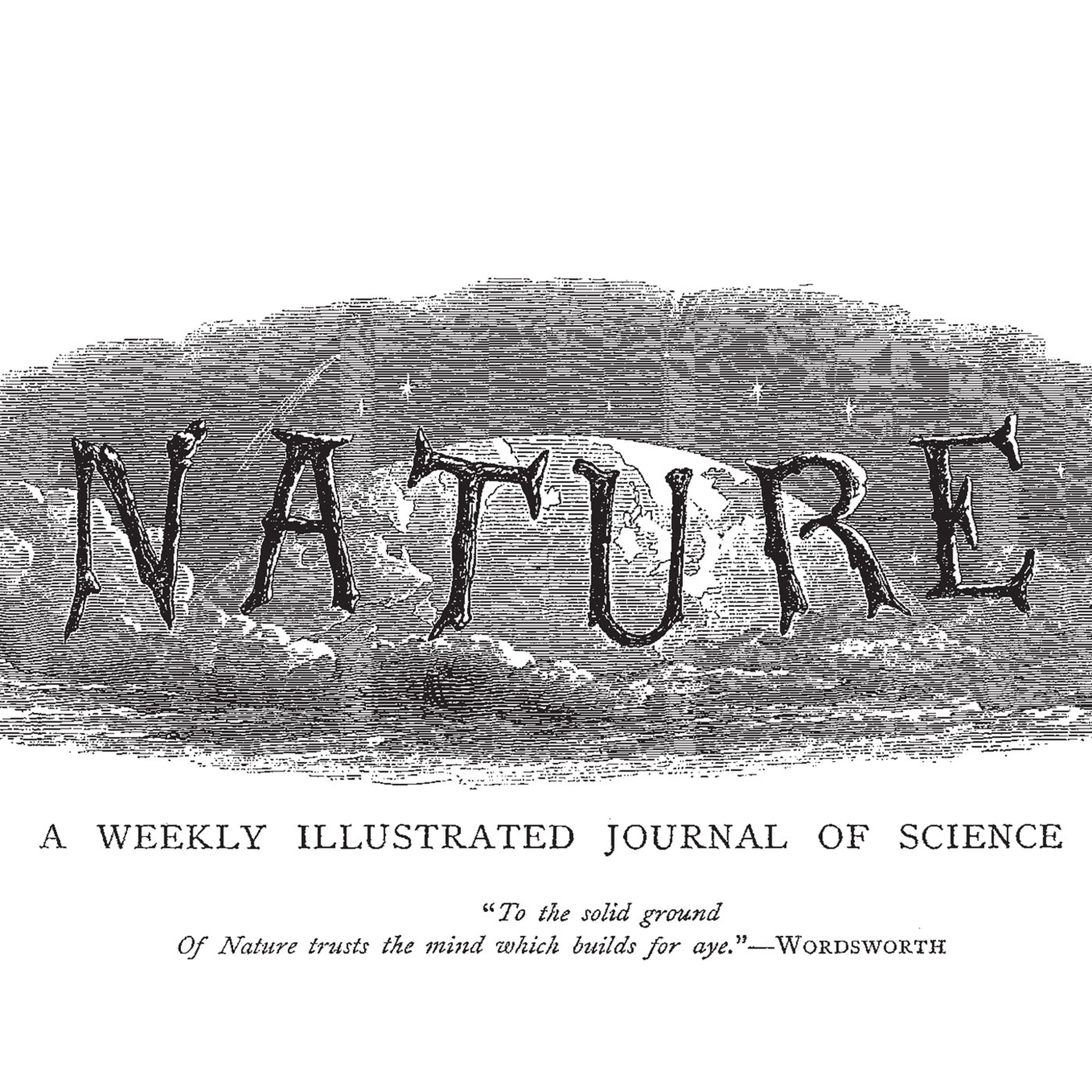
This year, Nature celebrates its 150th birthday. To mark this anniversary we’re rebroadcasting episodes from our PastCast series, highlighting key moments in the history of science.In this episode, we’re heading back to 4 November 1869, when Nature’s story began. The first issue of the journal looked very different from the way it does now and, to the dismay of the editor, it was not immediately popular. In this podcast, we hear how Nature began, and how it became the journal it is today.From the archiveNature 4 November 1869 Hosted on Acast. See acast.com/privacy for more information.
28 November 2019: Nature’s 2019 PhD survey, and older women in sci-fi novels
This week, delving into the results of the latest graduate student survey, and assessing ageism in science fiction literature. Hosted on Acast. See acast.com/privacy for more information.
21 November 2019: A new antibiotic from nematode guts, grant funding ‘lotteries’, and butterfly genomes
This week, an antibiotic that targets hard-to-treat bacteria, and a roundup of the latest science news.In this episode:00:49 Discovering darobactinResearchers looked inside nematode guts and have identified a new antibiotic with some useful properties. Research Article: Imai et al.05:45 Research HighlightsUsing urine as a health metric, and sniffing out book decay with an electronic nose. Research Article: Miller et al.; Research Article: Veríssimo et al.07:54 News ChatAdding an element of chance to grant funding, a continental butterfly-sequencing project, and tracking endangered animals via traces of their DNA. News: Science funders gamble on grant lotteries; News: Every butterfly in the United States and Canada now has a genome sequence; News: Rare bird’s detection highlights promise of ‘environmental DNA’ Hosted on Acast. See acast.com/privacy for more information.
14 November 2019: A rapid, multi-material 3D printer, and a bacterium’s role in alcoholic hepatitis
This week, a new 3D printer allows quick shifting between many materials, and understanding the link between gut microbes and liver disease.00:46 A new dimension for 3D printersA new nozzle lets a 3D printer switch between materials at a rapid rate, opening the door to a range of applications. Research Article: Skylar-Scott et al.; News and Views: How to print multi-material devices in one go08:07 Research HighlightsThe slippery secrets of ice, and cells wrapping up their nuclei. Research Highlight: Viscous water holds the secret to an ice skater’s smooth glide; Research Highlight: Super-thin layer of ‘bubble wrap’ cushions a cell’s nucleus10:17 Linking bacteria to liver diseaseResearchers have isolated a bacterial strain that appears to play an important role in alcoholic liver disease. Research paper: Duan et al.; News and Views: Microbial clues to a liver disease17:10 News Chat‘Megaconstellations’ of satellites concern astronomers, and a report on the gender gap in chemistry. News: SpaceX launch highlights threat to astronomy from ‘megaconstellations’; News: Huge study documents gender gap in chemistry publishing Hosted on Acast. See acast.com/privacy for more information.
Backchat: Nature's 150th anniversary
This week marks 150 years since the first issue of Nature was published, on 4 November 1869. In this anniversary edition of Backchat, the panel take a look back at how the journal has evolved in this time, and discuss the role that Nature can play in today's society. The panel also pick a few of their favourite research papers that Nature has published, and think about where science might be headed in the next 150 years.Collection: 150 years of Nature Hosted on Acast. See acast.com/privacy for more information.
07 November 2019: The fossil of an upright ape, science in 150 years, and immunization progress around the world
This week, insights into the evolution of walking upright, how science needs to change in the next 150 years, and the unfinished agenda for vaccines.In this episode:00:50 Early ape locomotionThe discovery of a fossil of a new species of ape gives new insights on how bipedalism may have evolved. Research Article: Böhme et al.; News and Views: Fossil ape hints at how walking on two feet evolved; News: Fossil ape offers clues to evolution of walking on two feet07:24 Research HighlightsWomen lacking olfactory bulbs can somehow still smell, and telling whiskies apart through evaporation patterns. Research Highlight: The women who lack an odour-related brain area — and can still smell a rose; Research Highlight: Bourbon or Scotch? A droplet’s dynamics reveal the truth09:44 How should science evolve?This year is Nature’s 150th anniversary. Science has made huge strides during this time, but what needs to change to continue this progress for the next 150 years? Comment: Science must move with the times17:52 The state of vaccination in 2019Researchers assess the differences in immunization levels worldwide and identify the bottlenecks in developing new vaccines. Research article: Piot et al.23:54 News ChatAn AI figures out the sun’s place in the Solar System, and reassessing the size of the proton. News article: AI Copernicus: Neural network ‘discovers’ that Earth orbits the Sun; News: Puzzle over size of proton leaps closer to resolution Hosted on Acast. See acast.com/privacy for more information.
Nature Pastcast, October 1993: Carl Sagan uses Galileo to search for signs of life
This year, Nature celebrates its 150th birthday. To mark this anniversary we’re rebroadcasting episodes from our PastCast series, highlighting key moments in the history of science.In the early 1990s, a team of astrophysicists led by Carl Sagan looked at data from the Galileo spacecraft and saw the signatures of life on a planet in our galaxy. Historian of science David Kaiser and astrobiologists Charles Cockell and Frank Drake discuss how we can tell if there is life beyond the Earth – and how optimism, as well as science, is necessary for such a venture.This episode was first broadcast in October 2013. Hosted on Acast. See acast.com/privacy for more information.
31 October 2019: An AI masters the video game StarCraft II, and measuring arthropod abundance
This week, a computer beats the best human players in StarCraft II, and a huge study of insects and other arthropods.In this episode:00:45 Learning to playBy studying and experimenting, an AI has reached Grandmaster level at the video game Starcraft II.Research Article: Vinyals et al.; News Article: Google AI beats experienced human players at real-time strategy game StarCraft II10:08 Research HighlightsA record-breaking lightning bolt, and identifying our grey matter’s favourite tunesResearch Highlight: Here come the lightning ‘megaflashes’; Research Highlight: Why some songs delight the human brain12:24 Arthropods in declineResearchers have surveyed how land-use change has affected arthropod diversity. Research article: Seibold et al.18:30 News ChatYoung Canadians file a lawsuit against their government, an Alzheimer’s drug gets a second chance, and South Korean efforts to curb a viral epidemic in pigs. News: Canadian kids sue government over climate change; News: Fresh push for ‘failed’ Alzheimer’s drug; News: South Korea deploys snipers and drones to fend off deadly pig virus Hosted on Acast. See acast.com/privacy for more information.