
National Parks Traveler Podcast
394 episodes — Page 4 of 8
S5 Ep 229National Parks Traveler Podcast | The American Buffalo
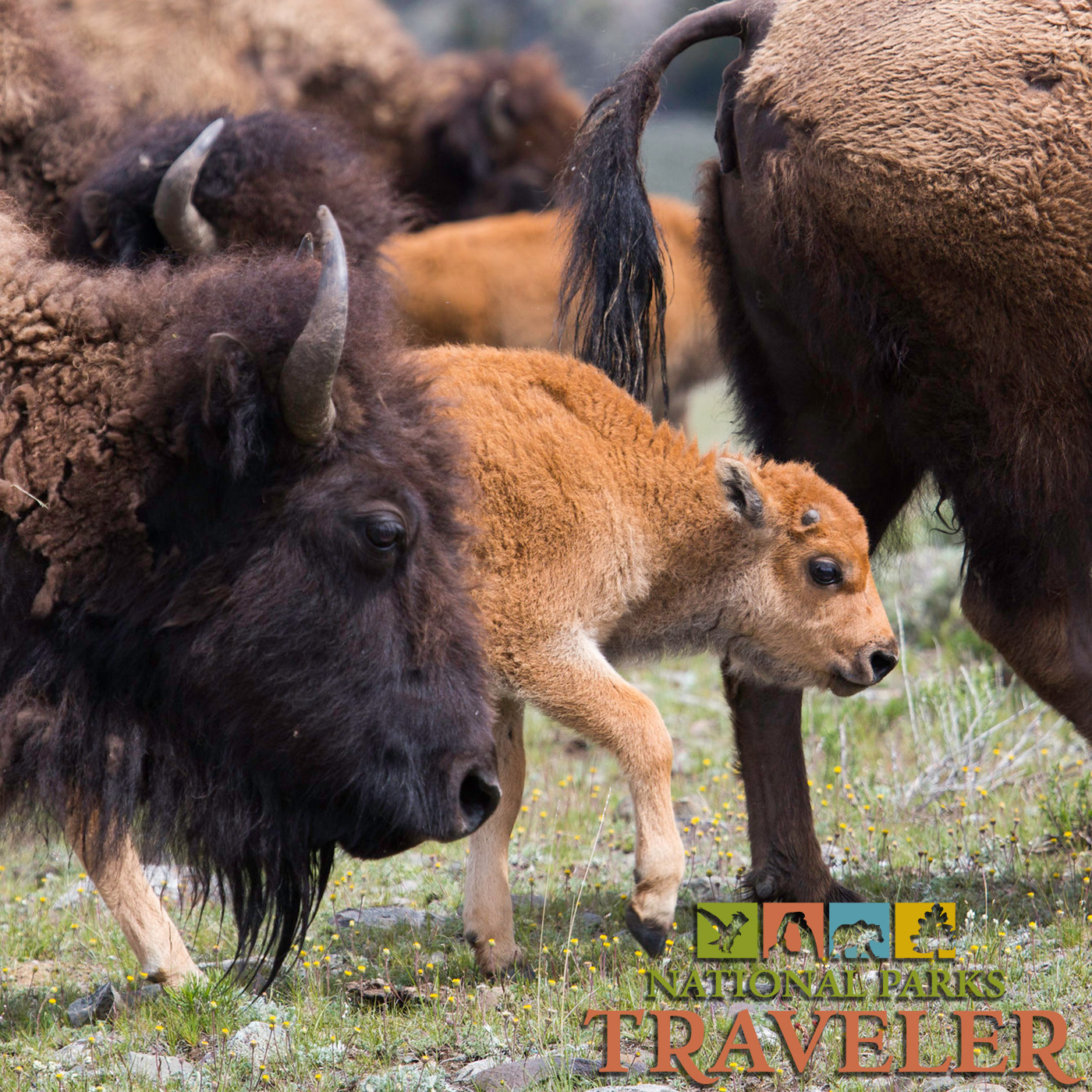
Once upon a time, there might have been 60 million bison on the North American continent. The herds were so large that they covered prairies like immense horizon-stretching black cloaks, and their annual migrations carved such wide paths into the landscape that some were turned into roads by human travelers. As vast as bison herds were, the species came extremely close to extinction. By the end of the 19th century, there might have been two dozen bison left in the wilds, and they were deep in the heart of Yellowstone National Park. Today however, there might be 500,000 bison in North America, though most are in commercial herds meant for meat production. Designated the national mammal back in 2016, bison are truly charismatic megafauna. So charismatic, in fact, that Dayton Duncan and Ken Burns, who profiled America's National Parks back in 2016, are soon to release a documentary on the history of the bison.
S5 Ep 228National Parks Traveler Podcast | Summer Wildfire Outlook in the Park System
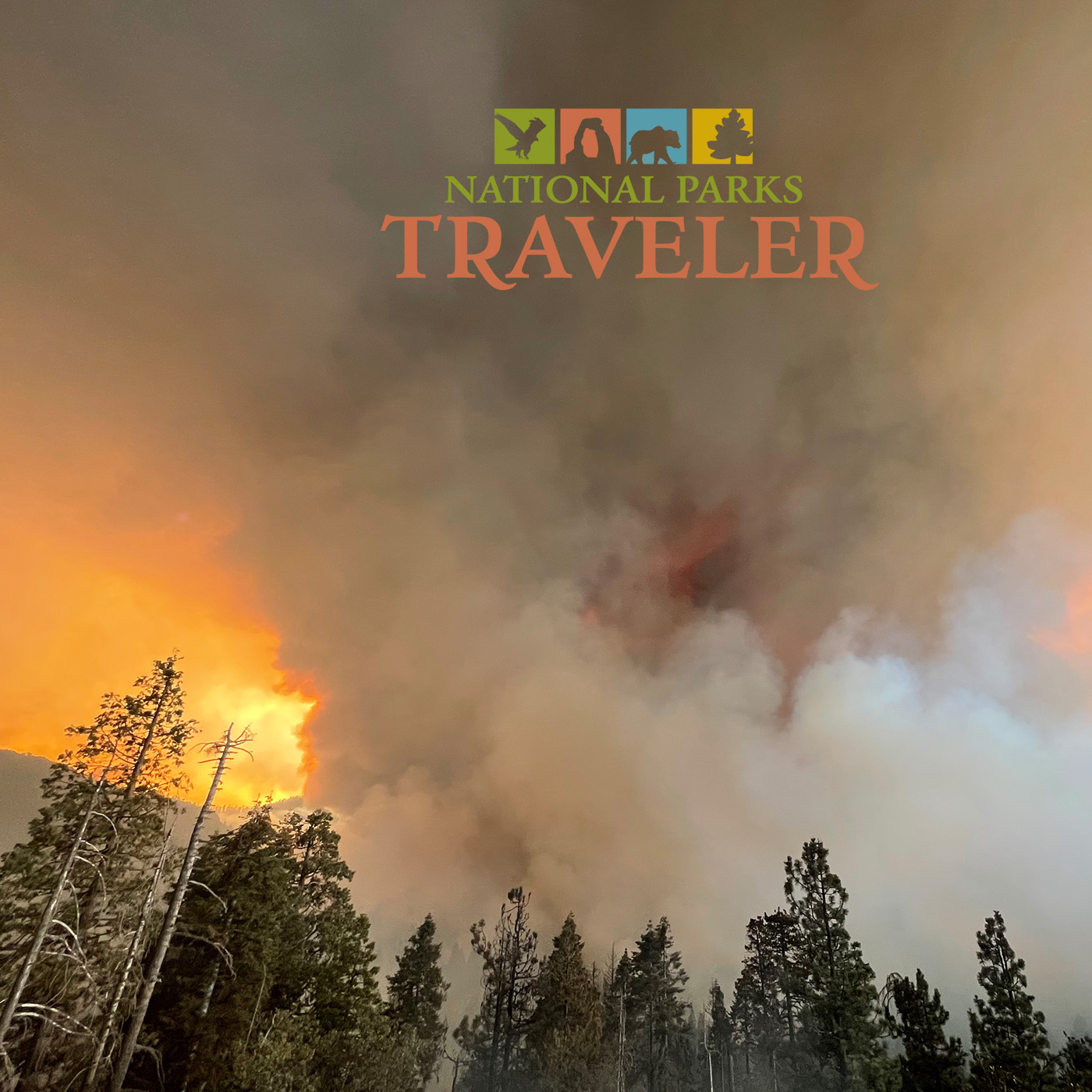
A winter heavy in snowfall has slowed the start to the wildfire season across parts of the West, although the return of the El Niño weather pattern in the Pacific Ocean could reverse that start and contribute to another smoky summer in the National Park System west of the Continental Divide. Climate change, coupled with the departure of the La Niña weather pattern over the Pacific Ocean and the arrival of the El Niño pattern, are making it more challenging to predict fire seasons and fire behavior from year to year. Last year when we talked with James Wallman, a meteorologist in the National Interagency Fire Center in Boise, Idaho, he said fire managers don't know what the "new normal" in wildfire seasons and behavior is because "everything is still changing." With a somewhat slow start to the 2023 fire season in the Southwest, and drier weather patterns over the Northwest, what can we expect from this year's fire season across the National Park System? We'll be back in a minute with Mr. Wallman to see.

S5 Ep 227National Parks Traveler Podcast | Expanding the National Park System
There always seem to be calls to expand the National Park System. And those calls always spur a number of questions. Why does the National Park System need to be expanded? What sites might be considered for expansion? Can we even afford to expand the system? After all, as the Traveler frequently points out, the National Park Service doesn't have the resources in human capital or financial capital to properly manage the park units it has. There have been a number of stories recently in other news outlets about adding new national parks. But some of those simply point to existing units that are not officially called national parks, and why they should be renamed as national parks. But is that really expanding the park system, or is it answering local chamber of commerce calls to rename the parks for economic benefit? Today we're going to dive into this topic with Elaine Leslie, who back in 2017 as chief of biological resources for the National Park Service, contributed to the National Park Service System Plan, charged with envisioning the growth of the National Park System. Also in the conversation is Michael Kellett, who has spent roughly 40 years advocating for national parks, wilderness, national forests, free-flowing rivers and imperiled wildlife. Michael also is the co-founder and executive director of the New England-based conservation group Restore the North Woods. In that role he is director of the group's new national parks campaign, which is building a grass roots movement for New National Parks across the country.

S5 Ep 226National Parks Traveler Podcast | Lost Hospitals and Underwater Graves at Dry Tortugas
You likely know that Dry Tortugas National Park houses Fort Jefferson, which served as a Civil War-era prison with a community for soldiers, civilians, and slaves. Were you aware that hidden remnants of a hospital and graveyard have been found nearby — offshore — adding to the puzzle of life and death in the Civil War era? Lynn Riddick dives into that topic with Joshua Marano, a maritime archaeologist for the National Park Service...
S5 Ep 225National Parks Traveler Podcast | Hidden National Park Gems
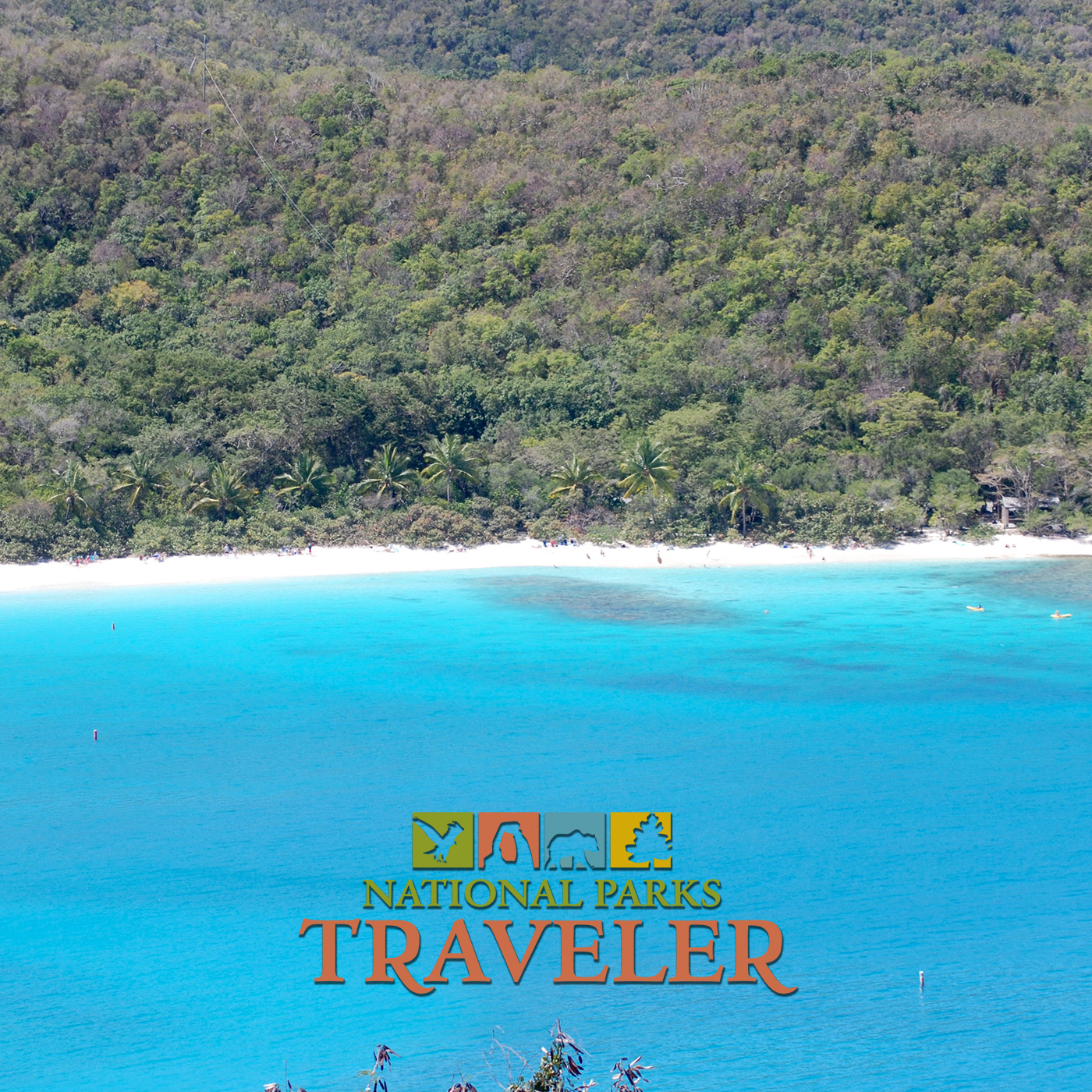
It's summer. Not officially, but close enough. Many schools have already taken the next few months off, others will soon join the summer break. Summer for many is the peak travel time. Parks are a great destination, whether in summer or just about any other month of the year. To help you come up with some ideas of which parks to visit and why, we've invited two members of the Coalition to Protect America's National Parks – Maria Burks and Phil Francis – who collectively have spent more than eight decades working in the National Park System to discuss their favorites.
S5 Ep 224National Parks Traveler Podcast | The Horses of Cumberland Island
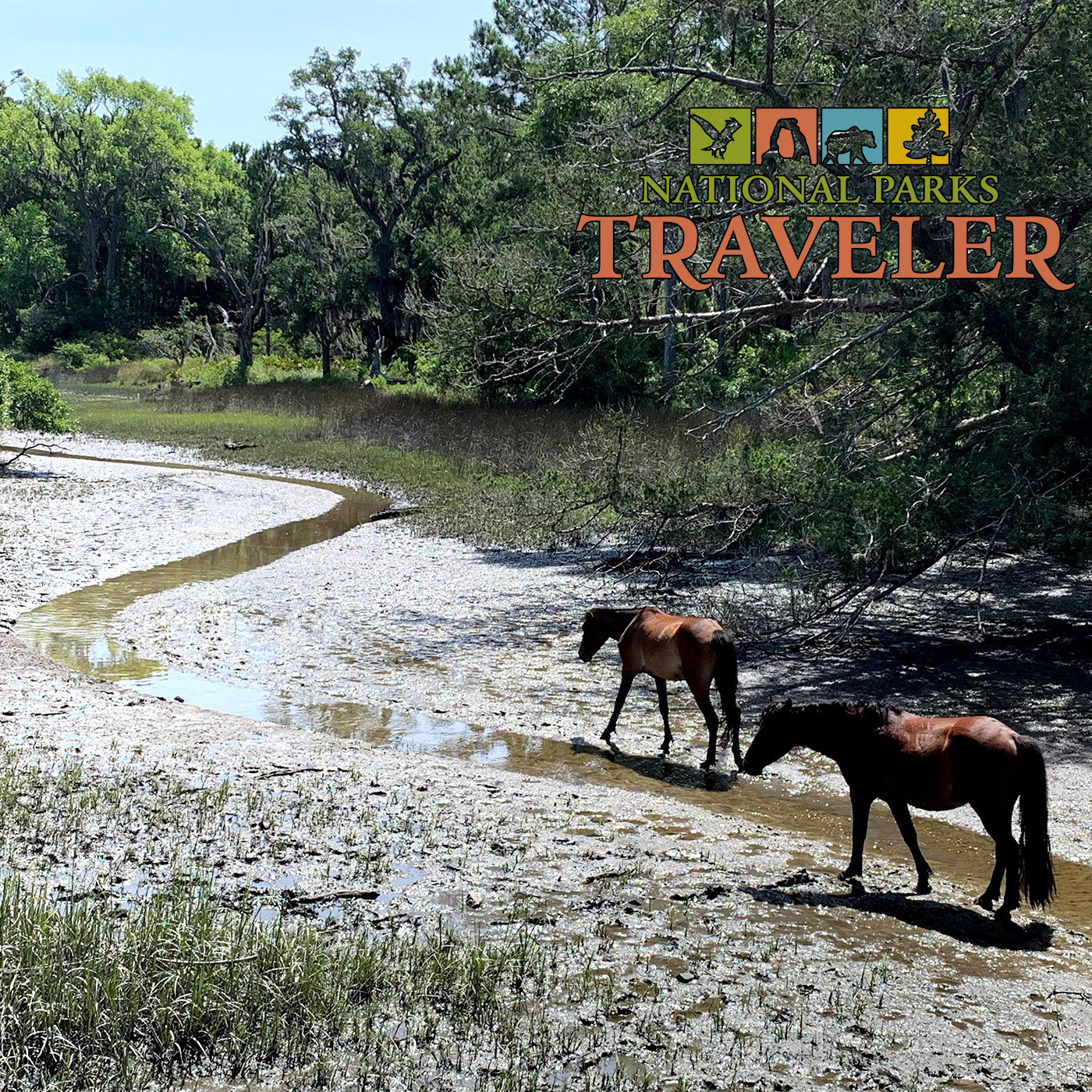
Horses can be found in many corners of the National Park System. You spot them running wild at Theodore Roosevelt National Park in North Dakota, splashing in the surf at Cape Lookout National Seashore in North Carolina and at Assateague Island National Seashore in Maryland and Virginia, and of course as pack animals and tireless steeds that carry both rangers and visitors to the parks. But wild horses are somewhat of a conundrum in the National Park System. They're a conundrum because they technically are not wild, but rather feral, meaning they descended from domesticated horses. As such, they technically are not native wildlife, and that has become an issue. At Theodore Roosevelt National Park, the National Park Service has raised the question of whether the horses there, as livestock, not native wildlife, should be removed from the park. A recent comment period on that proposal drew more than 7,000 comments, just 45 of which supported removal of the horses. Where the Park Service will come down on horses at Theodore Roosevelt remains to be seen. Across the country, at Cumberland Island National Seashore along the coast of Georgia, there also are feral horses, and their plight has surfaced in the form of a lawsuit that claims that animals not only are damaging the seashore's environment and two federally protected species but are not being humanely managed by the National Park Service and should be removed from the seashore. We're going to explore that issue today with Hal Wright, who brought the lawsuit, Patty Livingston, president of both the Georgia Equine Rescue League and the Georgia Horse Council, and Jessica Howell-Edwards, executive director of Wild Cumberland, an advocacy group for the seashore.

S5 Ep 223National Parks Traveler Podcast | Yellowstone's Gold and Cape Hatteras's Shifting Sands
There are external and internal influences that can impact units of the National Park System. Urban sprawl can strangle parks and their natural resources. Wildfires can sweep across boundaries and into parks. Rivers can flood and wash out trails and roads, as we saw last June at Yellowstone National Park. Today we're going to be talking about looming threats to Yellowstone and Cape Hatteras National Seashore. In the case of Yellowstone, it's a gold mine proposed to be sunk into a mountain towering over the park's northern entrance at Mammoth Hot Springs. At Cape Hatteras, it's the Atlantic Ocean and the natural dynamics of barrier islands, which were not designed by nature to remain in one place. Instead, they shift as the ocean erodes beaches and moves sand about. In both of these cases, there are solutions in sight. The question is whether they'll succeed.
S5 Ep 222National Parks Traveler Podcast | Debt Ceiling Crisis and the Parks
While spring is slowly giving way to summer in many parts of the country, with visitors gaining more and more access to the National Park System, a stand-off in Washington over the country's debt ceiling very likely would greatly disrupt operations in the parks. It was just a decade ago that a federal budget sequestration, that is a forced cut across all federal agencies budgets as part of the Budget Control Act, led to closed campgrounds, Sunday closures of National Park System units, and 900 permanent positions that went unfilled. For the National Park Service, the sequestration led to a 5% budget cut that also led to a reduction in invasive plant control at the parks, a reduction in maintenance of fences and building repairs, science and research activities, and natural resource monitoring. In Washington today, House Republicans want to see some pretty stiff budget cuts in return for agreeing to raise the debt ceiling. According to the New York Times, one outcome, if the funding cap's proposal put forth by the Republicans is approved, would be a 51% reduction in the Interior Department's budget. How devastating might that be to the National Park Service and the National Park System? We're going to explore that question with Mike Murray, chair of the Coalition to Protect America's National Parks, and John Garder, senior director of Budget and Appropriations at the National Parks Conservation Association.
S5 Ep 221National Parks Traveler Podcast | Jackson Hole Sustainable Destination Management Plan
National parks are not alone in grappling with crowds. Many gateway communities surrounding our national parks are notable for their own amazing offerings -- natural beauty with tranquil spots for solitude and reflection…and nice venues for dining, listening to live music and pursuing year-round outdoor recreational and leisure activities. But when the management of visitation in these areas is unchecked, and the very resources that make these places highly desirable destinations are strained, can anything really be done? The community of Jackson, Wyoming, hopes so. Recognizing that residents, business owners and visitors all share in the responsibility of preserving the area's unique character and allure, stakeholders throughout Teton County have put together a comprehensive sustainable destination management plan. The goal is to protect the beauty of the area, preserve a healthy environment and, at the same time, enhance visitor experience, business growth and quality of life for residents. This week the Traveler's Lynn Riddick talks with Crista Valentino of the Jackson Hole Travel and Tourism Board to find out what's in the plan and how it will help.
S5 Ep 220National Parks Traveler Podcast | The State of Yellowstone National Park
It's easy to take the status of national parks for granted. We read wonderful beckoning stories about them in magazines and newspapers. And we watch gorgeous travelogue pieces about them on television. But how much do we know about the operational status of the national parks? How much do we know about the health of the natural resources, the condition of historic structures, the state of the workforce that operates and manages the national parks? In short, we know really very little about those things. But at Yellowstone National Park, staff has been preparing "State of the Park" reports for some years. These reports provide some insights into the overall health of the park, if you will. Yellowstone National Park Superintendent Cam Sholly sat down with Traveler Editor Kurt Repanshek to discuss this year's report.
S5 Ep 219National Parks Traveler Podcast | National Park Foundation CEO Will Shafroth
Across the National Park System, there are incredible sights that explore American history. There's a robust mix of cultures reflected in the parks, and breathtaking vistas that, well, will take your breath away. But there also are seemingly countless needs, from backlogs of maintenance projects, interpretation for history, wildlife and science that needs to be crafted, and unique issues that can range from climate change impacts to helping inner city youth visit a park. Helping the National Park Service tackle these myriad issues and challenges is the National Park Foundation, which Congress created back in 1967 to be the official charitable organization for the parks. Through the years, this organization has raised hundreds of millions of dollars for the parks. Today, with National Parks Week underway, we're joined by Will Shafroth, the Foundation's CEO to discuss not only the needs of the park system, but the successes the Foundation is recognizing in tackling some of them.
S5 Ep 218National Parks Traveler Podcast | The National Parks Cookbook
Travel extensively through the National Park System, and you'll quickly come to realize that the park's restaurants try to reflect the local culinary trends, or at least use local ingredients in crafting their menus. For instance, visit national parks in Alaska and you can pretty much count on salmon in the dinner offerings. Travel through the parks in the Rocky Mountains, and elk (and sometimes bison) will appear on the menus. Explore parks in the southwest, and you can almost predict that cacti will show up in some form. You can be amazed at the menus that chefs in the National Park System roll out. Even more amazing is how they feed hundreds of people at meal time, and largely maintain consistency with what they put in front of you. This week we're going to explain how you can mimic some of these chefs in your own kitchen. Our guest is Linda Ly, author of "The National Parks Cookbook." We'll see if we can inspire you with new home menus, from beverages and appetizers, to entrees and desserts.
S5 Ep 217National Parks Traveler Podcast | Pruning the Parks
Over the years there have been more than a few units of the National Park System that have been head-scratchers. Why were they added? What redeeming value did they bring to the park system? James Ridenour who was director of the National Park Service from 1989 through 1993, was well familiar with these units. As he once put it, "I'm in complete agreement that the National Park Service has units that are unworthy of National Park Service status. That was my motive for coining the term 'thinning of the blood'." Members of Congress trade votes to get their local favorite on the NPS teat, usually to attract tourists. Then they don't add money to the budget to run these units. So you have two things - you thin the quality of the system, and you thin the ability of the National Park Service to run the system. We're going to explore some of these units, at least some of the ones that were pushed out of the National Park System, with none-other than Traveler Professor Emeritus Dr. Robert Janiskee. Bob was the one who quite some years ago started the "Pruning the Parks" series on the Traveler, and we've momentarily pried him out of his retirement to discuss some of these parks with us.
S5 Ep 216National Parks Traveler Podcast | Campfire Stories
When warm weather spreads across the National Park System, many parks offer nightly gatherings around the campfire. The tradition of gathering around a flickering fire goes back thousands of years. Fire, after all, was the giver of light in the darkest of night, and seen as offering safety from what might lurk about in the dark. For the park visitor, nightly campfire gatherings are not about feeling safe from the darkness, but rather an opportunity to learn about the surrounding park landscape from a well informed park ranger. Back in 1968, a National Park Service training brochure explained that the national park campfire provides an opportunity to weld the visitor's random experiences and impressions into an understanding and appreciation for the park's real values. Of course, there are a number of definitions and expectations for what constitutes a campfire story. Today we're going to explore "Campfire Stories: Tales from America's National Parks and Trails" with editors of the book Dave and Ilyssa Kyu.
S5 Ep 215National Parks Traveler Podcast | Glacier Bay Wolves
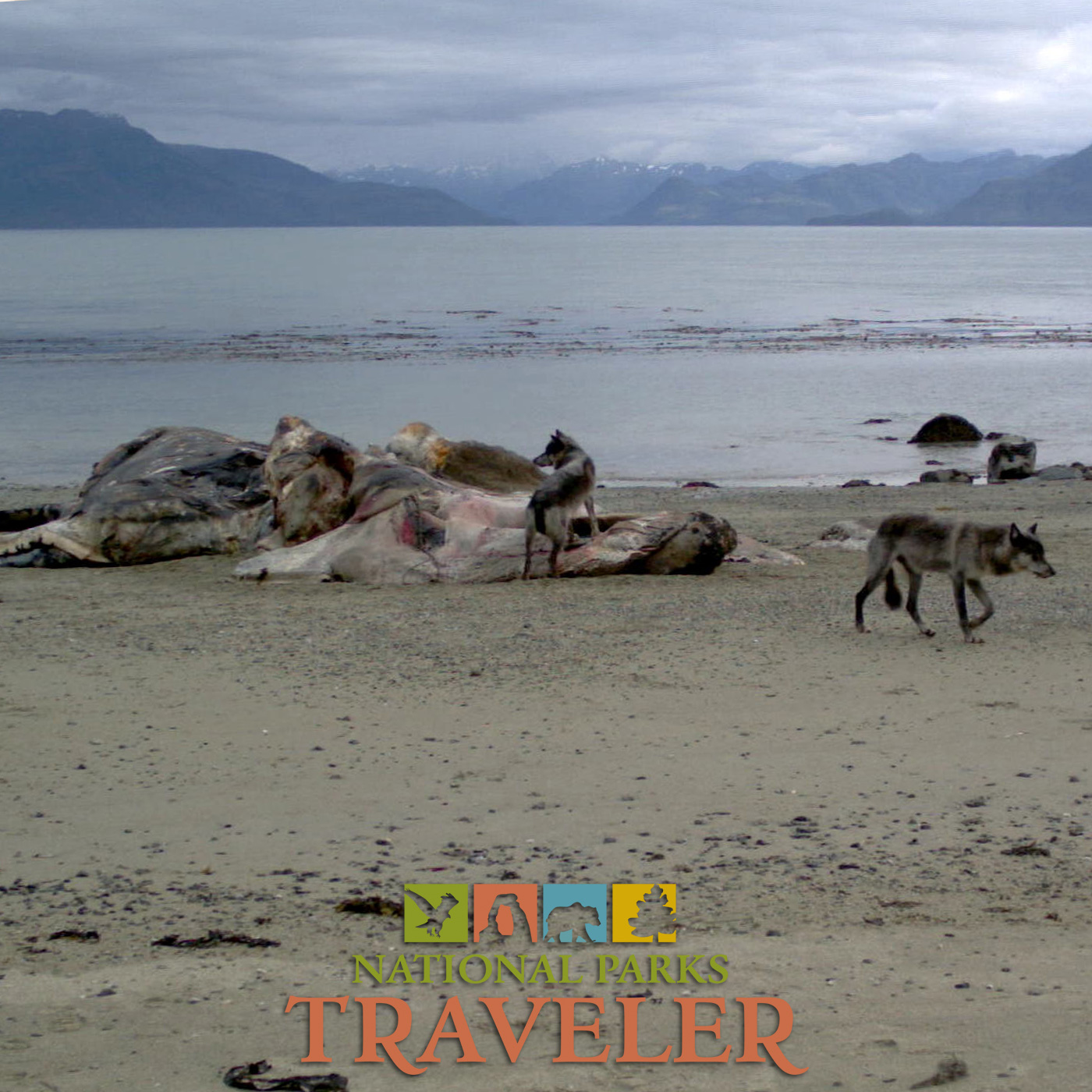
Coastal grey wolves in Glacier Bay National Park and Preserve in Alaska seem to be feasting well these days on an unlikely food source - sea otters. In fact, the shorelines of Glacier Bay offer wolves a cornucopia of otters and other marine menu items, providing this carnivorous predator safe and dependable locations for food and raising offspring. This week the Traveler's Lynn Riddick speaks with park wildlife biologist Tania Lewis, whose research team is evaluation coastal wolf diets. Their goals are to identify different wolf packs and the shoreline areas important to them for feeding and reproduction. With annual visitation to Glacier Bay approaching 550,000, the team's work will be instrumental in determining whether those areas should be protected from unnecessary human disturbance.
S5 Ep 214National Parks Traveler Podcast | Ninety-Pound Rucksack, Part 2
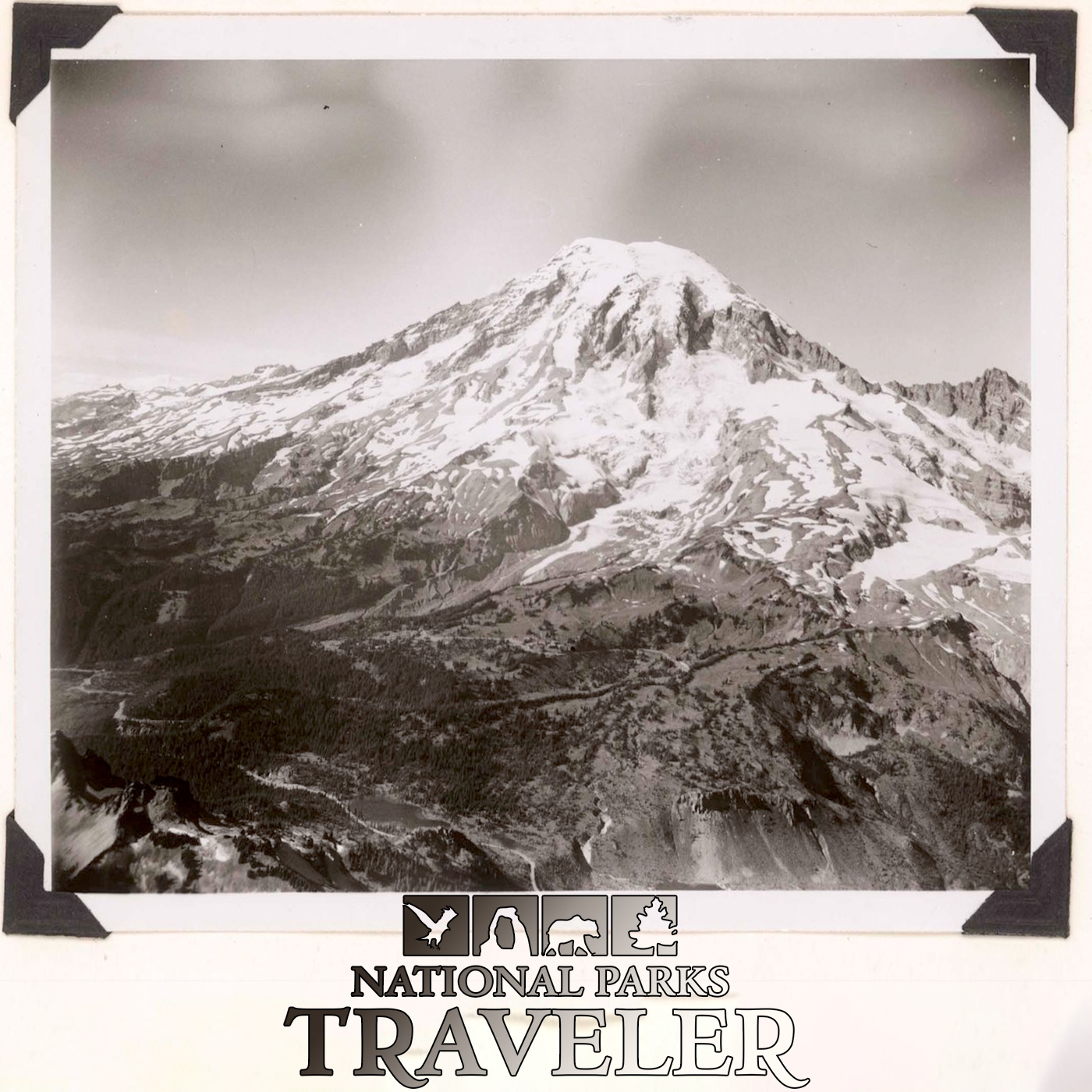
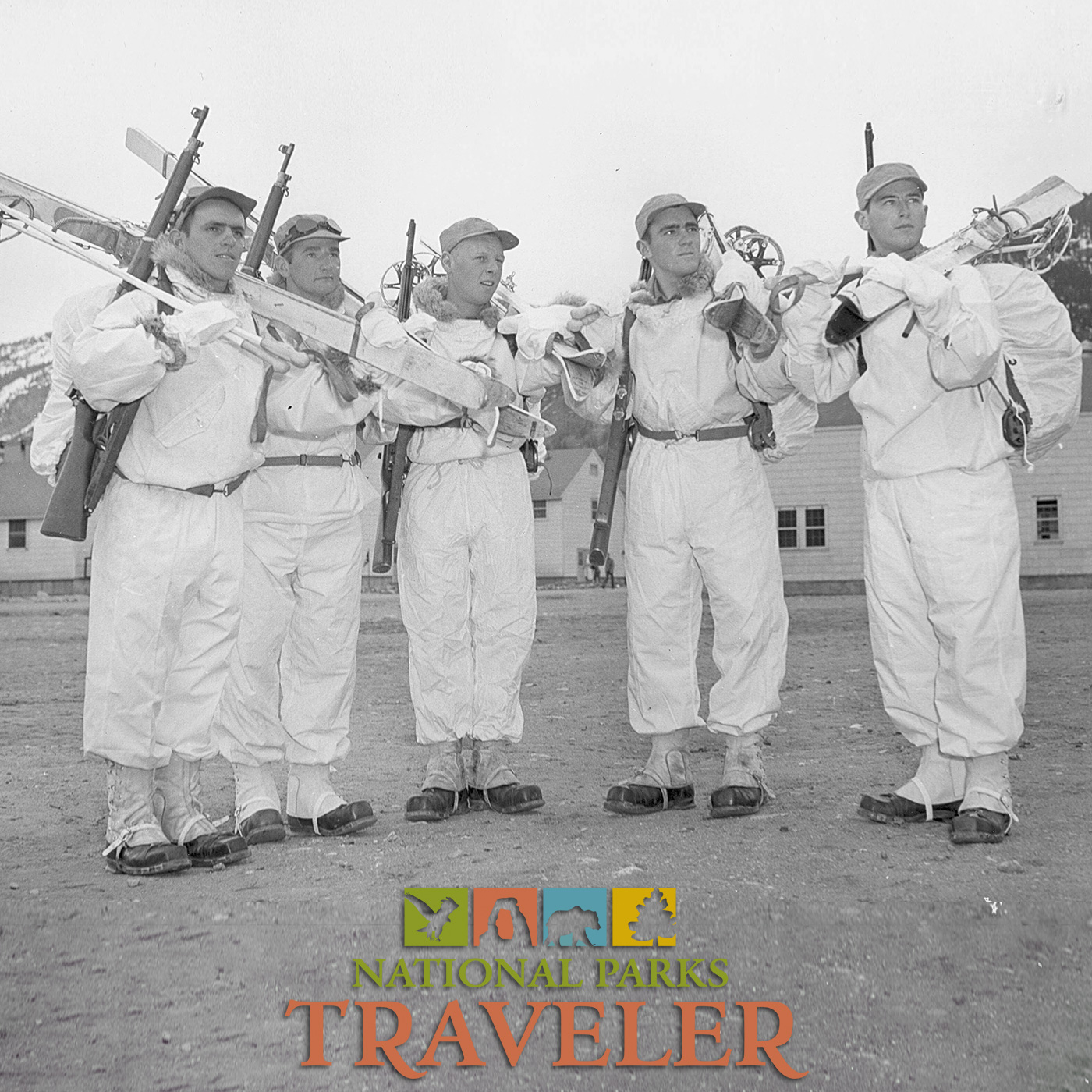
How did America get hooked on skiing? In 1939, Hannes Schneider moved from Austria to North Conway, New Hampshire, to teach skiing. But before the sport really took off, World War II broke out. After the war, a gritty band of soldiers who fought in the US Army's 10th Mountain Division, returned home into the mountains they loved. Last week, Christian Beckwith, an alpinist and climbing historian, introduced us to the 10th Mountain Division and how it was jump-started by climbers who had honed their skills in the craggy mountains of Grand Teton National Park. Beckwith, who rolls out this history in his podcast "Ninety-Pound Rucksack", is back with us today to explain how those soldiers kick-started the ski industry in America, started organizations such as the National Outdoor Leadership School, and played a role in fields of avalanche science and wilderness rescue.
S5 Ep 213National Parks Traveler Podcast | Ninety-Pound Rucksack, Part 1
How much do you know about World War II history, Grand Teton National Park, and the evolution of outdoor recreation in the United States? Believe it or not, they're all intertwined. Ninety-Pound Rucksack is a podcast about the U.S. Army's legendary 10th Division, and the dawn of outdoor recreation in America. Hosted by veteran alpinist and climbing historian Christian Beckwith, Ninety-Pound Rucksack examines the stories that made the unit legendary, as well as those that history has forgotten. The tale of the 10th Mountain Division, a gritty unit of World War II climbers and skiers who trained for more than two years high in the Colorado Rockies to fight the Axis powers in extreme cold and mountainous terrain, is famous for good reason. Not only did its insertion into the war help end Germany's occupation of Italy, but post-war its surviving members helped found and develop ski areas across America, started organizations such as the National Outdoor Leadership School, and played a role in the fields of avalanche science and wilderness rescue. Equal parts real-time research, intimate conversation, and revelatory journalism, Ninety-Pound Rucksack explores not only the conventional wisdom about the 10th, but the transformative power of the mountains to forge a collective identity among the mountain troops. And to ignite a passion for the outdoors that reshaped American society in the process.

S5 Ep 212National Parks Traveler Podcast | What's Going On At Big Bend National Park
Big Bend National Park is not simply a park that you pass along the way. Located in West Texas along the US/Mexico border, this 1,252-square-mile park is five hours from the closest commercial airport. In other words, you must make Big Bend your final destination if you're going to visit. You're not going to just happen upon it as you drive down the road. But once here, you're likely to be astounded by the ruggedness, the beauty of the Chisos Mountain Range that falls entirely within the park's borders, and the rich cultural history preserved here. Aside from the natural beauty of Big Bend, there's a lot going on here that's going to affect most visitors. There's work to design a new lodge, a question of whether the official wilderness designation should be applied to some of the park's landscape, and there are staffing issues and even wildlife issues. The Traveler's Lynn Riddick traveled to Big Bend to discuss these issues and more with Superintendent Bob Krumenaker.
S5 Ep 211National Parks Traveler Podcast | Watch the Bear
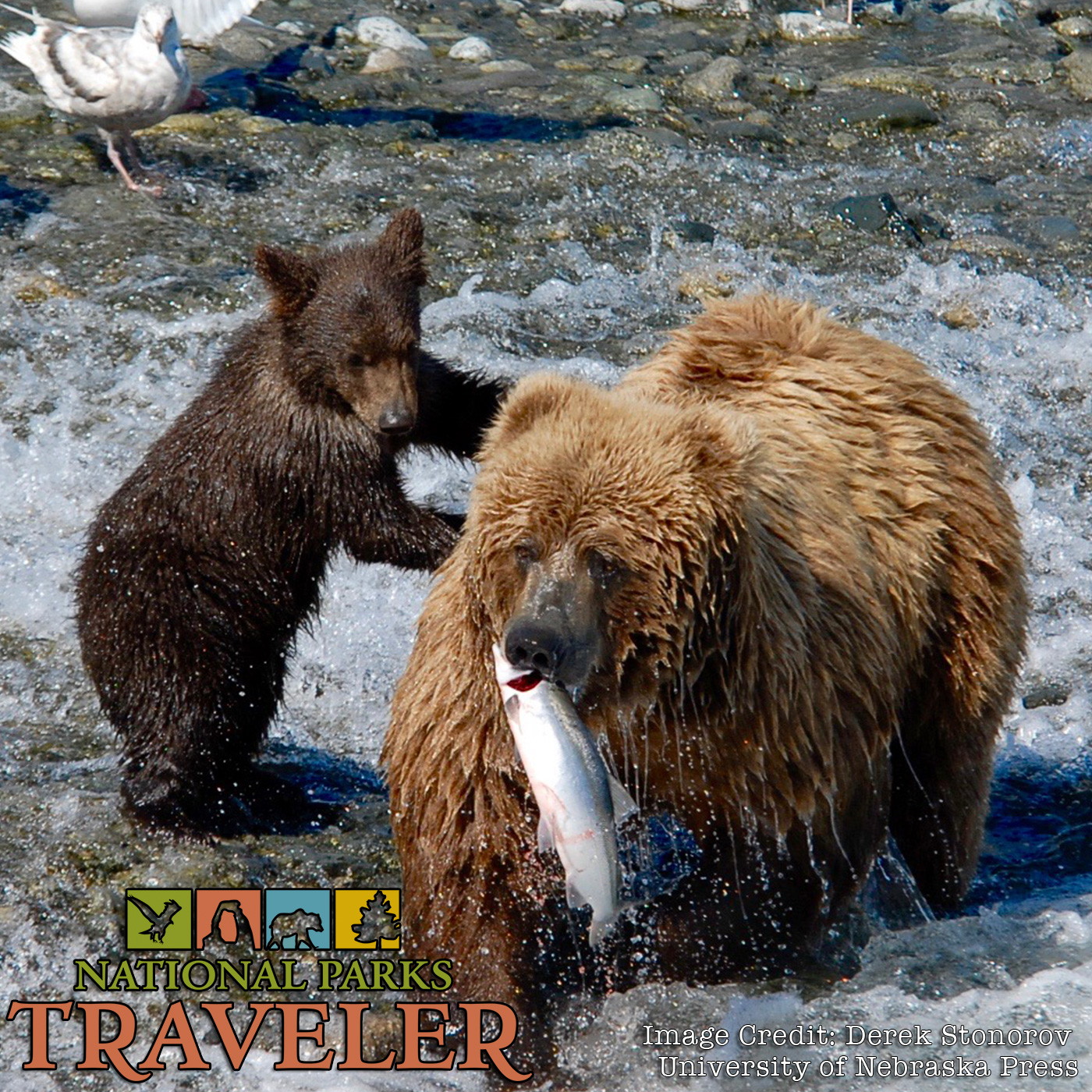
Bears tend to scare us when we're outdoors and they're not behind steel bars. Particularly grizzly bears. They're big, with sharp claws and powerful jaws, and seem to be in a bad mood whenever we spot them. We hear about people being mauled to death by bears, and even of black bears attacking campers in their sleeping bags. Are bears really as terrifying as they appear? Or is our fear driven by a lack of understanding of their behavior? Derek Stonorov knows a little bit about bears and their behavior, after all the wildlife biologist has spent the past 50 years observing coastal brown bears in Alaska, in a bid to better understand their social structures and behaviors. He details he findings in his forthcoming book "Watch the Bear."

S5 Ep 210National Parks Traveler Podcast | Gauging Western Views
For more than a decade, Colorado College has sponsored a poll to gauge conservation sentiments of residents in Colorado, Utah, New Mexico, Arizona, Idaho, Wyoming, Montana and Nevada. Over the years, the questions have ranged from whether the members of the public view themselves as conservationists, whether land conservation and protection can be paired with a strong economy, and even whether federal lands should be turned over to the states. The 2023 State of the Rockies poll just came out, and it points to public support for strong conservation policies that protect wildlife and wild lands, and what some might call surprisingly strong support from a largely conservative corner of the country, for a conservation goal of protecting 30 percent of the nation's lands and waters by 2030. We're going to get into the poll results with Brian Kurzel, the National Wildlife Federation's regional executive director for the Rocky Mountain region.
S4 Ep 209National Parks Traveler Podcast | The Hawaiian Volcano Observatory
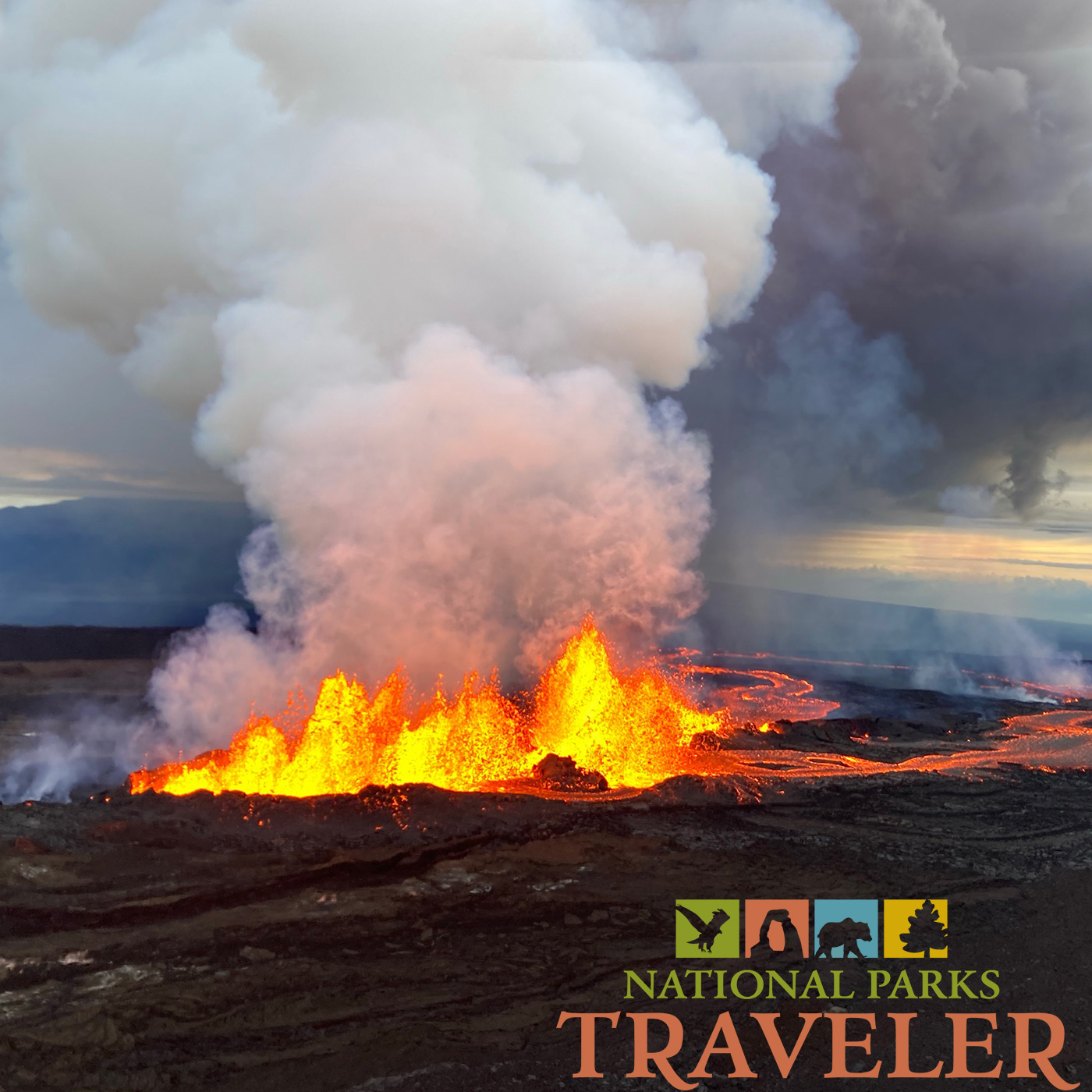
The US Geological Survey operates five different volcano observatories around the country. These observatories monitor real-time volcanic, hydrothermal, and earthquake activity in Alaska, the Cascade Mountains, California's Long Valley Caldera, Yellowstone National Park, and the State of Hawaii. There are virtual partnerships between federal and state agencies, university-based researchers, and scientists. Their work involves monitoring, measuring, and analyzing data, all helping to increase our understanding of these powerful and fascinating geologic forces. This week Lynn Riddick catches up with Matt Patrick, a research geologist at the Hawaiian Volcano Observatory. He and his colleagues have seen quite a bit of awe-inspiring volcanic action recently, with eruptions from Mauna Loa and Kīlauea within Hawaii Volcanoes National Park.
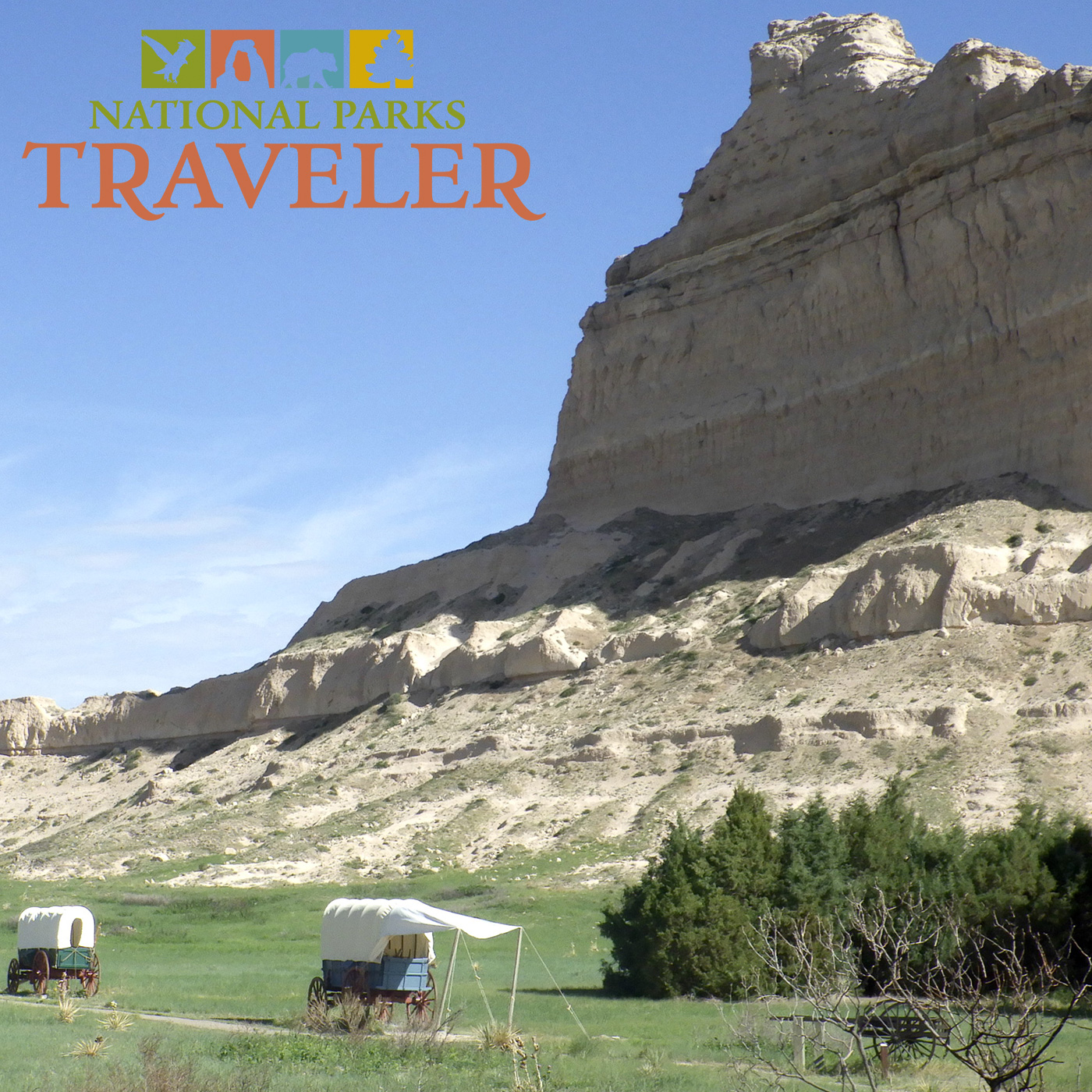
S4 Ep 208National Parks Traveler Podcast | Exploring the Oregon Trail
It is one of the longest units of the National Park System in the country. "It," of course, is the Oregon National Historic Trail, which stretches more than 2,100 miles from Missouri to Oregon. It's been estimated that between 1840 and 1860 some 300,000-400,000 men, women, and children embarked on the four-month-long trip to head to the West Coast. A new book, "Exploring The Oregon Trail, America's Historic Road Trip," can help you explore sections of the trail, or the entire trail if you have the time. It was written by Kay and David Scott, longtime national park travelers and park lodging experts.

S4 Ep 207National Parks Traveler Podcast | Migratory Corridors with Dr. William Newmark
It's a problem that's been coming for quite some time, and one that really comes as no surprise. The large landscape national parks that are home to many species of wildlife have been turning into biological islands as development hems them in. You can look back to 1993 when the Yellowstone to Yukon Initiative launched to begin to see the discussion around opening up these parks through migratory corridors. That initiative, which continues today, envisioned a corridor stretching from Yellowstone National Park to Canada's Yukon Territory to serve wildlife by protecting core wildlife habitat. There have been other somewhat similar initiatives. There's the Wildlands Network, which since 1991 has been, as that organization puts it, striving to reconnect, restore, and re-wild North America. There have been efforts in Congress to pass legislation that would provide funding for such corridors. The Pew Charitable Trust this past October released a report on the need for creating migratory corridors and the challenges standing in their way. Today we're going to zoom in on some national parks, their wildlife, and the need to establish habitat connectivity between those parks to prevent animals from being stranded on biological islands. Joining us is Dr. William Newmark, a research curator and conservation biologist in the Natural History Museum of Utah.
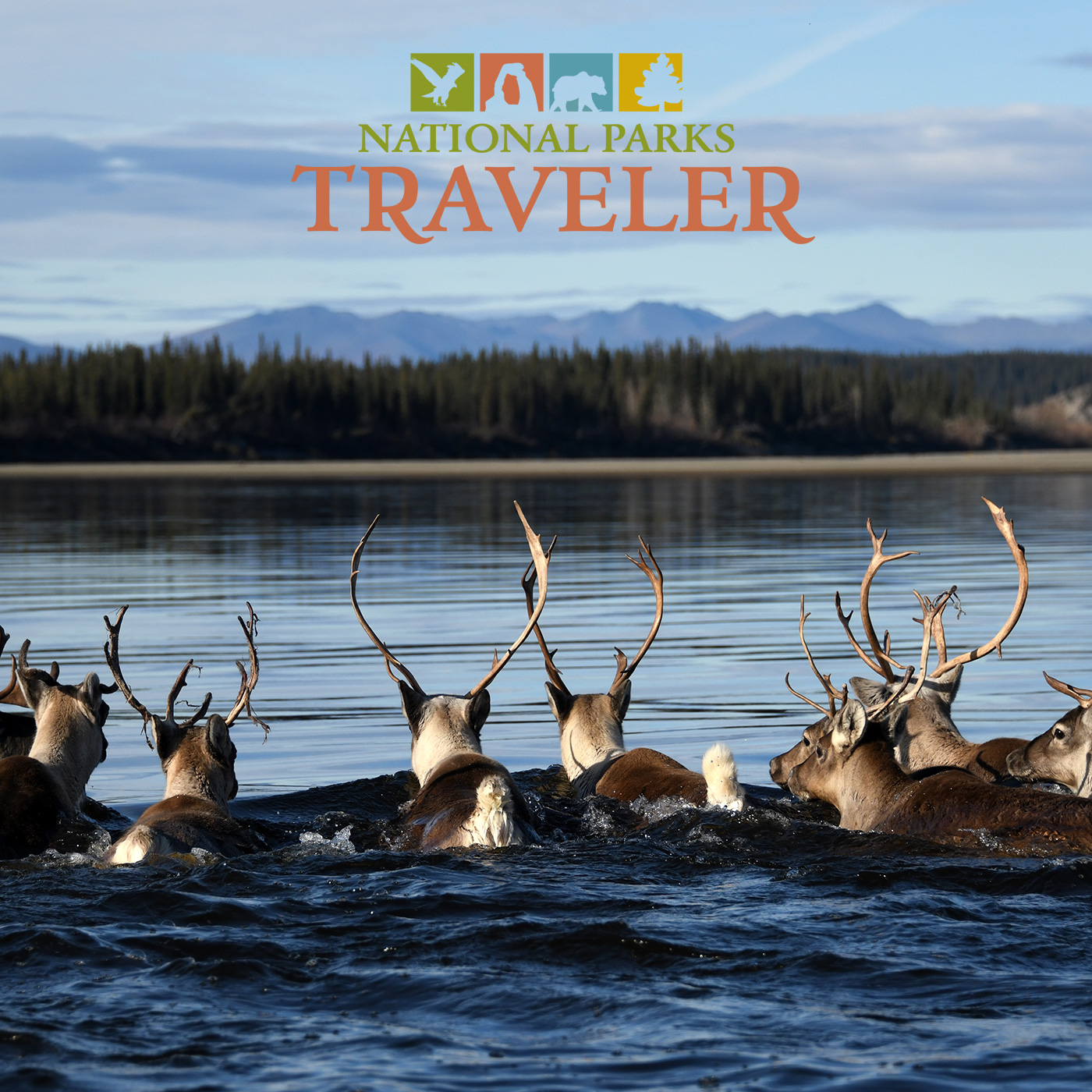
S4 Ep 206National Parks Traveler Podcast | Wildlife Migratory Corridors
There is a wide acceptance that we have drifted too far away from nature, and that we need to pull closer. Many have called for 30 by 30 - conserving 30% of nature by 2030. The 2022 State of the Birds Report pointed out that more than half of bird species normally found in habitats as diverse as forests, deserts and oceans in the United States are in decline. Climate change is a major factor in those declines, but human development also plays a key role by chewing into wildlife habitat and creating biological islands. How do we reverse declines in wildlife and in wildlife habitat? Can we prevent Yellowstone, Yosemite, Kings Canyon, Rocky Mountain National Parks, and other large Western landscape parks from turning into biological islands? Today we're going to explore the problems, and possible solutions, with Elaine Leslie, who was the National Park Service's Chief for Biological Resources before retiring, and Bart Melton, who leads the National Parks Conservation Association's Wildlife Program.
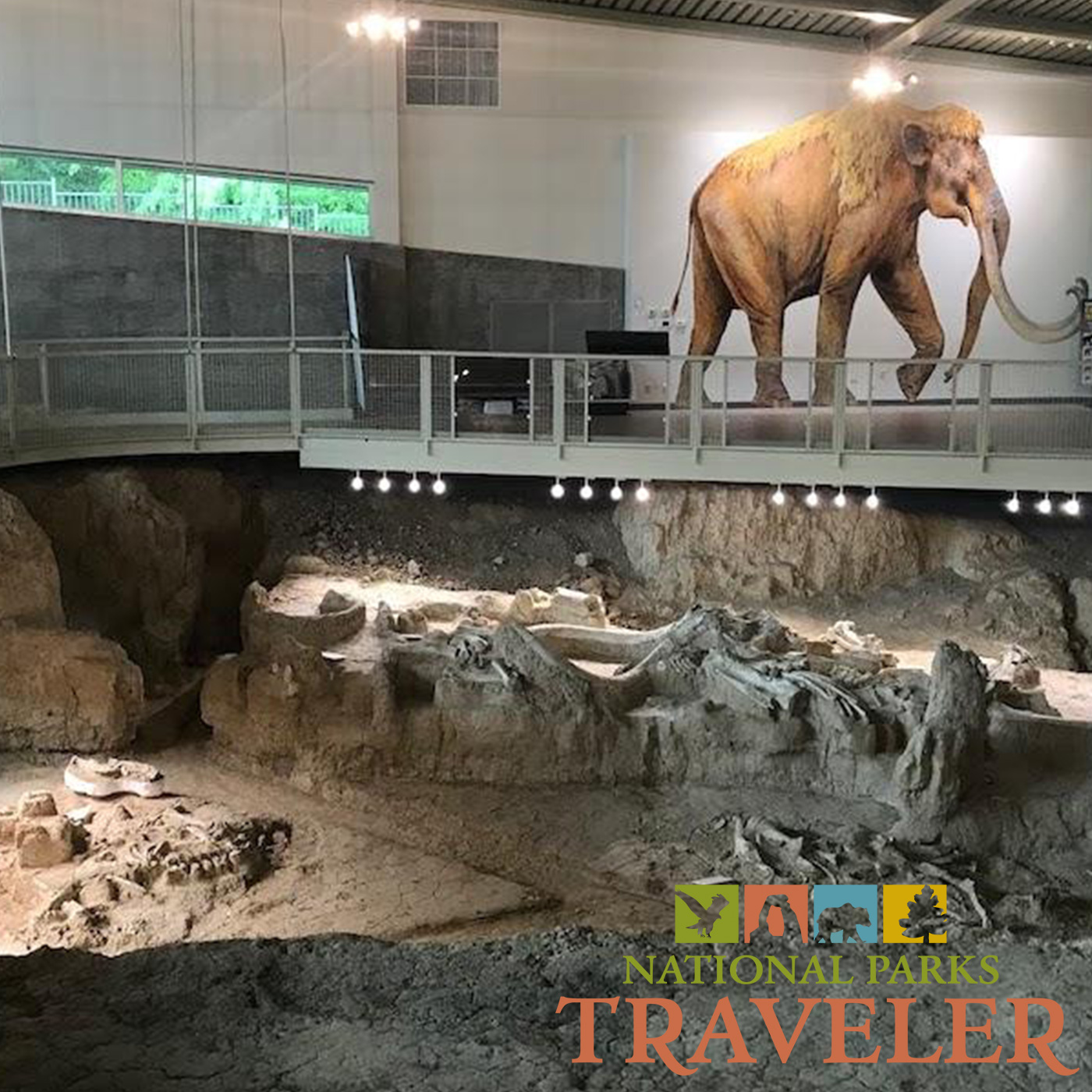
S4 Ep 205National Parks Traveler Podcast | Exploring Waco Mammoth National Monument
Exceptionally well-preserved fossils of Columbian Mammoths and other Ice Age animals are found at the Waco Mammoth National Monument in Waco, Texas. In this unit of the National Park System, you can see the only recorded evidence of a nursery herd of Columbian mammoth mothers and their offspring and get a rare glimpse into the behavior and ecology of these immense extinct giants. This week, the Traveler's Lynn Riddick travels to Waco, to see what else she can unearth about this unique unit of the National Park System that permanently protects the remains of Columbian Mammoths.
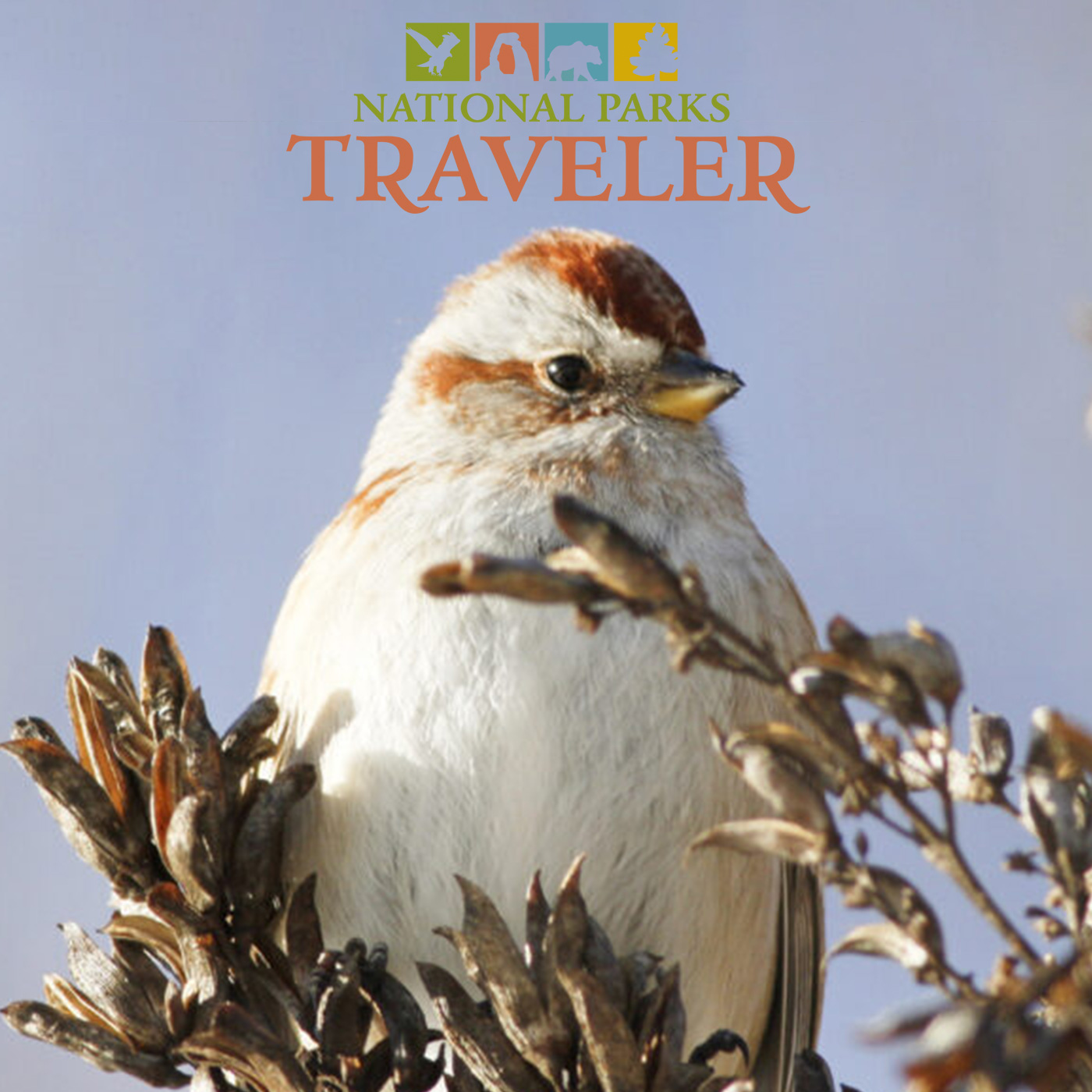
S4 Ep 204National Parks Traveler Podcast |Birding Changes At Acadia National Park
National parks offer some of the best birding in the country. From Acadia National Park to Big Bend National Park and over to Haleakalā National Park, you could spend days looking overhead for a species to add to your life list. But as rich as national parks are in bird life, that's not to say it's business as usual in the birding world. At Acadia National Park, dramatic changes have been noted in the wintering bird populations. American Tree Sparrows, once fairly abundant, have been on the decline, while Northern Cardinals and Wild Turkeys, two species that normally aren't linked to the park, have been on the rise lately. To better understand what's going on at Acadia, we've reached out to Kyle Lima, a Schoodic Institute data analyst who analyzed bird observations collected as part of the National Audubon Society's Christmas Bird Count.

S4 Ep 203National Parks Traveler Podcast | 2022's Top Stories From The Parks
When unprecedented flooding roars through a national park, shredding major roads that access that park, it rightfully could be pointed to as the top story in the National Park System. And while Yellowstone National Park was that park, not only the flooding, but the lack of human casualties, and rapid recovery rank that story as arguably the top one in the National Park System in 2022. But that wasn't the only major story that came out of the parks this year. Today we're looking back at some of the top stories across the National Park System in 2022. To help us identify them, we've asked Kristen Brengel, the National Parks Conservation Association's Senior Vice President for Government Affairs, and Mike Murray, Chairman of the Coalition to Protect America's National Parks to join us.
S4 Ep 202National Parks Traveler Podcast | Favorite National Park Stories From 2022
We're just about to close the books on 2022 and what a year in the National Park System it has been. We've seen catastrophic flooding, drought, and crowds, lots of crowds. Today though, we're going to focus on some of the positives about being out and about in the parks. We've asked contributing editors Lynn Riddick and Kim O'Connell to join us today to point to their favorite adventures and stories from the parks this past year.

S4 Ep 201National Parks Traveler Podcast | Climate Change Conversations
Andrew Revkin, noted journalist, author, and educator, has been reporting on climate change for the better part of 35 years. In a conversation with the Traveler's Lynn Riddick, he shares stories of his experiences, and how he is adapting his work to foster conversations rather than the traditional form of interrogative storytelling. He regards today's communication climate as an inseparable part of the Earth system, and vital in our response to real climate issues. He also has some thoughts about our National Parks, and the landscapes we are enjoying at this particular moment in time.

S4 Ep 200National Parks Traveler Podcast | National Park Disaster Funding
It's been quite a year in the National Park System when the subject turns to unexpected bills. There was the historic flooding that hit Yellowstone National Park in June, monsoonal flooding that struck Death Valley National Park and Mojave National Preserve later this past summer, and even flooding at Vicksburg National Military Park that caused significant damage. It's well known that the National Park Service doesn't have the financial resources and staffing that it needs on a daily basis to keep the National Park System not just running, but well maintained. As a result, we shouldn't be too surprised when natural disasters such as flooding, wildfires, and even droughts strike and generate repair bills in the hundreds of millions of dollars. Dollars that the National Park Service doesn't have just sitting in a bank account, ready to pay for repairs. Today we're going to explore the unexpected costs that have descended on the National Park Service, and how to pay for them, with John Garder, the National Parks Conservation Association's senior director for budget and appropriations.

S4 Ep 199National Parks Traveler Podcast | The Blue Ridge Parkway Foundation's 25th Anniversary
Across the National Park System, national parks fortunate enough to have friends groups helping them out have been leaning a little bit harder on those non-profit organizations than in the past. In some cases a lot harder as federal funding has not kept up with the increase in park units, or the costs of maintaining and operating those parks. It seems the National Park Service can never get ahead of the costs of operating the park system. That's where national park friends organizations come into play. They raise charitable dollars to help cover the costs of programs and initiatives that the parks wouldn't otherwise be able to afford. The Blue Ridge Parkway Foundation has been doing this kind of work for 25 years. Today we're going to take a look back at the foundation's many successes with Jordan Calaway, the foundation's chief development officer.

S2 Ep 14National Parks Traveler Audio Postcard From The Parks | Quitobaquito SpringsOrgan Pipe Cactus National Monument
National Parks Traveler correspondent Jennifer Bain visits Organ Pipe Cactus National Monument in southwestern Arizona. Jessica Pope, the park's interpretation, education and community engagement programs manager, gives Bain a tour of Quitobaquito Springs, a lush oasis in the middle of the Arizona desert.
S4 Ep 198National Parks Traveler Podcast | Dehydration King Chef Glenn MacAllister
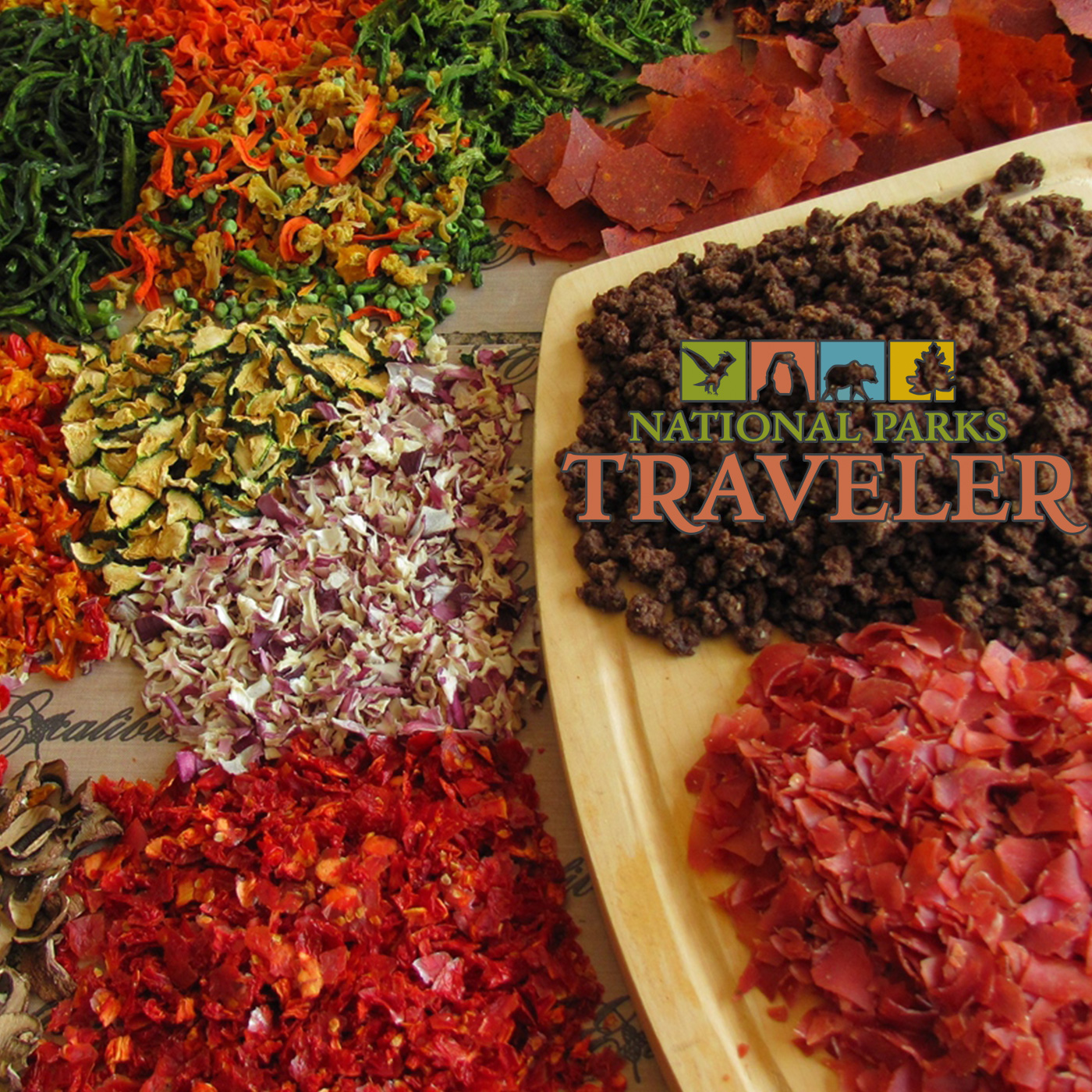
Freeze-dried meals long have been the go-to food source for many backcountry travelers, but only because they didn't know other options existed for meal time. And not everyone easily stomachs those meals. To explore the possibilities of home-made dehydrated meals, we are joined by Chef Glenn McAllister, who decided that a 315-mile hike on the Appalachian Trail would be a great shakedown trek for experimenting with dehydrated meals. Chef Glenn runs the website BackpackingChef.com, which is the go-to source for how to dehydrate meal ingredients, and what to do with them.
S2 Ep 15National Parks Traveler Audio Postcard From The Parks | "Glacier"
There are places in the National Park System that take your breath away. Places such as Glacier National Park, along the shoreline of Avalanche Lake, or atop Logan Pass staring down valley along with the mountain goats. If you've been here, you'll never forget the experience. Husband-wife duo Laurie Raveis & Dennis Kole capture their experiences in "Glacier" in their upcoming 2023 album "In the Moment."
S4 Ep 197National Parks Traveler Podcast | Overlooked Gems Of The National Park System
This year has been a year of firsts for the National Parks Traveler Editor Kurt Repanshek. First-time visits to units of the National Park System, that is. This year Repanshek has taken road trips through Nebraska, Kansas, and New Mexico to explore overlooked gems of the park system. To discuss these and other must-see sites with us today are Rebecca Latson, Traveler's contributing photographer, and Kim O'Connell, a Traveler contributing editor.
S4 Ep 196National Parks Traveler | November News Round-up
As winter approaches, the slow season is setting in across the National Park System, which makes it a good time to take measure of some issues that are confronting both the parks and the National Park Service. We've invited Kristen Brengel, senior vice president of government affairs for the National Parks Conservation Association, and Mike Murray, the chair of the Coalition to Protect America's National Parks.
S4 Ep 195National Parks Traveler | Devils Hole Pupfish
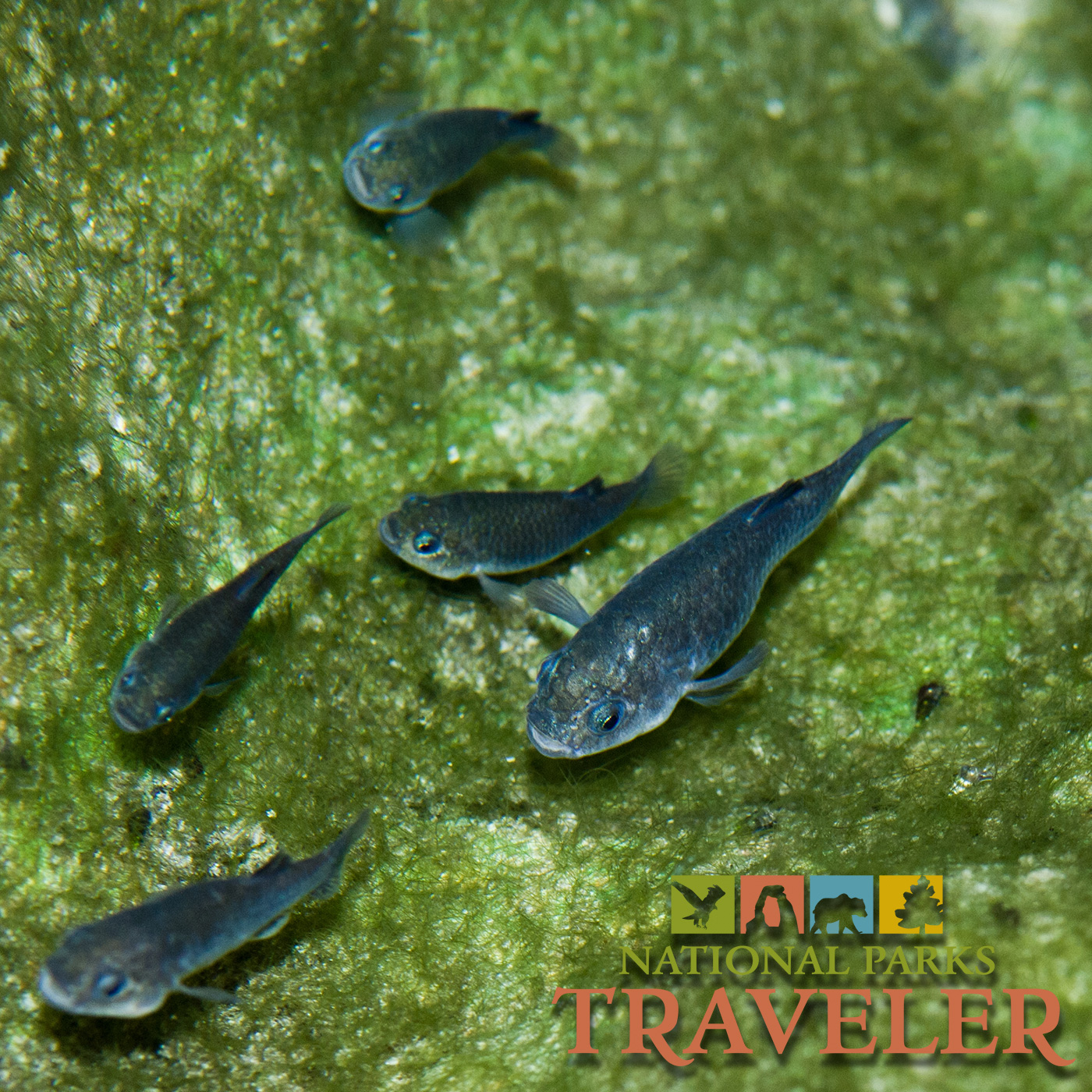
As hot, arid, and dusty as Death Valley National Park is, it might come as a surprise to learn that it has a very important fishery of sorts. There is a place in the national park where there is a warm spring that is home to a rare and endangered fish - the Devils Hole Pupfish. Each year the population of pupfish can swing wildly between highs and lows. Recently, researchers completed their biannual count of Devils Hole Pupfish and the numbers are encouraging. Devils Hole is the only natural habitat where this critically endangered fish exists in the wild, and as the Traveler's Lynn Riddick discovers from a chat with a park aquatic ecologist, the numbers are the highest in two decades.
S4 Ep 194National Parks Traveler | Drive National Parks Traveler's Coverage
National Parks Traveler Founder Kurt Repanshek and contributing editors Kim O'Connell and Lynn Riddick discuss the Traveler's role in reporting on national parks and how reader and listener support make that role possible.

S4 Ep 193National Parks Traveler | The Bison Of Tallgrass Prairie
Back in 2009, a small herd of bison was relocated from Wind Cave National Park in South Dakota to Tallgrass Prairie National Preserve in Kansas. The goal was not only to restore an essential foundational species of wildlife that had not grazed on those lands for more than a century, but to also reestablish the unique ecological benefits bison bring to the landscape while preserving the genetic integrity of the species. In this week's podcast, the Traveler's Lynn Riddick takes us to Tallgrass Prairie National Preserve and chats with Park Superintendent Kristen Hase to see how this special conservation herd has been faring lately.

S2 Ep 13National Parks Traveler Audio Postcard From The Parks | Parks Canada's Only Shipwright
Terry Karlsen is Parks Canada's only shipwright. And his latest challenge is a big one: Restoring the S.S. Klondike, a vintage steam-powered paddlewheeler. The work is underway at the S.S. Klondike National Historic Site in Whitehorse, Yukon.
S4 Ep 192National Parks Traveler | The Grand Teton National Park Foundation
If you've spent time in the National Park System, you've seen a mix of conditions in terms of a park's infrastructure. Some are in great condition, some not so great. Recently my wife and I had the opportunity to stop by Grand Teton National Park and the Jenny Lake area. The trails that lead around the lake and up onto the flanks of the Tetons are in wonderful condition. But it wasn't always so. When the Civilian Conservation Core built the original trails and overlooks, they weren't expecting millions of feet to pound them each year. Fortunately, the Grand Teton National Park Foundation stepped up to help the National Park Service raise millions of dollars to pay for projects at the Jenny Lake area as a gift for the National Park Service's centennial. But that's just one example of how the Foundation has been able to help Grand Teton National Park. This year is the foundation's 25th anniversary, and we have president Leslie Mattson with us to discuss the work the foundation has accomplished.

S2 Ep 12National Parks Traveler Audio Postcard From The Parks|Appreciating Yellowstone By Sea Kayak
A sea kayaking paddle on Yellowstone Lake in Yellowstone National Park just might be the perfect way to end summer if you like paddling. It's also a great way to gain another perspective of the park, and the National Park System.
S4 Ep 191National Parks Traveler | Climate Change And The Parks
Our climate is changing, and not subtly. And it's having a great and visible impact on the National Park System. We saw flooding and fires at units of the National Park Systems this year, as well as an ongoing historic drought thought to be the worst in 1,200 years. Are those events the result of human-driven climate change, or simply the vagaries of weather? Today we're going to explore that question, and others tied to the weather we're experiencing, with Stephanie Kodish, the senior director and counsel for the National Parks Conservation Association's Clean Air and Climate programs.
S4 Ep 190National Parks Traveler | From Swamp to Wetlands
Everglades National Park was somewhat of an anomaly when it was authorized in Congress back in 1934. It marked the first time that federal land was set aside for its abundance of plant and animal species, rather than for its breathtaking scenic views. Today, Everglades National Park continues to face threats that make it the only US world heritage site officially considered to be under threat from challenges like energy production, surrounding urban growth, and nutrient pollution from agriculture. To dive into some of these issues, we're joined today by Dr. Chris Wilhelm, a history professor at the College of Coastal Georgia, and author of From Swamp to Wetlands, the Creation of Everglades National Park.
S4 Ep 189National Parks Traveler | Exploring Saratoga National Historical Park
Today we're going to delve into some of New York's Revolutionary War history with an audio trip to Saratoga National Historical Park. The Traveler's Lynn Riddick caught up park ranger and military historian Eric Schnitzer, who explains what happened there and why it's significant.
S4 Ep 188National Parks Traveler | Fat Bear Week At Katmai National Park
Fall is here. Snow has fallen in the Rockies, the days are getting shorter, and some animals are realizing that winter isn't that far away. With the change of seasons underway, you should mark your calendar for the most unusual competition in the National Park System and get started on your bracket. Not your NCAA basketball tournament bracket, but your fat bear bracket. The week of October 5-11 at Katmai National Park and Preserve in Alaska officially is Fat Bear Week in the park, and the National Parks Traveler's Lynn Riddick caught up with Lian Law, Katmai's visual information specialist, to learn more about it.

S4 Ep 187National Parks Traveler | Kenai Fjords' Glaciers
One of the most amazing settings in the National Park System are glacial landscapes. From Glacier National Park in Montana and Mount Rainier National Park in Washington state to Alaska, these rivers of ice are captivating to see and, if you're lucky enough, to walk upon or watch as they calve blocks of ice into Pacific waters. But as amazing as these rivers of ice are, they are vanishing under the warmth of climate change. Glacier National Park's glaciers could be gone by mid-century. Many of those in Alaska are almost visibly in retreat. But how serious is the problem, what is the overall state of glacial ice in the Park System? Two researchers, Deborah Kurtz from the National Park Service and Taryn Black, a doctoral student in Earth and Space Sciences at the University of Washington, have tried to answer that question as it applies to Kenai Fjords National Park two hours south of Anchorage, Alaska. We're joined today by Taryn Black.
S4 Ep 186National Parks Traveler |Rewilding the West
The Biden administration's desire to preserve at least 30 percent of the country's lands and waters for nature by 2030 has heightened the public's interest in nature, and spurred countless conversations into not only how that goal can be achieved, but about the benefits that it will generate. Professor William Ripple from Oregon State University, Michael Phillips from the Turner Endangered Species Fund, and Elaine Leslie, who was the National Park Service's chief for biological resources, discuss their proposal to expand the territories of wolves and beavers in the American West to "Rewild the West."

S4 Ep 185National Parks Traveler: Acadia's Friends
It's been said time and again, the National Park Service is not adequately funded. There's just not enough money in the agency's annual budgets to address all the needs across the National Park System. And those needs are many, from maintaining facilities, keeping wastewater treatment plans operating smoothly, managing wildlife, and tending to ever growing throngs of visitors. That's where friends groups and cooperating associations come into play. They provide much-needed financial support through philanthropic donations that might pay for wildlife research, trail maintenance, or campground upkeep. Friends of Acadia is one such group, and its workload has grown through the years. While friends groups once were seen as raising charitable dollars to fund the "margin of excellence" in the parks, today the Park Service is relying more and more on these nonprofit organizations to fund projects addressing the "muscle and bones" of park operations. Today we're going to discuss this evolution with Eric Stiles, who recently took the helm at Friends of Acadia following David MacDonald's departure.
S4 Ep 184National Parks Traveler: Is Recreation.gov Exclusionary?
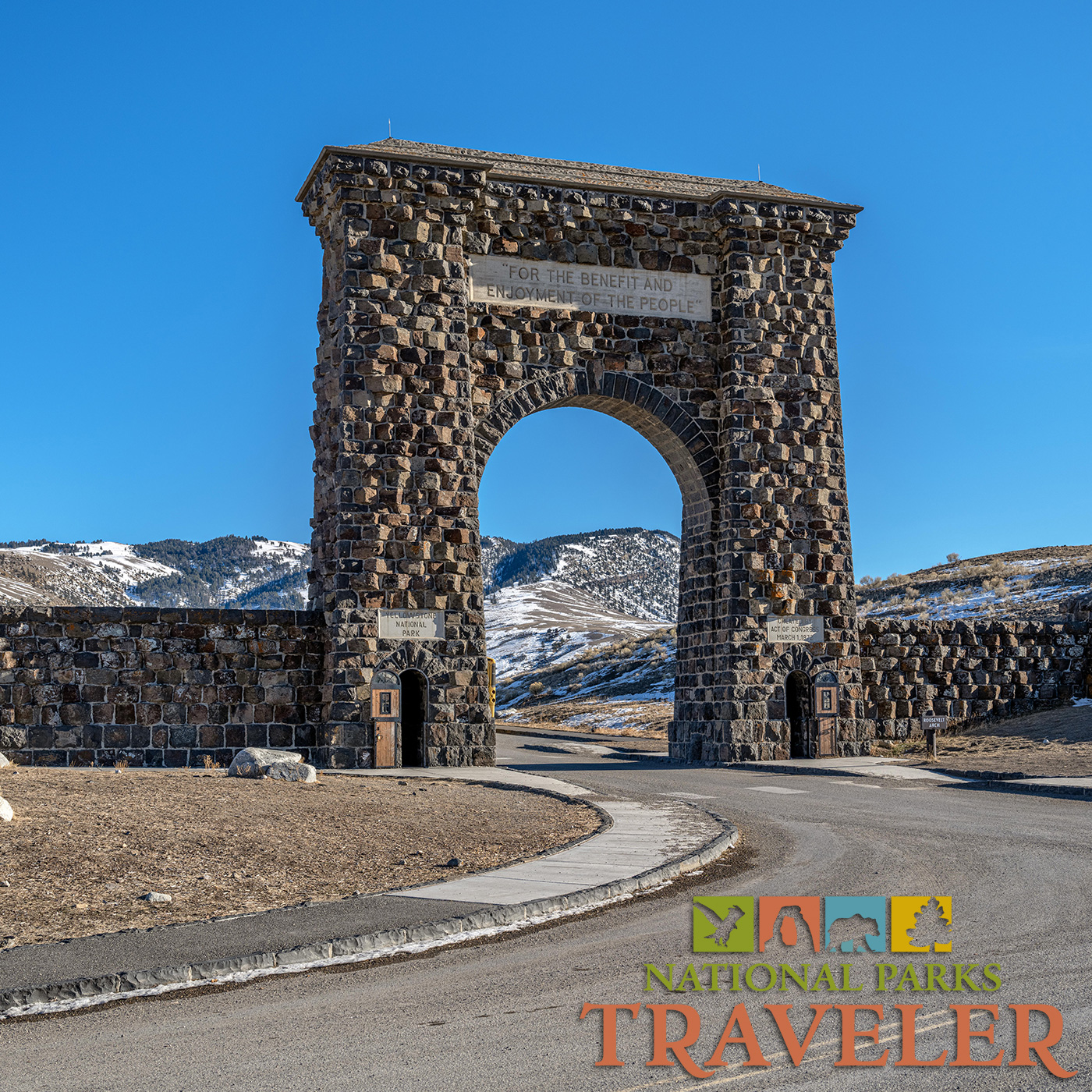
As the inscription on the Roosevelt Arch at the north entrance into Yellowstone National Park reminds us, the national parks are for the benefit and enjoyment of the people. They are wild, scenic, and historic spaces that belong to all of us. But are they in reality exclusive places with reservation systems that aren't providing equitable access to the diverse population wishing to use parks? Our guest this week is Dr. Will Rice from the University of Montana, and he has some thoughts about the functionality of recreation.gov, the main reservation system used for public lands campgrounds and activities. In recently published research, which he shares with the Traveler's Lynn Riddick, he and his team evaluated one aspect of park reservations – camping – to see if the online reservation system offers an advantage to higher socio-economic groups.