
National Parks Traveler Podcast
394 episodes — Page 3 of 8

S6 Ep 279National Parks Traveler Podcast | Managing Yellowstone Bison
As the National Mammal and a symbol closely tied to the National Park Service and the national parks, bison are highly revered in the United States. But that doesn't mean they're free of controversy. Recently the staff at Yellowstone National Park released the Final Environmental Impact Statement on a bison management plan for the park. The preferred alternative in that plan calls for a bison herd ranging in number between "about 3,500 to 6,000 animals after calving." It also calls for a continuation of the transfer of bison to tribal lands via the Bison Conservation Transfer Program, and continuation of both a "tribal treaty harvest" and public hunting outside the park to regulate numbers. But is that a good plan? We're going to discuss that today with Erik Molvar, the executive director of the Western Watersheds Project which long has followed how the Park Service has managed bison in Yellowstone.

S6 Ep 278National Parks Traveler Podcast | Letters from the Smokies
There is so much rich history across the National Park System, from chapters of the Revolutionary War held in parks in the eastern half of the country to stories from the gold rush that stampeded through Alaska during the late 1890s. This is Kurt Repanshek, your host at The National Parks Traveler. I've always been fascinated with history. And when you look at parks in the eastern half of the country, the reservoir is so much deeper than in the western half if only for the reason that more was written down. Michael Aday has a similar passion for history, and has a great job to soak in it. He is, after all, the archivist or librarian at Great Smoky Mountains National Park. Recently he came out with a book, Letters from the Smokies, which is built around 300 years of written down history that's held in the park's archives.

S6 Ep 277National Parks Traveler Podcast | Parks as Founts of Wildlife
Recently I read "The Wolverine Way", by Douglas Chadwick. It's a book from 2012 that really dives into the lives of wolverines, a small mammal with a cantankerous reputation that the US Fish and Wildlife Service late last year announced would be a threatened species. The book is a fascinating biography, if you will, of wolverines. Chadwick has an engaging writing style and Glacier National Park provides a fascinating backdrop for the story, two things that keep the story flowing. One thing that he mentions that struck me is how important Glacier National Park is for the wolverines survival. He notes that the surrounding national forests offer much the same habitat that wolverines need, but points out that the national forests don't provide the same protection from hunting and trapping that national parks do. Of course, with wolverines gaining protection under the Endangered Species Act as a threatened species, the animals will have the same protections in national forests and other public lands. Still, do we sometimes take for granted the protections that national parks provide for species that are either losing habitat elsewhere, or don't have the same protections from hunting and development that the parks provide? To continue this discussion, we're joined by Kent Redford, who runs Archipelago Consulting, through which he helps individuals and organizations improve their practice of conservation, and Bart Melton and Ryan Valdez from the National Parks Conservation Association. Bart is a senior director of NPCA's Wildlife Program, while Ryan is the Association's Senior Director for Conservation Science and Policy.

S6 Ep 276National Parks Traveler Podcast | Underwater Photography with the Submerged Resources Center
Did you know that there are some five and a half million acres of our National Parks that are underwater? There are sunken ships and aircraft. There are remnants of industry and mining. There are coral reefs and underwater caverns. The Submerged Resources Center of the National Park Service is where these water resources are explored and documented. Underwater photography is crucial in the understanding of what lies beneath the surface, and images taken by the SRC Staff are essential not only for mapping and documenting, but to help the parks address issues and solve problems. This week, the Traveler's Lynn Riddick sits down with Bret Seymour, the Submerged Resources Center Deputy Chief and Audio-Visual Production Specialist who has spent some thirty years with the Park Service, photographing the mysteries below the surface.

S6 Ep 275National Parks Traveler Podcast | Traveler's Summer Outlook
Summer is almost here. The upcoming Memorial Day weekend is the official kickoff to the summer travel season, and I'm happy to say that the National Parks Traveler will be continuing to bring you news about the parks and how you can enjoy them. As much as Editor-in-Chief Kurt Repanshek was looking forward to retiring, listener and reader support has enabled the news organization to continue on with its editorially independent coverage of National Parks and protected areas. Kurt and Lynn will be discussing this good news this week, as well as exploring some of the new content the Traveler will be bringing you in the months ahead, and looking out across the National Park System concerning some recent events.

S6 Ep 274National Parks Traveler Podcast | NPS Budgetary Blues
With the summer vacation season not too far off, no doubt many National Park Service Superintendents are trying to figure out how to manage the crowds and avoid impacts to natural resources in the park system. With Memorial Day weekend just two weeks away, and Congress in its usual battles over how to fund the federal government, we wanted to take a look at how the funding situation looks for the Park Service. To help understand the financial setting across the National Park System, we've asked Phil Francis, from the Coalition to Protect America's National Parks to provide some insights.

S6 Ep 273National Parks Traveler Podcast | Smokies Life
Smokies Life, which most of you who closely follow Great Smoky Mountains National Park know was previously known as the Great Smoky Mountains Association, produces educational and informational materials for Great Smoky Mountains National Park. This week we're joined by Laurel Rematore, the chief executive officer of Smokies Life, to discuss the name change as well as how her organization lends a big hand to the Park Service staff at Great Smoky.

S6 Ep 272National Parks Traveler Podcast | Fossilized Parks
Have you ever closely inspected the landscape when you're touring the National Park System, particularly in the West? You never know what you might find. Back in 2010 a 7-year-old attending a Junior Ranger program at Badlands National Park spied a partially exposed fossil that turned out to be the skull of a 32-million-year-old saber-toothed cat. If you've ever visited Petrified Forest National Park you've no doubt marveled over the colorful fossilized tree trunks. There are also fossilized trees on the northern range of Yellowstone National Park, but nowhere near as colorful. For this week's episode we've invited Vince Santucci, the National Park Service's senior paleontologist, to discuss the many fossil resources that exist across the National Park System, from coast to coast and north to south.

S6 Ep 271National Parks Traveler Podcast | Wolverine Recovery in Colorado
Wolverines, the largest land-dwelling members of the weasel family, once roamed across the northern tier of the United States, and as far south as New Mexico in the Rockies and southern California in the Sierra Nevada range. But after more than a century of trapping and habitat loss, wolverines in the lower 48 today exist only as small, fragmented populations in Idaho, Montana, Washington, Wyoming, and northeast Oregon. However, there's soon to be an effort in Colorado to help the carnivores recover in that state. The Colorado legislature has been considering legislation calling for the Colorado Parks and Wildlife Agency to move ahead with a recovery plan for wolverines. The bill is expected to face its final legislative hurdle in the coming weeks. To discuss this initiative, we're joined today by Megan Mueller, a conservation biologist with Rocky Mountain Wild, a non-profit advocacy organization working to bring them back, and Elaine Leslie, who was Chief of Biological Resources for the National Park Service before retiring.

S6 Ep 270National Parks Traveler Podcast | Cultural Resource Challenge
Spur a discussion about traveling to a national park for a vacation and odds are that it will revolve around getting out into nature, looking for wildlife, perhaps honing your photography skills, or marveling at incredible vistas. Will the discussion include destinations that portray aspects of the country's history, or cultural melting pot? Equating national parks with nature is obvious, but making a similar connection with history and culture might not be so obvious. And maybe that lack of appreciation for America's culture and history explains why the National Park Service has been struggling with protecting and interpreting those aspects of the parks. The National Parks Conservation Association has just released a report calling for a Cultural Resource Challenge, one that asks for a hefty investment by Congress in the Park Service's cultural affairs wing. We explore that report in today's episode with Alan Spears, NPCA's senior director for cultural affairs.

S6 Ep 269National Parks Traveler Podcast | Total Solar Eclipse of the Parks
Tens of millions of people in the United States will be able to witness a Total Solar Eclipse on Monday as the rare astronomical event cuts a path from Texas to Maine, up to 122 miles wide in some spots. This is a great opportunity to see the exact moment when the moon fully blocks the sun, creating a blazing corona visible to those observing from the center line of totality. There are a number of national park units within the eclipse path that runs from Texas to Maine that offer good vantage points to view the eclipse. And the parks offer a great Plan B of exploration and education if the day turns out to be cloudy or worse. This week, the Traveler's Lynn Riddick, who is planning to be in the center line of totality as the eclipse passes through Texas, speaks with renowned astronomer Tyler Nordgren – who is also planning to be in the center line as it passes through New York. Lynn and Tyler will discuss the eclipse as well as some national park eclipse viewing opportunities after this break.
S6 Ep 268National Parks Traveler Podcast | Music Inspired by the Parks
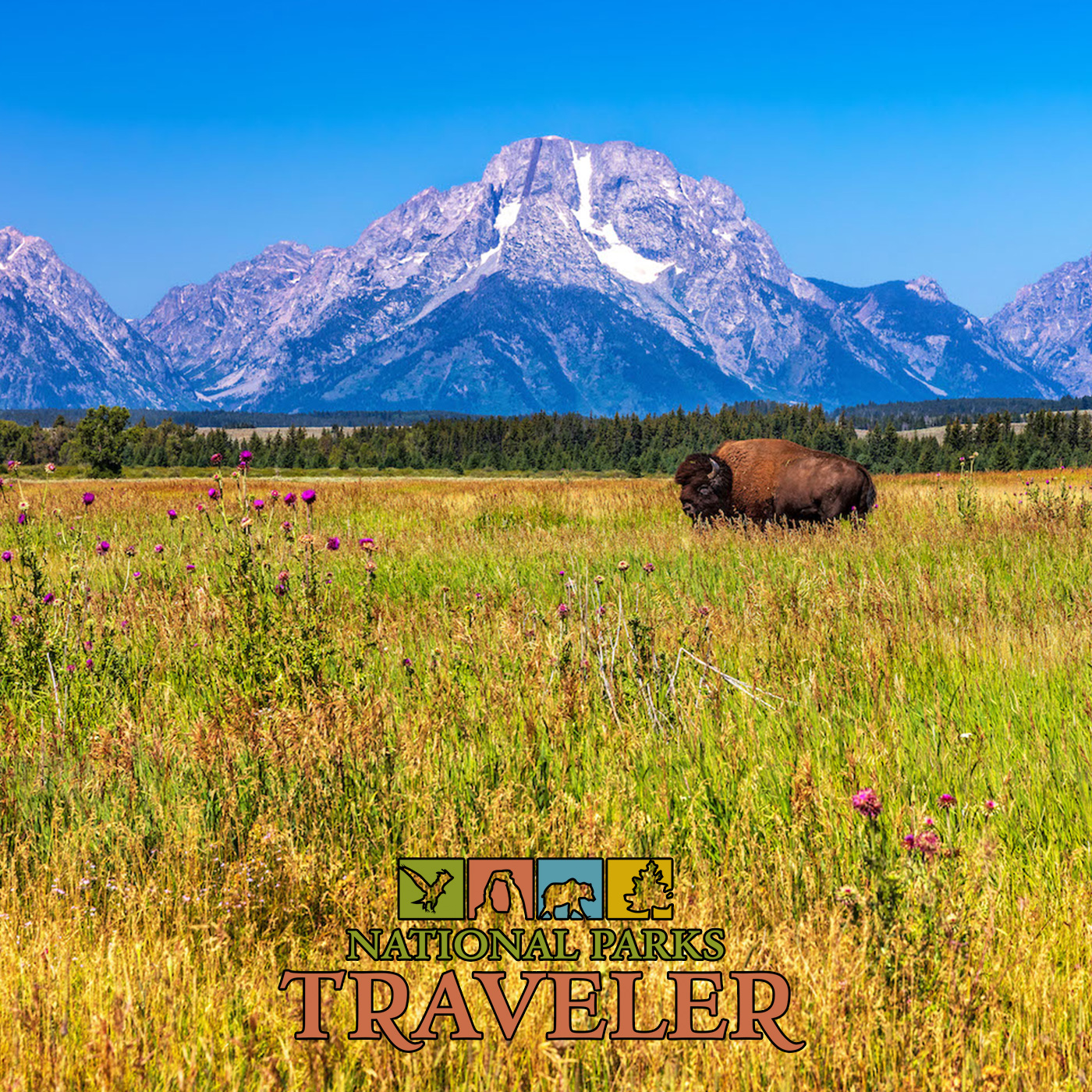
With March madness down to the Sweet 16, and Opening Day of Major League Baseball having arrived, we're going to take a break this week and dive into our podcast archives for this week's show. This is Kurt Repanshek, your host at the National Parks Traveler. My NCAA bracket was busted the very first day, and while the Yankees won their opening day game against the Houston Astros, I don't think they'll go undefeated this year. While I ponder the sports world, we're going to let Lynn Riddick reprise her interviews with National Park Radio and the National Parks, two bands with great names that we think you'll like.
S6 Ep 267National Parks Traveler Podcast | Padre Island's Sea Turtles
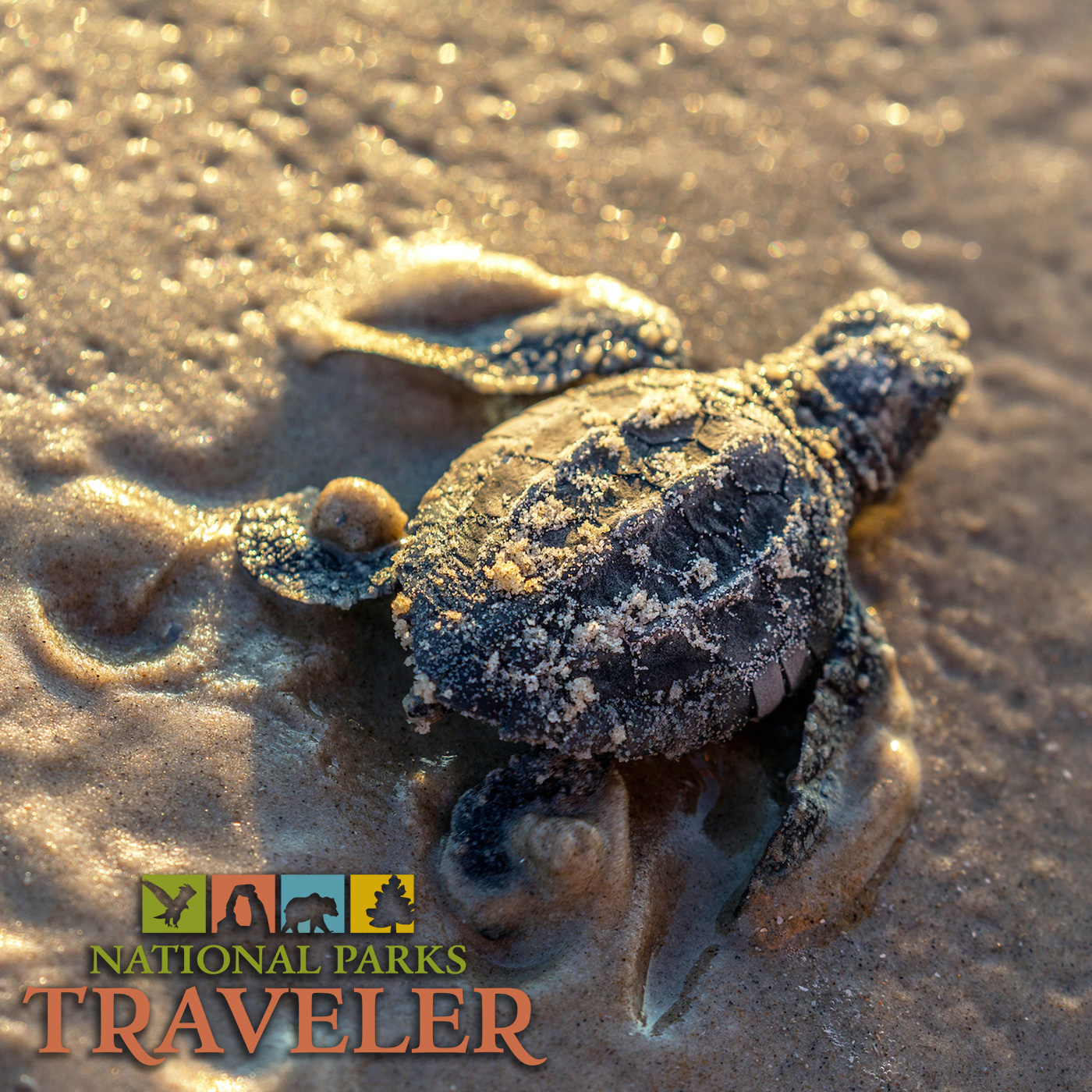
One of the most popular public events in the National Park System was the release of sea turtle hatchlings, shuffling off into the Gulf of Mexico at Padre Island National Seashore. I say was, because the number of those public events has been drastically scaled back in recent years. The programs featuring the release of Kemp's ridley sea turtle hatchlings at Padre Island offered young and old a crash course in conservation of a species that has narrowly avoided extinction, and remains highly endangered. In 2019, before the COVID 19 pandemic shuttered the public hatchling releases at Padre Island, an estimated 16,000 people viewed the releases. In 2020, online video presentations of the events attracted about 1 million viewers. Yet despite the strong conservation value of these events, not just in public education but in the tens of thousands of hatched turtles released to the ocean, advocates of the program say the national seashore's Sea Turtle Science and Recovery program itself is endangered. For after the Park Service recruited Dr. Donna Shaver to build that sea turtle science program, a role that saw her lifted to international prominence, the agency now seems to be squandering her success and hoping she will retire. What's been going on at Padre Island since 2021 has drawn the concern of the Sierra Club's Lone Star chapter, based in Austin, Texas. It recently led a petition drive to raise concerns over the direction of the sea turtle program. Dr. Craig Nazor, the chapter's conservation chair, recently met with Kate Hammond, the Director of the Park Services Intermountain Region, to question the direction of the program.

S6 Ep 266National Parks Traveler Podcast | Polluting the Parks
Air pollution and climate change impacts can have outsized effects on the National Park System, as well as lesser noticed but just as concerning effects. But are those impacts spread across the entire park system, or clustered around a few? Back in 2019 the National Parks Conservation Association looked at how air pollution and climate change were impacting parks. They have updated that study with the latest data from the National Park Service, and the current state of affairs remains concerning. To discuss NPCA's findings, we've asked Ulla Reeves, the interim director of NPCA's Clean Air Program to join us.

S6 Ep 265National Parks Traveler Podcast | State of the Parks 2024
While most visitors to the National Park System view the parks as incredibly beautiful places, or places rich in culture and history, there's a lot that goes on behind the scenes within the parks, and with the National Parks Service. Traveler editor Kurt Repanshek has closely followed the parks and the Park Service for more than 18 years. Over that timespan, he's seen a lot of changes in the parks, and the agency itself. In today's show we are going to offer a sort of "State of the Parks" with you. After all, as much as you enjoy the park system, you have a vested interest in their oversight and management.

S6 Ep 264National Parks Traveler Podcast | National Park Guidebooks
With nearly 430 units in the National Park System, of which 63 are National Parks, we all probably could use a little help in planning our adventures into the park system. But do you simply visit a park's website to plan your trip? Find an online guidebook? Buy a hardcover guidebook? Or simply wing it when you reach your destination? This is Kurt Repanshek, your host at the National Parks Traveler. I must confess, I've taken all three approaches, and I've even written a guidebook to the parks, and there's probably a fair amount of guidebook material on the Traveler. Today we're reaching out to two writers who make their living writing national park guidebooks. Becky Lomax is the author of "USA National Parks: The Complete Guide to All 63 National Parks" from Moon Travel Guides, as well as her latest titles "Best of Glacier, Banff and Jasper: Make the Most of One to Three Days in the Parks", which she co-wrote with Andrew Hempstead, and "Glacier National Park: Hiking, Camping, Lakes, and Peaks". Michael Oswald is the author of "Your Guide to the National Parks", "National Park Maps: An Atlas of United States National Parks", and "The Day Hiker's Guide to the National Parks".

S6 Ep 263National Parks Traveler Podcast | Staying Safe At Hawai'i Volcanoes
Hawai'i Volcanoes National Park is such a unique destination in the National Park System. Located on the Big Island, it's surrounded by the Pacific Ocean, it has rainforests, and it boasts two active volcanoes in Mauna Loa and Kilauea. A visit to Hawai'i Volcanoes comes with a number of options. Do you simply hope to catch an eruption of Kilauea and head somewhere else in Hawaii, do you explore the backcountry with its more than 160 miles of trails, or you try to soak in the Hawaiian culture? Hopefully you'll do all of that and more, because the park is so remarkable and offers so much. But it also can be a dangerous place. While the volcanoes are not explosive like Mount Saint Helens was back in 1980, visitors still can get close to Kilauea's crater, and if they ignore safety, quickly find themselves in trouble or worse. To get a better understanding of Hawai'i Volcanoes National Park, we're joined today by Ranger Nainoa Keanaaina, a law enforcement ranger who grew up near the park, worked in its backcountry, and now is closely involved with search-and-rescue activities and other tasks to keep visitors safe and getting the most out of their vacation.

S5 Ep 262National Parks Traveler Podcast | Vanishing Treasures
From the Rocky Mountains to the West Coast and up to Alaska, there are thousands of historic structures and archaeological sites on National Park System landscapes. They range in variety from homesteader cabins to pre-historic cave dwellings. Taking care of these buildings and archaeological sites is a valuable job for the National Park Service, as they speak to the country's history and its prehistory. But it hasn't always been easy for the agency's Vanishing Treasures program, which was created in 1998. At times administrations have proposed funding cuts for the program, and there's also the issue of too much work for too few staff. To learn more about this program, its accomplishments, and what it's working on today, we're joined by Ian Hough, the National Park Service's Vanishing Treasures program coordinator.

S5 Ep 261National Parks Traveler Podcast | Coming to the Aid of Giant Sequoias
Stand before a giant sequoia tree in Sequoia or Kings Canyon national parks or nearby Yosemite National Park and you're overwhelmed by their size, and assume they're impervious to anything that might be thrown at them. But as we learned from wildfires in 2020 and 2021 in Sequoia and Kings Canyon national parks, that's not the case. The Castle Fire in 2020 and then the KNP Complex and Windy fires in 2021 that burned through the two parks destroyed thousands of giant sequoia trees. Estimates put the losses at more than 14,000 mature trees, or roughly 13-19 percent of the world's giant sequoias. At the Sequoia Parks Conservancy, just days after the KNP complex fires started in September of 2021 plans were made to being raising funds to help the National Park Service restore and recover areas in the two parks that were burned. Today we're discussing the ongoing recovery work with Savannah Boiano, the executive director of the Sequoia Parks Conservancy.

S5 Ep 260National Parks Traveler Podcast | California Mountain Lions
Mountain lions are an incredibly charismatic animal on landscapes within, and adjacent to, the National Park System. But they're seldom seen because of their nocturnal tendencies. There recently was a new report that focused on a comprehensive estimate of mountain lions in California, and the number is much smaller than many had thought it was. To discuss California's mountain lion population, and efforts to protect that population, our guest today is Dr. Veronica Yovovich, conservation scientist at Panthera, the global wild cat conservation organization.

S5 Ep 259National Parks Traveler Podcast | Manassas Battlefield Threats
Manassas National Battlefield Park in Virginia protects one of the defining battlefields of the Civil War. It was there that the first battle of the war was waged, in 1861, it was the scene of a second battle a year later, and it was where Confederate General Thomas Jonathan Jackson got his Stonewall nickname. Despite the significance of Manassas, the Prince William County supervisors in December agreed to rezone 2,100 acres adjacent to the battlefield to allow for the world's largest data processing center to be built there. A lawsuit recently was filed in a bid to stop the development. Among the plaintiffs is the American Battlefield Trust, a non-profit organization that works to protect American battlefields from the Revolutionary War and the Civil War. David Duncan, president of that organization, joins us today to explain why the Trust thinks it is wrong to build the data processing center next to Manassas National Battlefield Park.

S5 Ep 258National Parks Traveler Podcast | National Park Reservation Systems
Mount Rainier National Park is the most recent unit of the National Park System to announce that you'll need a reservation to enter the most popular areas of the park during the busy summer months. At the same time, Shenandoah National Park has announced that a pilot program it's been running for two years for access to Old Rag will be permanent going forward. Reservation systems to get into national parks are controversial. Many folks argue they hinder spontaneity in travel, others like the assurance of knowing they can get into a national park such as Arches, or Rocky Mountain, or Glacier, at a specific time on a specific day. To explore the issue of reservations systems in the parks, we're joined today by Cassidy Jones, the senior visitation manager for the National Parks Conservation Association who keeps an eye on these programs, how they're operating, and whether they make a difference.

S5 Ep 257National Parks Traveler Podcast | The Future of the Endangered Species Act
When Congress passed the Endangered Species Act in 1973, it said that species of fish, wildlife, and plants in the US have been rendered extinct as a consequence of economic growth and development untampered by adequate concern and conservation. Other species of fish, wildlife, and plants have been so depleted in numbers that they are in danger of, or threatened with, extinction. These species of fish, wildlife, and plants are of the aesthetic, ecological, educational, historical, recreational, and scientific value to the nation and its people. 2023 marked the 50th anniversary of the Endangered Species Act, better known as the ESA. Where do things stand with the Act and the plants and animals it was to protect? We're going to explore that today with Andrew Carter and Lindsay Rosa, authors of a new report from Defenders of Wildlife, "The Endangered Species Act: The Next 50 Years and Beyond."

S5 Ep 256National Parks Traveler Podcast | Golden Spike National Historical Park
As a young boy growing up in New Jersey, a year-end holiday treat was setting up our model railroad. It gave me and my two brothers hours of fun and an opportunity to learn a little about the steam age of railroads. Our first railroad featured Lionel O gauge locomotives and cars. Later we moved into HO gauge trains, and many years later I had an N gauge layout. That boyhood love of model railroads drove me to visit Golden Spike National Historical Park in northern Utah not far from the Great Salt Lake. That's where, on May 10th, 1869, the Transcontinental Railroad was completed when the Jupiter and No. 119 steam locomotives of the Central Pacific and Union Pacific railroads met head-on. To learn more about those two locomotives, I headed north to Promontory Summit and caught up with Ranger Cole Chisam, who is the engineer who drives the two locomotives at the park. I'll be back in a minute with Cole.

S5 Ep 255National Parks Traveler Podcast | 2023 Park System Year in Review Part 2
We're closing out the year with a look back at some of the top stories around the National Park System, and involving the National Park Service. We opened this look back a week ago, with Kristen Brengel from the National Parks Conservation Association, and Mike Murray from the Coalition to Protect America's National Parks, discussing issues involving the National Park Service, and outside impacts affecting the National Park System. Today, in the second half of this discussion, we're focusing on natural resource issues in the parks.

S5 Ep 254National Parks Traveler Podcast | 2023 Park System Year in Review Part 1
The past year has been a trying one for the National Park Service, and for many of the units in the National Park System. For the agency, employee morale continued to be a major issue as housing, pay, and leadership remained sore spots for many who worked for the Service. On the ground, climate change continued to impact parks, from sea level rise and more potent storms, to wildfires, and hotter and dryer conditions that adversely affected vegetation, wildlife, and facilities. With time running out on 2023, and 2024 on the horizon, we're going to be taking a look this week and next at many of the top stories that played out, or are playing out, across the National Park System and the National Park Service. Joining us for the conversation are Mike Murray, Chair of the Coalition to Protect America's National Parks, and Kristen Brengel, the Vice President of Government Affairs for the National Parks Conservation Association.

S5 Ep 253National Parks Traveler Podcast | An Underwater Ecological Disaster
Who wouldn't like to visit a tropical paradise? Virgin Islands National Park in the Caribbean is one such paradise. It resides on the island of St. John, and features beaches sparkling white and lined with palm trees and other tropical vegetation. Those beaches are washed by warm, turquoise waters that provide habitat for sea turtles the size of trunks, colorful fishes like blue tang and parrot fish, and even menacing barracuda. While the national park might seem idyllic from above water, beneath the surface of the Caribbean Sea, the once vibrant coral reefs have been impacted by a bleaching event caused by abnormally high ocean temperatures compounded with disease, that together could have devastating consequences. Snorkel or scuba dive in the national park's waters, or those that surround Virgin Islands Coral Reef National Monument, Buck Island Reef National Monument, or Salt River Bay National Historical Park and Ecological Preserve, and in many directions you'll see a seemingly lifeless seascape. To better understand what's going on, we're joined today by Jeff Miller, a National Park Service fisheries biologist who, before he retired back in 2021, worked with the South Florida Caribbean Inventory and Monitoring Network on developing a coral and fisheries monitoring program.

S5 Ep 252National Parks Traveler Podcast | Support Keeping the Lights On
When Kurt Repanshek launched the Traveler back in August of 2005, it was primarily to find stories that he could pitch to magazines. But the magazine world took a nosedive, while at the same time readership on the Traveler continued to grow. Today, between 2.5 and 3 million readers and listeners a year turn to the Traveler to learn more about the National Park System, both its wonders and how it's being managed. Unfortunately, the Traveler hasn't been financially sustainable, and can't continue unless we can attract the funding necessary to employ a small staff, upgrade IT resources, and allow us to tackle the growing number of critical stories that fall by the wayside because more and more news organizations are paring back, or totally going out of business. Rebecca Latson, the Traveler's contributing photographer, and Lynn Riddick, who hosts many of the Traveler's weekly podcast, discuss their participation in pulling together the Traveler's editorial content, and how that's given them greater appreciation of the value of having a news organization whose focus is solely on national parks and the National Park Service.

S5 Ep 251National Parks Traveler Podcast | Speak Up For The Swamp
It's been six years since an oil company headed out across the marl prairie of Big Cypress National Park with vehicles weighing as much as 30 tons to search for oil reserves. Signs of that work continue to show on the prairie, despite stringent National Park Service requirements for restoring the landscape after the searching was completed. Located to the north of Everglades National Park, Big Cypress is a "split estate" – the Park Service owns the surface of the more than 720,000-acre landscape, while the mineral rights are privately owned – energy exploration and possible development were allowed in the preserve's enabling legislation. But how that exploration is allowed to be performed can be a matter of contention. While the National Park Service sounds mostly satisfied with the restoration work done by Burnett Oil, the National Parks Conservation Association strongly disagrees. The park advocacy group just released a 24-page report, "Speaking Up For The Swamp," that points to remaining scars from that exploration work on the preserve. We'll be back in a minute with Melissa Abdo, NPCA's Sun Coast regional redirector, to discuss that report.
S5 Ep 250National Parks Traveler Podcast | Exploring Arches National Park
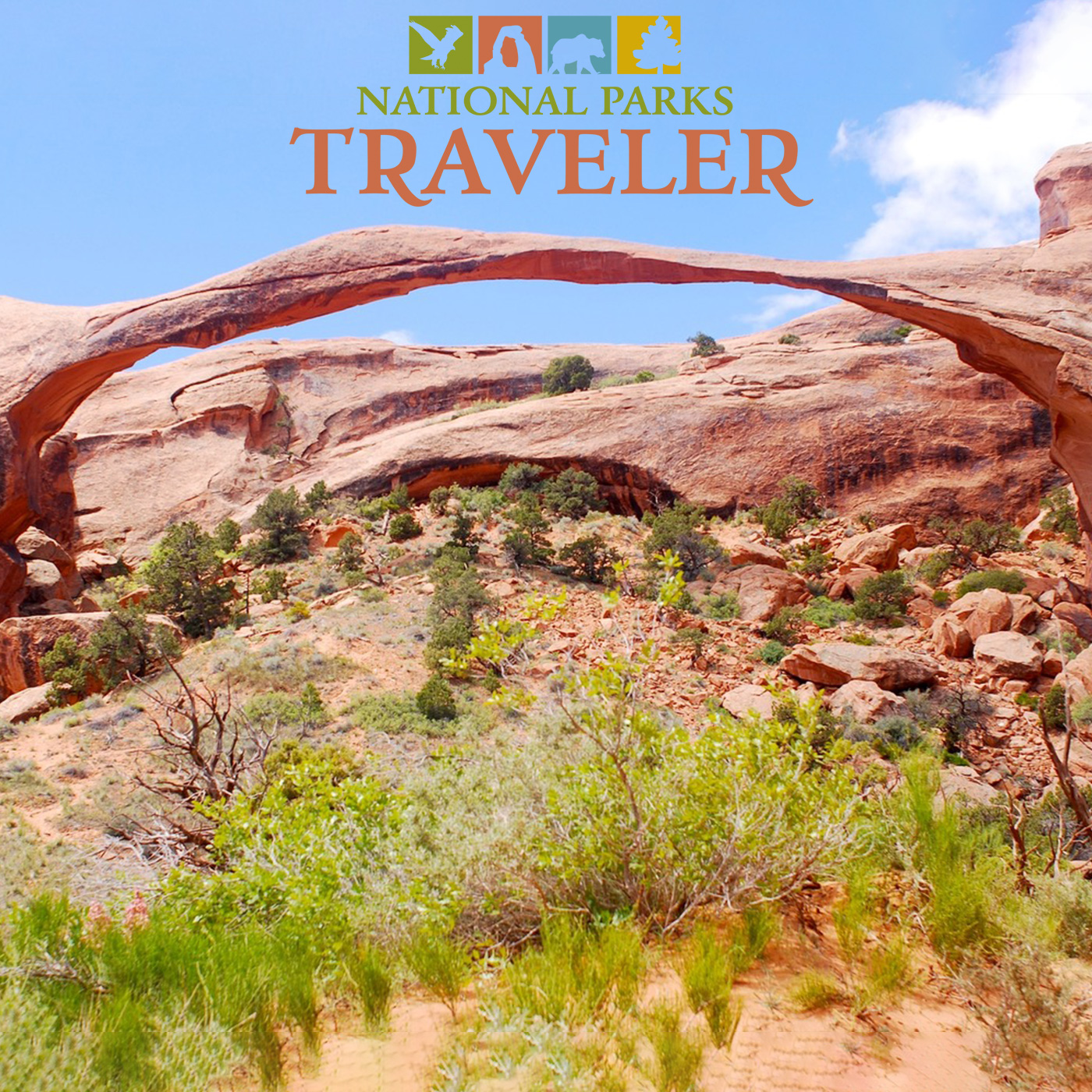
Utah has five spectacular national parks, and Arches is one of them. It's a relatively small park. The scenic drive is only 18 miles long, ending at the Devil's Garden area, but you'll have incredible views of the reddish rockscape the entire way right from your vehicle. Of course, it's always better to get out on the trails and take in as much off-road as your timetable and legs will allow. Two of the park's most impressive arches – Delicate Arch and Landscape Arch – are well worth the hiking you'll need to tackle to stand in awe before them. This week the Traveler's Lynn Riddick and her trip companion, Tica Nathan, spent a day and a half in the park and offer up some of their experiences and observations.

S5 Ep 249National Parks Traveler Podcast | Cape Hatteras Shorebirds and Sea Turtles
Throughout history the barrier islands that today are home to Cape Hatteras National Seashore have been attractive to wildlife. A variety of sea turtle species come ashore to lay their nests, and a variety of shorebirds settle there, too, to lay their eggs. But the thing with wildlife nesting on the beaches of Cape Hatteras is that one great season can be followed by a poor one. Influencing the outcome can be human disturbances, storms, and predation. How was 2023 for piping plovers, a threatened species, at Cape Hatteras, and what about the sea turtles? To get the answers to those questions we've invited Meaghan Johnson, the seashore's Chief of Resource Management and Science to join us.
S5 Ep 248National Parks Traveler Podcast | Budgetary Blues
It was just over a month ago when the federal government was staring at the possibility of a shutdown. Well, little seemingly has changed in the ensuing four weeks, other than that the House of Representatives has a new speaker in Mike Johnson from Louisiana, and the full chamber has settled on its budget numbers for fiscal 2024…which started back on October 1. While most national parks likely will close if there is a government shutdown on November 17, what is more pressing for the National Park Service is what budget numbers Congress will settle on for the current fiscal year and whether President Biden will go along with them. Our guests today are John Garder, the senior director for budget & appropriations at the National Parks Conservation Association, and Mike Murray, a long-time NPS employee and superintendent who now serves as chair of the Coalition to Protect America's National Parks. They're here to discuss the current situation facing the Park Service and Park System.
S5 Ep 247National Parks Traveler Podcast | The Search for WPA Park Posters
When a young park ranger was asked by his supervisor to clean out an old barn at Grand Teton National Park in the early 1970s, he discovered a dusty and stained blue, grey, and green poster inviting folks to "Meet the Ranger Naturalist at Jenny Lake Museum. This young ranger, Doug Leen, soon discovered that it was one in a series of posters created by the Works Progress Administration to put artists to work and promote visitation to the national parks during the late 1930s. This week the Traveler's Lynn Riddick sits down with Doug to discuss his newly released book documenting his life-long journey to find the original WPA posters and protect them.
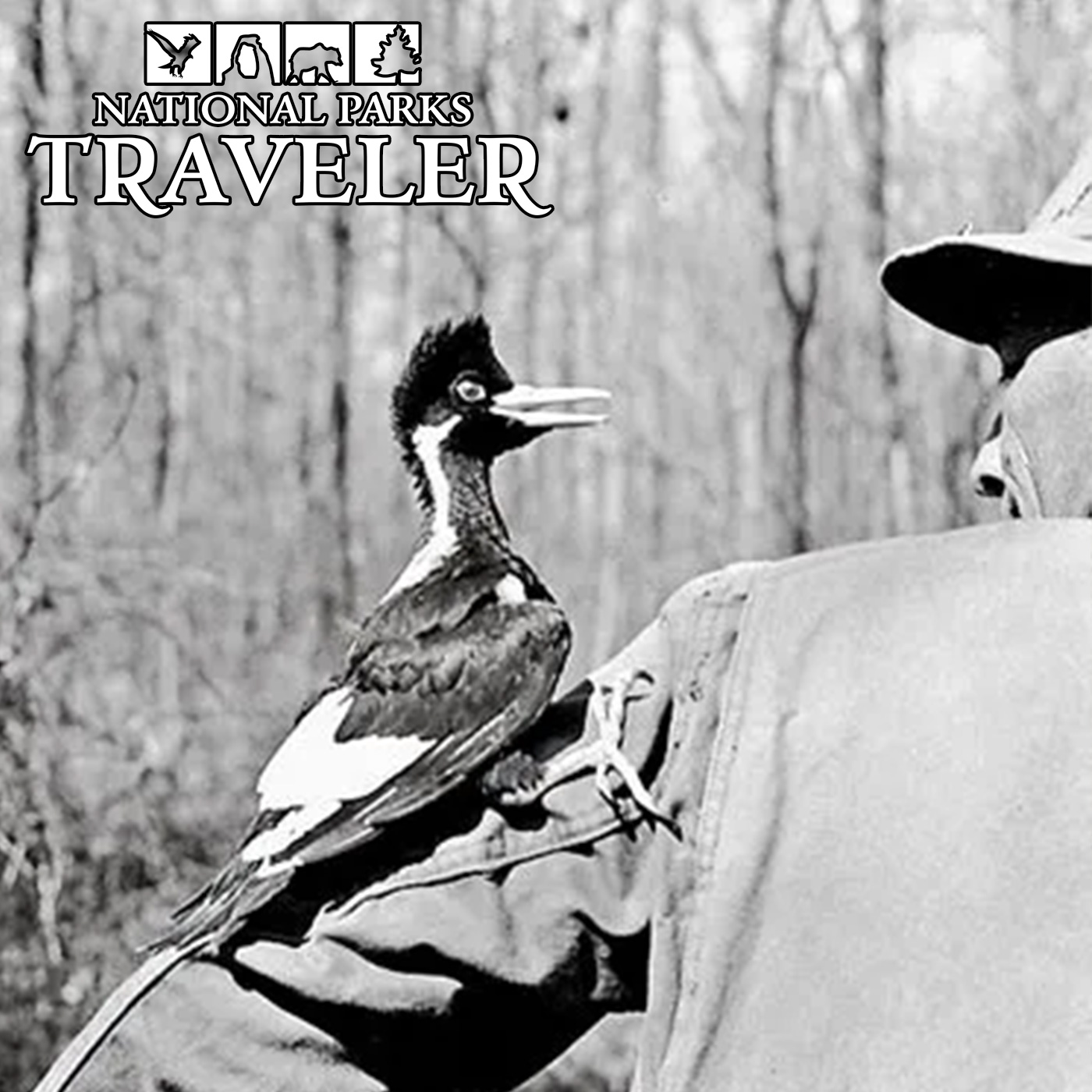
S5 Ep 246National Parks Traveler Podcast | Extinction is Forever
There are more than 2,000 species currently listed as threatened or endangered under the Endangered Species Act. And while species that gain protection under the act have a great chance to survive, not all do. Just recently the U.S. Fish and Wildlife Service announced that 21 species – birds, fish, mussels, plants, and even a bat – were officially declared extinct. We're going to discuss that news, and the role of the Endangered Species Act in striving to prevent extinction, with Noah Greenwald, the endangered species director at the Center for Biological Diversity, and Lindsay Rosa, the vice president of conservation research and innovation at Defenders of Wildlife.
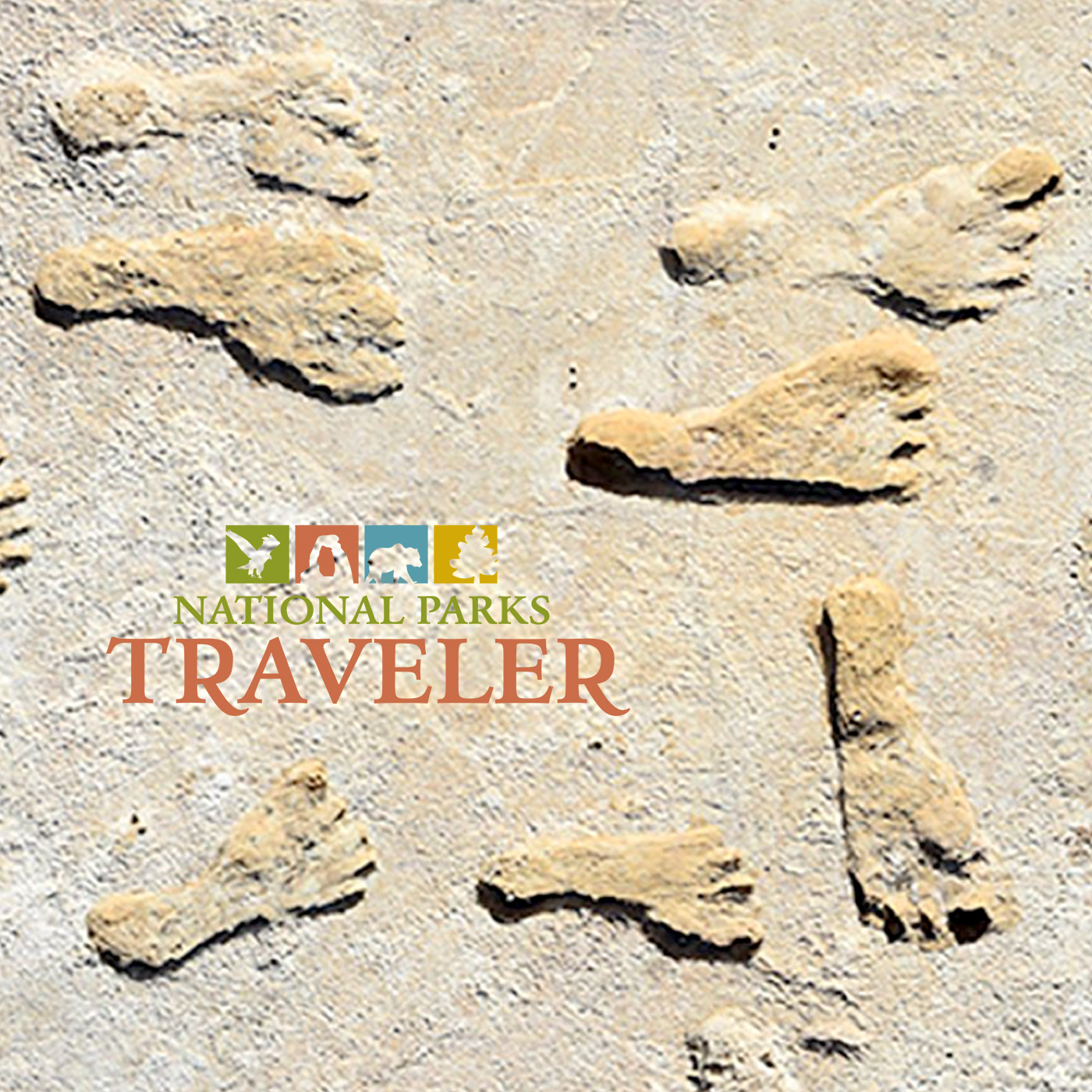
S5 Ep 245National Parks Traveler Podcast | Footprints in Time
As you walk through the white gypsum sands of White Sands National Park in southern New Mexico, your footprints will likely be quickly erased by shifting winds. So it's somewhat of a phenomenon of nature that the oldest footprints ever discovered in North America are not only found here — in perfect form, having withstood time and weather — but show that ancient humans lived here much earlier than previously believed. A research team from the U-S Geological Survey earlier this month strengthened their findings released in 2021 that dated these footprints to as much as 23,000 years old. That finding erased previous theories that humans first arrived in North America some 11,000 years ago, after the end of the last Ice Age. This week the Traveler's Lynn Riddick talks with key researchers from the U.S. Geological Survey team about their initial analysis of the footprints as well as their follow-up study that confirmed the age dating…and what it all means to our long-sought understanding of human colonization on this continent.
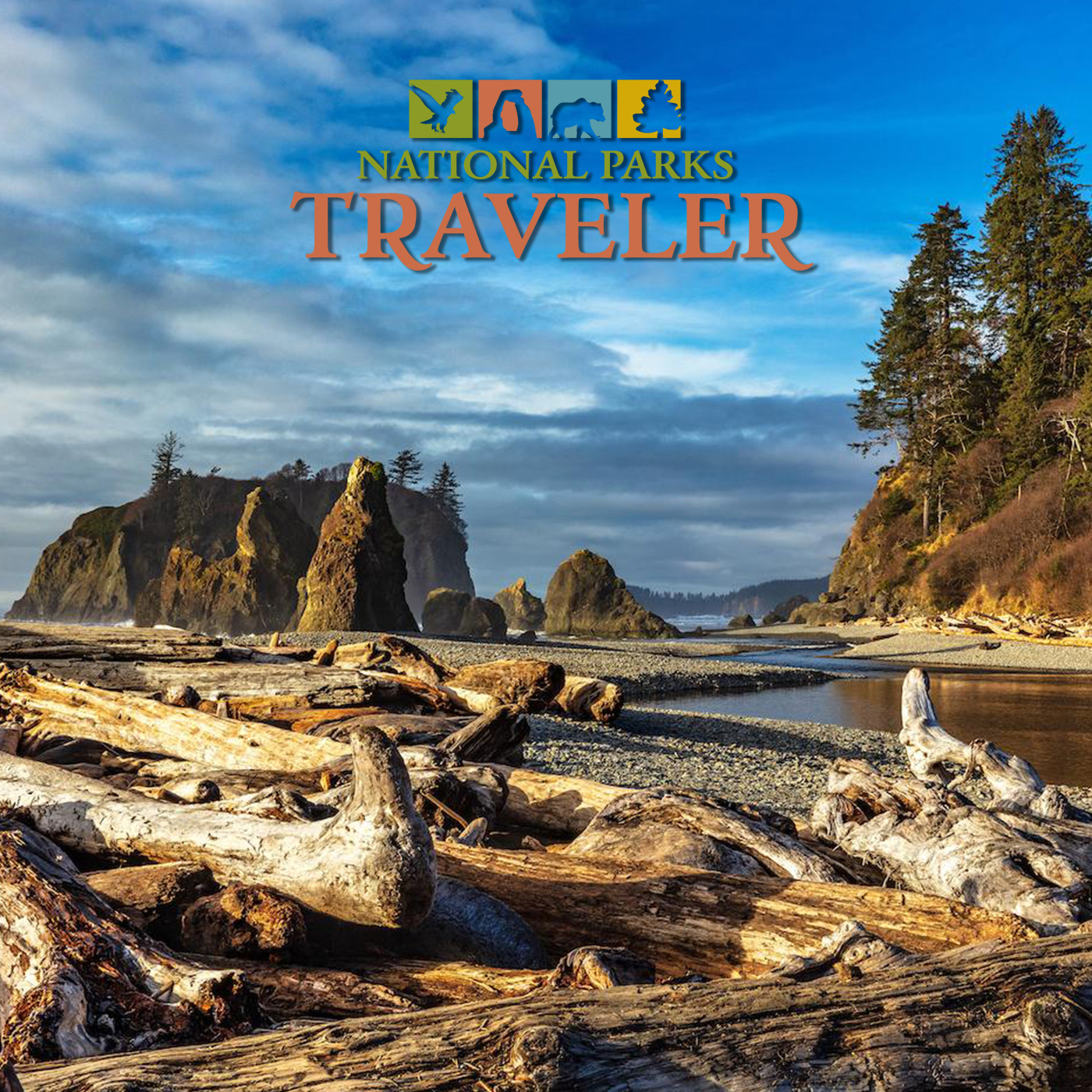
S5 Ep 244National Parks Traveler Podcast | Salmon, Cedar, Rock and Rain
The Olympic Peninsula of Washington state is a wild and wooly place, even now in the 21st century. That's no doubt largely because the heart of the peninsula is taken up by Olympic National Park, a more than 900,000-acre jigsaw puzzle of glaciers and peaks, rainforests, rivers, and Pacific coastline. You might view Olympic National Park as three parks in one: The coastal area battered by the Pacific Ocean, the inland rain forests that cloak the Hoh, Quinault, and Sol Duc areas, and the high, craggy landscape embracing nearly 200 glaciers. If you've never visited the park, or have only experienced it once for a few days, our guest on today's show will no doubt make you want to start planning for a trip to Olympic National Park. Tim McNulty is a prolific writer who lives in the shadow of the national park. He has a new book out. Salmon, Cedar, Rock and Rain, that is a perfect introduction on the ecosystem of not just the national park but of the surrounding Olympic Peninsula.
S5 Ep 243National Parks Traveler Podcast | Canadian Rockies
Snow has fallen in the upper reaches of Yellowstone and Glacier national parks, and fall weather in general is making a national park trip in the northern half of the United States not terribly appealing. October is a season of transition across the National Park System. Cooler, and in some cases colder, weather is sweeping across the northern states, while southern states are not as blazingly hot as they were just a month or two ago. But school is in session throughout the country, so if your vacation plans are tied to school, you're probably not heading anywhere now for an extended trip. Which makes it the perfect time to start considering where you might want to go next year. Here in the U.S. you don't need to limit your choices to the National Park System. Canada is just a short drive, or flight, away. Rebecca Latson, Traveler's contributing photographer and columnist, just returned from a trip to the Canadian Rockies, and is here to discuss what she found and what you might consider.
S5 Ep 242National Parks Traveler Podcast | 2023 Government Shutdown
For the second time in five years, and the third time in the past decade, the United States government was poised to shut down this weekend because of an impasse in the House of Representatives over how to fund the government. And, as a result, the National Park System was poised to shut down. Indeed, by the time you're listening to this episode, the parks might already have been closed and visitors already in them being told how soon they must exit. Different administrations in Washington take different approaches to whether to shut down the parks or keep them open during a government shutdown. Back in 2013 the Obama administration elected to close the parks. Five years ago, the Trump administration decided to keep them open, albeit with skeleton Park Service staffs. To learn more about the impacts of government shutdowns on the National Park System, both physical and financial, we're joined today by Bob Krumenaker, a recently retired Park Service veteran whose last position was superintendent of Big Bend National Park, and John Garder, the senior director for budget & appropriations at the National Parks Conservation Association.

S5 Ep 241National Parks Traveler Podcast Episode 241 | Guns, Bears, and Mammoth Cave
For the past 240 weeks, the National Parks Traveler has brought you weekly podcasts examining life, news, and exploration of the National Park System. It's been a long-running series that has never lacked for topics. We hope you've found those episodes as informative and interesting as we have. For this week's show, we're diving into shows from past years to bring you two we think you'll find fascinating. One revolves around the question of whether a gun can keep you safe from bears in the backcountry of parks. We discuss that topic with Tom Smith, a professor of wildlife sciences at Brigham Young University and a member of the National Rifle Association. In the second part, we look back at Lynn Riddick's journey underground at Mammoth Cave National Park.
S5 Ep 240National Parks Traveler Podcast | Grand Teton State of the Park
Grand Teton National Park is an incredible place, rich in wildlife, mountaineering history, pioneer history, and Native American history. And, rightfully so, it's one of the busiest parks in the National Park System. In 2021 the park saw nearly 4 million visitors, as the public rushed back out into nature after the worst of the Covid pandemic. Last year it counted 2.8 million visitors. How many visitors are too many? How has that growing visitation impacted the health of the park, the tasks confronting the National Park Service staff in the park, and your experience as you explore Grand Teton? We're going to discuss those topics today with Chip Jenkins, the park superintendent.
S5 Ep 239National Parks Traveler Podcast | The American Buffalo with Dayton Duncan
Bison have been in the news recently. The Interior Department this past week released $5 million to help fund both bison restoration and grasslands rehabilitation. And next month Ken Burns and Dayton Duncan will release their latest documentary, The American Buffalo. The American Buffalo documentary traces the history of how bison nearly went extinct, and how they came back. It will be delivered in a two-part, four-hour series on public television. Earlier this summer I talked to Dayton Duncan about the project, and we're rerunning that conversation to remind you of the documentary that is set to debut on October 16.
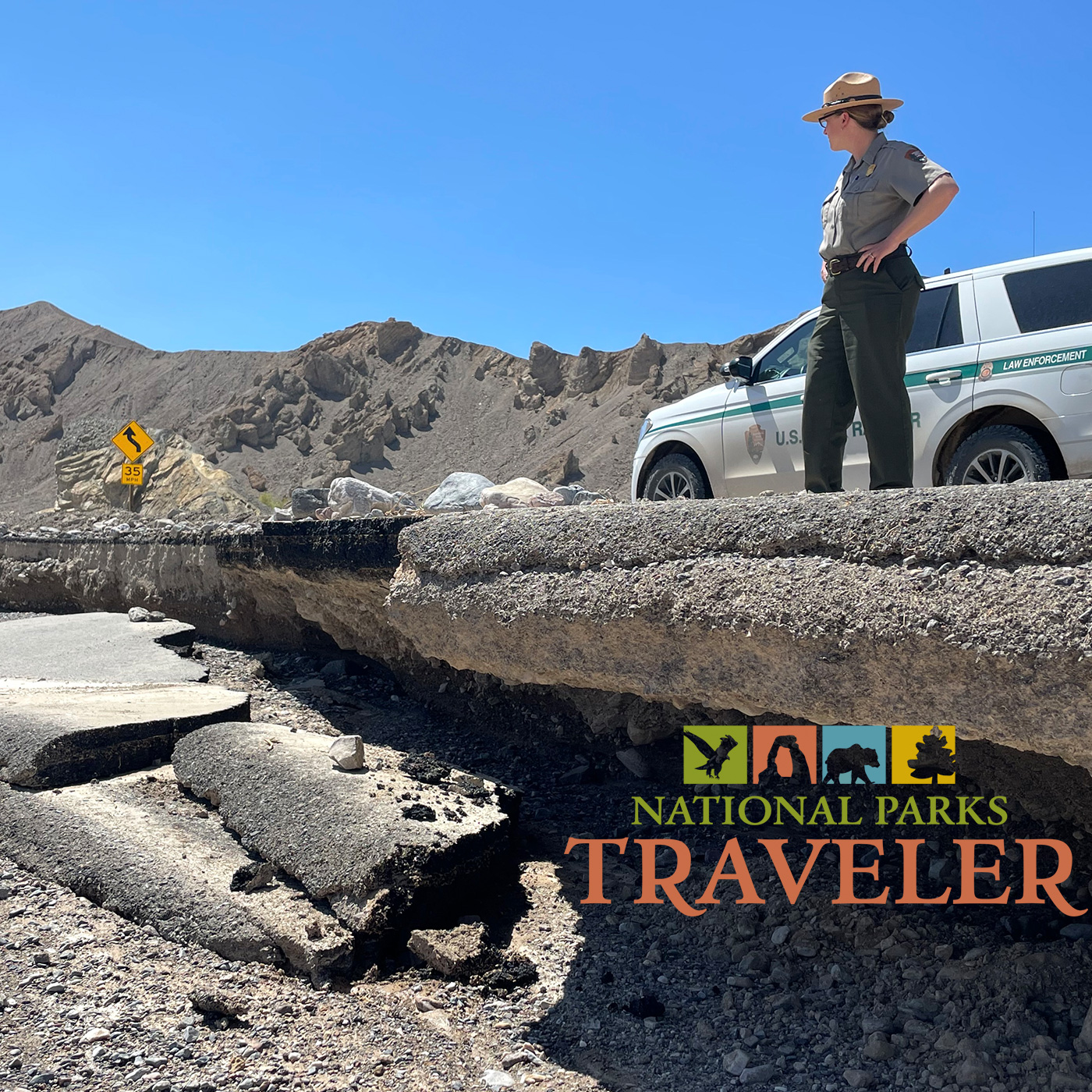
S5 Ep 238National Parks Traveler Podcast | Flooded Death Valley
It's been nearly eight years since a storm of historic proportions pounded Death Valley National Park and did extensive damage in Grapevine Canyon in the northeastern corner of the park where Scotty's Castle stands. The popular tourist attraction still has not reopened as repair work continues. That storm was described as a once-in-a-thousand years storm. A year ago, rainstorms again pounded Death Valley. In roughly three hours 1.5 inches of rain fell on the park and did considerable damage to roads and water systems and shut down the park. That storm also was described as a once-in-a-thousand-years storm. Another powerful storm hit Death Valley National Park two weeks ago. On August 20, 2.2 inches of rain fell at Furnace Creek, according to the National Weather Service, making it the rainiest day on record in the park. For some perspective, during a full year the park usually sees only 2.15 inches of rain. To discuss these storms and how the National Park Service is responding to them we're joined today by Abby Wines, the park's management analyst.

S5 Ep 237National Parks Traveler Podcast | 17,000 Mile North American Road Trip
If you were to plan an extended trip through the National Park System, how would you do it? Where would you go first? How would you prepare? In this week's podcast, the Traveler's Lynn Riddick talks with Cristian Garza, who recently returned from a four-month jaunt through the parks. He clocked some 300 hours of driving across 17,000 miles of the U.S. and Canada and shares some of his experiences and perspectives with Lynn.

S5 Ep 236National Parks Traveler Podcast | Wilderness Watch
In 1964, passage of The Wilderness Act promised Americans that there would be lands designated for preservation and protection in their natural condition. It was a promise from Congress that the American people of present and future generations would be able to enjoy the benefits of an enduring resource of wilderness." When President Johnson signed the act into law, he said that "If future generations are to remember us with gratitude rather than contempt, we must leave them a glimpse of the world as it was in the beginning, not just after we got through with it." Where do things stand with that promise? Has it lived up to its lofty goal? To seek an answer to that question, and to get a better understanding of management of wilderness areas, and potentially wilderness, in the country, we've invited George Nickas and Dana Johnson to join us. George is executive director of Wilderness Watch, a national organization dedicated to defending the nation's National Wilderness Preservation System and keeping it wild, and Dana is the organization's policy director.

S5 Ep 235National Parks Traveler Podcast | Hot Waters Wash Florida's National Parks
The New York Times recently summed up one of the biggest climate change stories of the year so far. The planet's average sea surface temperature spiked to a record high in April, and the ocean has remained exceptionally warm ever since, the paper reported. In July, widespread marine heatwaves drove temperatures back up to near record highs, with some hot spots nearing 100 degrees Fahrenheit. In late July, water temperatures off the southern tip of Florida surpassed 100 degrees Fahrenheit. What are the impacts of this hot water to Dry Tortugas, Everglades, and Biscayne national parks? We're going to explore that question with Dr. Steve Davis, the chief science officer for the Everglades Foundation.
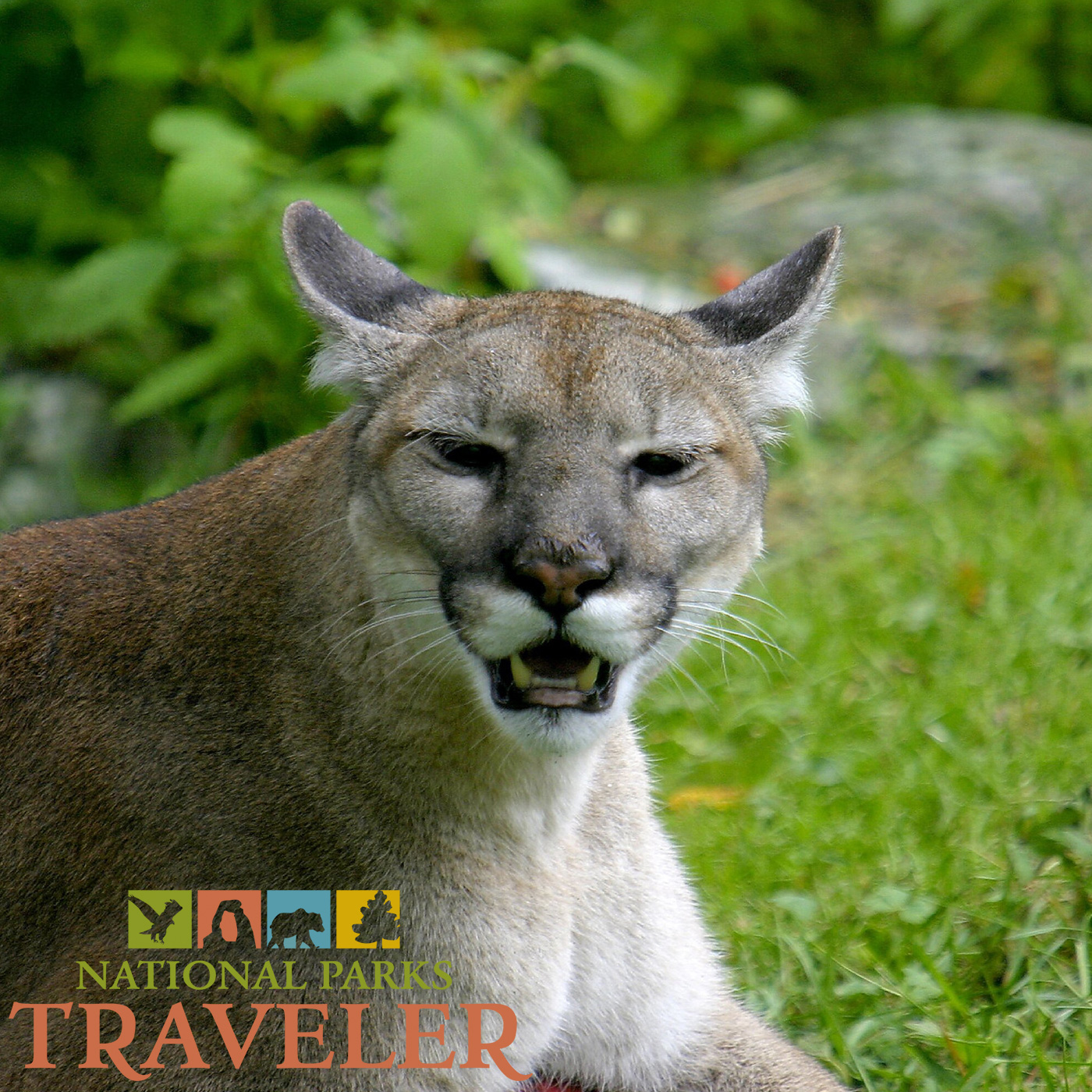
S5 Ep 234National Parks Traveler Podcast | South Florida Wildlands Association
Majestic wildlife abounds across the National Park System. You can see wolves, grizzlies and bison in Yellowstone, California condors at Pinnacles and Grand Canyon, moose in Voyageurs, and sea turtles at Cape Hatteras and Padre Island, and elephant seals at Point Reyes National Seashore, just to name some of the possibilities. Another charismatic species in the park system, but one you're not likely to see, are panthers. Also known as mountain lions, or cougars, depending on the region of the country. These are big stealthy cats, most often on the move after dark, which is why you're not likely to spot one. South Florida is best known as home for the Florida panther. Another reason you might not spot one of these cats is because there are so few of them. Conservationists at the South Florida Wildlands Association fear the population of the iconic Florida Panther may have dwindled to as few as 100 cats. They don't know for sure, though, because the U.S. Fish and Wildlife Service has not released a species status assessment and population count since 2009. And without current information, the fight for the panther's existence and efforts to curtail development that threatens it, are more challenging than ever. In this week's podcast, the Traveler's Lynn Riddick speaks with the executive director of that organization to hear about their latest efforts to address the assaults on the panther's habitat and their approach in protecting this incredible, endangered creature.
S5 Ep 233National Parks Traveler Podcast | National Parks Expansion For Biodiversity
Why expand the National Park System? That can be a controversial question. There are many folks who would love to see additional units added, and there are just as many who say the National Park Service does not have the staff or funding to adequately maintain the existing park system. We've been exploring that question in recent weeks and months, and an argument can be made that since national parks carry the highest protection of natural resources in the country, we should expand the park system to better protect biodiversity and, if possible, help it grow. In this week's show, Lynn Riddick helps me present you with a story that explores the question of expanding the National Park System for the sake of biodiversity. If you prefer reading the story, rather than having it narrated to you, the long-form post is on the Traveler. At the end of our story about expanding the park system, Lynn returns with a short audio postcard from Big Cypress National Preserve.
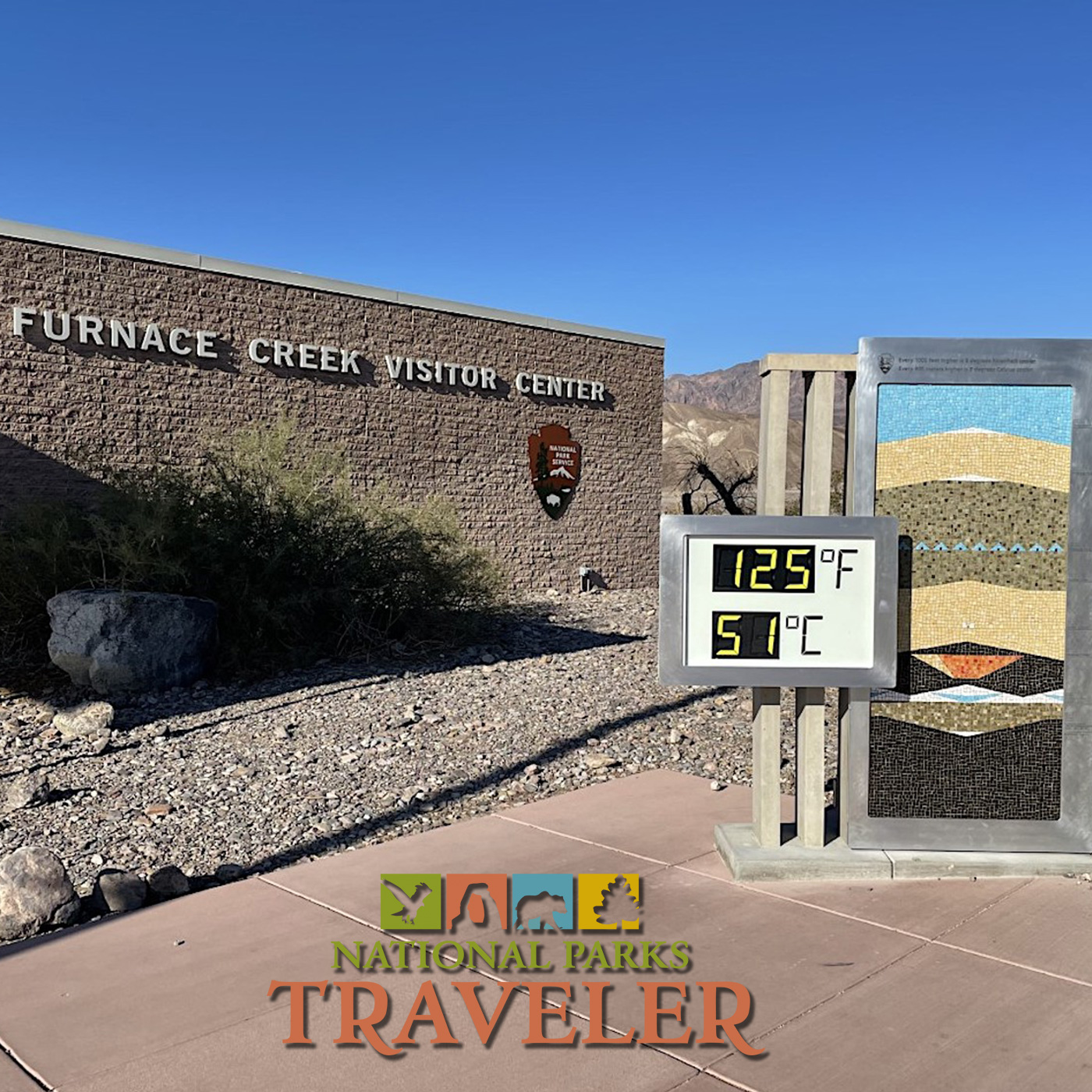
S5 Ep 232National Parks Traveler Podcast | Heat Week In The Parks
This summer has been one of the hottest for the entire world, with temperatures rising above 100 degrees Fahrenheit quite frequently. Here in the United States, there are many places where the heat has gone well above 100 degrees. And at Death Valley National Park, the temperature this past week attracted crowds hoping to see it reach 130 degrees. In the National Park System, there are places where summertime heat is routine, something the rangers have become accustomed to and know how to cope with, and something not all park visitors know how to deal with. To get a sense for conditions this past week in two of the hottest places in the park system, we've reached out to rangers at Grand Canyon National Park and Death Valley National Park.

S5 Ep 231National Parks Traveler Podcast | Stone Road Press and The National Parks
There are seemingly endless guides to exploring the national parks: Moon, National Geographic, Lonely Planet, and various other corporate publishers. Indeed, it's rare these days that you find a writer who takes on the role of both guidebook author and publisher. Most of these guidebooks take the same approach: a nice overview of the park in question, followed by a breakdown of places to stay, where to eat, things to do, nearby attractions. Mike Oswald is swimming against the current with his park guidebooks. First he came out with "Your Guide to the National Parks," a thick, hefty volume that has won awards from the Independent Book Publishers Association. Along with the usual park basics, he fills his chapters with history, maps that point out some of his favorite hikes and don't-miss attractions, some details on plants and animals, a suggested vacation planner, and of course, full-color photographs of some iconic settings. Today we're sitting down with Mike to discuss not only his decision to "go independent against those giants in the guidebook publishing world," but also his latest park-related projects.
S5 Ep 230National Parks Traveler Podcast | Mobile-Tensaw River Delta Conservation
When you talk about expanding the National Park System, any expansion should be strategic. Whether it's to protect a cultural or historical site, or one rich in natural resources. Today, if you want to protect natural resources, it should be done with an eye towards protecting biodiversity. There is too much at stake today to expand the National Park System just for the sake of adding units. The country is losing too much of nature to development, bird populations have been plummeting, and climate change is challenging many other species. So where do you look to protect biodiversity from the human footprint? One possible area is the Mobile-Tensaw region of Alabama. To gain an understanding of what's there to protect, we've reached out to Bill Finch, Director of the Paint Rock Research Center in Alabama, and who has been involved in Alabama conservation for more than 30 years.