
My Weird Prompts
6,606 episodes — Page 119 of 133

S2 Ep 719Why Pilots Are Turning Off Their GPS Mid-Flight
In an era where we take precision navigation for granted, the invisible infrastructure of the sky is under attack. Global positioning system (GPS) jamming and "spoofing"—the act of sending deceptive signals—have surged across Eastern Europe and the Middle East, turning routine commercial flights into high-stakes navigation challenges. This episode dives into the technical mechanics of electronic warfare and explains why a satellite signal is as fragile as a whisper in a crowded stadium. We explore the terrifying reality of cockpit "terrain" warnings triggered by fake data and the life-saving backup systems pilots use when their primary tools fail. From the resurgence of 20th-century radio beacons to the self-contained precision of laser gyroscopes, learn how the aviation industry is adapting to a world where the ground beneath a plane isn't always where the instruments say it is. It’s a deep dive into the "digital shields" protecting cities and the collateral chaos they create for the three hundred tons of aluminum and passengers flying overhead.

S2 Ep 718Jericho’s Shadow: Israel’s Missile Program & Ambiguity
In this episode, we peel back the layers of one of the world’s most secretive defense initiatives: Israel’s Jericho ballistic missile program. We trace its evolution from a 1960s French collaboration to the high-tech Jericho III, comparing its surgical precision against Iran’s massive, volume-based arsenal to understand the current regional balance of power. Finally, we examine the complex doctrine of "amimut," or nuclear ambiguity, discussing why staying silent about strategic capabilities remains Israel’s most powerful diplomatic tool—even as regional tensions and Iran's "threshold state" status challenge the long-standing policy of secrecy. This deep dive explores how mystery acts as a force multiplier, the legal intricacies of the Non-Proliferation Treaty, and whether the era of "polite fictions" can survive a rapidly changing geopolitical landscape.

S2 Ep 717Mach 5 and Beyond: Unpacking Iran’s Missile Arsenal
From the "War of the Cities" in the 1980s to the high-tech battlefields of today, the Iranian missile program has evolved from reverse-engineered Scuds into a diverse arsenal of precision-guided weapons. This episode dives deep into the technical milestones of this 40-year journey, highlighting the pivotal roles played by North Korean engineering and Chinese guidance systems. We demystify the science of hypersonic flight, explaining why speed is only half the story when it comes to bypassing modern radar. Listeners will gain a clear understanding of the "plasma shield" effect and why maneuverability makes these weapons a nightmare for defense planners. We also analyze the layered defense architecture currently protecting the skies, from the terminal-phase precision of THAAD to the historic exo-atmospheric capabilities of the Arrow 3 system. It’s a technical exploration of the physics of flight and the engineering behind global security.

S2 Ep 716Nuclear Precision: Striking Sites Without the Fallout
As global tensions rise and nuclear breakout times shrink to mere days, the prospect of military intervention becomes a central focus of international security. This episode explores the technical realities of targeting nuclear facilities, explaining why striking an enrichment plant differs fundamentally from hitting a power reactor. We dive into the physics of bunker-busters and the sophisticated surveillance tools—from thermal imaging to "sniffing" the wind for noble gases—that allow intelligence agencies to peer into facilities that have gone dark.

S2 Ep 715The Modesty Trap: How to Sell Yourself Without Bragging
For many professionals, the act of self-promotion feels less like a career necessity and more like a moral failing. Rooted in cultural "scripts" that prize modesty above all else, this internal resistance can lead to "information asymmetry," where qualified candidates are overlooked simply because they refuse to speak up. This episode explores the psychological roots of the "Tall Poppy Syndrome" and offers a practical toolkit for reframing achievements as objective data. By shifting from "bragging" to "reporting," you can advocate for your value without losing your integrity or your soul.

S2 Ep 714The Billion-Year Backup: Escaping the Digital Dark Age
As we celebrate a major milestone, we dive into the high-stakes world of long-term data preservation and the looming threat of a "Digital Dark Age." From nickel-etched libraries on the Moon to terabytes of data stored in indestructible quartz glass, we explore how humanity is attempting to back up its collective memory for billions of years. Join us as we examine the projects—and the philosophy—behind ensuring our digital footprint survives the test of deep time.

S2 Ep 713The AI Cyber Frontier: Israel as a Global Testing Ground
In our landmark 700th episode, we examine the startling Radware report that ranks Israel as the world's primary target for geopolitical cyberattacks, accounting for over 12% of global digital aggression in 2025. We dive into the blurred lines between "hacktivist" groups like Arabian Ghosts and state-sponsored actors from Iran and Russia, revealing how these entities use digital masks to maintain plausible deniability while targeting critical infrastructure. Most importantly, we explore the alarming shift in the landscape as generative AI evolves from a developer’s co-pilot into a reasoning engine for automated warfare. From "living off the land" techniques to AI-generated polymorphic code, this episode unpacks how tools like Claude and Anthropic are being leveraged to find exploits in seconds, democratizing high-level cyberattacks and changing the rules of engagement forever. Join us as we unpack the technical and psychological fronts of the modern digital storm.

S2 Ep 712AI Video: The New Frontier of Hollywood Production
In this milestone 700th episode, the discussion shifts to the "final boss" of generative AI: high-fidelity video. While AI music paved the way for creative disruption, the stakes in Hollywood are significantly higher due to massive production budgets, complex union agreements, and the technical demands of cinematography. We explore how industry giants like Netflix and Disney are navigating this transition in early 2026, moving beyond experimental clips to professional-grade tools like Sora 3 and Runway Gen-4. The conversation dives deep into the "Synthetic Media Transparency Framework" and the legal minefield of copyrighting AI-generated content. As studios weigh the massive cost savings of synthetic B-roll against the risk of losing intellectual property protections, a new strategy is emerging: the creation of proprietary "walled garden" models trained on exclusive studio catalogs. From technical hurdles like temporal consistency to the ethical implications of digital twins, this episode provides a comprehensive look at how the film industry is attempting to harness generative technology without dismantling its own business model.

S2 Ep 711Onion in the Pan: The High-Stakes Rise of AI Music
This episode explores the staggering evolution of AI-generated music, moving from the glitchy experiments of the past to the studio-quality productions of 2026. Using the viral track "Onion in the Pan" as a starting point, we examine the shift from AI as a corrective tool to AI as a creative agent capable of replacing session musicians and composers. We dive into the existential dread facing the creative community, the distinction between music as art versus utility, and the massive legal battles over training data and "Data Sovereignty" that will define the future of sound.

S2 Ep 710Defining the "Crime of Crimes": The Gaza Genocide Case
This episode explores the "crime of crimes"—genocide—and the legal framework established by Raphael Lemkin in the wake of the Holocaust. We dive deep into the ongoing case at the International Court of Justice, examining South Africa’s allegations against Israel and the specific legal threshold of "special intent" required to prove such a charge. By analyzing the patterns of destruction in Gaza alongside the rhetoric of political leaders, we unpack the complexities of international law versus public perception. We also examine Israel’s defense, which centers on the challenges of urban warfare, the role of human shielding, and the right to self-defense following the October 7th attacks. This discussion navigates the shifting power dynamics in progressive thought and the risks of devaluing a term forged to describe the most extreme human atrocities.

S2 Ep 709ESD Myths: Protecting Your PC from the Silent Killer
Many PC builders believe that if they don't feel a zap, their components are safe, but the reality of Electrostatic Discharge (ESD) is far more dangerous. In this episode, we explore why as little as 10 volts—a charge a hundred times smaller than what a human can feel—can punch microscopic holes in modern silicon, leading to frustrating "latent defects" that cause system crashes months down the line. We separate fact from fiction regarding common DIY safety tips, explaining why the "touch the metal" method is often insufficient and how environmental factors like humidity act as nature’s anti-static spray. From the specific engineering behind silver shielding bags to the risks of using aluminum foil for storage, this guide provides the essential knowledge needed to keep your GPU and CPU safe from invisible high-voltage strikes. If you have ever wondered if anti-static wrist straps are just a marketing ploy, this deep dive into the physics of hardware failure will change how you handle your next upgrade.
S2 Ep 708The Deadly Lack of Standardization in Power Cables
In this episode, we dive into the "graveyard of forgotten electronics" to uncover a hidden danger in modern computing: the lack of standardization in power supply unit (PSU) cables. While the ends that plug into your motherboard are universal, the connections to the PSU itself are a "Wild West" of proprietary pinouts that can lead to catastrophic hardware failure. We explore the tension between engineering innovation and corporate brand lock-in, the environmental cost of the "long tail" of tech components, and whether government regulation is the only way to stop the "magic smoke" from claiming more victims.

S2 Ep 707Silicon and Screws: The High-Stakes Magic of PC Assembly
Ever wondered why some retailers build your custom PC for free, or how a factory can churn out millions of laptops without a single static spark frying the delicate circuitry? This episode dives into the "microsurgery" of hardware assembly, exploring the tension between the artisanal human touch and the lightning-fast pick-and-place robots of the modern SMT line. We break down the "spaghetti problem" of cables, the science of ionized air bubbles, and why a tiny, torque-perfect screw is the only thing standing between a high-end gaming rig and a very expensive paperweight.

S2 Ep 706DIY Geopolitical Intelligence: Building Your Dashboard
In this episode, we explore the high-stakes world of situational awareness and the technical challenge of building a personal "intelligence agency" at home. We compare elite enterprise tools like Dataminer with powerful open-source alternatives such as GDELT and ACLED, examining how home hackers can use modern AI to filter global chaos into actionable insights. Discover the strategies for managing signal-to-noise ratios, the "dark cockpit" design philosophy, and how to leverage LLMs to summarize complex geopolitical shifts in real-time without the enterprise price tag.

S2 Ep 705Kinetic Kill: The Science of Israel’s Multi-Layered Shield
From the vacuum of space to the lower atmosphere, Israel’s air defense architecture relies on a complex dance of kinetic energy and directed light. This episode breaks down the "hit-to-kill" strategy of the Arrow systems, the precision of David’s Sling, and the revolutionary cost-efficiency of the Iron Beam laser. We examine why physics dictates different defenses for different altitudes and the reality of what happens when two objects collide at Mach 10.

S2 Ep 704Why Your Bank Still Trusts 40-Year-Old Text Messages
Despite the rise of unhackable hardware keys and biometrics, the "six-digit code via text" remains the backbone of global digital security. This episode explores the technical vulnerabilities of SMS—from SS7 exploits to SIM swapping—and why major institutions refuse to let go of this outdated protocol. We also examine the unique cultural role of SMS in Israel's "kosher phone" community and the difficult balance between universal accessibility and modern cybersecurity.

S2 Ep 703The Spam Explosion: Why Your Phone Won't Stop Buzzing
Ever wonder why your blocked messages folder is larger than your actual inbox? This episode breaks down the frustrating economics of the spam industry in 2026, revealing how API keys and bulk SMS gateways allow bad actors to reach thousands of people for just a few dollars, making even the smallest conversion rates highly profitable. We take a specific look at the "perfect storm" of circumstances in Israel—from the legacy of the massive Agron data leak to a culture of aggressive direct marketing—and explain why current legal frameworks like Amendment 40 often struggle to stop the relentless tide of digital and physical junk. Whether it is a "blessing for your health" text or a pile of flyers on your lobby floor, we uncover the technical loopholes and jurisdictional nightmares that keep the "digital mosquitoes" buzzing in our pockets.
S2 Ep 702Why a Fake Job Interview Could Steal Your Face
In this episode, we dive into the "democratization of deception" enabled by Low Rank Adaptation (LoRA) and high-fidelity voice cloning. We discuss how simple activities—like attending a remote job interview or walking past a security camera—can now provide enough data for bad actors to create a perfect digital clone of your likeness. From the infamous $25 million Hong Kong deepfake heist to new regulations like the EU AI Act and the ELVIS Act, we examine the crumbling foundation of "seeing is believing." As video and audio evidence become increasingly unreliable, we explore the shift toward a "zero trust" model for human interaction and why your family might soon need a secret safe word.

S2 Ep 701OpenClaude and the Dawn of True AI Agents
The world of AI moves so fast that a twenty-day break can make you feel like a digital archaeologist. This episode explores the breakthrough release of Claude Opus 4.6 and the rise of the OpenClaude ecosystem, a modular framework designed to turn large language models into true personal assistants. We dive into the Model Context Protocol (MCP), explain how to bridge the gap between terminal-based tools and mobile messaging apps, and discuss the privacy trade-offs of self-hosting your own AI agent.

S2 Ep 700Precision Power: Pro Tools for PC Building and Repair
Don't let a "bargain bin" screwdriver turn your expensive gaming rig into a paperweight. In this episode, we dive into the metallurgy and physics of precision engineering, exploring why high-quality alloys and tight tolerances are essential for PC maintenance. From the "buy it for life" durability of German-engineered brands to the silent protection of ESD-safe workstations, learn how to upgrade your toolkit and handle even the most stubborn components with professional confidence.

S2 Ep 699Can AI Get the Joke? Sarcasm, Irony, and LLM Nuance
Ever wonder how a machine knows when "great, just great" actually means something is terrible? In this episode, we dive into the three pillars of AI development—pre-training, fine-tuning, and reinforcement learning—to uncover how models navigate the messy, fractal world of human irony and humor. We explore the "trillion-dollar question" of why some bots feel like helpful partners while others fall into the trap of toxic positivity or robotic sycophancy. Learn how latent space mapping, "Constitutional AI," and massive statistical patterns are turning cold code into a conceptual map of human intent, allowing AI to finally understand the subtle dissonance that defines our daily conversations.

S2 Ep 698The Guilt-Free No: Breaking the Cycle of People Pleasing
Do you find yourself agreeing to favors you don't have time for, only to feel a wave of intense guilt the moment you finally try to stand your ground? This episode dives deep into the complex psychology of boundary setting, exploring why many of us fall into the "fawn response" and how to identify extractive relationships that leave us feeling chronically depleted and resentful. We discuss practical, actionable strategies like the "24-hour rule" and the "no sandwich" to help you reclaim your time, energy, and mental well-being without the crushing weight of perceived rejection. Learn how to stop treating other people's minor conveniences as your personal emergencies and start building a life where "no" is a complete sentence and a vital tool for self-preservation. It’s time to stop paying "conflict debt" and start investing in your own peace of mind, transforming your relationships from one-sided extractions into healthy, reciprocal connections.

S2 Ep 697The Nuclear Truck: Iran’s Unified Missile Machine
In the wake of the unprecedented twelve-day conflict last summer, the world is forced to confront the reality of Iran’s sophisticated ballistic missile capabilities and their direct ties to a potential nuclear deterrent. This episode explores the "unified machine" theory, investigating whether the kinetic missiles seen in recent engagements are merely the delivery vehicles, or "trucks," designed to eventually transport nuclear warheads. By examining the technical requirements of miniaturization, the historical evidence of Project 110, and the strategic shift from counter-value to counter-force targeting, we uncover why Iran’s current missile accuracy signals a terrifying new era of nuclear latency.
S2 Ep 696Pre-Approved Spontaneity: The Secret Air Defense Alliance
When the skies over the Middle East filled with hundreds of Iranian drones and ballistic missiles during the conflicts of 2024 and 2025, a surprising international coalition sprang into action to intercept them. This episode dives into the "plumbing" of global security, exploring how the United States, the United Kingdom, Israel, and Jordan coordinated a high-stakes defense that appeared spontaneous but was years in the making. We break down the technical "middleware" used by CENTCOM, the political risks taken by regional partners, and the reality of "pre-authorized spontaneity" that allowed pilots to make split-second decisions in the fog of war.

S2 Ep 695Behind the Curtain: How My Weird Prompts Gets Made
Corn and Herman pull back the curtain for a deep technical dive into the full production pipeline behind My Weird Prompts. From Daniel's voice recording through transcription, AI script generation, two-pass editing, voice cloning with Chatterbox, audio assembly, and automated publishing across five platforms, they explain every stage of how each episode comes to life.

S2 Ep 694Cracking the Mountain: The Power of the GBU-57 MOP
In this episode, Herman Poppleberry and Corn dive into the terrifying physics of the GBU-57A/B Massive Ordnance Penetrator (MOP). They discuss why building deeper underground isn't a solution for facilities like Fordow and Natanz, explaining the concepts of "functional defeat" and seismic shockwaves that can shatter sensitive scientific equipment from a distance. The duo also compares this 14,000-kilogram monster to standard munitions and explores the strategic shift caused by its first combat use in June 2025.

S2 Ep 693Decoding the Sky: How NOTAMs Telegraph Global Conflict
In this episode of My Weird Prompts, Herman and Corn dive into the high-stakes world of Notices to Air Missions (NOTAMs). What began as a dry system for warning pilots about broken runway lights has evolved into a critical "telegraph" for geopolitical maneuvers, missile tests, and imminent strikes. From the buildup of the war in Ukraine to the "gray zone" tactics in the South China Sea, the brothers explore how OSINT analysts decode technical Q-lines to see through the fog of war. Learn why nations voluntarily broadcast their military intentions to the world and how these digital breadcrumbs serve as a psychological battlefield where sovereignty is asserted without firing a single shot. Tune in to find out why the most important news about global stability might be hidden in a block of all-caps text from a 1940s-era database.

S2 Ep 692The 12-Day War: How Algorithms Redefined Middle East Combat
In this retrospective episode of My Weird Prompts, Herman and Corn Poppleberry sit down in Jerusalem to analyze the profound military and geopolitical shifts triggered by the twelve-day conflict between Iran and Israel in July 2025. They move beyond the terrifying headlines of the era to dissect the "hyper-kinetic theater" of the war, a conflict defined not by traditional dogfights, but by sophisticated electronic warfare, pre-emptive industrial sabotage, and the first real-world test of a multi-national integrated missile defense shield. By examining the staggering economic costs of high-tech interceptions and the strategic "blinding" of Iranian air defenses, the brothers offer a sobering look at how this stalemate set the stage for the current tensions of 2026; they explore why the lessons of 2025 are now being used to prepare for a potential second round of conflict that could see the end of regional restraint and the rise of decentralized drone swarms.

S2 Ep 691The Long Alert: Survival Strategies for Sustained Conflict
February 2026 finds the Middle East at a tipping point, with a massive, highly visible US military buildup signaling a potential shift toward a protracted conflict. In this episode, Herman and Corn break down the strategic implications of electronic warfare assets like the EA-18G Growler and what this means for civilians on the ground. They move beyond the "72-hour bag" to explore the logistics of long-term sustainment—from hardening shelters with mesh networks and specialized lighting to the vital psychological task of combatting "alarm fatigue" during periods of high-tension uncertainty.

S2 Ep 690One Size Fits None: The Future of Precision Medicine
In this episode, Herman Poppleberry and Corn tackle the frustrating reality of "one size fits all" medicine in an era of hyper-personalization. Despite our ability to map genomes in hours, most prescriptions are still calibrated for a demographic that represents only a fraction of the population. The duo explores the biological mechanics of the liver’s cytochrome P450 system and why genetic variations mean a standard dose can be toxic for one person and useless for another. They delve into the economic and regulatory reasons why the "Blockbuster Model" of mass-produced pills persists and how 3D printing and "model-based" regulation are finally paving the way for precision dosing. From the challenges of compounding pharmacies to the futuristic concept of "digital twins" for physiological simulations, this conversation explores how we are moving toward a world where your medication is as unique as your DNA. Join the hosts as they navigate the intersection of biology, economics, and law to uncover the next frontier of human health.

S2 Ep 689The Secret Life of Webhooks: How "Always On" Costs Nothing
Why does an "always on" automation trigger cost almost nothing until it actually runs? In this episode, Herman and Corn break down the fascinating engineering that allows servers to listen for data while essentially remaining asleep. From the "everything is a file" philosophy of Unix to the high-performance magic of epoll and hardware interrupts, we explore how modern operating systems manage thousands of connections with minimal RAM. Whether you're a developer curious about cloud infrastructure or a hobbyist running your own VPS, you'll learn why your webhooks aren't burning through your credits—and how platforms like Modal scale this efficiency to millions of users.

S2 Ep 688Vyvanse & Diet: Cracking the Code on Focus and Crashes
Join Herman Poppleberry and Corn as they dive deep into the neurochemistry of Vyvanse and the often-misunderstood impact of diet on ADHD medication. In this episode, they debunk common myths about citrus and grapefruit, explain the unique "prodrug" mechanism of lisdexamfetamine, and reveal why protein is the secret weapon for sustained mental clarity. Whether you’re looking to avoid the afternoon "crash and burn" or find your "Goldilocks zone" of productivity, this conversation offers a masterclass in precision lifestyle management.

S2 Ep 687The Two-Party Trap: Why the US System Won't Break
Why does the United States seem locked into a perpetual battle between two giant political monoliths while countries like Israel and Ireland thrive with multiple parties? In this episode, Herman and Corn Poppleberry break down the technical and mathematical reasons behind the American two-party system, starting with the influence of Duverger’s Law. They explore how "first past the post" voting creates a "spoiler effect" that forces diverse political movements to fold into two massive pre-election coalitions. The brothers also compare the American "soft" party whip system to the rigid discipline found in parliamentary systems, explaining why an individual US Senator can sometimes hold more power than an entire party block elsewhere. It’s a deep dive into the "plumbing" of democracy and why the tracks of the American system make third-party success nearly impossible.

S2 Ep 686Beyond the Binary: The Tech and Politics of Pronouns
In this episode of *My Weird Prompts*, brothers Herman and Corn Poppleberry dive into the complex intersection of linguistics, sociology, and database architecture. They unpack the rise of pronoun usage as a modern social norm, examining its roots in U.S. culture and its friction-filled expansion into global markets and gendered languages like Hebrew. Beyond the social debate, the duo explores the "technical debt" created when legacy systems—built on simple binary code—are forced to adapt to the fluid reality of modern identity. From email signatures to SQL databases, this discussion highlights the massive coordination cost of a society shifting from objective classification to subjective declaration. It is a deep dive into how a few small words are re-engineering both our language and our digital infrastructure.

S2 Ep 685The Pulse of the Deep: Life in the Middle of the Ocean
What does it actually feel like to sit in a kayak hundreds of miles from land? Join Herman and Corn as they debunk cinematic myths about the high seas, explaining the crucial difference between a crashing wave and a deep-ocean swell. From the "breathing" pulse of the Atlantic to the staggering potential of renewable wave energy, this episode explores why the middle of the ocean is one of the most active—and misunderstood—places on Earth.

S2 Ep 684Breaking the Speed Limit: The Science of Overclocking
Ever wondered why your processor is rated for one speed when it is physically capable of achieving much more? In this episode, Herman and Corn pull back the curtain on the semiconductor industry to explain the "guardbands" manufacturers use to ensure stability and the fascinating process of silicon binning that determines the hierarchy of modern hardware. From the early days of physical hardware hacks to the modern era of "unlocked" premium processors, the duo explores the delicate, exponential dance between frequency, voltage, and heat. Learn how the enthusiast community transformed a "dark art" into a major marketing force and what actually happens inside your BIOS when you decide to push your system past its rated limits.

S2 Ep 683The Pied Piper Reality: Building a Truly Distributed Web
In this episode of My Weird Prompts, Herman and Corn dive into the "Pied Piper" dream of a decentralized internet. As AI-driven data centers strain global power grids, could a peer-to-peer network of smartphones and home nodes provide a more sustainable and resilient alternative? The duo explores the complex math of sharding, the physical toll on consumer hardware, and the murky legal waters of hosting encrypted, unknown data in a distributed world.

S2 Ep 682The Secret Power of Your Smartphone’s Tiny Microphones
Think your expensive studio headset is the best tool for AI speech-to-text? In this episode, Herman and Corn explore surprising data showing that the tiny MEMS microphones inside our smartphones often outperform professional gear when running models like OpenAI’s Whisper. From the secrets of semiconductor lithography to the "magic" of beamforming and the bottleneck of cellular compression, discover why your phone is a secret audio powerhouse.

S2 Ep 681Unmasking the Gifted Label: Curiosity Without Shame
In this episode of My Weird Prompts, Herman and Corn Poppleberry dive into the complex psychological landscape of the "gifted" label. They explore why high intellectual curiosity is often met with social shame, leading to a lifetime of masking and self-sabotage. By reframing giftedness as a form of neurodivergence and discussing Kazimierz Dabrowski’s theory of overexcitabilities, the brothers offer a roadmap for moving from a defensive crouch into radical intellectual authenticity. Whether you are a "burnt-out gifted kid" or someone struggling to share your passions, this conversation provides the vocabulary and the courage to stop apologizing for your brain. Learn how to find your "others" and turn your intensity into a tool for synthesis rather than a source of isolation. As we move through 2026, the world needs deep thinkers more than ever, and this episode serves as a call to action for the intellectually curious to reclaim their space in the social fabric without fear of being "too much."

S2 Ep 680The Eternal Flame: Zoroastrianism’s Modern Survival
Join Herman and Corn Poppleberry as they delve into the fascinating world of Zoroastrianism, a 3,500-year-old faith navigating the complexities of the 21st century. From the influential Parsi community in India to the quiet resilience of believers in Iran, this episode uncovers the tension between ancient tradition and modern survival. Discover the secrets of the eternal fire, the crisis of the Towers of Silence, and why this ancient philosophy is seeing a surprising resurgence in the global diaspora.

S2 Ep 679The Sound of Secrets: Side-Channel Attacks in AI Clusters
In this episode of My Weird Prompts, Herman and Corn Poppleberry dive into the high-stakes world of side-channel attacks and the physical vulnerabilities of 2026’s massive AI infrastructure. As AI clusters reach unprecedented scales, the duo explores how the laws of physics—from power fluctuations to microscopic electromagnetic pulses—can bypass the most sophisticated digital encryption. They break down the evolution of these threats from academic curiosities like fan-vibration data leaks to the credible, software-driven micro-architectural exploits that haunt modern data centers. This deep dive reveals why the math of a neural network might be perfect, yet the hardware it runs on remains inherently "leaky" and susceptible to the "noisy neighbor" problem.
S2 Ep 678Beyond the Code: Redefining Open Source in 2026
In this episode of My Weird Prompts, Herman and Corn Poppleberry broadcast from their Jerusalem studio to tackle a heavy-hitting question: what does it actually take for a project to be "truly" open source in 2026? As the industry shifts toward AI-generated "vibe coding" and massive integrated ecosystems, the brothers deconstruct the legal and philosophical battlegrounds of the modern software movement. They dive deep into the Open Source Initiative’s ten-point definition, explaining why restrictions on usage—even for noble causes—can disqualify a project from the open source label. The conversation moves beyond the repository to discuss the critical roles of documentation, the "bus factor," and why the recipe for training an AI model is just as important as the weights themselves. Herman and Corn also introduce the provocative idea that in an era of agentic development, the prompt might be the new source code. Featuring case studies like Linux, Blender, and Godot, this episode is a must-listen for anyone navigating the complex intersection of intellectual property, transparency, and the future of collaborative innovation.
S2 Ep 677Beyond the Green Check: Navigating AI & Open Source Licenses
Is your AI project a gift to the world or a legal ticking time bomb? In this episode, Herman Poppleberry and Corn dive deep into the often-ignored world of open-source licenses, from the simplicity of MIT to the complex protections of Apache 2.0 and Creative Commons. They explore how the wrong choice can alienate corporate users or cause your hard work to be swallowed by proprietary giants. Whether you’re building a niche utility script or the next industry-standard LLM, understanding the social contract behind your code is essential for any modern developer. Join us as we decode the nuances of attribution, copyleft, and the specific challenges of licensing datasets in the age of generative AI.

S2 Ep 676Floating Hotels: The Surprising Comeback of the Airship
In this episode, Herman and Corn dive into the romantic and surprisingly practical world of modern airships, questioning whether these "floating hotels" could solve aviation's massive carbon footprint. They break down the physics of static lift, the crucial safety transition from hydrogen to helium, and why a three-day voyage across the Atlantic might be the ultimate luxury experience for the eco-conscious traveler. From the historic success of the Graf Zeppelin to the cutting-edge carbon fiber designs of 2026, discover why the slow travel movement is finally taking to the skies.

S2 Ep 675The Intelligence Factory: How AI is Rebuilding the Cloud
In this episode of My Weird Prompts, Herman and Corn Poppleberry pull back the curtain on the windowless gray boxes that power our modern world. As artificial intelligence moves from a novelty to a global industrial force, the infrastructure supporting it is undergoing a radical, high-stakes transformation. The duo explores the shift from traditional "digital libraries" to high-density "intelligence factories," where a single server rack now draws as much power as an entire neighborhood. Herman explains the physics behind the "AI Infrastructure Tug-of-War," where the need for massive computing speed requires packing hardware so tightly that traditional air cooling is no longer an option. From the "greenfield" advantage of new cloud providers to the stunning "nuclear renaissance" seeing tech giants restart reactors, this discussion highlights how the cloud has evolved into a specialized industrial process. It’s a celebratory look at the plumbing, power, and physics that make the next generation of AI possible.

S2 Ep 674Data Forever: From Blockchains to Lunar Vaults
In this episode of My Weird Prompts, Herman and Corn dive deep into the pressing challenge of the "Digital Dark Age" and the quest for true data permanence. Moving beyond the fragile consumer hardware and volatile cloud services of today, the duo explores cutting-edge solutions ranging from the decentralized "storage endowment" of Arweave to the ambitious frontier of lunar data vaults and "Space NAS" technology. Learn how photonic storage loops and nuclear-hardened mountain bunkers are paving the way for a digital legacy that can outlast the century, ensuring your most precious files remain accessible long after the platforms of today have vanished. Whether you're interested in the physics of radiation-hardened hardware or the economics of permanent blockchain storage, this discussion offers a fascinating look at how we might preserve human knowledge for the next hundred years and beyond.
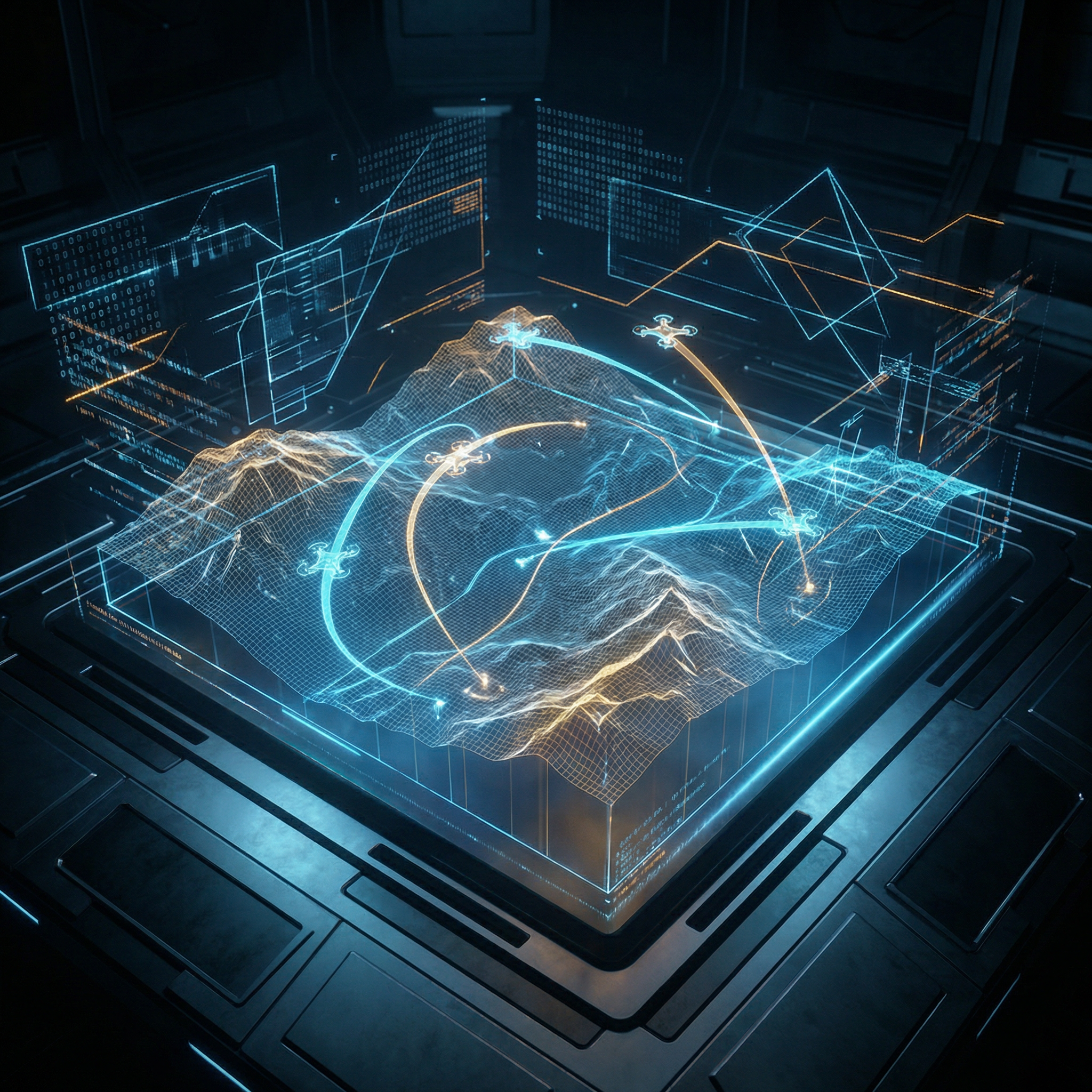
S2 Ep 672The Silicon Soldier: Anthropic, Drones, and AI Warfare
What happens when the "safety-first" AI company joins forces with the Pentagon? This week, Herman and Corn dive into Anthropic’s partnership with Palantir and AWS, exploring how models like Claude 3.5 Sonnet are being deployed on classified networks like SIPRNet. They peel back the curtain on the mechanics of AI flight—from reinforcement learning to vision transformers—and tackle the terrifying reality of autonomous weapons, "human-on-the-loop" systems, and the potential for "flash wars" in an era of high-speed algorithmic combat.

S2 Ep 671Keys to the Kingdom: Securing AI Model Weights
When the Pentagon starts using Claude, a massive question arises: how does Anthropic protect its billion-dollar intellectual property while running on third-party servers? In this episode, Herman and Corn dive into the high-stakes world of AI inference, explaining how "Trusted Execution Environments" and hardware locks prevent model weights from being stolen. From AWS Nitro Enclaves to air-gapped military clouds, learn how the "keys to the kingdom" are guarded in the age of global AI competition.
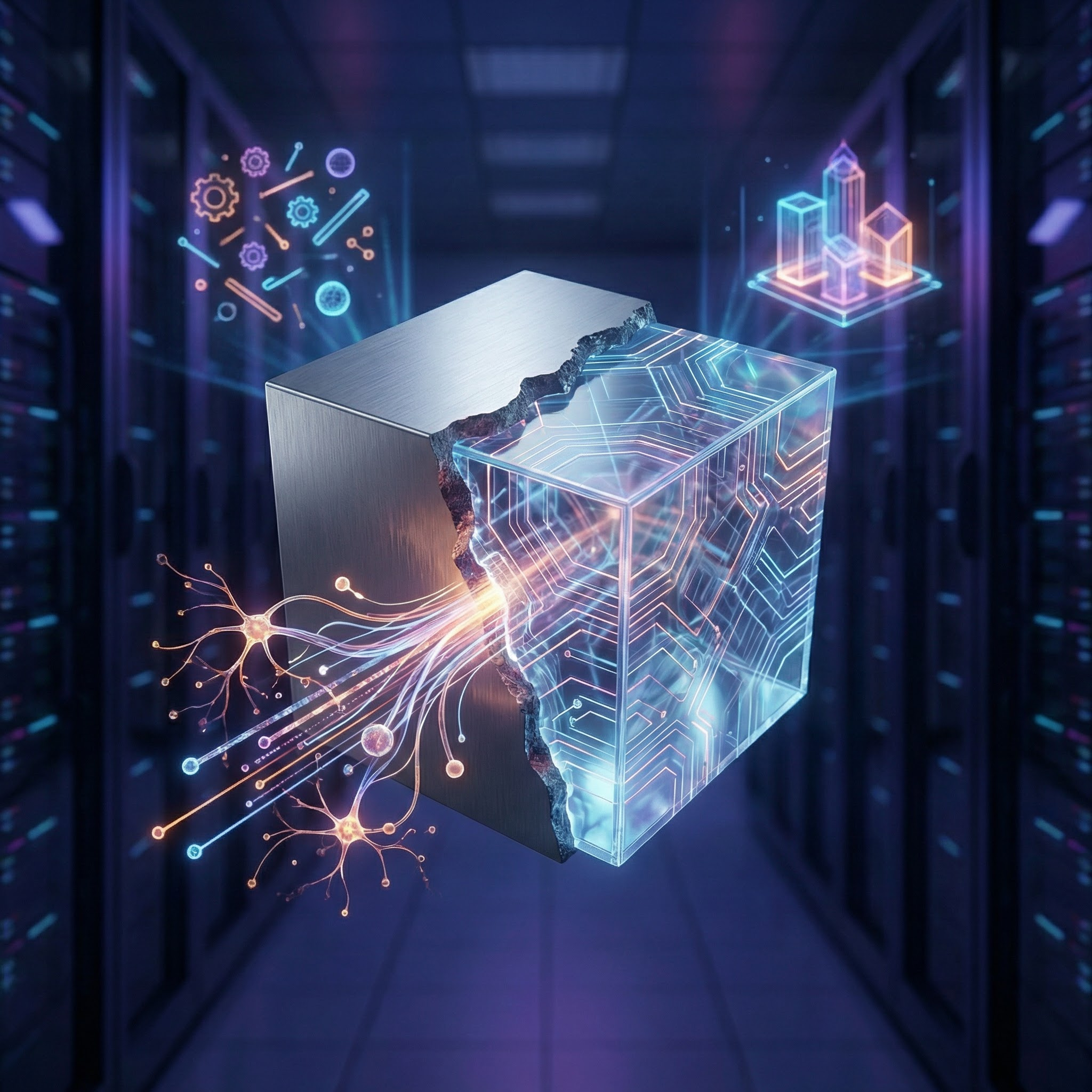
S2 Ep 670Open Source vs. Open Weights: The AI Branding Illusion
In this episode, Herman and Corn peel back the "open" label on today’s most popular AI models to reveal a complex web of licensing restrictions and hidden risks. From Meta’s Llama to the Allen Institute’s OLMo, the duo explores the technical and legal chasm between true open-source AI and the increasingly common "open weights" model. They discuss why this distinction matters for developers, the dangers of "poison pill" clauses, and the growing necessity for sovereign AI in high-stakes environments. Whether you are a startup founder or a security researcher, understanding who truly owns the "recipe" for your AI is no longer optional—it's a requirement for building on solid ground.

S2 Ep 669Invisible Walls: Aviation Diplomacy in Hostile Skies
In this episode of *My Weird Prompts*, hosts Corn and Herman unpack a fascinating listener prompt about the "invisible walls" of the sky. Looking out over the Jerusalem skyline, they explore the high-stakes intersection of international diplomacy, aviation law, and the raw physics of flight. How do pilots navigate the geopolitical minefields of the Middle East, and what happens when a mechanical failure forces a plane to land in a country that doesn't recognize its existence? The discussion centers on the 1944 Chicago Convention and the role of the International Civil Aviation Organization (ICAO) in maintaining a thin layer of global cooperation. Herman explains the critical "duty of care" that theoretically protects aircraft in distress, while Corn examines the messy reality of ground-level politics. Using real-world examples—from successful emergency landings in Jeddah to strained diversions in Turkey—the duo reveals the secret protocols and "risk-based routing" that keep passengers safe when the ground below is a battlefield. It’s a deep dive into the machinery of global travel that we rarely see until something goes wrong.