
Musicality Now
317 episodes — Page 7 of 7
017: About the Ear Training Trap
The ear training journey is a long, yet immensely rewarding one. Along the way, there's a trap that 90% of students will fall into, leading them to think they aren't making progress and causing them to lose focus and motivation to develop their ear. Thankfully, one simple tip will prevent you from falling into this trap and will help you make the most out of your ear training practice. Subscribe For Future Episodes! Apple Podcasts | Android | Stitcher | RSS | YouTube Full Show Notes and Transcript: Episode 017 Links and Resources • An Ear for Jazz, with Brent Vaartstra • Learn Jazz Standards • Instrument Packs at Musical U Enjoying the show? Please consider rating and reviewing it! Click here to rate and review
016: An Ear for Jazz, with Brent Vaartstra (Learn Jazz Standards)
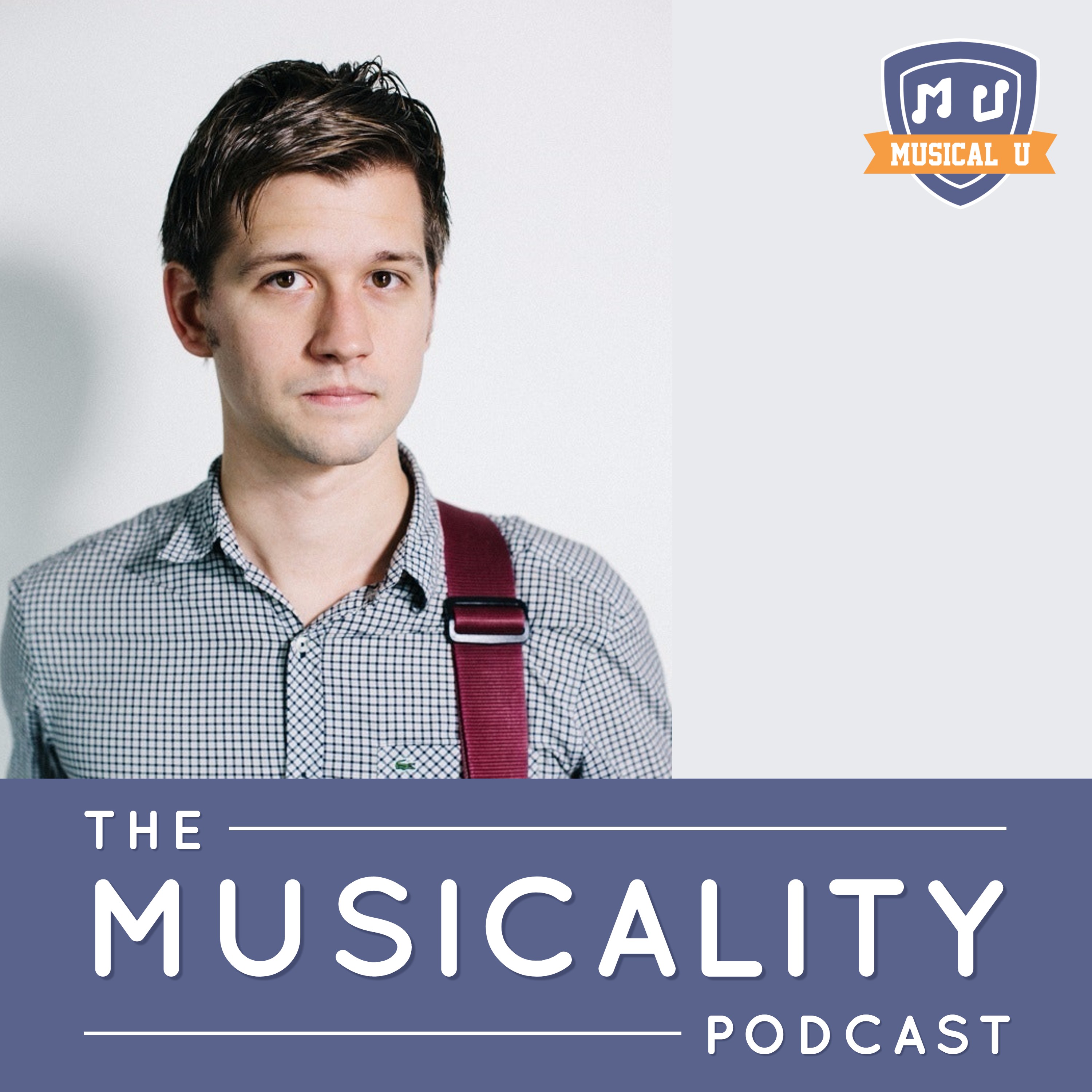
On the show today we're talking to Brent Vaartstra from LearnJazzStandards.com, one of the leading websites for people to learn to play jazz. Now if you're not into jazz you might already be thinking about skipping this episode - don't! This conversation tackles exactly that question of whether jazz has anything to offer musicians who aren't necessarily dedicated to jazz. And also the core skills you can learn to help you find musical freedom in jazz - or any other genre. Brent has been running Learn Jazz Standards since 2011, publishing new articles and podcast episodes every week. He also performs and teaches around New York and is the author of jazz books for Hal Leonard including "500 Jazz Licks" and "Visual Improvisation for Jazz Guitar". On today's podcast, we pick Brent's brains about what does (or doesn't) make jazz unique as a genre, and ask him a few questions that frequently come up among Musical U followers and members on the topic of jazz. Subscribe For Future Episodes! Apple Podcasts | Android | Stitcher | RSS | YouTube Full Show Notes and Transcript: Episode 016 Links and Resources • Learn Jazz Standards • Learn Jazz Standards Podcast • Free resource: The Ultimate Ear Training Blueprint • The Jazz Ear Startup Guide: Five Master Tools (featuring Camden from LJS) Enjoying the show? Please consider rating and reviewing it! Click here to rate and review
015: About Pentascales
Pentascales are a common type of scale used by pianists and singers but they can be interesting and useful to all musicians. Discover what a pentascale is, how it's different to a pentatonic scale, and how getting to know pentascales can help you in your musical life. Subscribe For Future Episodes! Apple Podcasts | Android | Stitcher | RSS | YouTube Full Show Notes and Transcript: Episode 015 Links and Resources • Interview with Sara Campbell • Improvisational Freedom Through Constraints • Pentatonic scales (different from pentascales!) Enjoying the show? Please consider rating and reviewing it! Click here to rate and review

014: Finding the notes yourself, with Sara Campbell (Sara's Music Studio)
Have you wished you could play music without needing to look at notes on a page? In this conversation with Sara Campbell, the Resident Pro for piano at Musical U, we explore a variety of ways you can learn to "find the notes yourself". In this episode we dive deep into how to get started with playing by ear and improvisation. Sara shares insights and specific tips that can be applied on any instrument, not just piano. She recommends one particular activity you can try today to get started improvising - and the essential warning you'll need to hear if you want it to go well! And she reveals a powerful way to flip your understanding of the piano keyboard and see it in a whole new way - something that'll be useful for anyone who occasionally dabbles on keyboard, not just devoted piano players. Subscribe For Future Episodes! Apple Podcasts | Android | Stitcher | RSS | YouTube Full Show Notes and Transcript: Episode 014 Links and Resources • SarasMusicStudio.com • Upbeat Piano Teachers • Recommended: Tim Topham • Recommended: Andrea Dow • Recommended: Supersonics Piano • Free download: Celtic music improv • Free download: Pentascale piano charts • Instrument Packs at Musical U Enjoying the show? Please consider rating and reviewing it! Click here to rate and review
013: About Finding Your Note
Today we're going to talk about finding "your note". This is an exercise which George Bevan from the Music@Monkton blog developed, to help people who think they can't sing to take their first steps to becoming a capable and confident singer. If you've ever worried that you can't sing at all, or you have a friend who's convinced they're tone deaf, the exercise in this episode will be really useful for you.. Subscribe For Future Episodes! Apple Podcasts | Android | Stitcher | RSS | YouTube Full Show Notes and Transcript: Episode 013 Links and Resources Interview with George Bevan Music@Monkton blog SingTrue app Enjoying the show? Please consider rating and reviewing it! Click here to rate and review

012: Learning to Sing in Tune, with George Bevan (Music@Monkton)
Have you ever worried that you're "tone deaf" or can't sing? Or do you have a friend or family member who just can't seem to sing in tune or in key? In today's podcast episode we're joined by a true expert who's had some phenomenal results helping those who "can't sing" to start singing in tune. George was someone we reached out to when doing research a few years back for our Tone Deaf Test and SingTrue projects at Musical U. A trained singer himself, George found himself repeatedly faced with students who just couldn't seem to hold a tune and were reluctant to get involved in choir. He started "experimenting" with how to help them, and now with his "Music at Monkton" blog he regularly shares insights, techniques, and triumphs as he goes about his work teaching music and leading choirs at a secondary school in the United Kingdom. In this episode George shares: The most important lessons he learned from entering music contests as a child What can sometimes be missing from choirs – and the power of putting it in place How he helped just a couple – and then a whole horde – of shy teenagers to "calibrate" their voices and go from thinking they're tone deaf to singing capably and confidently in front of people. The specific three-part approach George uses to create this transformation. If you've ever wondered if you're tone deaf or thought you just "can't sing" – or if you're a teacher who has faced people who feel that way and wanted to help them – this episode is one not to be missed! Subscribe For Future Episodes! Apple Podcasts | Android | Stitcher | RSS | YouTube Full Show Notes and Transcript: Episode 012 Links and Resources The Music@Monkton blog The Choir Who Can't Sing The Choir Who Can't Sing videos: 2015 Flashmob, You Raise Me Up (with 8 soloists) ToneDeafTest.com SingTrue app Enjoying the show? Please consider rating and reviewing it! Click here to rate and review
011: About Learning Faster by Recording Yourself
You've probably heard the advice that recording yourself during music practice can help you learn and improve faster. There are three big reasons to do it but recording your playing or singing can be scary! Fortunately, you can make it easy. Learn how in this episode. Subscribe For Future Episodes! Apple Podcasts | Android | Stitcher | RSS | YouTube Full Show Notes and Transcript: Episode 011 Links and Resources • Interview with Gerald Klickstein • Audacity recording software • Contact the show – record a quick message! Enjoying the show? Please consider rating and reviewing it! Click here to rate and review

010: Making Music with Ease, with Gerald Klickstein (The Musician's Way)
Have you ever wondered if professional musicians have some special ability or received special teaching that helps them be creative, improve faster and be somehow immune to performance anxiety? It turns out there are "under the hood" techniques which any musician can use to gain these same abilities, and transform the experience of learning music into one of joy and ease. Today on the podcast we're joined by Gerald Klickstein, author of a ground-breaking book which is widely respected in the world of music education: The Musician's Way. Written as a handbook for the aspiring professional musician it's packed with insights and strategies that can actually empower any musician. It tackles some of the most confusing and frustrating problems that musicians face, regardless of their instrument, musical style or career aspirations. Topics like: how to design your practice to actually achieve results quickly and consistently. How to gain confidence to perform, even if it terrifies you. And how to nurture your creativity and collaborate well with other musicians. The book reveals the hidden areas which professional musicians benefit from for learning, playing and performing – but which are generally left out of traditional instrument lessons. Gerald has extensive experience as a teacher including on the faculty of several US universities – but the book isn't based only on his own ideas and opinions. It's evidence-based, meaning he's drawing on a wide body of research and sharing what has been proven to work. In this conversation Gerald shares: • One unorthodox but incredibly valuable piece of advice on how to choose the exercises and pieces you work on. • A simple but effective way for anybody to overcome performance anxiety using a practical process, as well as a really useful framework for thinking about what's causing your anxiety when it arises. • A great tip for anyone who's wanted to record themselves playing but found it a really intimidating and stressful experience. • Plus how the experts take full advantage of their "musical autopilot" – but without leaving themselves prone to performance freeze-ups due to relying on it. If you've ever struggled to make your practice time deliver real results, or you've had any anxiety around performing music then you're going to love this episode and how it opens your mind in new and useful ways. Subscribe For Future Episodes! Apple Podcasts | Android | Stitcher | RSS | YouTube Full Show Notes and Transcript: Episode 010 Links and Resources • The Musicians Way book on Amazon • MusiciansWay.com companion website • Growth Mindset: Blog post by Gerald Klickstein, Mindset book by Carol Dweck • Deliberate Practice for Musicians Enjoying the show? Please consider rating and reviewing it! Click here to rate and review
009: About Perfect Pitch
Being able to name notes you hear can seem like a magical ability, and when you meet someone with "perfect pitch" it can be impressive and inspiring. But perfect pitch is not necessarily the road to take if you want to learn those skills yourself... Subscribe For Future Episodes! Apple Podcasts | Android | Stitcher | RSS | YouTube Full Show Notes and Transcript: Episode 009 Links and Resources Interview with Steve Myers People can often sing songs from memory in the right key Learning some degree of perfect pitch is possible as an adult How to learn a "reference pitch" Learn more about relative pitch with intervals or solfa Enjoying the show? Please consider rating and reviewing it! Click here to rate and review
008: Making Ear Training a Game with Steve Myers (Theta Music Trainer)
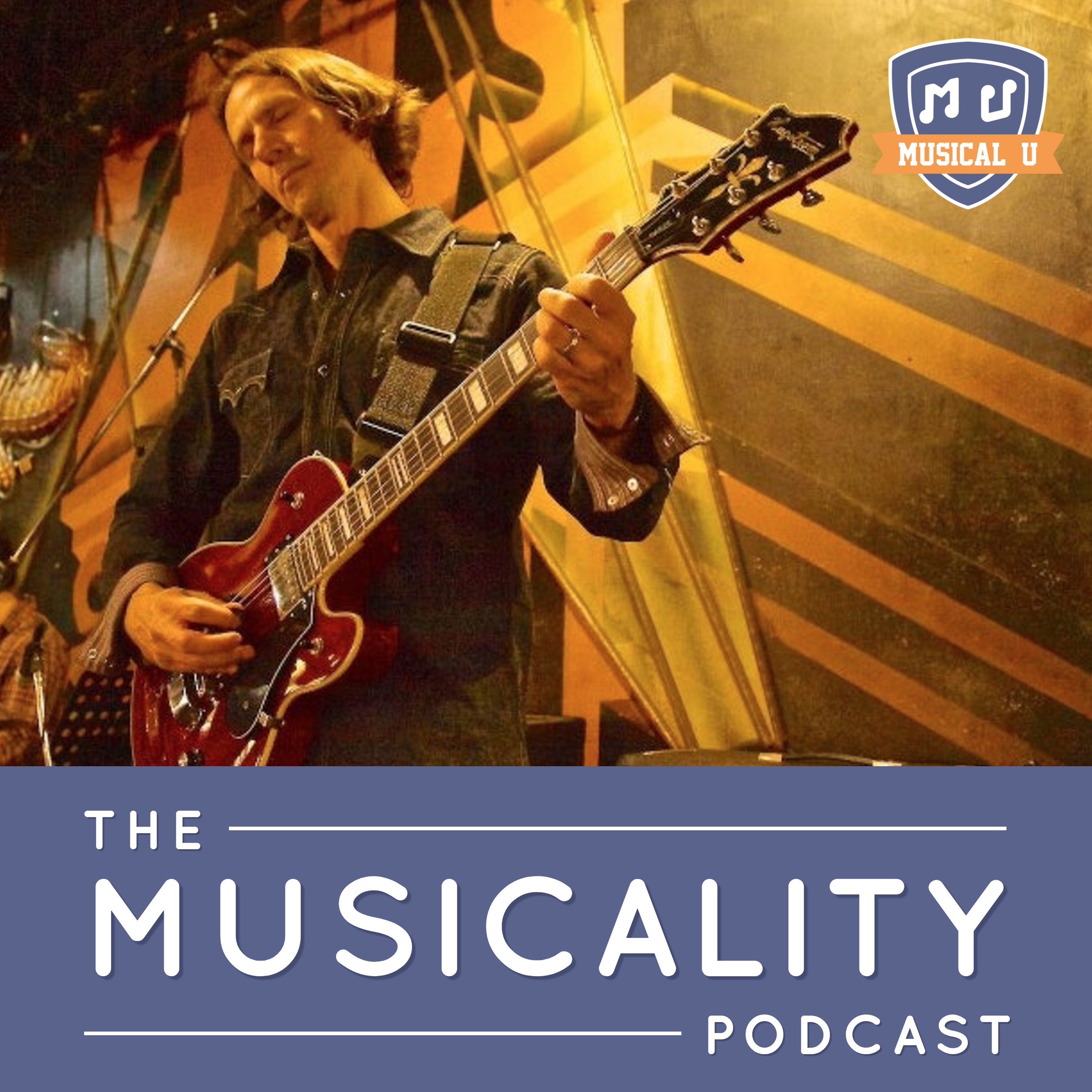
As musicians we know the power of ear training to gain the instinctive feel for notes, chords and rhythms in music that can enable us to play by ear, write music, transcribe, improvise and more. But ear training can be a slow, hard process, right? What if it didn't have to be... What if it could be a game? In 2010 a new website appeared promising a range of ear training games... That website was Theta Music Trainer and over the last several years it's gone from strength to strength. It now boasts a range of 50 ear training games covering a wide range of core topics including chords, rhythm, relative pitch, audio EQ, and more. The games are now available on iOS and Android as well as in your desktop web browser - and they've helped over 50,000 musicians worldwide. Theta Music Trainer is something we've continually recommended since it launched, including to members of Musical U who find it's a great addition to the training we provide. Back in 2010 we interviewed Theta Music founder Steve Myers about the site and on the show today we catch up with Steve and learn more about Theta Music Trainer and how their ear training games have been helping musicians develop their core musicality. In this episode you'll learn about Steve's own ear training journey and what made him see the potential for ear training games online. He shares the surprising thing they learned about who it is that uses Theta Music Trainer the most - and how that's actually different in their home country of Japan. And Steve gives his top tips for getting started with ear training yourself. Subscribe For Future Episodes! Apple Podcasts | Android | Stitcher | RSS | YouTube Full Show Notes and Transcript: Episode 008 Links and Resources Theta Music Trainer Launch interview from 2010 Musical U's list of musicality skills Enjoying the show? Please consider rating and reviewing it! Click here to rate and review

007: About the Power of Solfa
You've probably heard of solfa, solfège, or the "do re mi" system of music learning. But did you know it's one of the most powerful ways for any musician to recognize notes easily by ear? In this episode, we introduce solfa and why learning it could have a powerful positive impact on your musical life. Subscribe For Future Episodes! Apple Podcasts | Android | Stitcher | RSS | YouTube Full Show Notes and Transcript: Episode 007 Links and Resources Interview with Shelle Soelberg Solfege: Why Do Re Mi isn't just Child's Play Scale Degree Recognition Resource Packs (Preview) Special offer for podcast listeners Enjoying the show? Please consider rating and reviewing it! Click here to rate and review

006: Seriously Enjoyable Music Learning, with Shelle Soelberg (Let's Play Music)
Solfege and chord theory as the two powerful tools. Theory doesn't have to be dry! You can learn in a practical, useful, meaningful way Chord theory and solfege can reveal how music works when you listen to it, and connect what you hear with what you play - whether that's Beatles or Mozart! Whether you're young, an adult who's new to music, or someone who's been learning music but struggled with theory (or not even known why to bother), focusing on these fundamentals can equip you to feel true freedom and creativity in your musicality. Although solfege might be associated with children and is very useful for them, it's equally powerful and possible for adults to learn - as Shelle herself is an example of! In fact, many of the core foundation skills taught to 4-8 year olds at Let's Play Music are a great way for adult musicians to connect with their inner musical instinct and start to gain freedom and confidence in music-making. So the methodology of Let's Play Music isn't just a great option for young children to get off to a strong and versatile start in music - it's a perfect example of how even adults can learn music in a fun, creative and empowering way, by focusing on the inner skills that let you go beyond just being an "instrument player" and in fact become a "musician". Subscribe For Future Episodes! Apple Podcasts | Android | Stitcher | RSS | YouTube Full Show Notes and Transcript: Episode 006 Links and Resources Let's Play Music The Let's Play Music Blog Shelle's guest post on the topic of solfege Our recent interview with Gina Weibel from the Let's Play Music teamLPM Website Enjoying the show? Please consider rating and reviewing it! Click here to rate and review

005: About Whole and Half Steps
As a musician you might have heard of "whole" and "half" steps. Also known as "major and minor seconds" or "tones and semitones". These are the building blocks of melodies, chords and all the pitches you hear in music and getting to know them in detail yourself opens up all kinds of exciting musicality potential. Subscribe For Future Episodes! Apple Podcasts | Android | Stitcher | RSS | YouTube Full Show Notes and Transcript: Episode 005 Links and Resources Jermaine Griggs interview Interval ear training Music Student 101 daveconservatoire.org Enjoying the show? Please consider rating and reviewing it! Click here to rate and review

004: How to Hear and Play with Jermaine Griggs (HearAndPlay.com)
Back in 2009 there really wasn't much information online about ear training and developing your musicality. But one site which stood out then, and which continues to be among the top sites online for playing by ear was HearAndPlay.com. On today's interview we're talking with Jermaine Griggs, who started Hear And Play back in 2000 and has had phenomenal success helping musicians around the world to learn to play music by ear. His success has led to him being a highly-sought after teacher and mentor in the entrepreneurial world, as well as a beloved teacher in the world of Gospel music - and even led to him being invited to the White House to meet President Obama. Jermaine is a passionate educator with incredible insights into how learning to play by ear can be made simple and methodical - for anyone. This conversation covers his own musical development and how he came to codify his methodology and launch HearAndPlay.com. He shares what makes Gospel music unique, while also allowing it to be an amazing way to learn skills for all genres. And there's an inspiring example of one Hear And Play student who found great success despite a seemingly-huge personal limitation. Jermaine also shares some nifty tips and tricks which you can apply right now to help you start playing by ear - as well as a bit of software that can make it dramatically easier. Subscribe For Future Episodes! Apple Podcasts | Android | Stitcher | RSS | YouTube Full Show Notes and Transcript: Episode 004 Links and Resources HearAndPlay.com SongTutor software Gospel Music Training Center vanBasco Karaoke Enjoying the show? Please consider rating and reviewing it! Click here to rate and review

003: About Playing from a Lead Sheet
You've probably seen a chord chart or lead sheet: a simplified version of sheet music which provides just the minimal essentials to play the song. How do you go from that to a great-sounding arrangement? There are a few things to know… Subscribe For Future Episodes! Apple Podcasts | Android | Stitcher | RSS | YouTube Full Show Notes and Transcript: Episode 003 Links and Resources Musicality Means… Playing from a Lead Sheet Interview with Natalie Weber from Music Matters Blog Music Matters Blog MelodyPayne.com Enjoying the show? Please consider rating and reviewing it! Click here to rate and review

002: A Mindset for Musicality, with Natalie Weber (Music Matters Blog)
Have you felt limited in music, or intimidated by creative tasks like playing by ear and improvisation? Have you wondered if the musicians who can do those things could always do them – or if they somehow learned? You might be surprised by the answer! In today's episode we discover how a positive attitude and the right "toolkit" can equip you to find your own creative freedom in music. Today we're joined by Natalie Weber, founder of the popular MusicMattersBlog.com, a site devoted to inspiring creativity in music education. Natalie has studied music since the age of 7 but it was only later on that she broke free of the sheet music and found the kind of creative freedom which she now shares with students of all ages and levels in her independent piano studio and with music teachers worldwide on Music Matters Blog. Natalie writes regularly to share lessons from her own piano studio and also keeps right up to date with all the interesting developments from other websites and music educators. Topics on the site range from highly practical guides and suggestions for covering topics like rhythm or ear training in lessons, through to app reviews and conference reports to share the latest goings-on in the world of music education. We interviewed Natalie for our site back in 2011 so it was high time we caught up again! In this episode we talk about Natalie's own journey from being a note-reading pianist to finally breaking free of the sheet music. How that took a combination of practical techniques and a big mindset shift about what it means to make music. She shares two pivotal experiences that totally transformed how comfortable she felt making music out of nothing and now inspires the creative approach she takes in her own teaching and leadership of other music teachers around the world. You're going to hear how important it was that she had a positive attitude in her own music learning – really inspiring if you want to expand your own musicality. Also: would you guess that Natalie's new course on music theory and reading sheet music was actually created in partnership with two people who struggled with that the most… Subscribe For Future Episodes! Apple Podcasts | Android | Stitcher | RSS | YouTube Full Show Notes and Transcript: Episode 002 Links and Resources Music Matters Blog 2011 Interview with Natalie For the Love of Music course – Special Offer! Save $10 with discount code MUSICALU Enjoying the show? Please consider rating and reviewing it! Click here to rate and review
001: Welcome to the Musicality Podcast!
In this first episode of the new Musicality Podcast, Musical U founder Christopher Sutton introduces the show and shares what you can expect. Learn how we define "Musicality" and how this podcast can help you to gain a natural freedom and confidence in music. Subscribe For Future Episodes! Apple Podcasts | Android | Stitcher | RSS | YouTube Full Show Notes and Transcript: Episode 001 Links and Resources • What is Musicality? • Get extra bonuses and behind-the-scenes exclusives with Podcast Insiders • If you enjoy the show please rate and review it! • Join Musical U with the Special offer for podcast listeners • Let us know what you think! Email: hello at musicalitynow.com Enjoying the show? Please consider rating and reviewing it! Click here to rate and review