Mosaic Ark
Rachel Fulton Brown
Show overview
Mosaic Ark has been publishing since 2023, and across the 3 years since has built a catalogue of 169 episodes. That works out to roughly 370 hours of audio in total. Releases follow a weekly cadence, with the show now in its 4th season.
Episodes typically run over ninety minutes — most land between 2h 2m and 2h 16m — and the run-time is fairly consistent across the catalogue. None of the episodes are flagged explicit by the publisher. It is catalogued as a EN-language Religion & Spirituality show.
The show is actively publishing — the most recent episode landed 6 days ago, with 12 episodes already out so far this year. The busiest year was 2023, with 72 episodes published. Published by Rachel Fulton Brown.
From the publisher
Join Professor Rachel Fulton Brown and her crew for a guided tour of the history, culture, and mythology of the medieval and postmodern West. Inspired by J.R.R. Tolkien’s “Mythopoeia,” our mission is to re-enchant the world by presenting a new perspective on the great mosaic of Creation. Livestreams weekly on YouTube, Telegram and at Unauthorized.tv. Visit our website at DragonCommonRoom.com for bios, video links, and more Tolkien-inspired stories and art.
Latest Episodes
View all 169 episodes168 No Kings? Two Kings!
167 Watch the Waterways
166 Draco Alchemicus Act 2
S4 Ep 24165 Our Lady and the Dragons with Keith Berubé
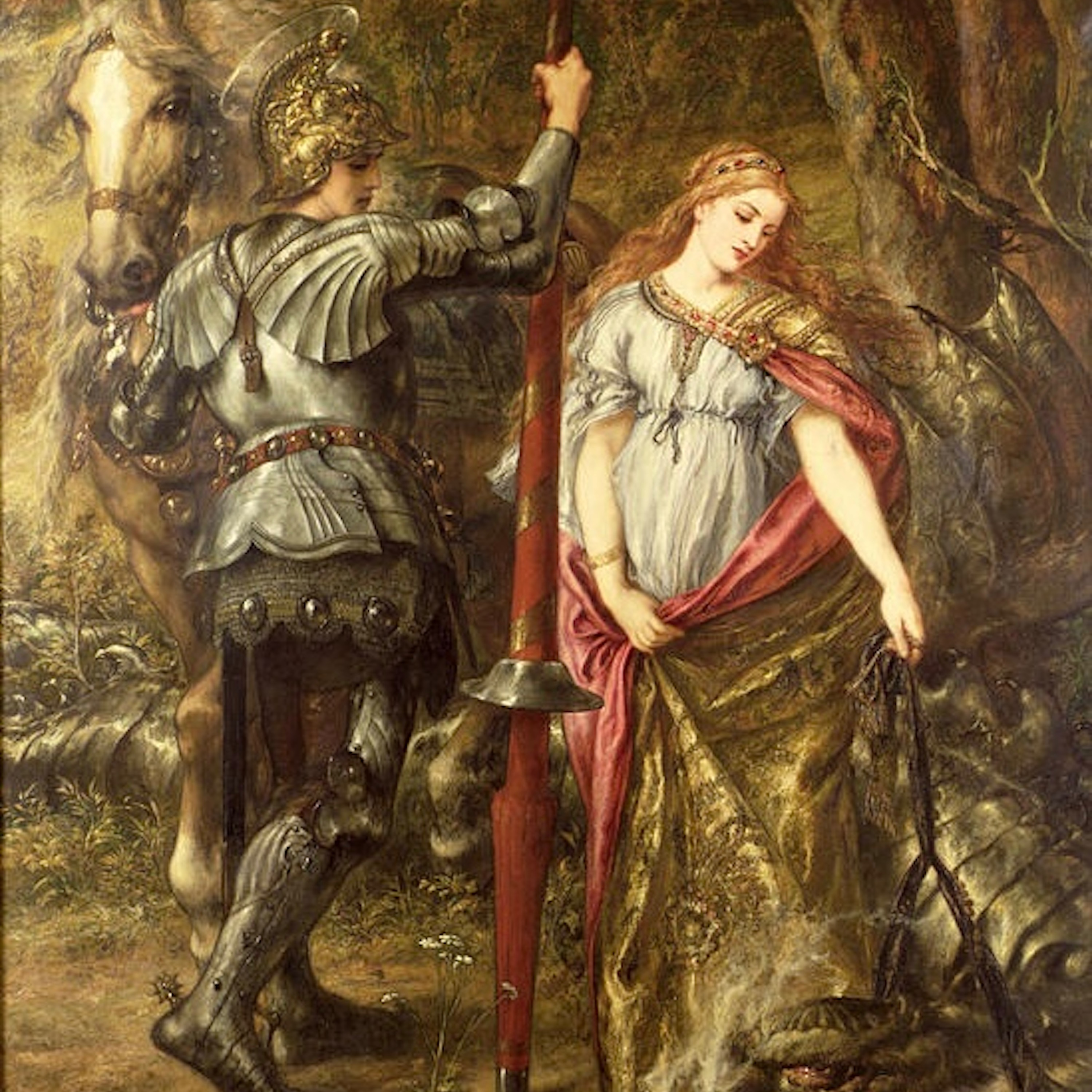
“Hail Mary full of grace, punch the devil in the face.” So says the popular meme that goes alongside a medieval illustration of Mary, the mother of Christ, literally punching the devil in the face. Does this sound childish simply because it rhymes? Allow Professor Rachel Fulton Brown and KC to disabuse you of that notion as we welcome Dr. Keith Berubé, author of Mary: The Rosary, The Relationship, and Dragons. Dr. Berubé joined us on the Mosaic Ark to talk about the powerful meditative prayer known as the Rosary, and how its recitation leads to powerful personal conversations with Mary and subsequently greater personal conversions to Christ. We also talked about the Rosary as a weapon in battles against the devil as attested to by many writers over the past several centuries, and a few well known exorcists in the late 20th and early 21st centuries. Please join the conversation by leaving your comments or questions; we’d love to hear your opinion. —Streamed March 27, 2026Buy Keith’s book: https://enroutebooksandmedia.com/maryanddragons/
S4 Ep 23164 Reading Great Catholic Poetry with Sally Read
On this week’s Mosaic Ark, the ladies were joined by Catholic poet Sally Read, who discussed her journey as a writer. Though she started her career as a psychiatric nurse and atheist co-writing a book about women’s experiences with their physical bodies, she became a poet and a Christian through her own unique spiritual experiences which she happily shared with us. Sally also shared with us some of her favorite Catholic poems from her edited collection of 100 Great Catholic Poems, highlighting the unique role of poetry in the creative history of Christianity, as well as the power of poetry to describe the otherwise indescribable. —Streamed March 14, 2026Sally’s website: https://sallyread.netBuy Sally’s book: https://bookstore.wordonfire.org/products/100-great-catholic-poems
S4 Ep 22163 Empire of the Aetherczar
Dr. Hans G. Schantz joins the Professor for a virtual roadtrip through the history of electromagnetism. Along the way, we remark on the importance of studying history for catching the errors in the science, review the significance of Harold Innis's insights into the media effects on space and time, wonder about the role of monasticism in the origins of Western industry, and marvel at the beauty of the machines that are remaking our world. It's quite the experiment! — Streamed March 6, 2026 Check out Hans's Substack on Innis and empires: https://aetherczar.substack.com/p/ii-152-empire-and-communicationsHans's website: https://aetherczar.com
S4 Ep 21162 Beckett & Clive: The East India Company and the Empire of Greed
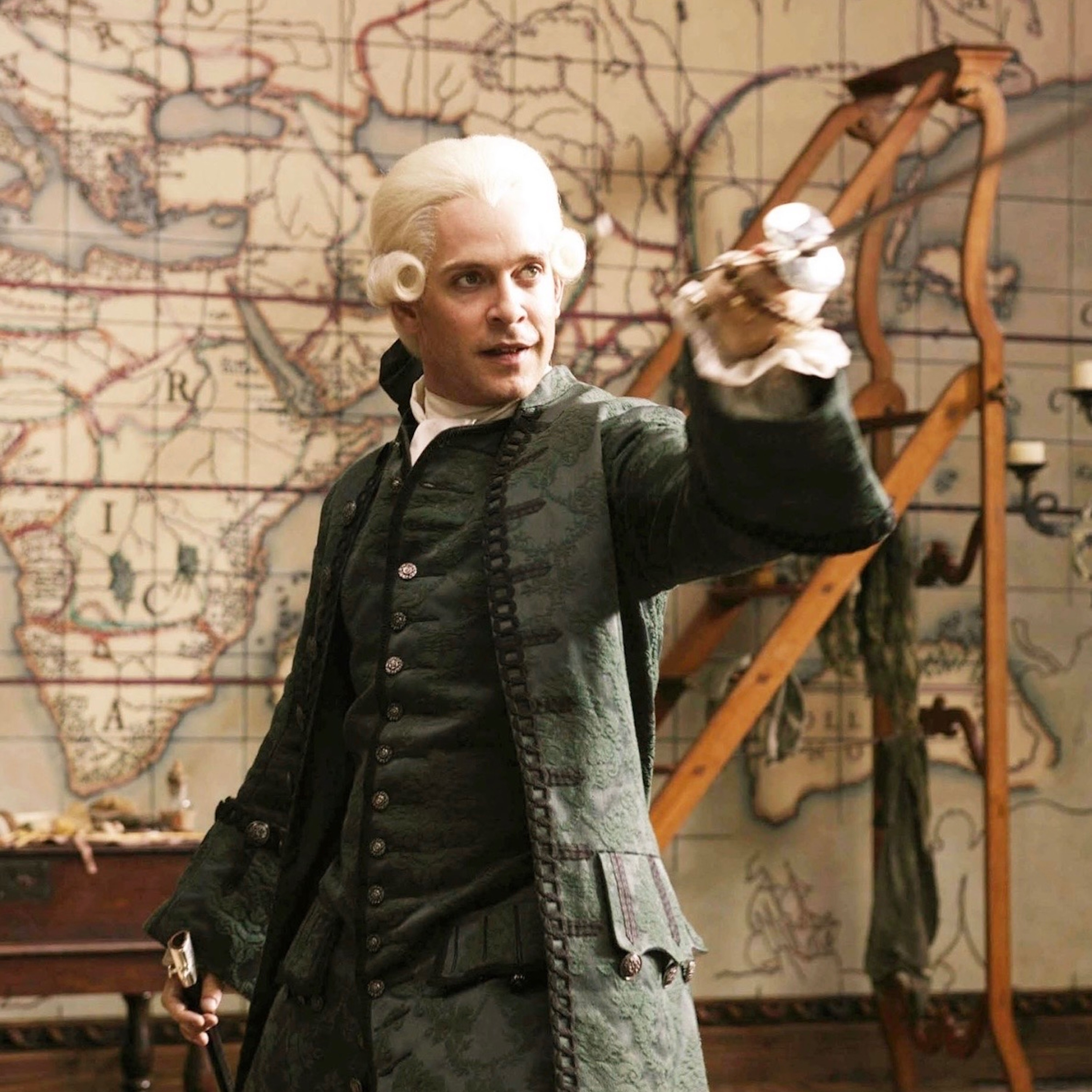
You might have heard about the humorous meme making its way around the internet over the past several years which states, “We revolted against the British because they taxed our breakfast beverage.” Well, yes and no. Spoiler alert: It wasn’t really about the tea, or the tiny tax on the tea. It was about taxation without representation. But where did the American colonists get the idea that they were entitled to representation?! What if I told you that the idea came from Britain, where Parliamentarian oligarchs (aka Whigs) used their position to impose accountability on their King because their King had bypassed Parliament to raise funds for himself through the chartering of the English East India Company which became a quasi-governmental business venture that eventually took over India and started extracting its wealth, including….tea. It’s all very complicated! Fortunately, we were joined this week by University of Chicago historian James M. Vaughn, who graciously offered to explain it all to us! Join us for this fascinating and surprisingly current topic! —Streamed February 27, 2026Buy James’s book: https://www.amazon.com/Politics-Empire-Accession-George-Eighteenth-Century/dp/030020826X/
S4 Ep 20161 Alien Invasion
In the very entertaining 1996 summer blockbuster movie “Independence Day,” President Whitmore is told of the alien tech that has been hidden and studied in Area 51 for years, the cost of which was hidden through stories planted in the media about creative accounting. Hollywood has come out with some science fiction bangers over the past 75 years, and sometimes as art does, it has mirrored the hopes and fears of the general population. But have you ever wondered if it was the other way around? Have you ever wondered if art wasn’t merely reflecting socio-political trends, but that the public was being conditioned to accept scientific trends and realities through the use of art? Or is it possible that like President Whitmore, the public was being distracted from asking too many questions by planting plausibly deniable stories in the media? It hasn’t escaped KC’s attention that the real life history of the US air and space programs has had a very interesting parallel with the history of Hollywood science fiction movies. Has she uncovered a conspiracy to rival that of the supposed fake moon landing? As we all await yet another information dump of declassified UFO information (this time from real-life President Trump), watch as she and the professor discuss some of the more uncanny artistic coincidences in the history of the space race. —Streamed February 20, 2026
S4 Ep 19160 Empire of the Robots and the Bias of Communication
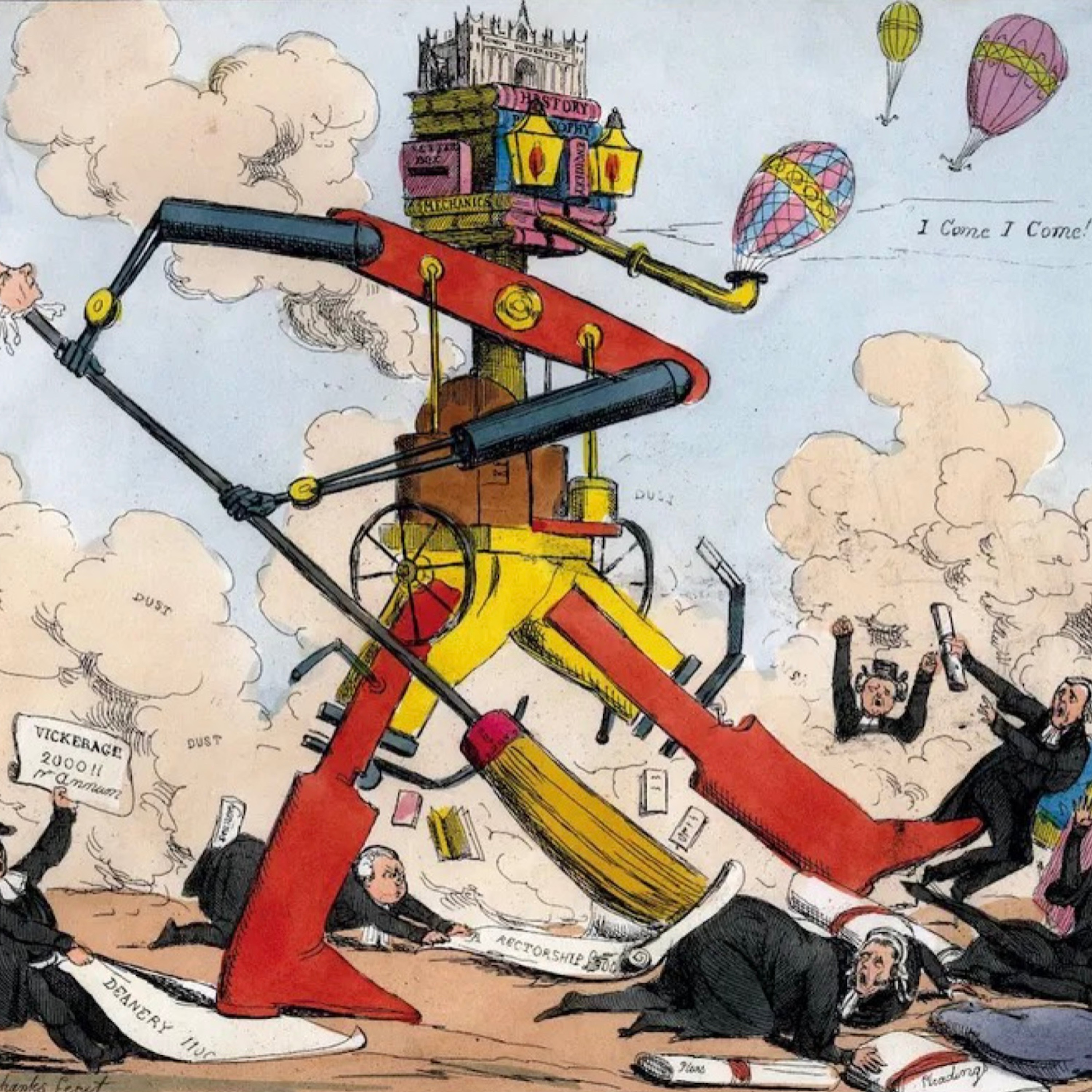
On this week’s Mosaic Ark, the Professor and KC talk about the McLuhan space we currently inhabit, where “the medium is the message.” The world is in the midst of a digital revolution with the introduction of very rapidly improving “artificial intelligence,” where the gathering and dissemination of information both audio and visual is occurring at the speed of a self-replicating virus. While this world of AI is clearly the medium between one human brain that conceives information and another that receives it, what is the actual message? Do books no longer matter? Will creativity be but a long lost dream? Here’s a hint from one of the Mosaic Ark’s previous guests: “The Digital retrieves the Medieval.” Join the ladies for this surprisingly hopeful take on the current public obsession over AI, and why it may just help us break a 200 year-long degradation of learning. Please leave us your take on AI in the comments! —Streamed February 6, 2026

S4 Ep 18159 Joseph the Carpenter
On this week’s Mosaic Ark, the ladies were joined by Catholic artist Joseph Maki. Inspired by the great European craftsmen who built the churches of the Middle Ages, Joseph is a woodworker and sculptor who creates beautiful works of art that hold a sacred purpose within the Catholic Mass. We spoke about his motivations for taking on this vocation, and also about his inspirations, including his love of Catholic traditions and of the myths created by Tolkien. We also discussed the challenge of bringing back the craftsmanship of the Middle Ages in light of the current arguments about the merits of using AI and 3D printing to create art, architecture and sculpture. We feel that we’ve barely scratched the surface of this topic and would love to get your thoughts on this, so please let us know them in the comments! —Streamed January 30, 2026

S4 Ep 17158 How We Know Evolution is a Myth
Why do men hold on so tightly to myths that have been scientifically disproven, defending them with the religious fervor of a nineteenth-century high church Anglican? On this week’s Mosaic Ark, we discussed the tale of two such men. Both challenged their church’s teachings; one proved that humans could develop over time, and the other was Charles Darwin. Listen as we discuss how St. John Henry Newman’s conclusion that Catholic doctrine could develop over time as a seed into a tree mirrors Charles Darwin’s theory that all life began with a single origin and evolved into multiple species over time, as a seed into a tree. What does each belief signify for humanity? Let us know your thoughts in the comments! —Streamed January 16, 2026

S4 Ep 16157 Tolkien's Magic Tree
Was the world of Middle Earth, created by JRR Tolkien, Christian? Would it help answering that question to know that Tolkien’s initials were actually JRPRT, and that the “P” was for Phillip, more specifically his patron saint, Philip Neri? Or that Tolkien studied under Father Morgan at the Birmingham Oratory, who studied under St. John Henry Newman? “So Tolkien was Catholic, so what? He just wrote a fantasy story about magic based on old Norse mythology,” you might say. But you also might wonder if Christianity itself, or Catholicism in particular is just magical superstition. Ironically, if you did think this you would be in the company of the pagan Romans and later Arians, which, doubly ironically, was pointed out in a book written by St. John Henry Newman, “On the Development of Christian Doctrine.” You see, Tolkien had a spiritual family ancestry as impressive as Aragorn’s royal ancestry. Join us as we discuss Tolkien’s spiritual fiction and whether it was based on his magical upbringing in the Oratory, and let us know what you think in the comments! —Streamed January 9, 2026

S4 Ep 15156 Is Die Hard a Christmas Movie?
On this week’s Mosaic Ark, we spoke with Tyler Hummel about his new book, Is Die Hard a Christmas Movie? And Other Questions About The True Meaning of Christmas Films. What started out as an amusing observation that many people considered Die Hard to be their favorite Christmas film led Tyler to wonder what kinds of stories actually make a film into a “Christmas film.” Is it that it has the story of Christ’s birth at the center? Is it that it is about people celebrating Christmas? Is it merely because the story is Christmas adjacent, taking place during Christmas time? Or is it something more simple, more primal? Could it just be nostalgia? The answer to all of these questions, it turns out, is yes! Listen along as we discuss the ritual of the Christmas film, and its many different variants, and please let us know what your favorite one is in the comments! — Streamed December 19, 2025

S4 Ep 14155 Is Stranger Things for children? We ask Alice!
The debate has been raging over the past week. Does presenting evil or immoral material in literature or movies cause people to be desensitized to it, or even to seek it out? Did we say the past week? We’re sorry, we meant to say that this debate has been raging over the past 160 years, ever since Charles Dodgson, a.k.a. Lewis Carroll, help create a new genre called children’s literature. Carroll wrote stories which would later collectively be called Alice’s Adventures in Wonderland, with a sequel called Through the Looking Glass. Carroll, writing under his real name of Dodgson, also wrote essays on the dangers of publishing literature which might lead readers into sin; being an Anglican deacon with a great love for the innocence of children made him particularly sensitive to this. Of course, there are those who believe that even Carroll’s stories of Alice are dangerous to children, but wasn’t that always the point of children's stories (a.k.a. fairy tales?) Weren’t fairy tales meant to warn people of danger? And what danger could possibly be had from reading about falling “upside down” into a dark underground hole where nothing is as it seems? Listen as we discuss the potential pitfalls of presenting stories aimed towards children, and please tell us what you think in the comments. — Streamed December 5, 2025

S4 Ep 13154 Thanksgiving for Stranger Things
This week the ladies of the Mosaic Ark are back after a four-week break just in time to obsess over the first installment of the final season of Stranger Things. Along with other obsessive fans in the world, we’ve been engaging in conjectures about the direction of the story and how it will end. But as writers, we also found ourselves obsessing over the depth of the story’s structure and the many clues to Henry’s backstory. We loved the inclusion of a model of the Tesseract from Madeleine L’Engle’s classic children’s book, A Wrinkle in Time, as a plot vehicle. We also loved that there was more D&D lore. We talked about the Duffers’ strange habit of always including close-ups of the characters’ shoes when they come on stage for the first time. What kind of trope is this, and why do the Duffers use it? And what does it tell us about their skill as storytellers that we get so caught up in such details? —Streamed November 28, 2025

S4 Ep 12153 The Monsters of Stranger Things
What makes a monster a monster? In this episode, we continue our discussion of Stranger Things, focusing appropriately enough for Halloween night on the monsters. From the Demogorgon of season 1, to Henry Creel’s transformation into Vecna in season 4, we tried to determine exactly why each of the monsters worked as vectors of horror. Why was the Demogorgon terrifying? Why was the body horror of the Mind Flayer so resonant? Why was the psychological torture that Vecna visited upon his victims before he killed them more terrifying than their actual deaths? And what of the humans of Stranger Things and the monstrous things they did; are their actions a separate horror, or inextricably connected to it all like so many corrupted vines? —Streamed October 31, 2025

S4 Ep 11152 The Lost Innocence of Stranger Things
On last week’s episode of The Mosaic Ark, the ladies were reveling in the nostalgia of the 1980s that Stranger Things presents; this week we wondered how to pinpoint the source of that strong nostalgic feeling. Though the show takes place during what were our high school years, the time period itself was not solely the source of the nostalgia; if it were, Stranger Things wouldn’t have as many young fans as it does. So what is it that every fan of this show is longing for? We think people are longing for meaningful relationships, bonding, the opportunity to band together with true friends who help each other overcome hardship in a scary world. At its core, it is a series about family and fellowship; it’s about being among friends so close that they are your found family, but it’s also about the challenges of the families we were born into, and the hope of forming new ones. Listen as we discuss the many different relationship dynamics presented in Stranger Things, and please give us your thoughts in the comments. —Streamed October 24, 2025

S4 Ep 10151 Gaming the Nostalgic Horror of Stranger Things, Season 1
What story are we in? This is the question the ladies of the Mosaic Ark asked ourselves while watching Season 1 of the Duffer Brothers’ amazing series, Stranger Things. As everyone knows, it is a nostalgic trip back to the early 1980s with strong elements from the movies of Steven King, Steven Spielberg, and Ridley Scott. But what kind of horror story is it? Is it one where the characters live in a place that is evil just under the surface, and they can’t convince others of the danger? Is the story one of evil living among them and they think can’t do anything to stop it? Or is the evil presented as a good even as it shows itself in monstrous form? The ladies had some ideas. In between reveling in the nostalgia of our own high school days and appreciating the thought that went into the visual effects, we noticed the themes of horror in this series are familiar for reasons that had nothing to do with old movies that inspired it. Exactly what story are we in? As the fifth and final season of the series is readying for broadcast on Thanksgiving day, we look back on the story that we have lived without realizing it. Let us know in the comments if you’ve experienced the horror, too! —Streamed October 17, 2025

S4 Ep 9150 Tolkien and the Recovery of Fantasy with Robert J. Dobie
This week the ladies of the Mosaic Ark welcomed Professor Robert J. Dobie aboard to discuss his book The Fantasy of J.R.R. Tolkien, Mythopoeia and the Recovery of Creation. Dobie is a Professor and Chair of Philosophy at LaSalle University in Philadelphia. He specializes in the medieval philosophers, but has had a fascination with Tolkien since he first read The Lord of the Rings when he was twelve. Professor Dobie believes that, though Tolkien was not a philosopher, his works contain many elements of philosophy. He also believes this makes a compelling argument that poetry and fiction are the best ways to explain the deeper meanings of life. Professor Fulton Brown, like Professor Dobie, had a similar beginning to her Academic journey having read Tolkien at age eleven, and they had much shop to talk on the subject of the philosophy underlying Tolkien’s work! KC just enjoyed riding the streams of consciousness and story! — Streamed October 10, 2025Buy Robert’s book! https://www.amazon.com/Fantasy-J-R-R-Tolkien-Mythopoeia-Recovery/dp/0813238153/

S4 Ep 8149 Scipio’s Cosmic Trip
On this week’s Mosaic Ark, the ladies continued their discussion of “The Dream of Scipio,” that short, narrative work written by Cicero which served as an instructive parable about civic duty to the citizens of Rome. However mundane that purpose may have been, its descriptions of what Romans believed about the physical universe and religion are fascinating in their familiarity. Cicero used these images in his parable because his audience already understood what they were; his work described the physical universe and Earth’s place in it, a Supreme god, an afterlife, and the morals a man needed to get there. All of those things are what both scientists and Christians of today would easily recognize because they are an image of creation that they somewhat share with ancient pagans. Listen as we wrestle with the implications of this, and please give us your thoughts in the comments! —Streamed October 3, 2025