Money Talks
486 episodes — Page 7 of 10

Money Talks: Money Saving Tips
In addition to answering your phone calls and emails, we've got money saving tips for 2020 from AARP https://www.aarp.org/money/budgeting-saving/info-2020/99-ways-to-save.htmlAmazon Prime Day is officially delayed, but not cancelled, due to the pandemic. A new date for the typical mid-July sales event has not been announced.Mississippi's sales-tax-free weekend is coming up Friday, July 31 to Saturday, Aug. 1. Sales tax will not be due on articles of clothing, footwear or school supplies if the sales price of a single item is less than $100.Sport clothing, shoes and accessories are still subject to the 7% tax rate and do not qualify during the holiday.Layaway items do not qualify for the tax break.The tax holiday only qualifies for in-store purchases. Mail, internet and telephone sales are still subject to sales tax.In 2019, the legislature amended the tax holiday to include school supplies in the tax holiday. Electronics such as laptops or tablets are not listed as eligible school supplies. There is a long list of what does qualify as a school supply. https://www.dor.ms.gov/Business/Documents/2020%20Sales%20Tax%20Holiday.pdfThe parent company of Ann Taylor, Justice, Lane Bryant, and Catherines clothing stores have recently filed for bankruptcy. Also finling from: Lucky's Market, Organic grocer Earth Fare, Pier 1, Modell's Sporting Goods, J. Crew, Neiman Marcus, Stage Stores, which owns Goody's, Palais Royal, Bealls, Peebles, and Gordmans, JCPenney, Tuesday Morning, GNC, the parent company of Chuck E. Cheese, Brooks Brothers, The parent company of New York & Co., and The Paper Store. Men's Wearhouse and Jos. A. Bank will close up to 500 stores. You might find a bargain by shopping at one of them. https://www.businessinsider.com/retailers-filed-bankruptcy-liquidation-closing-stores-2020-2#cec-entertainment-the-parent-company-of-chuck-e-cheese-filed-for-chapter-11-bankruptcy-protection-on-june-25-its-finances-had-been-in-freefall-since-the-coronavirus-pandemic-hit-18Use a stores loyalty program to save - Wendy's Rewards has added to its app https://www.wendys.com/rewards Tips:Downsize your cart.when shoppingLet your online shopping car sit.Pay for subscriptions up front.Have a "no spend month" or "no spend day"Buy don't rent a routerGet free mulch / wood chips from your city or local tree care companiesVarious phone calls touched on other topics. Hosted on Acast. See acast.com/privacy for more information.

Money Talks: Day Trading
What is Day Trading? Is it risky? Can anyone do it?Hear Ryder and Nancy's opinions.We also talked about a cashless society / the coin shortage.Calls concerned:cashless - discriminatory?why wouldn't a store want to take cashnot all sales are belief that stock is going downbuyer bewareKatrina caused a cash only societyAccording to the new server Reuters: Major U.S. brokerages that reported quarterly results this week cheered the self-directed day trading happening on their platforms as individuals with a bit of extra money and time on their hands during the coronavirus pandemic have been engaging more in markets. https://www.reuters.com/article/us-usa-banks-results-wealth/bored-bank-customers-flock-to-day-trading-platforms-during-pandemic-idUSKCN24I1EMAccording to the website Smart Asset dot com, here are the The Best Day Trading Apps of 2019: TD Ameritrade, E*TRADE, Robinhood, Acorns, and Acorns. The article lists 8 in total, each with their own special feature. https://smartasset.com/investing/day-trading-appIs day trading just online gambling? We’ll let you decide.https://www.investopedia.com/articles/basics/10/investing-or-gambling.asphttps://www.fool.com/investing/general/2015/10/09/why-day-trading-stocks-is-not-the-way-to-invest.aspx#:~:text=To%20put%20it%20mildly%2C%20day,odds%20on%20a%20regular%20basis.https://www.thebalance.com/the-striking-similarities-between-trading-and-gambling-1345200https://www.daytradetheworld.com/trading-blog/top-4-reasons-why-day-trading-not-gambling/Dangers of Day Trading https://www.nytimes.com/2020/07/08/technology/robinhood-risky-trading.html Hosted on Acast. See acast.com/privacy for more information.

Money Talks: First Mortgage
Guest: Adam Black, Renesant Bank 601-540-0302 https://apply.renasantmortgage.com/#/loan-officers/adam.black@renasantWho is a "first time" home buyer?What are some special programs available?Do you know the difference between pre-qualified and pre-approved?How much of a loan do you qualify for vs. can you afford?What's the difference between deferment and forbearance?https://www.ms.gov/Agencies/mississippi-home-corporationCalls concerned:penalty for paying off mortgagered liningstudent getting a homeconstruction loans and mortgage RMD from IRArefinancing Hosted on Acast. See acast.com/privacy for more information.

Money Talks: Social Security 2020
Guest Shawn Mercer, Regional Manager with the Social Security Administration is our guest. Calls dealt with:payroll taxend of life documents neededdo earning affect benefitdisability and civil service benefitsbenefitsmedicaretaxesemail with myssaSocial Security Administration handles:Retirement insuranceSurvivors insuranceDisability insuranceHospital and medical insurance for the aged, the disabled, and those with end-stage renal diseasePrescription Drug BenefitExtra help with Medicare Prescription Drug CostsSupplemental Security IncomeSpecial Veterans BenefitsUnemployment insurancePublic assistance and welfare servicesAt ssa.gov yo can:apply for retirement, disability, and Medicare benefits onlinecheck the status of an application or appealrequest a replacement Social Security card (in most areas)print a benefit verification letterand more – from anywhere and from any of your devices!Social Security employees will never threaten you for information or promise a benefit in exchange for personal information or money. For more information click on the top of the ssa.gov webpage.https://twitter.com/SocialSecurityhttps://www.facebook.com/socialsecurity/https://blog.ssa.gov/ Hosted on Acast. See acast.com/privacy for more information.

Money Talks: Choosing a Professional
https://www.finra.org/investors/learn-to-invest/choosing-investment-professionalRegistered Financial ProfessionalsBuy and sell securities for their customers, including individual investors. They are regulated by FINRA and the SEC.Investment AdvisersProvide advice about securities tailored to the needs of their clients. They are regulated by the SEC or state securities regulators.Financial PlannersProvide an array of financial services that vary from provider to provider. Regulation and licensing depends on the services offered.Insurance AgentsSell life, health and property insurance policies, and other insurance products, including annuities. They are regulated by state insurance commissions.AccountantsProvide professional assistance with taxes and financial planning, tax reporting, auditing and management consulting. They are regulated by national and state licensing standards.LawyersOffer legal assistance to clients related to financial planning and investment decisions, and may represent clients in disputes with firms or investment professionals. They are regulated by state bar associations. https://www.investor.gov/home/welcome-investor-gov-crsmymoney.govhttps://www.federalreserveeducation.org/http://moneytalks.mpbonline.org/episodes/money-talks-unemploymenthttps://www.investor.gov/introduction-investing/general-resources/news-alerts/alerts-bulletins/investor-bulletins/investor-0Investor Bulletin: How to Select an Investment ProfessionalChoosing an investment professional is an important decision. This updated Investor Bulletin provides a few key tips to help you make a well-informed choice. A number of questions you should consider asking before you hire an investment professional are in the investor bulletin “Questions to Ask When Hiring an Investment Professional.” Should you have any questions, feel free to call Investor.org’s toll-free investor assistance line at 1-800-SEC-0330 or use the online question web form at https://www.sec.gov/oiea/QuestionsAndComments.html.Tip 1. Make sure the investment professional is licensed.Tip 2. Find out if the products and services available are right for you.Tip 3. Understand how you’ll pay for services and products, and how your investmentTip 4. Ask about the investment professional’s experience and credentials.Tip 5. Ask the investment professional if he or she has had a disciplinary history with a government regulator or had customer complaints.https://www.usa.gov/ Hosted on Acast. See acast.com/privacy for more information.

Money Talks: Need Help
This broadcast highlighted many of the organizations that provide help during the pandemic and our recent podcasts that dealt with some of these issues. Unemployment The CARES Act added $600 per week from the federal government on top of whatever base amount a worker receives from the state. July 13th, this benefit end. The legislation also adds 13 weeks of unemployment insurance.Typically, self-employed people, freelancers and contractors can't apply for unemployment. The CARES Act created a new, temporary Pandemic Unemployment Assistance program through the end of this year to help people who lose work as a direct result of the public health emergency.On our April 7th Money Talks, we had executives from Mississippi Department of Economic Security. http://moneytalks.mpbonline.org/episodes/money-talks-unemploymentOnline filing is encouraged! A claim may be filed on-line at www.mdes.ms.gov twenty-four (24) hours a day, seven (7) days a week.call the MDES Contact Center at 1-888-844-3577you may contact your local WIN Job Center – there are over 40 of them - for assistance. mdes.ms.gov/unemployment-claims/covid19Time off from workEligible employees get 2 weeks of paid sick leave as long as they’ve been at employed at least 30 days.Some workers can also get 12 weeks of paid leave to care for children whose’ s schools were closed or whose child care provider is unavailable. The leave law expires December 31st.https://www.dol.gov/coronavirusFood banks and pantriesMS Food Network's executive director was on the show June 9th http://moneytalks.mpbonline.org/episodes/money-talks-ms-food-networkHe talked about how many people who had never needed a food pantry before were now looking for assistance. 601-353-7286 is their phone number where you can find out where pantries are near you. Their web site msfoodnet.orgSupplemental Nutrition Assistance Plan (SNAP) provides nutritional food assistance for those who meet eligibility requirements. https://www.fns.usda.gov/snap/recipient/eligibilityWomen, Infants and Children (WIC) provides low-income women, infants and children with food, nutrition counseling, and access to health services. https://www.fns.usda.gov/wicMississippi Department of Human Services provides many services for individuals, families, children, and seniors in need. https://www.mdhs.ms.gov/covid-19-updates/Mortgage assistance and forbearance Mississippi Home Corporation (MHC) has reopened the Hardest Hit Fund (HHF) to provide short-term mortgage assistance to those who have lost employment or income due to the COVID-19 pandemic. This will allow MHC to pay monthly mortgage payment assistance. People can submit applications through an online portal : mshomesaver.comIf you have a federally backed mortgage, and if you experience financial hardship due to the coronavirus pandemic, you have a right to request a forbearance for up to 180 days. You also have the right to request an extension for up to another 180 days. You must contact your loan servicer to request this forbearance. There will be no additional fees, penalties or additional interest (beyond scheduled amounts) added to your account. You do not need to submit additional documentation to qualify other than your claim to have a pandemic-related financial hardship.https://www.consumerfinance.gov/about-us/blog/guide-coronavirus-mortgage-relief-options/Forbearance is when your mortgage servicer or lender allows you to pause (suspend), or reduce your mortgage payments for a limited period of time while you regain your financial footing.Forbearance doesn’t mean your payments are forgiven or erased. You are still required to repay any missed or reduced payments in the future.Make sure you understand how the forbearance will be repaid. There can be different forbearance programs or options, depending on the type of your loan.If and when your income is restored, reach out to your servicer and resume making payments as soon as you can so your future obligation is limited.Credit CardsOn May 12th we had a guest on our show from the National Foundation for Credit Counseling. In addition to mortgage forbearance, he talked about credit cards and asking for help with your debt. http://moneytalks.mpbonline.org/episodes/money-talks-credit-counselingContact your provider to formally request financial assistance.Tell them you’ve been impacted by the coronavirus pandemicAsk questions about the credit card relief packages they offerGet a written copy of your agreementAsk to lower your monthly minimum payment or ask for waiving or refunding late fees. Reduce your interest rate. Establish a payment plan to pay off existing balances.https://www.consumerfinance.gov/about-us/blog/credit-card-debt-during-coronavirus-relief-options-tips/#:~:text=Lowering%20or%20deferring%20your%20monthly,after%20your%20forbearance%20period%20ends.Small business assistanceOn May 20, 2020, Governor Tate Reeves signed SB2772 into law,

Money Talks: Travel during Coronavirus
Have you gotten your Economic Impact Payment? Will you be traveling during the "Summer of Coronavirus"? irs.gov/coronavirus/economic-impact-paymentsPeople who have lost or destroyed their Visa prepaid debit cards now can request a free replacement through MetaBank’s customer service department. You can call 800-240-8100 (select option 2 from the main menu). If your address changed, you may need to go through the process of changing it on file with the IRS. One way to do so is by filing Form 8822, Change of Address.To trace your payment, call the IRS at 800-919-9835 or you may submit Form 3911. Can you say Stay-Cation?What are some examples of some free things to do near your home? Catch a magnificent sunset or sunriseTake a walk or bike ride.Play in the park.Swim at the beach or lake.Visit a state park and walk their trailsVisit a market.Are you driving somewhere?Improve the Efficiency of Your Car: When taking road trips make sure your car is operating efficiently and is fully serviced. Some tips:Check the pressure of your car tires.Drive slower.Use the right oil to increase mile usage.Watch your luggage – the heavier the car the more fuel you’ll use.Pack inside your car not on top.What about the availability of rest stops for each state, their welcome center and any COVID-19 information you may need to know? https://htv-prod-media.s3.amazonaws.com/files/state-rest-stop-travel-information-new-1591885986.pdfStaying in a hotel?Consider staying more than 1 night for a discountCall the hotel directly to get a cheap room or obtain special information.Could you save by staying over a Sunday night? Hosted on Acast. See acast.com/privacy for more information.

Money Talks: MS Food Network
Our guest is Dr. Charles Beady, the Executive Director of Mississippi Food Network, which began in 1983 as a warehouse facility that would accumulate, store, and distribute food for charities who would then make the final distributions to needy people in their community. MFN is a member of Feeding America, the nation’s largest domestic hunger-relief organization. https://www.msfoodnet.org/There are 430 agencies that distribute the food that MS Food Network accumulates.No.1 requested food donation: canned meatWhen NOT during a pandemic, volunteers who have registered help at the warehouse each month https://www.msfoodnetvolunteers.org/If your organization would like to host a food drive, please contact Stacey Cain at 601-973-7089 or [email protected] you are interested in making a corporate donation, please call Mack Matthews at [email protected] or 601-353-7215.There are other ways to give:Monetary donationsShop at Kroger. When shopping at Kroger Stores, make a donation to MFN by registering your Kroger card with the Community Rewards Program (www.kroger.com/account/enrollCommunityRewardsNow/) or through the scan card program found at all registers.Shop Amazon Smile. It’s just like “regular” shopping at Amazon.com, but .05 percent of your purchase can be designated for MFN. Sign up to support Mississippi Food Network today (smile.amazon.com).To contact MS Food Network:Mississippi Food NetworkP.O. Box 411Jackson MS [email protected]. S. Bureau of Labor Statistics – Unemployment data https://www.bls.gov/ Hosted on Acast. See acast.com/privacy for more information.

Money Talks: June News
Our experts check in and update us with the financial news in Mississippi and USA. Topics covered:financial marketsfuture Economic Impact PaymentsHEROES ActEIP debit cardsSafe ReturnEmergency Fundsstart small in your savings accountmaybe move larger amounts to a money marketautomatically savebeware of securitiesCredit Reportsget your free WEEKLY reportscheck them carefully https://www.annualcreditreport.com/index.action Hosted on Acast. See acast.com/privacy for more information.
Money Talks: Hurricane Financial Documents
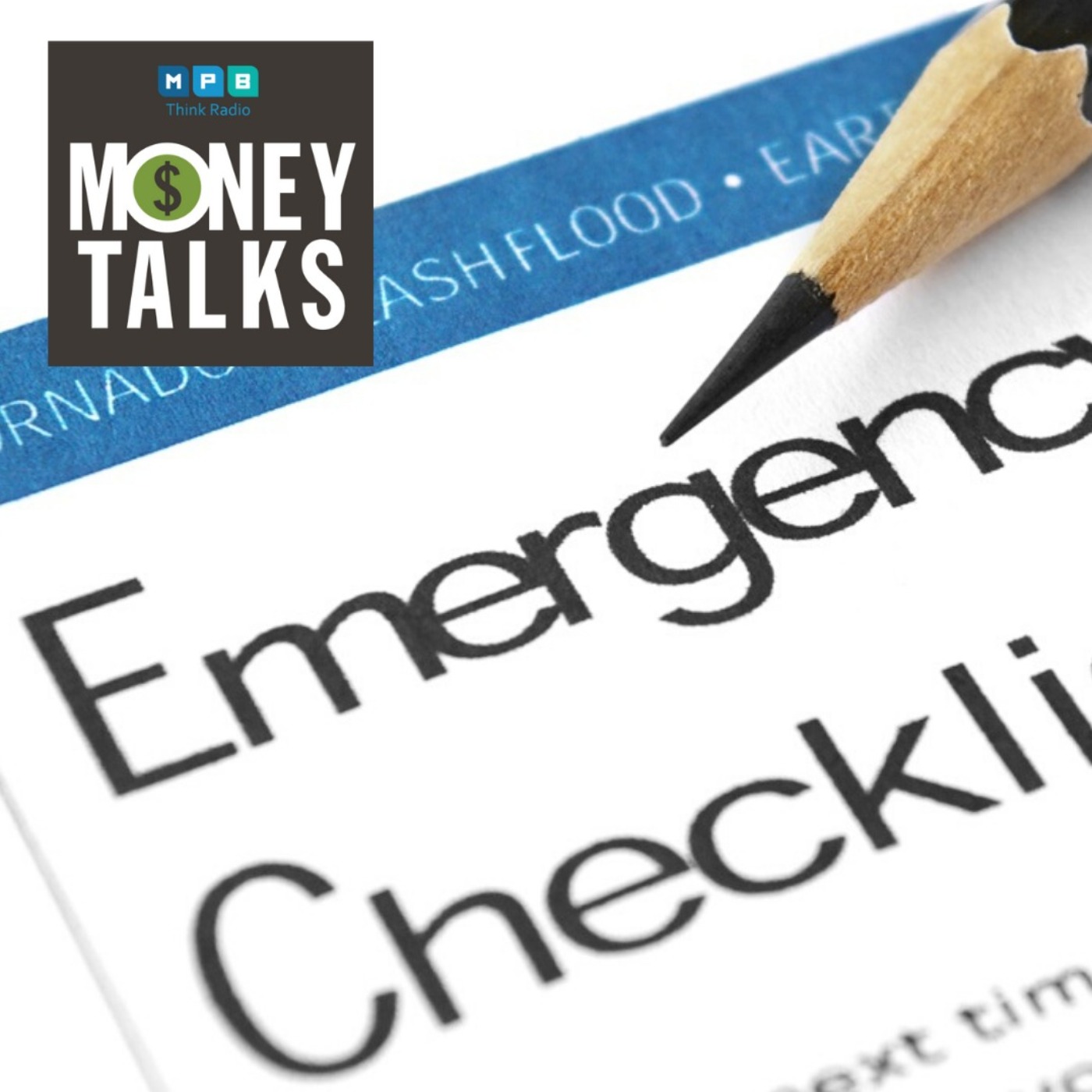
No sooner do we come out of the Safer at home executive order but it’s almost hurricane season. Today’s show is an encore broadcast from May 8th 2018. Our hosts, Dr Nancy Lottridge Anderson, President of New Perspectives and Ryder Taff, Portfolio Manager at New Perspectives give advice on how to prepare your financial first aid kit. http://moneytalks.mpbonline.org/episodes/5cd31f1533f6c1be55607d842020 Information:https://www.msema.org/wp-content/uploads/2020/04/39779_MEMA-Hurrican-Preparedness.pdfhttps://www.msema.org/preparedness-2/hurricanes/https://www.fema.gov/media-library-data/1582162058237-59774592ecfffe4e9962d0e1ec3e4780/EFFAKToolkit_FormsOnly_20190906.pdfhttps://www.ready.gov/financial-preparednessEmergency Financial First Aid KitThe Emergency Financial First Aid Kit (EFFAK), a joint publication from Operation Hope and FEMA, can help you prepare financially and provides tips to reduce the financial impact of disasters on you and your family.For Organizations Encourage people throughout your organization or workplace to prepare financially. Here are some ideas to promote financial preparedness in your organization:Hold a brown bag meeting.Make a presentation at an existing staff meeting using Safeguard Critical Documents and Valuables to support your discussion.Include financial preparedness information in the staff monthly newsletter.At HomeStore important documents either in a safety deposit box, an external drive or on the cloud to make it easy to access during a disaster. Take time now to safeguard these critical documents.Household IdentificationPhoto ID (to prove identity of household members)Birth certificate (to maintain or re-establish contact with family members)Social Security card (to apply for FEMA disaster assistance)Military servicePet ID tagsFinancial and Legal DocumentationHousing payments (to identify financial records and obligations)Insurance policies (to re-establish financial accounts)Sources of income (to maintain payments and credit)Tax statements (to provide contact information for financial and legal providers and to apply for FEMA disaster assistance)Medical InformationPhysician information (in case medical care is needed)Copies of health insurance information (to make sure existing care continues uninterrupted)Immunization recordsMedicationsInsurance InformationHaving insurance for your home or business property is the best way to make sure you will have the necessary financial resources to help you repair, rebuild or replace whatever is damaged. Document and insure your property now.Household Contact InformationBanking institutionsInsurance agentsHealth professionalsService providers Place of worshipGet Your Benefits ElectronicallyA disaster can disrupt mail service for days or weeks. If you depend on Social Security or other regular benefits, switching to electronic payments is a simple, significant way to protect yourself financially before disaster strikes. It also eliminates the risk of stolen checks. The U.S. Department of the Treasury recommends two safer ways to get federal benefits:Direct deposit to a checking or savings account. If you get federal benefits you can sign up by calling 800-333-1795 or sign up online.The Direct Express® prepaid debit card is designed as a safe and easy alternative to paper. Hosted on Acast. See acast.com/privacy for more information.

Money Talks: Whats New?
What's going on in Mississippi this week?We are still under the Safer-at-home Executive Order number 1477 that was extended and remains in effect until Monday, May 25th. Governor Tate Reeves is encouraging all of us to stay at home unless engaged in Essential Activities or Essential Travel. Gov. Tate Reeves has expanded social distancing guidelines for Attala, Leake, Scott, Jasper, Neshoba, Newton, and Lauderdale counties. Businesses in these counties must screen employees for the coronavirus. People have to wear masks if they cannot social distance at their jobs and masks must be worn during retail, live auction and flea market shopping.https://www.sos.ms.gov/content/executiveorders/ExecutiveOrders/1477.pdfhttps://www.sos.ms.gov/content/executiveorders/ExecutiveOrders/1480.pdfThe governor added some benefits for the unemployed. https://www.coronavirus.ms.gov/2020-04/governor-reeves-extends-unemployment-workers-impacted-covid-19Calls concerned:credit card ratesa 2nd EIP check?wife lost workdo dependents get checks?where's my check?unemploymentyou need your AGI for "Get My Payment" at the IRSchecks to deceased individualsLooking for a way to make more money?consider online tutoring sites like Chegg or VIPKidselling handmade products such as jewelry or greeting cards on ETSYdelivering food for DoorDash or GrubHubDelivering groceries for companies such as Shipt or Instacart selling books on Amazon Marketplace or other items locally on Facebook Marketplace offering to your services to neighborsyards maintenancedog walkingsupervising children outside or in a park – if you already have a relationship with the family. https://www.inhersight.com/blog/how-to/make-money-during-coronavirus-pandemic?_n=92545989#Also consider taking a class in contact tracing so you'll be ready for the job market when Mississippi starts hiringhttps://www.coursera.org/learn/covid-19-contact-tracing?edocomorp=covid-19-contact-tracing Hosted on Acast. See acast.com/privacy for more information.

Money Talks: Credit Counseling
Guest: Bruce McClary from the National Foundation for Credit Counseling https://www.nfcc.org/DATES TO KNOW: Submit your banking information to receive direct deposits of Economic Impact Payments by 11am Wednesday, May 13th, 2020.Mississippi Income Tax Returns and Payments are now due July 15th, 2020.Topics on the NFCC's website include - 10 Smart Ways to Reduce Expenses and Tighten Your Budget to Make Your Stimulus Check Last, Tips for Making and Managing an Emergency Budget; Should You Access Your Retirement Funds Early Due to COVID-19You can hear Bruce McClary give additional information on NFCC's Fin Bit Podcast https://open.spotify.com/show/6I2jbwF7mg9BxU3ywhdEUQDiscussions coveredEviction and Foreclosure Suspension for Homeowners Facing Difficulties Making Mortgage Payments https://www.nfcc.org/resources/blog/eviction-and-foreclosure-suspension-for-homeowners-facing-difficulties-making-mortgage-payments/Mortgage ForbearanceRefinancing https://www.nfcc.org/resources/blog/5-ways-to-still-refinance-your-mortgage-with-a-less-than-perfect-credit-score/Warning about " housing relief" scams https://www.nfcc.org/what-we-offer/foreclosure-prevention-counseling/foreclosure-rescue-scams/Credit card debt https://www.nfcc.org/what-we-offer/emergency-credit-card-help/Free weekly credit report https://www.annualcreditreport.com/index.actionBruce was a guest on the July 3rd 2018 Money Talks broadcast http://moneytalks.mpbonline.org/episodes/5cd31f1533f6c1be55607d7c Hosted on Acast. See acast.com/privacy for more information.

Money Talks: Magic Money Blog
Money Talks expert host, Dr. Nancy Lottridge Anderson was inspired by a recent phone call on the show to talk about the history of money. Listen here to the audio from the creative you tube video she and her husband created or find a link to the video on this site.Thank you for listening and supporting Money Talks on Mississippi Public Broadcasting.Money Talks can be heard live on MPB Think Radio Tuesdays at 9am. Or listen to the podcast. Moneytalks.mpbonline.orgHow can the stock market bounce back when the economic news is so dire? Much of the answer lies with our central bank, The Federal Reserve. The Fed has been pumping money into the system to under-gird the economy.Last week, on the radio, I was asked, "How does the Fed create money?" There was only a minute left before we went to break, so my answer was brief. I decided I needed to craft a better answer. With the help of my producer/director husband, we made a movie!Magic Money Hosted on Acast. See acast.com/privacy for more information.
Money Talks: Medicaid and Stimulus Checks
From our experts at New Perspectives:We've been presented with questions and concerns surrounding stimulus payments for residents of Medicaid-funded skilled nursing facilities (a.k.a “nursing homes”). Will they get a check? Will they actually get to KEEP the money? Will a stimulus payment affect their Medicaid eligibility status? Hopefully we can offer a bit of clarity.While these residents are normally required to surrender most all their income, the stimulus payment will be an exception. Below is a link to an article that addresses this succinctly, with the key takeaways being:Residents of these facilities should receive a stimulus payment.The facility cannot take the funds to offset a bill or for any other reason.The funds will NOT be treated as income for purposes of Medicaid eligibility and will not force anyone out of their current eligibility status.The funds need to be spent within 12 months, so they are not counted as an asset which could impact eligibility for next year.Now may be the time for residents to purchase new clothes or a new TV for their room. The American Council on Aging also suggests using the funds for an irrevocable funeral trust to help prepay burial expenses. Residents may use the money at their discretion but should avoid buying anything that would count as an asset under Medicaid regulations, e.g.- U.S. Savings Bonds or collectors coins.Read the full article here:https://www.nbc-2.com/story/42029916/fact-check-will-nursing-home-residents-not-get-their-stimulus-checks Hosted on Acast. See acast.com/privacy for more information.

Money Talks: EIP Questions
Are you waiting for an Economic Impact Payment? Will you have to wait until June? September? April of 2021?Expert Dr. Nancy Lottridge-Anderson answers your questions (and learns a thing or 2 from our listeners who share their knowledge).From Social Security:Please note that we will not consider economic impact payments as income for SSI recipients, and the payments are excluded from resources for 12 months. https://blog.ssa.gov/commissioner-of-social-security-shares-update-about-covid-19-economic-impact-payments-for-beneficiaries/Supplemental Security Income recipients and low-income veterans who receive pensions from the Department of Veterans Affairs -- and who don't file returns -- can expect to see the money in May. If they have children, they're due an actual $500 per dependent. But they won't get this money until next year unless they give dependent information to the IRS today, May 5th, 2020 at the website https://www.irs.gov/coronavirus/non-filers-enter-payment-info-hereFor Social Security recipients, who have children under the age of 17, the date has already passed for getting the additional money for dependents. They'll have to file a full return in 2021 to get the additional money.If you want your check direct deposited and you have had to PAY income tax in 2018 and 2019, you need to go to the Get Your Payment part of the IRS website to put in your Direct Deposit information. Even if the IRS has your bank account information to withdraw your taxes owed it needs you to give it to them again to have your check direct deposited. https://www.irs.gov/coronavirus/get-my-paymentThe IRS started by sending money to the people it could reach the fastest. This was anyone who had direct deposit information already on file with the agency because they were due a refund on either their 2018 or 2019 federal tax returns.Now, payments are being delivered to millions of Social Security recipients who don't file tax returns. They can expect the money to automatically arrive however they normally receive their benefits, whether by a check in the mail or direct deposit to their bank account or debit card.The IRS began sending paper checks out the last week of April. The IRS has inadvertently sent checks to dead people. Families are expected to send back those checks.If the Economic Impact Payment was sent to closed bank account -- the bank will transferred the money back to the IRS. In that case, the payment will likely come later by a check in the mail.The IRS online tool allows users to input new bank account information -- but only if the agency doesn't already have an account on file from a 2018 or 2019 tax return and hasn't yet processed a stimulus payment. https://www.irs.gov/coronavirus/get-my-paymentEligibility is largely based on income, and it excludes individuals earning more than $99,000, head of household filers with one child who earn more than $136,500, and married couples without children earning more than $198,000.Families earning a little more may still be eligible if they have children. The phase-out limit depends on how many children they have. For a typical family of four, the amount is completely phased out for those with incomes exceeding $218,000.Those who can be claimed as a dependent for tax purposes, like many college students, are also ineligible for the payments, as well as undocumented immigrants who don't have Social Security numbers.https://amp.cnn.com/cnn/2020/04/29/politics/stimulus-payment-checks-waiting/index.htmlhttps://www.irs.gov/coronavirus/economic-impact-paymentshttps://www.usatoday.com/story/news/politics/2020/04/29/steve-mnuchin-wants-stimulus-given-dead-people-returned/3046434001/https://www.fool.com/personal-finance/2020/04/26/6-reasons-your-coronavirus-stimulus-check-may-neve.aspxCalls: economyMedicaidqualifying for stimulusget my paymentinfo on stimulusSSIMedicaidmoney Hosted on Acast. See acast.com/privacy for more information.

Money Talks: Edmunds.com
Guest was: Ivan Drury, a Senior Manager in the Insights Division at Edmunds.com, where he examines trends in the automotive industry and provides insights for Edmunds’ monthly sales forecasts. https://www.edmunds.com/car-news/coronavirus-faqs-for-car-shoppers-and-owners.htmlQuestions were asked about stimulus checks, car leasing, Prius vehicles.Discussions covered: showrooms, internet sales, manufacturer incentives, forbearance, length of car notes, leasing, certified pre-owned cars, and the Edmunds website. Hosted on Acast. See acast.com/privacy for more information.

Money Talks: Free Oil!
Free Oil!"They're going to be giving this stuff away soon" I mumbled to myselfas I shook change out of a fifteen dollar bill to fill my tank.When I drive by a gas station with low prices, I remark "they're going to be giving it away soon." It's my inside joke that gets a guaranteed eye roll from whoever else is in the car. Sometimes that is just me. Recently, some gas stations have come close to giving gas away, one near my house sold gas for $1 and gave free sandwiches and water away with a fill up recently. Costco was selling gas $1.17/gallon.But yesterday - they really were giving it away for free.To be precise, the price of oil went below $0. People were PAYING to get rid of oil. What's up with that?First, a primer. If you're trading oil for financial purposes (speculation, hedging, fun or profit, etc) you don't go out and secure a few barrels of the stuff, you trade contracts on a bunch of it. These standardized futures contracts state what type of oil, how much ($10,000 barrels, generally), what type (West Texas Intermediate, in this case) and when it will be delivered (there is a monthly schedule). If you hold the contract when it expires, congratulations, you own the oil! You just need to go to Cushing, OK to pick it up. This is all very standard stuff, and it's right there in the contract:Delivery shall be made free-on-board ("F.O.B.") at any pipeline or storage facility in Cushing, Oklahoma with pipeline access to Enterprise, Cushing storage or Enbridge, Cushing storage. Delivery shall be made in accordance with all applicable Federal executive orders and all applicable Federal, State and local laws and regulations.At buyer's option, delivery shall be made by any of the following methods: (1) by interfacility transfer ("pumpover") into a designated pipeline or storage facility with access to seller's incoming pipeline or storage facility; (2) by in-line (or in-system) transfer, or book-out of title to the buyer; or (3) if the seller agrees to such transfer and if the facility used by the seller allows for such transfer, without physical movement of product, by in-tank transfer of title to the buyer.If you don't want to own the oil, easy, just sell the contract and pick up the next month. Generally, this works pretty smoothly. Again, oil is a widely used commodity and if you don't want it, someone else probably does.But lately, oil prices haven't been working the same way they generally do. With heavy travel restrictions and everyone working from home, demand for oil in the form of gasoline and jet fuel has declined precipitously. On top of that Saudi Arabia and Russia decided start a price war, pumping as fast as they could and pushing the price down even further. American producers, indebted since the last oil price shock in 2016, kept their rigs pumping even though they starting losing money on every barrel. Having a little money and a lot of bills is better than having no money, and still a lot of bills, they figured.So oil prices kept dropping, but how did they get negative?If you're pumping oil, but nobody wants it, you've got to store it. People with storage space, in huge above ground tanks, massive ships or a salt dome in their back yard, charge for storage. That storage was filling up fast. When storage is full, and nobody will buy from you, the price will plummet more. Eventually, you've got to pay someone to take it from you.A particular problem emerges when people holding contracts for oil realize that they can't store the oil either. If you're just holding the contracts in your brokerage account, or a fund like USO you can't take physical delivery of oil. You have to get rid of those contracts at any price - even if it means paying someone to take them.That is what happened Monday. Nobody had storage space for oil and nobody wanted to hold their contract as it expired. Brokerages dumped the shares as fast as they could, which meant in some cases they were paying to get rid of them. The price of oil to be delivered in May dropped as low as -$40 at one point!Could this happen again?It is not impossible for oil prices to go below zero, but this has been a lesson learned for a lot of market participants. Brokers don't want to be on the hook for closing out customers positions at such a large loss (these are traded using money borrowed from the brokerage, if the value goes negative again, and you can't pay the broker back, that is the broker's problem!). Many will likely update their policies and procedures to keep that from happening again. Plenty of investors will continue to buy oil futures or funds though and storage will continue to fill up. The price action may not be as dramatic next time, but there certainly can be a next time.Posted by Ryder Taff, CFA https://newper.blogspot.com/2020/04/free-oil.html Hosted on Acast. See acast.com/privacy for more information.

Money Talks: EIP
UPDATE: Read host Ryder Taff's blog post about oil prices going negative https://newper.blogspot.com/2020/04/free-oil.htmlThe official name for the COVID-19 stimulus checks is the Economic Impact Payment. Have you gotten your check yet?Want to see when you should get your check? Get My Payment is helping millions of taxpayers. Since its launch on April 15, millions of taxpayers have been able to input their direct deposit information to speed—and track—their payments. The IRS reminds taxpayers the information is updated once daily, usually overnight, so they only need to check the application once a day. www.irs.gov/getmypaymentfaqNeed to give your payment information to the IRS? www.irs.gov/getmypaymentfaqHave you filed and paid your personal income taxes yet? The Mississippi Department of Revenue extended Income tax due dates, including estimated payments, to Friday, May 15th, 2020. The deadlines to FILE and PAY federal income taxes are extended to July 15, 2020.For the calendar year 2020, no one will have to take a required minimum distribution from any individual retirement accounts or workplace retirement savings plans, like a 401(k). That way, you aren’t forced to sell investments that may have fallen in value, which would lock in losses. If you don’t need the money now, you can let the investments sit and hope that they recover.You can withdraw up to $100,000 this year from your IRA that you are contributing to without the usual 10 percent penalty, as long as it’s because of the outbreak. You will also be able to spread out any income taxes that you owe over three years from the date you took the distribution. And if you want, you could put the money back into the account before those three years are up, even though the rules may normally keep you from making a contribution that large.https://www.npr.org/2020/03/26/821457551/whats-inside-the-senate-s-2-trillion-coronavirus-aid-packageCalls concerned:inheritance checkEIP checkIRS non filerEIP and college kidsmoving money from IRA to a Roth IRASocial Security recipients getting checksSmall businessesemail - parent who was a dependent in the pastSelf employedRequired minimum distributions Hosted on Acast. See acast.com/privacy for more information.
Money Talks: Fraud and checks
This is the 8th week Money Talks has focused on the financial aspect of the COVID-19 pandemic.Don't compound your financial troubles by being a victim of scammers targeting your economic impact payment. Guest Wilks Cutrer from MPB's Everyday Tech gave out some advice. http://everydaytech.mpbonline.org/Beware of scammers wanting to reimburse you for your extra costs during this emergency or sell you items to ensure your protection. Look out for "snake oil salesmen". Watch out for bogus charities.If you think you are a victim of a scam or attempted fraud involving COVID-19, you can report it without leaving your home though a number of platforms. Contact the National Center for Disaster Fraud Hotline at 866-720-5721 or via email at [email protected] If it's a cyber scam, submit your complaint through https://www.ic3.gov/default.aspx https://www.justice.gov/coronavirusReporting Coronavirus-related or other phishing attemptsThose who receive unsolicited emails, text messages or social media attempts to gather information that appear to be from either the IRS or an organization closely linked to the IRS, such as the Electronic Federal Tax Payment System (EFTPS), should forward it to [email protected] are encouraged not to engage potential scammers online or on the phone. Learn more about reporting suspected scams by going to the Report Phishing and Online Scams page on IRS.gov.Official IRS information about the COVID-19 pandemic and economic impact payments can be found on the Coronavirus Tax Relief page on IRS.gov. The page is updated quickly when new information is available.https://www.consumer.ftc.gov/articles/how-recognize-and-avoid-phishing-scamshttps://www.irs.gov/coronavirus-tax-relief-and-economic-impact-paymentshttps://www.irs.gov/newsroom/irs-issues-warning-about-coronavirus-related-scams-watch-out-for-schemes-tied-to-economic-impact-paymentshttps://www.npr.org/2020/03/26/821457551/whats-inside-the-senate-s-2-trillion-coronavirus-aid-packagehttp://moneytalks.mpbonline.org/episodes/money-talks-unemployment MDEShttp://moneytalks.mpbonline.org/episodes/money-talks-cyber-security Cyber Securityhttp://moneytalks.mpbonline.org/episodes/5cd31f1533f6c1be55607d8c Scams Hosted on Acast. See acast.com/privacy for more information.

Money Talks: Unemployment
What a jam packed podcast! We took so many calls and emails with our guests: Jackie Turner, Executive Director and Timothy Rush, Director of Unemployment Insurance from MDES. Have a listen - maybe we answered your questions.The big takeaway from the show - have patience. This is happening fast. The 900 phone lines are jammed. Try again, try another phone line, try to email. Have patience.Visit the MDES website at www.mdes.ms.gov or call the MDES Contact Center at 1-888-844-3577.The contact center hours are 7:00 a.m. to 7:00 p.m., seven days a week.If you are experiencing difficulty filing your Unemployment Insurance claim, you can contact your local WIN Job Center by phone or email for assistance. WIN Job Center lobbies are currently closed to prevent the spread of COVID-19. https://mdes.ms.gov/win-job-centers/ Calls dealt with:email about weekly job search filinghow to contacthelp for self employedout of state employmentreduced wagespartial wage lossgig workers1099 religious workersSocial Security recipient - stimulus checkwhen do checks startwho's eligibleIndividuals receiving unemployment benefits will not be required to serve a waiting period week for initial claims filed from now through June 27, 2020.Work search requirements that normally must be met to be considered eligible for Unemployment Insurance benefits will be suspended beginning March 21, 2020, until June 27, 2020. So to remain eligible for benefits, you don’t have to report job searching.Who is eligible to file a claim due to COVID-19?Those who are quarantined by a medical professional or a government agency,Those who are laid off or sent home without pay for an extended period by their employers due to COVID-19 concerns,Those who are diagnosed with COVID-19,Or, those who are caring for an immediate family member who is diagnosed with COVID-19.https://mdes.ms.gov/news/2020/03/20/mississippi-announces-support-for-workers-impacted-by-covid-19/https://mdes.ms.gov/unemployment-claims/covid19/CARE Act relief check: If you don’t have direct deposit on file with the IRS, there will be an online portal where you can add your information. The IRS hasn’t set that up yet, but once it does, you’ll be able to access it. https://www.irs.gov/newsroom/economic-impact-payments-what-you-need-to-knowYou don’t have to do anything to get your payment as long as you have filed a tax return for 2018 or 2019. If you receive Social Security or railroad retirement benefits and don’t typically file a tax return, you don’t have to do anything. The IRS will use your benefit payment information to generate your relief payment. Hosted on Acast. See acast.com/privacy for more information.

Money Talks: Check in the mail?
Listeners want to know how the CARES Act will affect their personal finances. Host Dr. Nancy Lottridge-Anderson, remotely, answered questions for the hour.The Mississippi Department of Employment Security announced recently that Mississippi workers who are not able to work due to COVID-19 will be eligible to file for unemployment benefits. This applies to:Anyone who is quarantined by a medical professional or a government agency.Those who are laid off or sent home without pay for an extended period by their employers due to COVID-19 concerns.Those who are diagnosed with COVID-19.Those who are caring for an immediate family member who is diagnosed with COVID-19.The governor on Sunday released a “Memorandum of Understanding” after Congress passed their legislation. He reminded us:Emergency increase in unemployment compensation benefits. The weekly benefit amount goes up by $600. This includes workers that are self-employed – or freelancers or gig workers.Funds the first extra week of unemployment insurance that is made available at the state level.Provides additional weeks of unemployment benefits for anyone who remains unemployed after typical state unemployment benefits are no longer available.With everyone being encouraged to stay at home, folks can file for unemployment by:Visiting the MDES website at www.mdes.ms.gov or call the MDES Contact Center at 1-888-844-3577.The contact center hours are 7:00 a.m. to 7:00 p.m., seven days a week.https://www.clarionledger.com/story/news/2020/03/29/coronavirus-mississippi-tate-reeves-shelter-in-place-covid-19-testing-symptoms-health-department/2936075001/https://mdes.ms.gov/news/2020/03/20/mississippi-announces-support-for-workers-impacted-by-covid-19/President Trump on Friday signed the $2 trillion federal stimulus package called the CARE Act. Here are some of the highlights.Most adults will get $1,200, although some would get less. For every qualifying child age 16 or under, the payment will be an additional $500.The amount of your check depends on your income. Single adults with Social Security numbers who have an adjusted gross income of $75,000 or less will get the full amount. Married couples with no children earning $150,000 or less will receive a total of $2,400. And taxpayers filing as head of household will get the full payment if they earned $112,500 or less.Above those income figures, the payment decreases until it stops altogether for single people earning $99,000 or married people who have no children and earn $198,000.The government determines income by looking at the 2019 tax return. If you haven’t prepared a tax return yet, you can use your 2018 return.You don't have to sign up for this check. If the Internal Revenue Service already has your bank account information, it will transfer the money to you via direct deposit based on the recent income-tax figures it already has.Most people who are receiving Social Security retirement and disability payments each month also get a stimulus payment.Student loansThe federal government has waived two months of payments and interest for many federal student loan borrowers. Until Sept. 30, there will be automatic payment suspensions for any student loan held by the federal government.If you’ve borrowed money from the federal government — a so-called direct loan — in the past 10 years, you’re definitely eligible.Retirement account rules:For the calendar year 2020, no one will have to take a required minimum distribution from any individual retirement accounts or workplace retirement savings plans, like a 401(k). That way, you aren’t forced to sell investments that may have fallen in value, which would lock in losses. If you don’t need the money now, you can let the investments sit and hope that they recover.If you aren’t retired and are still making contributions but need that money to live on you can withdraw up to $100,000 this year without the usual 10 percent penalty, as long as it’s because of the outbreak.You will also be able to spread out any income taxes that you owe from money withdrawn from an IRA over three years from the date you took the distribution. And if you want, you could put the money back into the account before those three years are up, even though the rules may normally keep you from making a contribution that large.The bill makes a new deduction available for up to $300 in annual charitable contributions. It’s available only to people who don’t itemize their deductions, and you calculate this new one by subtracting the amount you give from your gross income.The Mississippi Public Service Commission voted to temporarily suspended disconnections of certain utility services due to coronavirus concerns. The restriction will be in place for 60 days and apply to all water, sewer, electricity, and gas services. The bill puts a temporary, nationwide eviction moratorium in place for any r

Money Talks: COVID-19 update
ENancy Lottridge-Anderson answered questions remotely for our show.IRS extened filing and payment deadline to July 15, 2020 for 2019 person income taxes https://www.irs.gov/newsroom/payment-deadline-extended-to-july-15-2020Mississippi Department of Revenue extended the deadline to pay and file state taxes to May 15, 2020 for individual and corporate income tax https://twitter.com/MSDeptofRevenue/status/1242177964101468160/photo/1All Mississippi businesses and non-profits that are severely impacted by the Coronavirus (COVID-19) pandemic are eligible to apply for low-interest federal disaster loans. https://disasterloan.sba.gov/ela/Social Security Administration isn't seeing individuals in the office for now. You can call the National 800 Number. Toll-Free: 1-800-772-1213, call your local office, or go online for answers https://www.ssa.gov/coronavirus/The Mississippi Public Service Commission is prohibiting utility shutoffs during this state of emergency. https://www.msema.org/news/public-service-commission-to-prohibiting-utility-shutoffs/Congress is currently negotiating a stimulus package.Last week, Money Talks discussed picking up groceries. Since then Kroger has waved the pick up fee https://www.kroger.com/i/ways-to-shop/pickupCalls and email dealt withchurch contributionsIRA required minimum distributionswho will get a stimulus checkinvesting in oil companies Hosted on Acast. See acast.com/privacy for more information.

Money Talks: Food Delivery
We continue to experience the financial effects of COVID-19. Ryder Taff talks more about the stock market and our economy.Call topics:percentage of budget going to foodlosing a job due to the virusmunicipal / treasury / corporate bondsWebsites we discussed:Congressional leaders, administration push swift action on third coronavirus relief bill with major economic stimulus. https://www.washingtonpost.com/business/2020/03/16/congress-fiscal-coronavirus/https://www.usatoday.com/story/money/personalfinance/2019/02/28/average-grocery-store-bill-cost-is-driven-up-most-by-these-items/39094659/https://grocery.walmart.com/https://www.kroger.com/i/ways-to-shophttps://www.cnbc.com/2019/08/27/best-low-cost-online-grocery-delivery-service-reviews.htmlhttps://www.moneycrashers.com/online-grocery-home-delivery-service/https://clark.com/shopping-retail/foods-to-buy-in-bulk-to-save-money/ Hosted on Acast. See acast.com/privacy for more information.

Money Talks: Open Topic March
MPB's Money Talks discusses the stock markets' reactions to the 2020 Corona virus ramification.Market circuit breakersOil and gas futuresAirline change feesFees for financial advisersMortgage ratesRyder Taff mentioned the Wall Street Journal article about circuit breakers.https://www.wsj.com/articles/traders-closely-watching-circuit-breakers-thresholds-11583761223Here's another article about circuit breakers:https://finance.yahoo.com/news/7-plunge-p-triggered-trading-062630195.html Hosted on Acast. See acast.com/privacy for more information.

Money Talks: Pandemic Stock Market
What's going on with the 2020 stock market?! Our Chartered Financial Analyst takes questions and talks about uncertainties and personal finance. Ryder Taff from New Perspectives Check the background of this investment professional on FINRA's BrokerCheck.Joshua Ryder Taff CRD# 6009566Calls concerning:Aggressive investing during retirementPaying off a mortgageInvesting in the stock marketWhich explanation for the term"bear" market do you like best?Bearskin sellerBear claw attackBare bulletin board Hosted on Acast. See acast.com/privacy for more information.

Money Talks: Investing Don'ts
Nancy and Ryder often give advice on what to do with your money. Today they’re going to remind you what you might NOT want to do with your savings, investments, or retirement funds. They also take other personal finance questions. Precious metalsCryptocurrencyRecent stock market dropYoung adult's debtNo credit scoreGinny MacFree IRS filinghttps://www.irs.gov/https://www.irs.gov/filing/free-file-do-your-federal-taxes-for-freeIncome $69,000 and Below Free File Online ProductsFile your taxes with free, easy to use softwareFree state return options are availableUse the Free File Online Lookup Tool to find free federal and free state return options Hosted on Acast. See acast.com/privacy for more information.

Money Talks: Secondhand Wardrobe
It's National Second Hand Wardrobe Week February 9th - 15th!Guests from various types of stores -Thrift: Michelle Hatfield, Community Relations Director for The Salvation Army - Jackson https://salvationarmyalm.org/jackson/family-store-salvation-army/Consignment: Parker Wilkinson, Store Manager for Repeat Street, Jackson https://www.repeatstreet.net/Pawn: Monique Worthy, Store Manager for Plato's Closet, Ridgeland https://www.platoscloset.com/location/ridgeland-ms/Our hosts also talked about the exchange of clothes through Classified Ads such as Facebook Marketplace or eBay. Hosted on Acast. See acast.com/privacy for more information.

Money Talks: Credit Reports and New FICO Score
Did you know your credit score will change this summer because of new metrics? Money Talks experts will explain what a FICO credit score is, how to obtain and understand your credit report, and take your personal finance questions.· To order, visit annualcreditreport.com, call 1-877-322-8228. Or complete the Annual Credit Report Request Form and mail it to: Annual Credit Report Request Service, P.O. Box 105281, Atlanta, GA 30348-5281.· UPDATE: Starting in 2020, everyone in the U.S. can get 6 free credit reports per year through 2026 by visiting the Equifax website or by calling 1-866-349-5191. That’s in addition to the one free Equifax report (plus your Experian and TransUnion reports) you can get at AnnualCreditReport.com.Facts discussed in the show can be found:https://www.consumer.ftc.gov/articles/0155-free-credit-reportshttps://www.finra.org/investors/personal-finance/how-your-credit-score-impacts-your-financial-futureCalls and emails:taxescredit scorebalance transferscredit repairstudent loans Hosted on Acast. See acast.com/privacy for more information.
Money Talks: February Open Topic
We covered a lot of material on this broadcast!Where does $100,000 in retirement savings last the longest? Mississippi https://money.yahoo.com/retirement-savings-states-165907606.htmlPowerball and Mega Millions lottery tickets go on sale Thursday, February 20th 2020 in Mississippi.https://www.mslotteryhome.com/We did an episode about the lottery in Mississippi (link to come)and an episode about winning the lottery (link to come)Our recent show about getting your taxes done early (link to come)What TO BUY in February:tvs and electronicfurniture and applianceswinter apparel and geartax softwarejewelrychocolate and other valentine's merchandise including flowersWhat NOT TO BUY in February:spring clothestraditional valentine giftsgym membershipstravel - exception cruisesluggage Hosted on Acast. See acast.com/privacy for more information.

Money Talks: SECURE Act
Our experts from New Perspectives discusses with host, Kevin Farrell, the SECURE Act.Increased the required minimum distribution ageIncreased the maximum contribution age No more stretch IRAsAnnuities in 401(k) plansBirth or adoption of a childStudent loan debtMultiple employer plans for small businessesEncouraging auto-enrollment in retirement plans by employershttps://waysandmeans.house.gov/sites/democrats.waysandmeans.house.gov/files/documents/SECURE%20Act%20section%20by%20section.pdf Hosted on Acast. See acast.com/privacy for more information.

Money Talks: Tax Prep Early
January is Financial Wellness Month, Get Organized Month, and Tax Identity Theft Week - January 27 - February 2, 2020Internal Revenue Service announced last week that the official opening day of the 2020 tax season for individuals will be Jan. 27Reasons to file tax returns as soon as possible:Avoid tax identity theft: Tax Identity Theft Week - January 27 - February 2, 2020. This fraud is particularly worrisome because the legitimate taxpayer may have no way of knowing that fraud has been committed. The scam only works for returns that haven't been filed by legitimate consumers, so fraudsters are highly motivated to file as early as possible.Ways to prevent Tax Identity Theft:File earlyReview your credit reports for suspicious activityProtect your personal information – don’t provide a Social Security number at businesses; ask if another form of ID is acceptableCheck your Social Security earnings statement to see if anyone is using your numberInstall antivirus software on your computersChange your passwords on online accounts regularlyMore reasons to file early:Get your refund faster: If you e-file and direct deposit – you could receive your refund in 1 to 3 weeks.Paper file, direct deposit – 3 weeksE-file, paper check – one monthPaper file, paper check – 2 monthsIf you claimed either the earned income tax credit or the Additional Child Tax Credit, law requires the IRS to hold these returns’ refunds until February 15.Extra time to pay your taxes: You have until April 15 to pay your tax bill. If you know you owe you’ll have more time to save up.Get filing responsibility out of the way. According to a recent TaxSlayer survey, a majority of taxpayers (52%) are stressed over filing their taxes. Any time you face an unpleasant task, it’s best to get it out of the way as soon as possible. Early filers face less competition for access to their tax professional. Some tax pros will charge more to complete your taxes as the filing deadline approaches. How you can get your taxes filed electronically for free?the IRS announced it has signed a new agreement with companies that electronically prepare free returns for eligible taxpayersThis year, taxpayers with adjusted gross incomes of $69,000 or less can use free commercial software by going to IRS.gov/freefile. Free File opened Jan. 10, although taxpayers won’t actually be able to file their returns until the start of the tax season – January 27th.Before settling on one company, check to see if you can also file your state return. Some companies will prepare your state return and e-file it free through partnerships with participating state programs. Mississippi Department of Revenue’s webpage with the free or low coast electronic filing partners: https://www.dor.ms.gov/Individual/Pages/e-file-Program.aspxNational Consumer League - Tax ID Theft Information https://www.fraud.org/tax_id_theft Hosted on Acast. See acast.com/privacy for more information.
Money Talks: Financial Acronyms
Is your IRA made up of CDs, LLCs, or invested in the NASDAQ? Do you pay PMI on your FHA loan? What do all these acronyms mean? Our CFAs talk about some of these questions and take your personal finance calls.Calls: What affect do recent events have on oil company stock prices?How much of one company's stock to hold in your portfolio?When to take retirement account required minimum distributions (RMD) in light of the SECURE Act ( Setting Every Community Up for Retirement Enhancement)Listener wants to decide when to retire and how to change their investment strategyWhat's an Index Fund? Hosted on Acast. See acast.com/privacy for more information.

Money Talks: PERS
Guest, Ray Higgins - Director of PERS This podcast has information about PERS for retirees, those close to retirement, and those employees still working with retirement in the future. You could read the Public Employee Retirement System of Mississippi handbook, or listen to MPB’s Money Talks broadcast and podcast with the director of PERS, Ray Higgins. You’ll get a good understanding of how PERS benefits state workers and retirees. Contact PERS at their statewide number: 1-800-444-7377 or email them at their email address: [email protected]: pers.ms.govDepartment of Finance and Administration for Mississippi: Health Insurance for Retirees http://knowyourbenefits.dfa.ms.gov/ Hosted on Acast. See acast.com/privacy for more information.

Money Talks: End of 2019
How do our financial indices compare to last year or 10 years ago? What do these financial terms mean?inflationcollege loansstocks bonds Hosted on Acast. See acast.com/privacy for more information.
Money Talks: Giving Tuesday 2019
Our discussion is about charities this week.Where to Give on this Giving Tuesday.Everyone hopes that the organization to which you donate money is a reputable group.In Mississippi, The Charities Division of the Secretary of State’s Office is responsible for the registration and regulation of all charitable organizations and fundraisers who solicit contributions in Mississippi. The division is also responsible for the investigation of charity complaints and/or violations to the State’s charitable laws.Each year, the Secretary of State’s office kicks off a “Check your Charities” campaign during the holiday season. We encourage Mississippians to check their charities with the Secretary of State’s Office before they donate. Mississippians are some of the most generous in the nation, and the secretary of state’s office urges you to check your charity to ensure your hard earned dollars are wisely spent.The website for the Secretary of State of Mississippi is sos.ms.govThey also have links to: American Institute of Philanthropy: Charity Watch, founded 25 years ago as the American Institute of Philanthropy (AIP), is an independent, assertive charity watchdog.BBB Wise Giving: The BBB Wise Giving Alliance helps donors make informed giving decisions and promotes high standards of conduct among organizations that solicit contributions from the public. It produces reports about national charities, evaluating them against comprehensive Standards for Charity Accountability, and publishes a magazine, the Wise Giving Guide, three times a year.Charity Navigator: Charity Navigator is an evaluator of charities. In their quest to help donors, their team of professional analysts has examined tens of thousands of non-profit financial documents. They use this knowledge to develop an unbiased, objective, numbers-based rating system to assess over 9,000 of America's best-known and some lesser known, but worthy, charities.Other links at the Sec. of State’s website: Guide Star, Supporting Charities, IRS, Multi-State Filer Project, NASCO: the National Association of State Charity Officials, and Mississippi Center for Nonprofits Hosted on Acast. See acast.com/privacy for more information.

Money Talks: Open Topic/Lottery/Black Friday
Things to buy in DecemberGift cardsChristmas decorations (after Christmas)ChampagneWedding dressesGolf clubsCookies: National Cookie Day - Dec. 4New carsOne list had TO buy Jewelry, one list said DON’T buy Jewelry. Things not to buy in DecemberHigh-end electronicsExercise equipmentBeddingTips for Black Friday shopping:· Black Friday Sales have already started. Some of the best discounts are: iPads, Apple Watches, TVs, and headphones, but also air fryers, vacuums, Instant Pots and DNA kits also joining the Black Friday mix.· Retailers want to entice shoppers into stores in the hopes they will purchase more – so that is why for some of the best deals you do have to go in person.· Black Friday isn’t just on the Friday after Thanksgiving. Many retailers are starting their Black Friday sales earlier and earlier with some offering steep discounts as soon as Wednesday. · Try online first; look for free shipping. Also consider in-store pickup when it’s available.· Earn cash back: Whether shopping in-store or online, look to cash back through websites that encourage you to scan your receipts. · Use coupons and rewards programs from stores. · Don’t forget to mail in your rebates on small appliances.Check The OddsYou might think they try to keep the odds secret, but they’re actually printed right on the back of every single ticket. You can even ask the cashier at the store to let you know what it says before you purchase. Go with games that have better odds.The Cheaper The Ticket, The Worse The OddsSimilar to slot machines where you have to play big to win big, lotto’s tend to save the high dollar winnings for those willing to shell out a little extra in order to play.· Mississippi has 4 scratch off tickets: a $1: ”Three times Lucky” Approximate overall odds - 1:4.75 , 2 at $2: “Happy Holidays Y’all” Approximate overall odds - 1:4.39 and “Triple 7” Approximate overall odds - 1:4.32 , and a $5 “$100,00 Jackpot” Approximate overall odds - 1:3.98· This means that 1 out of every 3.98 tickets will be a winner.· It doesn't mean that every fourth ticket in a row wins, and it doesn't mean that in a random sampling of 4 tickets, one will definitely be a winner. It means that in the total number of tickets allotted, in all the stores across the state, that percentage of tickets are winners.Hold On To Losing TicketsIt’s tempting to toss them away after you’ve been disappointed, but several games (including scratch-offs) hold second-chance lottos where you can send in the dud and still win some cash.You should also have the cashier scan them in case you overlooked winnings. It might not be the big prize, but you could be in store for at least a little cash to keep you going for the next round.Set a scratch-off budget and stick with it. Decide how much you can afford to spend on a scratch-offs each month. This absolutely has to be money you can afford to lose, because you will lose money playing the lottery long-term. It's a guarantee.When you've set a monthly budget, take money for scratch-offs from the leftover cash, not used for rent, groceries, or other necessary expenses. If you've got a fund set aside for fun stuff, you could take it out of there if you enjoy playing scratch-offs.Check Your State's Website: ms lottery home dot comYou don’t want to buy a ton of cards for a game only to check online and realize the biggest prizes have already been claimed, so make sure to look before even heading out to the store. Ticket will continue to be sold after prize money is given out, until all tickets are sold.Pick Newer Games FirstThe website will also let you know when they introduce a new game so you can be first in line to claim all the fresh new prizes. You still have a chance at real money as long as those larger prizes are still in play, which isn’t always the case with older games.Remember: "Please play responsibly.""You must be 21 or older to play.""Gambling problem? Call 888-777-9696." Hosted on Acast. See acast.com/privacy for more information.

Money Talks: In The News Podcast
Nancy and Ryder talk about financial matters the week before Thanksgiving. (Dr. Nancy Lottridge-Anderson, President of New Perspectives and Ryder Taff, portfolio manager at New Perspectives. Nancy and Ryder are both Chartered Financial Analysts and Ryder also holds the Certificate in Investment Performance Measurement from the CFA Institute.)https://www.newper.com/ Hosted on Acast. See acast.com/privacy for more information.

Money Talks: Funeral Planning
Our guest: Keith Dean, Board member on the MS State Board of Funeral Service and a Funeral Director in Mississippi with Dean Memorial Funeral Home.https://www.deanmemorialfuneralhome.com/Website information with resources: https://funerals.org/ or https://www.nfda.org/ Hosted on Acast. See acast.com/privacy for more information.
Money Talks: Getting To Work
Guests: Sharon Person discussing MPB's Nov. 20th Hiring Event and Adam Todd, Director of the Governor’s Job FairUpcoming events:Forest Area Job Fair 201911/7/2019 9:00 AM - 12:00 PMNational Guard Armory 300 Frontage Rd.Forest, MSSouthwest Regional Workforce Training Center Job Fair Nov. 201911/12/2019 9:00 AM - 1:00 PMSouthwest Regional Workforce Training Enter 1146 Horace Holmes Dr.Summit, MSAmerican Graduate Job Fair 201911/20/2019 9:00 AM - 2:00 PMMississippi Public Broadcasting 3825 Ridgewood RdJackson, MSMeridian Area Job Fair 20202/6/2020 9:00 AM - 1:00 PMTommy E. Dulaney Center 915 Hwy 19 NMeridian, MSFlowood Chamber Job Fair2/11/2020 10:00 AM - 1:00 PMThe Ivy Venue, 1170 Luckney Road Flowood, MississippiFlowood, MSGovernor's Job Fair Network of Mississippi: https://www.jobfairs.ms.gov/Pages/home.aspxMore employment information and assistance at the Mississippi Department of Employment Security http://mdes.ms.gov/win-job-centers/Listen to a previous Money Talks: Win Jobs Center: http://moneytalks.mpbonline.org/episodes/5cd31f1533f6c1be55607d85 Hosted on Acast. See acast.com/privacy for more information.
Money Talks: Elder Financial Abuse
Guest Bridgette Wiggins, Director of the Attorney General’s Consumer Protection DivisionEveryone needs to protect their financial interests. Seniors might need a little help. We learn warning signs of Senior Financial Abuse and types of scams that are going round. Scams on the Office of the Mississippi Attorney General's website: http://www.ago.state.ms.us/victims/scams/https://www.napsa-now.org/get-informed/exploitation-resources/http://www.ago.state.ms.us/wp-content/uploads/2014/04/seniorfinancialabusehandbook1.pdfhttp://www.ago.state.ms.us/wp-content/uploads/2013/08/seniorfinancialabuseguide.pdfATTORNEY GENERAL JIM HOOD WARNS MISSISSIPPIANS OF A RECENT SPOOFING SCAMNovember 20, 2015Attorney General Jim Hood is warning Mississippians today of a phone scam that challenges even the savviest consumer. “Scammers realize that consumers are much wiser and more likely to reject calls from unfamiliar numbers,” said Attorney General Jim Hood. “They use caller ID spoofing technology to impersonate a known or trusted phone number to trick potential victims into answering the phone.”Here is how the scam works. The phone rings, and we recognize the number on the Caller ID. The caller id shows that it is a local business, a neighbor down the street, or even the consumer’s own name and number. Because the number is known or familiar, the consumer answers the phone.“Unfortunately, technology has evolved, and we can no longer fully trust that the number displayed is the number that is actually calling us,” said Attorney General Hood. “Our advice has always been to answer only those calls from known numbers, but that won’t work when the caller identification has been spoofed, or is displaying incorrect information.”Mississippi joined other states in 2010 to enact the Caller ID Anti-Spoofing Act (2010 Miss. H.B. 872) to regulate and prohibit caller ID spoofing. However, the Fifth Circuit Court of Appeals found that the scammers had a first amendment right to spoof phone numbers and upheld the legality of “non-harmful spoofing” in 2012 when it overturned the state law.The Attorney General’s Office offers the following information and tips to follow on these types of scams:DO NOT answer the phone for a call that shows it is from your own number. That is a sure sign of a scam.REMEMBER THAT THE CALLER ID CAN BE MANIPULATED. Don’t completely rely on what appears on the screen. Scammers use technology that lets them display any number or organization’s name on your screen.HANG UP as soon as you realize the call is a scam. Even answering simple questions in the affirmative or negative could be used to try to scam you.BE SUSPICIOUS of anyone who is vague in identifying themselves on the phone.NEVER WIRE OR SEND MONEY in any form to persons or organizations you do not know.DON’T CALL THEM BACK. If you receive a voice mail message, do not call the scammer back.GUARD YOUR PERSONAL INFORMATION. Do not provide bank account, credit card or Social Security numbers to anyone calling you over the phone. Giving out personal information out could cause you to become a victim of identity theft.DON’T BE INTIMIDATED BY THREATS OF ARREST. Scammers may try to intimidate you by threatening to bring in local police or other law-enforcement groups to have you arrested. Don’t believe them. If your physical safety is threatened in any form or fashion, be sure to report this to local authorities.For more educational information on this and other scams, please visit the Consumer section of the Attorney General’s website www.agjimhood.com. Anyone who suspects they have been a victim of a scam should call the Consumer Protection Division of the Attorney General’s Office for further assistance and guidance at 1-800-281-4418.Article about call blocking phone apps: https://famisafe.wondershare.com/blocker/best-free-call-blocker-app-for-android.html Hosted on Acast. See acast.com/privacy for more information.

Money Talks: Social Security October
Guest, Shawn Mercer - District Manager for the Social Security Administration.We had MANY listener calls dealing with when to select to draw income; can you draw from a divorced, ex-spouse's record; what if you didn't contribute to SS through your job.Website: https://www.ssa.gov/Phone: (800) 772-1213 Hosted on Acast. See acast.com/privacy for more information.

Money Talks: Solar Panels
Friday, October 18, 2019Let The Sunshine In!For quite a while, I’ve been interested in solar. Fifteen years ago, when I began investigating, there was no one in Mississippi selling or installing solar systems. It seemed just a pipe dream.Lately, more and more companies are popping up to provide this service. So I decided it was time to get serious. The other thing that pushed me to pursue this option was the lucrative tax credit offered on a solar installation and the fact that this credit was disappearing at the end of the year.I had to convince my husband to go down this path. Wouldn’t the panels on the roof of our house detract from its appearance? Would future buyers really care about having solar panels? Did this really make financial sense?https://www.nerdwallet.com/blog/finance/save-money-putting-solar-panels-roof/We met with two different companies. The first was all sales. There was no schematic showing where the panels would be located. No spreadsheets showing usage and payback period. Just a promise that the sun would provide ALL our electricity, and we would only pay a small connection fee each month. Wow! That sounded great.Of course, if you install solar panels on your roof, you need to consider the age of the roof. Solar panels are designed to last about 25 years, which matches the age of a new roof. If you put on a new roof 10 years ago, this changes the calculation. Most installers prefer to put their panels on a new roof. So now you’re not just paying for solar panels, you’re paying for a new roof.Of course, we were told if you couple the two, you may be able to get the tax credit applied to BOTH the panels and the roof. That sounded appealing. What is the tax credit, and when does it expire? It’s 30% of the cost, and it IS a credit, not a deduction. That means a dollar for dollar savings on about a third of the project. To qualify for the year-ending tax credit, I would need to sign up quickly (or so I was told).A few qualifiers…You are only supposed to take the credit on roofing for the portion of the roof actually under the panels. And in order to get the full advantage of that credit, you need the income (and the tax associated with it) that is big enough to offset that 30% break. Many retired people don’t have enough tax to pay now to take full advantage. Again, a change in calculus.The second guy showed up with a laptop full of charts and graphs. He pointed out the direction the house was pointing, how the sun changes during the year, and the many shade trees surrounding our roof. He climbed on the roof with his many gadgets to verify his estimates. Full electricity? Not so much. He expects we could supply about half of our electricity with solar, and this would take many more panels than the first group suggested.And now we’re confused. I really wanted to go solar. It seems like a great idea. We would be using a renewable resource. If the power company keeps getting rate increases, won’t that eventually pay off?Turns out our payback period would be about 12 years, under a generous set of estimates. Also, we would have to load up our roof to get the most of the system. My husband is shaking his head now. Ultimately, the overall cost of panels and a new roof was now hitting the $40,000 to $50,000 range. Even with a generous tax credit, the dollars made my head spin.One caution—many solar companies sell customers on a system by offering financing that matches what you were paying on an electric bill. Sounds good, right? But the rate on those financings is in the 7-8% range—not cheap! Also, what happens if you sell the house before you pay off the loan? Maybe you move, but you still have to pay that monthly bill.We planned to pay the full bill up front to make this a purely economic decision. The problem we encountered is that our electricity is pretty cheap. The price per kilowatt in our area makes going solar unreasonable. I tried. I really tried, but in the end, it just didn’t make sense.So we’re not going to spend $40,000 to $50,000 on an environmentally friendly and sustainable source of energy. We’re not going to be the progressive family in the neighborhood doing our part on climate issues. I had to give up my pipe dream.Instead, I’m going to redo the kitchen.https://newper.blogspot.com/2019/10/let-sunshine-in.html Hosted on Acast. See acast.com/privacy for more information.

Money Talks: Medicare
Eleanor Laise, Senior Editor from Kiplinger, is our guest expert leading the discussion of Medicare.Here's the link to a recent article that Ms. Laise wrote: https://www.kiplinger.com/article/retirement/T039-C000-S004-navigate-2020-medicare-changes-open-enrollment.htmlWe had a lot of websites and phone number given out. Here they are for you to read:1-800-MEDICARE (1-800-633-4227)You can also get information on your most recent claims without having to speak to a customer service representative. Please be sure you have your Medicare number available before calling. • Listen to the status of your claims. • Find out your current deductible status. • Listen to your current prescription drug plan enrollment. • Get more help with your Medicare questions. • Order Medicare publications. (Some are available in large print, Spanish, audio-tape, and Braille.) You can hear a recording with answers to frequently asked questions, and can order publications 24 hours a day, 7 days a week. You can talk with a customer service representative 24 hours a day, 7 days a week. medicare.gov There's a wealth of information on this site.mymedicare.gov Provide your user name and password or create an account.1-800-333-4114 or medicarerights.org The Medicare Rights Center is a national, nonprofit consumer service organization that works to ensure access to affordable health care for older adults and people with disabilities through counseling and advocacy, educational programs and public policy initiatives. Counselors are available Monday through Friday, and are happy to answer your questions about insurance choices, Medicare rights and protections, payment denials and appeals, complaints about care or treatment, and Medicare bills.shiptacenter.org or 1-877-839-2675 State Health Insurance Assistance Program (SHIP) A state program that gets funding from the federal government to provide free local health coverage counseling to people with Medicare.benefitscheckup.org The National Council on Aging provides information about Medicine, Health Care, Income Assistance, Food & Nutrition House, Housing & Utilities, Tax Relief, Veteran, Employment, And More. There are over 2,500 benefit programs available nationwide. Find out what benefits may be available in your area. Hosted on Acast. See acast.com/privacy for more information.

Money Talks: Holiday Debt
We’ve gathered together some tips from various articles to discuss Holiday Spending today. Listen to our experts from New Perspectives https://www.newper.com/ thoughts on these tips:Stick to your budget: Plan how much you’ll spend on gifts, food, drink, and decorationsAllocate a dollar amount of what you want to spent and who you will shop for. Tally up what you’ve already spent so far if you shop through the year and be aware of what you already bought and what you’ve already spent. Make a list of who you need to buy for and what you want to buy. If you’re not sure who will be attending the family dinner, call and ask the hosts or look back at last year’s pictures. Knowing who to buy for will help you avoid buying “stuff” just in case you missed someone.Holiday debt can linger for months, straining your household budget and even limiting your ability to save for retirement and other goalsWhile planning this year's holidays, start thinking about how you'll save money next year.How to pay for your gifts:Use Cash: it can help you control and understand your spending limits.If you want to use a credit card use only one credit card. If you have several, choose the credit card with the lowest interest rate and leave all the others at home. Using only one card also makes it easier to keep track of what you’ve spent. Once you’ve bought for someone, cross them off your list so that you don’t keep buying.Avoid signing up for store credit cards: You’re ready to pay – and just as you reach into your wallet the cashier says “would you like to sign up for our store credit card and get an extra 10 percent off?” They’ll offer you 10 percent off that day but charge you 4 percent every other day that you don’t pay the balance.Don’t buy gifts for yourself: Twenty-two percent of Americans buy gifts for themselves when they are shopping for others.To build your holiday budget, trim discretionary expenses over the next couple of months. Cut back on dining out or going to the movies, or temporarily cancel a couple of monthly subscription services.Shopping tips:Sneak into the Mall - Avoid Busy Times and Impulse Shopping. Pick off-peak times to actually do your shopping. Hitting the stores during the day might save you some time and help you avoid impulse shopping.Eat before you go and take a bottle of water along. This will help you from spending extra money.Shop online to avoid spontaneous purchases - Buy as many gifts as possible online to avoid the temptation of picking up extra bits in the shops. Retailers are dab hands at enticing shoppers with beautiful Christmas displays.Start buying presents now - You still have two (possibly three) pay checks to go until Christmas so start your present-buying now if you can. Buying just one or two gifts this month will take the pressure off mentally and financially. Panic buying is the easiest way to blow the budget!Black Friday and Cyber Monday can offer big savings, but you might find better deals at other times. Start checking prices now so you know what's a good deal — and what to skip.Being frugal with holiday meal shopping can go far. Let go of some food traditions and focus on what your eaters like. You’ll have less food waste and less money waste.What to buy:Kids - One or two favorite toys is better than a mountain of toys and is less expensive. By buying something they can do or play with right away, they don’t think about how much or how little they got – they’re too busy enjoying their time playing with what they have!Spouse - Consider not exchanging expensive gifts with your spouse. Buy a game that the whole family can play together, a DVD for family movie night, and some treats that will become part of what you serve when guests or family stop by.Think Free: Save Money With Homemade Gifts. Look at your shopping list and decide if you really need to buy for everyone on the list. You still have time to make some personalized gift certificates for those who would value your time, company or help over a store-bought item. Think about babysitting for new parents, helping an older aunt or uncle around their home, or taking a grandparent out for a drive followed by dinner at your house. Homemade gifts can save money, but they also come from the heart which can put a real twinkle in someone’s eyes.Do Secret Santa with family/friends - If you usually buy for all your family and friends, talk to them now about doing Secret Santa. Explain that you’re trying to keep your spending under control this year and that you’d rather buy one person a slightly more expensive present.https://www.foxbusiness.com/personal-finance/holiday-debt-tips-to-avoid-overspendinghttps://www.mymoneycoach.ca/blog/paying-for-Christmas-with-credit-avoiding-debt.htmlhttps://www.yourmoney.com/credit-cards-loans/act-now-avoid-christmas-debt-seven-top-tips/https://ab
Money Talks: October Open Topic Episode
Dr. Nancy Lottridge-Anderson, President of New Perspectives and Ryder Taff, portfolio manager at New Perspectives are our expert hosts.Nancy and Ryder are both Chartered Financial Analysts and Ryder also holds the Certificate in Investment Performance Measurement from the CFA Institute.We didn't get to many October buys / don't buys due to phone calls. Find that information from these websites:https://www.nerdwallet.com/blog/shopping/what-to-buy-in-october/ https://www.offers.com/blog/post/what-to-buy-in-october/ https://blackfriday.com/news/what-to-buy-october Tasks for October? Check out this website for advice: https://www.moolanomy.com/6247/financial-checklist-of-important-tasks/incharge.org has a calendar of when you should do what each month. · Reminder: if you filed an extension to file your federal income tax return in April, October 15 is the deadline for extensions.· October 1 is the starting date for the Free Application for Federal Student Aid, or FAFSA.Our episode from September 3rd, 2019 featured 529 College Saving Plans http://moneytalks.mpbonline.org/episodes/money-talks-529-savings-plansPhone call questions dealt with:401K Rollovers, What do to with funds when you sell your home, Investing, 529s, Adviser's responsibility, Taxes on Social Security. Hosted on Acast. See acast.com/privacy for more information.

Money Talks: Mutual Funds
Our chartered financial advisers,Dr. Nancy Lottridge-Anderson, President of New Perspectives and Ryder Taff, portfolio manager at New Perspectives.demystify this diversification tool. https://www.investor.gov/introduction-investing/basics/investment-products/mutual-funds-and-exchange-traded-funds-etfs#FraudRyder mentioned Morningstar as an information source https://www.morningstar.com/funds Hosted on Acast. See acast.com/privacy for more information.

Money Talks: Budgets
We used as our guide for today's show: How to Choose the Right Budget System from Nerd Wallet https://www.nerdwallet.com/blog/finance/how-to-build-a-budget/Examples of 4 types of budgets systems are THE 50/30/20 BUDGET, THE ENVELOPE SYSTEM, PAY YOURSELF FIRST, and THE ZERO-BASED BUDGET· Automate your savings as much as possible so the money you’ve allocated for a specific purpose gets there with minimal effort on your part. An accountability partner or online support group can help, so that you’re held accountable for choices that blow the budget.· Revisit your budget as needed. Your income, expenses and priorities will change over time. Adjust your budget accordingly, but always have one. Hosted on Acast. See acast.com/privacy for more information.

Money Talks: Financial Goals
Our hosts are Dr. Nancy Lottridge-Anderson, President of New Perspectives and Ryder Taff, portfolio manager at New Perspectives. Nancy and Ryder are both Chartered Financial Analysts and Ryder also holds the Certificate in Investment Performance Measurement from the CFA Institute. https://www.newper.com/FINRA: the Financial Industry Regulatory Authority suggests how to approach setting your goals. https://www.finra.org/investors/personal-finance/set-your-financial-goalsCollege Savings Calculator: https://tools.finra.org/college_savings/Retirement Calculator: https://tools.finra.org/retirement_calculator/ Hosted on Acast. See acast.com/privacy for more information.
Money Talks: 529 Savings Plans
Emelia Nordan, The College Savings Director from the State Treasurer’s office takes questions and explains the MPACT and MACS savings plans for school tuition. https://www.treasurerlynnfitch.ms.gov/collegesavingsmississippi/Pages/default.aspx Hosted on Acast. See acast.com/privacy for more information.

Money Talks: Save Cash To Invest
Do you need to save money on your regular expenses to have money to invest for retirement?We'll share some money saving tips from AARP's 99 Great Ways to Save https://www.aarp.org/money/budgeting-saving/info-2019/top-ways-to-save.html and our expert, Ryder Taff https://www.newper.com/ will comment. Reimbursed ATM Fees: Most online banks and some traditional banks will reimburse you for fees incurred when you use another bank's ATM. That can save you an average of $4.68 per transaction.Hire a Haggler: Not a negotiator? Companies like Billfixers and Billshark will haggle with your cable TV company or other service providers in exchange for a cut of your first year or two of savings. Billfixers says it saves clients $300 a year.Property Tax Breaks: Many states offer property tax breaks for homeowners over 65, including rebates, caps on assessed value, and tax-rate or assessment freezes. In Mississippi: Persons 65 years or older and persons who are totally disabled, who are otherwise eligible for homestead exemption, are exempt from taxes on the first $75,000 of true value on their home.Go All In on 401(k)s: One-quarter of the workers employed at companies offering 401(k) plans don't take advantage of the full company match of the first few percent invested in the plans. That means they are missing out on an average of $1,336 in free money annually.Mortgage Magic: A 30-year $300,000 mortgage at 4 percent costs $1,432 a month. But if you pay $716 every two weeks, you can cut interest payments by $34,000 over the life of the loan.Credit Card Rewards: Stay on top of your points and use them before they lose value. Don't waste the cash or credits.Get Savings Matched: Individual development accounts are designed to help people of modest means buy a house or start a business. Some programs provide up to $4 for every $1 you save. Go to ProsperityNow.org/map to find community organizations that administer IDAs. Their website has a number of enterprise development organizations in Mississippi.Negotiate Bank Fees: Banks now charge fees even for receiving money via wires, something many customers may not realize. Be sure to check your statements, and dispute those fees if you find them — even if you need to speak to a manager. The bank needs your business. A 10-minute call may save you about $25.Stop Smoking: Nonsmokers, exercisers and people who maintain a healthy weight can get as much as a 50 percent savings on life insurance.Combine and Save: Companies charge up to 20 percent less if you get home and auto insurance policies from them.Raise Your Deductible: An increase from $500 to $1,000 can save you up to 25 percent on a homeowner's premium. Hosted on Acast. See acast.com/privacy for more information.