
Moment Of Um
398 episodes — Page 7 of 8

What are eyebrows for?
You might not think about your eyebrows much, but if they weren’t there, you’d definitely notice! So how did those patches of hair come to be above our eyes? Why can we wiggle them? What are they for? We asked Penny Spikins, Professor of Human Evolution at the University of York in the UK, to help us answer our questions. If there’s a question that’s made you raise your eyebrows, we can help with that! Submit your Moment of Um question at BrainsOn.org/contact and we’ll find the answer. See omnystudio.com/listener for privacy information.

What do germs and bacteria eat?
There are billions of bacteria on Earth, and they’re everywhere. Bacteria are on every surface on the planet, and even live in the soil underground. Most bacteria are actually quite harmless to humans. They spend all of their time eating, resting, and making copies of themselves. But when bacteria decide it’s time for lunch, what do they eat? We asked microbiologist Daniel Bond to help us find the answer. Got a question that’s colonizing your brain? Send it to us at BrainsOn.org/contact, and we’ll send an answer right BAC-ter-ya. See omnystudio.com/listener for privacy information.

If hair is dead, how does it grow?
Do you know why it doesn’t hurt to get a haircut? Because the hair on your head is actually dead. But if it’s dead, how does it grow? Dermatologist Roxana Daneshjou explained it to us. Send your hairiest questions for Moment of Um to BrainsOn.org/contact, and we’ll comb for the answers. See omnystudio.com/listener for privacy information.

Why do we need toes?
Toes! They’re short and chunky, sometimes smell funky… but without them, we’d be toe-tally out of luck! We asked evolutionary anthropologist Darcy Shapiro to walk us through why we have toes, and what they help us do! Got a question tickling the tips of your toes? Send it to us at BrainsOn.org/contact, and we’ll help nail down an answer! See omnystudio.com/listener for privacy information.

Where do carrot seeds come from?
Carrots are a delicious, crunchy snack. But unlike other vegetables, carrots don’t have seeds inside. So how do farmers grow them? We asked plant scientist Jeff Mitchell to help us get to the root of the matter. Got a question that you want us to chew over? Send it to us at BrainsOn.org/contact, and we’ll dig up some answers. See omnystudio.com/listener for privacy information.

Why is air invisible?
Air – we can’t breathe without it, we can’t live without it, we know it’s made up of molecules, so why is it invisible? Chemist Vicky van der Geer-Bock will help us answer this question. If there’s a question whose answer feels invisible to you, we can help with that! Submit your Moment of Um question at BrainsOn.org/contact and we’ll help find the answer. See omnystudio.com/listener for privacy information.

Do cockroaches have hearts?
Our hearts are strong muscles that pump blood all through our bodies. But do hearts look the same in different animals? What about a tiger, or a lizard, or…a cockroach? Do cockroaches even have hearts? ? We asked urban bug expert Dr. Jody Green to help us find the answer. Got a question that’s been bugging you? Send it to us at BrainsOn.org/contact, and we’ll fly the answer your way. See omnystudio.com/listener for privacy information.

How do shoelaces come untied?
Have you ever been walking around when you notice that your shoelaces have come untied, even though you just tied them? What’s up with that? We asked engineer Christine Gregg to help us understand. Send us your questions for Moment of Um at BrainsOn.org/contact, and we’ll do all the footwork to find the answer. See omnystudio.com/listener for privacy information.
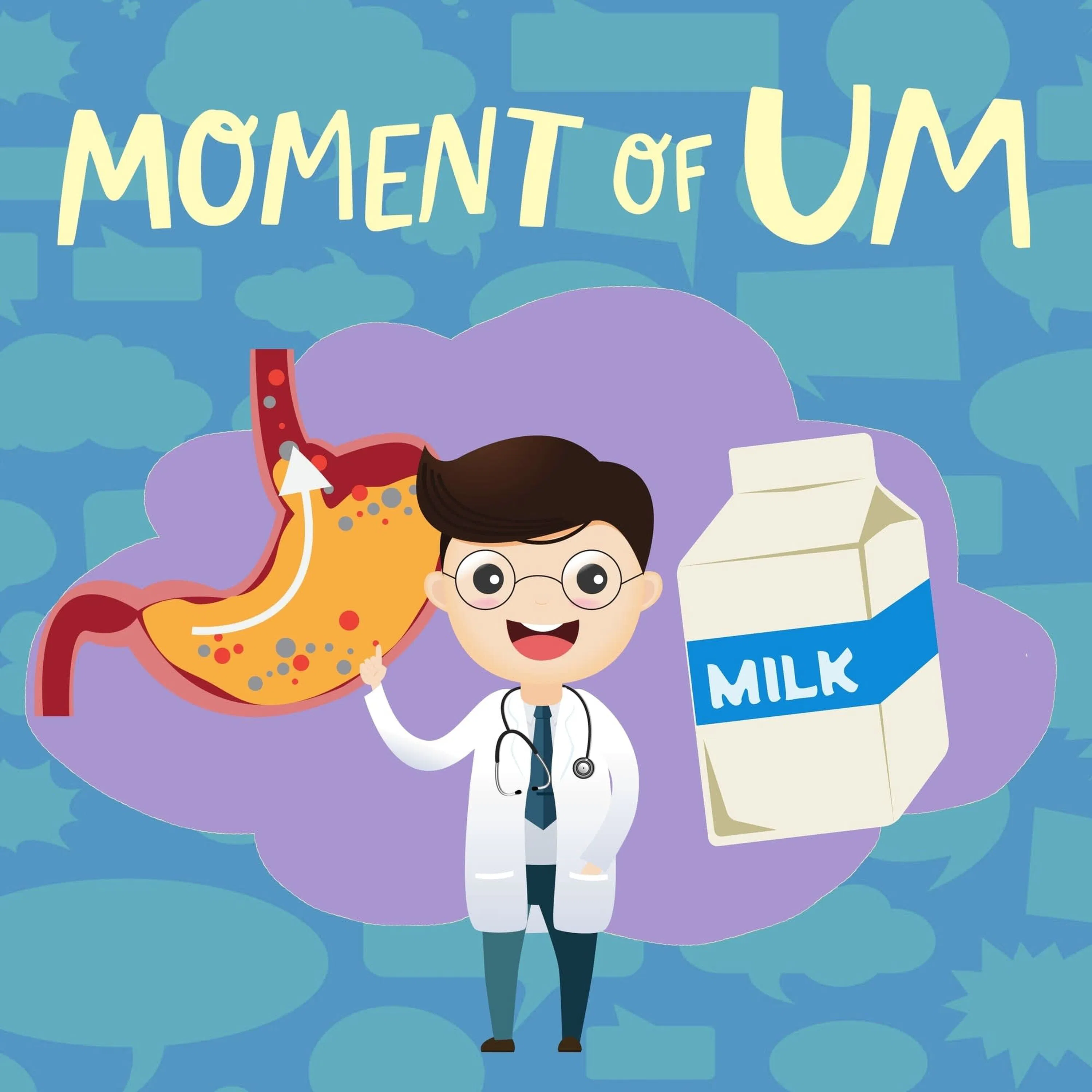
Why are some people lactose intolerant?
Say cheese! But if you’re lactose intolerant maybe don’t eat it? Cuz any kind of milk based food will probably give you a tummy-ache! But why? We asked pediatrician Dr. Anjuli Gans why some people are lactose intolerant… and she helped us understand what it is and why it happens. Got an udderly awesome question? Send it to us at BrainsOn.org/contact, and we’ll milk it for some answers! See omnystudio.com/listener for privacy information.

How many germs could we see without a microscope?
There are so many bacteria in the world that we still haven’t discovered them all! But because bacteria are so tiny, they’re really only visible with the help of a microscope. But what if lots and lots of those teeny tiny bacteria got together in a clump? How many would have to pile together before we could see that pile with just our eyes? We asked microbiologist Daniel Bond to help us find the answer. Got a question GERM-inating in your brain? Send it to us at BrainsOn.org/contact, and we’ll help micro-SCOPE out an answer! See omnystudio.com/listener for privacy information.

Why do crickets chirp?
The sound of crickets on a warm summer evening is just so soothing, isn’t it? All those little insects in the grass, talking to each other about… well, we don’t really know! In fact, we don’t know why they chirp at all. We asked neurobiologist Jon Lambert to tell us what’s actually going on out there at night. If you’ve got a question that just won’t let you rest, send it to us at BrainsOn.org/contact, and we’ll do our best to find the answer! See omnystudio.com/listener for privacy information.
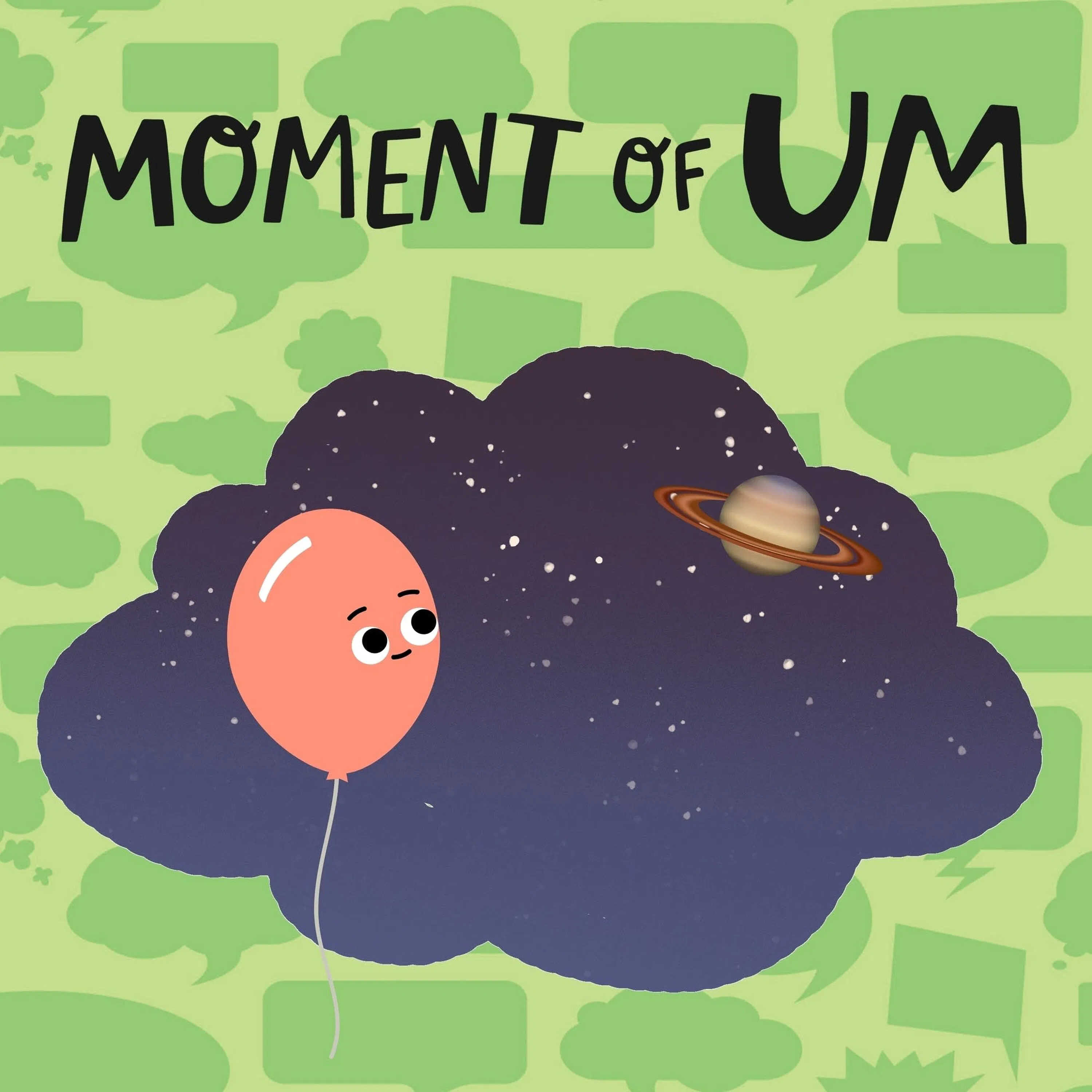
What would happen if you took a party balloon to space?
Have you ever accidentally let go of a helium balloon and watched it float up … up … and away? It drifts way up in the sky until it’s just a tiny speck! But what would happen if a balloon made it all the way to outer space? We asked astrophysicist Amanda Farah to help us find the answer. Got a question that popped into your head? Send it to us at BrainsOn.org/contact, and we’ll float you an answer! See omnystudio.com/listener for privacy information.

Why does the moon change colors?
Have you ever noticed that the moon looks different at different times of the month? Not just the shape, whether it’s full and round or a tiny sliver – but the color also looks different sometimes. Maybe it’s dark orange, or silvery white, or even a bluish tinge. We asked astronomer and planetarium educator Sarah Komperud to help us understand. Is there a Moment of Um question you’re mooning over? Launch it our way at BrainsOn.org/contact and we’ll look for the answer. See omnystudio.com/listener for privacy information.
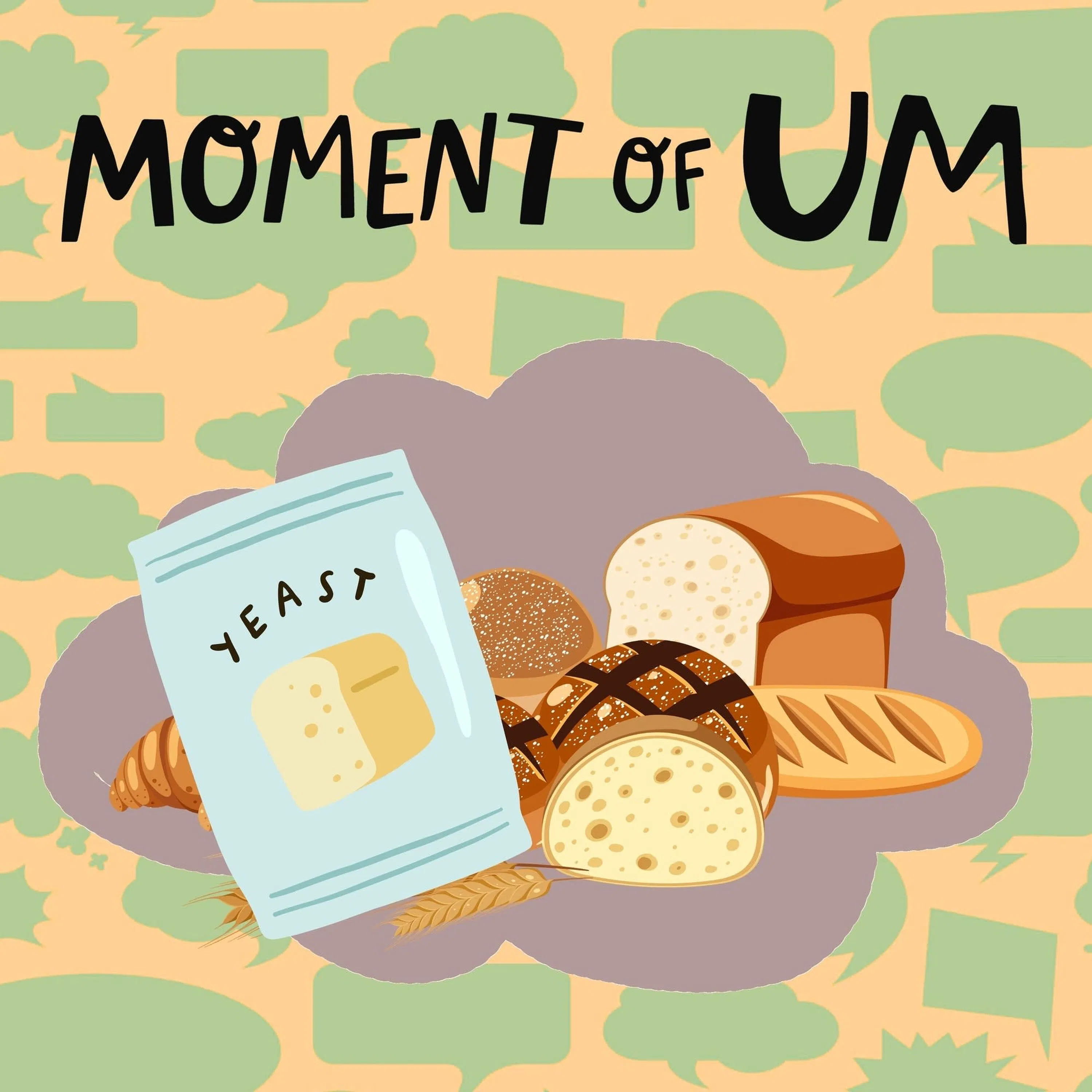
What happens if you put too much yeast in bread?
Most bread dough needs yeast to make it rise, so the bread can be light and fluffy when it bakes. But can you put TOO much yeast in bread? What happens if you do? Do you get a bread balloon? We asked food scientist Dave Domingues to help us find the answer. Got a question that’s rising to the top of your brain? Send it to us at BrainsOn.org/contact, and we’d LOAF to help you find the answer! See omnystudio.com/listener for privacy information.

Why do we use toothpaste?
Toothpaste is something that lots of people use to keep their teeth clean. It makes our mouths smell nice and fresh, but that’s not the only thing it does! So, why do we use toothpaste? We asked dentist Dr. Jean Star to help us find the answer. Got a question that’s stuck in your head, like spinach between molars? Send it to us at BrainsOn.org/contact, and we’ll help floss out an answer. See omnystudio.com/listener for privacy information.

What's the sourest thing in the world?
Most of us are familiar with the taste of something sour – that tart feeling that makes your eyes close and your facial features squint. Lemons, lime juice, kimchi are all sour - but what is the sourest thing in the world? We asked Janelle Clepper who has a Masters of Public Health in Nutrition from the University of Minnesota to help us figure it out. And if YOU have a question, we can help with that! Submit your Moment of Um question at BrainsOn.org/contact and we’ll help find the answer. See omnystudio.com/listener for privacy information.
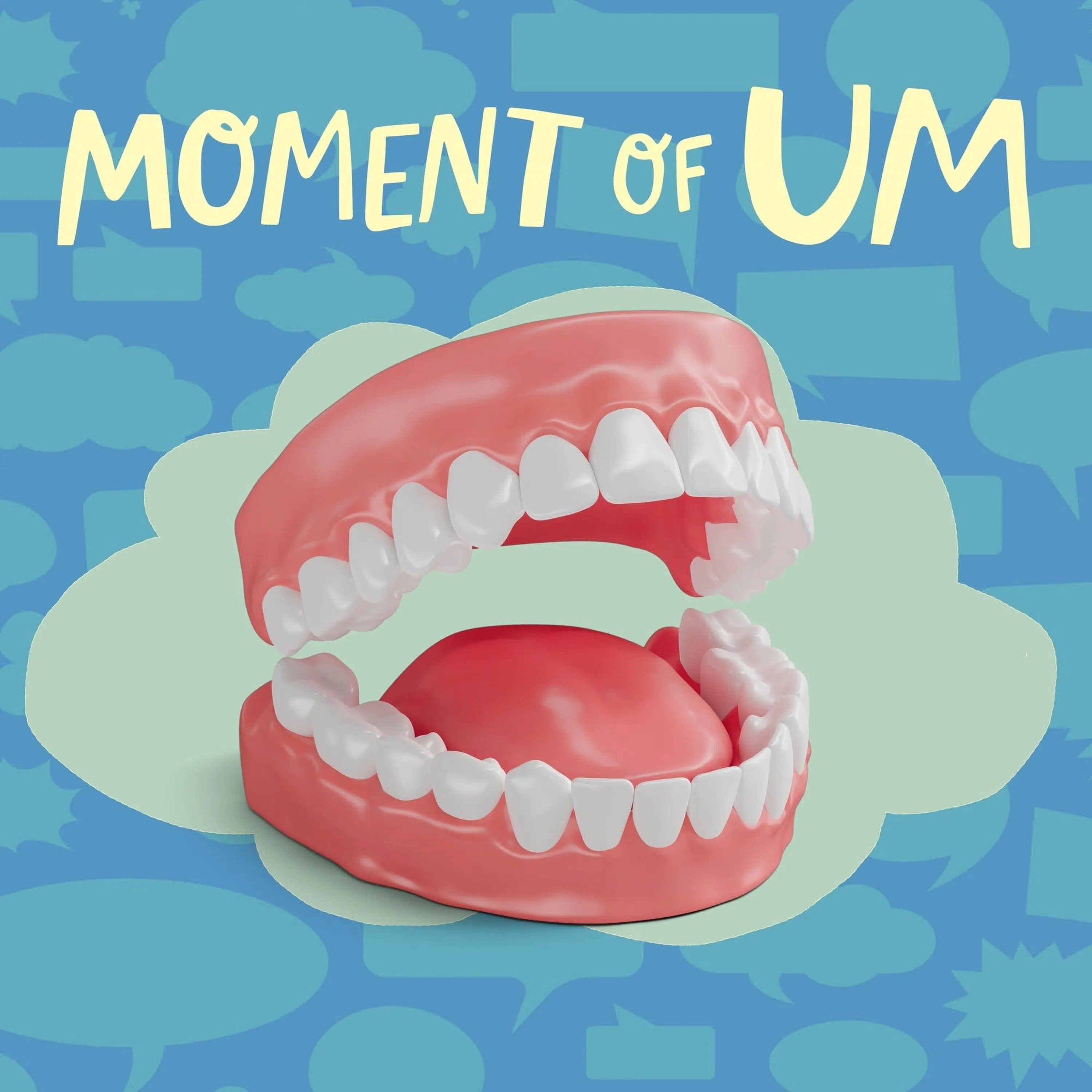
What's inside teeth?
Our teeth are incredible chomping machines. Their strong outer layer helps us crunch carrots, nibble potato chips and chew bubblegum! But what’s inside of them? We asked dentist Dr. Jean Star to help us find the answer. Got a question that’s eating you up inside? Send it to us at BrainsOn.org/contact, and we’ll chew it over! See omnystudio.com/listener for privacy information.

Why don't pine trees lose their needles in the winter?
In the winter, most of us are used to seeing bare tree branches – but some trees, like firs, pines, and spruces, don’t usually lose their needles when it gets cold. We asked forest ecologist Diana Macias to help us understand why. Got a Moment of Um question for us? Go to BrainsOn.org/contact to send it to us, and we’ll root around for the answer. See omnystudio.com/listener for privacy information.

Why do different countries have different flags?
There are 195 different countries in the world, and they all have different flags. Why is that? And where did flags come from? We asked flag expert Michael Green to unfurl the answers. Do you have a vexing question of your own? Send it to us at BrainsOn.org/contact and we’ll help you flag down the answer. See omnystudio.com/listener for privacy information.

Why do we need punctuation marks?
If you open a book, you’ll see lots of letters that come together to make different words. Sandwiched in between the words are little dots, lines and squiggles called punctuation marks. But why do we need those, when they don’t make any sounds at all? We asked writing teacher Kristin Bauck to help us find the answer. Got a question that’s right on the mark? Send it to us at BrainsOn.org/contact – we can’t punc-tu-WAIT to help you answer it! See omnystudio.com/listener for privacy information.

Why do words sound funny when repeated?
Have you ever noticed that when you say the same word over and over, it starts to sound funny? It’s like the word loses its meaning and just becomes weird, disconnected sounds. One of our listeners wanted to know why, and we went to linguist Shohini Battasali for the answer. Got a Moment of Um question for us? Go to BrainsOn.org/contact to send it to us, and we’ll go in search of a solution, solution, solution, solution… See omnystudio.com/listener for privacy information.
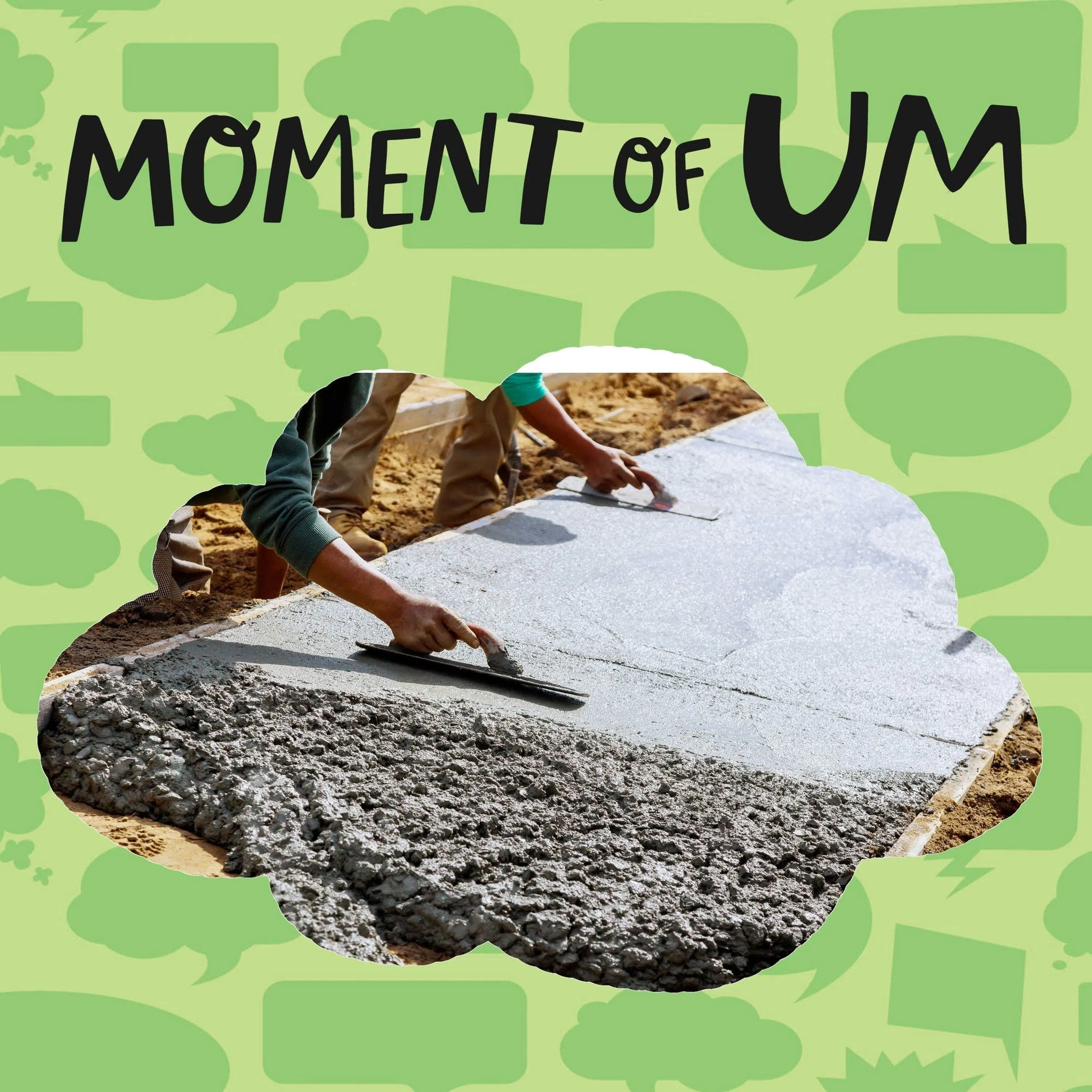
How does concrete harden?
Concrete is all around us. It makes up the buildings we live in, the sidewalks we walk on, the ramps we do our sick skateboard tricks on … but how is it made? How does it go from a thick, sludgy paste into a hard, smooth surface? We asked engineering professor Matthew Adams to help us find the answer. Got a question that seems to keep getting harder? Send it to us at BrainsOn.org/contact, and we’ll use all our ce-MENTAL ability to find the answer! See omnystudio.com/listener for privacy information.

Do spiders poop?
When you have a pet, part of taking care of that pet is cleaning up after them. Whether it’s scooping dog doo-doo from the yard, cleaning caca from your cat’s litter box, or picking out the pellet sized poops from a hamster’s cage, dealing with dookie is part of living with animals. But one of our listeners is wondering…do spiders poop? Paul Shamble of Harvard University helps us understand. If you’ve got a Moment of Um question that’s itching to get out, send it our way at BrainsOn.org/contact, and we’ll scoop up the answer. See omnystudio.com/listener for privacy information.

When were coupons invented?
Have you ever looked through newspaper or magazine advertisements and seen coupons? They’re those little paper rectangles that let you pay less for certain foods, items, or services. But when was the first coupon printed? Who had the idea to advertise with sweet sweet deals? We asked historian Bart Elmore to help us find the answer. Got a question that’s limited time only? Send it to us at BrainsOn.org/contact, and we’ll bargain for an answer for you! See omnystudio.com/listener for privacy information.

How does a touch screen work?
Cell phones and tablets are like portals into other worlds. You can play games, take photos, read books – all with just the tap of a finger! But how do touch screens work? We asked mechanical engineer and science educator Tiffani Teachey to help us find the answer. Got a question that you’ve been monitoring? Send it to us at BrainsOn.org/contact, and we’ll tap out an answer! See omnystudio.com/listener for privacy information.

What's the difference between a squid and an octopus?
Cephalopods are a group of marine creatures who all have a big head, a set of arms or tentacles, and can squirt ink. This group includes animals like squids and octopuses, but how do you know which is which? Marine biologist Sarah McAnulty gave us a few things to look for. If you’ve got a Moment of Um question inked in your brain, send it our way at BrainsOn.org/contact, and we’ll search for the answer. See omnystudio.com/listener for privacy information.
How do we get milk from almonds?
Almond milk is more popular than ever these days, but have you ever wondered how they actually get milk from almonds? We asked Gemma Aguayo-Murphy , recipe developer and creator of the cooking blog Everyday Latina, how it’s done. Got a question that’s a real tough nut to crack? Send it to us at BrainsOn.org/contact, and we’ll find an answer that quenches your thirst! See omnystudio.com/listener for privacy information.

Why are goats' pupils horizontal?
Goats are extremely important animals for lots of cultures around the world – they provide milk, meat, and even warm wool. Have you ever noticed that their eyes are unusual? Instead of round pupils like you and me, their pupils are shaped like horizontal lines. We asked vision scientist Martin Banks to explain why. If you’ve got an eye-opening question for Moment of Um, send it our way at BrainsOn.org/contact, and we’ll try to find the answer. See omnystudio.com/listener for privacy information.
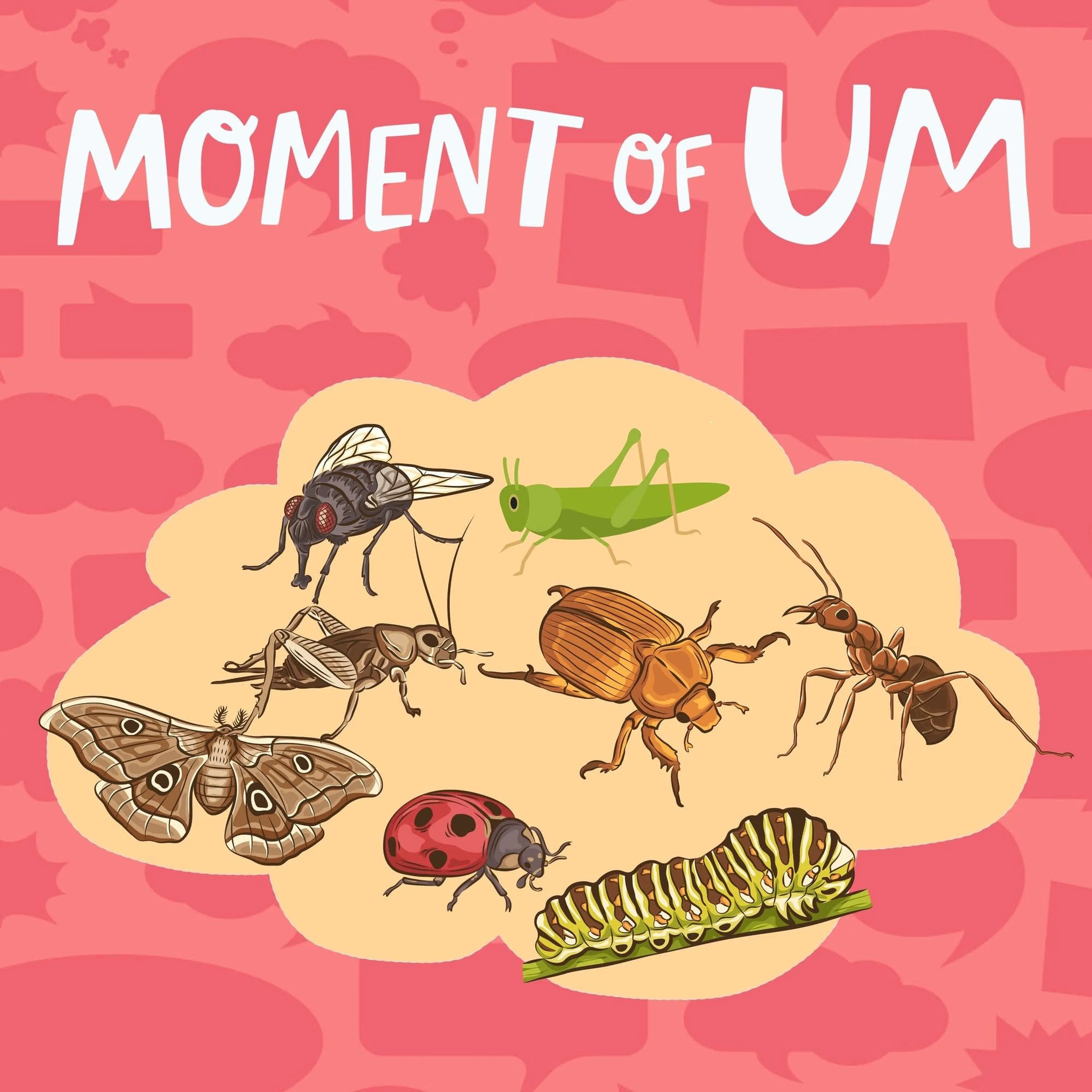
Do insects have ears?
There are all different kinds of ears in the world: big floppy elephant ears, fuzzy rabbit ears – even teeny squirrel ears smaller than a dime! But what about insects? Do they have ears? We asked insect expert Meredith Cenzer to help us find the answer. Got a question that sounds like a winner? Send it to us at BrainsOn.org/contact, and we’ll help find an answer that’s music to your ears! See omnystudio.com/listener for privacy information.

Why does bamboo make a chattering sound?
Bamboo is a type of grass that grows into big clusters of long, straight stalks. Those stalks are super strong, and are useful for making lots of things, from instruments to gardening tools, to building materials. And when a breeze blows through a bunch of bamboo, it makes a really cool chattering, rattling sound. How does it do that? And why? We asked biologist Lynn Clark to help us find the answer. Got a question that’s BAMBOOzling you? Send it to us at BrainsOn.org/contact, and we’ll shoot you an answer! See omnystudio.com/listener for privacy information.

How do trees make rings?
Tree rings are kind of like a tree’s personal diary – they record everything that happens to them - from the weather, to fires and insects. One of our listeners wanted to know how tree rings form, and if you can actually tell the age of a tree by counting the rings. We asked forest ecologist Diana Macias to help us with the answer. Do you have a stumper of a question for Moment of Um? Send it to us at BrainsOn.org/contact, and we’ll get to the root of the problem. See omnystudio.com/listener for privacy information.

Why does steam travel up instead of down?
It seems like water always falls down. Rain and snow fall down from the sky. Watering cans pour water down on plants. Waterfalls – well, the water falls down! But when water is steam, it rises up. Why is that? We asked aerospace engineer Nicole Sharp to help us find the answer. Got a question that’s weighing you down? Send it to us at BrainsOn.org/contact, and we’ll help find what’s up. See omnystudio.com/listener for privacy information.

How do fish get into lakes?
Here at Moment of Um, we love fishing for questions, and the one we’re answering now is a great catch. It comes from Marc, in Miami Florida: When lakes form, how do fish get in them? Associate Professor Megan McPhee from the University of Alaska Fairbanks helps us get to the bottom of this topic. If you have a Moment of Um question, send it to us at BrainsOn.org/contact and you could hear the answer on a future episode! See omnystudio.com/listener for privacy information.
Do butterflies sleep?
Sleep helps our brains and bodies rest. Lots of animals need sleep to survive, like birds, mice and even humpback whales! But what about insects, like butterflies? Do they doze off, too? We asked insect expert Meredith Cenzer to help us find the answer. Got a question fluttering around in your brain? Send it to us at BrainsOn.org/contact, and we won’t sleep on it! See omnystudio.com/listener for privacy information.

Why do I get so sleepy riding in a car?
If you’ve ever been on a long car trip, you may have noticed that you start to feel sleepy as the car moves. Is it because the seats are so comfy? Is the radio hypnotizing you? Are the floor mats sprinkled with secret sleepy dust? We asked neuroscientist Aurore Perrault to help us find the answer. Got a question that’s driving you nuts? Send it to us at BrainsOn.org/contact, and we’ll help dream up an answer. See omnystudio.com/listener for privacy information.

Can one black hole eat another black hole?
Black holes are one of the strangest things in space: gravity is so strong that nothing gets out, not even light, so learning about them is a big challenge for scientists. If black holes “eat” everything around them, could one black hole eat another black hole? We talked with astrophysicist Marcos Flores to shed some light on the subject. Are you in the dark with a Moment of Um question? Send it to us at BrainsOn.org/contact and you could hear the answer on a future episode! See omnystudio.com/listener for privacy information.

Where do the insects go when Venus flytraps eat them?
Have you ever seen a Venus flytrap in action? An unsuspecting insect lands inside and BAM! The plant’s toothy leaves snap shut in a fraction of a second! But what happens to the insects that get stuck inside a Venus flytrap? We asked insect expert Meredith Cenzer to help us find the answer. Got a question that’s trapped in your mind? Send it to us at BrainsOn.org/contact, and we’ll help break down the answer! See omnystudio.com/listener for privacy information.

How do narwhal tusks grow?
Narwhals are sometimes called “the unicorns of the sea” because of their giant spiral tusks. It turns out that those tusks are actually a big tooth that grows right out of the narwhal’s mouth! One of our listeners wanted to know if narwhals were born with a hole in their head for the tusk, and if not, does it hurt the narwhal when the tusk comes through? We spoke with marine biologist Kristin Laidre to get the tooth – er, the truth. If you’ve got a whale of a question for Moment of Um, you can send it to us at BrainsOn.org/contact! See omnystudio.com/listener for privacy information.
Why do our personalities change when we’re teenagers?
Some teens’ personalities seem to change more frequently than the weather in April! Why is that? What’s going on in the brains and bodies of growing humans that changes how they interact with friends and family? We asked child development expert Dr. Ed Greene to tell us about the mighty forces that shape a young person’s personality. Got a question that will boost your mood? Send it to us at BrainsOn.org/contact and we’ll help you feel out an answer! See omnystudio.com/listener for privacy information.

Why do fish jump out of the water?
Picture this: you’re enjoying a perfect day by your favorite lake. The sun is shining, the water is calm, and everything is peaceful … until SPLASH! A fish flies out of the water like a silver torpedo and flops back down into the lake. Why do fish do that, anyway? We asked aquatic biologist Keegan Lutek to help us find the answer. Got a question that you’re POND-ering? Send it to us at BrainsOn.org/contact, and we’ll help find an answer that really makes a splash! See omnystudio.com/listener for privacy information.

What's the difference between a butterfly and a moth?
Picture this: you’re outside with a friend, and you both see a little insect flying around. It’s got a small dark body, some tiny antennae, and big colorful wings. You say, “What a beautiful butterfly!” But your friend says, “No, that’s a moth!” How can you tell the difference? We got entomologist Brian Brown to give us the key. If you’ve got a Moment of Um question fluttering around in your brain, send it to us at BrainsOn.org/contact and we’ll try to catch the answer. See omnystudio.com/listener for privacy information.

Why do things seem lighter in a pool?
Swimming in the pool can be a blast, whether you’re floating peacefully, splishing and splashing, or doing the doggy paddle. But have you ever wondered why you feel lighter in the water than out of it? We asked physicist Xie Chen to help us find the answer. Got a question swimming around in your noggin? Send it to us at BrainsOn.org/contact, and we’ll pool our resources to find the answer! See omnystudio.com/listener for privacy information.

Why can some people wiggle their ears?
Do you know how to wiggle your ears? It might seem like one of those things that some people can do and other people just can’t, but neuroscientist Steve Hackley says he thinks anyone can learn – and he’s got your instructions! Plus, he tells us why it’s potentially an important skill. If you’ve got a question for Moment of Um wiggling around in your brain, send it our way at BrainsOn.org/contact, and you might hear the answer on an upcoming episode. See omnystudio.com/listener for privacy information.
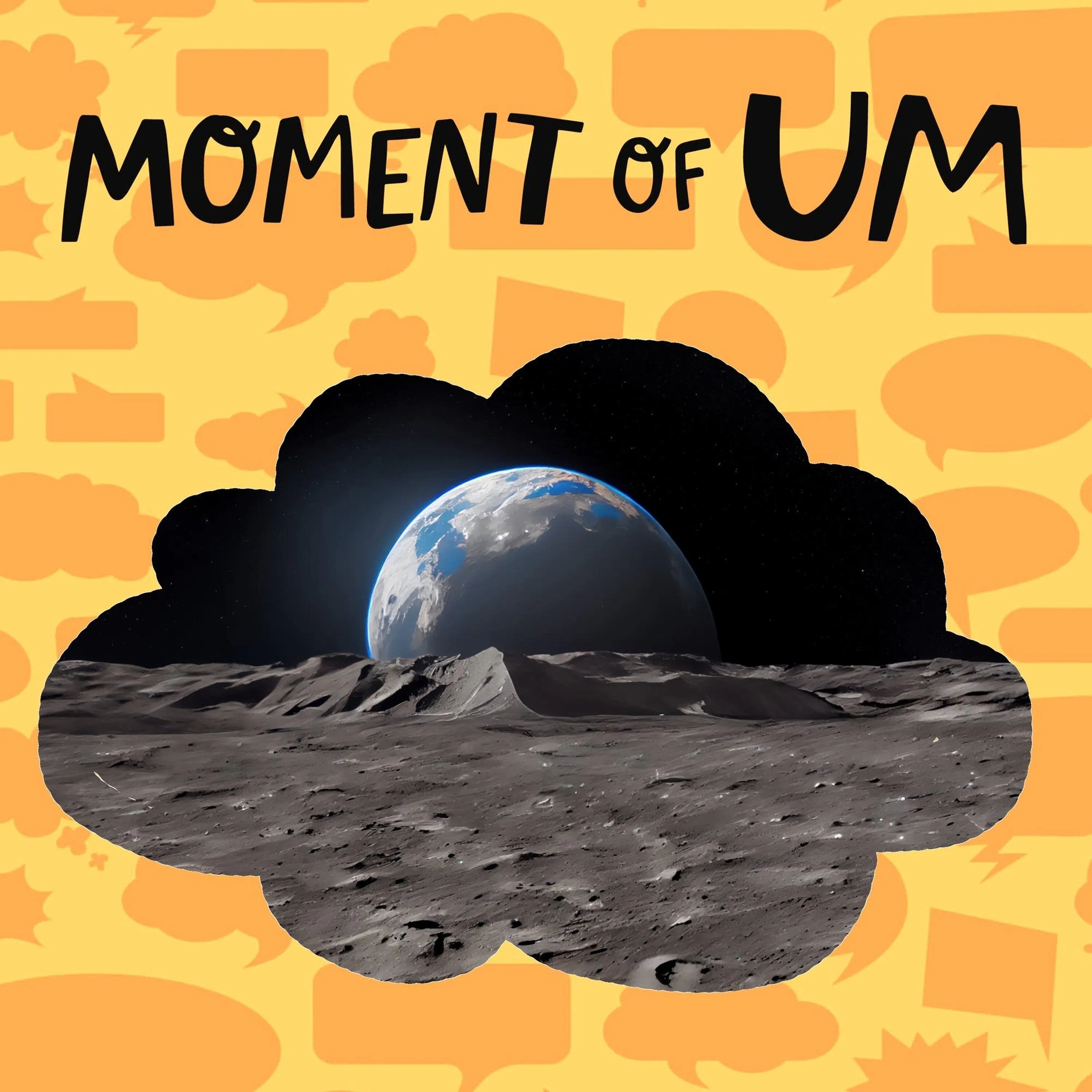
Why does the Earth look flat from the ground, if it's a sphere?
Our planet is shaped like a big blue marble. But when we’re standing on the Earth’s surface, the ground looks pretty flat. So why doesn’t the Earth look round to us? We asked astrophysicist Ian Hall to help us find the answer. Got a question that you can’t wrap your head a-round? Send it to us at BrainsOn.org/contact, and we’ll answer it in no time flat! See omnystudio.com/listener for privacy information.

How long does it take a Christmas tree to grow to full size?
If your family celebrates Christmas, you’re probably familiar with the tradition of decorating a Christmas tree. Some trees are reusable and can be stored in the closet or basement, and others are real. Just how long does it take real trees to grow to their full size? We asked science communicator and plant expert Brandi Cannon-Force to help us find the answer. Pining for the answer to a tree-mendous question? Send it to us at BrainsOn.org/contact, and we’ll fir sure sleigh the answer. See omnystudio.com/listener for privacy information.

Do galaxies orbit anything?
Our galaxy is amazing, but it’s not the only one. Astronomers think there could be two trillion others out there. So, what’s up with those other galaxies? Are they just standing still, or do they orbit something? We asked astrophysicist Ian Hall to help us find the answer. Got a question that’s circling around in your brain? Send it to us at BrainsOn.org/contact, and we’ll help find a universally appealing answer! See omnystudio.com/listener for privacy information.

Does temperature exist in a black hole?
Black holes are created when a giant star explodes into a supernova. The gravity of a black hole is so incredibly strong that it pulls in anything that gets close – even light! But what’s it like inside a black hole? Is it hot or cold? We asked astrophysicist Ian Hall to help us find the answer. Got a question that’s a hole lot of fun? Send it to us at BrainsOn.org/contact, and we’ll help find an answer that really draws you in! See omnystudio.com/listener for privacy information.

How much DNA do we share with tardigrades?
Did you know there is a microscopic animal that can live up to 30 years without food? And that can survive in the vacuum of space? They are called tardigrades, also known as water bears or moss piglets, and they are hardy creatures. How much DNA do these adaptable and almost indestructible organisms share with humans? We asked biologist Kalia Gabriel to help us find the answer. Got a question you can’t bear anymore? Send it to us at BrainsOn.org/contact, and we’ll help you find a tardi-great answer! See omnystudio.com/listener for privacy information.
Could there be exoplanets that have life?
Our universe is enormous and filled with lots of planets. We call planets outside our solar system exoplanets. Could one of these distant places have aliens living on it? We asked astrophysicist Ian Hall to help us find the answer. Got an enterprising question making a trek through your brain? Send it to us at BrainsOn.org/contact, and we’ll boldly go looking for the answer. See omnystudio.com/listener for privacy information.
Why does tea taste stronger the longer you let it sit?
There’s nothing like a cozy cup of tea. Have you ever noticed that the longer you leave the tea bag in, the more flavorful the tea gets? How does that happen? We asked Dr. Stuart Farrimond, a science writer, doctor and educator, to help us find the answer. Got a question that’s steeping in your brain? Send it to us at BrainsOn.org/contact, and we’ll pour out an answer. See omnystudio.com/listener for privacy information.