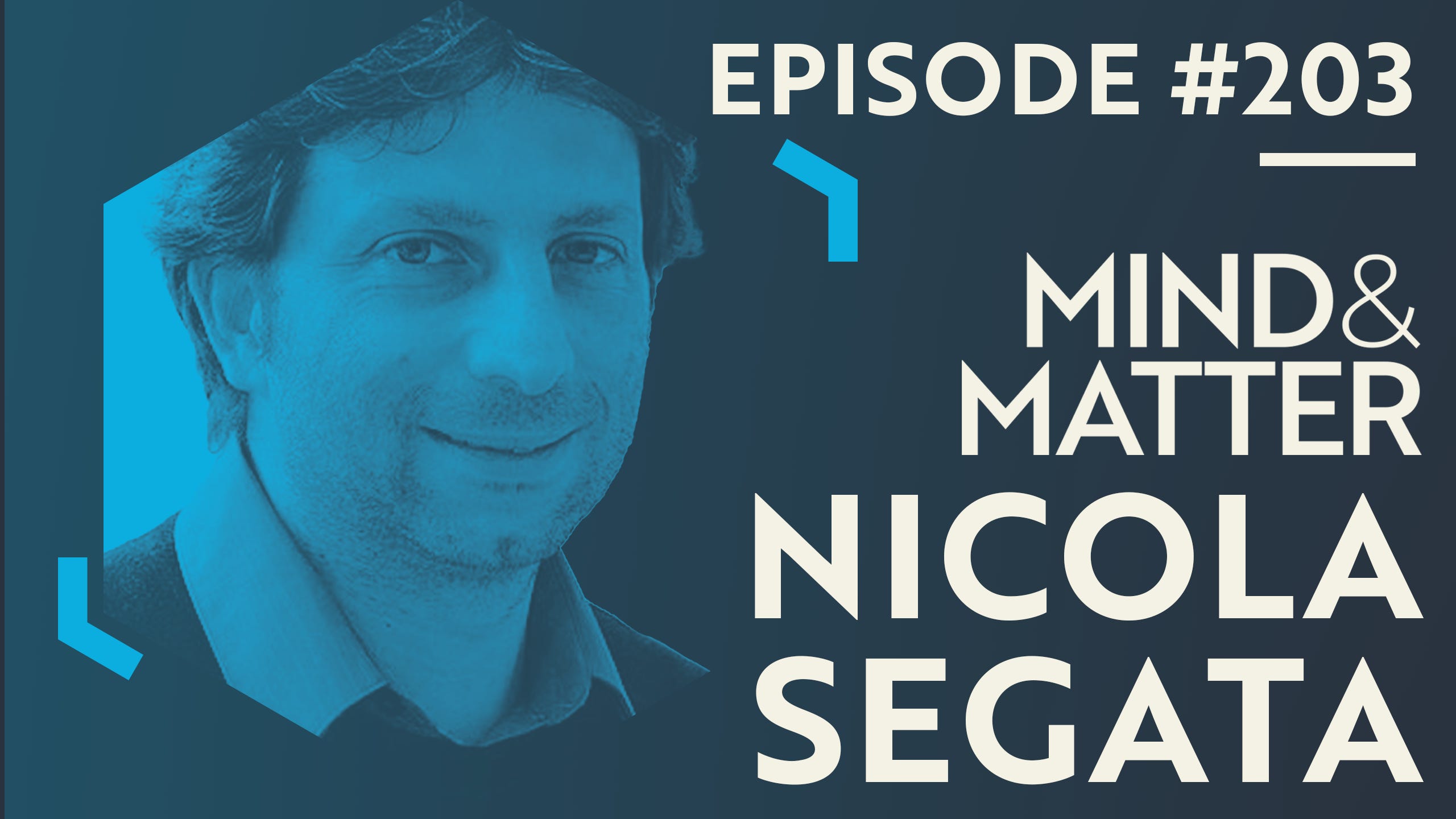
Metagenomics, Microbiome Transmission, Gut Microbiome in Health & Disease | Nicola Segata | 203
Mind & Matter · Nick Jikomes and Nicola Segata
Audio is streamed directly from the publisher (api.substack.com) as published in their RSS feed. Play Podcasts does not host this file. Rights-holders can request removal through the copyright & takedown page.
Show Notes
Short Summary: Deep dive into the complexities of the human microbiome, exploring its impact on health, disease, and even behavior. Dr. Segata gets into “metagenomics” (sequencing multiple genomes at once, from the same individual) and microbiome transmission between individuals.
About the Guest: Nicola Segata is a professor at the University of Trento in Northeast Italy, where he leads a lab focused on the study of the human microbiome. He has been involved in microbiome research since joining the Human Microbiome Project in the US over 15 years ago, specializing in metagenomics to understand the human microbiome's basic and health-related aspects.
Note: Podcast episodes are fully available to paid subscribers on the M&M Substack and on YouTube. Partial versions are available elsewhere.
Episode Summary: Dr. Segata explains metagenomics, the study of genetic material from multiple species, and how it has revolutionized microbiome research. Key topics include microbiome transmission from mother to child, the stability and plasticity of the microbiome throughout life stages, its impact on health conditions such as obesity and cancer, and the influence of diet, lifestyle, and medications like antibiotics on microbiome composition.
Key Takeaways:
* Microbiome Variability: The human microbiome varies significantly between individuals and is influenced by genetics, environment, diet, and lifestyle. Thus, personalized approaches to microbiome health may be necessary.
* Transmission and Acquisition: Microbes are transmitted vertically from mother to child at birth and horizontally through personal interactions. This transmission can influence health outcomes over one's lifetime.
* Impact of Diet and Drugs: Diet, particularly coffee consumption, can significantly shape the microbiome, with some bacteria growing in response to specific dietary components. Medications like antibiotics and proton pump inhibitors can also markedly alter microbial communities.
* Health Implications: The microbiome is linked to various health conditions, from metabolic diseases to cancer, with some treatments like fecal microbiota transplantation showing promise in altering microbiome composition for health benefits.
* Ancient vs. Modern Microbiomes: Studies on ancient microbiomes, like the Iceman's, suggest that modern urban microbiomes differ from those of our ancestors, potentially impacting modern health issues.
* Research Frontiers: Current research is exploring how the microbiome interacts with diet to influence health, the use of microbiome profiling for health screening (like colorectal cancer), and the role of microbiome in immune system development and disease prevention.
Related episodes:
* M&M #178: Microbiome & Gut-Immune Interactions in Obesity & Metabolic Health | June Round
* M&M #172: Immune System, Gut Microbiome, Vitamin D, Cancer, Innate Immunity, Inflammation & Gut-Immune Interactions | Caetano Reis e Sousa
*Not medical advice.
* Full audio version: [Apple Podcasts] [Spotify] [Elsewhere]
* Full video version: [YouTube] [Rumble]
* Support M&M if you find value in this content.
* Episode transcript below.
Full AI-generated transcript below. Beware of typos & mistranslations!
Nicola Segata 1:31
So I'm a professor at the University of Toronto, North East Italy, where I lead a lab which is studying the yoga microbiome, so all the collection of microbes populating our body. I started to be interested into that more than 15 years ago now, when I joined in the US, the Human Microbiome Project. And after that, I've been always more and more fascinating, fascinated with this topic that we are studying mostly through this approach called metagenomics. And now I lead this lab applying metagenomic approaches mostly on the Human Microbiome for trying to discover both basic characteristic of the human microbiome, but also aspects that are related with the health and disease. So
Nick Jikomes 2:21
I know what the Human Genome Project was, but I don't think I've heard of the Human Microbiome Project. What was that? Yeah, exactly.
Nicola Segata 2:29
A bit related now, because it was 10 years after the Human Genome Project, you know, at that time, just started to appreciate the importance of the human microbiome. So they said, Let's sequence whatever is not human inside us, and let's get a map of the Human Microbiome instead of the human genome. So it started around 10 years after the Human Genome Project. However, it was much more difficult, because the results realized that pretty soon that was impossible to have a very clear and specific map of the Human Microbiome because, mostly because there is much, much higher variability in the microbiome than in the genome. So it was difficult to do that, and so the goal of the project changed a little bit toward trying to investigate what is normal to have or not to have in our human microbiome overall?
Nick Jikomes 3:25
Yeah, and I suppose, yeah, I suppose that's a that's a huge problem, because it's not simply that there's variability from person to person and that there's many species of microbes, but you've got many different genomes that vary at different locations even within a single individual. Yeah,
Nicola Segata 3:41
there are. There are really tons of challenges there. There is a lot of variability. Yes, there is a variability between individuals, but also between populations. And there are a lot also of microbes that we never read about. Microbiology is never cultivated, especially at the time, most of the member of the human microbiome. And so it was difficult to make sense, make sense of it. However, what helped a lot was metagenomics, because until the use of sequencing based approaches, the only way to study the gut microbiome and the human microbiome in general, was to try to cultivate a single members. But that is incredibly difficult. And sometimes it's really, really impossible, because you cannot know maybe one microbe is interacting with another microbe, so and this interaction is a beetle for both of them, so you cannot, you know, separate cultivate only one of them. And so metagenomics, at least from the biotechnological viewpoint that started to solve this issue. So the idea was, let's sequence the genetic content of a sample full of microbes and V and by analyzing the genetic content we have, you can have an idea about which microbes are there. But this is difficult, not because you know the idea. Now, like with the Human Genome Project, the technology is mostly the same, sequencing the DNA and but sequencing the DNA in the case of the Human Genome Project, was only the first step. Then we had to make sense, you know, to reconstruct the full genome, starting from readings of short, short pieces of the genome. So this is called genome, genome assembly, and is the idea is like a big puzzle, not trying to put together little pieces to reconstruct the full genome, but with a microbiome, is much, much more difficult, because it's like trying to solve many, many puzzles altogether, starting from, you know, the pieces of the puzzle all scrambled together, and we need to reconstruct many, many puzzles. And each puzzle is the genome of some of these bacteria. And some of these bacteria are completely unknown. So, you know, trying to reconstruct a puzzle without having the picture of what is there? Yeah,
Nick Jikomes 5:55
my God, I see So, so the genome is like a puzzle, like, you know, literally a puzzle that you could build with your family on the tabletop. And of course, the pieces are all mixed up, but it comes with a box, so you know what the picture looks like. And I guess with the Human Genome Project, we had a sense for what the human genome looked like. We knew the number of chromosomes. We sort of have the picture on the box, and so that helped in assembling that one genome. But you're talking about metagenomics, which I suppose refers to the fact that, you know, inside of us, there's many different species of microbes in the microbiome. And so you're saying it's akin to having, you know, a bunch of different puzzles all mixed together. And then on top of that, you don't even have a box for many of them, because they are brand new species, and we have no idea what they're supposed to look
Nicola Segata 6:39
like, correct, correct in the in the gut microbiome, there are usually many others of these different bacteria. And not only bacteria, there are also viruses, full gain, so as full so these are the number of different puzzles that we want to, we want to reconstruct. And some of them, some of these genomes, are quite similar. No, it's like the blue sky of many different puzzles, the blue is kind of the same. So it's very difficult even to assign the single fragment, a single fragment of DNA, or the single piece of the puzzle, to the specific final picture you what you are trying to reconstruct. So this is to say that basically what kept kept us busy, our lab and many other labs, was not trying to improve the byte logical approach of the sequencing, but more analyzing the developing ways to analyze this data, and so we move from being able to know which phyla, so which large taxonomic categories were there to arrive to specific species or even specific strains or even specific variants. So, you know, distinguishing the nucleotides that are making different, that are differentiating the skull, in my gut and in your gut, for example. So
Nick Jikomes 7:54
it sounds like when you're doing this metagenomic work, the the data acquisition side is sort of solved. You have the technology. You can do the sequencing the problem and the challenge, and potentially the interesting thing for someone like you as a computational biologist is really on the genome assembly and data analysis side.
Nicola Segata 8:14
That is the point. That's the reason why I'm a computer scientist and I can apply computer science approaches into this field is not only about assembly, because assembly is probably the easiest approach we can think about, but there are many other tasks that we can we can we can achieve that are different from assembly. But yes, that is exactly the point on the technology. The only thing that changed a lot is the cost for sequencing. 10 years ago, it was about 1000 euros to sequence a sample. A metagenome sample now is like 10 times like expensive, and this means that we can have much, much larger data sets and codes are sequenced, which is at the basis of the big findings. Because, again, the microvirus is hugely variable, so to make sense of it, you really need to have large sample size.
Nick Jikomes 9:13
Yeah, and it's not only variable in the ways that we've mentioned so far, but it's dynamic in a way that the genome isn't. So even though the gene like of course, our gene expression can change. You know, genes can turn on and turn off within an individual, but despite all of the expression differences, there's still one genome in all of my cells. That's the same genome. But that's probably not the case with the microbiome. The species are probably coming and going, shrinking and expanding to different degrees depending on lifestyle and a bunch of other factors we can talk about. So how do you, how do you start to, I don't know. How do you start to, like, standardize things in the lab so that you know that you're kind of looking at the same thing. Like, do you have to make sure and be very careful about taking samples from the same person in the same state? How do. You sort of handle the dynamic nature of the microbiome?
Nicola Segata 10:03
Yeah, that's a fantastic question. So yeah, in the lab, we need to be careful for many reasons. So for example, contamination, microbes are everywhere, in the air, in the kids, in the in the on the bench that you have in the lab, even if you have tried to start to stay as sterile as possible. So micros are everywhere, and if you don't pay attention, they will end up in your experiment on the variability, longitudinal variability, of microbiome. We did a lot of studies, and I think we appreciate right now that the mic that the single components in your gut, in your roller cavity, are pretty stable in time, in terms of which microbes are there. However, they change a lot in terms of abundances of single, single microbes and and the question that we started to be extremely interested in is how we do, how do we acquire such microbes? Now, so if you see this, my gut microbiome, you see, because your gut microbiome, sure, we will have around 20 or 30% of species in common. Is a it's just a little bit, if you think about that. Now, because it's like less than half of the species my gut are also in this in your gut. But even more astonishing is if you look at the genome of these micros that we have in common. So I have a Skrill in my gut, you have a skill in your gut. But if you we look at the genome, they are only 95% or so similar on the share of the genome so many, many genes might E coli as it your doesn't have, and vice versa, at the point that we really think that each human microbiome is unique, if we look at the genetic of the human microbiome.
Nick Jikomes 11:55
So, yeah, so, so we'll have some species in common, but the majority of them won't be in common. And even for the the species that we both have, you know, we both have E Coli in our gut. The basically what you're saying is they can be different strains of E coli. So even though they're the same species, they're not really identical
Nicola Segata 12:11
for E coli. For example, there are strains that are probiotic, strains that are pathogenic, strains that are commensal, strains that are carcinogenic, even or environmental and so, you know, knowing which strains we have is important, and that's and that's what actually we are trying to study. And the next step is to understand how do we acquire these strains from so the baby in utero is a sterile and so instead, you know, a baby of few days of life is already full of microbes. And so we started focus there to understand what is the process of colonization for our gut and human microbiome in general, and, and, and that is what we started several years ago by looking at we went into into the hospital, and we sequenced the microbiome in many different locations of the of mothers before they were giving birth, and then the baby just after birth. And we really saw that, basically the states that were present in the mother were those present also in the baby, so with a vertical transmission from mothers to infants that were occurring during delivery. And so this is to answer your question on what's the variability and longitudinal variability? We start setting a first kernel of microbes at birth from the mother, usually, and then we continuously change it in time. And
Nick Jikomes 13:47
so when the baby is still in the womb prior to birth, you're saying they don't have a microbiome. It's sterile. Do you mean in inside the baby, like the gut microbiome, or even, is the entire womb devoid of microbes?
Nicola Segata 14:00
It's entirely so, you know, there are sections, some cases, there are some potential pathogens. But in healthy pregnancies, they are sterile. Now, you know, sterile, or almost sterile, is
Nick Jikomes 14:16
a small, very, very low microbe, very, very low.
Nicola Segata 14:20
So there is not a functioning, a working microbiome in the baby before, before birth.
Nick Jikomes 14:28
And so, so is it? Is it literally, like a, like a physical process, like the baby is born, it's going through the birth canal, and it's just it's touching the mother's tissue as it's rubbing against it as it's being born. And that's literally what seeds the microbiome. That's
Nicola Segata 14:42
exactly how it happens. And in fact, we see that when there is the C section, instead of natural birth, these seeding of the microbiome for the mother to the baby is not occurring. It's not a big, big, very, very big deal, because it can still happen. In the days after delivery by direct contact. But yes, this is a confirmation that the seeding starts already at birth, with the vaginal microbiome, but also with the gut microbiome, which is, in any case, contaminating many body sites. And we do see these happening. And again, the confirmation is that in the baby, we see the microbes coming the same exact the genetics of the microbes in the corresponding mother, which are different from the the strains we see in any other mother. So it has to be at that level of transmission. And
Nick Jikomes 15:38
so after that, after the microbiome is seeded, and it sort of takes root and establishes itself and and becomes stable after birth. How? I mean? I know that the microbiome is plastic. It can change. But how difficult is it under normal, natural circumstances, for that microbiome to change? So for I guess, one way of asking that would be so if a baby's born, it gets its microbiome. If you look 612, 18 months later, five years later, whatever, is it more or less going to be the same microbes with the same composition as right after it was born? Or is it going to be completely different, or is it somewhere right in the middle?
Nicola Segata 16:17
Well, it depends at the age, and also so infants, they change very rapidly the microbiome. Then they go through changes, like breastfeeding, starting to eat food and so on and so forth. So, you know, in the first one, one and a half years, the microbiome is changing a lot, very rapidly. Then it goes it changes less rapidly. And in the adult is relatively stable at the point that usually, if I look at my microbiome now, and my microbiome in a year from now, if I didn't do any big changes in diet, or you didn't have any medical condition or change content or whatever, I usually we expect to see 80% of the strains to be the same. But there are multiple things you can do to change your microbiome because you want to do that or because it happens. So diet is one big way to change your microbiome, lifestyle, drugs, of course, for many, think about antibiotics, for example, and then you can arrive to medical ways to change the microbiome, including, for example, fecal microbiome transplantation, which seems to be quite a dirty thing, which is actually what It says. So taking the gut microbiome from an individual, giving it to disease individual, and this is a way to reprogramming the gut microbiome quite efficiently, actually. Yeah,
Nick Jikomes 17:50
so the microbiome is plastic. It changes quite a bit early in life, naturally, just, you know, there's a lot of change happening early in life. So it's pretty intuitive, but it stabilizes by the time you're an adult, such that, you know, unless you make major changes to your diet, to your lifestyle, you start taking antibiotics or other things, it will be relatively stable from person, from day to day, from week to week, in a stable, healthy person with a consistent diet and lifestyle an Adult, what are, and I'll let you define what exactly this means. But the more important, or more consequential microbes, if you were to look at the one or two or three biggest strains in terms of how much they're influencing the physiology of the person, in terms of their population density, or whatever is relevant here, is there any sort of general principle in terms of like, what they're doing. Are they, for example, are they primarily preventing pathogens from getting into the body by sort of taking up that space in the gut, or are they primarily digesting critical food components for us? Is there any pattern there? Or is it? Could it be sort of anything, any of the above, depending on the specific species, all of these
Nicola Segata 19:03
altogether. So an healthy, diverse and stable microbiome is doing a lot of functions, preventing infection, as you mentioned, but also helping us digesting food, producing some compounds, short facial acids or some vitamins that they will not be available to us in any other way. But also, you know, priming and setting the immune system is a fantastic is an extremely important function that has implication even on tumors, for example, because an immune system in a positive and healthy configuration can prevent diseases from autoimmune diseases, but also to cancer and much more. And then there is the gut brain access, for example. So the interaction between our gut and our in our head by this gut brain access, so. You know, the function of the human microbiomes are very, very big. You know, metabolism, much, much more and anesthe microbiome does all these functions altogether, also those some that I am sure we still have to discover completely.
Nick Jikomes 20:17
So given how prevalent antibiotics have been for many years. Now, in our society, it's pretty well known that this is obviously affecting the microbiome. It's not just affecting the pathogens that we intend to use the antibiotics against, but if you take broad spectrum antibiotics, you're basically, you know, clearing out your microbiome, or greatly, greatly reducing it, or affecting it in some way. When that happens, given that it's happened to many. You know, almost everyone has taken an antibiotic at some point in their life, but when that happens, so let's say I take an antibiotic tomorrow, a high dose of a general antibiotic, and then I get better. I'm not no longer sick, and then I recover. How likely is it that my gut microbiome is going to recover and be the same basic population it was before, or is it very likely to be completely different?
Nicola Segata 21:08
Yeah, yeah, yeah. So you know, antibiotics are clearly a huge problem, especially for inducing pathogen resistance. So some pathogens become resistant to antibiotics because of the use of antibiotics themselves. But instead, in the in terms of the microbiome, yes, you kind of reserve the microbiome, and then the microbiome, after you end taking antibiotics, starts to rebuild, I wouldn't say from scratch, but from the seedings that from the seeds that remain there. And I would say that most of the time, which we can give percentages here probably between 70 and 90% of the times you go back to an equilibrium of your gut microbiome, which is similar to what you had before. But the problem is that 1020, 30% of the cases in which you reach another equilibrium can still be a good equilibrium, maybe in some rare cases, even better than the original one, but in other cases, it's not, and so this may induce allergies or other problems that are due to that. However, I don't think actually you know antibiotics are the drugs with the worst impact on the gut microbiome because antibiotics, you take them for a couple of weeks, maybe, but, but then you stop them. There are other drugs that are, you assume them, you know, for years or even forever. For example, proton pump inhibitors, they are changing the pH of your stomach, and they are allowing many different microbes arriving to your gut. And it is something that is not like again, two weeks, like antibiotics, but is for many, many months. And this is impacting much more than the microbiome. So we can find from the microbiome, we can predict whether you have, you are under proton pump inhibitors. That's very, very high accuracy. So, and I would imagine something like
Nick Jikomes 23:07
a proton pump inhibitor, it's changing pH, it's that's a very broad spectrum stimulus. It's going to basically affect any microbe species that would be there, no matter what
Nicola Segata 23:18
correct and also changing the acquisition of microbes now, because the way we change our microbiome, coming back to the previous topic, how is our microbiome changing? So if you think our microbiome, the members of our cat microbiomes are not living in the environment, is not that, you know on this table, or if I go into the woods, the micros that are there are also the micros in my gut. 99% of the micros in our gut can only be in the gut of other individuals, or maybe other primates, but we are not in touch with primates, no. So basically, a study that we did recently really showed that is the person to person interaction, leading to the exchange of microbes and the changing of our microbiome. So we saw, we discussed before, now mother transmitting microbes to the infant. But even as adults, we interact, and as we very well know that we change, we exchange pathogens, you know, from viruses, SARS, cov, two, whatever we exchange, also the other microbes, yeah. And we know, you know, in a house, in a household, when a pathogen arrives, Sask of two, for example, 99% of the cases, it gets to the to the whole family from one person. The same with Yeah, is the same with our gut microbes, and that is the way we are seeing so for example, if you take two individuals like you and me that we never interacted directly, we probably don't have even one strain in common. But if we start to live together into a house for a couple of years, statistically, we arrive to share 20. Percent of our gut microbiome even because we share, even just because we share the same physical space,
Nick Jikomes 25:07
I see. So a couple things pop up for me there. So it sort of makes intuitive sense that if you share a common space, a common environment, with other people, your microbiomes will converge to some extent. So there's a, there's a sort of a two pronged question there, to some extent, that could just be shared environment. We're both eating the oranges on the table, the same foods in the fridge. We're naturally going to converge on diet, to some extent. So naturally, that will facilitate a convergence to our microbial of a microbiome, to some extent. There's also the question that you brought up of direct transmission. Can I catch my gut microbiome from you, literally. And I want to ask you about that. So So again, if we think about other pathogens, respiratory viruses, things like that, very simple, very intuitive. If someone has a respiratory illness, they sneeze and they cough, I'm going to inhale those viral particles or whatever, and it goes from their lungs to my lungs. It's a little bit more difficult for me to think about how this happens with something like the gut micro with something like the gut microbiome, because, as you said, many of these species are adapted to live in my intestine. They probably can't, I would imagine. They can't live on my microphone, they can't live on my hand, they can't even live in my mouth. If they're adapted to, say, my colon or my small intestine, how does one transmit their gut microbiome? If that's the case?
Nicola Segata 26:22
Yeah, so, so that is a fantastic question. So we know very little about that, because we just discovered recently that there is this huge transmission of the microbiome in general. But first of all, the oral microbiome is more transmissible than the gut microbiome. So I said that we, if we stay together for two, three gig years, we share 15, 20% of our gut microbiome, but we are probably going to share 40, 50% of our oral microbiome. I see Well, this actually measured when is a partner that are also kissing. But even in any case, sharing this space will lead to higher sharing of the oral compared to the cut maker one, but, but if you think still, the pathogens, even bad gut bugs, are shared. Are, you know, transmitted almost in the same way, with the same efficiency that the oral pathogens or the respiratory pathogens. So, you know, if you go back even many years, microbiologists developed this theory that all microbes are everywhere, and then the environment selects. This can be a specific application of this theory. So because, you know, we we put our micros everywhere, because we just need maybe few sports or few cells of gut microbes that are, you know, in the environment, and this will be enough to have the microbe. But if, all right, if it arrives into your gut to find the perfect environment to actually, to actually grow. So when we study transmission, we are actually unable, at the moment, to disentangle what is the effect of my microbes arriving to your gut, and the probability that that transmission will actually result in a long standing colonization, and without being able to disentangle these two effects, is going to be very difficult to understand. What are the main sources and modalities of transmission?
Nick Jikomes 28:38
Interesting, yeah, it makes sense. I mean, obviously, if the baby picks up the microbiome from the mother through direct contact. I mean, people who live together have lots of direct contact together, especially, you know, if you imagine your spouse or your partner, you have direct mouth to mouth contact, and that's going to influence the composition of the microbiome.
Nicola Segata 28:56
But, but, but you have to in the microbes transmitting between adults, they need to break what is called colonization resistance. Because each of us, you have your microbiome, which is well established, it has an equilibrium. Is not so easy for someone to arrive and to kick one strain out and colonize there. The baby is favored by the fact that is not colonized by anything. So it's much more likely that whatever arrives there will actually, will actually colonize and and this is the same with the antibiotic resistance. So we saw that babies at the daycare, after they take antibiotics, they are much more prone to acquire microbes from their peers, because basically, they are resetting the microbiome. They are lowering the colonization resistance, so the other incoming strains are much more likely to colonize.
Nick Jikomes 29:49
Wow, and to the extent that the microbiome that's transmitted to you can cause you to develop or lose a given FEMA. Type or trait or health outcome. It seems with the plausible that in human society today, the dual use of drugs like antibiotics or like other drugs, like you mentioned, proton pump inhibitors, plus, you know, the interactions we have with different individuals, you could essentially catch things from other people if you become prone to acquiring the microbiome, if you just went through an antibiotic treatment or some other drug treatment, for example. And I guess maybe one way we can sort of start to talk about this is, I know that there's work out there, for example, showing that you know, in rodents, at least, you can basically transmit obesity from one mouse to another. If you you know, you give the obese mouse's microbiome to the Lean mouse, and the Lean mouse becomes obese. And those types of experiments have been done for obesity and other things, as far as I'm aware, to the extent that's true in humans, that means, you know, in theory, right? You're you could have a nice, healthy, lean Baby, say, or child. They get sick, you give them antibiotics, you sort of clear out or diminish their microbiome, and then they go to daycare, and if they're around someone, you know, another child who's obese, they could catch their obesity. Is that? Is that possible? To what extent do we think something like that is actually
Nicola Segata 31:16
happening? So yeah, we need to be a bit careful here. But for sure, what we know is that our social interaction and our lifestyle is impacting our microbiome by really, you know, the people we interact with, because we are catching the microphone there. And yes, there are several diseases that are linked with the microbiome. However, if it is not a single pathogen, there are very, very few diseases that are only due to the microbiome. So is a common system, but yes, for some conditions that are causally linked at least in part with a microbiome, then, yes, microbiome transmission makes these diseases that are usually called non communicable diseases at least partially communicable, and that is actually what we are studying right now, because, as I was telling you, we started discovering These microbiome transmission and now also other scientists added exactly your same idea. Maybe it's part of these non transmission diseases are actually transmissible. We are studying this. We are studying it from cancer to obesity to metabolic diseases. Yeah.
Nick Jikomes 32:35
Because normally, I mean this is, this is the definition of a non communicable disease. You don't normally think about catching cancer from someone, or catching metabolic syndrome from someone, but what we're talking about here is the possibility that there, there's a context dependent possibility that otherwise non communicable diseases can become communicable, and the microbial
Nicola Segata 32:55
I would say that maybe the risk for the disease becomes A bit communicable. You know, you mentioned cancer. There are some cancers that are caused by microbes. And so in that cases, it is known, but these microbes are usually not pathogens. Are microbes that are enhancing the risk for developing certain kind of cancers. So it could be that, if you live with a person that has these bacteria that are slightly more prone to develop cancer, then maybe you can, you can get them and
Nick Jikomes 33:28
how exactly does that work? Are these microbes producing a metabolite that is mutagenic, or something like this?
Nicola Segata 33:35
Well, in the case of cancer, there are many different ways it can be, by inducing inflammation. Inflammation, in turn, may be a risk factor for cancer. There are some microbes that are known to indeed basically damage the human genome and that can cause cancer, and there are other bacteria that are thought to be protective against cancer, and so not having them may be an indirect way to enhance the risk for cancer. The microbiome in oncology is a relatively novel topic, and relatively means probably five to 10 years again, if we exclude the pathogen part, and is very, very quickly developing, also because we have to think about the microbiome as also something to exploit for treatment. I'm referring, for example, to the treatment, to the cancer treatment, the immunotherapy is one of the last the latest fantastic discoveries in the field of oncology, immunotherapy is a saving life of people right now. So people with melanoma, for example, advanced melanoma that are not responding to any other chemotherapy or other therapies. Some. Of them, a good fraction of them are responding to immunotherapy completely cleaning out the cancer. But in some cases, this is not working. And we saw that the microbiome, in some ways, is in is linked with responding or not to immunotherapy. And this is extremely important, and to prove that some of some very recent trials did fecal microwatt transplantation from an healthy donor to someone who was not responding to immunotherapy. And after reprogramming the microbiome via FMT, fecal microwave transplantation, some of these individuals started to respond to immunotherapy.
Nick Jikomes 35:46
So the immunotherapy is not working, and then you change their microbiome, and then the immunotherapy is now effective, and it wasn't before, correct. So
Nicola Segata 35:54
this is linked with what you were saying before, and also FMT means basically inducing a transmission is artificial transmission is not by being taught in contact with someone, is really, you know, artificial transmission. And these induced some changes in the microbiome and, in turns, in the immune system, which made immunotherapy starting to work. And this is is proven, and is more and more an important topic in oncology.
Nick Jikomes 36:24
Do we know exactly how that works? Is the micro new microbiome stimulating the immune system to operate in some new fashion? Is it producing a molecule that wasn't there before?
Nicola Segata 36:35
Yeah, the the answer is that we don't know, unfortunately, and that's the reason why we do FMT, which is transmitting everything, yeah? Because if we knew what, which are the features and the important thing, we will just, you know, transplant that, or basically having some new probiotic kind of intervention targeting directly that. So, clearly, of course, there is a lot of results here, because we won't understand but, but my my feeling is that this is not going to be very successful, because our new microbiome, as again and again, is unique to each of us. So even the intervention that you will need to do it on each of us will be unique. So,
Nick Jikomes 37:22
so going back to the subject of, you know, diseases that are clearly linked, at least in part, to the microbiome, what would be one of the best examples where the link is clearest between a disease state and the microbiome?
Nicola Segata 37:38
Well, if we remain in in oncology, for example, some COVID cancers are known to be linked, not only with some specific bacteria, but also with some other bacteria that are colonizing the tumor. So this is one example, of course, in all the metabolic diseases, is not a primary cause, but is a is one of the causes, and one of the things that being unbalanced is leading to disease. And of course, also all the autoimmune diseases have a seed in the microbiome.
Nick Jikomes 38:21
And so to what extent? I'm not super familiar with the literature on this, but you know whether we're talking about something like metabolic syndrome or something like an autoimmune disease, to the extent that any one condition is linked to the microbiome in some substantial way, in theory, I would imagine so. So, as you said before, right? You're as an adult, your your microbiome reaches some kind of like equilibrium state, and it kind of stabilizes depending on what your lifestyle is. So it's easy to imagine that some people with certain ailments might sort of be stuck with a microbiome that's suboptimal, but it's stable in their bodies. And so that would imply that a potential strategy could be that if you sort of just take, say, broad spectrum antibiotics or something, wipe out the microbiome and then reset it intentionally with probiotics or a particular diet or a direct transplantation from another individual, this could be an effective way to reset the microbiome. And I mean is that, is anyone doing anything like that? Have we seen examples of something like that where you sort of intentionally reset someone's microbiome?
Nicola Segata 39:29
Yes, I guess we know that after antibiotics, having an healthy diet is particularly important to recover our health, and which is probably also due to the microbiome. Probiotics is another topic. Yes, probiotics, many of the probiotics, is not directly Coronavirus in our gut, so it can be a bit more, you know, complex there. But yes, you know, we can have. Drive to the point of thinking about doing auto physical, micro transplantation to recover our microbiome before after having a disease. Although for this we will be, we will need to be very, you know, forward looking, because we will need to store our microbiome for future transplantation, before getting the disease, because otherwise, you know, we don't have the healthy microbiome anymore.
Nick Jikomes 40:29
Yeah, another thing I want to talk about is ancient microbiomes, because I believe you've done some work here. So, you know, by analogy, you know, we know all know that genomics is a field, and you can get your genome sequenced today as a living person, but also ancient DNA and ancient genomics has been a very vibrant field for the past. You know, X number of years, you know, people have sequenced Neanderthal genomes and so forth. It sounds like you've been involved in work where you can actually recover aspects of the microbiome from from deceased individuals, going back quite a ways. To what extent is this possible? And what did you find
Nicola Segata 41:07
there possible? So our interest in the ancient microbiome started when we started the difference between our microbiome and our being the westernized, urbanized, you know, American, European urban microbiome compared to what we call no style microbiome. So population living in a very rural area under gatherers as an extreme but in any case, not having access to drugs, to Wi Fi, diet and things like that. And we saw completely different microbiomes. But at that point, we didn't really know whether it was the lifestyle that was inducing the difference in the microbiome or was some other geography associated characteristics. So to answer this question, we basically try to go back in time and look at mummies, the microbiome of mummies in the same exact area we were living. And we were lucky here, because on the Alps across the border between the border between Italy and Austria, 25 years ago or so, it was found a very ancient mummy is called The Iceman or oats is 5.3 1000 years old, is extremely well conserved. So it's possible actually to go into the gut of the individual, and we know what was the last meal, but we also have the microbiome content today, and so when we sequence it, and this was difficult, but was supported by the scientists, the anthropologists and the microbiologists working on this specific kind of of samples, we actually found a lot of bacteria that were almost identical to the one of non westernized population are completely different For our own modern, urbanized populations. So
Nick Jikomes 43:00
the genetic material of the microbiome was intact in this mummy. I
Nicola Segata 43:06
wouldn't say that it was intact. The DNA was slightly more fragmented, but it was possible to identify the strains with high precision. And we were also favored by the fact that, as we were discussing, the gut microbiome is only present in the gut. So we could distinguish very well the gut microbes with respect to a contaminated soil microbes, for example. Because, of course, this guy was found in the environment so and so forth. But yes, even though ancient DNA have some specific patterns of damage, we were able to reconstruct the last fraction of their microbiome. Wow.
Nick Jikomes 43:44
And I'm sorry, what did you say in terms of how similar or how different it was from present day microbiomes?
Nicola Segata 43:50
So basically, the microbiome in these ancient mummy was very, very was much, much closer to current, no Western modern corporation that our own westernized population,
Nick Jikomes 44:04
it looked more like someone living in a rural area today than in urban Exactly.
Nicola Segata 44:08
It was very, very similar to the under gatherer population in Africa, for example. Oh, interesting, yeah, compared to, you know, the population in Toronto, which was only 20 or what, 60 kilometers or so from where the Iceman was found. And
Nick Jikomes 44:25
when we compare present day microbiomes on average, from like the Western urban microbiome to a more hunter gatherer style microbiome, are there any general patterns there, in terms of the differences, like where, in terms of, you know, how the difference is allowing, allowing for certain nutrients to be absorbed, that are, you know, in the one diet but not in the other, or are there any sort of patterns as to what the functional difference between the microbiomes actually is, between a hunter gatherer and an urban person? Yeah.
Nicola Segata 45:00
The biggest difference we see is that under gather have a lot of microbes and genes in those microbes able to degrade very complex vegetable fibers, fibers that probably we don't get usually in our diet anymore. But this is only the biggest difference. There are many other difference. For example, we see less genes having to do with pollutants or cytobiotics In general, in our western population. But what is more relevant? Because, you know, you may think sure we don't get very complex fibers in our diet right now, so who cares not having those bacteria. But we have to think about the CO evolution between humans and our microbiomes. So these was a process going on for millions of years through the primate evolution and everything. And so the micro that are there don't have only one single function. So the fact that we are losing the bacteria that were there evolutionary because we are not eating complex fibers anymore, has a lot of impact, because those micros are there and learn how to stimulate in the right way the new system how to do many other functions, and losing them may be a big, a big problem. So we are studying that we we need to be careful, but this may be linked, for example, with the increase of autoimmune diseases or other allergies or intolerances that are in our in our population right now. This may be due to the disruption of the host microbe, co evolution, due to the change in lifestyle.
Nick Jikomes 46:51
What about um, what about other medications that people take chronically? And there's many things we could potentially talk about, but it makes sense that obviously, antibiotics affect the microbiome. It makes sense what you said before about proton pump inhibitors, because they're just going to change the pH, which is going to be, you know, a very it's going to favor and disfavor different species in the gut and elsewhere. But what about other types of drugs? Because a lot of people are on so many pharmaceuticals now, and I could imagine, for example, just, just to give one example, SSRIs, they're very common. They are affecting serotonin as many people, I think, know at this point, there's a lot of serotonin in the gut, and I would imagine even those types of medications can have an effect on the microbiome. Is that likely the case? Are there any examples where we know that's definitely true? There
Nicola Segata 47:37
are some specific examples, and this is actually the case. But the point is that this is not as well studied as they should be. But you know, there is more awareness of that in both direction also, because the effectiveness of certain drugs is are impacted by the gut microbiome. For example, there is a quite well known molecule, decoxing, which is drug, a cardiac drug, that there are some strains of a species called Agartala that are able to deactivate completely. So, you know, digest, basically this molecule, which does not is not any more effective in individuals with that so the interaction between drugs and our microbiome should be studied much more in both direction. Sometimes certain drugs would not be as effective as they should be because of the microbiome. In other cases, the drugs are changing the microbiome in serve in such a way that then the microbiome is in turn causing some diseases or some side effects. And this is still largely uncharacterized, and and, and there are several labs actually now starting to study it extensively, so at the level, really, of testing each single drug with each single microbe and then building a huge map, basically, of the potential interactions. Yeah.
Nick Jikomes 49:09
So, so it makes sense that there would be it sounds like we have examples where you know a drug that would be effective is not effective in certain individuals because they have got some microbe inside of them that metabolizes the drug before it can actually be beneficial.
Nicola Segata 49:26
Yeah, the one I said is one of those example. It can also be vice versa. You know, for example, there is these condition called Auto brewery syndrome. These are caused by some bacteria in their gut that are actually fermenting sugar and producing alcohol instead of producing lactic acid. For example, they are actually doing what you know is currently done for producing beer. Or while. And these individuals, that are pretty rare but, but they are documented, are basically producing alcohol in their gut, and so also releasing alcohol molecules in the blood. And at the point of you know, some of these individuals were stopped by police for a normal contract control, and they were actually positive for alcohol, but it didn't trick anything. It was out of brewery syndrome. So, you know, I call here is a molecule. Is not