Show overview
MICROCOLLEGE: The Thoreau College Podcast has been publishing since 2022, and across the 4 years since has built a catalogue of 94 episodes. That works out to roughly 95 hours of audio in total. Releases follow a fortnightly cadence.
Episodes typically run thirty-five to sixty minutes — most land between 55 min and 1h 4m — and the run-time is fairly consistent across the catalogue. None of the episodes are flagged explicit by the publisher. It is catalogued as a EN-language Education show.
The show is actively publishing — the most recent episode landed earlier today, with 20 episodes already out so far this year. The busiest year was 2023, with 27 episodes published. Published by Thoreau College.
From the publisher
MICROCOLLEGE is an exploration of the crisis in higher education and the innovative projects and thinkers working to address it, with a special focus on the human-scaled, place-based, meaning-oriented learning communities we call "microcolleges."The podcast is hosted by Jacob Hundt, Founder of Thoreau College, a micro college rooted in the Driftless Region of rural southwestern Wisconsin, inspired by the model of Deep Springs College, Waldorf education, and Henry David Thoreau. This podcast is for thoughtful, motivated teenagers and young adults who are disappointed by the options available to them in post-secondary education, as well as their teachers, parents, counselors, and mentors, and anyone interested in the quality of higher education and its role within our culture.Listeners will be introduced to new ideas and alternative opportunities for post-secondary education, as well as thoughtful criticism of mainstream models and practices at colleges and universities. Listeners will discover exciting educational programs to apply to, books to read, and thinkers to learn more about.Learn more about Thoreau College and the microcollege movement at https://thoreaucollege.org/
Latest Episodes
View all 94 episodesGutenberg College - Charley Dewberry ~ Christian Liberal Arts & The Philosophy of Science
Hildegard College - Matthew J. Smith ~ The Great Books & Education for Entrepreneurs
Zena Hitz - The Catherine Project & St. John's College
Rethinking "Mental Health" in Finland ~ Markus Raivio and the Kukunori Culture Houses
Douglas Haynes - Teaching Toward Slow Hope
Abby Falik - The Flight School
Doomer Optimism - Ashley Fitzgerald
Pedagogies of Collapse - Ginie Servant-Miklos
John C. Campbell Folk School - Bethany Chaney and Annie Fain Barralon
Anthroposophical Youth Movement - Adeline Lyons and Gabel Cramer
Reyn Hutten, Lulah Entwistle - Outer Coast, Sitka, Alaska
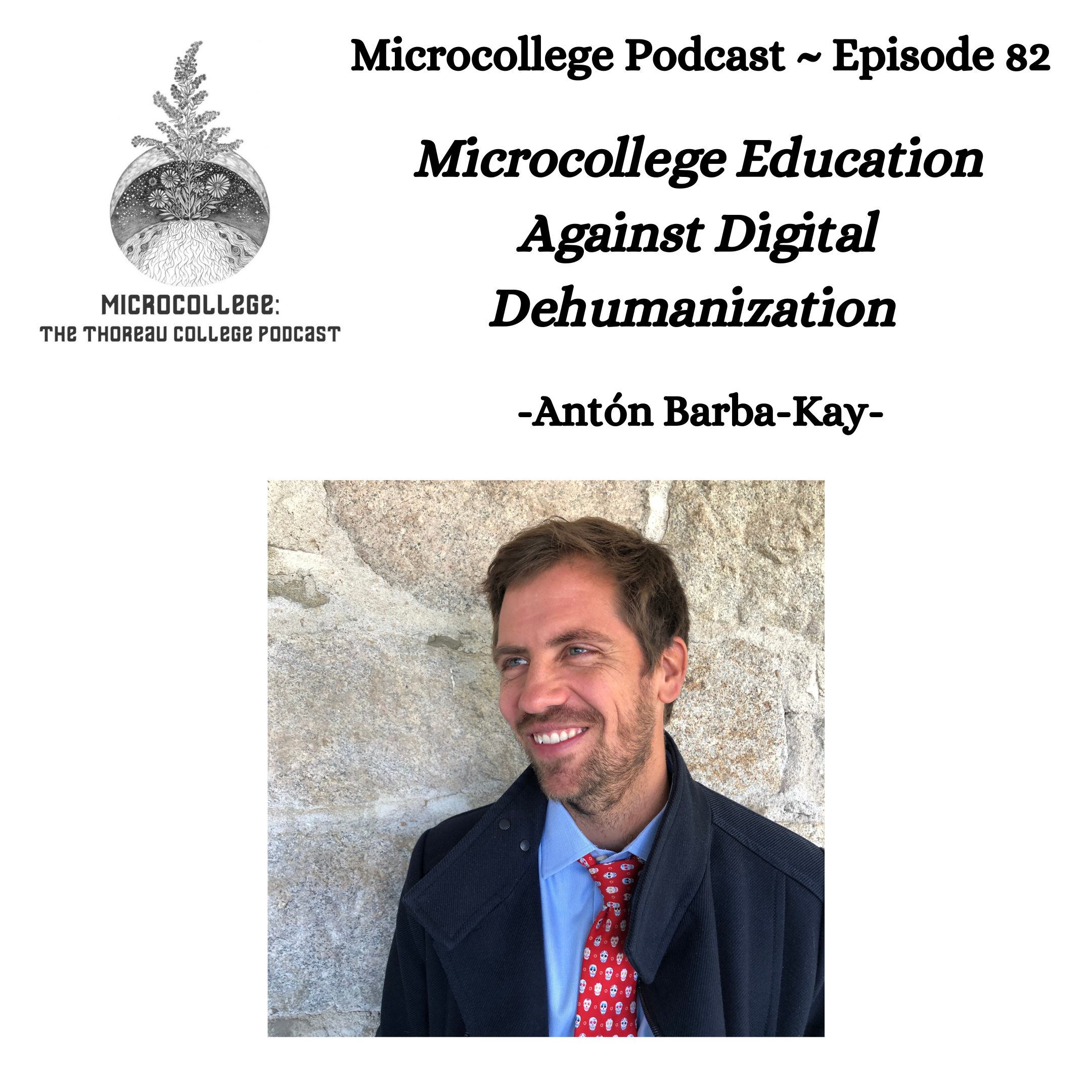
Ep 82Antón Barba-Kay - Microcollege Education Against Digital Dehumanization
In this episode of the podcast, I spoke with Antón Barba-Kay, a philosopher and scholar whose life includes time as a student at St. John's College and as a professor at Deep Springs College. As a scholar, Antón has focused on exploring how the internet and digital technology in general have come to shape our inner lives and our experiences of reality. Rooted in classical and German philosophy, Dr. Barba-Kay engages with questions of aesthetics and interior formation as he articulates a view of digital technology as a "natural technology" - i.e. "a technology so intuitive as to conceal the extent to which it transforms our attention" and our sense of self. This has obvious implications for the design and practice of education, which Dr. Barba-Kay is uniquely placed to explore.Antón Barba-Kay is a fellow at the Carr-Ryan Center at the Harvard Kennedy School, a senior fellow at the Institute for Practical Ethics at UC San Diego, and a distinguished fellow at the Center on Privacy & Technology at Georgetown Law. He received a B.A. from St. John’s College, a B.A. in classics from Cambridge University, and a PhD from the Committee on Social Thought at the University of Chicago; he has been (tenured) Associate Professor of Philosophy at Catholic University and taught at Deep Springs from 2020-24 (two of those years as Robert B. Aird Chair of Humanities). In addition to his scholarly publications in nineteenth-century German philosophy, his essays about culture and technology have appeared in The New Republic, The Atlantic, The New Atlantis, Dissent , The Hedgehog Review, and The Point, among other magazines. A Web of Our Own Making: The Nature of Digital Formation –his book about what the internet is and what a difference it makes–was published in 2023 by Cambridge University Press.A Web of Our Own Making: The Nature of Digital Formation - https://www.cambridge.org/core/books/web-of-our-own-making/92F7F830EBEC409F05A526E64DDD1D9DDeep Springs College: https://www.deepsprings.edu/St. John's College: https://www.sjc.edu/
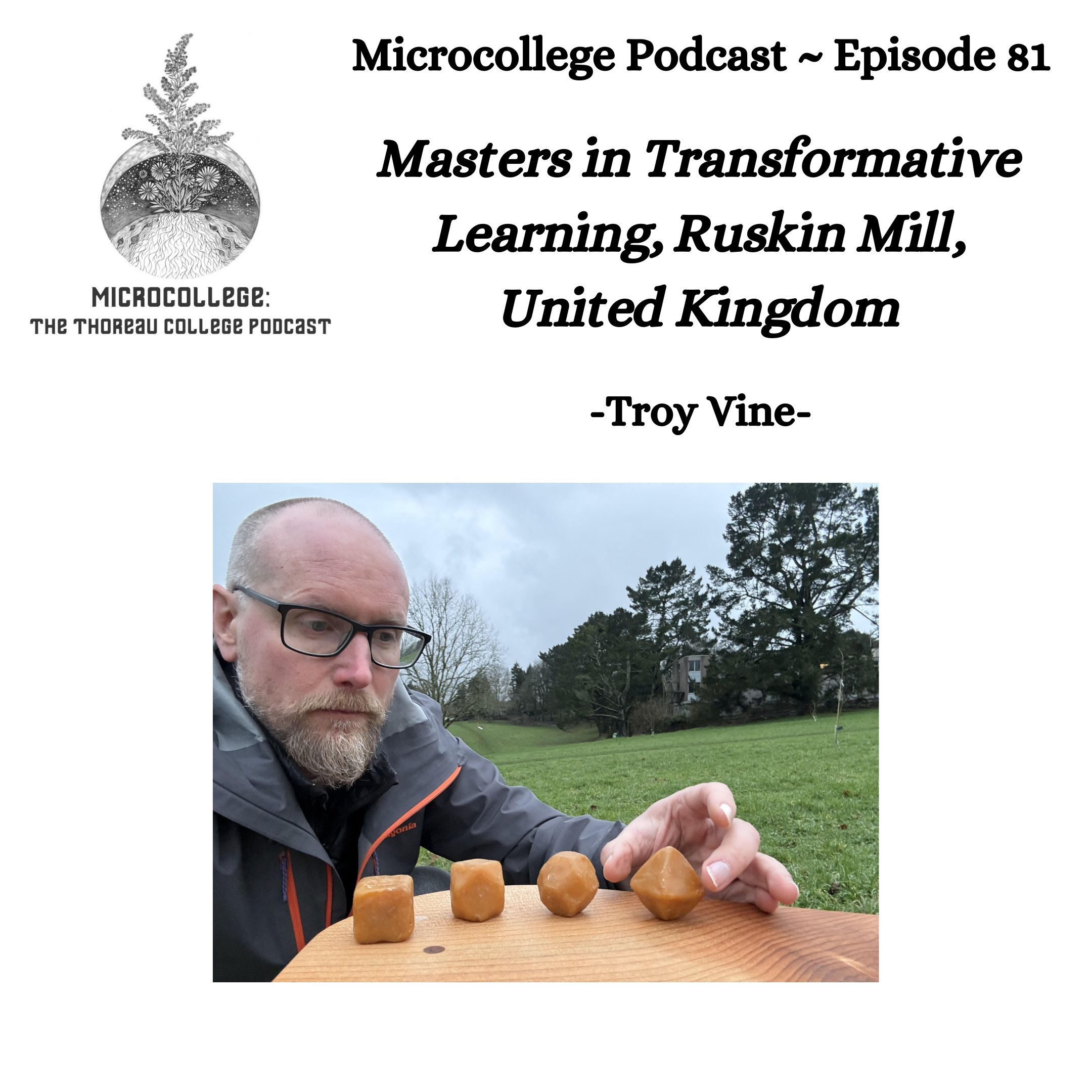
Ep 81Troy Vine - Masters in Transformative Learning, Ruskin Mill Centre, United Kingdom
On this episode we chat with Dr. Troy Vine with the Ruskin Mill Centre for Practice in the United Kingdom about a new Master of Arts program in Transformative Learning that will be launching this fall, offering a unique opportunity to explore the contemplative model of science pioneered by Johann Wolfgang von Goethe and practiced by Henry David Thoreau, Rudolf Steiner, and other out-of-the-box thinkers. Not only is this a different, more holistic way of doing science - it is also a pathway to inner transformation.After gaining a doctorate in particle physics from University College London, Dr. Troy Vine became interested in Goethe’s theory of colour. Studying with leading authorities on the topic, he has published extensively on Goethe’s colour science, both as writer and as editor. With artist Nora Löbe and physicist Matthias Rang he wrote the book Seeing Colour: A Journey Through Goethe’s World of Colour, published by Floris Books in 2022. Troy is in the final stages of a second doctorate, this time in philosophy, at the Humboldt University of Berlin, with a thesis focusing on the history and philosophy of Goethe’s colour science. Troy has taught Goethean colour science and the history and philosophy of holistic science more generally for over two decades, including at Schumacher College, where he was programme lead for MSc Holistic Science. Troy has recently drawn on this experience to design a MA programme in Transformative Learning for the Ruskin Mill Centre of Practice, that will begin this coming autumn.MA in Transformative Learning - https://rmcp.org.uk/ma-in-transformative-learning/Seeing Colour: A Journey Through Goethe's World of Colour: https://www.florisbooks.co.uk/blog/2024/02/19/seeing-colour-a-journey-through-goethes-world-of-colour/Thoreau College: https://thoreaucollege.org/
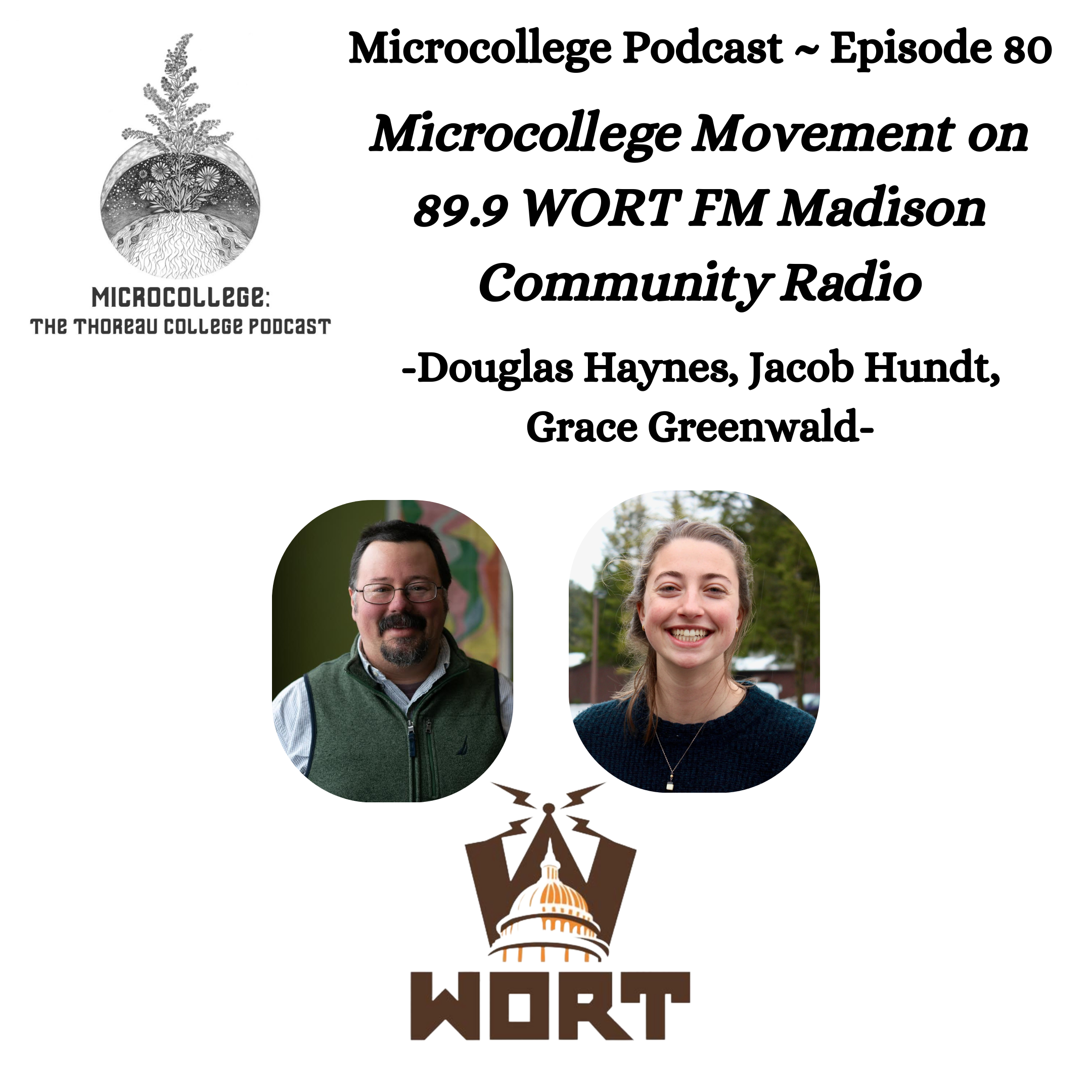
Ep 80A Public Affair w/ Douglas Haynes on 89.9 WORT FM -- The State of the Microcollege Movement
This is the 80th episode of the Microcollege podcast! To celebrate this milestone, we would like to do something a little different. For this episode we will be sharing an interview that took place live on WORT 89.9 FM, Madison, Wisconsin’s community radio station. On February 2, Douglas Haynes, host of the WORT show “A Public Affair," interviewed me and Grace Greenwald of the Springboard Foundation about the state of the microcollege movement, including the origins and development of Thoreau College.Douglas was a great interviewer and this conversation serves as a reintroduction for myself and Thoreau College, as well as a status update on how things have changed in the past 3 and a half years, since the Microcollege podcast started on Henry David Thoreau’s birthday in July 2022. This podcast has proven to be an fun and amazingly effective way to explore, articulate, and promote this emergent model of education and the people and organizations who are making it happen. I have made connections with people and ideas that have informed my practice as an educator and organizational leader. The podcast has helped Thoreau College connect with new students, instructors, funders, and collaborators and has contributed to the formation of networks and gatherings of allied organizations, scholars, and educators, such as the International Folkmode for Educators in Denmark in 2025 and the now annual summits of the Nunnian Consortium, most recently here in Wisconsin in January 2026. Most exciting of all, I have increasingly begun to hear from ambitious educators and dreamers who tell me that the stories and examples shared on the Microcollege podcast are helping to inspire and inform their own plans to establish new holistic, humanly scaled educational programs on the microcollege model at locations around the world.This is so exciting and it makes this work seem ever more important and timely. In the past three and half years the sense of crisis in higher education and beyond has accelerated and deepened. Many legacy liberal arts colleges and smaller public campuses have closed, merged, or dramatically restructured during this time and the rapid emergence of Artificial Intelligence and other powerful digital technologies have cast many aspects of education, culture, and life in general into disarray.I feel so grateful to have this outlet as a platform for thinking about these complex times alongside creative and inspiring people who are crafting ambitious and original responses. Thank you to everyone who has been listening to these conversations - and also thank you to Liam McGilligan, the faithful producer of this show. To mark this 80th episode, please take a moment to leave a comment on the platform you use to listen to the show or send an email to me at [email protected] to say what you appreciate about the show and/or what you would like to hear more about. That would be so exciting and inspiring for us!WORT FM: https://www.wortfm.org/Springboard Foundation: https://www.springboardlife.org/Thoreau College: https://www.thoreaucollege.org/
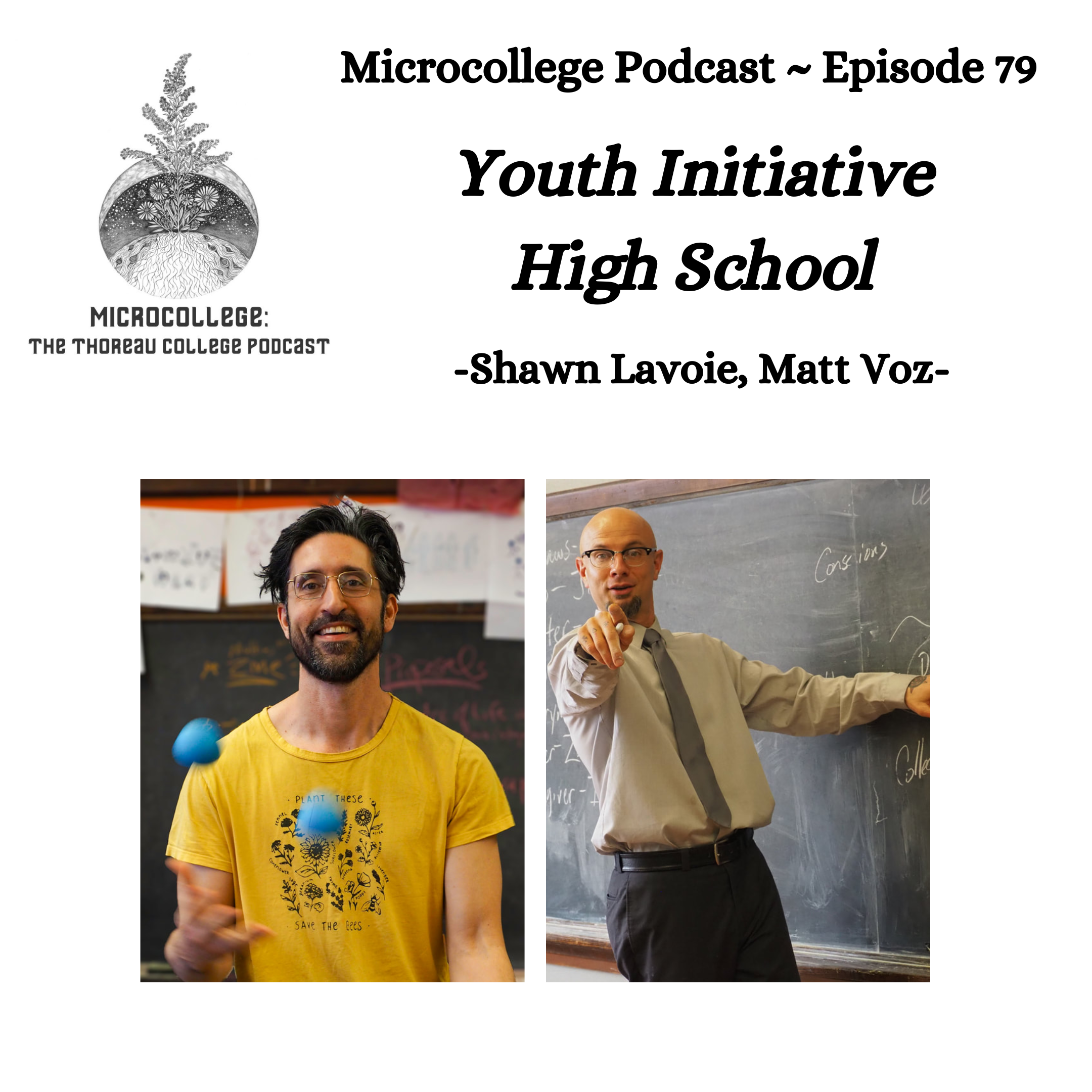
Ep 79Matt Voz & Shawn Lavoie - Youth Initiative High School
In this episode I speak with Matt Voz and Shawn Lavoie, two leaders of the Youth Initiative High School, one of the key local partners of Thoreau College here in Viroqua, Wisconsin. This is a special conversation, as I participated in the founding of YIHS in 1996 when I was a teenager and subsequently returned to teach there for over 15 years alongside Matt and Shawn as we learned how to be teachers and build community together. Today, 30 years after it began, YIHS remains an unique and exemplary school and has served as a key influence on the development of Thoreau College. Founded as a Waldorf-inspired initiative, YIHS has remained connected with this global educational movement while taking the curriculum in distinct and innovative directions. YIHS students actively collaborate with faculty and parents as full citizens and stakeholders to staff committees and make decisions, to fund and represent the school to the public, and to clean and maintain the school. YIHS has also crafted a way to survive and thrive as an independent school in a small rural community while offering a dynamic and broad curriculum by welcoming a large number of part time teachers, supported by an experienced core staff. The school has also developed a profound expeditionary learning curriculum to support the cultivation of character and wisdom in the context of community.Matt Voz is the Administrator of the Youth Initiative High School, as well as a teacher of humanities, automechanics, and physical education and one of the house parents of the YIHS Boarding House. Hailing from western Minnesota, Matt holds a BA in History from the University of Minnesota-Morris and a MA in Agrarian History from Iowa State.Shawn Lavoie is the YIHS Faculty Chair, as well as a teacher of humanities, Spanish, and circus arts. He grew up in Massachusetts and received a BA in Anthropology from the University of Chicago and an MA in Arts Education from the Harvard Graduate School of Education. Today, Shawn also teaches aspiring and practicing Waldorf high school teachers through the Great Lakes Waldorf Institute.Youth Initiative High School - www.yihs.netGreat Lakes Waldorf Institute - https://www.greatlakeswaldorf.org/Kaleidoscope - the YIHS Podcast - https://www.wdrt.org/kaleidoscope/Thoreau College - https://thoreaucollege.org/
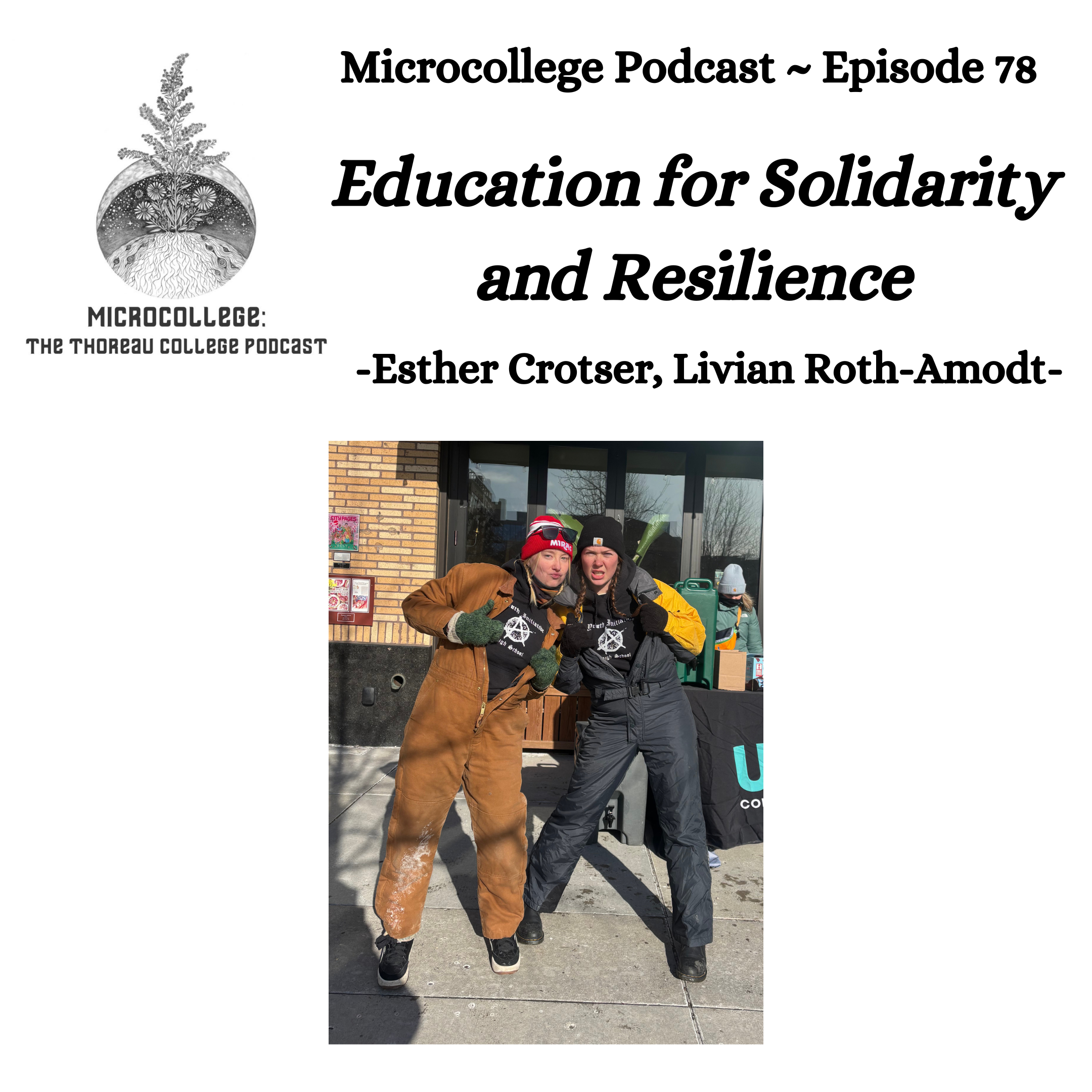
Ep 78Esther Crotser, Livian Roth-Amodt - Education for Solidarity and Resilience
In this episode of the podcast we dip our toes into the turbulent waters of current events in a conversation with Esther Crotser and Livian Roth-Amodt, two former students of mine and recent graduates of the Youth Initiative High School, our partner Waldorf-inspired high school here in Viroqua, Wisconsin. Since graduating in 2024 from YIHS, where students play a major role in governing, funding, and promoting the school, Esther and Livian have been living in the Twin Cities of Minneapolis/St Paul. For the past year they have been involved with a variety of political and social causes, including work with the Minnesota Immigrants Rights Action Committee (MIRAC).Since the start of 2026, Esther and Livian and the groups they are working with found themselves on the main stage of contemporary history as the eyes of the country and the world turned to Minneapolis as a result of the ICE enforcement surge and subsequent violence and unrest in that city. In our conversation, we talk about the work they have been doing and how their education at Youth Initiative prepared them to be able to respond constructively and resiliently and to take on leadership roles in this complex environment as engaged and passionate youth leaders. Towards the end we also discuss the Singing Resistance Movement, which is introducing Community Singing to the protests in Minneapolis as a tool of solidarity building and psychic resilience. Youth Initiative High School - https://www.yihs.net/Minnesota Immigrant Rights Action Committee - https://www.miracmn.com/GoFundMe for Janet (Esther's friend who was detained and then released by ICE) - https://gofund.me/dfd163256Singing Resistance Songbook - https://docs.proton.me/doc?mode=open-url&token=407BQZDEPG#3JsVHndYmmhySinging Resistance on CNN - Anderson Cooper 360 - https://www.facebook.com/reel/1264918162211154Thoreau College - https://thoreaucollege.org/
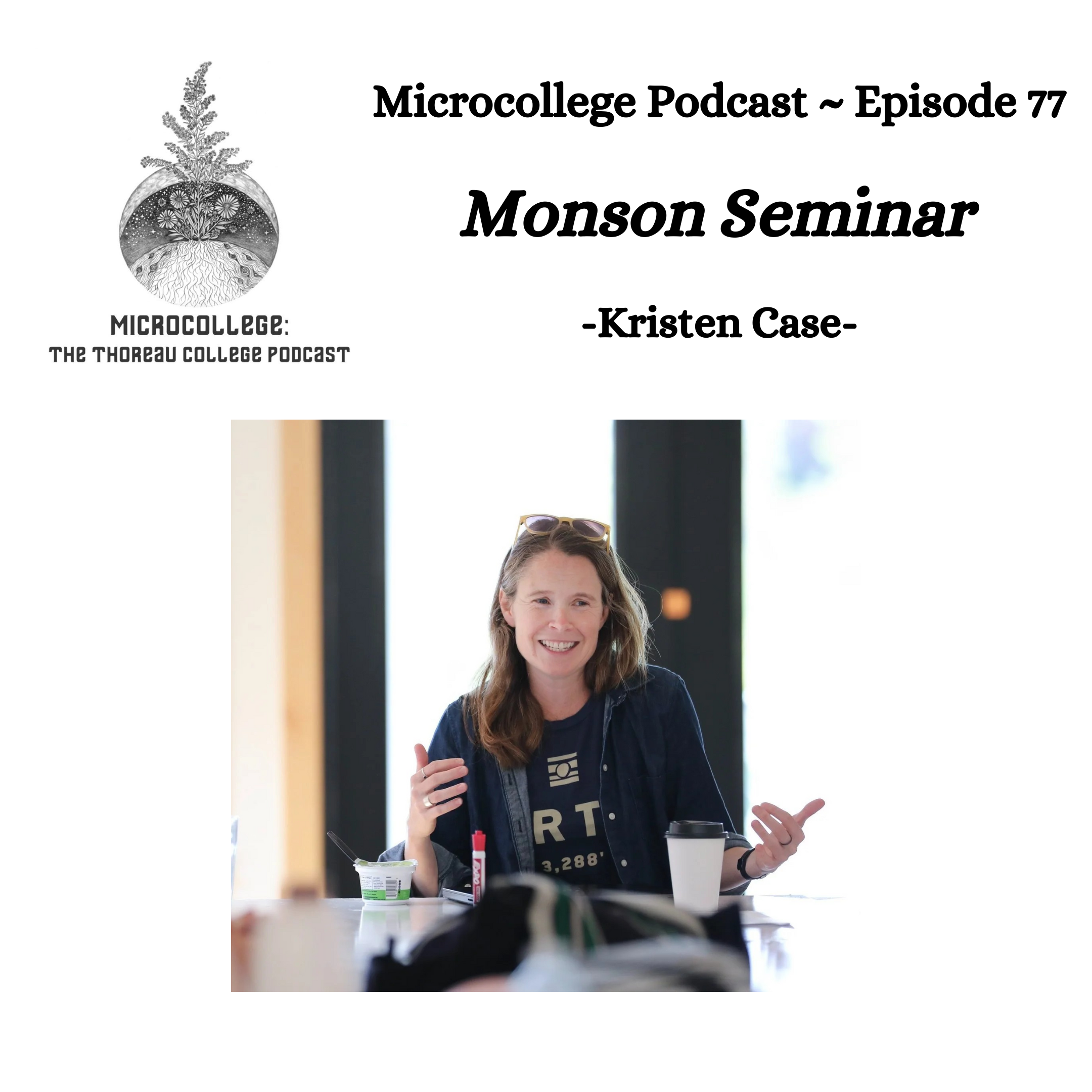
Ep 77Kristen Case - The Monson Seminar and Henry David Thoreau's Kalendar
On this episode we talk with Dr. Kristen Case about Henry David Thoreau and the enduring pedagogical relevance of his life and writing, as well as about the Monson Seminar, a full-scholarship three-week residential course for highly-motivated Pell-eligible and first-generation college students pursuing creative and research-based projects based in Monson, Maine, and accredited through the University of Southern Maine. Kristen is the Executive Director and Lead Faculty of the Monson Seminar, which is entering its 5th year. She is a lifelong teacher in elementary, middle school, and university settings, as well as an award winning poet and an important Thoreau scholar. In this conversation, we explored Kristen's recent book Henry David Thoreau's Kalendar: Charts and Observations of Natural Phenomena, published in 2025 by Milkweed Editions. This beautiful book presents a fascinating project from the last years of Thoreau's life for the first time, namely an ambitious effort to chart and document both natural and inner seasonal phenomena across multiple years in a graphic visual form. Using this rich source material, Kristen's essays present a stimulating interpretation of Thoreau's most mature and seasoned vision of how to live a meaningful and grounded life here on Earth.The Monson Seminar - https://www.themonsonseminar.org/Henry David Thoreau's Kalendar - https://milkweed.org/book/henry-david-thoreaus-kalendarThe Mountain School - https://www.mountainschool.org/Thoreau College - https://thoreaucollege.org/
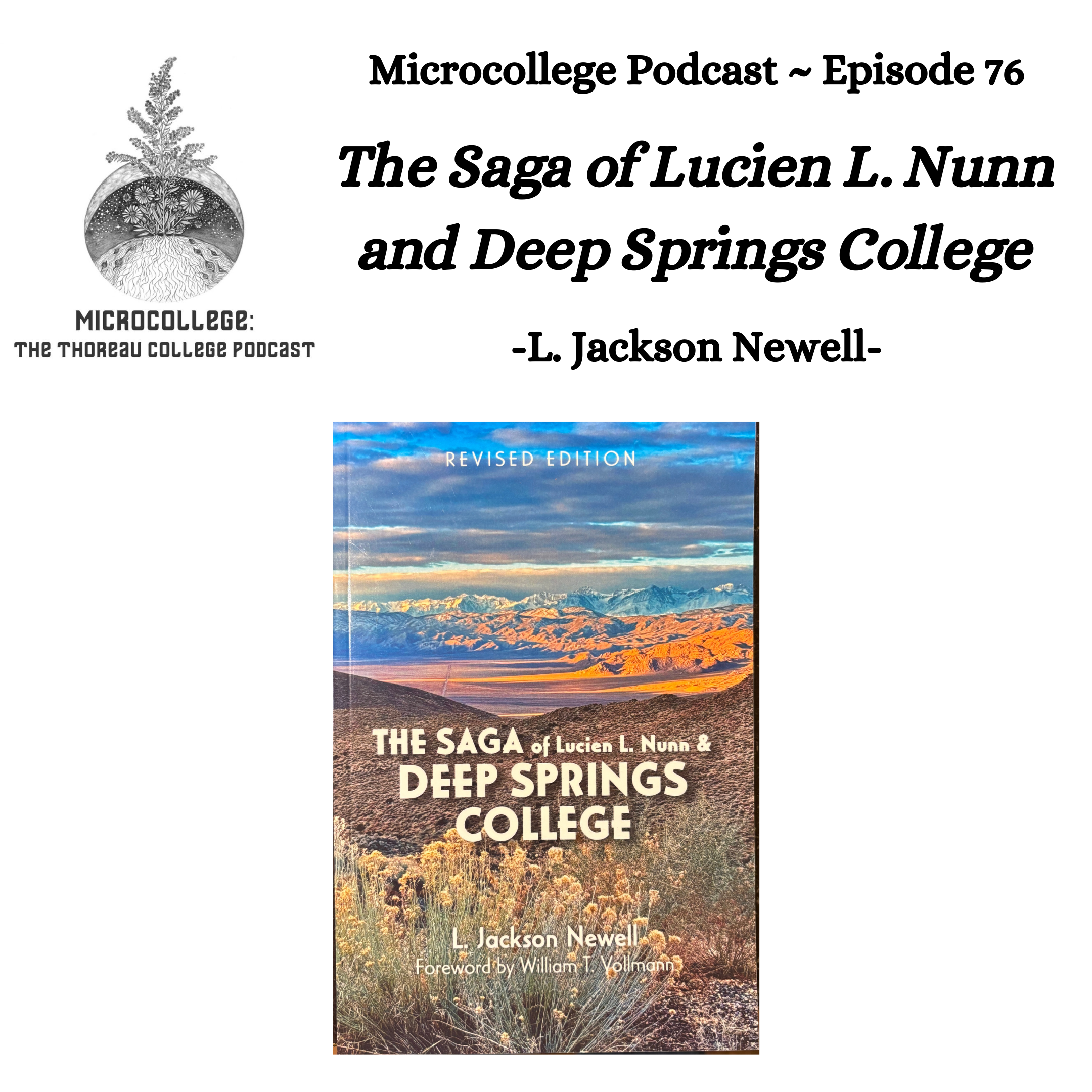
Ep 76L. Jackson Newell - Lucien L. Nunn, Deep Springs College History, History and Philosophy of Experiemental Higher Education
L. Jackson Newell is an American historian and philosopher of higher education, specializing in the study and leadership of progressive colleges such as Antioch College, Berea College, and Deep Springs College. He has served as professor of educational leadership and dean of Liberal Education at the University of Utah, and as president of Deep Springs College.Newell accepted the presidency of Deep Springs College in 1995.[9][4] During his tenure, he led an $18 million capital campaign, rebuilt the physical plant, and recharged the endowment. After nine years, he returned to teaching in the University of Utah's Honors College.He studied liberal arts and sciences at Deep Springs College and the University of California, Davis, then finished his BA degree at Ohio State University in history. He spent his college summers as a mule packer and crew chief fighting forest fires at Glacier, Crater Lake, and Grand Canyon National Parks. Newell earned his MA degree at Duke University in American history with a divinity school minor. He taught for six years at Clemson University, Deep Springs College, and the University of New Hampshire before returning to Ohio State where he completed his PhD as the Thomas Holy Fellow focusing on the history and philosophy of higher education.He has also published a major study of progressive institutions, Maverick Colleges: Fourteen Notable Experiments in American Undergraduate Education, and edited the refereed journal, The Review of Higher Education.Deep Springs College: https://www.deepsprings.edu/Thoreau College: https://thoreaucollege.org/
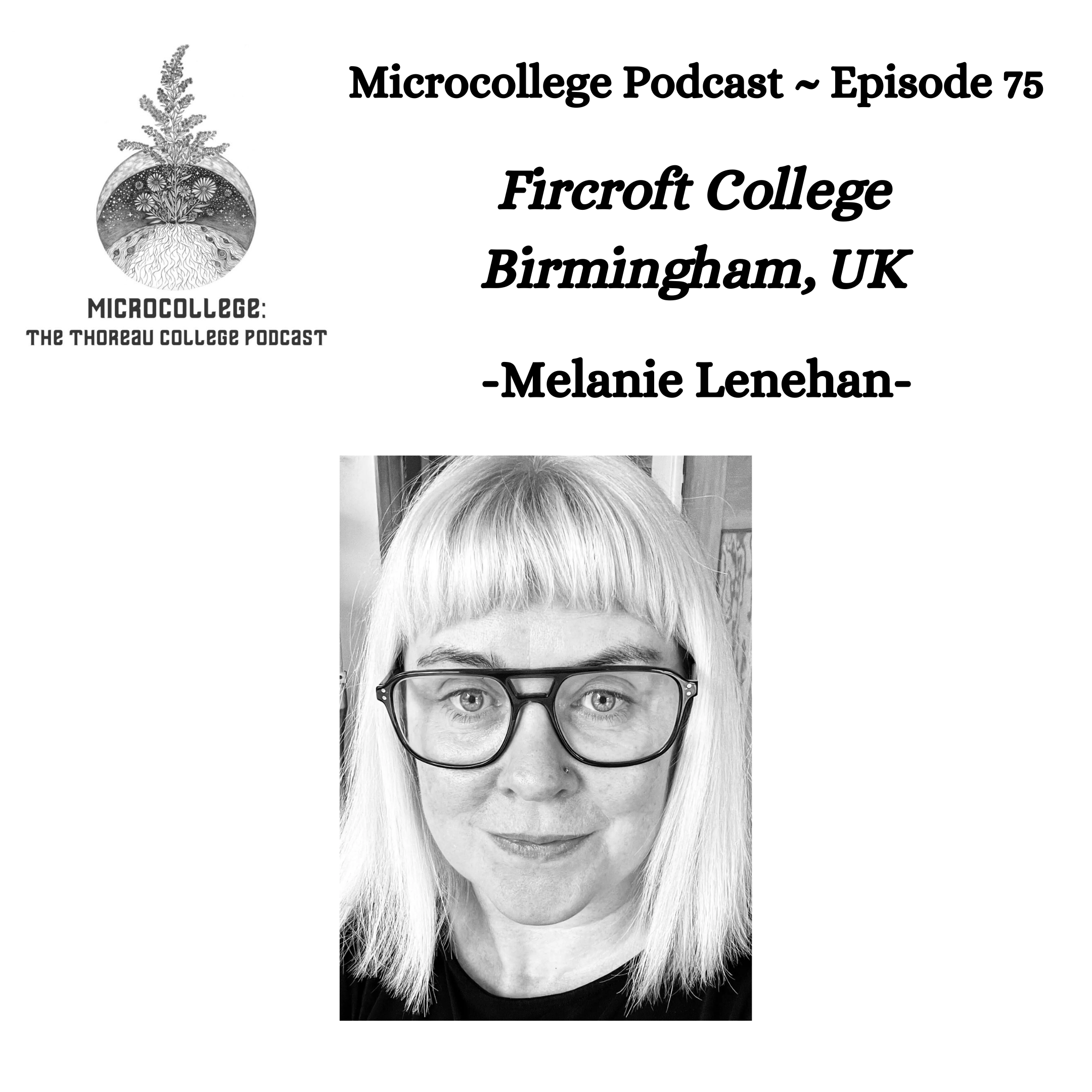
Ep 75Melanie Lenehan - Fircroft College, Birmingham, England
Melanie Lenehan is the Principal and CEO of Fircroft College, a unique publically supported adult education institution located in the West Midlands in Birmingham, England's second largest city. The college was founded in 1909 by George Cadbury, Jr., a Quaker industrialist and philanthropist, who was one of the pioneers of the art and science of milk chocolate. Cadbury's educational vision was strongly influenced by the Danish folk high school model which emphasizes cultivating the development of a strong sense of personhood and belonging through non-competitive adult education in the context of small residential learning communities with multiple opportunities for formal and informal interactions, ranging from classes, to shared meals and group singing. The students of Fircroft College are most often adults older than traditional college age who have experienced significant setbacks or disruptions in their lives, including addiction, mental health issues, or disadvantages arising from poverty or legal status. In our conversation, Mel and I spoke about her experiences as a child of Irish immigrants growing up in London who was the first person in her family to attend university, as well as the origins of Fircroft College and its connections to the Danish folk high school movement. Finally, Mel introduced one of her most important sources of inspiration, namely, the Brazilian educator Paulo Freire and the approach for working the poor and dispossessed that he articulated as "the Pedagogy of the Oppressed."Links: Fircroft College - https://www.fircroft.ac.uk/Thoreau College - https://thoreaucollege.org/
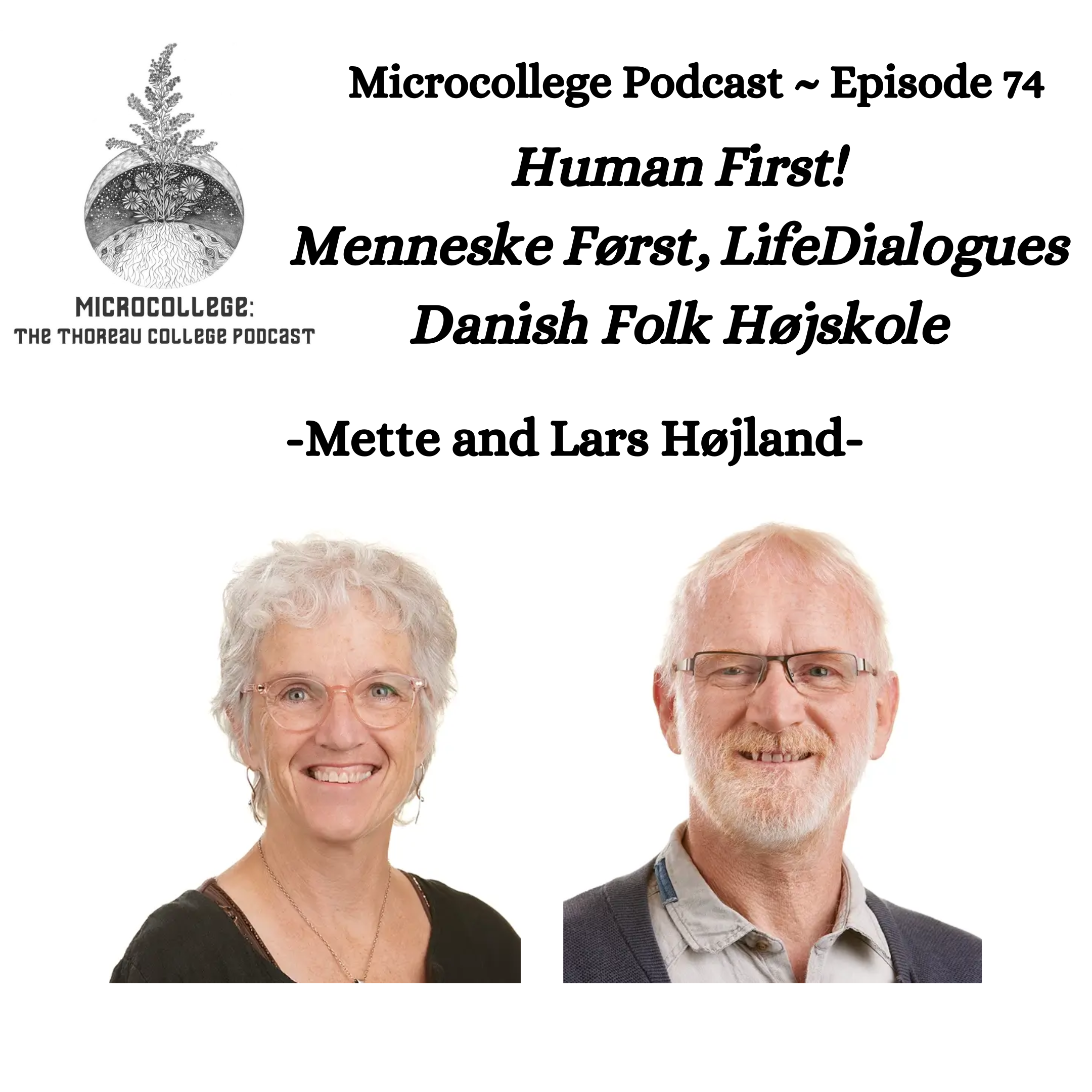
Ep 74Mette and Lars Højland - Human First!, Menneske Først, LifeDialogues, Danish Folk High Schools
In this episode of the podcast I spoke with Mette and Lars Højland, a Danish couple with decades of experience in folk high school education who are exploring new ways to take the essence of this transformative pedagogy beyond the walls of formal institutions and beyond the borders of Denmark, including to China and other lands. Mette grew up within the world of free schools and folk high schools inspired by the ideas of N. F. S. Grundtvig, the 19th century Danish philosopher, theologian, poet, and instigator of the folk school concept. Drawing on 22 years of teaching in several folk high schools, Mette has written a short and engaging book entitled What you say, makes me think: Folk high school from within, which uses anecdotes from her own teaching and insights from Grundtvig and other thinkers to explore the sometimes enigmatic core elements of folk high school pedagogy and to propose ways that it might be adapted to other arenas. Lars, on the other hand, is a parish priest in the Danish national church who applies Grundtvigian models to act as what he calls a "spiritual co-walker," i.e. a conversation partner who seeks to help you in the direction the spirit wants to carry you in particular."Together, Mette and Lars are co-founders of an organization called "Menneske Først – LifeDialogues," which works to promote and teach a kind of "home folk high school," in the form of structured conversation evenings that bring together neighbors and strangers for ice breakers, food, singing, discussion, and, above all, human-to-human encounters in a time when this is all too rare. The name "Menneske Først" can be translated as "Human First!", a ringing maxim from NFS Grundtvig emphasizing our core humanity about sectarian divisions and polarizations of all kinds.Links -Menneske Først - LifeDialogues - https://lifedialogues.dk/en/Thoreau College - https://thoreaucollege.org/