Matt Christiansen Bible Study
121 episodes — Page 3 of 3
Session 2.3: October 13, 2023
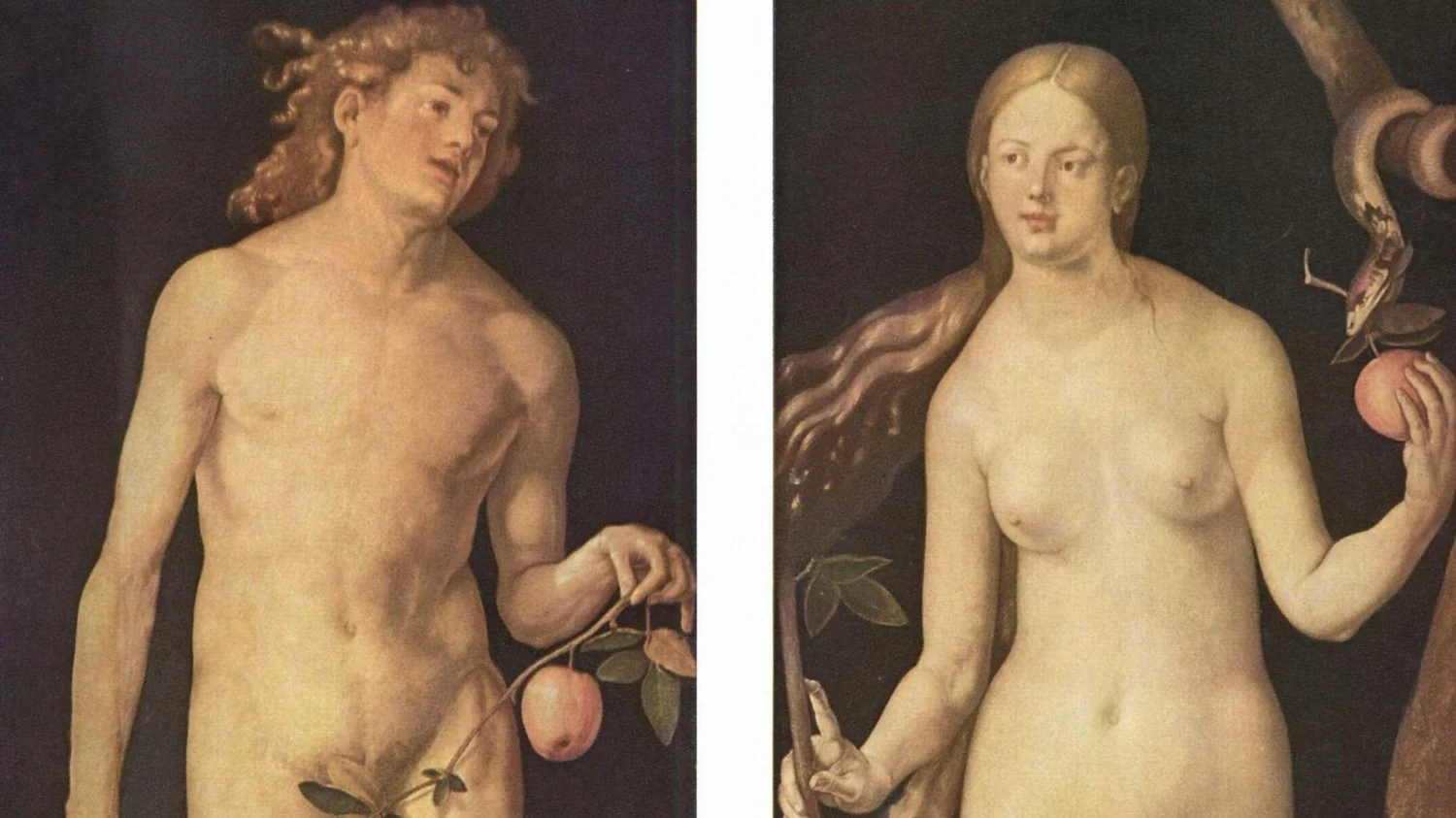
Scripture Reading: Genesis 1:1-3:24 (we won’t read it again, but we will discuss it) 1 In the beginning God created the heavens and the earth.2 Now the earth was without shape and empty, and darkness was over the surface of the watery deep, but the Spirit of God was moving over the surface of the water. 3 God said, “Let there be light.” And there was light! 4 God saw that the light was good, so God separated the light from the darkness. 5 God called the light “day” and the darkness “night.” There was evening, and there was morning, marking the first day.6 God said, “Let there be an expanse in the midst of the waters and let it separate water from water.” 7 So God made the expanse and separated the water under the expanse from the water above it. It was so. 8 God called the expanse “sky.” There was evening, and there was morning, a second day.9 God said, “Let the water under the sky be gathered to one place and let dry ground appear.” It was so. 10 God called the dry ground “land” and the gathered waters he called “seas.” God saw that it was good.11 God said, “Let the land produce vegetation: plants yielding seeds and trees on the land bearing fruit with seed in it, according to their kinds.” It was so. 12 The land produced vegetation—plants yielding seeds according to their kinds, and trees bearing fruit with seed in it according to their kinds. God saw that it was good. 13 There was evening, and there was morning, a third day.14 God said, “Let there be lights in the expanse of the sky to separate the day from the night, and let them be signs to indicate seasons and days and years, 15 and let them serve as lights in the expanse of the sky to give light on the earth.” It was so. 16 God made two great lights—the greater light to rule over the day and the lesser light to rule over the night. He made the stars also. 17 God placed the lights in the expanse of the sky to shine on the earth, 18 to preside over the day and the night, and to separate the light from the darkness. God saw that it was good. 19 There was evening, and there was morning, a fourth day.20 God said, “Let the water swarm with swarms of living creatures and let birds fly above the earth across the expanse of the sky.” 21 God created the great sea creatures and every living and moving thing with which the water swarmed, according to their kinds, and every winged bird according to its kind. God saw that it was good. 22 God blessed them and said, “Be fruitful and multiply and fill the water in the seas, and let the birds multiply on the earth.” 23 There was evening, and there was morning, a fifth day.24 God said, “Let the land produce living creatures according to their kinds: cattle, creeping things, and wild animals, each according to its kind.” It was so. 25 God made the wild animals according to their kinds, the cattle according to their kinds, and all the creatures that creep along the ground according to their kinds. God saw that it was good.26 Then God said, “Let us make humankind in our image, after our likeness, so they may rule over the fish of the sea and the birds of the air, over the cattle, and over all the earth, and over all the creatures that move on the earth.”27 God created humankind in his own image,in the image of God he created them,male and female he created them.28 God blessed them and said to them, “Be fruitful and multiply! Fill the earth and subdue it! Rule over the fish of the sea and the birds of the air and every creature that moves on the ground.” 29 Then God said, “I now give you every seed-bearing plant on the face of the entire earth and every tree that has fruit with seed in it. They will be yours for food. 30 And to all the animals of the earth, and to every bird of the air, and to all the creatures that move on the ground—everything that has living breath in it—I give every green plant for food.” It was so.31 God saw all that he had made—and it was very good! There was evening, and there was morning, the sixth day.1 The heavens and the earth were completed with everything that was in them. 2 By the seventh day God finished the work that he had been doing, and he ceased on the seventh day all the work that he had been doing. 3 God blessed the seventh day and made it holy because on it he ceased all the work that he had been doing in creation.4 This is the account of the heavens and the earth when they were created—when the Lord God made the earth and heavens.5 Now no shrub of the field had yet grown on the earth, and no plant of the field had yet sprouted, for the Lord God had not caused it to rain on the earth, and there was no man to cultivate the ground. 6 Springs would well up from the earth and water the whole surface of the ground. 7 The Lord God formed the man from the soil of the ground and breathed into his nostrils the breath of life, and the man became a living being.8 The Lord God planted an orchard in the east, in Eden; and there he placed the man he had formed. 9 The Lord God made all kinds of tre
Session 2.2: October 6, 2023
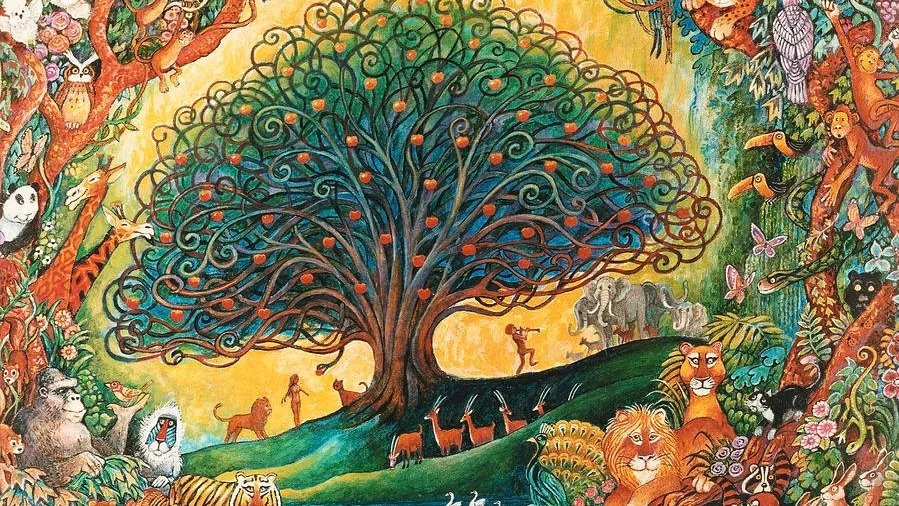
Scripture Reading (for the next three weeks): Genesis 1:1-3:24Last week I attempted to make three simple points:(1) Simply assuming that a text should be read literally is not a “safer” approach than being open to figurative understandings—that is, that assumption runs the “risk” of forcing a wrong interpretation of the text.(2) Texts that are meant to be understood non-literally can convey information—they are not so open to interpretation that they can mean anything at all. Even in cases when the message lacks specificity or clarity, the message still has a limited semantic range. Put simply, non-literal text can have meaning, be interpreted correctly, and be interpreted incorrectly.(3) Finally, the early chapters of Genesis have been interpreted non-literally since the dawn of the church (and before). The accusation that only modern Christians, yielding to the pressure of modern science, have conveniently interpreted the text figuratively is simply false. To interpret the text non-literally is not a departure from established church (or Jewish) tradition.All three points can be summarized as follows: genre is key to reading a text. Reading poetry like historiography or historiography as poetry is dangerous. Neither approach is likely to reach truth.I am well aware that, so far, I have not offered a shred of evidence that the early chapters of Genesis should be read literally or otherwise. That has been intentional. All I have attempted to show is that considering a non-literal interpretation is not offensive in itself and foreclosing that interpretation a priori may force a reader to reach the wrong conclusions.So, with all that in mind, the time has come to read the text. 1 In the beginning God created the heavens and the earth.2 Now the earth was without shape and empty, and darkness was over the surface of the watery deep, but the Spirit of God was moving over the surface of the water. 3 God said, “Let there be light.” And there was light! 4 God saw that the light was good, so God separated the light from the darkness. 5 God called the light “day” and the darkness “night.” There was evening, and there was morning, marking the first day.6 God said, “Let there be an expanse in the midst of the waters and let it separate water from water.” 7 So God made the expanse and separated the water under the expanse from the water above it. It was so. 8 God called the expanse “sky.” There was evening, and there was morning, a second day.9 God said, “Let the water under the sky be gathered to one place and let dry ground appear.” It was so. 10 God called the dry ground “land” and the gathered waters he called “seas.” God saw that it was good.11 God said, “Let the land produce vegetation: plants yielding seeds and trees on the land bearing fruit with seed in it, according to their kinds.” It was so. 12 The land produced vegetation—plants yielding seeds according to their kinds, and trees bearing fruit with seed in it according to their kinds. God saw that it was good. 13 There was evening, and there was morning, a third day.14 God said, “Let there be lights in the expanse of the sky to separate the day from the night, and let them be signs to indicate seasons and days and years, 15 and let them serve as lights in the expanse of the sky to give light on the earth.” It was so. 16 God made two great lights—the greater light to rule over the day and the lesser light to rule over the night. He made the stars also. 17 God placed the lights in the expanse of the sky to shine on the earth, 18 to preside over the day and the night, and to separate the light from the darkness. God saw that it was good. 19 There was evening, and there was morning, a fourth day.20 God said, “Let the water swarm with swarms of living creatures and let birds fly above the earth across the expanse of the sky.” 21 God created the great sea creatures and every living and moving thing with which the water swarmed, according to their kinds, and every winged bird according to its kind. God saw that it was good. 22 God blessed them and said, “Be fruitful and multiply and fill the water in the seas, and let the birds multiply on the earth.” 23 There was evening, and there was morning, a fifth day.24 God said, “Let the land produce living creatures according to their kinds: cattle, creeping things, and wild animals, each according to its kind.” It was so. 25 God made the wild animals according to their kinds, the cattle according to their kinds, and all the creatures that creep along the ground according to their kinds. God saw that it was good.26 Then God said, “Let us make humankind in our image, after our likeness, so they may rule over the fish of the sea and the birds of the air, over the cattle, and over all the earth, and over all the creatures that move on the earth.”27 God created humankind in his own image,in the image of God he created them,male and female he created them.28 God blessed them and said to them, “Be fruitful and

Session 2.1: September 29, 2023
Scripture Reading (for the next three weeks): Genesis 1:1-3:24 1 In the beginning God created the heavens and the earth.2 Now the earth was without shape and empty, and darkness was over the surface of the watery deep, but the Spirit of God was moving over the surface of the water. 3 God said, “Let there be light.” And there was light! 4 God saw that the light was good, so God separated the light from the darkness. 5 God called the light “day” and the darkness “night.” There was evening, and there was morning, marking the first day.6 God said, “Let there be an expanse in the midst of the waters and let it separate water from water.” 7 So God made the expanse and separated the water under the expanse from the water above it. It was so. 8 God called the expanse “sky.” There was evening, and there was morning, a second day.9 God said, “Let the water under the sky be gathered to one place and let dry ground appear.” It was so. 10 God called the dry ground “land” and the gathered waters he called “seas.” God saw that it was good.11 God said, “Let the land produce vegetation: plants yielding seeds and trees on the land bearing fruit with seed in it, according to their kinds.” It was so. 12 The land produced vegetation—plants yielding seeds according to their kinds, and trees bearing fruit with seed in it according to their kinds. God saw that it was good. 13 There was evening, and there was morning, a third day.14 God said, “Let there be lights in the expanse of the sky to separate the day from the night, and let them be signs to indicate seasons and days and years, 15 and let them serve as lights in the expanse of the sky to give light on the earth.” It was so. 16 God made two great lights—the greater light to rule over the day and the lesser light to rule over the night. He made the stars also. 17 God placed the lights in the expanse of the sky to shine on the earth, 18 to preside over the day and the night, and to separate the light from the darkness. God saw that it was good. 19 There was evening, and there was morning, a fourth day.20 God said, “Let the water swarm with swarms of living creatures and let birds fly above the earth across the expanse of the sky.” 21 God created the great sea creatures and every living and moving thing with which the water swarmed, according to their kinds, and every winged bird according to its kind. God saw that it was good. 22 God blessed them and said, “Be fruitful and multiply and fill the water in the seas, and let the birds multiply on the earth.” 23 There was evening, and there was morning, a fifth day.24 God said, “Let the land produce living creatures according to their kinds: cattle, creeping things, and wild animals, each according to its kind.” It was so. 25 God made the wild animals according to their kinds, the cattle according to their kinds, and all the creatures that creep along the ground according to their kinds. God saw that it was good.26 Then God said, “Let us make humankind in our image, after our likeness, so they may rule over the fish of the sea and the birds of the air, over the cattle, and over all the earth, and over all the creatures that move on the earth.”27 God created humankind in his own image,in the image of God he created them,male and female he created them.28 God blessed them and said to them, “Be fruitful and multiply! Fill the earth and subdue it! Rule over the fish of the sea and the birds of the air and every creature that moves on the ground.” 29 Then God said, “I now give you every seed-bearing plant on the face of the entire earth and every tree that has fruit with seed in it. They will be yours for food. 30 And to all the animals of the earth, and to every bird of the air, and to all the creatures that move on the ground—everything that has living breath in it—I give every green plant for food.” It was so.31 God saw all that he had made—and it was very good! There was evening, and there was morning, the sixth day.1 The heavens and the earth were completed with everything that was in them. 2 By the seventh day God finished the work that he had been doing, and he ceased on the seventh day all the work that he had been doing. 3 God blessed the seventh day and made it holy because on it he ceased all the work that he had been doing in creation.4 This is the account of the heavens and the earth when they were created—when the Lord God made the earth and heavens.5 Now no shrub of the field had yet grown on the earth, and no plant of the field had yet sprouted, for the Lord God had not caused it to rain on the earth, and there was no man to cultivate the ground. 6 Springs would well up from the earth and water the whole surface of the ground. 7 The Lord God formed the man from the soil of the ground and breathed into his nostrils the breath of life, and the man became a living being.8 The Lord God planted an orchard in the east, in Eden; and there he placed the man he had formed. 9 The Lord God made all kinds of trees grow from the soil,
Session 32: March 4, 2023
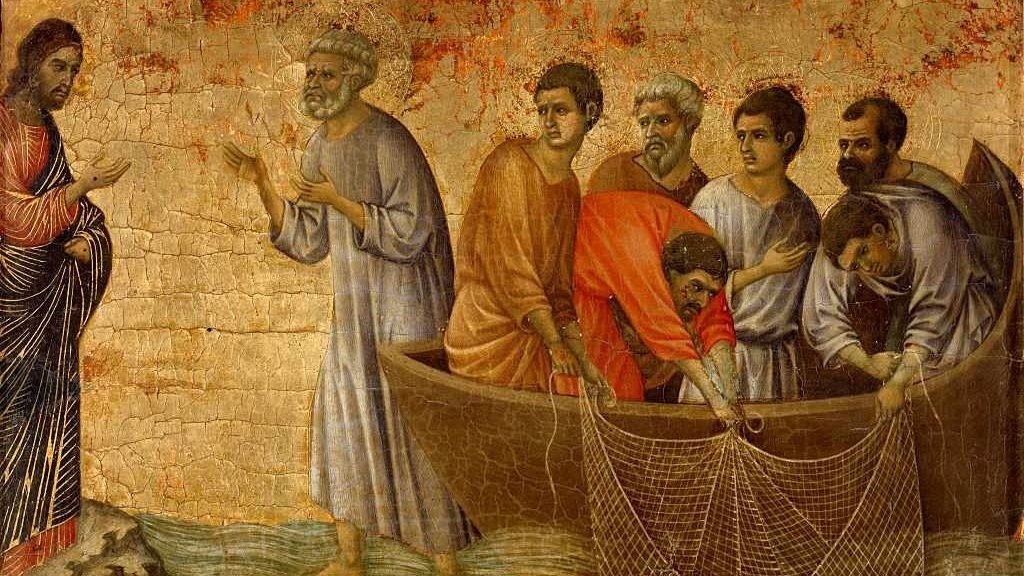
Scripture Reading: John 21:9-25 9 When they got out on the beach, they saw a charcoal fire ready with a fish placed on it, and bread. 10 Jesus said, “Bring some of the fish you have just now caught.” 11 So Simon Peter went aboard and pulled the net to shore. It was full of large fish, 153, but although there were so many, the net was not torn. 12 “Come, have breakfast,” Jesus said. But none of the disciples dared to ask him, “Who are you?” because they knew it was the Lord. 13 Jesus came and took the bread and gave it to them, and did the same with the fish. 14 This was now the third time Jesus was revealed to the disciples after he was raised from the dead.15 Then when they had finished breakfast, Jesus said to Simon Peter, “Simon, son of John, do you love me more than these do?” He replied, “Yes, Lord, you know I love you.” Jesus told him, “Feed my lambs.” 16 Jesus said a second time, “Simon, son of John, do you love me?” He replied, “Yes, Lord, you know I love you.” Jesus told him, “Shepherd my sheep.” 17 Jesus said a third time, “Simon, son of John, do you love me?” Peter was distressed that Jesus asked him a third time, “Do you love me?” and said, “Lord, you know everything. You know that I love you.” Jesus replied, “Feed my sheep. 18 I tell you the solemn truth, when you were young, you tied your clothes around you and went wherever you wanted, but when you are old, you will stretch out your hands, and others will tie you up and bring you where you do not want to go.” 19 (Now Jesus said this to indicate clearly by what kind of death Peter was going to glorify God.) After he said this, Jesus told Peter, “Follow me.”20 Peter turned around and saw the disciple whom Jesus loved following them. (This was the disciple who had leaned back against Jesus’ chest at the meal and asked, “Lord, who is the one who is going to betray you?”) 21 So when Peter saw him, he asked Jesus, “Lord, what about him?” 22 Jesus replied, “If I want him to live until I come back, what concern is that of yours? You follow me!” 23 So the saying circulated among the brothers and sisters that this disciple was not going to die. But Jesus did not say to him that he was not going to die, but rather, “If I want him to live until I come back, what concern is that of yours?”24 This is the disciple who testifies about these things and has written these things, and we know that his testimony is true. 25 There are many other things that Jesus did. If every one of them were written down, I suppose the whole world would not have room for the books that would be written.Main ThemesJesus at the ShoreJesus Already Has Fire, Fish, and BreadWhen Peter finally arrives to meet Jesus, Jesus has a fire ready, fish is cooking, and there is bread to go with it. It paints a picture of a self-sufficient Jesus. Jesus does not need anything from the disciples. Instead, Jesus makes an invitation: “Bring some of the fish you have just now caught”—the fish Jesus effectively gave to them—and “come, have breakfast.”As a quick historical sidenote, the apostles were probably very much looking forward to having breakfast (aristēsate, the morning meal). Wealthy Romans would eat three meals a day. Most everyone else ate two meals a day. Some ate the morning meal at dawn and some closer to midday. After a long night of work, the apostles were surely ready to eat and rest.The Abundant Catch, the Stronger NetWhen Jesus invites Peter to bring some of the catch, we are given two important details. The net was full (including some large fish), yet the net was not torn. There is a double image of abundance. The fish are many. If the fish symbolize people, then multitudes will come to Jesus. But even more beautifully, not a single fish is one too many. The net can hold all of them without problem. The Kingdom of God is sufficiently vast—it can handle the abundance of all who will come.Now this is the will of the one who sent me—that I should not lose one person of every one he has given me, but raise them all up at the last day. (John 6:39)153The number of fish caught amounted to 153. As you are probably familiar, there are few things that will cause more wild speculation than numbers in the Bible. This is no exception. Many people have applied the hermeneutical technique known as gematria to assign meaning to this number. Gematria is “the practice of assigning a numerical value to a name, word or phrase according to an alphanumerical cipher.” (Forgive me, this is one of the few times I have quoted Wikipedia.) For example, some suggest that the numerical value of the Hebrew expression for “children of God” is 153. Others use gematria to assign the numerical value to the fishing villages in Ezekiel 47:10. Others suggest even more remote possibilities like “Nathaniel gamma” or “alpha Mary.”Would John expect his readers to decipher the secret code behind the number 153? Obviously not. There is probably no secret code to be deciphered. It is the number of fish—a very large number t
Session 31: February 25, 2023
Scripture Reading: John 20:24-21:8 24 Now Thomas (called Didymus), one of the Twelve, was not with them when Jesus came. 25 The other disciples told him, “We have seen the Lord!” But he replied, “Unless I see the wounds from the nails in his hands, and put my finger into the wounds from the nails, and put my hand into his side, I will never believe it!”26 Eight days later the disciples were again together in the house, and Thomas was with them. Although the doors were locked, Jesus came and stood among them and said, “Peace be with you!” 27 Then he said to Thomas, “Put your finger here, and examine my hands. Extend your hand and put it into my side. Do not continue in your unbelief, but believe.” 28 Thomas replied to him, “My Lord and my God!” 29 Jesus said to him, “Have you believed because you have seen me? Blessed are the people who have not seen and yet have believed.”30 Now Jesus performed many other miraculous signs in the presence of the disciples, which are not recorded in this book. 31 But these are recorded so that you may believe that Jesus is the Christ, the Son of God, and that by believing you may have life in his name.1 After this Jesus revealed himself again to the disciples by the Sea of Tiberias. Now this is how he did so. 2 Simon Peter, Thomas (called Didymus), Nathanael (who was from Cana in Galilee), the sons of Zebedee, and two other disciples of his were together. 3 Simon Peter told them, “I am going fishing.” “We will go with you,” they replied. They went out and got into the boat, but that night they caught nothing.4 When it was already very early morning, Jesus stood on the beach, but the disciples did not know that it was Jesus. 5 So Jesus said to them, “Children, you don’t have any fish, do you?” They replied, “No.” 6 He told them, “Throw your net on the right side of the boat, and you will find some.” So they threw the net and were not able to pull it in because of the large number of fish.7 Then the disciple whom Jesus loved said to Peter, “It is the Lord!” So Simon Peter, when he heard that it was the Lord, tucked in his outer garment (for he had nothing on underneath it), and plunged into the sea. 8 Meanwhile the other disciples came with the boat, dragging the net full of fish, for they were not far from land, only about a hundred yards.Main ThemesDoubting ThomasIf you have ever heard of the Apostle Thomas in a church setting, you have probably heard him called “Doubting Thomas.” This scene in chapter 20 is the reason. When Jesus appears to the apostles, Thomas was missing. Later, when the apostles inform Thomas that they had “seen the Lord,” he refuses to believe “unless [he] see[s] the wounds from the nails in his hands, and put[s] [his] finger[s] into the wounds from the nails”! Otherwise, “he will never believe it.”Before we judge Thomas too harshly, I think his response in chapter 20 has to be considered in light of his devotion to Jesus earlier in the gospel. Remember chapter 11:So when he heard that Lazarus was sick, he remained in the place where he was for two more days. 7 Then after this, he said to his disciples, “Let us go to Judea again.” The disciples replied, “Rabbi, the Jewish leaders were just now trying to stone you to death! Are you going there again?” . . . Then Jesus told them plainly, “Lazarus has died, and I am glad for your sake that I was not there, so that you may believe. But let us go to him.” So Thomas (called Didymus) said to his fellow disciples, “Let us go too, so that we may die with him.” (John 11:6-8, 11:14-16)Thomas was ready to die for Jesus. Thomas was as committed to the cause, if not more so, than the other apostles. The death of Jesus had to be devastating for him. Not only did Thomas lose a beloved friend and teacher, he lost his purpose in life, his biggest hope, and his object of faith. Thomas must have been confused and unwilling to trust again.Notice also that Thomas’s unwillingness to believe is paradigmatic of John’s gospel. Through the story, many only believe after witnessing a sign. “Believe me that I am in the Father, and the Father is in me, but if you do not believe me, believe because of the miraculous deeds themselves.” (John 14:11) Many will not believe without a sign. “So Jesus said to him, ‘Unless you people see signs and wonders you will never believe!’” (John 4:48) The sign in chapter 20, however, is different. This is the definitive sign that should lead beyond the “signs faith” we have seen earlier in the gospel to a deeper, permanent faith.Jesus Meets ThomasEight days later, meaning the next Sunday (what we would call seven days later), the apostles are gathered again. The doors were locked and Jesus “came and stood among them.” We discussed the detail of locked doors last session. The fact that Jesus is not contained by such measures hints to heavenly properties of his glorified body.The timeline described in chapter 20 suggests that the disciples remained in Judea for longer than the Feast of Unleavened Bread,
Session 30: February 18, 2023
Scripture Reading: John 20:1-23 Now very early on the first day of the week, while it was still dark, Mary Magdalene came to the tomb and saw that the stone had been moved away from the entrance. 2 So she went running to Simon Peter and the other disciple whom Jesus loved and told them, “They have taken the Lord from the tomb, and we don’t know where they have put him!” 3 Then Peter and the other disciple set out to go to the tomb. 4 The two were running together, but the other disciple ran faster than Peter and reached the tomb first. 5 He bent down and saw the strips of linen cloth lying there, but he did not go in. 6 Then Simon Peter, who had been following him, arrived and went right into the tomb. He saw the strips of linen cloth lying there, 7 and the face cloth, which had been around Jesus’ head, not lying with the strips of linen cloth but rolled up in a place by itself. 8 Then the other disciple, who had reached the tomb first, came in, and he saw and believed. 9 (For they did not yet understand the scripture that Jesus must rise from the dead.)10 So the disciples went back to their homes. 11 But Mary stood outside the tomb weeping. As she wept, she bent down and looked into the tomb. 12 And she saw two angels in white sitting where Jesus’ body had been lying, one at the head and one at the feet. 13 They said to her, “Woman, why are you weeping?” Mary replied, “They have taken my Lord away, and I do not know where they have put him!” 14 When she had said this, she turned around and saw Jesus standing there, but she did not know that it was Jesus.15 Jesus said to her, “Woman, why are you weeping? Who are you looking for?” Because she thought he was the gardener, she said to him, “Sir, if you have carried him away, tell me where you have put him, and I will take him.” 16 Jesus said to her, “Mary.” She turned and said to him in Aramaic, “Rabboni” (which means “Teacher”). 17 Jesus replied, “Do not touch me, for I have not yet ascended to my Father. Go to my brothers and tell them, ‘I am ascending to my Father and your Father, to my God and your God.’” 18 Mary Magdalene came and informed the disciples, “I have seen the Lord!” And she told them what Jesus had said to her.19 On the evening of that day, the first day of the week, the disciples had gathered together and locked the doors of the place because they were afraid of the Jewish leaders. Jesus came and stood among them and said to them, “Peace be with you.” 20 When he had said this, he showed them his hands and his side. Then the disciples rejoiced when they saw the Lord. 21 So Jesus said to them again, “Peace be with you. Just as the Father has sent me, I also send you.” 22 And after he said this, he breathed on them and said, “Receive the Holy Spirit. 23 If you forgive anyone’s sins, they are forgiven; if you retain anyone’s sins, they are retained.”Main ThemesHistorical QuestionsHarmonizing the Four GospelsChapter 20 of John’s Gospel puts us squarely within the resurrection narrative. This is a key event to the Christian faith. All four gospels describe it with varied levels of details. Because the event is multiply attested, one can compare the four narratives. One question that often comes up is whether all four gospels are consistent with one another. Here are the narratives found in the 3 other gospels:Matthew 28:1-10: Now after the Sabbath, at dawn on the first day of the week, Mary Magdalene and the other Mary went to look at the tomb. Suddenly there was a severe earthquake, for an angel of the Lord descending from heaven came and rolled away the stone and sat on it. His appearance was like lightning, and his clothes were white as snow. The guards were shaken and became like dead men because they were so afraid of him. But the angel said to the women, “Do not be afraid; I know that you are looking for Jesus, who was crucified. He is not here, for he has been raised, just as he said. Come and see the place where he was lying. Then go quickly and tell his disciples, ‘He has been raised from the dead. He is going ahead of you into Galilee. You will see him there.’ Listen, I have told you!” So they left the tomb quickly, with fear and great joy, and ran to tell his disciples. But Jesus met them, saying, “Greetings!” They came to him, held on to his feet and worshiped him. Then Jesus said to them, “Do not be afraid. Go and tell my brothers to go to Galilee. They will see me there.”Mark 16:1-8: When the Sabbath was over, Mary Magdalene, Mary the mother of James, and Salome bought aromatic spices so that they might go and anoint him. And very early on the first day of the week, at sunrise, they went to the tomb. They had been asking each other, “Who will roll away the stone for us from the entrance to the tomb?” But when they looked up, they saw that the stone, which was very large, had been rolled back. Then as they went into the tomb, they saw a young man dressed in a white robe sitting on the right side; and they were alarmed. But he said to t
Session 29: February 4, 2023
Scripture Reading: John 19:31-42 31 Then because it was the day of preparation, so that the bodies should not stay on the crosses on the Sabbath (for that Sabbath was an especially important one), the Jewish leaders asked Pilate to have the victims’ legs broken and the bodies taken down. 32 So the soldiers came and broke the legs of the two men who had been crucified with Jesus, first the one and then the other. 33 But when they came to Jesus and saw that he was already dead, they did not break his legs. 34 But one of the soldiers pierced his side with a spear, and blood and water flowed out immediately. 35 And the person who saw it has testified (and his testimony is true, and he knows that he is telling the truth), so that you also may believe. 36 For these things happened so that the scripture would be fulfilled, “Not a bone of his will be broken.” 37 And again another scripture says, “They will look on the one whom they have pierced.”38 After this, Joseph of Arimathea, a disciple of Jesus (but secretly because he feared the Jewish leaders), asked Pilate if he could remove the body of Jesus. Pilate gave him permission, so he went and took the body away. 39 Nicodemus, the man who had previously come to Jesus at night, accompanied Joseph, carrying a mixture of myrrh and aloes weighing about 75 pounds. 40 Then they took Jesus’ body and wrapped it, with the aromatic spices, in strips of linen cloth according to Jewish burial customs. 41 Now at the place where Jesus was crucified there was a garden, and in the garden was a new tomb where no one had yet been buried. 42 And so, because it was the Jewish day of preparation and the tomb was nearby, they placed Jesus’ body there.Main ThemesBreaking BonesAs we have discussed before, victims of crucifixion could survive for days while agonizing on the cross. This presented a problem for the Jews: this was against their law.If a person commits a sin punishable by death and is executed, and you hang the corpse on a tree, his body must not remain all night on the tree; instead you must make certain you bury him that same day, for the one who is left exposed on a tree is cursed by God. You must not defile your land that the Lord your God is giving you as an inheritance. (Deuteronomy 21:22-23)Put simply, an executed man had to be buried the same day. To leave the body exposed for longer would defile the land. But in the case of Jesus’ crucifixion, the defilement would extend well beyond the land. The day following the crucifixion was Saturday, the Sabbath—a holy day on its own right. (Recall that the most offensive crime committed by Jesus was “working” on the Sabbath.) As if that were not enough, the day following Jesus’ crucifixion was not any Sabbath—it was the Sabbath of Passover, the most holy festival of the year. As Craig Keener points out, “Leaving the bodies hanging on any day would have violated Jewish custom; leaving them up on a Sabbath was worse; leaving them up on a festal Sabbath was unconscionable.”Consequently, the Jews could not wait for all three crucified men to die painfully, painfully slowly. They request that the victims’ legs be broken. Such an injury would prevent the prisoners from holding their weight up, leaving them hanging from their tied or nailed arms. This would result in quick suffocation.Three observations are noteworthy. First, the Roman acquiescence to the Jewish request shows the Romans were at least somewhat accommodating to the Jews and their customs. We see an inkling of this when Pilate comes out of the praetorium to meet the religious elite, since they could not enter the home of a Gentile without becoming unclean. Second, the request reinforces the recurring theme that Jesus’ execution is primarily the responsibility of the Jewish elite, not the Romans. The Jewish elite are even directing some of the details of a Roman execution. Third, and most importantly, Jesus “gives up” his spirit before the Jewish request is carried out. Jesus remains in control and purposefully directs the situation. And Jesus does so such that his bones not be broken.The obvious follow up question is, “Why does it matter that Jesus’ bones were not broken?” As verse 36 tells us, “these things happened so that the scriptures would be fulfilled.” Which scriptures?Primarily, Jesus’ unbroken bones fulfill the paschal lamb type. Before I cite the Old Testament, lets discuss what is a type. As a Christian website explains:Typology is a special kind of symbolism. (A symbol is something that represents something else.) We can define a type as a “prophetic symbol” because all types are representations of something yet future. More specifically, a type in Scripture is a person or thing in the Old Testament that foreshadows a person or thing in the New Testament. For example, the flood of Noah’s day (Genesis 6—7) is used as a type of baptism in 1 Peter 3:20–21. The word for “type” that Peter uses is figure.When we say that someone is a type of Christ, we are saying
Session 28: January 21, 2023
Scripture Reading: John 19:16b-30 So they took Jesus, 17 and carrying his own cross he went out to the place called “The Place of the Skull” (called in Aramaic Golgotha). 18 There they crucified him along with two others, one on each side, with Jesus in the middle. 19 Pilate also had a notice written and fastened to the cross, which read: “Jesus the Nazarene, the king of the Jews.” 20 Thus many of the Jewish residents of Jerusalem read this notice because the place where Jesus was crucified was near the city, and the notice was written in Aramaic, Latin, and Greek. 21 Then the chief priests of the Jews said to Pilate, “Do not write, ‘The king of the Jews,’ but rather, ‘This man said, I am king of the Jews.’” 22 Pilate answered, “What I have written, I have written.”23 Now when the soldiers crucified Jesus, they took his clothes and made four shares, one for each soldier, and the tunic remained. (Now the tunic was seamless, woven from top to bottom as a single piece.) 24 So the soldiers said to one another, “Let’s not tear it, but throw dice to see who will get it.” This took place to fulfill the scripture that says, “They divided my garments among them, and for my clothing they threw dice.” So the soldiers did these things.25 Now standing beside Jesus’ cross were his mother, his mother’s sister, Mary the wife of Clopas, and Mary Magdalene. 26 So when Jesus saw his mother and the disciple whom he loved standing there, he said to his mother, “Woman, look, here is your son!” 27 He then said to his disciple, “Look, here is your mother!” From that very time the disciple took her into his own home.28 After this Jesus, realizing that by this time everything was completed, said (in order to fulfill the scripture), “I am thirsty!” 29 A jar full of sour wine was there, so they put a sponge soaked in sour wine on a branch of hyssop and lifted it to his mouth. 30 When he had received the sour wine, Jesus said, “It is completed!” Then he bowed his head and gave up his spirit.Main Themes[I am still working on the blog post.]Historical Context: Roman CrucifixionThe latter half of chapter 19 describes the crucifixion of Christ, one of the most significant events in human history even without taking into account its religious implications. If its theology is true, then its significance is certainly without rival. Yet, I fear the story—gory and mystical as it is—barely fazes us. It is part of our cultural DNA. It’s too familiar, while yet remaining unexamined. In an attempt to bring some “newness” to the story, I will begin this session by reading an extended quotation from Tom Holland’s (the historian, not Spider-Man) Dominion. Tom Holland is not a Christian, yet he realized, to quote the books byline, “how the Christian revolution remade the world.” He has the best description of crucifixion and its first century cultural significance I have encountered. Without further ado, here is Tom Holland in the preface to Dominion: No death was more excruciating, more contemptible, than crucifixion. To be hung naked, ‘long in agony, swelling with ugly weals on shoulders and chest’, helpless to beat away the clamorous birds: such a fate, Roman intellectuals agreed, was the worst imaginable. This in turn was what rendered it so suitable a punishment for slaves. Lacking such a sanction, the entire order of the city might fall apart. Luxury and splendour such as Rome could boast were dependent, in the final reckoning, on keeping those who sustained it in their place. ‘After all, we have slaves drawn from every corner of the world in our households, practicing strange customs, and foreign cults, or none—and it is only by means of terror that we can hope to coerce such scum.’Nevertheless, while the salutary effect of crucifixion on those who might otherwise threaten the order of the state was taken for granted, Roman attitudes to the punishment were shot through with ambivalence. Naturally, if it were to serve as a deterrent it needed to be public. Nothing spoke more eloquently of a failed revolt than the sight of hundreds upon hundreds of corpse-hung crosses, whether lining a highway or else massed before a rebellious city, the hills all around it stripped bare of their trees. Even in peacetime, executioners would make a spectacle of their victims by suspending them in a variety of inventive ways: ‘one, perhaps, upside down, with his head towards the ground, another with a stake driven through his genitals, another attached by his arms to a yoke’. Yet in the exposure of the crucified to the public gaze there lurked a paradox. So foul was the carrion-reek of their disgrace that many felt tainted even by viewing a crucifixion. The Romans, for all that they had adopted the punishment as the ‘supreme penalty’, refused to countenance the possibility that it might have originated with them. Only a people famed for their barbarousness and cruelty could ever have devised such a torture: the Persians, perhaps, or the Assyrians, or the Gauls. Ever
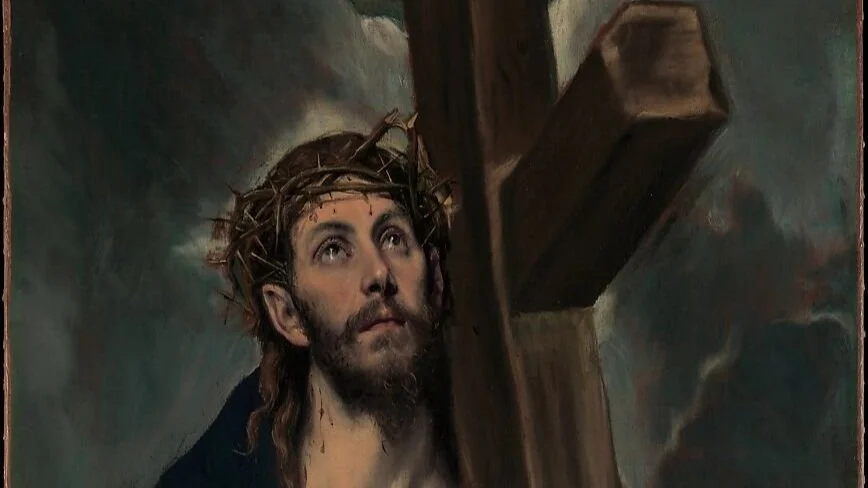
Session 27: January 14, 2023
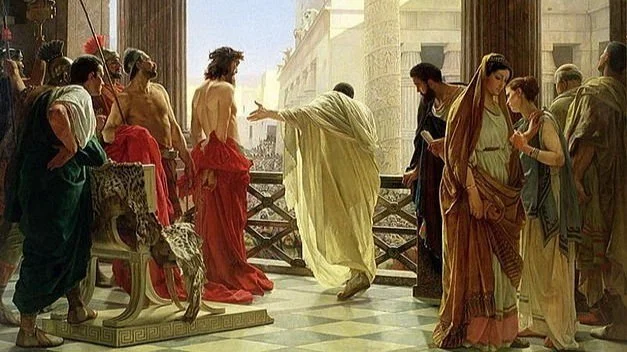
Scripture Reading: John 18:28-19:16a 28 Then they brought Jesus from Caiaphas to the Roman governor’s residence. (Now it was very early morning.) They did not go into the governor’s residence so they would not be ceremonially defiled, but could eat the Passover meal. 29 So Pilate came outside to them and said, “What accusation do you bring against this man?” 30 They replied, “If this man were not a criminal, we would not have handed him over to you.”31 Pilate told them, “Take him yourselves and pass judgment on him according to your own law!” The Jewish leaders replied, “We cannot legally put anyone to death.” 32 (This happened to fulfill the word Jesus had spoken when he indicated what kind of death he was going to die.)33 So Pilate went back into the governor’s residence, summoned Jesus, and asked him, “Are you the king of the Jews?” 34 Jesus replied, “Are you saying this on your own initiative, or have others told you about me?” 35 Pilate answered, “I am not a Jew, am I? Your own people and your chief priests handed you over to me. What have you done?”36 Jesus replied, “My kingdom is not from this world. If my kingdom were from this world, my servants would be fighting to keep me from being handed over to the Jewish authorities. But as it is, my kingdom is not from here.” 37 Then Pilate said, “So you are a king!” Jesus replied, “You say that I am a king. For this reason I was born, and for this reason I came into the world—to testify to the truth. Everyone who belongs to the truth listens to my voice.” 38 Pilate asked, “What is truth?”When he had said this he went back outside to the Jewish leaders and announced, “I find no basis for an accusation against him. 39 But it is your custom that I release one prisoner for you at the Passover. So do you want me to release for you the king of the Jews?” 40 Then they shouted back, “Not this man, but Barabbas!” (Now Barabbas was a revolutionary.)1 Then Pilate took Jesus and had him flogged severely. 2 The soldiers braided a crown of thorns and put it on his head, and they clothed him in a purple robe. 3 They came up to him again and again and said, “Hail, king of the Jews!” And they struck him repeatedly in the face.4 Again Pilate went out and said to the Jewish leaders, “Look, I am bringing him out to you, so that you may know that I find no reason for an accusation against him.” 5 So Jesus came outside, wearing the crown of thorns and the purple robe. Pilate said to them, “Look, here is the man!” 6 When the chief priests and their officers saw him, they shouted out, “Crucify him! Crucify him!” Pilate said, “You take him and crucify him! Certainly I find no reason for an accusation against him!” 7 The Jewish leaders replied, “We have a law, and according to our law he ought to die because he claimed to be the Son of God!”8 When Pilate heard what they said, he was more afraid than ever, 9 and he went back into the governor’s residence and said to Jesus, “Where do you come from?” But Jesus gave him no answer. 10 So Pilate said, “Do you refuse to speak to me? Don’t you know I have the authority to release you and to crucify you?” 11 Jesus replied, “You would have no authority over me at all, unless it was given to you from above. Therefore the one who handed me over to you is guilty of greater sin.”12 From this point on, Pilate tried to release him. But the Jewish leaders shouted out, “If you release this man, you are no friend of Caesar! Everyone who claims to be a king opposes Caesar!” 13 When Pilate heard these words he brought Jesus outside and sat down on the judgment seat in the place called “The Stone Pavement” (Gabbatha in Aramaic). 14 (Now it was the day of preparation for the Passover, about noon.) Pilate said to the Jewish leaders, “Look, here is your king!”15 Then they shouted out, “Away with him! Away with him! Crucify him!” Pilate asked, “Shall I crucify your king?” The high priests replied, “We have no king except Caesar!” 16 Then Pilate handed him over to them to be crucified.Main ThemesPilateThe Jewish authorities sentence Jesus. Jesus’ apostles—most notably Peter—desert him. Then the time comes for the Romans to get involved.The first question we ought to ask is: why? Why must the Romans be involved at all? I have discussed this already, so I will be brief. The Romans depended on delatores—accusers—to bring criminals to justice. These accusers could be individuals or councils, such as the Sanhedrin. In particular, the Sanhedrin was composed of the aristocratic elite of the most important city in Israel. The Roman governor would certainly cooperate with such a group.The Jews deliver Jesus to Pilate “very early in the morning,” probably around 6 am. For Romans, “late morning” in the summer months was before 8 or 9 am. A Roman governor would probably end his public transactions around noon, leaving some time for leisure. In fact, Romans rarely slept in; doing so could carry the implication of drinking or partying the night before.When the Jews deliver
Session 26: January 7, 2023
Scripture Reading: John 18:1-27 [originally the post read “John 18:1-40,” but we could not cover all the material] When he had said these things, Jesus went out with his disciples across the Kidron Valley. There was an orchard there, and he and his disciples went into it. 2 (Now Judas, the one who betrayed him, knew the place too, because Jesus had met there many times with his disciples.) 3 So Judas obtained a squad of soldiers and some officers of the chief priests and Pharisees. They came to the orchard with lanterns and torches and weapons.4 Then Jesus, because he knew everything that was going to happen to him, came and asked them, “Who are you looking for?” 5 They replied, “Jesus the Nazarene.” He told them, “I am he.” (Now Judas, the one who betrayed him, was standing there with them.) 6 So when Jesus said to them, “I am he,” they retreated and fell to the ground. 7 Then Jesus asked them again, “Who are you looking for?” And they said, “Jesus the Nazarene.” 8 Jesus replied, “I told you that I am he. If you are looking for me, let these men go.” 9 He said this to fulfill the word he had spoken, “I have not lost a single one of those whom you gave me.”10 Then Simon Peter, who had a sword, pulled it out and struck the high priest’s slave, cutting off his right ear. (Now the slave’s name was Malchus.) 11 But Jesus said to Peter, “Put your sword back into its sheath! Am I not to drink the cup that the Father has given me?”12 Then the squad of soldiers with their commanding officer and the officers of the Jewish leaders arrested Jesus and tied him up. 13 They brought him first to Annas, for he was the father-in-law of Caiaphas, who was high priest that year. 14 (Now it was Caiaphas who had advised the Jewish leaders that it was to their advantage that one man die for the people.)15 Simon Peter and another disciple followed them as they brought Jesus to Annas. (Now the other disciple was acquainted with the high priest, and he went with Jesus into the high priest’s courtyard.) 16 But Peter was left standing outside by the door. So the other disciple who was acquainted with the high priest came out and spoke to the slave girl who watched the door, and brought Peter inside. 17 The girl who was the doorkeeper said to Peter, “You’re not one of this man’s disciples too, are you?” He replied, “I am not.” 18 (Now the slaves and the guards were standing around a charcoal fire they had made, warming themselves because it was cold. Peter also was standing with them, warming himself.)19 While this was happening, the high priest questioned Jesus about his disciples and about his teaching. 20 Jesus replied, “I have spoken publicly to the world. I always taught in the synagogues and in the temple courts, where all the Jewish people assemble together. I have said nothing in secret. 21 Why do you ask me? Ask those who heard what I said. They know what I said.” 22 When Jesus had said this, one of the high priest’s officers who stood nearby struck him on the face and said, “Is that the way you answer the high priest?” 23 Jesus replied, “If I have said something wrong, confirm what is wrong. But if I spoke correctly, why strike me?” 24 Then Annas sent him, still tied up, to Caiaphas the high priest.25 Meanwhile Simon Peter was standing in the courtyard warming himself. They said to him, “You aren’t one of his disciples too, are you?” Peter denied it: “I am not!” 26 One of the high priest’s slaves, a relative of the man whose ear Peter had cut off, said, “Did I not see you in the orchard with him?” 27 Then Peter denied it again, and immediately a rooster crowed.28 Then they brought Jesus from Caiaphas to the Roman governor’s residence. (Now it was very early morning.) They did not go into the governor’s residence so they would not be ceremonially defiled, but could eat the Passover meal. 29 So Pilate came outside to them and said, “What accusation do you bring against this man?” 30 They replied, “If this man were not a criminal, we would not have handed him over to you.”31 Pilate told them, “Take him yourselves and pass judgment on him according to your own law!” The Jewish leaders replied, “We cannot legally put anyone to death.” 32 (This happened to fulfill the word Jesus had spoken when he indicated what kind of death he was going to die.)33 So Pilate went back into the governor’s residence, summoned Jesus, and asked him, “Are you the king of the Jews?” 34 Jesus replied, “Are you saying this on your own initiative, or have others told you about me?” 35 Pilate answered, “I am not a Jew, am I? Your own people and your chief priests handed you over to me. What have you done?”36 Jesus replied, “My kingdom is not from this world. If my kingdom were from this world, my servants would be fighting to keep me from being handed over to the Jewish authorities. But as it is, my kingdom is not from here.” 37 Then Pilate said, “So you are a king!” Jesus replied, “You say that I am a king. For this reason I was born, and for this reason I
Session 25: December 17, 2022
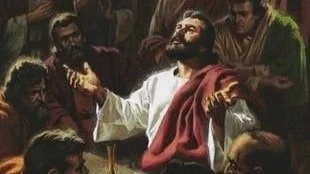
Scripture Reading: John 17:1-26 When Jesus had finished saying these things, he looked upward to heaven and said, “Father, the time has come. Glorify your Son, so that your Son may glorify you— 2 just as you have given him authority over all humanity, so that he may give eternal life to everyone you have given him. 3 Now this is eternal life—that they know you, the only true God, and Jesus Christ, whom you sent. 4 I glorified you on earth by completing the work you gave me to do. 5 And now, Father, glorify me at your side with the glory I had with you before the world was created.6 “I have revealed your name to the men you gave me out of the world. They belonged to you, and you gave them to me, and they have obeyed your word. 7 Now they understand that everything you have given me comes from you, 8 because I have given them the words you have given me. They accepted them and really understand that I came from you, and they believed that you sent me. 9 I am praying on behalf of them. I am not praying on behalf of the world, but on behalf of those you have given me because they belong to you. 10 Everything I have belongs to you, and everything you have belongs to me, and I have been glorified by them. 11 I am no longer in the world, but they are in the world, and I am coming to you. Holy Father, keep them safe in your name that you have given me, so that they may be one just as we are one. 12 When I was with them I kept them safe and watched over them in your name that you have given me. Not one of them was lost except the one destined for destruction, so that the scripture could be fulfilled. 13 But now I am coming to you, and I am saying these things in the world, so they may experience my joy completed in themselves. 14 I have given them your word, and the world has hated them because they do not belong to the world, just as I do not belong to the world. 15 I am not asking you to take them out of the world, but that you keep them safe from the evil one. 16 They do not belong to the world just as I do not belong to the world. 17 Set them apart in the truth; your word is truth. 18 Just as you sent me into the world, so I sent them into the world. 19 And I set myself apart on their behalf, so that they too may be truly set apart.20 “I am not praying only on their behalf, but also on behalf of those who believe in me through their testimony, 21 that they will all be one, just as you, Father, are in me and I am in you. I pray that they will be in us, so that the world will believe that you sent me. 22 The glory you gave to me I have given to them, that they may be one just as we are one— 23 I in them and you in me—that they may be completely one, so that the world will know that you sent me, and you have loved them just as you have loved me.24 “Father, I want those you have given me to be with me where I am, so that they can see my glory that you gave me because you loved me before the creation of the world. 25 Righteous Father, even if the world does not know you, I know you, and these men know that you sent me. 26 I made known your name to them, and I will continue to make it known, so that the love you have loved me with may be in them, and I may be in them.”Main ThemesJesus’ Last Will and TestamentChapters 13 to 17 resemble a testament, what we now call a will (the full name being a Last Will and Testament). Chapter 17 is particularly reminiscent of the genre, given the frequency of blessings and wish-prayers in testaments. Although recognizing the “testament flavor” of this chapter does not teach us much theology, it certainly does tell us something about the mood. To Jesus’ audience, he sounds like someone who is saying good bye in light of his upcoming death. We should keep in mind this somber tone when reading the text.Praying With Eyes OpenIf we saw Jesus pray, we would probably think his mannerisms were quite strange. As in many modern cultures, we pray with our eyes cast down, probably closed, and our hands together. First century Jews and Greeks prayed quite differently. Their eyes would be open with their gaze directed up to the heavens. Their hands often would be lifted up. This is by no means the main point of this passage, but awareness of our cultural practices is always valuable. If someone does not bow his head to pray, he is not necessarily a heathen.A Fulfilling PrayerChapter 17 is a long prayer. It can roughly be divided into three sections. Jesus prays for himself, then for his disciples, and finally for all future believers. Before we proceed to analyze each section, we should consider how Jesus is fulfilling different Old Testament types.The prayer is thoroughly Jewish while being thoroughly Christocentric. The common Jewish motifs of the unity of God’s people; the people’s love for God; God’s glory; the paramount importance of obedience to God; the setting apart of God’s people; and, the crucial role of God’s agent are all present. However, each of these themes is reinterpreted through
Session 24: December 10, 2022
Scripture Reading: John 16:1-33 1 “I have told you all these things so that you will not fall away. 2 They will put you out of the synagogue, yet a time is coming when the one who kills you will think he is offering service to God. 3 They will do these things because they have not known the Father or me. 4 But I have told you these things so that when their time comes, you will remember that I told you about them.“I did not tell you these things from the beginning because I was with you. 5 But now I am going to the one who sent me, and not one of you is asking me, ‘Where are you going?’ 6 Instead your hearts are filled with sadness because I have said these things to you. 7 But I tell you the truth, it is to your advantage that I am going away. For if I do not go away, the Advocate will not come to you, but if I go, I will send him to you. 8 And when he comes, he will prove the world wrong concerning sin and righteousness and judgment— 9 concerning sin because they do not believe in me; 10 concerning righteousness because I am going to the Father and you will see me no longer; 11 and concerning judgment because the ruler of this world has been condemned.12 “I have many more things to say to you, but you cannot bear them now. 13 But when he, the Spirit of truth, comes, he will guide you into all truth. For he will not speak on his own authority, but will speak whatever he hears and will tell you what is to come. 14 He will glorify me because he will receive from me what is mine and will tell it to you. 15 Everything that the Father has is mine; that is why I said the Spirit will receive from me what is mine and will tell it to you. 16 In a little while you will see me no longer; again after a little while, you will see me.”17 Then some of his disciples said to one another, “What is the meaning of what he is saying, ‘In a little while you will not see me; again after a little while, you will see me,’ and ‘because I am going to the Father’?” 18 So they kept on repeating, “What is the meaning of what he says, ‘In a little while’? We do not understand what he is talking about.”19 Jesus could see that they wanted to ask him about these things, so he said to them, “Are you asking each other about this—that I said, ‘In a little while you will not see me; again after a little while, you will see me’? 20 I tell you the solemn truth, you will weep and wail, but the world will rejoice; you will be sad, but your sadness will turn into joy. 21 When a woman gives birth, she has distress because her time has come, but when her child is born, she no longer remembers the suffering because of her joy that a human being has been born into the world. 22 So also you have sorrow now, but I will see you again, and your hearts will rejoice, and no one will take your joy away from you. 23 At that time you will ask me nothing. I tell you the solemn truth, whatever you ask the Father in my name he will give you. 24 Until now you have not asked for anything in my name. Ask and you will receive it, so that your joy may be complete.25 “I have told you these things in obscure figures of speech; a time is coming when I will no longer speak to you in obscure figures, but will tell you plainly about the Father. 26 At that time you will ask in my name, and I do not say that I will ask the Father on your behalf. 27 For the Father himself loves you because you have loved me and have believed that I came from God. 28 I came from the Father and entered into the world, but in turn, I am leaving the world and going back to the Father.”29 His disciples said, “Look, now you are speaking plainly and not in obscure figures of speech! 30 Now we know that you know everything and do not need anyone to ask you anything. Because of this we believe that you have come from God.”31 Jesus replied, “Do you now believe? 32 Look, a time is coming—and has come—when you will be scattered, each one to his own home, and I will be left alone. Yet I am not alone because my Father is with me. 33 I have told you these things so that in me you may have peace. In the world you have trouble and suffering, but take courage—I have conquered the world.”Main ThemesPut You Out of the SynagogueThe first four verses are a continuation of chapter 15. Recall that the last chapter ended with the following points:Just like the world hated me, it will hate you.The world loves its own, but you are not of the world.The one who hates Jesus hates the Father as well.Jesus’ testimony and deeds testify against those who persecute Jesus.The Advocate will come and also testify about Jesus.As we transition from chapter 15 to chapter 16, the discourse progresses from discussing the attitude of hatred to the specific way in which the hatred will present itself. The last verses of chapter 15 are forensic—reminiscent of a trial. That is where chapter 16 picks up.What will all the forensic talk look like in practical terms? Followers of Jesus will be taken before the synagogue, put on trial, and excom
Session 23: December 3, 2022
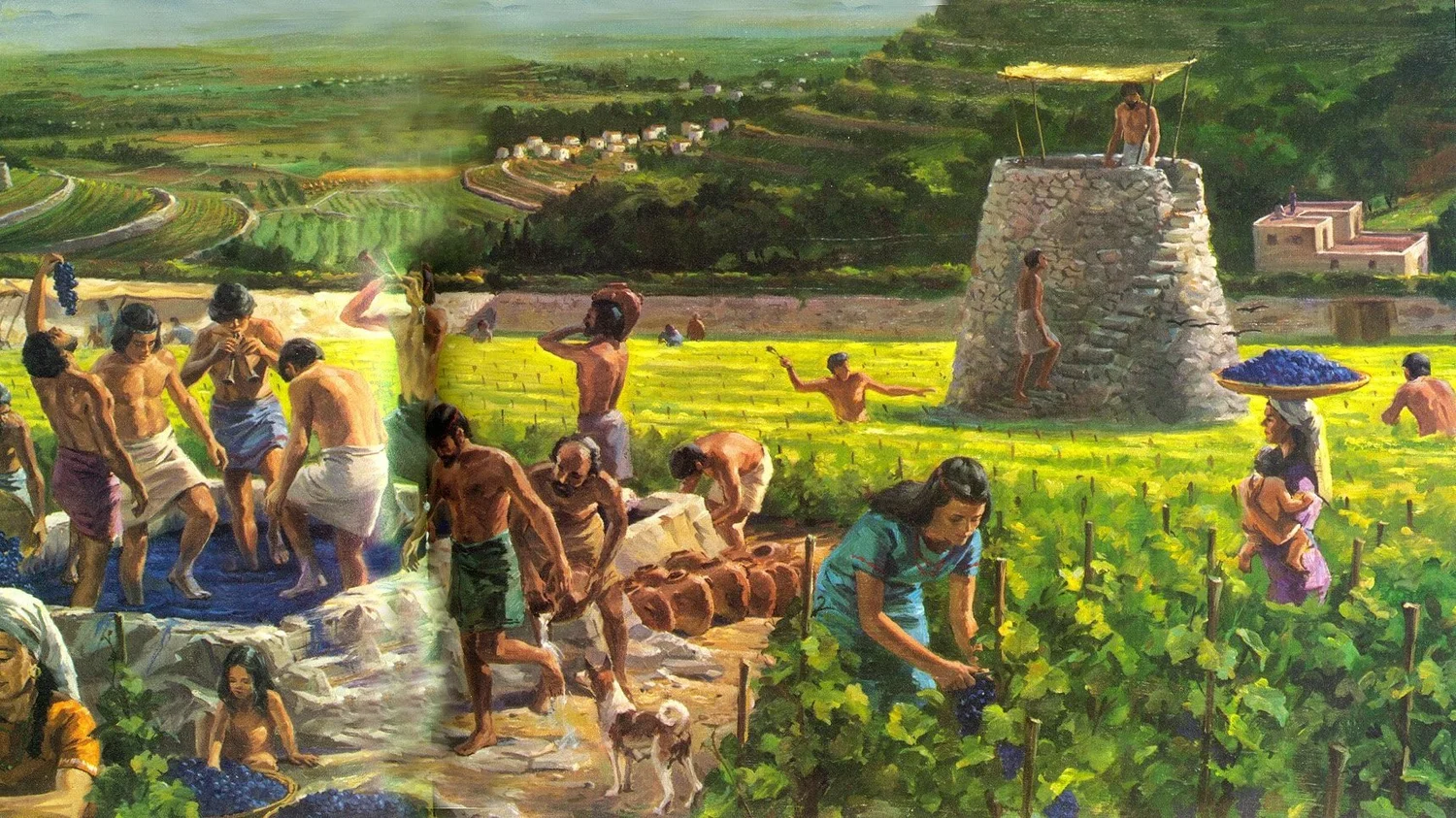
Scripture Reading: John 15:1-27 1 “I am the true vine and my Father is the gardener. 2 He takes away every branch that does not bear fruit in me. He prunes every branch that bears fruit so that it will bear more fruit. 3 You are clean already because of the word that I have spoken to you. 4 Remain in me, and I will remain in you. Just as the branch cannot bear fruit by itself, unless it remains in the vine, so neither can you unless you remain in me.5 “I am the vine; you are the branches. The one who remains in me—and I in him—bears much fruit because apart from me you can accomplish nothing. 6 If anyone does not remain in me, he is thrown out like a branch and dries up; and such branches are gathered up and thrown into the fire and are burned up. 7 If you remain in me and my words remain in you, ask whatever you want, and it will be done for you. 8 My Father is honored by this, that you bear much fruit and show that you are my disciples.9 “Just as the Father has loved me, I have also loved you; remain in my love. 10 If you obey my commandments, you will remain in my love, just as I have obeyed my Father’s commandments and remain in his love. 11 I have told you these things so that my joy may be in you, and your joy may be complete. 12 My commandment is this—to love one another just as I have loved you. 13 No one has greater love than this—that one lays down his life for his friends. 14 You are my friends if you do what I command you. 15 I no longer call you slaves because the slave does not understand what his master is doing. But I have called you friends because I have revealed to you everything I heard from my Father. 16 You did not choose me, but I chose you and appointed you to go and bear fruit, fruit that remains, so that whatever you ask the Father in my name he will give you. 17 This I command you—to love one another.18 “If the world hates you, be aware that it hated me first. 19 If you belonged to the world, the world would love you as its own. However, because you do not belong to the world, but I chose you out of the world, for this reason the world hates you. 20 Remember what I told you, ‘A slave is not greater than his master.’ If they persecuted me, they will also persecute you. If they obeyed my word, they will obey yours too. 21 But they will do all these things to you on account of my name because they do not know the one who sent me. 22 If I had not come and spoken to them, they would not be guilty of sin. But they no longer have any excuse for their sin. 23 The one who hates me hates my Father too. 24 If I had not performed among them the miraculous deeds that no one else did, they would not be guilty of sin. But now they have seen the deeds and have hated both me and my Father. 25 Now this happened to fulfill the word that is written in their law, ‘They hated me without reason.’ 26 When the Advocate comes, whom I will send you from the Father—the Spirit of truth who goes out from the Father—he will testify about me, 27 and you also will testify because you have been with me from the beginning.Main ThemesThe True VineBackgroundThe fact that Jesus uses vine imagery should not surprise us. Indeed, there are several reasons why we should expect use of such an allegory.Old TestamentIn the Old Testament a vine or vineyard was a common depiction of Israel. Probably the most salient is Isaiah 5:1-7:I will sing to my love—a song to my lover about his vineyard. My love had a vineyard on a fertile hill. He built a hedge around it, removed its stones, and planted a vine. He built a tower in the middle of it and constructed a winepress. He waited for it to produce edible grapes, but it produced sour ones instead. So now, residents of Jerusalem, people of Judah, you decide between me and my vineyard! What more can I do for my vineyard beyond what I have already done? When I waited for it to produce edible grapes, why did it produce sour ones instead? Now I will inform you what I am about to do to my vineyard: I will remove its hedge and turn it into pasture, I will break its wall and allow animals to graze there. I will make it a wasteland; no one will prune its vines or hoe its ground, and thorns and briers will grow there. I will order the clouds not to drop any rain on it. Indeed, Israel is the vineyard of the Lord of Heaven’s Armies, the people of Judah are the cultivated place in which he took delight. He waited for justice, but look what he got—disobedience! He waited for fairness, but look what he got—cries for help!That is by no means the only use of the vine-Israel analogy in the Old Testament. Consider also Psalm 80:8-16:You uprooted a vine from Egypt; you drove out nations and transplanted it. You cleared the ground for it; it took root and filled the land. The mountains were covered by its shadow, the highest cedars by its branches. Its branches reached the Mediterranean Sea, and its shoots the Euphrates River. Why did you break down its walls, so that all who pass by pluck its fruit? Th
Session 22: November 19, 2022
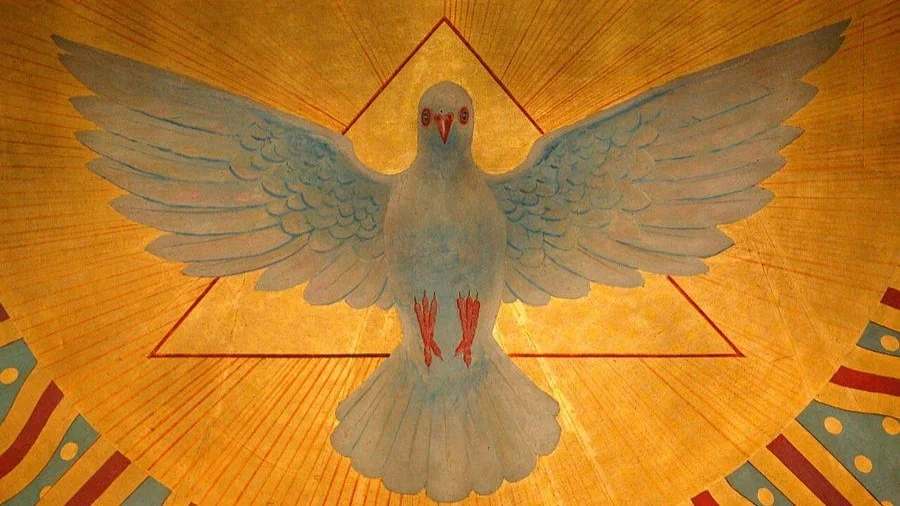
Scripture Reading: John 14:15-31 15 “If you love me, you will obey my commandments. 16 Then I will ask the Father, and he will give you another Advocate to be with you forever— 17 the Spirit of truth, whom the world cannot accept because it does not see him or know him. But you know him because he resides with you and will be in you.18 “I will not abandon you as orphans, I will come to you. 19 In a little while the world will not see me any longer, but you will see me; because I live, you will live too. 20 You will know at that time that I am in my Father and you are in me and I am in you. 21 The person who has my commandments and obeys them is the one who loves me. The one who loves me will be loved by my Father, and I will love him and will reveal myself to him.”22 “Lord,” Judas (not Judas Iscariot) said, “what has happened that you are going to reveal yourself to us and not to the world?” 23 Jesus replied, “If anyone loves me, he will obey my word, and my Father will love him, and we will come to him and take up residence with him. 24 The person who does not love me does not obey my words. And the word you hear is not mine, but the Father’s who sent me.25 “I have spoken these things while staying with you. 26 But the Advocate, the Holy Spirit, whom the Father will send in my name, will teach you everything and will cause you to remember everything I said to you.27 “Peace I leave with you; my peace I give to you; I do not give it to you as the world does. Do not let your hearts be distressed or lacking in courage. 28 You heard me say to you, ‘I am going away and I am coming back to you.’ If you loved me, you would be glad that I am going to the Father because the Father is greater than I am. 29 I have told you now before it happens, so that when it happens you may believe. 30 I will not speak with you much longer, for the ruler of this world is coming. He has no power over me, 31 but I am doing just what the Father commanded me, so that the world may know that I love the Father. Get up, let us go from here.Main ThemesIf You Love Me, You Will Obey My CommandmentsTo love is to obey. That is certain to evoke a nearly visceral reaction in our modern culture. Honestly, I think that for us modern readers (myself included) even understanding such a statement is difficult. That is why we should take a minute to explore it in detail.Let’s consider this statement from two angles.Covenantal TermsFirst, let’s remember the Old Testament background to statements of love and hate. In the Old Testament we find God making covenants with people, such as Adam, Noah, Abraham, and David. These bĕrît were common in the ancient Near East. So common, in fact, they followed a particular format. We do this kind of standardization today with common contracts as well, such as with bills of sale. Covenants also used particular language. We also do this today. Have you ever read a deed? It probably includes a phrase such as “conveys to Grantee to have and to hold it to Grantee and Grantee’s heirs, successors, and assigns forever.” Someone unfamiliar with our legal system may not understand that such language is legalese for “convey in fee simple.” What are we missing when we read ancient covenants? Consider the following quotation:Blessings were another important feature of a bĕrît. These were the benefits promised if the contract were maintained. Curses were the consequences if the contract were violated. Covenant loyalty (“lovingkindness” or ḥesed) was the objective of the agreement. The parity treaties report that the partners are now brothers; the suzerain/vassal covenants speak of the parties as father/son or lord/servant. To abide by the contract with one’s suzerain was to love him, and to betray the suzerain or to fail to keep his stipulations was to hate him. Is any of this language sounding familiar? It should be! The Bible is riddled with it. Why? Because this is the terminology associated with the international politics of the ancient Near East, and the Bible is describing Israel’s relationship to Yahweh in terms of a bĕrît. Yahweh has become Israel’s suzerain and Israel has become his vassal. Richter, Sandra L.. The Epic of Eden (p. 79). InterVarsity Press. Kindle Edition [emphasis added].Forgive me for belaboring the point, but we really need to understand covenants in some detail before the “New Covenant” really makes sense to us. For that, let’s consider the format of the Old Covenant—the suzerain/vassal covenant that God made with his people Israel: I. Preamble/Title: “I am Yahweh your God . . .” Gives title of superior party Exod 20:2a; Deut 5:6aII. Historical Prologue: “. . . who brought you up out of the land Furnishes the basis of obligation of Egypt, out of the house of slavery.” and the motive for accepting the covenant’s stipulations as binding Exod 20:2b; Deut 5:6b (cf. Deut 1—3)III. Stipulations/Obligations Imposed: “You shall have no other gods before me. . . .” Exod 20:3-17; Deut 5:7-21 (cf. Deut 12—26)

Session 21: November 12, 2022
Scripture Reading: John 14:1-14 1 “Do not let your hearts be distressed. You believe in God; believe also in me. 2 There are many dwelling places in my Father’s house. Otherwise, I would have told you, because I am going away to make ready a place for you. 3 And if I go and make ready a place for you, I will come again and take you to be with me, so that where I am you may be too. 4 And you know the way where I am going.”5 Thomas said, “Lord, we don’t know where you are going. How can we know the way?” 6 Jesus replied, “I am the way, and the truth, and the life. No one comes to the Father except through me. 7 If you have known me, you will know my Father too. And from now on you do know him and have seen him.”8 Philip said, “Lord, show us the Father, and we will be content.” 9 Jesus replied, “Have I been with you for so long and yet you have not known me, Philip? The person who has seen me has seen the Father! How can you say, ‘Show us the Father’? 10 Do you not believe that I am in the Father, and the Father is in me? The words that I say to you, I do not speak on my own initiative, but the Father residing in me performs his miraculous deeds. 11 Believe me that I am in the Father, and the Father is in me, but if you do not believe me, believe because of the miraculous deeds themselves. 12 I tell you the solemn truth, the person who believes in me will perform the miraculous deeds that I am doing, and will perform greater deeds than these because I am going to the Father. 13 And I will do whatever you ask in my name, so that the Father may be glorified in the Son. 14 If you ask me anything in my name, I will do it.Main ThemesMany Dwelling Places in my Father’s HouseAddressing the Group—FarewellThe chapter opens with Jesus shifting his attention from Peter individually to all his disciples (evident in the shift to plural pronouns and verbs). He says, “Do not let your hearts be distressed. You believe in God; believe also in me.” This is clearly a farewell speech. Jesus is saying goodbye. Keeping that in mind, we need to pay attention to what Jesus chooses to highlight as his final words.Indicative Versus ImperativeThe sentence translated as “you believe in God; believe also in me” includes two identical uses of the word believe. That verb can be translated as indicative or imperative. Therefore, translators have to pick between the translation above (which uses the indicative first and then the imperative), or a translation that uses both verbs consistently, such as “believe in God, believe also in me.” The same sentence can even be translated as a rhetorical question and its corresponding response: “Do you believe in God? Believe also in me.” There is no major change in the passage’s meaning. The disciples must believe in God and in Jesus. The fact that Jesus makes himself an object of faith is noteworthy. At the very least Jesus is making himself equal with Moses. Recall Exodus 14:31, “When Israel saw the great power that the Lord had exercised over the Egyptians, they feared the Lord, and they believed in the Lord and in his servant Moses.” At most, Jesus is making himself equal with the Father himself since God and only God is the ultimate proper recipient of faith.Homes Now or Homes TomorrowWhat is the Father’s House?Jesus then tells the disciples where he is going: to “make ready a place for [the disciples]” in the “Father’s house,” which has many “dwelling places.” To understand Jesus’ words, let’s begin by asking, what is the Father’s house? Both in Old Testament and New Testament times, God’s temple was referred to as his house. Consider Haggai 1:2, “Thus says the Lord of hosts: These people say the time has not yet come to rebuild the house of the Lord.” Or recall Ecclesiastes 5:1, “Guard your steps when you go to the house of God.” In the New Testament, Jesus himself uses that language. Consider Jesus’ words in Matthew 21:13, “It is written, ‘My house will be called a house of prayer,’ but you are turning it into a den of robbers!” This language was common in nonbiblical sources as well.The second question we should ask is, why is it the Lord’s house? Because the Lord’s presence is there. Before there was a temple, there was a tabernacle (a tent). As Exodus 35 tells us, “the glory of the Lord filled the tabernacle.” Once Israel was established as a nation, God chose the temple as his resting place. “[T]he Lord’s splendor filled God’s temple.” (2 Chronicles 5:14)Many “Dwelling Places”Jesus is going to be in the Father’s presence. That much is very clear. The controversy is that the Father’s house has many “dwelling places.” To what do these dwelling places refer? Primarily, the discussion is centered on whether John is speaking of a present and realized eschatology or a future eschatology. To put it more plainly, will the disciples go to these dwelling places now or in the distant future?Two InterpretationsMost Christians interpret this passage to mean that Jesus goes to prepare a place for believe
Session 20: November 5, 2022
Scripture Reading: John 13:1-38 Just before the Passover Feast, Jesus knew that his time had come to depart from this world to the Father. Having loved his own who were in the world, he now loved them to the very end. 2 The evening meal was in progress, and the devil had already put into the heart of Judas Iscariot, Simon’s son, that he should betray Jesus. 3 Because Jesus knew that the Father had handed all things over to him, and that he had come from God and was going back to God, 4 he got up from the meal, removed his outer clothes, took a towel and tied it around himself. 5 He poured water into the washbasin and began to wash the disciples’ feet and to dry them with the towel he had wrapped around himself.6 Then he came to Simon Peter. Peter said to him, “Lord, are you going to wash my feet?” 7 Jesus replied, “You do not understand what I am doing now, but you will understand after these things.” 8 Peter said to him, “You will never wash my feet!” Jesus replied, “If I do not wash you, you have no share with me.” 9 Simon Peter said to him, “Lord, wash not only my feet but also my hands and my head!” 10 Jesus replied, “The one who has bathed needs only to wash his feet, but is completely clean. And you disciples are clean, but not every one of you.” 11 (For Jesus knew the one who was going to betray him. For this reason he said, “Not every one of you is clean.”)12 So when Jesus had washed their feet and put his outer clothing back on, he took his place at the table again and said to them, “Do you understand what I have done for you? 13 You call me ‘Teacher’ and ‘Lord,’ and do so correctly, for that is what I am. 14 If I then, your Lord and Teacher, have washed your feet, you too ought to wash one another’s feet. 15 For I have given you an example—you should do just as I have done for you. 16 I tell you the solemn truth, the slave is not greater than his master, nor is the one who is sent as a messenger greater than the one who sent him. 17 If you understand these things, you will be blessed if you do them.18 “What I am saying does not refer to all of you. I know the ones I have chosen. But this is to fulfill the scripture, ‘The one who eats my bread has turned against me.’ 19 I am telling you this now, before it happens, so that when it happens you may believe that I am he. 20 I tell you the solemn truth, whoever accepts the one I send accepts me, and whoever accepts me accepts the one who sent me.”21 When he had said these things, Jesus was greatly distressed in spirit, and testified, “I tell you the solemn truth, one of you will betray me.” 22 The disciples began to look at one another, worried and perplexed to know which of them he was talking about. 23 One of his disciples, the one Jesus loved, was at the table to the right of Jesus in a place of honor. 24 So Simon Peter gestured to this disciple to ask Jesus who it was he was referring to. 25 Then the disciple whom Jesus loved leaned back against Jesus’ chest and asked him, “Lord, who is it?” 26 Jesus replied, “It is the one to whom I will give this piece of bread after I have dipped it in the dish.” Then he dipped the piece of bread in the dish and gave it to Judas Iscariot, Simon’s son. 27 And after Judas took the piece of bread, Satan entered into him. Jesus said to him, “What you are about to do, do quickly.” 28 (Now none of those present at the table understood why Jesus said this to Judas. 29 Some thought that because Judas had the money box, Jesus was telling him to buy whatever they needed for the feast, or to give something to the poor.) 30 Judas took the piece of bread and went out immediately. (Now it was night.)31 When Judas had gone out, Jesus said, “Now the Son of Man is glorified, and God is glorified in him. 32 If God is glorified in him, God will also glorify him in himself, and he will glorify him right away. 33 Children, I am still with you for a little while. You will look for me, and just as I said to the Jewish religious leaders, ‘Where I am going you cannot come,’ now I tell you the same.34 “I give you a new commandment—to love one another. Just as I have loved you, you also are to love one another. 35 Everyone will know by this that you are my disciples—if you have love for one another.”36 Simon Peter said to him, “Lord, where are you going?” Jesus replied, “Where I am going, you cannot follow me now, but you will follow later.” 37 Peter said to him, “Lord, why can’t I follow you now? I will lay down my life for you!” 38 Jesus answered, “Will you lay down your life for me? I tell you the solemn truth, the rooster will not crow until you have denied me three times!Main ThemesThe SettingThe Hour Has ComeYou may recall that we started John’s Gospel with Jesus telling his own mother, “Woman, why are you saying this to me? My time has not yet come.” (John 2:4) You may also recall Jesus telling his brothers that he could not attend the Feast of Tabernacles with them because, “My time has not yet arrived . . . .” (John 7:6). You mig
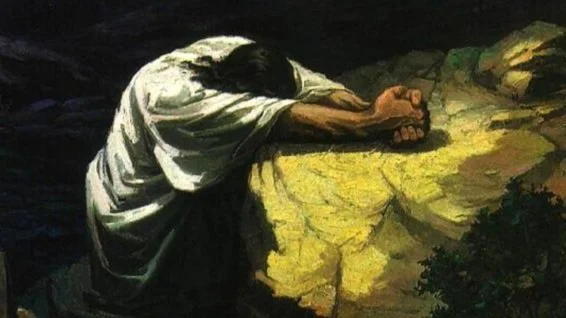
Session 19: October 22, 2022
Scripture Reading: John 12:27-50 27 “Now my soul is greatly distressed. And what should I say? ‘Father, deliver me from this hour’? No, but for this very reason I have come to this hour. 28 Father, glorify your name.” Then a voice came from heaven, “I have glorified it, and I will glorify it again.” 29 The crowd that stood there and heard the voice said that it had thundered. Others said that an angel had spoken to him. 30 Jesus said, “This voice has not come for my benefit but for yours. 31 Now is the judgment of this world; now the ruler of this world will be driven out. 32 And I, when I am lifted up from the earth, will draw all people to myself.” 33 (Now he said this to indicate clearly what kind of death he was going to die.)34 Then the crowd responded, “We have heard from the law that the Christ will remain forever. How can you say, ‘The Son of Man must be lifted up’? Who is this Son of Man?” 35 Jesus replied, “The light is with you for a little while longer. Walk while you have the light, so that the darkness may not overtake you. The one who walks in the darkness does not know where he is going. 36 While you have the light, believe in the light, so that you may become sons of light.” When Jesus had said these things, he went away and hid himself from them.37 Although Jesus had performed so many miraculous signs before them, they still refused to believe in him, 38 so that the word of the prophet Isaiah would be fulfilled. He said, “Lord, who has believed our message, and to whom has the arm of the Lord been revealed?” 39 For this reason they could not believe because again Isaiah said,40 “He has blinded their eyesand hardened their heart,so that they would not see with their eyesand understand with their heart,and turn to me, and I would heal them.”41 Isaiah said these things because he saw Christ’s glory and spoke about him.42 Nevertheless, even among the rulers many believed in him, but because of the Pharisees they would not confess Jesus to be the Christ, so that they would not be put out of the synagogue. 43 For they loved praise from men more than praise from God.44 But Jesus shouted out, “The one who believes in me does not believe in me, but in the one who sent me, 45 and the one who sees me sees the one who sent me. 46 I have come as a light into the world, so that everyone who believes in me should not remain in darkness. 47 If anyone hears my words and does not obey them, I do not judge him. For I have not come to judge the world, but to save the world. 48 The one who rejects me and does not accept my words has a judge; the word I have spoken will judge him at the last day. 49 For I have not spoken from my own authority, but the Father himself who sent me has commanded me what I should say and what I should speak. 50 And I know that his commandment is eternal life. Thus the things I say, I say just as the Father has told me.”Main ThemesJesus’ Soul Is Greatly DistressedJesus is greatly distressed or “troubled.” I think I speak for most of us when I say that this is an unexpected turn of events. Not only did the ancient Mediterranean world consider praiseworthy a hero who faced suffering bravely, without sorrow, but we do as well. When we think of a suffering hero, we may think of someone like Mel Gibson in Braveheart, defiantly exclaiming “freedom” as he is martyred. In the case of Jesus, the distress is also unexpected because Jesus knows all things, and he has walked to the cross deliberately. This intentionality is nothing short of a core theme of John’s gospel.What should we think of this, then? First, as a quick apologetics note, this is another time that the criterion of embarrassment seems to apply. If one were trying to write a story that made Jesus appear as grand as possible, one would almost certainly omit any feelings of distress on the part of the hero. Instead, the hero would face his unjust persecution with defiance and never complaining. Second, and most importantly for our study, what does this scene tell us about Jesus? What does it tell us about his sacrifice?Jesus is human—truly human. Throughout church history, different sects have sought to make Jesus truly God but not human, or truly human but not God. The orthodox Christian view is that Jesus has both natures, indivisible yet unconfused. This is called the hypostatic union. This theology was settled in the Council of Ephesus (AD 431) and the Council of Chalcedon (AD 451), which built upon prior ecumenical councils. Because Jesus is truly human, we can say that Christ is “like us in all things, sin apart.” Just like we would be troubled over extreme physical punishment, so was Jesus. More importantly, just like we would be troubled over receiving punishment for sin, so was Jesus. This latter point requires further explanation.(Trying to stay true to my mission for this Bible study, I must point out that the Council of Chalcedon led to the first major church split. The Oriental Orthodox church fully affirmed that Chri
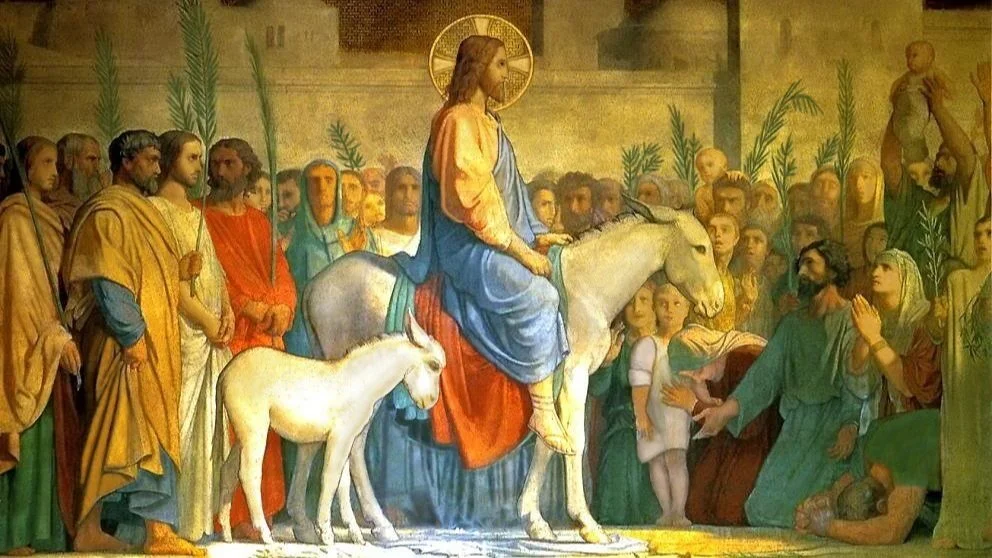
Session 18: October 15, 2022
Scripture Reading: John 12:1-26 1 Then, six days before the Passover, Jesus came to Bethany, where Lazarus lived, whom he had raised from the dead. 2 So they prepared a dinner for Jesus there. Martha was serving, and Lazarus was among those present at the table with him. 3 Then Mary took three quarters of a pound of expensive aromatic oil from pure nard and anointed the feet of Jesus. She then wiped his feet dry with her hair. (Now the house was filled with the fragrance of the perfumed oil.) 4 But Judas Iscariot, one of his disciples (the one who was going to betray him) said, 5 “Why wasn’t this oil sold for 300 silver coins and the money given to the poor?” 6 (Now Judas said this not because he was concerned about the poor, but because he was a thief. As keeper of the money box, he used to steal what was put into it.) 7 So Jesus said, “Leave her alone. She has kept it for the day of my burial. 8 For you will always have the poor with you, but you will not always have me!”9 Now a large crowd of Judeans learned that Jesus was there, and so they came not only because of him but also to see Lazarus whom he had raised from the dead. 10 So the chief priests planned to kill Lazarus too, 11 for on account of him many of the Jewish people from Jerusalem were going away and believing in Jesus.12 The next day the large crowd that had come to the feast heard that Jesus was coming to Jerusalem. 13 So they took branches of palm trees and went out to meet him. They began to shout, “Hosanna! Blessed is the one who comes in the name of the Lord! Blessed is the king of Israel!” 14 Jesus found a young donkey and sat on it, just as it is written, 15 “Do not be afraid, people of Zion; look, your king is coming, seated on a donkey’s colt!” 16 (His disciples did not understand these things when they first happened, but when Jesus was glorified, then they remembered that these things were written about him and that these things had happened to him.)17 So the crowd who had been with him when he called Lazarus out of the tomb and raised him from the dead were continuing to testify about it. 18 Because they had heard that Jesus had performed this miraculous sign, the crowd went out to meet him. 19 Thus the Pharisees said to one another, “You see that you can do nothing. Look, the world has run off after him!”20 Now some Greeks were among those who had gone up to worship at the feast. 21 So these approached Philip, who was from Bethsaida in Galilee, and requested, “Sir, we would like to see Jesus.” 22 Philip went and told Andrew, and they both went and told Jesus. 23 Jesus replied, “The time has come for the Son of Man to be glorified. 24 I tell you the solemn truth, unless a kernel of wheat falls into the ground and dies, it remains by itself alone. But if it dies, it produces much grain. 25 The one who loves his life destroys it, and the one who hates his life in this world guards it for eternal life. 26 If anyone wants to serve me, he must follow me, and where I am, my servant will be too. If anyone serves me, the Father will honor him.Main ThemesJesus’ Anointing—1, 2, or 3At the beginning of Chapter 12 we find the anointing of Jesus. The scene is strange yet incredibly moving. Before we can delve deeper into it though, we need to address an issue of consistency between all four gospels. There is a similar anointing story in each gospel. Yet each story seems to be different in some ways. Do they refer to the same event? If so, maybe some (or all) of the gospels got details wrong. That is not a conclusion we should accept lightly. Christians have an incredibly high regard for scripture. In fact, many Christians hold that there are no mistakes in scripture. Can biblical inerrancy hold up to the four anointing stories? I think so. (This is the kind of topic on which we could spend a couple of hours. My blog will present an abbreviated answer. There is a more detailed resource linked at the end.)Luke has the most different version of events. Let’s begin by comparing Luke to Mark. Consider the following passages:Luke 7:36-50. 36 Now one of the Pharisees asked Jesus to have dinner with him, so he went into the Pharisee’s house and took his place at the table. 37 Then when a woman of that town, who was a sinner, learned that Jesus was dining at the Pharisee’s house, she brought an alabaster jar of perfumed oil. 38 As she stood behind him at his feet, weeping, she began to wet his feet with her tears. She wiped them with her hair, kissed them, and anointed them with the perfumed oil. 39 Now when the Pharisee who had invited him saw this, he said to himself, “If this man were a prophet, he would know who and what kind of woman this is who is touching him, that she is a sinner.” 40 So Jesus answered him, “Simon, I have something to say to you.” He replied, “Say it, Teacher.” 41 “A certain creditor had two debtors; one owed him 500 silver coins, and the other 50. 42 When they could not pay, he canceled the debts of both. Now which of them w
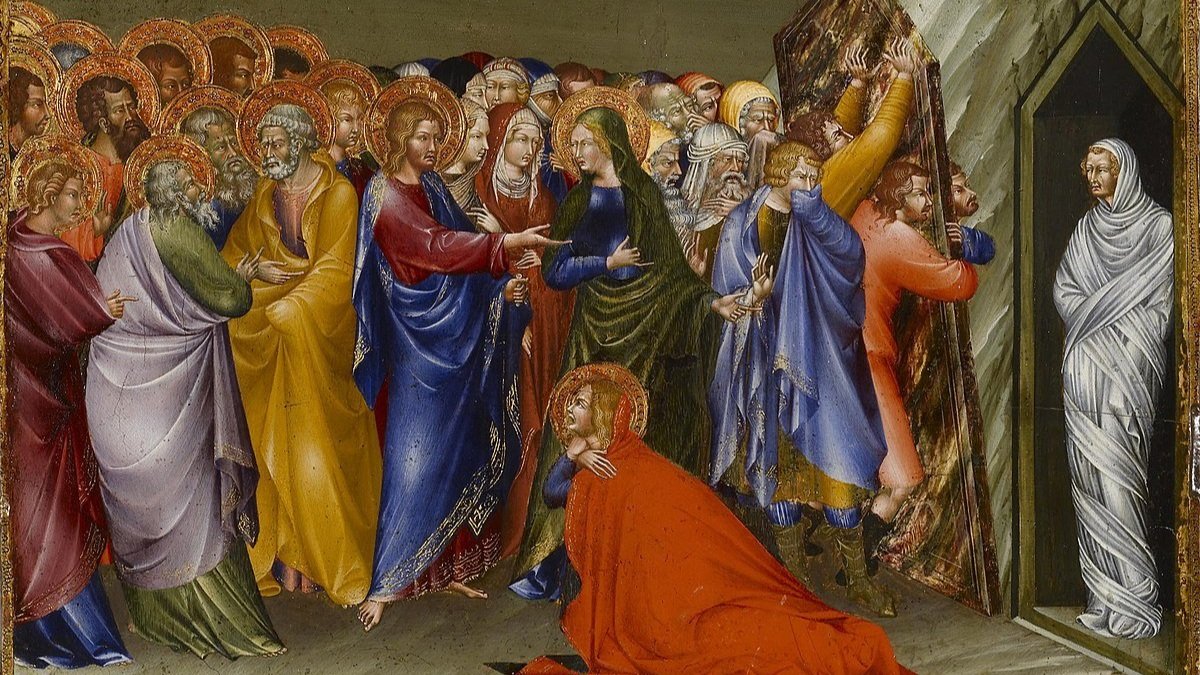
Session 17: October 8, 2022
Scripture Reading: John 11:1-57 Now a certain man named Lazarus was sick. He was from Bethany, the village where Mary and her sister Martha lived. 2 (Now it was Mary who anointed the Lord with perfumed oil and wiped his feet dry with her hair, whose brother Lazarus was sick.) 3 So the sisters sent a message to Jesus, “Lord, look, the one you love is sick.” 4 When Jesus heard this, he said, “This sickness will not lead to death, but to God’s glory, so that the Son of God may be glorified through it.” 5 (Now Jesus loved Martha and her sister and Lazarus.)6 So when he heard that Lazarus was sick, he remained in the place where he was for two more days. 7 Then after this, he said to his disciples, “Let us go to Judea again.” 8 The disciples replied, “Rabbi, the Jewish leaders were just now trying to stone you to death! Are you going there again?” 9 Jesus replied, “Are there not 12 hours in a day? If anyone walks around in the daytime, he does not stumble, because he sees the light of this world. 10 But if anyone walks around at night, he stumbles because the light is not in him.”11 After he said this, he added, “Our friend Lazarus has fallen asleep. But I am going there to awaken him.” 12 Then the disciples replied, “Lord, if he has fallen asleep, he will recover.” 13 (Now Jesus had been talking about his death, but they thought he had been talking about real sleep.)14 Then Jesus told them plainly, “Lazarus has died, 15 and I am glad for your sake that I was not there, so that you may believe. But let us go to him.” 16 So Thomas (called Didymus) said to his fellow disciples, “Let us go too, so that we may die with him.”17 When Jesus arrived, he found that Lazarus had been in the tomb four days already. 18 (Now Bethany was less than two miles from Jerusalem, 19 so many of the Jewish people of the region had come to Martha and Mary to console them over the loss of their brother.) 20 So when Martha heard that Jesus was coming, she went out to meet him, but Mary was sitting in the house. 21 Martha said to Jesus, “Lord, if you had been here, my brother would not have died. 22 But even now I know that whatever you ask from God, God will grant you.”23 Jesus replied, “Your brother will come back to life again.” 24 Martha said, “I know that he will come back to life again in the resurrection at the last day.” 25 Jesus said to her, “I am the resurrection and the life. The one who believes in me will live even if he dies, 26 and the one who lives and believes in me will never die. Do you believe this?” 27 She replied, “Yes, Lord, I believe that you are the Christ, the Son of God who comes into the world.”28 And when she had said this, Martha went and called her sister Mary, saying privately, “The Teacher is here and is asking for you.” 29 So when Mary heard this, she got up quickly and went to him. 30 (Now Jesus had not yet entered the village, but was still in the place where Martha had come out to meet him.) 31 Then the people who were with Mary in the house consoling her saw her get up quickly and go out. They followed her because they thought she was going to the tomb to weep there.32 Now when Mary came to the place where Jesus was and saw him, she fell at his feet and said to him, “Lord, if you had been here, my brother would not have died.” 33 When Jesus saw her weeping, and the people who had come with her weeping, he was intensely moved in spirit and greatly distressed. 34 He asked, “Where have you laid him?” They replied, “Lord, come and see.” 35 Jesus wept. 36 Thus the people who had come to mourn said, “Look how much he loved him!” 37 But some of them said, “This is the man who caused the blind man to see! Couldn’t he have done something to keep Lazarus from dying?”38 Jesus, intensely moved again, came to the tomb. (Now it was a cave, and a stone was placed across it.) 39 Jesus said, “Take away the stone.” Martha, the sister of the deceased, replied, “Lord, by this time the body will have a bad smell because he has been buried four days.” 40 Jesus responded, “Didn’t I tell you that if you believe, you would see the glory of God?” 41 So they took away the stone. Jesus looked upward and said, “Father, I thank you that you have listened to me. 42 I knew that you always listen to me, but I said this for the sake of the crowd standing around here, that they may believe that you sent me.” 43 When he had said this, he shouted in a loud voice, “Lazarus, come out!” 44 The one who had died came out, his feet and hands tied up with strips of cloth, and a cloth wrapped around his face. Jesus said to them, “Unwrap him and let him go.”45 Then many of the people, who had come with Mary and had seen the things Jesus did, believed in him. 46 But some of them went to the Pharisees and reported to them what Jesus had done. 47 So the chief priests and the Pharisees called the council together and said, “What are we doing? For this man is performing many miraculous signs. 48 If we allow him to go on in this way, everyone will belie
Session 16: October 1, 2022
Scripture Reading: John 10:1-42 1 “I tell you the solemn truth, the one who does not enter the sheepfold by the door, but climbs in some other way, is a thief and a robber. 2 The one who enters by the door is the shepherd of the sheep. 3 The doorkeeper opens the door for him, and the sheep hear his voice. He calls his own sheep by name and leads them out. 4 When he has brought all his own sheep out, he goes ahead of them, and the sheep follow him because they recognize his voice. 5 They will never follow a stranger, but will run away from him because they do not recognize the stranger’s voice.” 6 Jesus told them this parable, but they did not understand what he was saying to them.7 So Jesus said again, “I tell you the solemn truth, I am the door for the sheep. 8 All who came before me were thieves and robbers, but the sheep did not listen to them. 9 I am the door. If anyone enters through me, he will be saved, and will come in and go out, and find pasture. 10 The thief comes only to steal and kill and destroy; I have come so that they may have life, and may have it abundantly.11 “I am the good shepherd. The good shepherd lays down his life for the sheep. 12 The hired hand, who is not a shepherd and does not own sheep, sees the wolf coming and abandons the sheep and runs away. So the wolf attacks the sheep and scatters them. 13 Because he is a hired hand and is not concerned about the sheep, he runs away.14 “I am the good shepherd. I know my own and my own know me— 15 just as the Father knows me and I know the Father—and I lay down my life for the sheep. 16 I have other sheep that do not come from this sheepfold. I must bring them too, and they will listen to my voice, so that there will be one flock and one shepherd. 17 This is why the Father loves me—because I lay down my life, so that I may take it back again. 18 No one takes it away from me, but I lay it down of my own free will. I have the authority to lay it down, and I have the authority to take it back again. This commandment I received from my Father.”19 Another sharp division took place among the Jewish people because of these words. 20 Many of them were saying, “He is possessed by a demon and has lost his mind! Why do you listen to him?” 21 Others said, “These are not the words of someone possessed by a demon. A demon cannot cause the blind to see, can it?”22 Then came the feast of the Dedication in Jerusalem. 23 It was winter, and Jesus was walking in the temple area in Solomon’s Portico. 24 The Jewish leaders surrounded him and asked, “How long will you keep us in suspense? If you are the Christ, tell us plainly.” 25 Jesus replied, “I told you and you do not believe. The deeds I do in my Father’s name testify about me. 26 But you refuse to believe because you are not my sheep. 27 My sheep listen to my voice, and I know them, and they follow me. 28 I give them eternal life, and they will never perish; no one will snatch them from my hand. 29 My Father, who has given them to me, is greater than all, and no one can snatch them from my Father’s hand. 30 The Father and I are one.”31 The Jewish leaders picked up rocks again to stone him to death. 32 Jesus said to them, “I have shown you many good deeds from the Father. For which one of them are you going to stone me?” 33 The Jewish leaders replied, “We are not going to stone you for a good deed but for blasphemy because you, a man, are claiming to be God.”34 Jesus answered, “Is it not written in your law, ‘I said, you are gods’? 35 If those people to whom the word of God came were called ‘gods’ (and the scripture cannot be broken), 36 do you say about the one whom the Father set apart and sent into the world, ‘You are blaspheming,’ because I said, ‘I am the Son of God’? 37 If I do not perform the deeds of my Father, do not believe me. 38 But if I do them, even if you do not believe me, believe the deeds, so that you may come to know and understand that I am in the Father and the Father is in me.” 39 Then they attempted again to seize him, but he escaped their clutches.40 Jesus went back across the Jordan River again to the place where John had been baptizing at an earlier time, and he stayed there. 41 Many came to him and began to say, “John performed no miraculous sign, but everything John said about this man was true!” 42 And many believed in Jesus there.Main ThemesShepherds in AntiquitySheepIn the ancient world, both Jew and Gentile, sheep were prized. They provided wool; meat; milk that could be turned into cheese; and, leather that could be turned into “canteens” to carry liquids. Shepherds cared for sheep and oftentimes goats as well.Sheep (and goats) would learn to follow the voice and pipe of the shepherd. (Forgive me, I tried learning more about what a shepherd’s pipe may have looked like or sounded like, but I did not gain a good level of confidence on the material I found. Suffice it to say, it was some kind of flute, perhaps made of reeds.) Obedient animals could be led by voice and pipe w
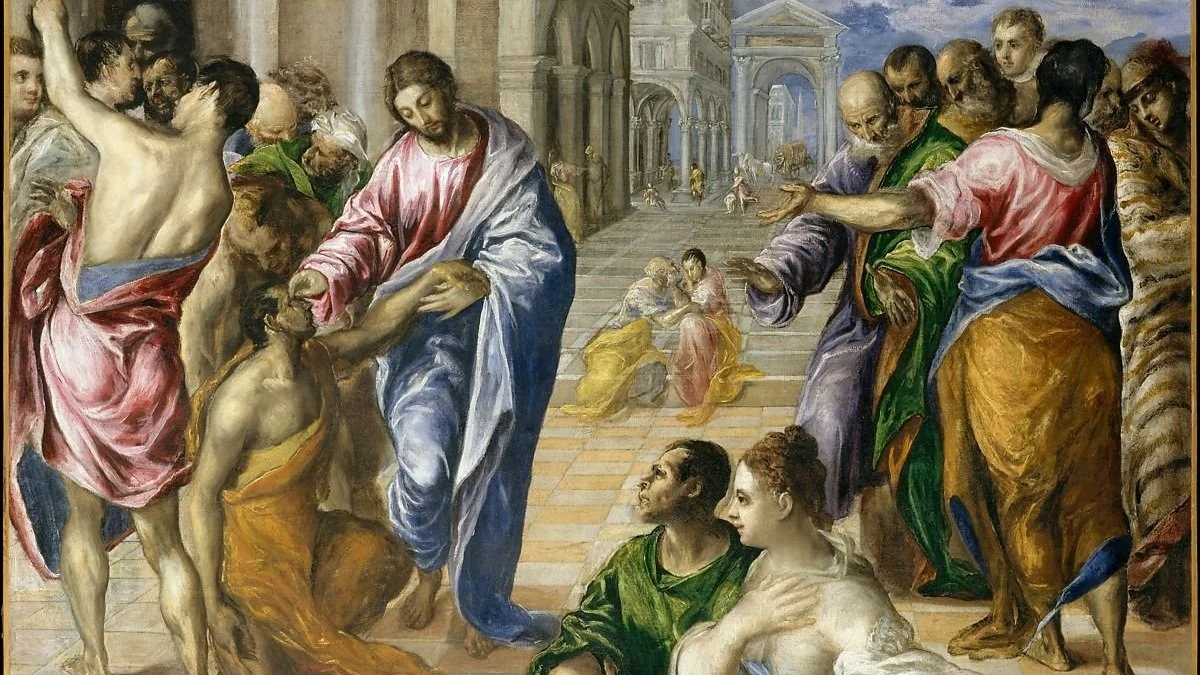
Session 15: September 24, 2022
Scripture Reading: John 9:1-41 1 Now as Jesus was passing by, he saw a man who had been blind from birth. 2 His disciples asked him, “Rabbi, who committed the sin that caused him to be born blind, this man or his parents?” 3 Jesus answered, “Neither this man nor his parents sinned, but he was born blind so that the acts of God may be revealed through what happens to him. 4 We must perform the deeds of the one who sent me as long as it is daytime. Night is coming when no one can work. 5 As long as I am in the world, I am the light of the world.” 6 Having said this, he spat on the ground and made some mud with the saliva. He smeared the mud on the blind man’s eyes 7 and said to him, “Go wash in the pool of Siloam” (which is translated “sent”). So the blind man went away and washed, and came back seeing.8 Then the neighbors and the people who had seen him previously as a beggar began saying, “Is this not the man who used to sit and beg?” 9 Some people said, “This is the man!” while others said, “No, but he looks like him.” The man himself kept insisting, “I am the one!” 10 So they asked him, “How then were you made to see?” 11 He replied, “The man called Jesus made mud, smeared it on my eyes and told me, ‘Go to Siloam and wash.’ So I went and washed, and was able to see.” 12 They said to him, “Where is that man?” He replied, “I don’t know.”13 They brought the man who used to be blind to the Pharisees. 14 (Now the day on which Jesus made the mud and caused him to see was a Sabbath.) 15 So the Pharisees asked him again how he had gained his sight. He replied, “He put mud on my eyes and I washed, and now I am able to see.”16 Then some of the Pharisees began to say, “This man is not from God because he does not observe the Sabbath.” But others said, “How can a man who is a sinner perform such miraculous signs?” Thus there was a division among them. 17 So again they asked the man who used to be blind, “What do you say about him, since he caused you to see?” “He is a prophet,” the man replied.18 Now the Jewish religious leaders refused to believe that he had really been blind and had gained his sight until at last they summoned the parents of the man who had become able to see. 19 They asked the parents, “Is this your son, whom you say was born blind? Then how does he now see?” 20 So his parents replied, “We know that this is our son and that he was born blind. 21 But we do not know how he is now able to see, nor do we know who caused him to see. Ask him, he is a mature adult. He will speak for himself.” 22 (His parents said these things because they were afraid of the Jewish religious leaders. For the Jewish leaders had already agreed that anyone who confessed Jesus to be the Christ would be put out of the synagogue. 23 For this reason his parents said, “He is a mature adult, ask him.”)24 Then they summoned the man who used to be blind a second time and said to him, “Promise before God to tell the truth. We know that this man is a sinner.” 25 He replied, “I do not know whether he is a sinner. I do know one thing—that although I was blind, now I can see.” 26 Then they said to him, “What did he do to you? How did he cause you to see?” 27 He answered, “I told you already and you didn’t listen. Why do you want to hear it again? You people don’t want to become his disciples too, do you?”28 They heaped insults on him, saying, “You are his disciple! We are disciples of Moses! 29 We know that God has spoken to Moses! We do not know where this man comes from!” 30 The man replied, “This is a remarkable thing that you don’t know where he comes from and yet he caused me to see! 31 We know that God doesn’t listen to sinners, but if anyone is devout and does his will, God listens to him. 32 Never before has anyone heard of someone causing a man born blind to see. 33 If this man were not from God, he could do nothing.” 34 They replied, “You were born completely in sinfulness, and yet you presume to teach us?” So they threw him out.35 Jesus heard that they had thrown him out, so he found the man and said to him, “Do you believe in the Son of Man?” 36 The man replied, “And who is he, sir, that I may believe in him?” 37 Jesus told him, “You have seen him; he is the one speaking with you.” [ 38 He said, “Lord, I believe,” and he worshiped him. 39 Jesus said,] “For judgment I have come into this world, so that those who do not see may gain their sight, and the ones who see may become blind.”40 Some of the Pharisees who were with him heard this and asked him, “We are not blind too, are we?” 41 Jesus replied, “If you were blind, you would not be guilty of sin, but now because you claim that you can see, your guilt remains.Main ThemesThe SettingSince the beginning of chapter 7, we have had a continuous sequence of events. Chapters 7, 8, 9, and 10 are one “scene.” Because the chapters tell one narrative, but we tend to study them separately (out of convenience, not for any theological reason), we need to be intentional in carrying over th