
Look at the Book
1,393 episodes — Page 27 of 28
Romans 9:24–29, Part 2: Partakers of God’s Promises
When did God decide to include the nations in his chosen people? The apostle Paul cites Old Testament passages to show that God always intended to bring Gentiles into his family. In this lab, John Piper explores Paul’s use of the Old Testament to give us outside of Israel hope.
Romans 9:24–29, Part 1: The Circumcision of the Heart
How could God be faithful to his promises if so many in Israel have fallen away, rejected the Messiah, and not been saved? In this lab, John Piper uncovers the next progression in Paul’s argument for God’s trustworthiness: the Gentiles are included as children in God’s invincible plan and promises.

Romans 9:22–23, Part 3: Jonathan Edwards and His Angry God
If people’s hearts are ultimately governed by God, how can God find fault with their hardness and rejection? In this lab, John Piper looks to Jonathan Edwards to understand why the judgment of God is essential for our fullest knowledge of him, and therefore our fullest enjoyment of him.
Romans 9:22–23, Part 2: The Ultimate Purpose of the Universe
Why would God prepare some people for wrath and destruction? It’s one of the biggest, weightiest questions in all the Bible. In this lab, John Piper uncovers the purpose above every other purpose in the universe, and points to the role wrath plays in God’s bigger design.
Romans 9:22–23, Part 1: God Wants to Show His Wrath
John Piper says, “In all the Bible, there are no more weighty, or ultimate, or difficult words than Romans 9:22–23.” These verse tackle the issues of God’s sovereignty and God’s wrath. How can God judge those whom he has hardened?

Romans 9:20–21: Why Have You Made Me This Way?
It’s in the nature of us to question our Creator. Why did you make me like this, and not like him or him? Why did you make him like that, and not like me? Why do some believe the good news, and others reject it? In this lab, John Piper explores the relationship between the Potter and his clay.
Romans 9:20: Who Are You to Question God?
Certain truths about God in the Bible are confusing and even troubling to some. In this lab, John Piper corrects one way of questioning God, and encourages another. Questions are welcome, even necessary part of the Christian life, but they must be offered to God with the right attitude.
Romans 9:19: None Can Resist God
If God was governing Pharaoh, how could God hold Pharaoh responsible? Isn’t God the guilty one? In this lab, John Piper begins to unfold an answer to one of the Bible’s most difficult questions. If God is sovereign over us, even our sin, why are we held accountable for it?
John 15:12–15, Part 3: We Are Friends, Not Slaves
If you believe in, follow, and treasure Jesus Christ, he calls you his friend. Last time, we asked how we know if we are his friends. In this lab, John Piper reveals five one-sided ways Jesus befriends and loves us that we could never reciprocate.
John 15:12–15, Part 2: Are You a Friend of Jesus?
Are you a friend of Jesus? How do you know? In this lab, John Piper looks again at John 15 to see what kind of confidence we can have that Jesus loves us and died for our sins. He looks closely at one two-letter word that makes all the difference.

John 15:12–15, Part 1: Love Lays Down His Life
What does it mean to be a friend of Jesus? In this lab, John Piper begins a series of three labs focused on friendship with Jesus. Jesus loves you with the greatest possible love and paid the ultimate price to have you — a friendship like no other.

Romans 9:14–18, Part 5: God Exalted Him to Crush Him
Paul defends God’s freedom to mercifully save or righteously harden in Romans 9:14–18. In this lab, John Piper looks at Pharaoh as an example from the Old Testament. Can God be just in hardening Pharaoh? And is mercy or judgment a greater goal in the mind of God?

Romans 9:14–18, Part 4: God Has Mercy on Whom He Wills
Watch Now

Saved Not by Human Will or Effort: Romans 9:14–18, Part 3
If God is as big and sovereign as we have seen so far in Romans 9, that must have implications for us. In this lab, John Piper explores the question of human free will by examining the absolute sovereignty of God. He also points to a concrete example elsewhere in the New Testament.

Romans 9:14–18, Part 2: God Acts for the Sake of His Glory
Many in Paul’s day were accusing God of being unrighteous in electing some and not others. In this lab, John Piper explains what the righteousness of God is, showing his definition from several texts. In doing so, he shows that God indeed does all he does for the glory of his own name.

Romans 9:14–18, Part 1: Is God Just to Choose Some?
God’s unconditional election causes many to say that he must be unrighteous. He can’t choose some and not others, and be good and just. In this lab, John Piper begins to address this objection by studying the surface structure of Paul’s argument.
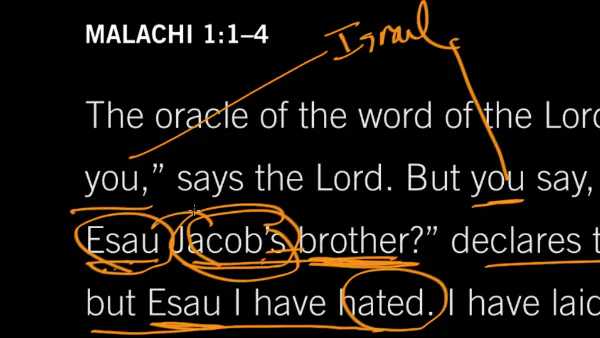
Romans 9:9–13, Part 3: The Mystery of Election
What did it mean for God to “love” Jacob and “hate” Esau, even before they were born? How can God elect some and still be good? In this lab, John Piper narrows in on the question of election, and why it’s good news for those who will believe.

Romans 9:9–13, Part 2: Why God Chooses Whom He Chooses
God’s electing love is one of the most challenging realities in the Bible. In this lab, John Piper digs down underneath the doctrine of election to try and understand why God chooses who he chooses. How do the true sons and daughters of God become his children?

Romans 9:9–13, Part 1: Jacob I Loved, But Esau I Hated
In Romans 9, Paul wants to show us why we should believe in God’s unconditional election. Isaac and Ishmael were examples in the previous verses, and now Jacob and Esau are presented as better examples. In this lab, John Piper highlights the similarities and differences between these brothers.

Romans 9:6–8 : God’s Promises Never Fail
God made massive promises to Israel, but much of Israel has rejected the Christ. How, then, can we trust the promises of God to us today? In this lab, John Piper looks at promises God made to Israel in the Old Testament, how they are being fulfilled, and the implications for us.

Romans 9:1–5, Part 3: Chosen by God, Cut Off from Christ
The crisis in the first verses of Romans 9 is the unbelief of Israel, God’s chosen people. How can we trust God’s promises to us, if his promises to Israel did not come true? In this lab, John Piper wrestles with the tragedy of Israel turning away from God after everything they have been given.

Romans 9:1–5, Part 2: Unending Joy and Unceasing Anguish
The Christian life is an undeniably hard, yet gloriously satisfying life. How is it that we can be unbelievably heartbroken over the lost in our lives and unshakably happy in the promises of God all at the same time? In this lab, John Piper digs at the root of this emotional mystery.
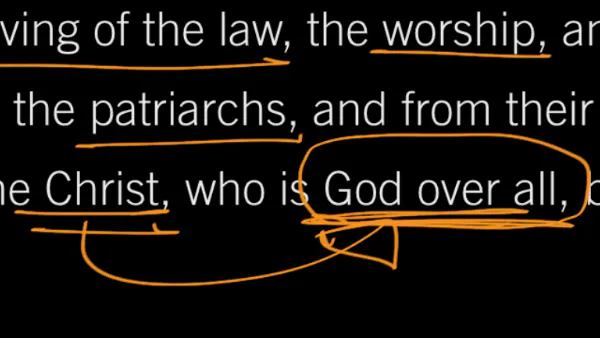
The Word of God Has Not Failed: Romans 9:1–5, Part 1
Romans 9 potentially creates a massive problem for the glorious promises of Romans 8. In this lab, John Piper begins a series through this difficult, but critical chapter by explaining the crisis of unbelieving Israel and the sure hope of the new people of God in the word of God.

Philippians 4:19–20: God Will Supply Your Every Need
God exalts himself by serving us, not by having us serve him, and that sets him apart from all the gods. In this lab, John Piper shows why we should never think we have served God as though he needed anything. He ends by asking if we can serve God at all.

Psalm 50:8–15: God Does Not Need You
Why did God make human beings? Was it because he needed something that he didn’t already have? This series of labs asks what sets our God apart from all others. In this lab, John Piper asks how we can ever repay God for all he’s done for us.

Isaiah 55:6–9: God Will Abundantly Pardon
The God of the Bible is not like any god of any other religion. This series of labs asks what sets our God apart from all the alternatives. In this lab, John Piper looks at the beauty of an infinitely high and holy God stooping to forgive and receive sinners like us.

Isaiah 64:1–4; 46:1–4: God Works for Those Who Wait
The Bible says several times that our God is utterly unique among all the gods in the world and in history. But what makes him so unique? In this lab, John Piper begins a series looking at key texts for understanding why there is no god like our God.

Romans 1:18–23: What Can Be Known About God
The Bible says that the whole world already knows God, but also says that much of the world does not know him. How does someone know him, and yet not know him? In this lab, John Piper explores this difficult, but critical tension and commissions us into the world to speak the gospel.

Matthew 6:24–34, Part 3: Your Father Knows What You Need
God wants to comfort and stabilize the anxious with truth. What truths calm our fears? In Part 1, John Piper identified nine arguments against our anxieties. In Part 2, he covered the first five. In this lab, he covers the last four, and highlights six lessons for Bible reading.

Matthew 6:24–34, Part 2: Do Not Be Anxious About Tomorrow
When you think about the future, what makes you most anxious? Jesus gives us plenty of reasons not to fear. In Part 1 of this series, John Piper identified nine arguments against our anxieties. In this lab, he slows down over the first five to highlight how they each help us.

Matthew 6:24–34, Part 1: Nine Arguments Against Anxiety
This three-part series of labs takes on anxiety by studying Matthew 6:24–34. If the Bible is going to effectively speak to our anxious hearts, we need to learn how to read it well. In this lab, John Piper lays out the arguments and gives three short lessons for our daily Bible reading.
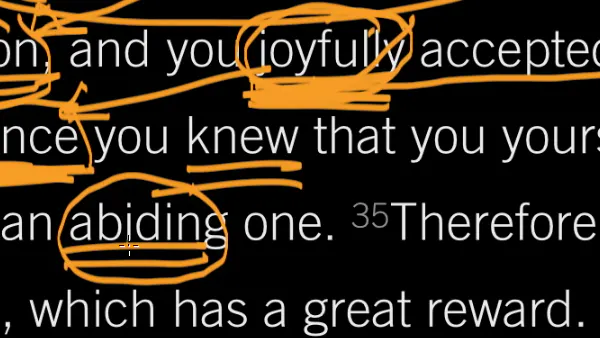
Hebrews 10:32–35: A Better and Abiding Possession
The gospel shines most brightly when Christians rejoice in the midst of really painful, even unjust suffering. In this lab, John Piper looks at Hebrews 10 to understand how we cultivate the kind of joy that can endure anything and that frees us to love and serve radically.

Romans 12:19–20: Vengeance Is Mine
We all have been sinned against, in large or small ways. The Bible calls us not to avenge ourselves, but to entrust the pain and offense to God, who judges justly. In this lab, John Piper reminds us of the promise that God will repay every wrong ever committed against us.
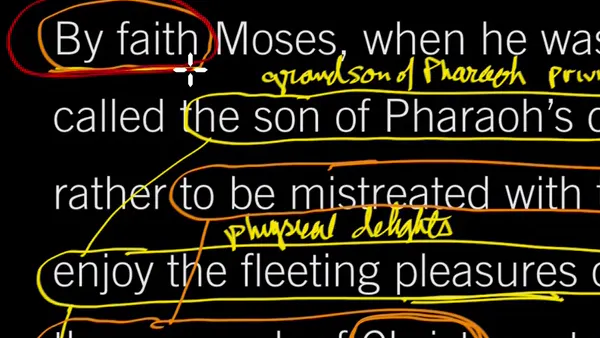
Hebrews 11:24–26: The Fleeting Pleasures of Sin
Hebrews 11 calls us to look to God’s people who have gone before us to learn how to walk by faith. In this lab, John Piper highlights the life of Moses, who preferred the reward he had with God more than all the riches of Egypt.
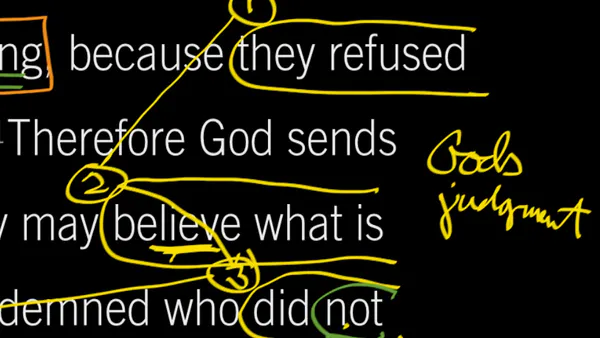
2 Thessalonians 2:9–12: They Refused to Love the Truth
The Bible is clear that people are perishing in rebellion against God. One of the most important questions we can ask is why people perish, and how we can avoid that fate. In this lab, John Piper looks at the relationship between what we believe and what we love in determining our eternal destiny.

Luke 12:32–34, Part 2: Seek the Treasure That Will Not Fail
“Where your treasure is, there will your heart be also.” What we treasure has massive implications for the health and security of our hearts. In this lab, John Piper explains why treasure in heaven will satisfy us more than any other, and shows us the pathway to more of the joy found in Jesus.

Luke 12:32–34, Part 1: Sell the Treasure That Will Not Last
Many people are afraid to give because they’re afraid they won’t have enough themselves or that they’ll miss out on something in the future. In this lab, John Piper highlights the liberating promise that God is a providing shepherd, father, and king. Therefore, we can give freely and generously.

2 Corinthians 4:4–6: The Light of the Gospel of the Glory of Christ
What happened when you were saved? While Satan did everything he could to blind you to the beauty of Jesus Christ, God broke through in marvelous light, and you saw, and you believed. In this lab, John Piper highlights critical parallels between two key verses to explain the miracle of conversion.

Matthew 22:15–21: Render to Caesar
Watch Now
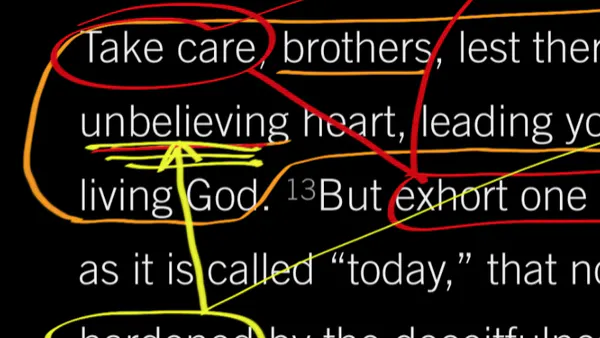
Hebrews 3:12–14, Part 2: Exhort One Another Every Day
God has appointed other believers as one of the primary means of our perseverance. In this lab, John Piper explains how sin wages war against our souls, and how God equips us with weapons for the battle. We will see that this fight is not one we should fight alone.

Hebrews 3:12–14, Part 1: Take Care, Brothers
When you come across an if/then statement, restate the condition and study the implications. For instance, can someone who has truly been saved fall away from the faith? John Piper answers in this lab.

Romans 8: The Big Picture
John Piper has completed thirty labs working verse-by-verse through Romans 8. In this last lab, he sums up all that we have learned and explains how the highest points relate to each other. We need to be regularly stepping back in our Bible reading to see the bigger picture.

Romans 8:38–39: Nothing Can Separate Us from God’s Love
Romans 8 lands on the note of God’s unstoppable, unshakeable love for us in Christ. Nothing — however dark or hard — can separate us from him. In this lab, John Piper reveals the love of God for us, and calls us all to love one another in response to this great love.

Romans 8:35–37: We Are More Than Conquerors
We learn a lot about the Bible when the Bible quotes itself. In this lab, John Piper looks at Paul’s use of Psalm 44 to see how we are more than conquerors in all our suffering. Understanding God’s love for us in Christ completely changes how we think about hard things in this life.

Romans 8:33–34 : It Is God Who Justifies
Satan is an accuser (Revelation 12:10), but Jesus disarmed him at the cross. In this lab, John Piper explains how the work of Christ wars against and defeats Satan’s schemes to accuse and condemn us. Are you able to wield the sword of Paul’s promises against the evil one?

Romans 8:31–32: Who Can Be Against Us?
God is for you, and therefore no one can defeat you. God gave his Son, so he will most definitely give you all things. This lab looks at a couple powerful rhetorical questions. John Piper searches the truths behind Paul’s questions to find massive rocks under the Christian’s life.

Romans 8:30: Predestined, Called, Justified, Glorified
A promise as mind-blowing as Romans 8:28 needs massive faith-sustaining truth underneath it. Romans 8:30 lays out a process in which God exalts Christ by bringing ungodly people to glory. In this lab, John Piper offers assurance in God’s invincible plan of salvation.

Romans 8:29: Conformed to the Image of Christ
God’s purpose in creation and redemption is to have a family of children conformed to the image of his Son. But how does that happen in me? In this lab, Pastor John explains the ways in which we are made like Jesus

Romans 8:29: Foreknown by God
The phrase “foreknown by God” has caused significant controversy and conflict within Christianity. Did God simply know ahead of time that we would believe, or did he choose who would believe? In this lab, John Piper explains as he tackles the next verse in Romans 8.

Romans 8:28, Part 3: Called According to God’s Purpose
When God calls a man or woman, what happens? In this lab, the third of three labs focused on Romans 8:28, John Piper draws in several other verses to try and understand the call of God. He explains why those who love God should rest secure in his sovereign care.