
Living the Tao-A Spiritual Podcast
125 episodes — Page 1 of 3
Shorts | The Future Is Already Visible—If You Know How to Look
The Map Is Not Reality
Trailer | The Fall's Power of Transformation
Shorts | What are You Without the Voice in Your Head?
Trailer | The Fractured Self
Trailer | Watching, Blessing, Living
Shorts | Karma: No Consequence, No Power
The 4 Spheres, Camelot and an Old Shirt
Trailer | AMA- What Makes Something Real?
Shorts | The Future Has Already Happened
Trailer | Method of Happy Living
Trailer | The Headless Text
Shorts | Your Karma Can Make Karma for You
Domo Arigato, Mister Roboto? — Is AI the Problem, or Are We?
Trailer | Exploring the Energy Body
Shorts | Tai Chi vs. Qigong: Build Power Without Breaking Your Body
Trailer | The Legend of Huang Di and the Dragon
Trailer | Lessons From the Swimmer and Water
Shorts | You Can Have Energy and Still Be Powerless
Trailer | Money See, Monkey Do
Laozi, Utopia, and the Double Donkey Salute
Shorts | Don’t Fight the Storm. Sink Beneath It
Trailer | Exploring the Tao Sphere
Trailer | I Ching Hexagrams: Pushing Upward and Increase
Shorts | The World Before Social Mind (When Magic Still Worked)
Trailer | What is Death?
What Meditation Really Is (And Why It Might Not Be Worth It)
Shorts | Shocks Add Up Like Concussions (Here’s Why)
Trailer | The Moon and the Toad
Trailer | The Sun and the Crow
Shorts | Did Ancient Daoists Discover Keto First?
Trailer | Your Personal Bedrock, Your Personal Gifts
Trailer | Feathers, Thunder, and Liberation
Manifestation in Taoism: Why Invocation — Not Desire — Shapes Reality
Shorts | Consistency Won’t Make You Successful—Here’s What Will!
Trailer | Wangziqiao and the Crane
Trailer | Power of Waiting: Hexagrams 5 and 12
Shorts | Why You Don’t See Spirits, Demons, or Dragons (And Taoists Say You Can)
Trailer | Exploring the Qi Sphere

Trailer | The Turtle as an Organizing Force
trailerIn this subscriber-only episode (1-174), Taoist Master Mikel Steenrod explores the turtle as an organizing force within Taoist thought. Beginning with a classic teaching story of a turtle withdrawing beneath a storm, the discussion expands into the turtle’s deeper symbolic and practical roles across Taoist tradition. The episode examines how the turtle shell became an early tool for extracting order from chaos through divination practices that predate the I Ching, and how its structured form influenced cosmological thinking. Mikel also discusses the ancient Daoist board game Liubo, modeled after the turtle’s undershell, which functioned as both entertainment and a symbolic map for understanding movement through the universe. The turtle’s association with longevity, containment, and the preservation of qi is explored, along with its comparison to jade as a storage medium for essence. The discussion then connects these ideas to Taoist cosmology, including the emergence of differentiation from chaos and the need for ordering devices to understand reality. This episode presents the turtle as a model for survival, perception, and energetic containment, offering a practical and symbolic framework for navigating chaos while preserving vitality. Full episode available to subscribers, along with AMA access, commentary, and community discussion. 🎧 Listen to the full subscriber episode on supercast. Subscribe now at https://living-the-tao.supercast.com

S2 Ep 19Shorts | Even a Rock Has Free Will (So Why Don’t You?)
bonusFree will is usually treated as a human question — do we have it, or are we determined? In this Living the Tao Short, the discussion moves in a different direction entirely. Starting from a Taoist premise that everything is Dao, the conversation explores what that means for equality, change, and the nature of choice. If the Dao neither favors nor disfavors anything, then how does anything happen? The answer leads to a surprising conclusion: choice is the mechanism of change, and choice exists everywhere — not just in human thought. Along the way, this short episode challenges several assumptions: That humans primarily choose through rational thinking That free will belongs only to conscious beings That having free will means unlimited options That change comes from intellect rather than energy Instead, choice is framed as an energetic process expressed differently across all things. Humans experience it one way, but the same principle applies universally. Even a rock, in its own way, may be exercising choice. A brief conversation designed for reflection. 🌐 Explore more Taoist teachings: https://www.the-taoism-for-modern-world.com 🎧 Listen to more Living the Tao Shorts & full episodes: https://podcast.the-taoism-for-modern-world.com Access the video form of the episode here: https://youtu.be/-eeaty6QARM Intro music: “Finding Movement” by Kevin MacLeod — licensed under a Creative Commons Attribution 4.0 International License. Source: incompetech.com

S1 Ep 173The Lie of Separation: Why You Already Belong to the Dao
What if the feeling that you’re separate… isn’t real? In this episode of Living the Tao, Taoist Master Mikel Steenrod and Morgan explore one of the most powerful illusions shaping modern life—the belief that we are disconnected from nature, from reality, and from the Dao itself. At the center of this discussion is the concept of the social mind—a framework that creates identity, belonging, and meaning, but also introduces a false sense of separation. As it grows stronger, our natural connection to reality becomes harder to perceive. This episode explores: Why we feel separate from the world around us How the social mind creates and reinforces that illusion The connection between belonging, love, and identity Why systems of power often depend on separation A striking historical example showing how belief can shift under pressure Why Taoism has long been seen as a disruptive or “dangerous” philosophy At its core, this conversation points to a simple truth: You already belong. You always have. You don’t need to earn connection to the Dao—you only need to stop believing that you’re separate from it. Video episode is available on youtube here: https://youtu.be/iDRZ30EQ65M 🌐 Explore more Taoist teachings: https://www.the-taoism-for-modern-world.com 🎧 Listen to more Living the Tao Shorts & full episodes: https://podcast.the-taoism-for-modern-world.com Access the video form of the episode here: https://youtu.be/RnXn_V9ou2M Intro music: “Finding Movement” by Kevin MacLeod — licensed under a Creative Commons Attribution 4.0 International License. Source: incompetech.com

Trailer | Exploring Humor in Taoism
trailerDoes humor always come from pain? In this upcoming subscriber episode of Living the Tao, we explore a different possibility—one rooted in Taoist thought. Through classical perspective, lived experience, and a story that took nearly a decade to unfold, this episode looks at how humor can arise not from tension or injury, but from clarity. What happens when expectation is interrupted? What happens when illusion is seen for what it is? From the playful behavior of Taoist immortals to a practical joke years in the making, this episode examines humor as a tool—not just for laughter, but for loosening the grip of the social mind. Full episode available to subscribers, along with AMA access, commentary, and community discussion. 🎧 Listen to the full subscriber episode on supercast. Subscribe now at https://living-the-tao.supercast.com

S2 Ep 18Shorts | The Daoist Answer to Life's Purpose
bonusDoes the universe have a specific purpose for your life? In this Living the Tao Shorts episode (2-18), Master Mikel Steenrod and Morgan explore a question often associated with the Buddhist idea of dharma—the belief that each person has a role or destiny within a larger cosmic plan. But does Daoism see life that way? Daoist philosophy offers a surprisingly simple perspective. Human life generally moves in one of two directions: cultivating a reasonably happy and durable life, or exploring the deeper nature of existence itself. The discussion examines why people often feel they should be searching for something more, the hidden trap inside the “meaning of life” question, and why Daoism ultimately places the responsibility for meaning on the individual rather than on the universe. Instead of discovering a predetermined purpose, Daoism suggests something both liberating and challenging: Each person carves their own direction through life. 🌐 Explore more Taoist teachings: https://www.the-taoism-for-modern-world.com 🎧 Listen to more Living the Tao Shorts & full episodes: https://podcast.the-taoism-for-modern-world.com Access the video form of the episode here: https://youtu.be/HsNegtsxJAI Intro music: “Finding Movement” by Kevin MacLeod — licensed under a Creative Commons Attribution 4.0 International License. Source: incompetech.com
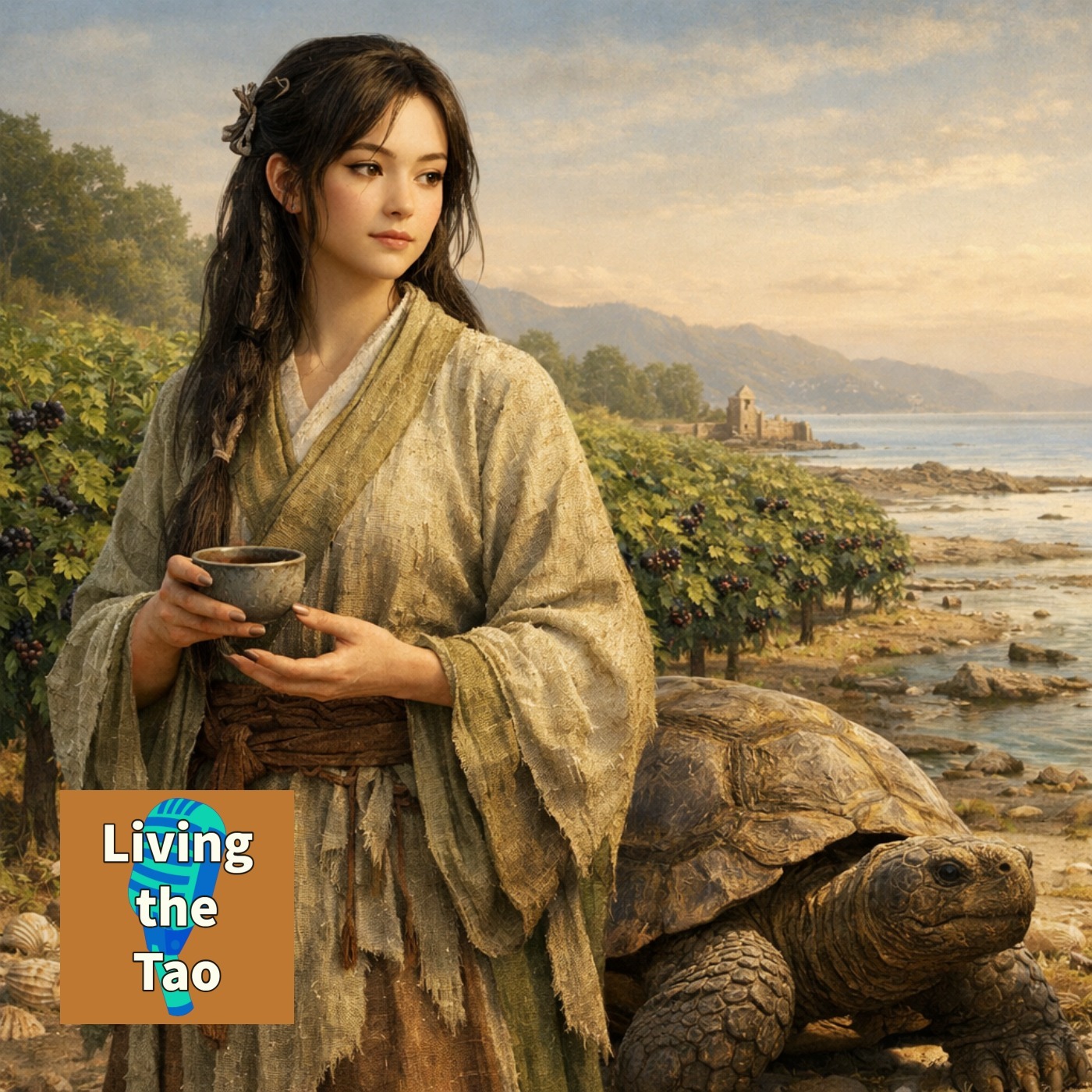
Trailer | The Legend of Magu, The Hemp Immortal
trailerThere is an immortal in Taoist tradition who does not declare her power. She simply states that she has watched the sea turn into land… three times. In this episode (1-171), Master Mikel Steenrod examines the fragmented legend of Magu, one of the oldest known immortals in Taoist tradition, and what her story reveals about early Taoist practice, shamanic origins, and the true nature of immortality. This trailer introduces a deeper exploration into: The meaning behind Magu’s reference to geological transformation Why she is known as the “Hemp Immortal” and what that signals about early civilization The role of immortal banquets and the symbolic use of “wine” as elixir The presence of female immortals in early Taoist tradition—and how that changed over time This is not simply a myth. It is a fragment of a much older system—one that predates philosophy and reflects Taoism as it was originally practiced. 🎧 Listen to the full subscriber episode on supercast. Subscribe now at https://living-the-tao.supercast.com
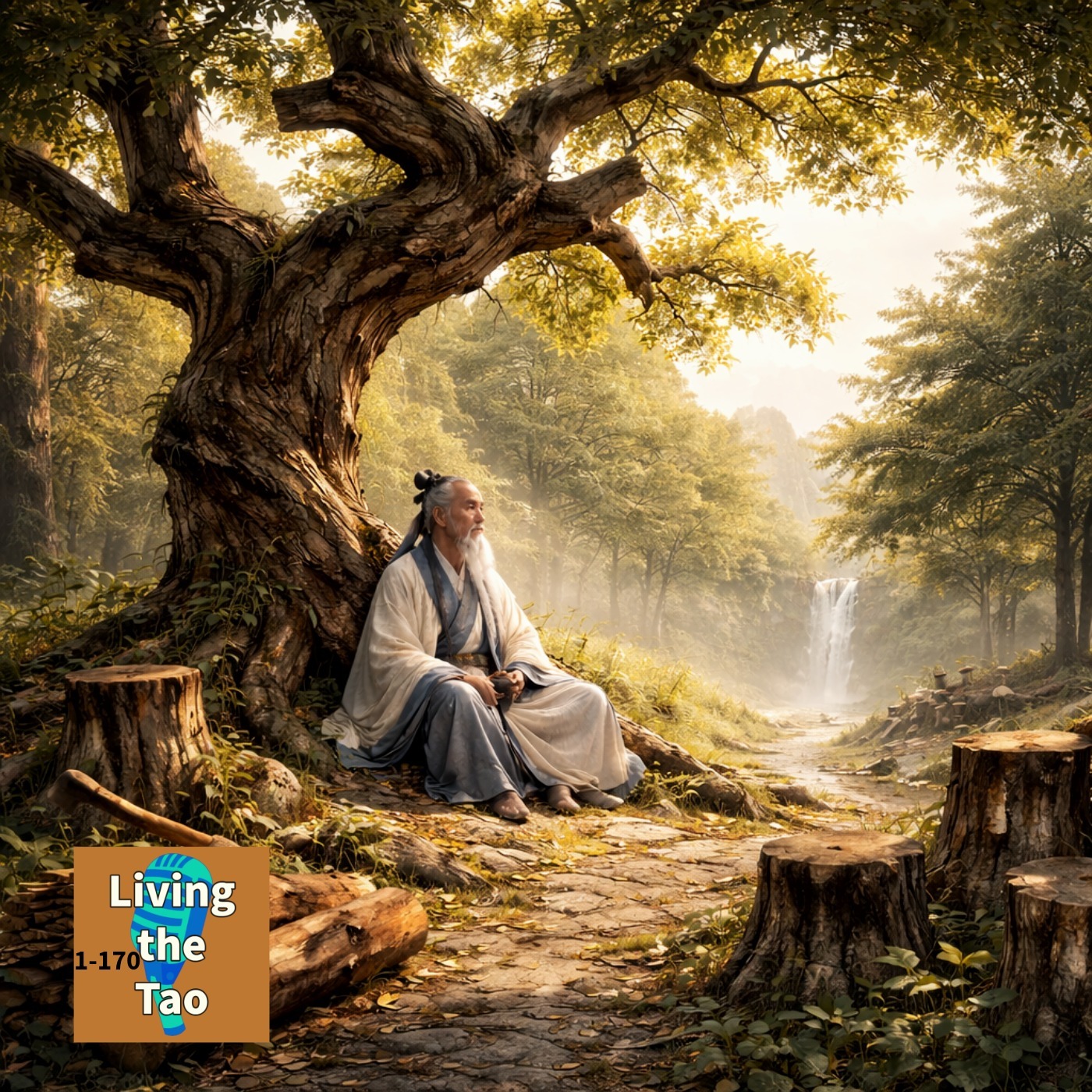
Trailer | Part of One or Part of Many
trailerIs it better to become highly specialized… or to remain adaptable? Modern society often pushes us toward specialization. We are encouraged to develop a narrow skill, become highly useful, and build our lives around productivity. But Taoist philosophy has long offered a different perspective. In this episode of Living the Tao (1-170), Master Mikel Steenrod explores an ancient debate that mirrors a surprisingly modern question: the tension between specialization and adaptability. Beginning with a simple evolutionary example of specialist and generalist species, the discussion moves into classical Taoist ideas drawn from the Zhuangzi, including the story of Ding the Butcher and the famous warning of the “useless tree.” These teachings challenge the assumption that usefulness alone defines value. Through this exploration, the episode examines how Confucian and Taoist thinkers approached the role of individuals within society—and why Taoist philosophy ultimately emphasizes balance rather than rigid answers. At different times in life, we may need the discipline of specialization. At other times, we need the freedom and adaptability of the generalist. The real skill lies in knowing when to turn the dial. Listen to the trailer for Episode 170 — Part of One or Part of Many. Join the community to unlock full access to this episode and the complete archive. 🔒 Full episode available on Supercast. Subscribe now at https://living-the-tao.supercast.com

S2 Ep 17Shorts | Dreams vs Taoist Vision
bonusAre dreams the same thing as spiritual vision? In this episode of Living the Tao Shorts (2-17), Taoist Master Mikel Steenrod and Morgan explore the important difference between dreams and Taoist Vision—two experiences that are often confused but arise from very different processes. Dreams largely reflect subconscious activity and mental processing. Taoist Vision, however, emerges through meditation and appears at the boundary between sleep and wakefulness. In this threshold state, perception begins to change and the internal world starts to overlap with the external world. The conversation explores why Vision requires accumulated Qi, why many practitioners experience only brief flashes of it, and why proper training and timing matter in Taoist internal practice. Using vivid metaphors and practical explanations, this short episode offers a glimpse into one of the more advanced concepts within Taoist meditation and perception training. 🌐 Explore more Taoist teachings: https://www.the-taoism-for-modern-world.com 🎧 Listen to more Living the Tao Shorts & full episodes: https://podcast.the-taoism-for-modern-world.com Access the video form of the episode here: https://youtu.be/bpA-hDlZAko Intro music: “Finding Movement” by Kevin MacLeod — licensed under a Creative Commons Attribution 4.0 International License. Source: incompetech.com
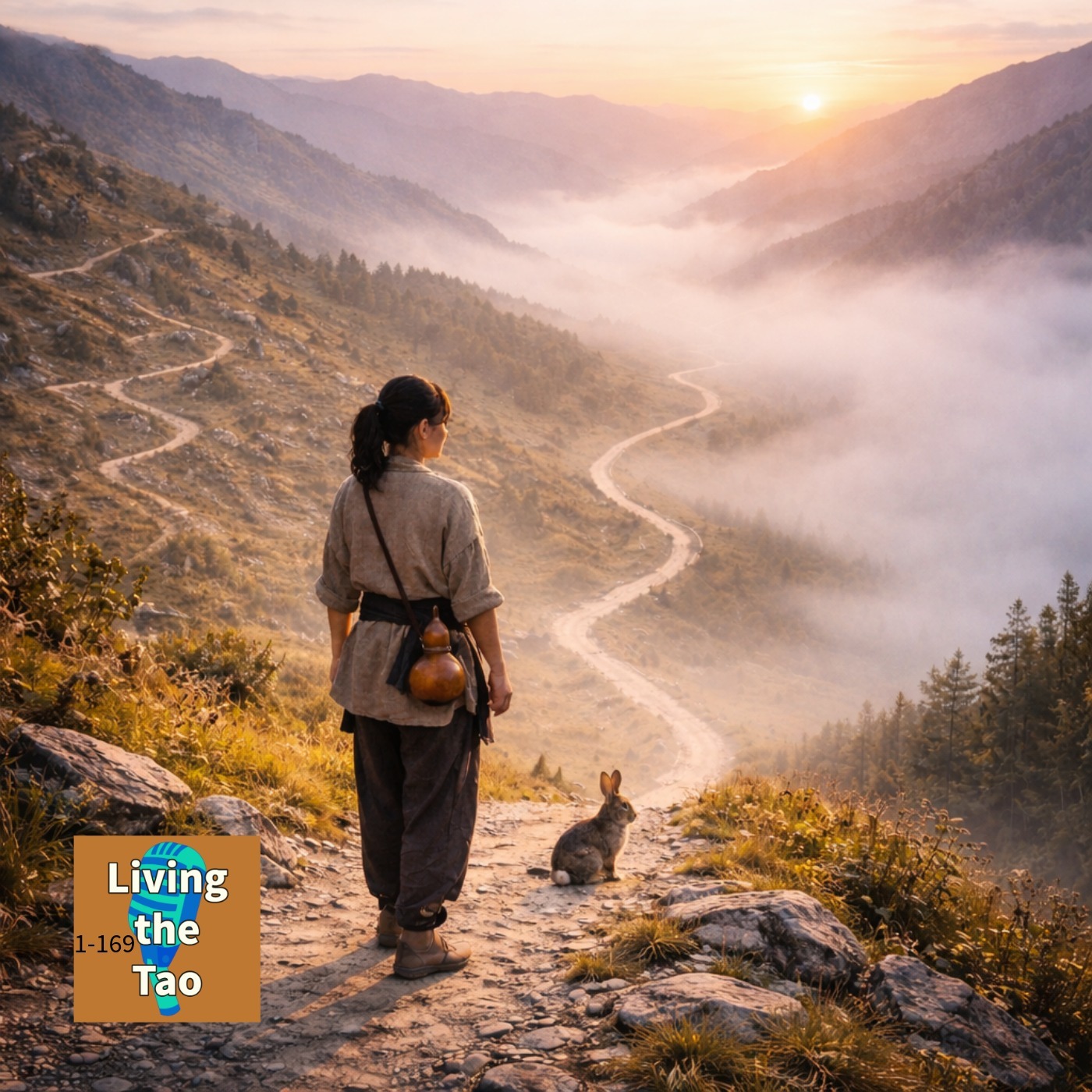
S1 Ep 169Acceptance is Not Surrender
Acceptance is often misunderstood. Many people believe it means giving up, surrendering, or resigning themselves to circumstances they cannot change. In reality, acceptance is something very different. In this episode (1-169) of Living the Tao, Taoist Master Mikel Steenrod and Morgan explore what acceptance really means and why it plays such an important role in both everyday life and deeper spiritual practice. Humans are not purely present-moment creatures. We carry our past experiences with us and constantly project expectations into the future. When those projections fail—when reality does not behave the way we expect—it often creates anxiety, frustration, or resistance. Acceptance is the ability to respond to reality as it actually exists. Through practical examples—from simple daily frustrations to survival situations and life transitions—the discussion examines why acceptance strengthens resilience and allows people to adapt more effectively to change. The episode also explores how resistance to reality can trap people in patterns that weaken their ability to move forward. Topics discussed include: • Why acceptance is not surrender • How expectations about the future create anxiety • The role of past experience in shaping perception • Why people sometimes struggle to accept success or change • The connection between acceptance and resilience • Acceptance as a foundational Taoist practice Acceptance is not passive. It is a skill that allows a person to respond clearly, adapt quickly, and continue moving forward—even when circumstances are difficult or unexpected. 🌐 Explore more Taoist teachings: https://www.the-taoism-for-modern-world.com 🎧 Listen to more Living the Tao Shorts & full episodes: https://podcast.the-taoism-for-modern-world.com Access the video form of the episode here: https://youtu.be/RnXn_V9ou2M Intro music: “Finding Movement” by Kevin MacLeod — licensed under a Creative Commons Attribution 4.0 International License. Source: incompetech.com
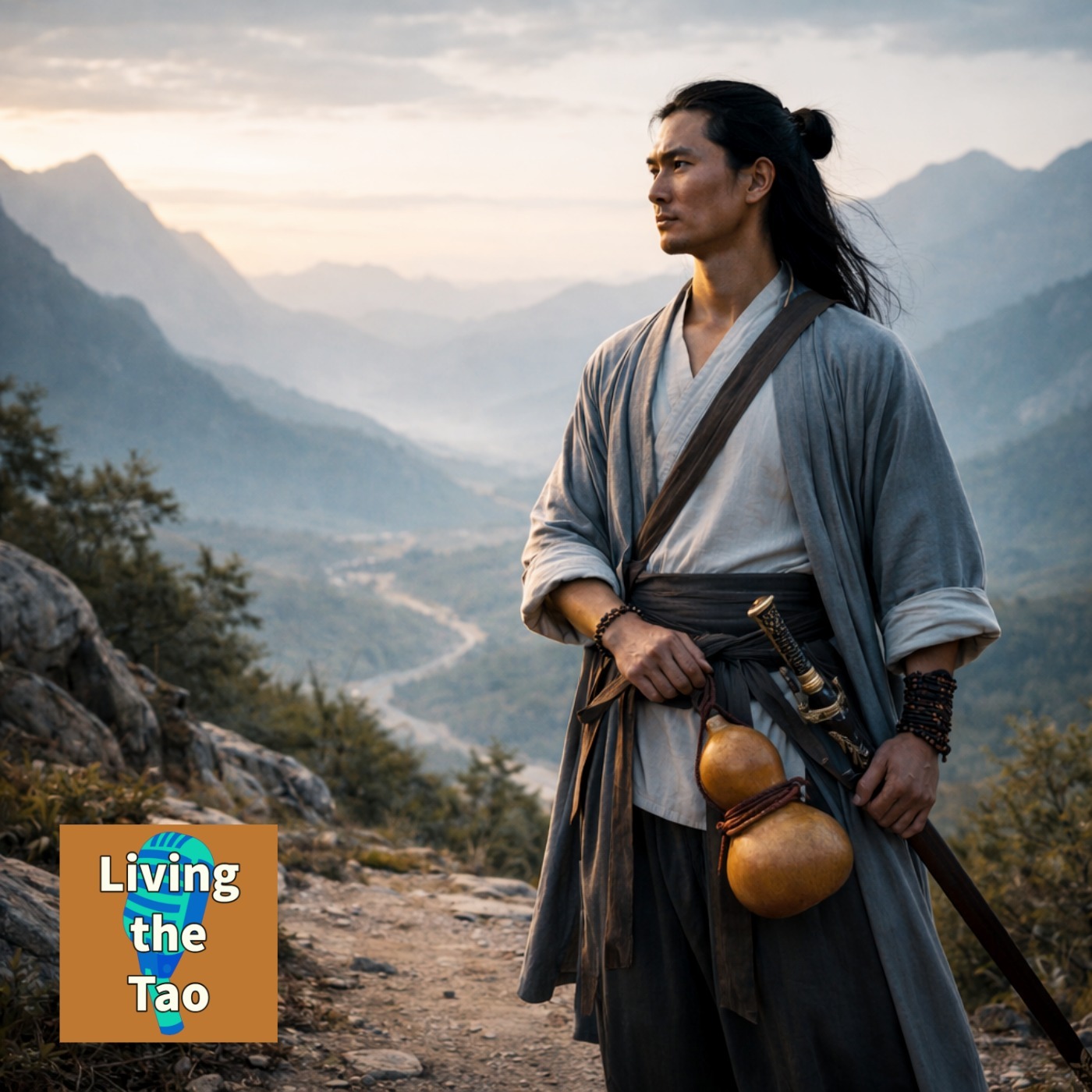
Trailer | Power of the Martial Body Sphere
trailerIn this episode (1-168), Master Mikel Steenrod explores one of the most misunderstood components of the Four Ascendant Tradition model: the Martial Body Sphere. In the ancient world, travel meant risk. Banditry was common. Central authority was distant. Periods of famine and collapse brought about cannibalism. In such an environment, physical capability was not recreational — it was necessary. Why were classical moral figures trained in martial disciplines? What did it mean to be “capable” in unstable eras? And why does Taoism refuse to separate the body from spiritual development? This episode examines how martial training historically functioned as survival infrastructure — and how the development of the body supports liberation rather than distracting from it. “You are your body.” If the body fails, clarity narrows. If health collapses, spiritual work becomes fragile. The Martial Body Sphere reframes strength, vitality, and longevity as foundational elements of the path. Available exclusively to Living the Tao subscribers. Join the community to unlock full access to this episode and the complete archive. 🔒 Full episode available on Supercast. Subscribe now at https://living-the-tao.supercast.com

S2 Ep 16Shorts | Chinese Herbs: Qi Effect or Chemical Effect?
bonusAre Chinese herbs working because of chemistry… or because of Qi? In this episode of Living the Tao Shorts, Daoist Master Mikel Steenrod explores the difference between nutritional value and essence value — and why two foods that look identical on a label may affect your energy very differently. You’ll hear: How Qi is absorbed from both food and environment Why some herbs function biochemically like natural drugs What “essence” means in Taoist herbal theory Why heavily processed foods may leave you energetically depleted A revealing college-era story about calorie intake vs vitality This short bridges classical Taoist herbalism with modern physiology without dismissing either perspective. If you’re interested in Qi cultivation, organic food, energy building, or understanding how Chinese herbs really work, this episode offers a clear and grounded framework. Listen, reflect, and reconsider what you’re actually feeding. Do you want more information on the intersection of nutrition and qi? Try our site here: https://www.watermountainvirtual.com/qi-gong-nutrition/ 🌐 Explore more Taoist teachings: https://www.the-taoism-for-modern-world.com 🎧 Listen to more Living the Tao Shorts & full episodes: https://podcast.the-taoism-for-modern-world.com Access the video form of the episode here: https://youtu.be/O_WQY0zfQHM Intro music: “Finding Movement” by Kevin MacLeod — licensed under a Creative Commons Attribution 4.0 International License. Source: incompetech.com