Life Science Marketing Radio
227 episodes — Page 1 of 5
Bringing Swagger to Ontario Life Sciences
Kris Barnette is a creative powerhouse—the President of All Good Marketing and an adjunct professor at Kent State—who brings a level of “swagger” to life science branding.Kris is focused on turning Ontario, Canada, into a global commercial powerhouse in the life sciences.Ontario has everything a biotech hub needs: world-class infrastructure, elite academic institutions, and incredible talent. However, Kris points out a “commercialization chokehold” that prevents the region from reaching global dominance. The science is often buried under layers of academic jargon and conservative positioning.Kris is tackling this head-on with his upcoming project, The Ontario Life Science Founder Marketing Glow Up. It’s a guide designed to help PhD founders shift their mindset from “poster presentation” to “brand beast”.One of the biggest hurdles for scientist-founders is the “curse of knowledge”. In academia, you’re taught to be conservative with data and open to endless debate. But as Kris explained, once you move from research to a venture, you are no longer just doing science—you are running a business.Marketing isn’t just “mascara” or “bedazzle” you sprinkle on a product once it’s ready for the spotlight. It’s a muscle. It’s about charting a commercial path, building partnerships, and communicating value to three key audiences: investors, partners, and clinicians.We talked about “Demand Gen Without Desperation,” a chapter in his book inspired by his work with Lee Jay Lowenstein at Stellar Scientific. Kris and Lee decided to inject some levity into the brand by creating the “Lab Llamas”—a family of characters like Lana Llama (Customer Service) and Leon Llama (Shipping).While it might seem risky to use comic-book-style flyers in a conservative field, the data backed it up. Market research showed that 90% of customer sentiment was positive because people appreciated the friendliness and approachability. It proves that having a sense of humor doesn’t make you unprofessional; it makes you human.Even for a veteran like Kris, with 30 years of marketing experience, putting yourself out there is hard. He admitted to a “reverse curse of knowledge”—feeling like if he knows something, everyone else must know it too, so why bother posting it on LinkedIn?.But “invisible innovation” is a danger to any business. If your website is a “coming soon” page or your LinkedIn is silent, you’ve already lost. Kris had to overcome his own shyness to launch All Good Marketing in Canada, even navigating the hurdles of finding local talent to get his new site, allgoodmarketing.ca, live.For U.S. companies looking to move north, Kris warns against simply “importing loud marketing”. The Canadian market is more risk-averse and relationship-driven. In Canada, trust is the primary currency; it’s earned slower, but it lasts much longer. His approach combines “Substance, Savvy, and Swagger” to help these companies get noticed without losing that essential human connection.As a final surprise, Kris introduced his “aluminum shepherd,” Gizmo—a robot dog that will serve as his co-host for his upcoming 14-episode audio book podcast.It was a fittingly creative end to the show. While this is the last episode of Life Science Marketing Radio, I am so grateful to the 200+ guests and the thousands of listeners who have joined me on this journey over the last 11 years.Wishing you all the best.Chris This is a public episode. If you would like to discuss this with other subscribers or get access to bonus episodes, visit cclifescience.substack.com
Jeremy Elser - Biology and LLMs Meet in the Lab
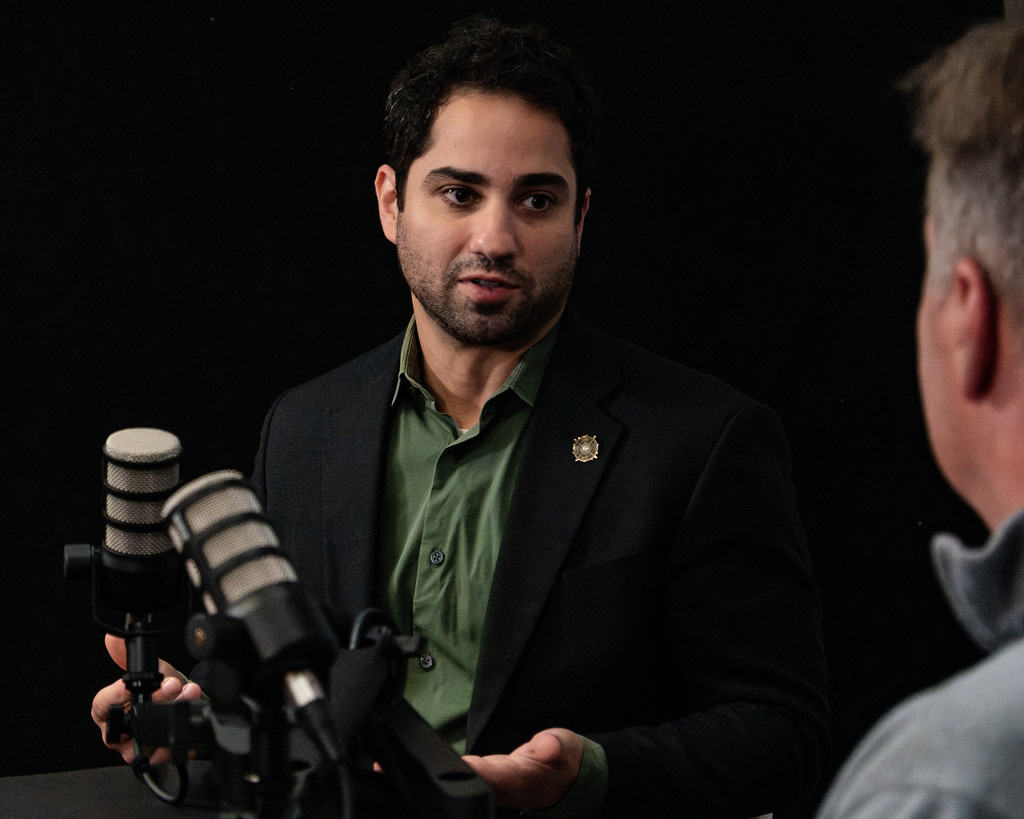
At the Advanced Lateral Flow Conference, I spoke with Jeremy Elser, Head of Science Operations at Palantir and founder of Ship of Theseus, a biotech company tackling longevity and regenerative medicine. The name refers to the Greek thought experiment about replacing every plank on a ship over time, similar to Jeremy’s vision to keep rebuilding the human body, replacing the cellular “planks” so it stays functional indefinitely.He’s focusing on restoring the body’s natural ability to regenerate using resident stem cells. Damage accumulates linearly throughout life, but aging accelerates when our capacity to replace that damage falters. His company aims to “re-up” that regenerative capacity, thus the metaphor of the Ship of Theseus .Jeremy also spoke at the conference about using AI and large language models (LLMs) to break down complex scientific questions into smaller, solvable ones. This conversation was fascinating to me in regards to both the biology and the LLMs, discovering what’s possible with both.Jeremy compared an LLM to an eager intern—smart, well-informed, but needing structure and direction. You can’t just hand it a huge problem like “design a new drug protocol” and expect perfection. But if you break that into smaller, ordered tasks like “find existing injury models,” “suggest positive controls,” “compare published protocols”, the system can produce remarkably intelligent, end-to-end workflows.That approach mirrors how good scientists think. Start with clear purpose, choose the right model for the goal, and use well-established methods when you need confidence or novel ones when you want to show something better. It’s part strategy, part rigor, driven by intention. Using an LLM to see where your FDA submission meets (or doesn’t) guidelines seems a relevant example.With respect to biology, Jeremy’s team applies that rigor to wound-healing research involving Hox genes, a class of master regulators that pattern the body during development. He explained how HoxA3, in particular, seems tailor-made for wound repair. It repolarizes macrophages from their inflammatory “angry” state to a regenerative one, promotes vascular growth, and helps skin cells migrate to close the wound. In his words, it “hits wounds in three different ways.” The same gene that once told your embryo where to put your head or feet can later tell adult cells how to heal. I find this phenomenon somewhat magical and hope to someday learn how that works at a molecular level.On the AI front, Jeremy’s biggest insight was about preserving scientific context. He’s using AI to capture and structure what scientists actually do in the lab so knowledge doesn’t walk out the door when people leave. Instead of asking scientists to fill endless forms, the AI reads what they write, asks clarifying questions, and turns messy notes into structured data. The AI will generate every possible graph or chart based on the data, something most scientists would rather avoid. They can then find the ones that are interesting and discard the rest. Jeremy says, Yeah, that’s my bribe to the scientists ‘cause we enforce a little bit of structure. They have to obey the LLM when it asks for more information. So we try to compensate for that time by doing some of the grunt work that they don’t enjoy doing, like producing a bunch of charts.Fair enough.Jeremy wants AI not just to help scientists think faster but to help us see how it thinks so we can decide what to trust. His view is that LLMs already resemble a kind of brain: opaque, pattern-driven, capable of reasoning, but not always able to explain why. It turns out humans are no different. Jeremy shared an interesting example. You’ll have to listen to the episode for that. Beyond the fascinating biology for me the takeaway (and in line with my own experience so far) is that the usefulness of LLMs goes way beyond answering questions or producing content. As I learned from Jeremy Utley of Stanford, using them as a teammate or collaborator is where the value lies. This is a public episode. If you would like to discuss this with other subscribers or get access to bonus episodes, visit cclifescience.substack.com
ALFC Double Feature - Making Lateral Flow Accessible Everywhere
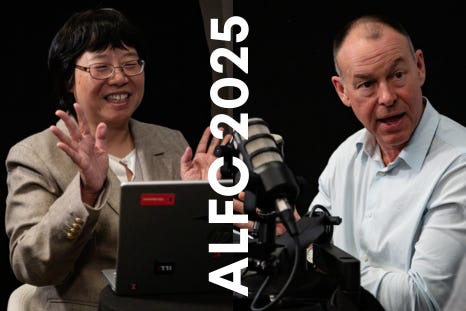
This episode is a double from my visit to the Advanced Lateral Flow Conference. Usability is Innovation: Atomo DiagnosticsAtomo Diagnostics set out more than a decade ago to solve a surprisingly human problem in diagnostics: complexity. Founder John Kelly describes how even the best rapid tests—validated in pristine lab environments—often fail when they reach the real world, where people have no training, and shaky instructions. That gap between laboratory precision and real-world usability has huge implications for reliability, trust, and ultimately regulatory approval.Atomo’s core insight is simple: most errors in point-of-care testing aren’t biological—they’re behavioral. The accessories people use in the field (cheap pipettes, dropper bottles, uncalibrated parts) invite mistakes, and the more steps required, the higher the failure rate. Kelly and his team approached the problem the way a designer might: observe how real users behave, then engineer around human nature instead of fighting it.To validate their approach, they went straight to the source—literally to the community—conducting studies in Africa with low-literacy users who received only picture-based instructions. “If it needs a lot of explanation, it’s probably not obvious,” Kelly notes. The goal: build a device that is self-explanatory and self-correcting.Their solution, the Pascal platform, integrates every accessory needed to run a test—lancet, blood collection, and buffer reagent—directly into one cartridge. Instead of multiple steps and parts, users simply collect, press, and go. Each step is interlocked to prevent mistakes; for instance, the reagent button won’t activate until blood is correctly loaded. It’s engineering that enforces proper sequence, eliminating user doubt and waste.Kelly describes how this design delivers the right volume, in the right order, every time—removing the “what if I did it wrong?” anxiety that undermines confidence in results. It’s the difference between a reliable diagnostic and a false sense of security.Atomo’s HIV self-test—registered with the World Health Organization and distributed across Australia, Europe, and the UK—has demonstrated greater than 99% concordance between trained and untrained users. The company also supports a blood-based pregnancy test (approved in Europe and Brazil) that detects earlier than urine tests, and they’re now developing the world’s first active syphilis test, capable of distinguishing between current and previously treated infections.What’s equally smart is their business model flexibility. Recognizing that many manufacturers already have validated lateral flow cassettes on the market, Atomo developed a “clip-on” usability upgrade that integrates their collection and buffer technology without requiring full retooling or revalidation—a bridge between old workflows and modern design.Beyond infectious disease, Kelly sees growth in at-home wellness and chronic condition monitoring—everything from testosterone and thyroid tests to celiac screening. The platform’s adaptability makes it attractive for home use and clinical trials alike. One example: a pharmaceutical partner using Atomo’s device to monitor liver toxicity in patients remotely, reducing clinic visits from three times a week to “only when needed.” It’s better for patients, cheaper for healthcare systems, and faster for research.The bigger story here is that usability is innovation. Kelly’s approach turns workflow design into a driver of impact. Instead of chasing exotic chemistry, Atomo focused on reliability and trust—two things that ultimately decide whether a test makes it into people’s hands.As diagnostics and healthcare move increasingly into the home, Atomo’s design philosophy feels ahead of its time. If the pandemic taught us anything, it’s that people can and will take responsibility for their health—if we give them tools that make sense.Pitch Competition Finalist: EAZEBIOI also sat down with Ying Chen, founder of EAZEBIO, one of the Innovation Award finalists. Her company’s portable strip-based diagnostic platform combines CRISPR and AI to bring precision health to everyone, especially in low-resource settings.The Problem: Reactive HealthcareYing opens by explaining the fundamental flaw she sees in today’s healthcare system—it’s reactive. We wait for symptoms to become severe before acting. EAZEBIO’s mission is to shift the paradigm toward proactive, precision healthcare, emphasizing early detection and personalized intervention. Her team focuses on diseases often overlooked at the root-cause level—metabolic, autoimmune, and cardiovascular conditions.Their aim is to bridge the gap between scientific breakthroughs and universal access, translating biomarker data into actionable health insights. As Ying puts it, “We hope proactive, personalized care can provide health equity for everyone, no matter where they live.”Ying’s background is a blend of pediatrics, research science, and business—she holds both a PhD a
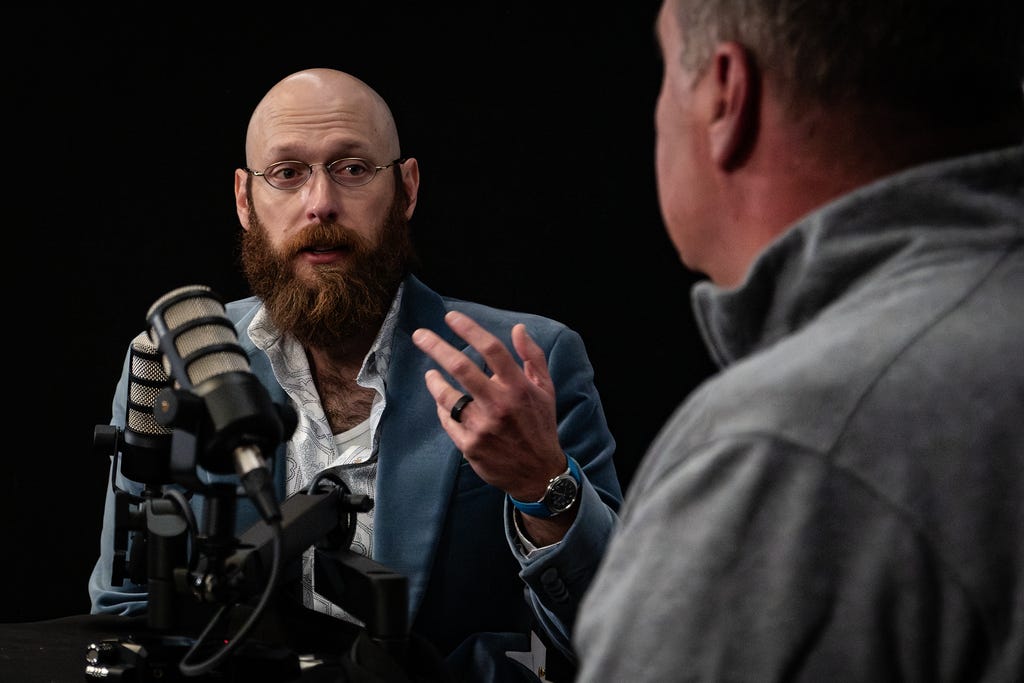
The Art of Protein Engineering
Carter Mitchell, Chief Scientific Officer at Kemp Proteins, brings scientific rigor and an artist’s imagination to the world of protein design and production. In this episode, recorded at the Advanced Lateral Flow Conference, we explore how his company is pushing the boundaries of protein expression, quality, and analysis using tools that merge machine learning, automation, and human creativity.A company reborn through precision and innovationKemp Proteins has deep roots in recombinant protein production, tracing back over 30 years to a company that began with insect-cell expression systems. After a rocky acquisition phase, the company was revived with renewed focus under CEO Mike Keefe, this time with a modern quality management system and new emphasis on antibodies and engineering solutions for diagnostics, therapeutics, and vaccines.Carter, a self described protein nerd, joined around that time, bringing expertise in structural biology, protein engineering, and quantitative analytics and a mission to integrate AI into the company’s core processes.Why insect cells still matterI knew that people used insect cells but I didn’t know why. Mitchell explains how insect cells, long used in protein production, still offer unique advantages. Unlike E. coli, insect cells can perform post-translational modifications, such as glycosylation—key for producing proteins that resemble their natural human counterparts. While mammalian systems like HEK293 have since made expression “paint-by-numbers” simple, Carter notes that insect systems still excel when complexity and authenticity matter. “It’s about having multiple expression capabilities,” he says, “so you can choose the right one for the problem at hand.”Four questions that guide every projectCarter’s approach to solving client challenges starts with four questions:* What is the protein?* What information is available?* What’s the intended use?* What’s the scale?From there, the team tailors both the process and the system to ensure reproducibility and regulatory readiness, whether the goal is a diagnostic reagent or a therapeutic protein. As an aside, manufacturing kilograms of protein still blows my mind.As Carter puts it: “Regulators don’t want to see a smear on an SDS page. We think like regulators, anticipate their questions, and design out variability before it becomes a problem.”From data lake to digital expert: ProtIQThe centerpiece of Carter’s innovation is ProtIQ, an internal expert system that combines structured data, AI models, and domain expertise into a 200–300-page report for every target protein. Initially, these reports were for experts, but Carter’s team is now transforming them into an interactive chatbot interface so anyone on the team can query the data conversationally.“If a technician can ask, ‘What’s the isoelectric point?’ or ‘Does it have a secretory tag?’ and get an immediate answer, they’re empowered,” he says.It’s part of a broader effort to turn technicians into scientists, helping them engage more deeply with data, notice anomalies early, and contribute to process improvement.Predicting protein liabilities before they happenUsing sequence analysis and AI-assisted visualization, Kemp Proteins can predict potential degradation sites or stability issues before production even begins. Carter’s team also models how viral variants like influenza strains might evolve over time, identifying changes in glycosylation patterns that could impact diagnostic binding. “We’re actually collaborating with the FDA on this,” he adds.When science meets artCarter looks at protein structure like art. A lifelong painter and flamenco guitarist, he traces his fascination with structure to his mother’s art studio and his childhood encounters with crystals in Texas soil. That visual mindset drives how he thinks about molecules: “Art flattens multi-dimensional space to describe motion. That’s what we do in AI and machine learning, flattening complexity into something interpretable.” This is a public episode. If you would like to discuss this with other subscribers or get access to bonus episodes, visit cclifescience.substack.com
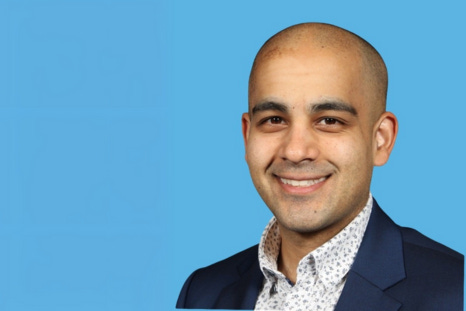
Ep 220The Future of Biotech Marketing is Personality-Driven
Anis Fahandej-Sadi is building two businesses. He is the founder of TLDR Biotech, a daily newsletter that condenses life science news into a quick, skimmable format, and creator of Science 2 Sales, a service designed to help biotech companies accelerate business development. In this conversation, Anis opens up about his career journey, the lessons he’s learned in building content-driven businesses, and his perspective on where life science marketing is heading.The Birth of TLDR BiotechAnis started TLDR Biotech with this idea: build the thing you wish existed. With his background in sales and BD, he saw how overwhelming it was to track 10+ news sources every day just to stay informed. So he created a newsletter that captures the good, the bad, and the ugly (those are literally the categories) in biotech news, sprinkled with memes and GIFs for personality.The format drove strong reactions. Some folks loved the humor, but hated the GIFs. However, strong reactions mean you’re creating something memorable. Strive to make a product where you can say, “It’s not for everybody.” Nevertheless, growth stalled early on, leading Anis to pause the newsletter and retool his approach. Anis shared his struggles around finding product-market fit, admitting he initially took the wrong approach by treating it as a full-time venture too early. He had to find the product that suited him. After a strategic pause in May, he restructured the backend to create content more efficiently while maintaining quality. Now he is focused on organic growth through LinkedIn and expanding into interview content to expand his reach.From Chemistry to Business DevelopmentAfter earning a master’s in chemistry, he taught English in Korea, then pivoted into sales roles for life science companies like Cytiva and OmniaBio. Business development roles are a great fit for scientists who crave variety and human interaction, but the transition isn’t easy. There’s often little formal training, so one has to learn prospecting, discovery calls, and pipeline management on the fly. His advice for scientists considering sales: leverage LinkedIn, embrace continuous learning, and be clear on why you want to leave the lab.Science to Sales: A New Kind of BD SupportHis current venture, Science to Sales, tackles the pain of BD reps spending too much time on cold outreach instead of moving real deals forward. His team takes on prospecting, cold emails, LinkedIn outreach, and calls, so client BD teams can focus on high-value work. The approach begins with deep research into the client’s ideal customer profile, growth goals, and messaging. But the most interesting angle is pairing outbound prospecting with executive-driven LinkedIn content. The platform is evolving beyond corporate messaging to more authentic, personal storytelling.Why LinkedIn Needs PersonalityThe old model of corporate-only content is dead. The future is personality-driven, with executives and BD reps building authentic, active profiles. He points to examples like Steve Harvey of Camena Biosciences and Philippe Baaske at NanoTemper as models for how thought leadership and “building in public” can humanize companies and create inbound traction. As a clear signal of where the market is going, even companies like PayPal are hiring full-time staff to manage CEO content.Short-form video and personality-driven LinkedIn posts are no longer optional. They’re becoming essential. And while it’s not easy (Anis admits to his own hesitations about video), the payoff is familiarity that turns cold calls into warm conversations.Your deepest insights are your best branding. I’d love to help you share them. Chat with me about custom content for your life science brand. Or visit my website. This is a public episode. If you would like to discuss this with other subscribers or get access to bonus episodes, visit cclifescience.substack.com
How Founders Build Trust - A Lesson from Spiderman
Tino Chow’s career spans three worlds—military operations in Singapore, industrial design at Rhode Island School of Design, and entrepreneurship. That mix has shaped his work at Giant Shoulders, where he helps challenger brands in medtech, venture capital, and startups bring innovations to market.It takes more than a great product and strong marketing. Without a sustainable business model, impact fades. For startups, the challenge is bigger. You’re new, unproven, and likely challenging the status quo. Your first hurdle isn’t your tech, it’s earning trust.Tino’s biggest lesson after coaching 350+ founders: in addition to selling your innovation, you’re selling yourself. Investors and partners must decide if they can trust you before they ever dig into the data. That’s where the “superhero origin story” comes in. Peter Parker didn’t become Spiderman when the spider bit him. He became a superhero only after he discovered how to use his new powers for good. He found his purpose. Founders who can share that moment connect on a human level and settle what Tino calls the “lizard brain”, the audience’s instinctive fight-or-flight filter. Purpose is what will convince an investor that you’ll stick with the business when things get tough. (And they will).It reminded me of a famous psychology study where people asked to cut in line at a copy machine. When they gave a reason — even something obvious like “because I need to make copies” — people were far more likely to let them in. The reason didn’t have to be good, it just had to exist. Now imagine what your origin story can do when it’s actually rooted in purpose. It gives people a reason to believe in you before they’ve even looked at your numbers. Superhero tip: Always use your powers for good.He draws on his military experience to explain why creativity and discipline aren’t opposites. In elite teams, strict process frees you to improvise under pressure—just like in music, where mastery of fundamentals enables jazz improvisation. For startups, that process-driven creativity is what builds lasting brands.Many technical founders resist storytelling, assuming data will speak for itself. But as Tino points out, ten people can look at the same numbers and draw ten conclusions. Without a clear narrative, your audience may misinterpret the story your data tells. Once founders see this, they start to value narrative control—and they often see fundraising improve.The episode is full of practical takeaways:* Lead with why you care, not how your tech works.* Control the narrative so your data supports your story.* Challenge yourself to ask “naïve” questions—they can lead to surprising insights.* Trust-building begins the moment you open your mouth. Make it count.Your deepest insights are your best branding. I’d love to help you share them. Chat with me about custom content for your life science brand. Or visit my website. This is a public episode. If you would like to discuss this with other subscribers or get access to bonus episodes, visit cclifescience.substack.com
From "None" to One: Tiffany Payne on Marketing, Courage, and Doing the Right Thing
Tiffany Payne recently attended the American Society of Mass Spectrometry meeting—just two weeks after being laid off—and received a badge with "NONE" printed in giant letters under “Company.”She could only laugh to keep from crying. It’s sometimes hard to separate our job from our identity. Tiffany turned it into a conversation starter: “I’m the CEO of None Industries—offering nothing to no one, anywhere.” Humor not only helped her deal with the sting of unemployment but also opened doors to conversations with peers at the event who had faced the same experience. Her badge was now a symbol of honesty and resilience.Here is Tiffany’s perspective: Layoffs are hard, but the fear of being laid off can be even worse. Once you’re on the other side of it, you have control again—you can decide what you value, what work means, and how you want to show up in the world. For Tiffany, this led to founding Veris Marketing, rooted in clarity about what marketing really is.Defining MarketingTiffany’s definition of marketing is far from the “Mad Men” clichés of catchy slogans and glossy brochures.“Marketing isn’t about convincing people to buy something they don’t need. It’s about understanding their real problems and matching them with the right solution.”She shared a story about working with a lab that developed a faster drug test. Instead of focusing on technical specs, she framed the story around the human stakes: the child protective services administrator choosing between a lab that returns results in weeks versus one that can respond in days. If you are a child in a home with someone abusing drugs, that matters. Good marketing starts with empathy and storytelling.On Being an UpstanderTiffany is also vocal about values. She celebrates companies that stay committed to diversity, equity, and inclusion (DEI), even when it’s not mandated or trendy, calling them “upstanders.” Inspired by her daughter’s experience at San Francisco Pride, she encourages companies to lead with integrity, not fear.“If you drop your DEI policy when the pressure is off, what does that say about what you really believe?”I tend to agree. You can choose to have a policy or not, but the companies that dropped their initiatives as soon as it became convenient revealed something about themselves.Advice for Job SeekersTiffany has heard some people advising some job seekers to “hide” their age, gender, or identity on resumes. While it’s certainly understandable in the current environment, she says:“If you have to hide who you are to get the job, is that the place you really want to work?”In addition, do we want to give more power to the companies that are doing that?I appreciate Tiffany’s vision for the world. She is passionate about building alternative paths—small, connected businesses that can thrive without relying on corporate gatekeepers.“Imagine creating a company where you get to pick all your coworkers. That’s the dream.”If you or someone you know has been dealing with the struggles of unemployment, this episode is worth listening to and sharing.Your deepest insights are your best branding. I’d love to help you share them. Chat with me about custom content for your life science brand. Or visit my website. This is a public episode. If you would like to discuss this with other subscribers or get access to bonus episodes, visit cclifescience.substack.com
Disruptive Products Require a Different Sales Process
When you're selling something truly new, you're not just fighting for market share – you're fighting to create a market that doesn't exist yet. A big part of that battle is figuring out your sales process. Chris Morrison from ViaVerus and Brian Jamieson from Diagnostic Biochips shared their experience on this week’s episode.Chris Morrison introduced the "innovation death spiral." It goes like this: A startup gets early validation from one big customer. They get excited (who wouldn’t?) and build their entire go-to-market strategy around that single success. Then... silence. The market doesn't respond as expected, so they double down on their approach, burning through resources until there's nothing left.This pattern is particularly dangerous because that first success feels so validating. As Chris put it, finding one customer isn't a repeatable process, which is what is needed for long-term success.Diagnostic Biochips provides an example of navigating these treacherous waters. They've developed technology that can read the "ones and zeros" of brain activity. If you want to learn more about the science, make sure you listen to the full recording. It's cool stuff that could revolutionize how we understand and treat conditions like Alzheimer's, schizophrenia, and epilepsy.If you aren’t subscribed, now might be a good time…But here's the catch: When you're that innovative, your biggest challenge isn't competition – it's teaching the market what's even possible.The Discovery-Based Sales ProcessTraditional sales processes are execution-based: You have historical data, known customer needs, and established patterns to follow. But what do you do when none of that exists?Morrison and Jamieson's approach reveals a framework that any tech startup can learn from:Instead of assuming they knew their market, they tested their initial assumption about big pharma being their primary customer. When that didn't pan out, they pivoted quickly rather than forcing a fit.They discovered their sweet spot wasn't with big pharma or pure academic research, but with translational research organizations – the groups that bridge the gap between basic science and practical applications.Rather than trying to educate the market about their technology's potential, they focused on identifying existing problems their technology could solve today.One customer isn't validation – it's an anomaly. And two customers are just two different cases. According to Morrison, for complex B2B sales like Diagnostic Biochips, you need 10-20 customers before you can start seeing genuine patterns emerge in your sales process.Developing a repeatable sales process isn't a single task – it's a series of staged discoveries:* Market Entry Point: Identifying where your technology connects with immediate, funded problems* Messaging: Finding the language that resonates with early adopters* Lead Generation: Developing tactics that consistently bring qualified prospects* Sales Process: Building the steps that convert interest into purchase* Customer Success: Creating the bridge from purchase to satisfied customerYou can't skip steps. You need to complete each stage before moving to the next.Perhaps the most interesting tension revealed in our conversation was what Brian Jamieson called "the funny combination between urgency and patience." Revolutionary technology creates natural urgency – you're sitting on something that could change the world. But rushing the process of finding your market fit can kill even the most promising innovation.I actually thought there was an opportunity to educate the market on the gap between patch-clamp studies and animal behavior. Chris emphasized that startups don't have the luxury of educating markets. Instead, find where your innovation solves an existing, recognized problem.The goal is to find messaging that makes customers pull you toward their problems rather than pushing your solution onto them.As Chris noted, what typically takes three years can be compressed to 18 months with the right approach – but it can't be compressed to three months, no matter how hard you push.Diagnostic Biochips' technology could fundamentally change how we understand and treat brain disorders. But that potential can only be realized if they successfully navigate the path to market. I often wonder how many amazing technologies end up on the scrap heap, not because of science but because of poor timing or strategy.Launching truly disruptive technology is "probably one of, if not the hardest thing to do in business." But with a disciplined approach to discovering your repeatable sales process, it's not impossible. It's a matter of having the wisdom to be patient and the drive to stay urgent while you figure it out.Your deepest insights are your best branding. I’d love to help you share them. Chat with me about custom content for your life science brand. Or visit my website. This is a public episode. If you would like to discuss this with other subscribers or g
From Bicycles to Biotech: Joachim Eeckhout on Creative Content and Building Trust
When Joachim Eeckhout says he started small, he’s not kidding. He and a friend began curating biotech news from a Paris dorm room, eventually launching LaBiotech.eu, a media brand that became a trusted voice in European biotech. What caught my attention is how they learned the landscape: by biking across France with a camera, interviewing CEOs, and turning it into a documentary. That’s how they built credibility and a network from scratch. As a fan of cycling, science and documentary filmmaking, that sounds like a dream job to me. Or me 40 years ago…That kind of storytelling, doing something unexpected and human, creates lasting connections. In our attention economy, Joachim’s approach stands out. He now runs The Science Marketer, helping life science companies do smarter marketing with a voice and personality.Content doesn’t need to be flashy. But it does need to be authentic, consistent, and personal. Joachim suggests starting with what you would actually want to see yourself. That’s how you find your edge or your angle. If you aren’t subscribed, now might be a good time…We dug into the mechanics of content-led growth: how podcasts and newsletters aren’t just media channels—they’re trust-building engines. When someone hears your voice regularly or reads your thoughts in their inbox each week, you go from being a company name to a known entity. Familiarity builds comfort, and comfort builds trust. And unlike a sales call, this kind of content scales. It creates what Joachim calls “a simple funnel”. You share your perspective, your expertise, and a bit of your personality, and over time, people move closer to working with you.Funnels have gotten a bad name lately. Nobody wants to feel like a lead. So how do you build one without turning people off? The goal is to show up with something valuable, consistently, and let the content do the work. This is especially important for founders and CEOs. The ones who are willing to show up, not just to talk about the science, but to let people see who they are, how they think, and what kind of culture they’re building, stand out. Customers don’t just pick a service; they pick a team. The value of good content is letting them get to know yours without pressure.Joachim shares my love of repurposing. Too many companies make a great webinar, record a brilliant interview, or write a strong article and it’s one and done. They move on. But that single piece of content can become the seed for a dozen others. Joachim talked about how he helps clients turn webinars into PDFs, transcripts into blog posts, clips into LinkedIn videos, even media pitches that include actual footage of someone making their point, instead of a generic quote in a press release.We both agree that posting content more than once on the same platform is a mental hurdle more than a real one. Most people won’t see your post the first time. And if they do, they probably won’t remember it. So why not reshare it? Especially if it was good. Posting the same content again weeks or months later isn’t lazy. It’s efficient and effective. Joachim brought up Plasmidsaurus, a company that markets seriously essential biotech services by being obsessed with dinosaurs. It works because it’s memorable, and it doesn’t compromise the quality of the science.The whole conversation was a reminder that in biotech, seriousness doesn’t have to mean boring. Passion, creativity, and a little risk-taking can go a long way in earning trust and growing your brand.Your deepest insights are your best branding. I’d love to help you share them. Chat with me about custom content for your life science brand. Or visit my website. This is a public episode. If you would like to discuss this with other subscribers or get access to bonus episodes, visit cclifescience.substack.com
Get Over Your Worry About Sending Cold Emails
Nick Clare is a co-founder of Succession Bio and co-host of the SalesDNA podcast. I recently spoke to Harrison Wade, the other co-founder here. Nick's journey into sales wasn't a planned career move. It was the result of "fear and desperation," as he put it.Nick was working as a scientist in the lab when his wife was 14 weeks pregnant with their third child. 20 days before Christmas, he was made redundant. Ouch. During his job search, he interviewed with a company where the CEO and CBO offered him two positions - field application scientist or lab manager. Nick, thinking about his growing family and financial needs, asked the most direct question possible: "Which one pays more?" The CBO immediately claimed him for the sales side, recognizing the money motivation that's so crucial in sales.Nick was honest about his initial resistance. He spent the first six months looking for another job because he was a scientist, not a salesperson. But eventually he realized he wasn’t finding anything he wanted because he actually loved what he was doing. Now he runs a company that teaches sales, selling sales itself. Men make plans and the universe laughs…I asked about the distinction between sales and business development, something it seems everyone describes differently. Nick's definition is pretty simple: sales is about selling something that already exists - a widget, service, or software - while BD is about selling partnerships to develop something new together. CROs are kind of a hybrid. He pointed out that BD professionals often lag behind in their processes compared to traditional salespeople. They rely heavily on networking but don't utilize the same systematic lead generation and pipeline management that sales teams do.That brought us into a discussion of cold email (Yikes), but Nick and Harrison's LinkedIn posts have been helping me get over that fear. Nick's perspective is liberating (and reflects the truth): he challenged me to think of a single email from the past two weeks that annoyed me enough to actually do something about it. I couldn't. His point was we only remember emails that resonate positively with us. Everything else just gets deleted and forgotten. We're so worried about negative consequences that we miss the fact that most people won't even notice our outreach, and when they do, it's usually positive.Nick has a "10 a day" rule from when he managed sales teams - spend five minutes researching each person and reach out to 10 people daily. That's less than an hour of work that results in 200 outreaches per month. That math should be sufficient when you think about pipeline impact.We have to talk about how Nick uses Notebook LM for sales research. I'm a huge fan of this Google AI tool myself, and Nick's applications are brilliant. He uploads company websites and generates mind maps to visualize all their products and propositions, perfect for visual learners like him, preparing for discovery calls. Even better, he creates AI-generated podcasts from the research materials that he can listen to while driving or multitasking. The fact that you can now interrupt these AI podcasts to ask questions makes it even more powerful.I shared how I've been using Notebook LM with 10 years of podcast transcripts, creating a searchable knowledge base where people can ask questions about life science marketing and get specific insights from past guests. Nick's using it to help his daughters with homework, having them listen to AI-generated podcasts about complex topics before tackling assignments.If you are AI resistant, I think you have to recognize what’s coming, whether you like it or not. You can be part of your own plan or part of someone else’s. Quick aside: When I was a kid, my dad had a gag where he had a telephone handset (with a spiral cord pinned inside his jacket. He had a ringer in his pocket that sounded like a phone. He’d pull out the handset and say, “It’s for you.” What used to be a laugh is now an indispensable reality. Fast forward and this morning I’m using advanced voice mode to have a conversation with ChatGPT about content creation while I’m on a walk. You get the picture.Nick talks to ChatGPT while driving to customer calls, essentially having a conversation with an AI teammate about strategy and approach. He even created a custom GPT called "Pocket Nick Nick" loaded with his company's public data, so he could access specific information during customer calls in real-time.What I appreciated most was his practical, no-nonsense approach to both sales and AI. He's not afraid to be direct about money (which served him well in that initial interview), he's systematic about prospecting, and he's embraced AI as a genuine productivity multiplier rather than viewing it as a threat. I’m not making or following predictions about AI making us dumber or smarter or taking our jobs. The only thing I’m sure of is that people will use it.Nick's story also highlights something I see frequently in our industry
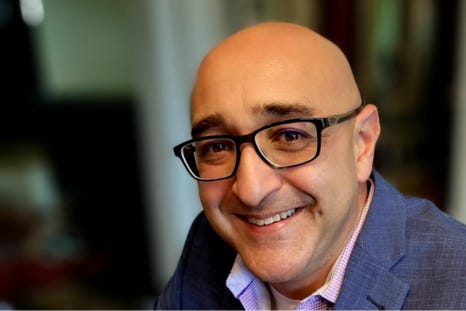
Abdul Rastagar is Tired of the Marketing B******t
I had a fantastic conversation with Abdul Rastagar, founder of Serona Marketing, about his mission to cut the b******t out of marketing. Abdul runs both a podcast and newsletter with that exact title. It’s pretty clear he feels strongly about this. I thought it would be fun to find out what’s been bugging him lately. I was not disappointed.Abdul's beef is that we're stuck using outdated marketing processes from a decade ago that don't match how customers buy today. There’s too much friction. Customers want to see pricing, but we force them through multiple calls with SDRs and demos before revealing whether they're even in the right ballpark. Meanwhile, they're already sharing pricing information in peer communities and researching vendors thoroughly before ever contacting sales. I’ll write more about this soon, but it seems like a missed opportunity to build some trust.While Amazon has systematically removed friction at every step, B2B companies have done the opposite - we've added barriers and complexity. I pushed back a bit about competitive concerns, but he made the case that if you're worried about competitors seeing your pricing, they'll find out anyway through those peer networks. More importantly, if you hide pricing while competitors don't, you're not even getting into the conversation. Better to reduce friction and actually engage with prospects than lose them before they ever reach out.One of his most painful observations is that marketing is the only function where everyone else in the company tells you how to do your job. I laughed at his story about the CEO's spouse not liking the logo colors, but it's not really funny - it's a genuine challenge marketers face daily. Operations, finance, sales, and even board members all have opinions about marketing decisions they'd never dream of weighing in on for other departments. Try telling the CFO about where they should invest all that cash you generated!Here is how he suggests you handle those suggestions: figure out which ones might have merit, prioritize them appropriately, and learn to say no constructively while maintaining collaborative relationships. We briefly discussed LinkedIn’s own flavor of BS: those trade show announcement posts. They're mostly checkbox exercises - the real value comes from personalized outreach using the event as a conversation starter.Given all of this, I asked about being more creative and effective. And I loved his answer. Stop selling your product and start selling your knowledge. Be generous with what you know. Don't focus on what your tool does; focus on sharing your perspective on industry challenges and different approaches.This philosophy of thought leadership before product pitching makes perfect sense, especially in life sciences where people are always eager to learn. Scientists want to understand the "why" behind solutions, not just the "what." When you establish credibility through knowledge sharing, product conversations happen naturally.Abdul shared an example: his client published an industry article, and at a recent conference, the CEO overheard two people discussing that very article. He joined the conversation, revealed he was the author, and one of those people turned out to be an ideal customer prospect. That's how thought leadership creates real business opportunities.On the other side of that, I asked about the common CEO dilemma: wanting to be thought leaders but not wanting to be the face of their companies. Abdul acknowledged the risk - invest in building someone into a thought leader and they might leave. People do move around. But you're better off benefiting from that voice while you have it than getting no benefit at all.Instead of getting caught up in the latest marketing technology or tactic, Abdul's focus on fundamentals understanding your customer's buying process, being transparent, and sharing knowledge generously feels more authentic and is likely more effective.These cold conversations have been a blast and educational for me beyond the content. I have more lined up. If you aren’t subscribed, now might be a good time…Your deepest insights are your best branding. I’d love to help you share them. Chat with me about custom content for your life science brand. Or visit my website. This is a public episode. If you would like to discuss this with other subscribers or get access to bonus episodes, visit cclifescience.substack.com

Branding: Start Early but Think Long-Term
I had a great time speaking with Meg Schlabs, co-founder and creative director at Wizardly. While it may be difficult for early-stage life science companies to think about branding, Meg makes a clear case for why it matters, even before you go to market, especially when you are trying to raise capital and recruit talent.Meg’s LinkedIn profile mentions that she likes books and cheesy videos. So before we got into the branding discussion, we took a short detour. (This was our first ever conversation.) I mentioned that I had asked ChatGPT to make a few recommendations (three fiction and three non-fiction) based on what it knows about me. They could not be about life science. The jury is still out, but if you want to know what it suggested, the answers are at the bottom of this post.Then we got into the heart of it:Why should biotech startups think about branding early?Because it validates your science. When a company tells a cohesive, compelling story from the start, it’s easier for investors to get on board, for scientists to rally around a mission, and for future hires to say “yes.” That story, she argues, should express why the company needs to exist right now.…let's lay down, from the top down, from the CEO all the way, trickling all the way through the company, let's lay down who we are, why we exist, who we exist for, where we're going in five years, where we're going in 10 years, and let's memorize this story as a company so that we can make critical visual decisions or branding decisions that when they're validated or tested by an outside audience, they actually have some legs underneath them.We talked about her approach to uncovering that story. Wizardly’s process often starts with what might sound like a ridiculously simple question:“What does your company do?”It’s the kind of question that seems obvious until you realize no two people on the team are answering it the same way. Meg’s workshops build consensus and create a shared foundation before any logos or taglines come to life.Another thing that stood out to me was how she described designing for the long term. Unlike SaaS companies that can iterate daily, biotech teams are often playing a 10-year game. That means the brand you launch with has to scale with consistency and flexibility as you grow. This is an idea I had never heard before. Meg emphasized designing not just for today’s website or pitch deck, but for the brand library you’ll need 18 months from now.We also covered:* How design choices (like color) are driven by a 3-pronged strategy: story, user psychology, and competitor positioning* Why Figma is a game-changer for collaborative branding in biotech teams* The risk of too much feedback, and how a single point of contact can keep branding projects on track* Why consistency doesn’t mean rigidity—and how great brands evolveFinally, here is an idea I loved: rather than gatekeeping the assets, give your clients the tools and training to extend their brand. Her team hands over not just files, but Loom tutorials and templates in Figma, so internal teams can stay on-brand long after the agency engagement ends.Longtime listeners know the metric: how much do my cheeks hurt from smiling because of all the great insights? 5/5 Definitely recommend.These cold conversations have been a blast and educational for me beyond the content. I have more lined up. If you aren’t subscribed, now might be a good time…Your deepest insights are your best branding. I’d love to help you share them. Chat with me about custom content for your life science brand. Or visit my website.Books ChatGPT recommended for me. As I said, the jury is still out on these. Non-fiction seems more promising.Fiction The Overstory, The Master and Margarita, Stoner Non-fiction Antifragile, Amusing Ourselves to Death, The Art of NoticingWild Card The Peregrine by J.A. Baker This is a public episode. If you would like to discuss this with other subscribers or get access to bonus episodes, visit cclifescience.substack.com

Life Science Sales - Old Way vs New Way
Recently, I’ve enjoyed interviewing people I have never spoken to before. Harrison Waid, the co-founder of Succession, is one of those. Shout out to Teddy Lin for connecting us. I took this as an opportunity to learn about Harrison and his business as well as a personal challenge to interview someone “cold”. OK, I did some research, so maybe “room temperature”.First of course, I needed him to explain Succession, co-founded with Nick Clare (who I hope to have on another time). They noticed life science companies struggling to translate great technology into successful market entry and sales growth. Succession was founded to address this, offering specialized services exclusively for life science sales teams – everything from lead generation and sales training to recruitment and optimizing internal systems like CRMs with automation and AI. Harrison called it a "vertical service company" for life science sales.The idea for it wasn't a sudden flash of insight but more of a "slow burn." While at Synthego and after moving to the UK, he initially thought about general consulting. He quickly found that clients wanted concrete outcomes, not just advice. The real traction came when they packaged their expertise into specific, deliverable-focused services – that’s when things really took off.I’m always interested in people who come from other backgrounds outside of life science. He made his start was in software sales. A friend brought him into Synthego, a CRISPR company, initially for consulting. At that point, his knowledge of biology was that "the mitochondria is the powerhouse of the cell." But he was excited by the potential of the technology. He immersed himself in learning the science and business of biotech, leveraging online resources and learning from his colleagues. Once again, curiosity = superpower! Asking "dumb questions" is an underrated skill. Those outside perspectives can challenge assumptions and benefit both the business and the individual willing to learn.I'd prepped some questions, but the morning of our interview, I stumbled upon a recent LinkedIn post Harrison made contrasting "old" and "new" ways in biotech sales. I saw some insightful comments from people we both respect, like Owen Swift. I knew this would be worth digging into.Harrison framed the "new way" around leveraging technology to move beyond inefficient models like (old way) simply scaling headcount. I picked a few points from his post for discussion:Small, High-Output Teams + RevOps/Content/Automation: He explained how technology now allows high-performing reps to be supported by robust systems (managed by Revenue Operations) that automate much of the prospecting and research previously done by separate inside sales roles. This frees up skilled sellers to focus on closing.AI for Intent & Sequencing: We discussed how AI can go beyond basic alerts to analyze market signals, identify key opportunities, score leads, and even assist with outreach, providing reps with powerful, timely intelligence.Content & Personal Brand for Demand Gen: I strongly agree with this one. There is a compelling case for reps building their personal brands on platforms like LinkedIn. He argued, quite correctly in my view, that authentic content from individuals resonates far more than corporate posts and that companies restricting this are missing a huge opportunity.Video Outreach: I shared my own recent positive experience with video messaging, having secured a meeting from one just last week. Harrison pointed out how video cuts through the noise, humanizes interactions, and is effective for both prospecting and follow-ups. We agreed authenticity is more important than perfection.The Best Reps Get the Best Opportunities: This one may be controversial, as it goes against the idea of pure "fairness" in lead distribution. He would argue that for maximizing company revenue, it makes sense to give the highest potential leads to the reps most likely to convert them. He acknowledged territory assignments are inherently unfair anyway and suggested lower performers could develop on less critical leads. This leads to discussions about efficiency, long-term strategy, and even healthy team turnover.Compensation plans inevitably drive behavior and can always be gamed, so no system is perfect. It comes down to your goal and again, long-term strategy. As someone who hasn’t formally been in sales, I can see the attraction to developing skills on low risk opportunities.If these ideas got you thinking, you might check out the SalesDNA Podcast, Hosted by Harrison and Nick. These cold conversations have been a blast and educational for me beyond the content. I have more lined up. If you aren’t subscribed, now might be a good time…Your deepest insights are your best branding. I’d love to help you share them. Chat with me about custom content for your life science brand. Or visit my website.BTW, I hope you’ll consider joining me here: This is a public episode. If you would like to

The Longer, Short Way to Sales Success
When I invited Max Gilbert on the podcast, I suspected the conversation might go beyond sales tactics. Max is the founder of Tiferet Consulting, but he’s also a sourdough baker, amateur rabbi, armchair philosopher, and like me, a pretty bad golfer. Our conversation covered everything from startup struggles to spiritual identity and the joys of sourdough. Helping Scientists Become SalespeopleMax works with founders selling into biotech or pharma that want to make sure their first sales hire works out. Spoiler: He has seen it go bad which gave him the idea.One can imagine a founder with a science or engineering background thinking, “I’m not a sales person. I need to offload this to someone who can make calls, pound the pavement and hit a number.” The early-stage sales role is fundamentally different. It’s about iteration and discovery, not just execution. So instead of trying to fit a traditional salesperson into a startup that was still finding its feet, Max found more success coaching fermentation scientists and bioprocess engineers to do the selling. They could speak their customers’ language and earn trust through technical credibility. Max helps them build the confidence and process to go with it.Here is some good, if scary, news for those folks. As a scientist, you have skills that are useful in sales. Once again, your curiosity is a superpower. Sales, according to Max, is asking questions, looking at a problem from a lot of angles and figuring out how it might be solved. The challenge, as I see it, is that having developed a product or service, a founder might feel they have the answer in hand and they can’t wait to tell everyone who might be interested. They end up filling the silence with features and benefits.Sales as a Scientific ProcessMaybe a better approach is to think about your product or service as a hypothesis. And every sales call tests that hypothesis by asking more questions of the prospect about what they do. What’s this person struggling with? How do they think about their problems? When you listen that way, your product becomes a natural extension of the conversation. Then you can frame your product as a possible solution and let the prospect decide if they want to have another call to talk about it some more.The process becomes a collaborative journey. Are we solving the right problem? Do we even understand the problem? Can we help? And if not, Max coaches his clients to say so and maybe even refer that prospect to someone who can.Why Scientists Should Own the Sales Process EarlyOn top of all that, for the first few sales, only the founder can have the context to ask all the right questions as well as see how the answers might help refine the product or its positioning.We like to say sales is about relationships, but that can mislead people. It’s not about charm or charisma. For early-stage companies, it’s about using structured conversations to gather data and test hypotheses. Max frames the process like an experiment: design, build, test, learn. When you stop seeing sales as persuasion and start seeing it as discovery and iteration, it becomes a lot more accessible, especially if you’ve been trained to think that way already.Not subscribed? Let’s fix that, shall we? Subscribe for free to receive new posts by email. (No spam. I promise.)Sales is a rollercoaster. Some calls go nowhere. Some start off promising and then you get ghosted. Founders have to keep showing up with curiosity and resilience even when they don’t feel like it. That’s where Max’s coaching comes in. (There is a theme here.)Max’s secret sauce is that he lived the resistance. Like many, he didn’t start out wanting to be a salesperson. In fact, when a mentor suggested he lead sales, his first reaction was visceral rejection. (I laughed out loud as Max mimicked throwing up.) But going through that discomfort gave him a blueprint for coaching others through it. It’s the classic hero’s journey.He told me his coaching isn’t about copying someone else’s process. It’s about helping each founder build their own. Picking the right structure, sticking to it, and having the mindset to carry it through especially when motivation disappears. More on that in a minute.Coaching the Whole PersonI asked Max about this quote on his website: “When we ground ourselves in the identity that transcends our own contradictions, we’re tapping into our authentic self.”Max named his consulting business Tiferet, concept of harmonizing seemingly opposite forces. In a sales context, that means acknowledging both the part of you that wants to help someone and the part of you that needs to hit a number. Instead of shutting one side down, you bring both to the table and accept the tension.Disconnecting from the emotional side of selling and getting comfortable between the extremes is helpful and projects confidence.Avoiding the Trap of the Shorter, Longer WayWe wrapped up with a story Max told from the Talmud about two roads: the short, longer way (fu
Relational Resilience: Navigating Conflict vs. Resolving It
I’ve never been great at conflict. Like a lot of people, I’ve leaned toward avoiding it—especially in the workplace. But I know that’s not a useful strategy in the long run, which is why I was excited to talk with Deb Nathan, a conflict navigation coach, on Life Science Marketing Radio.Right off the bat, Deb drew a distinction between conflict resolution and conflict navigation. Resolution implies there’s a clear “winner” and “loser” or at least a compromise everyone can agree on—but let’s be honest, that’s not always possible. Navigation, on the other hand, is about figuring out how to work with each other even when we disagree. It’s about forward momentum, not just agreement.Deb reminded me (and all of us, really) that conflict isn’t inherently bad. In fact, it’s often the spark for meaningful change—personally and organizationally. The issue isn’t the conflict itself but how we choose to engage with it.What Is Relational Resilience?Deb introduced a concept I hadn’t considered before: relational resilience. I’m used to hearing resilience in terms of the individual—bounce back, stay strong, push through. But relational resilience is about how teams manage conflict together. It’s rooted in the idea that we’re stronger and more creative when we work through challenges collaboratively rather than individually.She outlined several components that make up relational resilience:* Relational flexibility – being open to hearing and holding multiple perspectives, including conflicting ideas inside your own head.* Relational confidence – allowing yourself to be vulnerable, which is only possible if the team environment supports that.* Mutual empowerment – shifting from "self-empowerment" to a model where team members lift each other up.* Creativity and imagination – thinking beyond current possibilities and co-creating new solutions.* Appreciating complexity – resisting the urge to simplify when a nuanced approach is more useful. (This is probably my favorite.)* Tensionality – the ability to stay engaged with someone else’s perspective while still holding your own.* Comfort with uncertainty – resisting the rush to answers when patience could produce better outcomes.* Reasonable hope – a grounded belief that things can improve with effort, even if it’s not easy.It’s a powerful framework, and it aligns with how I like to think: long-term, with an eye on creating something that lasts.Vulnerability as a Leadership SkillWhen we got into the topic of vulnerability, Deb made a point I’ve seen play out in real life. The best managers I’ve had were the ones who gave me space to try things—even when those things didn’t work out. They made it safe to take risks. And when something failed it was a learning experience, not a career-ending mistake.Deb emphasized that leaders don’t need to have all the answers or even agree with every idea. What they do need is to create an environment where people feel safe to experiment and speak up. That’s where vulnerability comes in—not just for individuals, but systemically. Managers who can admit uncertainty, invite multiple viewpoints, and reflect on outcomes together build healthier, more resilient teams.Curiosity Is a SuperpowerIf you’ve listened to more than a few episodes of this podcast, you know I’m a big fan of curiosity. So is Deb. She described curiosity as the antidote to stagnation, a skill that allows us to continually learn, adapt, and better understand each other. Without it, we default to fixed positions, binary thinking, and conflict escalation.Curiosity means asking open-ended questions, exploring ideas we don’t initially agree with, and staying open to being surprised. For leaders, modeling curiosity invites that mindset across a team. It tells people their ideas matter—even if they’re different or incomplete.And while curiosity might sound like a soft skill, it has very real impacts on innovation, team cohesion, and ultimately, performance.Not subscribed? Let’s fix that, shall we? Subscribe for free to receive new posts by email. (No spam. I promise.)Time Pressure vs. Long-Term ThinkingWe also talked about time pressure. What happens when you're in conflict at work but feel like there's no time to sit down and work it out?Deb’s answer was clear: if you don’t make time for it now, you’ll pay for it later—probably with more time, stress, and friction. Trying to push through without dealing with the real issue often leads to bigger breakdowns down the line. On the flip side, making space for dialogue (even just a little) can result in more durable solutions.One of the ways to manage that time pressure, she said, is to get comfortable with not having immediate clarity. Sometimes the best thing a team can do is agree to keep talking, keep listening, and let the path forward emerge gradually.Culture, Communication, and Cross-Team CollaborationLater in the conversation, we got into cultural differences—across nationalities, disciplines, even departments. Deb’s background includ

From Nightlife to Life Science: Building Community and Strategic Narratives
In this episode of Life Science Marketing Radio, I spoke with Oliver Pearce, VP and Head of Marketing at Epista Life Sciences. Oliver brings a unique perspective to life science marketing, having started his career in the nightlife and hospitality industry. Now leading marketing at Epista, a consultancy firm specializing in pharmaceutical quality, regulatory compliance, and commercialization, we talked about what he learned from working in the nightlife scene and events, the importance of strategic narrative and where he sees opportunities for companies to do better ( be less lazy).From Nightlife to Life SciencesOliver’s career took an unconventional path, beginning in nightlife and event promotion before transitioning into life sciences. This early experience taught him the fundamentals of building engaged communities, identifying the audience and who could amplify a message—an approach he has successfully applied to his work in the pharmaceutical industry.Building a Global Community Around Trial Master FilesOne of Oliver’s most impressive achievements has been the creation of TMF Week, a large-scale online event dedicated to Trial Master Files. Initially conceived as a webinar series, TMF Week evolved into a high-profile industry event with over 40 speakers and thousands of attendees.The idea emerged as a response to the need for frequent educational sessions on TMF. The COVID-19 pandemic accelerated its adoption by filling the gap left by canceled in-person events and industry professionals rallied behind the event, validating its importance. Here is the part I find most interesting (and valuable). TMF Week initially launched as an unbranded event and gained credibility before becoming synonymous with Oliver’s (previous) company.The event was organized with a small team and limited resources, using basic webinar tools and CRM integrations. Despite logistical challenges, it became a central platform for industry discussions and a key driver of business opportunities.The Power of Strategic Narrative in MarketingI appreciate how Oliver emphasizes the importance of crafting a strategic narrative rather than just relying on a standard value proposition. While value propositions focus on what a company offers, a strategic narrative provides a broader industry perspective and aligns messaging across sales, marketing, and leadership.Not subscribed? Let’s fix that, shall we? Subscribe for free to receive new posts by email. (No Spam. I promise.)Elements of a Strong Strategic NarrativeIf you’re familiar with The Hero’s Journey from Joseph Conrad, you‘ll recognize how it’s implemented here in a very succinct way:* Define a major shift in the industry and explain its significance.* Identify the challenges that come with that shift.* Offer a clear perspective on how businesses should adapt.* Demonstrating how your company helps customers navigate the change.This approach produces marketing that is not just about features and benefits, but about leading an industry conversation in a way that builds authority and trust. This is an approach that works regardless of where someone is in the buying cycle. It doesn’t mean throwing features and benefits away, but rather provides value in an interesting way that increases the likelihood of being considered when a customer has a problem you can solve.Common Pitfalls in Life Science MarketingI asked Oli to point out where life science marketing can come up short. * Lack of Business Alignment: Marketing is often viewed as a cost center rather than a revenue driver because it isn’t directly tied to sales and pipeline growth.* Overreliance on Vanity Metrics: Metrics like website traffic and lead volume don’t necessarily translate to business impact, leading to misaligned priorities.* Random Acts of Marketing: Without a strategic foundation, marketing teams often engage in disconnected activities that fail to build long-term engagement.Aligning Marketing with Business GoalsOliver advocates for tying marketing success to measurable business outcomes. LEad generation may be the easiest metric to track, but this doesn’t necessarily provide the best outcomes in the long run. Other metrics, while a little more challenging, can provide a better picture and improve overall results. Instead of focusing on lead generation alone, he recommends tracking:* The conversion of marketing-generated leads into pipeline and revenue.* Correlations between brand awareness efforts and increased inbound inquiries.* High-intent engagements, such as direct requests to speak with sales.By aligning marketing efforts with business goals, marketing teams can move beyond vanity metrics and demonstrate tangible value to the organization.Lessons from Nightlife Marketing Applied to Life SciencesCoincidentally, I have spoken to two people recently who have transferred their skills from an earlier time in the nightlife world to life science. Oliver’s background provided him with a unique skill set, including:* Commu

From the Lab to Sales: Heather Javier Made the Leap
I had the pleasure of speaking with Heather Javier, a genomic sales specialist at Roche, sales coach, and host of the Transition to Sales podcast. Heather shared her journey from working in translational oncology and stem cell research to transitioning into sales, inspired by her desire to connect, problem-solve, and align her career with her values.Heather’s JourneyHeather’s career started with a biology degree and a role in translational oncology at Genentech. Her early work involved managing mice for efficacy studies, followed by years in stem cell research, where her hours were dictated by the cells she was culturing.Despite her scientific success, Heather felt a gap between her work and her passion. What energized Heather was networking, problem-solving, and collaboration. Inspired by her own interactions with sales reps, she realized she could make a bigger impact in sales by addressing customer needs more effectively. After a year of networking and revamping her resume, she made the leap into sales, which she describes as the best decision she made for her family and career.NetworkingHeather believes networking is simply about resourcefulness and taking a “heart-centered approach.” During her days at UCSF, she constantly collaborated with statisticians, vendors, and colleagues to troubleshoot experiments. This mindset carried into her sales career, where she emphasized the importance of building authentic connections.Networking isn’t just a means to an end; it’s about helping others while advancing shared goals. For those who feel intimidated by networking, she suggests shifting your mindset: recognize that people often want to help and are energized by being part of your journey. I couldn’t agree more. I have experienced this many times over many years.Transitioning from Science to SalesHeather knows scientists and technical professionals have the skills needed for sales roles—they often don’t realize it. Sales, at its core, is about problem-solving, asking the right questions, and connecting solutions to customer needs.Scientists are used to analyzing variables and troubleshooting experiments. In sales, this translates to understanding customer pain points, guiding discussions with targeted questions, and tailoring solutions. Heather highlighted the importance of being prepared, leveraging technical knowledge, and staying resourceful. These are things scientists do regularly.Overcoming Fear and Building Confidence One of the biggest hurdles for those transitioning into sales: building confidence. Her advice? Treat the learning process like you would in a lab. Just as scientists train to operate new equipment, aspiring sales professionals can prepare by studying their business, asking questions, and leaning on mentors.Heather shared her own experience of transitioning into sales at QIAGEN, where she won President’s Club in her first year. Her success came from applying her scientific mindset to sales—studying customer personas, analyzing data, and proactively creating business plans. Confidence, she emphasized, comes from preparation and a willingness to learn. In other words: be curious and do your homework. Isn’t that what we’ve been doing our whole life?Not subscribed? Let’s fix that, shall we? Subscribe for free to receive new posts by email. (No Spam. I promise.)Bridging the Gap Between Sales and MarketingHeather isn’t the first to point out that sales and marketing often operate in silos, which can lead to missed opportunities. She urged marketers to view sales teams as their “customers” and collaborate closely to create materials that resonate with what sales reps are hearing in the field.Here is an idea she shared that I can get behind. Cultivate a sense of culture and community at conferences. Instead of relying solely on product demonstrations, create experiences that reflect the company’s values and culture, helping to attract ideal clients and foster stronger connections.Connecting the Dots: Relationship Building in SalesHeather frequently mentions the idea of connecting the dots. She described her role as a connector—both within her company and with her customers. Building trust and relationships is essential, whether it’s with decision-makers at a customer’s organization or with internal teams like R&D and technical specialists.She stressed the importance of identifying “coaches” within customer organizations—people who advocate for your product or service and help you navigate the decision-making process. Heather’s approach to connecting the dots involves bringing people together, asking thoughtful questions, seeking feedback, and leveraging internal and external resources to solve problems collaboratively.Sales Coaching for StartupsIn addition to her sales role, Heather is developing a program to coach startups on building their own sales strategies. Hiring a dedicated sales team can be expensive. Heather’s vision is to help technical teams get comfortable with the fundamentals of sa

How Can Organizational Cultures Impact Society at Large?
If you’ve been following me on LinkedIn lately, you know I spent a lot of time thinking about the importance of company culture and how marketing content can both reflect and drive culture. Done well, I believe the same content can both motivate employees and attract customers.In this episode, we’ll take the impact of culture even further. Mykella Auld is the founder, Chief Culture Officer, and Executive Director of The Workwell Studio, and her work focuses on the intersection of organizational culture and societal well-being. Mykella’s vision is to help organizations see culture as a strategic asset—a mechanism that not only supports employee engagement and productivity but also shapes the societal landscape in meaningful ways.The relevant question, I believe is, “How can organizational culture best work to achieve the desired outcomes, whether in the public sector, the private sector, or in any community?”Culture’s Ripple EffectAfter getting a sociology degree, Mykella was working with a school district and the National Institute for Educational Leadership. A challenging legislative session on school reform opened her eyes to the impact of internal challenges. As is likely often the case, the culture within organizations and its impact often reaches as far as the services they provide (perhaps farther). The Genesis of The Workwell StudioBuilding on her experiences, Mykella pursued a master’s degree in leadership and later led a research team exploring the intersection of local government policies and community well-being. This work illuminated how public institutions—schools, nonprofits, and government agencies—impact not just their immediate stakeholders but society at large. Her findings reinforced the idea that organizational culture can be a powerful tool for driving positive change both internally and externally.Strategies for Building Healthy CulturesCulture doesn’t happen by accident—it must be strategically planned and invested in. Brian Thomson made the same point for life science companies in a previous episode. How does it happen. Mykella pointed out that HR departments, although essential, should not bear sole responsibility for culture. While initiatives around leadership and organizational development often fall to HR, they likely have enough to do and it might even be a conflict. Instead, she suggests organizations consider roles like a Director of Culture Initiatives to ensure dedicated focus on this critical area.Key strategies include:* Co-Creation: Building cultures that prioritize shared leadership and accountability. By involving employees in decision-making processes, organizations foster trust and inclusion.* Well-Being: Focusing on social and emotional development, trust-building, and systems of care. Health outcomes are just one facet of well-being—the broader goal is creating environments where people thrive emotionally and socially. It strikes me that this is the kind of environment where people would be most happy and productive.* Innovation: Encouraging a mindset that embraces trial and error, creativity, and exploration. Not subscribed? Let’s fix that, shall we? Subscribe for free to receive new posts and support my work.The Role of Public Sector OrganizationsMykella noted that public sector leaders often lack formal leadership training, perhaps due to budget constraints, which can hinder their ability to prioritize staff and culture. (I wonder if it’s significantly different in the private sector. It seems most often that people who are good at their job get promoted to management without additional leadership or management training.)Additionally, public institutions tend to focus outward on their mission to serve society, sometimes neglecting the internal health of their organizations. The behaviors and norms within these institutions often ripple into the communities they serve. It strikes me as a misalignment of values if an organization trying to serve the public isn’t modeling the world it hopes to create.Mykella mentioned an art piece from the 1950s illustrating how workplace dynamics influence home life. This insight remains relevant today, emphasizing the societal responsibility public institutions have to model healthy behaviors and norms. Am I naive to think we should need to be reminded to treat others, whether they are colleagues, co-workers, employees or service providers with respect?The Intersection of Public and Private SectorsHere is why the above matters. To no one’s surprise, private sector leaders are having a huge impact on society in their public roles. While this trend brings opportunities for innovation, it also raises questions about balancing business-oriented approaches with the unique purposes of public institutions. From my point of view, none of us should outsource our cultural initiatives to people who don’t share our values. While there are certainly successful workplaces that reflect lovely communities, I don’t think that it makes sense to go

Mindset: The Culture You Create Within Yourself
Shifting our approach to feedbackIn my recent conversation with mindset coach, Margaret Jennings (MJ), our conversation started with the emotional rollercoaster created by feedback—especially when you're early in your career. Feedback, both positive and negative, is useful but can also result in a wild ride. MJ once described herself as a “floundering high achiever” in her 20s. She is a more grounded and self-aware leader today. Her insights are both relatable and instructive.Like many of us I’m sure, she once heavily relied on external validation. She was on top of her game when feedback was positive, but when it turned critical, it felt like failure. This is something that likely resonates with a lot of high achievers. Her sense of self-worth was tied to what others thought about her accomplishments, whether in school or sports. In many ways, this made her successful in the short term, but it came at the cost of long-term fulfillment.She explained that it’s natural to want to please those around us—whether it’s parents, teachers, or coaches. After all, as babies, this is how we secure food, love, and safety. But the problem comes when we carry this strategy too far into adulthood, to the point where our identity is solely built around what others think of us. This approach eventually leads to burnout and can limit our potential for growth and happiness.Consider the mental gymnastics we all do when we receive feedback. It reminded me of the challenge of a good golf swing: You can’t perform well if you are overanalyzing every aspect of it all the time. Margaret agreed and said her turning point came when she started working with a mental performance coach. This coach helped her realize that her value didn’t have to come from others' opinions; instead, she could generate her own sense of worth internally. That shift in thinking transformed the way she performed, both in work and in life.Building a relationship with yourselfMJ brought up the concept of building a relationship with oneself: We’re constantly in a dialogue with ourselves, and it’s crucial to make that relationship a positive one. Through practices like journaling, meditation, and self-reflection, we can learn to identify and understand our own needs and desires, leading to a more balanced and sustainable approach to both work and life. Looking back at my own life, there was a time when I had a few ideas about a career path but was relying a lot on others’ expectations and evaluations of my abilities to show me the way. It took a long time to move past that. I asked Margaret about how she specifically changed the way she talked to herself, and her response was insightful. She noted that awareness is key—you need to recognize the quality of your self-talk. Is it positive and affirming, or is it critical and self-defeating? She likened this to any relationship, explaining that you need to invest time and energy into yourself just as you would with a friend or partner. You’d have a difficult time building a positive relationship with anyone else if you were constantly critical of them.It strikes me that adopting a growth mindset is your ticket off of the emotional rollercoaster. You no longer see constructive feedback as a personal attack but as an opportunity for growth. This mindset shift is vital, especially for high achievers who can often fall into the trap of seeing any criticism as a sign of failure. Not subscribed? Let’s fix that, shall we? Subscribe for free to receive new posts and support my work.Embracing uncertaintyMJ talked about the importance embracing uncertainty, something that has been on my mind lately, and her thoughts on it really hit home. Our constant search for certainty is often counterproductive because so much of life is inherently unpredictable. Instead, we should focus on what we can control and accept that not everything will go perfectly. It’s about shifting from an all-or-nothing mentality—where you're either a success or a failure—to a more nuanced view where growth and learning happen over time. (If you’ve been a listener for a while you know how much I love long-term thinking!)I think we waste a lot of time and energy trying to control things that are not in our power to control or trying to predict things that we do not have the capacity to predict.So, our focus is such a limited resource, that if we have the choice to allow it to be consumed by things we can't control, which is going to fuel anxiety and overwhelm, or we can choose to look at this situation and say, okay, realistically, what can I control here in terms of having impact and creating clarity? Then we're able to make more progress forward. We also touched on expectations and career transitions. This is where the growth mindset can make a huge difference for you. First of all, growth is about trying new things, stepping into new roles. It occurs to me that being ready for a new position and being good or great at it are two points on the curve. Our e
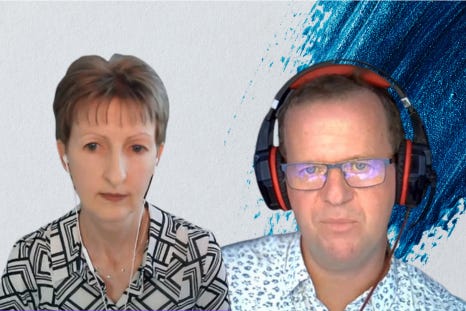
Sparking Creativity: Innovation Begins with Observation
With the life science tools industry facing a 7% drop in revenues, innovation and fresh approaches are needed to hold on to your slice of the pie. I spoke with Marina Hop, Managing Director, and Gary Brooks, Creative Director at Viveo Consulting, to explore creativity in life science marketing. Our discussion focused on how creativity can be a powerful tool to not only optimize business operations but also generate new ideas to address these challenges.In a downturn, companies often retreat into operational efficiency, cutting costs and tightening the reins. However, real growth and differentiation come from creativity—an approach that not only applies to marketing but spans across the entire business strategy, product development, and even internal team dynamics.Creativity as a Key to PerformanceMarina pointed out that while companies are focused on optimizing their operations, there's a limit to how much optimization can drive growth. “The optimization side addresses the bottom line,” she said, “but creativity really addresses the top line.”I've seen the same pattern—companies cutting budgets and focusing on short-term savings. I once asked my VP of marketing why, instead of cutting back, we didn’t go full throttle to take market share when our competitors were pulling back. My guests agreed on the need to push forward with disciplined creativity, even when times are tough. As Marina pointed out, Bruker—a company that has excelled in this downturn—successfully combines operational excellence with what they call "disciplined entrepreneurialism."Balancing Operations and InnovationGary elaborated on how companies often live in two worlds: the operational world of structure, metrics, and routines, and the innovation world, driven by curiosity and experimentation. He emphasized the importance of maintaining a balance between these two worlds, especially during challenging times. “When companies struggle, they revert back to the operational side because it’s manageable,” he said, but added that without creativity and innovation, growth stalls.He pointed out, creativity is not just about artistic expression—it's about connecting insights to create something valuable, whether it’s a new marketing channel, product innovation, or strategy.Creative Thinking in Marketing and BeyondAround here of course, we’re focused on marketing creativity, and we discussed how companies could be creative not just in their messaging, but in the types of marketing they do. I suggested that creativity in marketing isn’t just about making clever ads, but about exploring new ways to engage with customers—new channels, content types, or interactions. Marina agreed, saying that creativity should permeate any generative business activity, from formulating a strategy to developing a new product.One key takeaway from this part of the conversation was that creativity shouldn’t be confined to one department. As Gary put it, “It’s not just marketing, it’s communication.” Every interaction a company has, whether with investors, customers, or even internally, is a chance to think creatively about how you present your brand.Thanks for reading! Subscribe for free to receive new posts and support my work.The Power of ObservationMarina introduced a concept that I found particularly interesting—phenomenology, the practice of observing and describing human experiences without immediately analyzing them. This practice helps stimulate creativity by encouraging people to step back, observe, and understand what’s really happening before jumping to conclusions. Viveo might send teams to observe a simple activity, like how people interact in the cafeteria, and then come back and write a narrative about it.Gary emphasized the importance of observation in creative thinking, noting that many people don't take the time to observe what’s happening around them. “People don’t really observe people doing stuff,” he said. By focusing on observation, companies can gather insights that lead to more informed, creative solutions.One powerful example Marina shared was when Viveo worked with a client that had developed an automated sample prep system for next-generation sequencing (NGS). The company had expected this product to be a hit because it saved time and effort. But by observing how scientists actually worked in the lab, they realized the product wasn’t solving the problem scientists cared most about—reproducibility. Scientists didn’t mind spending extra time on manual prep because they wanted to ensure the highest quality samples for the expensive sequencing process. By shifting the marketing message to focus on quality and reproducibility rather than time savings, the company could better align with its customers' needs.Creativity as a Learnable SkillOne of the most encouraging insights from Marina and Gary was that creativity can be learned. It’s not reserved for "artistic" types—it’s about curiosity and observation. As Gary put it, creativity doesn’t come from
Simplifying the Review and Approval Process
The process of content review, approval, and distribution is often perceived as a "necessary evil" in life science marketing. If you're reading this, you probably know how challenging this process can be. In this episode, I had the pleasure of chatting with Annalise Ludtke, Senior Manager for Marketing Communications and Strategy at Vodori, and host of the Amend and Progress podcast. She offered some great insights on how to streamline and improve this process while still keeping everything compliant, fast, and efficient.Right out of the gate, Annalise laid out the core problem Vodori aims to solve: the complexity of managing content in life science organizations. Companies need to develop a lot of promotional and educational materials, and getting those materials reviewed, approved, and distributed is a complicated process. The challenge is not just about creating great content—it’s about managing the feedback loops, the endless rounds of revisions, and the hurdles of compliance. Without a solid process for reviewing and approving content, life science companies can’t effectively market their products. Of course, you need to make sure everything you put out there meets legal and regulatory standards. Best PracticesAnnalise shared some best practices that Vodori advocates, and these tips stood out to me as practical and actionable regardless of any platform you might deploy or none at all.* Parallel vs. Sequential Review: One of the key strategies Annalise mentioned is the benefit of parallel review processes, where all the necessary stakeholders—whether it's medical, legal, or regulatory teams—are reviewing content simultaneously rather than sequentially. This can save a lot of time because it encourages open dialogue between the different reviewers. If someone has an issue with a piece of content, they can discuss it with the other reviewers in real-time, instead of waiting for feedback to trickle in one department at a time.I appreciated her point that while parallel review might seem more chaotic at first glance, it actually fosters more collaboration. Reviewers can resolve conflicting feedback before it gets back to the content owner, which can speed things up dramatically.* Clear Ownership and Communication: Clearly defined roles and responsibilities make everyone’s job easier. Annalise emphasized that it's critical for each reviewer to stay in their lane and provide feedback based on their specific area of expertise. This helps avoid confusion and unnecessary edits, which can slow down the process. Additionally, it's essential for reviewers to communicate clearly—indicating whether a comment is a required change or just a suggestion, for instance. This small change can remove a lot of friction and keep the process moving forward smoothly. Color-coding comments to signify importance is a simple yet effective way to clarify expectations. * Real-Time Collaboration: I imagine most companies now have the ability for multiple stakeholders to collaborate on documents in real-time, where everyone can log in, see the comments being made by others, and even have discussions within the document itself. This not only saves time but also reduces the likelihood of conflicting feedback, which would require another round of calls or emails to resolve.Is this content helpful?Where is the data for that claim?If someone has a question about a claim, you’d like to know where to find the data that supports it. It seems a simple idea to have a claims library. Vodori’s platform allows companies to store and manage approved claims, making it easier to track where and how certain claims are being used in marketing materials. Likewise when claims are updated with new data, you’d like to know where they have been used in the past to find all the places where the claim was referenced.How does your process compare?Beyond best practices, setting goals and understanding benchmarks is another step toward making the content review process less painful. Let’s invite our industry peers out for drinks after work to compare our review processes! - No one said that.Fortunately, Vodori publishes an annual Benchmarks Report that looks at various metrics like average review time and number of review cycles, giving companies a way to see how they stack up against industry standards.By comparing your metrics to industry standards, your company can decide what might realistically make the most impact and set goals for improving your review process.For instance, some teams might set goals around reducing the number of review cycles content has to go through or improving the speed at which content gets approved. Compliance is another area —perhaps setting a goal to reduce the number of compliance issues flagged during the review process. Reducing time to marketIn my experience, content was always the last thing on the list before a product launch. The impact of improving the content review process is huge. By reducing the time it takes to get co
Holding on to Soul in Life Science
Hooriya Hussain is a life science marketing leader and a fierce advocate on the National Board of Governors at the Human Rights Campaign. Before filming this video we had had only two conversations, one on zoom and one at BIO 2024 in San Diego. Both times, Hoori mentioned the idea of soul in the life sciences. I wasn’t entirely sure what she meant. I was definitely intrigued. We decided to explore that on a walk and talk.Trailer:Our discussion revolved around purpose and leadership. The last year has been a tough one in life science beyond the usual pressure and uncertainty. Maybe that was what had prompted Hoori’s thoughts about holding on to your soul.Before diving into that, I was curious about what it was like to grow up in Qatar as the child of immigrants and then immigrate to yet another country you knew nothing about except what you saw or heard in pop culture. She didn’t say it explicitly, but I noticed that Hoori’s thoughts on leadership, nurturing your own soul and understanding your purpose are deeply tied to the experiences of her youth, trying to fit in where “it just felt like anything could change anytime”.The folks that do the work to understand themselves usually have a slightly longer shelf life in science.When Hoori talks about this, I interpret that as understanding and staying true to your purpose. Satisfaction often comes from knowing the contribution you are making. Purpose is what will sustain you through setbacks, various disruptions and even layoffs. Is your purpose aligned with your work? Do you see how you fit in? I have seen this in my own career. I struggled in graduate school (limited shelf life) in part because I didn’t look around to see what other options were available before I applied. Grad school seemed like the thing to do to feed my curiosity and joy of learning. It turned out that while research was interesting for a time, I wasn’t driven by it in the way my friends who are successful scientists are.It was difficult to explain to my family and friends why what I was studying mattered to anyone. That should have been a red flag for me. I’m not saying it didn’t matter. But one thing that mattered to me was to be able to talk about my work with people outside the lab.My path was not aligned with my purpose. I’m driven more by helping a few handfuls of people directly (and seeing the outcome) than the thousands or millions of unseen individuals who would benefit down the road from any discovery I might make. Understanding that sooner would have been helpful for me. My advisor would likely agree.Like what you see?Success in this business isn’t all about the science. There are problems we can’t solve yet, problems we will solve and some we got wrong, possibly for reasons unrelated to science. Leadership also matters. Hoori talked about the need to see people as intersectional beings. There are many factors that make us who we are and influence how we show up.Good leaders understand “human protocol” and can mobilize people with the idea that they are important. This is where leaders can make a difference, especially when things go wrong, by keeping the focus on solving the problem.One thing when you ask anyone is, “Talk to me about a time where you felt really good about something.” And usually it's someone else had done something for them, someone made them feel great, and people never forget that.Outside of life science, Hoori is exercising her leadership muscle on the Board of Governors of the Human Rights Campaign, making sure there is a place for everyone in society, regardless of differences or background. She has found her purpose and is helping others to find theirs.Our conversation seemed to be a reflection of exactly the things we were talking about. In the course of that afternoon, I began to understand who Hoori is and why she thinks the way she does because we started the conversation by talking about where she grew up and how she came to the U.S.What kinds of things keep us from knowing our purpose? As Hoori says, we often find it looking backward at our own stories to figure out the times when we were in the zone and at our best. In the meantime, we put our heads down and do what needs to be done. That is also important, but tough to sustain without purpose. You can write your own story or have it written for you. When you finish writing yours, maybe you can help someone else understand theirs.Your deepest insights are your best branding. I’d love to help you share them. Chat with me about custom content for your life science brand. Or visit my website. This is a public episode. If you would like to discuss this with other subscribers or get access to bonus episodes, visit cclifescience.substack.com

Leadership, Culture, and the Art of Building a Life Sciences Startup
I spoke with Brian Thomson, HR consultant and leadership coach, about leadership, hiring, retention, and culture in early-stage life science companies. Brian’s practical insights offer a roadmap for building and sustaining a thriving company from the ground up.The Importance of Modeling the Right BehaviorsFrom the beginning, Brian emphasized a key concept: intentionality. In his view, leadership is not just about making the right decisions; it's about being intentional in how you model behaviors and build culture within your organization. This is particularly crucial in the fluid environments of startups, where the pace is fast, and the stakes are high.He pointed out that it’s not about whether a particular culture is right or wrong—what matters is that it’s intentional and authentic. This intentionality shapes hiring, retention, and performance management, all of which are crucial for the long-term success of a company. He argued that strategic planning should not just be a buzzword but a disciplined practice that informs every decision, from the type of culture you want to build to the kind of people you need to hire.The Rule of Threes: Core Competencies in StartupsBrain has a rule of threes when it comes to what founders of early-stage life science companies need to focus on: disruptive science, a strong core team, and a high degree of intentionality around culture. While it’s easy for founders to get fixated on the science—because it’s their passion and it’s measurable—the other two elements are just as critical.This resonated with me, especially considering how often we see startups with groundbreaking science but no clear direction on how to build a team or a culture that can sustain the business. The science might make headlines, but it’s the culture and the team that will drive the long-term success of the company.Strategic Planning: More Than Just a ProcessBrian’s sees strategic planning as more than just a process; it’s a foundational practice that lends clarity, focus, and discipline to an organization. He mentioned that in his role as a coach, he often works with early-stage organizations to develop a strategic plan that is as concrete as possible. The goal? To ensure that at any given moment, everyone in the organization knows the top priorities.Be very disciplined. Be very focused. Make your plan. Make it as concrete as possible. At any given time, if I go and ask two of your employees, anywhere in the organization, “What are the number one and what's the number one and what's the number two topmost priority that the company has at that moment?”If they can't answer that, it indicates to me that you haven't done a good enough job of being very clear and being very focused. This approach to strategic planning directly feeds into the hiring process. By being clear on the values and culture you want to create, you can ensure that the people you bring into the organization are aligned with those goals. Hiring isn’t just about finding people with the right skills; it’s about finding people who will thrive in the specific culture and environment of your company.Like what you see?Hiring: An Internal Competency, Not a Task to OutsourceMany startups make a mistake by outsourcing their hiring processes. Hiring is too critical to be left to an external agency, especially in the early stages of a company’s development. The first 10 to 15 hires set the tone for the entire organization, and if those hires don’t align with the company’s culture and values, it will create long-term issues.Brian argued that hiring should be an internal competency, with the leadership team taking an active role in the process. This ensures that everyone who joins the company is fully aware of the environment they’re stepping into, whether it’s a messy startup with lots of ambiguity or a more structured environment.The Value of Transparency in the Hiring ProcessBrian shared a story from his time as Chief People Officer for a small biotech spinout during the Great Resignation. Despite the mass exodus of employees across industries, his organization navigated that period with zero regrettable turnover and zero R&D turnover. The secret? Radical transparency.From the first conversation with potential hires, Brian and his team were upfront about the realities of the company’s environment. This honesty helped attract the right people—those who were excited about rolling up their sleeves and getting their hands dirty—and it also helped filter out those who weren’t a good fit. Brian emphasized that transparency in the hiring process not only attracts the right talent but also helps candidates self-select out if the environment isn’t right for them.Retention: A Balancing ActWhen it comes to retention, 100 percent retention isn’t the goal, nor is it ideal. A little turnover can be a good thing, as it brings in fresh perspectives and prevents complacency. However, the key is to ensure that the turnover is natural and doesn’t result in the l

From Scientist to Consultant by Way of Curiosity
Issa Kildani is the founder and principal consultant at Ambrosia Ventures. Our conversation centered on his journey from metabolic and cardiovascular research into the consulting world. Even if you are not planning on becoming a consultant, one can learn a lot from his approach to acquiring skills and building relationships with customers.Transitioning from Research to ConsultingYou don’t need an MBA to become a consultant. I’m sure it helps in some areas, but there is a lot to be said for rolling up your sleeves and figuring it out. Issa started his career in metabolic and cardiovascular research as a graduate student at Vanderbilt University. He eventually realized while working at startups that his longer-term goal was to help people and companies rather than stay at the bench.Transitioning into consulting requires a diverse skill set, including project management, strategic thinking, and analytical skills. There was a lot to learn but he saw a path to make it happen by being self-driven and inquisitive, eager to learn and explore new areas, one of which was strategic thinking. Strategic ThinkingI’m always interested in what it means to think strategically. Issa shared his experience at a neurofeedback and biofeedback startup in Michigan. Working closely with the CEO, he learned the importance of strategic thinking by understanding different markets and thinking ahead about potential expansions. With multiple opportunities for expansion, how do you choose where to focus? Issa considered what were the emerging markets and where that would put them 5 years down the road. So you want to jump on it just now, you know, like the AI and machine learning, things like that in drug discovery.These are hot topics, but which one is going to take you a lot further in the company and what's your long-term vision? Does it align to your long-term vision? Do you plan on selling five years from now or do you plan on growing to a bigger company? Those are the kind of decisions that play into it and help them align to that strategic goal. Understanding Industry DynamicsBeyond understanding markets, one also needs to understand how the industry works. There are many components to the life science ecosystem. Issa talked about the unique challenges faced by biotech companies, such as funding issues, regulatory hurdles, and clinical trial recruitment problems. In the early stages, refining their pitches and helping them communicate their value more effectively is a key for success. At later stages, the focus might be more on regulatory issues or broader strategic goals. My overall impression is that Issa is very good at talking to potential customers and figuring out in detail what their current challenges are. That is a skill in itself.Building Relationships and Winning BusinessIssa takes a very long approach to building relationships and winning business. He emphasized understanding clients' needs, being genuinely interested in their success, and maintaining long-term relationships. It can take a long time to land a client. Issa’s process involves regular check-ins, understanding the client's challenges and milestones, and providing insights so potential clients can understand the value he brings to help them achieve their strategic goals.The Value of MentorshipWe talked about the value of mentorship. He described how his mentor, who was also his boss, played a significant role in his development as a consultant. By being upfront about his desire to learn and improve, Issa received invaluable guidance and feedback that helped him fine-tune his skills. The key thing here was simply to ask. Sometimes this may seem like a bold move. “Can I really ask a senior executive to be my mentor?” (It’s not the only way but as an older parent, I can tell you nothing gets your attention faster or makes you feel better than when a young person asks for your advice.)Even if they don’t have time to be your mentor, it will put you on their radar as someone who is looking to do more for the company. You can’t lose. If you take away nothing else from this message, being curious and asking for advice will take you a long way regardless of your goal. I challenge you to find some one and talk to them this week.Opportunities and Challenges in Smaller Biotech EcosystemsIssa is based in a smaller biotech ecosystem, Ann Arbor, Michigan. While smaller ecosystems may lack the resources and investment opportunities of larger hubs like San Francisco or Boston, they offer a chance for a consultant to make a significant impact. Add to that the possibility of connecting with larger hubs and applying those insights locally, you can make a difference to foster growth and innovation in these emerging ecosystems.The Broader Implications of ConsultingFrom my own experience, the best thing about being a solopreneur or consultant is the opportunity to see what’s happening across all of life science. If you are the person who feels that life at the bench is too slow o
How Understanding Motivations Impacts Success in Acquisitions or Investments
In this episode, I spoke to Cassandra Rix, the owner and chief leadership coach at The Resonance Coach. Our conversation centered around understanding individual motivations and expectations within group efforts, especially in the context of company acquisitions. I think you will find the insights applicable to many situations at work and at home.Cass's Background and ExpertiseCass has spent over 20 years working with businesses either in the process of being acquired or on the tail end of an acquisition. She specializes in service agencies selling expertise and time, such as consultancies and communication specialists. Her focus now is on helping founders looking for investment or seeking an exit strategy, and the businesses interested in investing in them. She believes that many acquisitions fail despite thorough due diligence because the underlying human motivations and behaviors of the individuals involved aren't fully understood.Understanding MotivationsWhile people may outwardly agree on a common goal, such as selling a company, their underlying reasons can be very different. These differences will show up during times of significant change (after the investment or acquisition). Everyone’s motivations are influenced by their own personal experiences and beliefs, which drive their decisions and behaviors.Cass's own interest in understanding motivations stems from her background in sales and marketing, where she worked with buyers and wanted to comprehend why people made specific purchasing decisions. Our beliefs drive our behavior, and it's crucial to recognize that we often make assumptions about others' motivations based on our own perspectives. We expect them to act the way we would. I’d like to look deeper into this in future episodes.If you find this helpful, it kind of makes sense to subscribe, doesn’t it?The Challenges of AssumptionsIt’s risky to assume that everyone's motivations are similar. Cass used the analogy of wearing someone else's shoes – just because you're in their shoes doesn't mean you understand their journey. This is especially relevant in business settings, where assuming that all founders or team members share the same motivations can lead to conflicts and dysfunction.Cass illustrated this with an example of how misaligned expectations can derail an acquisition. For instance, if one founder decides they have enough financial security post-acquisition and leaves, the remaining team dynamics can be severely disrupted:So the things that fall apart there is, well, we all think we've agreed to sell this business or invest, have investment in this business so that we can carry on. What does carry on mean? What if that means that one person has generated enough income in the acquisition process, not to need to stay throughout the earn-out. And suddenly you go from a leadership team or founding team of four to three or three to two. What if the other two people in that business were beautifully balanced by that third individual? And so the relationship that they're left with is dysfunctional. They don't really like each other. They don't know how to communicate with each other. They've never had to without that third person as a foil. And probably the most flawed thing is the assumption that the rest of the business, whether you're talking about another twenty people, fifty people or thousands of people, the assumption that those people don't know.This scenario can lead to conflicts and a decline in business performance, which affects everyone's livelihoods.The Role of Vulnerability and Communication As individuals climb the corporate ladder, they often create personas that might not align with their true selves. This can lead to exhaustion and dissatisfaction, as they try to maintain an identity that doesn't reflect their genuine motivations.Cass said that vulnerability is not a weakness but a strength. When leaders and team members are open about their true motivations and feelings, it fosters understanding and empathy. She shared that when people reveal their authentic selves, it often leads to relief and better teamwork. This openness can help teams navigate change more effectively, as everyone understands each other's perspectives and can support one another.Practical Implications and Real-World ExamplesCass pointed out how small habits and cultural norms, such as which hand you use to hold a fork, can shape our perspectives and lead to emotional attachments about how things should be done. If we feel that strongly about cutlery, imagine the intensity of our feelings about approaches to business where the stakes are much higher. Translating this to business settings, she explained how deeply ingrained beliefs about success and behavior can affect decision-making and team dynamics. Differing motivations for making money can lead to misunderstandings. Some people might want to make money to retire early and spend time with family, while others aim to leave a legacy or achieve a pres

The Importance of Brand Strategy
In my recent conversation with Larry Koplow, we talked about brand strategy in the life sciences, why, when and how.Defining Brand StrategyWe kicked off the discussion with Larry describing the danger of not having a strategy. In a world overloaded with information, a brand has to cut through the noise and make its value clear. Even if a company has groundbreaking technology, it’s easy to be overlooked if the brand strategy isn’t aligned with the audience's needs. People—whether researchers, investors, healthcare professionals, or patients—are primarily concerned with their own interests.A brand is the sum of all associations that audiences have about a company. This definition, which he credited to Uli Applebaum, highlights that every touchpoint, from sales calls to investor decks, contributes to building these associations. As a result, a deliberate and intentional strategy is crucial for creating consistent and meaningful connections with the audience.Simplifying the Brand MessageLarry argued that while nuances might change, the core brand message should remain consistent. He likened it to owning a space in the audience's mind—when they think of your company, they should think of one defining characteristic. This consistency makes it easier for the audience to remember and relate to the brand.Here is a real-world example. Thermo Fisher faced the challenge of convincing diverse audiences to switch from traditional methods to mass spectrometry in toxicology. By identifying two primary audience groups—those looking to grow their business and those pushing the boundaries of research—they could tailor their brand message to resonate broadly. This approach allowed them to lead with a brand-focused message about pushing toxicology forward, which connected with all their target audiences. It took doing some homework to get there. This involves understanding the audience's motivations, barriers, and pain points. Larry shared another example from a different company in the medication management space in hospitals. The initial tech-focused message wasn't resonating. Hospitals were resistant to new technology because new tech often means a lot of work. By shifting the narrative to focus on patient and hospital safety, they aligned their message with what was truly important to their audience. This not only made the brand message more relevant but also helped position the technology with respect to existing budgets for safety initiatives.Personality Archetypes for Commoditized ProductsBrand personality archetypes can differentiate a company in a commoditized market by mirroring what's important to them or by representing something they aspire to be. For instance, McDonald's uses the "Innocent" archetype, creating a sense of happiness and nostalgia. In contrast, Burger King has struggled with consistency, resulting in a less impactful brand presence. As I look at it, BK is focused on the burger, McDonald’s is focused on the experience.Crafting a Long-Term Brand Vision for InvestorsIf we think about smaller biotech firms, even prior to commercialization, crafting a long-term brand vision is crucial, especially when communicating with investors. Larry noted that investors are people too, influenced by compelling narratives. Investors looking for long-term returns want to see a cohesive brand strategy that promises sustainable growth and market relevance. A strong brand story in the investor deck can be as important as the technical details. The other lesson here is knowing what kind of investor you have or are looking for.Brand Architecture - Balancing Messages Across Different LevelsWe wrapped up the conversation by discussing how to balance messages across different levels—company brand, technology, and specific applications. Larry differentiated between brand architecture and communication structure. Brand architecture involves categorizing and integrating different brands, especially post-acquisitions, whereas communication structure focuses on maintaining a consistent brand story across various touchpoints.He highlighted the importance of having a comprehensive brand position that can be communicated at all levels, from the high-level mission and vision to the detailed technical aspects. This consistency not only strengthens the brand but also adds credibility and value over the long term.Final ThoughtsLarry’s insights were a masterclass in brand strategy, particularly for the life sciences sector. His emphasis on consistency, relevance, and the importance of doing the homework provides a clear roadmap for any company looking to strengthen its brand. For me, the takeaway was clear: a well-defined and consistently communicated brand strategy is essential for cutting through the noise and making a lasting impact. And for those in the biotech space, understanding and addressing the needs of all your audiences, including investors, is key to building a strong, sustainable brand.Your deepest insights are your best brand
Communicating Science to Patients, Physicians and the Public
David Ormesher, the CEO of CGLife, and I had a conversation about communicating science broadly to the public and within the scientific community. David went immediately to the power of storytelling in making science approachable. He highlighted the hero’s journey, the narrative arc used in literature and film, as a powerful tool to engage various audiences, whether they are scientists, physicians, patients, or the general public.That narrative of the hero’s journey applies to patients and caregivers as well as scientist looking for breakthroughs. Not only can it help demystify science but it can also create emotional connections that make complex scientific concepts more relatable and engaging for the general public.I think it’s important for society to understand and appreciate the work of scientists as well as understand how science is done especially when the details might not seem immediately relevant to them. By highlighting the human element and the persistence required in scientific exploration, we can help the public understand that scientists are ordinary people with an extraordinary commitment to solving complex problems. This can shift the public perception from seeing science as something inaccessible to recognizing it as a collective effort aimed at improving lives as well as simply appreciating the universe we live in.What does this mean for life science marketers? David gave us a complete primer on the journey of a new medical product from inception to market launch. I was roughly aware of the roles various teams play in bringing a new drug to market. He covered the spectrum and filled in the details for me. Market insight, brand development, and market shaping involves understanding the needs of both physicians and patients, conducting extensive research, and building awareness through unbranded communications. As has come up several times over the years on this podcast, the importance of early engagement with healthcare professionals and patients before a product is approved can not be overstated. It helps ensure that by the time a drug is approved, there is demand and a well-informed audience.It's that ability to personalize content that is also key. And this is where not only the agencies of the future that we need to help shepherd these products from clinical development through approval, launch and growth, they need to understand the science. They also need to understand that digital component of targeting, segmentation, (and) personalization. Data and analytics play a critical role in this process. By capturing and analyzing data from the early stages, companies can refine their marketing strategies, personalize content, and measure the effectiveness of their campaigns. This data-driven approach ensures that the communication is relevant and impactful, reaching the right audience with the right message at the right time.One aspect I found particularly interesting was the preparation for day zero – the day the FDA approves a new drug. David described having all the marketing materials ready, including a “day one” website and direct email marketing. At the same time, a launch team needs to be prepared to very quickly make any changes required for labeling, etc. when the approval comes along. Finally, we touched on the challenges of educating physicians about the latest medical advancements. For a doctor who completed medical school 20 years ago, and has been seeing patients all day every day, keeping up to date is near impossible. Highly targeted communications including bite-sized, relevant, and easily accessible content, such as short video interviews and 3D animations can help physicians keep up with the latest developments. As marketers, there is plenty of work to be done to keep both the public and people in the healthcare sector educated on the value of the science being done, ultimately helping patients find the treatments they need.Your deepest insights are your best branding. I’d love to help you share them. Chat with me about custom content for your life science brand. Or visit my website. This is a public episode. If you would like to discuss this with other subscribers or get access to bonus episodes, visit cclifescience.substack.com

Vertical GPTs Will Change the Buyer's Journey
By now, I imagine most of you have interacted with ChatGPT in some way. You can use it to summarize a document, brainstorm a campaign or plan a vacation away from technology. The capabilities are mind-boggling and the BS (if you detect it) is amusing. All that aside, how can you use an internal vertical GPT to serve your customers? I spoke to Ian Birkby, CEO of AZONetwork about Azthena, the internal vertical GPT they built as an AI assistant deployed on their various websites to help users find relevant news and product information. If you are not familiar with AZONetwork, Chat GPT describes them like this: The AZoNetwork is a company that specializes in digital marketing and content solutions within the science, healthcare, and technology sectors. They provide a range of services aimed at connecting scientific, medical, and technology communities globally. These services include content creation, marketing strategies, and communication solutions designed to disseminate knowledge and promote products through various online platforms. AZoNetwork operates several websites that publish articles, news, and resources relevant to professionals in these fields, helping them to stay informed about the latest developments and technologies. As a media and marketing company, AZONetwork has a lot of content, over a million assets, by Ian’s estimate. This is the content was used to train Azthena to to answer users queries.The value of this type of GPT is that the data it has been trained on has been reviewed and vetted by humans in the course of publication over many years. The same can’t be said for everything one finds on the internet, some of which ends up in the answers to your ChatGPT queries, not to mention outright hallucinations.General LLMs, if I'm going to exaggerate, are a mile wide and a few inches deep. We're trying to be, you know, maybe 12 inches wide, but three foot deep… - Ian BirkbyAzthena took nine months to build. That was impressive to me given that includes putting some structure around all of their content.The quality of the output should enhance the customer experience by providing specific answers to queries along with relevant references.If you find this helpful, it kind of makes sense to subscribe, doesn’t it?Ian and I discussed what this will mean for companies, buyers and human creativity broadly.External GPTs trained on the same broad collections of data may all end up homogenized. How will you differentiate your company to be a source of unique and valuable (essential) information? Building your own specialized GPT is one possible answer.We agreed that the buyer’s journey will change. Once people adapt to the new approach (this will take some time but too much), they’ll expect to find answers and recommended next steps regarding what to look for or look at along the way to a purchase. No more clicking through multiple links hoping to find the best information. As I write that last sentence, I’m stunned at how quickly we are spoiled by new technologies. I’m old enough to remember mailing away to get a catalog or brochure from one vendor! If you are a marketer, you should be thinking about what comes next.In reaction to this change, big information providers e.g. The Guardian, etc. are blocking crawlers from sucking up their information. Models built on search might also change. Will we have to pay for things that were free for the last 20 years?Finally, I asked Ian about the future of human creativity.…emotional intelligence… that's definitely an area where, you know, the human has still got a role I think, in that, very pure form of creativity… seeing what nobody else has seen before and thinking something different. You know, that I still think there's mileage in, in humans having a role to play there. However, there's probably 80 percent of the drudgery-related tasks that we all face that are going to end up sitting on the desk of AI.But for those routine tasks, the efficiencies will be too attractive to pass up. The next question is where is the line that makes a task routine?Your deepest insights are your best branding. I’d love to help you share them. Chat with me about custom content for your life science brand. Or visit my website. This is a public episode. If you would like to discuss this with other subscribers or get access to bonus episodes, visit cclifescience.substack.com

Walk and Talk with Susanna Harris
Susanna Harris is the Director of Community at Breakout Ventures. She is also the Founder of PhD Balance, a collaborative community empowering graduate students to build their personal and professional resilience and the 2023 recipient of the SAMPS Young Person of the Year Award.This episode is a little different. For the last couple of years, I have interviewed the winner of that SAMPS award on this podcast. Susanna has been a guest before and although we’ve chatted a few times since and both live in the Bay Area, we had never met face to face. Susanna mentioned hiking in one of our calls so I thought this would be an opportunity try something new. I suggested we meet up for a hike and record some stuff along the way. Thank you Susanna for being game for one more experiment. We had a free-flowing conversation covering our inspirations in science, science communication, marketing, career paths, longevity, mental health, and more. AI, psychedelics and The Andromeda Strain all came up as well. Give it a listen to find out the context.I typically focus these episodes around a theme and try to point toward a specific takeaway. While there is a thread to the topics we discussed, the takeaway for me this time was simply about the value of conversation. I trust that the listeners to this podcast will learn something about each of us and may be prompted to think about something they heard from a new perspective.As a listener, you don’t have to be part of a conversation to benefit from it. That’s the magic of this medium. You can listen in as if you were there. Taking that beyond podcasts, consider the value of people listening to your team members, executives and subject matter experts in their natural, unscripted style. Podcast listeners report (and I can verify this both as a host and a listener) that they feel like they know the people they hear from regularly. There is a level of know, like, and trust that is hard to replicate except face-to-face.Finally, one never knows where having a conversation will lead in the long run. I don’t even remember how Susanna and I connected initially. Yet here we were, 3 years later, hiking the hills, sharing our experiences in science and creating unique content along the way. If we get a chance to help one another out in the future, that would be icing on the cake. It all started with a conversation.Mentioned in this episode:Books: Where Good Ideas Come From by Steven JohnsonThe End of the World is Just The Beginning by Peter ZeihanMovie: The Andromeda Strain (also a book by Michael Crichton)Your deepest insights are your best branding. I’d love to help you share them. Chat with me about custom content for your life science brand. Or visit my website. This is a public episode. If you would like to discuss this with other subscribers or get access to bonus episodes, visit cclifescience.substack.com
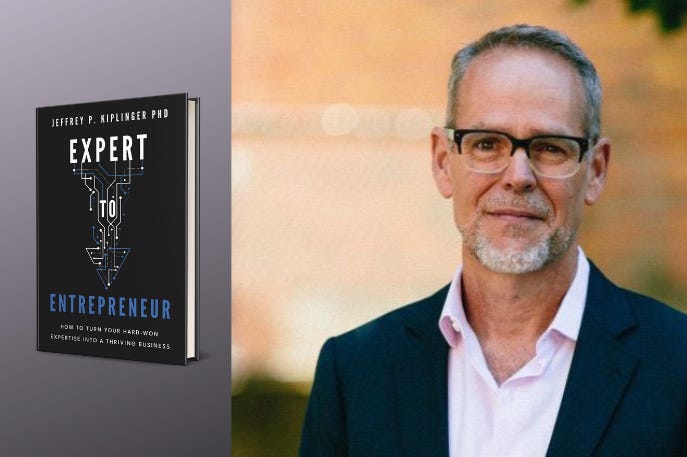
Expertise is Your Product. Selling it is Your Business.
Jeffrey Kiplinger is the co-founder and partner at Selling Science, a consulting firm dedicated to helping life science, contract research, and tools companies boost revenue by building and optimizing their scientific sales teams. He is also the author of the book "Expert to Entrepreneur."Jeff shared his personal journey from obtaining a PhD in organic chemistry in the late '80s to his corporate experience with Pfizer. He highlighted the frustrations he faced being siloed in his role and the desire to take his expertise on the road. I appreciate his perspective on the disconnect many scientists face when building businesses. I guess I would say, your expertise is the product, but it is not the business. I’m still chewing on that one as I think there is a lot to be learned from that. Jeff emphasized the importance of viewing the business as an entity itself, separate from the scientific expertise it offers, and focusing on growing the business side.Personally, I find marketing easy (talking about what I do). But sales is hard (asking for money). We talked about that and how to find the right people for your offering, stressing the need to identify the ideal customer and tailor marketing efforts to address their specific problems. What is, what do you do that's provided real value for your customers in the past? And the easiest way to find that out is to ask them. And that's also something that we're terrified of doing.I asked him about a quote from Brian Tracy. “Sales is just a transfer of enthusiasm.” When you believe in what you have, you can have a conversation and talk about why you are enthusiastic. But first you need to find out if the person in front of you has a problem you can solve.If you find this helpful, it kind of makes sense to subscribe, doesn’t it?Thanks for spending some time here, either way.The conversation also touched on hiring experienced salespeople, both within and outside the scientific domain, and the critical factor of finding the perfect customer. Jeff outlined the significance of defining an ideal customer profile, which guides marketing efforts and ensures a more focused and effective approach. Does the salespersons skills and experience match what you are trying to do? Do they have the right mix of science and sales expertise? For example, selling from a catalog is different from selling a solution comprising components from a catalog.If you're buying somebody's expertise in your science and they can't sell, that's a wasted investment. If you're buying somebody's network and their network isn't your ideal customer base, that's a waste.…I guess what I see is when people hire experienced sales reps or senior people who've already got field experience, very frequently they're not looking at whether that person is a match for what you're trying to achieve. They might be a match for your company, they might be a match in terms of the revenue they've produced in the past, but are you really checking them against what the company is trying to do?If you are on the road to selling your hard-earned scientific expertise, you should definitely give this episode a listen.Your deepest insights are your best branding. I’d love to help you share them. Chat with me about custom content for your life science brand. Or visit my website. This is a public episode. If you would like to discuss this with other subscribers or get access to bonus episodes, visit cclifescience.substack.com

Unlocking the Power of Earned Media - A Freelancer's Perspective
Note: For this episode, I asked ChatGPT to write a summary based on the transcript of our conversation. I enjoy doing these interviews and consider myself a decent writer. However, it takes a lot of time each week to write a summary that I find minimally satisfying and acceptable. You deserve better and I can put my efforts to better use elsewhere or upgrading the whole experience here. I did lightly edit this to make it sound as if I could have written it. This is my second attempt following some feedback from a respected colleague (you know who you are). I’m beginning to see how my own style differs from ChatGPT, even if what it produces is perfectly readable, but somewhat less memorable. Let me know what you think in the comments.Miranda Lipton is a talented freelance writer, photographer, and multimedia storyteller. In this episode we talked about earned media from a freelancer's perspective, focusing on how companies can collaborate with freelancers to get their stories published in widely read publications. Our discussion centered around Miranda's recent success in securing a feature in Fast Company about cultivated meat from fish. Our conversation should be enlightening for both freelancers and the companies that work with them.Miranda's Journey into Freelance WritingMiranda journey into freelance writing began in high school, and continued at the local town newspaper, a path that eventually led her to major in journalism at Ohio State University. Her desire to explore different facets of storytelling, including writing and photography, drove her to the freelance world. The Genesis of the Lab-Grown Fish StoryMiranda's fascination with food sustainability and innovation in the past few years led her to investigate the idea lab-grown fish. The idea for the article emerged from a deep dive into the world of lab-grown meat, a concept that had been around for nearly a decade. Miranda recognized a gap in coverage, particularly in the realm of lab-grown fish, which was an emerging and innovative field. This, combined with her passion for food sustainability, created the perfect recipe (ChatGPT made a pun!) for a compelling story. She did her research and interviewed folks at relevant companies, eventually leading to the publication of her story in Fast Company.The Art of Pitching to PublicationsI was curious about the pitch process. How did she get an articled idea accepted at Fast Company? She utilizes a consistent pitch outline, typically comprising two to three paragraphs that encapsulate the essence of the story. Miranda stressed the importance of familiarity with the publication's focus. In her case, she had been an avid reader of Fast Company for years, allowing her to confidently identify the magazine as an ideal platform for her lab-grown fish story. .Navigating Interviews with CompaniesWhile pitching to publications can be challenging, arranging interviews is more straightforward. Companies are generally eager to discuss their work. Her process involves reaching out to individuals at relevant companies, often beginning with CEOs or co-founders identified through LinkedIn. Of course, it’s important to gather a diverse range of perspectives to provide a well-rounded view of the subject.Thanks for reading cc: Life Science! Subscribe for free to receive new posts and support my work.Feedback and ChallengesI asked her if she had gotten any feedback. While direct feedback from readers is not common, she occasionally receives emails from individuals who have read her articles. The overarching response to her articles on topics like lab-grown and 3D-printed food often revolves around skepticism and the novelty of the subjects. Many readers express interest in these innovations as well as uncertainty about trying them. The unfamiliarity of concepts such as 3D-printed food explains their hesitation. She thinks that as research in these fields progresses, more people will embrace these innovations. I have similar feelings of hesitation. I did an episode several years ago on the SDBN podcast.Guidance for Companies Seeking Media CoverageFor companies without extensive PR resources, it is still possible to secure media coverage. Miranda recommended using platforms like Muck Rack to connect with journalists directly. The key is to reach out to journalists who cover topics relevant to the company's work. Tailored and timely pitches can catch a journalist's attention and pave the way for a mutually beneficial collaboration.Collaborating with FreelancersTo get the writer’s attention and interest, you need a story with a clear angle and a sense of timeliness. Timeliness is one of the most critical factors. A story needs to be relevant in the current moment or have enduring relevance. Other elements, such as impact, prominence, proximity, and oddity, can also contribute to making a story compelling and newsworthy. Understanding the freelance writer's perspective and the dynamics of storytelling can be instrumental in

Revolutionizing Demos for Better Customer Experience
All of us in the life sciences are in the business of making the world healthier. The instruments and reagents we sell and the technologies and therapies that result save lives. A scientist (after a lot of research) will look at a disease or problem and say, “I think I can find a way to fix that.”Can we, as an industry, look at trade shows like a scientist would, and ask, “How can we do this better and stick to our mission of making the world at least less sick if not healthier?”If you’ve been with me for a while, you know I have a love-hate relationship with trade shows. When I was a MarCom director, events were by far the biggest part of my budget. I imagined all the other awesome campaigns I could execute with that money. And then there is the waste. The stuff that ends up in the hotel trash before you get back on the plane and the shipping of huge amounts of equipment all over the world.On the other hand, if a lot of customers are going to be in one place at the same time… it makes sense to take your offering to them. And human connection is important. I know it’s important because this episode came out of my trip to ADLM, the event formerly known as AACC.Stuart Warrington is the CEO of Envoke. They create virtual demos to make your instruments accessible at more events and present a consistent story across the customer journey. More on that below.Stuart is a filmmaker. He has been created videos for the likes of Thermo and Bio-Rad. Videos used to have a longer useful lifespan. Then his customers wanted new content at a faster pace that was more engaging. Stuart suggested video games. “No. That’s not it.”“How about a virtual demo?“Yes!” It turns out those are basically the same thing just packaged differently. (They are both virtual experiences that tell a story with the user as the hero.) Stories are the key here. (The crowd cheers.)People need to tell their own story, right? And sales and training and all that is about that. It's like, how can I communicate the message of what this thing does in the most accurate possible way? And you need to give people freedom to craft that story. And that's why we do things the way we do them.We make this story block library and it's loads of little clips. And in each clip tells its own individual message. And then your user, your sales rep, your engineer, your trainer can take from that library and craft this story. It might be about a really specific bit of qPCR on the qPCR devices in the platform. And you know your customer only really cares about that. So we give you the opportunity to just pull those bits in and tell a story that is about your product with your product rather than PowerPoint presentations and brochures and videos and things like that. It just takes that to a slightly higher level and it also then starts saving you loads of money on shipping. Right?The result is that consistent experience for the user from the web to sales to training to maintenance and service. We talked about training people the same way pilots train. On a simulation. They can make mistakes without breaking an expensive piece of kit.Not subscribed yet? It would mean a lot to me.Thanks for spending some time here, either way.In addition to the contribution to sustainability without shipping products, the ability to customize a story improves the sales process. So one of our customers built a storyline for the event from the story block library. So they built something that was like, this is what we want to talk about. This is the story we're telling here. But then what it also did was they put on a QR code, so that you scan the QR code as your customer, and what you do is, you walk away with a different storyline that's specific for you, that's just about the thing that you were talking to him about.It's all come from the same place, we've just pitched it slightly differently. So it's all come from that story block library, we've just created specific storylines for different environments. And one of those environments is, “I need something a little bit better to take away and show to my boss.” And they take, they scan the QR code, they get their demo, and it's just for them, it's tailored for them, and they walk away and they show their boss, and it's a path to sales, right?This sounds better than walking away with a PDF or printed literature that the boss has no interest in reading.What is the path to this magical virtual future? For now, Stuart thinks companies will continue to send at least some products to events. The change comes from the bottom up where they no longer send instruments to smaller shows or remote locations. At some point, customers and salespeople see the benefit of this approach and hopefully, we all get more creative about how to use our space at larger events. Instead of bringing one instrument or a few, companies could present their entire catalog or larger configured solutions.This is only one way that we can improve the trade show experience and get

Commercializing Your Diagnostic
I traveled to Disneyland Orange County for AACC ADLM back in July to connect with a few folks and walk the floors of the exhibit hall. I was on my way out when Derek Hamre from Launchworks CDMO stood up at his table and got my attention with the best elevator pitch I have ever heard. And that landed him a spot on my podcast. I’ll share what it was at the end of this post.*Imagine this scenario. You’re in an academic lab or small biotech and you’ve developed a diagnostic test for a molecule or a disease. How do you go about commercializing your test? Do you need to get a bunch of regulatory approvals? What else do you need to think about? After all, you’re in a small research lab stepping into a whole new world. It turns out there are people who do this for a living and can help you plan out your strategy.Launchworks is a CDMO for molecular diagnostics. Services range from commercialization strategy and supply chain management through to fulfillment. A company might come to them with a locked down bill of materials and work instructions for kitting tens to hundreds of thousands of units at a time, or maybe they are early in the process and need help thinking through strategy from the beginning. …one of the reasons that we are pretty present at ADLM, AACC is the RUO kits. Those that are taking an idea from the R&D space and bringing it to the market and that commercialization process is a big, you know, lift for a lot of companies, even if they're bigger. Um, but especially for smaller companies when they have 5, 10 workers that have never gone through the commercialization process.Beyond that, what level of regulatory approval do they want? In some cases, a kit might be sold as RUO (Research Use Only), but a customer’s customer might want to take it further:And a lot of our customers, so we won't make those claims, obviously, our customers will go through the FDA filings or whatever, um, but some of our customers will just not want to go through the FDA process, so they'll make their kit RUO and then maybe one of their customers will buy the kit and then go through the FDA or 510K, PMA process… …so allowing another customer or their companies that they're working with to go through that process on their behalf might be the pathway for them. Regardless of the regulatory path chosen, Derek described the four main areas where a CDMO can help get a product to market.* Risk mitigation* Commercialization strategy* Manufacturing process* Supply chainYou’d like to avoid surprises in any of those areas. Taking supply chain, for example, it would be important to know if a supplier might be closing shop in the near future. Will you be able to maintain quality as you scale up?I asked Derek about the logistics of assembling and shipping hundreds of thousands of units from different vendors. Everything is done in-house. Mixing buffers, putting kits in bags, labeling and shipping. Launchworks has about a 30,000 to 40,000 square foot facility in Beverly, Massachusetts. Prior to this I knew that there were CDMOs for pharma, but not for diagnostics. ADLM was an eye opener in terms of the world of clinical chemistry. And this isn’t the only episode I recorded as a result of that visit. More in a couple weeks.*I don’t remember his exact words, but it was along the lines of “We’re helping visitors to ADLM become vendors at ADLM.”Your deepest insights are your best branding. I’d love to help you share them. Chat with me about custom content for your life science brand. Or visit my website.Intro Music stefsax / CC BY 2.5 This is a public episode. If you would like to discuss this with other subscribers or get access to bonus episodes, visit cclifescience.substack.com

Metrics, Creativity and Imposter Syndrome
Jamie Gier is the Chief Marketing Officer at Dexcare, responsible for establishing the company as a category leader in modernizing the way consumers discover, access, and choose their healthcare services – from digital search to booking an appointment. We enjoyed a wide-ranging discussion about marketing beginning with selling high-value products with long sales cycles and multiple decision makers. You’ve heard it before, but no one wants to be sold to. That’s the expressway to the delete button. Jamie emphasized building relationships and educating, showing customers how their lives could be better. At Dexcare, her team learns a lot from early adopters about why they chose their product and continue to use it. Ask as many questions as you can, just like we talked about last week… We don’t know what we don’t know.Jamie and her team are taking advantage of thought leadership in a big way.We happen to spend a big portion of our media budget on LinkedIn, for example, that happens to be the channel where a lot of our buyers are, and there's a lot of thought leadership.And so if anything, we've really focused our paid media on a single channel and we want to get really, really good at that. And so that's where we're placing a lot of our investments, but it's one of many. We know as soon as we capture their attention, a relationship begins. And that's where we have to start developing even higher levels of trust and rapport beyond just what they see with us in a digital way….we spend a lot of time with our clients simply promoting their own thought leadership on these topics.That's number one. Two, we do spend time on building content that is education- rich.Measurement is important and of course. I asked her how she makes the case for the tactics that are harder to measure. Observation and paying attention. When you land a large deal because someone heard about you on a podcast, that’s a pretty good sign. Not subscribed yet? Can we fix that?Thanks for spending some time here, either way.Jamie thinks that because of the emphasis on measurement, marketers have moved away from creativity. That took us on a little side trip to talk about Jimmy Buffett, who died right before this interview, and storytelling. I had written a piece for LinkedIn (not posted) about the impact JB had on my career. (DM me for details).Besides writing fun songs about pirates and exotic places, Jimmy’s clever use of language to make emotional connections set him apart. Jamie said:The thing about Jimmy Buffett is he brought you into his world, or he went into yours. And that was the power of the words he used in his songs.With one top-10 hit (not even close to his best song) Jimmy Buffett built a business empire around his collection of memorable characters and events. We should try to do the same.What advice does Jamie have for marketers just getting started?* Join communities where you can learn. (I recommend SAMPS) and * Don’t be intimidated by people with advanced degrees. They may know a lot in a technical field that took years of study. And you know (and love) marketing! Learn what you can from them, but also show them how you can help them with what you know. Science doesn’t get sold without storytelling.Your deepest insights are your best branding. I’d love to help you share them. Chat with me about custom content for your life science brand. Or visit my website.Intro Music stefsax / CC BY 2.5 This is a public episode. If you would like to discuss this with other subscribers or get access to bonus episodes, visit cclifescience.substack.com
Using the Voice of Customer to Design Consumer-Centric Diagnostics
Julie Garlikov is Chief Commercial officer at Sherlock Biosciences where they are developing over-the-counter diagnostics to put answers in the hands of consumers and empower them to make better health decisions.Sherlock is developing two platforms - a disposable test and a reusable reader for home diagnostics. You can listen to the podcast for some details on the science. Let’s focus here on VOC in design.Consumer-centric design for me is really all about embodying the methods of design thinking. Which is really making sure that you have a deep understanding and empathy for the user that you're designing for. And that you're solving a problem that they really have, and that you're doing it in a way that fits into their lifestyle or their needs.This approach involves lots of research, qualitative and quantitative surveys, prototyping and ethnography. Ethnography is more than observing how they use the product under development. One can learn from understanding how they use any product. Even the buying process is investigated. How do they shop for groceries?When it comes to the product itself, do they understand the instructions for use? More good stuff coming in future episodes. Don’t miss it.Thanks for being here.If you are developing a diagnostic for sexual wellness, you need to know not just the population dynamics of STIs but also people’s attitudes and beliefs around their sex lives. How do you reach people based on what you know about their behaviors? The results can be surprising.… one thing that I uncovered in this attitudes and usage study that we did with almost 1300 people, young people in the U.S. was a group I'm calling, it's like a segment of the population, I would call frisky-riskies. So frisky-riskies is a group that skews a little more male than female and they're a group that's engaging in behavior where they have more frequent casual partners, and they're not often using protection, and they know that they're not using protection, and they know that puts them at risk.So, what's interesting is that they actually test more than other people because they use testing as a way to mitigate the things they're doing that they know are causing risk for them.The ability to do home testing for all kinds of indications can certainly reduce the spread of infectious diseases and help move us forward to thinking about prevention and general wellness. In the case of STIs which can be asymptomatic in women, there are implications for fertility as well.As I think about our conversation, it struck me that we all have an opportunity to make products that will improve people’s lives in some way. But what can we do to make the biggest impact possible with the products we make or the services we offer? It seems like asking questions and observing the behaviors of our ideal customers offers a big return on a little extra effort. I just realized last week’s episode reached a similar conclusion about how the early work in any project seems to have an outsized impact. It’s like painting a house. The quality of the outcome is all in the preparation.Your deepest insights are your best branding. I’d love to help you share them. Chat with me about custom content for your life science brand. Or visit my website.Intro Music stefsax / CC BY 2.5 This is a public episode. If you would like to discuss this with other subscribers or get access to bonus episodes, visit cclifescience.substack.com
Rethinking Lab Workflows Impacts More Than Productivity
Cheri Walker and her colleagues started Rhinostics in the middle of the pandemic in response to the massive increase in testing volume required to keep faculty and students at Harvard safe from Covid. That’s a story in itself. The principals never met in person for the first nine months! We had all of our calls virtually. It was all done telephonically, I mean in Zoom. I basically started the company out of my guest bedroom because we didn't need space for the first year. We now have a facility which you can see behind me and we have, you know, all the normal things that you would have as a company grows and expands.Make sure you listen to get the details on that.But those workflows I mentioned…Remember the nasopharyngeal swabs that ticked your brain? No one likes those and processing those samples in that format is cumbersome. Harvard developed a new type of polypropylene swab with an active end that interacts with a decapping robot. By developing and manufacturing this new type of nasal swab (no more brain tickling) Rhinostics was able to create:* A better patient experience with a more comfortable, DIY swab.* A smoother automated workflow with faster turnaround and* Potentially reduce turnover of medtechs in the labI think that's been the flip side of starting a company in the pandemic is just the supply chains and labor and all those issues. And then when you actually talk about the problem that we're solving and the real pain point that exists in laboratories today. Not only are there the cost structures and things like that, it's just finding med techs and people to work in the lab.And a lot of them got burned out. There was a small number before the pandemic, but a lot of them got burned out. And med tech now is making anywhere from 125, with 20, 000 signing bonuses. And, you know, retention turnover in the labs is something in the 25 to 30, 35%. So, it's a real issue, um, facing most of the laboratories right now.The automated workflow removes the manual step of decapping swabs before analysis. Barcoding ties the sample to the patient through an app on their phone and allows for better sample tracking. Both of those make for a better experience for the user and the med tech.You’re subscribed, right? I have several interesting episodes in the can already. Don’t miss ‘em.Thanks for being here.The insight here is that rethinking workflows and a small, unsexy device can have a huge impact on lab productivity, patient health and worker satisfaction. No medtech went to school thinking they would be uncapping tubes all day, rather than looking after equipment and solving problems. I asked Cheri where sample collection is going in the future. There is definitely a move toward home testing. The pandemic proved that it can be done accurately. There is currently an epidemic of STIs (sexually transmitted infections) for which the option of buying a kit off the shelf at the pharmacy would seem to be a way to discreetly get individuals to seek treatment if necessary while maintaining some privacy.Cheri also mentioned, for example, having a teenager on Accutane where blood lipids needed to be tested on a regular basis.You could send our little VERIstic® blood collection device, do a finger prick, send them home with ten of them, and then they can just do it and send it back. They don't have to drag their teenager back to the clinic to stay and wait for a blood draw and keep them out of school……it's interesting because everyone, it's not just home health and kit providers that are interested, like the whole hospital health system is trying to figure out how can we use these tools to actually have better health care for people that's more convenient, but still just as accurate and maybe get more compliance.More powerful analysis on the back end of testing is great, but across life science, I wonder if the real opportunities to make an impact are at the front end of how we do things.Your deepest insights are your best branding. I’d love to help you share them. Chat with me about custom content for your life science brand. Or visit my website.Intro Music stefsax / CC BY 2.5 This is a public episode. If you would like to discuss this with other subscribers or get access to bonus episodes, visit cclifescience.substack.com
From Tradition to Transformation: The Evolution of Hiring Practices
Hiring people is difficult, expensive and risky. It’s a skill in itself for which most of us get very little practice. I talked to Ken Schmitt about how hiring has changed and a few things to think about when filling a role on your team. Fun fact: Ken got his first job at a staffing agency by answering an ad in a newspaper!Ken’s agency specializes in placing marketing and salespeople. I asked him about skills that drive hiring decisions:…marketing especially needs to have that experience and understand the language of sales as well to be truly effective on the marketing side and be able to understand the broader business, not just marketing… is the center of the universe, but marketing is much less of a linear role, if you will, or a stop along the way. And it's much more circular. You know, it used to be that marketing did this, this, and this, and then stopped, handed it off to sales, and now sales took it from there. But now it's again, a much more circular kind of collaboration and relationship. And so whenever we're talking to candidates about the senior level marketing searches that we're doing, we're asking them, tell us about your experience collaborating with sales. How a candidate collaborates with sales is important. There are plenty of good marketers without it, but I’d say actual sales experience would be even better. Looking back at my own experience, it’s stunning how little marketing (marcom at least) was connected to sales in the life science companies where I worked. We could spend a few episodes on that…When hiring, Ken recommends looking at your team as a whole. What skills do you already have and what gaps are you looking to fill? Are there people from outside the industry who can bring new ideas and new skills to the effort?We discussed whether and when a college degree is necessary. This is an evolution I find fascinating. I think a fair amount about whether and how much we discount or overvalue our degrees based on many factors including how long ago we attended college or specific classes we took but no longer see how they might have been relevant. I’ve known great marketers with no science background and we put scientists into marketing roles with no marketing background all the time. I’d love to see your comments about what you think is necessary and or optimal.I have several interesting episodes in the can already. Don’t miss ‘em.Thanks for being here.My favorite part of the conversation was about employer branding. As a content marketer, this speaks to me. Every company has a brand in the eyes of its customers. There is also a brand in the eyes of its employees and potential hires. Let’s look at it like a marketing funnel. At the top there is what your company does, but also what it stands for. What is the culture like? Does the actual culture reflect the aspirational statements or taglines one often hears?At the middle of the funnel are job descriptions - another candidate for a full episode. My sense is that many employers aren’t thinking about whether a job description might turn away qualified candidates based on the way it’s written. I often see descriptions that seem to say, “Don’t be like the last person who had this job…” Hmmm. Something to think about.I understand the description needs to be accurate. Can it be inspiring at the same time? I’d like to think so. Given that the job description is one of the first impressions for new hires, it’s a significant part of your brand. Why not show it to someone outside of your company and ask them what kind of impression it makes?Of course, the bottom of the funnel is the interview and even the onboarding experience. From personal experience, I’d say these things matter a lot. A small investment of time and effort upfront will pay off many times in the long run.Your deepest insights are your best branding. I’d love to help you share them. Chat with me about custom content for your life science brand. Or visit my website.Intro Music stefsax / CC BY 2.5 This is a public episode. If you would like to discuss this with other subscribers or get access to bonus episodes, visit cclifescience.substack.com

Corporate Communications: Setting a Frame for Conversations
It will come as no surprise that I have talked to a number of people in marketing and sales recently. (That’s literally half of my job.) Sometimes, those conversations all seem to point in the same direction. This month is one of those times.The theme that has arisen spontaneously is how potential customers become customers. And the assumptions we make around that.The assumptions are that: * Potential customers know who we are. * We have the product or service they need. * Our product is demonstrably better (on some criteria) and will win the day.We also assume that we know why our customers buy, and even that they would know, if we asked them, what got them on the path to purchase our product or service. Some of the things I heard: * Most people who could buy from us are not in-market at any given time. How do we get into their consideration set when the time comes?* Our customers are only interested in specifications. Stories shared on social media have little value. (I disagree.)* A very large, new customer found out about us through a podcast (dark social, I heartily endorse).* Many companies have no process for leads (contacts?) to be systematically converted to sales. - I suspect many of you feel better about your efforts now, huh?* Someone needs to set the frame to have a productive conversation. (Thank you Brian Morgan.)That all leads me to corporate communications. Given all of the ambiguities, even after mapping out customer journeys and measuring every possible interaction, we need to start the conversation somewhere. And the earlier the better.There is no way every potential customer, investor, etc. knows who you are, why you exist or what you do. Assuming otherwise is leaving money on the table. As is assuming that your specifications can overcome whatever rationale the customer already has in their mind at that very late stage in the buying process.What are you leaving on the table by not subscribing? Insights? Connections? Fascinating conversations?Thanks for being here.Ryan Flinn is a corporate communications expert who knows what makes an interesting story. As a former Bloomberg reporter, his performance was measured on the ability to gather eyeballs. The fact that people make decisions based on emotion is well established. Those emotional engagements can happen very early with good corporate communications. It happens by sharing memorable stories about how people use your products and services. For example, you could explain who designed them along with why and how. Or show how the founder’s hobbies relate to the company. Ryan explained that Bloomberg had reporters covering large companies on a daily basis.I had to find articles that they didn't deem important enough to cover for like a news beat, but that I could kind of twist into an interesting angle. So, like for one, I did a profile on Autodesk, the CAD software company because I found this angle of the CEO… He has the woodworking shop in Berkeley, and he carves tables and chairs and, you know, it's the analog to the digital version of what the software does.…looking beyond just again, the bullet points of what makes a product interesting or important to consumers. What is the angle that will help the reporter write a story about it or somebody going, “Wow, what a cool example. I wanna learn more about that”?Ryan shared his insights on what makes an interesting story, how they can create a competitive advantage and how to build relationships with reporters that can lead to earned media opportunities.As I reflect on this episode and my recent conversations (you’ll hear from more of those folks soon), I think of how assumptions about our audience get in the way of our marketing at one stage or another. We need to do well at every stage. And just because we can’t measure something doesn’t mean it’s not worth doing.What activities grab a person’s interest? If that person isn’t a potential customer, what might make them share it with someone else who could be?Is our content memorable enough to get us into the consideration set when the customer has a need? Have we made an emotional connection that provides an advantage? Will we deliver a story and an experience that makes the customer confident in choosing our solution?Marketing is kind of like hosting a cocktail party. It’s a conversation we are having simultaneously with a lot of people joining in over a long period of time. We are continuously inviting new people to that conversation while at the same time introducing some of them to our dear friends in sales.Your deepest insights are your best branding. I’d love to help you share them. Chat with me about custom content for your life science brand. Or visit my website.Intro Music stefsax / CC BY 2.5 This is a public episode. If you would like to discuss this with other subscribers or get access to bonus episodes, visit cclifescience.substack.com

Family Offices as a Source for Funding Life Science Start-ups
If you are a founder of a biotech or life science startup, you don’t want to miss this episode. If you’re not, you may still find it fascinating. I talked to Sal Buscemi about family offices and what kinds of assets they invest in.Until recently, I didn’t know what a family office was. These are people or families with at least 100 million dollars of investible assets. They represent a unique source of funding for startups. They have different goals and timelines than a typical VC firm. As a result, you’ll need to take a different approach to communicating with them.The takeaway here is the same as always for good marketing. Know your customer, and what they value. Craft your message/offer around that.When you have that much money to invest, you certainly want a return but you also want to make an impact. And let your friends know about it. They are looking for statement-class assets. These are assets that are a conversation starter anywhere you go. Successful people want to be associated with successful people from other industries. Example: Be the first to show up with a million dollars and have a Nobel Prize winner join your family for lunch. As I mention in the podcast, no one will shed a tear for the folks who have millions to invest to make more money. But there is a psychological burden on the 2nd and third generations. How do you demonstrate your own value, your skills, etc in the shadow of inherited wealth? Sal points out the scene in Ford vs Ferrari where Enzo Ferrari insults Henry Ford Jr by reminding him that he is not Henry Ford. He’s Henry Ford the 2nd. So the question for them becomes, “What’s the best way I can make an impact?” You can make an impact here by subscribing to the podcast wherever you listen and to my newsletter.Thanks very much! You did subscribe, didn’t you?Sal stressed the importance of relationships. Patience is your friend. No “quant-splaining.”People today, if you were to do some research, they don't trust facts and figures anymore. They trust the stories, and that's really what it is. And they want to make sure that if they're sitting in front of someone, that person's gonna make the best decisions as a steward of their wealth and capital to go into it. Because at the end of the day, and everybody listening to this as a founder should really, really figure this out. Nobody is going to part with their life savings unless they give you their time first. And that's so important to remember. And here’s a bonus, I think especially for life science and biotech companies. Some of these investors are looking at longer time horizons than a VC firm. If you look at anything on LinkedIn or maybe on bloomberg.com, you'll see that, there is a bias right now where a lot of these families are going in and they're getting the same terms that, you know, any other fund would get, but they don't want to be alongside the fund because they don't wanna have someone that doesn't have at least a 10-year horizon with this. And I can tell you there's some families that say, Sal, don't even talk to us unless it fits our 40-year plan. Finally, Sal noted the importance of media, going on podcasts! and having an online presence that your investors can point to that, again, make them look good. I have some ideas around that. See below and be sure to listen to the full episode.Your deepest insights are your best branding. I’d love to help you share them. Chat with me about custom content for your life science brand. Or visit my website.Free Book: Calling the CapitalSal’s Firm: Harlem River NavyIntro Music stefsax / CC BY 2.5 This is a public episode. If you would like to discuss this with other subscribers or get access to bonus episodes, visit cclifescience.substack.com

Pivoting and Storytelling Along the Founder's Journey
Steve Harvey and his business partner managed to raise enough money to rent some lab space in Cambridge (UK) to get started on an idea they had for synthesizing template-free DNA. The StartThey invited an investor to meet them at the lab where they sat on the garden furniture Steve brought with him because they had nothing else.TL;DR They got more money. Camena Bioscience was getting started.That was the first hurdle. There were more. Competitors had similar ideas around the IP. And evolution had a different idea, altogether. Synthesizing DNA without a template means providing an enzyme with modified nucleotide bases so that only one can be added to the DNA chain at a time. After addition, a blocking group is removed, allowing the next base in the sequence to be added. That’s the only way to end up with the gene you intend to make. The problem is that most enzymes are very good at what they do. In this case, the enzyme, terminal deoxynucleotidyl transferase, naturally prefers unmodified nucleotides (evolution). If there are any of those contaminating the mix, the enzyme will add a string of them even before you can spell “DNA”. The end result is likely a lot of DNA of the wrong sequence.The PivotSteve decided it was time to take a different approach. (If you meet a founder who has never had to pivot, congratulate them.) It’s a hard thing to do after investing time and money and being (partially) successful.The new approach seems to have worked out. Camena published a couple of application notes and they were picked up by Nature Biotechnology for a story about DNA synthesis technologies.Now they were getting customers but awareness was still a challenge.I had a couple of people that came to me and said, “We've looked at your website. We, don't really know what you do.” Okay. And so I decided that we need to get some kind of numerical value on brand awareness. I announced the team, “We're gonna run some brand awareness surveys. We'll put it out via LinkedIn and Twitter as well. We'll understand, you know, do people really know what we do?” And I put it out and I was quite excited about doing this. And then I think it was two weeks later, we'd had five responses. And I think one of the responses was from a family member. So, so it didn't go very well.But Steve wasn’t deterred. He tried again with the offer of a $25 Amazon gift card. I think it was within a week we had 2000 responses. So it was, the whole thing was really funny. But what came out of that was that, it was roughly kind of 75% of people that responded to the survey had only heard of us in the last six months, and we'd been going for nearly like six years!Hey, that’s progress.The StorySteve decided to post regularly on LinkedIn about his journey, which is how I found him. He did a great job of posting a little bit of the story each day, (like Charles Dickens!) and teasing what was to come.His followers have grown significantly and no doubt more people know about Camena Bio as a result.In my own experience, authentic personal stories get the most traction. People are interested in people. Products are useful. People are fascinating. You may not think you are, but I’ve interviewed hundreds of people across several podcasts for myself and my clients. Only one was an absolute dud that left me with nothing to publish.Find your channel. It might be LinkedIn, your blog, a podcast, someone else’s podcast or that thing that was Twitter yesterday, but is apparently “X” today.Schedule a 15-minute chat with Chris about turning conversations into content for your life science company.Intro Music stefsax / CC BY 2.5 This is a public episode. If you would like to discuss this with other subscribers or get access to bonus episodes, visit cclifescience.substack.com

Inspiring Engagement and Satisfaction at Work
Before becoming the CEO of Diaago, a distributor of labware for life science, Jackson Hyde spent some time managing a staffing agency, placing day labor with companies filling short-term needs. That gave him an appreciation of flexibility and an understanding of the diverse needs of employers but also employees. As the founder of Diaago, Jackson’s management approach emphasizes the importance of understanding the whole person and their individual requirements in the workplace. I think that the first thing we have to look at is how, how diverse any workplace is, especially when you're dealing with a manufacturing type of facility. You know, you have people that make the product. You have people that design the product. You have people that sell the product or market it in whatever way.So there's a lot of different processes happening and it's different people and different backgrounds that are gonna fulfill all of that. So at the end of the day, to be successful, you need to get the most out of people. And I think one of the ways that is underutilized, is taking a look at the whole person in that process. And seeing not only how they all fit together, of course, that's a whole other conversation. But looking at what each person needs to get out of their work.He challenges the concept of work-life balance, suggesting that work is an integral part of our lives and should be meaningful and fulfilling.It might be interesting to talk about the idea of a work-life balance for a second. It is an idea that could use some reflection. Right now, we're in an interesting place, kind of post-pandemic. You know, people have gotten used to one way of working. We're pushing people back towards another way, depending on your take on it, but I think what’s outdated about that concept is that it never really existed to begin with. It's almost, counterintuitive to think about it because there are very few jobs or careers where you can come in in the morning and leave in the evening and never think about your work.We're all gonna think about it no matter what we do. It is a part of our life. So the idea of the work-life balance that has been thrown out to us is, okay, you need to separate work and life. And, it's two separate things. But it's really not, it's a part of what defines us. It's part of what completes our human experience.It's finding worthwhile and, and meaningful work.On the other side of that, he recognizes the privilege associated with following one's passion. Not everyone has that opportunity. It’s the responsibility of leaders to bring passion and purpose to employees' work. We can bring some passion to their work. We can bring in the outside influences to show them what makes their work important.For example, on the manufacturing side, being able to tell people, “When the products leave our warehouse, they're going to a facility that's researching cancer and you're a part of that.”Schedule a 15-minute chat with Chris about turning conversations into content for your life science company.Intro Music stefsax / CC BY 2.5 This is a public episode. If you would like to discuss this with other subscribers or get access to bonus episodes, visit cclifescience.substack.com

SAMPS Live! Glasgow June 12-13
If you don’t know SAMPS, you’ve been missing out. It’s the only association for Sales And Marketing Professionals serving the Sciences. I’ve been a member since 2014 and it has been a huge boost for me in terms of networking with and learning from like-minded professionals in our business.Live events are back and the European meeting takes place right after ESHG, June 12 (cocktails and appetizers) and 13 (full agenda), this year focused on the use of AI for sales and marketing. And as always, there will be a panel of customers (PIs post-docs, procurement…) who will be happy to tell you why your email didn’t work or your website is hard to navigate and whose site they go to for good information. You don’t want to miss that, do you?In this episode, I talked to Laura Haldane from SciLeads and Paul Avery from BioStrata as a teaser for the event. Paul has been geeking out on all of the latest AI tools and can tell you what’s useful and what to look out for.Laura says she’s not a social media influencer, but casually dropped that she has 15,000 followers on LinkedIn. (I want to know her secret!) There will be a session on the use of social media for marketing and how AI fits into that workflow.Sign up at the link below. I wish I were going to be there to see the sunset at 10:02 pm but maybe I’ll catch you in Boston in December.SAMPS Europe 2023 - Agenda and RegistrationSAMPS North America 2023Schedule a 15-minute chat with Chris about turning conversations into content for your life science company.Intro Music stefsax / CC BY 2.5 This is a public episode. If you would like to discuss this with other subscribers or get access to bonus episodes, visit cclifescience.substack.com

Your Investor Pitch Needs Help
I’m a big fan of The Prof G Podcast. Scott Galloway is a thoughtful guy and I’ve learned a lot from him. One of his common phrases is “It’s hard to read the label from inside the bottle.”By that, he means, whether looking at ourselves or our business, it’s very helpful to get some outside advice.This definitely applies to companies pitching to investors. First of all, the story you tell is very important for getting their attention and also for the final valuation. If you think it’s just about science and the data speak for themselves, you’re leaving money on the table.I talked to Oksana Bovt from Theoria Creative. They help life science companies craft stories for investors. Your science may be exciting and innovative, but that’s not enough. You may have an opportunity to tell a better story that you aren’t even thinking about.And you don’t have to be first to market to succeed. Oksana shared an example of a company going after the same target as a company that had already been bought. But because the new company approached the problem based on entirely different science, they were able to make the case that they weren’t just a little better, but significantly different.In terms of the actual presentation, Oksana recommends, never letting the investor fill in the blanks. It’s important to keep their attention and connect all the dots. If they feel like they’ve seen something before, their mind can wander and make assumptions. Don’t let that happen.Don’t miss an edition of this newsletter either.And subscribe to the podcast to get the full story. Links at the bottom of the page.What happens after you successfully raise money? Get ready to start raising again, right away. The fun never stops in biotech. You need to be constantly telling your story, laying out milestones on your website and making noise as you reach them.Finally, what do you do when things go differently from what you had envisioned for your product or company? First, be assured that you are not the first company nor the hundredth that this has happened to. When it’s time to pivot, lay out what you’ve learned (both scientifically and commercially) and the vision for what’s next. No investor wants to throw good money after bad. But neither do they want to walk away from a project that still has potential. Finding new opportunities has costs also, so if you can make a case for the pivot, gather your data and tell a new story.Schedule a 15-minute chat with Chris about turning conversations into content for your life science company.Intro Music stefsax / CC BY 2.5 This is a public episode. If you would like to discuss this with other subscribers or get access to bonus episodes, visit cclifescience.substack.com

At the Heart of Culture is Trust
David Enloe is an organizational culture architect. I found him on LinkedIn and had to find out what that was besides damn good personal branding. I’m always interested in company culture, its value, and how it’s established and sustained.He was hired as the CEO of Societal CDMO in the midst of the pandemic, coming on board without even an onsite visit, to work with people he had never met. His only contact up to that point was the board, none of the executives. I asked him about how he drives culture through the organization, and about how to merge cultures when bringing two companies together through an acquisition. His answers got me thinking about what culture really means.If you had asked me before this interview, I would have said that culture is “the way we do things or how we interact with each other.” These things are still true. As David points out in our conversation, it starts with why we do what we do. In this case serving customers and ultimately patients. But what I learned from talking to him is that culture reaches us on a deeper level. Culture is about trust. Whether in a company, a community or a country, it’s the comfort and the freedom that comes from knowing what to expect from the people around you.I love doing these podcasts for you. (This is episode 181). How about showing some love in return? Please subscribe and share.Thank you. How do you measure the value of culture? Start with employee retention. Finding a job that fits your skills might be the easy part. Finding one where you are valued and feel like part of the team is a little more difficult. Culture also affects productivity and scalability. As a company grows, you can’t scale people along with revenue. The way things are done might have to change. Although most people are resistant to change, David says people just need to know they’ll be supported.We acquired this smaller company in San Diego, August of ‘21. It was a small, very entrepreneurial company.Everybody had their finger in every pie at all times…But when somebody's doing everything there, there can be a sense of loss as they start to let go. And so at the bottom of all of this is the T word, isn't it? Trust. You know, they've gotta trust that, that the other people are not gonna let 'em down. And again, that's something we have to bake into our cultural values.And so if you’ve ever wondered why “culture eats strategy for breakfast”, you might have a better idea after listening to this episode.Schedule a 15-minute chat with Chris about turning conversations into content for your life science company.Intro Music stefsax / CC BY 2.5 This is a public episode. If you would like to discuss this with other subscribers or get access to bonus episodes, visit cclifescience.substack.com
Transitioning from Service to Product
“Give a man a fish and he eats for a day. Sell him the hook, line and rod and get a higher valuation.” - Unknown ;-)KromaTiD™ is in the business of helping researchers working on cell and gene therapies make sure, for example, that their CRISPR edits are going to the right places and not causing unwanted structural variations. Those cells ultimately go back into patients and safety is a top concern. KromaTiD had been a service business. Customers sent their cells for analysis and KromaTiD sent back a report.They have transitioned to a product (and service) business, selling kits to allow scientists to do more of their own analyses. I was curious about what this change would look like and what it means for the business in terms of not only processes but also valuation and future opportunities.Nathan Wood is the CEO of KromaTiD and he was kind enough to share their story with me. The valuation part is the easiest to understand. A service business is labor intensive, making it difficult to scale efficiently, although easier to get started. The customers in this case are often in a facility with access to the specialized microscopes that are the key piece of equipment for these analyses. Given the right reagents and good instructions, much of this can be done self-serve at a significantly lower cost.That also means that researchers can afford to screen many more candidates much earlier in their work, which likely means finding better results faster (additional savings).When assessing value:…if you think about an exit for an organization like KromaTiD or others, it's much easier for a large strategic company in the marketplace to purchase a company that has grown to over 10 million or higher and has a mixture of services and products because the products can become just a product line for them, if you will, and they don't have to go build that out, and then they can decide how they want to grow the service business. Lowering the cost of the analysis also opens up the market for academic scientists who likely can’t pay for the more expensive service option. That all sounds great, but making the switch isn’t easy. You might think, “Hey, pack up the reagents with the protocol and send them out.” To which Nathan might reply, “Send them in what? By whom? And how?” Up to this point, the deliverable was a PDF.There were no boxes, no containers, no labels. And believe it or not, getting those things right is important. This is the nitty-gritty of a small biotech beyond the sexy science. You need processes for taking orders, filling them, packaging and shipping. Quality systems… The list goes on. That means new employees. And lots of change for the existing staff.The marketing message and the audience changes as well.Once it gets going though, things get smoother, including revenue. As a service business, the revenue can be lumpy. A customer may order a report and be silent for a while. With easy-to-use products, they just reorder. Service takes time and is billed on completion. Product is billed on its way out the door. Revenue becomes more predictable which makes it easier to think about where to invest the money that is coming in.In the end, there is the opportunity to leverage your service business as your R&D. What else can they do for customers that might eventually become a new product line?If you went to business school, this might be marketing and finance 101 for you. For me, I just enjoy following and sharing the stories of people solving problems. It never gets old.Nathan on LinkedInSchedule a 15-minute chat with Chris about turning conversations into content for your life science company.Intro Music stefsax / CC BY 2.5 This is a public episode. If you would like to discuss this with other subscribers or get access to bonus episodes, visit cclifescience.substack.com

A Rabbi Walks into a Lab...
Just as scientists are curious about the “how” of the world, Lee Jay Lowenstein was curious about the “why”. That led to his becoming an ordained Orthodox rabbi. He was also a high school teacher and principal before spending some time in a non-profit as a fundraiser. At that point, he must have had some sales skills, but wanted something more.With no real background in life science other than studying as a pre-med for a short while, he joined a partner and decided to sell laboratory supplies. I was curious about how that happened. Why life science? And how do you sell supplies to people when you have little idea of what they are doing? To answer the why part, what stands out to me from our conversation is the respect and admiration he has for the scientists doing research, hoping to benefit humanity. As to how he does it, relationships and curiosity. He never stopped asking questions about how and why a researcher does their work the way they do and how he could help make it easier for them. I’m more of a marketer than a salesperson (I find sales difficult) but that seems like a pretty good lesson either way. Ask questions. Make the customer’s life easier.I had been working for another company and just feeling I can do better. I can do better than this. These people deserve better. They deserve to be treated like royalty, and the opportunity presented itself to join hands with a partner and jump in with both feet, and I did.As I reflect on what it takes to be successful, it seems that there is an advantage to being somewhat ignorant, yet bold. (I have no doubt that discipline and hustle are important as well.) Some call it the curse of knowledge. When we think we know what someone needs (even if we’re right) we miss the opportunity to discover what else they might need that we could help them with.Lee is never afraid to ask a question and ask again if he needs to. In my experience, when you ask a scientist a question about how or why they do something a particular way, they can’t not answer. Their purpose in life (and how they are paid) is to share what they’ve learned.…people in the lab are extremely generous with their time and understanding. I learned so much about the business, just sitting and talking to people. Tell me what you do. You know, tell me, why do you do it this way? Why don't you do it that way? And people were more than happy.I don't think their PIs were happy that they were wasting their time talking to me, but they, you know, they're very generous and they want to wanna share their science. Today there's fewer and fewer things that people can say that I don't know something about. But honesty and being willing to say, “I don't know”… I've never had a lab manager say, “Well, you're an idiot. Get outta my lab.”I’ve said it before. Curiosity is a superpower. Combine that with helpfulness and see where it takes you.Lee Jay on LinkedInStellar ScientificSchedule a 15-minute chat with Chris about turning conversations into content for your life science company.Intro Music stefsax / CC BY 2.5 This is a public episode. If you would like to discuss this with other subscribers or get access to bonus episodes, visit cclifescience.substack.com

Why is Cole Yancy Posting on LinkedIn Every Day?
Cole Yancey was unsatisfied being a bench scientist. So much so, he asked the freezer repair guy about how to get out of the lab. “Maybe I can do what you’re doing.” The freezer guy was not helpful. It reminds me of a scene from Top Gun.1st Lesson in NetworkingCole started chatting up sales reps who came by the lab. One took him under his wing and soon Cole was having lots of conversations with his new network and eventually found himself as an application specialist at Hamilton Robotics. It’s the perfect role to transition from the bench to sales.Eventually, he gets a job in sales “with his back against the wall” trying to generate some interest in what he’s doing. Looking on LinkedIn, he noticed there are a lot of salespeople teaching others about sales. He also saw a gap. No one was talking to scientists about robots and what they could do for them. What was a business necessity became a great creative outlet as well.He started out by writing down all his ideas and all the questions people had about laboratory robots. Then he would spend some time every week to map out his plan for the next week or two. Those two activities make it easier to sustain the process. He was learning by jumping in and doing it - both in terms of sales and creating content to generate interest.Like these podcasts? There are more life science stories coming every week.Setting Internal Goals Pays OffBecause LinkedIn is global and his sales territory is not, some of the leads he generated were passed to his colleagues. That’s good for the company but can (understandably) be demoralizing when you are trying to hit a number. At that point, he shifted to more of a 50/50 company/personal approach. That turned out to be a good move. After a recent layoff, he had calls within hours from interested companies.It's incredible, the power of networking and the power of having some sort of… and I really am like reluctant to use this, but like to have some sort of brand on LinkedIn, like personal brand. It's incredibly powerful. And just to kind of give you an idea, I was laid off in December and, you know, my current role…. Basically, they reached out like hours after I got laid off. I hadn't told anyone. Through the grapevine someone had reached out to them and let them know, and they reached out to me and said, “Hey, we'd love to, to chat and kind of, you know, this is what we're doing. Let's talk.” And that's where I am. Right. That's, that's it was, it was a quick layoff and it was, it was incredible to see like the outpouring of the community come out and support me. You know, people that you don't think are watching are watching, so they see… they never interact and then all of a sudden, they're in your DMs like saying, “Hey, love what you're doing on LinkedIn.”Advice for CompaniesCole is a big believer in having a growth mindset. Clearly, he has one himself, but companies can too. How do you think bigger and work toward the future? You should want to get as many eyeballs on your company (not just your company page but the people that make up your company) as possible. Not only is it good for demand generation when people ask about your business, it’s great employer branding when potential recruits see smart, happy employees posting regularly.Beyond that, it’s outsourcing some learning and development. Cole is learning by putting stuff out every day while serving customers at the same time.Follow Cole on LinkedInSchedule a 15-minute chat with Chris about turning conversations into content for your life science company.Intro Music stefsax / CC BY 2.5 This is a public episode. If you would like to discuss this with other subscribers or get access to bonus episodes, visit cclifescience.substack.com

Generative AI for Inspiration
David Nathan wrote a children’s book in the carpool line at his kids’ school. ChatGPT delivered the text and he used Midjourney to illustrate the main character.Generative AI applications like ChatGPT and Midjourney are dominating conversations in the marketing world recently. The last episode of cc: Life Science covered possible uses and concerns around Chat GPT which generates text responses to user prompts. Midjourney is a tool that will generate images based on your prompt, having been trained on a gazillion JPEGs from who knows where.David is an agency owner diving into Midjourney to explore it’s potential uses in marketing. We talked about where he sees value as well as some of the limitations.As an agency working with designers and clients, presenting concepts and getting feedback can be expensive even before you get to the deliverables. And not everyone is gifted with the ability to express an idea through a rough sketch, let alone words. David sees a benefit in being able to present a basic idea of a trade show booth, for example, and get feedback from the client before giving the task of detailed design to a professional. I'm always finding myself in a situation where I have ideas and then I have to try to translate those ideas into, like understandable language for design. to have them then create the ideas. So not only can I now create some things myself at a pretty high level… you would have to be really, really talented digital renderer to create some of these images. But I can also use that as a starting point to help me communicate my ideas to the artists now too, right?One of my (many) concerns is that, while you can prompt for images in a certain style, everything I’ve seen has a similar vibe to it. I don’t know if that’s because I know it came from an AI or what. David says that each platform has a certain “lean” to it. Will we become numb to seeing a universe of media that all feels like it was generated by a machine has no soul?What does this do to artists and creators? One consideration is whether they should be compensated for the use of their work in training the algorithm. The other is simply their continued employment. Having said that, photography didn’t eliminate the art of painting. One could argue that it opened up new possibilities for painters to explore different ideas as opposed to reproducing reality for royalty.Finally, we talked about the children’s book he made in the carpool line. David noted that ChatGPT came up with a reasonably good effort based on his prompt. And Midjourney was able to present a character that satisfied the imaginations of the five kids in the back seat (a monster like something you might find in a Pixar movie.)What was interesting to me is that you couldn’t illustrate the whole book this way. For example, “Now show the same monster doing X.” Although the AI creates a “monster” image based on its training from other monster images, it doesn’t really know what part of the image is a monster. I found this fascinating and, honestly, inspiring in another way. Human beings are still amazing. My hope is that we can use AI thoughtfully while conscious of not losing our humanity. What are your thoughts? Have you tried Midjourney or Chat GPT? Leave a comment below.Schedule a 15-minute chat with Chris about turning conversations into content for your life science company.Intro Music stefsax / CC BY 2.5 This is a public episode. If you would like to discuss this with other subscribers or get access to bonus episodes, visit cclifescience.substack.com

How to Produce a Podcast - Workflows
Have you been considering creating a podcast for your company? You may be wondering about gear, recording and editing software, structuring interviews etc… Long-time listeners will recognize my buddy David Shifrin. He and I started podcasting at about the same time and have shared our discoveries and methods with each other as they evolve over time. He currently works as the Senior Manager for Content Marketing at Jarrard Phillips Cate & Hancock (opinions expressed are his own) where he produces the High Stakes podcast.In this episode, David and I will share all we have learned with you to simplify the process of publishing a great sounding podcast. We’ll cover:* Microphones* Recording tools (Riverside.fm)* Editing software (Descript.com)* How we structure interviews* Best places to record* Hosting platformsand the one secret button that will level up your sound significantly even when the neighbor is using his leaf blower. (You’ll hear the difference!)If you still have questions contact me using the link below.Schedule a 15-minute chat with Chris about turning conversations into content for your life science company.Intro Music stefsax / CC BY 2.5 This is a public episode. If you would like to discuss this with other subscribers or get access to bonus episodes, visit cclifescience.substack.com
SAMPS Awards - DOUBLE Box Set!
Buy both of these Limited Availability recordings for a penny! and I’ll send you two more interviews with outstanding life science marketers every month! If you aren’t happy with what I send, well it’s actually free ;-) This double box set includes 2 individual winners from the 2022 SAMPS Awards, presented at Neuroscience in December.Olivier (Ollie) Welaratne is the General Manager at Red Box Direct. He is the recipient of the 2022 Young Person of the Year Award from SAMPS.Red Box Direct is outsourced sales, operations and support. in the European market. At 27, Ollie is the GM with 5 sales people across four units. He hires trains and manages those people in addition to doing business planning. The ultimate goal is that the people he hires and trains become self-sufficient.I found Ollie’s path to his current position as well as the business model of Red Box Direct interesting. Whether you are a young scientist or marketer figuring out your career path or more experienced and thinking about different business models, you don’t want to miss this.It’s my privilege to do these interviews. If you enjoy them, please subscribe and share.Thanks!Aishwarya (Aish) Vishwanathan is a Product Manager at Stoelting and the winner of Support Person of the Year from SAMPS. Stoelting sells neuroscience research equipment and software in the pre-clinical space. Aish is responsible for stereotaxic products and ANY-maze software in addition to being the support person for Europe.Being a product manager is a great way to get started and prepare for other roles because she gets to really understand customer needs, translate those for product R&D and keep that cycle going.Although she trained as a microbiologist, the multidisciplinary nature of science these days allows her to be comfortable managing products in a very different area f life science.Life Science Marketing Radio is proud to sponsor SAMPS and the Young Person of the Year Award.Schedule a 15-minute chat with Chris about turning conversations into content for your life science company.Intro Music stefsax / CC BY 2.5 This is a public episode. If you would like to discuss this with other subscribers or get access to bonus episodes, visit cclifescience.substack.com