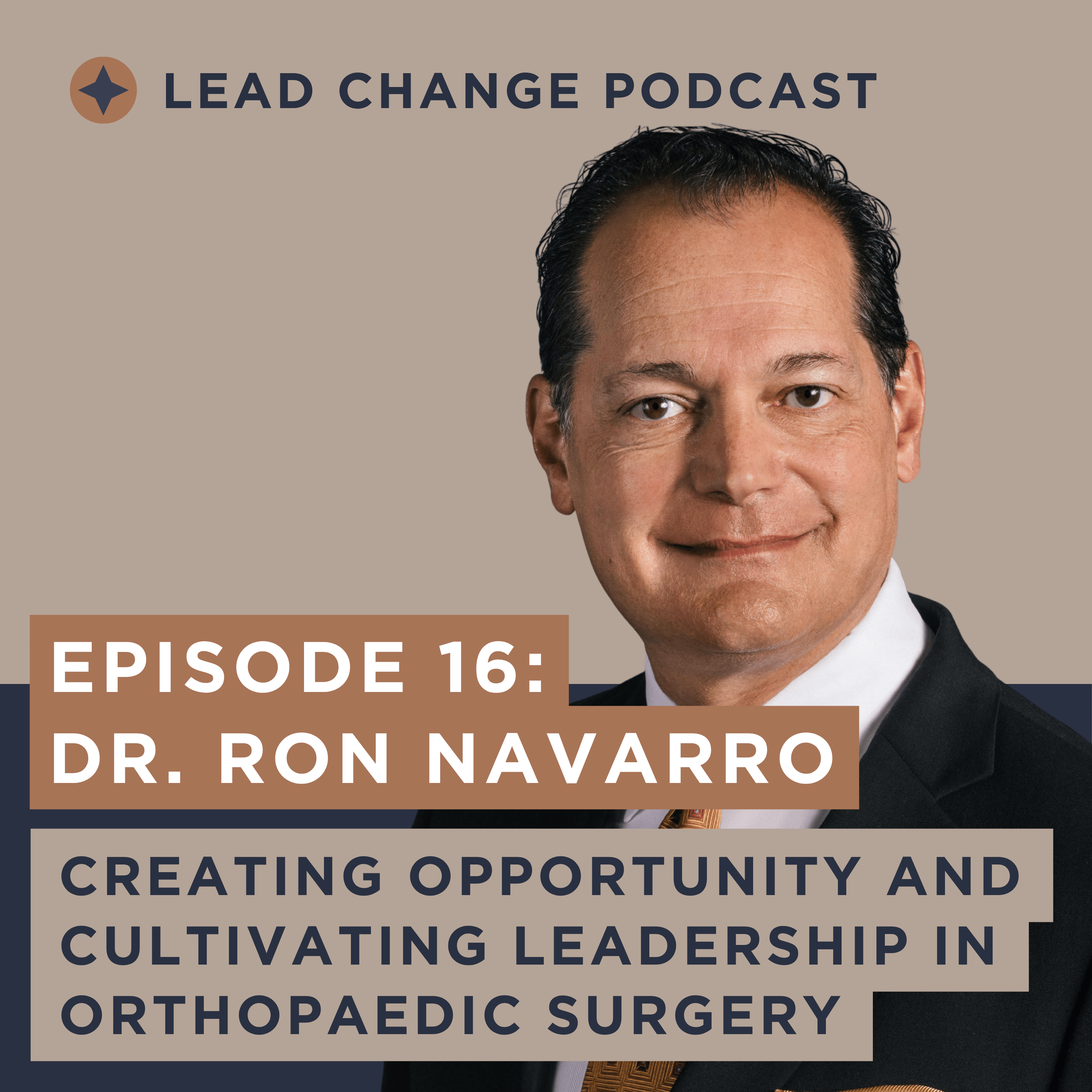
Episode 16: Dr. Ron Navarro. Creating Opportunity and Cultivating Leadership in Orthopaedic Surgery
Lead Change · Mary Mulcahey
Audio is streamed directly from the publisher (api.riverside.fm) as published in their RSS feed. Play Podcasts does not host this file. Rights-holders can request removal through the copyright & takedown page.
Show Notes
In this episode of the Lead Change Podcast, Dr. Mary Mulcahey speaks with orthopaedic surgeon and leader Dr. Ron Navarro, Director for Clinical Affairs at the Kaiser Permanente School of Medicine and President of the American Association of Latino Orthopaedic Surgeons (AALOS).
Dr. Navarro shares insights from nearly three decades of clinical practice and leadership across major orthopedic organizations, including the American Academy of Orthopaedic Surgeons (AAOS) and the California Orthopaedic Association (COA). He discusses lessons learned from participating in organizational strategic planning, navigating leadership transitions, and leading during the COVID-19 pandemic while serving as COA president.
The conversation explores how early life experiences, mentorship, and a willingness to take risks shaped Dr. Navarro’s leadership philosophy. He emphasizes the importance of creating opportunities for others, cultivating a culture of leadership, and empowering future generations of surgeons. Dr. Navarro also highlights the mission and growth of AALOS, particularly its efforts to support Latino medical students and residents through mentorship, leadership opportunities, and professional development.
Throughout the discussion, he underscores that leadership in medicine requires humility, resilience, and adaptability in the face of constant change. By sharing personal stories, practical leadership lessons, and reflections on mentorship, Dr. Navarro offers a compelling perspective on how physicians can lead meaningful change within their organizations and communities.
Key Take-Home Points
- Leadership skills are rarely taught in medical training
- Strategic planning, organizational governance, and advocacy are rarely part of medical education.
- Exposure to leadership roles and committees can provide critical learning opportunities.
2. Strategic planning shapes organizational direction
- Strategic plans act as a roadmap for organizations.
- They clarify priorities and guide decision-making over multiple years.
3. Effective leaders create opportunities for others
- A key leadership responsibility is developing future leaders.
- Cultivating a culture where others can grow and take on leadership roles strengthens
organizations.
4. Leadership requires adaptability and comfort with change
- Change is inevitable in medicine and healthcare systems.
- Successful leaders learn to navigate and embrace change rather than resist it.
5. Advocacy is essential in protecting the practice of medicine
- State orthopedic societies play a critical role in legislative advocacy that affects physician practice and patient care.
6. Early leadership exposure matters
- Opportunities for medical students and residents to serve on boards, committees, and initiatives can accelerate leadership development.
7. Confidence comes from action, not waiting until you feel ready
- Many leaders experience imposter syndrome.
- Growth often occurs when individuals step into roles before they feel fully prepared.
8. The most effective leaders listen more than they speak
- Leaders should encourage diverse perspectives and avoid dominating discussions.
- Collaboration often leads to stronger solutions.
9. Leadership includes knowing when to step aside
- Term limits and leadership transitions allow organizations to bring in new ideas and perspectives.
10. Hard work and resilience are foundational leadership traits
- Success often comes from perseverance, grit, and the willingness to continue learning and evolving.