Law Bytes
231 episodes — Page 5 of 5
Episode 57: Julia Reda on What Canada Should Learn from the European Battle over a Copyright Link Tax
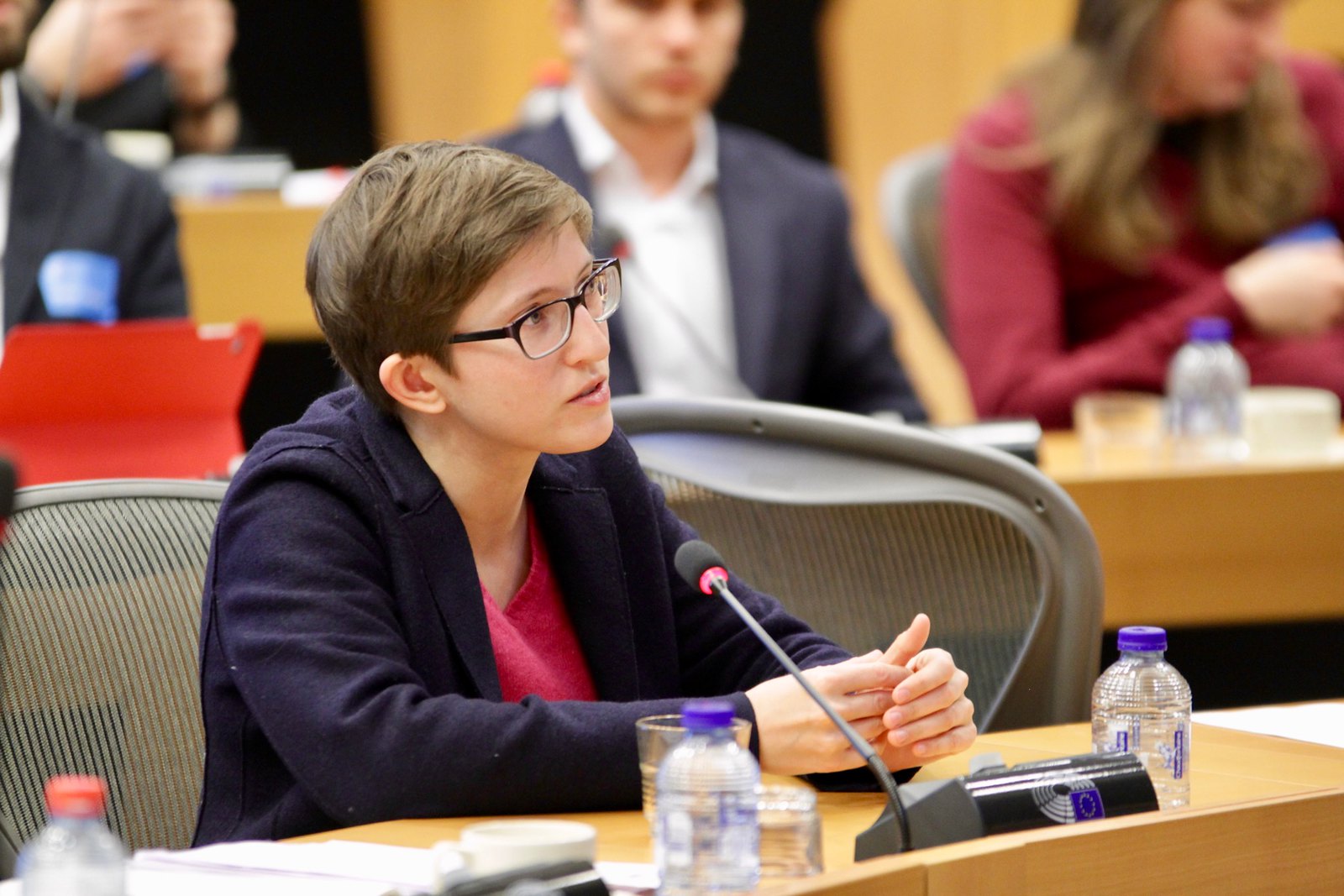
Canadian Heritage Minister Steven Guilbeault recently suggested that the government’s support for news media should be replaced by copyright rules that would open the door to payments from internet companies such as Google and Facebook. Guilbeault indicated that a legislative package was being prepared for the fall that would include a press publishers’ right is that is commonly referred to as an internet link tax. Julia Reda is a former Member of the European Parliament who for several years was the most active and visible politician in Europe when it came to copyright reform. That multi-year debate ultimately led to the adoption of a link tax and upload filters with a European directive. She joins me on the podcast to talk about that experience, why she believes a link tax harms freedom of expression and diversity of media, and what lessons Canada should draw from the European experience. The podcast can be downloaded here and is embedded below. Subscribe to the podcast via Apple Podcast, Google Play, Spotify or the RSS feed. Updates on the podcast on Twitter at @Lawbytespod. Credits: Banff Xchange, In Conversation With: Minister of Canadian Heritage, Steven Guilbeault

Episode 56: Eloïse Gratton on Quebec's Plan to Overhaul its Privacy Law
The state of Canadian privacy law has been ongoing source of concern with many experts concluding that the law is outdated and no longer fit for purpose. This is particularly true when contrasted with rules in the European Union that feature tough penalties and new privacy rights. It would appear that the province of Quebec has concluded that the waiting has gone on long enough. The provincial government recently introduced Bill 64, which if adopted would overhaul provincial privacy laws and provide a potential model for both the federal government and the other provinces. Eloïse Gratton is a partner at the law firm of Borden Ladner Gervais in Montreal and recognized as one of Canada’s leading privacy law practitioners. She joins the podcast to break down Bill 64 and its implications for privacy enforcement, accountability and new privacy rights. The podcast can be downloaded here and is embedded below. Subscribe to the podcast via Apple Podcast, Google Play, Spotify or the RSS feed. Updates on the podcast on Twitter at @Lawbytespod. Show Notes: Proposed Amendments to Quebec Privacy Law: Impact for Businesses Credits: EuroNews, France fines Google €50 million using EU’s transparency and consent law

Episode 55: Mutale Nkonde on Racial Justice, Bias, and Technology
The world has been focused for the past several weeks on racial justice and the Black Lives Matter movement, with millions around the world taking to the streets to speak out against inequality and racism. Technology and concerns about racism and bias have been part of the discussion, with some of the world’s leading technology companies changing longstanding policies and practices. IBM has put an end all research, development and production of facial recognition technologies, while both Amazon and Microsoft said they would no longer sell the technology to local police departments. Mutale Nkonde is an artificial intelligence policy analyst and a fellow at both the Berkman Klein Center for Internet & Society at Harvard University and at Stanford University’s Digital Civil Society Lab. She joins me on the podcast this week from a busy home in Brooklyn, NY to talk about this moment in racial justice and technology, racial literacy, and the concerns about bias in artificial intelligence The podcast can be downloaded here and is embedded below. Subscribe to the podcast via Apple Podcast, Google Play, Spotify or the RSS feed. Updates on the podcast on Twitter at @Lawbytespod. Show Notes: Daniels, Nkonde and Darakhshan, Advancing Racial Literacy in Tech Credits: France 24 English, Black Lives Matter Movement Gains Momentum Worldwide with Fresh Weekend of Protests “Coded Bias”: New Film Looks at Fight Against Racial Bias in Facial Recognition & AI Technology

Episode 54: Eric Goldman on Internet Platform Liability and the Trump Executive Order
The U.S. approach to Internet platform liability has been characterized as the single most important legal protection for free speech on the Internet. Over the past two decades, every major Internet service has turned to the rules to ensure that liability for third party content posted on their sites rests with the poster, not the site or service. Those rules have proven increasingly controversial, however, with mounting calls for the companies to take on greater responsibility for content posted on their sites. The issue captured international attention last month when U.S. President Donald Trump issued an Executive Order that heightens the pressure for change. Eric Goldman is a Professor of Law at Santa Clara University School of Law in the Silicon Valley where he co-directs the High Tech Law Institute. He has written extensively about Internet liability and appeared before the US Congress to testify on the issue. He joins me on the podcast to discuss the history behind the U.S. approach, its impact, and the implications of the Trump Executive Order. The podcast can be downloaded here and is embedded below. Subscribe to the podcast via Apple Podcast, Google Play, Spotify or the RSS feed. Updates on the podcast on Twitter at @Lawbytespod. Show Notes: Goldman, Trump’s ‘Preventing Online Censorship’ Executive Order is Pro-Censorship Political Theater Credits: CBC, Trump Takes Aim at Social Media Companies with Executive Order

Episode 53: Welcome Development or Waste of Time? - A Conversation With Facebook Oversight Board Member Nicolas Suzor
Last month, Facebook revealed the names of the first 20 members of the Facebook Oversight Board, a body charged with conducting independent reviews of content removals. The group includes many well-known experts in the fields of human rights, journalism, law, and social media. The announcement received at best a mixed greeting – some welcomed the experiment in content moderation, while others argued that the board “will have no influence over anything that really matters in the world.” Professor Nicolas Suzor of the Queensland University of Technology in Australia was named as one of the first 20 members. The author of Lawless: The Secret Rules that Govern our Digital Lives, Nicolas has been critical of Facebook and other Internet platforms and raised concerns about the oversight board when it was first announced. He joins me on the podcast to discuss the oversight board, the initial criticisms, and his views on how the board can have a positive impact in addressing complex issues that strive to balance freedom of expression with concerns about online harms. Note that our conversation was recorded before President Donald Trump issued an executive order targeting Internet platforms after Twitter fact-checked one of his tweets and issued a warning on another. The podcast will examine those latest developments in a future episode. The podcast can be downloaded here and is embedded below. Subscribe to the podcast via Apple Podcast, Google Play, Spotify or the RSS feed. Updates on the podcast on Twitter at @Lawbytespod. Show Notes: Lawless: The Secret Rules that Govern our Digital Lives Credits: CNBC, Facebook Lays Out Details for Content Oversight Board

Episode 52: Fair Dealing for Film Makers - Bob Tarantino on the Copyright Implications of the Room Full of Spoons Case
Dubbed by some as the worst film ever made, The Room has become a cult-like film classic. Written, directed, produced and starring Tommy Wiseau, the movie was the subject of the 2017 film The Disaster Artist and a documentary titled Room Full of Spoons by Canadian documentary filmmakers who wanted to tell the story of the film and its popularity. The documentary has been the subject of years of litigation with Wiseau at one point obtaining an injunction to stop its release. The Ontario Superior Court of Justice recently released an important decision in the case with significant implications for creators involving copyright, fair dealing, moral rights, and a host of other legal issues. Bob Tarantino, Counsel at Dentons Canada LLP, joins me on the podcast this week to discuss why the decision will be welcome news for documentary filmmakers. The podcast can be downloaded here and is embedded below. Subscribe to the podcast via Apple Podcast, Google Play, Spotify or the RSS feed. Updates on the podcast on Twitter at @Lawbytespod. Show Notes: Wiseau Studio, LLC v. Harper Tarantino, Room Full of Spoons: The Contributions of Wiseau Studio v. Harper to Canadian Entertainment Law Credits: The Room, IMDBB page
Episode 51: Canada's Urban-Rural Broadband Divide - Josh Tabish on CIRA's Internet Performance Data
The state of Internet access in Canada has been the subject of considerable debate in recent years as consumers and businesses alike assess whether Canada has kept pace with the need for universal access to fast, affordable broadband. What is now beyond debate is that there are still hundreds of thousands of Canadians without access to broadband services from local providers and that for those that have access, actual speeds may be lower than advertised and below the targets set by the CRTC, Canada’s broadcast and telecommunications regulator. CIRA, the Canadian Internet Registration Authority, manages the dot-ca domain and has played an increasingly important role on Internet policy matters. CIRA recently submitted a report on the urban-rural broadband divide as part of a CRTC process on potential barriers to broadband in underserved areas. Josh Tabish from CIRA joins me this week on the podcast to discuss the IPT, the CRTC submission, and the future of universal access to broadband in Canada. The podcast can be downloaded here and is embedded below. Subscribe to the podcast via Apple Podcast, Google Play, Spotify or the RSS feed. Updates on the podcast on Twitter at @Lawbytespod. Show Notes: CIRA, New Internet Performance Data Shows the Staggering Scale of Canada’s Urban-Rural Digital Divide Credits: Global TV, Rural Communities Could Suffer from Broadband Internet Service Cuts
Episode 50: Ariel Katz on the Long-Awaited York University v. Access Copyright Ruling
The Federal Court of Appeal delivered its long-awaited copyright ruling in the York University v. Access Copyright case last month. This latest decision effectively confirms that educational institutions can opt-out of the Access Copyright licence since it is not mandatory and that any claims of infringement will be left to copyright owners to address, not Access Copyright. The decision is a big win for York University and the education community though they were not left completely happy with the outcome given the court’s fair dealing analysis. The decision also represents a major validation for University of Toronto law professor Ariel Katz, whose research and publications, which made the convincing case that a ‘mandatory tariff’ lacks any basis in law”, was directly acknowledged by the court and played a huge role in its analysis. Professor Katz joins me on the podcast this week to talk about the case, the role of collective licensing in copyright law, and what might come next for a case that may force Access Copyright to rethink the value proposition of its licence. The podcast can be downloaded here and is embedded below. Subscribe to the podcast via Apple Podcast, Google Play, Spotify or the RSS feed. Updates on the podcast on Twitter at @Lawbytespod. Show Notes: Spectre: Canadian Copyright and the Mandatory Tariff – Part I Credits: Standing Committee on Industry, Science and Technology, May 24, 2018
Episode 49: Lilian Edwards on the Legal, Ethical and Technology Debate over Coronavirus Contact Tracing Apps
As governments grapple with challenging questions about when and how to relax the current Coronavirus restrictions and give the green light to re-opening businesses, schools, and community spaces, there has been increasing emphasis on the potential for technology to assist with critical activities such as contact tracing. Canada has moved more cautiously on this issue, but the introduction of contact tracing apps seem likely. What will the apps look like and what legal framework is needed to safeguard a myriad of privacy and civil liberties concerns? Lilian Edwards is a law professor at Newcastle University where she is the Professor of Law, Innovation and Society. She has been leading a fascinating project that seeks to address the legal concerns that might arise from contact tracing apps with a model bill that could be used to establish safeguards and other legal limits. She joined me on the podcast to talk about the latest developments on contact tracing apps, the growing schism between countries, and the legal rules that could address some of the public concerns. The podcast can be downloaded here and is embedded below. Subscribe to the podcast via Apple Podcast, Google Play, Spotify or the RSS feed. Updates on the podcast on Twitter at @Lawbytespod. Show Notes: The Coronavirus (Safeguards) Bill 2020: Proposed protections for digital interventions and in relation to immunity certificates Credits: CBC News, How Your Phone Could Play a Role in Coronavirus Contact Tracing
Episode 13: Digital Charter or Chart: A Conversation With Teresa Scassa on Canada’s New Digital Charter
Years of public consultation on Canadian digital policy hit an important milestone last week as Innovation, Science and Economic Development Minister Navdeep Bains released the government’s Digital Charter. Canada’s Digital Charter touches on a wide range of issues, covering everything from universal Internet access to privacy law reform. To help sort through the digital charter and its implications, I’m joined on the podcast this week by Professor Teresa Scassa, a law professor at the University of Ottawa, where she holds the Canada Research Chair in Information Law and Policy. The podcast can be downloaded here and is embedded below. The transcript is posted at the bottom of this post or can be accessed here. Subscribe to the podcast via Apple Podcast, Google Play, Spotify or the RSS feed. Updates on the podcast on Twitter at @Lawbytespod. Episode Notes: Canada’s Digital Charter Canada’s Digital Charter Represents a Sea Change in Privacy Law, But Several Unaddressed Issues Remain Credits: The Canadian Press, Innovation Minister Navdeep Bains Introduces Digital Charter CBC News, Security, Control Over Personal Data Outlined in Canada’s New Digital Charter FactPointVideo, Trudeau Announces Digital Charter to Fight Fake News, Online Hate Transcript: LawBytes Podcast – Episode 13 | Convert audio-to-text with Sonix Michael Geist: This is LawBytes, a podcast with Michael Geist. Navdeep Bains: We can’t ignore some of these new complex challenges that have emerged. At the heart of these new challenges is the fundamental question of trust. How can Canadians believe in the good of this online world when they’re confronted with a video of 51 innocent people gunned down during prayer in Christchurch and that video goes viral. How can they trust their data will be used to improve their lives when it is used to bombard them with disinformation. Here’s the thing: innovation cannot happen at the expense of privacy and data and personal security. I’m happy today to present Canada’s new digital charter. Michael Geist: Years of public consultation on Canadian digital...
Episode 6: “A Dangerous Game to Play:” A Former CRTC Vice-Chair Speaks Out on the Commission Plan to Regulate and Tax the Internet
For the better part of two decades, Canadian cultural groups have been pressing Canada’s telecom and broadcast regulator, the CRTC, to regulate and tax the Internet. The CRTC and successive governments consistently rejected the Internet regulation drumbeat, citing obvious differences with broadcast, competing public policy objectives such as affordable access, and the benefits of competition. That changed last year when the CRTC released Harnessing Change: The Future of Programming Distribution in Canada, in which it dramatically reversed its approach. Peter Menzies, a former CRTC commissioner and Vice-Chair of Telecommunications, joins this week’s LawBytes podcast to help sort through Cancon funding, Internet regulation, and the CRTC. The podcast can be downloaded here and is embedded below. Subscribe to the podcast via Apple Podcast, Google Play, Spotify or the RSS feed. Updates on the podcast on Twitter at @Lawbytespod. Episode Notes: Regulate Everything: The CRTC Goes All In On Internet Taxation and Regulation Harnessing Change: The Future of Programming Distribution in Canada Credits: CBC News, Tax on Netflix and Spotify proposed by CRTC CBC Catherine Tait at Prime Time, @sdbcraig CBC News, Ottawa’s fight with Netflix reignites age-old debate — what is Cancon and who should pay? Standing Senate Committee on Transport and Communications, October 30, 2018 Canadian Heritage, Minister Joly – Creative Canada Speech / Ministre Joly – Discours Canada créatif House of Commons, December 12, 2017 The LawBytes Podcast, Episode 6 (transcribed by Sonix) Michael Geist: This is LawBytes, a podcast with Michael Geist
Episode 3: The Least They Can Get Away With
Earlier this month, Innovation, Science and Economic Development Minister Navdeep Bains took his most significant policy step to date to put his stamp on the Canadian telecom sector by issuing a proposed policy direction to the CRTC based on competition, affordability, consumer interests, and innovation. To help sort through the policy direction, the state of the Canadian telecom market, the role of independent companies that rely on regulated wholesale access, and lingering frustration with the CRTC, this week’s LawBytes podcast features a conversation with Andy Kaplan-Myrth, Vice President of Regulatory and Carrier Affairs with TekSavvy, Canada’s largest independent telecom company. The podcast can be downloaded here and is embedded below. Subscribe to the podcast via Apple Podcast, Google Play, Spotify or the RSS feed. Updates on the podcast on Twitter at @Lawbytespod. Episode Notes: Enough is Enough: Bains Proposes CRTC Policy Direction Grounded in Competition, Affordability, and Consumer Interests Credits: Government Orders CRTC To Reverse Bandwidth Decision, The Hill Watcher, 3 February 2011 New wireless spectrum auction announced, Global News, 12 January 2014 Why is Canada-based Ting is not available for cell phone users in Canada?, Open Media, 1 August 2013 Verizon opts out of Canada, Canoe, 20 March 2018 House of Commons Hansard, 26 February 2019 House of Commons Hansard, 7 December 2018
Episode 98: Kim Nayyer on the Supreme Court of Canada's Landmark Access Copyright v. York University Copyright Ruling
The Supreme Court of Canada recently brought a lengthy legal battle between Access Copyright and York University to an end, issuing a unanimous verdict written by retiring Justice Rosalie Abella that resoundingly rejected the copyright collective’s claims that its tariff is mandatory, finding that it had no standing to file a lawsuit for copyright infringement on behalf of its members, and concluding that a lower court fair dealing analysis that favoured Access Copyright was tainted. The decision removes any doubt that the Supreme Court remains strongly supportive of user’s rights and vindicates years of educational policy in shifting away from Access Copyright toward alternative means of ensuring compliance with copyright law. Kim Nayyer is the Edward Cornell Law Librarian, Associate Dean for Library Services, and Professor of the Practice at Cornell Law School. She appeared before the Supreme Court in this case, representing the Canadian Association of Law Libraries as an intervener. She joins the Law Bytes podcast to talk about the case and its implications for the future of copyright, education, and collective rights management. The podcast can be downloaded here, accessed on YouTube, and is embedded below. Subscribe to the podcast via Apple Podcast, Google Play, Spotify or the RSS feed. Updates on the podcast on Twitter at @Lawbytespod. Show Notes: Access Copyright v. York University Credits: Supreme Court hearing, Access Copyright v. York University

Episode 84: Dwayne Winseck and Ben Klass on Canada's Wireless Woes
Last week was a busy one in the wireless world in Canada. Just as people were debating the proposed Rogers – Shaw merger, the CRTC released its long awaited wireless decision involving the possibility of mandated MVNOs or mobile virtual network operators. While the CRTC notably concluded that Canadian wireless pricing is high relative to other countries and attributed that to insufficient competition, it ultimately was unwilling to fully embrace a broad-based mandated MVNO model. To help break down these recent developments, joining the Law Bytes podcast this week are Dwayne Winseck, a professor at the School of Journalism and Communication at Carleton University and the director of the Canadian Media Concentration Research Project, and Ben Klass, a senior research associate at the Canadian Media Concentration Research Project and board member at the Internet Society Canada Chapter. They both join the podcast in a personal capacity representing only their own views. The podcast can be downloaded here, accessed on YouTube, and is embedded below. Subscribe to the podcast via Apple Podcast, Google Play, Spotify or the RSS feed. Updates on the podcast on Twitter at @Lawbytespod. Show Notes: CRTC Review of Mobile Wireless Services, CRTC 2021-130 Credits: CBC News, CRTC’s Opening for Smaller Wireless Companies Disappoints Advocates
Episode 85: Céline Castets-Renard on Europe's Plan to Regulate Artificial Intelligence
Last week, the European Commission launched what promises to be a global, multi-year debate on the regulation of artificial intelligence. Several years in development, the proposed rules would ban some uses of AI, regulate others, and establish significant penalties for those that fail to abide by the rules. European leaders believe the initiative will place them at the forefront of AI, borrowing from the data protection framework of seeking to export EU solutions to the rest of the world. Céline Castets-Renard is a colleague at the University of Ottawa, where she holds the University Research Chair on Accountable Artificial Intelligence in a Global World. She joins the Law Bytes podcast to discuss the EU plans, their implications for Canadian AI policy, and the road ahead for the regulation of artificial intelligence. The podcast can be downloaded here, accessed on YouTube, and is embedded below. Subscribe to the podcast via Apple Podcast, Google Play, Spotify or the RSS feed. Updates on the podcast on Twitter at @Lawbytespod. Show Notes: European Commission, Proposal for a Regulation on a European approach for Artificial Intelligence Credits: EuroNews, ‘The higher the risk, the stricter the rule’: Brussels’ new draft rules on artificial intelligence
Episode 86: CCLA's Cara Zwibel on the Free Speech Risks of Bill C-10 and the Guilbeault Internet Plan
The public debate on Bill C-10 recently took a dramatic turn after the government unexpectedly removed legal safeguards designed to ensure the CRTC would not regulate user generated content. The resulting backlash has left political columnists comparing Canada to China in censoring the Internet, opposition MPs launching petitions with promises to fight back against the bill, and Canadian Heritage Minister Steven Guilbeault struggling to coherently answer questions about his own bill. Cara Zwibel is the Director of the Fundamental Freedoms Program at the Canadian Civil Liberties Association and one of Canada’s leading experts on freedom of expression. She joins the Law Bytes podcast to talk both about Bill C-10 and the free speech risks that may come from another bill that Guilbeault has been discussing that could include website blocking, a social media regulator, and mandated Internet takedowns. The podcast can be downloaded here, accessed on YouTube, and is embedded below. Subscribe to the podcast via Apple Podcast, Google Play, Spotify or the RSS feed. Updates on the podcast on Twitter at @Lawbytespod. Credits: CBC News, User-Generated Content Exemption Was ‘Not Necessary’: Guilbeault
Episode 87: What You Need to Know About Bill C-10
This past week Bill C-10, Internet free speech, and the government’s digital policy agenda went mainstream as a lead topic in government, the media, and among many Canadians. This week’s Law Bytes podcast departs from the standard format as I explain why the bill has suddenly become a hot topic, how the government has been inconsistent and at times incoherent in its attempts to justify the bill, and why the concerns regarding freedom of speech and CRTC over-regulation are absolutely justified. The podcast can be downloaded here, accessed on YouTube, and is embedded below. Subscribe to the podcast via Apple Podcast, Google Play, Spotify or the RSS feed. Updates on the podcast on Twitter at @Lawbytespod. Credits: House of Commons, May 5, 2021 House of Commons, November 18, 2020 Standing Committee on Canadian Heritage, April 23, 2021 CBC News, User-Generated Content Exemption Was ‘Not Necessary’: Guilbeault Standing Committee on Canadian Heritage, May 6, 2021 CTV News, Question Period, May 9, 2021
Episode 88: Ellen 'T Hoen on Waiving Patents to Support Global Access to COVID Vaccines
The global struggle for access to COVID-19 vaccines took a dramatic turn recently as the Biden Administration in the United States unexpectedly reversed its longstanding opposition to a patent waiver designed to facilitate access to vaccines in the developing world. The shift seemingly caught many by surprise. Pharmaceutical companies were quick to voice opposition and U.S. allies found themselves being asked to take positions. That was certainly the case in Canada, where the Canadian government has steadfastly refused to support the waiver with repeated claims that it had yet to make a decision. Ellen ‘t Hoen, is a lawyer and public health advocate with over 30 years of experience working on pharmaceutical and intellectual property policies. From 1999 until 2009 she was the director of policy for Médecins sans Frontières’ Campaign for Access to Essential Medicines. In 2009 she joined UNITAID in Geneva to set up the Medicines Patent Pool (MPP). Ellen is currently the director of Medicines Law & Policy and a researcher at the University Medical Centre Groningen. She joins the Lawbytes podcast this week to talk about the fight for a patent waiver and the implications of the Biden decision for global access to COVID vaccines. The podcast can be downloaded here, accessed on YouTube, and is embedded below. Subscribe to the podcast via Apple Podcast, Google Play, Spotify or the RSS feed. Updates on the podcast on Twitter at @Lawbytespod. Credits: CNBC, Biden Administration Supports Waiver of Patent Protections for Covid Vaccines
Episode 90: Fenwick McKelvey on Bill C-10, Discoverability and the Missing Representation of a New Generation of Canadian Creators
Weeks into a high profile debate over Bill C-10, the issue of discoverability of Canadian content has emerged as a policy tug of war between supporters that want the CRTC to intervene by mandating the discoverability of Canadian content on sites such as Youtube and Tiktok and critics that argue the approach would raise significant freedom of expression and net neutrality concerns. But what exactly is “discoverability” and how would it impact both users and the thousands of Canadian creators that have already found success on digital platforms? Fenwick McKelvey is a communications professor at Concordia University who has written more about the discoverability and algorithmic media than anyone in Canada. He has regularly participated in CRTC hearings and was the co-author of a leading study on the issue commissioned by Canadian Heritage. He joins the Law Bytes podcast to talk about discoverability, his frustrations with its implementation in Bill C-10, and the potential consequences for Canadian creators. The podcast can be downloaded here, accessed on YouTube, and is embedded below. Subscribe to the podcast via Apple Podcast, Google Play, Spotify or the RSS feed. Updates on the podcast on Twitter at @Lawbytespod. Credits: Standing Committee on Canadian Heritage, May 14, 2021
Episode 91: "This is No Way to Regulate" - Former CRTC Chair Konrad von Finckenstein Speaks Out on the CRTC and Bill C-10
Communications issues have been in the political spotlight in recent weeks with the controversial CRTC decision to reverse a pricing decision on wholesale broadband that swiftly led to calls for the resignation of Commission Chair Ian Scott as well as the ongoing battle over Bill C-10, which envisions granting extensive new powers to the CRTC. Konrad von Finckenstein is a former chair of the CRTC, having led the Commission during a similarly contentious time during debates over net neutrality. He has since been outspoken on communications policy issues, including arguing that Bill C-10 should be scrapped and re-written. He joins the Law Bytes podcast to talk about the CRTC, the recent decisions, and what he thinks a better approach to Internet and broadcast regulation would look like. The podcast can be downloaded here, accessed on YouTube, and is embedded below. Subscribe to the podcast via Apple Podcast, Google Play, Spotify or the RSS feed. Updates on the podcast on Twitter at @Lawbytespod. Credits: Question Period, House of Commons, June 4, 2021
Episode 92: A Conversation with Senator Paula Simons on Copyright, the Internet and the Future of Media in Canada
Earlier this year, Senator Claude Carignan introduced Bill S-225, a bill that purports to address concerns about the viability of the Canadian media sector by amending the Copyright Act. The Senate has been studying the bill in recent weeks with Senator Paula Simons serving as the bill critic and one of the leads on the issue. Senator Simons was a longtime journalist before being appointed to the Senate and while an ardent supporter of local journalism, she has been critical of the proposed legislation. She joins the Law Bytes podcast to discuss the state of journalism in Canada, why she doesn’t think the social media companies “stole” stories from the media, and what Canada should be doing to encourage innovation in the media sector. The podcast can be downloaded here, accessed on YouTube, and is embedded below. Subscribe to the podcast via Apple Podcast, Google Play, Spotify or the RSS feed. Updates on the podcast on Twitter at @Lawbytespod. Show Notes: Bill S-225 Senator Simons Speech on Bill S-225, May 25, 2021 Geist, The Copyright Bill That Does Nothing: Senate Bill Proposes Copyright Reform to Support Media Organizations Credits: TRCM: Conservative Sen. Claude Carignan appears at committee for Bill S-225, June 2, 2021
Episode 93: Lex Gill on the RCMP, Clearview AI and Canada's History of Surveillance
Earlier this month, the Privacy Commissioner of Canada released a scathing report on the RCMP’s use of facial recognition technology, particularly its work with Clearview AI. The report was particularly damaging as the Commissioner found that the RCMP wasn’t truthful when it said it didn’t work with Clearview AI and then gave inaccurate information on the number of uses when it was revealed that it did. In fact, even after these findings, the RCMP still rejected the Privacy Commissioner’s findings that it violated the Privacy Act. Lex Gill is a Montreal-based lawyer where she is an affiliate at the Citizen Lab and teaches at McGill University’s Faculty of Law. She has also worked at the Canadian Civil Liberties Association and the Canadian Internet Policy and Public Interest Clinic. Lex joins the podcast to discuss the Commissioner’s findings and to explain why this is best viewed as part of a long cycle of surveillance that has often targeted social movements or vulnerable populations. The podcast can be downloaded here, accessed on YouTube, and is embedded below. Subscribe to the podcast via Apple Podcast, Google Play, Spotify or the RSS feed. Updates on the podcast on Twitter at @Lawbytespod. Show Notes: OPC, Special report to Parliament on the OPC’s investigation into the RCMP’s use of Clearview AI and draft joint guidance for law enforcement agencies considering the use of facial recognition technology Credits: CityNews, RCMP Violated Privacy Act by Using Facial Recognition: Privacy Commissioner
Episode 94: Former CRTC Vice Chair Peter Menzies Reflects on the Battle over Bill C-10
The Liberal government strategy to push through Bill C-10 bore fruit last week as the controversial Broadcasting Act reform bill, received House of Commons approval at 1:30 am on Tuesday morning. Bill C-10 proceeded to receive first reading in the Senate later that same day and after a series of Senate maneuvers, received second reading from Senator Dennis Dawson the following day. That sparked Senate debate in which everyone seemed to agree that the bill requires significant study and should not be rubber-stamped. Speeches are likely to continue on this week after which the bill will be sent to committee. Given that the committee does not meet in the summer, an election call in the fall would kill Bill C-10. Peter Menzies is a former Vice-Chair of the CRTC and one of the most outspoken experts on Bill C-10. He joins the Law Bytes podcast to reflect on the last two months of the Bill C-10 debate, discuss the limits of CRTC regulation, and explore what comes next. The podcast can be downloaded here, accessed on YouTube, and is embedded below. Subscribe to the podcast via Apple Podcast, Google Play, Spotify or the RSS feed. Updates on the podcast on Twitter at @Lawbytespod. Show Notes: Peter Menzies, Bill C-10: Control-Freak Ottawa Confronts the Future. And the Future is Losing Credits: House of Commons, June 21, 2021
Episode 95: Mark Phillips on the Federal Court of Canada's Right to be Forgotten Ruling
Several years ago, the Privacy Commissioner of Canada filed a reference with the federal court in a case that was billed as settling the “right to be forgotten” privacy issue. That may have overstated matters, but the case did address a far more basic question on whether the privacy law applies to Google’s search engine service when it indexes webpages and presents search results in response to searches of an individual’s name. Earlier this month, the federal court released its decision, concluding that it does. Mark Phillips is a Montreal-based lawyer practicing primarily in the areas of privacy, access to information, civil litigation, and administrative law in both Quebec and Ontario. His client – whose identity remains confidential under order of the court – filed the complaint that ultimately led to federal court decision. He joins the Law Bytes podcast to talk about the case, where the right to be forgotten stands under Canadian law, and what might come next. The podcast can be downloaded here, accessed on YouTube, and is embedded below. Subscribe to the podcast via Apple Podcast, Google Play, Spotify or the RSS feed. Updates on the podcast on Twitter at @Lawbytespod. Show Notes: Federal Court of Canada Reference decision Credits: Your Morning, Canadians Could Soon Have the Right to be Forgotten
Episode 96: More Harm Than Good - My Appearance Before the Senate Transport Committee on a Copyright Bill to Support Media Organizations
Bill S-225, Senator Claude Carignan’s copyright bill, would create a new compensation scheme for media organizations by establishing a new collective rights system for the use of news articles on digital platforms. It may not become law, but it has sparked considerable discussion within the Senate on the issue of media and Internet platforms. In fact, while the digital policy world was focused on Bill C-10, last month the Senate Standing Committee on Transport and Communications held hearings on the bill with a wide range of witnesses that included News Media Canada, Facebook and Google. I was invited to appear in their last hearing of the session alongside Jamie Irving from News Media Canada and Kevin Chan from Facebook. This week’s Law Bytes podcast episode goes inside the virtual committee hearing room with my opening statement and exchanges with several Senators. The podcast can be downloaded here, accessed on YouTube, and is embedded below. Subscribe to the podcast via Apple Podcast, Google Play, Spotify or the RSS feed. Updates on the podcast on Twitter at @Lawbytespod. Show Notes: Bill S-225 (An Act to amend the Copyright Act (remuneration for journalistic works) Credits: MP Joyce Murray, Web Giants: Are They Too Big to Regulate? With Minister Steven Guilbeault
Episode 97: John Lawford on Why the CRTC Should Take Action on Inadequate Low-Cost Wireless Plans
The CRTC’s wireless decision earlier this year dubbed the “MVN-no” decision given its very limited opening to mobile virtual network operators in Canada sparked widespread frustration with the Commission. That decision included one less discussed element, however, namely the expectation that the major wireless carriers would introduce low-cost plans to ensure connectivity for low-income Canadians. Those plans were recently introduced, but John Lawford, the Executive Director and General Counsel of PIAC, the Public Interest Advocacy Centre, wasn’t impressed. He wrote to the CRTC asking the Commission to take action over plans that aren’t even offered under the main carrier brands. He joins the Law Bytes podcast to talk about that issue, the ongoing concerns with the wireless affordability in Canada, and the deepening frustration with the CRTC. The podcast can be downloaded here, accessed on YouTube, and is embedded below. Subscribe to the podcast via Apple Podcast, Google Play, Spotify or the RSS feed. Updates on the podcast on Twitter at @Lawbytespod. Show Notes: PIAC Letter to the CRTC Re: Low Cost Wireless Plans Credits: CBC News, CRTC Examines Wireless Costs, Options
Episode 103: Privacy Reform Comes to Canada - Chantal Bernier on the Passage of Quebec's Bill 64
Privacy reform in Canada has lagged at the federal level with the efforts to update PIPEDA seemingly going nowhere, but multiple provinces have moved ahead with amending their own laws. Quebec leads the way as late last month it quietly passed Bill 64, a major privacy reform package that reflects – and even goes beyond – many emerging international privacy law standards. Chantal Bernier, the former interim privacy commissioner of Canada, now leads the Dentons law firm’s Canadian Privacy and Cybersecurity practice group. She joins the Law Bytes podcast to talk about Bill 64, including its origins, key provisions, and implications for privacy law in Canada. The podcast can be downloaded here, accessed on YouTube, and is embedded below. Subscribe to the podcast via Apple Podcast, Google Play, Spotify or the RSS feed. Updates on the podcast on Twitter at @Lawbytespod. Show Notes: Bill 64 on Modernizing Quebec privacy law – Why It Matters and How to Prepare for It Credits: Canadian Press, Bains Explains Update to Canada’s Digital Privacy Law
Episode 102: Colleen Flood on the Legal, Ethical and Policy Implications of Vaccine Passports
Vaccine passports or certificates launched in Ontario last week, a development welcomed by some and strongly opposed by others. The launch raises a myriad of legal, ethical, privacy, and policy issues as jurisdictions around the world grapple with the continued global pandemic and the unusual requirements of demonstrating vaccination in order to enter some public or private spaces. Professor Colleen Flood, a colleague at the University of Ottawa, has been writing and thinking about these issues for many months. Later today, she will be part of a panel discussion that explores the policy challenges hosted by the University of Ottawa Centre for Health Law, Policy and Ethics, and the Centre for Law, Technology and Society. She joins the Law Bytes podcast with an advance preview as we discuss the legal balancing act, models from around the world, and the concerns that governments should be thinking about in this next stage of dealing with COVID-19. The podcast can be downloaded here, accessed on YouTube, and is embedded below. Subscribe to the podcast via Apple Podcast, Google Play, Spotify or the RSS feed. Updates on the podcast on Twitter at @Lawbytespod. Show Notes: Vaccine Passports/Certificates: Law, Ethics & Policy Wilson & Flood, Implementing Digital Passports for SARS-CoV-2 Immunization in Canada Flood, Krishnamurthy, Wilson, Please Show Your Vaccination Certificate Credits: CityNews, Day One of Ontario’s Vaccine Passport
Episode 101: OpenMedia's Laura Tribe on Digital Policy and the 2021 Canadian Election
It is election day in Canada following a late summer campaign in which the focus was largely anything but digital issues: COVID, climate change, Afghanistan, and affordability all dominated the daily talking points. The digital policy issues that grabbed attention throughout the spring – Bill C-10, online harms, wireless pricing – were largely absent from the discussion and in some cases even from party platforms. Laura Tribe, the executive director of OpenMedia, joins the Law Bytes podcast to discuss digital policies and the 2021 election campaign. Our conversation walks through a wide range of issues, including the surprising omission of wireless pricing from the Liberal platform, the future of Bill C-10, and the failure of privacy reform to garner much political traction. The podcast can be downloaded here, accessed on YouTube, and is embedded below. Subscribe to the podcast via Apple Podcast, Google Play, Spotify or the RSS feed. Updates on the podcast on Twitter at @Lawbytespod. Credits: Global News, Canada Election: How are the Parties Planning to Tackle Cellphone Affordability
Episode 100: David Vaver With a Masterclass on Copyright and User Rights
The role of the public and the public interest has factored prominently into many of the Law Bytes podcast conversations. For the 100th episode, Osgoode Hall Law School Professor David Vaver, widely viewed as Canada’s leading IP expert, joins the podcast. The recipient of the Order of Canada, Professor Vaver provided the scholarly grounding for the emergence of user rights in copyright in Canada and around the world. In this episode, he gives a masterclass on the history of copyright, the emergence of user rights, Supreme Court copyright jurisprudence, and potential future copyright reforms. The podcast can be downloaded here, accessed on YouTube, and is embedded below. Subscribe to the podcast via Apple Podcast, Google Play, Spotify or the RSS feed. Updates on the podcast on Twitter at @Lawbytespod.
Episode 99: "They Just Seemed Not to Listen to Any of Us" - Cynthia Khoo on the Canadian Government's Online Harms Consultation
Late last month – just weeks prior the national election call – Canadian Heritage Minister Steven Guilbeault released plans for online harms legislation with a process that was billed as a consultation, but that is probably better characterized as an advisory notice, since there are few questions, options or apparent interest in hearing what Canadians think of the plans. Those plans include the creation of a bureaucratic super-structure that featuring a new Digital Safety Commission, a digital tribunal to rule on content removal, and a social media regulation advisory board. In terms of illegal content, the proposed legislation envisions a myriad of takedown requirements, content filtering, complaints mechanisms, and even website blocking. Cynthia Khoo is an Associate at the Center on Privacy & Technology at Georgetown Law in Washington. She is also the author of a ground-breaking Canadian study for LEAF, the Women’s Legal Education and Action Fund, on holding digital platforms accountable for technology technology-facilitated gender-based violence. She joins the Law Bytes podcast in a personal capacity to discuss the government’s consultation and her recent report. The podcast can be downloaded here, accessed on YouTube, and is embedded below. Subscribe to the podcast via Apple Podcast, Google Play, Spotify or the RSS feed. Updates on the podcast on Twitter at @Lawbytespod. Show Notes: Canadian Heritage, Technical Paper on Online Harms Credits: Canada 2020, Democracy in the Digital Age: Addressing Online Harms