Kopi Time podcast with Taimur Baig
109 episodes — Page 2 of 3
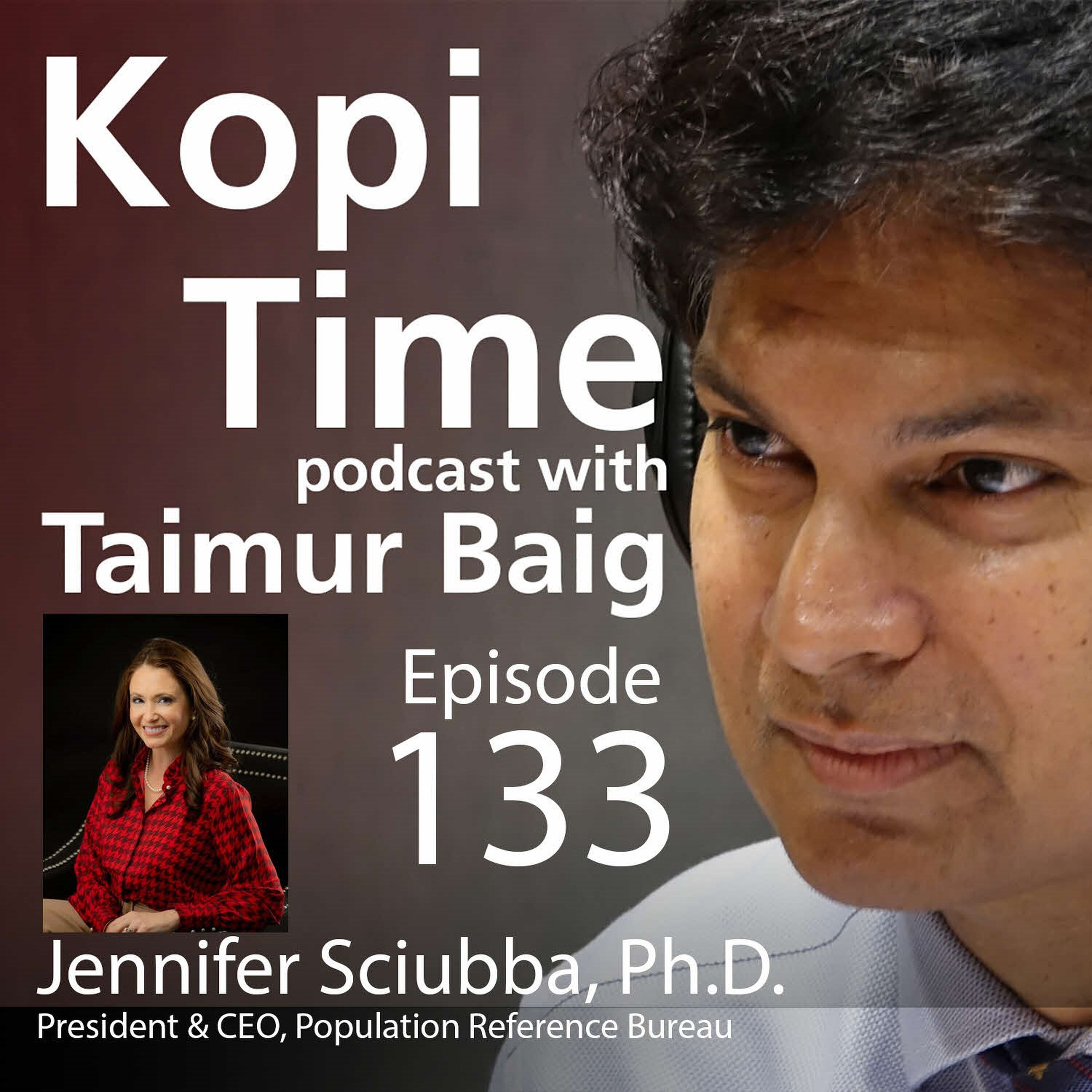
Ep 133Kopi Time E133 - Dr. Jennifer Sciubba on Contextualising Demography
Jennifer Sciubba, PhD, President and CEO of Population Reference Bureau, joins Kopi Time to discuss the science and policy dimensions of demographics. She begins by explaining the various ways of looking at population projections, pointing out that for most cases in recent decades, forecasts have ended up erring on the side of higher fertility. With fertility surprising on the downside and life expectancy rising, there is an overwhelming dynamic of rising median age the population around the world. Aging is pervasive and largely impervious to policy intervention. As people get wealthier and more educated, they tend to have less children, period. However, very low fertility rates likely reveal something not quite right with a society, from anxiety about cost of raising a child to a lack of societal purpose. Nonetheless, Dr. Sciubba is not pessimistic about a future with many more older people than today. The key is to strive for a society that ages without remaining ageist. Lower productivity and subdued economic growth may well be inevitable, but that doesn’t need to come with a burdensome social construct. Accepting the forthcoming aging dynamic, building a dignified and resilient society with provisions for health, shelter, and requisite skills is the way to go. You can watch Jennifer’s Ted talk for a shorter version of her views: The Truth About Human Population Decline | Jennifer D. Sciubba | TED - YouTube. See omnystudio.com/listener for privacy information.
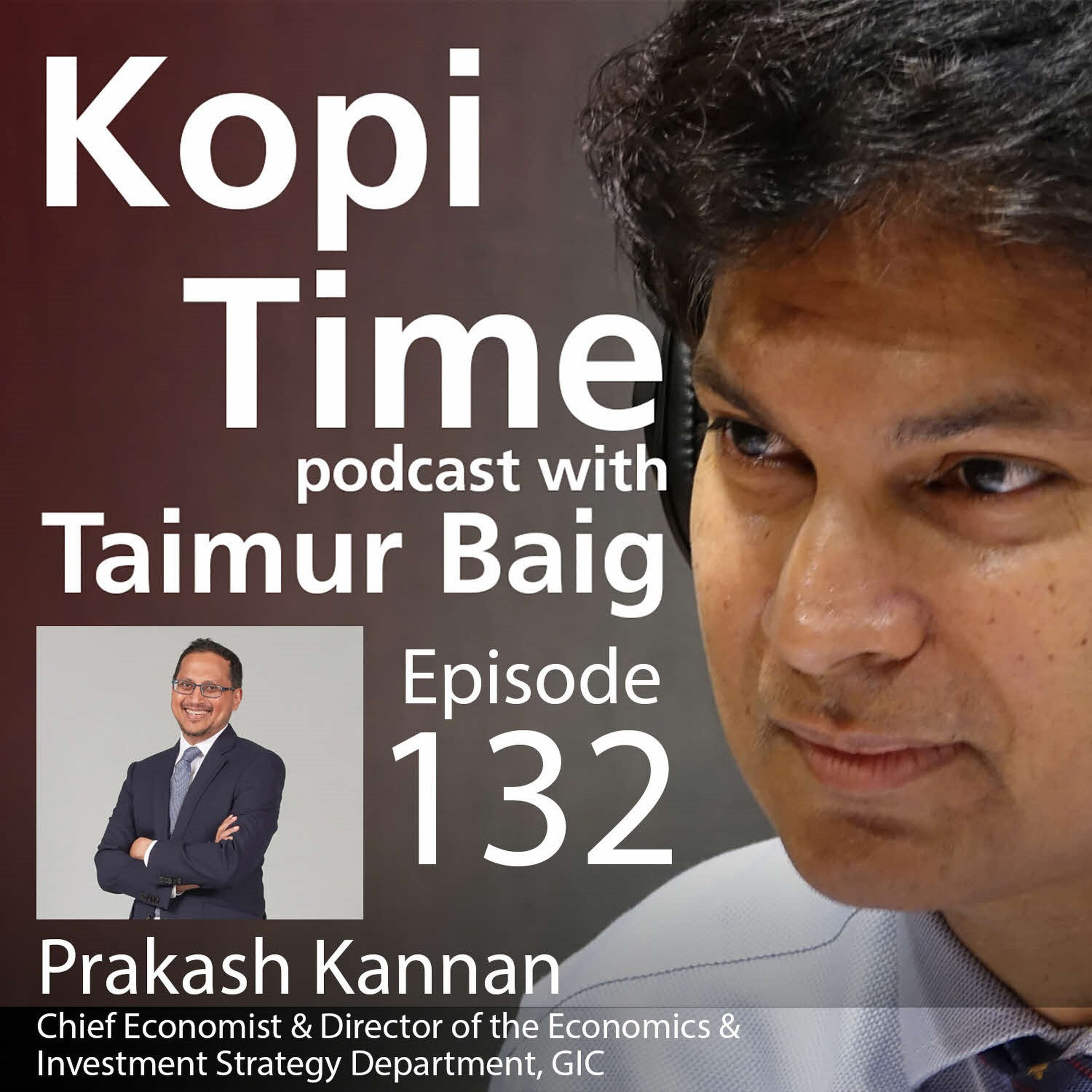
Ep 132Kopi Time E132 - GIC’s Prakash Kannan on Global Macro and Asset Allocation
Prakash Kannan, Chief Economist and Director of the Economics & Investment Strategy department at GIC, returns to Kopi Time to talk about evolving macro developments and implications for asset allocation. We cover it all in this discussion, from Fed outlook to EM resiliency, global liquidity to China policy, yen carry trade to gold, and how a portfolio suitable for the past decade is unlikely to bear similar fruit going forward. Lots of insights.See omnystudio.com/listener for privacy information.
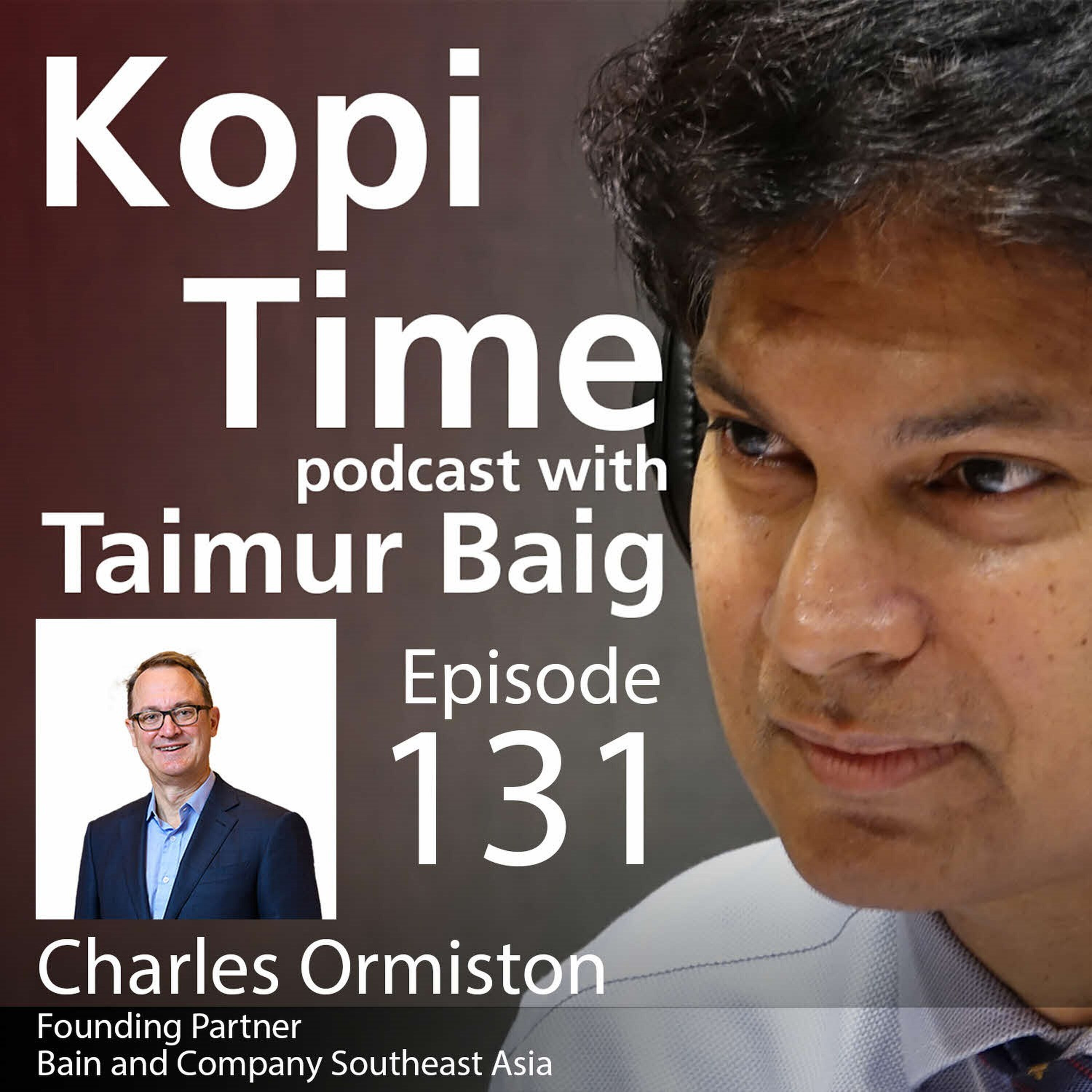
Ep 131Kopi Time E131 - SE Asia 2024-34 with Charles Ormiston
This conversation is about a flagship report on Southeast Asia’s outlook. Earlier this year, researchers from DBS, Angsana Council (backed by Monk’s Hill Ventures), and Bain & Company came together to query the drivers of regional economic performance in recent decades and the outlook for the coming decade. The work was done taking into account ongoing disruption from geopolitics, technology, and climate change. Charles Ormiston, founding partner of Bain and Company’s Southeast Asia business, and I talk about the motivation behind the report, our key findings, and strategy for the private and public sector in light of the report’s insights. Despite many headwinds, the next ten years offer plenty of exciting opportunities for the region. Hope that comes across through this engaging chat. Report link: outlook.angsanacouncil.org and Navigating High Winds: Southeast Asia Outlook 2024 – 34 (dbs.com.sg)See omnystudio.com/listener for privacy information.
Ep 130Kopi Time E130 - Shekhar Aiyar on the Case for Globalisation
Shekhar Aiyar, a Non-resident Fellow at Bruegel, on leave from the International Monetary Fund, joins Kopi Time to mount a substantive case for globalisation, a much-maligned word in some circles these days. Sharing his cutting edge research, Shekhar refers to considerable empirical evidence to establish the gains from trade for various parts of the global economy over the past half century. He then shares findings on the cost of reversing the course, a process termed as geoeconomic fragmentation. We discuss how that is measured, the estimated costs, and the implication for international monetary system and the global financial safety net. We then move on to another strand of Shekhar’s research, productivity spillovers from Foreign Direct Investment. Triangulating data from multiple sources, Shekhar and his co-authors have put together a large firm-level cross country panel dataset. Some of the findings from analysing that dataset are fascinating, from the modes of spillover to the differing results for emerging and industrial economies. This takes us to a discussion on industrial policies’ role in driving investment, and the various associated perils. Deep insights.See omnystudio.com/listener for privacy information.
Ep 129Kopi Time E129 - James Crabtree on the Geopolitics of Elections
James Crabtree, distinguished visiting fellow at the European Council on Foreign Relations and a senior fellow at the Asia Society, returns to Kopi Time to shed light on this year of momentous elections. We delve right into the US, first by taking stock of the ongoing drama around Trump, Biden, and Harris. We then consider the scenario of a Trump re-election and the likely outcomes around a Trump defeat. James has thoughtful views on what a Trump 2.0 would mean for Asia, as well as the impact on US domestic policies. We then talk about US strategy on Asia, particularly China, under both Democrats and Republicans, and how that would evolve after the elections. James then offers commentaries on three other major election outcomes this year, in the UK, France, and India. Elections come and go, but hard economic and social challenges remain. James underscores these points astutely.See omnystudio.com/listener for privacy information.
Ep 128Kopi Time E128 - Payments trends with Mastercard's David Mann
We discuss global payment trends with David Mann, Chief Economist for Asia Pacific at Mastercard. From experiential travel to business events, there has been a dramatic change in consumer preferences since the pandemic, with the rise in cost of living playing a key factor. We talk about the patterns picked up from Mastercard’s extensive data on transactions around the world. From shopping trends in Japan to tourism in South East Asia and India, as well as new fintech platforms and payment rails, David has a lot to share. Link to Travel Trends 2024: https://www.mastercardservices.com/en/industries/travel/insights/travel-trends-2024-breaking-boundariesSee omnystudio.com/listener for privacy information.
Ep 127Kopi Time E127 - My commencement speech for Yale-NUS graduating class of 2024
Mdm Kay Kuok, Chair of the Yale-NUS Governing BoardMembers of the Yale-NUS Governing BoardProfessor Aaron Thean, Deputy President (Academic Affairs) and Provost of NUSProfessor Joanne Roberts, President of Yale-NUS CollegeFamilies, Yale-NUS community, and FriendsAnd dear graduates,Most of you were the class of 2020 in high school, your graduations disrupted by a once in a century pandemic. Today, as the Yale-NUS graduating class of 2024, your lives are mercifully not disrupted. It would however be tone-deaf to not recognize that many graduates in the Middle-East, Ukraine, or the US, won’t be enjoying a commencement like yours this year.This is a heavy realisation as we traverse through life. Moments of celebrations and triumph for many are invariably juxtaposed with sorrow, loss, and sadness elsewhere. At your highest highs and lowest lows, know that there are others with a different luck of the draw.Graduates, recognising that life’s peaks and valleys are inevitable can be liberating. It underscores the line “nothing lasts forever.” I think it also makes us less self-complacent, less territorial and possessive, more humble, and open to experiencing the next, the other. And perhaps, along those lines, more open to experiments. I want to explore the wisdom of experiments in the rest of this talk.Experiments can be scientific or social, public or personal. You can experiment with a business plan, a critical query, a new diet, a different workout, or just see if hearing someone out could give us an insight not feasible within our experiences.Consider hanging out with students from different majors an experiment. During my graduate school days, that very experiment led me to my life partner. Reach out to those from different religions, political persuasion, culture, or lifestyle, and see if their company and proximity make our lives richer and more joyous. If our mutual humanity can transcend our differences. These are experiments for the rest of your lives. And they will matter more as you delve into higher studies or jobs.If you’re a scientist, your vocation is largely about testing hypothesis through experiments, but surely that’s not where it ends.America is an experiment. Singapore is an experiment. Yale-NUS has been an experiment.Every new idea’s worth is tested through experiments. Is it possible to send humans to the moon and back? Let’s experiment, let’s try. Is it possible to have a thriving, multicultural, multiracial society? Let’s experiment. If it fails, try again.Some pursuits can follow the path of Thomas Edison, noisy and full of stumbles, but at the end, marked by glorious achievements. To paraphrase him, he never failed, he just successfully found the numerous ways that the experiment would not work.Some experiments can be spectacularly successful over a short period of time, thanks to luck, serendipity, or a stroke of genius. I wish you have those, but I also know that for the most you, that will not be the case. My hope is in fact that you leave this campus with the grit necessary to follow Edison’s path, and don’t shy away from your dreams at the first, second, or even third roadblock.Your exceptionally fortunate time at the Yale-NUS, in my view, has been an experiment of a lifetime. You could have gone to so many other places, but aren’t you gratified that you came here? Reflecting on President Roberts’s words, this place has hopefully instilled in you the patience, perseverance, and sense of community critically needed to make a difference.This beautiful campus, these dedicated and brilliant faculty, and these amazing facilities have nourished your minds over the past four years. That experiment of liberal arts in the heart of Singapore has been a resounding success. You made that happen. The legacy of this institution will never fade. So, let’s embrace uncertainty, let’s stand up against the fear of failure, let’s move forward, secure in the conviction that your time here has provided you with the values and intellectual mettle to take on the world. We can write down an endless list of woes that afflict our planet; let them be your problems to solve. With your curiosity, empathy, and knowledge, let the experiments begin. Congratulations Class of 2024!See omnystudio.com/listener for privacy information.
Ep 126Kopi Time E126 : Gen AI with Microsoft's Zia Zaman
We hear about the subject of the moment from Microsoft’s Asia head of business development, Zia Zaman. We begin with the question if the world has been transformed in a comparable manner in the past year and a half as the smartphone and Appstore revolution achieved during 2007/08. Zia argues the transformation has been similar in influencing corporate strategy and productivity enhancement potential. We discuss the unparalleled cost and investment associated with operationalising and commercialising Large Language Models. Zia walks us through multiple stages of tech introduction, adoption, and value creation, with most still in the pipeline for GenAI. We talk about the compute needs and carbon footprint of running GenAI models, and the role of regulation in balancing business and public interests. Finally, Zia talks about the depth and breadth of the relationship between OpenAI and Microsoft. Fascinating insights.See omnystudio.com/listener for privacy information.
Ep 125Kopi Time E125 : China from a US business perspective with Mitchell Presnick
Mitchell Presnick, a visiting fellow of practice at the Fairbank Center for Chinese Studies at Harvard University, joins Kopi Time to bring much needed pragmatism to the China-US discourse. Mitch, researching the future of US- China commercial relations in the post-engagement era, is no China apologist. But his decades of doing business in China have given him a realistic view on where engagement and symbiosis make sense. We discuss Mich’s days building a business in China in the 1990s, the playbook he suggests to American businesses, and his take on US policy. Stressing that “de-risking does not mean decoupling,” Mitch wants the two nations to attain positive sum outcomes. May his views get amplified.See omnystudio.com/listener for privacy information.
Ep 124Kopi Time E124 : Indonesia outlook with Reformasi's Kevin O'Rourke
Recorded in Jakarta, Kopi Time delves into Indonesia’s elections, domestic and foreign policy, investment environment, and economy with Kevin O'Rourke, Principle, PT Reformasi Information Services. Kevin’s team has provided independent political risk consultancy for many years, and he demonstrates his deep insights in this far-reaching conversation. We begin with the recently concluded elections, and what one can expect from President Prabowo’s administration, from balancing geopolitics to the nation’s aspiration to climb to a much higher level of income, prosperity, and welfare. Kevin provides sober-eyed assessment on the strategies announced so far. We discuss Indonesia’s democratic process, industrial policy, populist measures, fossil fuel industry, green transition potential, and the legacy of outgoing President Jokowi. Kevin’s take on Indonesia is by no means negative, but certainly cautious and couched with concerns informed by his scrutiny of this country’s ups and downs over two decades.See omnystudio.com/listener for privacy information.
Ep 123Kopi Time E123 - Control Risks’ Nicolas Reys on Cybersecurity
Today’s episode subject is in response to popular demand. Whether at work or at home, concerns on cybersecurity are elevated to say the least. Nicolas Reys, Partner leading Control Risks’ Digital Risks Americas and Global Threat Intelligence practices, begins by going the three kinds of cyberthreats out there—state sponsored, ransomware, and “hactivism.” We then talk about the impact of recent geopolitical developments on the cybersecurity environment. Singapore’s population and firms continue to face cyberattacks, from scams to phishing, but Nic sees substantial awareness and policy guardrails available to mitigate risks here. We talk about frontier tech like GenAI and quantum computing, and their potential disrupting impact on cybersecurity. We end with Nic laying out the best practice corporate strategies to manage digital risks.See omnystudio.com/listener for privacy information.
Ep 122Kopi Time E122 - Development Multilateralism with Atlantic Council’s Martin Mühleisen
Martin Mühleisen, nonresident senior fellow at the Atlantic Council, returns to Kopi Time to talk about the state of multilateralism. He sees the recent IMF meetings marked by modest progress in securing greater funding for development and climate change, but much more remains to be done to give developing nations their requisite voice in global bodies. On issues such as supply chain resiliency and domestic market protection, nations around the world are undertaking a variety of interventions, which may be understandable given the pandemic shock and geopolitics. Yet, they create risks for inflation, and add layers of inefficiency and distortion. Martin weighs in on US fiscal, Japan’s monetary policy, and Europe’s difficulties with the war in Ukraine and China-US friction. We round up the discussion with how to keep multilateral institutions like the IMF maintain their relevance in this multipolar world.See omnystudio.com/listener for privacy information.
Ep 121Kopi Time 121 - IMF meetings takeaways with PwC's Dr. Alexis Crow
We catch up in Washington DC with Dr. Alexis Crow, lead, Global Geopolitical Investing Practice, pwc. Recorded on the last day of the IMF-World Bank 2024 spring meetings, we go over the key takeaways from our interactions with policy makers and analysts. From a mild upgrade in global growth forecasts to taking stock of the scarring of the pandemic, there was a sense of cautious optimism during the meetings. Ongoing geopolitical strife of course remained a shadow, and concerns were expressed on the impact of lingering high interest rates on various economies and markets. China-US tussle over economic overcapacity and industrial policy looks likely to intensify, although there has been a welcome rise in engagement between the world’s two largest economies. We also discuss the latest deliberations on AI, climate change, and sticky inflation. See omnystudio.com/listener for privacy information.
Ep 120Kopi Time E120 - Henny Sender on China, Hong Kong, and India
Henny Sender, after several decades of writing on international finance for the Finance Times and Wall Street Journal, presently runs Apsara Advisory, a New York-based consultancy. She joins Kopi Time to talk about her sense of the challenges facing the Chinese economy, especially the weakness in consumer sentiment. While recognising the wisdom behind self-reliance and trade openness, Henny flags several areas of concern, including property and stock market woes, as well as regulatory overhang. On Hong Kong, where she has lived for many years, Henny is blunt in her assessment. She sees substantial room available for the public sector to address affordable housing, an issue that is at the heart of the city’s competitiveness. On India, Henny sees a welcome rise in aspiration and optimism. She would however like to see more efforts to scale up manufacturing, address climate risks, and reduce protectionism for local industries.See omnystudio.com/listener for privacy information.
Ep 119Kopi Time E119 - Angela Mancini on Geopolitics and Business Risks
Angela Mancini, Partner and Head of the Geopolitical Risk Analysis practice for Asia Pacific at Control Risks, returns to Kopi Time after four years. The issues haven’t changed that much in the interim—we talk about Indonesia, Malaysia, and Singapore’s elections and economic prospects, state of China-US friction in the context of business risks, and the domestic dynamics at play in the US. Angela provides astute insights and some prognostications as we cover an extensive ground, including the likely outcome of the US Presidential race. See omnystudio.com/listener for privacy information.
Ep 118Kopi Time E118: Bert Hofman on China’s NPC, deflation, trade/tech war, industrial policy
Bert Hofman, adjunct Professor at the East Asian Institute at National University of Singapore, returns to Kopi Time to comment on the National People’s Congress of China and the direction of policy in the coming years. We also talk about the property sector crisis, ways to revive business and consumer confidence, deflation risks, green transition, trade and tech war, and industrial policy. Bert also has interesting insights on the preference of the Chinese leadership in dealing with a Biden or Trump presidency. Worth a listen. See omnystudio.com/listener for privacy information.
Ep 117Kopi Time E117 - Munib Madni on the Gigaton Coalition to Decarbonize
We welcome back Munib Madni, CEO of Singapore-based Panarchy Partners, a fund management company with responsible investing at its core. In this chat, Munib talks about latest developments and trends in the world of climate impact investing, while pointing out a gap in the current scene. Munib sees many listed equity companies setting laudable goals to reduce emission, but lacking the “how" about achieving those goals. This is where the newly established Gigaton Coalition comes in. It is an investor-investee led expert management platform for decarbonization solutions. As the name suggests, it aims to deliver at least 1 gigaton of cumulus emissions savings over the next decade from publicly listed companies in Asia Pacific. We discuss how the coalition would work, what would motivate institutional investors and companies to join it, and where Munib sees the initiative standing at the end of 2025. This is real work for real change. See omnystudio.com/listener for privacy information.
Ep 116Kopi Time E116 - Caesar Sengupta on the present and future of e-payments and investment
We explore the present state of digital payments, their impact and potential, and tech-enabled investment platforms with Caeser Sengupta, CEO and co-founder of Arta Finance. Previously, Caeser spent a number of years at Google as VP & GM of Payments & the Next Billion Users initiative. In this podcast, we begin by discussing the economic and social welfare benefits derived from the digital payments revolution of the past decade. Caeser walks us through the fundamental changes in the way business and commerce are conducted in Brazil, China, India, and elsewhere, thanks to the development in mobile payments and near-instantaneous settlements. We talk about the broader ecosystem, including the potential of super apps, safety/security, role of regulators, central bank digital money, and of course, crypto/blockchain. We then shift to Caeser’s ongoing foray into creating a platform for wealth management, with enhanced customer experience and capabilities. The intersection of digital literacy and financial literacy has still plenty of room for disruption and value creation.See omnystudio.com/listener for privacy information.
Ep 115Kopi Time E115 - Vandana Hari on Energy Market Outlook and Risks
Vandana Hari, founder of Vanda Insights, a Singapore-based provider of intelligence on energy markets, returns to Kopi Time. She was with us in the early days of the podcast, when WTI futures was in negative territory, and then returned around the time of Russia’s invasion of Ukraine. Today, again, energy markets have no shortage of drama. Vandana begins by addressing various scenarios over the brewing tensions in the Red Sea, especially for shipping and oil price risk premium. She also details the perverse dynamics around Russia’s energy supplies and various unintended consequences. Beyond geopolitics, she looks at the rather underwhelming supply-demand fundamentals characterising energy markets. We then talk about the future of OPEC+, state of US Shale sector, and the medium term demand for fossil fuels against green transition. Vanda offers an astute blend of industry insights and the complex realities in place. See omnystudio.com/listener for privacy information.
Ep 114Kopi Time E114 - US markets with Dr. Komal Sri-Kumar
We do a US market wrap-up for 2023 and outlook for 2024 with our favourite strategist, Dr. Komal Sri-Kumar. No stranger to Kopi Time, Sri is blunt and prescient in his views across asset classes, fiscal and monetary policies, politics, economic growth, and inflation. We discuss the various prevalent and potential sources of market volatility, direction of the US Fed and treasury, path for inflation, rate cuts, and eventual QE next year, and the outlook for credit markets. Sri worries about the health of the US bank and nonbank financial system as the economy slows. He is also quite clear about the distinction the markets make about US assets and US policy. In most countries, outlook for one determines the outlook for the other. But the US remains blessed with certain superpower and mega-market size privileges that allow it to avoid some of these issues, at least in the near term. See omnystudio.com/listener for privacy information.
Ep 113Kopi Time E113 - World Bank’s S Asia Chief Economist Franziska Ohnsorge on the Region’s Outlook
South Asia has pockets of strong growth (Bangladesh and India), pockets of balance of payments difficulties (Bangladesh, Pakistan, Sri Lanka), and an across the board underwhelming foreign investment picture. Dr. Franziska Ohnsorge, South Asia Chief Economist of the World Bank, ties these multiple threads from her vantage point. We discuss risks and manifestations of currency crisis in parts of South Asia and the assorted fiscal stress points. The region remains characterised by remittance from the diaspora, which tends to create an element of overheating in consumption. The region also collects very low taxes, without which the capacity of spend on growth critical areas remains limited. The rules around fiscal responsibility are also weak by international comparison. We then talk about two matters related to energy transition in South Asia. First is a study on ways to improve firm level productivity through introduction of energy saving practices, and the second is one on the encouraging returns from green jobs. We conclude by talking about the need for the region to become more trade friendly; there is no better way to have a competitive, productive, and upward trending economy.See omnystudio.com/listener for privacy information.
Ep 112Kopi Time E112 - Charles Ormiston on making the most of out of geopolitics
This is a thoughtful discussion on maximising a company or economy’s growth potential while navigating geopolitical constraints. Charles Ormiston digs deep on Asia in this podcast. Charles, chair of the Angsana Council, a Singapore-based think tank focused on the growth potential of Southeast Asia, and former head of Bain Southeast Asia, argues that China/UK rivalry could force both nations to get out of their comfort zones and become more self-reliant, which in turn could help the rest of the world. Charles is not rosy-eyed about the current state of affairs, but his key insight on China’s progress is that it is the result of intense competition between provinces and businesses, fuelling innovation. At a broader level, he sees great power rivalry forcing further innovation on both sides. The conversation then veers toward China’s seismic push toward green transition and its various positive spillovers to the region. Charles walks us through Vietnam, the Philippines, and Singapore, offering cogent insights on their very different development models and prospects. We need to have Charles back for the rest of Southeast Asia.See omnystudio.com/listener for privacy information.
Ep 111Kopi Time E111 - Dirk and Lelya Eichelberger on Sustainable Fishing and its Offshoots
This couple is walking the talk on marine sustainability. Dirk Eichelberger is the CEO of Singapore Aquaculture Technologies; in other words, he runs a fish farm right here in Singapore. Lelya Eichelberger is launching Alghemy, a skincare product range that offers a proprietary ingredient while emphasizing clean, green, and blue beauty. We talk about the challenges and rewards of their entrepreneurial journeys, and how their goals and Singapore’s imperatives converge. Dirk walks us through the financial, ethical, and ESG factors that drive his fish farm, while Lelya talks about health-related scientific advances with sustainability considerations at the core. As Dirk points out, from securing partnership with the government and other interested parties, to scaling up, as well as commercialising the knowhow through a franchise model, there are many things one can do to increase the production and distribution of sustainable products. The roadmap is there.See omnystudio.com/listener for privacy information.
Ep 110Kopi Time E110 - Notes from Marrakech - Polycrisis and Resilience
Global central bank heads and finance ministers gathered over the past week in Marrakech, Morocco for the Annual Meetings of the International Monetary Fund and the World Bank Group. The meetings’ overarching theme was an uneven global recovery from a multitude of shocks, ranging from pandemic to wars, prices to interest rates. There was also a cautiously constructive view that both the public sector and markets have proven to be more agile than feared to deal with frequently occurring shocks. There was acceptance that a multitude of shocks have be confronted simultaneously. Post-pandemic scarring, wars, inflation, interest rate spikes, climate change, all need to be dealt with agility. Global resource base and tools to deal with polycrisis are being expanded. Climate change related support measures are still inadequate. Between-and-within country income gaps are widening due to the shocks and varying policy responses. Asia is slowing, but still making up about two-thirds of global growth. arts of Asia may benefit from geoeconomic fragmentation, but it’s a net loss for the world.See omnystudio.com/listener for privacy information.
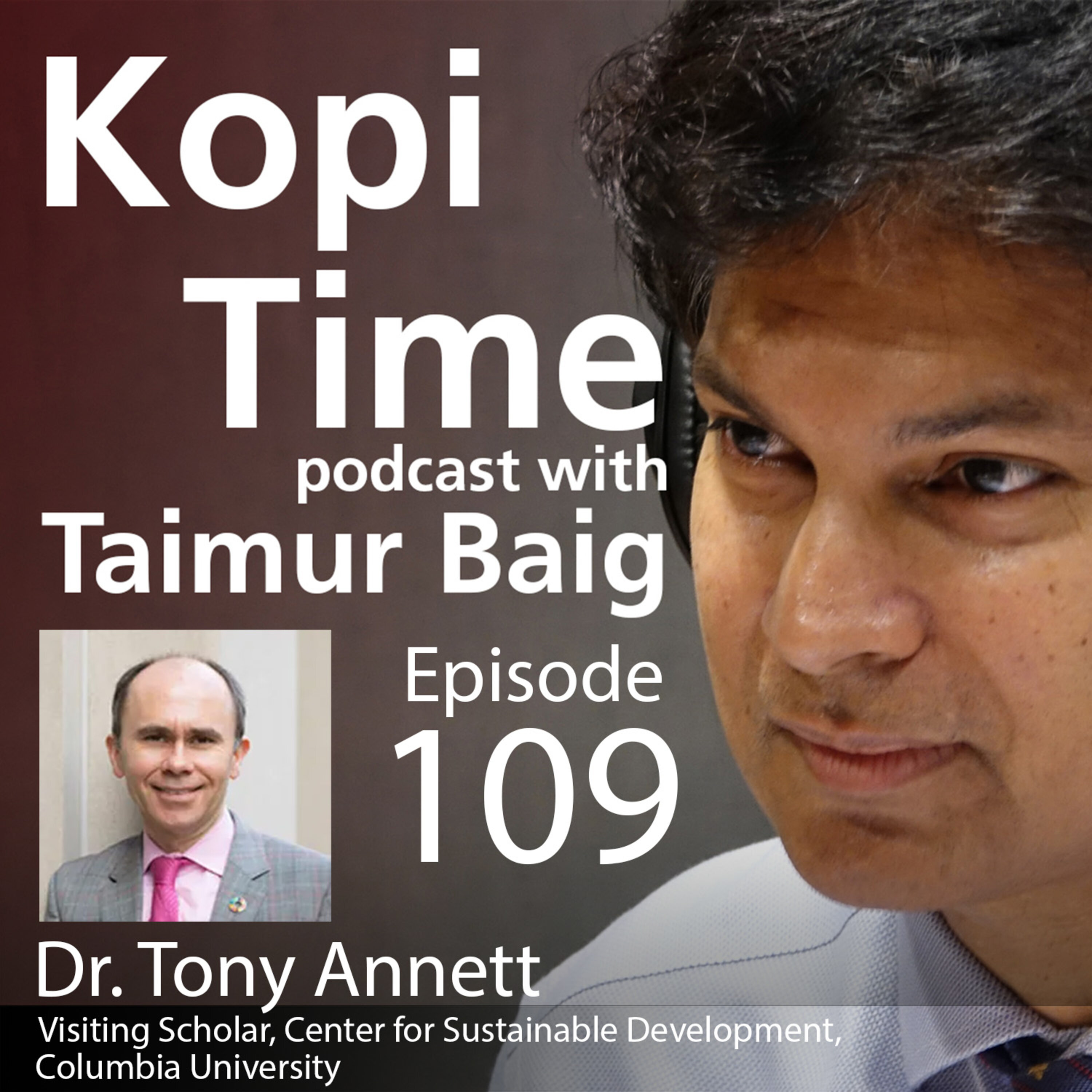
Ep 109Kopi Time E109 - Dr. Tony Annett on economics and Catholicism
This is an atypical episode—the first time in Kopi Time we discuss the intersection of faith and economics. Dr. Tony Annett, a Visiting Scholar at the Center for Sustainable Development, Columbia University, and author of “Cathonomics: How Catholic Tradition Can Create a More Just Economy,” insists on moral principles as foundations of economics and finance. In this fascinating conversation, we explore the roots of our modern values and principles, going to back old scriptures and subsequent faith-based approaches. Dr. Annett questions the narrow rational actor approach of neoclassical economics, arguing that without concerns for a common good and social responsibility, solutions to inequality, climate change, and monopolistic practices will remain unattainable. Over the past couple of centuries, technological progress and organisational developments have led to astonishing material prosperity, but have we achieved meaningful progress? The call remains for a more sustainable and inclusive world; whether one has faith or not, that imperative is critical.See omnystudio.com/listener for privacy information.
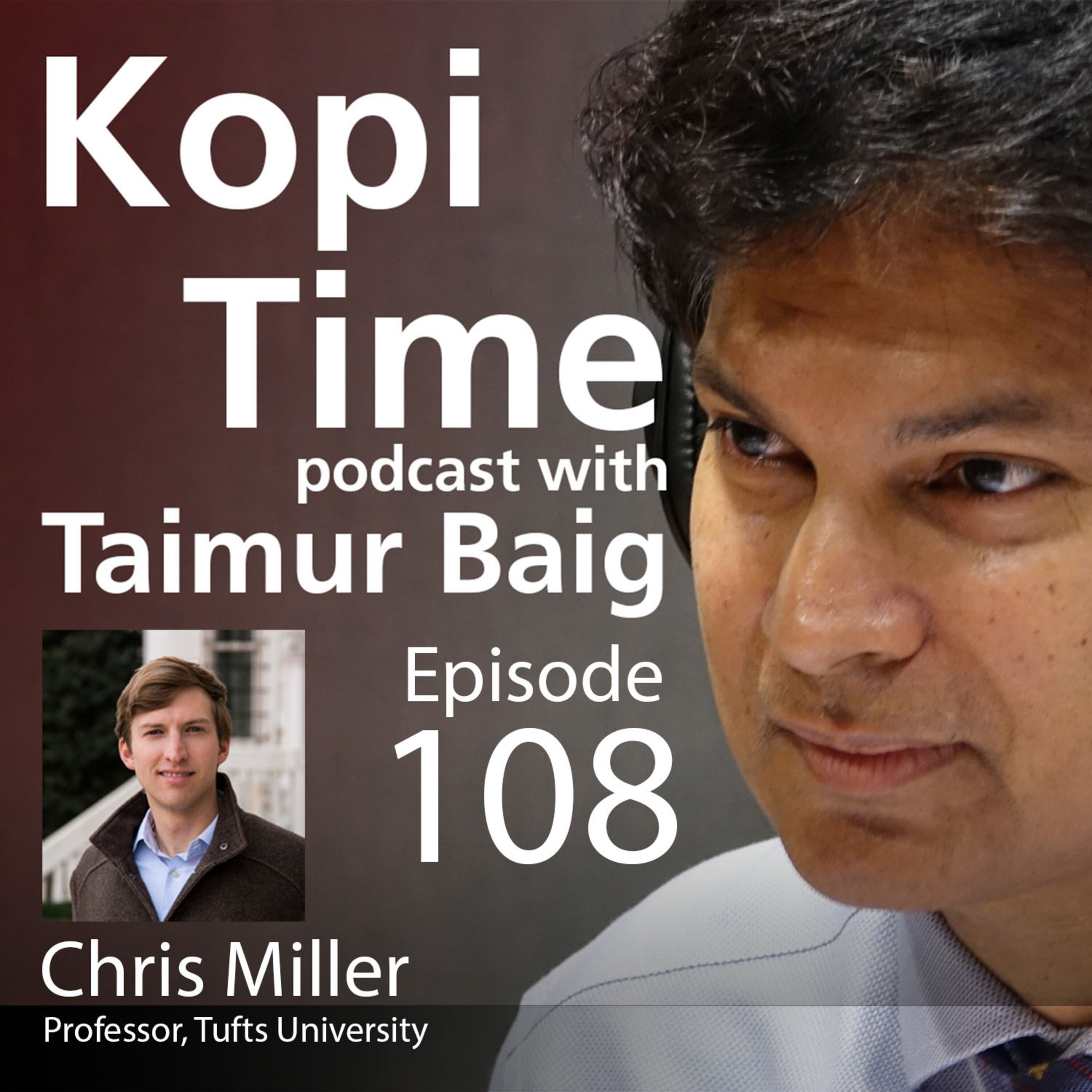
Ep 108Kopi Time E108 - Chris Miller on Chip War
This podcast will be an indispensable resource for those have not read Chip War by Chris Miller, Professor at Tufts University. Chris explains, both in his award-winning book and in this conversation, the central role played by computer chips in today’s economy, society, and military. More critically, he points out various single nodes of vulnerability in the production process of these immensely complex products. Naturally, the conversation then veers toward China’s attempts to reach self-sufficiency in advanced tech, the myriad of sanctions getting in the way, and the various unexpected knock-on effects. Those who have read Chip War already will also find a lot in this podcast, as we discuss the latest products by Huawei, use of military tech in the Ukraine war, how Russia is managing its tech stack despite sanctions, and the state of advanced tech manufacturing the East Asia. Many don’t know that Chris’s core expertise includes Soviet history and modern Russia, so we conclude with his prognosis of the war in Ukraine and the path toward resolution. This was a gem of a chat.See omnystudio.com/listener for privacy information.
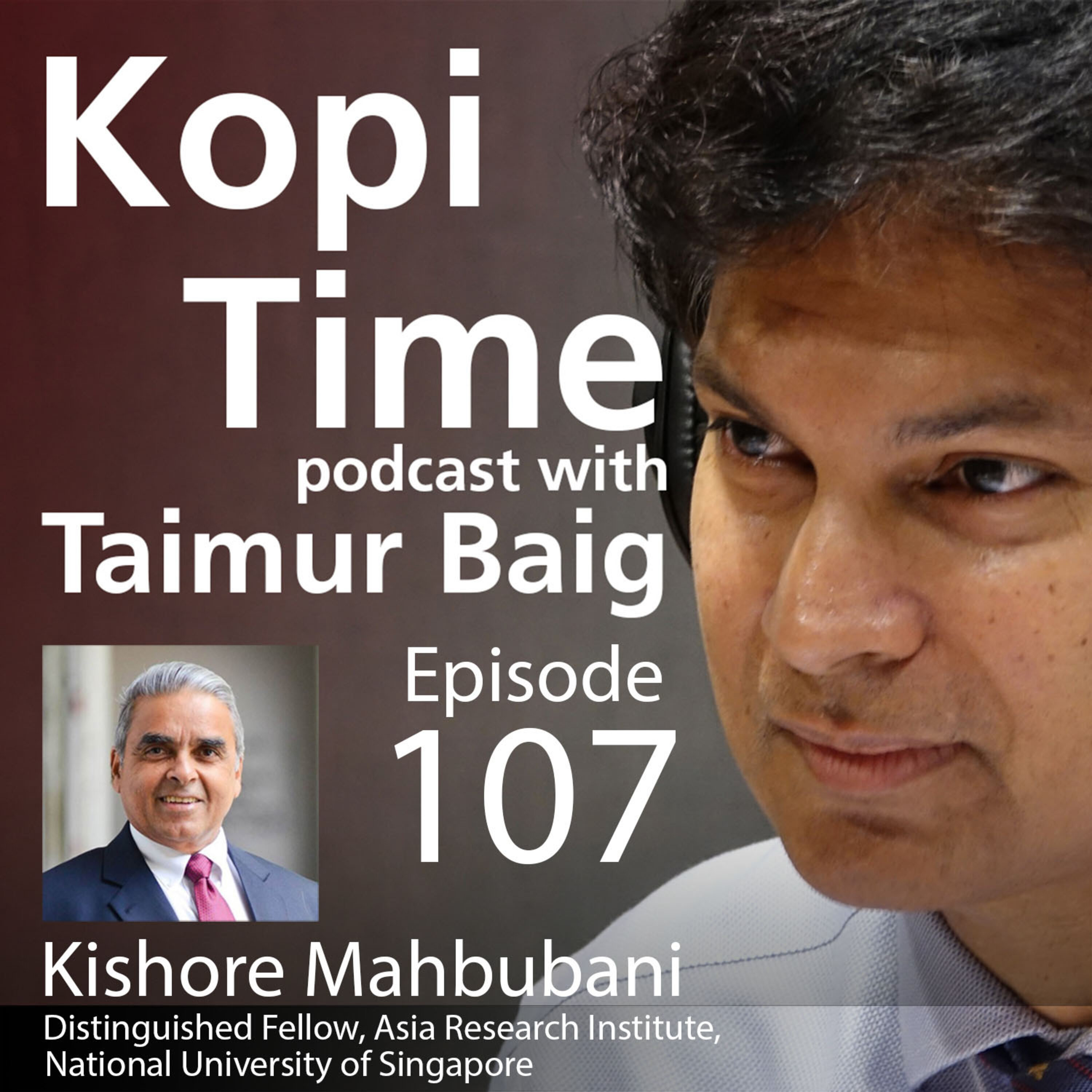
Ep 107Kopi Time 107 - Kishore Mahbubani on the Asian century versus the American century
Kishore Mahbubani, Distinguished Fellow at the Asia Research Institute, National University of Singapore, returns to Kopi Time to give his take on China-US relationship, the war in Ukraine and its many facets, and where Asean and India stand in all this. The ever erudite former career diplomat pulls no punches, pointing out poor national strategies, short-term oriented decision making, and hypocrisy on foreign and economic policy across industrialized economies. He worries about US presidential elections next year, although he sees little course correction on US policy toward China, regardless of the outcome. The conflict in Ukraine, however, could be profoundly affected by the US election outcomes. Mr Mahbubani also weighs in on China’s geo-strategic response so far, room for cooperation on climate change, the expansion of Brics, and the outlook for Aaean. We end with a a prognosis on Singapore. The transcript of this chat will be worth saving. See omnystudio.com/listener for privacy information.
Ep 106Kopi Time E106 - Prof Aurobindo Ghosh on inflation expectations and cost of living in Singapore
Aurobindo Ghosh, Assistant Professor of Finance at the Lee Kong Chian School of Business, Singapore Management University, joins Kopi Time to talk about his longstanding research on inflation expectations and cost of living. He explains the decade-plus work, done in conjunction with the Monetary Authority of Singapore and DBS Bank, to gauge inflation expectations among Singapore’s residents. Over the long term, survey results have held steady, reflecting well anchored inflation expectations, but they have been volatile in recent years, in line with global developments. How is the survey conducted; what methodological challenges do they throw up; what are the key insights from all these years’ of surveys; is there a difference between inflation expectations and cost of living perceptions? What are the policy implications? Prof Ghosh addresses all this and more on this topic of the moment.See omnystudio.com/listener for privacy information.
Ep 105Kopi Time E105 - Eswar Prasad on the future of money
Eswar Prasad, Tolani Senior Professor of Trade Policy at Cornell University, returns to Kopi Time to talk about the USD, China, cryptos, and CBDCs. We go over the state of the global financial system, the legacy of USD weaponisation, innovation in fintech, the state of cryptos, the potential of central bank digital currencies. Eswar’s book, The Future of Money: How the Digital Revolution is Transforming Currencies and Finance, offers a great sweep of the ongoing revolution in money and finance. This podcast is a teaser for his deep work.See omnystudio.com/listener for privacy information.
Ep 104Kopi Time E104 - Wellington’s Santiago Millán, on China’s complexities
Santiago Millán, Macro Strategist at Wellington Management, one of the largest asset managers in the world, joins Kopi Time to talk about China. Whether it is the macro outlook, space for further stimulus, policy stance, state of financial markets, regulatory framework, great power rivalry, tech war, green transition, or the overall investment thesis on the country, Santiago has nuanced insights to offer. His key point is to appreciate the complexities of a large, consequential, and rapidly evolving economy and society like China. Broad-brushed analysis almost always gets it wrong; we need to think deeply when it comes to China’s medium term direction, especially with respect to its undeniable role in global trade, technology, and movement of capital. See omnystudio.com/listener for privacy information.
Ep 109Kopi Time E103 - Helge Muenkel on climate finance
Helge Muenkel, Chief Sustainability Officer at DBS, responsible for developing the bank’s overarching sustainability framework, joins Kopi Time. We begin by talking about current state of climate finance, the magnitude of funding needed to carry out meaningful green transition, and the various source of funding in the pipeline. Helge walks us through the key pillars of climate finance, including bonds, blended finance, grants, and carbon credits. We talk about the thorny issue of just transition, along with the role of governments and corporates in this journey. We then dive into banks’ role in coal phase-out, an enormously complex issue. We end by considering the encouraging climate mitigation and finance related developments in the US, Europe, China, and Singapore.See omnystudio.com/listener for privacy information.
Ep 102Kopi Time E102 - Mustafa Chowdhury on why rates will remain higher for longer
Mustafa Chowdhury, who has held senior positions at Voya Investments, Deutsche Bank, Bear Stearns and Freddie Mac, brings his deep fixed income expertise to Kopi Time. We start with his takeaways from the debt ceiling drama, which Mustafa argues left President Biden the winner. He however remains unconvinced that a meaningful debt consolidation is likely in the coming years, given the ballooning expenditure needs ahead. He then offers his insights on the information content embedded in the deeply inverted yield curve, weighing on recession probability versus fixed income strategy of institutional investors. Mustafa believes that market pricing on inflation expectations is too sanguine, and a better gauge is consumer survey based expectation measures. Building on that, he expects sticky inflation and a “higher for longer” narrative for interest rates. Having said that, he is not uniformly bearish US fixed income, pointing out pockets of value in various products and strategies. Mustafa also weighs in on financial stability, systemwide liquidity, relative value, and portfolio allocation. Can’t-miss insights.See omnystudio.com/listener for privacy information.
Ep 101Kopi Time E101 - Reviewing our Top-10 Episodes
This series began right before the 2020 global pandemic, and at that time the idea was to record chats with thinkers I meet during my travels. I really doubt if I’d have a hundred episodes under that model of operation. But once the pandemic broke out, remote recording with guests all over the world became acceptable, and away we went. Now 100 episodes is a lot, and there have some really memorable ones. We have covered our bread and butter, global macro and markets, in 41 episodes, but we have gone way beyond that as well. Given the times we live in, we have had a dozen episodes on geopolitics, eight on tech and fintech, and a dozen on climate change, an issue close to my heart. Beyond that, we have covered banking, energy, metals, crypto, financial inclusion, health, science and innovation, gender, and wealth management. Quite the breadth, never a dull moment! In this episode, we review the top-10 most downloaded and viewed episodes on Kopi Time. The number 1 in this ranking, in fact, has over 175k views and nearly 900 comments on youtube! Thanks to our listeners for their support and kind encouragement for this series.See omnystudio.com/listener for privacy information.
Ep 100Kopi Time E100 - Raghuram Rajan on fault lines in global finance and economy
Kopi Time hits 100 episodes! Raghuram Rajan, Professor at the University of Chicago, former Governor, Reserve Bank of India (2013-16), former IMF Chief Economist (2003-06), returns to our podcast to talk about the risks building up in global finance and economy. We begin with duration mismatch risks causing a rise in vulnerability among banks and nonbank financial institutions in the US. Is this an inevitable result of the exceptional monetary accommodation of the past decade and a half, followed by some tightening? Why haven’t post-GFC regulations stemmed such risks from materialising? What are the indicators to watch going forward, and what can policy makers do at this point? What about the entire edifice of inflation targeting, and where do emerging market economies fit into all this? While this discussion focuses largely on financial sector stress and central banking, Professor Rajan also weighs in on the issue of sovereign debt restructuring that is badly needed for a number of developing countries, with critical roles to be played by creditor nations and multilateral organisations. Very few thinkers have been as prescient as Raghuram Rajan in capturing the fault lines in modern finance; it was a privilege to have him on the show in such momentous times. See omnystudio.com/listener for privacy information.
Ep 99Kopi Time E099 - Professor Bernard Haykel on the Middle East, China, US
Dr. Bernard Haykel, Professor of Near Eastern Studies at Princeton University and Director, Institute for Transregional Study of the Contemporary Middle East, returns to Kopi Time. Recorded in New York City on April 15, the discussion begins with the war in Ukraine and the Middle East’s complex relationship with Russia. Prof Haykel then elaborates on China’s role in the region, especially the recent mediation between Iran and Saudi Arabia. Ongoing strife in Israel is yet again adding tension to the region; Prof Haykel sheds light on the difficulty this poses to the region’s leaders. We go over Opec’s recent decision to cut production, which appears to be divergent from US interests. The region clearly has a lot going on as it manoeuvres through domestic development imperatives and brewing great power rivalry. Prof Haykel also gives a preview of his forthcoming book on contemporary changes in Saudi Arabia, which we’re sure will be a must-read.See omnystudio.com/listener for privacy information.
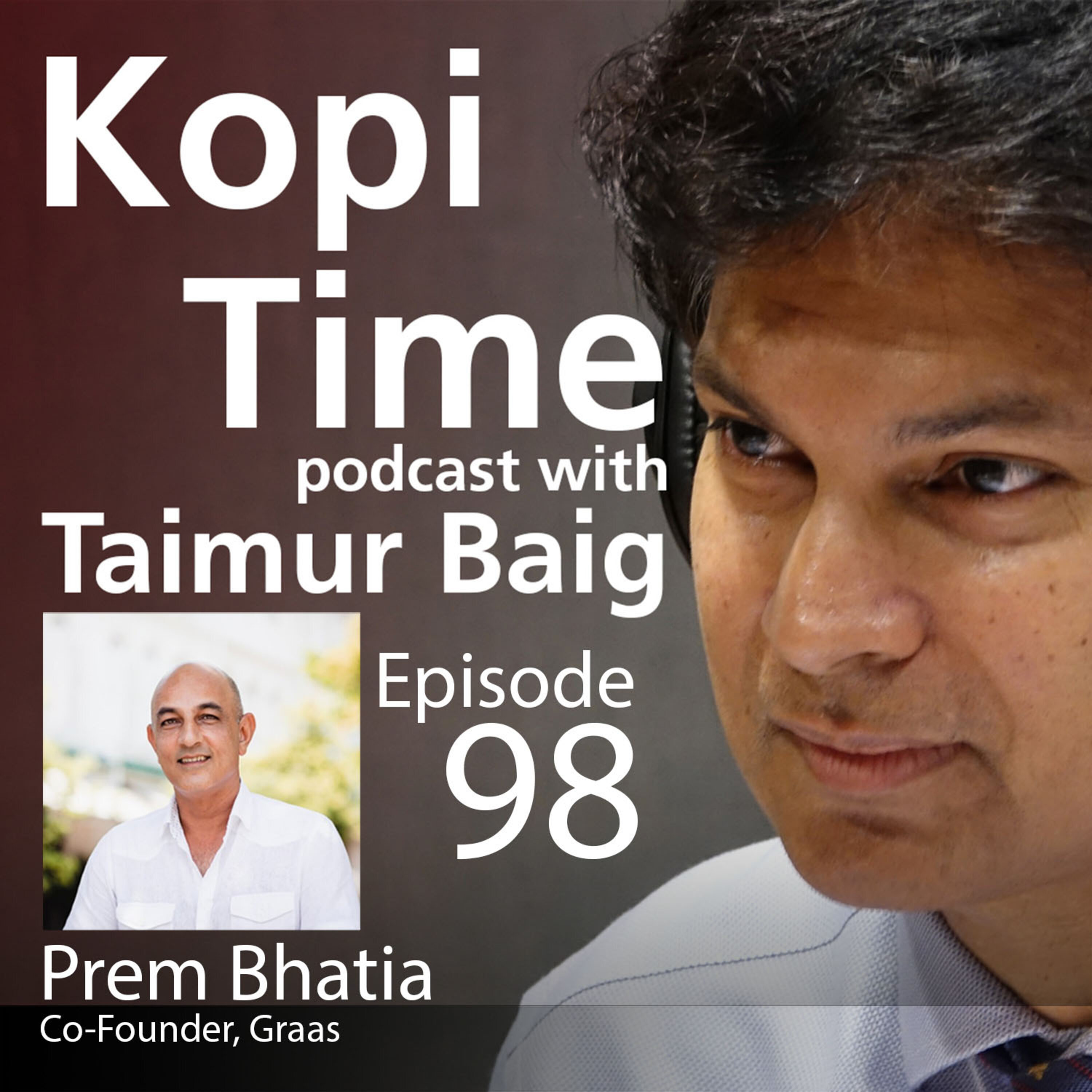
Ep 98Kopi Time E098 - Prem Bhatia on shifting sands in the tech start-up scene
Prem Bhatia, co-founder of Graas, a tech solution provider for e-commerce, joins Kopi Time to talk about the direction of data driven e-commerce and issues facing start-ups at the current macro backdrop. He draws on his decades-long experience as an entrepreneur and investor to make the case for data and artificial intelligence-driven solutions in the fragmented ecommerce markets in India and South-East Asia. He recognises the dark clouds looming as market correction and banking sector difficulties translate into substantially higher cost of early stage capital. Consequently, growth above all has been replaced by a welcome focus on profitable growth. At the same time, Prem remains encouraged by the wide range of promising ideas and solutions percolating around the region. He is keen to press the idea that innovation requires capital looking for both value and growth. Current selloff and higher cost of capital may well differentiate and lift up some of the best companies in the region. He considers the convergence of e-commerce and advertisement, catalysed by data analytics, as a major, consequential trend. We then discuss the present and future of data privacy, regulation, Tik Tok, and generative/predictive AI. Final word: “the ability to increase productivity is what AI delivers... AI will kill process managers by automating process management.”See omnystudio.com/listener for privacy information.
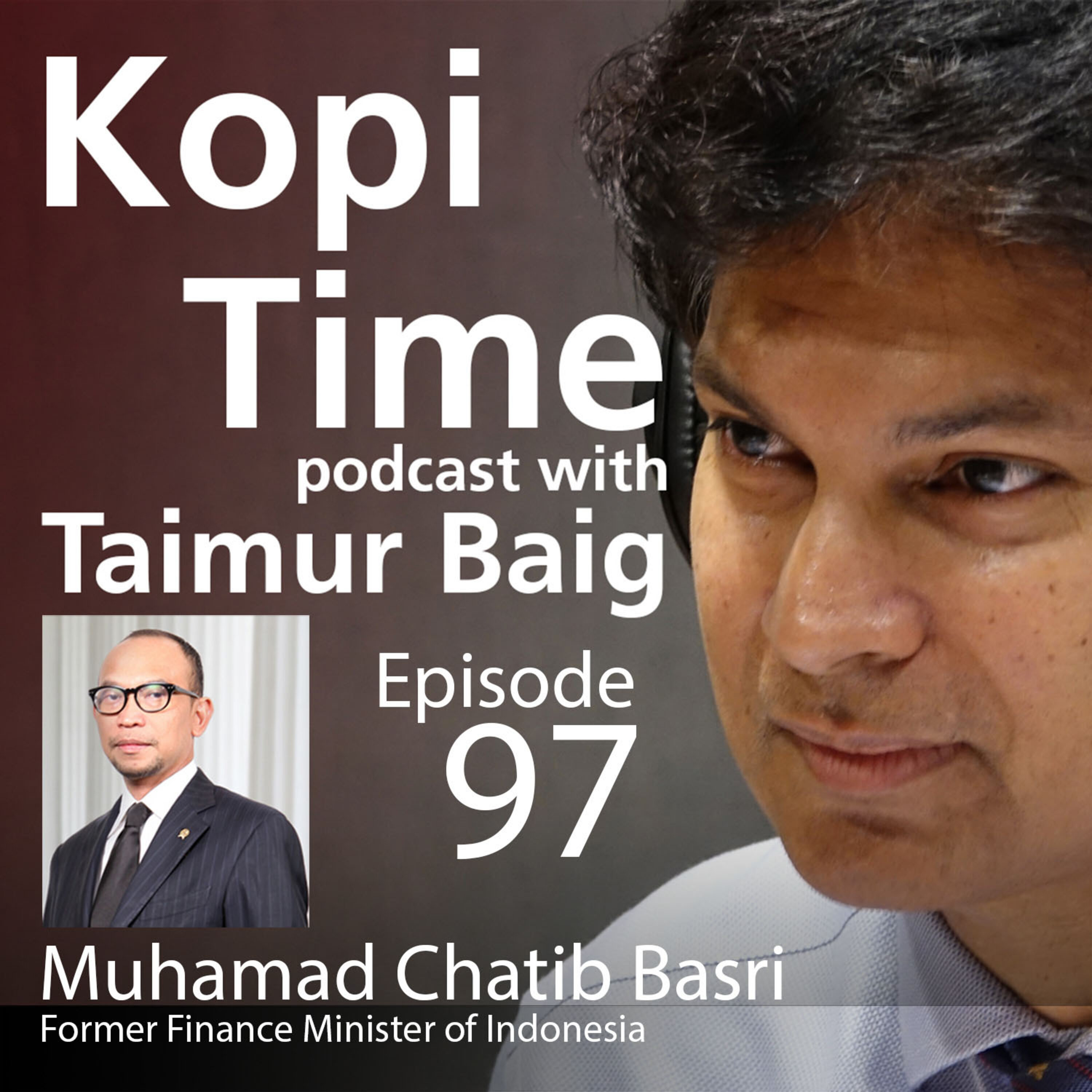
Ep 97Kopi Time E097 - Chatib Basri on Indonesia
I sat down with former Finance Minister of Indonesia, Chatib Basri, at the DBS Indonesia Asian Insights Forum 2023, held on March 15. During the conversation, Mr. Basri provided a brief presentation about the outlook for Indonesia in the context of global macroeconomic developments. He explained the Indonesian economy’s middle path, neither high- nor low-single digit growth, by taking into account resilient domestic demand and still-positive commodity exports outlook. Consequently, when there are global headwinds, Indonesia tends to outperform due to its low-beta nature. The flipside is during a global upswing, Indonesia tends to underperform. On climate change and green financing, Mr. Basri underscored the daunting challenges ahead, along with the massive domestic/external and private/public/multilateral financing needed. Removing fossil fuel subsidy is key, despite the political impediments. He then expanded on the possible opportunities for regional trade and manufacturing around China-US tension. Asean has to be united in setting rules for trade or commerce while dealing with China-US tension. We then have a back and forth on the investment environment, need for a balance between industrial policy and private sector incentives, the importance of the services sector, e-commerce, techno-nationalism, 2024 elections and the economic impact of campaign finance, strength of Indonesia’s financial system in light of global market selloff, and the role of regulatory policy to deal with that. Final word from Mr. Basri: “Investing in Indonesia is very dangerous, because it is very addictive.”See omnystudio.com/listener for privacy information.
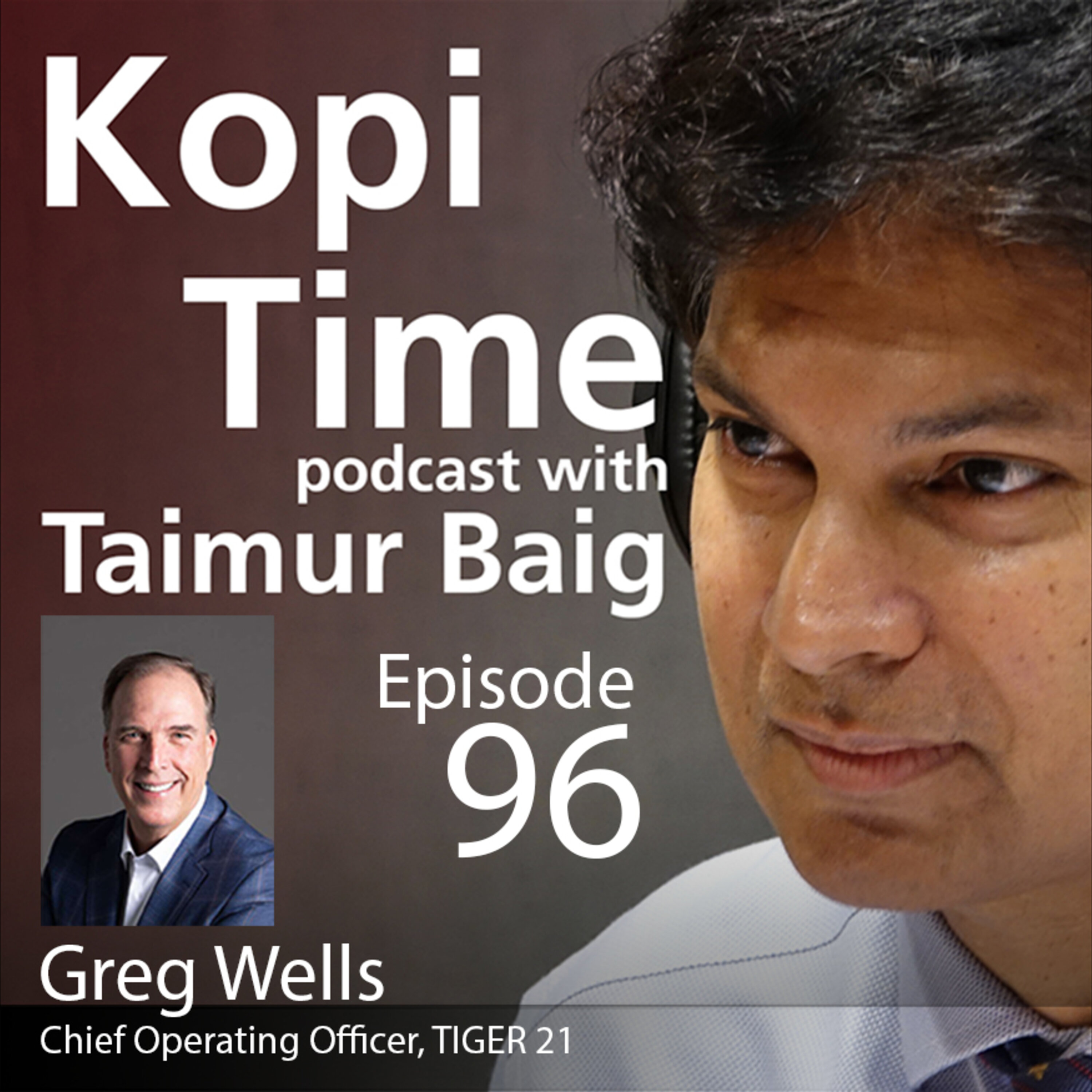
Ep 96Kopi Time E096 - TIGER 21’s Greg Wells on a network for the ultra-wealthy
Greg Wells, Chief Operating Officer of TIGER 21, a peer membership organisation for high-net-worth wealth individuals, joins Kopi Time. He provides an overview of this collective (minimum member wealth of USD100mn), in which members learn from one-another the risks and opportunities worldwide. An internally transparent and yet confidential organisational structure brings together 1200+ wealth creators for networking and learning. We then explore the genesis of TIGER 21 and its area of operation. Greg walks us through the membership process, the commitments members make, what one gets and contributes in the organisation, and the “portfolio defense” approach. Underlying the nitty gritty of wealth preservation and legacy planning is the desire to make a mark, to grow, and to belong in a community. Rather universal.See omnystudio.com/listener for privacy information.
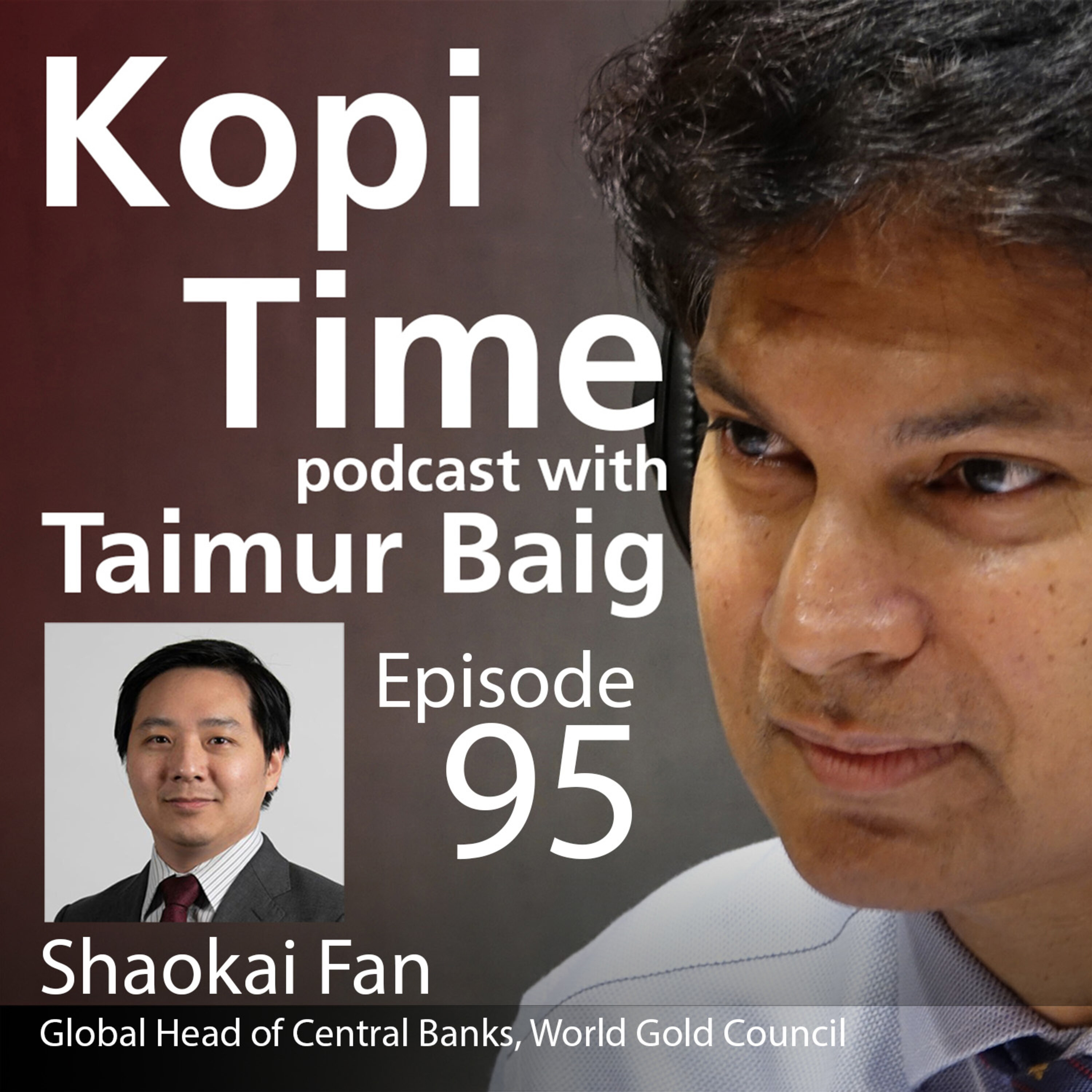
Ep 95Kopi Time E095 - World Gold Council’s Shaokai Fan on the evolving nature of the demand and supply of gold
Shaokai Fan returns to Kopi Time to talk about gold’s recent journey through inflation spike, war in Ukraine, weaponization of the USD, monetary policy tightening, and soaring interest rates. We talk about supply conditions, ongoing reforms to add greater transparency and sustainability, and the structure of the gold market. Shaokai then sheds light on the evolving nature of gold demand, both cyclical, as China and India come out of the pandemic, and structural, as individuals and financial institutions consider gold as a geopolitical hedge. Immensely fascinating.See omnystudio.com/listener for privacy information.
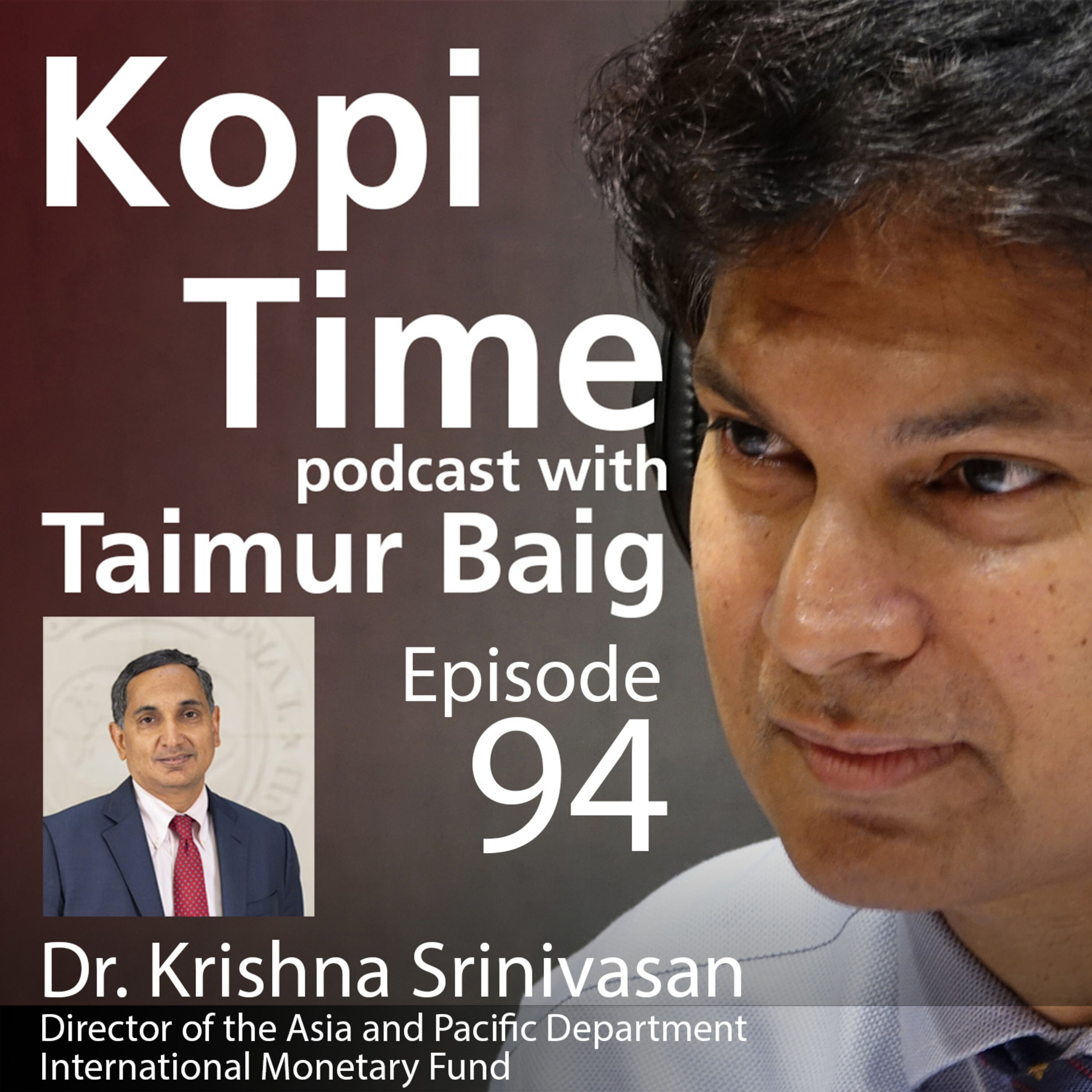
Ep 94Kopi Time E094: IMF’s Asia head Krishna Srinivasan on the region’s outlook
Dr. Krishna Srinivasan, Director of the Asia and Pacific Department, International Monetary Fund, breaks down the prospects for the region. We begin by talking about the coverage of the department, which is 37 countries, making up of half the world’s population. We then dive into the 2023 balance of risks, which the IMF sees still tilted to the downside, but with a welcome decline in adverse risks. On the upside, Krishna expresses optimism about post-pandemic re-opening helping demand, while headline inflation softens at a pace faster than previously envisaged. On the downside, concerns remain about Russia’s war in Ukraine, tighter global financing costs, various distortions posed by forces of deglobalisation, and lingering uncertainties around inflation. We then do a tour of Asia, starting with the two countries that are under IMF programs, Bangladesh and Sri Lanka. Krishna explains that state of macroeconomic affairs and the lending facilities being deployed in both cases. In this context, he also elaborates on the IMF’s new Resilience and Sustainability Trust. After this, we take on, one by one, the challenges and promises of Japan, China, India, Indonesia, and Singapore. We cover it all--inflation, debt, monetary policy, property markets, corporate governance, human capital, and deglobalisation. A thorough macro health-check of Asia.See omnystudio.com/listener for privacy information.
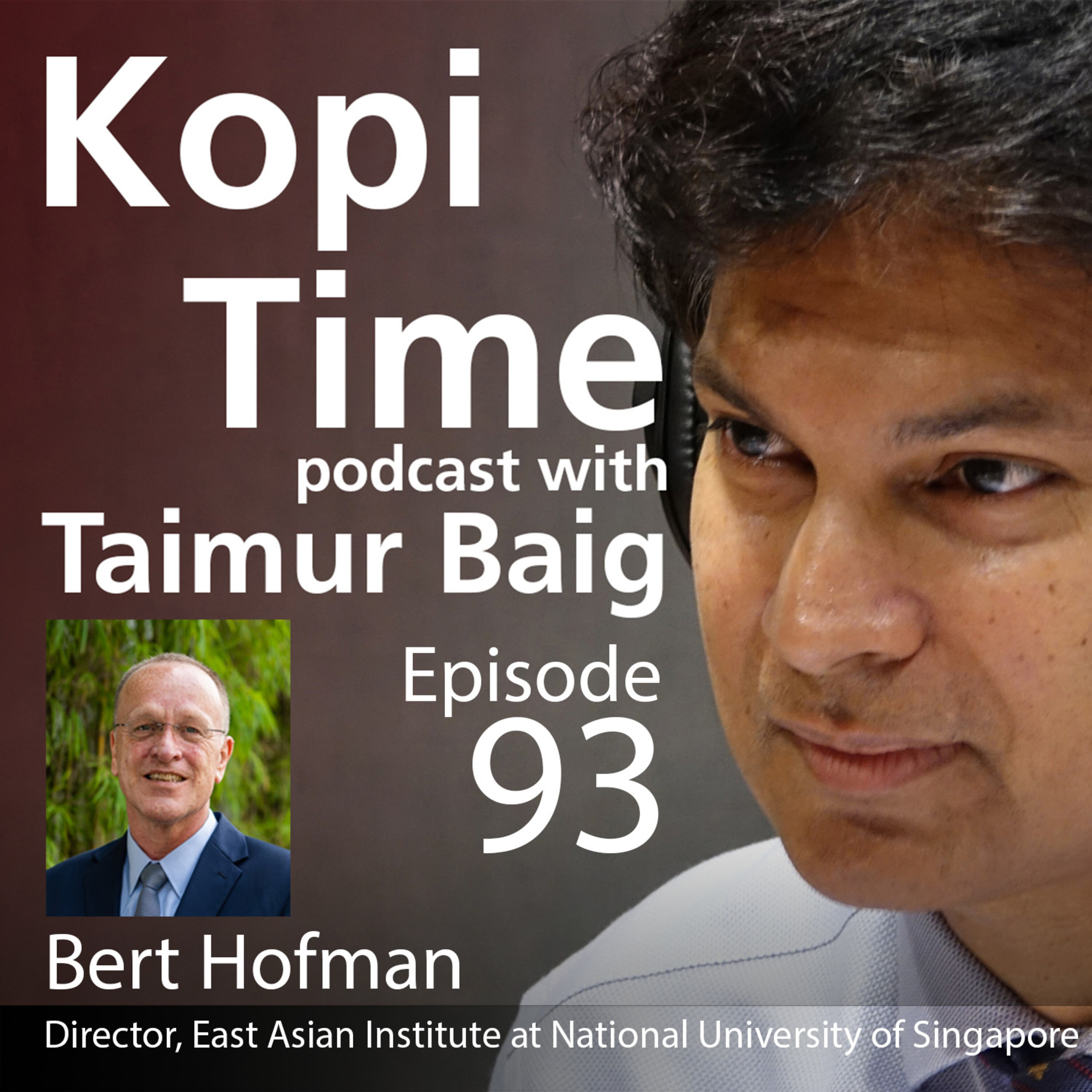
Ep 93Kopi Time E093 - China Outlook with Bert Hofman
Bert Hofman, Director of the East Asian Institute at National University of Singapore and former World Bank Country Director for China (2014-19), provides a sweeping overview of China’s outlook and key risks ahead. We begin with several nuances to the evolution of China’s zero-Covid policy and economic policies in the near term. Bert then offers insights into the property sector, and fiscal-structural policies that are likely to be deployed to deal its debt overhang. In his professional role, Bert devotes considerable time analysing China’s fiscal position and reforms outlook; here he walks us through tax reforms and spending imperatives that are in the pipeline. We then move on to tech sector regulation, green transition policies and strategies, and the legacy of the Belt and Road initiative. We end our wide ranging conversation with some reflections on the direction and unintended consequences of the rivalry between China and the US. A must-listen for China observers.See omnystudio.com/listener for privacy information.
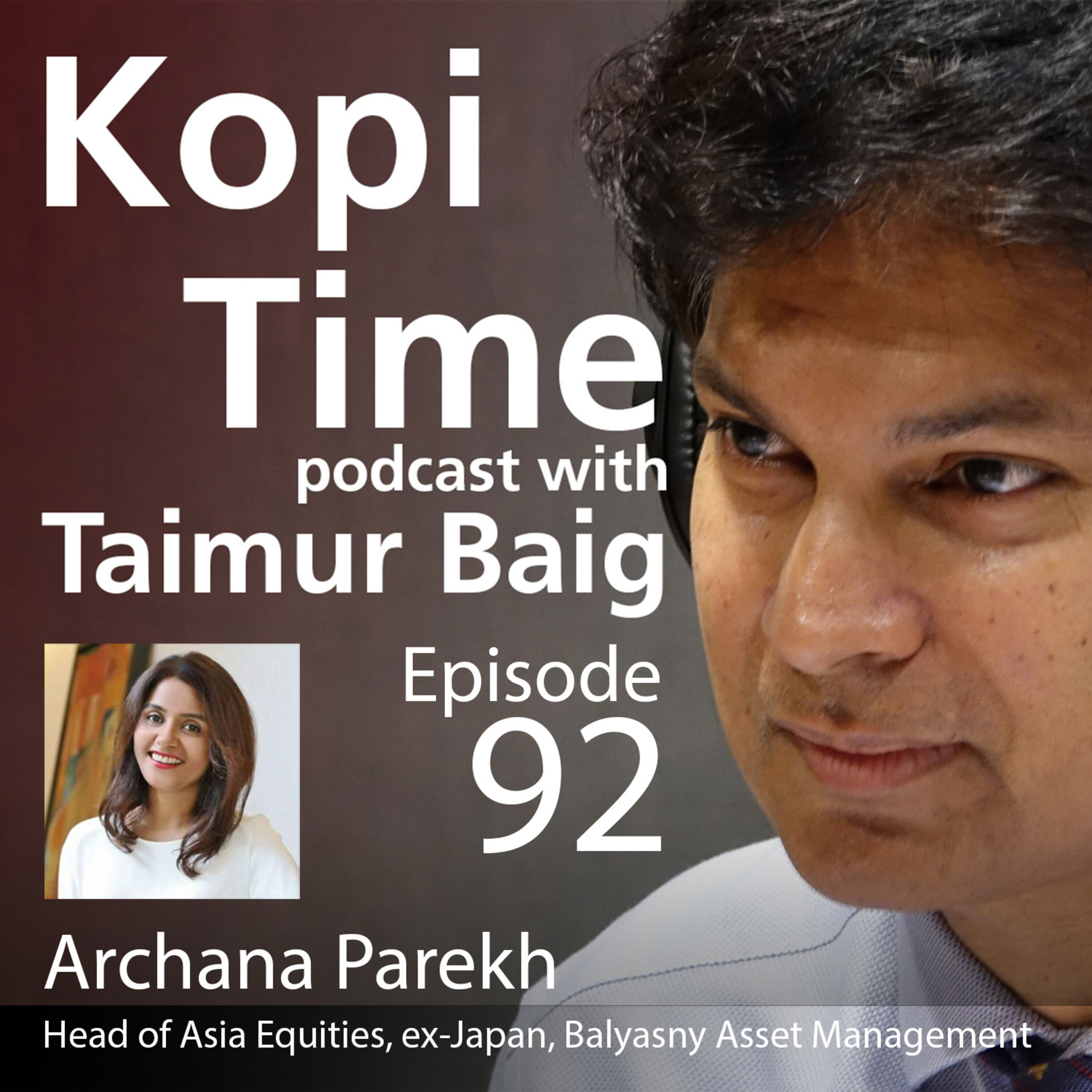
Ep 92Kopi Time E092: Balyasny’s Archana Parekh on global market opportunities in 2023
Welcome to 2023, dear Kopi Time followers! We kick off the new year with a chat on markets with seasoned trader and strategist, Archana Parekh, head of Asia Equities, ex-Japan, Balyasny Asset Management. We begin the discussion on the inevitability of market selloff in 2022, dragged by rates increases and lofty valuations. Archana does not think the highly correlated selloff across asset classes reflected much more than the fact that during the run-up in recent years, all asset classes had rallied with high correlation as well. We then talk about her broadly constructive outlook for equities in 2023, around Fed policy pause, China re-opening, and a fairly stable energy market. Yet, Archana does not see a major bull market ahead, given the numerous macro, geopolitical, and regulatory uncertainties in place. We then drill down to US tech, China tech, and Japan tech, each with their potential upside and idiosyncratic risks. We touch on frontier technologies and innovations, going over opportunities around them. Archana then weighs in on the age-old question of active versus passive investing, pointing out that one approach does not fill all investors. We conclude by talking about women in finance, something she supports passionately. Her inclination to look at opportunities calmly and constructively, even as big picture challenges mount, is heartening.See omnystudio.com/listener for privacy information.
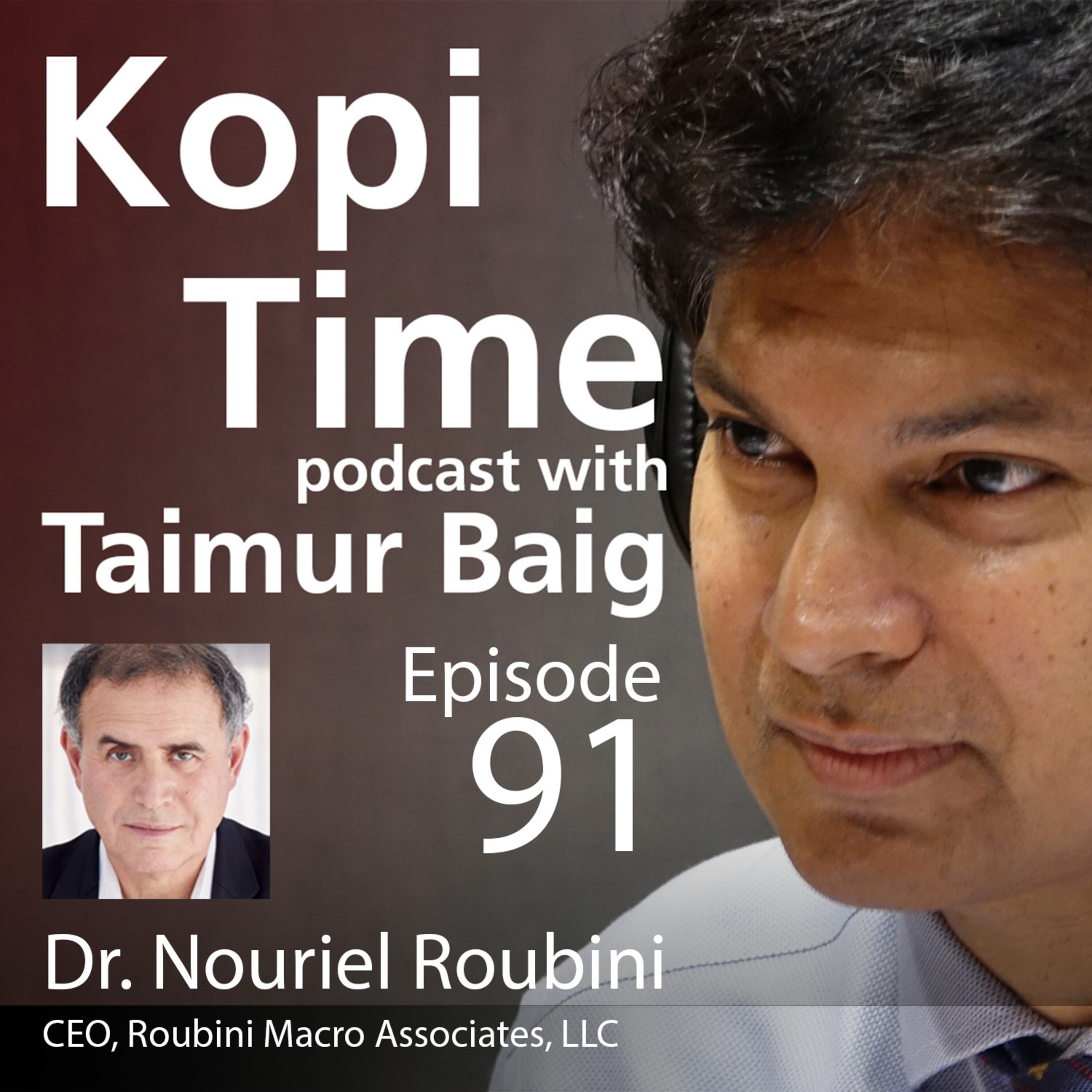
Ep 91Kopi Time E091 - Dr Nouriel Roubini on MegaThreats
Caution: You may need a strong cup of Kopi after listening to our year-ending podcast with Dr. Nouriel Roubini, an economist and market analyst, who famously called the severity of the sub-prime crisis back in 2008 and has been warning about the fragility of the crypto ecosystem in recent years. But it is essential listening, as a recent review of his book, MegaThreats, points out: “Roubini’s warnings may be alarmingly scary, but they are also disturbingly plausible” (John Thornhill, Financial Times). We begin with his sobering assessment of the near term outlook, with recession risks rising in the UK and Europe, with the US not far behind, along with China with its struggles to reopen the economy. Nouriel does not see inflation easing sufficiently in the near term, and envisages an era of “great stagflation” in the coming years. His rationale for structurally higher inflation is wide ranging, from the impact of deglobalisation to aging, along with green transition and populism. He also sees a looming debt crisis like no other, with the US, Europe, and China already overleveraged, teetering on the brink of cascading defaults and financial market contagion. He fears fiscal and monetary policy errors, great power rivalry, pandemic, climate change, cyber warfare, and financial instability holding back growth and prosperity in the coming decades, unless technological advances and welfare enhancing policies offset those headwinds. Nouriel worries that the period of global prosperity enjoyed since the end of the second world war is coming to an end; let’s hope he is wrong, but let’s also heed his warnings.See omnystudio.com/listener for privacy information.
Ep 90Kopi Time E090 - Dr. Torbjörn Becker on Ukraine-Russia
Dr. Torbjörn Becker, Director of the Stockholm Institute of Transition Economics, joins Kopi Time to discuss the economic dimensions of the ongoing Ukraine-Russia conflict. We begin by going over Ukraine’s economic size and structure, followed by the depth of the economic and societal damage inflicted by this conflict. We then talk about the massive short- and medium-term funding needs for Ukraine’s sustainability and rebuilding. Dr. Becker’s institute has been exploring the various dimensions of funding Ukraine, from the appropriate distribution channels to governance concerns; he elaborates on them. We move on to the impact of sanctions and potential oil price cap on Russia. We then go over the economics of sanction and the state of Europe’s energy supply and policy response for this winter. As the most significant global security event of 2022, it is fitting that we conclude with Dr. Becker’s outlook for this conflict in 2023.See omnystudio.com/listener for privacy information.
Ep 89Kopi Time E089 - Stuart Haber, Co-Inventor of Blockchain, on its Genesis and Current State
This podcast was recorded in early November, on the sidelines of the Singapore Fintech Festival 2022. It was fitting in the spirit of the event to have Stuart Haber join Kopi Time. Dr Haber, along with Scott Stornetta, co-invented the blockchain technique in 1990, which was later adopted by Satoshi Nakamoto as the basic mechanism for data integrity in Bitcoin. We begin the conversation travelling back over three decades, to understand the problem and motivation that drove Haber and Stornetta toward the blockchain. It is clear even as young coders and crypographers, their ambition was high and their goal was to have transformative and lasting impact on the way civilisation’s records are stored. We then talk about the seminal moment in 2008, when the Satoshi white paper came out, and Dr Haber’s take on it then (and now). We tackle the questions of a crypto bubble, Bitcoin’s adverse environmental impact (and possible solutions around it), proliferation of tech solutions looking for a problem, and the applications that appeal to him. Dr. Haber talks about his current research, and takes on my question on the potential impact of quantum computing on cryptograhy-based record authentication. A brilliant mind with outstanding insights.See omnystudio.com/listener for privacy information.
Ep 88Kopi Time E088 - Dr. Lynn Loo on Decarbonising International Shipping
Dr. Lynn Loo, Professor in Engineering at Princeton University and head of Global Centre for Maritime Decarbonisation (GCMD) in Singapore, joins Kopi Time to talk about international shipping’s transition to a low-/zero-carbon future. Shipping accounts for 90% of global trade and is the sixth largest carbon emitter as a sector, hence the stakes are high. Dr Loo talks about the targets in place at the international level, as well as the current and frontier technologies that can take us toward zero-emission shipping in the long-term. We then move on to the issue carbon capture, which is tantalising in potential, but also comes with thorny issues like cost, storage, and disposal. We discuss the role of carbon taxes and broader regulations in facilitating green transition, some of the promising pilots and studies undertaken by GCMD (Biofuel, ammonia bunkering, retrofit solutions, and wind-assisted propulsion). We end with Dr. Loo’s pragmatic vision of a multi-fuel future.See omnystudio.com/listener for privacy information.
Ep 87Kopi Time E087 - Notes from IMF meetings in Washington
This 10-minute commentary summarises my key impressions from the annual meetings of the International Monetary Fund in Washington DC. Held amid the background of rising interest rates, currency market volatility, developing country debt distress, great power rivalry, war in Ukraine, and risk of financial instability, the mood was largely grim during the meetings. Silver linings include relative resiliency of large emerging market economies, strong push for infrastructure investment, and an energised climate change agenda. But above all, it was about the US. The US society may have internal chasms, and some of its political institutions and processes may have weakened in recent years, but as far as the rest of the world is concerned, US monetary and financial market policy, US demand, US industrial policy, and US sanctions loom above just about all other considerations. To me, US assertiveness characterised these meetings.See omnystudio.com/listener for privacy information.
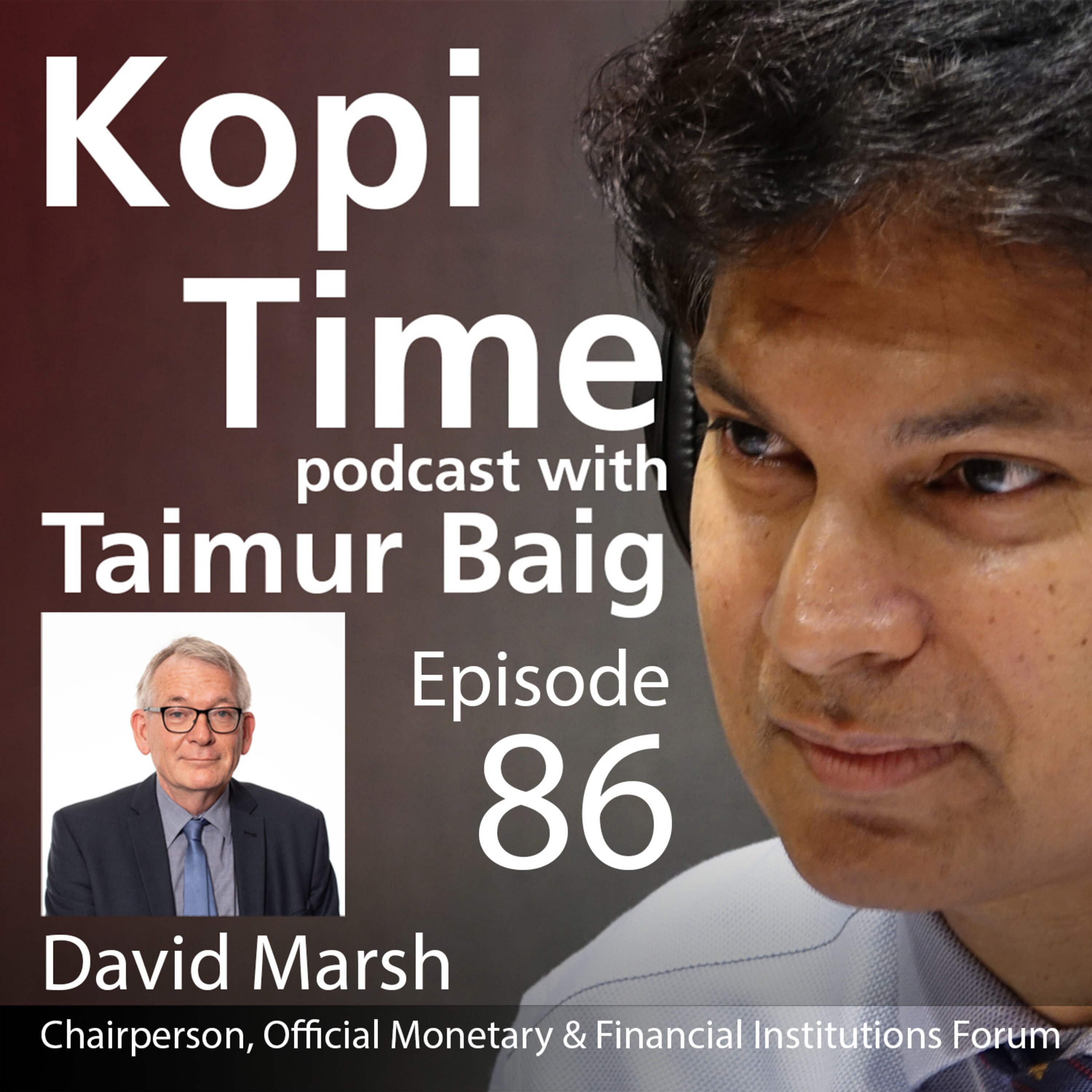
Ep 86Kopi Time E086 - OMFIF’s David Marsh on the Sterling crisis and UK
David Marsh, Chairperson of Official Monetary and Financial Institutions Forum (OMFIF) joins Kopi Time to go over the UK’s recent bout with extraordinary currency and rates volatility. Mincing no words, David provides a strong critique of the policy choices and communications that have pushed the UK economy on weak footing, leaving it vulnerable to financial stability risks. We talk about past cases of devaluation (especially the 1992 Sterling crisis that David has written about extensively) and consider the parallels and lessons. We then discuss the myriad of risks hovering over Europe, from war to energy insecurity to debt overhang among the peripheral economies. David has a sobering outlook for the global economy, with recession looming and global coordination largely absent. Not many silver linings, other than lessons learnt. See omnystudio.com/listener for privacy information.
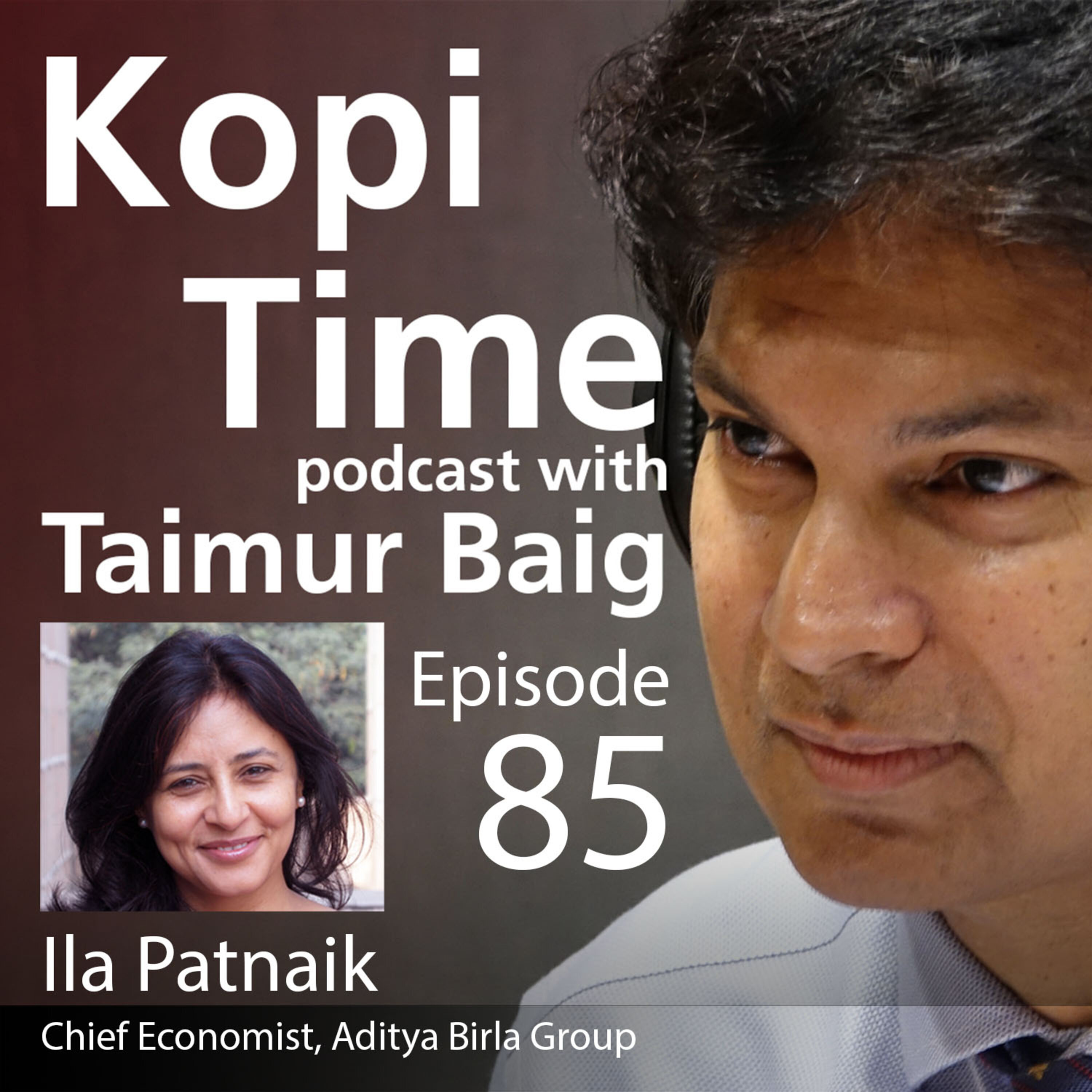
Ep 85Kopi Time E085 - Ila Patnaik on India’s Economy and the Politics of Welfare Delivery
Ila Patnaik, Chief Economist, Aditya Birla Group, joins Kopi Time to discuss a number of pertinent aspects of India’s economy. We talk about the current macro situation in the face of rising interest rates and tensions in the currency market. We then move on to India’s somewhat restrained policy response during the pandemic, and the expedited embrace of digital payments and service delivery. Ila is a realist on the frictional cost of economic formalisation, recognising that there will be losers. The challenge then becomes to ensure a minimal safety net for those being left behind. She is optimistic about the investment outlook but also cautious about absorptive capacity. From her perspective, 3-4% of GDP worth of FDI is fine, but more than that would be problematic to manage. We then discuss the state of financial sector reform, something Ila has been involved with for over a decade. We move on to discuss Ila’s book, co-written with union minister Bhupender Yadav, The Rise of the BJP: The Making of the World's Largest Political Party, which examines the politics of welfare payments. Ila points out the benefits that come from corruption-free, efficient social service delivery and frequent social audits, which is a valuable lesson for modern democratic parties. We end with Ila’s vision for India, which is highly promising to her due to a massive demographic advantage. This key to maintain a well-educated, healthy, and aspirational population.See omnystudio.com/listener for privacy information.
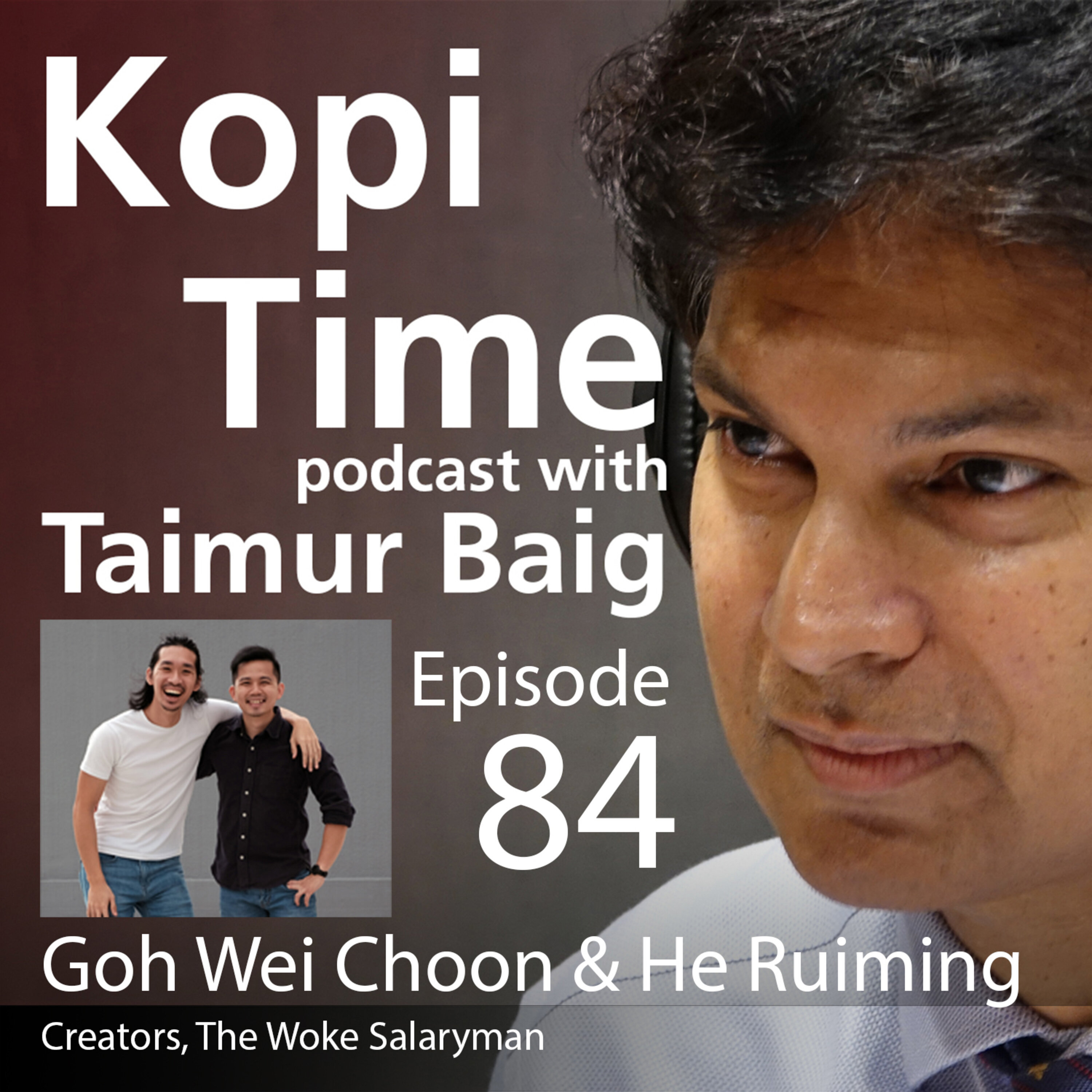
Ep 84DBS Kopi Time E084 - The Woke Salaryman on Financial Literacy
Thewokesalaryman handle on Instagram has over 357k followers; on Telegram, it has nearly 37k subscribers. It is a highly popular social media platform on financial literacy, using original, witty cartoons to impart critical life lessons on career building, savings, investment, and just living worthy lives. He Ruiming and Goh Wei Choon, the creators, join Kopi Time to share their motivation, content generating process, the feedback loop between posting and follower response, their financial model, and the way forward. With a strong sense of the pulse of Singapore’s Gen Z population and beyond, Ruiming and Wei Choon are making truly valuable contribution to the overall well-being of the society.See omnystudio.com/listener for privacy information.