Kopi Time podcast with Taimur Baig
DBS Bank · Marco Sparmberg
Show overview
Kopi Time podcast with Taimur Baig has been publishing since 2022, and across the 4 years since has built a catalogue of 112 episodes. That works out to roughly 85 hours of audio in total. Releases follow a fortnightly cadence.
Episodes typically run thirty-five to sixty minutes — most land between 41 min and 54 min — and the run-time is fairly consistent across the catalogue. None of the episodes are flagged explicit by the publisher. It is catalogued as a EN-US-language Business show.
The show is actively publishing — the most recent episode landed 1 weeks ago, with 18 episodes already out so far this year. Published by Marco Sparmberg.
From the publisher
Kopi time is a podcast series on insights from markets and economies around the world, hosted by Taimur Baig, Ph.D., Chief Economist of DBS Bank Ltd.
Latest Episodes
View all 112 episodesKopi Time E186 - A report on SE Asia 2026-2035
Kopi Time E185 - US Election Outlook with Steve Okun
Kopi Time E184 - US Trip Notes
Kopi Time E183 - Regional Outlook with Ethan Wu
Kopi Time E182 - AI Cyber Risks with Gaurav Keerthi
Kopi Time E181 - Singapore's Economic Path with Manu Bhaskaran
Kopi Time E180 - Tech Wave with Bain's Ravi Vijayaraghavan
Kopi Time E179: Energy markets with Vandana Hari
Kopi Time E178: AI and National Interest with Dr. Anthony Annett
Kopi Time E177 - Deborah Elms on Trade Matters
DBS Kopi Time E176- Notes from IMF Meetings - Stark Disconnect
Kopi Time E175: DBS CEO Tan Su Shan on wars, tariffs, AI, and fintech
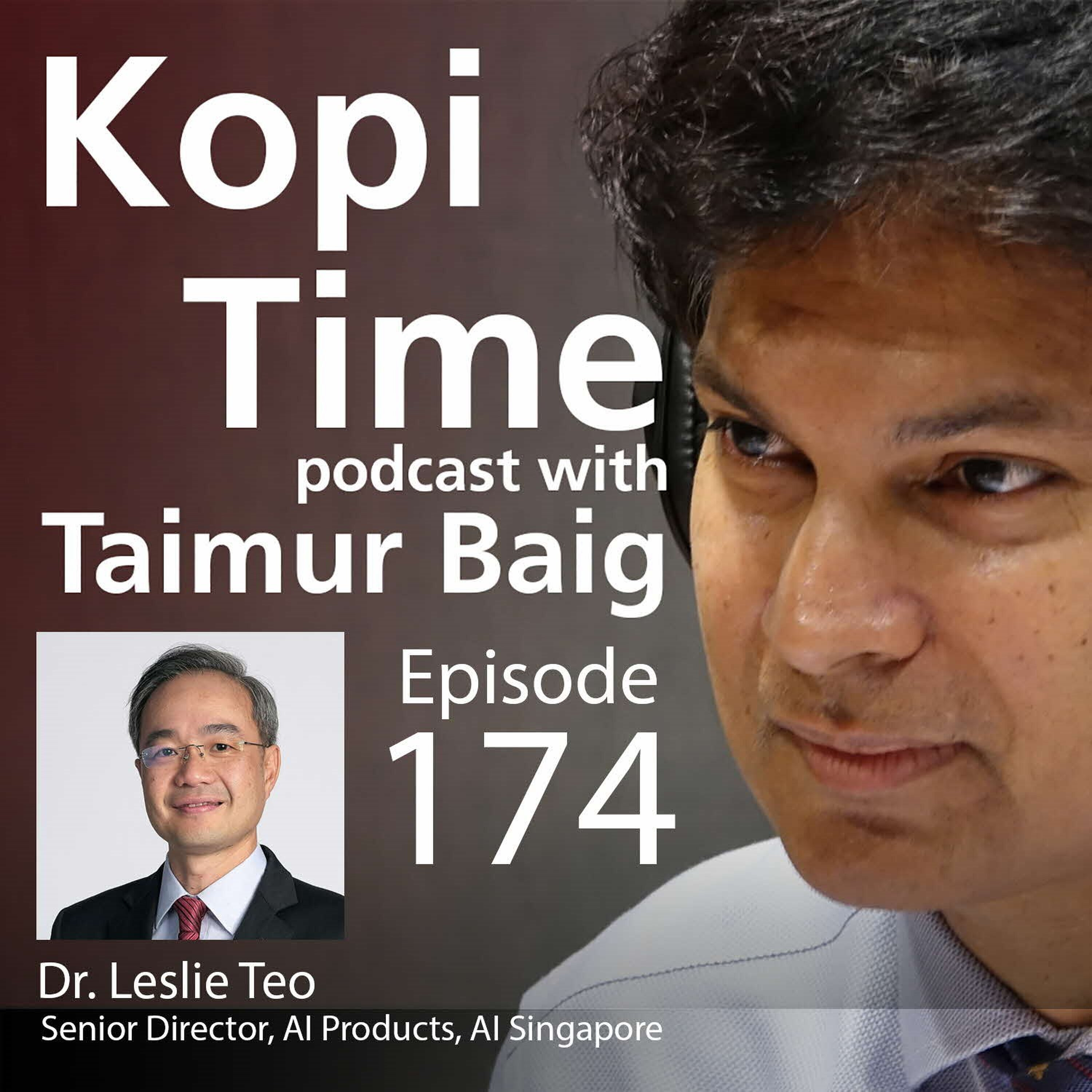
Ep 171Kopi Time E174 - Future of Jobs and Tasks with AI Singapore's Leslie Teo
In a recent collaboration with Dr. Leslie Teo, Senior Director of AI Products at AI Singapore, we published an article on redefining jobs and expertise in the AI era (link here). The process of writing the article entailed making several Large Language Models work for many hours, searching through hundreds of top journal articles, establishing key insights from the latest research findings, and carrying out economic analysis (link to our companion piece on the process is here). In this podcast, Leslie and I talk about deploying the ever-improving AI agents, along with the need for human judgment, emotional quotient, and leadership in work. As tasks become more automated and we become more productive, what is the role of educators, firms, and governments in embracing the upside while managing labour market disruptions? Leslie’s sharing on all this should allay the fears of those who see a dystopian future in the making. See omnystudio.com/listener for privacy information.
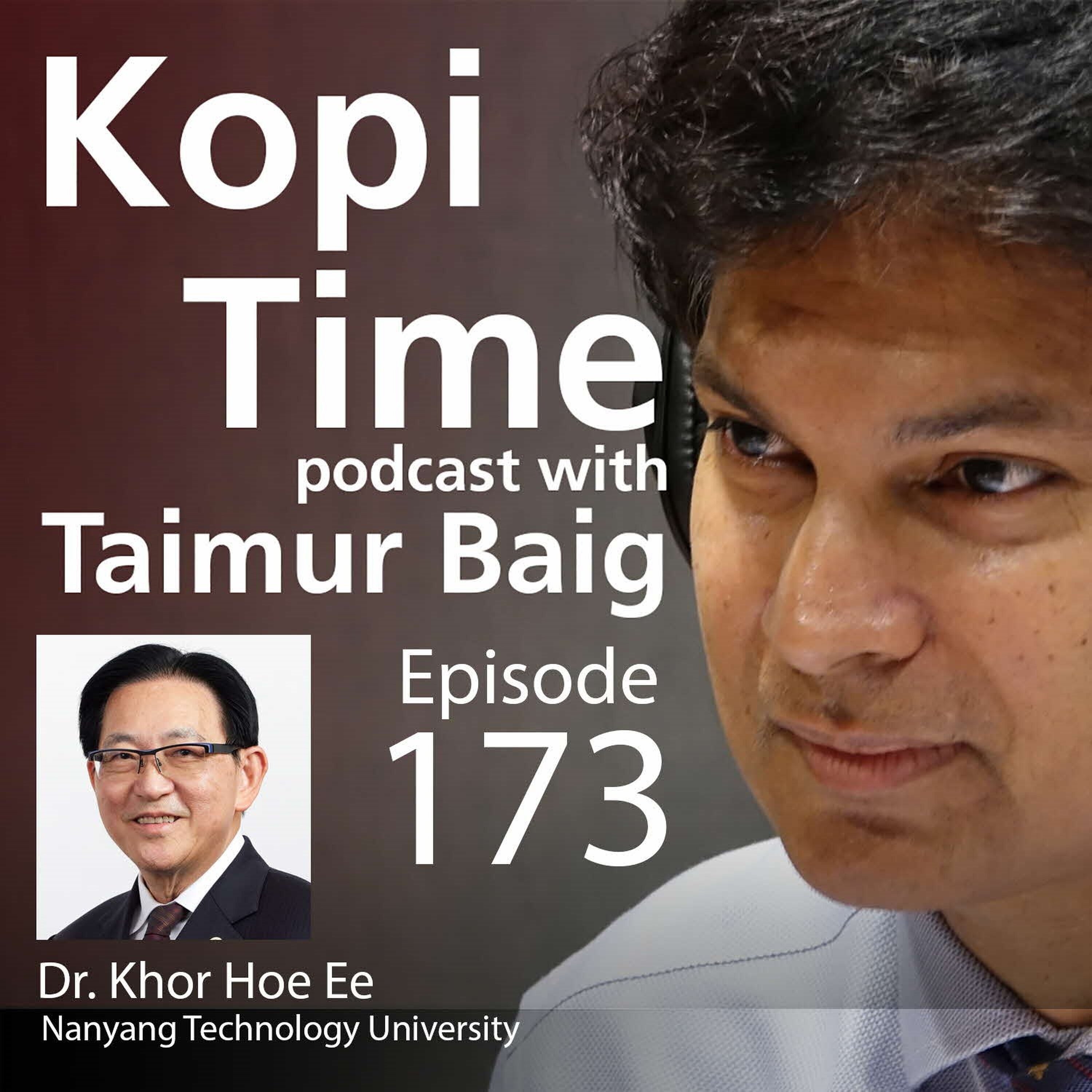
Ep 171Kopi Time E173 - Dr. Khor Hoe Ee on Asia's Resilience and the Road Ahead
Dr. Khor Hoe Ee, presently with Nanyang Technology University, with a long career in multilateral institutions and central banking, returns to Kopi Time. We begin with his recent writings, part of which has analysed the factors underlying the better-than-expected performance of the global economy in 2025, particularly Asia. Dr. Khor explains the role of the AI spending cycle, a powerful green transition dynamic, and an accommodating macro environment as key factors. We then talk about Singapore’s shock absorption capacity and the challenges with respect to the ongoing AI wave. We go over Singapore’s social imperative for inclusive growth and the policy menu. We conclude with the challenges facing Asean.See omnystudio.com/listener for privacy information.
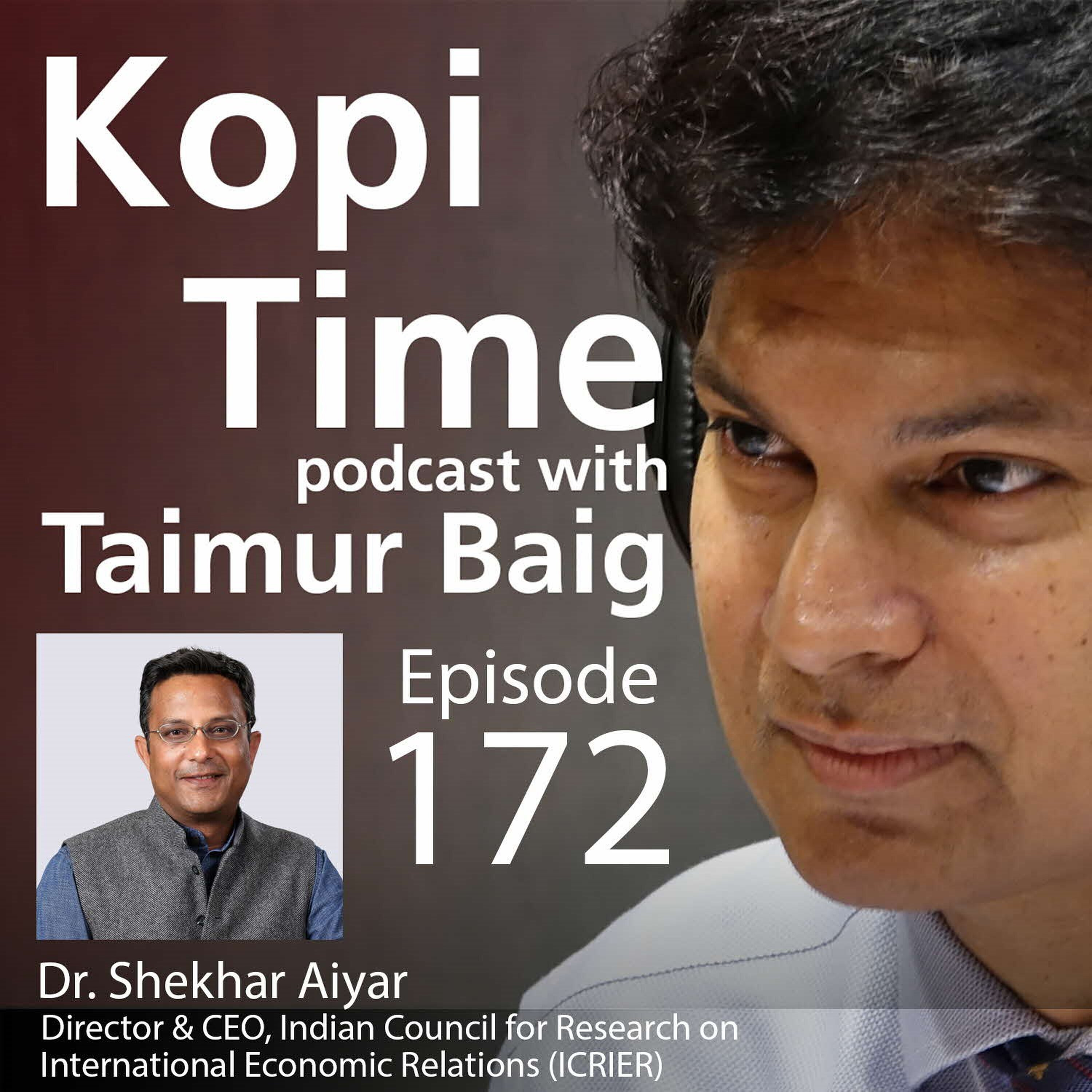
Ep 172Kopi Time E172: ICRIER head Shekhar Aiyar on key aspects of India’s outlook
Dr. Shekhar Aiyar, Director and CEO of Indian Centre for Research on International Economic Relations (ICRIER), returns to Kopi Time for a wide-ranging discussion on India. We begin with the clear, foundational tailwinds in place that could propel India’s economic growth higher in the coming years, followed by factors that could hold back growth, especially onerous regulation, insufficient spending on R&D, labour market rigidity, and complexities associated with state-centre relationship. We then move on to public finances, which is presently characterised by favourable debt dynamics and a consolidating fiscal stance. Building on that, we focus on budgetary allocations in key areas of the economy. Shekhar then touches on external matters, including the rupee, trade deals, and India’s calculus vis-à-vis China. A must-listen for India watchers. See omnystudio.com/listener for privacy information.
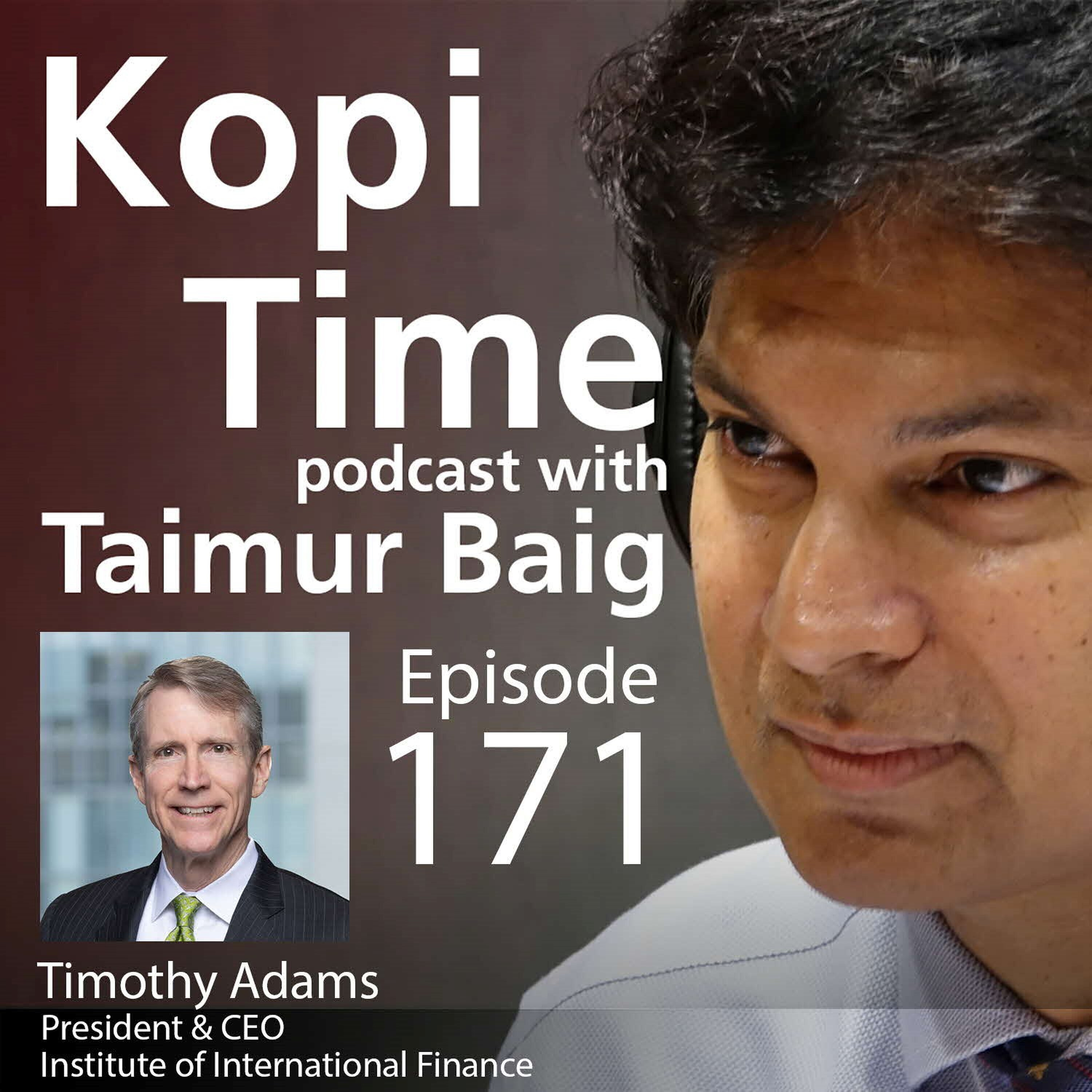
Ep 170Kopi Time E171 - IIF's Tim Adams on the Fed, US Fiscal, & Financial Stability
Timothy Adams, President and CEO of the Institute of International Finance, brings his deep experience and expertise to Kopi Time. We begin with the nomination of Kevin Warsh as the next Fed Chair, and his potential approach to monetary policy, including the challenges of balancing political pressure with institutional independence. We then discuss the state of monetary and fiscal policy, risks characterising the outlook, financial stability concerns, and the politics and economics around the USD and stablecoins. We end with Tim's views on the evolving geopolitical landscape and the need for middle powers to seek new partnerships and pragmatic positions on matters of national security and trade.See omnystudio.com/listener for privacy information.
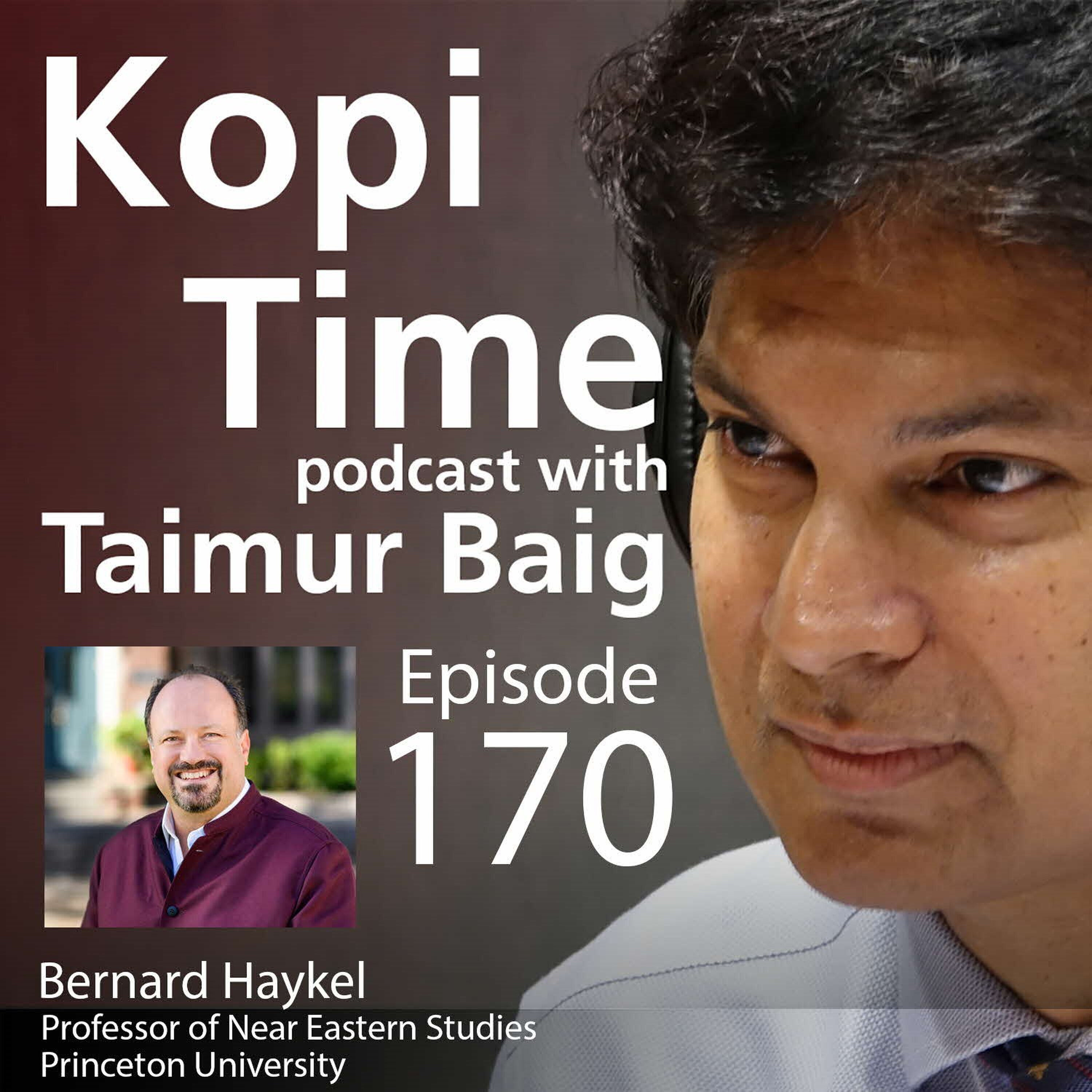
Ep 170Kopi Time E170: Bernard Haykel on foreign policy in the Americas and the Middle-East
Bernard Haykel, Professor of Near Eastern Studies at Princeton University, returns to Kopi Time to walk us through various geopolitical flashpoints. We begin with the US’s recent intervention in Venezuela and the cohesiveness of the strategy at play. Heavy on economic coercion and light on ground-level involvement, to what extent US can achieve control on the region remains to be seen, although the goal of reducing China’s influence is being achieved to some extent. We then touch on what lies ahead for other central and Latin American leaders who are not aligned with the White House. Next, Greenland, where Professor Haykel does not see military intervention, nor does he see the fraying of the NATO. We then move on to the various moving parts in the Middle-East, from Iran to Saudi Arabia to UAE to Israel to Syria. There are few academics like Professor Haykel who can parse through these complex issues with such ease. A tour de force. See omnystudio.com/listener for privacy information.
Ep 169Kopi Time E169 - Upside to the US, China, and Singapore
In the year’s first podcast, we examine the factors that could help overcome ongoing geoeconomic uncertainty, helping achieve trend growth outcomes in the US, China, and Singapore. The year has begun under the shadow of a highly assertive US pushing its hegemonic agenda. Both externally and domestically, Donald Trump has taken a largely imperialist posture, subject to hardly any checks from the other arms of the government. His goals include achieving energy and rare earth material security, forcing neighbours in the Americas into acquiescence, curtailing China’s power, and supporting right wing regimes worldwide. We are however doubtful that his actions would secure the House of Representatives in November. Beyond the political dynamic, short of an AI bubble burst, the US economy is poised to grow in line with trend this year, led by consumption. A weak job market and easing inflation pressure would keep the Fed cutting the policy rate more, drama around Fed Chair notwithstanding. We worry about the erosion of institutional integrity in the US, but the ramifications are in the medium term, with investors likely to remain enthusiastic about holding US assets in the near term. On China, we recognise both its struggles with the property sector and the tailwind emanating from an impressive tech wave. The spillover from China’s expanding manufacturing base is positive for trade-oriented economies, contrary to the narrative of predatory excess capacity. On Singapore, we see a number of levers in place to propel growth this year and beyond. See omnystudio.com/listener for privacy information.
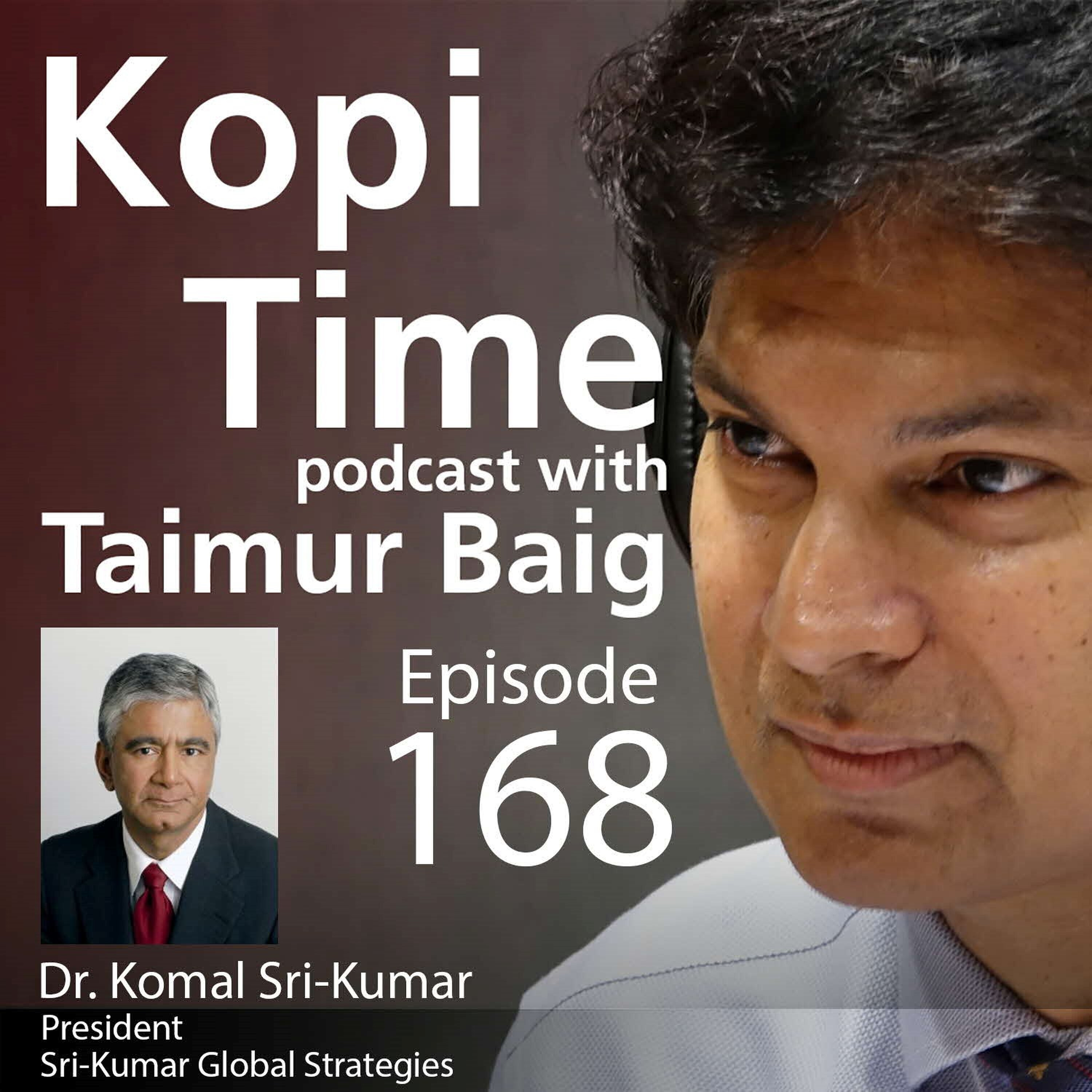
Ep 168Kopi Time E168 - 2026 Stagflation Risk with Komal Sri-Kumar
Fiscal slippage, lower economic growth, sticky inflation, weaker dollar, steeper yield curve, financial instability; these are the key prognostications of Dr. Komal Sri-Kumar in our year-end podcast. President of Sri-Kumar Global Strategies, Sri is a deep thinker on macro trade strategies, and his forecasting track record is outstanding. Going into 2026, he is bearish both stocks and bonds, long vols and gold, and bearish the USD. He worries that the inevitable bursting of the AI-bubble and sticky inflation would cause stagflation and financial instability risks in the US next year. He is also concerned about the erosion of institutional strength in the US, from the central bank to the treasury to the statistical agencies. An unambiguously bleak outlook.See omnystudio.com/listener for privacy information.
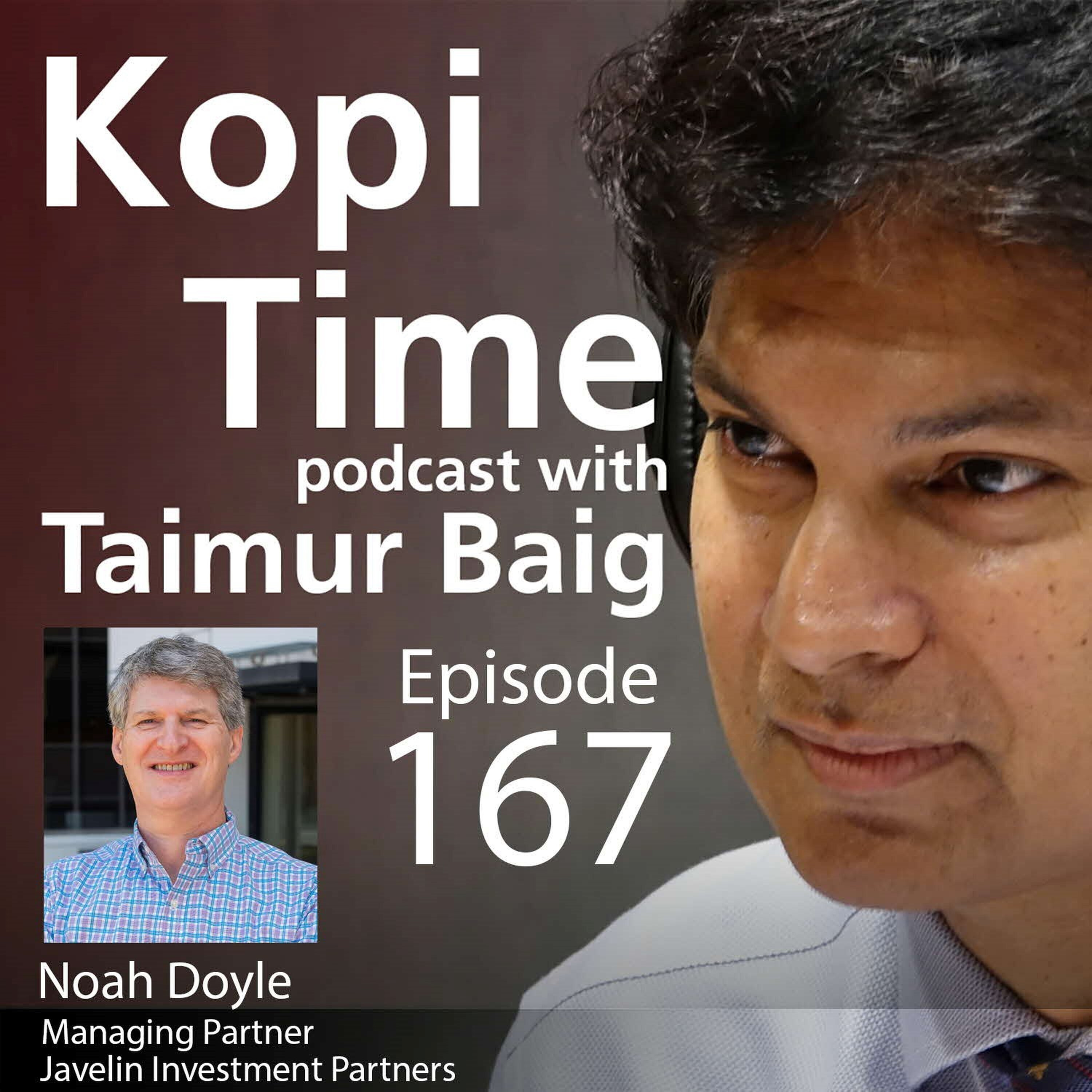
Ep 167Kopi Time E167 - Noah Doyle on Tech, AI, and Bubbles
Noah Doyle, Managing Partner at Javelin Investment Partners in Silicon Valley, with decades-long background in venture capital, joins Kopi Time to talk about tech and AI. We begin with a general discussion on the present vibe in Silicon Valley, giddy with record investments and returns. We then immediately pivot to the question of the moment, if there is an AI bubble, to which Noah offers a detailed and nuanced response, walking us through the supply and demand for AI infrastructure and products, the fund raising and capital deployment ecosystem, and dizzying valuation of AI companies, public and private. I then nudge Noah toward an issue close to his heart--if the path toward AGI through Gen AI, and if not, are there alternative paths in the making. Noah responds by discussing alternatives to Large Language Models, including symbolic logic-based AIs. We take the conversation toward innovations coming out of China and the US, which Noah tracks closely and sees the trend as a positive, mutually beneficial development. We talk about regulatory guardrails, cyber security, privacy, and ethical aspects of AI to round-up this fascinating conversation.See omnystudio.com/listener for privacy information.