
Kakande's Investments Podcast
Alex Kakande is a finance and investment analyst with over 8 years of experience in Finance. He is passionate about helping Ugandans invest and grow their wealth, and is a regular speaker and writer on topics related to finance and investments
Kakande's Investments Podcast
Show overview
Kakande's Investments Podcast launched in 2024 and has put out 20 episodes in the time since. That works out to roughly 20 hours of audio in total. Releases follow a monthly cadence.
Episodes typically run thirty-five to sixty minutes — most land between 26 min and 1h 54m — with run-times ranging widely across the catalogue. None of the episodes are flagged explicit by the publisher. It is catalogued as a EN-language Business show.
The catalogue appears to be on hiatus or wound down — the most recent episode landed 1 year ago, with no new episodes in over a year. The busiest year was 2024, with 18 episodes published. Published by Kakande's Investments Podcast.
From the publisher
Welcome to the Kakande's Investment Podcast - a synergy of Ugandan intellect, global insights, and financial acumen. kakandealex.substack.com
Latest Episodes
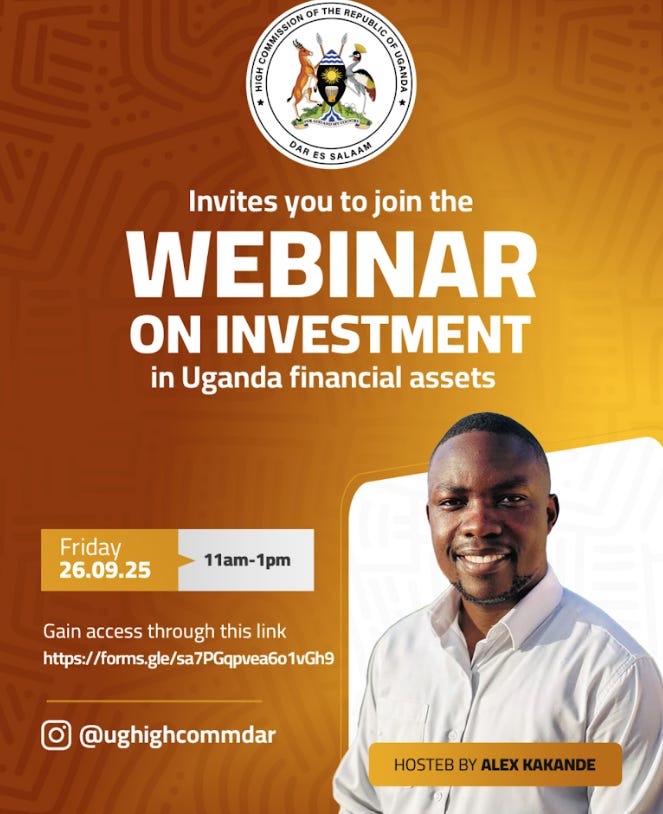
Investing in Uganda's Financial Assets
A conversation with the Ugandans in Tanzania, Malawi and Zambia thanks to The Uganda High Commission in Dar es SalaamThe next Webinar is in November. This is a public episode. If you would like to discuss this with other subscribers or get access to bonus episodes, visit kakandealex.substack.com
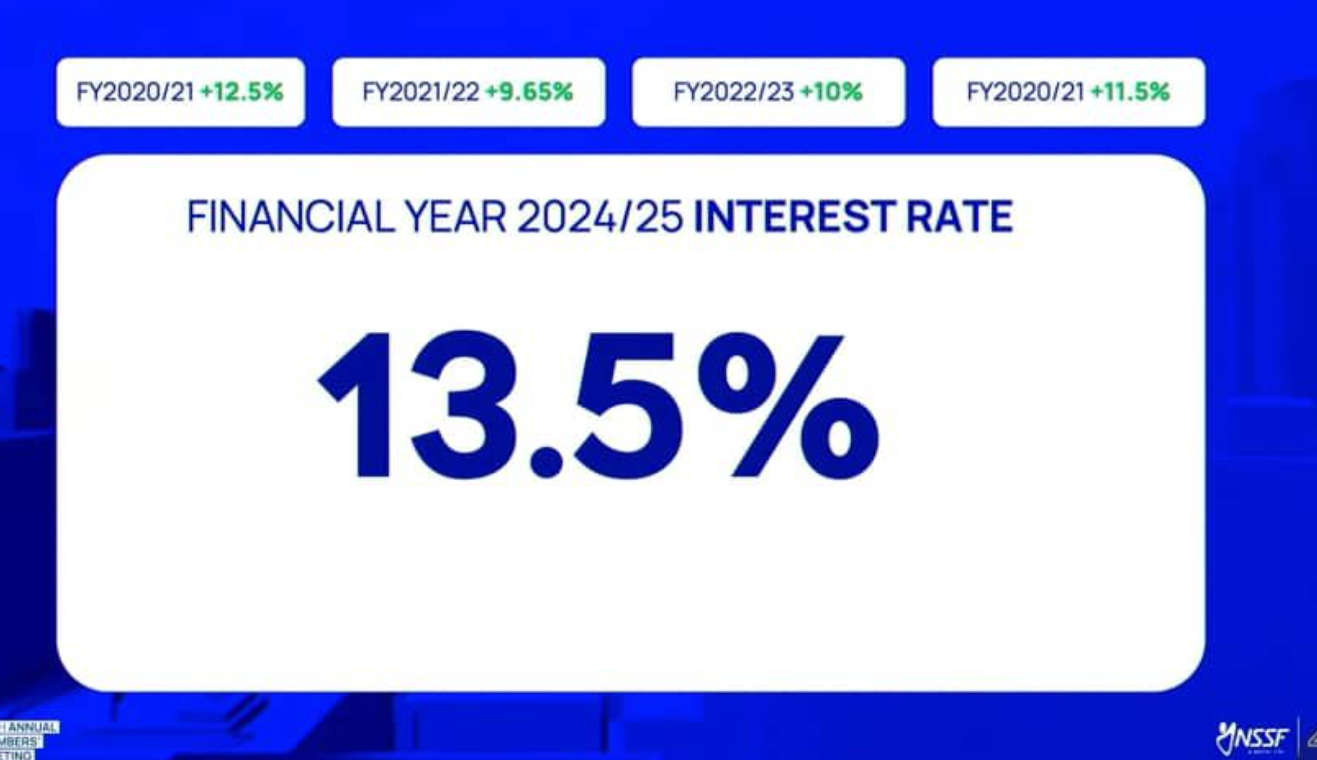
Hooray for 13.5%! NSSF Savers Celebrate as Minister Announces Highest Rate in 7 Years
This is a public episode. If you would like to discuss this with other subscribers or get access to bonus episodes, visit kakandealex.substack.com
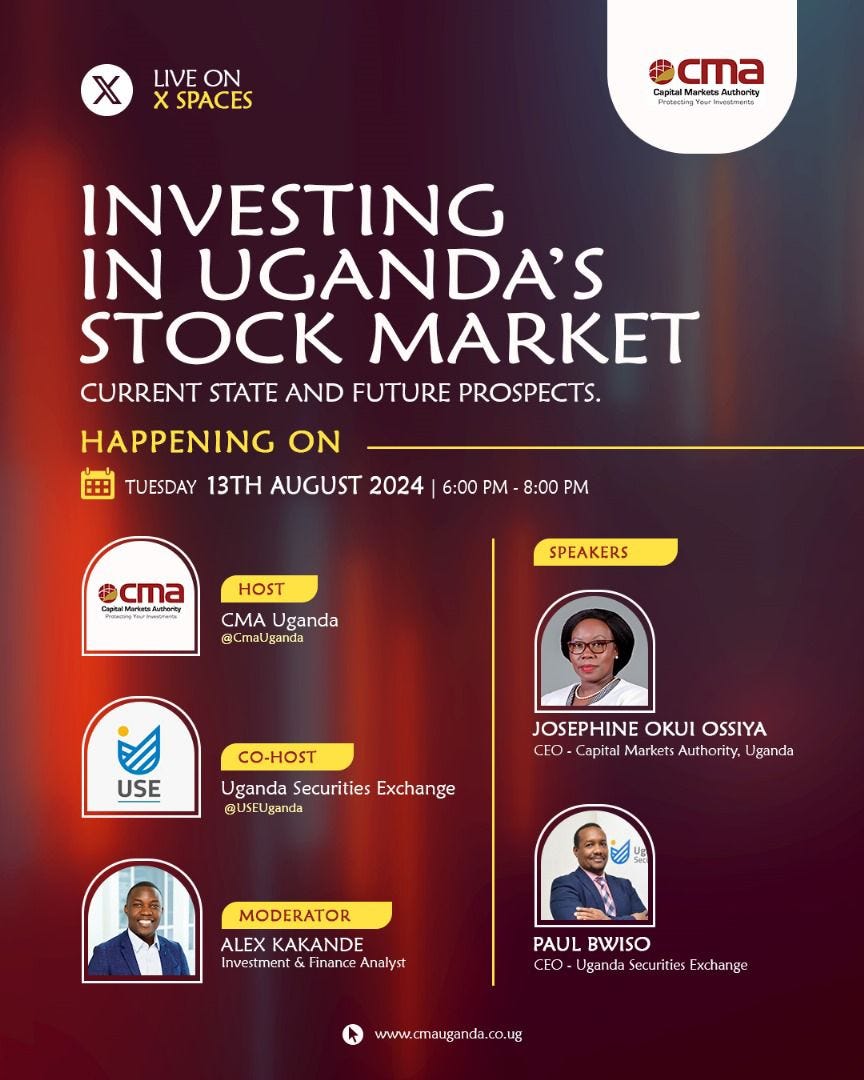
Investing in Uganda's Stock Market.
Friends, It was an honor to moderate this conversation where we hosted the CEO of Capital Markets Authority Josephine Okui Ossiya and CEO of Uganda Securities Exchange Paul Bwiso. Topics Covered.* Growth over the years and the technological advancement of investing in Stocks.* Price & Liquidity Risk when it comes to investing in Stocks and Equities* Opportunities that comes with buying shares of cross listed entities from Nairobi Stock Exchange* The avenues and opportunities with in the Capital Markets for SMEs and MMEs to raise Capital Funding.* Commodities Exchange platform that USE is working on.* Growth Prospects in the Uganda Securities Market.Happy Investing Everyone'Alex Kakande This is a public episode. If you would like to discuss this with other subscribers or get access to bonus episodes, visit kakandealex.substack.com

Investing in Unit Trusts (CIS) in Uganda.
Friends,Here is the Podcast version of the Space I hosted in partnership with Capital Markets Authority on July 16, 2024. The Privilege to host 3 executives from 3 fund Managers and an executive from Capital Markets Authority. * XENO Investments’ John Kamara - CFA* Sanlam Investments East Africa’s Mubbale Mugalya - CFA.* ICEA Asset Managers’ Patrick Ssempijja* CMA Uganda’s Lyn TukeiHappy Investing EveryoneAlex Kakande This is a public episode. If you would like to discuss this with other subscribers or get access to bonus episodes, visit kakandealex.substack.com
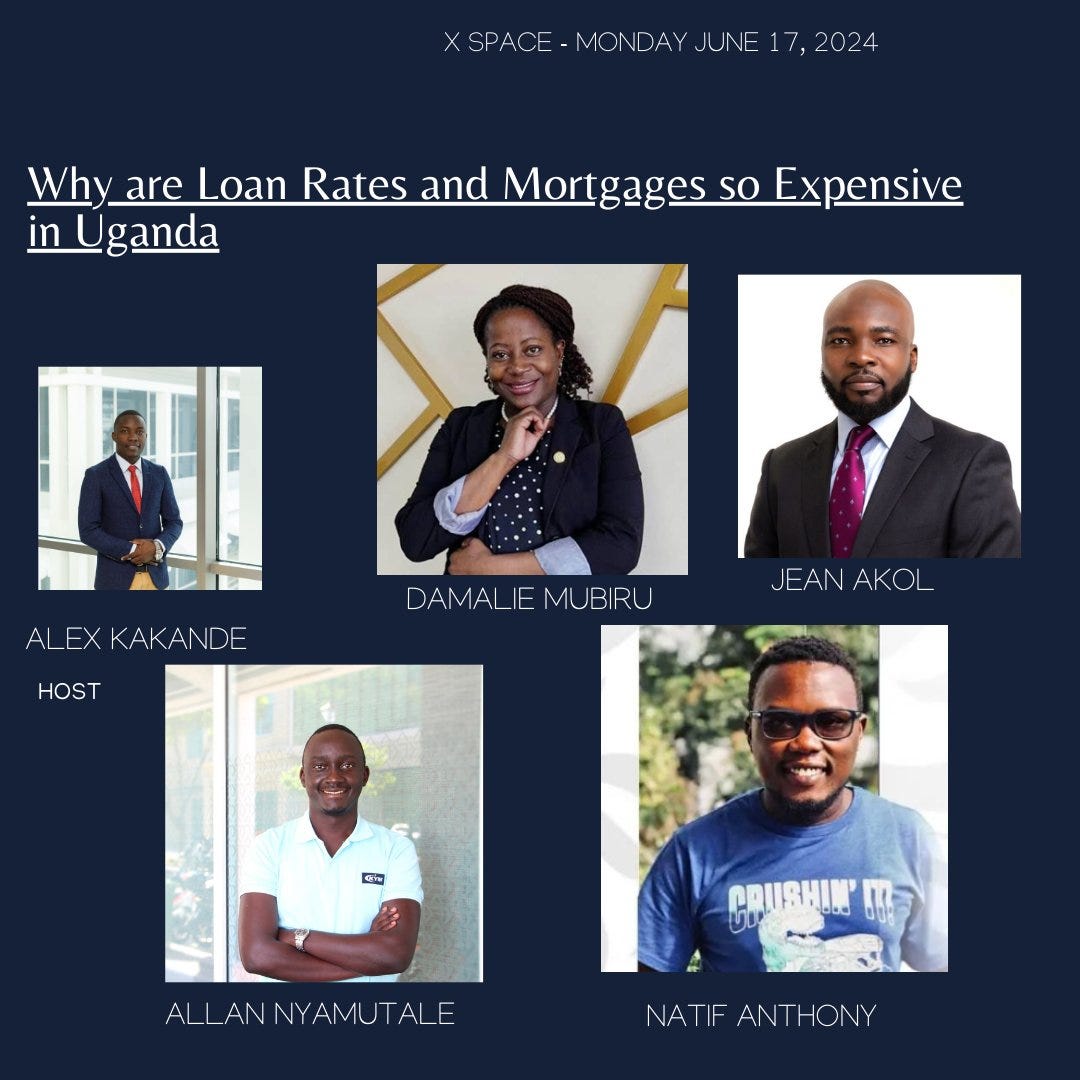
Why are loan rates & mortgage rates so Expensive in Uganda?
“we are now looking at interest rates that are as high as 18% on salary loans, business loans as high as 18%. You look at asset financing, We are looking at almost 20% for asset financing. When it comes to trade financing, and trade financing for business people who are importing things from different countries and bringing them to Uganda, importers. they are spending as high as 20% annualized on such a loans before they talk about taxes,”Friends,I would want to send my sincere thanks to all the panelists, the team from Blacklight Investment Advisors JEAN AKOL, CFA Timothy Ahumuza Allan Nyamutale, then Natif Anthony and Damalie Mubiru for a wonderful session conversation on a critical but very important topic of the cost of Borrowing for businesses, for personal lending and the cost of Mortgage.This is a conversation we will keep having in the most consistent way and the hope is, those with the powers to influence and see a meaningful change in the financial space can do something about it.Happy Investing Everyone. Alex Kakande This is a public episode. If you would like to discuss this with other subscribers or get access to bonus episodes, visit kakandealex.substack.com

Catalyzing Private Capital for Value and Social Impact. With CFA East Africa
Good morning Everyone,In this podcast episode, we focus on finance and investment, particularly private capital and associated investments and opportunities in Uganda and Africa at Large.In Partnership with CFA Society of East Africa. Happy Investing EveryoneAlex Kakande This is a public episode. If you would like to discuss this with other subscribers or get access to bonus episodes, visit kakandealex.substack.com

Investing Simplified. A podcast recording with OMIG
Help me share this podcast/platform with your friends to help us grow our platform as we continue to get the best guests.Friends,I would like to express my heartfelt gratitude to the team at the Old Mutual Investment Group for their exceptional contribution to this discussion and for guiding the conversation as we strive to broaden the understanding of investments, with a particular focus on Unit Trusts.To each and everyone of you who tuned in, shared the link in different groups that allowed us to have over 3,000 live audiences, you are my heroes as we push this conversation forward.For those who were unable to join us live, we have uploaded the two-hour audio recording of the space. I highly recommend listening to it in its entirety. Over the upcoming weeks, I plan to dissect the discussion into more digestible segments and provide written commentary.This initiative is part of our ongoing effort to teach and continue to highlight the subject of investment and conduct more such informational sessions to raise awareness about these Capital Markets products like Unit Trusts. Our aim is to build trust and awareness in this niche investment products and Our Capital Markets.Happy Investing Everyone.Alex Kakande This is a public episode. If you would like to discuss this with other subscribers or get access to bonus episodes, visit kakandealex.substack.com
Impact of Uganda's Credit rating downgrade from B2 Negative to B3 stable.
In this compelling conversation, Jean Akol hosts a segment of the BLA conversation focused on the capital markets in Uganda to discuss the impact of the recent Moody’s downgrade of Uganda’s Credit ratings from B2 Negative to B3 stable. He is joined by a panel of knowledgeable guests, including Allan Nyamutale, Timothy Ahumuza, Alex Kakande, with a special appearance by David Ochen. The discussion centers on a recent event where Moody's Ratings agency downgraded Uganda's government issuer ratings from B2 to B3 and altered the outlook to stable from negative. The panel aims to clarify the technical aspects of this downgrade and explore its implications for local investors and the country's economy. Happy Investing Everyone.Alex Kakande This is a public episode. If you would like to discuss this with other subscribers or get access to bonus episodes, visit kakandealex.substack.com
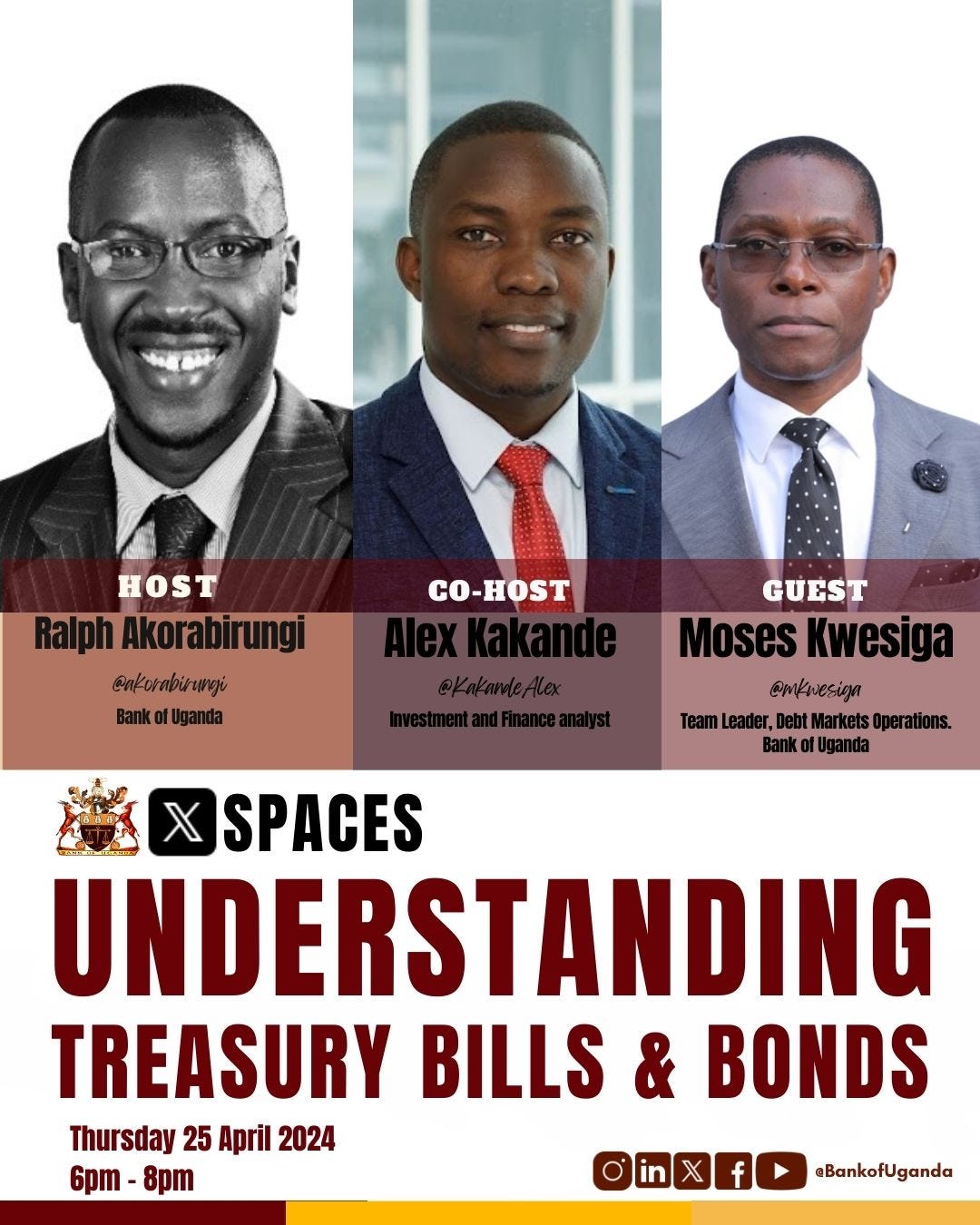
Understanding Treasury Bills & Treasury Bonds in Uganda
Friends,I would like to express my heartfelt gratitude to the team at the Bank of Uganda for their exceptional contribution to this discussion and for guiding the conversation as we strive to broaden the understanding of investments, with a particular focus on treasury bonds and treasury bills in Uganda.To each and everyone of you who tuned in, shared the link in different groups that allowed us to have over 8,000 live audiences, you are my heroes as we push this conversation forward. For those who were unable to join us live, we have uploaded the two-hour audio recording of the space. I highly recommend listening to it in its entirety. Over the upcoming weeks, I plan to dissect the discussion into more digestible segments and provide written commentary. This initiative is part of our ongoing effort to teach and continue to highlight the subject of investment and conduct more such informational sessions to raise awareness about these Treasury BondsOur aim is to build trust and awareness in this niche investment products and Our Capital Markets. While we may not have had all the time to respond to every individual question on Twitter/X, rest assured that we will revisit them. The Bank of Uganda team has committed to publishing a Q&A paper to address many of your queries. On my end, I pledge to continue writing about these especially based on questions raised.In this particular session, we talked about a variety of subjects, including the what are the difference between treasury bonds and bills, the process of opening a Central Securities Depository (CSD) account, the role of primary banks, the implications of withholding tax on bonds and bills, and the risks and returns associated with these investments. Packed with valuable information, this is a resource I would strongly suggest to anyone interested in learning about investing in treasury bonds and bills.Happy Investing Everyone.Alex Kakande This is a public episode. If you would like to discuss this with other subscribers or get access to bonus episodes, visit kakandealex.substack.com
Chasing the Ugandan Dream: Aligning Finance with Aspirations for Middle-Income Families
Alex Kakande, Jean Akol & Allan NyamutaleIn the podcast, Kakande Alex and Jean Akol discuss the concept of the Ugandan dream in a financial and management context. Alex posits that the Ugandan dream should be contextualized to include owning a decent house, being able to afford one's kids' school fees, and having a comfortable leisure lifestyle that matches one's earnings.Jean Akol notes that an individual's dreams, lifestyle, and inequality should drive their asset allocation, emphasizing the diversity, particularly within the middle-income bracket. The cost of education, transportation, housing, and entertainment can vary significantly, making it important for each individual to define their goals and budget accordingly.They calculate and agree that for a middle-income Ugandan family to comfortably afford a decent lifestyle, they should be earning around 5.5 million Ugandan Shillings net income per month. This figure allows for expenses such as rent, school fees, transportation, and even entertainment while leaving room for savings.However, Jean points out that everyone has unique goals and dreams which should guide their expenditures. Irrespective of the income, it is significant to align one's spending habits with their aspirations and financial constraints.The podcast concludes on the note that individuals' objectives and goals should drive their financial decisions. Alex and Jean suggest that money is merely an enabler, and people should focus more on achieving their goals rather than accumulating wealth endlessly. They contend that defining one's aspirations and working towards them will ultimately bring about satisfaction, even if it doesn't necessarily translate into boundless wealth.Alex Kakande This is a public episode. If you would like to discuss this with other subscribers or get access to bonus episodes, visit kakandealex.substack.com
Navigating Uganda's Investment Landscape: Real Estate Vs Fixed Income Securities
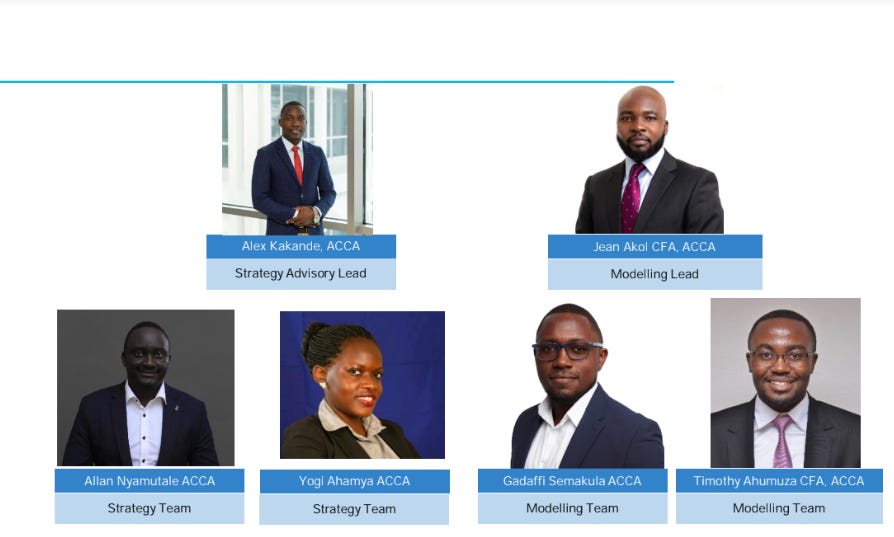
In the podcast, the speakers Alex, Allan, Jean, Yogi and Timothy the host discuss investment options in Uganda, specifically debating between real estate and fixed income securities, such as treasury bonds and unit trusts. The discussion arises out of the question of where an ordinary investor should put their money and what the potential returns would be.Alex argues for fixed income investments, stating that they are characterized by better yields and less risk. He emphasizes that these investments are suited to both long and short-term financial objectives. Allan, on the other hand, advocates for real estate, arguing that land is a safe investment that is unlikely to suddenly depreciate in value.Jean and Yogi discuss the idea of a balanced portfolio that includes both real estate and fixed income securities. They express the importance of understanding one's financial goals, risk tolerance, and investment horizon. They debate that a specific investment type's suitability strongly depends on these individual factors, insisting that financial advice should be personalized.The main example used throughout the podcast is an investor with 10 million Ugandan Shillings. According to Alex, treasury bonds would give them the best chance of growth investment in 10 years, making them a better choice. However, Allan favoring real estate propose purchasing land, dividing it into plots, and selling at a profit as a viable alternative.Jean introduces the idea that real estate investment requires substantial capital and a long-term investment horizon to realistically make a good return. He suggests that someone with 10 million shillings might be better off investing in Fixed income securities, depending on their long-term goals.The conversation concludes without consensus, highlighting how complex the decision between real estate and fixed income investments can be as it extremely depends on an individual's financial situation, goals, risk tolerance, investment horizon and even the amount of capital they have to invest. The podcast aims to inform and educate listeners on the pros and cons of different investment options in Uganda rather than providing one-size-fits-all advice.Alex Kakande This is a public episode. If you would like to discuss this with other subscribers or get access to bonus episodes, visit kakandealex.substack.com
Exploring the Intricacies of Real Estate as an Asset Class: A Deep Dive into Investments and Subclasses
By Jean Akol and Allan NyamutaleIn the podcast episode, we have Jean Akol and Allan Nyamutale as they discuss real estate as an asset class, the risks, return characteristics, and its integration into an individual's investment portfolio. They reveal that there are over 36 sub-asset classes in real estate for potential investment, each potentially affected by different economic dynamics. They provide an example of how the location and tenant demographics of rental properties can change its categorization as a sub-asset class.The go in detail and note that real estate differs from other investment assets because of its heterogeneity. Each property is unique in terms of location, features, and other factors that could influence its value. They also discuss the capital-intensive and long-term nature of real estate investments. This might limit some potential investors due to the significant funds and patience required.Given its complex nature, the two gentlemen hinted on the need to understand the subclasses and financial perspective in order not to wrongly place a value on a property. They warned against treating all properties in a complex similarly and emphasized the defining factors like position and accessibility in determining a property's value. The main take-home message of the podcast is the understanding of real estate from an investment perspective, highlighting its diverse nature, associated risks, and potential return on investments.Alex Kakande This is a public episode. If you would like to discuss this with other subscribers or get access to bonus episodes, visit kakandealex.substack.com
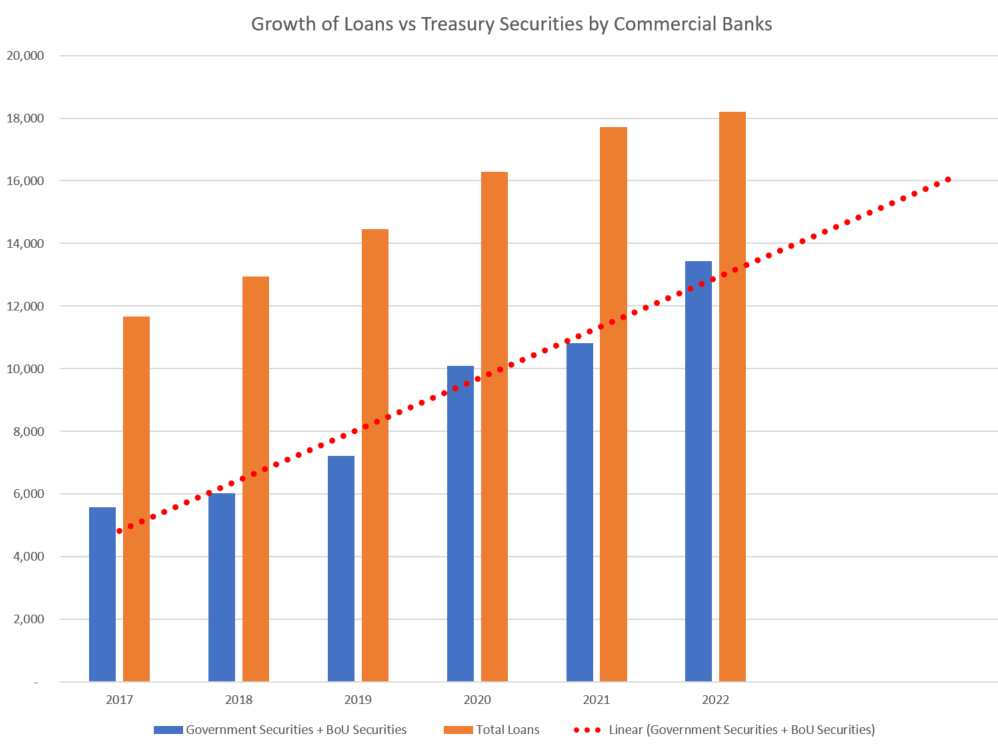
Are commercial Banks In Uganda becoming Risk averse? - Podcast Discussion.
In today’s conversation, we look at the recent but worrying trend that is starving the private sector of critical credit as commercial banks are increasingly preferring to lend to Government of Uganda through buying of Local and lucrative Treasury Bonds. From the 2022 Bank of Uganda statistics, The Government securities grew by 141% from 2017 to 2022 yet total loans grew by just 53% in the same period even when Deposits (The biggest source of Banks’ funding) grew by 73% in the similar period, majority of it was channeled to Government Securities.Below are the graphical representation of the Bank’s Risk averseness in the last 6 years under review. Deposits Growth vs Loans to customers growth. Statistics from Bank of UgandaHappy Investing everyone.Alex Kakande This is a public episode. If you would like to discuss this with other subscribers or get access to bonus episodes, visit kakandealex.substack.com
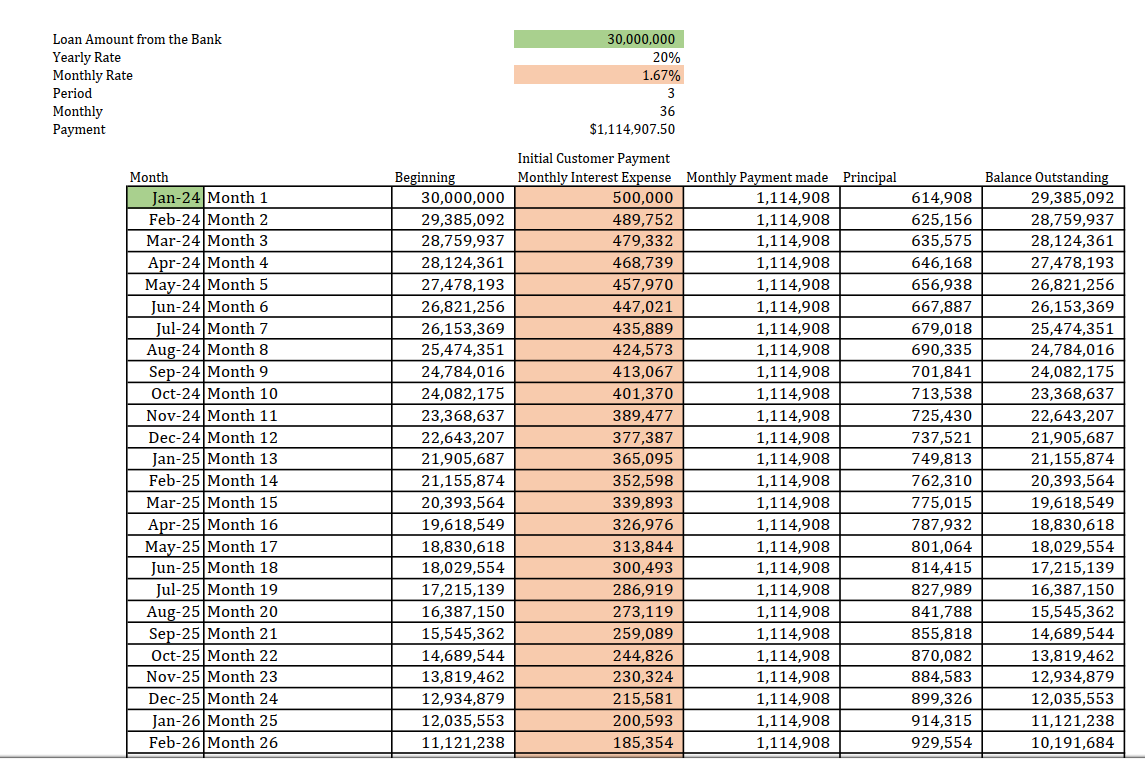
Understanding Loan Repayment Schedules.
In this Episode we break down the importance of planning your loan cashflows and the advantages of Early repayment of whole or part of the loan. “loan repayment schedule. Every lender will provide a detailed document outlining exactly when payments are due, usually on a monthly basis. In the document, three components will dictate your loan management strategy which are very important to understand: the principal loan amount outstanding at any point in time, the interest charged at each interval, and whether these interest charges are determined by a reducing balance method or a fixed rate.”The Loan Repayment Schedule before any Early repayment.Loan Repayment Schedule after an early repayment. This is a public episode. If you would like to discuss this with other subscribers or get access to bonus episodes, visit kakandealex.substack.com
Treasury Bonds vs Land as an Investment- Which is better in today's economy?
On today's episode I host a dear friend of mine for those of you who know him and for today's discussion I thought I should bring someone who is a strong, strong advocate of investing in land.Quotes from the episode Allan “I believe it's a very good asset class for those of you listening not just from the return point of view but the risk point of view as well and the diversification which is very important from when you're building a portfolio of investments”Enjoy the episode.Alex Kakande This is a public episode. If you would like to discuss this with other subscribers or get access to bonus episodes, visit kakandealex.substack.com
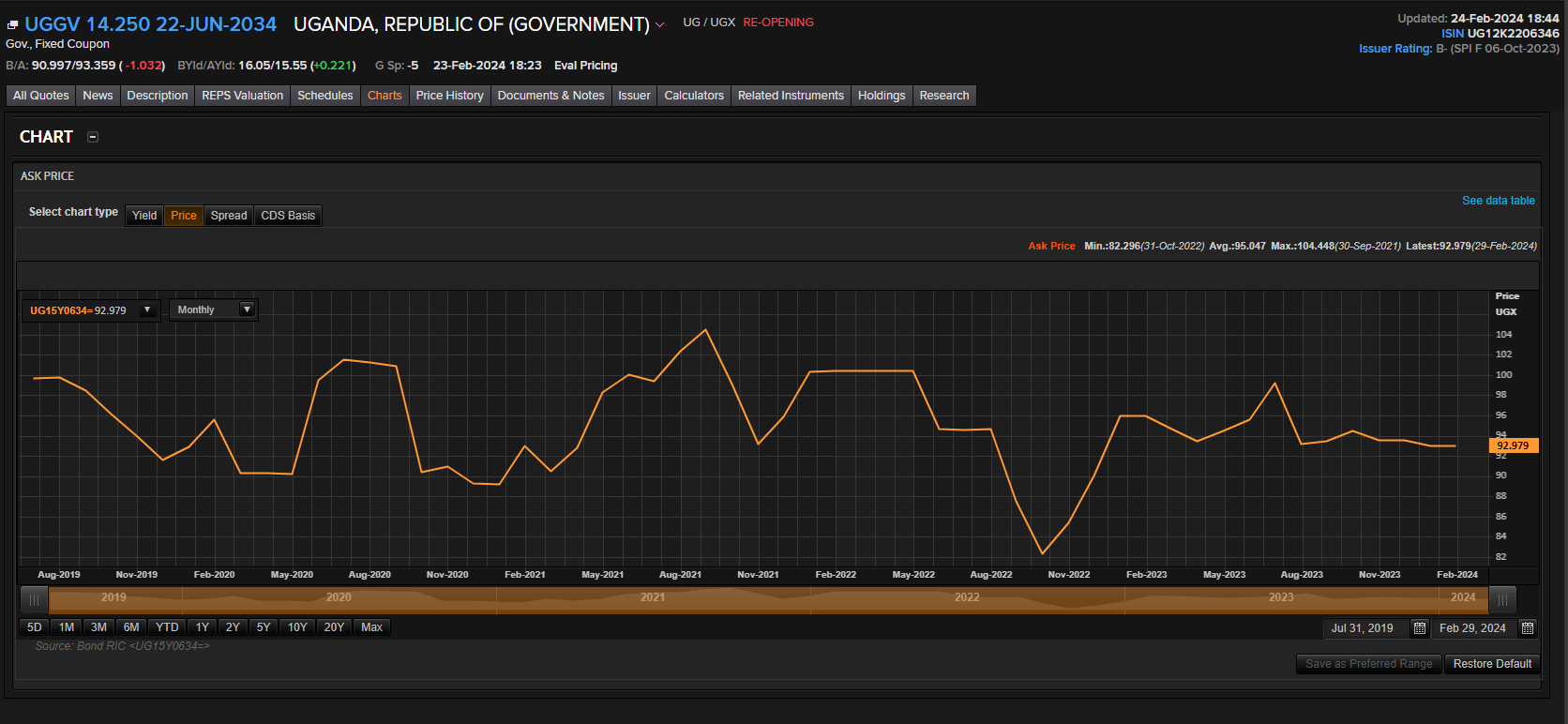
Treasury Bond Investments. Why do Prices of Bonds Fall when Interest rates rise?
Now you can listen to my podcasts in Spotify or Apple PodcastsGood morning Kampala,In this Podcast, we break into the Economics of why Bond prices are impacted by the interest rates. For reference. The 15 year bond offered in 2019 at Coupon rate of 14.25% now trading around UGX 92.The 15 year treasury bond offered in 2020 at 15.25% now trading at around UGX 102Quote from the Podcast.“Your best strategy is to hold to maturity. (Hold to Maturity").At least 90% of your chances should be to always hold that bond until it matures.That's why it's very important to develop your investment strategy and see what tenors of a bond suits you best.Is it a 2-year bond?Is it a 5-year bond?Or is it the 10, 15 and 20-year bonds?”Alex Kakande This is a public episode. If you would like to discuss this with other subscribers or get access to bonus episodes, visit kakandealex.substack.com
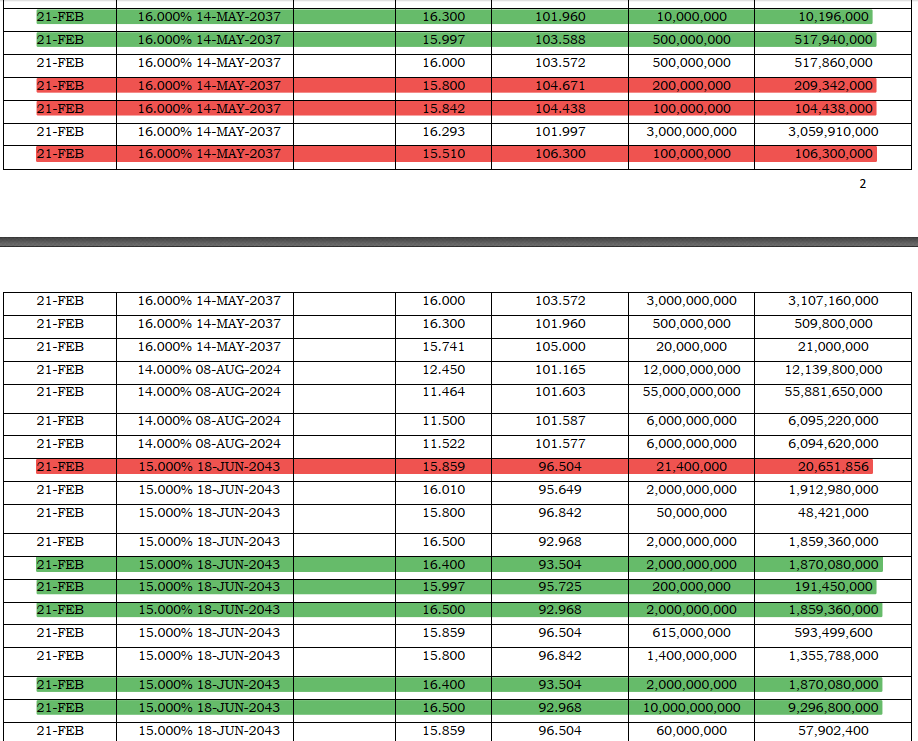
Treasury Bonds Investing. The Secondary Market Review
Good morning Kampala.In this episode we talk about the secondary Market deals of the week.We also talk about the upcoming 20 year Auction coming on the market next month. Some of the quotes from the episode. “All the great investors, all the great investment firms we are here about, they have exposure to treasury bonds.But when you bring it back home, I'm an ardent believer that many of us, we shall never be entrepreneurs.However much we glorify it, there is that statistic that 90% of the businesses that are started in Uganda fail.”“It also creates a reminder that in 25 days from now, the 20-year bond 15% coupon is coming back on the primary market.Yes, we saw it in the private placement two weeks ago and it had the highest yield at 16.75%. so we anticipate higher yields like this”Enjoy the listening. Happy Investing everyoneAlex Kakande This is a public episode. If you would like to discuss this with other subscribers or get access to bonus episodes, visit kakandealex.substack.com

Investing in the Treasury Bonds. The Primary Market vs the secondary market.
Good morning Kampala.Happy Friday.In this podcast we discuss a few questions regarding Investing in Treasury bonds.Key Question.* As a retail Investor with Little money to invest, can you in the primary market?* If you buy your bond from the primary market? can you sell it to the secondary market?* Who can you sell to in the secondary market?Enjoy and Happy Investing Everyone.Alex Kakande This is a public episode. If you would like to discuss this with other subscribers or get access to bonus episodes, visit kakandealex.substack.com
The 15 Year Treasury bond performance review.
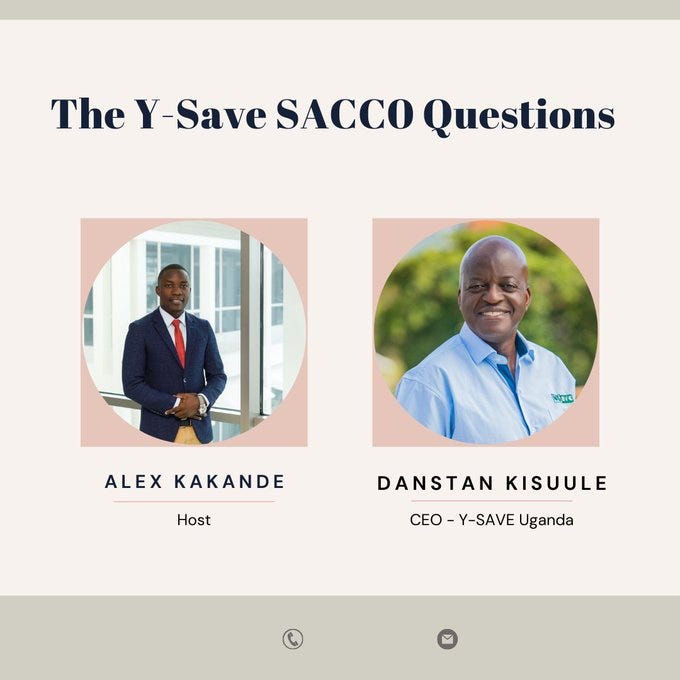
Good morning Kampala,In this episode, I review yesterday’s15 year treasury Bond Auction results especially on the Questions of premium being.But first. You can find our podcasts on this link for the Apple podcasts. We will be hosting Mr Danstan Kisuule the CEO of Y-Save Uganda tonight on X space. It's about the SACCOs in Uganda, drive, mission, services and the return component. Don't Miss it.Alex Kakande This is a public episode. If you would like to discuss this with other subscribers or get access to bonus episodes, visit kakandealex.substack.com

The Y-Save SACCO Episode
The final summary of the Y-Save SACCO Financial statements Review. This is a public episode. If you would like to discuss this with other subscribers or get access to bonus episodes, visit kakandealex.substack.com