PLAY PODCASTS
Jewish Ideas to Change the World

Jewish Ideas to Change the World

1,029 episodes — Page 1 of 21

Striving to Be Human

May 11, 202645 min

Jewish Comedy Post October 7th, A Conversation with Benji Lovitt

May 8, 20269 min

Love Is a Verb: Jewish Wisdom for Building Meaningful Relationships

May 7, 20261h 13m

The Audacity of the Rabbis – and How It Saved Judaism

May 5, 202656 min

The American Jewish Miracle

May 4, 20261h 32m

We Are Free—Now What?

May 1, 202650 min

The Seven Questions That Make a Jewish Leader

Apr 29, 20261h 11m

Models of Heroism and Independence in Our Time

Apr 28, 20261h 1m

The Questions That Never Go Away

Apr 27, 20261h 8m

Forging White Heat: A Post–October 7 Haiku Journey

Apr 23, 202645 min

Holocaust Testimony Reimagined

Apr 21, 202644 min

Mayim Bialik in Conversation with Rabbi Shmuly
Apr 20, 202616 min

Ep 1019An Unfinished Freedom: Passover as the Birth of an Ideal

An event presentation by Rabbi Dr. Armin Langer and Rabbi Moishe SteigmannAbout The Event: This year, we explore what freedom meant for the Israelites, who were included—and who were left out—in the Torah’s vision of liberation. We’ll reflect on how the call for freedom is both aspirational and incomplete and consider how its message resonates today. Together, we’ll imagine ways to carry forward the radical, unfinished work of freedom in our own lives and communities. This session will be co-taught by Rabbi Dr. Armin Langer of Congregation Shir Hadash and Own Your Judaism’s Moishe Steigmann, The Mindful Rabbi.*Source Sheet: https://docs.google.com/document/d/1yxCsRJ6bzxYCemejgqN57ijfZUpN6LEI2aXu77kXvko/edit?tab=t.0About The Speakers: Rabbi Dr. Armin Langer serves Shir Hadash as a teacher and community builder, committed to creating a welcoming, intellectually curious, and spiritually grounded Jewish home. Born in Germany to a family of Hungarian immigrants, he brings a deep awareness of Jewish diversity, memory, and resilience to his rabbinate. Before moving to Milwaukee, he taught and led prayer in diverse Jewish communities across Europe, the United States, and Mexico. Ordained by the Reconstructionist Rabbinical College, he holds a PhD in Sociology from Humboldt University of Berlin. His writing appears in academic journals and public-facing outlets, including The Forward, Evolve, and The Conversation. He believes in a big-tent Judaism that brings Jewish tradition into conversation with contemporary ethical and social challenges.Moishe Steigmann, The Mindful Rabbi, is the founder and director of Own Your Judaism and is the director of Ohel Ayalah. He seamlessly blends ancient Jewish wisdom with contemporary mindfulness practices. Through his teachings, writings, and workshops, he continues to influence and lead the conversation on mindful living within and beyond the Jewish community. He also speaks, hosts livestream conversations, and offers Jewish Life Coaching and organizational consultation. Born and raised in Milwaukee, Rabbi Steigmann is a proud father of two children, loves sports, is passionate about living gratefully, and enjoys almost all puzzles and games. ★ Support this podcast ★
Apr 1, 202656 min

Ep 1018Going Out with Knots: My Two Kaddish Years with Hebrew Poetry

A virtual event presentation by Rabbi Dr. Wendy Zierler About The Event: This class will trace the origin of my feminist Kaddish / COVID memoir and the related Shir Hadash project, as well as the title “Going Out with Knots,” and will cover some thematically related poems. *Source Sheet: https://drive.google.com/file/d/1tT11EayuMRuXhgqP7FBTjAePMCHQCWG1/view?usp=sharingAbout The Speaker: Wendy Zierler is Sigmund Falk Professor of Modern Jewish Literature and Feminist Studies at HUC-JIR in New York. She received her Ph.D. and her MA from Princeton University and her BA from Stern College of Yeshiva University and an MFA in Fiction Writing from Sarah Lawrence College. In June 2021, she received rabbinic ordination from Yeshiva Maharat. Her most recent book, Going Out with Knots: My Two Kaddish / COVID Years with Hebrew Poetry (Jewish Publication Society), was named to Zibby Owens’ list of most anticipated books of Fall 2025. She is the author, previously, of Movies and Midrash: Popular Film and Jewish Religious Conversation (SUNY Press, Finalist for the National Jewish Book Award in Modern Jewish Thoughtand Experience, 2017) and of And Rachel Stole the Idols: The Emergence of Hebrew Women’s Writing (Wayne State UP, 2004), and many articles in the fields of Jewish literature and Jewish Gender Studies. Most recently, she served as a consultant in the writers’ room of the Fox Prime Time TV Show The Faithful, a dramatization of the lives of biblical women, set to air in March 2026. As a fiction writer, she has written two collections of linked short stories as well as a middle-grade Jewish fantasy novel entitled The Return of Gerda Wertheimer. She is married to Daniel Feit and has three adult children. ★ Support this podcast ★
Mar 31, 20261h 2m

Ep 1017Religion Meets Spirituality: Rabbi Shmuly in Conversation with Alan Morinis

Rabbi Shmuly has a sit-down interview with the founder of The Mussar Institute, Alan Morinis as they talk about the intersection of religion and spirituality in Judaism.Alan Morinis received his doctorate from Oxford University, which he attended on a Rhodes Scholarship. He is one of the leading lights in the revival of the Jewish spiritual tradition of Mussar and is the author of Climbing Jacob’s Ladder (2002), Everyday Holiness (2007), With Heart in Mind (2014), and now The Shabbat Effect (2026). He is a student of Rabbi Yechiel Yitzchok Perr, zt”l, and in 2004 founded The Mussar Institute, which has grown to become the world’s leading provider of contemporary Mussar resources and instruction, offering courses, facilitator training, curricula for congregations and organizations, special events, speakers, and retreats. ★ Support this podcast ★
Mar 30, 202613 min

Ep 1015Torah, Tarot, and Trickery: Judaism’s Take on Magic and Divination

A virtual event presentation by Rabbi Steven GotlibAbout The Event: What does Judaism REALLY believe about magic and divination? Join Steven Gotlib, an experienced magician/mentalist and former Tarot-reader, to delve into this fascinating and under-appreciated topic.*Source Sheet: https://drive.google.com/file/d/1sKlv6niYx2BOjjCQvslDf5mI22PgST3V/view?usp=sharingAbout The Speaker: Steven Gotlib is the Associate Rabbi at Mekor Habracha/Center City Synagogue and Director of the Center City Beit Midrash in Philadelphia, Pennsylvania.*There were technical difficulties with the video for this class, and only the audio is accessible.* ★ Support this podcast ★
Mar 26, 202656 min

Ep 1016The Shabbat Effect

A hybrid event presentation by Alan Morinis The event was co-sponsored by BMH-BJ About The Event: The topic of this session will be the forthcoming book, The Shabbat Effect. The point of the book is to outline how observing Shabbat with the intention of developing certain inner traits germane to a Shabbat practice will prove useful all seven days of the week and is a step toward the ultimate human purpose of becoming whole and holy. About The Speaker: Alan Morinis received his doctorate from Oxford University, which he attended on a Rhodes Scholarship. He is one of the leading lights in the revival of the Jewish spiritual tradition of Mussar and is the author of Climbing Jacob’s Ladder (2002), Everyday Holiness (2007), With Heart in Mind (2014), and now The Shabbat Effect (2026). He is a student of Rabbi Yechiel Yitzchok Perr, zt”l, and in 2004 founded The Mussar Institute, which has grown to become the world’s leading provider of contemporary Mussar resources and instruction, offering courses, facilitator training, curricula for congregations and organizations, special events, speakers, and retreats. ★ Support this podcast ★
Mar 24, 20261h 17m

Ep 1014The Shankbone Redemption: The Inside Story of Passover

A hybrid event (in-person and virtual) by Rabbi Ed FeinsteinThe event was co-sponsored by: The Hammerman Family & Congregation Or TzionAbout The Event:Each year we recite the story, with Pharaoh and Moses, frogs here, frogs there, and the splitting sea. It is our story, the foundation of our faith and vision of history. Buried in the story, beneath the songs and symbols of the holiday, is a message about the human condition and our mission in the world. Join us as we explore the message and its significance for our generation.*Source Sheet: https://drive.google.com/file/d/1BJhJuROhpUab2YSlWxRJmG0dpjvdYEHg/view?usp=sharingAbout The Speaker:Rabbi Feinstein serves the Valley Beth Shalom community as a teacher, pastor, and visionary leader. He also serves on the faculty of the Ziegler Rabbinical School of the American Jewish University, the Wexner Heritage Program, and the Shalom Hartman Institute in Jerusalem, and lectures widely across the United States. He is the author of several books, including: Tough Questions Jews Ask – A Young Adult’s Guide to Building a Jewish Life, (Jewish Lights, 2003), Jews and Judaism in the Twenty-First Century: Human Responsibility, the Presence of God and the Future of the Covenant (Jewish Lights, 2007), Capturing the Moon (Behrman House, 2008) and most recently, Chutzpah Imperative! – Empowering Today’s Jews for a Life that Matters (Jewish Lights, 2014).Rabbi Feinstein was raised in the back of his parents’ bakery on the frontiers of the West San Fernando Valley. He graduated with honors from the University of California at Santa Cruz, the University of Judaism, Columbia University Teachers College, and the Jewish Theological Seminary of America, where he was ordained a rabbi in 1981. Most recently, he received his Doctorate in Education from the Jewish Theological Seminary (JTS) at Park Avenue Synagogue in New York for his dissertation: Rabbi Harold Schulweis and the Reinvention of the American Rabbinate.An engaging lecturer and storyteller, Rabbi Feinstein unites the ancient Jewish love of ideas with the warmth of Jewish humor. ★ Support this podcast ★
Mar 20, 20261h 9m

Ep 1013Why Is This Passover Different From All Other Passovers? Interview with Rabbi Ed Feinstein

Rabbi Shmuly Yanklowitz sits down with Rabbi Ed Feinstein to talk about Passover. Rabbi Feinstein serves the Valley Beth Shalom community as a teacher, pastor, and visionary leader. He also serves on the faculty of the Ziegler Rabbinical School of the American Jewish University, the Wexner Heritage Program, and the Shalom Hartman Institute in Jerusalem, and lectures widely across the United States. He is the author of several books, including: Tough Questions Jews Ask – A Young Adult’s Guide to Building a Jewish Life, (Jewish Lights, 2003), Jews and Judaism in the Twenty-First Century: Human Responsibility, the Presence of God and the Future of the Covenant (Jewish Lights, 2007), Capturing the Moon (Behrman House, 2008) and most recently, Chutzpah Imperative! – Empowering Today’s Jews for a Life that Matters (Jewish Lights, 2014). Rabbi Feinstein was raised in the back of his parents’ bakery on the frontiers of the West San Fernando Valley. He graduated with honors from the University of California at Santa Cruz, the University of Judaism, Columbia University Teachers College, and the Jewish Theological Seminary of America, where he was ordained a rabbi in 1981. Most recently, he received his Doctorate in Education from the Jewish Theological Seminary (JTS) at Park Avenue Synagogue in New York for his dissertation: Rabbi Harold Schulweis and the Reinvention of the American Rabbinate. An engaging lecturer and storyteller, Rabbi Feinstein unites the ancient Jewish love of ideas with the warmth of Jewish humor. ★ Support this podcast ★
Mar 19, 20269 min

Ep 1012A Tradition of Revolution

An event presentation by Rabbi Ed FeinsteinAbout The Event:“Tradition!” sang Tevye, “that’s how we keep our balance!” Tradition is our superpower. We know that the words we say, the rites we practice, and the ethics we embrace have come down through the generations. But there is another source of our power, one not often recognized – our remarkable ability to re-invent, re-imagine, re-interpret our faith, our institutions, our identity in moments of crisis. This capacity for meeting catastrophe with spiritual creativity may be the real secret of our survival. At this moment of our history, we may need this capacity more than ever; we may need to call on our miraculous Jewish resilience.Source Sheet: https://drive.google.com/file/d/1ax8KzpqoLsV4hVh0g6d1ztLidAXeo4Wx/view?usp=sharingAbout The Speaker:Rabbi Feinstein serves the Valley Beth Shalom community as a teacher, pastor, and visionary leader. He also serves on the faculty of the Ziegler Rabbinical School of the American Jewish University, the Wexner Heritage Program, the Shalom Hartman Institute in Jerusalem, and lectures widely across the United States. He is the author of several books, including: Tough Questions Jews Ask – A Young Adult’s Guide to Building a Jewish Life, (Jewish Lights, 2003), Jews and Judaism in the Twenty-First Century: Human Responsibility, the Presence of God and the Future of the Covenant (Jewish Lights, 2007), Capturing the Moon (Behrman House, 2008) and most recently, Chutzpah Imperative! – Empowering Today’s Jews for a Life that Matters (Jewish Lights, 2014).Rabbi Feinstein was raised in the back of his parents’ bakery on the frontiers of the West San Fernando Valley. He graduated with honors from the University of California at Santa Cruz, the University of Judaism, Columbia University Teachers College, and the Jewish Theological Seminary of America, where he was ordained a rabbi in 1981. Most recently, he received his Doctorate in Education from the Jewish Theological Seminary (JTS) at Park Avenue Synagogue in New York for his dissertation: Rabbi Harold Schulweis and the Reinvention of the American Rabbinate.An engaging lecturer and storyteller, Rabbi Feinstein unites the ancient Jewish love of ideas with the warmth of Jewish humor. ★ Support this podcast ★
Mar 13, 20261h 18m

Ep 1011Stranger In A Strange Land

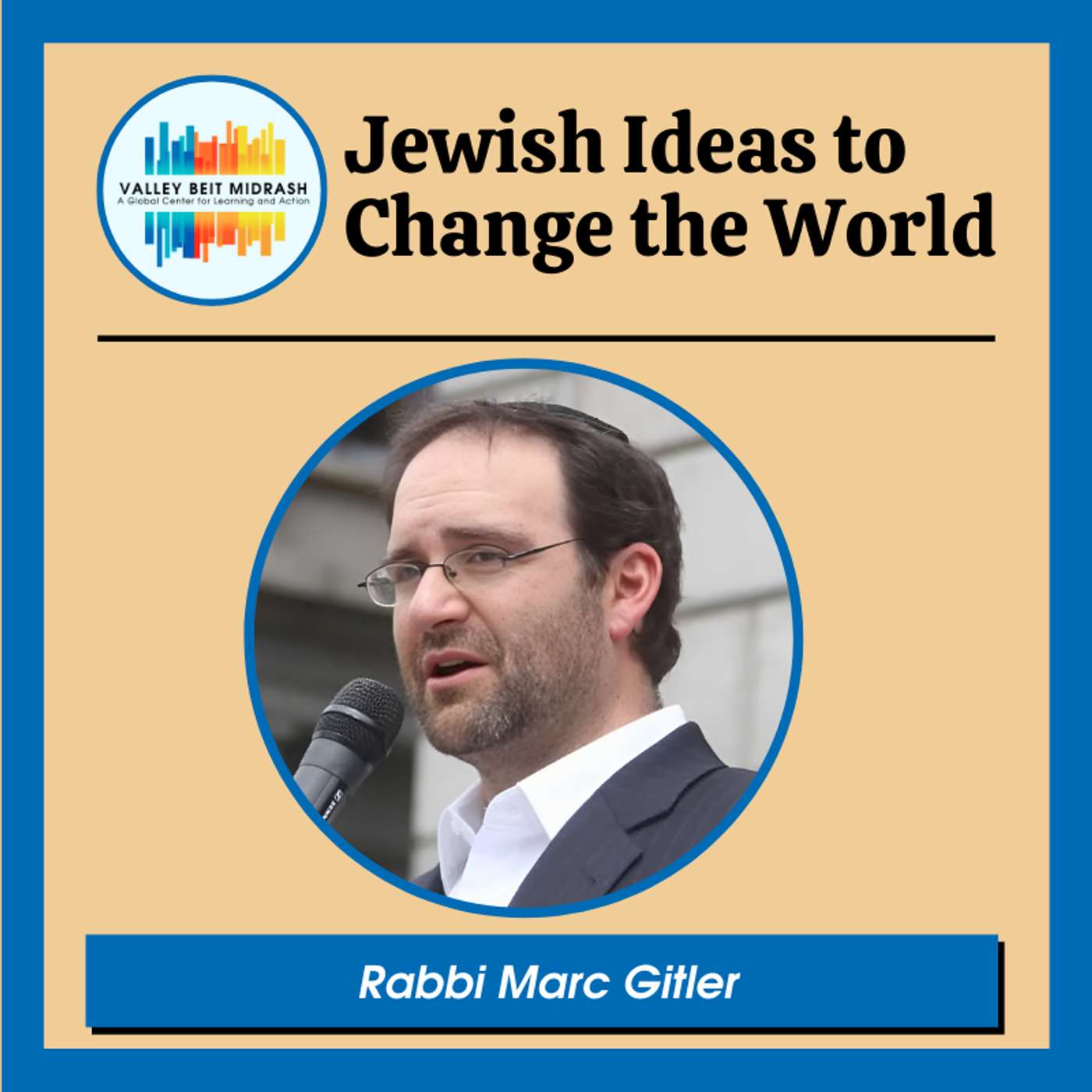
A virtual event presentation by Rabbi Marc GitlerAbout The Event:Join Rabbi Marc for a thought-provoking exploration of one of Judaism’s most foundational questions. We remember the Exodus from Egypt every single day and celebrate it yearly on Pesach, recounting the story of our people’s liberation from bondage. But this raises a profound theological challenge: why did our ancestors have to endure the suffering of enslavement in the first place? In this session, we’ll examine classical Jewish texts and contemporary interpretations to wrestle with questions of divine purpose, human suffering, and the meaning we derive from our people’s most defining narrative.Source Sheet: https://drive.google.com/file/d/11YmCexpwsRdVJuuxt1zLQurL13LKyNJW/view?usp=share_linkAbout The Speaker:Marc Gitler is the Senior Jewish Education for Valley Beit Midrash and serves as the visiting Rabbi of Aish SanDiego. A recipient of the Wexner Fellowship, he was ordained at Yeshivat Chovevei Torah. The founder of Fast for Feast, he lives in Denver, Colorado with his wife Sarah and their four children. ★ Support this podcast ★

Mar 12, 202659 min

Ep 1010The Sacred Struggle: Jewish Responses to Trauma

A virtual event presentation by Rabbi Benjamin David and Rabbi Lindsey DanzigerAbout The Event:In this session, we will uncover lessons from The Sacred Struggle: Jewish Responses to Trauma. This book is a powerful anthology of personal stories, offering a deeply moving exploration of how Jewish wisdom can help us navigate life’s most difficult moments.About The Speakers:Benjamin David is the rabbi at Reform Congregation Keneseth Israel in Elkins Park, Pennsylvania. He is a respected teacher, writer, and leader within the Reform Movement. The son of Rabbi Jerome and Peggy David, Rabbi David was born in Philadelphia and grew up in Cherry Hill, New Jersey. He graduated Phi Beta Kappa from Muhlenberg College in 1999 before enrolling in the Hebrew Union College Jewish Institute of Religion. As a rabbinic student, he taught widely and worked with students of all ages at Shaaray Tefila of Manhattan, the 92nd Street Y, the Jewish Guild for the Blind, and Temple Beth Am of Monessen. As a student, he won multiple awards in the fields of midrash and Talmud and co-founded a literary review, Davar Aher. He was ordained from the New York campus of HUC-JIR in 2004. Following ordination, he served for seven years as the associate rabbi at Temple Sinai of Roslyn in New York, where he worked closely with synagogue youth and on such causes as Israel, social action, and community organizing. Rabbi David is deeply committed to URJ Camp Harlam, where he spent time as a camper, counselor, and supervisor. He now serves each summer on the rabbinic faculty. A competitive runner, he has run 18 marathons, including the Boston Marathon twice and the New York City Marathon four times. He is also a co-founder of the Running Rabbis, which brings clergy together to run and walk in the name of shared causes. As a cancer survivor, he works with cancer patients and their families and is active both locally and nationally in the Leukemia and Lymphoma Society.His wife, Lisa, a fellow Camp Harlam alum, is the director of Camp Harlam. They are the proud parents of Noa, Elijah, and Samuel.Rabbi Lindsey Danziger is the National Director of Campaigns at the Religious Action Center of Reform Judaism. She guides synagogues and clergy across the country in their work to organize and mobilize for justice. She leads the strategy and implementation of the Reform Movement’s national campaigns for democracy in the United States and Israel, including the World Zionist Congress Campaign of 2025 and the Every Voice Every Vote civic engagement and democracy protection campaign. She is also an adjunct professor at Hebrew Union College-Jewish Institute of Religion, where she teaches Community Organizing. She was ordained there in 2017 and also received a master’s degree in Religious Education. She has previously worked at Zioness as the National Director of Organizing and as Lead Organizer of RAC Ohio. She is on the board of the Jewish Federation of Nashville, where she chairs the P2G Israel Partnership and the Akiva Day School, where she co-chairs the Admissions Committee, and is an outgoing Board of Directors member of ACLU Ohio. Rabbi Danziger resides in Nashville, TN, with her husband, Rabbi Michael Danziger, and their three children – Ben, Aviva, and Noa, and puppy Leo. ★ Support this podcast ★

Mar 9, 202653 min

Ep 1009What Animals Teach Us About Families: Kinship and Species in the Bible and Rabbinic Literature

A virtual event presentation by Professor Beth Berkowitz About The Event: Family separation due to war, migration, and incarceration is a major public concern, but what about the animal families routinely separated by human agriculture and development? What is the impact on them, on us, and on the planet? Moving beyond debates about the ethics of animal consumption to focus instead on animal intimate lives, “What Animals Teach Us about Families: Kinship and Species in the Bible and Rabbinic Literature” takes on the Anthropocene and big animal agriculture to consider the fragmented animal families left behind in their wake. In this talk, I read the four “animal family” laws of the Bible alongside their rabbinic interpreters from ancient times to today, narrating how biblical writers and readers conceived of and constituted the ties that bind humans to animals and that bind animals to each other. Through the lens of biblical and rabbinic literature, this book reveals the combination of concern, cruelty, and curiosity that we humans bring to animal lives. My goal is not to restore family values so much as reimagine family to include new forms of life and alternative modes of kinship. About The Speaker: Beth A. Berkowitz is the Ingeborg Rennert Chair of Jewish Studies and Professor in the Department of Religion at Barnard College. She is the author of Execution and Invention: Death Penalty Discourse in Early Rabbinic and Christian Cultures (Oxford University Press, 2006); Defining Jewish Difference: From Antiquity to the Present (Cambridge University Press, 2012); Animals and Animality in the Babylonian Talmud (Cambridge University Press, 2018); and What Animals Teach Us about Families: Kinship and Species in the Bible and Rabbinic Literature (University of California Press, forthcoming 2026). She is co-editor of Religious Studies and Rabbinics: A Conversation (Routledge, 2017). Her area of specialization is classical rabbinic literature, and her interests include animal studies, Jewish difference, rabbinic legal authority, and Bible reception history. ★ Support this podcast ★

Mar 3, 20261h 1m

Ep 1008Esther: The Whole Ruth, but Nothing like the Ruth

An event presentation by Rabbi Ben GreenfieldThe event was co-sponsored by Jewish NevadaAbout The Event:Reading the Bible’s only two works named after women as belonging to one sustained conversation reveals two vastly different portrayals of heroism, narrative arc and female power. In this comparative study, we argue for — and spell out the implications of — reading Esther and Ruth in light of each other.*Source Sheet: https://docs.google.com/document/d/1k1CzBdhVTopQKPEho3GUG__m8DYhEISiGXGrZ_dTawU/edit?tab=t.0About The Speaker:Ben Greenfield serves as the Scholar in Residence of VBM Las Vegas and the Director of Jewish Learning at The Adelson Upper School in Las Vegas. Ben trained at Gush, Yeshiva University, Johns Hopkins, and Yeshivat Chovevei Torah, where he was a Wexner Graduate Fellow. His original studies in Jewish thought have received several national prizes and can be found on Tablet and the Lehrhaus. ★ Support this podcast ★

Mar 2, 202659 min

Ep 1006The Hidden Messages of Purim

A virtual event with Rabbi Marc Gitler About The Event: In this class, we'll explore the deeper layers of the Purim story that often go unnoticed. Together, we’ll look beyond the costumes, noise, and celebration to uncover subtle themes woven into the Megillah—hidden miracles, quiet acts of courage, and the power of human choice when God seems absent. Through close reading and reflection, this class will reveal how Purim speaks not only to ancient Persia but to our own lives, offering timeless insights about resilience, faith, and finding meaning beneath the surface. *Source Sheet: https://docs.google.com/document/d/1epMazCRxkJyPlebCqapWPUOxnBSQPRET/edit?usp=sharing&ouid=118303465191084699356&rtpof=true&sd=trueAbout The Speaker: Rabbi Marc Gitler serves as the Senior Jewish Educator at Valley Beit Midrash and is the visiting Rabbi of Aish SanDiego. A recipient of the Wexner Fellowship, he was ordained at Yeshivat Chovevei Torah. The founder of Fast for Feast, he lives in Denver, Colorado, with his wife, Sarah, and their four children. ★ Support this podcast ★

Feb 20, 202655 min

Ep 1007What is the Most Important Mitzvah in the Torah?

A virtual event with Rabbi Marc Gitler About The Event: Judaism contains 613 mitzvot, each shaping Jewish life in its own way. But are some more central than others? In this lecture, we’ll explore how the Torah and later Jewish thinkers have grappled with the idea of prioritizing commandments. By examining key biblical passages and rabbinic teachings, we’ll ask what it might mean to identify a “most important” mitzvah, or a core set of values that anchor them all. Along the way, we’ll consider how these debates can help us clarify what Judaism asks of us—and how those priorities might guide Jewish life today.*Source Sheet: https://docs.google.com/document/d/1qNx5xPcV0qQwQwWtoCny4EPT2PBNw-gc/edit?usp=sharing&ouid=118303465191084699356&rtpof=true&sd=trueAbout The Speaker: Rabbi Marc Gitler serves as the Senior Jewish Educator at Valley Beit Midrash and is the visiting Rabbi of Aish SanDiego. A recipient of the Wexner Fellowship, he was ordained at Yeshivat Chovevei Torah. The founder of Fast for Feast, he lives in Denver, Colorado, with his wife, Sarah, and their four children. ★ Support this podcast ★

Feb 20, 202658 min

Ep 1005The Masks We Wear

A virtual event presentation by Melanie Gruenwald About The Event: In this session, we will take a psycho-spiritual, kabbalistic exploration of our multiple masks and identities, and explore the themes connected to the upcoming holiday of Purim. *Source Sheet: https://drive.google.com/file/d/1DccDFTg4zbdz7e-SC_wusZRtcEy7NIoH/view?usp=sharingAbout The Speaker: Melanie Gruenwald, Executive Director of Kabbalah Experience, brings over 30 years of non-profit leadership and community-organizing to her position. Engaged with senior citizens, families, college students, and teens, Melanie has extensive professional experience with communal leadership and informal Jewish education. Melanie is energized by building relationships, understanding people’s needs, and finding ways to connect them. She loves the balance of organizational leadership and teaching, on a daily basis at Kabbalah Experience. She earned her B.S. in Psychology from Binghamton University (S.U.N.Y), and Masters in Social Work and Certificate in Jewish Communal Service from the Wurzweiler School of Social Work at Yeshiva University. Melanie has pursued additional Judaic and spiritual studies at the Pardes Institute of Jewish Studies, the Conservative Yeshiva, and, most recently, Kabbalah Experience. Melanie is married to Rabbi Salomon Gruenwald and is mom to three children, Koby (z”l), Hannah, and Micah. ★ Support this podcast ★

Feb 19, 202640 min

Ep 1004Defining Justice: Do We Want Equity, Equality, or Revolution?

A virtual event presentation by Rabbi Sarah Mulhern About The Event: When we say we want to work for justice, what do we actually mean? In this class, we will dive into the question of whether a truly just outcome is about equity, equality, or is revolutionary in nature, and try to understand what the strengths and weaknesses of each approach to changemaking are. Through discussion and the study of rabbinic texts that advocate for each of these approaches in relation to economic justice, we will explore how each of us can best focus our work to change the world in our areas of passion. *Source Sheet: https://drive.google.com/file/d/1ASFEXkmGB5dWVF50i9g0OFZxdGwC7zXH/view?usp=sharingAbout The Speaker: Rav Sarah Mulhern is a Rabbi, educator, and community builder. She serves as the Rabbi of Silverstein Base Lincoln Park, opening her home and her heart to young adults in Chicago. She passionately believes that Torah matters and that Judaism can enrich human life and better society. Rav Sarah is also a nationally-regarded Torah educator, frequently teaching in a wide variety of Jewish adult education settings, particularly on topics of ethics, gender, and Jewish practice. As a rabbi, some of her areas of focus include grief support, feminist and queer niddah education, and crafting joyful halachic egalitarian life cycle rituals. She is deeply committed to inspiring traditional prayer and is a passionate shaliach tzibur. Rav Sarah was ordained by the Rabbinical School of Hebrew College, where she also earned a Master's in Jewish Education, and received private rabbinic ordination from Rabbi Daniel Landes. She is an alumna of Brandeis University, Yeshivat Hadar, Pardes Institute, Drisha Institute, Beit Midrash Har El, the Wexner Graduate Fellowship, and the David Hartman Center Fellowship. ★ Support this podcast ★

Feb 18, 202648 min

Ep 1003The Sevenfold Path: A Traveler’s Guide to Jewish Wisdom

A hybrid event presentation (in-person and virtual) with Shira Milgrom and David M. Elcott The event was co-sponsored by Congregation Beth Israel About The Event: In this traveler’s guide to spiritual practice, Milgrom and Elcott bring the reader to many paths that seekers of the sacred walk. What is the universal sevenfold path? Recognizing a spark of the divine; honoring the covenant with all living things; engaging in healing and growth; opening our lives to the divine presence; seeing where we are as a sacred place; seeking and pursuing justice; and taking time to enjoy a sabbath. They illuminate these paths through inspiring stories, both inherited and personal, drawn from a richly lived Jewish life and encounters with faith communities around the world. For while the universe emerged from one pinpoint of energy and life, it is only in its infinite diversitthatre God can be found. Indeed, “there is no place devoid of the Presence,” even in everyday. About The Speakers: Shira Milgrom served as Rabbi of Congregation Kol Ami in White Plains for thirty-seven years and is the editor of a unique prayer book used in Jewish settings across the continent. David M. Elcott, retired as the Taub Professor of Practice at NYU Wagner, is a Senior Fellow at Columbia’s Center for Justice and works with Hudson Link to teach classes to incarcerated individuals. He is the author of Faith, Nationalism, and the Future of Liberal Democracy. ★ Support this podcast ★

Feb 17, 202653 min

Ep 1002Praying About the Unspeakable: Liturgy and Ritual as Response to Crisis

A hybrid event presentation (in-person and virtual) by Rabbi Dalia Marx The event was co-sponsored by Beth El Phoenix About The Event: Rabbi Dalia Marx, one of the most respected voices in contemporary Jewish thought and liturgy, will talk about how October 7 and the war since have brought profound and rapid changes to the world of Jewish prayer: the language, the focus, even the urgency. Rabbi Marx will also share her reflections on the Jewish responsibility to bring our hostages home, and the prayers—old and new—that have sustained her through this challenging time. Sources: Powerpoint: https://drive.google.com/file/d/1qO5KjL6DBJvIauNX-mB3g0-Z9fkb5IqI/view?usp=sharingSource Sheet: https://drive.google.com/file/d/15df5BuTZIKE_jebc4Ko4NbJZ3BtSfvwW/view?usp=sharingAbout The Speaker: Rabbi Marx is the Rabbi Aaron D. Panken Professor of Liturgy and Midrash at the Hebrew Union College–Jewish Institute of Religion in Jerusalem. She is the first woman in Israel to hold a professorship in liturgy and is a trailblazer in both academic and spiritual circles. Her work bridges scholarship and lived practice, and she is the author of several books, including When I Sleep and When I Wake: On Prayers Between Dusk and Dawn. She’s also a contributor to the new Israeli Reform prayerbook and a leading voice in shaping how prayer responds to collective trauma, grief, and hope.Purchase Rabbi Dalia Marx's book here: http://time.ccarpress.org ★ Support this podcast ★

Feb 17, 20261h 17m

Ep 1001The Grown-Up Midrash Says: Five Radical Midrashim Not Taught in Day Schools

A hybrid event presentation by Rabbi Ben Greenfield About The Event: Did God lust after the Matriarchs? Did Jacob think he was Divine? Did Mordechai breastfeed Esther? The Midrash (the rabbinic expansion on Biblical stories) is too often read as a set of fables or children's stories. But in truth, the Midrash contains some of the most radical, imaginative, and philosophically astute readings of the Bible in our Tradition. Together, we will explore five midrashim that have yet to enter the popular Jewish conscience, but probably should. *Source Sheet: https://docs.google.com/document/d/1rBNQd_iFUs-MDgF3P5VbsE4CpK8BYYwTj7PxYKaL0rk/edit?usp=sharingAbout The Speaker: Rabbi Ben Greenfield serves as Scholar in Residence, VBM Las Vegas, and as the Director of Jewish Learning at The Adelson Upper School, in Las Vegas. Ben trained at Gush, Yeshiva University, Johns Hopkins, and Yeshivat Chovevei Torah, where he was a Wexner Graduate Fellow. His original studies in Jewish thought have received several national prizes and can be found on Tablet and the Lehrhaus. ★ Support this podcast ★

Feb 16, 202659 min

Ep 1000How Tu B’Shvat Teaches Us to Reduce, Reuse, and Recycle

A virtual event presentation by Rabbanit Sharona Halickman About The Event: You may think that reduce, reuse, and recycle are modern concepts for saving the environment, but when we delve into the Talmud's insights into the Seven Species of Israel, we will find that these ideas are intrinsic in these Biblical fruits. *Source Sheet: https://docs.google.com/document/d/1PJE9haKXAMUditgC1dczIVprxD-61sMo/edit?usp=sharing&ouid=118303465191084699356&rtpof=true&sd=trueAbout The Speaker: Rabbanit Sharona Halickman holds a BA in Judaic Studies from Stern College and an MS in Jewish Education from Azrieli Graduate School, Yeshiva University. Sharona was the first Orthodox woman to serve as a clergy member as the first Congregational Intern and first Madricha Ruchanit at the Hebrew Institute of Riverdale, NY. After making aliya in 2004, Sharona founded Torat Reva Yerushalayim, a nonprofit organization based in Jerusalem that provides Torah study groups for students of all ages and backgrounds. ★ Support this podcast ★

Jan 30, 202648 min

Ep 999The Power of Song: Lifting Our Voices in Praise and Protest

A hybrid event presentation with Rabbi Shmuly Yanklowitz and Moishe Steigmann, The Mindful Rabbi. About The Event: As we approach Shabbat Shirah, the “Shabbat of Song,” and reflect on the legacy of Dr. Martin Luther King Jr., we turn our attention to the sacred power of voice. From the Israelites singing at the sea to modern movements for freedom and justice, song has carried the Jewish spirit through moments of triumph, struggle, and hope. Join Rabbi Dr. Shmuly Yanklowitz and Moishe Steigmann, The Mindful Rabbi, for an evening of learning, dialogue, and inspiration. Through text study, reflection, and chevruta, we’ll explore how music and voice lift us—individually and collectively—toward liberation, connection, and praise. This program marks the official launch of the Cream City Beit Midrash, a partnership between Valley Beit Midrash and Own Your Judaism. *Source Sheet: https://drive.google.com/file/d/1iD1y1-pBrlJlr10WktIVYhKEJlxg3ySR/view?usp=sharingAbout The Speakers: Moishe Steigmann, The Mindful Rabbi, is the founder and director of Own Your Judaism and is the director of Ohel Ayalah. He seamlessly blends ancient Jewish wisdom with contemporary mindfulness practices. Through his teachings, writings, and workshops, he continues to influence and lead the conversation on mindful living within and beyond the Jewish community. He also speaks, hosts livestream conversations, and offers Jewish Life Coaching and organizational consultation. Born and raised in Milwaukee, Rabbi Steigmann is a proud father of two children, loves sports, is passionate about living gratefully, and enjoys almost all puzzles and games. Shmuly Yanklowitz has twice been named one of America’s Top Rabbis by Newsweek and has been named by The Forward as one of the 50 most influential Jews and 28 books on Jewish ethics and his writings have appeared in outlets as diverse as the New York Times, the Wall Street Journal, the Washington Post, the Guardian, and the Atlantic among many other secular and religious publications. He has served as a speaker at the World Economic Forum in Davos, Switzerland, and as a Rothschild Fellow in Cambridge, UK. Rav Shmuly received a Master's from Harvard University, a Master's from Yeshiva University, and his Doctorate from Columbia University. He was ordained as a rabbi by Yeshivat Chovevei Torah, along with 2 private ordinations in Israel. He serves as the President & Dean of Valley Beit Midrash (a global Jewish learning and action center). His wife Shoshana, and their four children live in Scottsdale, Arizona. They have also served as foster parents. ★ Support this podcast ★

Jan 27, 202639 min

Ep 998Hiding in Holland: A Resistance Memoir

A virtual event presentation with Dr. Shulamit Reinharz About The Event:In her book, Hiding in Holland: A Resistance Memoir, Dr. Reinharz offers a unique narrative by collaborating with her father, Max Rothschild, to share personal stories of survival and resistance during the Holocaust. Her insights offer an enriched understanding of history's impact on contemporary Jewish identity. About The Speaker: Shulamit Reinharz was born in Amsterdam and grew up in New Jersey. She has also lived in Israel for numerous one-year stays as well as in Utrecht and Oxford for research appointments. She earned her undergraduate degree at Barnard College and her graduate degrees at Brandeis University, followed by a faculty appointment at the University of Michigan from 1972 to 1982, when she returned to Brandeis as a professor of sociology. Hebrew College has conferred on her an honorary doctorate. Dr. Reinharz has published widely. Among her 17 books are the prize-winning Feminist Methods in Social Research (1992); American Jewish Women and the Zionist Enterprise (with Mark Raider, 2005); The JGirl's Guide (with Penina Adelman and Ali Feldman, 2005); Jewish Intermarriage around the World (with Sergio Della Pergola, 2009); One Hundred Years of Kibbutz Life (with Michal Palgi, 2011); Today I am a Woman: Stories of Bat Mitzvah around the World (with Barbara Vinick, 2011); One Hundred Jewish Brides (with Barbara Vinick, 2022); and Hiding in Holland: A Resistance Memoir (2024). The Jewish Review of Books invited her to write a piece about Hiding in Holland after it won the prize of a finalist in the category of Holocaust Memoirs. A sought-after lecturer, Shulamit Reinharz is currently working on a book about "gender and the holocaust," focusing on her mother's survival. ★ Support this podcast ★

Jan 26, 20261h 9m

Ep 997Ivri: The Roots of Anti-semitism

A virtual event presented by Rabbi Marc Gitler About The Event: Anti-semitism has seemingly been around forever. In this lecture, we will explore its earliest expressions through stories in the Book of Genesis, focusing on the figure of the Ivri—the “Hebrew” who stands apart. By examining these foundational narratives, we’ll uncover how difference, otherness, and moral challenge can provoke hostility. Together, we’ll consider how these ancient dynamics continue to shape anti-Jewish hatred today and what insights they offer for understanding—and responding to—anti-semitism in the 21st century. *Source Sheet: https://docs.google.com/document/d/1oRhbjD2ybtqlYVFZ1vb3XdR2IdaFzxEB/edit?usp=sharing&ouid=118303465191084699356&rtpof=true&sd=trueAbout The Speaker: Rabbi Marc Gitler serves as the Senior Jewish Educator at Valley Beit Midrash and is the visiting Rabbi of Aish SanDiego. A recipient of the Wexner Fellowship, he was ordained at Yeshivat Chovevei Torah. The founder of Fast for Feast, he lives in Denver, Colorado, with his wife Sarah, and their four children. ★ Support this podcast ★

Jan 23, 20261h 0m

Ep 996Ethics at the Center: Jewish Theory and Practice for Living a Moral Life

A virtual event presentation by Rabbi Dr. Elliot DorffAbout The Event:Drawing from Chapter 3 of the book, Ethics at the Center: Jewish Theory and Practice for Living a Moral Life, this session will explore how Western, Christian, and Jewish traditions understand the nature of the human being, and how these differing perspectives shape a wide range of moral issues.*Source Sheet: https://drive.google.com/file/d/1R8ev3vsjgm5n7wSKE9ekiLRtwHDVR_vM/view?usp=sharingAbout The Speaker:Elliot Dorff, Rabbi (Jewish Theological Seminary of America, 1970), Ph.D. in philosophy (Columbia University, 1971), is Rector and Distinguished Service Professor of Philosophy at American Jewish University. From 1974 to 2020, he taught a course on Jewish law at UCLA School of Law. He has served on three United States federal government commissions — on access to health care, on reducing the spread of sexually transmitted diseases, and on research on human subjects — and he currently serves on the State of California’s commission to govern stem cell research within the state. He has chaired four scholarly organizations: the Academy of Jewish Philosophy, the Jewish Law Association, the Society of Jewish Ethics, and the Academy of Judaic, Christian, and Muslim Studies. He has served as a member of the Conservative Movement’s Committee on Jewish Law and Standards since December 1984, as its Vice Chair from 1997 to 2007, and as its Chair from 2007 to 2022, writing 30 responsa approved by the committee and several concurring opinions. In Los Angeles, he is a Past President of Jewish Family Service and remains on its Board, and he is a former member of the Board of the Jewish Federation Council. He has been a member of the Priest-Rabbi Dialogue sponsored by the Board of Rabbis of Southern California and the Archdiocese of Los Angeles since its inception in 1973 and has co-chaired it since 1990. In addition to awards given by several communal organizations in Los Angeles, he was awarded four honorary doctoral degrees, the Leve Award of the UCLA Center for Jewish Studies, and the Lifetime Achievement Award of the Journal of Law and Religion. H has published over 200 articles on Jewish thought, law, and ethics, and has written fifteen books on those topics and edited or co-edited fourteen more. Since 1966, he has been married to Marlynn, and they have four children and eight grandchildren, who, he thinks, are more important than anything listed above. ★ Support this podcast ★

Jan 15, 202656 min

Ep 995Bal Tashchit: How to Turn an Ancient Law Into a Force for Earth’s Care

A virtual event presentation by Rabbi David SeidenbergAbout The Event:The law against wasting or destroying things, Bal Tashchit, is a torch held up by Jewish environmentalists to prove that Judaism cares about the Earth, but the law, as it is codified in halakhah (Jewish law), is that you can destroy anything if you can make a profit doing it. We will delve into the roots and interpretations of Bal Tashchit, including Rambam, Ramban, Sefer Chinukh, and others, to find the basis for fixing Bal Tashchit so that it can become a strong ethic that will actually stand up to destruction and help us protect the Earth.*Source Sheet: https://drive.google.com/file/d/1pmYYQUNKSwOy3tZs6WEUDBkDKeRC0qS5/view?usp=share_linkAbout The Speaker:Rabbi David Seidenberg is the creator of neohasid.org and the author of Kabbalah and Ecology: God's Image in the More-Than-Human World. He teaches on Jewish thought, theology, and halakhah in relation to ecology, human rights, and animal rights. David is also known for his liturgical work and his translations of Eikhah (Lamentations). David has smikhah from the Jewish Theological Seminary and from Rabbi Zalman Shcahcter-Shalomi, and lives in Northampton, MA. ★ Support this podcast ★

Jan 2, 20261h 4m

Ep 994How Are These Responsa Different From All Others?

A virtual event presentation by Rabbi Dr. David GolinkinAbout The Event:Responsa are written answers by rabbis to halakhic questions. Since 1985, I have written approximately 900 responsa, over 200 of which have been published. In this lecture, I would like to explain my methodology by describing six characteristics of my Responsa, and giving examples, primarily from my most recent volume: Responsa in a Moment, volume 6.*Source Sheet: https://drive.google.com/file/d/1sY-ROug4-Tcgeri-kbfj_5Bhphh0vDJd/view?usp=sharingAbout The Speaker:Rabbi Prof. David Golinkin was born and raised in Arlington, Virginia. He made aliyah in 1972, earning a B.A. in Jewish History and two teaching certificates from The Hebrew University in Jerusalem. He received an M.A. in Rabbinics and a Ph.D. in Talmud from the Jewish Theological Seminary of America, where he was also ordained as a Rabbi.Prof. Golinkin is President of Schechter Institutes, Inc. and President Emeritus of the Schechter Institute of Jewish Studies in Jerusalem, where he also serves as a Professor of Talmud and Jewish Law. For twenty years, he served as Chair of the Va’ad Halakhah (Law Committee) of the Rabbinical Assembly, which writes responsa and gives halakhic guidance to the Masorti (Conservative) Movement in Israel. He is the founder and Director of the Institute of Applied Halakhah at The Schechter Institute, whose goal is to publish a library of halakhic literature for Jews throughout the world. He is the Director of the Center for Women in Jewish Law at the Schechter Institute, whose goal is to publish responsa and books by and about women in Jewish law. He is also the founder and Director of the Midrash Project at Schechter, whose goal is to publish a series of critical editions of Midrashim.Rabbi Golinkin is the author or editor of 63 books and has published over 200 articles, responsa, and sermons. In June 2014, Rabbi Golinkin was named by The Jerusalem Post as one of the 50 most influential Jews in the world. In May 2019, he was awarded an honorary doctorate by the Jewish Theological Seminary. In November 2022, he received the Nefesh B’Nefesh Bonei Zion Award for his contributions to Israeli society in the field of education. ★ Support this podcast ★

Dec 27, 202559 min

Ep 993Lessons from the Olive Tree for Families, Jewish Unity, and the Social Security System

A virtual event presentation by Dr. Jon Greenberg.About The Event:This program will explore the symbolic and halachic significance of the olive tree. The questions we’ll examine include:Neglected agricultural and political reasons that the olive oil Chanukah displaced an earlier symbol of Chanukah,Why the 15th of Av became a day for matchmaking,How the social and technological history of olive use mediates a five-hundred-year-old debate about how to read the Talmud, andThe beautiful lesson about family relationships that the Psalms draw from the biology of the olive tree.*Source Sheet: https://docs.google.com/document/d/1AX9X7x6O9eHpOGtuKfuZOl0u2-SlaKF_etjBYFaE_9I/edit?usp=sharingAbout The Speaker:Dr. Greenberg received his bachelor’s degree with honors in biology from Brown University and his Master’s and Doctorate in agronomy from Cornell University. He has also studied with Rabbi Chaim Brovender at Israel’s Yeshivat Hamivtar and researched corn, alfalfa, and soybeans at Cornell, the US Department of Agriculture, and the University of Pennsylvania’s Institute for Cancer Research. Since 1989, he has been a science teacher and educational consultant. Dr. Greenberg was Senior Editor of science textbooks at Prentice Hall Publishing Co. Previously, on the faculty of Yeshivas Ohr Yosef, the School of Education at Indiana University, and the University of Phoenix, he taught at the Heschel School from 2008 to 2024. In 2021, he published Fruits of Freedom, a Passover Haggadah with a commentary from the perspective of the history of Jewish food and agriculture. He is a frequent speaker at synagogues, schools, and botanical gardens. ★ Support this podcast ★

Dec 24, 202555 min

Ep 992What We Celebrate When We Celebrate Hanukkah: Four Theories on Unsettled Question

A hybrid event with Rabbi Ben Greenfield. About The Event: Classic Rabbinic sources offer very different answers to a key Hanukkah question: what exactly are we celebrating on this holiday? From Medieval Zionism to Rabbinic Pacifism, we'll explore 5 vital “retellings” of the Hanukkah story with very different takes on these 8 days.Source Sheets:Page 1Page 2Page 3Page 4Page 5About The Speaker: Ben Greenfield serves as Scholar in Residence, VBM Las Vegas, and as the Director of Jewish Learning at The Adelson Upper School in Las Vegas. Ben trained at Gush, Yeshiva University, Johns Hopkins, and Yeshivat Chovevei Torah, where he was a Wexner Graduate Fellow. His original studies in Jewish thought have received several national prizes and can be found on Tablet and the Lehrhaus. *The event was the first official launch of VBM Las Vegas* ★ Support this podcast ★

Dec 18, 202559 min

Ep 991Animals as Kabbalistic Masters

A virtual event presentation by Dr. Jonnie Schnytzer. About The Event: Animals don’t receive much attention in kabbalistic texts and even less so in scholarship on kabbalah. When they do, it is predominantly to teach humans to be better humans. Howrome anonymous kabbaalist who believed there was a deeper connection between humans and animals, to the point that stories were told about animals that shared kabbalistic secrets. What can they teach us today about animals, humans, and a shared future? About The Speaker: Jonnie Schnytzer is probably the only PhD in Jewish Philosophy, focusing on medieval kabbalah, who can say that he once beat the head of Israeli Naval Commandos in a swimming race. His dissertation focused on the scientific kabbalah of Rabbi Joseph ben Shalom Ashkenazi. Jonnie’s forthcoming book is about Ashkenazi’s Kabbalah as well as a critical edition of the kabbalist’s jagestic commentary on Sefer Yesira. Jonnie’s also the author of Mossad thriller, The Way Back, which paints a picture of contemporary Israel. Jonnie also orchestrated the publishing of an English edition of ‘The Hitler Haggadah’, an important piece of Moroccan Jewish history from the Holocaust. Jonnie has also taken on several leadership roles in the Jewish world, including advisor to the CEO of Birthright and executive manager with StandWithUs. He lectures on a wide variety of topics relating to Judaism and Israel, especially about the untold stories and unspoken heroes of Jewish history. Jonnie is happily married, with four gorgeous little kids, lives in Israel, and thinks that Australian Rules Football is the greatest sport ever invented. ★ Support this podcast ★

Dec 17, 20251h 3m

Ep 990Power and Politics in the Hebrew Bible

A hybrid event presentation by Rabbi David Kasher. About The Event: The epic narratives in the Books of the Prophets take us on a dramatic journey from the chaotic days of the Judges to the building and breaking of the Israelite monarchy in Samuel and Kings. Along the way, we encounter prophets, priests, and kings locked in a struggle over the meaning of power, justice, and leadership. Together we’ll explore how these stories reflect the political theory of the Hebrew Bible, and ask what wisdom these books might hold for us as we wade through the political chaos of our own day. *Source Sheet: https://docs.google.com/document/d/1b6b5RuOPf0ibxYnxqybgon78oAGCyJFytXddGjCDOis/edit?usp=sharing About The Speaker: Rabbi David Kasher is the Director of Hadar West, based in Los Angeles. He grew up bouncing back and forth between the Bay Area and Brooklyn, hippies and Hassidim – and has been trying to synthesize these two worlds ever since. He received rabbinic ordination at Yeshivat Chovevei Torah and a doctorate in legal studies from Berkeley Law. He has served as Senior Jewish Educator at Berkeley Hillel, Director of Education at Kevah, and Associate Rabbi at IKAR. He is the author of ParshaNut: 54 Journeys into the World of Torah Commentary, and the host of the Torah podcast, Best Book Ever. ★ Support this podcast ★

Dec 16, 202557 min

Ep 989Before Good & Evil: Moral Relativism in Jewish Ethics

A hybrid event presentation by Rabbi David Kasher About The Event: What does it mean to call something “good” or “evil”? Are moral values absolute, or do they depend on culture, context, and perspective? This class explores how Jewish texts across the ages have grappled with questions of moral relativism — examining biblical narratives, rabbinic debates, and modern philosophical reflections to uncover how Jewish tradition understands the foundations of moral judgment. *Source Sheet:https://docs.google.com/document/d/1TehhGK4d5pHZR1_p7EnKtXZ62zNADJev9oCofu0Hn6s/edit?usp=shar.ing About The Speaker: Rabbi David Kasher is the Director of Hadar West, based in Los Angeles. He grew up bouncing back and forth between the Bay Area and Brooklyn, hippies and Hassidim – and has been trying to synthesize these two worlds ever since. He received rabbinic ordination at Yeshivat Chovevei Torah and a doctorate in legal studies from Berkeley Law. He has served as Senior Jewish Educator at Berkeley Hillel, Director of Education at Kevah, and Associate Rabbi at IKAR. He is the author of ParshaNut: 54 Journeys into the World of Torah Commentary, and the host of the Torah podcast, Best Book Ever. ★ Support this podcast ★

Dec 15, 20251h 7m

Ep 988A Jewish Trinity: Contemporary Christian Theology Through Jewish Eyes

A virtual event presentation by Rabbi Dr. Alan Brill About The Event: The Christian affirmation of a triune God has always perplexed and confounded Jews. Can Jews move beyond understanding the Trinity as inherently tri-theistic? This talk serves as an entry into a range of issues in Jewish-Christian theological differences, presenting a Jewish understanding of topics in contemporary Christian theology, such as the Trinity, original sin, and incarnation. Brill will discuss how Jews and Christians can engage in comparative discourse on theological issues with full clarity and understanding. We will strive to move beyond reconciliation toward a more nuanced and in-depth theological discussion of similarities and differences. About The Speaker: Rabbi Prof. Alan Brill is the Cooperman/Ross Chair for Jewish-Christian Studies at Seton Hall University. Brill is an expert on Jewish thought and interfaith relations. He is the author of many books, including Judaism and World Religions: Christianity, Islam, and Eastern Religions (Palgrave Macmillan, 2012), Judaism and Other Religions: Models of Understanding (Palgrave Macmillan, 2010). Brill received a Fulbright Senior Scholar Award at Banaras Hindu University, Varanasi, Uttar Pradesh in India. He was a keynote speaker at the R-20 conference held in Indonesia. This research produced his recent volume, Rabbi on the Ganges: A Jewish Hindu Encounter (Lexington Books, 2019). His recently published book is A Jewish Trinity: Contemporary Christian Theology Through Jewish Eyes (Fortress Press, 2025). ★ Support this podcast ★

Dec 11, 20251h 4m

Ep 987Faith, Healing, and Hope: Mitch Albom in Conversation with Rabbi Shmuly

Rabbi Shmuly Yanklowitz sits down with author Mitch Albom to talk about faith, healing, and hope.Mitch Albom is an internationally renowned and best-selling author, journalist, screenwriter, playwright, radio and television broadcaster, and musician. His books have collectively sold 42 million copies worldwide; have been published in 51 territories and in 48 languages around the world; and have been made into Emmy award-winning and critically-acclaimed television movies. In 2006, he founded the nonprofit SAY Detroit, which provides pathways to success for Detroiters in need through major health, housing, and education initiatives. He also founded a dessert shop and a gourmet popcorn line to help fund it. Albom operates Have Faith Haiti, a home and school for impoverished children and orphans in Port-au-Prince, which he visits monthly. He lives with his wife, Janine, in Michigan. ★ Support this podcast ★

Dec 8, 20255 min

Ep 986“Heart of a Stranger” with Rabbi Angela Buchdahl — In Conversation with Rabbi Shmuly

Rabbi Shmuly sits down with Rabbi Angela Buchdahl to talk about her new book Heart of a Stranger. Rabbi Angela Warnick Buchdahl serves as the Senior Rabbi of Central Synagogue in New York City, the first woman to lead this flagship congregation in its 185-year history. Under her leadership, Central Synagogue has grown to become one of the largest synagogues in the world, including congregants attending via livestream in more than one hundred countries. Born in Korea to a Jewish American father and a Korean Buddhist mother, she is the first Asian-American to be ordained as a rabbi in North America. Rabbi Buchdahl was invited by President Barack Obama in 2014 and President Joe Biden in 2023 to share blessings for the White House Hanukkah Party. She has been featured in dozens of news outlets, including the Today Show, NPR, Wall Street Journal, PBS, and Newsweek’s Most Influential Rabbis. Rabbi Buchdahl and her husband, Jacob Buchdahl, live in New York City and have three children. ★ Support this podcast ★

Dec 5, 202527 min

Ep 985Faith, Nationalism, and the Future of Liberal Democracy

A virtual event presentation by David M. Elcott, PhDAbout The Event: At a moment when liberal democracy is so deeply threatened and we search to understand how this can be occurring at this point in history, a new prize-winning analysis Faith, Nationalism, and the Future of LiberalDemocracy by David Elcott comes to offer a cogentexploration of the ways religious identity fuels illiberal nationalist and populist democracy across the globe, fromthe United States to Israel, from India to Indonesia. Elcott, a powerful analyst who has taught in Jewish communities across North America and interfaith settings around the world, allows us to better understand the revolts against a political, social, and economic order that values democracy in a global and strikingly diverse world, while encouraging people of faith to promote foundational support for the institutions and values of the democratic enterprise from within their own religious traditions and to stand against the hostility and cruelty that historically haveresulted when religious zealotry and state power combine.About The Speaker: Born to a Holocaust refugee and growing up poor in semi-rural California, David went on to receive his doctorate from Columbia University, where he now serves as a Senior Fellow at the Center for Justice, teaching in a college degree program for men incarcerated at Green Haven maximum security prison. He was the VP of CLAL, the National Jewish Center for Learning and Leadership, Interfaith Director at AJC, and the EVP of Israel Policy Forum. He recently retired as the Tasub Professor at the NYU Wagner School of Public Service. Married to Rabbi Shira Milgrom with four married children and ten grandchildren, along with Faith, Nationalism and the Future of Liberal Democracy, he authored A Sacred Journey and co-authored the upcoming Sevenfold Path: A Traveler’s Guide to Jewish Wisdom with his wife Shira and On the Significance of Religion in Immigration Policy. David has been a frequent radio, TV, and podcast presenter as well as a popular op-ed columnist for a wide range of written media. ★ Support this podcast ★

Nov 26, 202555 min

Ep 984Yochanan’s Gamble: Judaism’s Pragmatic Approach to Life

A virtual event presentation by Rabbi Marc Katz About The Event: Some two thousand years ago, the story goes, a rabbi named Yochanan made the epitome of pragmatic gambles—wagering the entire fate of the Jewish people. His quick thinking inspired generations of subsequent rabbis to navigate their own ethical challenges pragmatically—determining truth, upholding compromise, convincing others, keeping peace with neighbors, avoiding infighting, weighing sinning in hopes of promoting a greater good. In his talk, based on his book Yochanan’s Gamble, Rabbi Katz lays out a new Jewish path forward for resolving moral conundrums in our day and breaking the deadlock that exists in our broken political discourse. *Source Sheet: https://docs.google.com/document/d/1HtAHxVMrmYuw-22xMStpFKrE9wjFPt5X8YQ5KeV4dUU/edit?usp=sharingAbout The Speaker: Rabbi Marc Katz is the rabbi of Temple Ner Tamid in Bloomfield, New Jersey. He is the author of two books: “The Heart of Loneliness: How Jewish Wisdom Can Help You Cope and Find Comfort” which was a finalist for the national book award and his most recent, “Yochanan’s Gamble: Judaism’s Pragmatic Approach to Life” which was chosen as a finalist for the PROSE award, one of chief awards in academic publishing. ★ Support this podcast ★

Nov 25, 202553 min

Ep 983Why Jewish Knowledge Matters: Rethinking Jewish Literacy

A virtual event presentation by Professor Jon LevisohnAbout The Event: Jewish educators worry about Jewish literacy. Jewish leaders worry about it. Jewish parents definitely worry about it. And sometimes individual Jews worry about their own Jewish literacy, too! “Jewish literacy” gets thrown around a lot, especially when people talk about American Jews being “Jewishly illiterate.” But what does that actually mean? Is there a Jewish pop quiz we all failed? In this thought-provoking session, Jon Levisohn will invite us to look beyond the anxious hand-wringing and ask deeper questions: Why does Jewish knowledge matter? What kinds of knowledge are we really talking about? And how can rethinking our assumptions reshape the way we educate the next generation? Join us for an exploration that challenges familiar narratives and opens up new possibilities for Jewish learning.About The Speaker: Jon A. Levisohn is a philosopher of education at Brandeis University, where he directs a research center that focuses on Jewish education. He has published widely on the teaching of Jewish texts, the teaching of Israel, the teaching of historical narratives, the concept of assimilation, the concept of Jewish identity, and more. Among his recent works is a book chapter titled, “Meeting the Challenges of the Moment: How to Think about the Purposes of Jewish Education after October 7.” ★ Support this podcast ★

Nov 19, 202552 min

Ep 982Great Jewish Heretics

An event presentation by Dr. Elias Sacks About The Event: Is it offensive and blasphemous to say that God loves us? Is Judaism nothing more than the laws of an ancient kingdom that have been mistaken for a religion? Does God have body parts, romantic relationships, and other human-like characteristics? We will explore ancient, medieval, and modern Jewish thinkers who have answered “yes” to these questions, as well as other Jewish thinkers who have deemed such ideas to be heretical. Throughout, we will wrestle both with diverse voices from the Jewish tradition and with this overarching question: Is there anything that Jews aren’t allowed to believe? About The Speaker: Elias Sacks is Associate Professor of Religious Studies and Jewish Studies at the University of Colorado Boulder, where he studies Jewish thought, philosophy of religion, Jewish-Christian relations, religious ethics, and religion and politics. He is the author of Moses Mendelssohn’s Living Script: Philosophy, Practice, History, Judaism (2017), as well as articles on medieval and modern thinkers, including Mendelssohn, Moses Maimonides, Baruch Spinoza, Nachman Krochmal, Hermann Cohen, Franz Rosenzweig, and Jacob Taubes. Previously, Sacks served as Director of The Jewish Publication Society. ★ Support this podcast ★

Nov 18, 20251h 0m