
JAMA Medical News
300 episodes — Page 2 of 6
Acetaminophen Use in Pregnancy and Risk of Autism
Epidemiologist Brian Lee, PhD, discusses his study on acetaminophen use during pregnancy and children's risk of autism and other neurodevelopmental disorders in this interview with JAMA Deputy Editor Linda Brubaker, MD. Related Content: Acetaminophen Use in Pregnancy—Study Author Explains the Data
September 2025 Medical News Summary
Ultraprocessed Foods and Cardiometabolic Health—New Report on a "Growing Public Health Challenge"; New Analysis of Women's Health Initiative Data Aims to "Clear the Air" Over Menopausal Hormone Therapy Related Content: New Analysis of Women's Health Initiative Data Aims to "Clear the Air" Over Menopausal Hormone Therapy Ultraprocessed Foods and Cardiometabolic Health—New Report on a "Growing Public Health Challenge"

Cardiovascular Highlights From ESC 2025
Updates on GLP-1 drugs in heart failure, β-blockers after myocardial infarction, the shingles vaccine, and more: Felix Mahfoud, MD, chair of the Department of Cardiology at University Hospital Basel, shares clinical research highlights from the recent European Society of Cardiology Congress. Related Content: GLP-1 Drugs in Heart Failure, β-Blockers After MI, the Shingles Vaccine, and More From ESC 2025

How Did Cystic Fibrosis Go From Fatal to Treatable?
Pulmonologist Michael J. Welsh, MD, is the co-recipient of the 2025 Lasker-DeBakey Clinical Medical Research Award for his research on cystic fibrosis. In this interview, he discusses his early clinical encounters with the disease, the foundational work that led to the lifesaving drug Trikafta, and future directions for cystic fibrosis treatment. Related Content: How Cystic Fibrosis Went From Fatal to Treatable Rewriting the Chapter on Cystic Fibrosis
August 2025 Medical News Summary
What Is 7-OH?; Real-World Experience With Antiamyloid Therapies for Alzheimer Disease; FDA Panel on SSRIs and Pregnancy Lacked Nuance, Experts Say Related Content: What to Know About 7-OH, the New Vape Shop Hazard Treating Alzheimer Disease With Antiamyloid Therapies—The Real-World Experience Grows FDA Panel Casts SSRIs During Pregnancy as Risky—Many Experts Disagree
July 2025 Medical News Summary
The Effects of Newly Changed Guidance on COVID-19 Shots During Pregnancy; Heart Disease Deaths Have Changed; Progress Toward a Norovirus Vaccine Related Content: The CDC No Longer Recommends COVID-19 Shots During Pregnancy—Now What? New Research Finds Long-Term Shifts in Heart Disease Mortality Is There a Norovirus Vaccine on the Horizon?

Socially Assistive Robots, Part 2
In this follow-up to a 2017 interview with JAMA Medical News, the University of Southern California's Maja Matarić, PhD, the computer scientist who pioneered the field of socially assistive robotics, discusses how artificial intelligence is advancing the field in areas ranging from autism to physical rehabilitation to anxiety and depression. Related Content: Social Robots That Help Support People's Health Are Getting a Boost From AI Socially Assistive Robots

Clinical Highlights From ASCO 2025
Kimmie Ng, MD, MPH, a JAMA associate editor and associate chief of the Division of Gastrointestinal Oncology at the Dana-Farber Cancer Institute, shares highlights from the American Society of Clinical Oncology's annual meeting, including new research on diet, exercise, and cancer survival and the best time of day for treatment. Related Content: Lifestyle and Cancer Survival, the Best Time of Day for Treatment, and More—Highlights From ASCO
June 2025 Medical News Summary
New NIH-FDA Partnership Targets Nutrition Research Gaps; First Blood Test for Alzheimer Biomarkers Receives FDA Clearance; A Growing Movement to Care for Caregivers Related Content: New Federal Program Seeks to Bridge Nutrition Research With Regulatory Policy What to Know About the First FDA-Cleared Blood Test for Alzheimer Biomarkers As the US Ages, a Growing Movement Aims to Care for Caregivers

AI-Based Analysis for Parkinsonism
Delaying diagnosis of parkinsonism can mean delaying care. In a study recently published in JAMA Neurology, David Vaillancourt, PhD, and colleagues tested the ability of an AI model to differentiate between Parkinson disease and other neurodegenerative disorders when paired with MRI. He joins JAMA and JAMA+ AI Associate Editor Yulin Hswen, ScD, MPH to discuss. Related Content: A Large Proportion of Parkinson Disease Diagnoses Are Wrong—Here's How AI Could Help Automated Imaging Differentiation for Parkinsonism
May 2025 Medical News Summary
Federal Funds for Rural Health Care May Be Cut; Why the IV Fluid Shortage After Hurricane Helene Was Years in the Making; Surge in US Sports Betting Raises Public Health Concerns Related Content: Federal Funds for Rural Health Care Are on the Chopping Block—Here's What That Could Mean IV Fluid Shortages Persist Months After Hurricane Helene Hit a Supplier—Hospitals Have Had to Adapt The Hidden Health Costs Associated With Legalized Sports Gambling

When Do Nudges Help?
Susan Athey, PhD, of Standford University joins JAMA+ AI Editor in Chief Roy H. Perlis, MD, MSc, to discuss her research on machine learning to target behavioral nudges for college students and their potential implications for health care. Related Content: How an Economist's Application of Machine Learning to Target Nudges Applies to Precision Medicine

Highlights From the American College of Cardiology's 2025 Scientific Session
Ajay J. Kirtane, MD, SM, a professor of medicine at Columbia University Irving Medical Center, discusses late-breaking clinical research presented at the annual meeting of the American College of Cardiology in an interview with JAMA Medical News Director Jennifer Abbasi. Related Content: Heart Health Highlights From ACC—Marathon Runners and Mortality, Oral GLP-1 Drugs, and More
April 2025 Medical News Summary
Axe Falls on Federal Health Workforce; Experts Say CDC Cuts Will Cost Lives Related Content: "Guaranteed Pandemonium" as HHS Secretary Slashes Federal Health Workforce Experts Say Abrupt and "Staggering" CDC Cuts Will Cost Lives

Real-World Performance of AI in Screening for Diabetic Retinopathy
Diabetic retinopathy remains a leading cause of preventable blindness worldwide, and AI may facilitate screening, if such models continue to perform well when they are deployed in the real world. Coauthors Arthur Brant, MD, of Stanford University, and Sunny Virmani, MS, of Google join JAMA+ AI Editor in Chief Roy H. Perlis, MD, MSc, to discuss a new study published in JAMA Network Open. Related Content: Diabetic Retinopathy Is Massively Underscreened—an AI System Could Help Performance of a Deep Learning Diabetic Retinopathy Algorithm in India

Can Open-Source LLMs Compete With Proprietary Ones for Complex Diagnoses?
A recent study published in JAMA Health Forum suggests that institutions may be able to deploy custom open-source large language models (LLMs) that run locally without sacrificing data privacy or flexibility. Coauthors Thomas A. Buckley, BS, and Arjun K. Manrai, PhD, from the Department of Biomedical Informatics at Harvard Medical School join JAMA+ AI Editor in Chief Roy H. Perlis, MD, MSc, to discuss. Related Content: Can Open-Source AI Models Diagnose Complex Cases as Well as GPT-4?

Rethinking Race in Prenatal Screening for Open Neural Tube Defects
Correction: This podcast has been updated to add additional context on the frequency of false positives. Open neural tube defects affect approximately 1 in 1400 births. Daniel Herman, MD, PhD, of the University of Pennsylvania Perelman School of Medicine joins JAMA+ AI Editor in Chief Roy H. Perlis, MD, MSc, to discuss a quality improvement study examining the need to continue to incorporate race in tests that screen for these defects. Related Content: Study Findings Question Value of Including Race in Prenatal Screening for Birth Defects Reassessing the Inclusion of Race in Prenatal Screening for Open Neural Tube Defects
March 2025 Medical News Summary
The US Is Suing Pharmacies for Aiding in the Opioid Crisis; Texas Measles Outbreak Spurs Call for Stronger Vaccine Advocacy; Study Finds Sleep-Related Infant Deaths Are on the Rise Related Content: US Government Sues Pharmacy Chains CVS and Walgreens for Their Alleged Role in the Opioid Epidemic Amid Texas Measles Outbreak, Clinicians Struggle to Offset Increasing Vaccine Hesitancy Amid Decreasing Infant Mortality, Sleep-Related Infant Deaths Are on the Rise

AI's Role in Advancing Equity for Individuals With Developmental Disabilities
Artificial intelligence (AI) in health care is advancing, despite concerns about how its use may impact health disparities. Dimitri Christakis, MD, MPH, chief health officer at Special Olympics, joins JAMA Associate Editor Yulin Hswen, ScD, MPH, to discuss AI's potential role in improving health care delivery for people with intellectual and developmental disabilities. Related Content: How AI Could Improve Health Care for People With Intellectual and Developmental Disabilities How Artificial Intelligence Can Promote Inclusive Health

Prescreening for Clinical Trial Eligibility Using Large Language Models
A recent study showed AI-assisted screening using a large language model tool reduced time to determine trial eligibility compared with manual methods. Author Alexander J. Blood, MD, MSc, cardiologist at Brigham and Women's Hospital, and Associate Director of the Accelerator for Clinical Transformation Research Group at Harvard Medical School joins JAMA Associate Editor Yulin Hswen, ScD, MPH, to discuss this topic and more. Related Content: Study Finds AI Can Quickly Prescreen Patients for Clinical Trials, Speeding Enrollment Manual vs AI-Assisted Prescreening for Trial Eligibility Using Large Language Models—A Randomized Clinical Trial

Machine Learning for Earlier Diagnosis of Schizophrenia
In a recent study published in JAMA Psychiatry, researchers reported that a machine learning model was able to stratify risk for subsequent diagnosis of schizophrenia or bipolar disorder among individuals already receiving psychiatric treatment. Coauthor Søren Dinesen Østergaard, PhD, of Aarhus University in Denmark joins JAMA+ AI Editor in Chief Roy H. Perlis, MD, MSc, to discuss. Related Content: Machine Learning Model Shows Promise in Early Detection of Serious Mental Illness Predicting Diagnostic Progression to Schizophrenia or Bipolar Disorder via Machine Learning
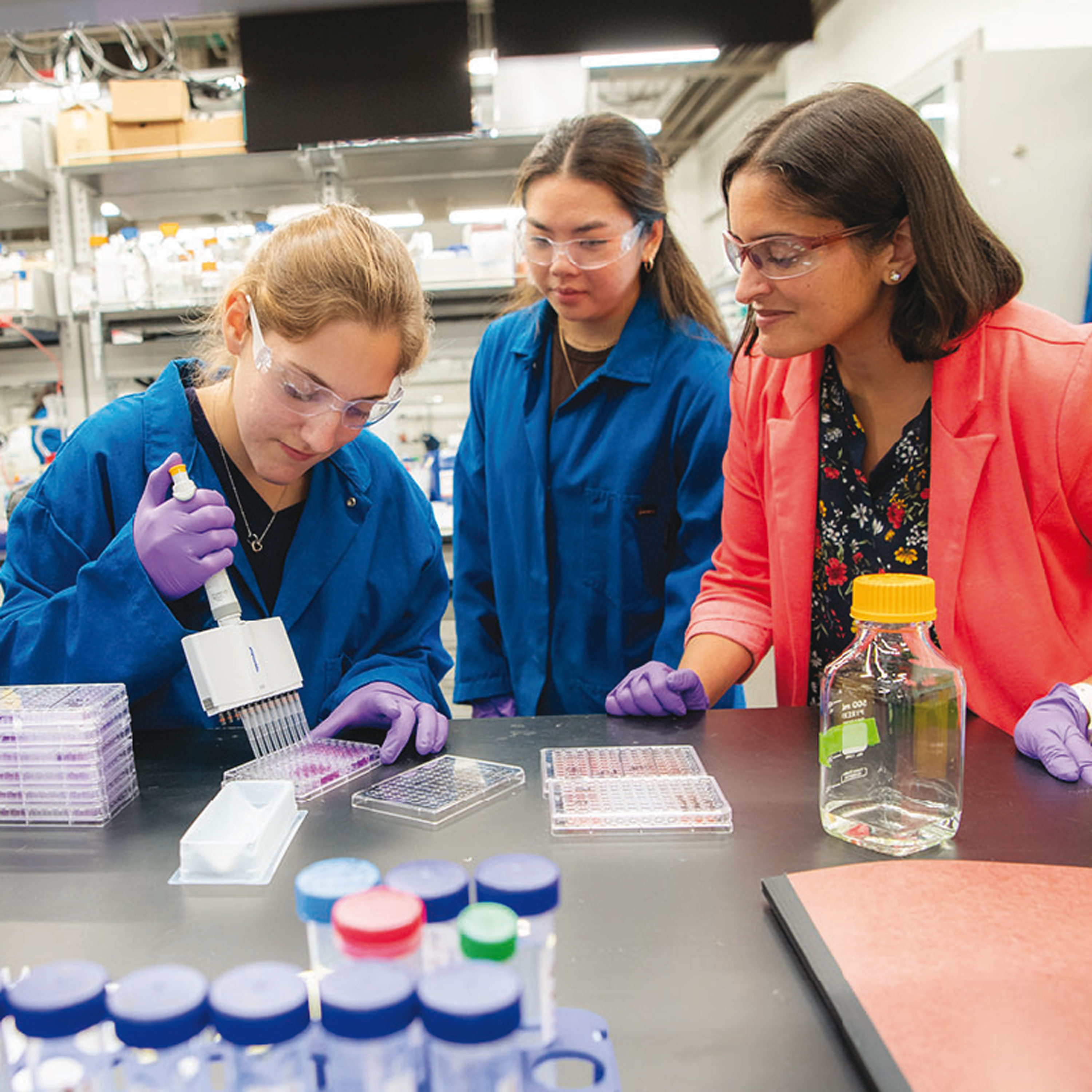
The 5 Ways Engineers Plan to Curb Antimicrobial Resistance
A recent report from the Engineering Research Visioning Alliance emphasizes the urgent need for engineering-directed research to mitigate the growing threat of antimicrobial resistance. Anita Shukla, PhD, a professor of engineering at Brown University, discusses its findings with JAMA Medical News Associate Managing Editor Kate Schweitzer and presents several key opportunities. Related Content: Five Engineering Advancements That May Help Solve the Growing Threat of Antimicrobial Resistance

Language Equity in Health Technology
AI can play a role in addressing language barriers in health care. In a recent Editorial in JAMA Network Open, Pilar Ortega, MD, MGM, of the University of Illinois College of Medicine, and coauthors emphasized the urgent need for integrating language equity into digital health solutions. Dr Ortega joins JAMA and JAMA+ AI Associate Editor Yulin Hswen, ScD, MPH, to discuss. Related Content: Researcher Proposes New Framework for Language Equity in Health Technology Language Equity in Health Technology for Patients With Non–English Language Preference Challenges to Video Visits for Patients With Non–English Language Preference

February 2025 Medical News Summary
Changes to CDC's Website Threaten Patients, Public Health; Landmark Study of Black Women and Cancer Launches Related Content: As Missing and Altered CDC Webpages Threaten Patient Care, Efforts Grow to Fill Information Gaps Landmark Study Aims to Enroll 100 000 Black Women to Investigate Their Cancer Risks and Outcomes

AI Guided Diagnostic-Quality Lung Ultrasound
Lung ultrasound aids in the diagnosis of patients with dyspnea but requires technical proficiency for image acquisition. Cristiana Baloescu, MD, MPH, of Yale School of Medicine, joins JAMA Associate Editor Yulin Hswen, ScD, MPH, to discuss a new study published in JAMA Cardiology evaluating the ability of AI to guide acquisition of diagnostic-quality lung ultrasound images by trained health care professionals. Related Content: AI-Guided Lung Ultrasounds Could Help Nonexpert Clinicians Acquire "Expert-Level" Images Artificial Intelligence–Guided Lung Ultrasound by Nonexperts

Diagnosis and Treatment of Infectious Disease Using AI
A recent study in JAMA Network Open evaluates the use of machine learning algorithms to assess the management of urinary tract infection (UTI). Author Sanjat Kanjilal, MD, MPH, professor in the Department of Population Medicine at Harvard Medical School and Harvard Pilgrim Healthcare Institute, joins JAMA Associate Editor Yulin Hswen, ScD, MPH, to discuss this topic and more. Related Content: Researchers Use Machine Learning to Put Older Clinical Guidelines to the Test Use of Machine Learning to Assess the Management of Uncomplicated Urinary Tract Infection

Older Adults' Use of Digital Health Technology
Digital health technologies, including patient portals, are widely used by older adults, as described in a recent study published in JAMA Network Open. Author Cornelius James, MD, of the University of Michigan joins JAMA+ AI Editor in Chief Roy H. Perlis, MD, MSc, to discuss the study and how it fits with his own experience in the clinic. Related Content: Study Finds Most Older Adults Use Digital Health Technologies, Plus Some Surprises Use of Digital Health Technologies by Older US Adults

January 2025 Medical News Summary
Weight-Loss Drugs Are Reshaping the Future of Bariatric Surgery; Are Compounded GLP-1 Drugs Safe? Will Renaming Some Cancers as Noncancers Hurt or Help? Related Content: What Does the Rise of GLP-1 Drugs Mean for Bariatric Surgery? Patients Are Flocking to Compounded Weight-Loss Drugs, but Are They Safe? Experts Are Debating Whether Some Cancers Shouldn't Be Called That

Patient Satisfaction With AI-Generated Responses
How do patients feel about the quality of AI-generated responses to their messages to clinicians? Author Eleni Linos, MD, DrPH, of Stanford joins JAMA+ AI Editor in Chief Roy H. Perlis, MD, MSc, to discuss her recent study in JAMA Network Open that characterized satisfaction with these messages. Related Content: Study Finds People Prefer AI Over Clinician Responses to Questions in the Electronic Medical Record Perspectives on Artificial Intelligence–Generated Responses to Patient Messages

Drafting Replies to Patient Messages With AI
The burden of responding to clinician inbox messages may be a contributor to burnout. Eden English, MD, of UCHealth joins JAMA+ AI Editor in Chief Roy H. Perlis, MD, MSc, to discuss her recent study published in JAMA Network Open, which examined the use of large language models to reply to patient messages. Related Content: Researchers Tested an AI Tool That Drafts Responses to Patient Messages—Here's What They Found Utility of Artificial Intelligence–Generative Draft Replies to Patient Messages Are Artificial Intelligence–Generated Replies the Answer to the Electronic Health Record Inbox Problem?

Bioethics and AI
With accelerating global adoption of AI, countries are developing ethical AI frameworks to prevent harm to the most vulnerable populations. Maria Villalobos-Quesada, PhD, from the National eHealth Living Lab (NeLL) in the Netherlands and the Observatory of Bioethics and Law of the University of Barcelona, discusses this and more with JAMA+ AI Associate Editor Yulin Hswen, ScD, MPH. *Author image and affiliations updated February 4, 2025. Related Content: Study Finds Limited Evidence to Support More Than 40 Predictive Machine Learning Algorithms Used in Primary Care Availability of Evidence for Predictive Machine Learning Algorithms in Primary Care The Need for Continuous Evaluation of Artificial Intelligence Prediction Algorithms

AI-Based Suicide Screening for American Indian Patients
American Indian and Alaska Native communities have higher rates of suicide than any other racial or ethnic group in the US. A recent study published in JAMA Network Open describes an AI-based suicide screening tool investigated in an American Indian community. Author Emily Haroz, PhD, of Johns Hopkins Bloomberg School of Public Health, joins JAMA and JAMA+ AI Associate Editor Yulin Hswen, ScD, MPH. Related Content: How AI Could Help Clinicians Identify American Indian Patients at Risk for Suicide Performance of Machine Learning Suicide Risk Models in an American Indian Population

Comparing Early Hospital Warning Scores for Clinical Deterioration
How can hospitals use early warning score tools to risk stratify patients without adding to alarm fatigue? Dana Edelson, MD, MS, of the University of Chicago joins JAMA+ AI Editor in Chief Roy H. Perlis, MD, MSc, to discuss a recent study published in JAMA Network Open that she coauthored, comparing 6 early warning scores designed to recognize clinical deterioration in hospitalized patients. Related Content: Researchers Compared Hospital Early Warning Scores for Clinical Deterioration—Here's What They Learned Early Warning Scores With and Without Artificial Intelligence

AI Chatbots in Clinical Practice
Chatbots may have a role in enhancing clinical care, but the best way to apply them remains a work in progress. Jonathen Chen, MD, PhD, and Ethan Goh, MD, MS, of Stanford, join JAMA and JAMA+ AI Associate Editor Yulin Hswen, ScD, MPH, to discuss their randomized clinical trial published in JAMA Network Open investigating the use of chatbots in clinical practice. Related Content: An AI Chatbot Outperformed Physicians and Physicians Plus AI in a Trial—What Does That Mean? Large Language Model Influence on Diagnostic Reasoning

December 2024 Medical News Summary
Why COVID-19 Vaccines Don't Stop Transmission; Hospital-at-Home—But Make It Virtual Related Content: In Search of COVID-19 Vaccines That Elicit Mucosal Immunity and Stop Transmission The Next Step in Hospital-at-Home Care Could Be Virtual

How Health Systems Can Collaborate on AI Tools
In a recent Viewpoint published in JAMA, Michael Pencina, PhD, of Duke University, argued for a federated registration system for AI tools deployed in health systems. He joins JAMA+ AI Editor in Chief Roy H. Perlis, MD, MSc, to discuss his article, the Coalition for Health AI (CHAI), and more. Related Content: Health Systems Are Struggling to Keep Up With AI—A National Registration System Could Help A Federated Registration System for Artificial Intelligence in Health

Heart Health Highlights From the AHA Scientific Sessions
Cardiologist Amit Khera, MD, chair of the American Heart Association's recent flagship meeting, discusses some of the most important clinical studies presented at the conference with JAMA Medical News Director Jennifer Abbasi. They touch on antiobesity drugs, new compounds to reduce lipoprotein(a), AI tools, and more. Related Content: Lp(a) Reduction, GLP-1s for Heart Failure, and More—Highlights From the AHA Scientific Sessions

AI-Enabled Ultrasound Could Improve Global Obstetric Care
In resource-limited settings, an integrated AI tool allows novice users to improve gestational age estimates. Jeffrey Stringer, MD, University of North Carolina, joins JAMA+ AI Editor in Chief Roy H. Perlis, MD, MSc, to discuss "Diagnostic Accuracy of an Integrated AI Tool to Estimate Gestational Age From Blind Ultrasound Sweeps." Related Content: The Low-Cost, Battery-Powered AI-Enabled Ultrasound Device That Could Improve Global Obstetric Care Diagnostic Accuracy of an Integrated AI Tool to Estimate Gestational Age From Blind Ultrasound Sweeps

AI as Interpreter in the Clinic
Effective communication is essential in medicine, yet language barriers can result in suboptimal care. AI holds promise for bridging these gaps, enhancing outcomes, and reducing disparities. Casey Lion, MD, MPH, from the University of Washington School of Medicine, joins JAMA and JAMA+ AI Associate Editor Yulin Hswen, ScD, MPH, to discuss AI as an interpreter in the clinic. Related Content: Researcher Explores Using AI to Overcome Language Barriers With Patients Artificial Intelligence for Language Translation

November 2024 Medical News Summary
How Antibiotic Underuse Is Driving Antimicrobial Resistance; What to Know About the XEC SARS-CoV-2 Variant Related Content: UN Meeting Highlights Antimicrobial Resistance "Epiphany"—Lack of Antibiotic Access Is a Key Driver What to Know About XEC, the New SARS-CoV-2 Variant Expected to Dominate Winter's COVID-19 Wave

AI and the FDA
A recent Special Communication published in JAMA points out that the FDA has already approved nearly 1000 devices using AI. Author Robert M. Califf, MD, commissioner of the US Food and Drug Administration, joins JAMA+ AI Editor in Chief Roy H. Perlis, MD, MSc, to discuss AI regulation. Related Content: FDA Commissioner Robert Califf on Setting Guardrails for AI in Health Care JAMA AI Interview With Robert M. Califf, MD FDA Perspective on the Regulation of Artificial Intelligence in Health Care and Biomedicine

The Ethics of AI as Clinical Decision Maker
A recent JAMA Cardiology essay argues that medicine is not just a technical endeavor, it's also a moral endeavor, and a robot does not have moral agency. Coauthor Sarah C. Hull, MD, MBE, of Yale School of Medicine, joins JAMA and JAMA+ AI Associate Editor Yulin Hswen, ScD, MPH, to discuss the use of AI in managing decision-making in cardiac care. Related Content: AI Can't Worry About Patients, and a Clinical Ethicist Says That Matters Echoes of Concern—AI and Moral Agency in Medicine

AI and the National Academy of Sciences
Widespread adoption of AI raises questions about accountability, transparency, and reproducibility. Marcia McNutt, PhD, president of the National Academy of Sciences, joins JAMA Editor in Chief Kirsten Bibbins-Domingo, PhD, MD, MAS, to discuss advancing scientific knowledge in the age of AI. Related Content: National Academies President on How to Use Generative AI Responsibly in Scientific Research

October 2024 Medical News Summary
Researchers Are Exploring the Role of Shingles—and a Protective Role of Shingles Vaccine—in Dementia; Could the Body Roundness Index One Day Replace BMI? Related Content: Researchers Are Exploring the Role of Shingles—and a Protective Role of Shingles Vaccine—in Dementia Could the Body Roundness Index One Day Replace the BMI?

Getting Technology Into the Clinic
Getting genuinely useful new technologies, from wearables to clinical decision support, into the clinic has proven to be surprisingly challenging. Tanzeem K. Choudhury, PhD, of Cornell Tech joins JAMA+ AI Editor in Chief Roy H. Perlis, MD, MSc, to discuss how to take research into the real world in a way that is scalable and affordable. Related Content: How Health and Technology Sectors Can Collaborate on Better AI-Assisted Wearables

What Lessons Does the VA's Experience Building Electronic Health Records Hold for AI?
What hard lessons did the US Department of Veterans Affairs (VA) learn in 3 decades of EHR development, and what can it teach us about building better AI in medicine? Stephen Fihn, MD, MPH, of the University of Washington, and formerly a leader in the VA's EHR efforts, joins JAMA+ AI Editor in Chief Roy H. Perlis, MD, MSc, to discuss his experience at the VA building decision support tools and other technology. Related Content: The VA Was an Early Adopter of Artificial Intelligence to Improve Care—Here's What They Learned Hello, World—Introducing JAMA+ AI

Heart Health Highlights From ESC Congress
European Society of Cardiology Vice President Carlos Aguiar, MD, discusses clinical research highlights from the largest scientific meeting in cardiovascular medicine, held recently in London. Updates include semaglutide findings, hypertension triple pills, and more. Related Content: Semaglutide Updates, Hypertension Triple Pills, and More—Heart Health Highlights From ESC Congress
September 2024 Medical News Summary
Related Content: The Latest Research About Paxlovid: Effectiveness, Access, and Possible Long COVID Benefits New Guidance Helps Clinicians Use Pemivibart to Protect Immunocompromised Patients From COVID-19

Lasker Winners Discuss 35 Years of HIV Research in Africa
Quarraisha Abdool Karim, PhD, and Salim S. Abdool Karim, MBChB, PhD, are the recipients of the 2024 Lasker-Bloomberg Public Service Award for their decades of work on AIDS in Africa. The infectious diseases epidemiologists recently reflected on their life's work in a conversation with JAMA Deputy Editor and infectious diseases physician Preeti Malani, MD, MSJ. Related Content: Thirty-Five Years of HIV Research in Africa—An Interview With Winners of the 2024 Lasker-Bloomberg Public Service Award AIDS in Africa—Impact of Research

Three Years Later, Here's What the Pacific Northwest Heat Dome Taught Us
Extreme heat and its health outcomes are becoming more common. Jeremy Hess, MD, MPH, an emergency medicine physician and professor at the University of Washington, and Andrew Phelps, former director of the Oregon Department of Emergency Management, join Jennifer Abbasi, director of JAMA Medical News, to discuss lessons learned from the unprecedented heat wave in June 2021. Related Content: As Extreme Heat Becomes More Common, the Unprecedented Pacific Northwest Heat Dome Offers Lessons