
It's Been a Minute
1,114 episodes — Page 4 of 23

Enough is enough. Is it time to leave America?
Young women, more than any other group, say they would leave America. Their list of reasons is long and plentiful. Have you ever thought about leaving the US, and starting over somewhere else? Maybe living the hygge lifestyle in Denmark, or soaking up the sun in Costa Rica? According to Gallup – a surprising number of women are considering it. In a poll released in November, 40% of women between the ages of 18 and 44 said they’d move to another country permanently if they had the chance. That’s four times higher than it was a decade ago – and this sentiment among women is unique to the US. But what’s behind young women’s willingness to imagine life elsewhere? And what does that say about the future of this country? Brittany breaks it all down with Constance Grady, senior correspondent for Vox’s culture team who covers gender, and Scaachi Koul, senior writer at Slate and co-host of the BBC podcast Where to be a Woman.Support Public Media. Join NPR Plus.Follow Brittany Luse on Instagram: @bmluseFor handpicked podcast recommendations every week, subscribe to NPR’s Pod Club newsletter at npr.org/podclub.To manage podcast ad preferences, review the links below:See pcm.adswizz.com for information about our collection and use of personal data for sponsorship and to manage your podcast sponsorship preferences.NPR Privacy Policy

Feeling depressed? Build a SAD routine.
Is the lack of sunlight in the winter months really getting to you? Do you find yourself fighting tooth and nail to keep up with life's demands every winter? You may be dealing with seasonal affective disorder, or SAD. Brittany has developed her own morning routine to combat this type of depression. Today, she's joined by Dr. Norman E. Rosenthal, psychiatrist and scientist who first described seasonal affective disorder in the 1980s, to get feedback on her SAD routine, and learn about how we all can think differently about the rough winter months.Support Public Media. Join NPR Plus.Follow Brittany Luse on Instagram: @bmluseFor handpicked podcast recommendations every week, subscribe to NPR’s Pod Club newsletter at npr.org/podclub.To manage podcast ad preferences, review the links below:See pcm.adswizz.com for information about our collection and use of personal data for sponsorship and to manage your podcast sponsorship preferences.NPR Privacy Policy
2026 Predictions: Beyoncé retires, AI busts, Democrats lift weights
What's in and what's out in 2026? Let's set the stage for what to watch out for in the new year.As you fill out your own bingo card for what will or will not happen in 2026, join Brittany, NPR's tech correspondent Bobby Allyn, and NPR's political correspondent Danielle Kurtzleben. They are laying out the puzzle pieces of 2026 - from the politics of masculinity to the bubble of artificial intelligence to the end of Queen Bee - and piecing them together, so you know what to set your sights on for the next calendar year. Support Public Media. Join NPR Plus.Follow Brittany Luse on Instagram: @bmluseFor handpicked podcast recommendations every week, subscribe to NPR’s Pod Club newsletter at npr.org/podclub.To manage podcast ad preferences, review the links below:See pcm.adswizz.com for information about our collection and use of personal data for sponsorship and to manage your podcast sponsorship preferences.NPR Privacy Policy

Beware the Wellness Industrial Complex!
From CBD leggings to Soulcycle, wellness is reshaping our relationships to our bodies and souls. But what even is "wellness?" Well, for one, it's a global industry worth 6 trillion dollars. And it encompasses all kinds of things – including spirituality: from the spirituality of wellness practices like yoga and reiki, to treating wellness itself like a religion. As spirituality, self-care, and capitalism swirl together, what is missing from the story?Brittany is joined by Alyssa Bereznak, GQ's Wellness Director, and Rina Raphael, author of the book The Gospel of Wellness: Gyms, Gurus, Goop, and the False Promise of Self-Care, to get into what people get out of a wellness-based spiritualism and consumerism.This episode originally aired on March 17, 2025.Support Public Media. Join NPR Plus.Follow Brittany Luse on Instagram: @bmluseFor handpicked podcast recommendations every week, subscribe to NPR’s Pod Club newsletter at npr.org/podclub.To manage podcast ad preferences, review the links below:See pcm.adswizz.com for information about our collection and use of personal data for sponsorship and to manage your podcast sponsorship preferences.NPR Privacy Policy

The privilege of being "skinny"
If society privileges "thin" people, should you aspire to conform? And at what cost?Last year, online influencer Slim Kim went viral for a TikTok where she said she loves "being skinny." It sparked a debate that continued throughout 2025: how do we talk about bodies without falling into "body fascism." And with drugs like Ozempic and Wegovy flooding the market, how are the ways we talk about bodies shifting and changing?Brittany is joined by authors Emma Specter and Kate Manne to find out: what's so wrong with loving being skinny?This episode originally aired on December 6, 2024.Support Public Media. Join NPR Plus.Follow Brittany Luse on Instagram: @bmluseFor handpicked podcast recommendations every week, subscribe to NPR’s Pod Club newsletter at npr.org/podclub.To manage podcast ad preferences, review the links below:See pcm.adswizz.com for information about our collection and use of personal data for sponsorship and to manage your podcast sponsorship preferences.NPR Privacy Policy

How to manifest your best year yet
If you want something badly enough, should you have it?Today, Brittany is investigating so-called "manifestation." It's this popular belief that if you want something badly enough, it'll come to you. But here's the thing: our relationship to the internet and algorithms is creating a feedback loop that actually makes our own dreams seem more...possible? But where's the line between dreams, reality, and the internet? Brittany calls on Tara Isabella Burton, an author and journalist, and New York Magazine's Rebecca Jennings to get to the bottom of this trend: the appeal of manifestation, its symbiotic relationship with the internet, and why it might make us less aware of our humanity.This episode originally aired on March 31, 2025.Support Public Media. Join NPR Plus.Follow Brittany Luse on Instagram: @bmluseFor handpicked podcast recommendations every week, subscribe to NPR’s Pod Club newsletter at npr.org/podclub.To manage podcast ad preferences, review the links below:See pcm.adswizz.com for information about our collection and use of personal data for sponsorship and to manage your podcast sponsorship preferences.NPR Privacy Policy

How Christianity got popular again
Christianity showed up in the mainstream in unexpected ways this year. Are we in a revival?Take a look at this year's Billboard charts. For the first time, multiple Christian musicians charted on the Billboard Hot 100 at the same time — and stayed there for weeks. And some of the biggest hits of the year - like Alex Warren's "Ordinary" - pull from Contemporary Christian Music sounds. Plus, Trump says he wants to defend Christians. In the episode, Brittany talks with Christianity Today reporter Kelsey Kramer McGinnis to understand the multi-billion dollar machine behind the Christian Contemporary Music genre and how this behind-the-scenes system impacts what music you hear.This episode originally aired on July 23, 2025.Support Public Media. Join NPR Plus.Follow Brittany Luse on Instagram: @bmluseFor handpicked podcast recommendations every week, subscribe to NPR’s Pod Club newsletter at npr.org/podclub.To manage podcast ad preferences, review the links below:See pcm.adswizz.com for information about our collection and use of personal data for sponsorship and to manage your podcast sponsorship preferences.NPR Privacy Policy
The not-so-secret lives of Mormon women
Why are Mormons so popular, you ask? Because it's part of their faith.From Hulu's The Secret Lives of Mormon Wives to your favorite homemaking TikTok influencers, the women of the Church of Latter Day Saints have been gaining massive audiences for over a decade. Brittany is joined by Jana Riess, senior columnist at Religious News Service and author of The Next Mormons: How Millennials are Changing the LDS Church to discuss how Mormon culture provides some of TikTok's most powerful influencers with heavenly tools for viral success.This episode originally aired on November 12, 2024.Support Public Media. Join NPR Plus.Follow Brittany Luse on Instagram: @bmluseFor handpicked podcast recommendations every week, subscribe to NPR’s Pod Club newsletter at npr.org/podclub.To manage podcast ad preferences, review the links below:See pcm.adswizz.com for information about our collection and use of personal data for sponsorship and to manage your podcast sponsorship preferences.NPR Privacy Policy

The embarrassing truth of dating men
What's it like to date a man? Ask pop stars or your friends, and you might hear it's a struggle.From Sabrina Carpenter to Summer Walker, some of the biggest female artists on the charts today…are absolutely through with men. It’s a sentiment that has a name: heteropessimism. Coined in 2019 by the writer Asa Seresin, the term encapsulates the embarrassment, disaffection and fatigue that comes from being heterosexual. “Men are trash” music that reflects these feelings isn’t new, but NPR Music editor Hazel Cills says it’s making a comeback. So what makes this time different? And what can we learn from this moment's heteropessimism about the realities of dating men today?(0:00) How Heteropessimism went mainstream(4:21) What makes this "Men are trash" moment different than the past?(7:55) What do women want from their relationships?(14:59) How long will we be in the "men are trash" era?Support Public Media. Join NPR Plus.Follow Brittany Luse on Instagram: @bmluseFor handpicked podcast recommendations every week, subscribe to NPR’s Pod Club newsletter at npr.org/podclub.To manage podcast ad preferences, review the links below:See pcm.adswizz.com for information about our collection and use of personal data for sponsorship and to manage your podcast sponsorship preferences.NPR Privacy Policy

The real meaning of "6 7"
There’s been a lot of discourse about what “6 7” means, but what actually makes it meaningful?The “6 7" meme was everywhere this year, online and off. Scrolling through TikTok? You probably encountered it. Sitting in math class? Your teacher probably dreaded everyone shouting out the numbers when they came up in class. NPR intern Sanidhya Sharma investigated the phenomenon by going to schools and sitting down with experts. He's here now to report back to Brittany and get into why some memes aren't for everyone.Support Public Media. Join NPR Plus.Follow Brittany Luse on Instagram: @bmluseFor handpicked podcast recommendations every week, subscribe to NPR’s Pod Club newsletter at npr.org/podclub.To manage podcast ad preferences, review the links below:See pcm.adswizz.com for information about our collection and use of personal data for sponsorship and to manage your podcast sponsorship preferences.NPR Privacy Policy

The Winners & Losers of 2025
Welcome to the third annual IBAMMYs Culture Awards Show, where we reflect and honor the best and worst cultural moments of the year.Brittany is joined by Sam Sanders, host of KCRW's The Sam Sanders Show, and Tre'vell Anderson, host of The Seated podcast. All three nominated a person or moment for each of the four categories. NPR's Culture Committee then voted on a winner. Today, we reveal the winners and losers of 2025 and run through the moments we want to remember or forget.This year's categories & nominees are:Word of the Year:"Slop""Clock it""Labubu"Villain of the Year:Sydney SweeneyGlinda the Good WitchBillionairesThe Candle in the Dark:PinkPantheressOne of Them DaysLinikerNot-on-My-Bingo Card:KPop Demon HuntersYolanda AdamsKaty PerryWho will win?(0:00) How will you look back on 2025?(2:30) The Word of the Year: Slop, Clock It, or Labubu?(7:51) Villain of the Year: Sydney Sweeney, Billionaires, Wicked Glinda?(18:07) What brought you joy this year?(23:23) Not-on-my-Bingo Card: Kpop Demon Hunters, Yolanda Adams, Katy PerrySupport Public Media. Join NPR Plus.Follow Brittany Luse on Instagram: @bmluseFor handpicked podcast recommendations every week, subscribe to NPR’s Pod Club newsletter at npr.org/podclub.To manage podcast ad preferences, review the links below:See pcm.adswizz.com for information about our collection and use of personal data for sponsorship and to manage your podcast sponsorship preferences.NPR Privacy Policy

The secret to Heated Rivalry's success
Heated Rivalry - the hit HBO Max series - has it all: scintillating romance, hot guys, sports (kind of), and, most importantly, portrayals of gay love and sex that don’t hold back. Steamy, sensual TV shows aren’t new, but the Canadian series has captured the public's attention in a way that a show hasn’t in a while. So, what’s behind its cultural resonance? What does it mean that this gay romance was written by a woman? And why are straight women and gay men equally into the sex scenes?Michel Ghanem, TV critic and columnist of “Appointment Viewing” for The Cut, and Glen Weldon, co-host of NPR’s Pop Culture Happy Hour, join the show to get into why we’re all waiting for every new episode with bated breath. (0:00) What is Heated Rivalry really about?(2:40) How successful is the gay TV show?(6:05) Why are straight women into gay romance?(9:25) Why all audiences see something new in the sex scenes(12:12) Can straight actors play queer characters?(18:30) "Wait, What?!" A Pop Culture Trivia GameSupport Public Media. Join NPR Plus.Follow Brittany Luse on Instagram: @bmluseFor handpicked podcast recommendations every week, subscribe to NPR’s Pod Club newsletter at npr.org/podclub.To manage podcast ad preferences, review the links below:See pcm.adswizz.com for information about our collection and use of personal data for sponsorship and to manage your podcast sponsorship preferences.NPR Privacy Policy

That friend's wedding is too dang expensive…
Are we spending too much on other people’s weddings?Going to a friend's weddings can be so fun and meaningful… but it can also really hurt your wallet. A survey by LendingTree found that 31% of people who had been to a wedding in the past five years had accrued debt to attend. So what’s driving up the cost of weddings for guests? And what makes it so hard to say no to these expenses?Brittany breaks it down with Allyson Rees, senior analyst at trend forecasting firm WGSN, and Annie Joy Williams, assistant editor at The Atlantic.(0:00) For hosts AND guests, weddings are getting really expensive(2:22) How much it costs to attend someone's wedding(4:58) Men are spending just as much as women(7:30) Weddings, social media, and "main character" energy(11:32) Is this the one night we get to pretend we're ultra rich?(13:42) How to say no to a friend's wedding(17:00) Do weddings prove who your friends really are?Support Public Media. Join NPR Plus.Follow Brittany Luse on Instagram: @bmluseFor handpicked podcast recommendations every week, subscribe to NPR’s Pod Club newsletter at npr.org/podclub.To manage podcast ad preferences, review the links below:See pcm.adswizz.com for information about our collection and use of personal data for sponsorship and to manage your podcast sponsorship preferences.NPR Privacy Policy

Do kids need a dad? Ask single moms.
More women than ever are choosing to raise their children by their self. Is it time to hit reset on what we mean by "family" in America?America has some deeply held prejudices toward single moms, but some studies show that 40% of babies in the U.S. are born to unmarried women. In this episode Brittany looks into the joy and challenges these women face - from freedom and agency to affordability and loneliness.Brittany is joined by Pallavi Gogoi, NPR's Chief Business Editor, and Danielle Elliot, writer and a single mother. You can read Pallavi's reporting here.(0:00) Hitting reset on the definition of "family" and "single mom"(5:42) The power & agency of being a single mom(7:30) Does your child need a present father? (15:11) The struggles of being a single parent(18:29) Tips for raising a kid by yourselfSupport Public Media. Join NPR Plus.Follow Brittany Luse on Instagram: @bmluseFor handpicked podcast recommendations every week, subscribe to NPR’s Pod Club newsletter at npr.org/podclub.To manage podcast ad preferences, review the links below:See pcm.adswizz.com for information about our collection and use of personal data for sponsorship and to manage your podcast sponsorship preferences.NPR Privacy Policy

Woke is BACK! ...really?
Some say we're entering the Woke 2.0 era. Is that real or imagined? From declining Target sales to Mamdani's election, some folks online are feeling a vibe shift. Is that feeling...woke? And if so, does that mean woke is back in style? To answer those questions - and to dissect whether or not woke ever left - Brittany is joined by Constance Grady, senior correspondent at Vox, and Tyler Austin Harper, staff writer at The Atlantic and co-host of the podcast, Time to Say Goodbye. Vote for It's Been a Minute in the NPR Pod Club Awards!(0:00) When did Woke end? (4:22) Why Woke doesn't work when racism is still on the rise(8:50) Target, Sydney Sweeney, and America's appetite for racism(12:08) The rise of "Dark Woke" & will it work?(13:51) Is Zohran Mamdani a sign of a new kind of Woke?(15:40) How MAGA made the blueprint for Woke 2.0Support Public Media. Join NPR Plus.Follow Brittany Luse on Instagram: @bmluseTo manage podcast ad preferences, review the links below:See pcm.adswizz.com for information about our collection and use of personal data for sponsorship and to manage your podcast sponsorship preferences.NPR Privacy Policy

The social etiquette of sharing location
Is location tracking building relationships? Or ruining them?Four in ten U.S. adults share their locations with at least one person. But while it’s convenient – is it a violation of privacy? And who really needs to know where you are? We're getting into how location sharing became a norm, the pros and cons, and how to turn it off without making things weird.Brittany breaks it all down with Gina Cherelus, New York Times styles reporter and writer of their Third Wheel dating column, and Tatum Hunter, internet culture reporter at The Washington Post.(0:00) Who shares their location and why?(3:21) Sharing with your friends vs. your boyfriend(5:27) How location sharing became a social norm(9:30) What are the benefits of sharing your location?(14:21) What do companies get from knowing your location?(15:40) Why it can be damaging to share location with people(17:20) The awkwardness of stopping sharing location(19:29) How location sharing is redefining "privacy"Support Public Media. Join NPR Plus.Follow Brittany Luse on Instagram: @bmluseFor handpicked podcast recommendations every week, subscribe to NPR’s Pod Club newsletter at npr.org/podclub.To manage podcast ad preferences, review the links below:See pcm.adswizz.com for information about our collection and use of personal data for sponsorship and to manage your podcast sponsorship preferences.NPR Privacy Policy

The myth of modern "adulthood"
What does it mean to be an independent adult?More young adults live with their parents than in the past, and are also delaying the traditional markers of independent adulthood like marriage and childbirth. Roughly nine-in-ten parents say it’s extremely or very important to them that their children be financially independent when they are adults, but are our cultural notions of financial independence changing? And are today’s young adults prepared to handle the emotional challenges of adult life? To find out, Brittany is joined by Nancy Hill, Professor of Education and Developmental Psychologist at Harvard University, and Kathryn Jezer-Morton, writer for New York Magazine and The Cut.(0:00) What does it mean to be an adult?(4:46) Is Gen-Z "failing to launch" into adulthood?(10:32) The myths of unpaid duesSupport Public Media. Join NPR Plus.Follow Brittany Luse on Instagram: @bmluseFor handpicked podcast recommendations every week, subscribe to NPR’s Pod Club newsletter at npr.org/podclub.To manage podcast ad preferences, review the links below:See pcm.adswizz.com for information about our collection and use of personal data for sponsorship and to manage your podcast sponsorship preferences.NPR Privacy Policy
Why some families stop speaking
It's an incredibly painful thing to do, so why are some kids cutting their parents out of their lives?27% of Americans are estranged from at least one family member, and the term "no contact" is increasingly being used to describe estrangement between adult children and their parents. But is estrangement happening more often, or are we just more open to talking about it? And is our culture around family shifting? Brittany sits down with journalist Kui Mwai and Whitney Goodman, licensed marriage and family therapist and the host of the Calling Home podcast, to find out.This episode originally aired on December 17, 2024.Follow Brittany Luse on Instagram: @bmluseFor handpicked podcast recommendations every week, subscribe to NPR’s Pod Club newsletter at npr.org/podclub.To manage podcast ad preferences, review the links below:See pcm.adswizz.com for information about our collection and use of personal data for sponsorship and to manage your podcast sponsorship preferences.NPR Privacy Policy

Dreading family conflict? Here's some advice.
Fighting with your family doesn’t have to be a holiday tradition.The majority of Americans will celebrate Thanksgiving tomorrow. And while it’s meant to be a time of family togetherness… sometimes, this holiday can make you never want to see your family again. To go or not to go? To fight or not to fight? Well, our friends at NPR’s Life Kit have tips for how to answer these questions. Marielle Segarra, host of Life Kit, speaks with experts and identifies 12 strategies to keep your family dinner peaceful this year.Follow Brittany Luse on Instagram: @bmluseFor handpicked podcast recommendations every week, subscribe to NPR’s Pod Club newsletter at npr.org/podclub.To manage podcast ad preferences, review the links below:See pcm.adswizz.com for information about our collection and use of personal data for sponsorship and to manage your podcast sponsorship preferences.NPR Privacy Policy
Kids are expensive. Do they have to be?
Can you afford to pay two rents?Families across the country are asking that same question when it comes to childcare, as the yearly costs for daycare are becoming comparable to a year's rent in many places. How did childcare become so expensive, and how might everyone benefit if the government provided more support to parents? Professor of Sociology at the University of Wisconsin-Madison Jessica Calarco, and Senior Fellow at the Think Tank Capita Elliot Haspel are here to help Brittany find out. Follow Brittany Luse on Instagram: @bmluseFor handpicked podcast recommendations every week, subscribe to NPR’s Pod Club newsletter at npr.org/podclub.To manage podcast ad preferences, review the links below:See pcm.adswizz.com for information about our collection and use of personal data for sponsorship and to manage your podcast sponsorship preferences.NPR Privacy Policy

Do you want out of The Cult of Homeownership?
When the dream of buying a home seems unattainable, is it time to find a new dream? Or is there another option on the table?Bill Pulte, the director of the Federal Housing Finance Agency, or the FHFA, said the administration is “working on” a plan to introduce 50 year mortgage terms for homebuyers. But some Americans have already been working on their own plans towards homeownership… and it’s not the ‘nuclear family’ route. Brittany is joined by NPR chief economics correspondent Scott Horsley and NPR producer & author of The Other Significant Others: Reimaging Life with Friendship at the Center, Rhaina Cohen to get into the cult of homeownership in America. Together they search for a new outlook of what ‘adulthood’ looks like.(0:00) Will Millennials and Gen-Zers be able to buy homes?(7:56) Why Trump's mortgage policy probably won't work(10:53) The fundamental reasons housing is so expensive(12:37) Want to buy a home? Consider these options.(20:13) Responding to your commentsFollow Brittany Luse on Instagram: @bmluseFor handpicked podcast recommendations every week, subscribe to NPR’s Pod Club newsletter at npr.org/podclub.To manage podcast ad preferences, review the links below:See pcm.adswizz.com for information about our collection and use of personal data for sponsorship and to manage your podcast sponsorship preferences.NPR Privacy Policy

Crime is down. Why don't people feel safe?
What’s the difference between feeling unsafe and being unsafe?According to Gallup, about half of Americans see crime as being extremely or very serious. And there are a lot of very real threats out there to people’s safety, but there’s also a lot of fearful rhetoric that’s more unfounded. While immigrants are less likely to commit crimes than U.S.-born citizens, and trans people are unlikely to commit mass shootings, fear of these groups is being weaponized against them. So how can we disentangle being unsafe and feeling unsafe – and better protect ourselves and each other? Brittany gets into it with Nicole Lewis, engagement editor at The Marshall Project, and Lex McMenamin, writer and editor.Follow Brittany Luse on Instagram: @bmluseFor handpicked podcast recommendations every week, subscribe to NPR’s Pod Club newsletter at npr.org/podclub.To manage podcast ad preferences, review the links below:See pcm.adswizz.com for information about our collection and use of personal data for sponsorship and to manage your podcast sponsorship preferences.NPR Privacy Policy

The fear & shame of modern parenting
Have you talked to a parent recently? Are they...okay?From textbook bans to health food trends, there’s a whole culture of fear and political propaganda that preys on new parents, convincing them that just buying this or just voting for that will keep their children safe. But how do you know if something is a moral panic or a legitimate concern?Brittany is joined by Karen Leick, author of Parents, Media and Panic through the Years, and Cynthia Wang, Clinical Professor of Management and Organizations at Northwestern University to sift through the differences.(0:00) The burdensome anxiety of modern parenting(2:01) How parental fear & shame impacts children(4:26) How perceived threats shape parental behavior(10:31) The emotional impact of parental fears on kids(13:13) How to know a real vs. perceived threat in modern lifeFollow Brittany Luse on Instagram: @bmluseFor handpicked podcast recommendations every week, subscribe to NPR’s Pod Club newsletter at npr.org/podclub.To manage podcast ad preferences, review the links below:See pcm.adswizz.com for information about our collection and use of personal data for sponsorship and to manage your podcast sponsorship preferences.NPR Privacy Policy
Have we lost the art of reading?
No disrespect, but...when President Trump threw a Great Gatsby-themed party for Halloween, it kind of missed the point of the book. And, it's not just Trump. A quick search online, and you'll see a lot of people increasingly misinterpreting other famous books. Are people just bad at reading? Are we just laying our own biases on top of classic texts? Or is something else going on?Andrew Limbong, host of NPR's Book of the Day, and writer-critic Princess Weekes join Brittany to dissect novel interpretations of literary fiction. They look at what these re-interpretations say about our current moment: from what we want from a book to how books lose meaning online.(0:00) Why 'The Great Gatsby' gets misread(6:07) How 'Lord of the Rings' became a Christian Nationalist text(12:46) Literary Interpretation vs. Media Literacy(16:34) The rise of BookTok(19:28) The consequence of missing the point of a bookFollow Brittany Luse on Instagram: @bmluseFor handpicked podcast recommendations every week, subscribe to NPR’s Pod Club newsletter at npr.org/podclub.To manage podcast ad preferences, review the links below:See pcm.adswizz.com for information about our collection and use of personal data for sponsorship and to manage your podcast sponsorship preferences.NPR Privacy Policy

Exercise is more important than ever
Have you picked up a couple weights recently? Started walking, or jogging, or doing pilates? So have a lot of other people. You see the fitness Instagram accounts and gym tips all over TikTok, but how does exercise culture fit into our broader culture? And how does more enthusiasm for exercise square with the focus on fitness in our politics? Brittany gets into it with Jonquilyn Hill, host of Vox’s Explain it to Me podcast, and Shelly McKenzie, author of Getting Physical: the Rise of Fitness Culture in America.(0:00) Americans are obsessed with exercise right now. Why?(2:36) What exercise does for mental and financial health(5:59) How exercise became a status symbol for young people(10:13) Why gyms are seeking women over 65(12:57) Why JFK and Trump both politicized fitness(16:33) What the government and its citizens have in common: body shame?Follow Brittany Luse on Instagram: @bmluseFor handpicked podcast recommendations every week, subscribe to NPR’s Pod Club newsletter at npr.org/podclub.To manage podcast ad preferences, review the links below:See pcm.adswizz.com for information about our collection and use of personal data for sponsorship and to manage your podcast sponsorship preferences.NPR Privacy Policy

How 'Fascism' became a meme
The word "fascism" is being thrown around a lot right now. Does it capture our current cultural and political moment?Nearly 50% of Americans have associated President Trump with "fascism." Trump himself has used the word against his own opponents. Others have used the word to denounce skinny-tok as "body fascism." But why are Americans so willing to use the word? And is its ubiquity making it lose its meaning? In this episode, Brittany is joined by Nicholas Ensley Mitchell, a professor of education and policy at the University of Kansas and author of "On Bigotry: Twenty Lessons on How Bigotry Works and What to Do About It." He explains how Black Americans mapped the blueprint for fighting fascism in America, and questions whether the word "fascism" fits our current moment.(0:00) How 'Fascism" solidified 'American' identity(5:32) Why 'Fascist' is a useful word for the right and the left(12:45) Why the civil rights movement is a model for fighting fascism(17:39) Is *this* a better word than 'fascism' for this moment?Follow Brittany Luse on Instagram: @bmluseFor handpicked podcast recommendations every week, subscribe to NPR’s Pod Club newsletter at npr.org/podclub.To manage podcast ad preferences, review the links below:See pcm.adswizz.com for information about our collection and use of personal data for sponsorship and to manage your podcast sponsorship preferences.NPR Privacy Policy
Rosalía & the evolving definition of Latinidad
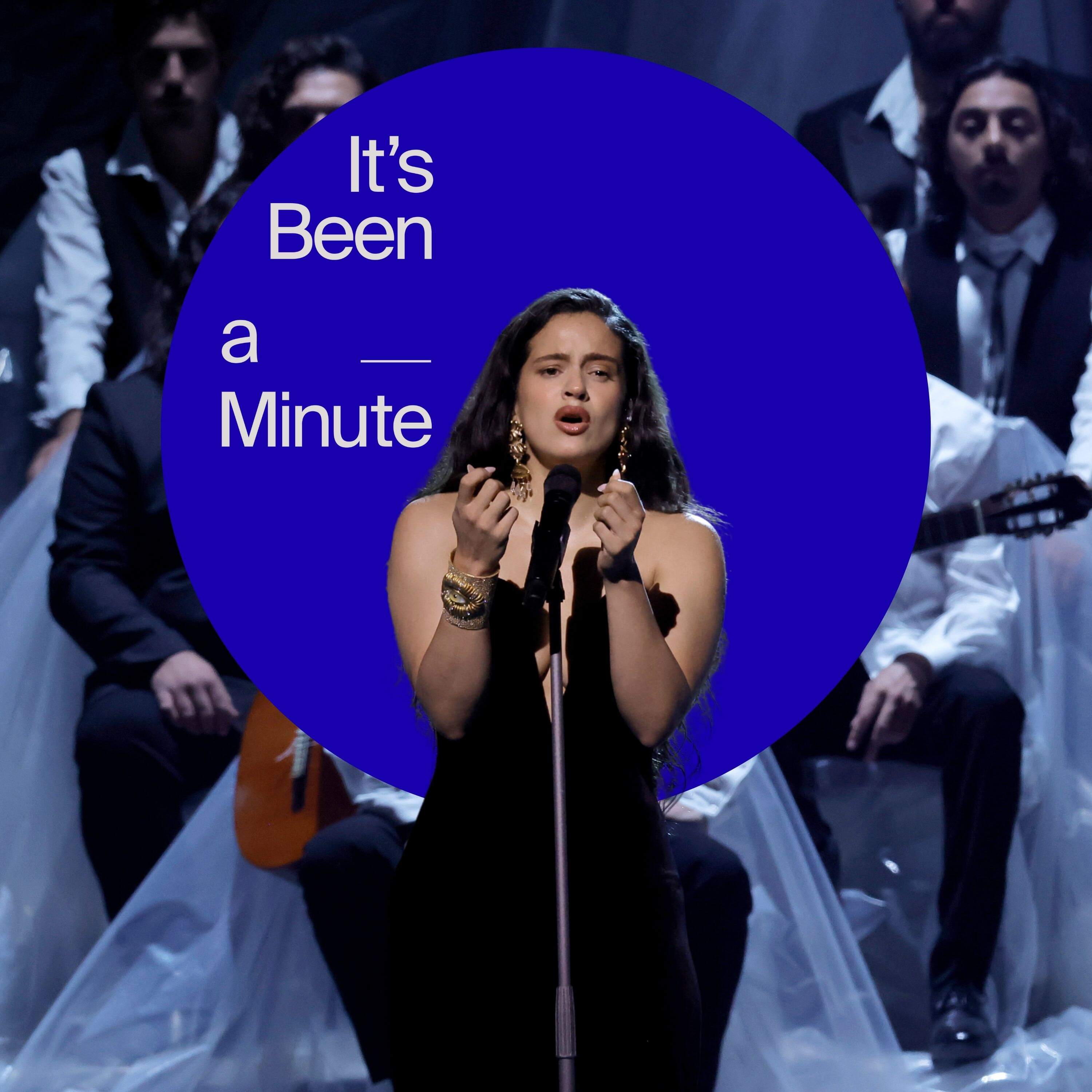
Spanish artist and musical chameleon Rosalía released her latest album, Lux, today. The single, "Berghain," seems like a return to form. Operatic vocals, grand instrumentals, beautiful visuals -- the album is primed for critical praise. But for those who are hyperaware of Rosalia’s transformations -- from flamenco songstress to Afro-Caribbean queen -- they have other questions about this evolution. Brittany is joined by writer-critics Bilal Qureshi and Michelle Santiago Cortés to unpack Rosalía’s “church girl era,” and the complicated nuances of Latinidad in music.Follow Brittany Luse on Instagram: @bmluseFor handpicked podcast recommendations every week, subscribe to NPR’s Pod Club newsletter at npr.org/podclub.To manage podcast ad preferences, review the links below:See pcm.adswizz.com for information about our collection and use of personal data for sponsorship and to manage your podcast sponsorship preferences.NPR Privacy Policy

Should we all start locking up our phones?
Does your phone feel like a blessing or a burden? Either way, there's probably a lot you can learn from new phone bans. Many K-12 students are going phone-free - but not by choice. In over half the country, there are now restrictions on cellphone possession and use in class. The goal is to increase student focus and enhance learning...but when you think about school shootings, phones have been a big part of parents' safety plans for their kids. So are phone bans the best solution? And what do these policies teach all of us about the role phones play in our lives?Brittany is joined by David Figlio, professor of economics at the University of Rochester, and Kathy Do, Assistant Project Scientist at University of California Los Angeles to find out.Follow Brittany Luse on Instagram: @bmluseFor handpicked podcast recommendations every week, subscribe to NPR’s Pod Club newsletter at npr.org/podclub.To manage podcast ad preferences, review the links below:See pcm.adswizz.com for information about our collection and use of personal data for sponsorship and to manage your podcast sponsorship preferences.NPR Privacy Policy
How 'Socialism' got sexy to young people
What does ‘socialism’ mean to a generation that grew up with COVID… not the Cold War? How have the compounding effects of college protests, financial insecurity, and student loan debt shaped a culture? This is… The ABCs of the Culture Wars. For the next few weeks, Brittany breaks down the history, subtext, and evolving meanings of the buzzwords you hear all over the news and social media. Today we're talking about the S-word: Socialism. And why the word has gained new meaning for a younger generation looking for relief. Brittany is joined by Axios senior politics reporter Holly Otterbein and head of Teen Vogue’s politics section, Lex McMenamin.Follow Brittany Luse on Instagram: @bmluseFor handpicked podcast recommendations every week, subscribe to NPR’s Pod Club newsletter at npr.org/podclub.To manage podcast ad preferences, review the links below:See pcm.adswizz.com for information about our collection and use of personal data for sponsorship and to manage your podcast sponsorship preferences.NPR Privacy Policy

The politics of hunger
Is hunger in America a choice?This week, over 40 million people worried about losing their SNAP benefits due to the government shutdown. But with Thanksgiving just around the corner, who's hurt most by hunger? And why do some believe that if you’re hungry, it’s your fault? Brittany gets into it with Poonam Gupta, research associate at the Urban Institute, and Maggie Dickinson, associate professor at Queens College and author of Feeding the Crisis: Care and Abandonment and America's Food Safety Net. To manage podcast ad preferences, review the links below:See pcm.adswizz.com for information about our collection and use of personal data for sponsorship and to manage your podcast sponsorship preferences.NPR Privacy Policy

Brittany meets Sam Sanders, and things get spooky
For longtime fans of this show, here's a name you know: Sam Sanders. Before Brittany, Sam was the host of It's Been A Minute, and recently Brittany ran into Sam at an event. The two got to talking and came up with an an idea...what if Brittany came on Sam's new show, KCRW's The Sam Sanders Show? And then...what if they brought all of you longtime IBAM fans the podcast multiverse event of the season to this feed?!That's how we got here. In this special bonus episode, Sam, Brittany, and Tre'vell Anderson rank the best spooky season films of all time and talk through their pop culture hot takes. Follow Brittany Luse on Instagram: @bmluseFor handpicked podcast recommendations every week, subscribe to NPR’s Pod Club newsletter at npr.org/podclub.To manage podcast ad preferences, review the links below:See pcm.adswizz.com for information about our collection and use of personal data for sponsorship and to manage your podcast sponsorship preferences.NPR Privacy Policy

Are you caught in a bad bromance?
What can we all learn from stories of men trying to find friends...and failing?Men in real life - and in the movies - are trying to figure out how to be friends. There's been a lot of talk alleging lonely men are the cause of cultural tensions, and Hollywood has caught on (despite a similar number of women saying they are lonely, too!). Several films this year depict how society leads men into fraught, messy friendships. So, what can we all learn from toxic (or good!) friendships between men?Brittany is joined by NPR arts and culture reporter Neda Ulaby and IndieWire awards editor Marcus Jones to dig into it.(0:00) We're all obsessed with lonely men...why?(3:12) 'Friendship' and how to deal with being rejected(8:17) 'Twinless' and how friendship is kinda romantic(13:43) 'Lurker' and how real life relationships are parasocial too(17:55) What male friendships can teach us all about being more vulnerableFollow Brittany Luse on Instagram: @bmluseFor handpicked podcast recommendations every week, subscribe to NPR’s Pod Club newsletter at npr.org/podclub. To manage podcast ad preferences, review the links below:See pcm.adswizz.com for information about our collection and use of personal data for sponsorship and to manage your podcast sponsorship preferences.NPR Privacy Policy

How 'Capitalism' became a dirty word
Is it a bad thing to be a "capitalist?" Why is the word being used as a diss?And how do Americans' shifting attitudes towards it show up in your discourse and your favorite movies?This is… The ABCs of the Culture Wars. For the next few weeks, Brittany breaks down the history, subtext, and evolving meanings of the buzzwords you hear all over the news and social media. Today we're talking about the C-word: Capitalism. And why the word is increasingly divisive in politics and culture.Brittany is joined by NPR political correspondent Danielle Kurtzleben and writer & editor Morgan Jerkins.(0:00) How pop culture got obsessed with eating the rich(3:11) When did anti-capitalist rhetoric enter our politics?(7:05) Why the rich started looking more evil...(12:46) From 'Clueless' millionaires to bumbling billionaires...(17:26) How anti-capitalism is showing up in American politics nowFollow Brittany Luse on Instagram: @bmluseFor handpicked podcast recommendations every week, subscribe to NPR’s Pod Club newsletter at npr.org/podclub.To manage podcast ad preferences, review the links below:See pcm.adswizz.com for information about our collection and use of personal data for sponsorship and to manage your podcast sponsorship preferences.NPR Privacy Policy

Nazism has entered the group chat
Why is there so much Nazism in the news? And when does a "joke" become hate speech?Politico broke a story last week featuring what it said were leaks from a Telegram group chat that included Young Republican National Federation leaders. These chats made headlines for reportedly racist and pro-Nazi messaging. But this is not the only story in the news about people in politics engaging with Nazi rhetoric. Is it happening more often? And is this kind of thing just a “joke”? Brittany is joined by Odette Yousef, domestic extremism correspondent for NPR, and Gene Demby, co-host of NPR's Code Switch, to get into it.(0:00) Young Republicans group chat screenshots go viral...(3:40) Where's the line between joking and hate speech?(5:56) Is Nazi talk more common, or are we just more aware of it?(10:29) Why white adults are considered "kids" even in their 30s(14:45) Are there consequences for spreading hate? And what you can do about it.(19:41) 'Wait, What?' - a pop culture trivia game(23:29) Responding to listener comments :)Follow Brittany Luse on Instagram: @bmluseFor handpicked podcast recommendations every week, subscribe to NPR’s Pod Club newsletter at npr.org/podclub.To manage podcast ad preferences, review the links below:See pcm.adswizz.com for information about our collection and use of personal data for sponsorship and to manage your podcast sponsorship preferences.NPR Privacy Policy

How to make friends & get good gossip
Do you want to know the secret to making deeper friendships? Throw a dinner party.You'll feel less lonely, take care of people you love, and find out what's really going on in your community. Dinner parties are sort of a lost art, and our notions of what makes a worthy dinner party are being warped by social media. We're here with tips on how to throw one without feeling self-conscious.Brittany is joined by two dinner party experts: architecture & design journalist Carly Olson and chef & writer Garrett Schlichte. They discuss the pitfalls and pleasures of modern dinner parties, including how to host one without breaking the bank. (0:00) Why dinner parties are the perfect way to connect(2:01) Dinner parties of the past vs. now(4:57) How modern home design prioritizes individualism(8:32) Why social media discourages community building(14:00) Advice for throwing a good dinner party(16:58) How to let go of your anxiety of having people in your home(19:51) Ban the phones at home!Follow Brittany Luse on Instagram: @bmluseFor handpicked podcast recommendations every week, subscribe to NPR’s Pod Club newsletter at npr.org/podclub. To manage podcast ad preferences, review the links below:See pcm.adswizz.com for information about our collection and use of personal data for sponsorship and to manage your podcast sponsorship preferences.NPR Privacy Policy

Why the internet sucks (and keeps getting worse)
Do you ever feel like the internet just doesn't work as well as it used to? Or maybe you wish you could go back to the old internet? Where your search queries actually served you what you wanted, and your feeds weren't overrun by ads? Well, it's not just you - the internet IS getting worse, and platforms are getting harder to leave. But how did we get here? Journalist and tech activist Cory Doctorow joins Brittany to lay out why in his new book, Enshittification: Why Everything Suddenly Got Worse and What to Do About It.Follow Brittany Luse on Instagram: @bmluseFor handpicked podcast recommendations every week, subscribe to NPR’s Pod Club newsletter at npr.org/podclub.To manage podcast ad preferences, review the links below:See pcm.adswizz.com for information about our collection and use of personal data for sponsorship and to manage your podcast sponsorship preferences.NPR Privacy Policy

Is Taylor Swift exploiting her fans? Yes, but...
Love it or hate it, your favorite pop star is a person and a product. How much are you willing to pay?Taylor Swift’s latest album, The Life of a Showgirl, smashed records for first week album sales. This was in part due to all the different limited-edition variants that went on sale; some for only 24 hours. Talk about pressuring your fans! Is this business strategy fan service, or fan exploitation? Where’s the line? Brittany sits down with Stephen Thompson, host for NPR Music and Pop Culture Happy Hour, and Ann Powers, NPR music critic and correspondent, to get into the life of a business woman, why they think Swift had to make this album, and whether or not it's worth the cost.Read Ann's (mostly positive) review of The Life of a Showgirl.(0:00) Is Taylor exploiting her fans? Yes and No!(3:08) Taylor's business strategy isn't hers alone...(6:11) Why Taylor is a proxy for all our rage(10:43) Why vinyl sales in general have skyrocketed(13:46) How the charts impact the music industry (15:50) Why Taylor Swift HAD to make 'The Life of a Showgirl'(18:15) Does greed make bad art?(21:00) Responding to your comments :)Follow Brittany Luse on Instagram: @bmluseFor handpicked podcast recommendations every week, subscribe to NPR’s Pod Club newsletter at npr.org/podclub.To manage podcast ad preferences, review the links below:See pcm.adswizz.com for information about our collection and use of personal data for sponsorship and to manage your podcast sponsorship preferences.NPR Privacy Policy

Art, faith, & your tendency to overthink it.
Sometimes the harshest critic is the one in your head. What if instead you had faith in yourself, and what you're making?It's a familiar, paralyzing fear that not only keeps you from creating your best work, but can also make you question your own worth. Novelist Brandon Taylor knows this fear intimately. And in his new book, 'Minor Black Figures,' his characters - maybe just like you - are tortured by harsh online criticism from random keyboard warriors, and their own inner saboteurs. In this episode, Brandon joins Brittany to talk through the "double consciousness" of creating art today, and what it means to have faith as an artist.Follow Brittany Luse on Instagram: @bmluseFor handpicked podcast recommendations every week, subscribe to NPR’s Pod Club newsletter at npr.org/podclub.To manage podcast ad preferences, review the links below:See pcm.adswizz.com for information about our collection and use of personal data for sponsorship and to manage your podcast sponsorship preferences.NPR Privacy Policy

Brittany pops off on Dwayne 'The Rock' Johnson
NPR's Pop Culture Happy Hour asked Brittany to go to the movies and bring them her thoughts on The Rock's new movie, The Smashing Machine. She fulfilled the assignment and more.In this special bonus episode, Brittany, Pop Culture Happy Hour's Aisha Harris, Code Switch's Gene Demby, and NPR contributor Reanna Cruz get into The Rock's attempt at capital-A acting. Is Dwayne Johnson going to get an Oscar, or is the movie an all-around skip? You can listen to more episodes of NPR's Pop Culture Happy Hour here.Follow Brittany Luse on Instagram: @bmluseFor handpicked podcast recommendations every week, subscribe to NPR’s Pod Club newsletter at npr.org/podclub.To manage podcast ad preferences, review the links below:See pcm.adswizz.com for information about our collection and use of personal data for sponsorship and to manage your podcast sponsorship preferences.NPR Privacy Policy

TikTok, Censorship, & Algospeak
There's his trend on social media of using code words for different topics so you can trick the algorithm from categorizing your content in a certain way. What do you think? Is this a form of censorship? Or...are algorithm categorizations a way of protecting users from seeing too much violent or aggressive content? Well, whatever side of the debate you fall on, Code Switch's B.A. Parker and Gene Demby are going to show you how this so-called ALGO-speak or algorithm-speak shapes your beliefs in conscious and unconscious ways. You can listen to more episodes of NPR's Code Switch here. Follow Brittany Luse on Instagram: @bmluseFor handpicked podcast recommendations every week, subscribe to NPR’s Pod Club newsletter at npr.org/podclub.To manage podcast ad preferences, review the links below:See pcm.adswizz.com for information about our collection and use of personal data for sponsorship and to manage your podcast sponsorship preferences.NPR Privacy Policy

People say college doesn't matter. They're right and wrong.
Does a college degree get you anything these days? Some people say no, but the reality is far more complicated. About 19 million people are going to college right now. But one recent poll from Gallup shows that the percentage of Americans who view college as very important is at an all time low, dropping from 75% in 2010 to 35% now. Those who say it's not very important increased from 4% to 24% in the same time period. This is a pretty dramatic change that goes beyond ballooning costs.Brittany chats with Elissa Nadworny, an education correspondent for NPR, and Kathryn Palmer, reporter for Inside Higher Ed, to get into what’s behind this changing perception – what politics has to do with it – and whether college is still worth it.(0:00) Is going to college still beneficial?(2:04) What's behind people thinking a college degree isn't necessary?(7:54) Why colleges should be responsible for their students's success(10:23) Why Republicans benefit from college but still discredit it(16:39) 'Wait WHAT?!': Trivia about the poppiest moments from last week(21:22) Responding to your comments :)Follow Brittany Luse on Instagram: @bmluseFor handpicked podcast recommendations every week, subscribe to NPR’s Pod Club newsletter at npr.org/podclub.To manage podcast ad preferences, review the links below:See pcm.adswizz.com for information about our collection and use of personal data for sponsorship and to manage your podcast sponsorship preferences.NPR Privacy Policy

Is the economy slowing? Ask Black women.
Black women’s unemployment rate is hovering at 6.7% — higher than the rate for white workers. Is it a sign the broader economy could sour? These economists say yes.Black women are the 'canary in the economic coal mine,' says Anna Gifty Opoku-Agyeman. She's the author of The Double Tax: How Women of Color are Overcharged and Underpaid. Brittany speaks to Anna and Ofranama Biu, chief economist and senior research director at the Maven Collaborative, about why Black women's unemployment is on the rise and why this trend could be a troubling sign for the rest of the country.Follow Brittany Luse on Instagram: @bmluseFor handpicked podcast recommendations every week, subscribe to NPR’s Pod Club newsletter at npr.org/podclub.To manage podcast ad preferences, review the links below:See pcm.adswizz.com for information about our collection and use of personal data for sponsorship and to manage your podcast sponsorship preferences.NPR Privacy Policy

If American films are meh...are China’s better?
Hollywood isn't performing as well at home or abroad. Is it losing its cultural dominance to China's burgeoning film industry? ‘Survive until 2025’ was the mantra that got Hollywood through the past five years of lockdown, streaming wars, and franchise fatigue. And while summer films like Lilo & Stitch, Superman, and Mission Impossible: Final Reckoning made critical and box office impact… on the whole, it still doesn't compare to pre-2020 levels. And even more curious, the international box office - specifically in China - has declined over the years as well. At the same time, the highest grossing animated film of all time hit theaters this year… in China. Ne Zha 2 has dominated the global box office and with Demon Slayer: Kimetsu no Yaiba and K-Pop: Demon Hunters also breaking records, Brittany had to ask: What does this say about Hollywood’s global influence and how have audience appetites changed since 2020? Staff writer at The Atlantic, Shirley Li, joins the show to answer those questions and more.To manage podcast ad preferences, review the links below:See pcm.adswizz.com for information about our collection and use of personal data for sponsorship and to manage your podcast sponsorship preferences.NPR Privacy Policy

Ketamine & the Era of Dissociation
Recreational ketamine use is on the rise. But why are some people using it to dissociate in the club? Ketamine – a dissociative anesthetic – is illegal without a prescription and can potentially be harmful. Yet, it has had a massive rise in recreational use over the past decade. One study found that use increased by 81.8% from 2015 to 2019 and rose another 40% from 2021 to 2022. What is driving the illicit drug's sudden popularity? And is it's dissociative properties indicative of our times? Brittany chats with P.E. Moskowitz, a journalist and author of Breaking Awake: A Reporter’s Search for a New Life, and a New World, Through Drugs, which explores our national mental health and drug use crises, and Benjamin Breen, associate professor of history at UC Santa Cruz, who specializes in the histories of science, medicine and drugs and is the author of the book, Tripping on Utopia. Together they investigate why ketamine is showing up in more people's social lives.Warning: this episode contains discussion of illegal drugs and drugs use and may not be suitable for all listeners. (0:00) Why Ketamine is the party drug on the moment(5:12) What recreational drug users say about it's affects(13:06) Why ketamine's dissociative effects match today's cultural anxieties(17:24) Safety concerns for recreational ketamine use(19:42) Responding to listeners commentsFor more information on the science of ketamine, check out NPR's Short Wave podcast.Follow Brittany Luse on Instagram: @bmluse For handpicked podcast recommendations every week, subscribe to NPR’s Pod Club newsletter at npr.org/podclub. To manage podcast ad preferences, review the links below:See pcm.adswizz.com for information about our collection and use of personal data for sponsorship and to manage your podcast sponsorship preferences.NPR Privacy Policy

Should teens have political opinions?
At what age did you have a fully formed political perspective? Did tens of thousands of people listen to you? Well, teens today are more influential than ever.From Charlie Kirk to Greta Thunberg, teenagers and children have long had political influence. But what’s new is that teenagers are creating their own media ecosystem for teenagers, by teenagers. And they’re doing it through highly popular podcasts, like: MD Foodie Boyz or The LOL Podcast. Brittany, NPR’s Jordan-Marie Smith, and The Cut’s EJ Dickson are delving into the “boyosphere” and exploring what teenage boys and girls are talking about in the rapidly expanding child content creator space. What do these teens have to say about politics and more? And what do their views say about all our futures?To manage podcast ad preferences, review the links below:See pcm.adswizz.com for information about our collection and use of personal data for sponsorship and to manage your podcast sponsorship preferences.NPR Privacy Policy

How AI impacts the environment (and your energy bill)
AI is the future, but how is its infrastructure impacting your air, water, and utilities bills today? You asked, and Brittany delivered. Many of you wrote in asking about artificial intelligence’s environmental impact. Brittany and Evan Halper, a business and energy reporter for The Washington Post, answer your questions and so much more. Like, is AI causing your energy bills to go up? Are tech companies tricking communities into building data centers? And how do you ethically use AI when you know it impacts nature? This is the final episode in our AI + U series. You can check out past episodes (Can you trust the information AI gives you? Or How AI slop is clogging you brain) further down in this feed. (0:35) The AI arms race and its immense energy demands(5:24) How much energy does AI need to run? Where does that energy come from?(9:13) Water usage and water quality concerns(10:30) How does AI impact your energy bills?(15:09) Can communities stop tech companies from building data centers?(17:30) Why tech companies may skirt prior climate commitments(18:49) How much AI should you use knowing its environmental impact?Follow Brittany Luse on Instagram: @bmluse For handpicked podcast recommendations every week, subscribe to NPR’s Pod Club newsletter at npr.org/podclub. To manage podcast ad preferences, review the links below:See pcm.adswizz.com for information about our collection and use of personal data for sponsorship and to manage your podcast sponsorship preferences.NPR Privacy Policy

The Rapture was a bust, but it still feels like doomsday.
The Christian rapture didn't happen as predicted, but a lot of you still feel like we're living in end times. Why is that?Right now - from religion to climate change to doomsday prepping - there's a lot of talk about the end of the world. And, yeah, there was a lot of joking (and some believing) this week that the rapture would happen, but this all points to a broader feeling a lot of us have: that something has to change. But what?In this episode, Brittany is joined by culture writer Joshua Rivera and national writer for Religion News Service Bob Smietana. They answer those questions and get into why the rapture is so appealing to Christians and non-Christians alike. And how Christian beliefs about the end of days are seeping into all of our minds.(0:35) The story of how The Rapture went viral(3:57) What even is The Rapture?(6:32) Why The Rapture is so alluring to Americans(11:45) Why 4 in 10 Americans believe we are in the end times(13:32) How TikTok contributes to our anxiety about the apocalypse(15:19) How Evangelical beliefs fuels MAGA policies(17:15) Why all of us - regardless of faith - think the end is nearFollow Brittany Luse on Instagram: @bmluseFor handpicked podcast recommendations every week, subscribe to NPR’s Pod Club newsletter at npr.org/podclub.To manage podcast ad preferences, review the links below:See pcm.adswizz.com for information about our collection and use of personal data for sponsorship and to manage your podcast sponsorship preferences.NPR Privacy Policy

The cancer quietly killing young people
If more and more young people are dying of colorectal cancer, why aren't we talking about it? Is it because we're too ashamed of our bodies?Rates of colorectal cancer are rising, especially for people under 50. But it's hard to raise awareness for a cancer that a lot of us find hard to talk about. In a recent essay for The Cut, writer Laurie Abraham described her experience of colon cancer, which included a lot of embarrassment. Talking about your bowel movements is...not fun. Can you relate?Today, Brittany is joined by Laurie and Dr. Kimmie Ng, Co-Director of the Colon and Rectal Cancer Center at the Dana-Farber Cancer Institute, to get into the cultural shame around how we talk about colon cancer - and how that extends to a lack of funding and research.(0:00) Why colorectal cancer rates are rising in young people(3:18) The environmental causes that lead to colon cancer(7:08) How cultural shame about our bodies stops diagnoses(10:30) What can listeners do to raise awareness?(15:58) Racial disparities and ageism against young people(20:48) Some exciting news!Follow Brittany Luse on Instagram: @bmluseFor handpicked podcast recommendations every week, subscribe to NPR’s Pod Club newsletter at npr.org/podclub.To manage podcast ad preferences, review the links below:See pcm.adswizz.com for information about our collection and use of personal data for sponsorship and to manage your podcast sponsorship preferences.NPR Privacy Policy

Can you trust AI search results?
After Grok's MechaHitler gaffe this summer, and President Trump's executive order to, "strip AI models of ‘ideological agendas," Brittany wondered, "how much influence does AI already have on our minds?" This is AI + U. Each Monday this month, Brittany explores how we’re already seeing the impacts of AI. Artificial Intelligence has become a constant in ways we can and can't see… and for the next few weeks we're zeroing in on how AI affects our daily lives.In this episode, The Argument's Kelsey Piper and NPR correspondent Bobby Allyn join Brittany to discuss what transparency looks like for artificial intelligence and what we actually want from this rapidly developing technology. Follow Brittany Luse on Instagram: @bmluseFor handpicked podcast recommendations every week, subscribe to NPR’s Pod Club newsletter at npr.org/podclub.To manage podcast ad preferences, review the links below:See pcm.adswizz.com for information about our collection and use of personal data for sponsorship and to manage your podcast sponsorship preferences.NPR Privacy Policy

Trump lost the battle. Will he win the "war?"
Why is Trump sending the National Guard to cities when crime is already falling?Earlier this month, President Trump posted this: “I love the smell of deportations in the morning. Chicago about to find out why it's called the Department of WAR.” He seemed poised to send the National Guard to the city in an attempt to curb crime, after having deployed them in D.C. But this week, he turned his attention to Memphis, signing an order for deployment there and vowing to circle back to Chicago later. And these three cities aren’t the only ones on his radar: Baltimore, Portland, New Orleans, and St. Louis are also bracing for possible deployments. But why send the National Guard – a temporary military force – to these cities when crime has already fallen this year in every single city he’s mentioned? Brittany gets into it with Abdallah Fayyad, policy correspondent at Vox, and Alex V. Hernandez, neighborhood reporter for Block Club Chicago.To manage podcast ad preferences, review the links below:See pcm.adswizz.com for information about our collection and use of personal data for sponsorship and to manage your podcast sponsorship preferences.NPR Privacy Policy