InvestED: The Rule #1 Investing Podcast
498 episodes — Page 4 of 10

347- The Net-Net Strategy Explained
There are two extremes of Warren Buffett’s Investing Strategies, and one of those extremes is Net-Nets. The Net-Net Strategy was actually developed by economist Benjamin Graham, who Buffett studied under after graduating from Columbia. The Net-Net strategy is generally seen as an extremely conservative investment strategy, and after following it throughout the great depression, Benjamin Graham saw extreme success. Join Phil and Danielle as they dive deeper and explain the history of Net-Nets, how and why to use them today, and briefly touch on the other extreme of Buffett’s investing strategies. To learn more about how to successfully invest as a beginner, download a copy of Phil’s Complete Guide to Investing for FREE here: https://bit.ly/3oSjWaK Topics discussed in this podcast: The Net-Net Investment Strategy & History Stock Options Investing Extremes Additional resources discussed in this podcast: Investing Checklist Logistics - Part 1 Investing Checklist Logistics - Part 2 Net-Net Definition For show notes and more information visit www.investedpodcast.com. Learn more about your ad choices. Visit megaphone.fm/adchoices
346- Investing Checklist Logistics - Part 2
After walking through the first few steps of the Investing Checklist -- Munger’s 4 Principles, Ackman’s 8 Point Checklist, basic valuation, and research -- what comes next? A good place to start is by choosing a company or industry that’s relatively easy for you to understand and practice digging deeper in research using the checklist...even if you don’t end up investing in that company. Join Phil and Danielle as they continue their conversation about the Investing Checklist Logistics to dig even deeper and help you better understand the companies you’re interested in and the best process you should follow to see success when it comes time for you to invest. To see the must-have investing checklist Phil and Danielle use, download your own copy for FREE here: https://bit.ly/3Inmmpv Topics discussed in this podcast: Investing Checklist The Role of Competition Investing Research Investing Resources Additional resources discussed in this podcast: Investing Checklist Logistics - Part 1 Peter Thiel’s “Competition is for Losers” Innovation Stack by Jim McKelvey Must-Have 90 Question Investing Checklist Evernote For show notes and more information visit www.investedpodcast.com. Learn more about your ad choices. Visit megaphone.fm/adchoices

345- How and Why to Know When You’re Right
Sometimes the best thing you can do when it comes to investing successfully is nothing...at least until you know you’re 100% right about where you’re about to put your money. This week on InvestED, Phil and Danielle discuss the critical step to take after you’ve made it through the Investing Pyramid and before diving deeper into the investing checklist: Having Patience & Staying Simple. It’s no secret how effective the Rule #1 Investing Strategy is, and it’s because Rule #1 Investors do two things: They keep things simple and invest in what they know and believe They’re patient and wait for the best time to buy To learn how to pick the right stocks for your portfolio and help you keep things simple, download the 5-Step Checklist for How to Pick the Best Stocks for FREE here: https://bit.ly/3riDBSW Topics discussed in this podcast: Investing with Patience Investing Checklist How to Invest When to Invest Best Time to Invest Additional resources discussed in this podcast: Charlie Munger’s 4 Principles of Investing Bill Ackman’s 8 Point Checklist The Investment Checklist Pyramid Investing Checklist Logistics - Part 1 For show notes and more information visit www.investedpodcast.com. Learn more about your ad choices. Visit megaphone.fm/adchoices

344 - Investing Checklist Logistics - Part 1
So you’ve made it through the first two steps of the investing pyramid and are now wondering what comes next? In this episode, Phil and Danielle walk through the first few steps of the Investing Checklist, explaining the importance of basic valuation, company research, and how your decision to include a company in your portfolio should be an iterative process. You’ll also learn about helpful resources Phil, Danielle, and Rule #1 Workshop attendees use to see success, which are also linked below. To dive deeper into the checklist, download your own copy of the must-have investing checklist for FREE here: https://bit.ly/303Fs2U Topics discussed in this podcast: Investing Checklist Company Valuation Investing Research Helpful investing tools Case Studies/Historical Examples of Companies that Have Passed the Investing Checklist Steps Additional resources discussed in this podcast: Warren Buffet Partnership Letters Warren Buffet Berkshire Letters Bill Ackman’s 8 Point Checklist Rule #1 Investing Checklist Charlie Munger’s 4 Principles of Investing Evernote For show notes and more information visit www.investedpodcast.com. Learn more about your ad choices. Visit megaphone.fm/adchoices

343- The Investment Checklist Pyramid
When it comes to finding the right investments for your portfolio, there are a few steps you should take in order to make sure you’re making the best decision. These steps include understanding the business you’re interested in adding to your portfolio, finding a rational, trusted partner to bounce ideas off of, and completing each level of the 3-step investing research pyramid. This week, Phil and Danielle Town break down all points of research you should consider and explain the 3-step investing research pyramid, which includes Charlie Munger’s 4-Step Investing Checklist, Bill Ackman’s 8 Principles to Successful Investing, and the Rule #1 Investing Checklist. To help you complete your investing research pyramid in the most effective way possible, download the must-have investing checklist for FREE here: https://bit.ly/303Fs2U Topics discussed in this podcast: Investing Research Investing Checklist Charlie Munger Bill Ackman How to invest Investing for Beginners The First Step to Successful Investing Additional resources discussed in this podcast: Charlie Munger’s 4 Point Checklist Bill Ackman’s 8 Point Checklist Rule #1 Investing Checklist Learn more about your ad choices. Visit megaphone.fm/adchoices

342- Invest at Your Own Speed
When it comes to investing you should never go faster or do more than what you’re ready for. If you do, you’re going to crash. Phil and Danielle discuss the importance of taking small steps and being patient with your comfort in investing in order to see success. Taking your ego and hubris out of your investing process is going to be critical to success. While you may be excited and sometimes feel like you’re ready to take a big step when it comes to your portfolio, always be sure to take a step back and re-assess if you’re actually ready to take that step. To help you take that critical step back and fully understand where you’re putting your money, use Phil’s must-have investing checklist to guide you to success. Download it here:https://bit.ly/303Fs2U Topics discussed in this podcast: How to Invest Safely Investing Mistakes When to Invest Investing Preparedness Value Investing For show notes and more information visit www.investedpodcast.com. Learn more about your ad choices. Visit megaphone.fm/adchoices

341- Understanding Debt and the Unexpected
Debt matters. So how do you find the value of a company you want to invest in if they’re carrying around debt? Stemming from a conversation about the role of debt in Liberty Media Corporation’s purchase of Formula One Racing from last week’s episode, Phil and Danielle dive deep into a conversation about how to use the 10 cap formula to accurately find the true valuation of the company you’re investing in, even when they’re carrying around debt, to ensure you’re making the right investment decision. Phil and Danielle also discuss the level of unpredictability of investing you should almost always expect, using the history and future of Tesla as an example. Discover the 5 long-term advantages you should look for in your business investments in Phil’s free guide. Download it here: https://bit.ly/3nMiyEQ Topics discussed in this podcast: Value Investing How to factor debt into investment opportunities The 3 Fs of Shorting Unpredictability in Investing Resources discussed in this podcast: InvestED by Danielle and Phil Town Investing Lessons from Formula One | Podcast Episode #340 Learn more about your ad choices. Visit megaphone.fm/adchoices

340- Investing Lessons from Formula 1: Understanding What You Really Own
So you invested in a business...but do you know who ACTUALLY owns that business? Do you know what the management is like and how that can drastically affect the success of your investment? For sports fans — especially racing fans — Formula One Racing (owned by Liberty Media Corporation) seems like an attractive stock to add to your portfolio, as it’s one of the few opportunities to invest in sports. As Phil returns from the United States Grand Prix, he and Danielle reflect on the sport growing in popularity and discuss when to give stock, like Formula 1, the green light to drive into your portfolio. Phil and Danielle dive deep into the first step of the investing checklist to explain what the history of Formula One can teach you about investing and the importance of understanding the business behind your investment...before you actually buy. Download the easy-to-use checklist discussed in the episode and learn how to find the best companies for your portfolio: https://bit.ly/3mivmDe Topics discussed in this podcast: Warren Buffett’s investing strategies Value investing Real-life investing Investing in Trusted Management Formula 1 Stock Resources discussed in this podcast: The Innovation Stack by Jim McKelvey Bill Ackman’s 8 Principles Phil’s Go-To Investing Checklist Learn more about your ad choices. Visit megaphone.fm/adchoices

339- The Investing Checklist in Real Life
Buying stocks is not something that should be taken lightly. Selecting which companies to buy can make or break you as an investor. Before you buy shares in a company, it is essential to thoroughly investigate that company’s mission, management, goals, outlook, and fundamentals. Think of it this way: you would never buy 100% of a company without thorough due diligence, and, likewise, you shouldn’t buy a small percentage of a company without doing the same. You can do your due diligence by using an investing checklist, so you can reduce your risk and maximize your profits over time. In this podcast, Phil and Danielle discuss investing using a checklist, and how it oftentimes relates to experiences in the real world. Download my easy-to-use checklist and learn how to apply the Four Ms of investing: https://bit.ly/305Cr1p Topics discussed in this podcast: Investing metaphors Real-life investing scenarios How to pick stocks The Four Ms of investing Company valuations Understanding companies Learn more about your ad choices. Visit megaphone.fm/adchoices

338- Stick to the Investing Checklist!
Rule #1 has been the basis of excellent investing for the last 80 years by successful investors like Warren Buffett, and it will be the basis of excellent investing 80 years from now. First, understand that Rule # 1 literally is “Don’t Lose Money,” but what it means in practical terms is to invest with certainty. Certainty comes from this: buying a wonderful business at an attractive price. The word “wonderful” actually encompasses three out of four elements in the Four Ms. This is a part of the must-have checklist before purchasing any stock. In this podcast, Phil and Danielle discuss why sticking to this checklist is critical for never losing money in investing. Learn more about the Four Ms with this guide: https://bit.ly/305Cr1p Topics discussed in this podcast: How to pick stocks The Four Ms of investing Company valuations Understanding companies Recessions Market fluctuations Learn more about your ad choices. Visit megaphone.fm/adchoices
337- Checklist Inversion
“Invert, always invert” — Charlie Munger If you want to really be a great Rule #1 investor, you must have an investing strategy in place to help guide you. You must create a story for the company you want to invest in and determine why this is a great company. Once you have that story, invert it by flipping to the opposite point of view. You should try to create the argument that this investment isn’t the best idea, and if you can’t, then that is a sign that you don’t know enough about the company yet. So, as a part of your Four Ms checklist, one of the last steps is to invert. When you apply inversions to buying a business, there are four key reasons to look at: You have a serious inversion for every key reason to own the business You know every reason not to buy a company, better than the short sellers For every inversion, you know a solid rebuttal that erases the inversion Short sellers are wrong! In this podcast, Phil & Danielle cover why it’s important to invert along with four key things to consider for your checklist inversions. Learn more about buying wonderful companies with the Four Ms Guide! Click here to get started: https://bit.ly/3uHlZ2T Topics discussed in this podcast: How to Create a Story Why You Should Always Invert How to Invert to Own a Business Four Key Points of Inversions Relating to Chipotle & Gamestop Learn more about your ad choices. Visit megaphone.fm/adchoices
336- Investing Checklist Takeaways
If you’re doing it right, investing in the stock market is much more than picking a few companies, buying a few shares, and hoping for the best. Smart investors are those that are disciplined and have an investing strategy in place to help guide them as they go along with their investment choices. And that includes having a checklist to help you make important investing decisions. Rule #1 investors like to use the Four Ms checklist. They tie into the strategy of, “Buying wonderful businesses at attractive prices” and are important to consider when investing your money for the long-term. “Wonderful” indicates that any business you invest in strongly meets the criteria of three of the Four Ms: Meaning: You understand the business enough to want to own the whole thing if you could, that you’d be proud to own it, and that it reflects your values. Moat: The business must meet certain criteria in terms of financial strength and predictability, creating a symbolic Moat to surround and protect it from competitors. Management: The business is led by skilled, experienced individuals that you respect. Margin of Safety: You are buying the business on sale relative to a known value (which I teach you to calculate easily). Rule #1 is straightforward, but you must be thorough. That’s why Phil created this Four Ms Checklist to help make sure you don’t miss a thing. In this podcast, Danielle covers a few of her checklist takeaways, and explains why it’s important to have your own checklist and stick to it to reduce your risk in the stock market. Learn more about buying stocks on sale with the Four Ms Guide! Click here to get started: https://bit.ly/3ocoMQg Topics discussed in this podcast: Stock market events How to find stocks on sale How to pick stocks Company valuations Understanding companies Learn more about your ad choices. Visit megaphone.fm/adchoices

335- Rule #1 Event Checklist - Part 2
Why do stock market events cause stocks to go on sale? Let’s say that cotton prices start to go nuts because of the Arab Spring. Maybe they’re not going to harvest Egyptian cotton crops, so cotton prices go from $1 to $3. The guys who own companies that depend on cotton prices to be low look at the price and say, “Oh no. It’s going to take over a year before cotton prices come down, I need to get out of this company.” This happens even if there isn’t anything wrong with the company, it’s just going to have a bad year. That company could go from $45 to $15 simply because there are no big buyers. They all get out of the company on momentum. This is what causes stock market prices to change. So, how do Rule #1 Investors take advantage of stock market events? Rule #1 investors buy for the long term. They wait, and when they see something that’s on sale because the big guys have sold it off, it takes them just a few seconds to get in there and take advantage of these stock market events. In this episode of the InvestED podcast, Phil and Danielle discuss stock market events more in-depth, and how to take advantage of when stocks go on sale. Learn more about buying stocks on sale with the Four Ms Guide! Click here to get started: https://bit.ly/3hRUZs1 Topics discussed in this podcast: Stock market events How to find stocks on sale Uncertainty in the market Warren Buffett Tesla Learn more about your ad choices. Visit megaphone.fm/adchoices

334- Rule #1 Event Checklist
The key to finding stocks on sale is to wait for a Rule #1 event. What’s a Rule #1 event? It is when something happens that affects the entire market and makes the stock price of a good company drop far below its real value. This could be a recession, a pandemic, an election — you name it. Remember, the stock price doesn’t reflect the actual value of the company. We know that the company’s price will bounce back in time, and because we take a long-term approach to investing in stocks, we aren’t worried. During an event, when others are panicking, we can take advantage of the downturn and buy wonderful companies at a tremendous discount. This is why it’s so important to have your watchlist of wonderful companies ready to go. When you do, you can just sit back and wait for a Rule #1 event to temporarily lower the price of the stocks on your watchlist, and then BUY. When the company recovers from the event and returns to its previous price, your investment could double. In this episode of the InvestED podcast, Phil and Danielle discuss stock market events more in-depth, and how to take advantage of these opportunities as an investor. Learn more about buying stocks on sale with the Four Ms Guide! Click here to get started: https://bit.ly/3Ac9Ogl Topics discussed in this podcast: Stock market events How to find stocks on sale Uncertainty in the market Greed in the market Warren Buffett Mohnish Pabrai Valuation methods Chipotle stock recovery Learn more about your ad choices. Visit megaphone.fm/adchoices

333- Invest in What You Love!
When it comes to investing, conventional wisdom says to hand your money over to a financial advisor and let them diversify your investments for you. Why think too much about where your money is going if you don’t have to? But there’s a problem with that mindset: your values matter and you should be investing in what you love. Consistently pouring your life and efforts into the things you care about — that matters. As much as 85% of the stock market is controlled by small investors. Imagine the impact those small investors could have if they invested based on their passions and values, rather than the values (or just the blind greed) that drives financial institutions’ investment decisions. You can choose to invest in whatever you want and wherever your passions lie. And the great thing about it is that everyone values something different. Invest in stocks that you value. If you’re not sure what your values are, it’s time to step back and do a little searching. In general, it might make sense not to invest in products or companies that make the world a worse place to live in, but that’s totally up to you. In today’s episode, Phil and Danielle talk about taking charge of your investments and making sure that you’re putting your money where your passions and values lie. Because at the end of the day, you’re better off knowing that you’ve used your resources as wisely as possible, and that you’ve done your best with what you’ve got. Learn more about investing in companies that you already know and love with this Four Ms Guide! Click here to get started: https://bit.ly/2X0sRvq Topics discussed in this podcast: Warren Buffett How to pick stocks Company analysis Investing with your values COVID-19 vaccines Learn more about your ad choices. Visit megaphone.fm/adchoices

332- Warren Buffett's Inflation Principles
In today’s episode, we discuss some words of wisdom shared from the letters of Warren Buffett. There is one concept in particular that we can take from these letters that still applies today, and that is inflation. First, we focus on Warren Buffett’s 1979 letter, where inflation rose to 11.2% in the United States. Buffett decided to write about this in the letter along with larger financial issues in the macro-economic world. He starts by telling other investors that we do not know what will happen with the stock market or the underlying currency. Long-term fixed interest bonds may not continue to serve as a financial instrument and may even become obsolete. Warren Buffett also points out that there’s no corporate solution to the problem of growing inflation. As currency becomes more worthless, companies do not have a solution to this problem - they just have to do their best. As we fast forward to the early 1980s, Warren Buffett writes some solutions to these types of problems. First, choose an investment that is adaptable to inflation. This means that earnings will increase consistently with its raised prices without adding in additional capital. The second solution is to choose an investment with very little bad debt, which could sink the company. And lastly, shift your measure of success from earnings, which no longer mean anything on their own, to gains and purchasing power. Danielle leaves us with a final thought on how the pace of economic change has become breathtaking and we need to be ready to adapt. If you want to learn more about what type of companies to look for that can withstand inflation and this uncertain market, register for my NEW investing webinar: https://bit.ly/3mQCVlh Learn more about your ad choices. Visit megaphone.fm/adchoices
331- From the Vault: Rule of 72
The Rule of 72 is a simple equation to help you determine how long an investment will take to double, given a fixed interest rate. It’s a shortcut that you, as an investor, can use to estimate if an investment will double your money quickly enough to be worth pursuing. When you see how quickly your money can double, you’ll understand the power of compound interest. Compound interest is what makes you wealthy over time; the longer your money is invested, the more it grows. But, how? As you earn interest on your initial investment, those earnings are added to the initial amount while earning interest. This produces more earnings, which can then be reinvested as well. It’s a powerful cycle that can lead to incredible growth. The Rule of 72 paints a picture of how quickly your money can grow without any additional investment on your part. You don’t need a special ‘Rule of 72’ calculator to figure out this equation — it’s easy. Simply divide 72 by the fixed annual rate of return and you’ll know how many years it will take for your money to double. 72 / rate of return = # of years If you’re trying to compute when your money will double at a given interest rate, this formula can be used to determine the interest rate you need your money to double in a set timeframe: 72 / # of years = rate of return In this vault episode of the InvestED podcast, Phil and Danielle discuss the Rule of 72 more in-depth and explain why it’s critical to understand this rule in order to be a great investor. Topics discussed in this episode: Rule of 72 Compound interest How to pick stocks How to double your money Learn more about your ad choices. Visit megaphone.fm/adchoices

330- From the Vault: Investing in Commodities - Part 2
Physical commodities are investments that you can physically own, such as gold, silver, natural gas, and oil. Take gold, for example. The price of gold rises and falls, depending on the demand. Demand tends to go up only when people are feeling afraid or uncertain about the future. The problem with investing in gold is that you can’t accurately predict what the demand will be at any particular time. That makes investing in gold more like gambling than like smart investing. If you really want to learn how to invest the smart way, it takes a good amount of due diligence and patience but the long-term payoff is worth it. By following smart investment practices that have made people like Warren Buffett extremely wealthy, you may not make money fast, but you have the potential to make more of it. Warren Buffett started with a small amount of money too, and he turned it into $30 billion. This goes to show that it isn’t about the money you have, it’s about the knowledge you have. In this vault episode of the InvestED podcast, Phil and Danielle discuss investing in commodities, whether or not they keep up with inflation, and in what scenarios they could be a worthwhile investment despite their inherent risk. If you want to learn how to reduce your risk while investing, check out this guide where Phil explains how to pick stocks the Rule #1 way: https://bit.ly/3fX1adE Topics discussed in this episode: Valuation methods of investing Types of investments How to pick stocks Commodity stocks Learn more about your ad choices. Visit megaphone.fm/adchoices

329- From the Vault: Investing in Commodities
Physical commodities are investments that you physically own, such as gold, silver, natural gas, and oil. A commodity stock has several key attributes: Its products compete primarily on price, but it is not a low-price competitor. Its products are the same as another company’s products. It has no brand identification. It can’t raise its prices with inflation or increasing costs. Let’s take gold for example. The practice of investing in gold goes way back, but that doesn’t necessarily mean it’s a great investment. Gold’s price is based on scarcity and fear, which can be impacted by political actions or environmental changes. If you are investing in gold, be aware that your protection against a price drop, your moat, is based on external factors so the price can fluctuate a lot, and quickly. The price tends to go up when scarcity and fear are abundant and down when gold is widely available and fear is abated. If you think the world is going to be a more fearful place in the future, then gold could be a good investment for you. But this isn’t the case for everyone. In this vault episode of the InvestED podcast, Phil and Danielle delve further into commodities and discuss what sets them apart from other types of investments. If you want to learn more about how to pick the right investments for you and your lifestyle, check out this guide where Phil explains these principles more in-depth: https://bit.ly/3CGUQkf Topics discussed in this episode: Valuation methods of investing Types of investments How to pick stocks Commodity stocks Learn more about your ad choices. Visit megaphone.fm/adchoices

328- Valuation Checklist
“Sticker price is what I call the value of the business.” — Phil Town Why does Phil call it the Sticker Price? You know how you have a sticker on the window of a new car and it tells you what the price of the car is, and you never pay the Sticker Price? That’s why we named the value of the business the “Sticker Price.” Rule #1 investors never pay the Sticker Price. They always want to buy it at a significant discount to its true value. How do you find the Sticker Price? That’s the critical part of this whole equation of understanding what businesses to buy. First, you have to make sure it’s a business that you understand the meaning of. You understand it has a big, durable moat and it has a great management team. Now you can start looking for the value. Next, in order to evaluate the Sticker Price you want to find the Future Growth Rate, the P/E Ratio, and your Minimum Acceptable Rate of Return. The Future Growth Rate is always an estimate, the other numbers you can find on financial statements and plug them into the calculator above to see the value, or Sticker Price, of the company's stock. Next, you simply cut that price in half (or take 50%) and that is your Margin of Safety price. For example, if you wanted to buy into a business that was worth $80 per share (Sticker Price), you would look for a Margin of Safety of $40. If the company cannot be bought at $40, then you should add it to your watchlist, update your calculations periodically as new information becomes available, and exercise patience. This week on InvestED, Phil and Danielle discuss Phil’s investing valuation checklist more in-depth and discuss why it’s critical to only purchase companies with a large Margin of Safety, at a discounted Sticker Price. If you want to learn more about evaluating companies using the Four Ms of Rule #1 Investing, check out this guide where Phil explains these principles more in-depth: https://bit.ly/37hIOPv Topics discussed in this episode: Valuation methods of investing Rational investing The Four Ms of investing How to pick stocks Chipotle Stock Warren Buffett Charlie Munger Learn more about your ad choices. Visit megaphone.fm/adchoices

327- Phil’s Investing Checklist Review
Warren Buffett said, “Be certain,” and here’s how you’re going to be certain. If you buy a wonderful business at an attractive price, you’re certain to make money. It’s essentially like buying a $10 dollar bill for five bucks. You focus on a couple of key things to make sure you know what you’re getting. So, what is a wonderful business? A wonderful business is understandable, and we’re passionate about it. We call that the meaning of the business. It’s durable, we call that the moat. Like the water around a castle protects it from attack. The CEO is honest, passionate, and owner-oriented, and we call that management. Those are the first three M’s. We make sure that we understand all three M’s before we go forward, then we look at the price. Ben Graham, who taught Warren Buffett how to do this said, “The three most important words in investing are margin of safety”. The margin of safety is a measure of how “on sale” a company’s stock price is compared to the true value of the company. You need to be able to determine the value of a company and from that value determine a “buy price”. The difference between the two is the margin of safety. The goal is to find wonderful companies for 50% off their actual value. This allows you to purchase a company when it is undervalued at a price that all but guarantees a great return on your investment. This week on InvestED, Phil and Danielle discuss Phil’s investing checklist in-depth and explain why it is the essence of Rule #1 Investing, as well as value investing as a whole. If you want to learn more about the Four Ms of Rule #1 Investing, check out this guide where I explain these principles more in-depth: https://bit.ly/3eZYvPQ Topics discussed in this episode: Warren Buffett Charlie Munger Valuation methods of investing Rational investing The Four Ms of investing How to pick stocks Learn more about your ad choices. Visit megaphone.fm/adchoices
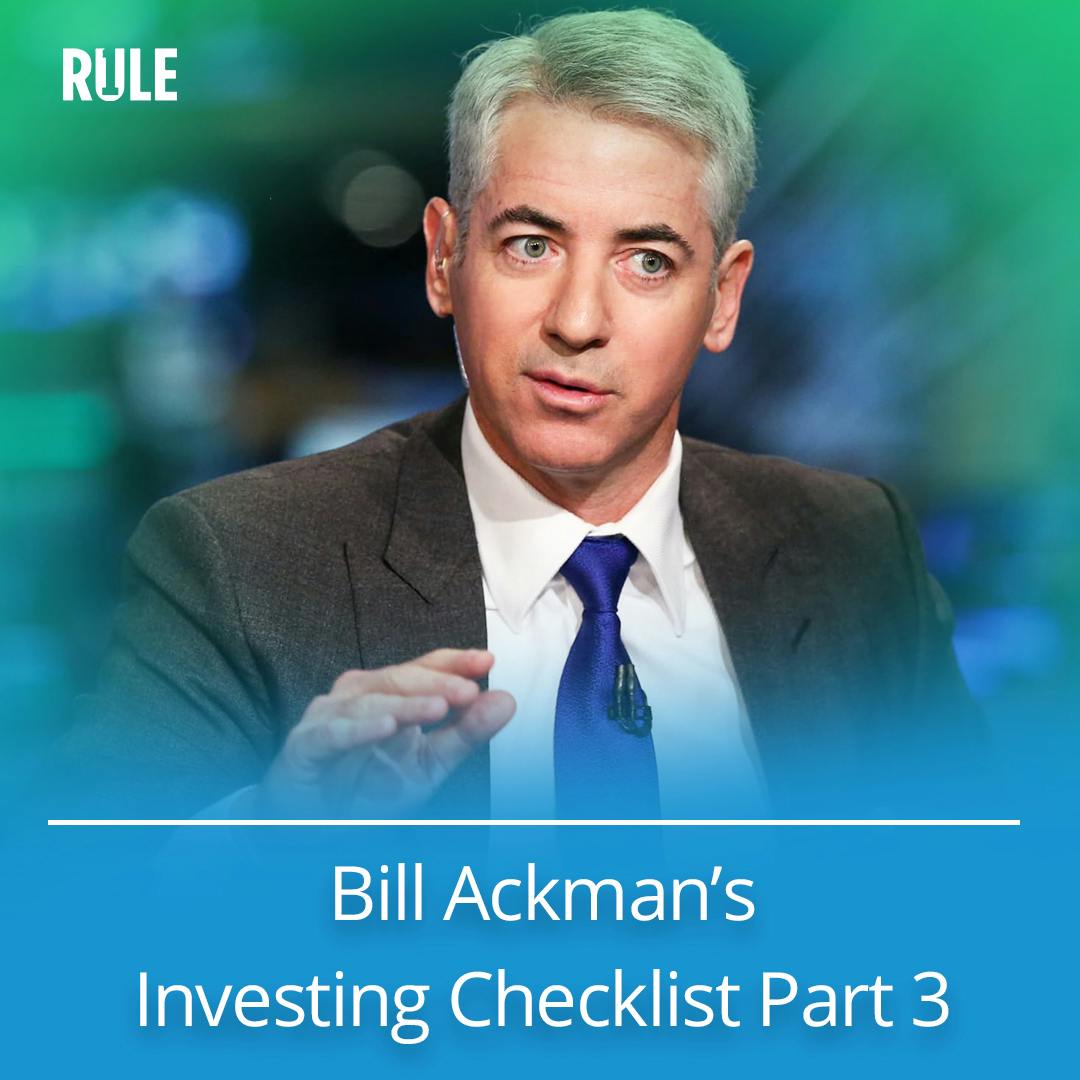
326- Bill Ackman’s Investing Checklist Part 3
William Albert Ackman is an American investor and hedge fund manager. He has a well-known 8-point investing checklist, which is straightforward and reflects the basic principles of Rule #1 Investing. That checklist includes only investing in simple and predictable businesses with a dominant market position, limited risk, a strong balance sheet, excellent management, high return on capital, free cash flow generative, and large barriers to entry. Sound familiar? There’s a lot of talk in the financial community about “diversification,” which simply means investing your money in a variety of ways in order to provide a safety net should one investment go south. The thing is, you don’t need to diversify if you know how to invest and understand what you are investing in. By taking the time to research and learn about the companies you are investing in, you are providing your own safety net, because you won’t invest in any company that doesn’t meet the standards for a wonderful company, as it is defined in Rule #1 Investing. That is key. This week on InvestED, Phil and Danielle discuss Bill Ackman’s checklist more in-depth, and explain why you can’t blindly put your money in stocks chosen at random and expect to achieve great returns. In order to succeed investing in the stock market, you have to use a system and a strategy. Learn how to find and pick quality stocks with this FREE Four Ms Guide: https://bit.ly/3krSdvB Topics discussed in this episode: Bill Ackman Valuation methods of investing Rational investing Tesla stock Coca-Cola stock Learn more about your ad choices. Visit megaphone.fm/adchoices
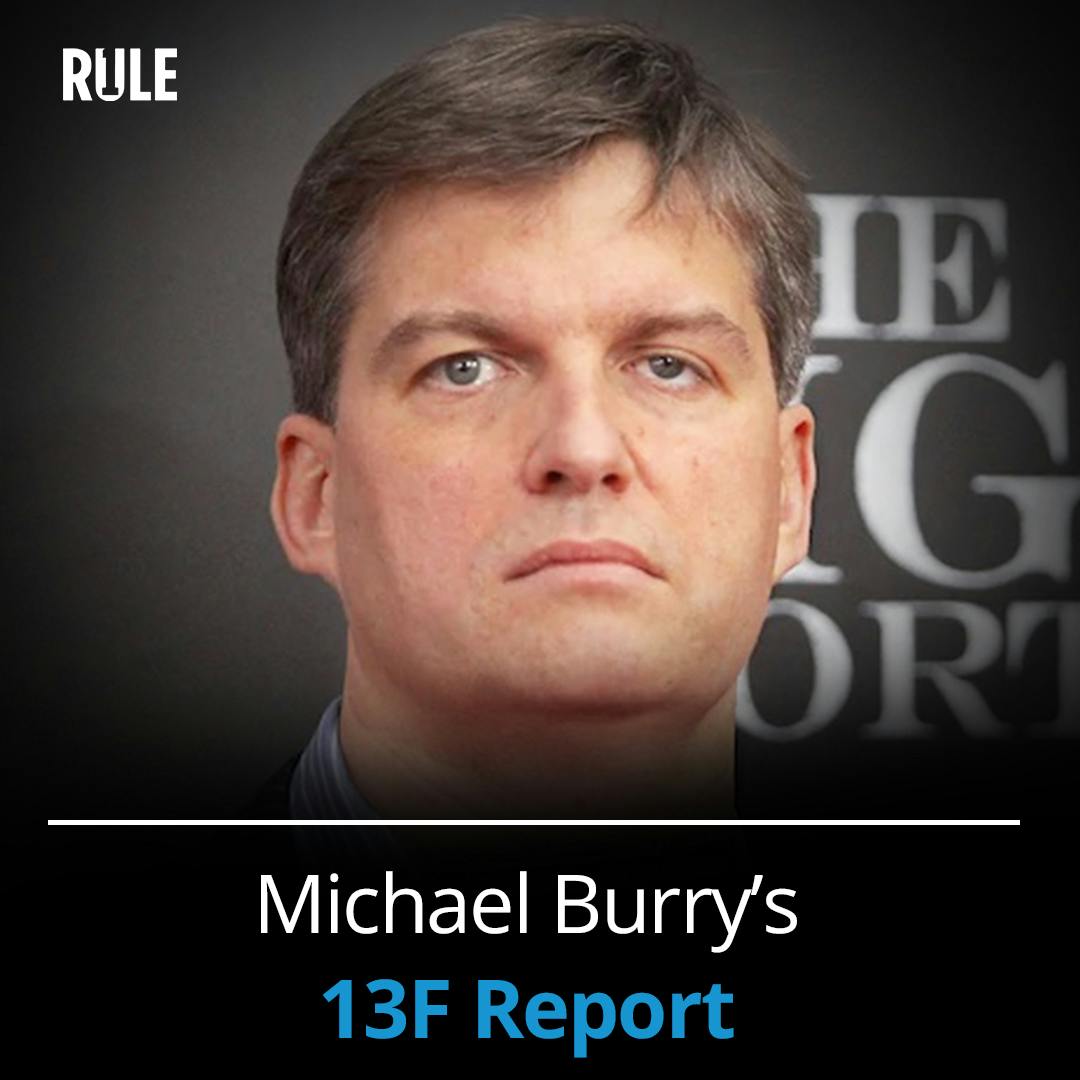
325- Michael Burry’s 13F Report
Michael Burry is an American investor, hedge fund manager, and physician. Burry is one of the most renowned names in the hedge fund industry, managing over $1 billion in assets. Michael Burry has been in the news recently after regulatory filings revealed that he had PUT options on more than 800,000 shares of Tesla (TSLA). There has also been information released on which stocks he plans to sell, including The Allstate Corporation (ALL), Discovery, Inc. (DISCA), The GEO Group, Inc. (GEO), and Ares Capital Corporation (ARCC). But what can people do with this information? Coattailing is a popular technique in investing. When you use coattail investing strategies on some of the best investors, you’re essentially looking and copying the people who we know have made enormous rates of return over 20 and 30 year periods of time. Some examples of these types of investors are Michael Burry, Charlie Munger, Warren Buffett, David Einhorn, and Bruce Berkowitz. So, how can you coattail the best investors? Investors who manage more than $100 million dollars have to file what they bought and what they sold every quarter with the SEC. All you have to do is look it up. It’s free information. Find out what investors you want to copy and then go to the SEC website and look at what they are buying and selling every quarter. They have to file every 90 days, so check to make sure the price of the stock is still around what they paid for it. If you like the company, which is critical, apply the Four Ms of investing and make sure it’s on sale for an attractive price. In this episode of InvestED, Phil and Danielle discuss Michael Burry’s 13F filings and why it’s important to do your own research as an investor. If you want to learn more about finding quality stocks based on the Four Ms of investing, download this FREE guide: https://bit.ly/3r4L2Lb Topics discussed in this episode: Michael Burry SEC Reporting Leveraged investments Options Pfizer stock Google stock Tesla stock Picking stocks Learn more about your ad choices. Visit megaphone.fm/adchoices

324- From the Vault: Is an “Event” Required?
“I don’t mind not making money on something that I’m not sure about.” - Phil Town If a company has never had an event but appears to be on sale, is it a good investment? Meeting the requirements of the Four Ms and the Big 5 Numbers just proves that a company is worthy of being on your watchlist, but doesn’t give you the green light to buy just yet. As Rule #1 Investors, we want to buy wonderful companies, yes, but only when they are at the right price. That’s why the last step is to wait patiently to buy stocks when, and only when, they go on sale. Buying a stock on sale helps take the risk out of investing and makes it easier to get fantastic returns. The key to finding stocks on sale is to wait for a Rule #1 event. A Rule #1 event is when something happens that affects the entire market and makes the stock price of a good company drop far below its real value. This could be a recession, a pandemic, an election, you name it. Remember, the stock price doesn’t reflect the actual value of the company. We know that the company’s price will bounce back in time, and because we take a long-term approach to investing in stocks, we aren’t worried. During an event, when others are panicking, we can take advantage of the downturn and buy wonderful companies at a tremendous discount. In this vault episode, Phil and Danielle discuss why as a Rule #1 investor, it’s critical to take advantage when stocks go on sale. Learn how to prepare for the next Rule #1 event with Phil’s Ultimate Stock Market Crash Survival Guide: https://bit.ly/2UuIhGS Learn more about your ad choices. Visit megaphone.fm/adchoices
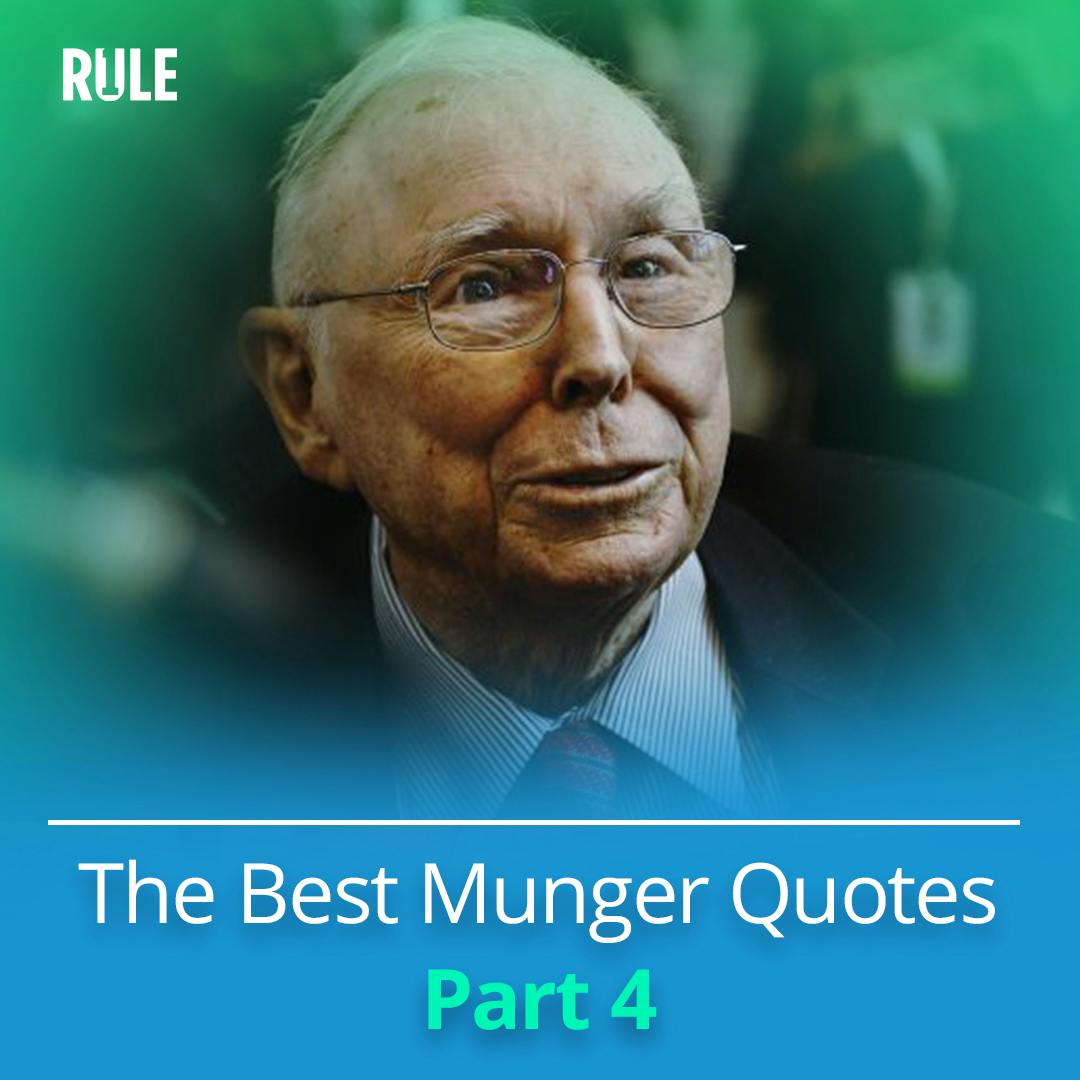
323- The Best Munger Quotes - Part 4
“We both (Charlie Munger and Warren Buffett) insist on a lot of time being available almost every day to just sit and think. That is very uncommon in American business. We read and think.” ― Charles T. Munger This further proves the point that reading is so fundamental to being an investor. Start with what you know and with what you love. If you don’t understand a business as if you owned the company, stop and move on to the next company. This is the most important, and perhaps the easiest to overlook, part of Rule #1 investing. When you think of buying stocks, think of it as purchasing the entire business. Once you find a business that you love, your next step is to research the company inside and out, by reading 10-K reports and any articles you can get your hands on. You can start by thinking about all of the things you are talented at, and make a list. This can be things like running, playing piano, creative writing, and more. Next, think about where your passions lie. Maybe you love reading, seeing new movies, or giving back to the community! Lastly, make a note of all the ways you’re already spending your money. Do you go out to eat? Do you buy new clothes regularly? Do you travel a lot? These are things you might want to consider when finding excellent companies to invest in. In this episode of the InvestED podcast, Phil and Danielle discuss more of their favorite Charlie Munger quotes, and explain why researching companies you already know and love is a critical step in investing. Learn how to pick Rule #1 approved stocks with this 3-Circles Guide. Click the link here to download: https://bit.ly/3x7ABcb Learn more about your ad choices. Visit megaphone.fm/adchoices

322- Interview with Author & Journalist William Green - Part 2
William Green is a journalist and author of Richer, Wiser, Happier: How the World’s Greatest Investors Win in Markets and Life. Over the last quarter of a century, he has interviewed many of the world’s best investors, and has written for many leading publications in the US and Europe, including The New Yorker, Time, Fortune, Forbes, Barron’s, Fast Company, Money, Worth, Bloomberg Markets, The Los Angeles Times, The Boston Globe Magazine, The New York Observer, The (London) Spectator, The (London) Independent Magazine, and The Economist. In Richer, Wiser, Happier, William Green draws conclusions on interviews that he’s conducted over twenty-five years with many of the world’s greatest investors. As he discovered, their talents extend well beyond the financial realm and into practical philosophy. The best investors in the world try to stay intensely rational. They try to get emotion out of their decisions and stick to the facts. As an investor, you must ask questions but also do the homework. You'll learn how to avoid emotion, how to be patient, how to properly research, and how to think like this business is the only one you'll ever get to own. This week on InvestED, Phil and Danielle present the second half of their interview with William Green. They discuss investing, staying resilient, and why it’s important to be knowledgeable as an investor. Value Investing requires staying rational. Learn what it takes to be a successful value investor with Phil’s NEW Value Investing Cheat Sheet: https://bit.ly/3wNJ97U Get a copy of William Green’s Richer, Wiser, Happier: How the World’s Greatest Investors Win in Markets and Life here: https://bit.ly/35kYlNK Learn more about your ad choices. Visit megaphone.fm/adchoices
321- Interview with Author & Journalist William Green
William Green is a journalist and author of Richer, Wiser, Happier: How the World’s Greatest Investors Win in Markets and Life. Over the last quarter of a century, he has interviewed many of the world’s best investors and has written for many leading publications in the US and Europe, including The New Yorker, Time, Fortune, Forbes, Barron’s, Fast Company, Money, Worth, Bloomberg Markets, The Los Angeles Times, The Boston Globe Magazine, The New York Observer, The (London) Spectator, The (London) Independent Magazine, and The Economist. In Richer, Wiser, Happier, William Green draws conclusions on interviews that he’s conducted over twenty-five years with many of the world’s greatest investors. As he discovered, their talents extend well beyond the financial realm and into practical philosophy. The most successful investors are iconoclasts who question conventional wisdom and profit vastly from their ability to think more rationally, rigorously, and objectively. But this is easier said than done when you are investing real money. Money you can’t afford to lose tends to be ‘hot’ or emotional. Pro gamblers try to avoid sitting down with more than they can lose but anyone investing all of their own hard-earned money is always sitting down with more than they can lose. Fear of losing more than you can afford to lose tends to make the mind go irrational. You start guessing. You can’t tell the difference between a good idea and a bad idea. Investing decisions are not life and death decisions, but remaining rational in the face of intense emotions is an art that is learned in the trenches. This week on InvestED, Phil and Danielle sit down to speak to William Green about investing, staying rational, and why you don’t need to be an expert to invest successfully. Value investing requires staying rational. Learn what it takes to be a successful investor with Phil’s NEW Value Investing Cheat Sheet: https://bit.ly/3wpZKhF Get a copy of William Green’s Richer, Wiser, Happier: How the World’s Greatest Investors Win in Markets and Life here: https://bit.ly/35kYlNK Learn more about your ad choices. Visit megaphone.fm/adchoices
320- The Best Munger Quotes - Part 3
“Spend each day trying to be a little wiser than you were when you woke up.” — Charlie Munger That assertion is so powerful, but it’s easy to overlook how critical it is. The whole idea of Rule #1 Investing is researching and learning about companies that you love, and buying stocks at attractive prices. Part of researching a company is ensuring it has a margin of safety, good management, meaning to you, and lastly, a moat — or competitive advantage. Let’s focus on moat, for example. Charlie Munger loves Coca-Cola. He said that “Coca-Cola is the perfect business because it has this gigantic durable competitive advantage, or moat, which gives it predictable cash flow.” This allows us to figure out what the future cash flow will be and value the company today, so we know whether we can buy it on sale or not. Your job as an investor is to research industries you already understand, so you can recognize companies with strong moats. An example of a brand moat is Harley-Davidson’s notorious lifestyle branding. This approach has huge potential for brand building, and Harley is brilliant at it. They’ve built a lifestyle around the Harley-Davidson culture which will always be tough for competitors to compete with. These companies don’t come around often. Charlie Munger believes there are only a small number of real opportunities to get very high returns with very low risk. Maybe 20 in a lifetime. He said that if you remove the 10 best deals Warren and he ever did, Berkshire would have average market level performance. The only way to get those kinds of returns is to wait for the right opportunity to come along. In this episode of the InvestED podcast, Phil and Danielle discuss more of their favorite Charlie Munger quotes. Learn how to pick Rule #1 approved stocks with my Four Ms of Successful Investing Guide! Click the link here to download: https://bit.ly/3puoNO4 Learn more about your ad choices. Visit megaphone.fm/adchoices

319- The Best Munger Quotes - Part 2
“We recognized early on that very smart people do very dumb things, and we wanted to know why and who, so we could avoid them.” — Charlie Munger The best investors in the world use the same principles. They have been around since the 1930s and they are still practiced today by the best investors in the world, including Charlie Munger, Warren Buffett, David Einhorn, and Mohnish Pabrai. One of those principles includes staying intently rational. But this is easier said than done when you are investing real money. Money you can’t afford to lose tends to be “hot” or emotional. Pro gamblers try to avoid sitting down with more than they can lose, but anyone investing all of their own hard-earned money is always sitting down with more than they can lose. Fear of losing more than you can afford to lose tends to make the mind go irrational. You start guessing. A way you can stay rational in uncertain times is to understand what companies you’re buying as if they were your own. Stick with what you know, and realize what you don’t know. Focus your attention on industries that you’re already comfortable with, and love what you own. Put your money where your values are. Most of us have the intention to make the world a better place, but seem to forget that the businesses that we invest in have a direct impact on what is going to exist in the world in 20 years. In this episode of the InvestED podcast, Phil and Danielle discuss more of their favorite Charlie Munger quotes, and how they impact their investing decisions. Learn more about investing like Charlie Munger and Warren Buffett with this FREE Investing for Beginners in 2021 Guide. Click here to download: https://bit.ly/3wJHj7m Learn more about your ad choices. Visit megaphone.fm/adchoices
318- From the Vault: Inflation Kills!
Inflation is the devaluation of a currency’s buying power. It occurs over time as the government pumps money into the economy and there’s a larger money supply buying a relatively fixed amount of stuff. Let’s say you’re 50 years old. You want to retire in 10 years at age 60 - we’ll figure 30 years in retirement and you’re putting money into a 401(k). Let’s assume you started with $100,000 today in your 401(k) and then contributed $2,000 a year into it because you’re putting your kids through college and that’s all you can put away. In 10 years, you would expect to make around 6% in your 401(k) (if your employer isn’t matching your money). A reasonable inflation rate is probably going to be about 3%. What this means is that in 10 years, when you’re ready to retire, at 6% with an inflation rate of 3%, you end up with $205,000 to retire on. Let’s assume that you’re going to live on $50,000 a year. You’ve got $205,000 right now, but 10 years from now it won’t be worth that at all. Inflation affects everything including the costs of living, so your $50,000 is going to be $67,000 a year to live that same basic $50,000 a year lifestyle. Even if you keep investing the money at 5% or 6%, inflation continues at 3%. How many years will you be able to live in retirement before you completely run out of money, spending only $50,000 a year in today’s dollars? The answer is 3 years. If you were to not learn how to invest, you’d need to come up with another $1.3 million to live on for 30 years. If you change your 6% return to 15%, you’re going to make a lot more money. 15% is in the range of a return that’s doable for any investor. What happens then? We’re going to keep all the things the same, but we’re going to increase the rate of return to 15%. At that point, your number becomes $540,000 and you’re only short about $96,000 to make it all the way through those 30 years of retirement. This week, Danielle and Phil discuss the impact inflation has on our investing practice. They also talk about Buffett’s solutions for “little guy” investors, and how we can set ourselves apart from others through our investing education. Learn how to invest with more confidence and less risk with this free Investing for Beginners in 2021 guide. Click here to download: https://bit.ly/3urGezS Learn more about your ad choices. Visit megaphone.fm/adchoices

317- The Best Munger Quotes!
“It is remarkable how much long-term advantage people like us have gotten by trying to be consistently not stupid, instead of trying to be very intelligent.” — Charlie Munger Munger is the Vice Chairman of the world’s greatest compound interest machine: Berkshire Hathaway, Inc. In the time of his and Warren Buffett’s reign as the leaders of Berkshire, the company has returned roughly 2,000,000% on its initial value. We can learn a lot from Charlie Munger! Charlie Munger once said that “Coca-Cola is the perfect business because it has this gigantic durable competitive advantage, or moat, which gives it predictable cash flow.” This allows us to figure out what the future cash flow will be and value the company today, so we know whether we can buy it on sale or not. Charlie Munger also once stated that “You don’t make money when you buy and you don’t make money when you sell. You make money when you wait.” That assertion is so powerful that it is easy to overlook how critical it is. The whole idea of Rule #1 Investing is buying a stock low, and selling it high. But, the key here is that you’re doing nothing most of the time. When Charlie says, “Wait” he means, “Wait for 5 years if necessary”. If you’ve been given serious money to invest, waiting five years in cash is not a plan; it is a recipe for disaster. Charlie believes there are only a small number of real opportunities to get very high returns with very low risk. Maybe 20 in a lifetime. He said that if you remove the 10 best deals Warren and he ever did, Berkshire would have average market level performance. The only way to get those kinds of returns is to wait and wait for the right opportunity to come along. In today’s podcast, Phil and Danielle explain some of their favorite Charlie Munger quotes, and cover how many of the Rule #1 Investing principles are based on his teachings. Get inspired to invest like the world's greatest investors like Charlie Munger and Warren Buffett with this free guide: https://bit.ly/3fr7VmB Learn more about your ad choices. Visit megaphone.fm/adchoices
316- Berkshire Hathaway Meeting Highlights and Implications Part 2
The Berkshire Hathaway Annual Shareholder Meeting took place on Saturday, May 1, featuring Warren Buffett and Charlie Munger. In this episode, Phil and Danielle discuss more of the major highlights from the meeting. In the meeting, Buffett discussed his significant investment in Chevron. "I think Chevron has benefited society in all kinds of ways, and I think it continues to do so," said Buffett. "We're going to need a lot of hydrocarbons for a long time, and we'll be very glad we've got them." While Buffett also stated, "Chevron is not an evil company in the least and I have no compunction about owning Chevron. If we owned the entire business, I would not feel uncomfortable about being in that business." This poses the question regarding investing with your values. Our personal values are incredibly important to successful investing. Almost no one talks about how to connect your values or your heart to where your money is going. Remember that wherever you’re putting your money is what is going to grow in the world. And by making the decision to invest based on our personal values, we can change the world radically. Probably faster than any single thing we could do is to put our money where our values are. Rule #1 investors only buy companies that we really want to see in the world. Now, how do you know what your values are? Your values are what you do. Your values are not what you say you’re going to do. Learn how to invest with your values first with my 3-Circles Guide. You’ll discover how to use what you know and love to find businesses that match your values and lifestyle. Click here to get started: https://bit.ly/3ofTar7 Learn more about your ad choices. Visit megaphone.fm/adchoices

315- Berkshire Hathaway Meeting Highlights and Implications
The Berkshire Hathaway Annual Shareholder Meeting took place on Saturday, May 1, featuring Warren Buffett and Charlie Munger. In this episode, Phil and Danielle discuss some of the major highlights from the meeting. Munger took an aim at bitcoin and cryptocurrencies during the conglomerate’s annual meeting on Saturday, stating “I think the whole damn development is disgusting and contrary to the interests of civilization.” Buffett and Munger also discussed potential tax hikes from the Biden administration, and expressed not being concerned about them. Buffett mentioned that some companies try to fear-monger by saying the tax rates will be passed through to customers. “It's corporate fiction when they put out statements about the fact that it will be terrible for all of you people,” Buffett said. Buffett also stated that there is a lot more to investing than picking a budding or trending industry. Buffett warned newbie investors, and Phil and Danielle have always agreed with this take on smart investing. Listen to this InvestED podcast today to hear more highlights, and Phil and Danielle’s takeaways on the topics discussed in the Berkshire Hathaway Annual Shareholder Meeting. Rule #1 has been built on the principles of a proven investing method used for the last 80 years by successful investors like Buffett. To invest the Rule #1 way means to “Never Lose Money,” but what it means in practical terms is to invest with certainty. Certainty comes from this: buying a wonderful business at an attractive price. The word wonderful actually encompasses three out of four elements in the Four Ms: Meaning, Moat, Management, and Margin of Safety. Learn more about the Four Ms with this free guide: https://bit.ly/3tjv2ED Learn more about your ad choices. Visit megaphone.fm/adchoices
314- Don’t Fear Market Drops!
The stock market crash of 2020 began on Monday, March 9, with history’s largest point plunge for the Dow Jones Industrial Average (DJIA) up to that date. Some investors were scared or nervous but Rule #1 investors, like Danielle, were actually excited about the drop. She is confident in her investing decisions and realized it was an excellent opportunity to load up on more great companies. The market runs in cycles. It goes up, it goes down. But we have to look beyond the charts. While the cycles give us warning signs of potential crashes, predicting the market is not an exact science. The economy reacts to more than just the market cycles. You need to have the perfect storm — many events and economic conditions coming together — for a drop to happen. The important thing is to be prepared for whatever may happen in the market. Keep on saving for retirement and keep on making good investment decisions. Rule #1 investors know how to take advantage of all kinds of economic conditions, including market drops. If you understand the principles of Rule #1 investing, you will find opportunities to increase your long-term wealth. Rule #1 investors do not fear market crashes. They know that downturns provide the best buying opportunities. Today, Phil and Danielle discuss how to look at the market objectively so you have an advantage over other investors during a market drop. Learn how to pick stocks with this free guide I’ve created for you and be ready when your chosen companies go on sale. Preparation plus opportunity equals success. Click here to download: https://bit.ly/3nrRyKq Learn more about your ad choices. Visit megaphone.fm/adchoices
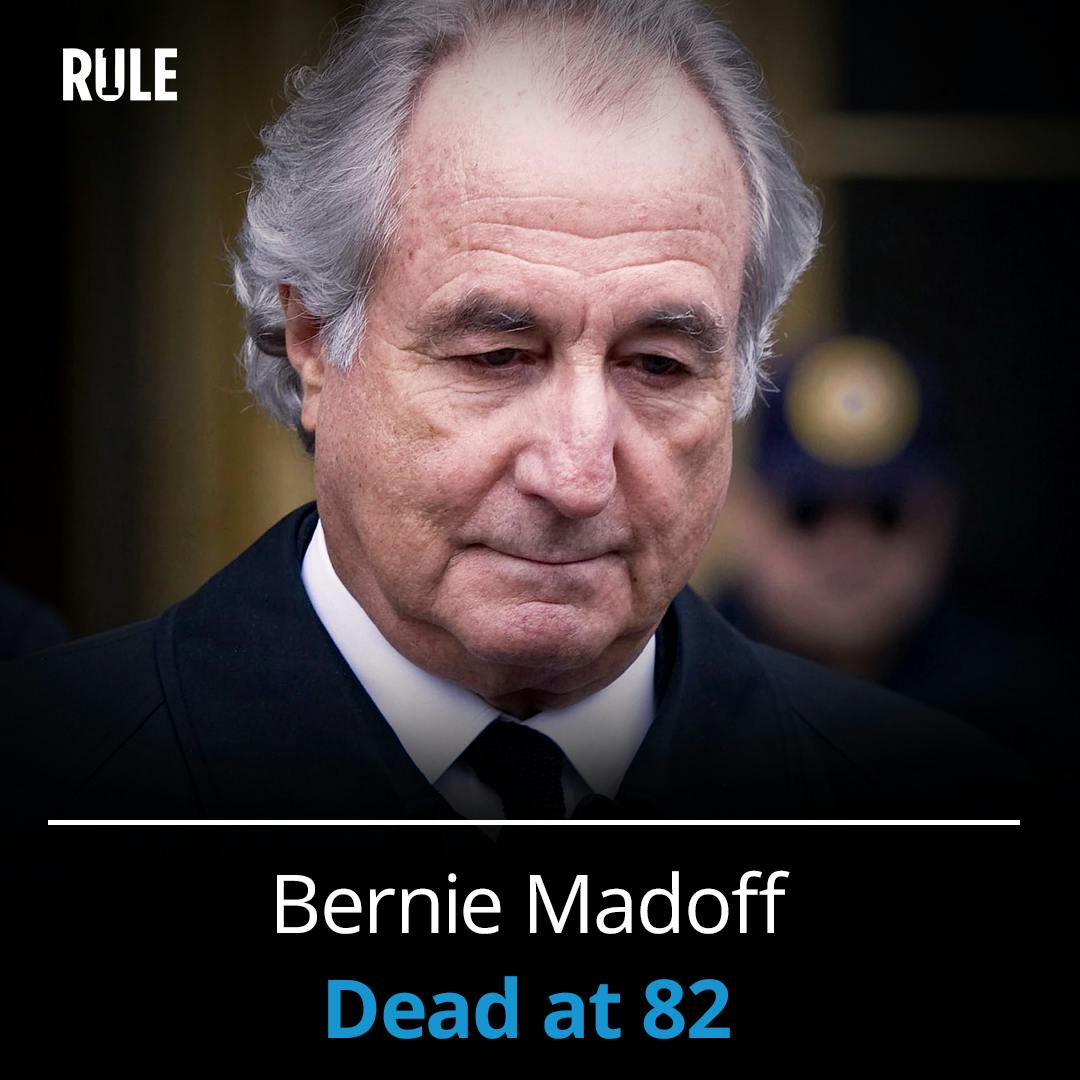
313- Bernie Madoff - Dead at 82
If you haven’t heard the news already, Bernard Madoff has just passed away at the age of 82 in a federal prison hospital in Butner, North Carolina. For more than 50 years, Bernie Madoff was renowned on Wall Street as a big money manager who founded his own firm at age 22 and became non-executive chairman of the Nasdaq in 1990. Madoff was famously known for running the largest and possibly most devastating Ponzi scheme in financial history. He defrauded thousands of investors out of tens of billions of dollars over the course of about 17 years. Madoff was busted on December 11, 2008 after his two sons turned him in. Victims included director Steven Spielberg, actor Kevin Bacon, former New York Mets owner Fred Wilpon, Hall of Fame pitcher Sandy Koufax and Nobel Peace Prize winner Elie Weisel, as well as ordinary investors like Burt Ross who lost $5 million in the scheme. In a 2013 email to CNBC from prison, Madoff mentioned that the break in the market that started the Great Recession led to his scam. “I thought this would be only a short-term trade which could be made up once the market became receptive. The rest is my tragic history of never being able to recover.” In today’s podcast, Phil and Danielle discuss Bernie Madoff and his scheme that led to the nation’s largest financial fraud in history, You can learn a lot from the history of financial figures and investors. Check out my guide where I discuss some of the best investors in the world: https://bit.ly/2P21xJs Learn more about your ad choices. Visit megaphone.fm/adchoices

312- Bonds vs. Stock Investing
According to Phil and other value investors, investing should always essentially involve the same principles — even for non-stock investments like bonds. Putting your money where your values are, buying investments at a discount, and being able to move through different types of assets fluidly. For example, bonds and securities are other types of low-risk investments that investors purchase. However, their potential for returns is much lower as well. A bond might only make you a 3% return on your money over multiple years. This means that when you take your money out of the bond, you’ll have less buying power than when you put it in, because the rate of growth didn’t keep up with the price of inflation. Bonds can be purchased from the US government, state and city governments, or from individual companies. Mortgage-backed securities are a type of bond typically issued by an agency of the U.S. government, but can also be issued by private firms. When you purchase a bond, you are essentially loaning money to either a company or the government. For U.S. investors, this is typically the U.S. government, though you can buy foreign bonds as well. The government or company selling you the bond will then pay you interest on the “loan” over the duration of the bond’s life cycle. Corporate bonds are slightly riskier than government bonds because there’s more risk of a corporation defaulting on the loan. Unlike when you invest in a corporation by purchasing its stock, purchasing a corporate bond doesn’t give you any ownership of that company. In today’s podcast, Phil and Danielle discuss bonds, and why the best investments to make for yourself depend on your risk tolerance, level of understanding of certain markets, timeline, and reason for investing. Learn more about your different investment options with this Complete Guide to Investing for Beginners in 2021: https://bit.ly/3dYlBVI Learn more about your ad choices. Visit megaphone.fm/adchoices

311- Is Doomsday Coming?
Warren Buffett is currently sitting on about $150 billion in cash. Could this mean that doomsday — or a major market correction — is coming? Most of the time, successful investing is a waiting game. Just as there are poor times to sell your stocks, there are poor times to buy them as well. And sitting on cash while you wait for a better opportunity is often one of the best investing decisions that you can make. As Rule #1 investors, we try to invest in companies that have at least a 50% margin of safety, meaning that there is at least a 50% upside between the company’s stock price and its true value. When valuations are as high as they currently are, though, it becomes difficult to find any quality companies that exhibit this margin of safety. Looking at the Shiller PE ratio, prices have only been this high twice in the past 140 years. The first time they got this high was in 1929. The second time was in 1999. But we might not be here for much longer. Following the smart money — defined as money from big-time investors who know the market better than anyone — is rarely a bad idea, and right now, these investing gurus aren’t putting a lot of money into the market. Instead, the majority of the money flowing into the market right now is coming from retail investors. While these retail investors are buying stocks faster than ever before, the big investing gurus are sitting on their cash. This alone is a pretty good indication that right now might not be the best time to buy into the market. As Rule #1 investors, we like to find companies that are solid enough to survive and thrive no matter what the market does. When a major market correction, as the one that is very likely on the horizon drives the price of these companies down, the opportunity for great returns is higher than ever. Will the stock market crash? What are you going to do if it does? Today, Phil and Danielle discuss what investors should look out for in the stock market, and how to prepare for a potential doomsday. This Stock Market Crash Survival Guide will help you prepare for the next market crash and help you cash in when the market drops: https://bit.ly/3dDUfnF Learn more about your ad choices. Visit megaphone.fm/adchoices

310- Moat and Processes
In thinking about the process of finding wonderful companies at attractive prices, it helps to think of what I call the Four Ms: meaning, management, margin of safety, and moat. This podcast is focusing on moat. Most people know a moat to be the water around a castle but in investing terms, a moat is the durable competitive advantage that a company has that protects it from being attacked by competitors. A moat is what makes a company predictable and allows us to put a value on the business. Charlie Munger said that “Coca-Cola is the perfect business because it has this gigantic durable competitive advantage, or moat, which gives it predictable cash flow.” This allows us to figure out what the future cash flow will be and value the company today, so we know whether we can buy it on sale or not. Finding a business with a wide moat is key to finding a successful business to own, because a business with a wide moat is much more predictable for the next 20 years than a business with no moat. The idea of the moat is really simple. If an industry looks as if it might be very easy to get into, there probably isn’t a moat. On the other hand, if an industry looks as though it might be really hard to get into and be successful, you’ll probably find some wide-moat businesses. In today’s podcast, Phil and Danielle discuss moat and value, and the processes in which they pick stocks with confidence. Learn more about moat and the other three Ms of investing with this free guide that I’ve created for you: https://bit.ly/31xiBto Learn more about your ad choices. Visit megaphone.fm/adchoices

309- Stock Splits and Value
Stock splits happen from time to time, so it's important for us as investors to understand what they mean and how they might impact our investing decisions. A stock split is when a company decides to exchange more shares of its stock at a lower price for stockholders' existing shares. So, what happens to a stock’s price when it splits? Nothing actually, although, it’s going to look like something big happened. Stock splits don’t change the market cap, which is the market price of the stock on a given day multiplied by all of the shares, or the sticker price of a stock one single cent. Not a penny. All a stock split does is change the number of shares and the price per share. I repeat: this does not change the total value of all those shares by even one cent. A lower stock price makes it easier to trade because the stock becomes more attainable for interested investors who may have been priced out of buying it in the past. Lower prices make it easier to find buyers than higher prices. When a stock price goes over $100 a share, people start to think of it as “expensive” even though the price of the stock has nothing to do whatsoever with the actual market cap of the business. A business worth $1 million is worth $1 million whether there is one share worth $1 million or 1000 shares worth $1000 each or 1 million shares worth $1 each. But how many buyers are out there for a single share of stock worth $1 million? Not very many. Let’s say there was one buyer. The owner of that single share might have to take a much lower offer simply because there is only one buyer. But if there were a million shares at $1, there can be lots of buyers. Lower stock prices make trading easier, which makes investors trade more often. Trading more often makes for higher stock prices. The bottom line is that stock splits have no effect on the true value of a company. As Rule #1 Investors, we care about the value of a company, not its stock price. We don’t base our investments in a company on the price per share but instead look at the entire company as a real owner does. Learn how to find high-performance stocks with my Four Ms for Successful Investing guide. Click here to download: http://bit.ly/3f4Q32o Learn more about your ad choices. Visit megaphone.fm/adchoices
308- Cash is Trash!
It’s never a great idea to sit on too much cash. Why? One word: inflation. Inflation is the devaluing of a currency’s buying power. It occurs over time as the government pumps money into the economy and there’s a larger money supply buying a relatively fixed amount of items. As the money supply grows, people feel like they have more money, so they’re willing to pay more for things. When there’s a lot of inflation, wages tend to increase and people then feel like they’ve got even more money, so they’re willing to pay a little bit more for a Coca-Cola. Inflation is something that many people completely forget to factor in when calculating how much money they’re going to need for retirement. Most people tend to assume that if you want to live on, say, $50,000 a year for the rest of your life you need to multiply that number by 30 years and that’s how much you need. What they don’t take into account is inflation. This means that to retire, you may need much more than you think. The small percentage may not seem like a lot, but over time, it adds up. This is why investing is one of the most important things you can do to set yourself up for a financially secure future. Not just investing in anything, but investing in companies that align with your values. By making the decision to invest based on our personal values, we can change the world radically. In today’s episode of the InvestED podcast, Phil and Danielle discuss why cash is trash, and why it’s important to set yourself up for a financially secure future by investing with your values. Learn how to invest with your values with my Four Ms for Successful Investing Guide. Click here to download: http://bit.ly/3eFrdWP Learn more about your ad choices. Visit megaphone.fm/adchoices

307- Stock Brokers
After you have found a worthy company you would like to invest in and it’s on sale, the final step is to actually purchase the stock through a brokerage account so you can start reaping the rewards. This is an important step in the investing process, but it can seem confusing because there are several brokerage options out there. Buying shares in any company will require you to go through a broker. Brokers enable you to easily buy and sell shares in any public company, but they do charge a fee for their services. Once you are working with a broker, though, buying shares of a company is as simple as ordering something out of a catalog or making a purchase on Amazon. Simply choose the stock you want to buy, the number of shares you want to buy, and complete your purchase. A great option that has come available in recent years is the use of online brokers. Online brokers are a little more “self-serve” than traditional brokers, however, their fees are also much lower. For beginner investors with small amounts of money, online brokers are the best choice because the high brokerage fees of traditional brokers have the potential to eat up any profits. A few options include Charles Schwab, TD Ameritrade, Vanguard, Fidelity, and Robinhood. In today’s episode of the InvestED podcast, Phil and Danielle discuss stock brokerages, and explain why it’s so important to do your research before you commit to any broker. Learn more about getting started and making your first investment with my Complete Guide to Investing for Beginners in 2021. Click here to download: http://bit.ly/3qo3JI1 Learn more about your ad choices. Visit megaphone.fm/adchoices

306- Berkshire Hathaway Annual Letter Recap
Warren Buffett’s highly anticipated shareholder letter was released this past weekend. In this annual letter, Berkshire Hathaway's quarterly reports have offered investors a glimpse into the company's inner workings. Buffett also highlighted the fact that among the biggest winners in Berkshire’s investment portfolio was its 5.4% stake in Apple. Buffett noted that the iPhone maker was now one of his company’s three biggest assets, with its stake worth $120 billion as of December 31, 2020. Berkshire ended last year with $138 billion in cash. This is likely due to the market still being extremely overvalued. Being one of the best value investors in the world — if not the best in the world — Buffett understands the importance of only purchasing wonderful companies at discount prices. In the annual letter to shareholders, Buffett reminded investors that miracles do occur in middle America despite much of the attention on the east and west coast. “Success stories abound throughout America,” the investor said. “Since our country’s birth, individuals with an idea, ambition and often just a pittance of capital have succeeded beyond their dreams by creating something new or by improving the customer’s experience with something old.” In today’s podcast, Phil and Danielle discuss a few key takeaways from Warren Buffett’s annual letter to shareholders, and why Warren Buffett and Charlie Munger are two of the most important value investors in history. Learn about purchasing wonderful companies at discount prices with this FREE guide I've created for you: http://bit.ly/3bPTyqb Learn more about your ad choices. Visit megaphone.fm/adchoices

305- The Role of Shorting in the Market
“There’s nothing evil, per se, about selling things short. Short sellers—the situations in which there have been huge short interests very often—very often have been later revealed to be frauds or semi-frauds.” — Warren Buffett Short selling, or shorting, plays an important role in public markets as it improves prices, rational capital allocation, prevents bubbles, and shines a light on fraud. If investors think a stock's price is dropping, they can short the stock. They borrow shares and sell them with hopes of buying them back at lower prices. However, stocks can theoretically keep rising, which could cause losses. So the investors that short the stock will either have to put more money up to secure their position or close their positions. Essentially, short selling exposes which companies' stock prices are too high. In their search for overvalued firms, short-sellers can discover inconsistencies or other questionable practices before the entire market does. Short sellers can almost be regarded as the “watchdogs” of the market. A recent example of this is the Gamestop event which caused many investors to either gain or lose money, as shorting isn’t ideal for all investors. This is why it’s important to invest with your values—so you can invest with confidence and reduce your risk of making bad investing decisions. When looking for companies to purchase, always consider the Four Ms: meaning, moat, management, and margin of safety. This is the first step you need to take when building your watchlist of companies you are interested in. In today’s podcast, Phil and Danielle discuss the important role short sellers play in our market and why it’s important to invest with your values. Learn about the Four Ms and how they can help you invest in the right businesses at the right time with this FREE guide I've created for you: http://bit.ly/3btAqhM Learn more about your ad choices. Visit megaphone.fm/adchoices

304- Li Lu’s Speech and Investable Assets
Every type of investment has its upside and downside, and some are riskier than others. Cryptocurrencies, for example, are the newest type of investment. They are unregulated digital currencies bought and sold on cryptocurrency websites. Cryptocurrencies such as Bitcoin have gained a lot of interest in recent years as an investment vehicle—some people even think it may replace gold in the future. However, cryptocurrencies remain an incredibly risky investment due to the fact that there are many unknown factors. For example, there is the possibility of government regulation and the possibility that the cryptocurrency will never see widespread acceptance as a form of payment. At this point, no one knows for sure what the future holds for cryptocurrencies, so investing in cryptocurrencies is little more than speculation. Rule #1 investors don’t invest in things they don’t know. That’s not investing, that’s gambling. On the other hand, cash and commodities are typically considered low-risk investments. So if you’re new to investing or risk-averse, one of these options could be a good place to start. However, these low-risk investments also tend to have low returns. Gold is an example of a commodity, so its price is based on scarcity and fear which can be impacted by political actions or environmental changes. If you are investing in gold, be aware that your protection against a price drop, your moat, is based on external factors so the price can fluctuate a lot, and quickly. The price tends to go up when scarcity and fear are abundant and down when gold is widely available and fear is abated. If you think the world is going to be a more fearful place in the future, then gold could be a good investment for you. Everyone’s reasons for investing and personal risk tolerance are different, so you have to decide which investment types suit your lifestyle, timeline, goals, and risk tolerance best. What a good investment is for one person isn’t necessarily a good investment for you. Listen to this podcast today for more information on your different investment options and the risk related to each. Learn more about your investable asset options with my Beginners Guide to Investing in 2021. Click here to download: http://bit.ly/37ldvE2 Learn more about your ad choices. Visit megaphone.fm/adchoices

303- Jim McKelvey and The Innovation Stack
Square is a financial service, merchant services aggregator, and mobile payment company based in San Francisco, California. Danielle has openly expressed her excitement for this company—but what makes it so special? In 2009, Square initially started as a solution to mobile businesses without mobile payments. It took Founders Jim McKelvey and Jack Dorsey about 3 years to understand the market at the time, and how they could make an impact in this space. They entered the market and were able to provide a small device that could be easily inserted into the audio jack of smartphones. With this convenient hardware and only a 2.75% transaction fee, they quickly divorced the merchant from the shackles of digital wires. The successes of these innovations were multi-faceted. The infrastructure for payment processing was no longer costly for a specialized machine, but a small add-on to devices we already own. This also meant that as long as someone had the Square app, they could be a transaction node as well. Square continues to show viral growth, with revenue up year over year. This week on InvestED, Phil and Danielle welcome podcast guest Jim McKelvey, the co-founder of Square. Jim talks about his book, “The Innovation Stack,” and how innovation ultimately is what impacts a company’s success. What does it take for a start-up to turn into a successful business? Listen to the podcast today to find out. Interested in getting your own copy of "The Innovation Stack?" Order it at https://www.jimmckelvey.com. Learn how to find high-performing, innovative companies with my Four Ms checklist! Click here to download: http://bit.ly/2LzEBQ2 Learn more about your ad choices. Visit megaphone.fm/adchoices

302- GameStop and Short Squeezes
This is an exciting time to be an investor in the stock market. As you know by now, Reddit investors just launched an "attack on Wall Street" by purchasing shares in GameStop. This pushed the stock price up over 480% in a week. The investor who helped direct the world’s attention to GameStop is 34-year-old Keith Gill. Gill used Reddit’s WallStreetBets message board to promote GameStop, and used the identity of Roaring Kitty on his YouTube channel and Twitter page to help engineer a short squeeze against the hedge funds that were betting the price of GameStop would drop. But what is a short squeeze? If investors think a stock's price is dropping, they can short the stock. They borrow shares and sell them with hopes of buying them back at lower prices. However, stocks can theoretically keep rising, which could cause losses. So the investors that short the stock will either have to put more money up to secure their position or close their positions. If they choose to close their position, they are buying the stock to exit their position. This can drive the price higher and force other short sellers to do the same. This creates a continuous cycle of buying and pushing the price up even higher. This is the short squeeze, as those short the market essentially get "squeezed out.” And it's exactly what happened with GameStop. Hedge funds and other short-sellers have lost an astounding amount betting against GameStop, and there has been a regulatory response to this event. Robinhood limited the number of shares each user can purchase, stating that the trading restrictions were risk management decisions to protect Robinhood and its clearinghouses. In today’s podcast, Phil and Danielle discuss the GameStop situation and explain why the market should be free—where regulators stay out of the “little” guy’s way. Learn more about the basics of investing in the stock market with my Beginners Guide to Investing in 2021. Click here to download: http://bit.ly/39EOFR0 Learn more about your ad choices. Visit megaphone.fm/adchoices

301- Phil and Danielle Answer Fans’ Questions!
Are you one of the winners of the InvestED 300th podcast episode giveaway? Listen to this podcast to find out! Investing in stocks is one of the best things you can do to set yourself up financially, but you have to first understand the company valuation process in order to actually make money. When a company decides to go public, an investment bank helps determine what the price of the company’s stock should be at their Initial Public Offering (IPO), when they become available to purchase on the stock exchange. They determine the initial price based on the value of the company and early interest from investors before the stock is available to the public. After the company goes public, the stock price is based on supply and demand. When the demand for a stock goes up, its price goes up. The demand can increase if the company is doing extremely well and its value is increasing, or it can increase simply because of excitement from other investors. It’s important to remember to not get the “value of the company” confused with the “price of the stock.” The market can be incredibly emotional and price a great company way under their true value and vice versa. Ultimately, the stock price is determined by greed when the stock price is going up and fear when the stock price is going down. This is why it’s important to invest with certainty within your circle of competence. Love what you own, and put your money where your values are. Most of us have the intention to make the world a better place, but seem to forget that the businesses that they invest in have a direct impact on what is going to exist in the world in 10-20 years. In today’s podcast, Phil and Danielle announce the winners of the InvestED 300th podcast episode giveaway and discuss rational investing in 2021. Learn more about using your Circle of Competence to pick stocks with my 3 Circles Exercise Guide. Click here to get started: http://bit.ly/3pn4Bgj Learn more about your ad choices. Visit megaphone.fm/adchoices

300- Li Lu's Speech & Episode 300!!
This week, we are celebrating the 300th episode of InvestED by doing a prize giveaway! Here’s how to enter: Go to investedpodcast.com Click the button “Click here for details!” Follow the steps for a chance to win: A FREE ticket to a 3-day Virtual Investing Workshop (a $300 value!) A signed copy of Invested* A $100 Amazon e-gift card Your question featured on the 301st episode of InvestED Danielle’s Bundle: A yearly subscription to the Invested Practice Newsletter and access to the Mostly Invested Online Course In this episode, Phil and Danielle bring great insights to their analyses of Li Lu’s speech from 2015, “The Prospect of Value Investing in China”. Li Lu opens this speech by describing the ethics he believes all investors should follow: Make it your ethical obligation to seek truth and wisdom Be a really good fiduciary for your investors as if it’s your own money or your parent’s money He further implies that as a value investor in China, you will reap the benefits of finding wonderful companies because even then you can take comfort in the huge margin of safety or choose to exit. What was their biggest takeaway from his speech? Listen to the podcast today to find out. Learn more about your ad choices. Visit megaphone.fm/adchoices

299- Value Investing in 2021
One of the best things about investing is that it is possible for everyone to succeed—no matter your age, income, gender or IQ. As a beginner investor, it’s easier to avoid mistakes and decrease risk by investing in companies you are already familiar with, and that have meaning to you. For example, if you work in the tech industry, it’s going to be much easier for you to understand the goals of a tech company as well as their potential to reach those goals than it is going to be for you to evaluate a company in the pharmaceutical industry. Consider your personal passions, talents, and spending habits. Better yet, map them out using a venn diagram, placing passions in one circle, talents in another, and spending habits in another. Where these three areas overlap is your “Circle of Competence”, reflecting the industries and sectors you have the most knowledge of and where you should start your search for companies to invest in. Over time, you can begin to research companies across various sectors and expand your knowledge-base and comfort zone, but investing within your Circle of Competence is the best place to start. As you embark on your investing journey, remember to stay rational, mindful, and disciplined. It is the only way you will be successful in value investing. In today’s podcast, Phil and Danielle discuss value investing in 2021, and best practices for investors of all levels to be successful in the stock market. Ensure you always make smart investment decisions with my 3 Circles Exercise Guide. Click here to get started: http://bit.ly/3ozYpkJ Learn more about your ad choices. Visit megaphone.fm/adchoices

298- Biggest Investing Mistakes with Jeremy Deal
It’s so important not to invest or sell stocks too soon. While the desire to get in on the ground floor of a brand new company or industry is certainly understandable, it is most often better to let the dust settle a little so that more information is available and you can do proper research before making an investment. Although, even with proper research and due diligence, even the most successful investors’ journeys are still fraught with errors and investing mistakes. Nevertheless, as painful as these investing mistakes are at the time, you can learn a lot from them and can use them to become a better investor. After all, no one wants to lose money on their hard-earned investments down the road. The best way to avoid losing money on investments is to follow a proven investing strategy and never stray from it. Making irrational decisions based on emotions can be costly. By avoiding greed or fear-based decisions, you can pursue a successful investing career and hopefully avoid the business and investment problems that investors like Warren Buffett and Benjamin Graham have experienced in their early years. In today’s podcast, Jeremy Deal—founder of JDP Capital—sits down with Danielle to discuss his biggest investing mistakes so that you can learn from them! Ensure you always make smart investment decisions with the Rule #1 Cheat Sheet for Smarter Investing. Click here to download: http://bit.ly/3pHRNRg Learn more about your ad choices. Visit megaphone.fm/adchoices