Interchange Recharged
356 episodes — Page 6 of 8
The Surprising Public Opinion Trends Behind the Green New Deal
Note: after this episode, we will be on hiatus for a few weeks while Stephen Lacey goes on paternity leave.This week, a conversation about what the Green New Deal reveals about public opinion on climate change.Why are national climate politics frozen? The conventional understanding is that Americans are deeply divided on the issue along party lines.Until recently, Democrats have been scared of talking too often about climate in national campaigns because they think the electorate is split; and the Republican Party has been outright hostile to climate policy, believing that’s what the majority of conservative voters think.And then, in steps the Green New Deal. It’s revealing something extraordinary. According to a Yale survey, 81 percent of registered voters say they would support the Green New Deal. And 64 percent of Republicans say they would support it. Other polls have shown similar levels of support.So what does this reveal about how climate plays among the electorate? And is there a disconnect between what people want and what policymakers think they want? We’re joined by Dr. Leah Stokes, an assistant professor of political science at the University of California Santa Barbara. She is an expert on political behavior — which includes public opinion, voting behavior, and how policy is influenced. Leah describes why the Green New Deal plays well with voters. She also talks about how climate is shaping the presidential campaign, why Trump is now talking about the environment, and describes the role of fossil fuel incumbents in shaping public opinion. Support for this podcast comes from PG&E. Did you know that 20 percent of EV drivers in the U.S. are in PG&E’s service area in Northern California? PG&E is helping to electrify corporate fleet vehicles. Get in touch with PG&E’s EV specialists to find out how you can take your transportation fleet electric.The Interchange is also brought to you by Uplight, the company you once knew as Tendril and Simple Energy.The goal is still the same: To offer utility leaders a suite of engagement solutions that deliver customer experiences like Amazon and Netflix. Learn more about how Uplight is building an end-to-end product for utility customer engagement.You can listen to Uplight’s 5-part podcast series, called ILLUMINATORS, about what utilities can learn from case studies of business disruption. Subscribe on Apple, Spotify, Google Podcasts, Stitcher, or anywhere else you get your podcasts.See Privacy Policy at https://art19.com/privacy and California Privacy Notice at https://art19.com/privacy#do-not-sell-my-info.

The Complexity of NYC’s Green New Deal [Special Content From Centrica]
This week, we present a special episode on behalf of Centrica Business Solutions.The Green New Deal is now a driving force in climate politics. But up until now, it’s been mostly theoretical.And then, in April, Mayor Bill De Blasio declared that New York City is creating its own version of the Green New Deal. As part of the law, large commercial buildings will need to cut emissions by 40 percent by 2030 and 80 percent by 2050 — or face steep fines. After so much theorizing about the Green New Deal, we can finally see what happens when a resolution meets reality. And the impact is not what you might think. Many building upgrades in the city are now stalling because of uncertainty around the law.“No matter who I’ve spoken to, nobody’s disagreeing with the goals. It’s the application of how we benchmark. There are clearly buildings that can become vastly more efficient. But this legislation doesn’t prize density, it doesn’t prize efficiency, for some of our most modern buildings,” explains Paul Kuehn, sales director for distributed energy at Centrica Business Solutions.In this episode, we dive into New York’s new building emissions mandate. We’ll explore the short-term unintended consequences and the positive long-term impacts for clean energy. What can other cities — and eventually the entire country — learn from its complexities?We’ll have a conversation with Paul Kuehn of Centrica Business Solutions and Aaron Miller, a partner at Gotham 360, about how the details may play out. This podcast was produced on behalf of Centrica Business Solutions. Centrica is using analytics, market know-how, and distributed technologies to help C&I customers take control of their energy use and improve their environmental performance.See Privacy Policy at https://art19.com/privacy and California Privacy Notice at https://art19.com/privacy#do-not-sell-my-info.
Where Is the Global Energy System Headed?
Every year, we see a wide range of models for the future global energy system.The scenarios come from a wide array of organizations: International Energy Agency and the Energy Information Administration; oil companies like BP, Shell and Equinor; and research outfits like Wood Mackenzie and Bloomberg New Energy Finance.And the conclusions are all over the map. So a group of experts at Resources for the Future put them all together and created their own model — a way to compare the scenarios in a meaningful way and get a more accurate picture of how the future may play out. In this podcast, we’ll dig through the report. Can clean energy start to replace fossil fuels, or will it simply compliment them?You can read the Resources for the Future report (PDF) here.Looking for another podcast this summer? Listen to ILLUMINATORS, a 5-part series about the history of business disruption from Tendril. What can energy companies learn from radical change in other industries? Subscribe on Apple, Spotify, Google Podcasts, Stitcher, or anywhere else you get your podcasts.See Privacy Policy at https://art19.com/privacy and California Privacy Notice at https://art19.com/privacy#do-not-sell-my-info.
Solar & Wind Curtailment: A Liability or Asset for Grid Decarbonization?
On the docket this week: curtailment of renewable energy.Historically, we’ve thought about curtailment as a waste of valuable clean electricity — a financial penalty for renewable generators who need to monetize every last electron.It’s already an issue today. California has so much solar power, in certain months it is dialing back tens of thousands of megawatt-hours of PV generation. It’s happening in other states, to a lesser degree. And it’s so many people are focused on storage.But our perception of curtailment is changing. New modeling suggests that overbuilding wind and solar is actually the most economic solution for achieving high levels of renewables — not necessarily relying on storage.So, how should we think about curtailment? As a liability for generators and grid operators, or a tool for cleaning up the grid?Recommended reading:LA Times: California Has Too Much Solar Power. That Might Be Good for RatepayersGreenBiz: A Radical Idea to Get a High-Renewable Electric GridClean Power Research: Curtailment of Low-Cost Renewables a Cost-Effective Alternative to Seasonal StorageSupport for this podcast comes from PG&E. Did you know that 20 percent of EV drivers in the U.S. are in PG&E’s service area in Northern California? PG&E is helping to electrify corporate fleet vehicles. Get in touch with PG&E’s EV specialists to find out how you can take your transportation fleet electric.We're also sponsored by Wunder Capital. Wunder Capital is the leading commercial solar financing company in the United States. Click here to find out how Wunder Capital can help you finance your next commercial solar project.Subscribe to The Interchange podcast via Apple Podcasts, Google Podcasts, Stitcher, Spotify or wherever you find your audio content. Or integrate our RSS feed into the app of your choice.See Privacy Policy at https://art19.com/privacy and California Privacy Notice at https://art19.com/privacy#do-not-sell-my-info.
Challenging Our Beliefs, Part 2: Do Individual Actions Matter for Climate?
This week, we’re challenging our long-held beliefs about whether individual actions matter. Even if we drastically altered our lifestyles, would it do anything to address climate change?We all want to believe that our individual life choices will have a meaningful impact on carbon emissions. But a focus on solar panels, LEDs and vegetarianism may just be a distraction.This week, Stephen is going to take the position that individual actions are inconsequential. Shayle will argue the other side.This is the second installment that addresses this theme. Last episode, we asked: do people care about energy? Listen here. Support for this podcast comes from PG&E. Did you know that 20 percent of EV drivers in the U.S. are in PG&E’s service area in Northern California? PG&E is helping to electrify corporate fleet vehicles. Get in touch with PG&E’s EV specialists to find out how you can take your transportation fleet electric.We're also sponsored by Wunder Capital. Wunder Capital is the leading commercial solar financing company in the United States. Click here to find out how Wunder Capital can help you finance your next commercial solar project.Subscribe to The Interchange podcast via Apple Podcasts, Google Podcasts, Stitcher, Spotify or wherever you find your audio content. Or integrate our RSS feed into the app of your choice.See Privacy Policy at https://art19.com/privacy and California Privacy Notice at https://art19.com/privacy#do-not-sell-my-info.
Challenging Our Beliefs, Part 1: Do People Care About Energy?
Over the next two weeks, we are challenging our long-held assumptions about energy.We’re going to take the opposite stance of an argument that we agree with. Can we change our minds?In part 1, we’re revisiting the assumption that most people do not care about energy. Most people care about convenience, lifestyle and price. But do they care enough about their energy use to make a change for environmental reasons without external pressure? Shayle is going to take the opposite stance of what he believes — he’s going to argue that consumers do care. Stephen will respond by arguing that people don’t care.For your reading pleasure, here’s the article Shayle references on “flight shame” in Sweden.Support for this podcast comes from PG&E. Did you know that 20 percent of EV drivers in the U.S. are in PG&E’s service area in Northern California? PG&E is helping to electrify corporate fleet vehicles. Get in touch with PG&E’s EV specialists to find out how you can take your transportation fleet electric.We're also sponsored by Wunder Capital. Wunder Capital is the leading commercial solar financing company in the United States. Click here to find out how Wunder Capital can help you finance your next commercial solar project.Subscribe to The Interchange podcast via Apple Podcasts, Google Podcasts, Stitcher, Spotify or wherever you find your audio content. Or integrate our RSS feed into the app of your choice.See Privacy Policy at https://art19.com/privacy and California Privacy Notice at https://art19.com/privacy#do-not-sell-my-info.

The Epochal Shift in Commercial Energy [Special Content From Centrica]
We present a special episode produced in collaboration with Centrica Business Solutions.In 2006, Kate Sherwood left her job in strategy consulting to work in solar. “I realized what I had been doing wasn't getting me out of bed anymore,” says Sherwood. “So, I took a very big pay cut to move into carrying a bag, into being a salesman.”Selling solar to corporate customers at that time wasn’t easy. But C&I solar blossomed as the technology got cheaper, financing got better, and companies got more comfortable.Today, Kate is the vice president and head of sales at Centrica Business Solutions. There, she runs a team that packages all kinds of energy tech for commercial and industrial customers — solar, batteries, combined heat and power, demand response.So much as changed since 2006. There’s a new company committing to 100% renewables every week; tech firms and industrial giants are looking to procure gigawatts of wind and solar for their operations; and extreme weather is forcing a lot of companies with critical infrastructure to build on-site generation with a green twist.In this podcast episode, produced in partnership with Centrica Business Solutions, we’ll speak to Kate Sherwood about the biggest shifts in commercial energy since she first found her calling in the space."I think corporate energy buyers have gotten more sophisticated. Hats off to the commodity suppliers and even the brokers and aggregators out there who have helped educate large customers on that their energy load, their spend is not just a liability, but also an asset that they can deploy. I think customers today are more sophisticated on average," says Sherwood.Centrica Business Solutions is using analytics, market know-how, and distributed energy tech to help C&I customers take control of their energy use and improve their environmental performance. Learn more here.See Privacy Policy at https://art19.com/privacy and California Privacy Notice at https://art19.com/privacy#do-not-sell-my-info.
Jay Inslee's Climate Plan Is Every Wonk's Dream
What would a truly bold presidential plan to decarbonize the economy look like?Democratic candidates are offering up their visions.Elizabeth Warren is focusing on banning fossil fuel extraction on public lands and using the military to counter climate threats; Beto O’Rourke is looking to executive action; Joe Biden is teasing a “middle ground” plan.Then there’s Washington State Governor Jay Inslee. He just released his second climate plan — it’s more of a manifesto — called the The Evergreen Economy. It’s a culmination of a decade and a half of his thinking, writing and policymaking on climate.The document was so good, we decided to devote a whole episode to talking about it. You can read it here. And check out Dave Roberts’ supplemental analysis here.Support for this podcast comes from PG&E. Did you know that 20 percent of EV drivers in the U.S. are in PG&E’s service area in Northern California? PG&E is helping to electrify corporate fleet vehicles. Get in touch with PG&E’s EV specialists to find out how you can take your transportation fleet electric.We're also sponsored by Wunder Capital. Wunder Capital is the leading commercial solar financing company in the United States. Click here to find out how Wunder Capital can help you finance your next commercial solar project.Subscribe to The Interchange podcast via Apple Podcasts, Google Podcasts, Stitcher, Spotify or wherever you find your audio content. Or integrate our RSS feed into the app of your choice.See Privacy Policy at https://art19.com/privacy and California Privacy Notice at https://art19.com/privacy#do-not-sell-my-info.
Are Uber and Lyft Bad for Energy and Climate?
Uber and Lyft are now public — and now under more investor pressure to expand quickly. What does that mean for energy use and carbon emissions as more cars hit the roads?Multiple new studies show that these transportation networking companies are causing more traffic and pulling people away from public transit. Meanwhile, cities and states are trying to clean up those fleets by promoting electrification.Will we be able to clean up ride-hailing fleets fast enough?This week, in honor of the Uber and Lyft IPOs, we are looking at the negative and positive consequences of ride hailing.Recommended reading:GTM: Electric Ridesharing Benefits the Grid, and EVgo Has the Data to Prove ItPBS: Why is Your Uber or Lyft Stuck in Traffic? Most lLikely bBecause of Uber and LyftSchaller Consulting: Lyft, Uber and the Future of American CitiStreets Blog: Uber and Lyft Caused U.S. Transit DeclineSupport for this podcast comes from PG&E. Did you know that 20 percent of EV drivers in the U.S. are in PG&E’s service area in Northern California? PG&E is helping to electrify corporate fleet vehicles. Get in touch with PG&E’s EV specialists to find out how you can take your transportation fleet electric.We're also sponsored by Wunder Capital. Wunder Capital is the leading commercial solar financing company in the United States. Click here to find out how Wunder Capital can help you finance your next commercial solar project.Subscribe to The Interchange podcast via Apple Podcasts, Google Podcasts, Stitcher, Spotify or wherever you find your audio content. Or integrate our RSS feed into the app of your choice.See Privacy Policy at https://art19.com/privacy and California Privacy Notice at https://art19.com/privacy#do-not-sell-my-info.
Big Companies Quietly Embracing the Energy Transition
Big energy giants around the world are investing heavily in renewables and cleantech. But there’s a whole class of companies making moves in the sector behind the scenes.In this episode, we’re looking at the unsung corporate heroes of the clean energy transition.Shayle and Stephen share their picks for companies that are making surprising moves into renewable energy, electrification and clean materials. What does it tell us about how deeply clean energy is embedded in the corporate world?Support for this podcast comes from PG&E. Did you know that 20 percent of EV drivers in the U.S. are in PG&E’s service area in Northern California? PG&E is helping to electrify corporate fleet vehicles. Get in touch with PG&E’s EV specialists to find out how you can take your transportation fleet electric.We're also sponsored by Wunder Capital. Wunder Capital is the leading commercial solar financing company in the United States. Click here to find out how Wunder Capital can help you finance your next commercial solar project.Subscribe to The Interchange podcast via Apple Podcasts, Google Podcasts, Stitcher, Spotify or wherever you find your audio content. Or integrate our RSS feed into the app of your choice.See Privacy Policy at https://art19.com/privacy and California Privacy Notice at https://art19.com/privacy#do-not-sell-my-info.
A Futurist’s Take on ‘Exponential’ Energy Shifts
It’s taken decades for renewables to compete with fossil fuels. But we’re now entering the third phase of the clean energy transition, when new renewables are beating existing coal and gas plants on price alone. "We’re on the verge of a new, radically different point in history,” argues futurist and technologist Ramez Naam.This phase of the energy transition will bring change that is faster and more disruptive than at any point in history.But will it happen fast enough? This week, we’ll ask Ramez to outline the optimistic and pessimistic scenarios for our energy future. We’ll look at how the energy transition may unfold, and what we can learn from other tech sectors.In the second half of the show, we’ll talk about long-duration storage, the system-wide benefits of cheap batteries, the future of small-modular nuclear, and artificial superintelligence.Ramez is chair of energy & environmental systems at Singularity University. He is a computer scientist who worked at Microsoft developing products like Outlook and Internet Explorer. And he’s also the author of the award-winning science fiction series, “Nexus.”Recommended reading from Ramez:The Third Phase of Clean Energy Will Be the Most Disruptive YetClean Technology is Disrupting Fossil Fuels Faster Than EverSupport for this podcast comes from PG&E. Did you know that 20 percent of EV drivers in the U.S. are in PG&E’s service area in Northern California? PG&E is helping to electrify corporate fleet vehicles. Get in touch with PG&E’s EV specialists to find out how you can take your transportation fleet electric.We're also sponsored by Wunder Capital. Wunder Capital is the leading commercial solar financing company in the United States. Click here to find out how Wunder Capital can help you finance your next commercial solar project.Subscribe to The Interchange podcast via Apple Podcasts, Google Podcasts, Stitcher, Spotify or wherever you find your audio content. Or integrate our RSS feed into the app of your choice.See Privacy Policy at https://art19.com/privacy and California Privacy Notice at https://art19.com/privacy#do-not-sell-my-info.
PG&E's Wildfire Saga
This week: we dig into the causes of PG&E’s latest bankruptcy: wildfires.PG&E’s restructuring is one of the biggest in U.S. history — and it could be considered the first climate bankruptcy. The utility faces tens of billions of dollars in liabilities after investigators pinned over a dozen wildfires on PG&E equipment. What does it tell us about the health of utility infrastructure and corporate preparedness for climate risk?The future structure of PG&E is still uncertain as it moves through bankruptcy proceedings. And California lawmakers are struggling with how to both protect and penalize utilities for wildfire damages.We are going to explain what wildfires mean for PG&E and other California utilities. We’ll speak with Katherine Blunt of the Wall Street Journal about what her reporting has uncovered.Our current Interchange sponsor is PG&E. Please note: our sponsors have no influence on our editorial content in our podcasts. Read some of Katherine Blunt’s reporting:California Governor Proposes Fixes to State’s Wildfire CrisisPG&E Delayed Safety Work on Power Line That Is Prime Suspect in California WildfireJudge Moves to Curtail PG&E’s Dividends Until it Reduces Wildfire RisksSupport for this podcast comes from PG&E. Did you know that 20 percent of EV drivers in the U.S. are in PG&E’s service area in Northern California? PG&E is helping to electrify corporate fleet vehicles. Get in touch with PG&E’s EV specialists to find out how you can take your transportation fleet electric.We're also sponsored by Wunder Capital. Wunder Capital is the leading commercial solar financing company in the United States. Click here to find out how Wunder Capital can help you finance your next commercial solar project.Subscribe to The Interchange podcast via Apple Podcasts, Google Podcasts, Stitcher, Spotify or wherever you find your audio content. Or integrate our RSS feed into the app of your choice.See Privacy Policy at https://art19.com/privacy and California Privacy Notice at https://art19.com/privacy#do-not-sell-my-info.
Why Shell Is Pouring Billions Into Batteries, Microgrids, EVs and Electrification
Global energy giants have been on a distributed energy acquisition spree over the last few years. With the formation of its New Energies unit in 2016, Shell is leading the oil & gas majors in investment and vision.Shell New Energies plans to invest $2 billion dollars in renewables, microgrids, batteries, electric vehicle charging, and other emerging tech every year. That number is just a tiny sliver of Shell’s fossil fuel and chemical businesses, but it’s enough money to start re-arranging the competitive landscape for clean electrification. Most recently, the company acquired sonnen, a leading behind-the-meter battery company, and First Utility, a UK retail supplier and smart home service provider. Shell is developing smart home offerings through both companies.This week, Brian Davis, the VP of energy solutions at Shell, joins us to discuss the company’s strategy.His job: to help reshape the strategy of Shell and build up new businesses around biofuels and electrification. What does the New Energies strategy tell us about where Shell thinks the world is headed?We’ll cover the following topics:Shell’s acquisitions over the past two years: why those companies? How do we fit those puzzle pieces together?To what degree do they optimize for near-term profit vs. land-grabs in key areas?How will shell integrate all these businesses, both strategically and culturally?What are the biggest risks to Shell's strategy? What's the long-term profitability of the new energies business? How does it become more profitable?Will all supermajors eventually follow in Shell's footsteps?The most recent acquisition of First Utility provides snapshot of Shell’s customer strategy: “We’re offering a suite of smart home solutions, starting from smart thermostats that control your heating remotely. And then clearly over time we can offer an electric vehicle charger…we can come in and offer the benefits of energy storage if you have onsite solar. So we’re offering all of that as packages to meet the needs of our customers under the Shell brand in the UK,” says Davis.Recommended reading/listening:Reuters: Shell Goes Green as It Rebrands UK Household Power SupplierGTM: Shell New Energies Director on Investing in Clean Energy: ‘It’s About Survival’The Interchange: Solar Dwarfs Oil and Gas as World’s Primary Source of Energy in Shell’s Sky ScenarioSupport for this podcast comes from PG&E. Did you know that 20 percent of EV drivers in the U.S. are in PG&E’s service area in Northern California? PG&E is helping to electrify corporate fleet vehicles. Get in touch with PG&E’s EV specialists to find out how you can take your transportation fleet electric.We're also sponsored by Wunder Capital. Wunder Capital is the leading commercial solar financing company in the United States. Click here to find out how Wunder Capital can help you finance your next commercial solar project.Subscribe to The Interchange podcast via Apple Podcasts, Google Podcasts, Stitcher, Spotify or wherever you find your audio content. Or integrate our RSS feed into the app of your choice.See Privacy Policy at https://art19.com/privacy and California Privacy Notice at https://art19.com/privacy#do-not-sell-my-info.
Which Legacy Automaker Is Leading the Electric Vehicle Race?
Within the next decade, automakers will invest up to $300 billion in electric models, according to a recent tally from Reuters. These automakers are also spending billions more on autonomy to compliment those investments. It could result in 21 million new electric cars, trucks and SUVs on the roads.A lot of that activity is happening in China. But we’re also starting to see new investments in EV manufacturing in the U.S. For example, VW, Ford and Chevy are collectively putting over $2 billion into new or upgraded factories to produce EVs with autonomous functions.So with all this money sloshing around, who’s doing what? And are any definitive leaders emerging?On this week's Interchange podcast, we'll look at the competitive landscape for EV manufacturing.Additional resources:GTM Squared: Major Auto Brands Unveil Their New Year’s EV ResolutionsGTM Squared: The Rise of China’s World-Leading EV MarketReuters: Analysis of 29 Global Automakers’ EV SpendingBloomberg: Ford Invests $900 Million to Build Electric Vehicles in MichiganCNBC: VW Boosts Electric Vehicle Production by 50%Quartz: Are Automakers Overestimating Consumer Demand for EVs?Support for this podcast comes from PG&E. Did you know that 20 percent of EV drivers in the U.S. are in PG&E’s service area in Northern California? PG&E is helping to electrify corporate fleet vehicles. Get in touch with PG&E’s EV specialists to find out how you can take your transportation fleet electric.We're also sponsored by Wunder Capital. Wunder Capital is the leading commercial solar financing company in the United States. Click here to find out how Wunder Capital can help you finance your next commercial solar project.Subscribe to The Interchange podcast via Apple Podcasts, Google Podcasts, Stitcher, Spotify or wherever you find your audio content. Or integrate our RSS feed into the app of your choice.See Privacy Policy at https://art19.com/privacy and California Privacy Notice at https://art19.com/privacy#do-not-sell-my-info.
Transmission: The 800kV Gorilla
We asked on a recent Interchange episode: how are we going to manage all this distributed energy on the grid?This week, we’re asking: how to we manage all this centralized renewable energy hitting the grid?The answer is both simpler and more complex. We need to build a lot more transmission, yes. But getting that transmission in place is one of the hardest and most controversial pieces of decarbonizing the electric grid.There’s plenty of disagreement about how exactly we clean up the grid. Whatever your preferred plan, it probably needs to include way more transmission infrastructure -- like $600 billion worth by 2050.This week, we’re going to look at why lots of transmission is needed, how much is actually needed, and if we can even build it. What are the current models telling us?Recommended reading:New York Times: Missouri Regulators Approve Midwest Wind Energy Power LineUtility Dive: Electrification could drive $600B in transmission spending by 2050GTM: Siemens Buys Transmission Line to Take Iowa Wind to the Eastern GridSupport for this podcast comes from Wunder Capital. Wunder Capital is the leading commercial solar financing company in the United States. Click here to find out how Wunder Capital can help you finance your next commercial solar project.Subscribe to The Interchange podcast via Apple Podcasts, Google Podcasts, Stitcher, Spotify or wherever you find your audio content. Or integrate our RSS feed into the app of your choice.See Privacy Policy at https://art19.com/privacy and California Privacy Notice at https://art19.com/privacy#do-not-sell-my-info.
Replay: Ode to the Pivot!
We're on spring break this week. So we're offering a replay of an earlier episode -- it's all about pivots.Did you know that Nokia started out as a paper mill in Finland? Or that Nintendo once made instant rice? Many of the world's leading companies start out in radically different markets.Cleantech is the same. Sales cycles are often slow, technologies don't work as planned, and customer needs are constantly evolving. In the tumultuous world of energy, companies pivot all the time.On this week's episode of The Interchange, we celebrate the pivot.We'll look back throughout history and choose the most successful and unsuccessful pivots of all time. What do they tell us about how to succeed in this market?Recommended reading:Forbes: 14 Famous Business PivotsWall Street Journal: How a Florida Utility Became the Global King of Green PowerLA Times: How SunEdison Went From Wall Street Star to BankruptcyVestas: The History of Vestas Wind TurbinesGTM: Hard Lessons From the Algae Biofuel BubbleSubscribe to The Interchange podcast via Apple Podcasts, Google Play, Stitcher or wherever you find your audio content.See Privacy Policy at https://art19.com/privacy and California Privacy Notice at https://art19.com/privacy#do-not-sell-my-info.
What’s Up With Tesla’s Energy Business?
This week, the history and future of Tesla Energy.Back in 2006, Elon Musk posted a manifesto outlining his vision for a high-end sports car that would push unit volume and lower costs. It also included hints about an integrated company that will sell solar and batteries alongside cars.More than a dozen years later, that vision is being put to the test. After launching a distributed and grid-scale battery business, acquiring SolarCity and then launching a half-baked solar roof, Tesla’s energy services division faces a questionable future.Battery delays are a problem, the company is no longer a major solar player, solar roof production is feeble, and Tesla is moving entirely to online sales.So what exactly is Tesla Energy?We’re going to revisit the chronology and explore where it’s all headed.Recommended reading:Bloomberg: Did Elon Musk Forget About Buffalo?Listen to our earlier episode with Tesla’s grid storage architect, Mateo Jaramillo.Fast Company: The Real Story Behind Elon Musk’s $2.6 Billion Acquisition Of SolarCity GTM: What Happens to Tesla’s Solar Business as Retail Stores Close and Sales Go Online?The Interchange is supported by Wunder Capital. Listen to our careers episode produced with Wunder Capital. We talked with Wunder CTO Dave Riess about the framework he used to completely change his career path into solar — eventually co-founding a successful company. Listen to that episode in the Interchange feed or find it here.Subscribe to The Interchange podcast via Apple Podcasts, Google Podcasts, Stitcher, Spotify or wherever you find your audio content. Or integrate our RSS feed into the app of your choice.See Privacy Policy at https://art19.com/privacy and California Privacy Notice at https://art19.com/privacy#do-not-sell-my-info.
What Should We Do With All This Distributed Energy?
Distributed energy resources (DERs) are going to double on the U.S. grid by 2023, according to our researchers at Wood Mackenzie. By then, we’ll likely have somewhere around 100 gigawatts of flexible capacity — made up of distributed solar, combined heat and power, electric vehicles, smart thermostats, and battery storage. Those technologies alone could amount to the current bulk power system in Texas.Today, utilities are less likely to see those DERs purely as a threat. But figuring out how to manage all those resources is still a monumental challenge.Now that we’re squarely in the middle of this doubling of DERs, how do we get markets right? This is an age-old question that many are working to answer — and we think it’s a good time revisit it.We’re joined by Andy Lubershane, senior director of research at Energy Impact Partners, for a wide-ranging discussion about DERs from the utility perspective: the state of DERs, how they fit into utility operations, and whether better pricing can actually help.This conversation was adapted from Andy’s article on the subject. Read his analysis here.The Interchange is supported by Wunder Capital. Don’t forget to listen to our careers episode produced with Wunder Capital. We talked with Wunder CTO Dave Riess about the framework he used to completely change his career path into solar — eventually co-founding a successful company. Listen to that episode in the Interchange feed or find it here.See Privacy Policy at https://art19.com/privacy and California Privacy Notice at https://art19.com/privacy#do-not-sell-my-info.
The Accidental Green Job Counselors
This week, Shayle and Stephen stumble into career counseling. There are now 3.4 million people in America working in clean energy, spanning across transportation, renewable energy, energy efficiency, environmental services and many other related areas.It’s a big number. But it also means there are tens of millions of others with the right skills or the desire who haven’t yet joined the advanced energy economy.We’ve gotten numerous career questions from listeners — some starting careers, some later in careers, and some in consumer tech looking to find a more meaningful job addressing climate change. This week, we’re going to address some of them, using our own experience and drawing from others.We’ll hear from Nicole, an anonymous manager in tech who is looking for a way into the field.We’ll hear from Astrid Atkinson, a former senior Google engineer who quit her job to start an energy software company.We’ll hear from Mark Hughes, an engineer at Sila Nanotechnologies, who offers some advice on finding your unique voice.And we’ll speak with Liz Dalton, executive director of the Clean Energy Leadership Institute, about the many pathways into the industry.Looking for some more resources? Here are a few we mentioned on the show:Greentech Media’s newslettersThe Clean Energy Leadership InstituteJobs With ImpactWomen in Cleantech and SustainabilityYoung Professionals in EnergyA list of renewable energy trade groupsDon’t forget to listen to our careers episode produced with Wunder Capital. We talked with Wunder CTO Dave Riess about the framework he used to completely change his career path into solar — eventually co-founding a successful company. Listen to that episode in the Interchange feed or find it here. See Privacy Policy at https://art19.com/privacy and California Privacy Notice at https://art19.com/privacy#do-not-sell-my-info.
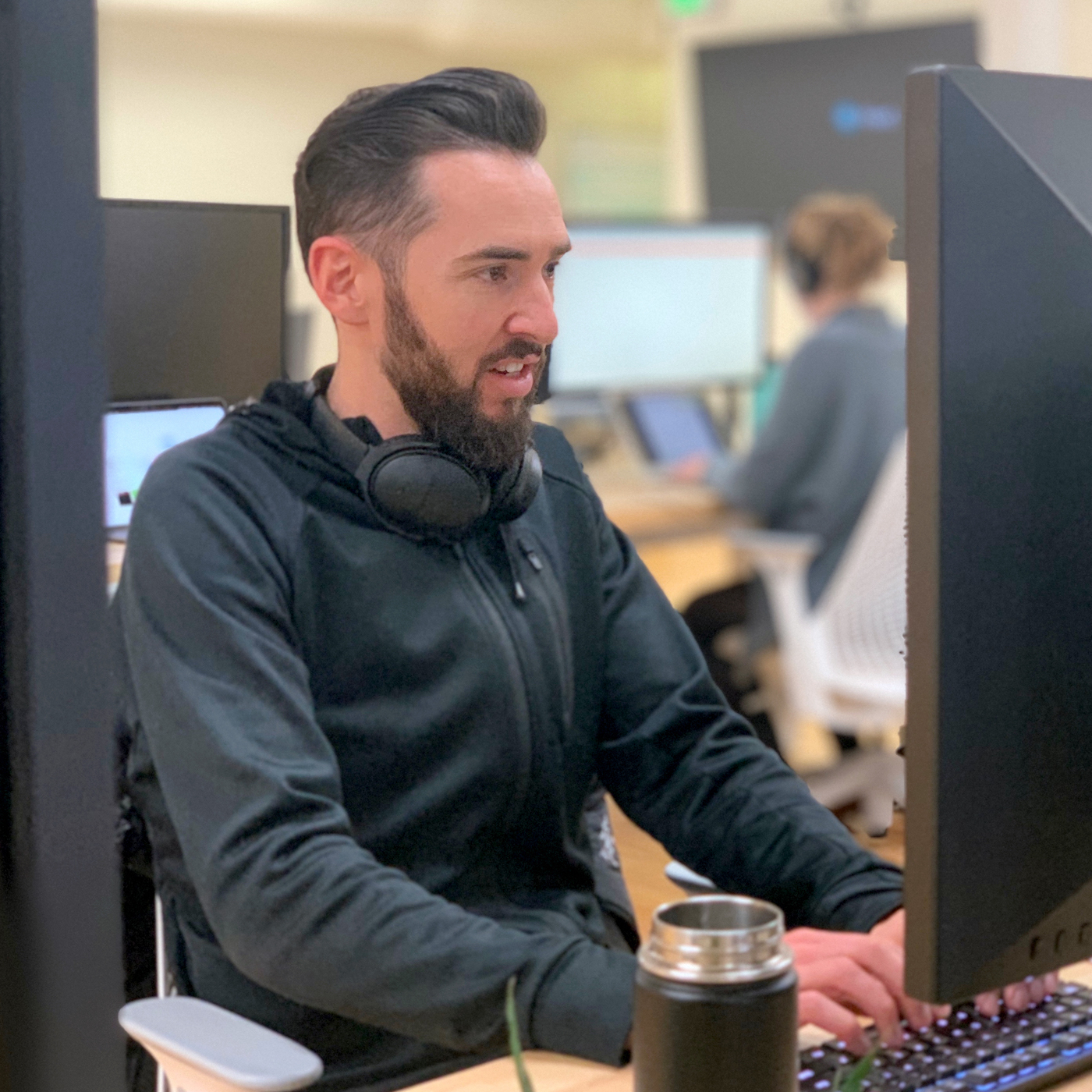
Building a Career With Intention [Special Content From Wunder Capital]
This week, we present an original podcast episode, brought to you by Wunder Capital. This is the third part of our three-part series produced with Wunder.In this episode, we’ll hear the story of Dave Riess, the co-founder and chief technology officer of Wunder.Well before co-founding Wunder, Dave found himself in a tricky spot. Even after building a successful career in software development, he was uninspired: “I’m working really hard solving these problems and fundamentally I'm helping big brands spend money more effectively on Facebook. And, nobody cares about that, including me.”So Dave created a framework for evaluating his career path. And it took him in an entirely new direction into solar.“The framework is quite simple. If I’m going to characterize myself by the work that I do, then why would I not work on the most important problem?”Dave eventually landed on energy, education and health care as the main problems to solve. “Energy, in my opinion, is the obvious winner of those three. You can have a fantastic education system and a fantastic health care system, but if you don’t have a planet to live on it’s not a very bright future.”So how did he establish the framework? And how did he make the decisions that ultimately led him to co-found Wunder? This week, we present an episode about first principles: we cover the value of the beginner’s mind; 10x problem solving; and how to design a career, a product, and a startup team with intention.Listen to our other episodes produced with Wunder:Meet the Women Doing Hundreds of Millions of Dollars in Solar DealsHow a Solar Bromance Cracked the Code for Commercial SolarWunder Capital is the leading commercial solar financing company in the United States. Click here to find out how Wunder Capital can help you finance your next commercial solar project.See Privacy Policy at https://art19.com/privacy and California Privacy Notice at https://art19.com/privacy#do-not-sell-my-info.
Cleantech Venture Capital Is Back
After a long downturn, cleantech venture capital investments are back on the upswing.According to year-end numbers from Bloomberg New Energy Finance, venture and private equity investments into the sector grew 127 percent in 2018 over the previous year, amounting to $9.2 billion. That is the highest total since 2010.Years after venture capital plummeted in 2012 — when investors ran from clean technologies after getting burned by bad bets — we’re seeing a new wave of activity. Oil majors, billionaires and a wide range of corporations are getting in on the action. And there’s a wide range of new funds focusing on both software- and hardware-specific startups.So, is this spurt of activity different from the last one? For one, fewer people are using the term "cleantech."This week, we're joined by Abe Yokell, managing partner at Congruent Ventures. He and our co-host Shayle Kann, a senior VP of research and strategy at Energy Impact Partners, will talk about the changing landscape for venture capital. In this episode, we'll address:What went wrong for VCs in the first cleantech boom? What should we have learned from that wave? Should we still call it "cleantech"? Are we in a new cleantech VC renaissance? What's the current state of supply/demand for capital for a cleantech startup? How much does it vary by stage?What to make of a few new classes of major entrants: utilities, oil majors, incubators/accelerators, and long-horizon investors.How should the risk of a looming recession impact this market?Where to funds get their capital, and what is the appetite for LPs to deploy capital into the space?Support for this podcast comes from Wunder Capital. Wunder Capital is the leading commercial solar financing company in the United States. Click here to find out how Wunder Capital can help you finance your next commercial solar project.Subscribe to The Interchange podcast via Apple Podcasts, Google Podcasts, Stitcher, Spotify or wherever you find your audio content. Or integrate our RSS feed into the app of your choice.See Privacy Policy at https://art19.com/privacy and California Privacy Notice at https://art19.com/privacy#do-not-sell-my-info.
Steal This Decarbonization Strategy!
Desperation has taken hold in climate policy. People are so anxious to do something meaningful, allies are fighting against each other over the solutions. Is the right approach a Green New Deal to re-engineer the energy and labor markets with renewable energy? Or is it better to just price carbon in order to allow all kinds of technologies and carbon mitigation efforts to flourish?We need both, says Hal Harvey, the CEO of Energy Innovation. In this episode, we’ll get beyond the tribalism and look at the suite of policies that will decarbonize the economy quickly and cost-effectively.We’re going to talk about Hal’s new book, “Designing Climate Solutions: A Policy Guide for Low-Carbon Energy.”Topics we’ll cover on the podcast:The Green New Deal and the reliance on renewables as a climate strategy. How far does the wind-solar-water plan get us? The debate about the effectiveness and elegance of a carbon tax. Is it really the end-all solution?The most under-appreciated climate policy.The role of nuclear and seasonal storage.Hal’s reaction to our choices for the deep decarbonization draft picks.Support for this podcast comes from Wunder Capital. Wunder Capital is the leading commercial solar financing company in the United States. Click here to find out how Wunder Capital can help you finance your next commercial solar project.Subscribe to The Interchange podcast via Apple Podcasts, Google Podcasts, Stitcher, Spotify or wherever you find your audio content. Or integrate our RSS feed into the app of your choice.See Privacy Policy at https://art19.com/privacy and California Privacy Notice at https://art19.com/privacy#do-not-sell-my-info.
Battle Royale: Utilities vs Oil Majors vs Mobility Providers vs Big Tech
As the trend toward electrification speeds up, what type of company will dominate the market?We're hosting a cage match to find out.On this week's episode of The Interchange, we pit utilities, oil & gas majors, mobility providers and consumer tech companies against one another. We're throwing them inside a voice-activated, electrified cage to see who will emerge as the energy company of the future.Throughout this episode, we are trying to answer a straightforward-yet-complicated question: who is best positioned to win the long-term power game?To set up the match, we’re going to profile each competitor and look at the evidence for their competitive edge.Then, we’ll ring the bell. We’ll address the following: How might each competitor win? What areas will they be strongest in? What are their weaknesses? What will their dominance look like?We’ll finish with some post-match color commentary and make our picks for the winner.Don't forget to give The Interchange a rating and creative review on Apple podcasts for your chance to win a yearly subscription to GTM Squared!Support for this podcast comes from Wunder Capital. Wunder Capital is the leading commercial solar financing company in the United States. Click here to find out how Wunder Capital can help you finance your next commercial solar project.Subscribe to The Interchange podcast via Apple Podcasts, Google Podcasts, Stitcher, Spotify or wherever you find your audio content. Or integrate our RSS feed into the app of your choice.See Privacy Policy at https://art19.com/privacy and California Privacy Notice at https://art19.com/privacy#do-not-sell-my-info.
What's Behind Rising US Emissions?
After a period of moderation, heat trapping gases are going up in the U.S. and around the world. In 2018, global emissions rose by 2.7 percent. And U.S. emissions rose by 3.4 percent, according to an early tally from the Rhodium Group.This week, we're going to put some meaning to those emissions numbers. We are joined by Brad Plumer, an energy and environment reporter at the New York Times, who will help us dig into each sector.We will answer the following questions:Why aren't wind and solar making up for coal closures?Which sectors are becoming the worst emitters?Will the "Trump bump" accelerate the emissions trend in the medium term?If we were king/dictator/wizard for a day, what sector would we address first?Don't forget to give The Interchange a rating and creative review on Apple podcasts for your chance to win a yearly subscription to GTM Squared!Read along with us:Rhodium Group: Preliminary US Emissions Estimates for 2018NYT: U.S. Carbon Emissions Surged in 2018 Even as Coal Plants ClosedNYT: Greenhouse Gas Emissions Accelerate Like a ‘Speeding Freight Train’ in 2018Follow us on Twitter: @InterchangeShowSupport for this podcast comes from Wunder Capital. Wunder Capital is the leading commercial solar financing company in the United States. Click here to find out how Wunder Capital can help you finance your next commercial solar project.Subscribe to The Interchange podcast via Apple Podcasts, Google Podcasts, Stitcher, Spotify or wherever you find your audio content. Or integrate our RSS feed into the app of your choice.See Privacy Policy at https://art19.com/privacy and California Privacy Notice at https://art19.com/privacy#do-not-sell-my-info.
This Republican Campaigned on Renewables and Won [Special Episode from Energy News Network]
This week, we present a special episode brought to you by the Energy News Network.We profile State Senator Bob Steinburg, a local North Carolina politician who spent a lot of time in his republican primary campaign talking about the benefits of renewable energy. We also talk with Elizabeth Outzs, a journalist at the Energy News Network, who covered Steinburg’s campaign.“What we’re seeing in the way politicians are behaving and the way that people are responding to these polls is that clean energy is increasingly like mom and apple pie,” says Ouzts.Read Elizabeth’s story about the campaign here. For plenty more in-depth coverage on the clean energy transition in the Southeast, Northeast, Midwest, and West, head on over to energynews.us.See Privacy Policy at https://art19.com/privacy and California Privacy Notice at https://art19.com/privacy#do-not-sell-my-info.
How Flexible, Dispatchable Solar Works
Forget everything you think you know about solar.A growing body of research and real-world experience shows that solar can be a flexible, dispatchable resource. And it can potentially rival gas plants in providing grid regulation services — without the use of batteries.We’ve had the technology to allow solar and wind to provide grid services for years. So how do we open up markets to unleash their full potential?In this episode, we’ll look at some new modeling from First Solar, E3 and Tampa Electric Company that outlines how to use utility-scale solar power plants for spinning reserves, load following, voltage support, and frequency response. (Read Colin Meehan's tweet storm about the report, mentioned on the show.)See Privacy Policy at https://art19.com/privacy and California Privacy Notice at https://art19.com/privacy#do-not-sell-my-info.
Hyped Stories, Underplayed Trends and Breakthroughs of 2018
This week, we’ve got our year-end recap — with an Interchange twist. We’re going to cover the following topics:The story that didn’t warrant the attention it got. The story that should have gotten more attention than it did.The energy tech/sector/personality that had the biggest breakthrough of the yearThe energy tech/sector/personality that had the biggest setback of the yearA notable trend that you wish you had predicted.The "most 2018" story of the year. In other words, a story that embodies the zeitgeist.Get your GTM Squared discounted membership here using the promo code, PODCAST.This podcast is sponsored by Sungrow. Sungrow is the leading pure-play solar inverter supplier with a range of solutions for both solar and storage applications. Find out more about how Sungrow is investing in U.S. solar.Subscribe to The Interchange podcast via Apple Podcasts, Google Podcasts, Stitcher, Spotify or wherever you find your audio content. Or integrate our RSS feed into the app of your choice.See Privacy Policy at https://art19.com/privacy and California Privacy Notice at https://art19.com/privacy#do-not-sell-my-info.
Live: Energy Storage Trends of 2018, Oscars Style
This week, we've got a live episode recorded at GTM's storage summit. We'll talk about the hottest energy storage stories of 2018, Oscars style.Julian Spector and Stephen Lacey debate nominees and award recipients in the following categories:Best original policy and regulatory developmentBest application for storage in a hybrid or supporting roleBest foreign storage marketBest new artistBest financial contributionBest storage project in a market leading rolePlus, we remember the fallen storage companies of 2018.If you didn't make it to the summit, GTM Squared members can watch every single panel here.The Interchange is brought to you by Sungrow. Sungrow is the leading pure-play solar inverter supplier with a range of solutions for both solar and storage applications. With more than 2 gigawatts of inverters shipped to the Americas, find out how Sungrow is investing in U.S. solar. See Privacy Policy at https://art19.com/privacy and California Privacy Notice at https://art19.com/privacy#do-not-sell-my-info.
Europe ’18 Tour: Brexit Chaos, French Gas Riots, & Polish Climate Talks
This week, we’re road tripping across Europe. In Poland’s coal country, diplomats are breathing in smog-filled air, preparing to strengthen a global climate deal.In France, angry protestors are rioting in the streets over a gas tax as part of the president’s climate policy.And in the U.K., Britons may leave the European Union without a deal in place, threatening the health of energy markets and the economics of renewable power plants.So as we close out the year, what better time to take a tour of the top European stories?During our tour, maybe we’ll scope out a few subsidy-free offshore wind farms and battery manufacturing plants along the way.We're joined this week by Jason Deign, GTM’s prolific contributing writer, who reports on a range of international energy topics for us. He’s with us from Barcelona, Spain.Read Jason's reporting for GTM here.If you want to go deeper, read Jason's deep reporting for GTM Squared on materials supply constraints caused by the battery boom.Want access to our deep editorial analysis? If you sign up for GTM Squared using the promo code PODCAST, you'll get $50 off. Help support our reporting and treat your mind!See Privacy Policy at https://art19.com/privacy and California Privacy Notice at https://art19.com/privacy#do-not-sell-my-info.
Blockchain in 2018: Where Are We in the Hype Cycle?
We’re back with another edition of “consensus” this week. GTM Co-Founder Scott Clavenna joins us to explain the arcane and hyped up world of blockchain to our listeners in the energy business.We promised not to discuss blockchain on The Interchange until we saw some newsworthy developments — now we have too much to sift through. So we’re going to survey the most important stories of the last year.We’ll start with a quick rundown of Amazon’s plan to develop blockchain-as-a-service: does this signal anything special about the market?Then we’ll address a basic question: where are we in the hype cycle? Are people moderating their expectations?Other stories we’re tracking:How did WePower tokenize Estonia’s grid data?Why did Grid+ face so many regulatory hurdles in Texas’ electricity market?The year of standardization: how are the players rallying around data and privacy standards?The cryptocurrency price drop: how does it impact investor enthusiasm in these new energy applications?We’re giving listeners major discounts this fall. Use the promo code PODCAST to get a $50 discount for a GTM Squared membership and 20% off our final GTM conferences of the season.Get your GTM conference discount here. Get your GTM Squared discounted membership here.Support for this podcast comes from Wunder Capital. Wunder Capital is the leading commercial solar financing company in the United States. Click here to find out how Wunder Capital can help you finance your next commercial solar project.We're also supported by Shoals Technologies Group, the gold standard for solar and storage balance-of-systems solutions. Learn more about how Shoals can make your project operate at the highest level.Subscribe to The Interchange podcast via Apple Podcasts, Google Podcasts, Stitcher, Spotify or wherever you find your audio content. Or integrate our RSS feed into the app of your choice.See Privacy Policy at https://art19.com/privacy and California Privacy Notice at https://art19.com/privacy#do-not-sell-my-info.
A Game of 'Would You Rather' for Energy Wonks
There are tradeoffs to everything in energy. So why not put those tradeoffs to a test?We recently crowdsourced some "would you rather" scenarios from our listeners. On this week's Interchange podcast, we'll choose our favorites and debate the scenarios.Here are the scenarios:Would you rather have $10 billion in renewable deployment funding, startup funding, or R&D? (Bryan Birsic, CEO of Wunder Capital)Would you rather see oil suddenly go to $20/bbl or $200/bbl? (Eric Hittinger, professor at the Rochester Institute of Technology)Would you rather have perfect load forecasting capabilities or perfect wind + solar forecasting algorithms? (Elizabeth Buechler, PhD student at Stanford)Would you rather have a national HVDC overlay grid or ready-to-go next generation nuclear plants with excellent ramping capability? (Michael Noble, CEO of Fresh Energy)Would you rather have an Electric @Ford F-150 or $15,000 EV? (Matt-Stephens Rich, electric vehicle specialist at Electrification coalition)Would you rather have shared autonomous fleet or more mass transit coverage in cities? (Brinda Thomas, engineering and public policy at Stitch Fix)Support for this podcast comes from Wunder Capital. Wunder Capital is the leading commercial solar financing company in the United States. Click here to find out how Wunder Capital can help you finance your next commercial solar project.We're also supported by Shoals Technologies Group, the gold standard for solar and storage balance-of-systems solutions. Learn more about how Shoals can make your project operate at the highest level.Subscribe to The Interchange podcast via Apple Podcasts, Google Podcasts, Stitcher, Spotify or wherever you find your audio content. Or integrate our RSS feed into the app of your choice.See Privacy Policy at https://art19.com/privacy and California Privacy Notice at https://art19.com/privacy#do-not-sell-my-info.
Plugging 'Plant Factories' Into the Grid
When you grow plants with electrons rather than the sun, what happens to the grid?This week, we’re talking about the energy profile of indoor plant factories.Indoor farming is having a moment. Venture capitalists are investing hundreds of millions of dollars into vertical farming startups growing in urban, industrial facilities. Cities are easing restrictions to encourage more plant factories. And even Elon Musk’s cousin founded a vertical farm.We’re tackling this booming business: what’s driving it, what’s the potential, and what are the energy consequences?We’re joined by Logan Ashcraft, an indoor agriculture expert who previously served as the manager of energy & power at Plenty. She’s currently doing research on the broader impact of these operations on the energy system.Support for this podcast comes from Wunder Capital. Wunder Capital is the leading commercial solar financing company in the United States. Click here to find out how Wunder Capital can help you finance your next commercial solar project.We're also supported by Shoals Technologies Group, the gold standard for solar and storage balance-of-systems solutions. Learn more about how Shoals can make your project operate at the highest level.Subscribe to The Interchange podcast via Apple Podcasts, Google Podcasts, Stitcher, Spotify or wherever you find your audio content. Or integrate our RSS feed into the app of your choice.See Privacy Policy at https://art19.com/privacy and California Privacy Notice at https://art19.com/privacy#do-not-sell-my-info.
8 Bets About the Future
This week, we’re taking bets on the future of energy. Shayle wrote a piece celebrating his colleague’s expected daughter, nicknamed Bug. Bug will be born at the beginning of 2019. She’ll enter high school in 2033 and turn 30 in 2049. What will her future look like?In this episode, we outline 8 different scenarios that Bug may face in her lifetime — and decide whether or not to take Shayle’s bets.The bets:Bet #1: Bug will control machines with her voice more than with her keyboard.Bet #2: Bug will never personally drive a car.Bet #3: By the time Bug buys her first home, especially if she’s in an urban environment, her surroundings will transformed. Bet #4: By the time Bug shops for her own groceries, >20% of her produce will be grown indoorsBet #5: In Bug’s first home of her own, more than half of her electricity load will dynamically respond to grid or price signalsBet #6: By the time Bug reaches 30 (in the year 2050), electricity’s market share of final energy consumption will more than double.Bet #7: More than 50% of Bug’s electricity, as represented by the national breakdown, will come from renewables by the time she’s a sophomore in high school.Bet #8 : Bug will live over 200 years, and for most of her life, electricity will be her only food.Would you take these bets? Hit us up on Twitter!See Privacy Policy at https://art19.com/privacy and California Privacy Notice at https://art19.com/privacy#do-not-sell-my-info.
The Solar Window Shopper
How are residential customers shopping for solar?This week, Stephen shares his solar experience. He’ll explain how and why he made his decision — and what it tells us about the way people look for solar offerings today.Brian Sadler, the VP of project development at Revolusun, describes the residential solar sales cycle.Vikram Aggarwal, the CEO of EnergySage, talks about how installers can better serve the solar window shopper.Josh Garrett, an account director at Antenna Group, shares his bad experience with community solar.Kiran Bhatraju, the CEO of Arcadia Power, explains the residential “energy concierge” concept for community solar, wind RECs, smart home devices and other services.Recommended reading:Vikram Aggarwal's column at GTM: It’s Time for the Solar Industry to Embrace Window ShoppersJosh Garrett's colum at GTM: My Experience With Community Solar: Excessively Complicated and FrustratingGTM: Shopping for Community Solar? Contract Terms Are Getting FriendlierSupport for this podcast comes from Wunder Capital. Wunder Capital is the leading commercial solar financing company in the United States. Click here to find out how Wunder Capital can help you finance your next commercial solar project.We're also supported by Shoals Technologies Group, the gold standard for solar and storage balance-of-systems solutions. Learn more about how Shoals can make your project operate at the highest level.Subscribe to The Interchange podcast via Apple Podcasts, Google Podcasts, Stitcher, Spotify or wherever you find your audio content. Or integrate our RSS feed into the app of your choice.See Privacy Policy at https://art19.com/privacy and California Privacy Notice at https://art19.com/privacy#do-not-sell-my-info.
Are Buildings Smart Yet?
This week, a conversation with Joe Aamidor, an expert on smart buildings. Over the last two years, large multinational energy firms have dumped billions of dollars into commercial energy management — acquiring companies in smart lighting, demand response, battery storage, energy billing, microgrids, smart controls and software.But there’s no one-size fits all approach to the built environment. Creating a scalable business that serves the diverse needs of building owners is tough. Joe explains.Read Joe Aamidor’s three-part series for GTM Squared on building energy management. Subscribe to The Interchange podcast via Apple Podcasts, Google Podcasts, Stitcher, Spotify or wherever you find your audio content. Or integrate our RSS feed into the app of your choice.See Privacy Policy at https://art19.com/privacy and California Privacy Notice at https://art19.com/privacy#do-not-sell-my-info.
Meet the Women Closing Solar Deals [Special Episode From Wunder Capital]
This week, we present an original podcast, brought to you by Wunder Capital.Katie and Becca do a lot of solar deals. They're closing tens of millions in commercial solar projects every month.Karen is an SREC trader and longtime real estate pro. She recently approached Katie and Becca with a complicated merchant solar project. The three of them worked hard to refinance the project -- and when it was all over, formed a deep relationship.Katie Lynch is lead director of finance at Wunder Capital. Becca Gallery is the manager of business development at Wunder. And Karen Lichtin is the president of Cleanlight Power + Energy.Despite their ability to do high volumes of deals, they often get the same reaction from men: "You are not what I expected."Solar is more diverse than other energy sectors. But there are few women working on the business side of projects.In this episode, talk with Katie, Becca and Karen about how they do deals, how gender dynamics play out in the solar industry, and why more diverse teams are good for business. See Privacy Policy at https://art19.com/privacy and California Privacy Notice at https://art19.com/privacy#do-not-sell-my-info.
Electric Aviation Is Coming
Self-flying electric airplanes are closer than you think. But how close?Andrew Beebe, managing director at Obvious Ventures, has been watching the space intently. His firm recently invested in Lilium, a startup making a vertical takeoff and landing jet. "In the near future, this industry could vastly change how and where we all live, work and play. There are indeed threats and challenges to this vision, but the wheels are already in motion, and the future is much closer than most people think," wrote Beebe and Joe Blair in a recent column. A combination of improvements in batteries, software and sensors are forming the "corners of a very clear roadmap," says Beebe, speaking on The Interchange.When electric aviation finally becomes commercialized — both battery-hybrid conventional planes and vertical-takeoff-and-landing jets — what will be the consequences for our communities and transportation systems?In this week's episode, we talk with Beebe about the flight path for electric aviation.Support for this podcast comes from Wunder Capital. Wunder Capital is the leading commercial solar financing company in the United States. Click here to find out how Wunder Capital can help you finance your next commercial solar project.We're also supported by Shoals Technologies Group, the gold standard for solar and storage balance-of-systems solutions. Learn more about how Shoals can make your project operate at the highest level.Subscribe to The Interchange podcast via Apple Podcasts, Google Podcasts, Stitcher, Spotify or wherever you find your audio content. Or integrate our RSS feed into the app of your choice.See Privacy Policy at https://art19.com/privacy and California Privacy Notice at https://art19.com/privacy#do-not-sell-my-info.
Judge Kavanaugh's Past
Everyone is paying close attention to Judge Brett Kavanaugh.On Thursday, Trump's Supreme Court nominee will face questions from Congress about alleged sexual assaults. In most cases, Supreme Court confirmation hearings aren't made-for-television affairs. But a new poll out from PBS and NPR shows that 58 percent of Americans will be paying attention to this week’s confirmation hearings.Since so many people are fixated on Judge Kavanaugh, it’s a good opportunity to discuss his extensive record on energy and the environment.This week on The Interchange podcast, we're joined by Michael Wara, director of the climate and energy program at the Stanford Woods Institute for the Environment. Michael is familiar with some cases that Kavanaugh has heard as a circuit judge — and he’s going to help understand Kavanaugh’s judicial philosophy.Wara calls him an "extreme textualist" who rarely gives deference to agencies. "He tends to discover that words in legislation can only mean one thing — and that 'thing' happens to mean that the agency can't regulate. Putting him on the court in combination with Gorsuch would likely mean a significant curtailment of agency authority to make judgments."Support for this podcast comes from Wunder Capital. Wunder Capital is the leading commercial solar financing company in the United States. Click here to find out how Wunder Capital can help you finance your next commercial solar project.We're also supported by Shoals Technologies Group, the gold standard for solar and storage balance-of-systems solutions. Learn more about how Shoals can make your project operate at the highest level.Subscribe to The Interchange podcast via Apple Podcasts, Google Podcasts, Stitcher, Spotify or wherever you find your audio content. Or integrate our RSS feed into the app of your choice.See Privacy Policy at https://art19.com/privacy and California Privacy Notice at https://art19.com/privacy#do-not-sell-my-info.
Untangling Solar and Storage Markets
This week, we take stock of the market for solar and storage. How much solar and storage are getting built — and at what cost?We’re joined by MJ Shiao, director of Americas research for Wood Mackenzie Power & Renewables, for a look at the factors currently driving PV development and battery deployments.We'll answer:How have tariffs impacted pricing?How did the sudden slowdown in China influence the U.S. market?How is the tax credit stepdown pushing development?What goes into record-low solar-plus-storage bids?Support for The Interchange comes from Wunder Capital. According to GTM Research , Wunder Capital is the leading commercial solar financing company in the United States. Click here to find out how Wunder Capital can help you finance your next commercial solar project.The Interchange is also brought to you by Shoals Technologies Group, the gold standard for solar and storage balance-of-systems solutions. Learn more about how Shoals can make your project operate at the highest level.See Privacy Policy at https://art19.com/privacy and California Privacy Notice at https://art19.com/privacy#do-not-sell-my-info.
Where Did All Those Electric Scooters Come From?
This spring, electric bikes and electric scooters started showing up on the streets of a handful of major U.S. cities in droves. Where did they come from? They were put there by a new breed of Silicon Valley companies focused on creating a new "last mile" ride sharing service.The startups have spread so quickly, Uber and Lyft are now trying to get in on the action.This week, we talk with Emily Warren, the senior director of public policy at Lime. Lime one of the leading "micromobility" companies hitting the streets. We'll talk with Emily about what this new form of mobility borrows (and hopes to avoid) from the last six years of ride sharing."That first wave of on-demand transportation has now prepared the public and the market to accept a much broader variety of transportation modes. They've now opened the door for a whole bunch of additional kinds of options that are coming on the scene. Frankly, I don't think any of us expected that scooters were going to be the thing," says Warren.Recommended reading: Vox: Electric Scooters' Sudden Invasion of American Cities, ExplainedWashington Post: The Electric Scooters Swarming Our City Won’t Solve Our Commuting CalamitySupport for The Interchange comes from Wunder Capital. According to GTM Research, Wunder Capital is the leading commercial solar financing company in the United States. Click here to find out how Wunder Capital can help you finance your next commercial solar project.The Interchange is also brought to you by Shoals Technologies Group, the gold standard for solar and storage balance-of-systems solutions. Learn more about how Shoals can make your project operate at the highest level.Subscribe to The Interchange podcast via Apple Podcasts, Google Podcasts, Stitcher, Spotify or wherever you find your audio content. Or integrate our RSS feed into the app of your choice.See Privacy Policy at https://art19.com/privacy and California Privacy Notice at https://art19.com/privacy#do-not-sell-my-info.
Best and Worst Cleantech Ad Campaigns of All Time
The clean energy industry may not have a lot of money to spend collectively on advertisements. But over the years, we've seen numerous TV ads, infographics, slogans, and all kinds of marketing campaigns from individual companies.So this week, we are going to rank some of our favorite – and least favorite – marketing efforts. We'll also debate the perennial question: do we need a "Got Milk" campaign for clean energy?We're joined by Tor Valenza, a marketing expert better known as Solar Fred. Tor founded the marketing firm UnThink Solar and is currently the director of marketing at SepiSolar. Firstly, what is unique about clean energy that makes branding so important – yet so hard? Then, what are the best marketing campaigns in history outside of energy? Why are they so good? Finally, we’ll pick our favorite and least favorite ads or marketing campaigns in cleantech.Below are links to our picks for best and worst campaigns.Best non-cleantech campaigns:Mac versus PC adsGot Milk commercialOur favorite cleantech ads or pop-culture placements:Nanosys thin-film solar mention from "Wall Street 2"Sunrun dolphin babies adMr. WOur least favorite cleantech ads or campaigns:Yingli's World Cup sponsorshipSolar freakin' roadwaysSolon AG ad SolarWorld's racist Christmas cardThis podcast is supported by Wunder Capital, the easiest way to invest in large-scale solar energy projects across the U.S. With Wunder, you can help finance renewable energy projects while earning up to 7.5 percent annually. Get started here to diversify your portfolio and support American solar projects.This podcast is brought to you by Shoals, the gold standard for solar and storage balance-of-systems solutions. Learn more about how Shoals can make your project operate at the highest level.Subscribe to The Interchange podcast via Apple Podcasts, Google Podcasts, Stitcher or wherever you find your audio content.See Privacy Policy at https://art19.com/privacy and California Privacy Notice at https://art19.com/privacy#do-not-sell-my-info.
The Always-On Energy Vampires in Your Home
This week, we’ve got an investigation into the always-on vampires lurking in your home. Actually, one vampire in particular: your DVR box.The engineers over at Sense Labs recently started opening up and testing DVR boxes. They found that power-save mode doesn’t actually do anything — it only saves about a watt of energy.Compared to smart televisions, gaming consoles or smart phones, the power-save mode of DVR boxes is abysmal. But the cable industry says that it’s the overall efficiency of devices that matters — and they’ve slashed total power consumption by half since 2012.Should consumers expect more? In this episode, we investigate.This podcast is supported by Wunder Capital, the easiest way to invest in large-scale solar energy projects across the U.S. With Wunder, you can help finance renewable energy projects while earning up to 7.5 percent annually. Get started here to diversify your portfolio and support American solar projects. Subscribe to The Interchange podcast via Apple Podcasts, Google Podcasts, Stitcher or wherever you find your audio content.See Privacy Policy at https://art19.com/privacy and California Privacy Notice at https://art19.com/privacy#do-not-sell-my-info.
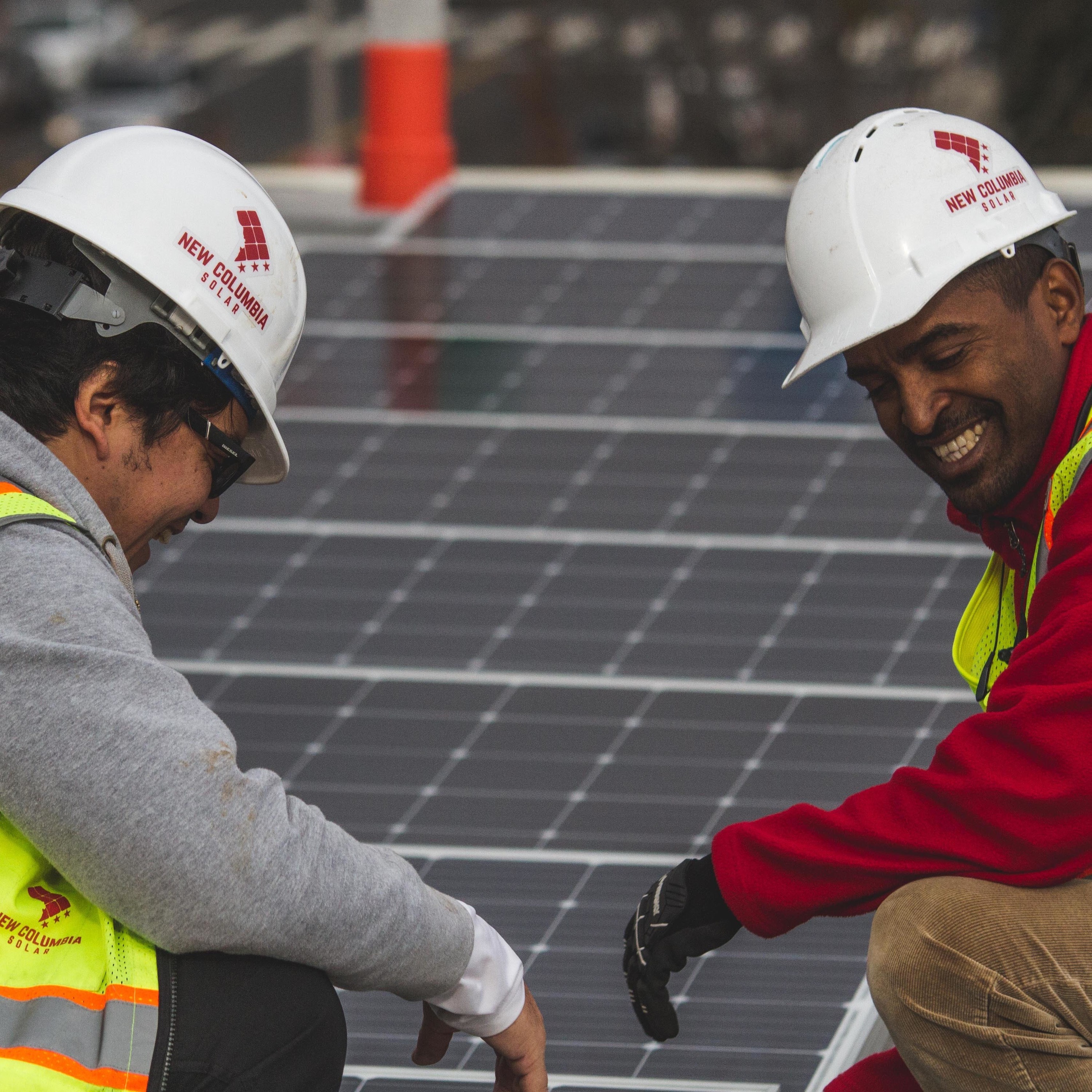
How a Solar Bromance Cracked the Code for Commercial PV [Special Content From Wunder Capital]
This week, we present an original podcast, brought to you by Wunder Capital. If you’re interested in learning more about is connecting investors and installers at a record pace, read the company’s 2018 mid-year review. Nick and Nick are good friends. They’re fellow solar geeks. They do business together.In fact, they may have cracked the commercial solar code together.Nick Kerwin is the director of partner development at Wunder Capital. Nick Giannotti is the president of New Columbia Solar in Washington, DC. The two met randomly when Nick Kerwin was on a trip in DC.They formed a bond over solar that resulted in a single deal. And then another. And then 26 deals. And now it’s closing in on 40. In a single year, Wunder and New Columbia closed $7 million in small commercial solar projects — some of the hardest projects to finance. “That was the beginning of the solar bromance,” said Kerwin. How are these companies blowing up so fast? Just this year, Wunder Capital financed 48 projects worth 33 megawatts of capacity all around the U.S. That’s $869 million in projects in just the first half of 2018. Isn’t commercial solar supposed to be really hard?We spoke with Nick and Nick about why they’ve had so much success. Have we finally created a replicable model for commercial solar?See Privacy Policy at https://art19.com/privacy and California Privacy Notice at https://art19.com/privacy#do-not-sell-my-info.
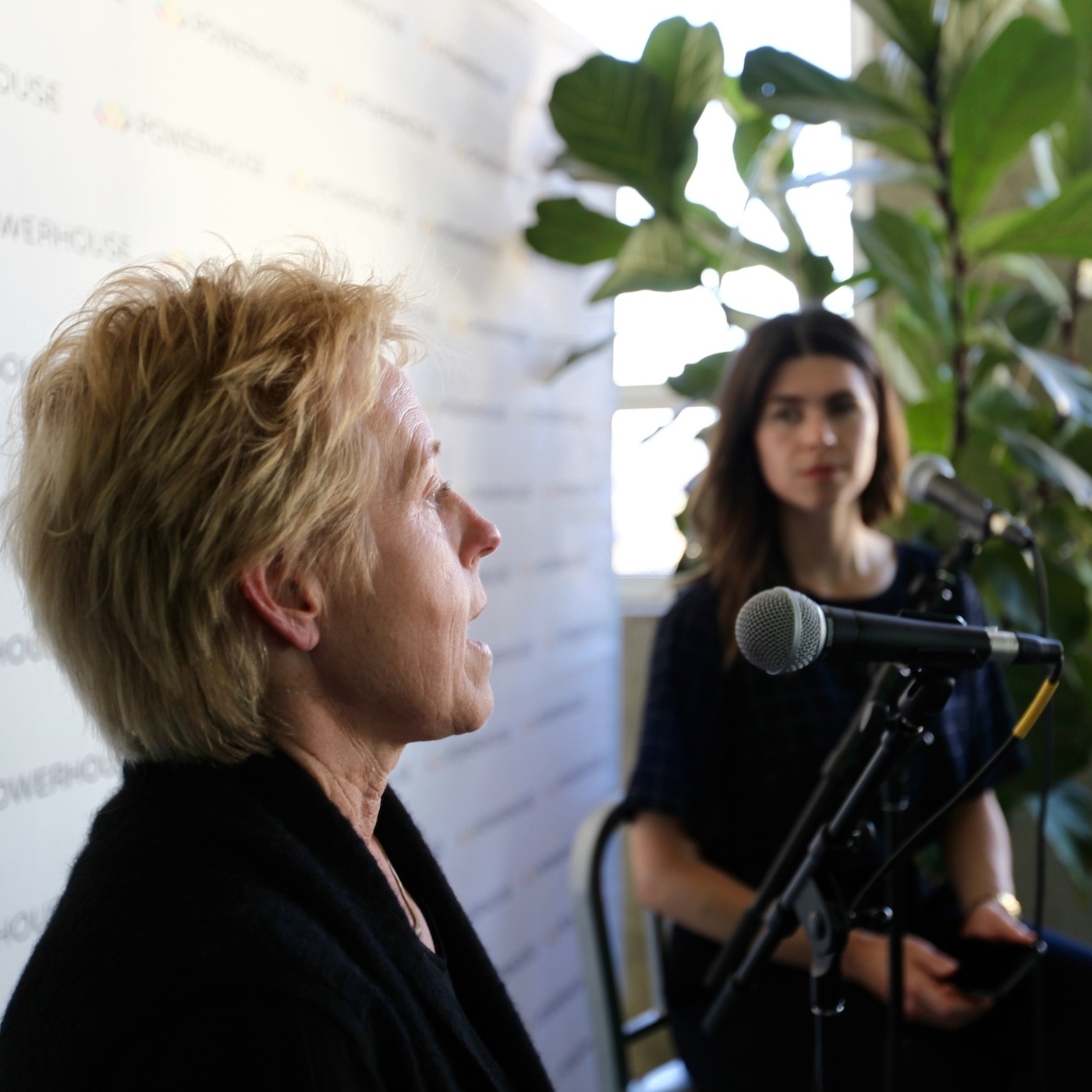
Watt It Takes: How Schwarzenegger’s Chief of Staff Built a Battery Company
This week on Watt It Takes: We’ll hear from Susan Kennedy, the CEO of Advanced Microgrid Solutions, about her transition from politics to behind-the-meter energy storage.Kennedy was an important player in California environmental politics. She influenced some of the biggest pieces of legislation that launched the state’s solar industry and cap-and-trade market. She also worked as a senior advisor to some the biggest names in both parties, including Dianne Feinstein and Arnold Schwarzenegger.After two decades in policy and politics, Kennedy set out to build a company that could take on the unique challenges of distributed energy integration. AMS was born. It has since become one of the most important startups in the booming behind-the-meter storage market."You have to believe that you can do anything. You have to have courage and faith to do what you've never done before."Watt It Takes is a collaboration between Powerhouse and Greentech Media. The series is recorded in front of a live audience at Powerhouse headquarters in Oakland, California. Buy tickets for upcoming events.This podcast is supported by Wunder Capital, the easiest way to invest in large-scale solar energy projects across the U.S. With Wunder, you can help finance renewable energy projects while earning up to 7.5 percent annually. Get started here to diversify your portfolio and support American solar projects.This podcast is brought to you by Shoals, the gold standard for solar and storage balance-of-systems solutions. Learn more about how Shoals can make your project operate at the highest level.Subscribe to The Interchange podcast via Apple Podcasts, Google Podcasts, Stitcher or wherever you find your audio content.See Privacy Policy at https://art19.com/privacy and California Privacy Notice at https://art19.com/privacy#do-not-sell-my-info.
Can the Eco-Right Push Republicans on Climate?
Ten years ago, in the summer of 2009, the U.S. House passed a landmark cap-and-trade bill. Then it died in the Senate a year later.The politics of climate have been completely frozen ever since.The rise of the Tea Party, Republican anti-Obama sentiment, and an influx of money against pro-climate candidates derailed the issue. Republicans stopped engaging — and the ones who did believe in finding solutions were either "primaried" out of office, or just fell silent. One group, RepublicEN, has been working hard to rally grassroots support in Congress for conservative, free-market climate solutions. It's a small organization looking to influence a party in the midst of a tumultuous transition. But Alex Bozmoski, the group’s managing director, thinks it's still possible to move the needle on climate in Congress.In this week's episode of The Interchange, we'll talk with Bozmoski about how to reach conservatives, how to categorize Republican lawmakers on climate, and why convincing politicians may not be as hard as it might seem.This podcast is supported by Wunder Capital, the easiest way to invest in large-scale solar energy projects across the U.S. With Wunder, you can help finance renewable energy projects while earning up to 7.5 percent annually. Get started here to diversify your portfolio and support American solar projects.This podcast is brought to you by Shoals, the gold standard for solar and storage balance-of-systems solutions. Learn more about how Shoals can make your project operate at the highest level.Subscribe to The Interchange podcast via Apple Podcasts, Google Podcasts, Stitcher or wherever you find your audio content.See Privacy Policy at https://art19.com/privacy and California Privacy Notice at https://art19.com/privacy#do-not-sell-my-info.
Energy Policy in a Tweet
Elon Musk recently laid out his plan for a government on Mars in one tweet: “Direct democracy by the people. Laws must be short, as there is trickery in length. Automatic expiration of rules to prevent death by bureaucracy. Any rule can be removed by 40% of people to overcome inertia. Freedom.”That got us thinking. Could we craft an ideal U.S. energy policy in less than 280 characters? On this week’s podcast, take up the challenge.Stephen and Shayle will each lay out their overall approach to policy and then argue each one.Stephen’s policy: Price climate pollution and send the money back to citizens or local governments. Put an end to supporting energy with the tax code. Establish fair and open access for all technologies on the grid. Electrify everything. Don't dogmatize renewable energy. Double ARPA-E's budget. Shayle’s policy: Remain in Paris Accord. Retain CPP but increase targets. Resume and increase CAFE standards. Introduce federal green bank. Triple R&D on clean energy enabling tech. Federal push for HVDC transmission. Major infrastructure investment in public transit system. Freedom.We want to hear from you. Craft your energy policy, take a screenshot and tweet it out to @InterchangeShow. Make sure to tag #energypolicyinatweet.This podcast is supported by Wunder Capital, the easiest way to invest in large-scale solar energy projects across the U.S. With Wunder, you can help finance renewable energy projects while earning up to 7.5 percent annually. Get started here to diversify your portfolio and support American solar projects.This podcast is brought to you by Shoals, the gold standard for solar and storage balance-of-systems solutions. Learn more about how Shoals can make your project operate at the highest level.See Privacy Policy at https://art19.com/privacy and California Privacy Notice at https://art19.com/privacy#do-not-sell-my-info.
Ode to the Pivot!
Ah, the pivot.Did you know that Nokia started out as a paper mill in Finland? Or that Nintendo once made instant rice? Many of the world's leading companies start out in radically different markets.Cleantech is the same. Sales cycles are often slow, technologies don't work as planned, and customer needs are constantly evolving. In the tumultuous world of energy, companies pivot all the time.On this week's episode of The Interchange, we celebrate the pivot.We'll look back throughout history and choose the most successful and unsuccessful pivots of all time. What do they tell us about how to succeed in this market?This podcast is supported by Wunder Capital, the easiest way to invest in large-scale solar energy projects across the U.S. With Wunder, you can help finance renewable energy projects while earning up to 7.5 percent annually. Get started here to diversify your portfolio and support American solar projects.This podcast is brought to you by Shoals, the gold standard for solar and storage balance-of-systems solutions. Learn more about how Shoals can make your project operate at the highest level.Recommended reading:Forbes: 14 Famous Business PivotsWall Street Journal: How a Florida Utility Became the Global King of Green PowerLA Times: How SunEdison Went From Wall Street Star to BankruptcyVestas: The History of Vestas Wind TurbinesGTM: Hard Lessons From the Algae Biofuel BubbleSubscribe to The Interchange podcast via Apple Podcasts, Google Play, Stitcher or wherever you find your audio content.See Privacy Policy at https://art19.com/privacy and California Privacy Notice at https://art19.com/privacy#do-not-sell-my-info.
'Energy Independence' in Trump's America
The politics of energy independence are both deeply bipartisan and deeply partisan.Every president since Richard Nixon has declared a goal of eliminating America’s dependence on foreign sources of energy. But each President approaches independence from a very different political lens. Jimmy Carter was the first to make renewable energy a centerpiece. Ronald Reagan dismantled that strategy and instead focused on lifting price controls on oil and gas.Later, George W. Bush focused on domestic oil production, but also put in place some foundational policies to support domestic renewables. Barack Obama, of course, put renewables front and center.Today, we have Donald Trump, who has made coal-powered "energy dominance" the centerpiece of his energy policy. What does that mean exactly?And after nearly 50 years of talk about energy independence, how are we doing?Joining us this week is Sarah Ladislaw, a senior vice president and director of energy and national security at the Center for Strategic and International Studies. She'll help us America's energy import-export balance in a historic, geopolitical context.This podcast is supported by Wunder Capital, the easiest way to invest in large-scale solar energy projects across the U.S. With Wunder, you can help finance renewable energy projects while earning up to 7.5 percent annually. Get started here to diversify your portfolio and support American solar projects.This podcast is brought to you by Shoals, the gold standard for solar and storage balance-of-systems solutions. Learn more about how Shoals can make your project operate at the highest level.Recommended reading:Foreign Policy: A Short History of Energy IndependenceSarah Ladislaw testimony: Geopolitics of U.S. Oil and Gas CompetitivenessWall Street Journal: Is the U.S. On Track for Energy Independence?Subscribe to The Interchange podcast via Apple Podcasts, Google Play, Stitcher or wherever you find your audio content.See Privacy Policy at https://art19.com/privacy and California Privacy Notice at https://art19.com/privacy#do-not-sell-my-info.
Are Robots Coming to Take Over the Grid?
On this week's Interchange podcast, we saddle up to some adult beverages in a back room at GTM's grid edge conference to discuss the biggest topics in the industry.First, to artificial intelligence and machine learning: What do we exactly mean by "distributed intelligence?" We'll examine some clear use cases.Then to utility innovation: How do power incumbents grapple with the technologies that could break open their business models? We'll give a candid take how they're doing.Finally to GE, Siemens and other industrial giants: Have power generation leaders — even those heavily invested in clean energy — completely underestimated renewables?Stephen and Shayle are joined by David Groarke, the managing director at Indigo Advisory Group.This podcast is supported by Wunder Capital, the easiest way to invest in large-scale solar energy projects across the U.S. With Wunder, you can help finance renewable energy projects while earning up to 7.5 percent annually. Get started here to diversify your portfolio and support American solar projects.This podcast is brought to you by Shoals, the gold standard for solar and storage balance-of-systems solutions. Learn more about how Shoals can make your project operate at the highest level.Have a question for us? Record some audio on your phone or computer and send it to [email protected] reading/watching from the Grid Edge Innovation Summit:What You Missed at the Grid Edge Summit: Blockchain, Data Cleansing and Distributed IntelligenceDistributed Energy Poised for ‘Explosive Growth’ on the US GridWhat Will It Take to Build the Market for Virtual Power Plants?A Reckoning for Power Giants: Siemens May Sell Its Gas Turbine BusinessSubscribe to The Interchange podcast via Apple Podcasts, Google Play, Stitcher or wherever you find your audio content.See Privacy Policy at https://art19.com/privacy and California Privacy Notice at https://art19.com/privacy#do-not-sell-my-info.
Solar Is Getting Super Cheap. What Next?
Coal has taken center stage publicly within the Trump Administration. But solar is the real innovation star behind the scenes. This week, we're talking with Charlie Gay, the director of DOE's solar technologies office, about all the activity happening in the agency.We'll discuss the solar power plants of the future: advances in power electronics; the normalization of energy storage; new ways to value and distribute solar electrons; and integration with the internet of things. We'll also discuss the winning politics of PV in Washington.This podcast is supported by Wunder Capital, the easiest way to invest in large-scale solar energy projects across the U.S. With Wunder, you can help finance renewable energy projects while earning up to 7.5 percent annually. Get started here to diversify your portfolio and support American solar projects.This podcast is brought to you by Shoals, the gold standard for solar and storage balance-of-systems solutions. Learn more about how Shoals can make your project operate at the highest level.Have a question for us? Record some audio on your phone or computer and send it to [email protected] reading and watching:GTM: DOE Announces $105 Million in New Funding for Solar R&DGTM: To Become Truly Mainstream, Solar Will Need to Cost 25 Cents per Watt by 2050YouTube: A Brief History of Photovoltaics With Charlie GaySubscribe to The Interchange podcast via Apple Podcasts, Google Play, Stitcher or wherever you find your audio content.See Privacy Policy at https://art19.com/privacy and California Privacy Notice at https://art19.com/privacy#do-not-sell-my-info.