
PLAY PODCASTS
Institute for Government

Institute for Government

513 episodes — Page 1 of 11

Are private members' bills a good way for MPs to decide on difficult policy

Jun 4, 20261h 1m

Chaos returns to Westminster: What next for Keir Starmer and the government?

May 19, 202659 min

What does the elections bill mean for the next general election?

May 19, 20261h 6m

What does the Children’s Wellbeing and Schools Act mean for children’s social care?

May 12, 20261h 0m

Local and devolved elections 2026: Who won, who lost and what next?

May 11, 20261h 6m

What next for restoration and renewal of parliament?

May 11, 20261h 3m

A state rewired? Civil service leadership, diversity and morale

May 8, 202646 min

What will the 2026 devolved elections mean for Scotland, Wales and the UK?

May 7, 20261h 7m

A keynote speech by Matthew Pennycook MP, Minister for Housing and Planning

Apr 30, 202653 min

Book launch: What is immigration policy for?

Apr 29, 202656 min

The Peter Mandelson scandal: What are the lessons for Keir Starmer's government?

Apr 22, 202641 min

In conversation with Rt Hon James Murray MP, Chief Secretary to the Treasury: How will the government boost public service productivity?

Apr 20, 202658 min

A state rewired? Civil service digital transformation, data, and artificial intelligence
Apr 14, 202646 min

A state rewired? Civil service size, shape, and turnover

Our first webinar in a three-part series focused on the findings of Whitehall Monitor 2026. The first Whitehall Monitor webinar – kicking off a three-part series exploring the IfG’s annual flagship report on the civil service – looked at the context in which much needed strategic workforce planning should be taking place: how the size and shape of the civil service has changed in the past year, against a backdrop of multiple exit schemes and a complex recruitment landscape. The webinar featured: Heloise Dunlop, Researcher at the Institute for Government and co-author of Whitehall Monitor 2026 Daniel Howes, Research Assistant at the IfG and co-author of Whitehall Monitor 2026 Liz Tolcher, Associate Partner – Skills & Workforce Transformation Expert at PA Consulting The event was chaired by Hannah Keenan, Associate Director at the IfG and lead author of Whitehall Monitor 2026. Whitehall Monitor 2026, the IfG’s annual data-led assessment of the size, shape and performance of the civil service, examines how the workforce changed in 2025. We would like to thank PA Consulting for kindly supporting this event.

Apr 7, 202646 min

Can Rachel Reeves protect both households and the public finances from the energy price shock?

As war in the Middle East disrupts energy markets across the world, what are the implications for households and businesses in the UK and how should government respond to the price shock? This IfG webinar explored Rachel Reeves’s options for supporting consumers – and what the ongoing conflict could mean for energy policy, the transition to net zero and for the public finances. What are the implications of different scenarios for oil and gas shipments from the Middle East? What do they mean for the design of support packages? How would different approaches impact government objectives on inflation and growth? Has the government learned the lessons from the response to the 2022 price shock? And do events in the Middle East accelerate or slow the transition to net zero? Should they lead to a rethink on North Sea licensing? This webinar featured: Nick Butler, former Head of Strategy for BP and then senior policy adviser to Prime Minister Gordon Brown Dan Haile, Senior Economist at the Institute for Government Emma Pinchbeck, Chief Executive of the Climate Change Committee and former CEO of Energy UK Andrew Sissons, Director, Sustainable Future Mission at NESTA This webinar was chaired by Jill Rutter, Senior Fellow at the Institute for Government.

Mar 20, 20261h 1m

In conversation with Malcolm Offord, Lord Offord of Garvel, Leader of Reform UK Scotland

With just a few weeks remaining before May’s Scottish parliament election, Malcolm Offord, Leader of Reform UK in Scotland, joined us to discuss the state of devolution, Scotland’s economy and public services, and the future of Scotland. With Reform UK predicted to win a sizeable number of seats in Scotland for the first time, this webinar saw Malcolm Offord set out his policies and plans for Scotland, and discussed how Reform UK would govern if in a position of power at Holyrood. He was in conversation with Institute for Government Programme Director Akash Paun, and answered questions submitted by the online audience. This event is part of a series the Institute for Government is holding with political leaders from Scotland and Wales.

Mar 16, 202647 min

IfG DevoLab #4: How can mayors increase the supply of affordable homes?

The IfG DevoLab is dedicated to exploring the innovations enabled by devolution, learning from the results, and sharing the lessons so that places can take better decisions about how to use devolved powers and budgets. On 25 February, in Manchester, we held our fourth IfG DevoLab event, where three speakers set out how the powers and profile of mayors are being used to increase the supply of affordable homes within their regions. The three case studies presented at IfG DevoLab #4 were: ‘Increasing the supply of affordable homes in the West of England’, by Stephen Peacock, Chief Executive of the West of England Combined Authority ‘From housing growth to good growth - experiences delivering housing growth in Greater Manchester’, by Andrew McIntosh, Director of Sustainable Growth & Infrastructure at Greater Manchester Combined Authority ‘Supporting regions to increase the supply of affordable homes’, by Jackie Rigby, Assistant Director - Place, Partnerships and Capacity at Homes England The three speakers were joined by Ben Denton, Head of Strategic Growth – Affordable Housing at L&G, for a broader discussion of the benefits of devolution and mayoral leadership for this agenda, how mayors can support the government make progress toward its challenging house-building targets, and how further devolution could help accelerate the supply of affordable homes. This event was chaired by Akash Paun, Programme Director at the Institute for Government. Insights from this discussion will inform a published policy briefing containing the three case studies and a synthesis of key lessons. The Institute for Government would like to thank L&G for its support of this event and for its wider support of the IfG DevoLab series.
Mar 3, 20261h 32m

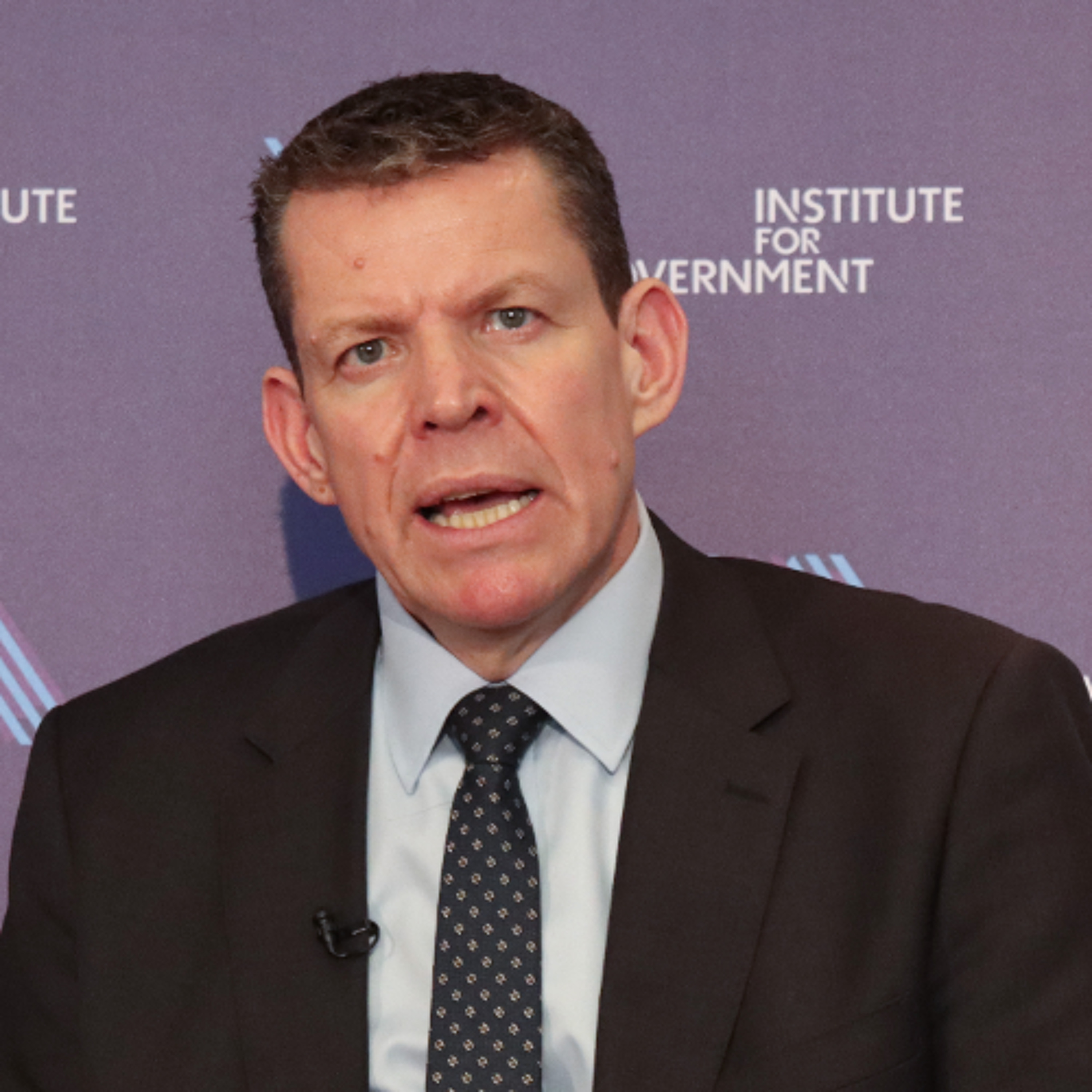
In conversation with Rhun ap Iorwerth MS, Leader of Plaid Cymru

This event took place two months before the people of Wales cast their votes in the seventh election to Senedd Cymru (the Welsh parliament) since it was established in 1999. The polls suggest that Plaid is on track to overturn Labour’s century-long dominance of Welsh politics to become the largest party in the Senedd for the first time, opening the path to Rhun ap Iorwerth becoming Wales’s next first minister. Watch our event recording to hear the Plaid leader deliver a short speech on how he would govern as first minister, followed by a conversation with Akash Paun, Programme Director for Devolution at the Institute for Government, and a Q&A with the live and online audience.

Mar 2, 20261h 5m

How should ministers decide the size and shape of new unitary authorities?

The government’s ambitious local government reorganisation (LGR) programme will replace all county and district councils with a single tier of unitary local government. Local authorities have submitted their preferred geographies to central government – but with reportedly 70 submissions across 21 two-tier areas, there is little consensus on the ideal footprints of future unitary authorities. Government is consulting the public and stakeholders, but ultimately it will fall to ministers to make these decisions – requiring potentially contentious judgements. Some local authorities favour fewer, larger geographies that offer greater efficiencies, others smaller councils that keep decision making closer to local communities. Final decisions will create winners and losers, and some outgoing authorities may resist the outcome. So how will these decisions shape the success of incoming unitary authorities? What weighting should ministers give to competing LGR criteria? How can ministers balance consistency of decisions with the need to tailor decisions for local areas? How can the government do this transparently? To answer these questions and more, this IfG event – the first in a new Making a Success of Local Government Reorganisation series – brought together an expert panel, including: Councillor Kay Mason Billig, Leader of Norfolk County Council Joanne Brown, Partner, Public Sector Audit at Grant Thornton UK LLP Dr Matthew Fright, Senior Researcher at the Institute for Government. Councillor Bella Sankey, Leader of Brighton and Hove City Council (joining remotely) This event was chaired by Akash Paun, Programme Director at the Institute for Government. The Institute for Government would like to thank Grant Thornton UK LLP for their support of this event, the first in a series on how to make a success of local government reorganisation (LGR).

Feb 26, 202659 min

How can the government make a success of the abolition of NHS England?

On 13 March 2025, Keir Starmer announced the abolition of NHS England, the arm’s-length body responsible for overseeing, planning, funding and delivering the health service – with its functions to be merged back into the Department of Health and Social Care. Work on the transition is underway but key decisions are still to be made. What are the risks and opportunities associated with abolishing NHS England? How much progress has been made to date? What can be learnt from previous structural changes to the NHS and other parts of government? How can the government get the reform process right? To answer these questions and more, this webinar from the IfG and the Nuffield Trust brought together an expert panel featuring: Mark Dayan, Policy Analyst and Head of Public Affairs at the Nuffield Trust Stuart Hoddinott, Associate Director at the Institute for Government Sarah Reed, Senior Fellow at the Nuffield Trust The webinar was chaired by Nick Davies, Programme Director at the Institute for Government. This webinar was kindly supported by the Nuffield Trust.
Jan 29, 202659 min

In conversation with Eluned Morgan MS, First Minister of Wales

In 2024, Eluned Morgan MS became the sixth first minister of Wales – and the first woman to hold the role – since the dawn of devolution in 1999. She now leads Welsh Labour into the 2026 Senedd election, which will be held under a new electoral system, and at which Labour faces a double challenge from the rise of Plaid Cymru and Reform. On 22 January, the Institute for Government was delighted to welcome Eluned Morgan to discuss how devolution to Wales has evolved since 1999, her priorities as First Minister, how the Labour governments in Cardiff and Westminster can cooperate on shared goals, and Welsh Labour’s vision for Wales’s constitutional future. The first minister was in conversation with Akash Paun, Programme Director of Devolution at the Institute for Government, followed by a Q&A with the live and online audience.

Jan 22, 20261h 1m

Move fast and fix things: Modernising Whitehall to deliver for Britain

Following the publication of Whitehall Monitor 2026, the Institute for Government’s annual data-led analysis of the state of the UK civil service, the IfG was delighted to welcome Rt Hon Darren Jones MP, Chief Secretary to the Prime Minister, to set out why he thinks the status quo isn’t working and update on the government’s efforts to renew the state. He announced his plans to shake up Whitehall and hardwire innovation into government so that it can keep pace with a changing world and grasp the opportunities of the future. The Chief Secretary to the Prime Minister was introduced by Dr Hannah White OBE, Director and CEO of the Institute for Government.

Jan 21, 202646 min

What does Trump mean for relations between the UK and Europe, and the rest of the world?

Trump’s second term has been markedly different from his first and has already brought with it the most radical shift in US foreign policy since the Second World War. 2026 has seen Trump ramping up action and rhetoric on multiple fronts with even greater pressure on UK and European leaders to respond. What do the next three years hold for relations between the UK, US and EU? Are current tactics and strategies working for the UK and Europe or do leaders need to change course? Will the prime minister finally be forced to choose between Washington and Brussels? On the first anniversary of Trump’s 2025 inauguration, the Institute for Government and UK in a Changing Europe were delighted to invite you to a panel to discuss these and other questions, with: Sir Simon Fraser, Chair of Flint Global, Chair of Chatham House and former Permanent Under-Secretary, Foreign and Commonwealth Office, 2010-15 Fiona Hill, Chancellor of Durham University, Senior Fellow at Brookings Institution and former Presidential Adviser on Foreign Affairs Professor Anand Menon, Director of UK in a Changing Europe This event was chaired by Dr Hannah White, Director and CEO of the Institute for Government. We would like to thank UK in a Changing Europe for kindly supporting this event.

Jan 21, 20261h 14m

How can changes to NHS structures help deliver the 10 Year Health Plan?

The government is making major changes to the structure of the NHS. NHS England is being abolished, with its functions merged into the Department of Health and Social Care (DHSC). At the same time, the number of Integrated Care Boards (ICBs) is set to be reduced, with many expected to merge. Changes proposed by the 10 Year Health Plan, including contracts for single and multi-neighbourhood providers, will also create changes in local delivery structures. How can the government ensure that the new national structure works effectively? Should any current NHSE functions remain independent of DHSC? How should the reformed DHSC work regionally, and with ICBs, strategic authorities and trusts? How can the government make a success of the emerging ICB structure? How should local delivery structures be reformed? To discuss these questions and more, we were joined by an expert panel including: Dr Penelope Dash, Chair of NHS England Dame Patricia Hewitt, former Secretary of State for Health and author of the Hewitt Review of ICSs Samantha Jones, Permanent Secretary at the Department of Health and Social Care Johan Kahlström, President and Managing Director, UK and Ireland at Novartis Pharmaceuticals UK This event was chaired by Nick Davies, Programme Director at the Institute for Government. We would like to thank Novartis Pharmaceuticals UK for kindly supporting this event.

Jan 20, 202659 min

A keynote speech by Rt Hon Sir Mel Stride MP, Shadow Chancellor of the Exchequer / Closing remarks Government 2026

This event was part of Government 2026, the IfG's annual conference. The shadow chancellor delivered a speech, followed by a conversation with Alex Thomas, Executive Director for Impact and Influence at the Institute for Government. Followed by closing remarks from Dr Hannah White, Director and CEO of the Institute for Government. We would like to thank Grant Thornton UK LLP for supporting this event.

Jan 14, 202646 min

The view from the IfG: Government in 2026

This event was part of Government 2026, the IfG's annual conference. Political journalist Carolyn Quinn, former presenter of the BBC’s Westminster Hour, was in conversation with four IfG programme directors to discuss their vital work on policy making, public services, ministers and public bodies – and their verdict on the government’s performance. Nick Davies, Programme Director (Public Services) at the Institute for Government Nehal Davison, Programme Director (Policy making) at the Institute for Government Tim Durrant, Programme Director (Ministers) at the Institute for Government Matthew Gill, Programme Director (Public Bodies) at the Institute for Government We would like to thank Grant Thornton UK LLP for supporting this event.

Jan 14, 202647 min

In conversation with Rt Hon Darren Jones MP, Chief Secretary to the Prime Minister

This event was part of Government 2026, the IfG's annual conference. The Chief Secretary to the Prime Minister discussed why his role spanning both No.10 and the Cabinet Office was created and the need to modernise public services. Speaking with Dr Hannah White, Director and CEO of the Institute for Government, he set out the changes being made to the centre of Whitehall to enable the government to drive action more quickly in 2026. We would like to thank Grant Thornton UK LLP for supporting this event.

Jan 14, 202643 min

Elections 2026: How could votes in England, Scotland and Wales reshape British politics?

This event was part of Government 2026, the IfG's annual conference. A preview of the issues at stake in the hugely significant elections taking place across the UK in May 2026. Kezia Dugdale, former Leader of the Scottish Labour Party and Associate Director of the Centre for Public Policy Guto Harri, broadcaster and former No.10 Director of Communications Akash Paun, Programme Director (Devolution) at the Institute for Government Luke Tryl, Director of More in Common This session was chaired by Dr Catherine Haddon, Senior Fellow at the Institute for Government. We would like to thank Grant Thornton UK LLP for supporting this event.

Jan 14, 20261h 0m

Rewiring the state: Is the government making any progress?

This event was part of Government 2026, the IfG's annual conference. Drawing on brand new IfG research, this panel gave its verdict on the government's attempts to reform the civil service. Whitehall Monitor 2026 presentation from Hannah Keenan, Associate Director at the Institute for Government Followed by a panel discussion featuring: Rt Hon Andy Burnham, Mayor of Greater Manchester (joining virtually) Lord Michael Gove, Editor of The Spectator and former government minister Hannah Keenan, Associate Director at the Institute for Government Rowena Mason, Whitehall Editor at The Guardian This session was chaired by Alex Thomas, Executive Director for Impact and Influence at the Institute for Government. We would like to thank Grant Thornton UK LLP for supporting this event.

Jan 14, 20261h 5m

Is the centre of government built to deliver?

This event was part of Government 2026, the IfG's annual conference. An expert panel explored how well No.10 and the Treasury work together to deliver the government's economic priorities. Rt Hon Ed Balls, broadcaster, presenter of Political Currency, and former Education Secretary Kelly Beaver MBE, Chief Executive of Ipsos in the UK and Ireland Baroness Ayesha Hazarika, broadcaster and former political adviser This session was chaired by Giles Wilkes, Senior Fellow at the Institute for Government and former No.10 Adviser. We would like to thank Grant Thornton UK LLP for supporting this event.

Jan 14, 202658 min

In conversation with Louise Casey, Baroness Casey of Blackstock DBE CB

This event was part of Government 2026, the IfG's annual conference. Baroness Louise Casey, the government's Lead Non-Executive Director and Chair of the Independent Commission into Adult Social Care, discussed her work across the public sector with Dr Hannah White, Director and CEO of the Institute for Government.

Jan 14, 202648 min

Government 2026 Welcome / Keynote speech by Wes Streeting

This event was part of Government 2026, the IfG's annual conference. Welcome Opening remarks from Dr Hannah White, Director and CEO of the Institute for Government Phillip Woolley, Partner, Head of Consulting at Grant Thornton UK LLP ---------------------------------------------------------------------------- A keynote speech by Rt Hon Wes Streeting MP, Secretary of State for Health and Social Care The Secretary of State for Health and Social Care delivered a speech, followed by a conversation with Dr Hannah White, Director and CEO of the Institute for Government. We would like to thank Grant Thornton UK LLP for supporting this event.

Jan 14, 202643 min

The Trump challenge: Chaos, confusion and government communications

According to the Washington Post, Donald Trump made 30,573 false or misleading claims during his first term as US president – and Trump 2.0 has also shown little regard for facts or evidence. Unexpected presidential announcements are made on social media or in press conferences, and Trump’s positions can appear to change overnight. Leaders of other countries, including Keir Starmer, find their own plans and statements overshadowed or knocked off course. Despite this chaos and confusion, Trump appears authentic and able to galvanise his base while other, more conventional, political communicators struggle to get their message across. So is Trump rewriting the rules for government communications? Does the UK have sufficient safeguards against our political leaders adopting Trump’s attitude to facts? Does the UK have robust enough rules to ensure that government communications serve the public not partisan interest? And how is it possible to plan government communications when those plans are constantly blown away by overnight developments in the US? To discuss these questions and more, the Institute for Government, in partnership with Vuelio, was delighted to bring together an expert panel including: Katy Balls, Washington Editor for The Times Simon Baugh, Chief Executive of Government Communications, 2021–25 Alastair Campbell, former No.10 Chief Press Secretary (1997–2000) and No.10 Director of Communications (2000–03) and presenter of the Rest is Politics podcast. Alex Thomas, Programme Director at the Institute for Government This webinar was chaired by Jill Rutter, Senior Fellow at the Institute for Government. We would like to thank Vuelio for kindly supporting this event.

Dec 18, 20251h 1m

Are public inquiries a good way for government to learn lessons

Are public inquiries a good way for government to learn lessons by Institute for Government

Dec 2, 20251h 2m

Autumn budget 2025: What is Rachel Reeves’ plan for the economy?

Just hours after Rachel Reeves sets out the budget to parliament, this webinar brought together a team of Institute for Government (IfG) experts to share their instant and essential analysis of the chancellor’s plans. Who are the winners and losers of Reeves’s tax and spending announcements? How will her measures affect economic growth? Has the chancellor finally set a coherent tax strategy? And what challenges now lie ahead for Keir Starmer’s government? To answer these questions and more, this budget day webinar from the IfG brought together an expert line up featuring Dan Haile, Jill Rutter, and Giles Wilkes. The webinar was chaired by Dr Hannah White.

Nov 27, 202556 min

The Covid Inquiry: What does Module II say about government decision making and political governance?

On 20 November 2025, the UK Covid-19 Inquiry will publish its second report. This module focuses on political and administrative decision making during the pandemic, examining how key decisions were made across government, and civil service performance. This report will also include perspectives from Scotland, Wales, and Northern Ireland. In a rapid reaction webinar the following day, our expert IfG panel unpacked the report’s findings and explored their implications for future governance: Tim Durrant, Programme Director for the IfG Ministers work programme Stuart Hoddinott, Associate Director at the IfG Akash Paun, Programme Director for the IfG Devolution work programme Alex Thomas, Programme Director for the IfG Civil Service work programme The webinar was chaired by Dr Hannah White, Director and CEO of the Institute for Government.

Nov 21, 20251h 1m

In conversation with John Swinney MSP, First Minister of Scotland

Scotland is just six months away from May’s crucial parliamentary election, with First Minister John Swinney preparing to lead the SNP into one of the most unpredictable campaigns since the party entered government almost 19 years ago. On 19 November, the Institute for Government was delighted to welcome Scotland’s First Minister to discuss his priorities ahead of the 2026 Scottish parliament election, the political context in Scotland ahead of the crucial UK budget, and the SNP’s vision for Scotland’s constitutional future. John Swinney was in conversation with Jill Rutter, Senior Fellow at the Institute for Government, followed by a Q&A with the live and online audience.

Nov 20, 20251h 4m

The UK-EU ‘reset': Six months on

At May’s UK-EU summit, Keir Starmer and European Commission President Ursula von der Leyen unveiled a new Common Understanding between the EU and the UK. The government hailed a new “deal” with the EU which included an agreement on fisheries and a joint commitment to negotiate a ‘youth experience scheme’, as well as new arrangements for agriculture, emissions trading, energy cooperation and defence. Many of these changes will involve the UK accepting dynamic alignment, with its potential role in “decision-shaping” to be defined. Six months on, how much progress has been made? Have new stumbling blocks emerged? And now the government has started to highlight the economic consequences of Brexit, will it start to seek an even closer relationship? To explore these questions and more, we were joined by our expert panel: Baroness Ashton, former High Representative of the EU for Foreign Affairs and Security Policy and member of House of Lords and European Affairs Committee Professor Anand Menon, Director of UK in a Changing Europe Calum Miller MP, Liberal Democrat Spokesperson (Foreign Affairs) Sir Ivan Rogers, former UK Permanent Representative to the EU The event was chaired by Jill Rutter, Senior Fellow at the Institute for Government. We would like to thank UK in a Changing Europe for kindly supporting this event.

Nov 20, 20251h 19m

How successfully have Labour run public services?

Poor public service performance was a key reason for Labour’s victory in the 2024 election. Following the new government’s first multi-year spending review and a major reshuffle, this event brough together a panel of experts to discuss how successfully Labour has managed public services since coming to office. This event brought together a panel of experts to discuss these key questions: What was Labour’s public service inheritance? How much progress has the government made on public services since the election? What impact with the spending review have on public service performance? What are the biggest public service challenges that need to be addressed over the rest of the parliament? What are the implications for the budget? As the Institute for Government published the latest edition of Performance Tracker, written in partnership with the Nuffield Foundation, which featured new analysis on the performance of public services, Amber Dellar, Stuart Hoddinott and Cassia Rowland, presented the key findings. They were joined by Stephen Bush, associate editor and columnist at the Financial Times. This event was chaired by Nick Davies, Programme Director at the Institute for Government, with an introduction by Mark Franks at the Nuffield Foundation. This event was kindly supported by the Nuffield Foundation.

Nov 20, 202559 min

The government's digital ID plan: Why now and what for?

Keir Starmer has announced plans for a new digital ID scheme to combat illegal working and make it easier for people to use vital government services like applying for a driving licence and accessing tax records. The government has said that digital ID will be mandatory for right to work checks by the end of this parliament. But critics argue that government has not made a clear case for digital ID, and warn that building a secure, reliable and trusted form of digital identity will be a monumental challenge to implement. So what problem – and for whom – would digital ID solve? Are the government’s ambitions realistic? Is the right data and security infrastructure in place? And what could this mean for digitally excluded groups? To discuss these questions and more, we will be joined by an expert panel including: Rachel Coldicutt, Founder and Executive Director of Careful Industries Matthew Feeney, Advocacy Manager at Big Brother Watch David Normington, former Permanent Secretary at the Home Office Morgan Wild, Chief Policy Adviser at Labour Together and author of “Britcard: a progressive digital identity for Britain” The event will be chaired by Tim Durrant, Programme Director at the Institute for Government.

Nov 18, 20251h 1m

How can changes to NHS technology help deliver the 10 Year Health Plan?

Better use of technology, the transition from analogue to digital, and greater innovation are at the heart of the 10 Year Health Plan. This includes plans to make the NHS app a gateway to the entire NHS, integrate AI into clinical pathways, create a new Health Data Research Service, make genomic sequencing at birth universal, utilise wearable technology in treatments as standard, and to improve uptake and adoption of medicines. What are the potential benefits of greater use of technology and innovation in the NHS? Are there any risks associated with this? How deliverable is the 10 Year Health Plan’s vision for the use of technology and innovation in the NHS? What are the barriers to greater adoption of technology and innovation more broadly? And how can these be overcome? How can investment in technology and innovation be protected and prioritised? To discuss these questions and more, we were joined by an expert panel including: Matthew Chisambi, Director of Imperial College Health Partners Johan Kahlström, President and Managing Director, UK and Ireland at Novartis Pharmaceuticals UK Sam Roberts, Chief Executive of the National Institute for Health and Care Excellence This event was chaired by Nick Davies, Programme Director at the Institute for Government. We would like to thank Novartis Pharmaceuticals UK for kindly supporting this event.

Nov 18, 202558 min

How can the fast stream deliver more for the civil service?

The fast stream, the civil service’s flagship talent development programme, has recently seen a record number of applications and reclaimed the top spot in the Times Higher Education graduate scheme ranking. But exclusive Institute for Government research reveals that the programme still faces significant challenges, including early exits from the scheme, variable quality of postings and fast streamers struggling to find roles upon scheme completion. What should the fast stream’s role be in the wider civil service recruitment ecosystem? What can the government do to ensure that the fast stream delivers more for the civil service? What can the civil service learn from other sectors? And what should future fast stream reform efforts focus on? To explore these questions, the IfG was delighted to be joined for a panel discussion on the future of the fast stream by: Robert Eagleton, National Officer for the Fast Stream at the FDA Union Rachel Hopcroft CBE, Chief Corporate Affairs Officer at NatWest Group Sonia Pawson, Director of HR at West Yorkshire Fire and Rescue Service and former Head of Fast Stream The conversation started with a presentation of key IfG research findings by Teodor Grama, author of Changing course: How to reform the civil service fast stream. The event was chaired by Alex Thomas, Programme Director at the Institute for Government.

Nov 18, 202559 min

IfG DevoLab #3: How devolution can improve transport connectivity

The IfG DevoLab is a new initiative from the Institute for Government dedicated to exploring the innovations enabled by devolution, learning from the results, and sharing the lessons so that places can take better decisions about how to use devolved powers and budgets. On 6 November, the IfG hosted its third IfG DevoLab event in Leeds, at which speakers from three regions set out how the powers and profile of mayors are being used to improve transport connectivity within and between their regions. The three case studies presented at IfG DevoLab #3 were: ‘Improving transport connectivity in West Yorkshire’, by Councillor Susan Hinchcliffe, Leader of Bradford City Council and Chair of the West Yorkshire Transport Committee ‘Connecting Liverpool City Region through Merseyrail’, by Huw Jenkins, Lead Officer - Transport Policy at Liverpool City Region Combined Authority ‘Mayoral partnerships with Great British Railways’ by Richard Crabtree, Head of Mayoral Partnerships at Shadow Great British Railways The three speakers were joined by Tom Bridges, UK Government Business Leader at Arup, for a broader discussion of how devolution can improve transport connectivity, how the government can support innovation and learning, and whether there is a case for further devolution in this area. This event was chaired by Jill Rutter, Senior Fellow at the Institute for Government. Insights from this discussion will inform a published policy briefing containing the three case studies and a synthesis of key lessons. We would like to thank Arup for kindly supporting this event. We are also grateful to our strategic partner L&G for its wider support of the IfG DevoLab series.

Nov 10, 20251h 32m

Leadership change in the civil service: How can new permanent secretaries deliver for government?

As well as the election of a new government, the last year has seen the appointment of a new cabinet secretary and eight new permanent secretaries to lead departments. How will this new leadership cohort change the civil service? What should they prioritise as they get to grips with their new departments? And how can they build the most talented teams to deliver the government’s priorities? To explore these questions, with a particular focus on the Civil Service Commission’s role in recruiting senior leaders and developing the talent pipeline, the IfG was delighted to be joined for a panel discussion on civil service leadership and change by: Atul Devani, Civil Service Commissioner and entrepreneur John-Paul Marks CB, First Permanent Secretary and Chief Executive of HM Revenue and Customs Baroness Gisela Stuart, First Civil Service Commissioner Baroness Stuart spoke briefly to consider the opportunities and challenges for the civil service. She spoke to the Commission’s strategic priorities for 2025–27. The event was chaired by Alex Thomas, Programme Director at the Institute for Government.

Nov 6, 20251h 0m

Productivity Pitches #8: Spreading innovation across public services

Productivity Pitches #8: Spreading innovation across public services by Institute for Government

Oct 22, 20251h 0m

IfG DevoLab #2 How can mayors and strategic authorities secure investment into regional economies EDIT

IfG DevoLab #2 How can mayors and strategic authorities secure investment into regional economies EDIT by Institute for Government

Oct 21, 20251h 32m

Local government reorganisation and public service delivery

Local government reorganisation and public service delivery by Institute for Government

Oct 16, 20251h 5m

Industrial strategy, tariffs and global trade: Is the government's strategy working?

This event is part of the Institute for Government's Conservative Party Conference 2025 fringe programme. Speakers: Rt Hon Lord Willetts, Chair of the Regulatory Innovation Office and former Minister for Universities and Science Helen Bower-Easton CBE, Director of Communications at the Financial Conduct Authority (FCA) Professor Nigel Brandon OBE, Dean of the Faculty of Engineering and Professor of Sustainable Development in Energy at Imperial College London Jill Rutter, Senior Fellow at the Institute for Government Giles Wilkes, Senior Fellow at the Institute for Government This event was chaired by Dr Gemma Tetlow, Chief Economist at the Institute for Government. This event was held in partnership with Imperial College London.

Oct 9, 20251h 4m

How can mayors improve skills and productivity to drive regional growth?

This event is part of the Institute for Government's Conservative Party Conference 2025 fringe programme. Speakers: Mayor Paul Bristow, Mayor of Cambridgeshire and Peterborough Professor Duncan Ivison, President and Vice-Chancellor of the University of Manchester Cllr Louise McKinlay, Deputy Leader and Cabinet Member for Communities, Economic Growth and Prosperity at Essex County Council This event was chaired by Akash Paun, Programme Director at the Institute for Government.

Oct 8, 20251h 0m

How should the Conservative Party rethink its vision for public services?

This event is part of the Institute for Government's Conservative Party Conference 2025 fringe programme. Speakers: Baroness Barran MBE, Shadow Minister for Education Dr Kieran Mullan MP, Shadow Minister for Justice Cllr Abi Brown OBE, Deputy Leader of the Local Government Association Conservative Group This event was chaired by Nick Davies, Programme Director at the Institute for Government.

Oct 8, 20251h 0m