
Institute for Government
542 episodes — Page 1 of 11
ifg-how-can-labours-early-years-agenda-better-support-boys-from-low-income-families
Where next for English devolution under Andy Burnham?
How can Labour build an affordable welfare system that supports sick and disabled people?
Getting things done: How can government deliver policy priorities?
Leaders of tomorrow: How can the UK develop politicians fit for the future?
In conversation with Daisy Cooper MP
Does the UK do enough to guard against corruption in public life?
Andy Burnham: How can the prime minister meet the government’s biggest challenges?
What happened to liberal democracy?
The government's local government reorganisation strategy: What went wrong and what comes next?
How can government help deliver a globally competitive AI infrastructure for the UK?
Andy Burnham, Manchester and No.10 North: How can the prime minister make his devolution agenda succeed?
ifg-norse-devolution-reform-party-conference-2026
In conversation with Danny Kruger MP
Book launch: The Brexit Effect, 2016–2026
IfG DevoLab #6: How can mayors support a just climate transition?
Creating a regulatory system that attracts investment
Delivering government policy through regulation
Welcome and keynote speech by Blair McDougall MP, Minister for Small Business and Economic Transformation
In conversation with Sir Ed Davey MP, Leader of the Liberal Democrats
In conversation with Richard Tice MP, Deputy Leader of Reform UK
IfG DevoLab #5: How can mayors and local leaders create a shared vision for regional growth?
Integrating diplomacy and development: How does the Foreign Office set itself up for success?
The NHS 10-year plan one year on: Is the government shifting the health service towards prevention?
Andy Burnham: What to expect from the next prime minister?
A keynote speech by Dan Tomlinson MP, Exchequer Secretary to the Treasury
How can government close the early years attainment gap for boys from low-income families?
Lessons from Covid: How to avoid fraud in future crises?
Rt Hon Kemi Badenoch MP: keynote speech
Are private members' bills a good way for MPs to decide on difficult policy
Chaos returns to Westminster: What next for Keir Starmer and the government?
What does the elections bill mean for the next general election?
What does the Children’s Wellbeing and Schools Act mean for children’s social care?
Local and devolved elections 2026: Who won, who lost and what next?
What next for restoration and renewal of parliament?
A state rewired? Civil service leadership, diversity and morale
What will the 2026 devolved elections mean for Scotland, Wales and the UK?
A keynote speech by Matthew Pennycook MP, Minister for Housing and Planning
Book launch: What is immigration policy for?
The Peter Mandelson scandal: What are the lessons for Keir Starmer's government?
In conversation with Rt Hon James Murray MP, Chief Secretary to the Treasury: How will the government boost public service productivity?
A state rewired? Civil service digital transformation, data, and artificial intelligence
A state rewired? Civil service size, shape, and turnover
Our first webinar in a three-part series focused on the findings of Whitehall Monitor 2026. The first Whitehall Monitor webinar – kicking off a three-part series exploring the IfG’s annual flagship report on the civil service – looked at the context in which much needed strategic workforce planning should be taking place: how the size and shape of the civil service has changed in the past year, against a backdrop of multiple exit schemes and a complex recruitment landscape. The webinar featured: Heloise Dunlop, Researcher at the Institute for Government and co-author of Whitehall Monitor 2026 Daniel Howes, Research Assistant at the IfG and co-author of Whitehall Monitor 2026 Liz Tolcher, Associate Partner – Skills & Workforce Transformation Expert at PA Consulting The event was chaired by Hannah Keenan, Associate Director at the IfG and lead author of Whitehall Monitor 2026. Whitehall Monitor 2026, the IfG’s annual data-led assessment of the size, shape and performance of the civil service, examines how the workforce changed in 2025. We would like to thank PA Consulting for kindly supporting this event.
Can Rachel Reeves protect both households and the public finances from the energy price shock?
As war in the Middle East disrupts energy markets across the world, what are the implications for households and businesses in the UK and how should government respond to the price shock? This IfG webinar explored Rachel Reeves’s options for supporting consumers – and what the ongoing conflict could mean for energy policy, the transition to net zero and for the public finances. What are the implications of different scenarios for oil and gas shipments from the Middle East? What do they mean for the design of support packages? How would different approaches impact government objectives on inflation and growth? Has the government learned the lessons from the response to the 2022 price shock? And do events in the Middle East accelerate or slow the transition to net zero? Should they lead to a rethink on North Sea licensing? This webinar featured: Nick Butler, former Head of Strategy for BP and then senior policy adviser to Prime Minister Gordon Brown Dan Haile, Senior Economist at the Institute for Government Emma Pinchbeck, Chief Executive of the Climate Change Committee and former CEO of Energy UK Andrew Sissons, Director, Sustainable Future Mission at NESTA This webinar was chaired by Jill Rutter, Senior Fellow at the Institute for Government.
In conversation with Malcolm Offord, Lord Offord of Garvel, Leader of Reform UK Scotland
With just a few weeks remaining before May’s Scottish parliament election, Malcolm Offord, Leader of Reform UK in Scotland, joined us to discuss the state of devolution, Scotland’s economy and public services, and the future of Scotland. With Reform UK predicted to win a sizeable number of seats in Scotland for the first time, this webinar saw Malcolm Offord set out his policies and plans for Scotland, and discussed how Reform UK would govern if in a position of power at Holyrood. He was in conversation with Institute for Government Programme Director Akash Paun, and answered questions submitted by the online audience. This event is part of a series the Institute for Government is holding with political leaders from Scotland and Wales.

IfG DevoLab #4: How can mayors increase the supply of affordable homes?
The IfG DevoLab is dedicated to exploring the innovations enabled by devolution, learning from the results, and sharing the lessons so that places can take better decisions about how to use devolved powers and budgets. On 25 February, in Manchester, we held our fourth IfG DevoLab event, where three speakers set out how the powers and profile of mayors are being used to increase the supply of affordable homes within their regions. The three case studies presented at IfG DevoLab #4 were: ‘Increasing the supply of affordable homes in the West of England’, by Stephen Peacock, Chief Executive of the West of England Combined Authority ‘From housing growth to good growth - experiences delivering housing growth in Greater Manchester’, by Andrew McIntosh, Director of Sustainable Growth & Infrastructure at Greater Manchester Combined Authority ‘Supporting regions to increase the supply of affordable homes’, by Jackie Rigby, Assistant Director - Place, Partnerships and Capacity at Homes England The three speakers were joined by Ben Denton, Head of Strategic Growth – Affordable Housing at L&G, for a broader discussion of the benefits of devolution and mayoral leadership for this agenda, how mayors can support the government make progress toward its challenging house-building targets, and how further devolution could help accelerate the supply of affordable homes. This event was chaired by Akash Paun, Programme Director at the Institute for Government. Insights from this discussion will inform a published policy briefing containing the three case studies and a synthesis of key lessons. The Institute for Government would like to thank L&G for its support of this event and for its wider support of the IfG DevoLab series.
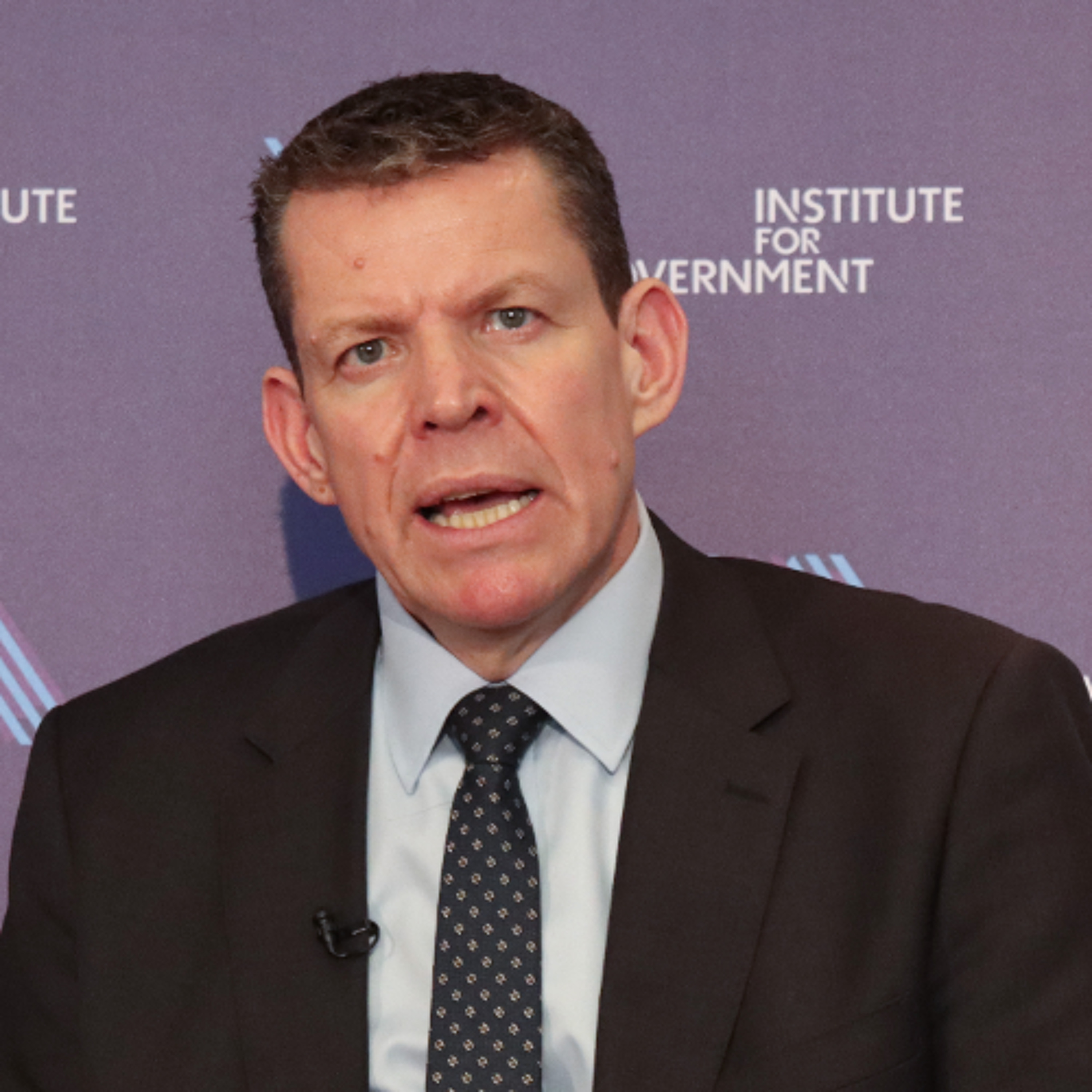
In conversation with Rhun ap Iorwerth MS, Leader of Plaid Cymru
This event took place two months before the people of Wales cast their votes in the seventh election to Senedd Cymru (the Welsh parliament) since it was established in 1999. The polls suggest that Plaid is on track to overturn Labour’s century-long dominance of Welsh politics to become the largest party in the Senedd for the first time, opening the path to Rhun ap Iorwerth becoming Wales’s next first minister. Watch our event recording to hear the Plaid leader deliver a short speech on how he would govern as first minister, followed by a conversation with Akash Paun, Programme Director for Devolution at the Institute for Government, and a Q&A with the live and online audience.

How should ministers decide the size and shape of new unitary authorities?
The government’s ambitious local government reorganisation (LGR) programme will replace all county and district councils with a single tier of unitary local government. Local authorities have submitted their preferred geographies to central government – but with reportedly 70 submissions across 21 two-tier areas, there is little consensus on the ideal footprints of future unitary authorities. Government is consulting the public and stakeholders, but ultimately it will fall to ministers to make these decisions – requiring potentially contentious judgements. Some local authorities favour fewer, larger geographies that offer greater efficiencies, others smaller councils that keep decision making closer to local communities. Final decisions will create winners and losers, and some outgoing authorities may resist the outcome. So how will these decisions shape the success of incoming unitary authorities? What weighting should ministers give to competing LGR criteria? How can ministers balance consistency of decisions with the need to tailor decisions for local areas? How can the government do this transparently? To answer these questions and more, this IfG event – the first in a new Making a Success of Local Government Reorganisation series – brought together an expert panel, including: Councillor Kay Mason Billig, Leader of Norfolk County Council Joanne Brown, Partner, Public Sector Audit at Grant Thornton UK LLP Dr Matthew Fright, Senior Researcher at the Institute for Government. Councillor Bella Sankey, Leader of Brighton and Hove City Council (joining remotely) This event was chaired by Akash Paun, Programme Director at the Institute for Government. The Institute for Government would like to thank Grant Thornton UK LLP for their support of this event, the first in a series on how to make a success of local government reorganisation (LGR).
How can the government make a success of the abolition of NHS England?
On 13 March 2025, Keir Starmer announced the abolition of NHS England, the arm’s-length body responsible for overseeing, planning, funding and delivering the health service – with its functions to be merged back into the Department of Health and Social Care. Work on the transition is underway but key decisions are still to be made. What are the risks and opportunities associated with abolishing NHS England? How much progress has been made to date? What can be learnt from previous structural changes to the NHS and other parts of government? How can the government get the reform process right? To answer these questions and more, this webinar from the IfG and the Nuffield Trust brought together an expert panel featuring: Mark Dayan, Policy Analyst and Head of Public Affairs at the Nuffield Trust Stuart Hoddinott, Associate Director at the Institute for Government Sarah Reed, Senior Fellow at the Nuffield Trust The webinar was chaired by Nick Davies, Programme Director at the Institute for Government. This webinar was kindly supported by the Nuffield Trust.
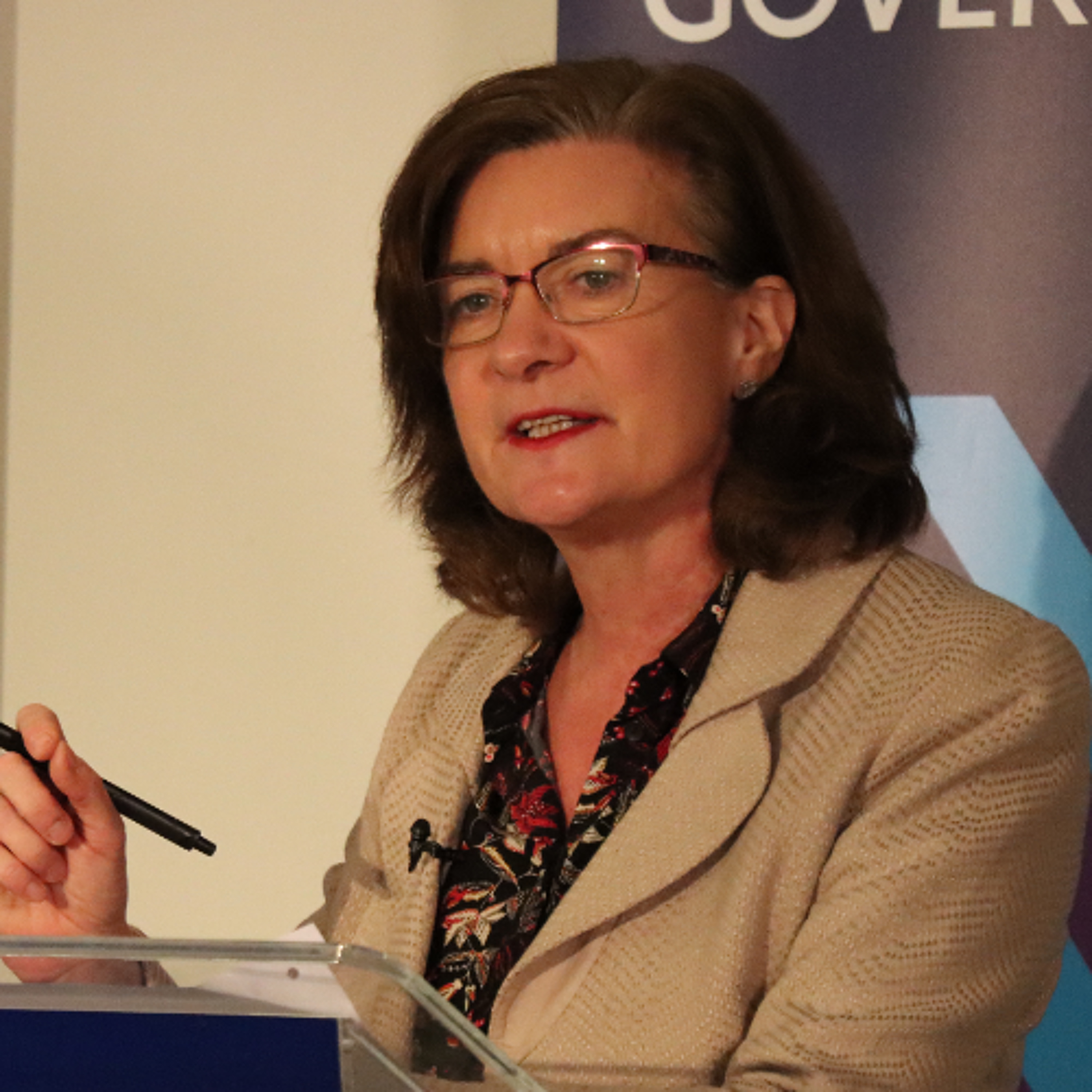
In conversation with Eluned Morgan MS, First Minister of Wales
In 2024, Eluned Morgan MS became the sixth first minister of Wales – and the first woman to hold the role – since the dawn of devolution in 1999. She now leads Welsh Labour into the 2026 Senedd election, which will be held under a new electoral system, and at which Labour faces a double challenge from the rise of Plaid Cymru and Reform. On 22 January, the Institute for Government was delighted to welcome Eluned Morgan to discuss how devolution to Wales has evolved since 1999, her priorities as First Minister, how the Labour governments in Cardiff and Westminster can cooperate on shared goals, and Welsh Labour’s vision for Wales’s constitutional future. The first minister was in conversation with Akash Paun, Programme Director of Devolution at the Institute for Government, followed by a Q&A with the live and online audience.