How unpaid labour shaped European civilisation
At the Institut Iliade’s 12th Annual Colloquium in Paris, Zsófia Rácz explored the central - yet often overlooked - role of unpaid labour, most frequently carried out by women: household tasks, child-rearing, charitable work, and religious involvement....
November 23, 20258m 23s
Audio is streamed directly from the publisher (audio.ausha.co) as published in their RSS feed. Play Podcasts does not host this file. Rights-holders can request removal through the copyright & takedown page.
Show Notes
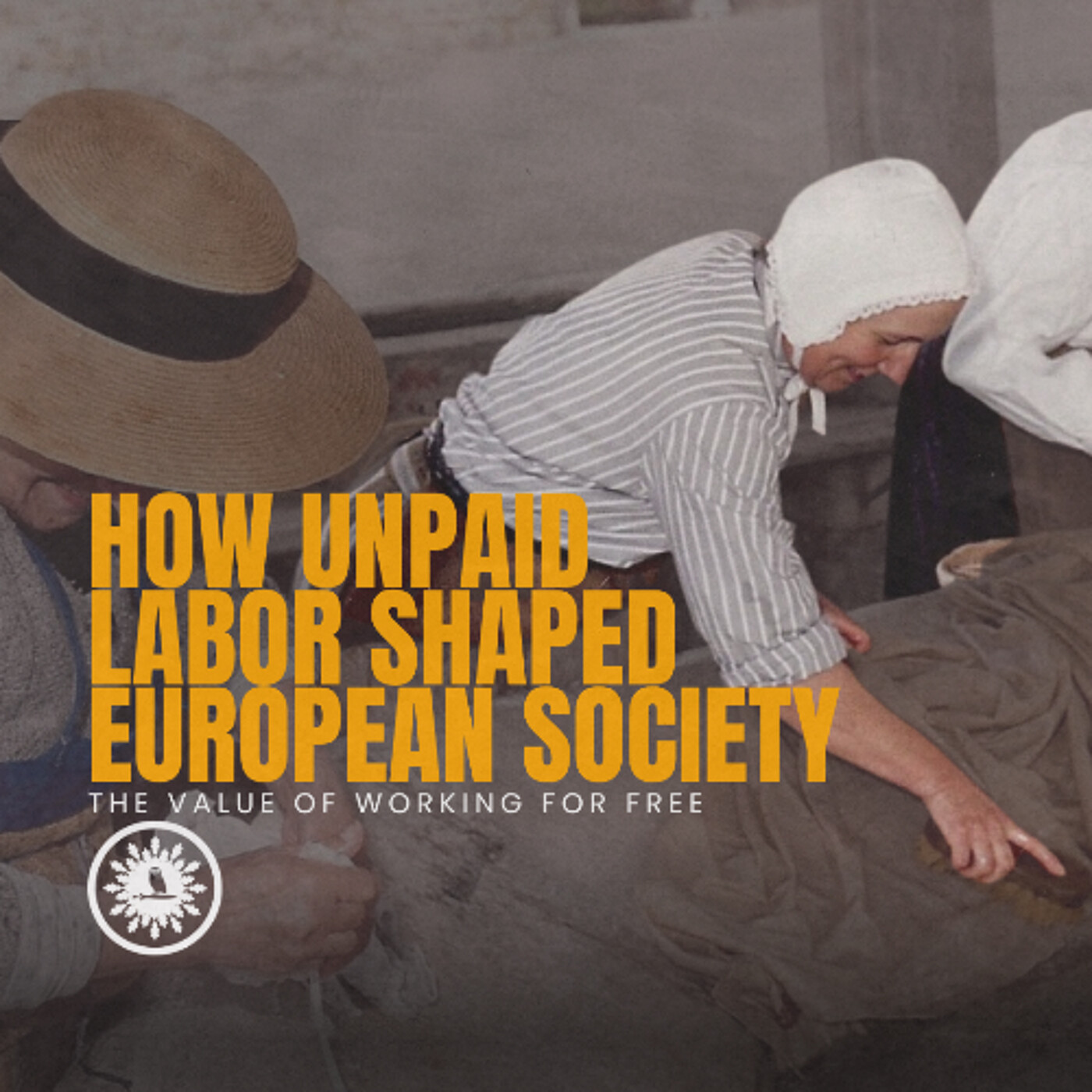
At the Institut Iliade’s 12th Annual Colloquium in Paris, Zsófia Rácz explored the central - yet often overlooked - role of unpaid labour, most frequently carried out by women: household tasks, child-rearing, charitable work, and religious involvement.
This invisible effort, absent from economic statistics, forms the true social backbone of our civilisation.
Through historical examples, contemporary reflections - such as the “tradwife” phenomenon- and personal testimony, she called for a re-evaluation of what “work” really means.
Beyond remuneration, it is this selfless dedication that sustains the continuity and vitality of our European communities.
👤 Zsófia Rácz served as Hungary’s Youth Delegate to the United Nations (2017–2018), later as political adviser, Deputy State Secretary, and Ministerial Commissioner. In 2023, she embraced her most precious role: motherhood. After her maternity leave, she joined the Danube Institute and became an ambassador for the Wacław Felczak Institute.
📅 Join us in Paris on April 11th, 2026!
The next Institut Iliade Colloquium - one of the most significant identitarian and intellectual gatherings of the European Right - will once again unite thinkers, creators, and activists to shape the vision of Europe’s future.
This invisible effort, absent from economic statistics, forms the true social backbone of our civilisation.
Through historical examples, contemporary reflections - such as the “tradwife” phenomenon- and personal testimony, she called for a re-evaluation of what “work” really means.
Beyond remuneration, it is this selfless dedication that sustains the continuity and vitality of our European communities.
👤 Zsófia Rácz served as Hungary’s Youth Delegate to the United Nations (2017–2018), later as political adviser, Deputy State Secretary, and Ministerial Commissioner. In 2023, she embraced her most precious role: motherhood. After her maternity leave, she joined the Danube Institute and became an ambassador for the Wacław Felczak Institute.
📅 Join us in Paris on April 11th, 2026!
The next Institut Iliade Colloquium - one of the most significant identitarian and intellectual gatherings of the European Right - will once again unite thinkers, creators, and activists to shape the vision of Europe’s future.
Hébergé par Ausha. Visitez ausha.co/politique-de-confidentialite pour plus d'informations.
Topics
europecolloqueidentitéinstitut iliadegrand remplacementdominique vennerlongue mémoirecivilisation européenne