
Instant Genius
681 episodes — Page 11 of 14
Why realistic humanoid robots need to learn to lip-sync
In this week's episode of the Science Focus Podcast, commissioning editor Jason Goodyer speaks to Dr Carl Strathearn, a research fellow at the School of Computing at Edinburgh Napier University. He's currently conducting research on realistic humanoid robots, specifically on more realistically synchronising their speech and mouth movements. He tells us about how to get robots out of the Uncanny Valley, why the way a robot looks is so important, and why Data from Star Trek is an inspiration for his work. Read an edited excerpt from this interview Let us know what you think of the episode with a review or a comment wherever you listen to your podcasts. Subscribe to the Science Focus Podcast on these services: Acast, iTunes, Stitcher, RSS, Overcast Read the full transcription of this episode [this will open in a new window] Listen to more episodes of the Science Focus Podcast: How virtual reality is helping patients with phobias, anxiety disorders and more Dr Pete Etchells: Do video games encourage gambling behaviour? Rana el Kaliouby: What if computers could read our emotions? Ritu Raman: Can you build with biology? Dr Erin Macdonald: Is there science in Star Trek? Robert Elliott Smith: Are algorithms inherently biased? Hosted on Acast. See acast.com/privacy for more information. Learn more about your ad choices. Visit podcastchoices.com/adchoices
How to understand statistics in the news and when to trust them
In this week's episode of the Science Focus Podcast, editor Daniel Bennett speaks to Tom Chivers and David Chivers. Tom is a veteran science journalist and author and David is lecturer in economics at the University of Durham. As well as a surname, they share a passion for statistics, or more precisely for the way that numbers are used and presented in the media. Together they’ve written a new book: How to Read Numbers: A Guide to Statistics in the News and Knowing When to Trust Them. They talk to Daniel about how to understand the sometimes confusing stats surrounding health and risk, how to spot a suspicious claim when you see one, and how to think about the current concerns surrounding the Oxford/AstraZeneca vaccine. Let us know what you think of the episode with a review or a comment wherever you listen to your podcasts. Subscribe to the Science Focus Podcast on these services: Acast, iTunes, Stitcher, RSS, Overcast Read the full transcription of this episode [this will open in a new window] Listen to more episodes of the Science Focus Podcast: Sir David Spiegelhalter: There's no such thing as Blue Monday Matt Parker: What happens when maths goes horribly, horribly wrong? Hannah Fry: How much of our lives is secretly underpinned by maths? Prof Linda Scott: Why is there still economic inequality between men and women? Hannah Fry: What's the deal with algorithms? Robert Elliott Smith: Are algorithms inherently biased? Hosted on Acast. See acast.com/privacy for more information. Learn more about your ad choices. Visit podcastchoices.com/adchoices
The bizarre biology of the mantis shrimp
What is your favourite animal? If you know anything about the mantis shrimp, it might well be your top pick. Dwelling in shallow tropical waters, these mysterious predators not only wield one of the strongest punches in nature, but also a one-of-a-kind visual system that scientists are only just making sense of. One of these scientists is Dr Martin How from the University of Bristol. He joins us on this week's episode of the Science Focus Podcast to reveal more about mantis shrimp and their remarkable abilities. Let us know what you think of the episode with a review or a comment wherever you listen to your podcasts. Subscribe to the Science Focus Podcast on these services: Acast, iTunes, Stitcher, RSS, Overcast Read the full transcription of this episode [this will open in a new window] Listen to more episodes of the Science Focus Podcast: Everything you ever wanted to know about… the deep sea with Dr Jon Copley Andrew Hunter Murray and Dan Schreiber: Is there really no such thing as a fish? Brad Lister: Are we facing an insect apocalypse? Neil Gemmell: The genetic hunt for the Loch Ness Monster Neil Shubin: How do big changes in evolution happen? Mark Lynas: Could leaving nature to its own devices be the key to meeting the UK’s climate goals? Hosted on Acast. See acast.com/privacy for more information. Learn more about your ad choices. Visit podcastchoices.com/adchoices
The creator of Bellingcat on using the internet to investigate global affairs
In this episode of the Science Focus Podcast, we speak to Elliot Higgins, the founder of Bellingcat. If you haven’t heard that name before, then you might be surprised to know that Bellingcat is behind some of the biggest news revelations of the decade. They use social media and information freely available online to carry out what they call open source investigation. Their work has uncovered the use of chemical weapons in Syria, identified suspects in the Skripal poisoning in Salisbury and identified the people responsible for downing flight MH17 over Ukraine. Eliot speaks to editor Dan Bennett about his new book, We Are Bellingcat (£20, Bloomsbury), which tells the story of how a group of amateur hobbyists ended up taking on Russian spies. Read an edited excerpt of this interview Let us know what you think of the episode with a review or a comment wherever you listen to your podcasts. Subscribe to the Science Focus Podcast on these services: Acast, iTunes, Stitcher, RSS, Overcast Read the full transcription of this episode [this will open in a new window] Listen to more episodes of the Science Focus Podcast: Dr Julia Shaw: Why do we do bad things? Marcel Danesi: Why do we want to believe lies? Project Discovery: Could computer games help find a cure for COVID-19? Chris Lintott: Can members of the public do real science? Lara Martin: Meet the computer scientist teaching an AI to play Dungeons and Dragons Rana el Kaliouby: What if computers could read our emotions? Hosted on Acast. See acast.com/privacy for more information. Learn more about your ad choices. Visit podcastchoices.com/adchoices
Prof Avi Loeb on what 'Oumuamua tells us about the problem with modern physics
In 2017, the Pan-STARRS telescope in Hawaii spotted an interstellar object passing by Earth for the first time. Shortly after, Harvard’s Prof Avi Loeb was met with a backlash from the scientific community for suggesting it could be of alien origin. Now, several years on, he has written a book, Extraterrestrial: The First Sign of Intelligent Life Beyond Earth, outlining why we still can’t out rule the possibility, and why scientists should always keep an open mind. We speak to Avi on this week's episode of the Science Focus Podcast. He tells us why he believes the object, 'Oumuamua, was of alien origin, and what problems this reveals about the way modern physics is conducted. Read an edited excerpt of this interview Let us know what you think of the episode with a review or a comment wherever you listen to your podcasts. Subscribe to the Science Focus Podcast on these services: Acast, iTunes, Stitcher, RSS, Overcast Read the full transcription of this episode [this will open in a new window] Listen to more episodes of the Science Focus Podcast: Dr Douglas Vakoch: Should we try to contact aliens? Bergur Finnbogason: Project Discovery and its search for exoplanets Dr Erin Macdonald: Is there science in Star Trek? What if the Earth’s magnetic field died? – Jim Al-Khalili Building a base on the Moon, and crafting believable sci-fi – Andy Weir Dr Becky Smethurst: How do you actually find a black hole? Hosted on Acast. See acast.com/privacy for more information. Learn more about your ad choices. Visit podcastchoices.com/adchoices
Meet the computer scientist teaching an AI to play Dungeons and Dragons
Many of us have had a one-to-one interaction with artificial intelligence. Whether that’s through an automated chat service for customer service, or trying our hand at beating an AI built to play chess. But these experiences aren’t flawless, they’re not as smooth as our interactions with other human beings. One researcher trying to improve the language abilities of AI is Lara Martin, a postdoc at the University of Pennsylvania. More specifically, Lara is trying teach AI to tell stories. Let us know what you think of the episode with a review or a comment wherever you listen to your podcasts. Subscribe to the Science Focus Podcast on these services: Acast, iTunes, Stitcher, RSS, Overcast Read the full transcription of this episode [this will open in a new window] Listen to more episodes of the Science Focus Podcast: Rana el Kaliouby: What if computers could read our emotions? Aleks Krotoski: What happens to your data when you die? Robert Elliott Smith: Are algorithms inherently biased? Pete Etchells: Are video games good for us? Jamie Susskind: How technology is changing politics Jim Al-Khalili: Why AI is not the enemy Hosted on Acast. See acast.com/privacy for more information. Learn more about your ad choices. Visit podcastchoices.com/adchoices
International Women’s Day: The forgotten female scientists of history
Today is International Women’s Day, and in this episode of the Science Focus Podcast, online assistant Sara Rigby talks to science historians Anna Reser and Leila McNeill, authors of Forces of Nature: The Women who Changed Science (£20, Frances Lincoln). They tell us about the women who engaged in science throughout history but don’t always get remembered – the midwives, the astronomers, and the wives and sisters. Read an edited excerpt from the interview Let us know what you think of the episode with a review or a comment wherever you listen to your podcasts. Subscribe to the Science Focus Podcast on these services: Acast, iTunes, Stitcher, RSS, Overcast Read the full transcription of this episode [this will open in a new window] Listen to more episodes of the Science Focus Podcast: Why aren't there more women in science? Angela Saini: Inequality in science Caroline Criado Perez: Does data discriminate against women? Kathryn D. Sullivan: What is it really like to walk in space? Subhadra Das: What part has science played in racism? Kevin Fong: What happened to Apollo 13? Hosted on Acast. See acast.com/privacy for more information. Learn more about your ad choices. Visit podcastchoices.com/adchoices
How to maximise your motivation, according to a neuroscientist
As the UK enters its 13th month of lockdown restrictions and home-working, many surveys cite a slump in mental wellbeing and general productivity. But are there any scientific ways we can maximise our motivation and prevent procrastination? In this episode of the Science Focus Podcast, neuroscientist Dr Gabija Toleikyte, author of Why the F*ck Can't I Change, tells us all about it. Let us know what you think of the episode with a review or a comment wherever you listen to your podcasts. Subscribe to the Science Focus Podcast on these services: Acast, iTunes, Stitcher, RSS, Overcast Read the full transcription of this episode [this will open in a new window] Listen to more episodes of the Science Focus Podcast: Why you can’t multitask (and why that’s a good thing) Dean Burnett: The neuroscience of happiness Daniel Freeman: How virtual reality is helping patients with phobias, anxiety disorders and more Anthony David: Why is there still such stigma around mental health? Pete Etchells: Are video games good for us? Sandro Galea: What is the difference between health and medicine? Helen Russell: What does it mean to be happy? Hosted on Acast. See acast.com/privacy for more information. Learn more about your ad choices. Visit podcastchoices.com/adchoices
Inside the February issue with the BBC Science Focus team
In this episode of the Science Focus Podcast, we chat through the February 2021 issue of the magazine, which is on sale now. Managing editor Alice Lipscombe-Southwell opens the episode by telling us why it's so important artificial intelligence learns how to tell stories. Next up is editor Dan Bennett, who tells us about the world’s first airport for drones and flying cars, which is opening in Coventry, UK. Finally, commissioning editor Jason Goodyer tells about the latest developments in the study of dark matter. Let us know what you think of the episode with a review or a comment wherever you listen to your podcasts. Subscribe to the Science Focus Podcast on these services: Acast, iTunes, Stitcher, RSS, Overcast Listen to more episodes of the Science Focus Podcast: Hannah Fry: How much of our lives is secretly underpinned by maths? Robert Elliott Smith: Are algorithms inherently biased? Bergur Finnbogason: Project Discovery and its search for exoplanets Ritu Raman: Can you build with biology? Robin Ince: Inside the mind of a comedian Finding the fun in science – Dara Ó Briain Hosted on Acast. See acast.com/privacy for more information. Learn more about your ad choices. Visit podcastchoices.com/adchoices
Mental health and your brain: What happens when it goes wrong
In the UK, one in four people experience a mental health problem each year. The reality of living with common problems like depression and anxiety is increasingly well-known. But how much do you actually know about what’s going on in your brain when your mental health suffers? Neuroscientist Dean Burnett, author of the new book Psycho-logical, tells us all about it on this episode of the Science Focus Podcast. Let us know what you think of the episode with a review or a comment wherever you listen to your podcasts. Subscribe to the Science Focus Podcast on these services: Acast, iTunes, Stitcher, RSS, Overcast Listen to more episodes of the Science Focus Podcast: Dean Burnett: What’s going on in the teenage brain? The neuroscience of happiness – Dean Burnett Prof John Drury: The psychology of lockdowns How virtual reality is helping patients with phobias, anxiety disorders and more Elisa Raffaella Ferrè: What happens to the brain in space? Dr Guy Leschziner: What is your brain doing while you sleep? Hosted on Acast. See acast.com/privacy for more information. Learn more about your ad choices. Visit podcastchoices.com/adchoices
Why rewilding success stories make us hopeful for the future
There are few places left on Earth that have been untouched by humans, and biodiversity is being lost at an unprecedented rate. Luckily, there are ambitious rewilding programmes around the world that aim to fix this by returning land to nature. In this week's episode of the Science Focus Podcast, we speak to Dr Andrea Perino, a scientist from the German Centre for Integrative Biodiversity Research and an expert on rewilding. She tells us about the benefits of rewilding, whether it's acres of forest or just a tiny patch in your back garden. Read more about rewilding Let us know what you think of the episode with a review or a comment wherever you listen to your podcasts. Subscribe to the Science Focus Podcast on these services: Acast, iTunes, Stitcher, RSS, Overcast Listen to more episodes of the Science Focus Podcast: Mark Lynas: Could leaving nature to its own devices be the key to meeting the UK’s climate goals? Merlin Sheldrake: How have fungi shaped the world? Samantha Alger: What can we do to save the bees? Ross Barnett: Why should we be interested in prehistoric animals that aren’t dinosaurs? Sir David Attenborough: How can we save our planet? Brad Lister: Are we facing an insect apocalypse? Hosted on Acast. See acast.com/privacy for more information. Learn more about your ad choices. Visit podcastchoices.com/adchoices
The psychology of the sea shanty: Why work songs are such earworms
2021 has got off to a strange start, with a surprising trend sweeping the internet: sea shanties. This ancient genre of music has exploded in popularity in recent weeks, thanks to people on social media singing them, sharing them and adding their own twists. In fact, they’ve become so popular that Bristol-based shanty band The Longest Johns have entered the top 40 in the UK singles chart. Naturally, we here at BBC Science Focus wanted to know what it was about sea shanties that makes them so catchy. So this week, we spoke to Professor Catherine Loveday of the University of Westminster. She’s a neuropsychologist who specialises in music. Read more about the science of sea shanties Let us know what you think of the episode with a review or a comment wherever you listen to your podcasts. Subscribe to the Science Focus Podcast on these services: Acast, iTunes, Stitcher, RSS, Overcast Read the full transcription of this episode [this will open in a new window] Listen to more episodes of the Science Focus Podcast: Could these gloves be the future of music? – Imogen Heap The neuroscience of happiness – Dean Burnett Dr Pete Etchells: Do video games encourage gambling behaviour? Why you can’t multitask (and why that’s a good thing) Phobias, paranoia and PTSD: Why virtual reality therapy is the frontier of mental health treatment How a scientist used viruses to save her husband’s life from a superbug Hosted on Acast. See acast.com/privacy for more information. Learn more about your ad choices. Visit podcastchoices.com/adchoices
Team talk: Beating pandemic burnout, the seasons of you and a daring giraffe rescue
In this episode of the Science Focus Podcast, we chat through the January 2021 issue of the magazine, which is on sale now. Editor Dan Bennett opens the episode by talking about new research that suggests that rather than following a pattern of spring, summer, autumn and winter, our bodies may have their own seasonal fluctuations that don’t match the calendar. Next up is managing editor Alice Lipscombe-Southwell, who tells us about how we can beat the pandemic burnout. Finally, commissioning editor Jason Goodyer tells the story of a daring rescue of endangered giraffes from an island where food is slowly running out. Let us know what you think of the episode with a review or a comment wherever you listen to your podcasts. Subscribe to the Science Focus Podcast on these services: Acast, iTunes, Stitcher, RSS, Overcast Read the full transcription of this episode [this will open in a new window] Listen to more episodes of the Science Focus Podcast: End of year roundup: The non-COVID science that brought us joy in 2020 Inside the December issue with the BBC Science Focus team The Science Focus team: What’s inside November’s issue? Why you can’t multitask (and why that’s a good thing) Prof John Drury: The psychology of lockdowns How a scientist used viruses to save her husband’s life from a superbug Hosted on Acast. See acast.com/privacy for more information. Learn more about your ad choices. Visit podcastchoices.com/adchoices
Why you can’t multitask (and why that’s a good thing)
Humans' ability to turn thoughts into actions has enabled us to change the world. But we've never been great at getting two things done at once. Understanding how our brain helps us achieve our goals through something called executive function, or cognitive control, can explain why we're so bad at multitasking. According to neuroscientist Prof David Badre, when we're armed with this knowledge we can begin to work together to become a better society. Badre's new book, On Task (£25, Princeton University Press) explains the mechanisms behind cognitive control. In this episode of the Science Focus Podcast we speak to Badre to find out more about how our brains work. Let us know what you think of the episode with a review or a comment wherever you listen to your podcasts. Subscribe to the Science Focus Podcast on these services: Acast, iTunes, Stitcher, RSS, Overcast Read the full transcription of this episode [this will open in a new window] Listen to more episodes of the Science Focus Podcast: Dean Burnett: The neuroscience of happiness Daniel Freeman: How virtual reality is helping patients with phobias, anxiety disorders and more Anthony David: Why is there still such stigma around mental health? Pete Etchells: Are video games good for us? Sandro Galea: What is the difference between health and medicine? Helen Russell: What does it mean to be happy? Gordon Wallace: Is an implantable electronic device the future of medicine? Hosted on Acast. See acast.com/privacy for more information. Learn more about your ad choices. Visit podcastchoices.com/adchoices
How virtual reality is helping patients with phobias, anxiety disorders and more
In the New Year issue, we cover the biggest ideas that you need to understand in 2021, and in the past few episodes of the podcast we’ve been talking to the experts who will explain these ideas in their own words. For the next in the series, we speak to Daniel Freeman, a Professor of Clinical Psychology at the University of Oxford. Daniel has been working with VR technology since 2001 and is a founder of Oxford VR, a University of Oxford spinout company. He tells us about using virtual reality to treat mental health problems. Let us know what you think of the episode with a review or a comment wherever you listen to your podcasts. Subscribe to the Science Focus Podcast on these services: Acast, iTunes, Stitcher, RSS, Overcast Read the full transcription of this episode [this will open in a new window] Listen to more episodes of the Science Focus Podcast: Anthony David: Why is there still such stigma around mental health? Pete Etchells: Are video games good for us? Sandro Galea: What is the difference between health and medicine? Helen Russell: What does it mean to be happy? Gordon Wallace: Is an implantable electronic device the future of medicine? Dean Burnett: The neuroscience of happiness Dr Lucy Rogers: What makes a robot a robot? Hosted on Acast. See acast.com/privacy for more information. Learn more about your ad choices. Visit podcastchoices.com/adchoices
How a scientist used viruses to save her husband’s life from a superbug
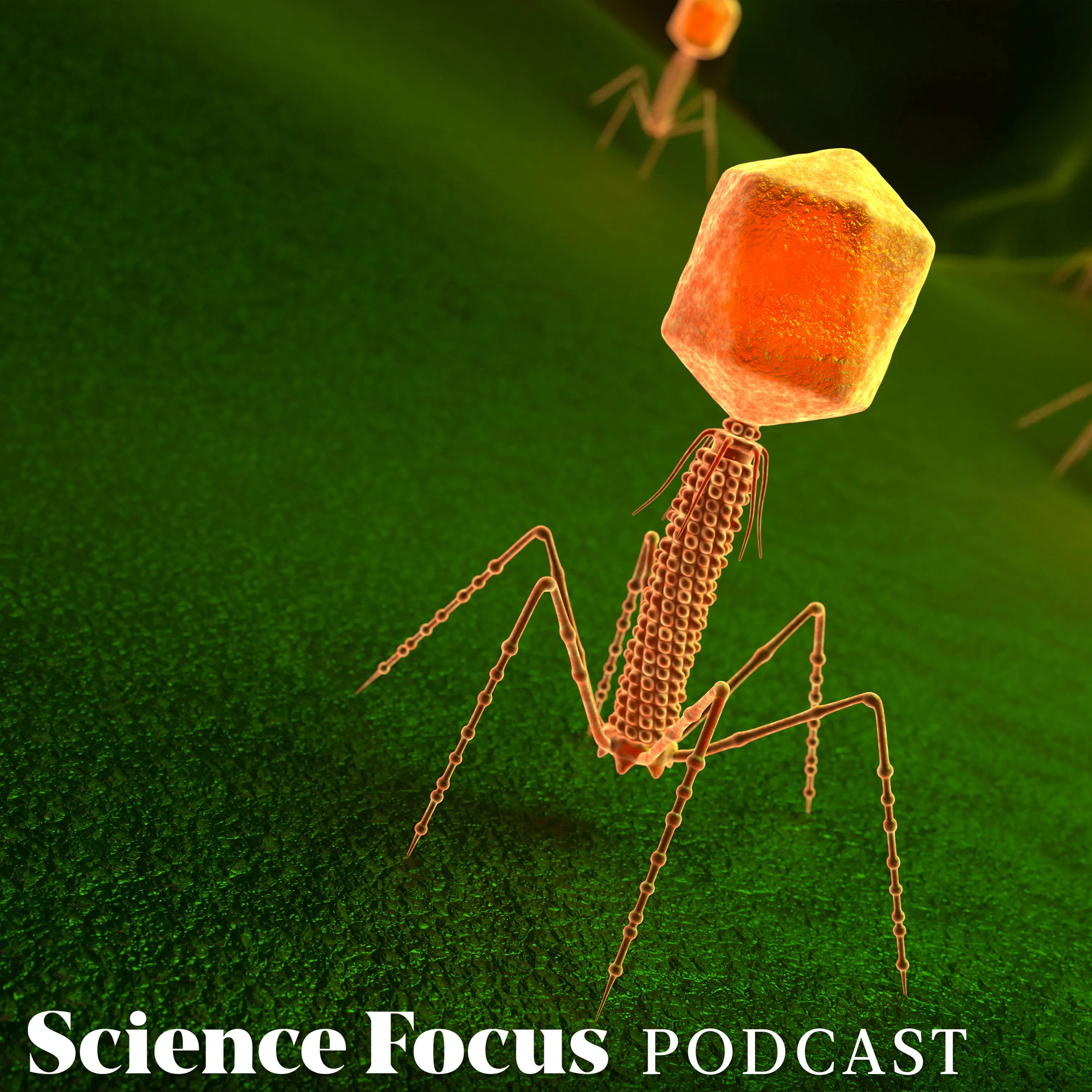
In this week's episode of the Science Focus Podcast, we're joined by AIDS researcher Professor Steffanie Strathdee. In 2015, Strathdee's husband was infected by superbug that was resistant to every antibiotic that the doctors could throw at it, but she was able to save his life with an experimental treatment made of viruses found in sewage. In the New Year issue of BBC Science Focus Magazine, we cover the biggest ideas that you need to understand in 2021. This episode is one of a series in which we talk to the experts who will explain these ideas in their own words. Let us know what you think of the episode with a review or a comment wherever you listen to your podcasts. Subscribe to the Science Focus Podcast on these services: Acast, iTunes, Stitcher, RSS, Overcast Listen to more episodes of the Science Focus Podcast: Marcus Chown: Does the Big Bang really explain our Universe? Sonia Contera: How will nanotechnology revolutionise medicine? Professor Catharina Svanborg: Is the cure for cancer hiding in human breast milk? Brian Switek: How did bones evolve? Bill Bryson: What should we know about how our bodies work? Dr Monty Lyman: What does our skin tell us about ourselves? Hosted on Acast. See acast.com/privacy for more information. Learn more about your ad choices. Visit podcastchoices.com/adchoices

Marcus Chown: Does the Big Bang really explain our Universe?
In the New Year issue of BBC Science Focus Magazine, we cover the biggest ideas that you need to understand in 2021. Over the next few episodes of the Science Focus Podcast, we’ll be talking to the experts who will explain these ideas in their own words. In this episode, we talk to science writer Marcus Chown, who tells us all about the major problems in our current understanding of cosmology. We discuss the Big Bang, dark matter, inflation, and what we still don't know about the formation of our Universe. Let us know what you think of the episode with a review or a comment wherever you listen to your podcasts. Subscribe to the Science Focus Podcast on these services: Acast, iTunes, Stitcher, RSS, Overcast Listen to more episodes of the Science Focus Podcast: Katie Mack: How will the Universe end? Dr Douglas Vakoch: Should we try to contact aliens? Dr Jacob Bleacher: Why do we need to go back to the Moon? Elisa Raffaella Ferrè: What happens to the brain in space? Dr Erin Macdonald: Is there science in Star Trek? Kathryn D. Sullivan: What is it really like to walk in space? Hosted on Acast. See acast.com/privacy for more information. Learn more about your ad choices. Visit podcastchoices.com/adchoices

End of year roundup: The non-COVID science that brought us joy in 2020
It’s been a long and strange year, and most of our attention has been focussed on the coronavirus. So, in this bonus episode of the Science Focus Podcast, the team talks about this year’s most interesting science that has nothing to do with COVID. We start off by talking about our favourite scientific developments of the year, and then we discuss the books and documentaries that we’ve loved. Let us know what you think of the episode with a review or a comment wherever you listen to your podcasts. Subscribe to the Science Focus Podcast on these services: Acast, iTunes, Stitcher, RSS, Overcast Listen to more episodes of the Science Focus Podcast: Inside the December issue with the BBC Science Focus team The Science Focus team: What's inside November's issue? Dr Douglas Vakoch: Should we try to contact aliens? Dr Jacob Bleacher: Why do we need to go back to the Moon? Andy Weir: Building a base on the Moon, and crafting believable sci-fi Gretchen McCulloch: How has the internet affected how we communicate? Hosted on Acast. See acast.com/privacy for more information. Learn more about your ad choices. Visit podcastchoices.com/adchoices

Prof John Drury: The psychology of lockdowns
In this week's episode of the Science Focus Podcast, we talk to Prof John Drury, a behavioural psychologist based at the University of Sussex who specialises in studying crowds and collective behaviour. The UK recently came out of the second COVID-19 lockdown, and went into a new three-tier system, with much of the country still in in the strictest tier. John tells us about why people respond to the restrictions differently, how to ensure people follow the rules, and what the long-term effects the lockdowns will have on our psychology. Let us know what you think of the episode with a review or a comment wherever you listen to your podcasts. Subscribe to the Science Focus Podcast on these services: Acast, iTunes, Stitcher, RSS, Overcast Listen to more episodes of the Science Focus Podcast: Hugo Zeberg: How could Neanderthal genes affect COVID-19? Dr Rachel Brown: Why are some COVID-19 patients suffering from neurological complications? Project Discovery: Could computer games help find a cure for COVID-19? David Halpern: Nudge theory Dr Pete Etchells: Do video games encourage gambling behaviour? Dr Julia Shaw: Why do we do bad things? Hosted on Acast. See acast.com/privacy for more information. Learn more about your ad choices. Visit podcastchoices.com/adchoices

Dr Pete Etchells: Do video games encourage gambling behaviour?
This week on the Science Focus Podcast, we're joined by Dr Pete Etchells, a professor of psychology with a particular interest how video games affect our mood and behaviour. Pete is also the author of the book Lost in a Good Game which explores why we love video games, and what they do for us. Today we’re talking about the relationship between gambling and video games: what we know and what don’t. We want you to help us with the research, so if you want to get involved in a real-life scientific study that could shape the conversation around gaming and gambling, stayed tuned and listen in for details at the end. Let us know what you think of the episode with a review or a comment wherever you listen to your podcasts. Subscribe to the Science Focus Podcast on these services: Acast, iTunes, Stitcher, RSS, Overcast Read the full transcription [this will open in a new window] Listen to more episodes of the Science Focus Podcast: Pete Etchells: Are video games good for us? Project Discovery: Could computer games help find a cure for COVID-19? The neuroscience of happiness – Dean Burnett Dr Julia Shaw: Why do we do bad things? Anthony David: Why is there still such stigma around mental health? Brendan Walker: Where is the best place to sit on a rollercoaster? Hosted on Acast. See acast.com/privacy for more information. Learn more about your ad choices. Visit podcastchoices.com/adchoices
Christmas Lectures 2020: How can we look after our planet?
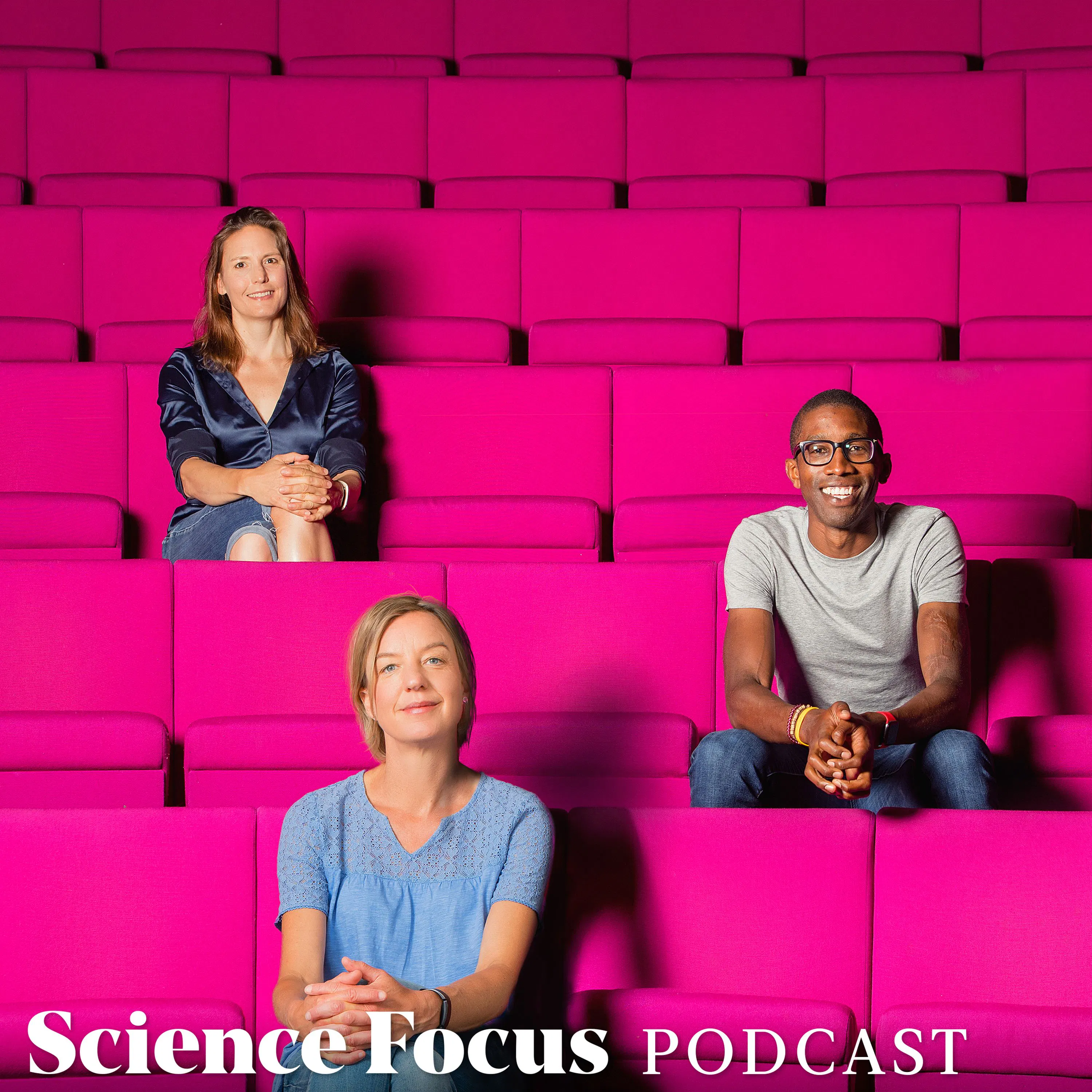
Started by Michael Faraday in 1825, and now broadcast on national television, the Christmas lectures bring a science topic to our screens over three nights every year. The series of lectures has always been held within the Royal Institution in London, but this year, of course, is going to be slightly different. In this week's episode, editorial assistant Amy Barrett is joined today by three expert scientists, Tara Shine, Chris Jackson and Helen Czerski, who are going to be presenting the 2020 Christmas lectures, titled Planet Earth: A User's Guide. In lecture one, geologist Chris Jackson will reveal our Earth's climate story through the rocks and the fossil record. In lecture two, physicist and oceanographer Helen Czerski will talk about the part our oceans play in the climate crisis. And in lecture three, environmental scientist Tara Shine will talk about carbon emissions and what we're really breathing in. Let us know what you think of the episode with a review or a comment wherever you listen to your podcasts. Subscribe to the Science Focus Podcast on these services: Acast, iTunes, Stitcher, RSS, Overcast Read the full transcription [this will open in a new window] Listen to more episodes of the Science Focus Podcast: Hannah Fry: How much of our lives is secretly underpinned by maths? Royal Institution Christmas Lectures past and present Sir David Attenborough: How can we save our planet? Christiana Figueres and Tom Rivett-Carnac: Has climate change determined our future? Everything you ever wanted to know about... the deep sea with Dr Jon Copley Mark Miodownik: Are biodegradable plastics really better than traditional plastic? Hosted on Acast. See acast.com/privacy for more information. Learn more about your ad choices. Visit podcastchoices.com/adchoices

Inside the December issue with the BBC Science Focus team
In this episode of the Science Focus Podcast, we chat through the December 2020 issue of the magazine, which is on sale now. The issue is all about the search for extraterrestrial life, so managing editor Alice Lipscombe-Southwell starts us off by telling us about the most promising places in our Solar System to search for alien life. Commissioning editor Jason Goodyer tells us about a new drug delivery system that draws inspiration from parasitic hookworms, and then editorial assistant Amy Barrett brings us back around to ET by discussing why we want to believe in aliens. We close the podcast with details of our exciting new competition, judged by comedian and author Dara Ó Briain. Let us know what you think of the episode with a review or a comment wherever you listen to your podcasts. Subscribe to the Science Focus Podcast on these services: Acast, iTunes, Stitcher, RSS, Overcast Listen to more episodes of the Science Focus Podcast: The Science Focus team: What's inside November's issue? Finding the fun in science – Dara Ó Briain Dr Douglas Vakoch: Should we try to contact aliens? Bergur Finnbogason: Project Discovery and its search for exoplanets Ritu Raman: Can you build with biology? Robin Ince: Inside the mind of a comedian Hosted on Acast. See acast.com/privacy for more information. Learn more about your ad choices. Visit podcastchoices.com/adchoices

Genes and heredity - Everything you ever wanted to know about... the biology of life with Sir Paul Nurse
For this instalment in the Everything you ever wanted to know about... series, we’ve sourced questions from Google, our listeners and the Science Focus team to put to experts and help you understand key ideas in science, in short episodes. This week, we're joined by geneticist Sir Paul Nurse, the Director of the Francis Crick Institute in London and one of the recipients of the 2001 Nobel Prize in Physiology or Medicine, which he shared with Leland Hartwell and Timothy Hunt. Paul has recently published a book that helps readers understand biology, called What is Life? (£9.99, David Fickling Books). He shared some of the concepts from the books with us over two quick-fire episodes. Hosted on Acast. See acast.com/privacy for more information. Learn more about your ad choices. Visit podcastchoices.com/adchoices

Cells - Everything you ever wanted to know about... the biology of life with Sir Paul Nurse
For this instalment in the Everything you ever wanted to know about... series, we’ve sourced questions from Google, our listeners and the Science Focus team to put to experts and help you understand key ideas in science, in short episodes. This week, we're joined by geneticist Sir Paul Nurse, the Director of the Francis Crick Institute in London and one of the recipients of the 2001 Nobel Prize in Physiology or Medicine, which he shared with Leland Hartwell and Timothy Hunt. Paul has recently published a book that helps readers understand biology, called What is Life? (£9.99, David Fickling Books). He shared some of the concepts from the books with us over two quick-fire episodes. Hosted on Acast. See acast.com/privacy for more information. Learn more about your ad choices. Visit podcastchoices.com/adchoices

Dr Douglas Vakoch: Should we try to contact aliens?
In this week’s episode, I’m talking to Dr Douglas Vakoch, President of Messaging Extraterrestrial Intelligence, or METI. We talk about whether we should be broadcasting messages into space to signal our existence to intelligent alien species. We also discuss how we could create a message that an unknown species of alien could understand. Subscribe to the Science Focus Podcast on these services: Acast, iTunes, Stitcher, RSS, Overcast Read the full transcription [this will open in a new window] Listen to more episodes of the Science Focus Podcast: Dr Erin Macdonald: Is there science in Star Trek? Bergur Finnbogason: Project Discovery and its search for exoplanets What if the Earth’s magnetic field died? – Jim Al-Khalili Building a base on the Moon, and crafting believable sci-fi – Andy Weir Dr Becky Smethurst: How do you actually find a black hole? Kathryn D. Sullivan: What is it really like to walk in space? Hosted on Acast. See acast.com/privacy for more information. Learn more about your ad choices. Visit podcastchoices.com/adchoices

Exploring the deep sea - Everything you ever wanted to know about... the deep sea with Dr Jon Copley
Our guest this week is Dr Jon Copley. Jon is a marine biologist, specialising in the deep sea. He went on the first mini sub dive to the world’s deepest hydrothermal vents, 5km down on the ocean floor, and also took part in the firs minisub dives to 1km deep in the Antarctic. Jon is also a science communicator and writer, who worked as a science advisor on the iconic BBC series Blue Planet II. He is also an associate professor of ocean exploration and public engagement at the University of Southampton. In 2019, he also published fantastic book called Ask an Ocean Explorer which tells you all about the ocean in 25 questions. Over three quick-fire episodes, Jon tells BBC Science Focus managing editor Alice Limpscombe-Southwell about the bizarre life found on the ocean floor, the habitats where they thrive, and what it's like to explore the deep sea in a submarine. Hosted on Acast. See acast.com/privacy for more information. Learn more about your ad choices. Visit podcastchoices.com/adchoices

Deep sea habitats - Everything you ever wanted to know about... the deep sea with Dr Jon Copley
Our guest this week is Dr Jon Copley. Jon is a marine biologist, specialising in the deep sea. He went on the first mini sub dive to the world’s deepest hydrothermal vents, 5km down on the ocean floor, and also took part in the firs minisub dives to 1km deep in the Antarctic. Jon is also a science communicator and writer, who worked as a science advisor on the iconic BBC series Blue Planet II. He is also an associate professor of ocean exploration and public engagement at the University of Southampton. In 2019, he also published fantastic book called Ask an Ocean Explorer which tells you all about the ocean in 25 questions. Over three quick-fire episodes, Jon tells BBC Science Focus managing editor Alice Limpscombe-Southwell about the bizarre life found on the ocean floor, the habitats where they thrive, and what it's like to explore the deep sea in a submarine. Hosted on Acast. See acast.com/privacy for more information. Learn more about your ad choices. Visit podcastchoices.com/adchoices
Deep sea creatures - Everything you ever wanted to know about... the deep sea with Dr Jon Copley
Our guest this week is Dr Jon Copley. Jon is a marine biologist, specialising in the deep sea. He went on the first mini sub dive to the world’s deepest hydrothermal vents, 5km down on the ocean floor, and also took part in the firs minisub dives to 1km deep in the Antarctic. Jon is also a science communicator and writer, who worked as a science advisor on the iconic BBC series Blue Planet II. He is also an associate professor of ocean exploration and public engagement at the University of Southampton. In 2019, he also published fantastic book called Ask an Ocean Explorer which tells you all about the ocean in 25 questions. Over three quick-fire episodes, Jon tells BBC Science Focus managing editor Alice Limpscombe-Southwell about the bizarre life found on the ocean floor, the habitats where they thrive, and what it's like to explore the deep sea in a submarine. Hosted on Acast. See acast.com/privacy for more information. Learn more about your ad choices. Visit podcastchoices.com/adchoices
The Science Focus team: What's inside November's issue?
In this episode of the Science Focus Podcast we chat through the November 2020 issue of the magazine, which is on sale now. Editor Dan Bennett explains why, this month, we’re focusing on food myths. Scientist and writer Professor Tim Spector penned our cover feature to reveal the fact and the fiction surrounding diet and nutrition, and some of his research may have results that surprise you. Talking about the amazing variety of our ocean’s other-worldly sea slugs is managing editor Alice Lipscombe-Southwell. These small marine animals might sport cute faces and bright colours, but they’re armed with an array of deadly defences too. Commissioning editor Jason Goodyer digs into our piece about algorithms, which asks, what went wrong with the A Level results algorithm? And online assistant Sara Rigby scrutinises the stats around plug-in hybrid cars to find out if they’re as eco-friendly as marketed. Let us know what you think of the episode with a review or a comment wherever you listen to your podcasts. Subscribe to the Science Focus Podcast on these services: Acast, iTunes, Stitcher, RSS, Overcast Listen to more episodes of the Science Focus Podcast: Matt Parker, Helen Arney and Steve Mould: What links coffee, snowflakes and frogs? Andrew Hunter Murray and Dan Schreiber: Is there really no such thing as a fish? Matt Parker: What happens when maths goes horribly, horribly wrong? Helen Russell: What does it mean to be happy? Robin Ince: What's inside the mind of a comedian? Dara Ó Briain: Can you find the fun in science? Ryan North: How do you invent everything? Hosted on Acast. See acast.com/privacy for more information. Learn more about your ad choices. Visit podcastchoices.com/adchoices

Prof Linda Scott: Why is there still economic inequality between men and women?
In this week’s episode of the Science Focus Podcast, we talk to Professor Linda Scott, an expert in women’s economic development and Emeritus DP World Chair for Entrepreneurship and Innovation at the University of Oxford. Her book, The Double X Economy, has been shortlisted for the Royal Society Science Book Prize 2020. In it, she argues that when we economically empower women, we all succeed. Linda tells us about her work in women's economics, why the number of women joining the workforce is slowing down, and her idea for an '80 per cent Christmas' to close the gender pay gap. Subscribe to the Science Focus Podcast on these services: Acast, iTunes, Stitcher, RSS, Overcast Read the full transcription [this will open in a new window] Listen to more episodes of the Science Focus Podcast: Caroline Criado Perez: Does data discriminate against women? Pragya Agarwal: When does bias become prejudice? Why aren't there more women in science? Angela Saini: Is racism creeping into science? Robert Elliott Smith: Are algorithms inherently biased? Matt Parker: What happens when maths goes horribly, horribly wrong? Hosted on Acast. See acast.com/privacy for more information. Learn more about your ad choices. Visit podcastchoices.com/adchoices
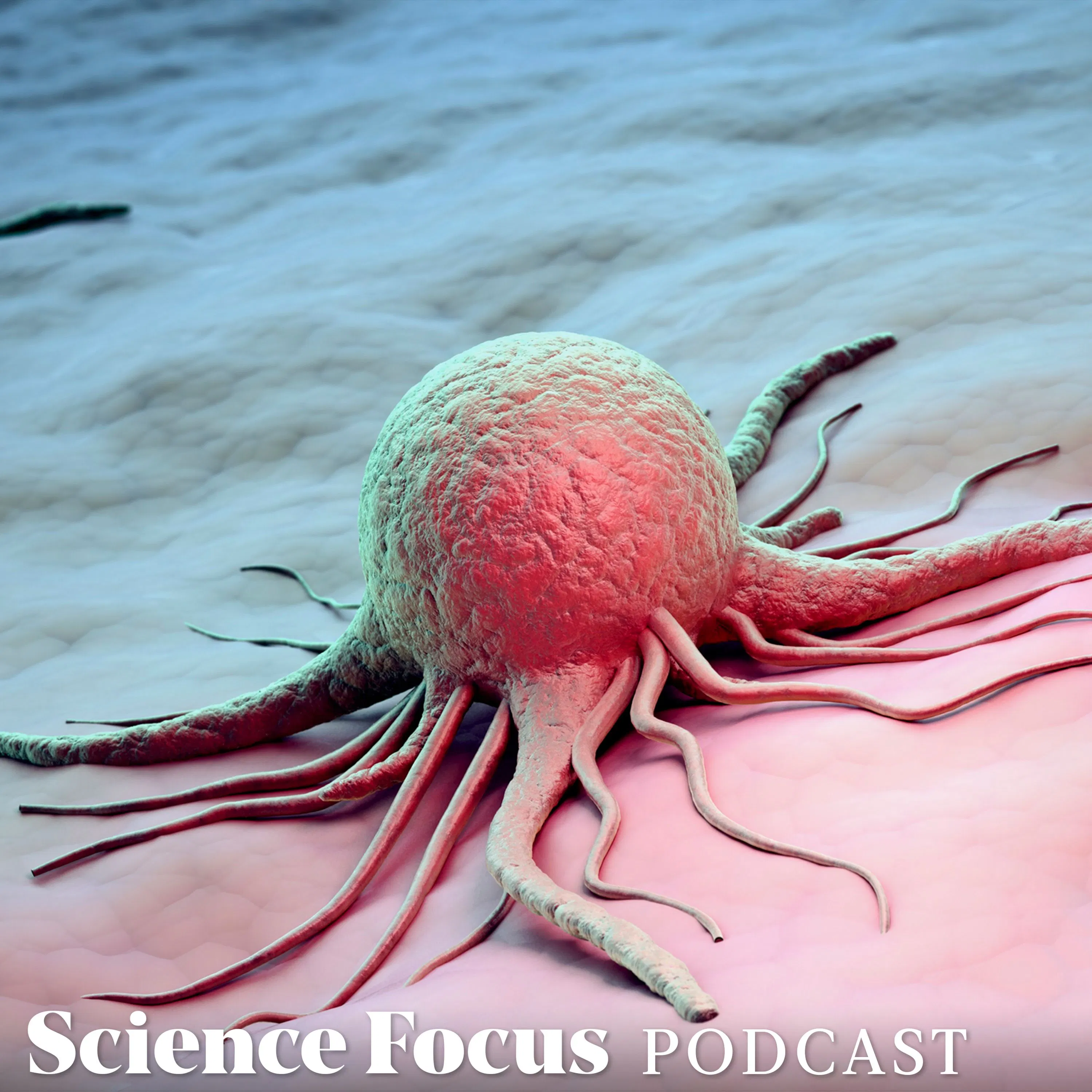
Everything you ever wanted to know about… cancer with Dr Kat Arney
In this week's episode of the Science Focus Podcast, we talk to Dr Kat Arney about cancer. Kat is a science writer and broadcaster, and founder of the science communication consultancy First Create The Media. Her book, Rebel Cell is out now. She reveals how tissue becomes a tumour, how cells migrate to help cancer spread, and what scientists are doing right now to better understand the disease. Let us know what you think of the episode with a review or a comment wherever you listen to your podcasts. Subscribe to the Science Focus Podcast on these services: Acast, iTunes, Stitcher, RSS, Overcast Read the full transcription [this will open in a new window] Listen to more episodes of the Science Focus Podcast: Matt Parker, Helen Arney and Steve Mould: What links coffee, snowflakes and frogs? Professor Catharina Svanborg: Is the cure for cancer hiding in human breast milk? Is gene editing inspiring or terrifying? – Nessa Carey Can we slow down the ageing process? – Sue Armstrong Eating for your genes – Giles Yeo How to get a good night’s sleep – Alice Gregory Hosted on Acast. See acast.com/privacy for more information. Learn more about your ad choices. Visit podcastchoices.com/adchoices

Hugo Zeberg: How could Neanderthal genes affect COVID-19?
In this week's episode of the Science Focus Podcast, we talk to Hugo Zeberg, a geneticist working at the Karolinska Institute in Stockholm. Hugo has just published a paper that suggests those of us with a certain set of genes inherited from Neanderthals may suffer from more severe effects of COVID-19. Let us know what you think of the episode with a review or a comment wherever you listen to your podcasts. Subscribe to the Science Focus Podcast on these services: Acast, iTunes, Stitcher, RSS, Overcast Read the full transcription [this will open in a new window] This podcast was supported by brilliant.org, helping people build quantitative skills in maths, science, and computer science with fun and challenging interactive explorations. Listen to more episodes of the Science Focus Podcast: Dr Rachel Brown: Why are some COVID-19 patients suffering from neurological complications? Project Discovery: Could computer games help find a cure for COVID-19? Elisa Raffaella Ferrè: What happens to the brain in space? Sandro Galea: What is the difference between health and medicine? Nessa Carey: Is gene editing inspiring or terrifying? Dean Burnett: What’s going on in the teenage brain? Hosted on Acast. See acast.com/privacy for more information. Learn more about your ad choices. Visit podcastchoices.com/adchoices

Matt Parker, Helen Arney and Steve Mould: What links coffee, snowflakes and frogs?
Today‘s podcast episode is a special one, with not one, not two, but three fantastic guests. We’ve teamed up with the three spoken nerds – Matt Parker, Steve Mould and Helen Arney – to bring you an episode of unnecessary details all about… ice. Steve explains how instant coffee is made, Matt gets irate about eight-pointed 'snowfakes' and Helen talks cryonic freezing. To hear more from the three spoken nerds, check out their new Podcast Of Unnecessary Detail. The song was “You And Me And Walt Disney”, produced by Helen Arney and Olly the Octopus and you can download it for free along with all the songs from Unnecessary Detail podcasts at helenarney.bandcamp.com Let us know what you think of the episode with a review or a comment wherever you listen to your podcasts. Subscribe to the Science Focus Podcast on these services: Acast, iTunes, Stitcher, RSS, Overcast Read the full transcription [this will open in a new window] This podcast was supported by brilliant.org, helping people build quantitative skills in maths, science, and computer science with fun and challenging interactive explorations. Listen to more episodes of the Science Focus Podcast: Andrew Hunter Murray and Dan Schreiber: Is there really no such thing as a fish? Matt Parker: What happens when maths goes horribly, horribly wrong? Helen Russell: What does it mean to be happy? ? Robin Ince: What's inside the mind of a comedian? Dara Ó Briain: Can you Finding the fun in science? Ryan North: How do you invent everything? Hosted on Acast. See acast.com/privacy for more information. Learn more about your ad choices. Visit podcastchoices.com/adchoices

Merlin Sheldrake: How have fungi shaped the world?
The fungal kingdom is vast, and yet much of it remains unknown to us – it’s estimated that only about 6 per cent of all fungal species have, so far, been described. But if fungi are all around us, why do we only know the names of a few? We might use yeast in baking, mushrooms in our cooking, or have been treated with penicillin, but biologist Merlin Sheldrake says there is much more wonder to be found in understanding our fungal friends better. His new book, Entangled Life, reveals the complexity of the fungal world. In it, he describes the fungal networks that connect trees and plants in something called the Wood Wide Web, and explains how fungi were crucial to the creation of the world we see around us today. We spoke to Merlin about this strange and wondrous lifeform. Let us know what you think of the episode with a review or a comment wherever you listen to your podcasts. Subscribe to the Science Focus Podcast on these services: Acast, iTunes, Stitcher, RSS, Overcast Read the full transcription [this will open in a new window] This podcast was supported by brilliant.org, helping people build quantitative skills in maths, science, and computer science with fun and challenging interactive explorations. Listen to more episodes of the Science Focus Podcast: The Urban Birder: What wildlife can city-dwellers see? Samantha Alger: What can we do to save the bees? Mark Miodownik: Are biodegradable plastics really better than traditional plastic? Neil Shubin: How do big changes in evolution happen? Mark Lynas: Could leaving nature to its own devices be the key to meeting the UK’s climate goals? Brad Lister: Are we facing an insect apocalypse? Neil Gemmell: The genetic hunt for the Loch Ness Monster Hosted on Acast. See acast.com/privacy for more information. Learn more about your ad choices. Visit podcastchoices.com/adchoices
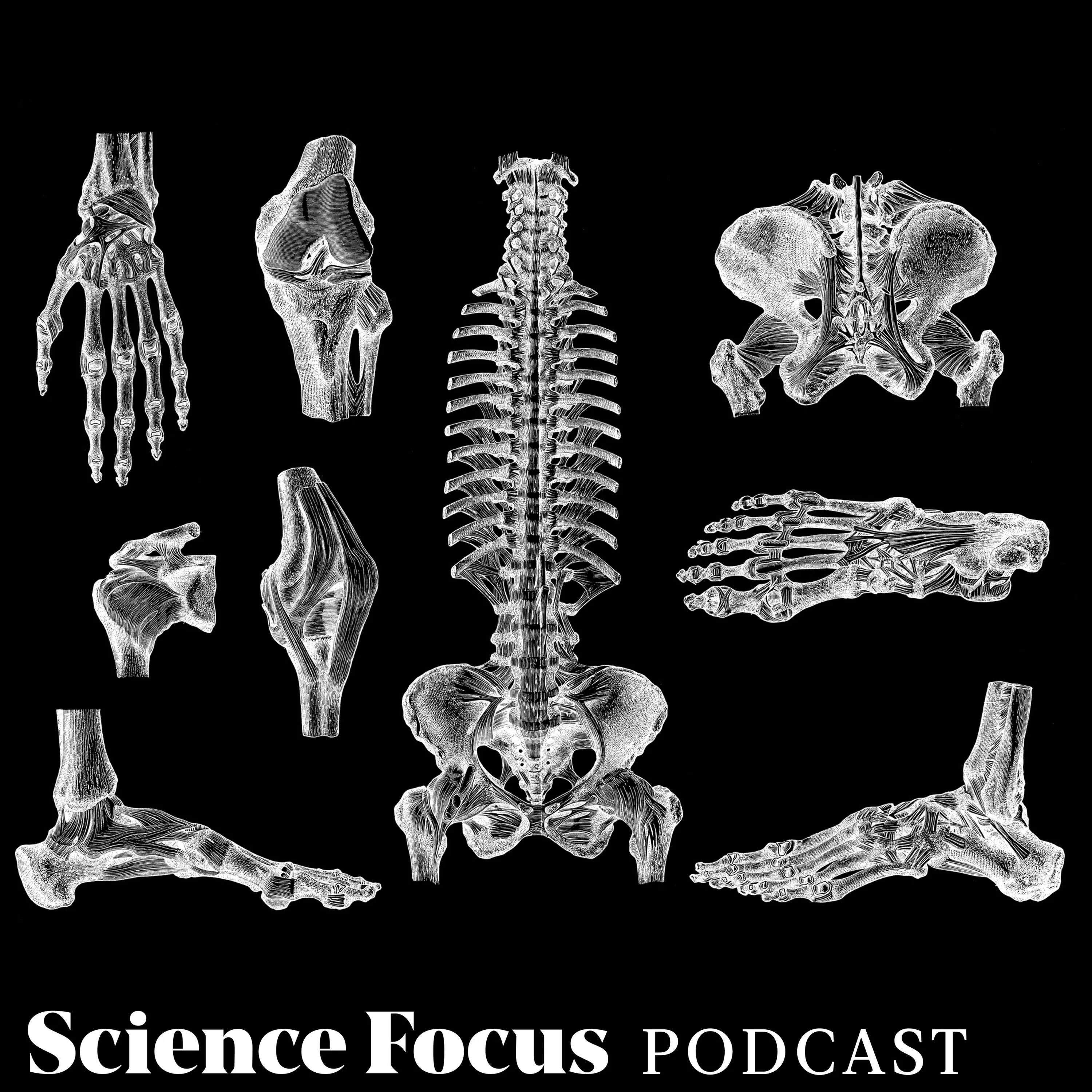
Sue Black: What stories do our skeletons tell?
In today’s episode, we’re chatting to Professor Sue Black, an anatomist and forensic anthropologist. You might’ve seen characters doing her job on television, in shows like NCIS or Silent Witness – although, they’re not quite an accurate portrayal, as you’ll find out. Over the course of her career, Sue has worked with the UK Foreign and Commonwealth Office and the United Nations, helping to identify victims and perpetrators from only sections of their bodies – perhaps a finger found in a bin bag, or the back of an assaulter’s hand caught on film. Her work has taken her to places such as Kosovo, Sierra Leone, Iraq. She talks to us about how science helps her piece together fragmented parts of a human jigsaw. This episode contains some graphic content, including descriptions of criminal acts and dissection, that some listeners might find upsetting. Let us know what you think of the episode with a review or a comment wherever you listen to your podcasts. Subscribe to the Science Focus Podcast on these services: Acast, iTunes, Stitcher, RSS, Overcast Read the full transcription [this will open in a new window] This podcast was supported by brilliant.org, helping people build quantitative skills in maths, science, and computer science with fun and challenging interactive explorations. Listen to more episodes of the Science Focus Podcast: Brian Switek: How did bones evolve? Mark O'Connell: Transhumanism: using technology to live forever Bill Bryson: What should we know about how our bodies work? Nathan Lents: Everything that's wrong with the human body Ritu Raman: Can you build with biology? Aleks Krotoski: What happens to your data when you die? Hosted on Acast. See acast.com/privacy for more information. Learn more about your ad choices. Visit podcastchoices.com/adchoices

Professor Trevor Cox: Was Stonehenge an ancient acoustic chamber?
For decades, Stonehenge, the mysterious prehistoric circle of stones built on the Salisbury Plain in Wiltshire, has left scientists scratching their heads. Who exactly built it and what was it used for? In the latest attempt to get to the bottom of this mystery, a team of engineers based at the University of Salford have 3D-printed a scale model of the ancient monument in order to investigate the effect its unique structure would’ve had on conversations, rituals, and even music. We spoke to Professor Trevor Cox, the acoustic engineer heading up the study, to find out more. Let us know what you think of the episode with a review or a comment wherever you listen to your podcasts. Subscribe to the Science Focus Podcast on these services: Acast, iTunes, Stitcher, RSS, Overcast Read the full transcription [this will open in a new window] This podcast was supported by brilliant.org, helping people build quantitative skills in maths, science, and computer science with fun and challenging interactive explorations. Listen to more episodes of the Science Focus Podcast: Trevor Cox: To become Prime Minister, change your voice Natalie Starkey: What asteroids can tell us about our Solar System Mike Garrett: Is there anybody out there? Colin Stuart: The most mysterious objects in the Universe Dr Lucy Rogers: What makes a robot a robot? Pete Etchells: Are video games good for us? Hosted on Acast. See acast.com/privacy for more information. Learn more about your ad choices. Visit podcastchoices.com/adchoices

Dr Julia Shaw: Why do we do bad things?
Everyone does bad things. We know deep down are wrong, but we do them anyway. Sometimes, people do things so bad that we call them evil. Criminal psychologist Dr Julia Shaw says there’s no such thing as evil. In her book Making Evil, she argues that we should ditch the idea altogether, and try to understand so-called “evil” people. In this week’s episode of the Science Focus Podcast, she talks about psychopaths, mental illness and why we do bad things. Let us know what you think of the episode with a review or a comment wherever you listen to your podcasts. Subscribe to the Science Focus Podcast on these services: Acast, iTunes, Stitcher, RSS, Overcast Read the full transcription [this will open in a new window] This podcast was supported by brilliant.org, helping people build quantitative skills in maths, science, and computer science with fun and challenging interactive explorations. Listen to more episodes of the Science Focus Podcast: Jack Lewis: Sin and why we do the things we shouldn't ASMR science: are 'brain tingles' more than just a feeling? Jesse Bering: What can psychology tell us about suicide? Pete Etchells: Are video games good for us? Helen Russell: What does it mean to be happy? Gary Barker: What does it mean to be a man? Hosted on Acast. See acast.com/privacy for more information. Learn more about your ad choices. Visit podcastchoices.com/adchoices

James Hamblin: Should we all stop showering?
We know how important good hygiene is. It protects us from viral infections and diseases, but what if, by washing, soaping and scrubbing, we’re actually damaging our health? Dr James Hamblin, journalist and professor of public health, stopped showering five years ago. In his new book, Clean (£16.99, Bodley Head), he reveals how our skin is affected by the products we apply. The overuse of soap and cosmetic products – sold to us with the promise of caring for our skin – might even be causing some of the ailments we’re using them to try to treat. It hasn’t always been this way. Historically, humans have gone from seeing bathing as something vaguely sinful and reserved for the wealthy, to a daily necessity that, if neglected, is a huge social blunder. According to James, it’s time for a whole new perspective on cleaning. One that starts with a personal reflection of our relationship with our body. Let us know what you think of the episode with a review or a comment wherever you listen to your podcasts. Subscribe to the Science Focus Podcast on these services: Acast, iTunes, Stitcher, RSS, Overcast Read the full transcription [this will open in a new window] This podcast was supported by brilliant.org, helping people build quantitative skills in maths, science, and computer science with fun and challenging interactive explorations. Listen to more episodes of the Science Focus Podcast: Dr Monty Lyman: What does our skin tell us about ourselves? Phillippa Diedrichs: Is body positivity the answer to body image issues? Dean Burnett: The neuroscience of happiness Pete Etchells: Are video games good for us? Sue Armstrong: Can we slow down the ageing process? Helen Russell: What does it mean to be happy? Hosted on Acast. See acast.com/privacy for more information. Learn more about your ad choices. Visit podcastchoices.com/adchoices

Katie Mack: How will the Universe end?
The end of the Universe may be a common feature in science fiction, but this one isn’t a crisis that can be averted by a team of superheroes. The Universe really will come to an end one way or another, and we have an idea how – five ideas, actually. In this week’s episode of the Science Focus Podcast, astrophysicist Dr Katie Mack talks to us about the future of the cosmos. She dives into these five possible apocalypses, from the Universe gradually fading out to the ‘quantum bubble of death’. Let us know what you think of the episode with a review or a comment wherever you listen to your podcasts. Subscribe to the Science Focus Podcast on these services: Acast, iTunes, Stitcher, RSS, Overcast Read the full transcription [this will open in a new window] This podcast was supported by brilliant.org, helping people build quantitative skills in maths, science, and computer science with fun and challenging interactive explorations. Listen to more episodes of the Science Focus Podcast: Dr Jacob Bleacher: Why do we need to go back to the Moon? Colin Stuart: The most mysterious objects in the Universe Professor Fay Dowker: What is the problem of quantum gravity? Dr Erin Macdonald: Is there science in Star Trek? Dr Becky Smethurst: How do you actually find a black hole? Mark McCaughrean: How do you launch a successful space mission? Hosted on Acast. See acast.com/privacy for more information. Learn more about your ad choices. Visit podcastchoices.com/adchoices

Rana el Kaliouby: What if computers could read our emotions?
For many, the coronavirus pandemic and lockdown restrictions has isolated us from the people we love, reducing our social life to screens and Zoom meetings. But even with the added visual, communicating online still isn’t as straightforward as being in-person. It can feel like jokes fall flat when everyone has their microphone off, and the jittering of poor signal can make anyone’s face hard to read. But what if our computers could read and respond to our emotions? If the engagement of a virtual meeting could be shown on-screen to generate a buzz like the one of a live audience? That’s just one possibility of a future with emotionally intelligent machines. Researcher and CEO Rana el Kaliouby believes that by teaching computers to read facial expressions, they could detect early signs of Parkinson’s, prevent drivers from getting behind the wheel when tired, or help teachers design educational programmes that keep kids engaged. Rana speaks to us about making machines empathetic, being named by Forbes as one of America's top 50 women in tech, and how her research into human emotions has affected her personal life. Subscribe to the Science Focus Podcast on these services: Acast, iTunes, Stitcher, RSS, Overcast Read the full transcription This podcast was supported by brilliant.org, helping people build quantitative skills in maths, science, and computer science with fun and challenging interactive explorations. Listen to more episodes of the Science Focus Podcast: Jim Al-Khalili: Why AI is not the enemy Lisa Feldman Barrett: How emotions are made Aleks Krotoski: What happens to your data when you die? Jim Davies: How do you use your imagination? Caroline Criado Perez: Does data discriminate against women? Robert Elliott Smith: Are algorithms inherently biased? Hosted on Acast. See acast.com/privacy for more information. Learn more about your ad choices. Visit podcastchoices.com/adchoices

Dr Rachel Brown: Why are some COVID-19 patients suffering from neurological complications?
A recent study carried out at the National Hospital for Neurology and Neurosurgery, UCLH, on confirmed or suspected COVID-19 patients has found neurological complications of the virus can, in some rare cases include delirium, brain inflammation, stroke and nerve damage. We spoke to Dr Rachel Brown, an MRC Clinical Research Training Fellow involved with the study to find out more. Subscribe to the Science Focus Podcast on these services: Acast, iTunes, Stitcher, RSS, Overcast Read an edited version of the interview below This podcast was supported by brilliant.org, helping people build quantitative skills in maths, science, and computer science with fun and challenging interactive explorations. Listen to more episodes of the Science Focus Podcast: Project Discovery: Could computer games help find a cure for COVID-19? Elisa Raffaella Ferrè: What happens to the brain in space? Sandro Galea: What is the difference between health and medicine? Nessa Carey: Is gene editing inspiring or terrifying? Dean Burnett: What’s going on in the teenage brain? Bill Bryson: What should we know about how our bodies work? COVID-19 could cause delirium, brain inflammation and stroke A study carried out on a small number of confirmed or suspected Covid-19 patients at the National Hospital for Neurology and Neurosurgery has linked the coronavirus to a number of neurological conditions. Can you tell us about your research? COVID-19 is still predominantly a respiratory illness, but in a small subset of patients we’ve been seeing neurological symptoms and syndromes. Some of the early studies from Wuhan showed that around a third of patients were having neurological symptoms. In those early descriptions a lot of the symptoms that people were describing included things like headache and dizziness, loss of smell and things that could just really be attributed to viral illness. As we gained more experience, we noticed other cases appearing that looked a little bit different. We have information from... Hosted on Acast. See acast.com/privacy for more information. Learn more about your ad choices. Visit podcastchoices.com/adchoices
The Urban Birder: What wildlife can city-dwellers see?
Many of us have found solace in nature over the last few months, relishing our time outdoors, especially when it was limited to one form of exercise a day. A recent report by the RSPB found that people see access to nature as being important for health and wellbeing during and in recovery from the coronavirus crisis. One man who has always been connected to the natural world is David Lindo. Known by most as the Urban Birder, David is a champion for the wellbeing benefits of wildlife, encouraging us all to get outside and see what we can find, be it in the garden, the city, or the countryside. In this week’s episode of the Science Focus Podcast, David tells us about the human benefits of biodiversity, the need for conservation education, and diversity within the birding community. Let us know what you think of the episode with a review or a comment wherever you listen to your podcasts. Subscribe to the Science Focus Podcast on these services: Acast, iTunes, Stitcher, RSS, Overcast Read the full transcription [this will open in a new window] This podcast was supported by brilliant.org, helping people build quantitative skills in maths, science, and computer science with fun and challenging interactive explorations. Listen to more episodes of the Science Focus Podcast: Samantha Alger: What can we do to save the bees? Mark Miodownik: Are biodegradable plastics really better than traditional plastic? Neil Shubin: How do big changes in evolution happen? Mark Lynas: Could leaving nature to its own devices be the key to meeting the UK’s climate goals? Andrew Hunter Murray and Dan Schreiber: Is there really no such thing as a fish? Brad Lister: Are we facing an insect apocalypse? Hosted on Acast. See acast.com/privacy for more information. Learn more about your ad choices. Visit podcastchoices.com/adchoices

Dr Michael Mosley: Why is sleep so important?
If, like us, you love to read a good science book, (and thanks to this podcast we’ve read a fair few over the years), you’ll probably recognise the feeling of having more questions about its subject at the end of the book than before you even turned page one. It’s because of this that we decided to launch the Science Focus Book Club, where we pick out what we think is an excellent, thought provoking science book and ask your questions to its author. You can sign up for the newsletter to find out which book is coming up next, but to give you a taster, in May, our legion of science book fans read Fast Asleep, by Science Focus columnist and BBC presenter Dr Michael Mosley. In this week’s podcast we’ve selected a few of our favourite Q&As where he explains everything you need to know about sleep; from what it is, why we need it and how to get more of it. Let us know what you think of the episode with a review or a comment wherever you listen to your podcasts. Subscribe to the Science Focus Podcast on these services: Acast, iTunes, Stitcher, RSS, Overcast Read the full transcription [this will open in a new window] This podcast was supported by brilliant.org, helping people build quantitative skills in maths, science, and computer science with fun and challenging interactive explorations. Listen to more episodes of the Science Focus Podcast: Dr Guy Leschziner: What is your brain doing while you sleep? Alice Gregory: How to get a good night's sleep Brian Sharpless: Exploding Head Syndrome Dean Burnett: The neuroscience of happiness John Lennox: Is religion compatible with science? Emma WhispersRed: Why ASMR gives you tingles Hosted on Acast. See acast.com/privacy for more information. Learn more about your ad choices. Visit podcastchoices.com/adchoices

Ritu Raman: Can you build with biology?
If I asked you to build a robot, the first materials you would probably reach for would be some metal bits and plastic bobs. However, mechanical engineer Ritu Raman designs machines made with biological material, and has created all manner of wonderful machines, including a walking robot made with muscle tissue. In this week’s episode of the Science Focus Podcast, she tells us about how to integrate biology into engineering and what these remarkable devices can do that traditional machines can’t. Let us know what you think of the episode with a review or a comment wherever you listen to your podcasts. Subscribe to the Science Focus Podcast on these services: Acast, iTunes, Stitcher, RSS, Overcast Read the full transcription [this will open in a new window] This podcast was supported by brilliant.org, helping people build quantitative skills in maths, science, and computer science with fun and challenging interactive explorations. Listen to more episodes of the Science Focus Podcast: Sonia Contera: How will nanotechnology revolutionise medicine? Sandro Galea: What is the difference between health and medicine? Gordon Wallace: Is an implantable electronic device the future of medicine? Professor Catharina Svanborg: Is the cure for cancer hiding in human breast milk? Nessa Carey: Is gene editing inspiring or terrifying? Dr Lucy Rogers: What makes a robot a robot? Hosted on Acast. See acast.com/privacy for more information. Learn more about your ad choices. Visit podcastchoices.com/adchoices

Project Discovery: Could computer games help find a cure for COVID-19?
In a previous episode of the Science Focus Podcast, we discovered how a team of scientists harnessed the combined power of hundreds of thousands of players of the massively multiplayer online game Eve Online to help in the search for exoplanets. Now, the next phase of this programme, called Project Discovery, is turning its sights from the stars to the coronavirus pandemic. This week we speak to scientists Ryan Brinkman and Jerome Waldispuhl, and Project Discovery’s creator Atilla Szantner about why they intend to turn gamers into citizen scientists to help find a cure for COVID-19. Let us know what you think of the episode with a review or a comment wherever you listen to your podcasts. Subscribe to the Science Focus Podcast on these services: Acast, iTunes, Stitcher, RSS, Overcast Read the full transcription This podcast was supported by brilliant.org, helping people build quantitative skills in maths, science, and computer science with fun and challenging interactive explorations. Listen to more episodes of the Science Focus Podcast: Sonia Contera: How will nanotechnology revolutionise medicine? Chris Lintott: Can members of the public do real science? Dr Erin Macdonald: Is there science in Star Trek? Jim Al-Khalili: Why should we care about science and scientists? Dr Tilly Blyth: How has art influenced science? John Higgs: Are Generation Z our only hope for the future? Hosted on Acast. See acast.com/privacy for more information. Learn more about your ad choices. Visit podcastchoices.com/adchoices

Dr Jacob Bleacher: Why do we need to go back to the Moon?
In 1969, Apollo astronauts Neil Armstrong and Buzz Aldrin became the first people ever to walk on the Moon, a feat over the next three and a half years only 10 other space explorers would go on to achieve. Now it has taken nearly 50 years, but NASA once again has ambitions to land the first woman and the next man on the Moon by 2024. The Artemis Program is a wide-reaching effort by numerous space agencies and led by NASA, with ambitions to not only put human feet on the lunar surface but to build a permanent base there, with a lunar space station in orbit around the Moon. To find out more, this week we speak to Dr Jacob Bleacher, Chief Exploration Scientist for human exploration at NASA, about how we are going to get there, what effect deep space will have on the astronauts, and why now is the time to go back to the Moon. Let us know what you think of the episode with a review or a comment wherever you listen to your podcasts. Subscribe to the Science Focus Podcast on these services: Acast, iTunes, Stitcher, RSS, Overcast Read the full transcription This podcast was supported by brilliant.org, helping people build quantitative skills in maths, science, and computer science with fun and challenging interactive explorations. Listen to more episodes of the Science Focus Podcast: Elisa Raffaella Ferrè: What happens to the brain in space? Everything You Wanted To Know About… Physics with Jim Al-Khalili Dr Erin Macdonald: Is there science in Star Trek? Kevin Fong: What happened to Apollo... Hosted on Acast. See acast.com/privacy for more information. Learn more about your ad choices. Visit podcastchoices.com/adchoices

Subhadra Das: What part has science played in racism?
Not so long ago, English scientists believed that they could study differences between people and that certain ethnicities were ‘better’ or ‘worse’ than others – of course, white Europeans were put at the top of any list. In the 19th Century, anthropologist and statistician Francis Galton took this even further when he coined the term ‘eugenics’, the idea that science could better the human race by promoting the spread of certain genes, deemed ‘good’, and by halting the distribution of those deemed bad. While these Victorian ideas have since been refuted and discarded by the scientific community, there are those in society that turn to race science in an attempt to justify their bigotry and racism. Subhadra Das has spent the last eight years as a museum curator for the science collections at University College London, specialising in the history of scientific racism and the history of eugenics. She tells us how Francis Galton’s idea spread through Victorian society, and why it’s important to understand science’s racist history in order for us to move forward. Let us know what you think of the episode with a review or a comment wherever you listen to your podcasts. Subscribe to the Science Focus Podcast on these services: Acast, iTunes, Stitcher, RSS, Overcast Read the full transcription [this will open in a new window] This podcast was supported by brilliant.org, helping people build quantitative skills in maths, science, and computer science with fun and challenging interactive explorations. Listen to more episodes of the Science Focus Podcast: Adam Rutherford: Can science ever be rid of racism? Pragya Agarwal: When does bias become prejudice? Robert Elliott Smith: Are algorithms inherently biased? Caroline Criado Perez: Does data discriminate against women? Angela Saini: Is racism creeping into science? Hosted on Acast. See acast.com/privacy for more information. Learn more about your ad choices. Visit podcastchoices.com/adchoices

Brendan Walker: Where is the best place to sit on a rollercoaster?
Brendan Walker originally trained and worked as an aeronautical engineer, but now has a far more thrilling job title, quite literally - he’s a thrill engineer. He’s been working with theme parks to help create the most exciting rollercoasters, using design principles to craft extreme, human emotional experiences to the rides. He tells us why people have a love/hate relationship with rollercoasters, the fine line between fun and fear, how to get your thrills in lockdown and most importantly, where the best place to sit on a rollercoaster might be. Let us know what you think of the episode with a review or a comment wherever you listen to your podcasts. Subscribe to the Science Focus Podcast on these services: Acast, iTunes, Stitcher, RSS, Overcast Read the full transcription This podcast was supported by brilliant.org, helping people build quantitative skills in maths, science, and computer science with fun and challenging interactive explorations. Listen to more episodes of the Science Focus Podcast: Elisa Raffaella Ferrè: What happens to the brain in space? Jim Davies: How do you use your imagination? Dr Erin Macdonald: Is there science in Star Trek? Matt Parker: What happens when maths goes horribly, horribly wrong? Kathryn D. Sullivan: What is it really like to walk in space? Sir David Spiegelhalter: There's no such thing as Blue Monday Hosted on Acast. See acast.com/privacy for more information. Learn more about your ad choices. Visit podcastchoices.com/adchoices

Leonard Mlodinow: How did Stephen Hawking make science accessible?
Two years to the day the great physicist Professor Stephen Hawking was interred at Westminster Abbey, and at the time of his death, we spoke to one of the people that knew him best, Leonard Mlodinow. Leonard is an American theoretical physicist who worked with Stephen on the books The Grand Design and A Briefer History of Time, and his own book chronicling their time together, Stephen Hawking: A Memoir of Friendship and Physics (£20, Allen Lane), will be released in September this year. In this republished interview he speaks with BBC Science Focus editor Daniel Bennett about writing together, his qualities, and what they did when they weren’t talking physics. Let us know what you think of the episode with a review or a comment wherever you listen to your podcasts. Subscribe to the Science Focus Podcast on these services: Acast, iTunes, Stitcher, RSS, Overcast This podcast was supported by brilliant.org, helping people build quantitative skills in maths, science, and computer science with fun and challenging interactive explorations Read more about Professor Stephen Hawking: Can you solve these deviously difficult Stephen Hawking-inspired questions? Stephen Hawking (1942-2018): the theoretical physicist's life in pictures Twitter Tributes to Professor Stephen Hawking Remembering Professor Stephen Hawking Hosted on Acast. See acast.com/privacy for more information. Learn more about your ad choices. Visit podcastchoices.com/adchoices

Pragya Agarwal: When does bias become prejudice?
No matter how open-minded we consider ourselves to be, all of us hold biases towards other people. Dr Pragya Agarwal is a behavioural and data scientist, ex-academic, and a freelance writer and journalist, who runs a research gender equality think tank The 50 Percent Project. Her new book, Sway: Unravelling Unconscious Bias (£16.99, Bloomsbury Sigma), unravels the way our implicit or 'unintentional' biases affect the way we communicate and perceive the world, and how they affect our decision-making, even in life and death situations. In this week’s podcast, she explains where these biases come from and why it’s important for us to recognise and unlearn them to help make the world a better, fairer place. Let us know what you think of the episode with a review or a comment wherever you listen to your podcasts. Subscribe to the Science Focus Podcast on these services: Acast, iTunes, Stitcher, RSS, Overcast Why you should subscribe to BBC Science Focus Listen to more episodes of the Science Focus Podcast: Adam Rutherford: Can science ever be rid of racism? Angela Saini: Is racism creeping into science? Robert Elliott Smith: Are algorithms inherently biased? Caroline Criado Perez: Does data discriminate against women? Marcel Danesi: Why do we want to believe lies? Camilla Pang: How can science guide my life? Hosted on Acast. See acast.com/privacy for more information. Learn more about your ad choices. Visit podcastchoices.com/adchoices