Insanely Generative
AI Writing. For the moment.
Paul Henry Smith
Show overview
Insanely Generative has been publishing since 2023, and across the 3 years since has built a catalogue of 96 episodes. That works out to roughly 20 hours of audio in total. Releases follow a fortnightly cadence.
Episodes typically run under ten minutes — most land between 5 min and 14 min — with run-times ranging widely across the catalogue. None of the episodes are flagged explicit by the publisher. It is catalogued as a EN-language Technology show.
The show is actively publishing — the most recent episode landed 3 weeks ago, with 15 episodes already out so far this year. Published by Paul Henry Smith.
From the publisher
AI Can't Believe It's Not Human generativegazette.substack.com
Latest Episodes
View all 96 episodesI Am Going to Make 1,000 Symphonies Before They Take Away My Toy
Liberating Taste: What Comes After Ranch?
The End of Gee-Whiz AI
The Great AI Sin
I Gave a Talk at a College About AI—and No One Booed
So, you want to save music?

Across the Bay
A man considers what it means to move through the world without leaving a mark—and whether recognition, when it comes, is enough. Spare, reflective, and unsettling.Copyright © 2026 by Paul Henry Smith Get full access to The Generative Gazette at generativegazette.substack.com/subscribe
Panicking Over Music—Our Oldest Tradition?
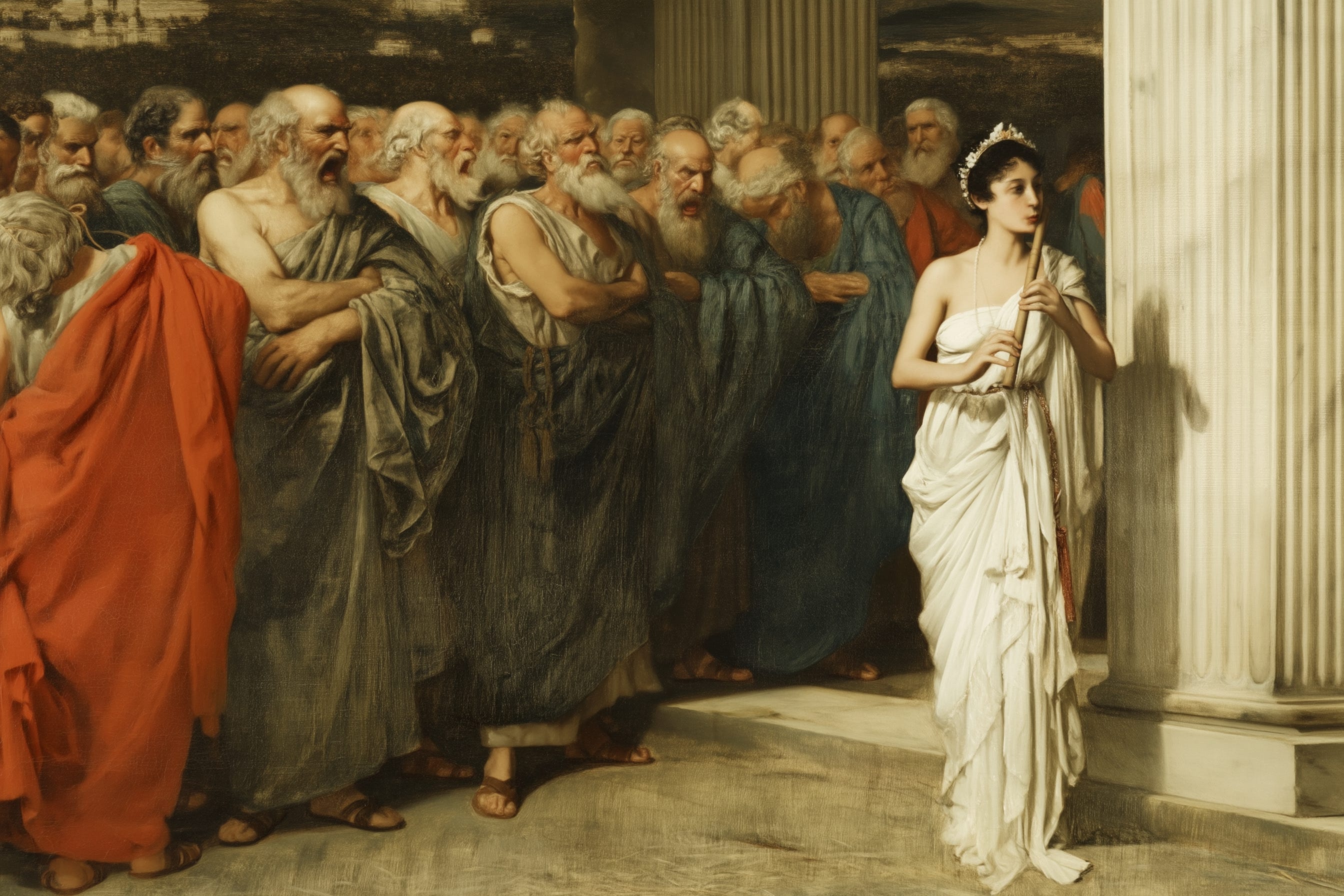
This is a paraphrased transcript. Listen to get the full experienceJordan[Orchestral overture]Imagine a new technology drops today, right?And the government immediately moves to ban it.They claim it’s going to fundamentally corrupt the youth and cause the absolute collapse of the state.You’d probably think it was, I don’t know, a biological weapon.Or maybe some kind of unregulated neuroimplant.AlexExactly.But if you rewind to about 380 BCE, Plato was making that exact argument about a new type of flute.It is just a stunning historical reality.We tend to think of the history of music as this upward trajectory of universal celebration.JordanRight, where society just marvels at the next great masterpiece or a cool new instrument.AlexYeah, but if you look at the primary sources, the reaction to new musical expression is almost always sheer, unadulterated terror.JordanWhich is exactly what we are getting into today.Welcome to The Deep Dive.Our mission today is to track the overarching through-lines of this fear.We want to figure out why new music and new music tech always seem to terrify society.And what’s uniquely different about the panics you see in your social feeds today versus what’s exactly the same.And what conclusions we can draw about the future of human expression.Okay, let’s unpack this.AlexThe most striking realization from this research is that while the target of the panic constantly evolves, shifting from ancient lyres to 19th-century ballroom dances to 2026 AI track generators, the underlying rhetoric remains shockingly consistent.It’s basically the same script every time.JordanIt really is.To understand the AI anxiety we’re living through right now, we have to look at how early societies viewed music.They didn’t see it merely as an art form.They saw it as a highly dangerous technology of the physical body.AlexLet’s explore that, because the level of state control over a melody in antiquity is wild.You mentioned Plato warning that musical innovation leads to lawlessness.JordanOh yeah. He thought it was a direct threat to the state.AlexBut it wasn’t just a Western phenomenon.In early Confucian statecraft, there was a massive push to banish the regional music of Zheng.JordanRight, because it was classified as lewd.AlexExactly. It was treated like a political hygiene issue.Imagine the government banning a Spotify playlist because they genuinely believe it’s a threat to national security.JordanIt sounds absurd now, but as history progresses, that fear transitions into a fear of music corrupting the soul.Which brings us to the religious panic.AlexIf you read Augustine of Hippo, he agonizes over his own physical reactions to music.JordanHe felt guilty just for reacting to a song?AlexTotally. He felt like a criminal because he was more moved by the singing than the religious message.JordanThat’s incredible.AlexAnd it escalates.Figures like John Chrysostom and later Puritan clergy framed dancing as a direct portal to evil.JordanThe Puritans did not mess around with dancing.AlexNot at all. Increase Mather literally described it as a devil’s procession.JordanAnd then by 1816, the waltz is causing panic in London.AlexYes, it was called an indecent foreign contagion.JordanBecause people were touching.AlexExactly. That same anxious gaze appears again with the hula in the 1820s.Missionaries framed it as morally disruptive and socially dangerous.JordanIt really does feel like they treated music as a kind of malware.AlexThat’s exactly the pattern.The state or church is the operating system, and new music is treated like a virus that hacks the body.JordanThat brings us to something the sources call “demonology by metaphor.”AlexRight. It’s about externalizing agency.Instead of saying “I like this,” people say “the music is making me do it.”JordanSo the music becomes the villain.AlexExactly. It absolves the listener of responsibility.JordanBut in the 20th century, the language changes.AlexYes. The panic becomes scientific.Ragtime was described as a public health issue.Jazz was said to “demoralize the brain.”JordanAnd those claims were often wrapped in racialized pseudoscience.AlexExactly.And that continues into rock and roll, where the focus shifts to physical behavior and neurological harm.JordanWhich leads us to the PMRC era.AlexYes. The rhetoric becomes statistical moralism.Explicit lyrics were linked to social epidemics like violence and suicide.JordanSo taste becomes framed as measurable harm.AlexExactly. It transforms opinion into urgency.JordanThen we get the machine panic.AlexJohn Philip Sousa warned in 1906 that mechanical music would destroy the human soul.JordanWhich sounds exactly like modern AI critiques.AlexIt’s the same argument.Later, unions protested synthesizers, fearing job loss.JordanWhich gets reframed as protecting culture.AlexExactly. Economic anxiety becomes moral concern.JordanThen we enter the digital era.AlexYes. The panic moves into the legal system.Home taping was “killing music.”Sampl
You’ve Vibe Coded an Amblongus Pie! Now What?
What to do when you create an Amblongus pie while using an AI coding assistant, or vibe coding. Get full access to The Generative Gazette at generativegazette.substack.com/subscribe
The Missing Layer in the AI Stack
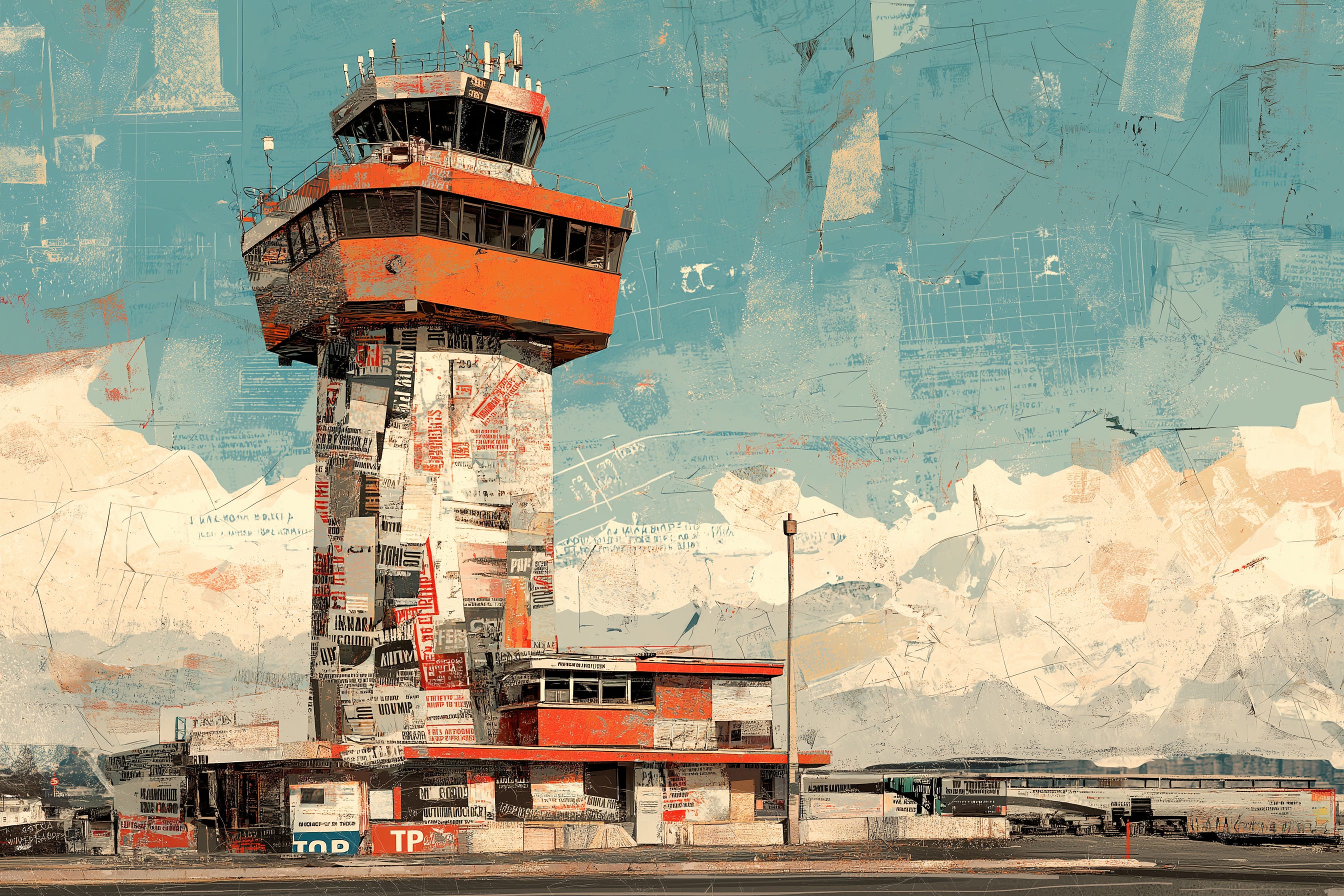
Over the past few years the AI ecosystem has been assembling itself into layers.First came the models. Then came the tools that allow those models to interact with the world. Now we’re beginning to see protocols that let AI agents communicate with each other and frameworks that help orchestrate their work.But when you zoom out and look at the emerging architecture, a small question starts to nag.What is the unit of work in AI systems?Not a prompt.Not a tool call.Not a message between agents.Something more like what humans already understand: a mission.In this episode we explore a simple but surprisingly deep idea: that AI systems may eventually need a shared way to describe purposeful work — goals, constraints, policies, and budgets — independent of the particular agents or tools involved.Along the way we talk about:Why the AI stack may be missing a coordination layerThe difference between agents, tools, and missionsWhy reasoning and authority should probably be separatedHow runaway agent systems could create congestionWhy TCP solved packet congestion — but not “work congestion”What might stop agents from spawning missions all the way downWhether this is just reinventing workflow systemsAnd why the hardest problem in large systems is often coordination, not intelligenceThe conversation is exploratory rather than prescriptive. The point isn’t to propose a standard — at least not yet — but to ask whether the ecosystem might be approaching the kind of scale where coordination layers historically appear.Because once AI systems start generating work for each other, the central question changes.Not what can these systems do?But how many of them can operate together without overwhelming the environment they share? Get full access to The Generative Gazette at generativegazette.substack.com/subscribe
Inhuman Music?
What if the “inhuman” side of music has always been there—quietly shaping the songs you love? This episode pulls back the curtain, and the view is stranger, funnier, and more hopeful than you might expect. Get full access to The Generative Gazette at generativegazette.substack.com/subscribe
Designers vs. The Machines
I want you to picture a very specific person, because this is not a philosophical debate. This is a career situation.You’re a UX designer. You love Figma. You love the feeling of turning a messy problem into clean, tasteful UI. You love speed. You love craft. You love being the person who can crank out a polished flow while everyone else is still arguing about what the feature even is. Your portfolio is screens, screens, screens—beautiful, consistent, modern screens—and hiring managers love you for it. They barely read anything. They scroll. They nod. They go, “Yep. This person can ship.”That person might be you. It might be your teammate. It might be half the industry.Now here’s the moment that made me stop and stare at the wall for a while: I saw a job posting from PayPal that wasn’t shy about where this is going. It wasn’t “AI-assisted design tooling.” It wasn’t “copilot for designers.” It was basically: we want to automate the production of UI and connect it directly to live business inputs—revenue, conversion, telemetry, trends, real-time analysis, prediction—and then generate solutions continuously.In plain English: the system sees a signal and changes the interface. Constantly. All day and all night.And if PayPal is willing to say that in public—if they’re comfortable putting that vision in a job description—then you should assume everybody else is thinking it too, even if they’re being quieter about it. Because nobody wants to be the second company on earth to admit they’re trying to automate a whole profession. They want to be the first company to quietly succeed and act like it was “obvious.”So if you’re sitting there thinking, “Yeah, but they can’t replace me, I have taste,” I need you to understand something, and I’m going to say it bluntly because it’s kinder than letting you keep believing it:Taste is not a moat when your taste has already been turned into rules.Most modern design teams spent the last decade doing something that was genuinely smart: standardizing. Tokens, components, pattern libraries, accessibility rules, spacing systems, interaction conventions. It made teams faster. It made products more consistent. It reduced chaos.But it also did something else—something we didn’t want to think about because it ruins the vibe.It made the work legible.If your product has a design system that dictates what “good” looks like, then a lot of downstream UI design becomes: pick the correct component, apply the correct pattern, follow the rules, don’t break anything.That’s not an insult. That’s how you scale.But it also means the work is learnable in the way machines love: lots of examples, lots of constraints, lots of “approved vs rejected,” lots of history.You don’t need a machine that understands beauty. You need a machine that predicts what will pass design review.And we have built an entire industry around making that prediction easier.Now, before you get mad at me, let me be fair to everyone involved, including the so-called “Figma farmers.”A lot of designers didn’t choose to be trapped in UI polish. They were trained into it. They were hired into it. They were rewarded for it. They got promoted for it. And they got hired in the first place because that’s what our hiring processes selected for.This part matters, and it’s not comfortable: during the pandemic hiring boom—when everyone was hiring like drunk sailors—UX teams didn’t scale by carefully selecting for deep systems thinking. They scaled by selecting for what could be evaluated quickly.Screens.We did it. I did it. I sat in interview loops. I watched people scroll portfolios like they were browsing Zillow. “Look at the craft.” “Look at the polish.” “Look at the number of flows.” “Look how fast they can produce.”And bootcamps, being rational businesses, trained people to win that game. They didn’t train “how to kill a feature with a principled argument.” They trained “how to present a case study with a gorgeous Figma flow.” Because that’s what got interviews.So it’s not that product and engineering forced design into a corner and design heroically endured. The uglier truth is that design, under pressure and incentives, overselected for visible output. We trained ourselves to prove our worth with artifacts.And now the artifact factory is being automated.That’s the part that should piss you off—not at the designers, but at the incentive structure we all participated in, because it’s about to cash out.Now let’s get to the real heart of it, because if this were just “AI makes pretty UI,” it’d be annoying but manageable.The real thing PayPal is going after is latency.Traditional UX is slow in a very specific way. Not because designers are slow. Not because teams are dumb. Because the loop is human.A metric moves. Someone notices. Someone convinces others it matters. Research happens. A fix is designed. It gets reviewed. It gets built. It ships. The world changes again.PayPal’s vision is: skip the human noticing-and-coordinating part. Wire t

Trusting AI
We rely on systems every day without thinking about them—until the moment arrives when a decision can’t be undone. In those moments, something subtle but essential comes into play: not proof, not compliance, but the quiet confidence that allows action at all. This episode lingers in that space, where time is short, information is incomplete, and hesitation carries its own cost.What does it actually mean to rely on an intelligent system before anything goes wrong? How does confidence form when explanations come later, if at all? And as AI moves from tools we use to collaborators we act with, where does that leave the humans who must decide, right now, whether to listen? Get full access to The Generative Gazette at generativegazette.substack.com/subscribe
We Tried Voice AI for Speed. We Got Something Much More Interesting.
What started as a simple attempt to speed up intake turned into a deeper experiment in how ideas form, gain momentum, and survive handoff between people. This conversation digs into voice as a design material, the hidden drop-off points in creative work, and why supporting both the client and the creative professional changes everything. Get full access to The Generative Gazette at generativegazette.substack.com/subscribe

The Pickle Has Landed.
Today’s episode starts with a shiny new announcement you may have already seen: Pickle, calling itself “the computer for your soul.”From there, things get interesting. We talk—casually, curiously—about why so many tech visions keep trying to squeeze old-school software UI into our actual field of vision, what it really means to “record everything,” and why the biggest thing these systems miss might be the part of experience that can’t be captured at all. Along the way, we poke at operating systems for perception, confidence masquerading as inevitability, and a simple test for telling whether a tool belongs in your life—or just wants to be there.No hot takes, no futurist yelling. Just a friendly, slightly incredulous walk through a very familiar Silicon Valley idea, and the questions it never quite seems to ask. Get full access to The Generative Gazette at generativegazette.substack.com/subscribe

Want to Erase an Entire Year of AI Energy Use? Drive Just One Mile Less.
AI is melting the planet. Everyone knows this. Everyone says it. In this episode, Alex makes the mistake of checking the math and accidentally detonates a very popular moral position. What she finds raises an awkward question: if AI isn’t the real carbon villain, then what is? Your inbox? Your streaming habits? That one mile you refuse to walk? Listen at your own risk. Facts ahead. Get full access to The Generative Gazette at generativegazette.substack.com/subscribe
Do Not Vibe-code a Startup This Weekend.
This week’s episode is a cautionary tale dressed in elastic Thanksgiving pants. It begins with a three-day weekend and a single, terrible idea: “What if I became a startup founder… right now?” From there, our host spirals into the gravy-fueled madness of holiday entrepreneurship, where AI tools like Cursor, Claude, Lovable, and Bolt whisper delusional encouragement into turkey-stuffed ears.We meet the dreamers: the engineers who hand car keys to Cursor like toddlers in traffic; the Claude-believers having beige confessional chats with a language model; designers building gluten-free cupcake trackers in Lovable; and the Bolt daredevils detonating full-stack apps with a single click.Our host’s personal descent peaks with the invention of a “reality authenticator” involving piano scarves—a business plan so doomed it makes Clubhouse look like a blue-chip stock. The coup de grâce isn’t failure, but the horrifying vision of success: living as the sad prophet of piano-scarf authenticity, begging strangers to click affiliate links in the name of democracy.It’s funny. It’s tragic. It’s the holiday fable of our time: the seductive fantasy of building something, the merciless grind of marketing, and the blessed relief of abandoning it all before you accidentally become the mascot for your own humiliation.Listen if:You’ve ever considered launching a holiday side hustle.You want to hear a grown adult confess to inventing a piano-based deepfake solution.You need a reason to stay horizontal all weekend.Moral: Put the laptop down. Walk away. There’s still time to save your long weekend—and your dignity. Get full access to The Generative Gazette at generativegazette.substack.com/subscribe

Have You Met the Mind of AI?
We’ve always imagined a mind behind the words we read. But what happens when that imagined mind speaks back?In this episode, Paul Henry Smith explores the quiet revolution underway—not in AI models, but in our perception. As AI begins to converse in ways that feel attuned to us, the line between tool and presence starts to blur. What if intelligence isn’t something a system has, but something that arises between us? This is a meditation on language, reciprocity, and the strange new companionship we’re forming with our machines. Not sci-fi. Not hype. Just the eerie, beautiful threshold we’re crossing together. Get full access to The Generative Gazette at generativegazette.substack.com/subscribe

AI is a Bubble. So what?
In this episode, I confess an embarrassing childhood habit involving a garden hose, a stolen ounce of dish soap, and a foam tsunami that terrified both my dog and my mother—an early sign that I should never be left unsupervised with running water or “ideas.” From there, I somehow lurch into economics, comparing my backyard bubble disaster to the current panic over an AI “bubble.” (Because nothing says fiscal insight like a nine-year-old trying to drown a bucket.)We talk about why froth isn’t failure, why wobbling isn’t doom, and why every great technological shift looks—at first—like a toddler on a bike headed straight for a parked Buick. I also make the case that hype is basically society’s way of throwing spaghetti at the wall, only now the spaghetti is venture-funded and wearing an unnecessary blazer.If you’ve ever wondered whether the AI boom means we’re headed for a crash, a renaissance, or just another decade of adults pretending they understand “bandwidth,” join me. I promise you’ll leave with a clearer view of the river beneath the foam—and possibly a renewed suspicion of anyone who trusts me with a hose. Get full access to The Generative Gazette at generativegazette.substack.com/subscribe
I Tried Vibe-Violining. Don’t Bother!
This week, I spent seven full days testing the so-called “violin,” the latest overhyped tool promising to democratize music by letting anyone wiggle their fingers and instantly become an artist. Spoiler: it’s not going to replace real musicians anytime soon.Yes, the violin promises a direct mind-to-sound connection—no keyboards, no pedals, no notation, just raw expression. But in reality, what I discovered was less “artistic revolution” and more “angry seagull in a blender.” The ergonomics are laughable, the onboarding nonexistent, and the sound quality—well, let’s just say I wouldn’t trade my humming in the shower for it.In this episode, I’ll break down where the violin succeeds (mostly as décor) and where it falls short (literally everywhere else). I’ll also walk you through my recommendations if you really want to get started with “vibe violining”—including why a $75 Amazon model is practically identical to a $15,000 boutique violin, and why for the price of a single Stradivarius, you could subscribe to every streaming service on Earth for the rest of human history.The verdict? Interesting experiment, fun for a week, but the violin will not replace musicians. Get full access to The Generative Gazette at generativegazette.substack.com/subscribe