
Increments
109 episodes — Page 3 of 3

#8 - Philosophy of Probability III: Conjectures and Refutations
On the same page at last! Ben comes to the philosophical confessional to announce his probabilistic sins. The Bayesians will be pissed (with high probability). At least Vaden doesn't make him kiss anything. After too much agreement and self-congratulation, Ben and Vaden conclude the mini-series on the philosophy of probability, and "announce" an upcoming mega-series on Conjectures and Refutations. References:- My Bayesian Enlightenment by Eliezer YudkowskyRationalist community blogs:- Less Wrong- Slate Star Codex- Marginal RevolutionYell at us at [email protected].

#7 - Philosophy of Probability II: Existential Risks
Back down to earth we go! Or try to, at least. In this episode Ben and Vaden attempt to ground their previous discussion on the philosophy of probability by focusing on a real-world example, namely the book The Precipice by Toby Ord, recently featured on the Making Sense podcast. Vaden believes in arguments, and Ben argues for beliefs. Quotes"A common approach to estimating the chance of an unprecedented event with earth-shaking consequences is to take a skeptical stance: to start with an extremely small probability and only raise it from there when a large amount of hard evidence is presented. But I disagree. Instead, I think the right method is to start with a probability that reflects our overall impressions, then adjust this in light of the scientific evidence. When there is a lot of evidence, these approaches converge. But when there isn’t, the starting point can matter. In the case of artificial intelligence, everyone agrees the evidence and arguments are far from watertight, but the question is where does this leave us? Very roughly, my approach is to start with the overall view of the expert community that there is something like a one in two chance that AI agents capable of outperforming humans in almost every task will be developed in the coming century. And conditional on that happening, we shouldn’t be shocked if these agents that outperform us across the board were to inherit our future. Especially if when looking into the details, we see great challenges in aligning these agents with our values."- The Precipice, p. 165"Most of the risks arising from long-term trends remain beyond revealing quantification. What is the probability of China’s spectacular economic expansion stalling or even going into reverse? What is the likelihood that Islamic terrorism will develop into a massive, determined quest to destroy the West? Probability estimates of these outcomes based on expert opinion provide at best some constraining guidelines but do not offer any reliable basis for relative comparisons of diverse events or their interrelations. What is the likelihood that a massive wave of global Islamic terrorism will accelerate the Western transition to non–fossil fuel energies? To what extent will the globalization trend be enhanced or impeded by a faster-than-expected sea level rise or by a precipitous demise of the United States? Setting such odds or multipliers is beyond any meaningful quantification." - Global Catastrophes and Trends, p. 226"And while computers have been used for many years to assemble other computers and machines, such deployments do not indicate any imminent self- reproductive capability. All those processes require human actions to initiate them, raw materials to build the hardware, and above all, energy to run them. I find it hard to visualize how those machines would (particularly in less than a generation) launch, integrate, and sustain an entirely independent exploration, extraction, conversion, and delivery of the requisite energies."- Global Catastrophes and Trends, p. 26References:- Global Catastrophes and Trends: The Next Fifty Years- The Precipice: Existential Risk and the Future of Humanity- Making Sense podcast w/ Ord (Clip starts around 40:00)- Repugnant conclusion- Arrow's theorem- Balinski–Young theorem

#6 - Philosophy of Probability I: Introduction
Don't leave yet - we swear this will be more interesting than it sounds ... ... But a drink will definitely help. Ben and Vaden dive into the interpretations behind probability. What do people mean when they use the word, and why do we use this one tool to describe different concepts. The rowdiness truly kicks in when Vaden releases his pent-up critique of Bayesianism, thereby losing both his friends and PhD position. But at least he's ingratiated himself with Karl Popper. References:Vaden's Slides on a 1975 paper by Irving John Good titled Explicativity, Corroboration, and the Relative Odds of Hypotheses. The paper is I.J. Good’s response to Karl Popper, and in the presentation I compare the two philosophers’ views on probability, epistemology, induction, simplicity, and content.Diversity in Interpretations of Probability: Implications for Weather ForecastingAndrew Gelman, Philosophy and the practice of Bayesian statisticsPopper quote: "Those who identify confirmation with probability must believe that a high degree of probability is desirable. They implicitly accept the rule: ‘Always choose the most probable hypothesis!’ Now it can be easily shown that this rule is equivalent to the following rule: ‘Always choose the hypothesis which goes as little beyond the evidence as possible!’ And this, in turn, can be shown to be equivalent, not only to ‘Always accept the hypothesis with the lowest content (within the limits of your task, for example, your task of predicting)!’, but also to ‘Always choose the hypothesis which has the highest degree of ad hoc character (within the limits of your task)!’" (Conjectures and Refutations p.391) Get in touch at [email protected] updated 13/12/2020

#5 - Incrementalism Revisited: Defund the Police
In their first somber episode, Ben and Vaden discuss the protests and political tensions surrounding the murder of George Floyd. They talk about defunding the police, the importance of philosophy in politics, and honest conversation as the only peaceful means of error-correction. References: https://8cantwait.org/https://www.8toabolition.com/Study which found that body cameras did not have a statistically significant effect. Errata: Ta-Nehisi Coates quote is "essential below" not "eternal under". Full quote is: "It is truly horrible to understand yourself as the essential below of your country."Things That Make White People Uncomfortable was written by Michael Bennett, not Michael BarnetLove and complaints both welcome at [email protected].

#4 - The Hubris of Computer Scientists
Are computer scientists recklessly applying their methods to other fields without sufficient thoughtfulness? What are computer scientists good for anyway? Ben, in true masochistic fashion, worries that computer scientists are overstepping their bounds. Vaden analyzes his worries with a random forest and determines that they are only 10% accurate, but then proceeds to piss of his entire field by arguing that we're nowhere close to true artificial intelligence. References"Good" isn't good enough, Ben Green. "How close are we to creating artificial intelligence?", David Deutsch, Aeon"Artificial Intelligence - The Revolution Hasn't Happened Yet", Michael Jordan, Medium"Deep Learning: A Critical Appraisal", Gary MarcusErrata Vaden says "every logarithmic curve starts with exponential growth". This should be "every logistic curve stats with exponential growth". Vaden says "95 degree accuracy". This should be "95 percent accuracy." The three main rationalists were Descarte, Spinoza, and Leibniz, and the three main empiricists were Bacon, Locke, and Hume. (Not whatever Vaden said)
#3 - Incrementalism vs Revolution: Prison Abolition
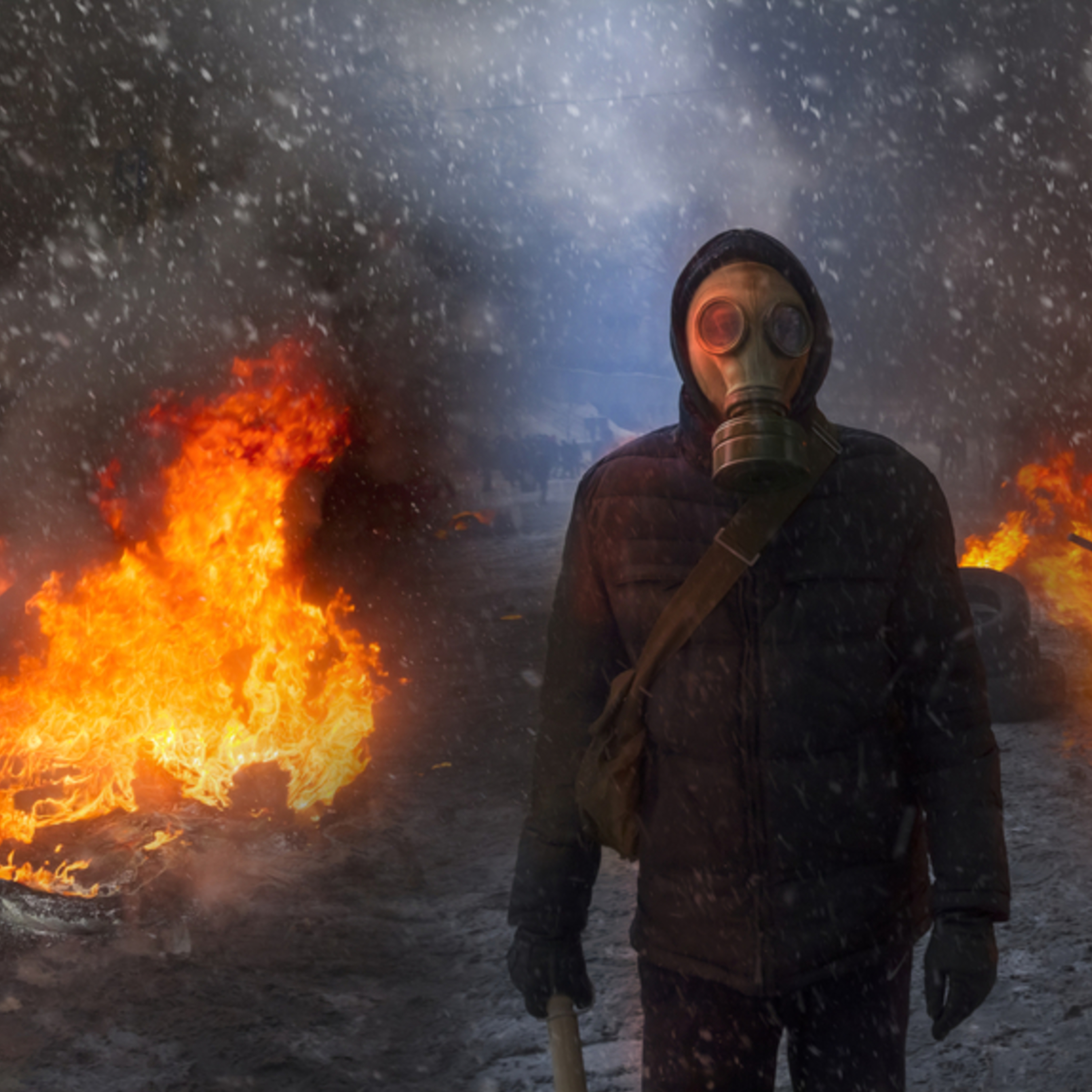
Ben persuades Vaden that all prisoners should be let loose. Vaden convinces Ben that he shouldn’t use the word “vista” so regularly. At least they stay on topic this time. References: What is the PIC? What is Abolition?, Critical Resistance. Is Prison Necessary? NY Times piece covering Ruth Wilson Gilmore. What is Prison Abolition, The Nation.

#2 - Consequentialism II: Strange Beliefs
An attempt to clean up the mess we made last episode. Ben still doesn't figure out how not to yell into his microphone, and Vaden finally realizes what Ben was saying and it was … perhaps not so interesting in the first place? Ben, all too pleased with himself, starts yammering on about future generations. Should we care? God — we promise that next week we’ll try to stick to whichever subject we pick. References: Why the long-term future matters, podcast with Toby Ord.

#1 - Consequentialism I: Epistemic Modesty
We attempt to talk about Epistemic Modesty: broadly, the idea that one should be modest in their beliefs when other people (with similar credentials) disagree with them. Vaden however, entirely immodestly, tries abandoning the subject because he’s scared of Ben’s forceful arguments and derails the conversation on to the entirely uncontroversial subject of which systems of moral decision making are best suited for moral progress. A flabbergasted Ben tries to keep up, but too little too late. Most of the time he's just trying to get his microphone to behave anyway. References:In defence of epistemic modesty; Greg Lewis. Against Modest Epistemology; Eliezer Yudkowski. Podcast with Will MacAskill on moral uncertainty.

#0 - Introduction
trailerBen and Vaden attempt to justify why the world needs another podcast, and fail.