IFS Zooms In: The Economy
193 episodes — Page 3 of 4
S4 Ep 21An honest conversation about net zero
Recently, Rishi Sunak announced significant changes to the UK's net zero pathway. A ban on the sale of combustion engines has been pushed back to 2035, instead of a 100% phase out of gas boilers by 2035, this has been changed to 80%, and he’s scrapped energy efficiency targets for homes.What is the impact of the announcement? Who will it affect? How will it alter the UK's path to net zero?Joining us today is Chris Stark, Chief Executive of the Climate Change Committee, an independent, statutory body which advises the government on climate change. Paul was until this year also a member of the CCC.Find out more: www.ifs.org.uk/podcast Hosted on Acast. See acast.com/privacy for more information.
S4 Ep 20The Expert Factor: What is Britain’s place in the world?
Some politicians are keen to talk up global Britain. Others boast that the UK is world leader in, well, just about everything. But some say this is a country in non-stop decline. So what’s the true story?This week the Expert Factor team take a deep dive into Britain’s place in the world. How do other countries view the UK after a tumultuous time in Westminster? What is the state of the UK’s post-pandemic economy compared to other countries? Just how special is the ‘special’ relationship with the US? And what is the true story about what Brexit has meant for the UK? Hannah White, Paul Johnson and Anand Menon ask the tricky questions – and come up with the expert answers.A general election is looming. Manifestos are being drafted. The battle of ideas is intensifying. From tackling climate change to turning around the economy, rethinking Britain’s place in the world to restoring trust in politics, the UK is facing huge challenges. So how can we make sense of it all?THE EXPERT FACTOR is the podcast for people who haven’t had enough of experts. Each week we the directors of three leading and respected think tanks – Paul Johnson of the Institute for Fiscal Studies, Hannah White of the Institute for Government, and Anand Menon of UK in a Changing Europe – get together to discuss, debate and explain the big questions and themes that will shape the election – and the political landscape for years to come.• Institute Fiscal Studies: https://ifs.org.uk/• Institute for Government: https://www.instituteforgovernment.org.uk/• UK in a Changing Europe: https://ukandeu.ac.uk/Written and presented by Paul Johnson, Hannah White and Anand Menon. Audio production by Alex Rees for Podmasters. Hosted on Acast. See acast.com/privacy for more information.
S4 Ep 19The Expert Factor: What is the Point of Party Conferences?
Subscribe to The Expert Factor feed: https://podcasts.apple.com/gb/podcast/the-expert-factor/id1709487231A general election is looming. Manifestos are being drafted. The battle of ideas is intensifying. From tackling climate change to turning around the economy, rethinking Britain’s place in the world to restoring trust in politics, the UK is facing huge challenges. So how can we make sense of it all?The EXPERT FACTOR is the podcast for people who haven’t had enough of experts. Each week we the directors of three leading and respected think tanks – Paul Johnson of the Institute for Fiscal Studies, Hannah White of the Institute for Government, and Anand Menon of UK in a Changing Europe – get together to discuss, debate and explain the big questions and themes that will shape the election – and the political landscape for years to come.This week the team look ahead to the party conference season. What are the pressing questions that Keir Starmer needs to answer? How much pressure will Rishi Sunak be under? And what difference do these get-togethers really make?• Institute Fiscal Studies: https://ifs.org.uk/• Institute for Government: https://www.instituteforgovernment.org.uk/• UK in a Changing Europe: https://ukandeu.ac.uk/Written and presented by Paul Johnson, Hannah White and Anand Menon. Audio production by Alex Rees for Podmasters. Hosted on Acast. See acast.com/privacy for more information.
S4 Ep 18The materials that shape our economy
From silicon chips to fertiliser, the last few years have shown us that where our materials come from matters massively to the stability of our economy. How we get stuff out of the ground, processed and into complex global supply chains is a vital and oft-overlooked part of our economy - with ramifications for government policy across all sectors.In this episode, we speak with Ed Conway, Economics Editor at Sky News and author of a new book Material World: The Making of Civilisation.Find out more: https://ifs.org.uk/Become a member: https://ifs.org.uk/individual-membership Hosted on Acast. See acast.com/privacy for more information.
S4 Ep 17Big firm, little firm: are differences between companies driving inequality and holding back growth?
Debates about inequality often focus on inequalities between people. But what about inequalities between firms?Recent decades have seen the emergence of giant, multinational firms - the FAANGs of this world. But over 40% of registered businesses in the UK have less than 10 employees.What do we mean when we talk about inequality between firms? Are inequalities between firms limiting UK business dynamism? And do governments need to step in and enforce competition rules?Joining us this episode are John Van Reenan, Ronald Coase Chair in Economics and School Professor at the LSE, and Amelia Fletcher, Professor of Competition Policy at Norwich Business School.Find out more: https://ifs.org.uk/inequality/Become a member: https://ifs.org.uk/individual-membership Hosted on Acast. See acast.com/privacy for more information.
S4 Ep 16Still a man’s world? Gender inequalities, parenthood and the workplace
Over the past decades, women have drawn closer to men in a variety of areas - education, university degrees and workforce participation. But, women still earn less on average than men.In this episode, we ask why this pay gap opens up, whether things have improved in recent years, and talk about one key factor affecting women’s pay - kids.Joining us are Alison Andrew, Associate Professor of Economics at the University of Oxford, Christine Farquharson, Senior Research Economist at IFS and Lucinda Platt, Professor of Social Policy and Sociology at the LSE.Find out more: https://ifs.org.uk/inequality/Become a member: https://ifs.org.uk/individual-membership Hosted on Acast. See acast.com/privacy for more information.
S4 Ep 15Levelling Up: Is inequality between places Britain’s biggest problem?
Since 2019, we’ve all heard a lot about levelling up. It makes sense that our politics is centered around it - of all types of inequality, the public seems most concerned about the geographical sort. But do the numbers back this up? How much of Britain’s inequality is generated by differing fortunes in different parts of the country? And what might an effective “levelling up” agenda look like? In this episode, we speak to Xiaowei Xu, Senior Research Economist at IFS, James Banks, Professor of Economics at Manchester University.Find out more: https://ifs.org.uk/inequality/Become a member: https://ifs.org.uk/individual-membership Hosted on Acast. See acast.com/privacy for more information.
S4 Ep 14When and why should we care about inequality?
We see inequalities all the time, whether at the school gates, the hospital, when travelling round the country and definitely when turning on the news. But why should we care about inequality? What has happened to inequality over recent decades? And can government do anything about it?We speak to Professor Sir Angus Deaton, an economist who is an expert on inequality and leads the IFS-Deaton Review, Debra Satz, a philosopher and Dean of the School of Humanities and Sciences at Stanford University, and Robert Joyce, Deputy Director at IFS and panel member of the IFS-Deaton Review.Find out more: https://ifs.org.uk/inequality/Become a member: https://ifs.org.uk/individual-membership Hosted on Acast. See acast.com/privacy for more information.
S4 Ep 13COMING SOON: IFS Zooms In: Inequality
Inequalities are one of the defining issues of the modern age. We see inequalities all the time, whether at the school gates, the hospital, when travelling round the country and definitely when turning on the news.Over the next month on the IFS Zooms In, we are bringing you a mini-series looking at inequality in Britain. We’ll be looking at a range of issues, from what’s happened to inequality over the last several decades and why that might matter, to more specific issues such as the role parenthood plays in opening the gender pay gap, and whether the practices of big tech companies worsen inequality.We hope you’ll join us, starting next week, as the IFS Zooms In on inequality.Find out more: https://ifs.org.uk/podcasts Hosted on Acast. See acast.com/privacy for more information.
S4 Ep 12HIGHLIGHT: The future of public sector pensions
This week, we're bringing you an episode from the archives, looking at the future of public sector pensions. We'll be back in two weeks with a new episode. -----------------------------------In an era where those in the private sector have seen their pension provision decrease, pensions in the public sector continue to look generous.But is this sustainable? Should we change the balance between pay and pensions for those in the public sector? What does the future hold for public sector pensions?This week, we speak to Lord Hutton of Furness, cabinet minister in the last Labour government and leader of the Independent Public Service Pensions Commission, a review into public sector pensions commissioned by David Cameron, and by Carl Emmerson, IFS Deputy Director and expert on pensions.Support the IFS: https://ifs.org.uk/donate Hosted on Acast. See acast.com/privacy for more information.
S4 Ep 11The economics of immigration
Over the past 13 years, successive governments have pledged to bring immigration down, but have failed to do so. Recently, the government announced that net immigration for 2022 was around 600,000. How many people are migrating and where are they coming from? How has Brexit shifted the dynamics of migration? What is the impact of migration on the wages of native-born workers? And what could government do if it wanted to achieve its target of reducing migration?In this episode, Paul speaks to Madeleine Sumption, a political scientist who is Director of the Migration Observatory at the University of Oxford.Find out more: https://ifs.org.uk/podcastBecome a member: https://ifs.org.uk/individual-membership Hosted on Acast. See acast.com/privacy for more information.
S4 Ep 10Work from home: what does the future look like?
Since the start of the pandemic in March 2020, the topic of working from home has been everywhere and has seemingly affected everything. From big companies calling workers back to the office and city centre food chains struggling, to house price jumps in rural areas and zoom fatigue, the transition to work from home is one of the biggest shifts in working patterns in the last century.But what evidence do we have on the success of remote working? Are people more or less productive at home? And what does the future hold?In this episode, Paul speaks to Professor Nick Bloom, a Professor at Stanford University, former IFS-er and leading expert on working from home. Find out more: https://ifs.org.uk/podcastBecome a member: https://ifs.org.uk/individual-membership Hosted on Acast. See acast.com/privacy for more information.
S4 Ep 9What's wrong with inflation?
Over the past year, the UK has seen very high inflation, affecting households and businesses across the country.But what is actually wrong with inflation? How do we measure it? And what is the way out of it?We speak to Chris Giles, economics editor at the Financial Times and former IFS economist, and Peter Levell, Associate Director at IFS, both inflation experts.Find out more: https://ifs.org.uk/pensions-reviewBecome a member: https://ifs.org.uk/individual-membership Hosted on Acast. See acast.com/privacy for more information.
S4 Ep 8Why politicians need to think long-term about pensions
From declining homeownership rates and low pension saving, to high numbers of self-employed people with no pensions at all, it seems that future generations face steep challenges in retirement.Recently, IFS launched a new review of the pensions system, supported by the Abdrn Financial Fairness Trust, to look into these issues and seek policy solutions to help politicians navigate these challenges.Joining us today to talk through the challenges facing the UK pensions system are Heidi Karjalainen, a researcher at IFS, and Jonathan Cribb, Associate Director at IFS, both who are involved in the review. Find out more: https://ifs.org.uk/pensions-review Become a member: https://ifs.org.uk/individual-membership Hosted on Acast. See acast.com/privacy for more information.
S4 Ep 7The stealth tax rise
To many, the start of the new tax year in April will seem quiet, more of the same with no big changes to the tax system announced by the government.But hidden beneath the surface lie a series of stealthy tax rises - freezes to thresholds which coupled with rising inflation are projected to raise around £30 billion for the Treasury over the next few years and hit household finances hard.Here to reveal the truth are Helen Miller, Head of Tax at IFS, and Tom Waters, Associate Director at IFS. Hosted on Acast. See acast.com/privacy for more information.
S4 Ep 6The Spring Budget Explained
Chancellor Jeremy Hunt recently outlined his Spring Budget, with big announcements on childcare, corporation tax, pensions and more.We dive into the detail and bring you our expert analysis on the Budget.Joining us are Ben Zaranko, public finances expert, Christine Farquharson, childcare expert and Helen Miller, tax expert.Find out more: www.ifs.org.uk/podcastBecome a member: https://ifs.org.uk/individual-membership Hosted on Acast. See acast.com/privacy for more information.
S4 Ep 5Are high energy prices here to stay?
From price caps and pipelines to price guarantees and LPG, the rising cost of energy has been central to understanding the economy over the past year.As we come out the cold winter period, we ask whether high energy prices are here to stay?What is happening with the energy market? Should we expect further price shocks? And can we decarbonise our energy supply while keeping bills affordable? Joining us are Heidi Karjalainen, Research Economist at IFS, and Giles Wilkes, a senior fellow at the Institute for Government and former special adviser to Theresa May on industrial and economic policy.Find out more: www.ifs.org.uk/podcastBecome a member: https://ifs.org.uk/individual-membership Hosted on Acast. See acast.com/privacy for more information.
S4 Ep 4How to tax the rich?
From non-doms to offshore investment vehicles - how the rich are taxed, and how they avoid it, has been all over the headlines.But who are the 1%? How much tax do they pay? And should government tax them more?Joining us are Helen Miller, Deputy Director at IFS and our Head of Tax, and Dan Neidle, Founder of Tax Policy Associates and a former tax lawyer.Find out more: www.ifs.org.uk/podcastBecome a member: https://ifs.org.uk/individual-membership Hosted on Acast. See acast.com/privacy for more information.
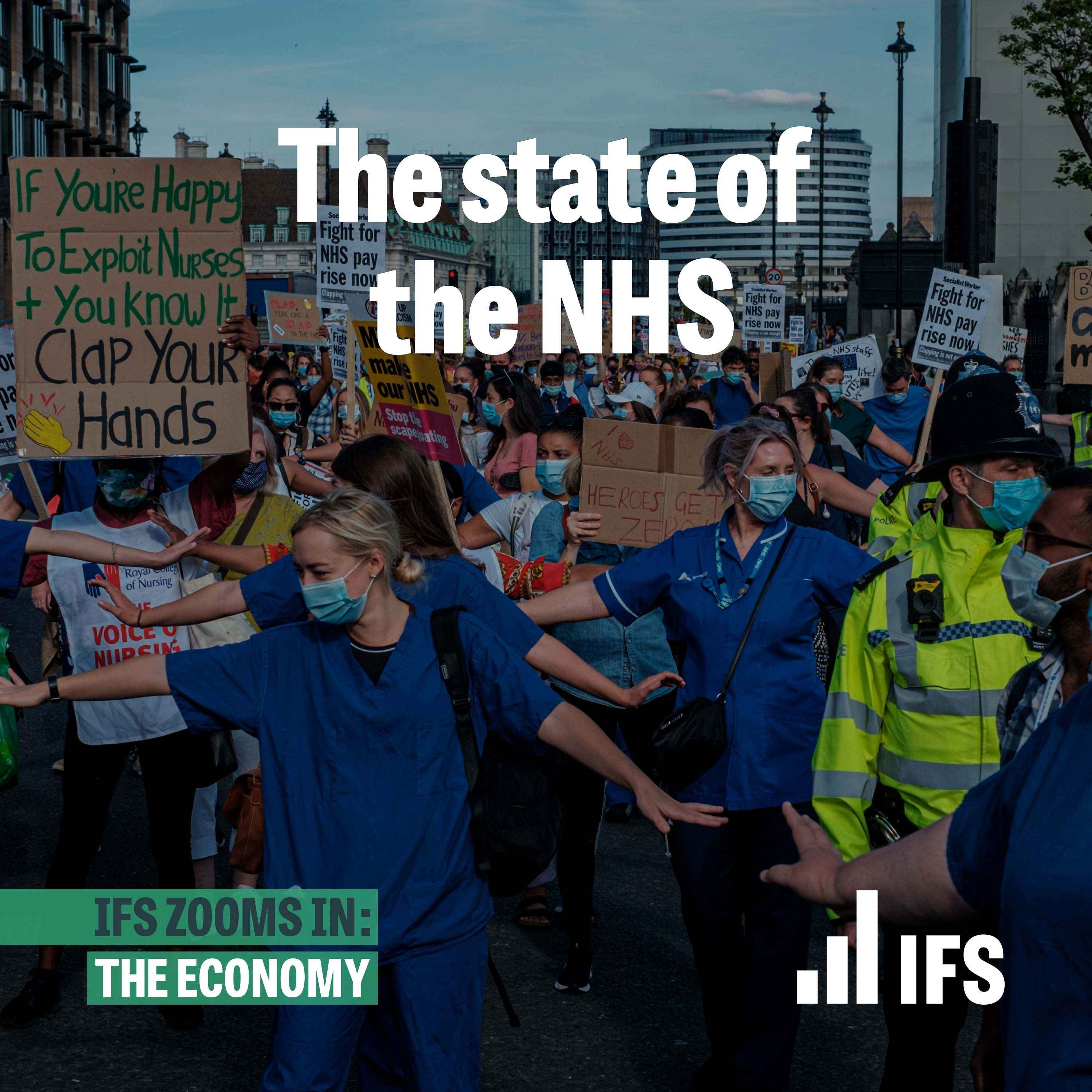
S4 Ep 3The state of the NHS
With COVID, strikes, staff shortages, an enormous waiting list and an ever-ageing population (amongst other issues), the NHS is coming under greater pressure than ever. In this episode, we take a look at the state of the NHS across a range of areas.How is the service doing at the moment? Will we see a pay settlement for nurses and other workers? And are there any reasons to hope that better days are ahead?Joining us are Saffron Cordery, Deputy Chief Executive of NHS Providers, a membership organisation for NHS acute, ambulance, community and mental health services, and Max Warner, IFS researcher and NHS expert.Find out more: www.ifs.org.uk/podcastBecome a member: https://ifs.org.uk/individual-membership Hosted on Acast. See acast.com/privacy for more information.
S4 Ep 2Pandemics, recessions and mental health: young people and jobs in 2023
Two years ago, in the depths of lockdown, the future for young people looked bleak. Policymakers worried about an unemployment crisis, lost career opportunities and a generation of young people missing out on key milestones.The reality - at least on the jobs front - is far rosier than many predicted. But is it all good news for those who graduated during COVID and entered the jobs market during the work from home era? What about those in non-graduate jobs? And what about the next generation - those who were in school during the peak of COVID?This week we're joined by Sarah O'Connor, employment columnist at the Financial Times, and Xiaowei Xu, Senior Economist at IFS to answer these questions.Find out more: www.ifs.org.uk/podcastBecome a member: https://ifs.org.uk/individual-membership Hosted on Acast. See acast.com/privacy for more information.
S4 Ep 1Strikes, Budgets, Brexit and elections: a look ahead to 2023
Happy New Year! After a tumultuous 2022, we look to the year ahead and hope for calmer waters.Joining us on our voyage into the future are Dr. Hannah White, Director of the Institute for Government, and Anand Menon, Director of the UK in a Changing Europe.From strikes and immigration, to Budgets and Brexit, we offer our best analysis of the situation we're currently in, and what we expect to happen next year.Find out more: www.ifs.org.uk/podcastBecome a member: https://ifs.org.uk/individual-membership Hosted on Acast. See acast.com/privacy for more information.
S3 Ep 20Are we in a new era of austerity?
Last week, the Chancellor gave his autumn statement. In the run-up, many expected significant cuts to public spending, ushering in a new era of austerity.But did these anticipated cuts happen? How important is it to bring down debt? And after a decade of cuts in the 2010s, how are departments faring?This week, we speak with Gemma Tetlow, Chief Economist at the Institute for Government, and Carl Emmerson, Deputy Director at IFS.Become a member: https://ifs.org.uk/individual-membership Hosted on Acast. See acast.com/privacy for more information.
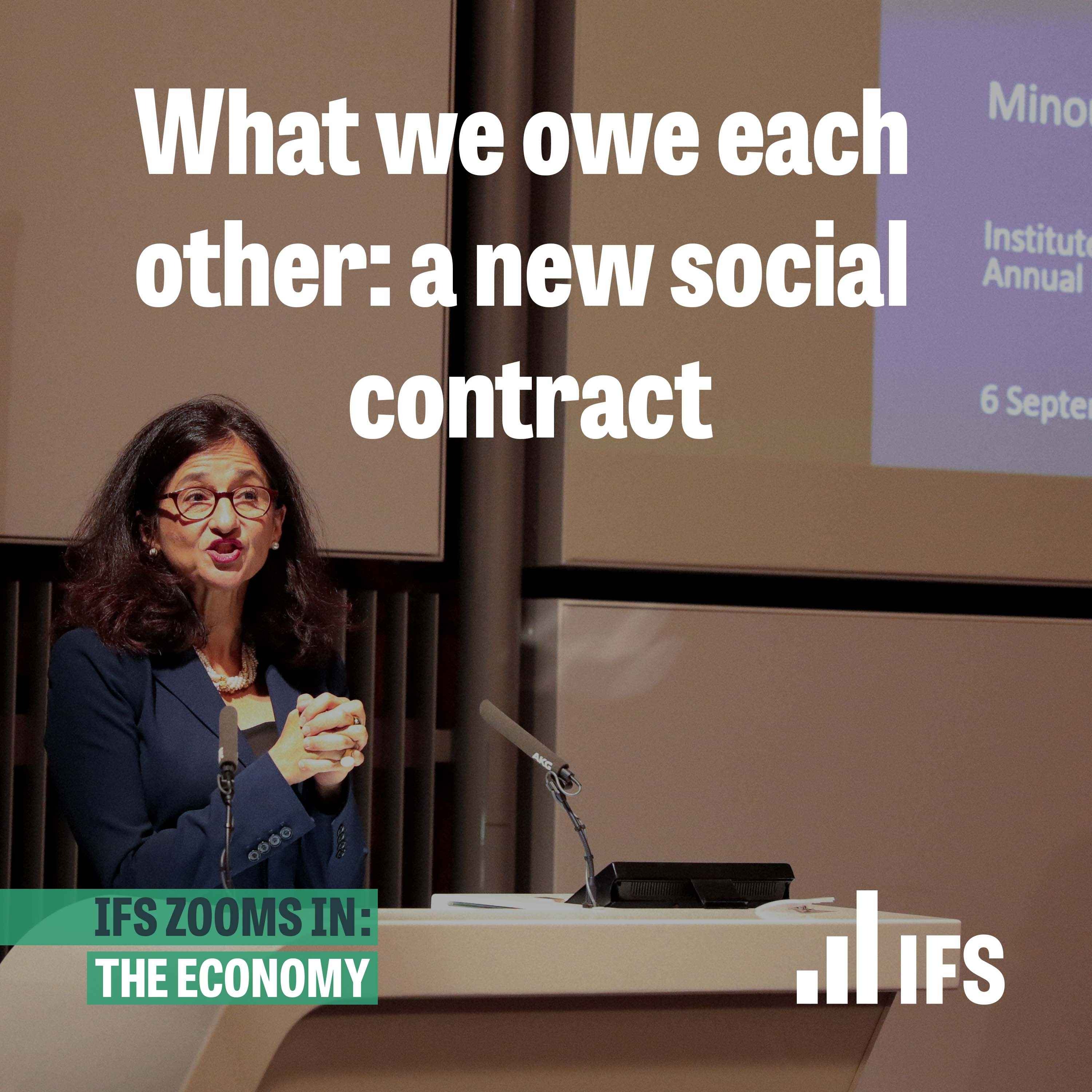
S3 Ep 19What we owe each other: a new social contract
This week, we're bringing you the IFS Annual Lecture, given this year by Baroness Minouche Shafik. In it she talks about what a new social contract for the 21st century would look like.Find out more: https://ifs.org.uk/events/ifs-annual-lecture-baroness-minouche-shafikBecome a member: https://ifs.org.uk/individual-membership Hosted on Acast. See acast.com/privacy for more information.
S3 Ep 18Why are older workers leaving the workforce?
Since the beginning of the Covid-19 pandemic, there has been a fall in the employment rate in the UK, driven by a rise in the rate of economic inactivity rather than in unemployment. What has been happening to older workers since the pandemic? Why are they leaving the workforce? Should government work to bring them back?We speak to Jonathan Cribb, Associate Director at IFS, and Beatrice Boileau, Research Economist at IFS to find out what has been happening with older workers.Find out more: https://ifs.org.uk/podcastSupport IFS: https://ifs.org.uk/individual-membership Hosted on Acast. See acast.com/privacy for more information.
S3 Ep 17The challenges facing the Chancellor
The UK economy faces a series of challenging headwinds - high inflation, higher energy prices and a 'terms of trade' shock. These are squeezing household budgets and pushing up the cost of living. The adverse market reaction to the Chancellor's 'mini-budget' on the 23rd September has created further difficulties.In this year's Green Budget, our flagship annual report funded by the Nuffield Foundation in partnership with Citi, we explore the Chancellor's options for achieving fiscal sustainability.We speak with Carl Emmerson, IFS Deputy Director, and Ben Nabarro, Chief UK Economist at Citi, to take a broad view of the UK economy and the public finances, and see what a path forward might look like.Support IFS: https://ifs.org.uk/individual-membership Hosted on Acast. See acast.com/privacy for more information.
S3 Ep 16Benefits, inflation and redistribution
In recent weeks, the new Prime Minister has argued that the UK has been too focused on redistribution.But what role does the benefit system play in redistribution? Has this changed over recent decades? And should benefits be uprated in line with inflation?Joining us are Charlotte Pickles, Director of Reform, and Tom Waters, IFS Senior Economist.Find out more: https://www.ifs.org.uk/podcastBecome a member: https://ifs.org.uk/individual-membership Hosted on Acast. See acast.com/privacy for more information.
S3 Ep 15Will public sector workers get a pay rise?
Workers in the public sector have seen their pay squeezed over the last decade, and with inflation on the rise, disputes over pay look set to dominate the headlines this autumn.Across the public sector, we're hearing stories of hiring issues, staff retention and squeezed budgets. These issues all affect the morale of the workforce and the delivery of public services.What will the government do? How much would inflation matching pay increases cost? What would a longer-term plan to deal with these issues look like?This week we speak to Ben Zaranko, IFS expert on public finances and Delphine Strauss, Economics Correspondent at the Financial Times.Support IFS: https://ifs.org.uk/individual-membershipPublic sector pensions episode: https://ifs.org.uk/articles/future-public-sector-pensions Hosted on Acast. See acast.com/privacy for more information.
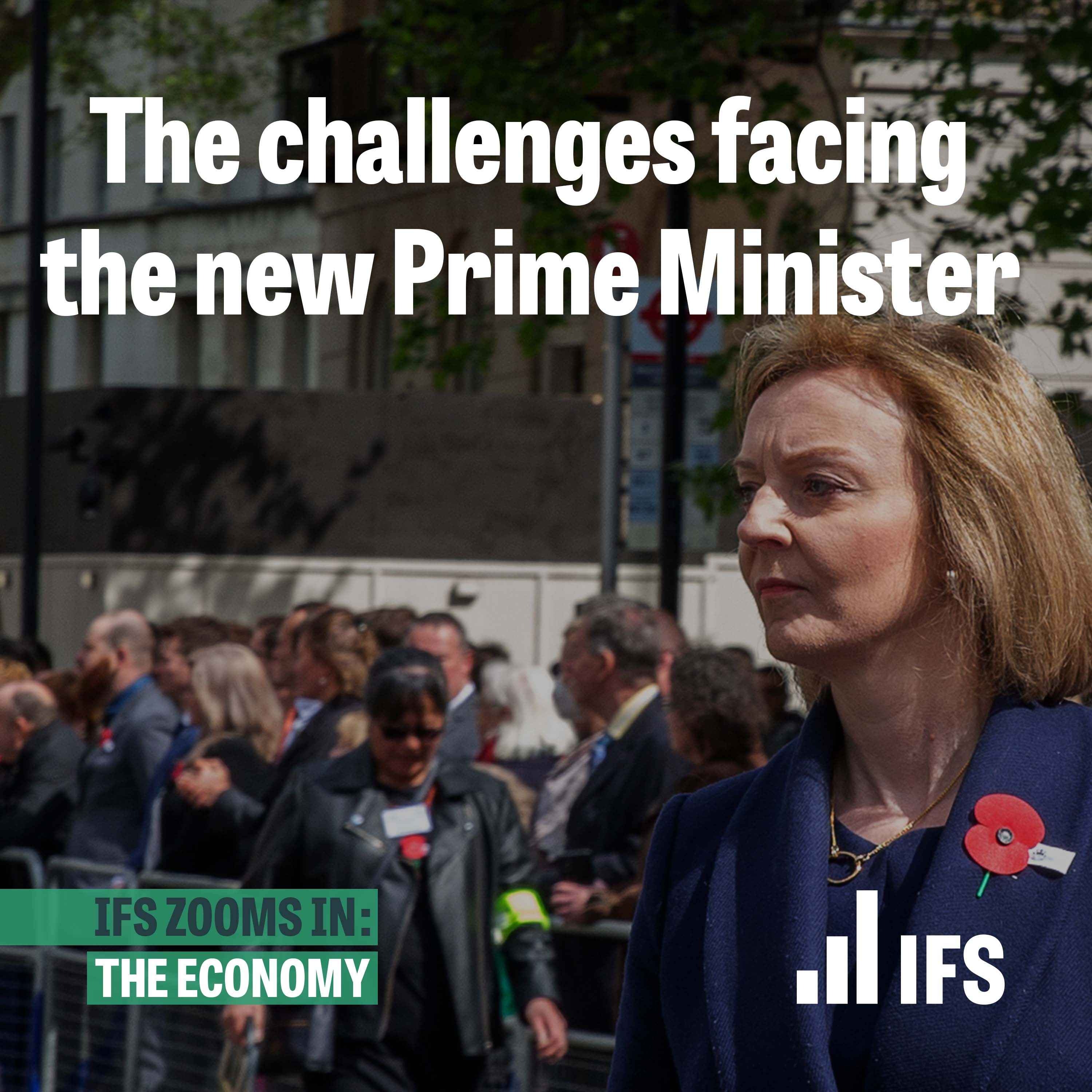
S3 Ep 14The challenges facing the new Prime Minister
As Liz Truss takes office, she is faced with a series of interlocking challenges - rising inflation, an energy crisis and a cost of living crisis.How can she tackle these in the short-term and put the country back on surer footing in the long-term?Paul speaks to IFS economists Ben Zaranko and Xiaowei Xu to assess the challenges facing the new Prime Minister.Find out more: https://ifs.org.uk/podcastSupport IFS: https://ifs.org.uk/individual-membership Hosted on Acast. See acast.com/privacy for more information.
S3 Ep 13The future of public sector pensions
In an era where those in the private sector have seen their pension provision decrease, pensions in the public sector continue to look generous.But is this sustainable? Should we change the balance between pay and pensions for those in the public sector? What does the future hold for public sector pensions?This week, we speak to Lord Hutton of Furness, cabinet minister in the last Labour government and leader of the Independent Public Service Pensions Commission, a review into public sector pensions commissioned by David Cameron, and by Carl Emmerson, IFS Deputy Director and expert on pensions.Support the IFS: https://ifs.org.uk/donate Hosted on Acast. See acast.com/privacy for more information.
S3 Ep 12How can we fix the childcare system?
Early education and childcare can have a critical impact both on helping children to develop and in supporting parents, especially mothers, to work. In recent months, reports of soaring childcare costs and staff shortages combined with the wider cost of living crisis have pushed government to act. But how expensive is childcare in the UK? How does it stack up against other countries? What can the government do to bring down costs? This week, we speak to Christine Farquharson, senior economist at IFS and expert on education and childcare and to Neil Leitch, Chief Executive of the Early Years Alliance.Support the IFS: https://ifs.org.uk/donate Hosted on Acast. See acast.com/privacy for more information.
S3 Ep 11HIGHLIGHT: The productivity problem
**We will be back next week with a new episode **In the past decade, the UK has seen some of the slowest rates of productivity growth of the OECD countries, with output per hour and real wages no higher today than they were prior to the global financial crisis. Why is a high-tech, developed economy like the UK struggling to be more productive? What policies can government implement to get productivity growing again? And how can we spur innovation while also tackling issues like inequality?This week, we speak to John Van Reenen, Professor of Economics at the London School of Economics, and expert on innovation, firms and productivity.Support the IFS: https://www.ifs.org.uk/donate Hosted on Acast. See acast.com/privacy for more information.
S3 Ep 10How should the government tax electric cars?
In 2030, motorists in the UK won't be able to buy fossil fuel powered vehicles from showrooms anymore. To incentivise a shift to an all-electric future, the government is giving considerable tax breaks to the owners of electric vehicles (EVs) to stimulate uptake. However, as more and more people move away from fossil fuels, the government stands to lose billions of pounds in tax revenue - unless it decides to tax EVs. In this episode, we speak to Stuart Adam, IFS tax expert and Steve Gooding, Director of the RAC Foundation to discuss how the government could tax EVs in future.Support the IFS: https://ifs.org.uk/donate Hosted on Acast. See acast.com/privacy for more information.
S3 Ep 9The future of student loans
Since 2012, students have been paying considerably higher tuition fees, and borrowing more money in the form of student loans. The average graduate racks up a total average debt of £45,000 and only a minority of students under the current system will ever pay these loans back in full. By the middle of the century, the government forecasts the unpaid student loans debt to be around £560 billion.In a series of recently announced reforms, the government has indicated a desire for students to pay back more of their loans, and pushed through significant changes to the system.This week, Paul speaks to Ben Waltmann, IFS education expert, and Ivor Crewe, panellist on the Augar Review of the post-18 education system, to get to the bottom of these reforms and think about how students, taxpayers and universities will be affected.Are too many people going to university?: https://ifs.org.uk/podcast/are-too-many-people-going-to-universitySupport the IFS: https://ifs.org.uk/donate Hosted on Acast. See acast.com/privacy for more information.
S3 Ep 8HIGHLIGHT: How should the government influence what we eat?
** This is an episode from 2021. We will return with a new episode next week **The food we eat and the way it is produced impacts not only our health and lifestyles, but also our carbon footprints.The recent National Food Strategy report commissioned by the government and published this summer proposes measures to improve our health, reduce strain on the NHS and make our food culture healthier and more sustainable. What role should the government play in influencing what we eat? And how can taxes and policy be designed to get us to eat more healthily?This week, Paul is joined by Henry Dimbleby, co-founder of the restaurant chain Leon and leader of the National Food Strategy report, and IFS Associate Director and expert on food taxes Kate Smith.Support the IFS: https://www.ifs.org.uk/donate Hosted on Acast. See acast.com/privacy for more information.
S3 Ep 7How should we tax multinational corporations?
Taxing multinational corporations more fairly is often presented in the media is a no-brainer - an open goal for government to increase tax revenue and cut down on tax avoiding behaviour.But what seems like a simple policy is in fact incredibly complicated, requiring the navigation of complex international laws and fundamental questions over types of property and where intangible assets exist.In this episode, Paul speaks to Helen Miller, IFS tax expert, and Dan Neidle, a tax lawyer specialising in corporate taxation, to get a sense of how successful international efforts to tax multinationals are.Support the IFS: https://ifs.org.uk/donate Hosted on Acast. See acast.com/privacy for more information.
S3 Ep 6Spring Statement: inflation, living standards and uncertainty
The current economic environment is shaped by inflation and a rising cost of living crisis. During this period of uncertainty, the Chancellor gave his Spring Statement, outlining his plans for the public finances and responding to the shocks facing the economy.In this episode, Paul speaks with Carl Emmerson, Deputy Director at IFS and Tom Waters, IFS research economist, about the Chancellor’s statement and the implications going forward.Become a member: https://ifs.org.uk/donate Hosted on Acast. See acast.com/privacy for more information.
S3 Ep 5Is the UK spending enough on defence?
Since we were last on air, Russia has invaded the Ukraine, and defence has come to the fore of the public conversation.How much does the UK spend on defence? How has this changed over time? And what will Russia's invasion mean for UK defence spending?This week, we speak with Malcolm Chalmers, Deputy Director-General at the Royal United Services Institute (RUSI) and Ben Zaranko, IFS Public Finance expert.Support the IFS: https://ifs.org.uk/donate Hosted on Acast. See acast.com/privacy for more information.
S3 Ep 4Everything you need to know about National Insurance
National Insurance Contributions are rising in April. Since being announced, opinion has been divided on whether this is the best mechanism to raise revenue.But, what are National Insurance contributions? Are they the same as income tax? What will the extra tax revenue raised from April be used for? And are there better ways of raising tax?In this episode, IFS Deputy Director Helen Miller takes us through the world of National Insurance Contributions, and answers questions posed by our social media followers.Support the IFS: https://ifs.org.uk/donate Hosted on Acast. See acast.com/privacy for more information.
S3 Ep 3Should people be saving more for retirement?
In a world of rising housing costs, rising energy bills and increasing taxes, saving for retirement may be at the back of many people's minds. But decisions around when and how much to save can be crucial in shaping people's lives post-retirement.This week, we're joined by Claer Barrett, Consumer Editor at the Financial Times and host of the FT's Money Clinic podcast, and Carl Emmerson, Deputy Director at IFS and pensions expert.Support the IFS: https://ifs.org.uk/donateSee Claer's article 'The Million Pound Pension Problem': https://www.ft.com/content/48ae7709-916b-4cec-b22f-3c006805b699 Hosted on Acast. See acast.com/privacy for more information.
S3 Ep 2What should the government do about rising energy prices?
The UK is engulfed in a cost of living crisis, from rising inflation to flat-lining wages and incoming tax rises. In addition, energy prices are set to rise steeply, affecting households up and down the country and especially those on lower incomes.This week, we're joined by Giles Wilkes a senior fellow at the Institute for Government and former special adviser to Theresa May on industrial and economic policy, and Stuart Adam, a Senior Economist at IFS who focuses on the design of the tax and benefit system, to understand why energy prices are rising, and think about what the government can do to bring down prices and help households.Support the IFS: https://ifs.org.uk/donate Hosted on Acast. See acast.com/privacy for more information.
S3 Ep 1What you should be paying attention to in 2022
Happy New Year and welcome to season three of the IFS Zooms In!This week Paul is joined by four IFS experts, Robert Joyce, Helen Miller, Ben Zaranko and Christine Farquharson to discuss the most important issues facing the economy in 2022.From the rising cost of living, to tax rises in April, an Omicron surge challenging the NHS and an education system making up for lost learning, we'll go beyond the headlines and brief you on the deeper stories you should be paying attention to this year.Support the IFS: https://ifs.org.uk/donate Hosted on Acast. See acast.com/privacy for more information.
S2 Ep 25Has globalisation deepened inequality?
Many economies in Western Europe have experienced a sizeable increase in income inequality since the 1980s, and inequality has grown even more rapidly in the United States. This rising inequality in advanced economies coincided with a period of globalisation that was characterised by rapid growth in international merchandise trade.What role did globalisation play in deepening inequality?In this episode, we speak with IFS economist Peter Levell and Penny Goldberg, Professor of Economics at Yale University and former Chief Economist of the World Bank.**The sudden shift to home working left us without our usual equipment - apologies for any issues with audio quality** Hosted on Acast. See acast.com/privacy for more information.
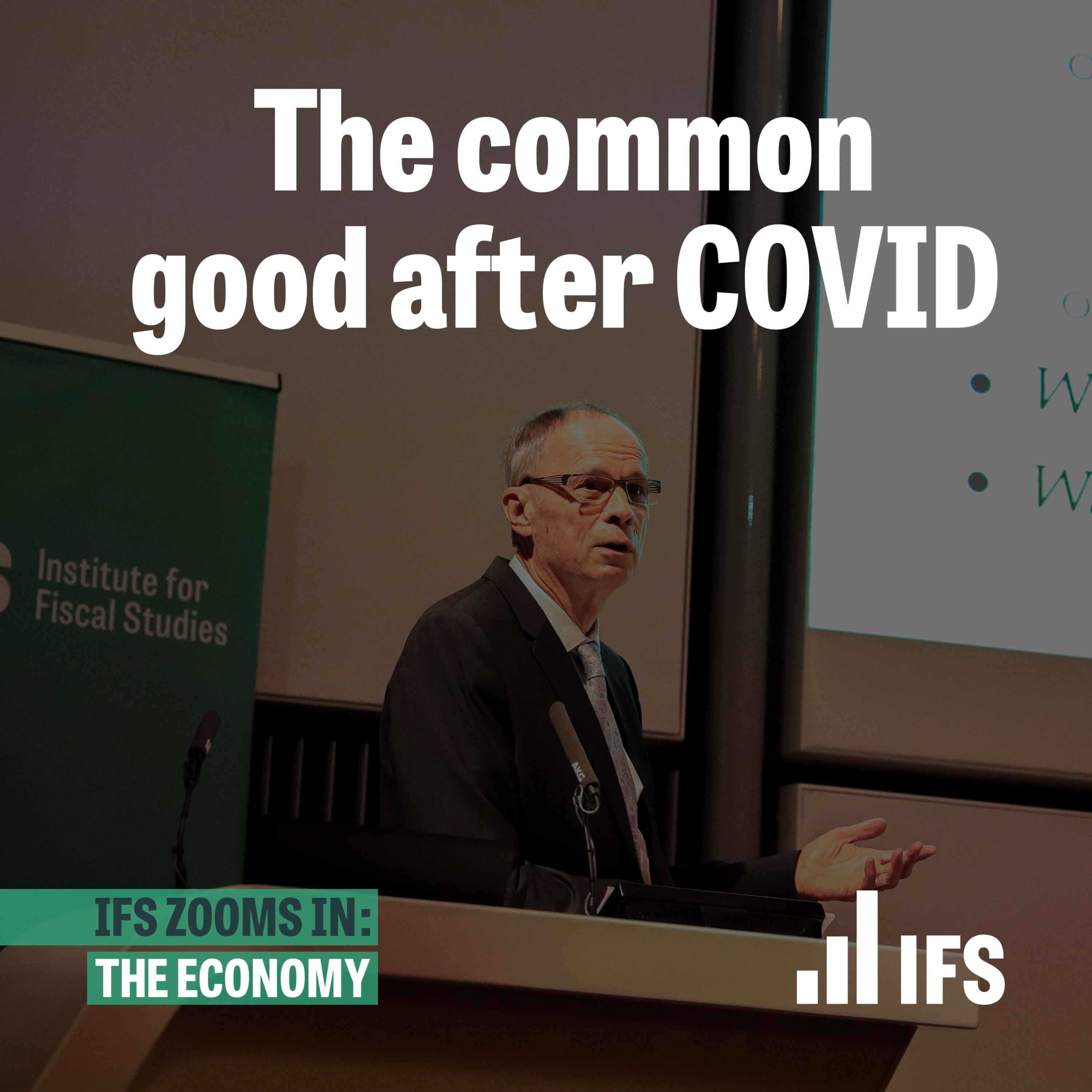
S2 Ep 24The common good after Covid
This week, we bring you this year's IFS annual lecture delivered by Professor Jean Tirole, Honorary Chairman of the Toulouse School of Economics. In his talk, he discusses how economics can be used to shape narratives and help solve the biggest crises facing our societies and governments.Support the IFS: https://ifs.org.uk/about/membership/individual Hosted on Acast. See acast.com/privacy for more information.
S2 Ep 23Can carbon taxes get us to net zero?
This week, all eyes are on the UN Climate Change Conference (COP26) summit in Glasgow as world leaders meet to accelerate action on climate change. The UK is legally committed to reducing the net greenhouse gas emissions that arise from UK-based activities to zero by 2050, but action to reduce emissions will need to happen on a global scale to be effective. What policies should governments worldwide introduce to combat climate change? How should carbon taxes be designed to ensure a cost-efficient and fair transition to net zero?This week, IFS Director and Climate Change Committee member Paul Johnson is joined by Alice Pirlot, Research Fellow at the Oxford University Centre for Business Taxation, and IFS Associate Director Peter Levell.Support the IFS: https://ifs.org.uk/about/membership/individual Hosted on Acast. See acast.com/privacy for more information.
S2 Ep 22How should the government influence what we eat?
The food we eat and the way it is produced impacts not only our health and lifestyles, but also our carbon footprints.The recent National Food Strategy report commissioned by the government and published this summer proposes measures to improve our health, reduce strain on the NHS and make our food culture healthier and more sustainable. What role should the government play in influencing what we eat? And how can taxes and policy be designed to get us to eat more healthily?This week, Paul is joined by Henry Dimbleby, co-founder of the restaurant chain Leon and leader of the National Food Strategy report, and IFS Associate Director and expert on food taxes Kate Smith.Find out more about the IFS: https://ifs.org.uk/Support the IFS: https://www.ifs.org.uk/about/membership/individual Hosted on Acast. See acast.com/privacy for more information.
S2 Ep 21SPECIAL: What should the Chancellor consider in his autumn budget?
This week, we published the IFS Green Budget, our flagship publication analysing at the outlook for the economy and the opportunities and challenges facing the Chancellor ahead of the autumn budget.We speak to Benjamin Nabarro, Senior Associate at Citi Research, and Carl Emmerson, Deputy Director at IFS, to discuss the ongoing impacts of the COVID-19 pandemic, as the Chancellor aims to secure a lasting recovery and deliver on the government’s other objectives and priorities.The IFS Green Budget is produced in partnership with Citi, and is funded by the Nuffield Foundation.Find out more: https://ifs.org.uk/green-budgetSupport the IFS: https://www.ifs.org.uk/about/membership/individualCiti disclosures: https://ir.citi.com/yFS39VEXTHB9LB42vdE1xZP0VjyL9LOxpaO4LN%2FamW770hu2OdhPQCEXd0aPMduZrBygj%2FbvVgE%3D Hosted on Acast. See acast.com/privacy for more information.
S2 Ep 20Job vacancies, labour shortages and a 'high-wage economy'
From HGV drivers, to strawberry pickers, to doctors and nurses, the UK seems to be facing labour shortages across many different industries.As the pandemic recedes, and the impacts of Brexit begin to reveal themselves, the government have insisted that this is part of the transition to a 'high-wage economy'. What is happening in the labour market? Which sectors are facing the biggest challenges? And what can policy-makers do to help?This week, we're joined by Jonathan Cribb and Xiaowei Xu, IFS experts on labour markets and jobs.Support the IFS: https://www.ifs.org.uk/about/membership/individual Hosted on Acast. See acast.com/privacy for more information.
S2 Ep 19How to fix the education system
After a year and half of lockdowns, schools and their students face a vast array of challenges.From mental health issues and childhood obesity to teacher shortages and exam results, the education system has been placed under incredible strain over the past year.This week, we speak with Birgitta Rabe, education expert at the University of Essex and Luke Sibieta, a research fellow at IFS who studies education policy, to dig into the issues and see what we can do to fix the education system.Support the IFS: https://www.ifs.org.uk/about/membership/individual Hosted on Acast. See acast.com/privacy for more information.
S2 Ep 18Social care: what happens now?
For decades, social care has been in need of reform.Last week, the Prime Minister announced an extra tax to fund social care in England, and help the NHS recover after the pandemic, and changes to the way the social care system works.In this episode, featuring Natasha Curry, Deputy Director of Policy at the Nuffield Trust, and Ben Zaranko, IFS economist, we dig into the new announcement, what it means, whether it will work and how it will affect people's care.Support the IFS: https://www.ifs.org.uk/about/membership/individual Hosted on Acast. See acast.com/privacy for more information.
S2 Ep 17HIGHLIGHT: When and how to raise taxes?
**This is a rerun from September 2020. The government announced some tax increases in Budget 2021. We discuss those here: https://ifs.org.uk/budget-2021**The financial support given to individuals and businesses and the costs of managing the pandemic have left us with the biggest peacetime deficit in British history.As the economy reopens, and the coronavirus begins to have less of a hold on our lives, the government will need to start thinking about how to return the deficit to a more sustainable level. Many have suggested that the Chancellor might think about raising taxes in the near future to tackle this deficit.In this episode, recorded last autumn, our resident tax expert, Helen Miller, helps pick apart the options for raising taxes - and whether they are effective.Support the IFS: https://www.ifs.org.uk/about/membership/individual Hosted on Acast. See acast.com/privacy for more information.