IFS Zooms In: The Economy
Hear from the experts behind the research
Institute for Fiscal Studies
Show overview
IFS Zooms In: The Economy has been publishing since 2020, and across the 6 years since has built a catalogue of 193 episodes. That works out to roughly 130 hours of audio in total. Releases follow a fortnightly cadence, with the show now in its 7th season.
Episodes typically run thirty-five to sixty minutes — most land between 34 min and 44 min — and the run-time is fairly consistent across the catalogue. None of the episodes are flagged explicit by the publisher. It is catalogued as a EN-language News show.
The show is actively publishing — the most recent episode landed yesterday, with 23 episodes already out so far this year. Published by Institute for Fiscal Studies.
From the publisher
Step beyond the headlines with in-depth, independent analysis from the experts at the Institute for Fiscal Studies. Hosted by IFS Director Helen Miller, this podcast brings you objective insights from the researchers shaping the debate. Hosted on Acast. See acast.com/privacy for more information.
Latest Episodes
View all 193 episodesAre business rates 'killing the high street'?
Is a degree a good investment?
Are people saving enough for retirement?
The tax and spending choices facing Andy Burnham
Will devolution solve the UK’s economic woes?
The inequality of 'good jobs'
Why is the UK so geographically unequal?
Inequality: what does Britain really think?
How unequal is Britain?
The tough fiscal reality facing the UK government
Why is UK electricity so expensive?
What Do Councils Actually Do?
The tough choices facing Wales’s next government
Why Scotland’s next government faces tough choices
S7 Ep 9Will everyone have to work until they are 67?
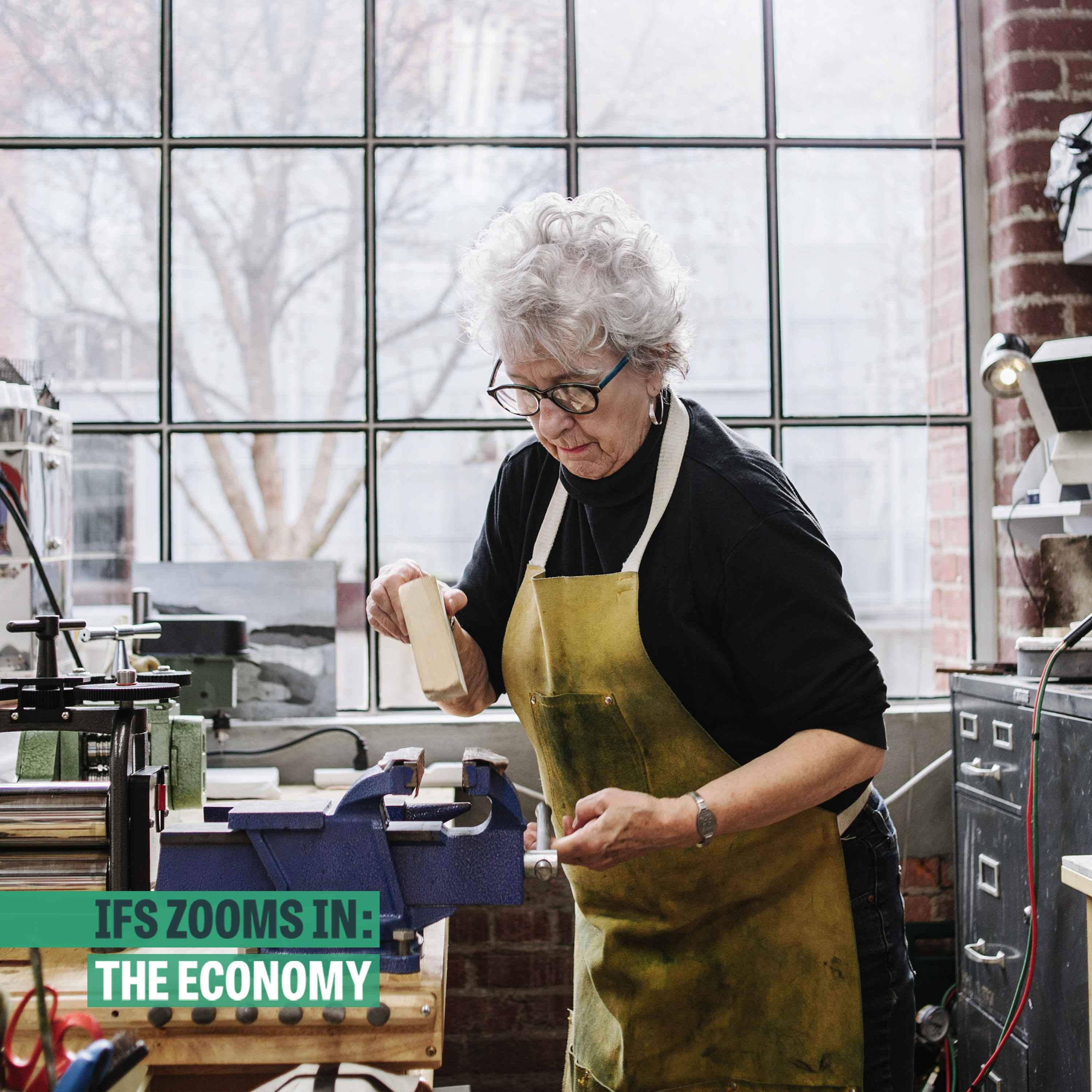
The state pension age is rising. It is currently 66, and by 2028 it will reach 67. But what does that actually mean for the people approaching retirement, and does it really mean everyone will have to work longer?In this episode, Helen is joined by Jonathan Cribb and Heidi Karjalainen to examine one of the biggest questions facing the pensions system: how high should the state pension age be? They discuss why it has been rising, what the state pension is designed to do, and how changes to the pension age affect work, retirement and government spending.They also look at who is able to keep working into their late 60s, who is not, and whether a single state pension age makes sense for everyone. Along the way, they explore how the UK compares with other countries, what happens to people who cannot work up to pension age, and whether the state pension system is financially sustainable in the long run.Become a member: https://ifs.org.uk/individual-membershipFind out more: https://ifs.org.uk/podcasts-explainers-and-calculators/podcasts Hosted on Acast. See acast.com/privacy for more information.
S7 Ep 8Are pensioners richer than everyone else?
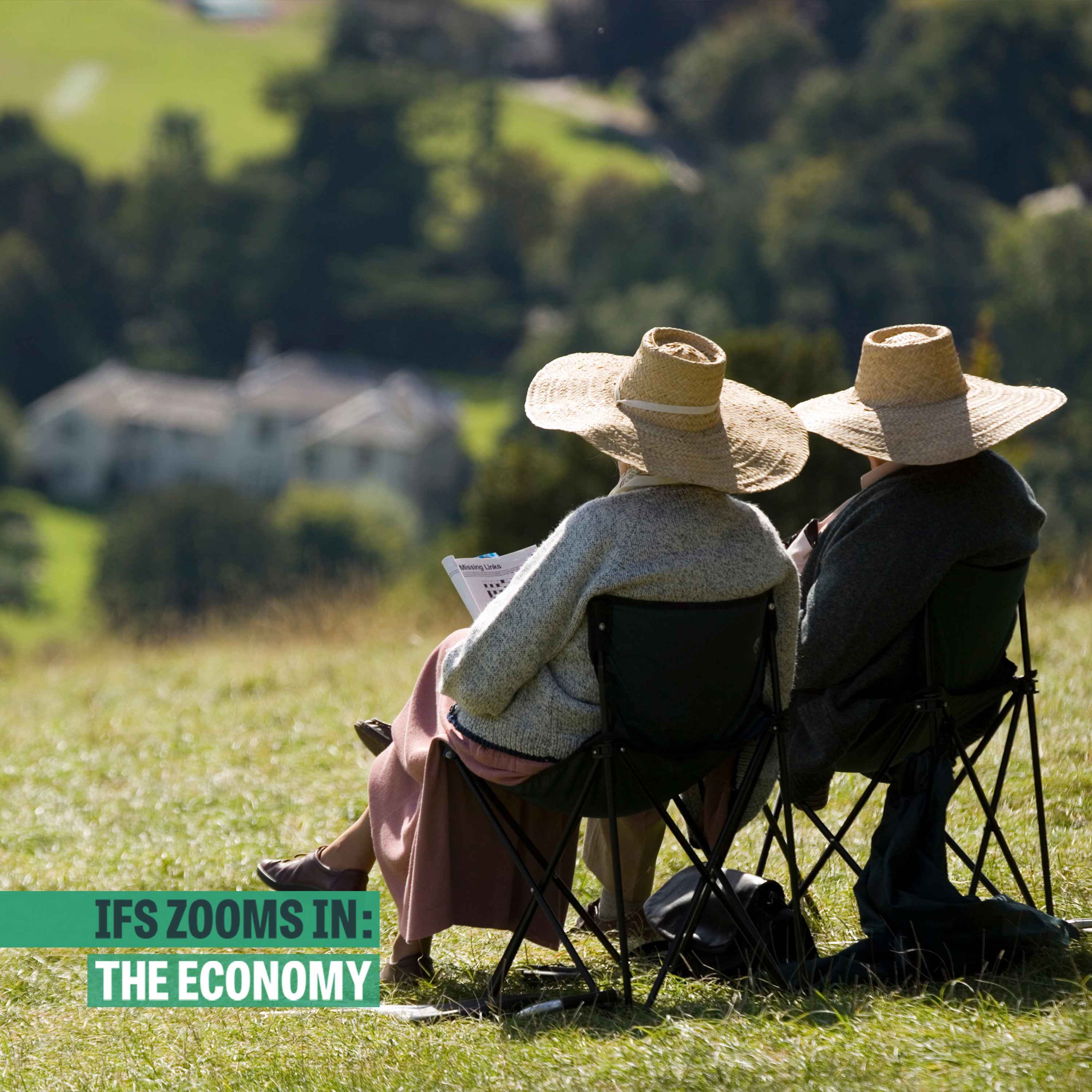
For decades, pensioners were one of the poorest groups in Britain. That is no longer true. Today, the average pensioner is at least as well off as the average working-age person, and in wealth terms many are far better off.In this episode, Helen Miller is joined by Jonathan Cribb and Heidi Karjalainen to examine what the data really say about pensioner incomes, wealth and living standards. Where does pensioners’ money come from? How much is driven by the state pension, private pensions and housing wealth? Which pensioners are still struggling? And how do today’s retirees compare both with their parents’ generation and with younger people who are still working?They also look ahead to the future: will younger generations enjoy the same living standards in retirement, or are higher house prices, lower homeownership and the decline of defined benefit pensions changing the picture? This episode sets out the big story of how pensioners’ finances have changed, and what it means for the future.Become a member: https://ifs.org.uk/individual-membershipFind out more: https://ifs.org.uk/podcasts-explainers-and-calculators/podcasts Hosted on Acast. See acast.com/privacy for more information.
S7 Ep 7The Spring Forecast explained
Helen Miller is joined by IFS colleagues Ben Zaranko and Bee Boileau to discuss the Spring Forecast. The headline numbers haven’t moved much since the autumn, but that stability may not last. With conflict in the Middle East pushing up oil and gas prices, the UK faces a potential negative shock: higher inflation, pressure on interest rates, and a tougher outlook for households, businesses and the public finances.We discuss what higher energy prices could mean for government policy (from fuel duty to targeted support), why calls to raise defence spending are growing, and the scale of the trade-offs involved. We also look at three key forecast uncertainties: unemployment, migration, and volatile capital gains tax receipts. Finally, we ask how realistic tight future spending plans look ahead of the next Spending Review.Become a member: https://ifs.org.uk/individual-membershipFind out more: https://ifs.org.uk/podcasts-explainers-and-calculators/podcasts Hosted on Acast. See acast.com/privacy for more information.
S7 Ep 6How to fix the fiscal rules
Fiscal rules can sound technical, but they shape some of the biggest choices in economic policy: what we spend today, what we invest for tomorrow, and how we share costs across generations.In this episode of IFS Zooms In, Helen is joined by Ben Zaranko to unpack why governments use fiscal rules, what the UK’s current rules are designed to do, and why - despite repeated promises - debt has continued to ratchet upwards. They discuss how a narrow, pass–fail approach has encouraged a fixation on “headroom”, contributed to last-minute policy changes driven by forecast movements, and crowded out wider debate about long-run sustainability.They then set out an alternative approach: a clearer fiscal strategy at the start of each parliament, assessed against a broader dashboard of indicators rather than a single bright-line test, using a traffic-light style system to support a more transparent and nuanced public conversation about the state of the public finances.Become a member: https://ifs.org.uk/individual-membershipFind out more: https://ifs.org.uk/podcasts-explainers-and-calculators/podcasts Hosted on Acast. See acast.com/privacy for more information.
S7 Ep 5Are Plan 2 student loans 'unfair'?
On average, students now leave university with just over £50,000 in student loan debt. Repayments are income-contingent: many graduates will repay little or nothing, while others repay 9% of their income above a threshold for decades, often watching the outstanding balance rise. That design has led some to argue the system is unfair and to argue that students were mis-sold loans whose terms have shifted over time.In this episode, Helen is joined by Nick Hillman, Director of the Higher Education Policy Institute and a former government adviser during the introduction of Plan 2 in the early 2010s, alongside Kate Ogen, Senior Research Economist at IFS, to unpack how the student loan system works in practice. We explain how the system has evolved across cohorts, how it differs across the UK, and when it makes sense to think of student finance as a loan versus a graduate tax. We also look at who repays what across the earnings distribution, how repayment thresholds shape lifetime payments, what changed with the move to Plan 5, and what recent policy choices mean for graduates and for the public finances.Finally, we discuss competing claims about “fairness”, between graduates and taxpayers, among graduates, and across generations, and ask the core question: who should pay for higher education?Become a member: https://ifs.org.uk/individual-membershipFind out more: https://ifs.org.uk/podcasts-explainers-and-calculators/podcasts Hosted on Acast. See acast.com/privacy for more information.
S7 Ep 4Did inflation cause the cost of living crisis?
Inflation has fallen a long way from its peak - but many people still feel worse off, and price rises have remained stubbornly above the Bank of England’s 2% target. So what actually caused the big inflation spike, how close are we to “normal”, and what does that mean for households? Helen is joined by David Miles (OBR and former member of the Bank of England’s Monetary Policy Committee) and Peter Levell (IFS) to break down the basics: what inflation is, why central banks target 2% rather than 0%, and what drove prices up so sharply in recent years. We also dig into who inflation hits hardest, how much of the cost-of-living crisis is really about inflation, and why the Bank raises interest rates even though it can make life feel tougher in the short run. Become a member: https://ifs.org.uk/individual-membershipFind out more: https://ifs.org.uk/podcasts-explainers-and-calculators/podcasts Hosted on Acast. See acast.com/privacy for more information.