
Idea Machines
50 episodes
Speculative Technologies with Ben Reinhardt [Macroscience cross-post]
Tim Hwang turns the tables and interviews me (Ben) about Speculative Technologies and research management.

S1 Ep 50Industrial Research with Peter van Hardenberg [Idea Machines #50]
Peter van Hardenberg talks about Industrialists vs. Academics, Ink&Switch's evolution over time, the Hollywood Model, internal lab infrastructure, and more! Peter is the lab director and CEO of Ink&Switch, a private, creator oriented, computing research lab. References Ink&Switch (and their many publications) The Hollywood Model in R&D Idea Machines Episode with Adam Wiggins Paul Erdós Transcript Peter Van Hardenberg [00:01:21] Ben: Today I have the pleasure of speaking with Peter van Hardenbergh. Peter is the lab director and CEO of Inkin switch. Private creator oriented, competing research lab. I talked to Adam Wiggins, one of inkind switches founders, [00:01:35] way back in episode number four. It's amazing to see the progress they've made as an organization. They've built up an incredible community of fellow travelers and consistently released research reports that gesture at possibilities for competing that are orthogonal to the current hype cycles. Peter frequently destroys my complacency with his ability to step outside the way that research has normally done and ask, how should we be operating, given our constraints and goals. I hope you enjoy my conversation with Peter. Would you break down your distinction between academics and industrialists [00:02:08] Peter: Okay. Academics are people whose incentive structure is connected to the institutional rewards of the publishing industry, right? You, you publish papers. And you get tenure and like, it's a, it's, it's not so cynical or reductive, but like fundamentally the time cycles are long, right? Like you have to finish work according to when, you know, submission deadlines for a conference are, you know, you're [00:02:35] working on something now. You might come back to it next quarter or next year or in five years, right? Whereas when you're in industry, you're connected to users, you're connected to people at the end of the day who need to touch and hold and use the thing. And you know, you have to get money from them to keep going. And so you have a very different perspective on like time and money and space and what's possible. And the real challenge in terms of connecting these two, you know, I didn't invent the idea of pace layers, right? They, they operate at different pace layers. Academia is often intergenerational, right? Whereas industry is like, you have to make enough money every quarter. To keep the bank account from going below zero or everybody goes home, [00:03:17] Ben: Right. Did. Was it Stuart Brand who invented pace [00:03:22] Peter: believe it was Stewart Brand. Pace layers. Yeah. [00:03:25] Ben: That actually I, I'd never put these two them together, but the, the idea I, I, I think about impedance mismatches between [00:03:35] organizations a lot. And that really sort of like clicks with pace layers Exactly. Right. Where it's like [00:03:39] Peter: Yeah, absolutely. And, and I think in a big way what we're doing at, Ink& Switch on some level is trying to provide like synchro mesh between academia and industry, right? Because they, the academics are moving on a time scale and with an ambition that's hard for industry to match, right? But also, Academics. Often I think in computer science are like, have a shortage of good understanding about what the real problems people are facing in the world today are. They're not disinterested. [00:04:07] Ben: just computer [00:04:08] Peter: Those communication channels don't exist cuz they don't speak the same language, they don't use the same terminology, they don't go to the same conferences, they don't read the same publications. Right. [00:04:18] Ben: Yeah. [00:04:18] Peter: so vice versa, you know, we find things in industry that are problems and then it's like you go read the papers and talk to some scientists. I was like, oh dang. Like. We know how to solve this. It's just nobody's built it. [00:04:31] Ben: Yeah. [00:04:32] Peter: Or more accurately it would be to say [00:04:35] there's a pretty good hunch here about something that might work, and maybe we can connect the two ends of this together. [00:04:42] Ben: Yeah. Often, I, I think of it as someone, someone has, it is a quote unquote solved problem, but there are a lot of quote unquote, implementation details and those implementation details require a year of work. [00:04:56] Peter: yeah, a year or many years? Or an entire startup, or a whole career or two? Yeah. And, and speaking of, Ink&Switch, I don't know if we've ever talked about, so a switch has been around for more than half a decade, right? [00:05:14] Peter: Yeah, seven or eight years now, I think I could probably get the exact number, but yeah, about that. [00:05:19] Ben: And. I think I don't have a good idea in my head over that time. What, what has changed about in, can switches, conception of itself and like how you do things. Like what is, what are some of the biggest things that have have changed over that time?[00:05:35] [00:05:35] Peter: So I think a lot of it co

S1 Ep 49MACROSCIENCE with Tim Hwang [Idea Machines #49]
A conversation with Tim Hwang about historical simulations, the interaction of policy and science, analogies between research ecosystems and the economy, and so much more. Topics Historical Simulations Macroscience Macro-metrics for science Long science The interaction between science and policy Creative destruction in research "Regulation" for scientific markets Indicators for the health of a field or science as a whole "Metabolism of Science" Science rotation programs Clock speeds of Regulation vs Clock Speeds of Technology References Macroscience Substack Ada Palmer's Papal Simulation Think Tank Tycoon Universal Paperclips (Paperclip maximizer html game) Pitt Rivers Museum Transcript [00:02:02] Ben: Wait, so tell me more about the historical LARP that you're doing. Oh, [00:02:07] Tim: yeah. So this comes from like something I've been thinking about for a really long time, which is You know in high school, I did model UN and model Congress, and you know, I really I actually, this is still on my to do list is to like look into the back history of like what it was in American history, where we're like, this is going to become an extracurricular, we're going to model the UN, like it has all the vibe of like, after World War II, the UN is a new thing, we got to teach kids about international institutions. Anyways, like, it started as a joke where I was telling my [00:02:35] friend, like, we should have, like, model administrative agency. You know, you should, like, kids should do, like, model EPA. Like, we're gonna do a rulemaking. Kids need to submit. And, like, you know, there'll be Chevron deference and you can challenge the rule. And, like, to do that whole thing. Anyways, it kind of led me down this idea that, like, our, our notion of simulation, particularly for institutions, is, like, Interestingly narrow, right? And particularly when it comes to historical simulation, where like, well we have civil war reenactors, they're kind of like a weird dying breed, but they're there, right? But we don't have like other types of historical reenactments, but like, it might be really valuable and interesting to create communities around that. And so like I was saying before we started recording, is I really want to do one that's a simulation of the Cuban Missile Crisis. But like a serious, like you would like a historical reenactment, right? Yeah. Yeah. It's like everybody would really know their characters. You know, if you're McNamara, you really know what your motivations are and your background. And literally a dream would be a weekend simulation where you have three teams. One would be the Kennedy administration. The other would be, you know, Khrushchev [00:03:35] and the Presidium. And the final one would be the, the Cuban government. Yeah. And to really just blow by blow, simulate that entire thing. You know, the players would attempt to not blow up the world, would be the idea. [00:03:46] Ben: I guess that's actually the thing to poke, in contrast to Civil War reenactment. Sure, like you know how [00:03:51] Tim: that's gonna end. Right, [00:03:52] Ben: and it, I think it, that's the difference maybe between, in my head, a simulation and a reenactment, where I could imagine a simulation going [00:04:01] Tim: differently. Sure, right. [00:04:03] Ben: Right, and, and maybe like, is the goal to make sure the same thing happened that did happen, or is the goal to like, act? faithfully to [00:04:14] Tim: the character as possible. Yeah, I think that's right, and I think both are interesting and valuable, right? But I think one of the things I'm really interested in is, you know, I want to simulate all the characters, but like, I think one of the most interesting things reading, like, the historical record is just, like, operating under deep uncertainty about what's even going on, right? Like, for a period of time, the American [00:04:35] government is not even sure what's going on in Cuba, and, like, you know, this whole question of, like, well, do we preemptively bomb Cuba? Do we, we don't even know if the, like, the warheads on the island are active. And I think I would want to create, like, similar uncertainty, because I think that's where, like, that's where the strategic vision comes in, right? That, like, you have the full pressure of, like, Maybe there's bombs on the island. Maybe there's not even bombs on the island, right? And kind of like creating that dynamic. And so I think simulation is where there's a lot, but I think Even reenactment for some of these things is sort of interesting. Like, that we talk a lot about, like, oh, the Cuban Missile Crisis. Or like, the other joke I had was like, we should do the Manhattan Project, but the Manhattan Project as, like, historical reenactment, right? And it's kind of like, you know, we have these, like, very, like off the cuff or kind of, like, stereotype visions of how these historical events occur. And they're very stylized. Yeah, exactly, right. And so the
S1 Ep 48Idea Machines with Nadia Asparouhova [Idea Machines #48]
Nadia Asparouhova talks about idea machines on idea machines! Idea machines, of course, being her framework around societal organisms that turn ideas into outcomes. We also talk about the relationship between philanthropy and status, public goods and more. Nadia is a hard-to-categorize doer of many things: In the past, she spent many years exploring the funding, governance, and social dynamics of open source software, both writing a book about it called "Working in Public" and putting those ideas into practice at GitHub, where she worked to improve the developer experience. She explored parasocial communities and reputation-based economies as an independent researcher at Protocol Labs and put those ideas into practice as employee number two at Substack, focusing on the writer experience. She's currently researching what the new tech elite will look like, which forms the base of a lot of our conversation. Completely independently, the two of us came up with the term "idea machines" to describe same thing — in her words: "self-sustaining organisms that contains all the parts needed to turn ideas into outcomes." I hope you enjoy my conversation with Nadia Asparouhova. Links Nadia's Idea Machines Piece Nadia's Website Working in Public: The Making and Maintenance of Open Source Software Transcript [00:01:59] Ben: I really like your way of, of defining things and sort of bringing clarity to a lot of these very fuzzy words that get thrown around. So, so I'd love to sort of just get your take on how we should think about so a few definitions to start off with. So I, in your mind, what, what is tech, when we talk about like tech and philanthropy what, what is that, what is that entity. [00:02:23] Nadia: Yeah, tech is definitely a fuzzy term. I think it's best to find as a culture, more than a business industry. And I think, yeah, I mean, tech has been [00:02:35] associated with startups historically, but But like, I think it's transitioning from being this like pure software industry to being more like, more like a, a way of thinking. But personally, I don't think I've come across a good definition for tech anywhere. It's kind, you know? [00:02:52] Ben: Yeah. Do, do you think you could point to some like very sort of like characteristic mindsets of tech that you think really sort of set it. [00:03:06] Nadia: Yeah. I think the probably best known would be, you know, failing fast and moving fast and breaking things. I think like the interest in the sort of like David and gly model of an individual that is going up against an institution or some sort of. Complex bureaucracy that needs to be broken apart. Like the notion of disrupting, I think, is a very tech sort of mindset of looking at a problem and saying like, how can we do this better? So it, in a [00:03:35] weird way, tech is, I feel like it's sort of like, especially in relation, in contrast to crypto, I feel like it's often about iterating upon the way things are or improving things, even though I don't know that tech would like to be defined that way necessarily, but when I, yeah. Sort of compare it to like the crypto mindset, I feel like tech is kind of more about breaking apart institutions or, or doing yeah. Trying to do things better. [00:04:00] Ben: A a as opposed. So, so could you then dig into the, the crypto mindset by, by contrast? That's a, I think that's a, a subtle difference that a lot of people don't go into. [00:04:10] Nadia: Yeah. Like I think the crypto mindset is a little bit more about building a parallel universe entirely. It's about, I mean, well, one, I don't see the same drive towards creating monopolies in the way that and I don't know if that was like always a, you know, core value of tech, but I think in practice, that's kind of what it's been of. You try to be like the one thing that is like dominating a market. Whereas with crypto, I think people are [00:04:35] because they have sort of like decentralization as a core value, at least at this stage of their maturity. It's more about building lots of different experiments or trying lots of different things and enabling people to sort of like have their own little corner of the universe where they can, they have all the tools that they need to sort of like build their own world. Whereas the tech mindset seems to imply that there is only one world the world is sort of like dominated by these legacy institutions and it's Tech's job to fix. Those problems. So it's like very much engaged with what it sees as kind of like that, that legacy world or [00:05:10] Ben: Yeah, I, I hadn't really thought about it that way. But that, that totally makes sense. And I'm sure other people have, have talked about this, but do, do you feel that is an artifact of sort of the nature of the, the technology that they're predicated on? Like the difference between, I guess sort of. The internet and the, the internet of, of like SAS and servers and then the [00:05:35] internet of like blockchains and distribute
S1 Ep 47Institutional Experiments with Seemay Chou [Idea Machines #47]
Seemay Chou talks about the process of building a new research organization, ticks, hiring and managing entrepreneurial scientists, non-model organisms, institutional experiments and a lot more! Seemay is the co-founder and CEO of Arcadia Science — a research and development company focusing on underesearched areas in biology and specifically new organisms that haven't been traditionally studied in the lab. She's also the co-founder of Trove Biolabs — a startup focused on harnessing molecules in tick saliva for skin therapies and was previously an assistant professor at UCSF. She has thought deeply not just about scientific problems themselves, but the meta questions of how we can build better processes and institutions for discovery and invention. I hope you enjoy my conversation with Seemay Chou Links Seemay on Twitter (@seemaychou) Arcadia's Research Trove Biolabs Seemay's essay about building Arcadia Transcript [00:02:02] Ben: So since a lot of our conversation is going to be about it how do you describe Arcadia to a smart well-read person who has never actually heard of it before? [00:02:12] Seemay: Okay. I, I actually don't have a singular answer to this smart and educated in what realm. [00:02:19] Ben: oh, good question. Let's assume they have taken some undergraduate science classes, but perhaps are not deeply enmeshed in, in academia. So, so like, [00:02:31] Seemay: enmeshed in the meta science community.[00:02:35] [00:02:35] Ben: No, no, no, no, but they've, they, they, they, they they're aware that it's a thing, but [00:02:40] Seemay: Yeah. Okay. So for that person, I would say we're a research and development company that is interested in thinking about how we explore under researched areas in biology, new organisms that haven't been traditionally studied in the lab. And we're thinking from first principal polls about all the different ways we can structure the organization around this to also yield outcomes around innovation and commercialization. [00:03:07] Ben: Nice. And how would you describe it to someone who is enmeshed in the, the meta science community? [00:03:13] Seemay: In the meta science community, I would, I would say Arcadias are meta science experiment on how we enable more science in the realm of discovery, exploration and innovation. And it's, you know, that that's where I would start. And then there's so much more that we could click into on that. Right. [00:03:31] Ben: And we will, we will absolutely do that. But before we get there I'm actually really [00:03:35] interested in, in Arcadia's backstory. Cuz cuz when we met, I feel like you were already , well down the, the path of spinning it up. So what's, there's, there's always a good story there. What made you wanna go do this crazy thing? [00:03:47] Seemay: So, so the backstory of Arcadia is actually trove. Soro was my first startup that I spun out together with my co-founder of Kira post. started from a point of frustration around a set of scientific questions that I found challenging to answer in my own lab in academia. So we were very interested in my lab in thinking about all the different molecules and tick saliva that manipulate the skin barrier when a tick is feeding, but basically the, the ideal form of a team around this was, you know, like a very collaborative, highly skilled team that was, you know, strike team for like biochemical, fractionation, math spec, developing itch assays to get this done. It was [00:04:35] not a PhD style project of like one person sort of open-endedly exploring a question. So I was struggling to figure out how to get funding for this, but that wasn't even the right question because even with the right money, like it's still very challenging to set up the right team for this in academia. And so it was during this frustration that I started exploring with Kira about like, what is even the right way to solve this problem, because it's not gonna be through writing more grants. There's a much bigger problem here. Right? And so we started actually talking to people outside of academia. Like here's what we're trying to achieve. And actually the outcome we're really excited about is whether it could yield information that could be acted on for an actually commercializable product, right. There's like skin diseases galore that this could potentially be helpful for. So I think that transition was really important because it went from sort of like a passive idea to, oh, wait, how do we act as agents to figure out how to set this up correctly? [00:05:35] We started talking to angel investors, VCs people in industry. And that's how we learned that, you know, like itch is a huge area. That's an unmet need. And we had tools at our disposal to potentially explore that. So that's how tr started. And that I think was. The beginning of the end or the, the start of the beginning. However you wanna think about it. Because what it did, was it the process of starting trove? It was so fun and it was not at al
S1 Ep 46DARPA and Advanced Manufacturing with William Bonvillian [Idea Machines #46]
William Bonvillian does a deep dive about his decades of research on how DARPA works and his more recent work on advanced manufacturing. William is a Lecturer at MIT and the Senior Director of Special Projects,at MIT's Office of Digital Learning. Before joining MIT he spent almost two decades as a senior policy advisor for the US senate. He's also published many papers and a detailed book exploring the DARPA model. Links William's Website The DARPA Model for Transformative Technologies Transcript [00:00:35] In this podcast, William Bonvillian, and I do a deep dive about his decades of research about how DARPA works and his more recent work on advanced manufacturing. Well humans, a lecturer at MIT and a senior director of special projects at MIT is office of digital learning. Before joining MIT. He spent almost two decades as a senior policy advisor for the us Senate. He's published many papers and a detailed book exploring the DARPA model. I've wanted [00:01:35] to compare notes with him for years. And it was a pleasure. And an honor to finally catch up with him. Here's my conversation with William [00:01:42] Ben: The place that I I'd love to start off is how did you get interested in, in DARPA and the DARPA model in the first place you've been writing about it for more than a decade now. And, and you're probably one of the, the foremost people who who've explored it. So how'd you get there in the first. [00:01:58] William: You know, I, I I worked for the us Senate as a advisor in the Senate for for about 15 years before coming to MIT then. And I I worked for a us Senator who is on the on the armed services committee. And so I began doing a substantial amount of that staffing, given my interest in science technology, R and D and you know, got early contact with DARPA with some of DARPA's both program managers and the DARPA directors, and kind of got to know the agency that way spent some time with them over in their [00:02:35] offices. You know, really kind of got to know the program and began to realize what a, what a dynamic force it was. And, you know, we're talking 20, 20 plus years ago when frankly DARPA was a lot less known than it is now. So yeah, just like you know, kind of suddenly finding this, this Jewelbox varied in the. It was it was a real discovery for me and I became very, very interested in the, kind of the model they had, which was so different than the other federal R and D agencies. [00:03:05] Ben: Yeah. And, and actually um, It sort of in your mind, what is the for, for people who I, I think tend to see different federal agencies that give money to researchers as, as all being in the same bucket. What, what do you, what would you describe the difference between DARPA and the NSF as being [00:03:24] William: well? I mean, there's a big difference. So the NSF model is to support basic research. And they have, you know, the equivalent of project [00:03:35] managers there and they, they don't do the selecting of the research projects. Instead they queue up applicants for funds and then they supervise a peer review process. Of experts, you know, largely from academia who evaluate, you know, a host of proposals in a, in a given R and D area mm-hmm and and make valuations as to which ones would qualify. What are the kind of best most competitive applicants for NSFs basic research. So DARPA's got a different project going on, so it doesn't work from the bottom up. It, it has strong program managers who are in effect kind of empowered to go out and create new things. So they're not just, you know, responding to. Grant applications for basic research, they come into DARPA and develop a [00:04:35] vision of a new breakthrough technology area. They wanna stand up. And so it's, and there's no peer review here. It's really, you hire talented program managers. And you unleash them, you turn them loose, you empower them to go out and find the best work that's going on in the country. And that's, that can be from, from universities and often ends in this breakthrough technology area they've identified. But it also could be from comp companies, often smaller companies and typically they'll construct kind of a hybrid model where they've got academics. Companies working on a project, the companies are already always oriented to getting the technology out the door. Right. Cause they have to survive, but the researchers are often in touch with some of the more breakthrough capabilities behind the research. So bringing those two together is something that the program manager at DARPA does. So while at [00:05:35] NSF, the program manager equivalent, you know, their big job is getting grant out the door and supervising a complex selection process by committee mm-hmm . The role of the, of the ARPA of the, of the DARPA program manager is selecting the award winners is just the beginning of the job. Then in effect you move into their home, right? You work with them on an ongoing basis. DARPA program managers are s
S1 Ep 45Philanthropically Funding the Foundation of Fields with Adam Falk [Idea Machines #45]
In this conversation, Adam Falk and I talk about running research programs with impact over long timescales, creating new fields, philanthropic science funding, and so much more. Adam is the president of the Alfred P. Sloan Foundation, which was started by the eponymous founder of General Motors and has been funding science and education efforts for almost nine decades. They've funded everything from iPython Notebooks to the Wikimedia foundation to an astronomical survey of the entire sky. If you're like me, their name is familiar from the acknowledgement part of PBS science shows. Before becoming the president of the Sloan Foundation, Adam was the president of Williams College and a high energy physicist focused on elementary particle physics and quantum field theory. His combined experience in research, academic administration, and philanthropic funding give him a unique and fascinating perspective on the innovation ecosystem. I hope you enjoy this as much as I did. Links - The Sloan Foundation - Adam Falk on Wikipedia - Philanthropy and the Future of Science and Technology Highlight Timestamps - How do you measure success in science? [00:01:31] - Thinking about programs on long timescales [00:05:27] - How does the Sloan Foundation decide which programs to do? [00:08:08] - Sloan's Matter to Life Program [00:12:54] - How does the Sloan Foundation think about coordination? [00:18:24] - Finding and incentivizing program directors [00:22:32] - What should academics know about the funding world and what should the funding world know about academics? [00:28:03] - Grants and academics as the primary way research happens [00:33:42] - Problems with grants and common grant applications [00:44:49] - Addressing the criticism of philanthropy being inefficient because it lacks market mechanisms [00:47:16] - Engaging with the idea that people who create value should be able to capture that value [00:53:05] Transcript [00:00:35] In this conversation, Adam Falk, and I talk about running research programs with impact over long timescales, creating new fields, philanthropic science funding, and so much more. Adam is the president of the Alfred P Sloan foundation, which was started by the eponymous founder of general motors. And has been funding science and education efforts for almost nine decades. They funded everything from IP. I fond [00:01:35] notebooks to Wikimedia foundation. To an astronomical survey of the entire sky. If you're like me, their name is familiar from the acknowledgement part of PBS science shows. Before becoming the president of the Sloan foundation. Adam was the president of Williams college and I high energy physicist focused on elementary particle physics in quantum field theory. His combined experience in research. Uh, Academic administration and philanthropic funding give him a unique and fascinating perspective on the innovation ecosystem i hope you enjoy this as much as i did [00:02:06] Ben: Let's start with like a, sort of a really tricky thing that I'm, I'm myself always thinking about is that, you know, it's really hard to like measure success in science, right? Like you, you know, this better than anybody. And so just like at, at the foundation, how do you, how do you think about success? Like, what is, what does success look like? What is the difference between. Success and failure mean to [00:02:34] Adam: you? [00:02:35] I mean, I think that's a, that's a really good question. And I think it's a mistake to think that there are some magic metrics that if only you are clever enough to come up with build them out of citations and publications you could get some fine tune measure of success. I mean, obviously if we fund in a scientific area, we're funding investigators who we think are going to have a real impact with their work individually, and then collectively. And so of course, you know, if they're not publishing, it's a failure. We expect them to publish. We expect people to publish in high-impact journals, but we look for broader measures as well if we fund a new area. So for example, A number of years ago, we had a program in the microbiology of the built environment, kind of studying all the microbes that live in inside, which turns out to be a very different ecosystem than outside. When we started in that program, there were a few investigators interested in this question. There weren't a lot of tools that were good for studying it. [00:03:35] By 10 years later, when we'd left, there was a journal, there were conferences, there was a community of people who were doing this work, and that was another measure, really tangible measure of success that we kind of entered a field that, that needed some support in order to get going. And by the time we got out, it was, it was going strong and the community of people doing that work had an identity and funding paths and a real future. Yeah. [00:04:01] Ben: So I guess one way that I've been thinking about it, it's just, it's almost like count
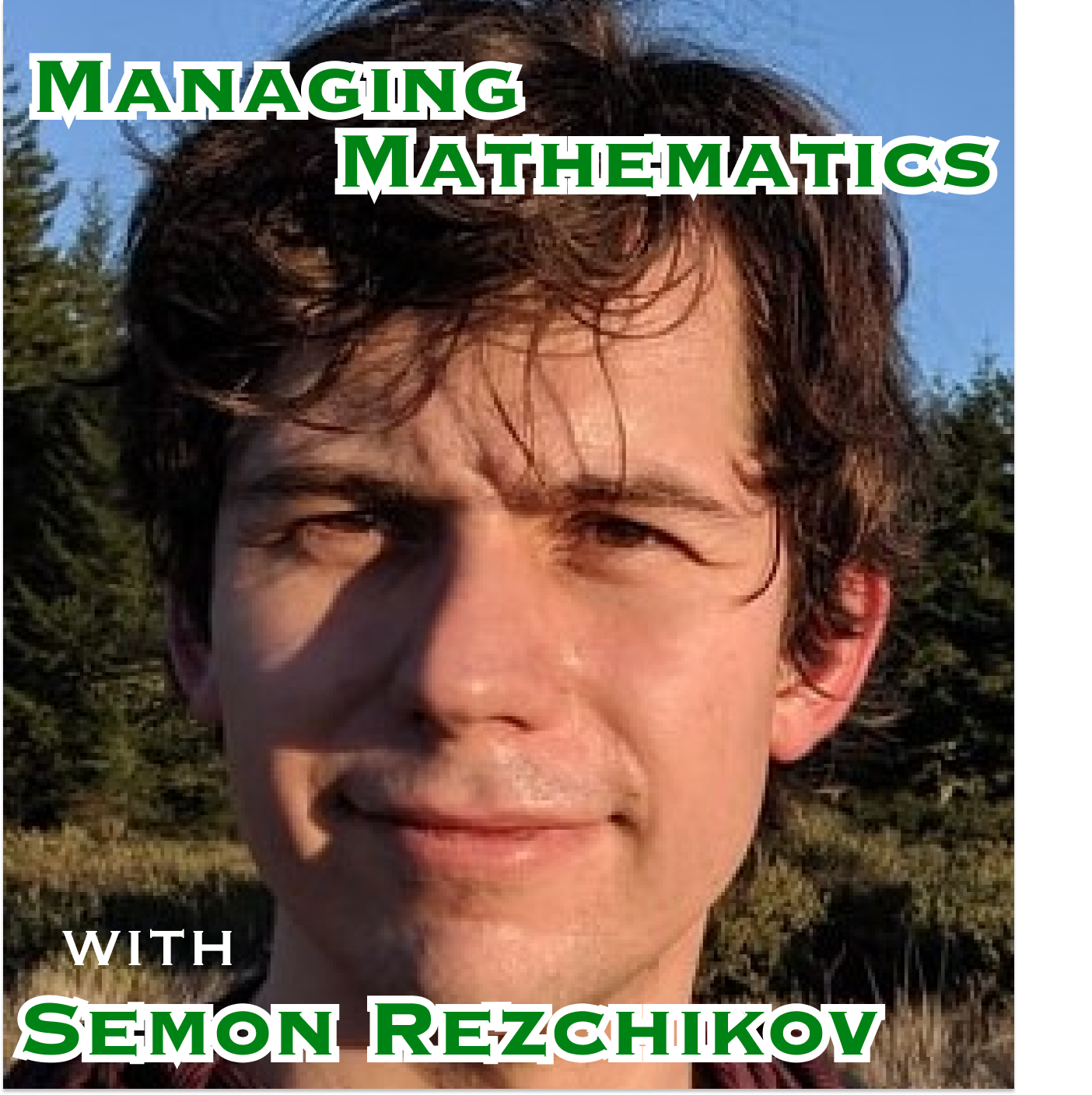
S1 Ep 44Managing Mathematics with Semon Rezchikov [Idea Machines #44]
In this conversation, Semon Rezchikov and I talk about what other disciplines can learn from mathematics, creating and cultivating collaborations, working at different levels of abstraction, and a lot more! Semon is currently a postdoc in mathematics at Harvard where he specializes in symplectic geometry. He has an amazing ability to go up and down the ladder of abstraction — doing extremely hardcore math while at the same time paying attention to *how* he's doing that work and the broader institutional structures that it fits into. Semon is worth listening to both because he has great ideas and also because in many ways, academic mathematics feels like it stands apart from other disciplines. Not just because of the subject matter, but because it has managed to buck many of the trend that other fields experienced over the course of the 20th century. Links Semon's Website Transcript [00:00:35] Welcome back to idea machines. Before we get started, I'm going to do two quick pieces of housekeeping. I realized that my updates have been a little bit erratic. My excuse is that I've been working on my own idea machine. That being said, I've gotten enough feedback that people do get something out of the podcast and I have enough fun doing it that I am going to try to commit to a once a month cadence probably releasing on the pressure second [00:01:35] day of. Second thing is that I want to start doing more experiments with the podcast. I don't hear enough experiments in podcasting and I'm in this sort of unique position where I don't really care about revenue or listener numbers. I don't actually look at them. And, and I don't make any revenue. So with that in mind, I, I want to try some stuff. The podcast will continue to be a long form conversation that that won't change. But I do want to figure out if there are ways to. Maybe something like fake commercials for lesser known scientific concepts, micro interviews. If you have ideas, send them to me in an email or on Twitter. So that's, that's the housekeeping. This conversation, Simon Rezchikov and I talk about what other disciplines can learn from mathematics, creating and cultivating collaborations, working at different levels of abstraction. is currently a post-doc in mathematics at Harvard, where he specializes in symplectic geometry. He has an amazing ability to go up, go up and down the ladder of [00:02:35] abstraction, doing extremely hardcore math while at the same time, paying attention to how he's doing the work and the broader institutional structures that affect. He's worth listening to both because he has great ideas. And also because in many ways, academic mathematics feels like it stands apart from other disciplines, not just because of the subject matter, but because it has managed to buck many of the trends that other fields experience of the course of the 20th century. So it's worth sort of poking at why that happened and perhaps. How other fields might be able to replicate some of the healthier parts of mathematics. So without further ado, here's our conversation. [00:03:16] Ben: I want to start with the notion that I think most people have that the way that mathematicians go about a working on things and be thinking about how to work on things like what to work on is that you like go in a room and you maybe read some papers and you think really hard, and then [00:03:35] you find some problem. And then. You like spend some number of years on a Blackboard and then you come up with a solution. But apparently that's not that that's not how it actually works. [00:03:49] Semon: Okay. I don't think that's a complete description. So definitely people spend time in front of blackboards. I think the length of a typical length of a project can definitely. Vary between disciplines I think yeah, within mathematics. So I think, but also on the other hand, it's also hard to define what is a single project. As you know, a single, there might be kind of a single intellectual art through which several papers are produced, where you don't even quite know the end of the project when you start. But, and so, you know, two, a two years on a single project is probably kind of a significant project for many people. Because that's just a lot of time, but it's true that, you know, even a graduate student might spend several years working on at least a single kind of larger set of ideas because the community does have enough [00:04:35] sort of stability to allow for that. But it's not entirely true that people work alone. I think these days mathematics is pretty collaborative people. Yeah. If you're mad, you know, in the end, you're kind of, you probably are making a lot of stuff up and sort of doing self consistency checks through this sort of formal algebra or this sort of, kind of technique of proof. It makes you make sure helps you stay sane. But when other people kind of can think about the same objects from a different perspective, usually things go faster and at the

S1 Ep 43Scientific Irrationality with Michael Strevens [Idea Machines #43]
Professor Michael Strevens discusses the line between scientific knowledge and everything else, the contrast between what scientists as people do and the formalized process of science, why Kuhn and Popper are both right and both wrong, and more. Michael is a professor of Philosophy at New York University where he studies the philosophy of science and the philosophical implications of cognitive science. He's the author of the outstanding book "The Knowledge Machine" which is the focus of most of our conversation. Two ideas from the book that we touch on: 1. "The iron rule of science". The iron rule states that "`[The Iron Rule] directs scientists to resolve their differences of opinion by conducting empirical tests rather than by shouting or fighting or philosophizing or moralizing or marrying or calling on a higher power` in the book Michael Makes a strong argument that scientists following the iron rule is what makes science work. 2. "The Tychonic principle." Named after the astronomer Tycho Brahe who was one of the first to realize that very sensitive measurements can unlock new knowledge about the world, this is the idea that the secrets of the universe lie in minute details that can discriminate between two competing theories. The classic example here is the amount of change in star positions during an eclipse dictated whether Einstein or Newton was more correct about the nature of gravity. Links Michael's Website The Knowledge Machine on BetterWorldBooks Michael Strevens talks about The Knowledge Machine on The Night Science Podcast Michael Strevens talks about The Knowledge Machine on The Jim Rutt Show Automated Transcript [00:00:35] In this conversation. Uh, Professor Michael And I talk about the line between scientific knowledge and everything else. The contrast between what scientists as people do and the formalized process of science, why Coon and popper are both right, and both wrong and more. Michael is a professor of philosophy at New York university, where he studies the philosophy of science and the philosophical implications [00:01:35] of cognitive science. He's the author of the outstanding book, the knowledge machine, which is the focus of most of our conversation. A quick warning. This is a very Tyler Cowen ESCA episode. In other words, that's the conversation I wanted to have with Michael? Not necessarily the one that you want to hear. That being said I want to briefly introduce two ideas from the book, which we focus on pretty heavily. First it's what Michael calls the iron rule of science. Direct quote from the book dine rule states that the iron rule direct scientists to resolve their differences of opinion by conducting empirical tests, rather than by shouting or fighting or philosophizing or moralizing or marrying or calling on a higher power. In the book, Michael makes a strong argument that scientist's following the iron rule is what makes science work. The other idea from the book is what Michael calls the Taconic principle. Named after the astronomer Tycho Brahe, who is one of the first to realize that very sensitive measurements can unlock new [00:02:35] knowledge about the world. This is the idea that the secrets of the universe that lie into my new details that can discriminate between two competing theories. The classic example, here is the amount of change in a Star's position during an eclipse dictating whether Einstein or Newton was more correct about the nature of gravity. So with that background, here's my conversation with professor Michael strengthens. [00:02:58] Ben: Where did this idea of the, this, the sort of conceptual framework that you came up with come from? Like, what's like almost the story behind the story here. [00:03:10] Michael: Well, there is an interesting origin story, or at least it's interesting in a, in a nerdy kind of way. So it was interested in an actually teaching the, like what philosophers call that logic of confirmation, how, how evidence supports or undermines theories. And I was interested in getting across some ideas from that 1940s and fifties. Scientists philosophers of science these days [00:03:35] look back on it and think of as being a little bit naive and clueless. And I had at some point in trying to make this stuff appealing in the right sort of way to my students so that they would see it it's really worth paying attention. And just not just completely superseded. I had a bit of a gear shift looking at it, and I realized that in some sense, what this old theory was a theory of, wasn't the thing that we were talking about now, but a different thing. So it wasn't so much about how to assess how much a piece of evidence supports a theory or undermines it. But was it more a theory of just what counts as evidence in the first place? And that got me thinking that this question alone is, could be a important one to, to, to think about now, I ended up as you know, in my book, the knowledge machine, I'm putting my finger on that as the mo

S1 Ep 42Distributing Innovation with The VitaDAO Core Team [Idea Machines #42]
A conversation with the VitaDAO core team. VitaDAO is a decentralized autonomous organization — or DAO — that focuses on enabling and funding longevity research. The sketch of how a DAO works is that people buy voting tokens that live on top of the Etherium blockchain and then use those tokens to vote on various action proposals for VitaDAO to take. This voting-based system contrasts with the more traditional model of a company that is a creation of law or contact, raises capital by selling equity or acquiring debt, and is run by an executive team who are responsible to a board of directors. Since technically nobody runs VitaDAO the way a CEO runs a company, I wanted to try to embrace the distributed nature and talk to many of the core team at once. This was definitely an experiment! The members of the core team in the conversation in no particular order: Tyler Golato Paul Kohlhaas Vincent Weisser Tim Peterson Niklas Rindtorff Laurence Ion Links VitaDAO Home Page An explanation of what a DAO is Molecule Automated Transcript VitaDAO [00:00:35] In This conversation. I talked to a big chunk of the VitaDAO core team. VitaDAO is a decentralized autonomous organization or Dao that focuses on enabling and funding. Longevity research. We get into the details in the podcast, but a sketch of how a DAO works is that people buy voting tokens that live on top of the Ethereum blockchain. And then they use those tokens to vote on [00:01:35] various action proposals for me to doubt to take. This voting based system contrasts with more traditional models of the company. That is a creation of law or contract raises capital by selling equity or acquiring debt, and is run by an executive team who are responsible to a board of directors. Since technically, nobody runs for you to doubt the way it CEO runs the company. I wanted to try to embrace the distributed nature and talk to many of the core team at once. This was definitely experiment. Uh, I think it's your day. Well, Oh, well, but I realize it can be hard to tell voices apart on a podcast. So I'll put a link to a video version. In the show notes. So without further ado, here's my conversation with Vita Dao. What I want to do so that listeners can put a voice to a name is I want to go around everybody say your name and then you say how you would pronounce the word VI T a D a O. Tim, would you say your name and then, and then pronounce the word that [00:02:35] that's kind of how I've done it. Yeah. And so I'm the longevity steward we can help kind of figure out deal flow on, edited out, so. Awesome. All right, Tyler, you're next on. It is definitively Vieta Dell. Yeah. And I also help out with the longevity steward group. I started starting longevity group and I'm the chief scientific officer and co-founder at molecule as well. And then Nicholas you're next on my screen. It's definitely beats it out. And I'm also a member of the longevity working group in this science communication group and also currently initiating and laptop. Great. And then Vinson. Yeah. So it's the same pronunciation weeded out, but I'm helping on the side and also on kind of like special projects, like this incline where that I took around, we had recently and yeah, in Lawrence. Lauren Sajjan Vieta thou. And I [00:03:35] also steward the deal flow group within the longevity working group. And I think we should all now say as a hive mind, Paul Paul has said at the same time, oh, sorry. I'm going to say bye to dad. Mess with her in yeah. Hi everyone. My name is Paul cohost. I would say, be to down. I actually wonder what demographics says, Vida, like RESA. We should actually look into that. It's interest, interesting community metric. I'm the CEO and co-founder of molecule and one of the co-authors of the VW. I also work very deeply on the economic side and then essentially help finalize deal structures. So essentially the funding deals that we've been carry through into molecule and yeah, very excited to be here today. And maybe we can jump back into Lawrence adjusted we well, [00:04:35] also, so the thing that's confusing to me is that I always assumed that the Vith came from the word vitality. Right. And so that's, that's where the idea of calling it a fight Vita doubt, right? Because like, I don't say vitality, I say fighting. In German, it's actually retaliatory. Yeah. So it's just like the stupid Anglo centrism that is from the Latin, I would say from the word life. Yeah. Cool. So to really sort of jump right in, I think there's the, to like, be very direct, like, can we like walk through the mechanics of how the, how, how everything actually works? Right. So I think listeners are probably familiar with sort of like the high level abstract concept of there's a bunch of people. They have tokens, they vote on deals you give researchers money to, to do work, but like, sort of [00:05:35] like very, very mechanical. How does the dowel work? Could you like walk us through maybe like, sort of a a core loo

S1 Ep 41The Nature of Technology with Brain Arthur [Idea Machines #41]
Dr. Brian Arthur and I talk about how technology can be modeled as a modular and evolving system, combinatorial evolution more broadly and dig into some fascinating technological case studies that informed his book The Nature of Technology. Brian is a researcher and author who is perhaps best known for his work on complexity economics, but I wanted to talk to him because of the fascinating work he's done building out theories of technology. As we discuss, there's been a lot of theorizing around science — with the works of Popper, Kuhn and others. But there's been less rigorous work on how technology works despite its effects on our lives. Brian currently works at PARC (formerly Xerox PARC, the birthplace of personal computing) and has also worked at the Santa Fe institute and was a professor Stanford university before that. Links W. Brian Arthur's Wikipedia Page The Nature of Technology on Amazon W. Brian Arthur's homepage at the Santa Fe Institute Transcript Brian Arthur [00:00:00] In this conversation, Dr. Brian Arthur. And I talk about how technology can be modeled as modular and evolving system. Commentorial evolution more broadly, and we dig into some fascinating technological hae studies that informed your book, his book, the nature of tech. Brian is a researcher and author who is perhaps best known for his work on complexity economics. Uh, but I wanted to talk to him [00:01:00] because of the fascinating work he's done, building out theories of technology. Uh, as we discussed in the podcast, there's been a lot of theorizing around science, you know, with the works of popper and Kuhn and other. But there's has been much less rigorous work on how technology works despite its effect on our lives. As some background, Brian currently works at park formerly Xerox park, the birthplace of the personal computer, and has also worked at the Santa Fe Institute and was a professor at Stanford university before that. Uh, so without further ado, here's my conversation with Brian Arthur. Mo far less interested in technology. So if anybody asks me about technology immediately search. Sure. But so the background to this is that mostly I'm known for a new framework and economic theory, which is called complexity economics. I'm not the [00:02:00] only developer of that, but certainly one of the fathers, well, grandfather, one of the fathers, definitely. I was thinking one of the co-conspirators I think every new scientific theory like starts off as a little bit of a conspiracy. Yes, yes, absolutely. Yeah. This is no exception anyways. So that's what I've been doing. I'm I've think I've produced enough papers and books on that. And I would, so I've been in South Africa lately for many months since last year got back about a month ago and I'm now I was, as these things work in life, I think there's arcs, you know, you're getting interested in something, you work it out or whatever it would be. Businesses, you [00:03:00] start children, there's a kind of arc and, and thing. And you work all that out. And very often that reaches some completion. So most of the things I've been doing, we've reached a completion. I thought maybe it's because I getting ancient, but I don't think so. I think it was that I just kept working at these things. And for some reason, technologies coming back up to think about it in 2009, when this book came out, I stopped thinking about technology people, norm they think, oh yeah, you wrote this book. You must be incredibly interested. Yeah. But it doesn't mean I want to spend the rest of your life. Just thinking about the site, start writing this story, like writing Harry Potter, you know, it doesn't mean to do that forever. Wait, like writing the book is like the whole [00:04:00] point of writing the book. So you can stop thinking about it. Right? Like you get it out of your head into the book. Yeah, you're done. So, okay. So this is very much Silicon valley and I left academia in 1996. I left Stanford I think was I'm not really an academic I'm, I'm a researcher sad that those two things have diverged a little bit. So Stanford treated me extraordinarily well. I've no objections, but anyway, I think I'd been to the Santa Fe Institute and it was hard to come back to standard academia after that. So why, should people care about sort of, not just the output of the technology creation process, but theory behind technology. Why, why does that matter? Well[00:05:00] I think that what a fine in in general, whether it's in Europe or China or America, People use tremendous amount of technology. If you ask the average person, what technology is, they tell you it's their smartphone, or it's catch a tree in their cars or something, but they're, most people are contend to make heavy use of technology of, I count everything from frying pans or cars but we make directly or indirectly, enormously heavy use of technology. And we don't think about where it comes from. And so there's a few kind of tendencies and biase

S1 Ep 40Philosophy of Progress with Jason Crawford [Idea Machines #40]
In this Conversation, Jason Crawford and I talk about starting a nonprofit organization, changing conceptions of progress, why 26 years after WWII may have been what happened in 1971, and more. Jason is the proprietor of Roots of Progress a blog and educational hub that has recently become a full-fledged nonprofit devoted to the philosophy of progress. Jason's a returning guest to the podcast — we first spoke in 2019 relatively soon after he went full time on the project . I thought it would be interesting to do an update now that roots of progress is entering a new stage of its evolution. Links Roots of Progress Nonprofit announcement Transcript So what was the impetus to switch from sort of being an independent researcher to like actually starting a nonprofit I'm really interested in. Yeah. The basic thing was understanding or getting a sense of the level of support that was actually out there for what I was doing. In brief people wanted to give me money and and one, the best way to receive and manage funds is to have a national nonprofit organization. And I realized there was actually enough support to support more than just myself, which had been doing, you know, as an independent researcher for a year or two. But there was actually enough to have some help around me to basically just make me more effective and, and further the mission. So I've already been able to hire research [00:02:00] assistants. Very soon I'm going to be putting out a a wanted ad for a chief of staff or you know, sort of an everything assistant to help with all sorts of operations and project management and things. And so having these folks around me is going to just help me do a lot more and it's going to let me sort of delegate everything that I can possibly delegate and focus on the things that only I can do, which is mostly research and writing. Nice and sort of, it seems like it would be possible to take money and hire people and do all that without forming a nonprofit. So what what's sort of like in your mind that the thing that makes it worth it. Well, for one thing, it's a lot easier to receive money when you have a, an organization that is designated as a 5 0 1 C three tax status in the United States, that is a status that makes deductions that makes donations tax deductible. Whereas other donations to other types of nonprofits are not I had had issues in the past. One organization would want to [00:03:00] give me a grant as an independent researcher, but they didn't want to give it to an individual. They wanted it to go through a 5 0 1 C3. So then I had to get a new. Organization to sort of like receive the donation for me and then turn around and re grant it to me. And that was just, you know, complicated overhead. Some organizations didn't want to do that all the time. So it was, it was just much simpler to keep doing this if I had my own organization. And do you have sort of a broad vision for the organization? Absolutely. Yes. And it, I mean, it is essentially the same as the vision for my work, which I recently articulated in an essay on richer progress.org. We need a new philosophy of progress for the 21st century and establishing such a philosophy is, is my personal mission. And is the mission. Of the organization to just very briefly frame this in the I, the 19th century had a very sort of strong and positive, you know, pro progress vision of, of what progress was and what it could do for humanity and in the [00:04:00] 20th century. That optimism faded into skepticism and fear and distrust. And I think there are ways in which the 19th century philosophy of progress was perhaps naively optimistic. I don't think we should go back to that at all, but I think we need a, we need to rescue the idea of progress itself. Which the 20th century sort of fell out of love with, and we need to find ways to acknowledge and address the very real problems and risks of progress while not losing our fundamental optimism and confidence and will to, to move forward. We need to, we need to regain to recapture that idea of progress and that fundamental belief in our own agency so that we can go forward in the 21st century with progress. You know, while doing so in a way that is fundamentally safe and benefits all of humanity. And since you, since you mentioned philosophy, I'm really like, just, just ask you a very weird question. That's related to something that I've been thinking about. And [00:05:00] so like, in addition to the fact that I completely agree the philosophy. Progress needs to be updated, recreated. It feels like the same thing needs to be done with like the idea of classical liberalism that like it was created. Like, I think like, sort of both of these, these philosophies a are related and B were created in a world that is just has different assumptions than we have today. Have you like, thought about how the, those two, like those two sort of like philosophical updates. Yeah. So first off, just on that question of, of

S1 Ep 39Fusion, Planning, Programs, and Politics with Stephen Dean [Idea Machines #39]
In this conversation, Dr. Stephen Dean talks about how he created the 1976 US fusion program plan, how it played out and the history of fusion power in the US, technology program planning and management more broadly, and more. Stephen has been working on making fusion energy a reality for more than five decades. He did research on controlled fusion reactions in the 60s and in the 70s became a director at the Atomic energy commission which then became the Energy Research and Development Administration which *then* became the department of energy. In 1979 he left government to form the consultancy Fusion Power associates, where he still works. In 1976, he led the preparation of a report called "Fusion power by magnetic confinement" that laid out a roadmap of the work that would need to be done to turn fusion from a science experiment into a functional energy source. References Fusion Power by Magnetic Confinement Executive Summary Volume 1 Volume 2 Volume 3 Volume 4 Fusion Power Associates The notorious fusion never plot Adam Marblestone on technological roadmapping My hypotheses on program design (which were challenged by this conversation!) Fusion Energy Base (a good website on fusion broadly) ITER Transcript (Machine generated, so please excuse errors) [00:00:00] In this conversation, Dr. Steven Dean, and I talk about how he created the 1976 S fusion program plan, how it played out in the history of fusion power in the U S technology program, planning and management more broadly, and even more things. Steven has been working on making fusion energy a reality for more than five decades. He did research on control, fusion reactions in the 1960s and seventies, he became a director [00:01:00] at the atomic energy commission, which then became the energy research and development of administration, which then became the department of energy in 1979. He left government to form the consultancy fusion, power associates, where you still want. In 1976, he led the preparation of a report called fusion power by magnetic confinement that laid out a roadmap of the work that needed would need to be done to turn fusion from a science experiment, into a functional energy source. And if I can sort of riff about this for a minute, the thing is. Unlike what I sort of see as modern roadmaps, it lays out not just the sort of like plan of record to getting fusion, to be a real energy source, but lays out all the different possible scenarios in terms of funding, in terms of new technology that we can't even think of being created and lays everything. Yeah. In a way that you can actually sort of make decisions off of it. [00:02:00] And I think one of the most impressive things is that it has several different what it calls logics of funding, which is like different, different funding levels and different funding curves. And it actually, unfortunately, accurately predicts that if you fund fusion below a certain level, even if you're funding it continually you'll never get to. An actual useful fusion source because you'll never have enough money to build these, these demonstrator missions. And so in a way it's sort of predicts the future. This, this document is super impressive. If you haven't seen it you should absolutely check it out there. There are links in the show notes and it's sort of, one of the reasons I wanted to talk to Dr. Dean is because this, this document. Is one of the pieces of evidence behind my hypothesis. That to some extent, program design and program management for advanced technologies is a bit of a lost art. And so I wanted to learn more about how he thought about it and built [00:03:00] it. So without further ado, here's my conversation with Steven Dean. To start off, what was the context of creating the fusion plan? Well, I guess I would have to say that it started a few years earlier in a sense that in 1972 the I was in the fusion office and in the atomic energy commission and the office of men and mission management and budget at the white house put out instructions to, I guess, all the agencies that they should prepare an analysis of their programs under a system, they called management by objectives. And this was some, this was a formalism that was, had a certain amount of popularity at that time. And I was asked to prepare something on the fusion program as a part of the agency, doing this for all of its programs. And [00:04:00] in doing that I looked at our program and I Laid out a map basically that showed the different parts of the program on a map like a roadmap and what the timelines might be and what the functions of those of facilities would be. And when the decisions might be and what decisions would work into into, into what, and that was never published in, in a report, but it w except internally, but the map itself was published and widely distributed. And I have it on my wall and it's in my book. So that was the first, my first venture into. Into doing something that resembled plan, it was

S1 Ep 38Policy, TFP, and airshiPs with Eli Dourado [Idea Machines #38]
Eli Dourado on how the sausage of technology policy is made, the relationship between total factor productivity and technological progress, airships, and more. Eli is an economist, regulatory hacker, and a senior research fellow at the Center for Growth and Opportunity at Utah State University. In the past, he was the head of global policy at Boom Supersonic where he navigated the thicket of regulations on supersonic flight. Before that, he directed the technology policy program at the Mercatus Center at George Mason University.. Eli's Website Eli on Twitter Transcript audio_only [00:00:00] In this conversation, Eli Durado. And I talk about how the sausage of technology policy has made the relationship between total factor productivity and technological progress, airships, and more Eli is an economist regulatory, hacker, and senior research fellow at the center for growth and opportunity at Utah state university. In the past, he was the head of global policy at boom supersonic, [00:01:00] where he navigated the thicket of regulations on superstar. Before that he directed the technology policy program at the Mercatus center at George Mason university. I wanted to talk to Eli because it feels like there's a gap between the people who understand how technology works and the people who understand how the government works. And Isla is one of those rare folks who understands both. So without further ado my conversation with Eli Dorado. So just jump directly into it. When you were on a policy team, what do you actually do? Well that depends on which policy team you're on. Right. So, so in my career you mean, do you mean the, in sort of like the, the public policy or like the research center think tanks kind of space or in, in, in a company because I've done both. Yeah, exactly. Oh, I didn't even realize that you do like that. It's like different things. So so like, I guess, like, let's start with [00:02:00] Boom. You're you're on a policy team at a technology company and. Yeah. Yeah. So when I, when I started at boom so we had a problem. Right. Which was like, we needed to know what landing and takeoff noise standard we could design too. Right. Like, so, so we needed to know like how loud the airplane could be. And how, how quiet it had to be. Right. And, and as a big trade off on, on aircraft performance depending on that. And so when I joined up with boom, like FAA had a, what's called a policy statement. Right. Which is, you know, some degree of binding, but not really right. Like that they had published back in 2008 that said, you know, we don't have standards for supersonic airplanes, but you know, like when we do create them they, you know, they're during the subsonic portion of flight, we anticipate the subsidy Arctic standards. Right. So, so for, [00:03:00] for, for landing and takeoff, which is like the big thing that we are concerned about, like that's all subsonic. So we, you know, so that sort of the FAA is like going in position was like, well, the subsonic standards apply to, to boom. And so I kind of like joined up in early 2017 and sort of my job was like, let's figure out a way for that, not to be the case. Right. And so it was, it was basically, you know, look at all the different look at the space of actors and try to figure out a way for that, not to be true. And so, and so that's like kind of what I did. I started, you know, started talking with Congress with FAA. I started figuring out what levers we could push, what, what what angles we could Work work with to ensure that that, that we have we've got to a different place, different answer in the end. And, and so the, like, so basically it's just like this completely bespoke process of [00:04:00] totally like, even trying to figure out like what the constraints you're under are. Exactly. Right. So, so yeah, so it was, there's like a bunch of different, different aspects of that question, right? So there will you know, there's, there is statute, you know, congressional laws passed by Congress that had a bearing on the answer to that question that I went back to like the 1970s. And before there w you know, there was the FAA policy statement. There was, of course the FAA team, which you had to develop, you know you know, relationships with and, and, and, and sort of work with you have the industry association, right. That we remember of that Had different companies, you know, in addition, you know, in addition to boom, there, there were a bunch of other companies Ariane, which is no longer operating. We had Gulf stream, which no longer has a supersonic program. Or actually they didn't Edward admitted to having it announced really dead. They, you know, there was, you know, GE and rolls Royce. And so you had all these companies like coming together, you know, sort of under the, [00:05:00] under the watchful eye of Boeing, of course also. And, and so like the industry association had to have a position on things, and then you had like the internati

S1 Ep 37In the Realm of the Barely Feasible with Arati Prabhakar [Idea Machines #37]
In this conversation I talk to the Amazing Arati Prabhakar about using Solutions R&D to tackle big societal problems, gaps in the innovation ecosystem, DARPA, and more. Arati's career has covered almost every corner of the innovation ecosystem - she's done basically every role at - DARPA she was a program manager, started their Microelectronics Technology Office, and several years later returned to server as its Director. She was also the director of the National Institute of Standards and Technology and was a venture capitalist at US venture partners. Now she's launching Actuate - a non-profit leveraging the ARPA model to go after some of the biggest problems in American society. Links Actuate Website In the Realm of the Barely Feasible - Arati's Article about Actuate and Solutions R&D Arati on Wikipedia Transcript [00:00:00] welcome to idea machines. I'm your host and Reinhart. And this podcast is a deep dive into the systems and people that bring innovations from glimmers in someone's eye, all the way to tools, processes, and ideas that can shift paradigms. We see these systems outputs everywhere, but what's inside the black boxes with guests. I dig below the surface into crucial, but often unspoken questions. To explore themes of how we enable innovations today and how we could do it better tomorrow. In this conversation, I talked to the amazing RFE provoca about using solutions R and D tackle, big societal problems, gaps in the innovation ecosystem, DARPA and more. Are these career has covered almost every corner of the innovation ecosystem. She's done almost every job at DARPA where she was a program manager, started their micro electronics technology office. And several years later returned serve as their [00:01:00] director. She was also the director at the national Institute of standards and technology and a venture capitalist at us venture partners. Now she's launching actuate a nonprofit leveraging the ARPA model to go after some of the biggest problems in American society. Hope you enjoy my conversation with Arthur. Provoca. I'd love to start off and sort of frame this for everybody is with a quote from your article, which, which everybody should read and which I will link to in the show notes. You say yet, we lack a systemic understanding of how to nurture the sort of rich ecosystem we need to confront the societal changes facing us. Now over 75 years, the federal government has dramatically increased supportive research and universities and national labs have built layers of incentives and deep culture for the research role. Companies have honed their ability to develop products in markets, shifting away from doing their own fundamental research in established industries, American venture capital and entrepreneurship have supercharged the startup pathway for commercialization in some [00:02:00] sectors, but we haven't yet put enough energy into understanding the bigger space where policy finance and the market meet to scale component ideas into the kind of deep and wide innovations that can solve big previously intractable problems in society. These sorts of problems, aren't aligned to tangible market opportunities or to the missions of established government R and D organizations today, the philanthropic sector can play a pivotal role by taking the early risk of trying new methods for R and D and developing initial examples that governments and markets can adopt and ramp up the hypothesis behind actuate is that solutions R and D can be a starting place for catalyzing the necessary change in the nation's innovation ecosystem. And so with that, with those, I think I want to test it in a nutshell exactly like that. So can we start with how do you see solutions R and D as being different from other R D and, and sort of coupled with that? How is actuate different from other non-profits. Yeah, I think [00:03:00] that's, that's one of the important threads in this tapestry that we want to develop. So solutions R and D let's see. I think those of us who live in the world of R and D and innovation are very familiar with basic research. That that is about new knowledge, new exploration, but it's designed all the incentives, all the funding and the structures are designed to have that end with publishing papers. And then on the other hand, there's. But the whole machinery that turns an advance into, you know, takes a technological advance or a research advance and turns it into the changes that we want in society that could be new products and services. It could be new policies, it could be new practices and that implementation machinery. The market companies, policymaking, what individuals choose to do pilot practices. I think we understand that. And there are places where the, you know, things just move from basic research over into actual [00:04:00] implementation. But in fact, there are, there are a lot of places where that doesn't happen, seamlessly and solutions, R and D is this weird thing in the
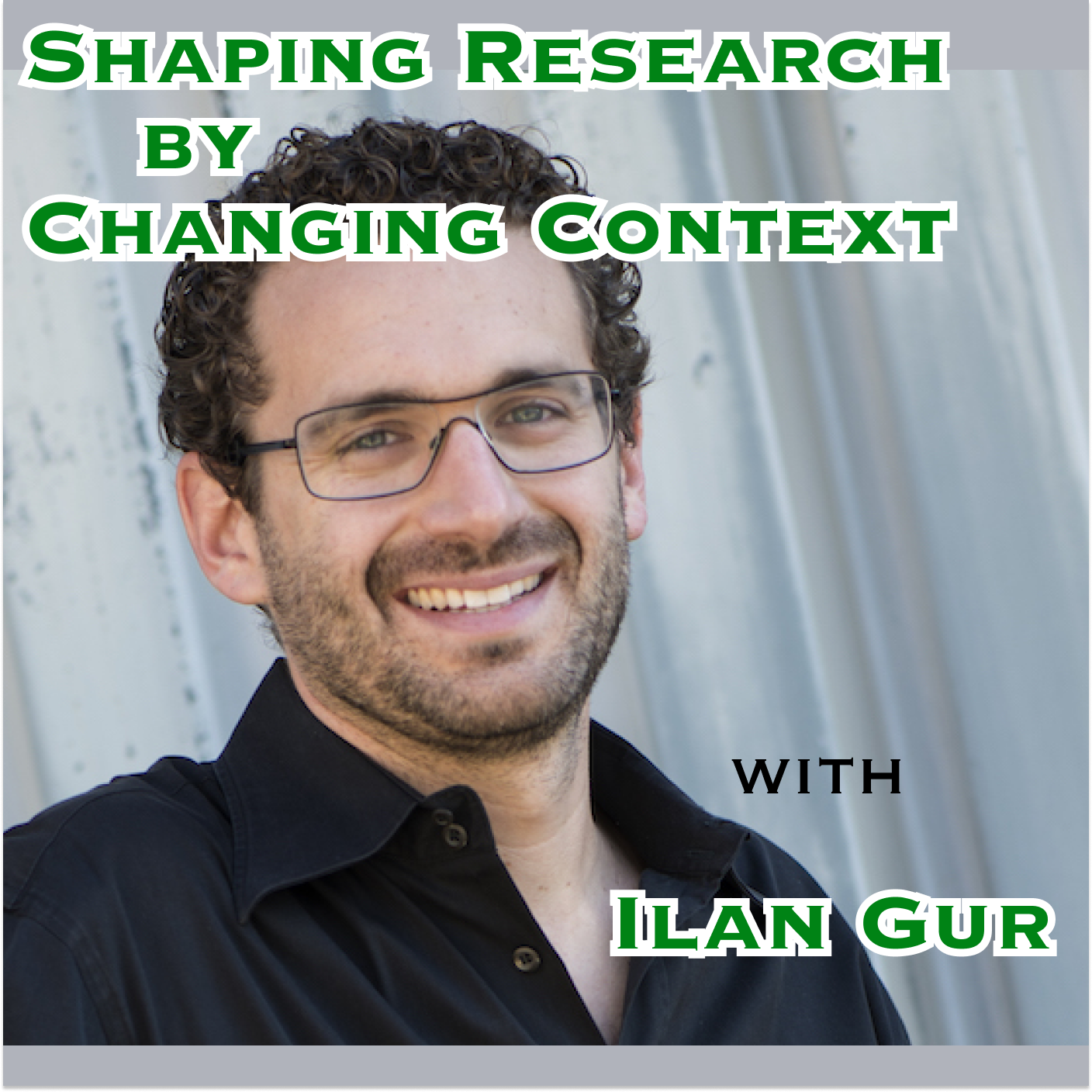
S1 Ep 36Shaping Research by Changing Context with Ilan Gur [Idea Machines #36]
In this conversation I talk to Ilan Gur about what it really means for technology to "escape the lab", the power of context to shape the usefulness of research, the inadequacies of current institutional structures, how activate helps technology escape the lab *by* changing people's context, and more. Ilan is the CEO and founder of Activate, which is a nonprofit that runs a fellowship enabling scientists to spend two years embedded in research institutions to mature technology from a concept to a first product. In the past, he has also served as a program director at ARPA-E and was a cofounder of Seeo, where he commercial new high-density battery technology. Links Activate Ilan on Twitter Ilan on My Climate Journey Podcast Transcript In the past, we've talked about the, how the whole process of really turning hardcore scientific research into products that have an impact on people's lives is fairly abstract to people outside of the system. Since you've both walked the path and now help other people do the same, let's round the conversation. would you go into detail on what the actual actions you need to take to go from say, being a graduate student who just published a paper on a promising battery technology to an improved battery in a car. That's that's a great place to start. let me try and answer that from a few different dimensions. I'll, I'll start by answering it, just from an anecdote about my personal experience, which I've shared in other places, but, you know, I basically. Went into my PhD program because I felt like the field I was studying material scientists, material science could, be the biggest way to make a big impact on climate change by basically taking new science and turning it into the next generation of all the technologies. We need to have a sustainable economy. And, I was working in nanotechnology, joined. Kind of the world, the best research group in the world that that was working on how nano materials could improve solar cells. and this is before the, the enormous solar market that exists today exists. There was a sense at the time that, you know, we needed a completely new generation of technology to make solar ubiquitous and cost effective. And so, you know, we had this great mantra around how we were going to print solar cells like newspapers, using these small colloidal nano, semiconductors. and the research was phenomenal. we were driven by the fact that what I like to say is, you know, we wrote a science paper where the first paragraph, like any, talked about how the research was going to change the world. And it wasn't until I randomly got connected with some business school folks at Berkeley, where I was doing my PhD. and they actually. It didn't take long. they put me through just a few cycles of digging one level deeper into, how solar cells were actually made, how they were sold, what determined their, their costs and the cost of energy they produce. and I ended up, you know, over the course of a few weeks with a spreadsheet that I still have somewhere, which told me that. If we hit all of our targets and our research in terms of what we thought could change the world. we would end up with a solar cell where even if you gave it away for free, it couldn't compete with the existing state of the art Silicon solar cells at the time. and it was a really. Simple idea, which was, we were making dirt cheap solar cells, but they probably wouldn't last very long. And we didn't think that was such a big deal. You just print some more. and yet, certainly at the time, and it's still true. It's such a, such a predominant amount of the cost of solar energy came from the balance of systems and installations. And I bring up the story because, for me, it was a tipping point. We had so much excitement about our research. It was even published in Forbes, you know, so a business magazine, and. It just showed how it showed, how easy it was to think you were doing something productive and successful. I it's not that I, I, I was in academia, but the reason I was there was to try and get something productive that could turn into a product. Right. And I had missed the boat so much, even with that intention. and so that was a shock to me. And so. That was kind of the first lesson around how, you know, institutions matter and incentives matter. but what I ended up doing was then leaving academia and jumping into an early stage startup, which was an amazing vehicle to think about how this transition happens and, you know, basically the learning there, and, This is what we now, you know, this is a lot of what we now indoctrinate and try and help people understand in the fellowship we run, was that, you know, the depth and multitude of elements that determine whether a technology can actually make it from the research stage to a product in the market. You know, first of all, you know, the idea is like, you know, the easy part in some regard. but yeah. You know, the number of levels deeper, you have t
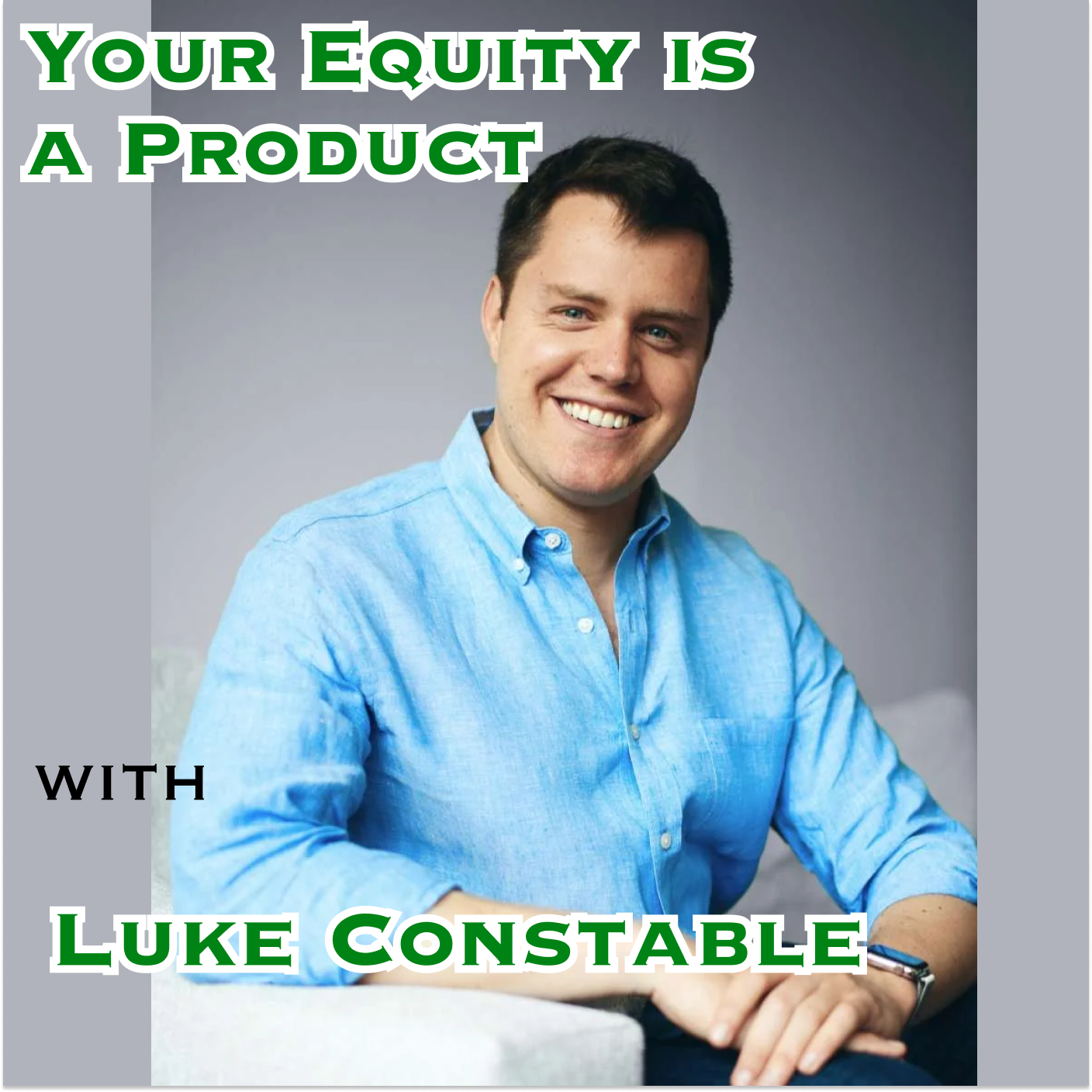
S1 Ep 35Your Equity is a Product with Luke Constable [Idea Machines #35]
In this conversation I talk to Luke Constable about the complicated tapestry of finance, funding projects, incentives, organizational and legal structures, social technologies, and more. Luke is the founder of the hedge fund Lampa Capital and publishes a widely-read newsletter full of fascinating deep dives. He's also trained as a lawyer and historian so he looks at the world with a fairly unique set of lenses. Disclaimer: nothing Luke says is an offer to buy or sell a security or to make an investment Links Luke on Twitter Lampa Capital Theory of Investment Value (John Burr Williams) 1,000 True Fans (Kevin Kelly) Quantum Country Patreon Lampa Capital's Open Questions The Empire of Value (André Orléan) Who Gets What and Why (Alvin Roth) The Mystery of Capital (Hernando de Soto) I, Pencil (Leonard Read) The Crime of Reason (Robert Laughlin) Andrew Lo's papers Transcript 0:01:05 BR: So if technology creates a lot of wealth, why does it feel like most people in finance are hesitant to invest in technology? 0:01:19 Luke Constable: So that's an interesting place to start. I think you have to understand, no one invests in technology. If you think about investors, investors invest in businesses that use technology, and so that's probably the first frame I would use. Investors aren't hesitant to invest in technology, investors never invest in technology. What investors do is they invest in these products that are going to generate cash flow streams, and so that's sort of the first thing. And then the second thing is, a lot of the technologies that you and I think about, they seem obvious at a macro scale, where you take a high level view and you say, "Well, it would be so much better if we had a blank sheet of paper," and I said, "We should do X." 0:02:10 LC: For instance, you could make an argument about housing technology in San Francisco, and you could say, "All of these houses built in SF, they're old Victorians, they don't really have washing machines and laundry machines, you could probably change the structural engineering, probably build them higher". And if you look at them and said, "Oh, I have a better prefab housing technology," or "I have a better way to do it," you'd miss the point, which is just because you've invented the physics, and this is the other thing, you actually have to sell it into a market. You have to work within the market, and so that's usually where I see a lot of the interesting technical products fall down. 0:02:53 BR: So the thing that I want to poke at in the assertion that people invest in businesses is that people invest in things that are not businesses as well, people invest in gold, in currencies and other, I guess, assets would be the high level thing, and so I guess the question is why isn't technology itself an asset, and there's probably a very obvious answer to this, I just... 0:03:25 LC: Sure, so let's take a step back and talk about the various asset classes, there's sort of a couple of ways to break them down. 0:03:32 BR: Okay. 0:03:33 LC: One way people do this is they'll say there are real assets, these are things like real estate, some people put commodities in there, and then there are sort of these yield assets, these are debt that is putting out a cash flow stream, and then you have equities, and there's some argument that cryptocurrency is sort of its own asset class, and then currencies might be their own asset class too. And what you'll quickly find is these things kind of blend together. A lot of them are different ways of financing sort of the same project. And then you have the ones that are just traded for their own sake. So there's sort of two questions you're asking, the first is, why isn't "technology" the same as like gold or silver or real estate, for instance? And so there's a use value to all of those commodities, and that's why they have value, and that actually is a cash flow stream, we actually do use gold, we do use silver, and that's how that works. 0:04:43 LC: But if you think about what's valuable, there's sort of something that's value... And I should have started with this. When you think about what value is, there's value in exchange and then there's value in use. So the value in exchange ones, these are often, you could argue, cryptocurrency or a lot of currencies, gold is actually usually thought of as a medium of exchange, that actually is valuable for cash flow purposes just probably not in the ways that you think. So what happens with these currencies and these stores of value is they sort of become Schelling points where I just know there are enough people transacting in that thing that I can find the liquidity, I can actually go convert to cash, and I can go basically get that cash when I need it. That actually is a cash flow need. It's just not often thought of that way. 0:05:40 LC: Now, liquidity is really valuable because you might be invested in the best business of all time, and it might have a very, very, very high net prese
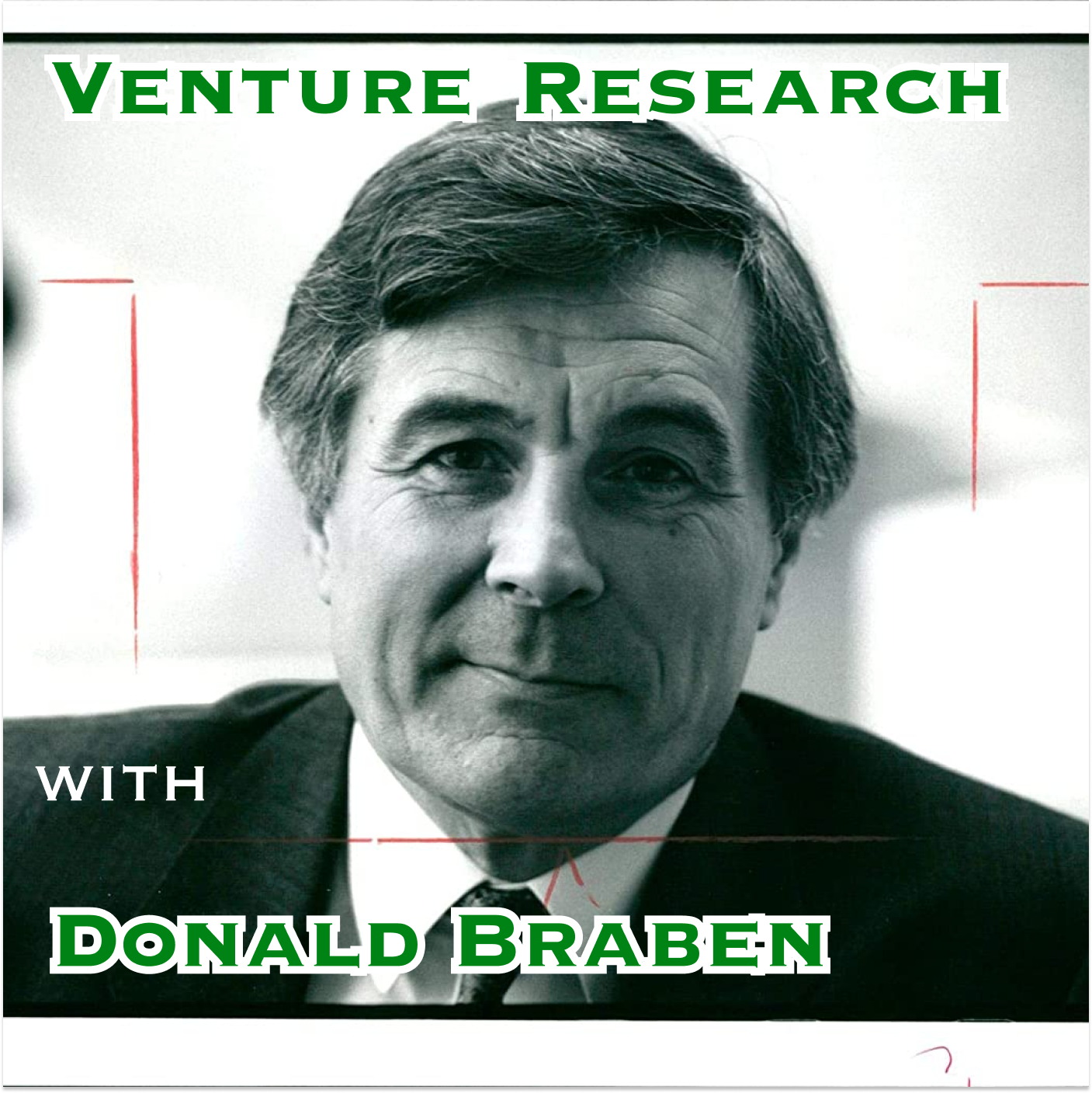
Venture Research with Donald Braben [Idea Machines #34]
In this conversation I talk to Donald Braben about his venture research initiative, peer review, and enabling the 21st century equivalents of Max Planck. Donald has been a staunch advocate of reforming how we fund and evaluate research for decades. From 1980 to 1990 he ran BP's venture research program, where he had a chance to put his ideas into practice. Considering the fact that the program cost two million pounds per year and enabled research that both led to at least one Nobel prize and a centi-million dollar company, I would say the program was a success. Despite that, it was shut down in 1990. Most of our conversation centers heavily around his book "Scientific Freedom" which I suspect you would enjoy if you're listening to this podcast. Links Scientific Freedom Transcript audio_only [00:00:00] This conversation. I talked to Donald breathing about his venture research initiative, peer review, and enabling the 21st century equivalent of max Planck. Donald has been a staunch advocate for forming how we fund and evaluate research for decades. From 1980 to 1990, he ran BP's venture research program. Where he had a chance to put his ideas into practice. [00:01:00] Considering the fact that the program costs about 2 million pounds per year and enabled research, that book led to at least one Nobel prize and to send a million dollar company. I would say the program was success, despite that it was shut down in 1990. Most of our conversations centers heavily around his book, scientific freedom, which just came out from straight press. And I suspect that you would enjoy if you're listening to this podcast. So here's my conversation with Donald Raven. would you explain, in your own words, the concept of a punk club and why it's really well, it's just my name for the, for the, outstanding scientists of the 20th century, you know, starting with max blank, who looked at thermodynamics, and it took him 20 years to reach his conclusions, that, that matter was, was quantized. You know, and that, and, he developed quantum mechanics, that was followed by Einstein and Rutherford and, and, and a [00:02:00] whole host of scientists. And I've called, in order to be, succinct Coley's they, these 500 or so scientists who dominated the 20th century, the plank club. So I don't have to keep saying Einstein rather for that second. I said, and it's, it's an easy shorthand. Right. And so, do you think that like, well, there's a raging debate about whether the existence of the plank club was due to sort of like the time and place and the, the things that could be discovered in physics in the first half of the 20th century versus. Sort of a more or more structural argument. Do you, where do you really come down on that? The existence of the plank club? [00:03:00] W well, like, yeah, so like, I guess, I guess it's, tied to sort of like this, but the question of like, like almost like, yeah. Are you asking, will there be a 20th century, 21st century playing club? Do you think, do you think it's possible? Like, it's sort of like now right now. No, it's not. because, peer review forbids it, in the early parts of the 20th century, then scientists did not have to deal with, did not necessarily have to deal with peer review. that is the opinions of the, of the expert of the few expert colleagues. they just got on, on, Edgar to university and had a university position, which was as difficult then as it is now to get. But once you got a university position in the first part up to about 1970, then you could do then providing your requirements were modest, Varney. You didn't [00:04:00] need, you know, huge amounts of money. Say. You could do anything you wanted and, you didn't have to worry about your, your peers opinions. I mean, you did in your department when people were saying, Oh, he's mad. You know, and he's looking at this, that, and the other, you could get on with it. You didn't have to take too much attention. We pay too much attention to what they were doing, but now in the 21st century, consensus dominates everything. And, it is a serious, serious problem. Yeah. So I, I seriously believe that keeps me what keeps me going is that it is possible for there to be a plane club in the 21st century. It is possible, but right now it won't take, it won't happen. I mean, re there's been reams written on peer review, absolute huge, literature. and the, but, but most of it seems to have been written by, by people who at least favor the status [00:05:00] quo. And so they conclude that peer review is great, except perhaps for multidisciplinary research, which ma, which might cause problems. This is the establishment view. And so they take steps to try to ease the progress of multidisciplinary research, but still using peer review. Now. Multidisciplinary research is essentially is, is absolutely essential to venture research. I mean, because what they are doing, what every venture researchers, the researcher is doing is to look at the universe. a
Focusing on Research with Adam Marblestone [Idea Machines #33]
A conversation with Adam Marblestone about his new project - Focused Research Organizations. Focused Research Organizations (FROs) are a new initiative that Adam is working on to address gaps in current institutional structures. You can read more about them in this white paper that Adam released with Sam Rodriques. Links FRO Whitepaper Adam on Twitter Adam's Website Transcript [00:00:00] In this conversation, I talked to Adam marble stone about focused research organizations. What are focused research organizations you may ask. It's a good question. Because as of this recording, they don't exist yet. There are new initiatives that Adam is working on to address gaps. In current institutional structures, you can read more about them in the white paper that Adam released recently with San Brad regens. I'll put them in the show notes. Uh, [00:01:00] just a housekeeping note. We talk about F borrows a lot, and that's just the abbreviation for focus, research organizations. just to start off, in case listeners have created a grave error and not yet read the white paper to explain what an fro is. Sure. so an fro is stands for focus research organization. the idea is, is really fundamentally, very simple and maybe we'll get into it. On this chat of why, why it sounds so trivial. And yet isn't completely trivial in our current, system of research structures, but an fro is simply a special purpose organization to pursue a problem defined problem over us over a finite period of time. Irrespective of, any financial gain, like in a startup and, and separate from any existing, academic structure or existing national lab or things [00:02:00] like that. It's just a special purpose organization to solve, a research and development problem. Got it. And so the, you go much more depth in the paper, so I encourage everybody to go read that. I'm actually also really interested in what's what's sort of the backstory that led to this initiative. Yeah. it's kind of, there's kind of a long story, I think for each of us. And I would be curious your, a backstory of how, how you got involved in, in thinking about this as well. And, but I can tell you in my personal experience, I had been spending a number of years, working on neuroscience and technologies related to neuroscience. And the brain is sort of a particularly hard a technology problem in a number of ways. where I think I ran up against our existing research structures. in addition to just my own abilities and [00:03:00] everything, but, but I think, I think I ran up against some structural issues too, in, in dealing with, the brain. So, so basically one thing we want to do, is to map is make a map of the brain. and to do that in a, in a scalable high-speed. Way w what does it mean to have a map of the brain? Like what, what would, what would I see if I was looking at this map? Yeah, well, we could, we could take this example of a mouse brain, for example. just, just, just for instance, so that there's a few things you want to know. You want to know how the individual neurons are connected to each other often through synopsis, but also through some other types of connections called gap junctions. And there are many different kinds of synopsis. and there are many different kinds of neurons and, There's also this incredibly multi-scale nature of this problem where a neuron, you know, it's, it's axon, it's wire that it sends out can shrink down to like a hundred nanometers in [00:04:00] thickness or less. but it can also go over maybe centimeter long, or, you know, if you're talking about, you know, the neurons that go down your spinal cord could be meter long, neurons. so this incredibly multi-scale it poses. Even if irrespective of other problems like brain, computer interfacing or real time communication or so on, it just poses really severe technological challenges, to be able to make the neurons visible and distinguishable. and to do it in a way where, you can use microscopy, two image at a high speed while still preserving all of that information that you need, like which molecules are aware in which neuron are we even looking at right now? So I think, there's a few different ways to approach that technologically one, one is with. The more mature technology is called the electron microscope, electromicroscopy approach, where basically you look at just the membranes of the neurons at any given pixel sort of black or white [00:05:00] or gray scale, you know, is there a membrane present here or not? and then you have to stitch together images. Across this very large volume. but you have to, because you're just able to see which, which, which pixels have membrane or not. you have to image it very fine resolution to be able to then stitch that together later into a three D reconstruction and you're potentially missing some information about where the molecules are. And then there's some other more, less mature technologies that use optical microscopes and they use other technolo

S1 Ep 32Hanging Out in the Valley of Death with Michael Filler and Matthew Realff [Idea Machines #32]
Michael Filler and Matthew Realff discuss Fundamental Manufacturing Process innovations. We explore what they are, dig into historical examples, and consider how we might enable more of them to happen. Michael and Matthew are both professors at Georgia Tech and Michael also hosts an excellent podcast about nanotechnology called Nanovation. Our conversation centers around their paper Fundamental Manufacturing Process Innovation Changes the World. If you're in front of a screen while you're listening to this, you might want to pull up the paper to look at the pictures. Key Takeaways Sometimes you need to go down to go back up The interplay between processes and paradigms is fascinating We need to spend more time hanging out in the valley of death Links Fundamental Manufacturing Process Innovation Changes the World(Medium)(SSRN) Michael on Twitter Matthew Realff's Website Michael Filler's Website Nanovation Podcast Topics - The need for the innovator to be near the process - Continuous to discrete shifts - Defining paradigms outlines what progress looks like - Easy to pay attention to artifacts, hard to pay attention - Hard to recreate processes - The 1000x rule of process innovations - Quality vs price improvements - Process innovation as a discipline - Need to take a performance hit to switch paradigms - How to enable more fundamental manufacturing process innovations Transcript [00:00:00] this conversation, I talked to Michael filler and Matthew Ralph about fundamental manufacturing process innovations. We explore what they are, dig into historical examples and consider how we might enable more of them to happen. Michael and Matthew are both professors at Georgia tech and Michael also hosts an excellent podcast about nanotechnology called innovation. Our conversation centered around their paper called fundamental [00:01:00] manufacturing process. Innovation changes the world, which I've looked to in the show notes and highly recommend the fact that they posted it on medium. In addition to more traditional methods, give you a hint that they think a bit outside the normal academic box. However, I actually recommend the PDF version on SSRN, which is not behind a paywall only because it has great pictures for each process that I found super helpful. If you're in front of a screen, while you're listening to this, I suspect that having them handy, it might enhance the conversation. And here we go. the, the place that I'd love to start is, to sort of give everybody a, get them used to both of your voices and sort of assign a personality, a personality to each of you. so if each of you would say a bit about yourselves, and the. The, the sort of key bit that I've loved you to say is to, to focus on something that you believe that many people in your discipline would sort [00:02:00] of cock an eyebrow at because clearly by publishing this piece on medi you sort of identify yourself as not run of the mill professors. Oh boy. Okay. So we're going to start juicy, real juicy. So I guess I'll go since I'm speaking, this is Mike filler speaking. Great to be here. so I've been a professor of chemical engineering at Georgia tech for a little over 10 years now. my research group works in nanoscale materials and device synthesis and scale up. So for say electronics applications, Yeah. I mean, this article, which we'll talk about emerged from, you know, can I say a frustration that I had around electronics really is where it started for me, at least, that. We have all this focus on new materials or new device physics or new circuit. And I know your listeners are probably thinking about morphic computing or quantum computing, and these are all very cool things, but it seemed to me [00:03:00] that we were entirely missing the process piece. The, how do we build computers? and, and, and circuitry. And, and so that's where this started for me was, starting to realize if we're not dealing with the process piece, that we're, we're missing a huge chunk of it. And I think one of the things is that people, people miss that where within working within the context of something developed 50 or 60 years ago, in many cases, and it's it's was really hidden to a lot of people. And so that, that was where I came at this. Great. All right. So, yeah, so I'm, also a professor of chemical and biomolecular engineering at Georgia tech. my background is actually in process systems engineering. And, if you go back to the late 1960s, early 1970s, actually frankly, before I was a much more than in shorts, there was a, that was a real push towards. The role of process systems engineering in [00:04:00] chemical engineering in it really arose with the, with the advent of computing and the way that computing could be used to help in chemical engineering. And then slowly over time, the, the role of process systems engineering has become, I think, marginalized within the chemical engineering community, it's gone much over towards. What I call science and engin

The Decline of Unfettered Research with Andrew Odlyzko [Idea Machines #31]
A conversation with Professor Andrew Odlyzko about the forces that have driven the paradigm changes we've seen across the research world in the past several decades. Andrew is a professor at the University of Minnesota and worked at Bell Labs before that. The conversation centers around his paper "The Decline of Unfettered Research" which was written in 1995 but feels even more timely today. Key Takeaway The decline of unfettered research is part of a complex web of causes - from incentives, to expectations, to specialization and demographic trends. The sobering consequence is that any single explanation is probably wrong and any single intervention probably won't be able to shift the system. Links The Decline of Unfettered Research Andrew's Website A Twitter thread of my thoughts before this podcast (Automated, and thus mistake-filled) Transcript audio_only [00:00:00] In this conversation. I talked to professor Andrew Odlyzko about the forces that have driven the paradigm changes we've seen across the research world. In the past several decades. Andrew is a professor at the university of Minnesota and worked at bell labs for that our conversation centers around in his paper, the decline of unfettered research, which was written in 1995, but feels even more timely today. I've linked to it in the show notes and [00:01:00] also a Twitter thread that I wrote to get down my own thoughts. I highly recommend that you check out one of them either now or after listening to this conversation. I realized that it might be a little weird to be talking about a paper that you wrote 25 years ago, but it, it seemed when I read it, it sort of blew my mind because it seemed so like all of it just seemed so true today. Um, and so I was, I was wondering, uh, like first do you, do you, do you sort of think that the, the core thesis of that paper still holds up? Like how would you amend it if you had to write it again today? Oh, absolutely. I'm convinced that the base thesis is correct. And as the last quarter century has provided much more evidence to support it. And basically if I were writing it today, I would just simply draw on this experience all those 25 years. Yeah. Yeah. Cause, okay, cool. So, so like, um, I sort of wanted to [00:02:00] establish the baseline of like asking questions about it is still, is still super relevant. Um, So, uh, just, uh, for, for the, for the listeners, um, would you sort of go through how you think of what unfettered research meets? Because, uh, I think many people have heard of, of sort of like, like basic or, or curiosity driven research, but I think that the distinction is actually really important. Mmm. Well, yes. So basically unfettered researchers, emotional curiosity, driven research, very closely related to maybe some shades of difference with the idea here is that you kind of find the best people. You can most promising researchers and give them essentially practically complete freedom. Give them resources, making them complete freedom to pursue the most interesting problems that they see. Um, and that was something which, uh, kind of many people still think of this as being the main mode of operations. And that's still thought [00:03:00] the best type of research in that case, but it's definitely been fading. Yeah. So, uh, would you, would you make the art? So what, like, what is the, is the most powerful argument that unfettered research is actually not the best kind of research. Well, so why is it not the best kind of research? So again, this is not so much an issue of world's best in some global optimization sense. And so on my essay. It wasn't really addressed to the forces that were influencing conduct of science technology research. Um, and, uh, I'm not quite saying that it's kind of ideal that it was happening. I said, well, here are the reasons. And given the society we live in and the institutions, the general framework here is what's happened and why it's happening. Yeah. [00:04:00] Now and a particular outfit. Yes, there was an argument coming out of my discussion was that, uh, this unfettered research was, uh, becoming a much smaller fraction of the total. And this was actually quite justified. But yes, uh, even so to a large extent, research did dominate for a certain period of time. Um, that era was ending now. It was likely to be the con kind of consigned to a few small niches. So evolving on the, a small number of people, much more of the work was going to be kind of oriented towards particular projects. Yeah, the, the, the thing that I really like about the term unfettered research that I feel like draws a distinction between it and curiosity European is that, uh, unfettered research, the idea of fettered versus unfettered, uh, feels like it refers to, um, Sort of like [00:05:00] external constraints on a researcher, whereas curiosity driven versus, uh, not curiosity driven is, uh, the motivation uh, um, Where, where is like, curiosity? Do you have any, is like the

S1 Ep 30On the Cusp of Commerciality with Eleonora Vella [Idea Machines #30]
A conversation with Eleonora Vella about getting the right people in the room, finding research on the cusp of commercializability, and generally how TandemLaunch's unique system works. Eleonora is a Program director at TandemLaunch. Tandemlaunch is a startup foundry that builds companies from scratch around university research. This is not an easy task - check out Episode 15 with Errol Arkilic, Episode 19 with Mark Hammond, or Episode 21 with Eli Velazquez if you need convincing. Given the challenges, TandemLaunch's successes suggest there's a lot to learn from their processes. Key Takeaways - An under appreciated reason that commercialization is tricky because it involves a transfer from one skillsets to another - The timescales of business and patents seems to have become decoupled Links TandemLaunch Homepage
S1 Ep 29Innovating Through Time with Anton Howes [Idea Machines #29]
A conversation with Dr Anton Howes about The Royal Society of Arts, cultural factors that drive innovation, and many aspects of historical innovation. Anton is a historian of innovation whose work is expansive, but focuses especially on England in the 18th and 19th centuries as a hotbed of technological creativity. He recently released an excellent book that details the history of the Royal Society of Arts called "Arts and Minds: How the Royal Society of Arts Changed a Nation" and he publishes an excellent newsletter at Age of Invention. Notes Aton on Twitter: @AntonHowes Arts and Minds: How the Royal Society of Arts Changed a Nation - Anton's Book Age of Invention - Anton's Newsletter The referenced post about Dungeons and Dragons We don't dig too much into the content of the book because Anton talked about it on other podcasts. He gives a good overview in this one. How much did a steam engine cost in today's dollars, these sources suggest it was roughly $100k , but as anton noted - it's complicated. Transcript (Rough+Experimental) Ben: the place that I I'd love to start is the,society of arts did something that I feel like people don't discuss very much, which is focused on, inventions that have positive externalities. So you, you talk a lot about how they, they would promote,Inventions that maybe people,couldn't make a lot of money off of they weren't going to patent. , and it's one of the few examples I've seen in history of like non-government forces really promoting,inventions with positive externalities. And so I was wondering , if you see that. how could we get more of that today? And like, if there were other [00:02:00] things doing similar work at the time and maybe how that theme has like moved forward in time. Anton: Yeah. That's really interesting question. I'm trying to off the top of my head, think of any examples of other non-governmental ones. I suspect there's quite a few from that period, though, just for the simple reason that. I mean the context in which the society of arts and emerges right, is at a time when you have a very capable state, but a state that doesn't do very much. Right? So one of the, one of the things you see throughout it is actually the society kind of creating what you might call the sorts of institutions that States now take upon themselves all the time, voting positive externalities as you, as you, which is a very good way of putting it. , you know, Trying to identify inventions that the market itself wouldn't ordinarily provide. , later on in the night in the mid 19th century, trying to proper state into providing things [00:03:00] like public examinations or, you know, providing those things privately before you have a state education system. But I think one of the main reasons for that is that you don't really have that kind of role being taken up by the central state. Right. I mean, the other thing to bear in mind here of course, is that a lot of governance actually happens at the local level. And so when we talk about the government, we really mean the central government, but actually a lot of stuff would be, is happening, you know, amongst the, kind of the towns and cities. It seems with that written privileges, the various borrowers with their own often quite bizarre privileges and like the way they were structured,local authorities for want of a better word, although they kind of. Take all sorts of different forms. And I think you do see quite a lot of it. It's just, it wasn't all done by a single organization at the time. So I think that's kind of the main underlying context there. Ben: Yeah. And so I guess sort of riffing on that. , one thing that I was wondering, as I, as I read through the book was like, why don't we see [00:04:00] more of that sort of like non central, central state,Positive externality promoting work done. Now, like you think of philanthropy and it doesn't quite have that same flavor anymore. And I wonder like do, like, my bias would be, would be to think that sort of,there's almost like a crowding out by the centralized state now that people sort of expect that. , and I was wondering like, do you. W w how do you think of it, perhaps there's some crowding out. I mean, the interesting thing, right, is that Britain has actually kind of interesting in that it has quite a lot of these bottom up institutions. Whereas across the rest of Europe, you actually see quite a few top-down ones. Right? So I discussed in the book that there is actually not one, but two French societies of arts, sociology. Those are there's even a third one, which still exists, which is a kind of a later much later one from, I think the late 1938, early 19th, late [00:05:00] 18th, early 19th centuries. , part of the, kind of catch up with Britain project that Napoleon and others start pursuing,But yeah, you have a lot of these princely institutions, ones that depend on particular figures to be their patrons,to promote them,to, you know, provide a meeting space for th
S1 Ep 28Inventors, Corporations, Universities, and Governments with Ashish Arora [Idea Machines #28]
A conversation with Ashish Arora about how and why the interlocking American institutions that support technological change have evolved over time, their current strengths and weaknesses, and how they might change in the future. Ashish Arora is the Rex D. Adams Professor of Business Administration at the Fuqua School of Business at Duke University. His research focuses on the economics of technology and technical change and we spend most of this conversation focused on his recent paper: "The changing structure of American Innovation - some cautionary remarks for economic growth." I tried an experiment this episode and wrote notes on the paper before the interview. Key Takeaways Ashish introduces a useful framework by breaking the innovation world down into four players : academia, incumbent companies, inventors, and government and then look at how their relationships evolve over time. The current innovation system is well equipped to enable new products with large technology risks and almost no market risk (like new cancer drugs) or high market risks and almost no technology risks (like most software) but falls short in between those two extremes. A fuzzy one but it's important to marinate in the constant complexity of the answer to 'How does technology happen? ' Notes Ashish's Home Page Ashish on Twitter The Changing Structure of American Innovation My notes on the paper Steve Usselman's Website Transcript (Experiment and automatically transcribed) [00:00:00] [00:01:00] just to start us off, , would you give a summary of the paper? I'm going to direct everybody to go read it, but just for people who are, are listening, like what, what do you think are the key things that you would want people to take away from reading your paper? So the paper itself is descriptive, but our objective data is to, to make, make one argument, which is that the way in which innovation in America is organized? Has changed over time. And there's a sense in which the system we have now is closer to what we had say at the turn of the night of the 20th century. So, you know, a hundred years [00:02:00] ago there are important differences. So that's, that's one from a descriptive point of view. There are important differences too. And we, you know, we can talk more about that, Ken. The part, which I think is, is most interesting. And perhaps also most speculative is, you know, two things. One, why has, why, why, what, what caused this change? What caused this system to evolve? And the second is, well, you know, is it good or bad? And you know, what, what might, what should one do about it? What could we do about it? , and I suspect we would spend some time on that as well. Yeah. I thought the, the dividing up the paper into different areas was, was really important., and so actually, would you say a little bit more about how,, the way that innovation is structured now resembles the way that it did at the turn of the 20th century? [00:03:00] So if you think let's start with today, right? If we think about today, we have the, the. Big tech companies. , but most people would say, you know, if you think about the innovation system today, we have sort of three sets of players, maybe four, we have the universities where, which do a lot of the research produce a lot of the fundamental knowledge and importantly, a lot of the, what economists call human capital people that, that do it. so that's one. The second part is, is the startup community, right? The startups and the VCs that fund them and all that kind of stuff. And the third are the firms, the, the incumbent firms, as we call them in economics, the peanut, the Googles, the Facebooks, but also the IBM's Microsoft and so on. And these, these are the different components. And if you go back to Adam Smith, He talked about a division of labor as being the quintessential aspect of capitalism. That [00:04:00] capitalism is this relentless force towards specialization. And what we have, you might think of it as a division of labor in innovation there, the universities that produce the research, the startups that take it and make it more commercially applicable. And then the incumbents that apply it. If you go back. Say two 1860s, that's kind of the system we had. We didn't have the universities, but we had independent inventors and we had people that backed them. And then those inventors would sell that inventions for the most part to companies that were producing, you know, early ones were railroads, for example. And so there's a sense of, you know, in that sense, it's similar. You could think of this as a splinter or a fragment system. I prefer to think of this as, as specialization and a division of innovative labor. Does that make sense? Yeah, definitely. I think so. Something that, so I completely agree with that. , those similarities, the thing that strikes me, that's [00:05:00] different between that, like the technology then, and the technology now is. Sort of the level of complexity a
S1 Ep 27Invention, Discovery, and Bell Labs with Venkatesh Narayanamurti [Idea Machines #27]
In this episode I talk to Venkatesh Narayanamurti about Bell Labs, running research organizations, and why the distinction between basic and applied research is totally wrong. Venkatesh has led organizations across the research landscape: he was a director at Bell Labs during its Golden Age, a VP at Sandia National Lab, the Dean of Engineering at UC Santa Barbara and started Harvard's engineering school. Our discussion touches on the ideas in his book Cycles of Invention and Discovery. In it, he argues the the pipeline model of basic research leading to applied research leading to commercialization is not how good research actually works and that there are many negative consequences of most of our research institutions being either explicitly or implicitly operating around that model. Main Takeaways - Research depends on good people and trusting those people. - In order for the first point to happen, people who are responsible for research organizations need to grok the research - We should really stop using the terms basic and applied research Notes Cycles of Invention and Discovery Good overview of Cycles of Invention and Discovery's Thesis Venkatesh's full history Some Topics Touched On: - Fund people over projects - NSF structure - Bell Labs didn't make the applied/basic distinction - Deep scholarly work - Frank Jewett and Bush - Agreements to license things from at&t - What would you do to start a research institute from scratch? - Why people went to Bell Labs - Just a smaller community - How do you nurture and lead research - Nothing nothing nothing nothing something - Tough love leadership - People who knew what was going on - Bayh-Dole act - How do you prevent things from becoming ossified - Research area not reporting to operating company - No metrics on managing research - Informal mentoring

S1 Ep 26Roadmapping Science with Adam Marblestone [Idea Machines #26]
In this episode I talk to Adam Marblestone about technology roadmapping, scientific gems hidden in plain sight, and systematically exploring complex systems. Adam is currently a research scientist at Google DeepMind and in the past has been the chief strategy officer at a brain-computer interface company and did research on brain mapping with Ed Boyden and did his PhD with George Church. He has a repeated pattern of pushing the frontiers in one discipline after another - physics, biology, neuroscience, and now artificial intelligence. I wanted to talk to Adam not just because it's fascinating when people are able to push the frontier in multiple disciplines but because he does it through a system he calls technological roadmapping. Most of our discussion is framed around two of Adam's works - a presentation about roadmapping biology and his primer on climate technology. The conversation stands on its own, but taking a glance at them will definitely enhance the context. Links below. Key Takeaways Technological roadmapping enables fields to escape local maxima It might be possible to systematically break down complex technical disciplines into basic constraints in order to construct these roadmaps Figuring out these constraints may also enable us to reboot stalled fields Links Road-mapping Biology presentation Architecting Discovery paper Adam's Website Adam on Twitter The Longevity FAQ The Longevity FAQ - Making of Hypothes.is
S1 Ep 25Distributed Innovation with Jude Gomilla [Idea Machines #25]
In this episode I talk to Jude Gomilla about distributed innovation systems focused especially around the bottom-up response to the coronavirus crisis. Jude is a physicist, founder and CEO of the knowledge compilation platform Golden, and a prolific angel investor. He's also been in the thick of the distributed response to the coronavirus response from day one. Key Takeaways - There's a clear gap between market-based distributed systems and a top down systems coordinated by the government but it's not clear how to fill it. - Twitter is shockingly important as a coordination tool. - The concept of centralized top-down problem statements coupled with distributed bottom up solutions may be under explored. Notes Gödel finding inconsistencies in the constitution Jude on Twitter Golden.com - [especially their cluster on the virus Feline Coronavirus Gilead - company working on treatment Balaji Srinivasan on Twitter Chris Dixon Idea Maze Article Cambridge Institute for Manufacturing paper on distributed manufacturing - Government as a giant flywheel - Claims and counter claims - How do you figure out what's going on quickly without a centralized system? - Strategies based on timescales - hybrid strategies - Wave 1 - Ramp up for Wave 2 - How to respond to the [['Someone is working on that']] problem - related - Too much explore vs too much exploit - Prizes for solving problems - Top down problem generation and bottom up solution generation

S1 Ep 23Analogies, Context, and Zettleconversation with Joel Chan [Idea Machines #24]
Intro In this episode I talk to Joel Chan about cross-disciplinary knowledge transfer, zettlekasten, and too many other things to enumerate. Joel is an a professor in the University of Maryland's College of Information Studies and a member of their Human-Computer Interaction Lab. His research focuses on understanding and creating generalizable configurations of people, computing, and information that augment human intelligence and creativity. Essentially, how can we expand our knowledge frontier faster and better. This conversation was also an experiment. Instead of a normal interview that's mostly the host directing the conversation, Joel and I actually let the conversation be directed by his notes. We both use a note-taking system called a zettlekasten that's based around densely linked notes and realized hat it might be interesting to record a podcast where the structure of the conversation is Joel walking through his notes around where his main lines of research originated. For those of you who just want to hear a normal podcast, don't worry - this episode listens like any other episode of idea machines. For those of you who are interested in the experiment, I've put a longer-than normal post-pod at the end of the episode. Key Takeaways Context and synthesis are two critical pieces of knowledge transfer that we don't talk or think about enough. There is so much exciting progress to be made in how we could generate and execute on new ideas. Show Notes More meta-experiments: An entry point to Joel's Notes from our conversation - Wright brothers - Wing warping - Control is core problem - Boxes have nothing to do with flying - George Vestral - velcro - scite.ai - Canonical way you're supposed to do scientific literature - Even good practice - find the people via the literature - Incubation Effect - Infrastructure has no way of knowing whether a paper has been contradicted - No way to know whether paper has been Refuted, Corroborated or Expanded - Incentives around references - Herb Simon, Allen Newell - problem solving as searching in space - Continuum from ill structured problem to well structured problems - Figuring out the parameters, what is the goal state, what are the available moves - Cyber security is both cryptography and social engineering - How do we know what we know? - Only infrastructure we have for sharing is via published literature - Antedisciplinary Science - Consequences of science as a career - Art in science - As there is more literature fragmentation it's harder to synthesize and actually figure out what the problem is - Canonical unsolved problems - List of unsolved problems in physics - Review papers are: Hard to write and Career suicide - Formulating a problem requires synthesis - Three levels of synthesis 1. Listing citations 2. Listing by idea 3. Synthesis - Bloom's taxonomy - Social markers - yes I've read X it wasn't useful - Conceptual flag citations - there may actually be no relation between claims and claims in paper - Types of knowledge synthesis and their criteria - If you've synthesized the literature you've exposed fractures in it - To formulate problem you need to synthesize, to synthesize you need to find the right pieces, finding the right pieces is hard - Individual synthesis systems: - Zettlekasten - Tinderbox system - Roam - Graveyard of systems that have tried to create centralized knowledge repository - The memex as the philosopher's stone of computer science - Semantic web - Shibboleth words - Open problem - "What level of knowledge do you need in a discipline" - Feynman sense of knowing a word - Information work at interdisciplinary boundaries - carol palmer - Different modes of interdisciplinary research - "Surface areas of interaction" - Causal modeling the Judea pearl sense - Sensemaking is moving from unstructured things towards more structured things and the tools matter

S1 Ep 23Funding Breakthrough Research with Anna Goldstein - [Idea Machines #23]
In this episode I talk to Anna Goldstein about how the ARPA (Advanced Research Projects Agency) model works and what makes it unique. We focus on ARPA-E: the department of Energy's version of DARPA that funds breakthrough energy research. Anna is a Senior Research Fellow at the University of Massachusetts Amherst and the author of the paper "Funding Breakthrough Research" that systematically breaks down how the ARPA model works based on research at ARPA-E. Anna is full of insights about the ARPA model and innovation systems in general. Key Takeaways Different innovation systems depend on empowering individuals and taking risks but shift around who is empowered and when the risk is taken on. It's almost impossible to tell how well an early-stage high-risk system is doing. More Resources Anna's Personal website Anna on Twitter Funding Breakthrough Research - the paper we reference often Howard Hughes Medical Institute ARPA-E DARPA
S1 Ep 22Systems of Progress with Jason Crawford - [Idea Machines #22]
In this episode I talk to Jason Crawford about his work on the history of progress, funding and incentivizing inventions, ideas behind their time, and more. Jason is the author of the Roots of Progress blog, where he focuses on telling the story of human progress in an amazingly accessible way. Key Takeaways Funding *structures* are understudied as a progress-enabling mechanism *Why* inventions happen is not so straightforward as we might think Culture may matter more than we think for building the future and there are concrete things we can do to build a culture of progress Links Roots of Progress Posts Smallpox - The history of smallpox & the origins of vaccines Charting progress Six threads of technology Arsenic as a pesticide Other Jason Appearances Palladium Podcast with Jason that touches on the philosophy behind progress studies Random Anki and memorizing - Augmenting Long-term Memory Ideas behind their time - Ideas Behind Their Time - Marginal REVOLUTION Tyler Cowen talking about bricks - My Conversation with Mark Zuckerberg and Patrick Collison - Marginal REVOLUTION

S1 Ep 21Seeding Ecosystems with Eli Velasquez [Idea Machines #21]
In this episode I talk to Eli Velasquez about creating startup ecosystems, commercializing research, especially when it's not necessarily venture-backable, and how the US government thinks about startups. Eli is the head of Venture Development at VentureWell - a non profit organization that funds and trains faculty and student innovators to create businesses. VentureWell helps run I-corps, which talked to Errol Arkilic about in Episode 15. Currently, Eli runs all over the world helping create fertile ground of startup ecosystems and in the past he's worked with intellectual property both in industry at Boeing and Academia at Texas Tech. Basically he's working on meta-meta innovation: creating new ways to make places where it's easier for people to create new things. Major Takeaways Too much government aid can turn companies into zombies because their customer becomes the grant-giver instead of money-paying customers. At the end of the day ecosystems happen because people's mindsets change On average bringing a technology to market on average takes more than five years. Resources Venturewell

S1 Ep 20Bubbly Innovation with Bill Janeway [Idea Machines #20]
In this episode I talk to Bill Janeway about previous eras of venture capital and startups, how bubbles drive innovation, the role of government in innovation. Bill describes himself as "theorist-practitioner": he did a PhD in Economics, was a successful venture capitalist in the 80's and 90's with the firm Warburg Pincus and is now an affiliated faculty member at Cambridge and the member of several boards. Key Takeaways Bubbles have arguably been the key enabler of infrastructure-heavy technology. Venture capital may be structurally set up to only be useful for computing and biotech. Most technology that venture capital invested in was subsidized at first by the government in one way or another. Resources Doing Capitalism in the Innovation Economy VC: An American History Wikipedia article on Bill NYT Article on Fred Adler from 1981 Bill's Website Bill on Twitter
S1 Ep 19Venturing into "Deep" Tech with Mark Hammond [Idea Machines #19]
In this episode I talk to Mark Hammond about how Deep Science Ventures works, why the linear commercialization model leaves a lot on the table, and the idea of venture-focused research. Mark is the founder of Deep Science Ventures, an organization with a fascinating model for launching science-based companies. Mark has many crisply articulated theses about holes in the current system by which research becomes useful innovations and what we might do to fill them. Key Takeaways: There are many places where innovation is slow and incremental because everybody is focused on individual pieces: batteries are a great example here. The perception that deep/frontier/hard tech companies are riskier and take longer to provide returns may in fact be more grounded in popular perception than fact The factors that make translational research so expensive may not be inherent but instead driven by administrative overhead and the fact that much of it is pointed in the wrong direction. Resources Deep Science Ventures Mark on Twitter (@iammarkhammond) Systematised 'quant' venture in the sciences. LifeSciVC on biotech returns

S1 Ep 18Promoting Science Patronage with Alexey Guzey [Idea Machines #18]
Alexey Guzey is an independent researcher focusing on how to systemically increase the rate of biology discoveries and the idea that reviving the patronage system may be a way to do that. We spend most of our time talking about the project he's been working on for the past year but also touch on some of his thinking around connecting with people, which he's written about extensively. Key Takeaways Most people doing biology research are embedded in a system that incentivizes incremental consensus steps and divides researcher time There are some institutions that stand at least partially outside of that system - Calico and Janelia being two examples Maybe we should be supporting more crackpots Resources Alexey's Essay: Reviving Patronage and Revolutionary Industrial Research Followup: How Life Sciences Actually Work: Findings of a Year-Long Investigation Alexey on Twitter:@alexeyguzey Alexey's Website HHMI Janelia Calico Andrew York Ronin Institute Emergent Ventures Phillip Gibbs - crackpots who turned out to be right
S1 Ep 17"Other" Options in Science and Companies with Cindy Wu and Denny Luan [Idea Machines #17]
Cindy Wu and Denny Luan are the founders of experiment.com - a platform that allows anybody to request funding for a science project and anybody to fund them. It's fascinating because it stands completely outside of the grant funding and publication system that drives most science today. In this podcast we discuss how the current system prevents the creating of new fields, why science communication may be even more important that science funding, and new models for company governance. Key Takeaways The incentives built into the grant system make it hard for new fields to emerge Arguably, changing how science is communicated might have the biggest impact on our knowledge creation system. The concept of ownership and governance of companies being two separate axes that need to be considered separately Resources Experiment.com The Science of Science Funding DIY biohackers trying to see infrared with vitamin A Innocentive Public benefit corporation Purpose Trusts Wellcome Trust/Foundation Employee Owned Breweries Topics Consolidation and risk aversion in science Hard to fund research outside of funding buckets Field politics Hard for younger scientists to get funding NIH budget stayed the same, proposals have doubled Government funds what's popular CERN is a consortium of companies doing funding Only real solution is disseminating knowledge DIY biohackers trying to see infrared with vitamin A Digging up dinosaurs No money to prepare dinosaur bones Incentives for science Brewery example of employee owned corporation New models for funding businesses Ownership and Governence Axes Making scientists stakeholders in Danger of masking philanthropy as investment and vice versa Would VCs ever fund something that's not purely for profit New Company structures

S1 Ep 15Bridging Labs and Markets with Errol Arkilic [Idea Machines #15]
In this episode I talk to Errol Arkilic about different systems involved in turning research into companies. Errol has been helping research make the jump from the lab to the market for more than fifteen years: he was a program manager at the National Science Foundation or NSF, Small Business Innovation Research or SBIR program, where he awarded grants to hundreds of companies commercializing research. He started the NSF Innovation Corps, a program that gives researchers the tools they need to make the transition to running a successful business. Currently he is a partner at M34 capital where he focuses exclusively on projects that are being spun out of labs. Seeing the often rocky tech transition from so many sides has given him a nuanced view of the whole system. Key Takeaways While there are some best practices around commercializing research, like business model canvases, many pieces like assembling a team and finding complementary technologies are still completely bespoke. The commercial value of research is a tricky thing. Some is valuable, but not quite valuable enough to form an organization around. Other research could be incredibly valuable if the world were in a slightly different state. Different approaches are needed in each situation. The mental model of MIST vs TIMS - market in search of technology and technology in search of market. Links M34 Capital The SBIR Program Business Model Canvases Errol on How the NSF Works Pasteur's Quadrant NSF Innovation Corps Topics What is the pathway to commercialization How do you have an iterative process when people don't know what they want What do the best researchers do to pull out core problems to work on? How do you address the tension of people wanting to apply their hammers? What are examples of people who have applied very specific technologies? How do you assemble a team around a technology? How do you systemitize assembling teams? How do you systemitize finding technologies that can plug a technological hole? What do you think about patents? Patents, trade screts, Technology that isn't venture fundable Valuable ideas that aren't valuable enough to pursue Systemitizing finding whether value could be harvested Where is the role of SBIRs in today's world SBIR decision making process Lengendary SBIR successes Push vs. Pull out of lab How do you find MIST projects Are there labs in unintuitive programs Next steps outside of local ecosystems? Does any new innovation need a champion? What should people be thinking about that they're not? TISM vs MIST

S1 Ep 16Compounding Ideas with Sam Arbesman [Idea Machines #16]
In this conversation Sam Arbesman and I talk about unlocking cross-disciplinary innovations, long term organizations, combinatorial creativity and much more. As you might expect from someone with Generalist Thinking as a main area of interest, Sam has out-of-the-box insights in a ton of domains and he's amazing at capturing them in tight concepts like "knowledge mining" and "jargon barriers." By day Sam is the Scientist in Residence at Lux Capital. Don't cite me on it but I think he may be the only person with that job title in the world. In the past he's done research in complexity science and history and the two of them combined, written books, and worked in non profits. Key Takeaways The concept of knowledge mining - recombining existing knowledge to create new knowledge. Unintuitively, Video games may secretly be some of the most powerful cross-disciplinary research labs. There are tactics you can use to generate cross-disciplinary creativity by cultivating a bit of randomness in your life. Resources T-Shaped Individuals Sam on Twitter Sam's Website Small World Networks Complexity Undiscovered Public Knowledge (and a 10-year update) Spore Kongō Gumi - the 1400 year company The Red Queen Hypothesis Other content from Sam: https://fs.blog/samuel-arbesman/ https://25iq.com/2016/03/12/richard-feynman-and-charlie-munger-expert-generalists/ Topics Favorite examples of combinations of ideas via generalists Ref: Small world networks paper T shaped individuals Attempts towards systemic cross-discipline idea sharing Don Swanson - undiscovered public knowledge Jargon Barriers Jefferson West Uwash - topographical map of fields Combinatorial creativity Systems for increasing the rewards for broad thinking vs. specialized thinking Need to define complexity science Computer games as a place that rewards generalist research Meta portfolio for generalist institution Self-sustaining insitutions and criteria for them Reinventing selves Or provide something people always want Japanese construction company that lasted 1500 years IBM original machines The Red Queen Hypothesis wrt Organizations Model that you need massive innovations to sustain growth (look up professor) Does the VC funding research paradigm constrain what can exist? Wired magazine researcher - "everyone loves the big idea that changes the world, but what about the ones that make a difference?" The importance of different approaches to making things exist How do you know if small ideas and tweaks in complex systems have intended effects? Promoting randomness and optionality What are tactics for increasing randomness and optionality? Randomly reminding about books Go to crazy different conferences

S1 Ep 14Unleashing Talent with Matt Clifford [Idea Machines #14]
In this episode I speak to Matt Clifford about talent investing, how big long term projects can start small, and financial innovations. Matt is the CEO and co-founder of Entrepreneur First. Entrepreneur First, abbreviated as EF, is a fascinating system. It starts with cohorts of around fifty to a hundred ambitious, talented people who want to start companies but might not even have an idea to build around. Key Takeaways The mental model of predictable vs. unpredictable value. The idea that hypothesis testing speed predicts success even in projects where you won't see real results any time soon. The idea of money as a commodity that fuels innovations Background on EF (context for some of the podcast) EF then helps cohort members pair up into teams and get companies off the ground. Matt and Alice Bentinck started EF in 2011 and the history is kind of a crazy story: it started as a non-profit and now has raised a massive fund from LPs. One of the highlights in the story that really put EF on the map was a company named Magic Pony that sold to Twitter for an unconfirmed 150 million dollars eighteen months after starting at EF. There are links to Matt talking more about both the structure of EF and EF's history in the show notes. EF is a fascinating innovation system because it challenges many ideas that have basically become gospel in the startup world - everything from "if someone isn't willing to start a company in a garage with no income they don't have what it takes" to "only founding teams with a long working relationship can succeed." Resources Matt on Twitter (@matthewclifford) Matt's weekly newsletter EF on Wikipedia Magic Pony exit referenced in podcast Matt speaking at Startup Grind about how EF works Ideas Capital as a resource like any other Adverse selection The best CEO of a deep tech business often doesn't know the best CTO of that business Predictable value vs Unpredictable value Predictable market does not necessarily mean existing markets Basically logic-able innovations Job as founder is to lay out 18 month roadmaps Think of VC as a financial product Providing optionality to the founder Income sharing, with optionality The power of finance innovations Misalignment of incentive between VCs and entrepreneurs because VCs have a portfolio

Sciencing Science with Evan Miyazono [Idea Machines #13]
In this episode I talk to Evan Miyazono about tackling metaresearch questions, how novel physical phenomena go from "oh that's cool" to devices that harness cutting edge physics, and how we could better incentivize the creators of innovations where traditionally it's hard to capture value, like open-source software and early-stage research. Evan is a research scientist at Protocol Labs where he helps lead their research efforts - coordinating researchers both inside and outside the company. Protocol labs is best known for Filecoin: a blockchain application for distributed storage. At the same time they also have a much larger mission that we get into in the podcast. Before joining Protocol Labs, Evan did his PhD at Caltech where he worked on turning crazy physics into practical devices for cryptography. Key Takeaways There might be ways to demystify both intuition and "big H Hard" research research in order to improve our systems for breakthrough discoveries. It's still super speculative but worth thinking about. Observations about physical phenomena and the world are at the core of many innovations, but the most of the process is driven from the top down by the problem, rather than bottom-up by the solution. On top of that, the process of solving the problem can actually feed back and increase our understanding of the underlying phenomena. Finally, there might also be new legal structures we could put in place to encourage more open-source development and fundamental research by allowing people to access more of the value they create in those activities. Resources Protocol Labs Evan on Twitter A quick talk on Protocol Labs research Metascience Cloud Seeding - From the abstract: "The intent of glaciogenic seeding of orographic clouds is to introduce aerosol into a cloud to alter the natural development of cloud particles and enhance wintertime precipitation in a targeted region. ... Despite numerous experiments spanning several decades, no direct observations of this process exist." SourceCred - a tool to help open source contributors capture the value of their contributions. Evan on Google Scholar if you want to go really deep. Try saying "Coupling of erbium dopants to yttrium orthosilicate photonic crystal cavities for on-chip optical quantum memories" three times fast.

S1 Ep 12Inside (Publishing) Baseball [Idea Machines #12]
In this episode I talk to William Gunn about the guts of science publishing, changing incentives in science, and the relationship between publishing and funding. William is currently the Director of Scholarly Communication at Elsevier. He joined Elsevier when they acquired Mendeley, which is a platform designed to help researchers share papers and notes about them. Before that he was an academic researcher himself and, for a time, a professional chef. Key Takeaways Science publishers aren't idiots - they realize that the internet is making anything free that can be free and are trying to adjust their business models accordingly. The metrics we use to judge research innovation are starting to shift and interestingly that is speeding up the "speciesation" of fields. Science has shifted more towards "big science" - big teams with big funding doing big experiments. However, there may be room to discover many more things if we put more focus on smaller projects. Resources William on Twitter @MrGunn Mendeley - a platform for sharing science Are Ideas Getting Harder to Find? Diminishing Returns from Science

S1 Ep 11New Things in Big Healthcare [Idea Machines #11]
In this episode I talk to Torben Nielsen about creating new products and systems in health insurance. We touch on the tension between insurer's well-founded risk aversion and trying new things, the process of insurance companies working with startups, and how to even know if things are working. Torben runs programs at Premera Blue Cross with both internal teams and external startups to build new products and systems. Premera is one of the largest health insurers in Alaska and the northwest US, so even small changes can impact many people. Torben spent many years working in healthcare and built his tech chops at Xerox and Lego. Much to my chagrin, we spent zero time talking about the latter because of time constraints. His official title is "VP of Innovation" which I do poke at a bit in the podcast. Outtro My major takeaways I'm starting to sound like a broken record on this, but in health insurance, like so many places, the process of creating new products and systems ultimately hinges on the opinion of a few decision makers. Startups trying to work with health insurance providers are often frustrated by the providers' speed. This conversation helped unpack why the providers move slowly and what they're trying to do to change that - I hope it works! Resources https://www.linkedin.com/in/torbenstubkjaernielsen/ https://twitter.com/TorbenSNielsen https://en.wikipedia.org/wiki/Premera_Blue_Cross https://www.premera.com/Premera-Voices/All-Posts/Healthcare-must-innovate/ Questions What does being a VP of Innovation in a large org do? What are your incentives? Incentives in the system? Who are the players in the process of innovating within healthcare? Why is healthcare slow to change? I assume there must be good reasons. How would you deal with a situation where an innovation challenges the core of the company? Conflicts? Primero test kitchen How do you assess/quantify risks? What are expected ROI timelines? How should startups engage in partnerships in healthcare ecosystem? Hard Question. Are there moral limits on cost per treatment / monopolies to drug therapies? What have innovations in health insurance looked like in the past? Let's talk about the elephant in the room: from the startup world, working with insurance companies is notoriously dangerous because of getting stuck in pilots, Insurance companies are inherently a hedge against risk. Innovation has built in risk. How do you manage this conflict? It makes sense that Where do you see the biggest areas for innovation?

S1 Ep 10Medical (d)Evolution with Dr. Robert McNutt [Idea Machines #10]
In this episode I talk to Dr Robert McNutt about medical innovation, medical research and publishing, and patient choice. Robert has been practicing medicine for decades and has published many dozens of medical research papers. He is a former editor of JAMA - the Journal of the American Medical Association. He's created pain care simulation programs, run hospitals, sat on the national board of medical examiners, taught at the university of North Carolina and Wisconsin schools of medicine, and published dozens of articles and several books. On top of all of that he is a practicing oncologist. We draw on this massive experience with different sides of medicine to dig into how medical innovations happen and also less-than-positive changes. It's always fascinating to crack open the box of a different world so I hope you enjoy this conversation with Dr. Robert McNutt. Major takeaways The practice of medicine has changed significantly over the past several decades - there has an explosion of research and specialization. This proliferation has led to many innovations, but has also decreased the ratio of signal to noise in medical advice both for doctors and patients. For another perspective on the explosion of research, listen to my conversation with Brian Nosek. While it would be amazing to have a process that was based purely on very strict scientific method, health is so complicated that the ideal is impossible. That means, like so many imperfect system, that ultimately so much comes down to human judgement. Notes Robert's Blog Robert's Book Tomaxin Case Study Observational Trials Dictaphones

S1 Ep 8Hacking Politics with Craig Montouri [Idea Machines #8]
In this episode I talk to Craig Montouri about nonprofits and politics. Specifically their constraints and possibilities for enabling innovations. Craig is the executive director at Global EIR - a nonprofit focused on connecting non-U.S. founders with universities so that they can get the visas they need to build their companies in America. Craig's perspective is fascinating because contrary to the common wisdom that innovation happens by doing an end run around politics, he focuses on enabling innovations through the political system. It's eye opening conversation about two worlds I knew little about so I hope you enjoy this conversation with Craig Montouri. Key Takeaways: There is a lot of valuable human capital and knowledge left on the table both by the US immigration system and the university tech transfer system. Nonprofits need to find product-market just as much as for-profit companies making products. And just like the world of products, there's often a big difference between what people say their problems are and what their problems actually are. Political innovation is different than other domains for several reasons - it both has shorter and longer timelines than other domains and in contrast to the world of startups, politics needs to focus on downside mitigation instead of maximizing upside. Resources Global EIR Craig on Twitter(@craig_montouri) NPR piece on Global EIR

S1 Ep 7NASA, Crowdsourcing, and Starshots with Mason Peck [Idea Machines #7]
Overcast Link. My Guest this week is Mason Peck, Professor of Aerospace and Systems engineering at Cornell University and former Chief Technologist at NASA. Previously Mason was a was a Principal Fellow at Honeywell Aerospace and has an extremely colorful history we get into during the podcast. The topic of this conversation is how NASA works, alternatives to the current innovation ecosystem - like crowdsourcing and philanthropy, and also the interplay between government, academia, and private industry. Key Takeaways You can have an organization full of smart motivated people that doesn't produce great results if all the incentives are set up to avoid risk. There's been a shift in where different parts of the innovation pipeline happen. More has shifted universities and startups from larger companies and the government but the systems of support haven't caught up. Taking a portfolio approach to technology and innovation is a powerful concept that we don't think about enough. Links Mason's Lab (Space System Design Studio) Website Mason on Twitter (@spacecraftlab) The Office of the Chief Technologist at NASA NIAC (NASA Innovative Advanced Concepts Directorate) Breakthrough Starshot Mars One Transcript Intro [00:00:00] This podcast I talk to Mason Peck about NASA alternatives to the current Innovation ecosystem like crowdsourcing and philanthropy and also the interplay between government Academia and Private Industry. Officially Mason is a professor of Aerospace and systems engineering at Cornell University, but I think of him as Cornell space exploration guy. He's done research on everything from doing construction in space using superconductors to making spacecraft that can fit in the palm of your hand and cost cents instead of millions of dollars from 2011 to 2013. He served as NASA's Chief technologist. Don't worry. We'll get into what that means in the podcast before becoming a professor. What is a Chief Technologist Ben: You spent several years as the chief technologist at Nasa. Can you explain for us what the chief technologist at Nasa actually does. I think that it's a usual role that many people have not heard of. Mason: Sure, NASA's [00:01:00] Chief technologist sets strategy and priorities for NASA's. Let's call them technology Investments. It's helpful to think of it in investment context because it really is that you know, what you're doing is spending money taxpayer money. You want to be a responsible Steward of that money. You're spending that money on. Something like a bet that you hope will pay off in the future. So taking a portfolio approach that problem probably makes sense. At least it made sense to me. I was the chief technologist for NASA for the over two years started in the end of 2011 and continued to little bit into 2014, but mostly it was the two years 2012-2013. And I may just offer it was a wonderful time to be doing that difficult from the standpoint of the budget. There are a lot of challenges at that time budgetarily, but good from the standpoint of lots of great support from the White House the office of Science and Technology policy when I was there was particularly aggressive and committed and [00:02:00] passionate about doing what they thought was the best for the nation and the just the degree of energy and expertise some of those people made it a wonderful ecosystem to work in. How long term were bets? Ben: Awesome, and going off of that portfolio approach with the bats. how long term were those bets? Like what was the the time scale on them? Mason: In the portfolio approach that we tried to? Take some of those bets were the long game. I suppose, you know, 20 years out. There was a program known as NIAC Nayak the NASA Innovative advanced concepts program, which placed bets on to keep using this metaphor. Ideas that probably would pay off in a couple of decades. And by the way, that seems like a hopelessly long time but for spacecraft that's maybe a generation of spacecraft. In fact spacecraft Generations in technological sense almost mirrors the human Generations, if you think of a human generation being 20 years, you could [00:03:00] probably look across the history of space technology. In spot these Rafi 20-year slices where things seem to happen. So some of the investors are definitely 20 years plus others, whereas near term as possible, but it's not just the the duration of time that is how long it would take for these Investments to pay off. It was also about the type of investment that is the ways in which technology was done. Different types of tech investment So, If I can go on about that briefly the me, please you say that it's one thing to as one thing to solicit ideas from the traditional offers of technology or DARPA calls the performers, you know, you go to a Lockheed Martin or university what I've Cornell University of just for one example, you go to university and you ask for a certain result and then they can probably deliver that kind of result. There's a

S1 Ep 9Bypassing Systems with Gary Bradski [Idea Machines #9]
In this episode I talk to Gary Bradski about the creation of OpenCV, Willow Garage, and how to get around institutional roadblocks. Gary is perhaps best known as the creator of OpenCV - an open source tool that has touched almost every application that involves computer vision - from cat-identifying AI, to strawberry-picking robots, to augmented reality. Gary has been part of Intel Research, Stanford (where he worked on Stanley, the self driving car that won the first DARPA grand challenge), Magic Leap, and started his own Startups. On top of that Gary was early at Willow Garage - a private research lab that produced two huge innovations in robotics: The open source robot operating system and the pr2 robot. Gary has a track record of seeing potential in technologies long before they appear on the hype radar - everything from neural networks to computer vision to self-driving cars. Key Takeaways Aligning incentives inside of organizations is both essential and hard for innovation. Organizations are incentivized to focus on current product lines instead of Schumpeterian long shots. Gary basically had to do incentive gymnastics to get OpenCV to exist. In research organization there's an inherent tension between pressure to produce and exploration. I love Gary's idea of a slowly decreasing salary. Ambitious projects are still totally dependent on a champion. At the end of the day, it means that every ambitious project has a single point of failure. I wonder if there's a way to change that. Notes Gary on Twitter The Embedded Vision Alliance Video of Stanley winning the DARPA Grand Challenge A short history of Willow Garage

S1 Ep 5Accelerating Biotech with Jun Axup [Idea Machines #5]
Link to this Episode in Overcast In this episode I talk to Jun Axup about accelerating biotechnology, how to transition people and technology from academia to startups, the intersection of silicon valley and biology, and biology research in general. Jun is a partner at IndieBio - a startup accelerator specializing in quickly taking biotechnology from academic research to products. She has both started companies and did a PhD focused on using antibodies to fight cancer. This experience gives her a deep understanding of the constraints in both the world of academia and equity-funded startups and what it takes to jump the gap between the two. Key takeaways: Biology is reaching a cusp where we can truly start to use it to do things outside the realm of traditional medicine and therapeutics. These new products fit more cleanly into the silicon valley startup ecosystem. The gap between research and products in people's hands is not just a technical gap, but a people one as well. Indiebio is built to address both - guiding both the research and the researchER out of the lab. While the capital overhead has come down, biology-based innovation still require different support systems than your standard computer-based innovations. Links Jun's Homepage IndieBio Flight from Science Langer Lab Case Study (Paywalled) No transcript this week - trying a different production flow. If you feel strongly, please let us know at [email protected].

S1 Ep 4Rethinking R&D with Adam Wiggins [Idea Machines #4]
My Guest this week is Adam Wiggins, the cofounder of Ink & Switch — an independent industrial research lab working on digital tools for creativity and productivity. The topic of the conversation is the future of product-focused R&D, the Hollywood Model of work in tech, Ink & Switch's unique organizational structure, and whether it can be extended to other areas of research. Links Adam Wiggins' Home Page Adam on Twitter Ink & Switch's Home Page A presentation on Ink & Switch's Structure Sloan Review Article on Applying Hollywood Model to R&D (Paywalled) Transcript How the idea came about Ben: How did you come up with this idea? Like wait what what originated that I'm just really interested in the thought process behind there Adam: sure, you know, I think me and my partner's we come out of the sort of the startup kind of school of thought on Innovation, I think. There's a lot of way to think about there's the more academic research minded approach to Innovation. There's made which get a bigger companies. So yeah, we come out of very much from the yeah. I don't know what you want to call it ad Jolene startup y combinator or whatever that you know mix of elements is which is really about build a thing really quickly get it in front of customers minimal viable product innovate, but at least my thinking is that the startup model has been so successful in the last let's say decade. Particularly with the kind of mass production of the startup that you get through groups like y combinator such that I feel like the problems the space of problems that can be solved with that kind of, you know group of 25 25 year old Founders spending three months to build a thing not say it's let's say saturated. Yeah to some degree in that maybe the more interesting problems are like bigger or longer in scope. And so then we thought about okay. Well, what's a what's a model that is more possible for going after bigger things. And that's when I kind of fell down the rabbit hole of researching these Industrial Research Labs. I know that you spent a lot of time on as well, you know, these big famous examples like Bell labs and Xerox Parc and arpa and so forth. And of course many other examples when we thought okay, well, You know, we're not at the we're not in a position to you know, be setting up a multimillion-dollar research arm of a government or commercial institution. But what can we do on a smaller scale with a small Grant and it's kind of a scrappy band and people and that's kind of what led us to the Incan switch approach. The Thought Process Behind the Model Ben: can you go one step further where it's you have the constraint that you can't do a straight-up corporate research lab, but I think there are a lot of unique ideas in terms of a model that are sort of just unique and. In that like how did you cope that Lee idea that like, okay, we're going to like have our principles. We're going to pull in people temporarily. We're going to build this network that that seems sort of to come out of the blue. So what was what was the thought process behind that? Adam: Well, maybe it came out of the constraint of do it with very little money. And so part of that is we're trying to work on a big problem. Hopefully and I can talk about that if you want, but the in terms of the the model that we're using we came at it from do it with very little money and that in turn leads to okay. Your big costs are usually sort of like office space and then the people right, but if we can do these really short term projects, we called the Hollywood model and I can explain about that if you want the basically we have like a four or six or eight week project. You can bring in some experts on a freelance basis and you don't necessarily need to commit to paying salary is over the longer term and you couple that with no office. We have an all distributed team. We're not asking people they don't need to pick up. Move somewhere to even temporarily to work on a project. Right? And so we what we can offer them as a lot of flexibility. And so the I think there's certain there's benefits for the people to participate in these projects join, but from the lab point of view again, it was we were embracing this constraint of do it really really cheap. Yeah and that basically boiled down to very short projects people on a freelance basis only no office and that that's kind of what what led us there, but I think there actually is a lot. Benefits to doing things that way there's some big downsides as well but there's some benefits as well. So the constraint led us to the model you might say got a desire to work on a big problem in the same with a longer time Horizon like you would for a you know, a classic R&D lab, but trying to do that with a lot less money. Let us to this kind of short-term project model. The Hollywood Model in Tech Ben: There are three things that I want to take into from that the three things are going to be how the Hollywood model works and sort of t

S1 Ep 3Changing How We Do Science with Brian Nosek [Idea Machines #3]
My guest this week is Brian Nosek, co-Founder and the Executive Director of the Center for Open Science. Brian is also a professor in the Department of Psychology at the University of Virginia doing research on the gap between values and practices, such as when behavior is influenced by factors other than one's intentions and goals. The topic of this conversation is how incentives in academia lead to problems with how we do science, how we can fix those problems, the center for open science, and how to bring about systemic change in general. Show Notes Brian's Website Brian on Twitter (@BrianNosek) Center for Open Science The Replication Crisis Preregistration Article in Nature about preregistration results The Scientific Method If you want more, check out Brian on Econtalk Transcript Intro [00:00:00] This podcast I talked to Brian nosek about innovating on the very beginning of the Innovation by one research. I met Brian at the Dartmouth 60th anniversary conference and loved his enthusiasm for changing the way we do science. Here's his official biography. Brian nozik is a co-founder and the executive director for the center for open science cos is a nonprofit dedicated to enabling open and reproducible research practices worldwide. Brian is also a professor in the department of psychology at the University of Virginia. He's received his PhD from Yale University in 2002 in 2015. He was on Nature's 10 list and the chronicle for higher education influence. Some quick context about Brian's work and the center for open science. There's a general consensus in academic circles that there are glaring problems in how we do research today. The way research works is generally like this researchers usually based at a university do experiments then when they have a [00:01:00] result they write it up in a paper that paper goes through the peer-review process and then a journal publishes. The number of Journal papers you've published and their popularity make or break your career. They're the primary consideration for getting a position receiving tenure getting grants and procedure in general that system evolved in the 19th century. When many fewer people did research and grants didn't even exist we get into how things have changed in the podcast. You may also have heard of what's known as the replication crisis. This is the Fairly alarming name for a recent phenomena in which people have tried and failed to replicate many well-known studies. For example, you may have heard that power posing will make you act Boulder where that self-control is a limited resource. Both of the studies that originated those ideas failed to replicate. Since replicating findings a core part of the scientific method unreplicated results becoming part of Cannon is a big deal. Brian has been heavily involved in the [00:02:00] crisis and several of the center for open science is initiatives Target replication. So with that I invite you to join my conversation with Brian idzik. How does open science accelerate innovation and what got you excited about it? Ben: So the theme that I'm really interested in is how do we accelerate Innovations? And so just to start off with I love to ask you sort of a really broad question of in your mind. How does having a more open science framework help us accelerate Innovations? And I guess parallel to that. Why what got you excited about it first place. Brian: Yeah, yeah, so that this is really a core of why we started the center for open science is to figure out how can we maximize the progress of science given that we see a number of different barriers to or number of different friction points to the PACE and progress of [00:03:00] Science. And so there are a few things. I think that how. Openness accelerates Innovation, and I guess you can think of it as sort of multiple stages at the opening stage openness in terms of planning pre-registering what your study is about why you're doing this study that the study exists in the first place has a mechanism of helping to improve Innovation by increasing The credibility of the outputs. Particularly in making a clear distinction between the things that we planned in advance that we're testing hypotheses of ideas that we have and we're acquiring data in order to test those ideas from the exploratory results the things that we learn once we've observed the data and we get insights but there are necessarily more uncertain and having a clear distinction between those two practices is a mechanism for. Knowing the credibility of the results [00:04:00] and then more confidently applying results. That one observes in the literature after the fact for doing next steps. And the reason that's really important I think is that we have so many incentives in the research pipeline to dress up exploratory findings that are exciting and sexy and interesting but are uncertain as if they were hypothesis-driven, right? We apply P values to them. We apply a story upfront to them we present t
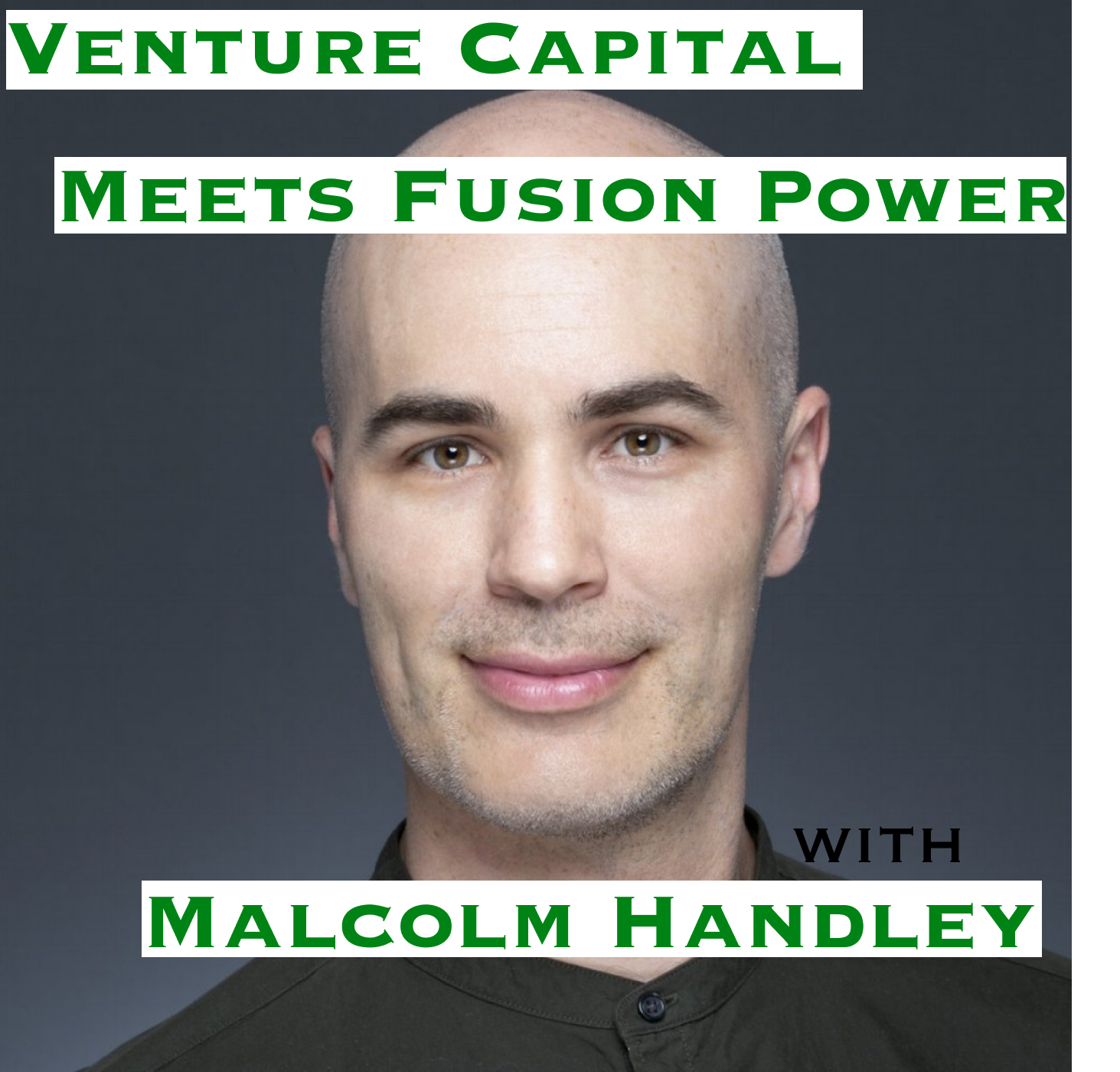
S1 Ep 2Venture Capital Meets Fusion Power with Malcolm Handley [Idea Machines #2]
My Guest this week is Malcolm Handley, General Partner and Founder of Strong Atomics. The topic of this conversation is Fusion power - how it's funded now, why we don't have it yet, and how he's working on making it a reality. We touch on funding long-term bets in general, incentives inside of venture capital, and more. Show Notes Strong Atomics Malcolm on Twitter (@malcolmredheron) Fusion Never Plot Fusion Z-Pinch Experiment. ARPA-e Alpha Program ITER - International Thermonuclear Experimental Reactor. NIF - National Ignition Facility ARPA-e Office of Fusion Energy Science Sustainable Energy without the Hot Air Transcript [00:00:00] This podcast I talk to Malcolm Hanley about Fusion funding long-term bets incentives inside of venture capital and more Malcolm is the managing partner of strong atomics. Strong atomics is a venture capital firm that exists solely in a portfolio of fusion projects that have been selected based on their potential to create net positive energy and lead to plausible reactors before starting strong atomics. Malcolm was the first employee at the software company aside. I love talking to Malcolm because he's somewhat of a fanatic about making Fusion Energy reality. But at the same time he remains an intense pragmatist in some ways. He's even more pragmatic than I am. So here in the podcast. He thinks deeply about everything he does. So we go very deep on some topics. I hope you enjoy the conversation as much as I did. Intro Ben: Malcolm would you would you introduce yourself? Malcolm: Sure. So I'm Malcolm heavily. I found in strong [00:01:00] atomics after 17 years is software engineer because I. I was looking for the most important thing that I could work on and concluded that that was kind of change that was before democracy fell off the rails. And so it was the obvious most important thing. So my thesis is that climate change is a real problem and the. Typical ways that we are addressing it or insufficient, for example, even if you ignore the climate deniers most people seem to be of the opinion that we're on track that Renewables and storage for renewable energy are going to save the day and my fear as I looked into this more deeply is that this is not sufficient that we are in fact not on track and that we need to be looking at more possible ways of responding to [00:02:00] climate change. So I found an area nuclear fusion that is that it has the potential to help us solve climate change and that in my opinion is underinvested. So I started strong atomics to invest in those companies and to support them in other ways. And that's what I'm doing these days What did founding strong atomics entail? Ben: and he did a little bit more into what founding strong atomics and Tails. You can just snap your fingers and bring it into being Malcolm: I almost did because it was extremely lucky but in general Silicon Valley has a pretty well worn model for how people start startups and I think even the people getting out of college actually no a surprising amount about how to start a company and when you look at Fusion companies getting started you realize just how much knowledge we take for granted in Silicon Valley. On the other hand as far as I can tell the way [00:03:00] that every VC fund get started in the way that everyone becomes a VC is unique. It was really one story for how you start a company and there are n stories for how funds get started. So in my case, I wasn't sure that I wanted to start a fund more precisely. It hadn't even occurred to me that I would start a fund. I was a software engineer and looking for what I could do about climate change. I'm just assuming that I was looking for a technical way to be involved with that. I was worried because my only technical skill is software engineering but I figured hey, but software you can do many things. There must be a way that a software engineer can help. So I made my way to The arpa-e Summit in DC at the beginning of 2016 and went around and talked to a whole lot of people if they're different boots about what they were doing and. My questions for myself was does what you're doing matter. My question for them was how might a software engineer help [00:04:00] and to a first approximation even at a wonderful conference like the arpa-e summit. I think you'd have to say mostly these things are not moving the needle mostly in my terminology. They don't matter and it really wasn't clear how a software engineer could help and then because I was curious because I'd read many things about. Companies claiming that they were working on fusion and they were closed and made an effort to hit every Fusion Booth. I could find and a one of those booths. I said, I'm a software engineer. What can I do and they said well the next time this guy comes to San Francisco, you should organize an audience and he'll give a talk and won't that be fun? So that guy is now one of my science advisors, but that was. The first part of my relationship there. So he

S1 Ep 1NASA vs DARPA with Mark Micire [Idea Machines #1]
My guest this week is Mark Micire, group lead for the Intelligent Robotics Group at NASA's Ames Research Center. Previously Mark was a program manager at DARPA, an entrepreneur, and a volunteer firefighter. The topic of this conversation is how DARPA works and why it's effective at generating game-changing technologies, the Intelligent Robotics Group at NASA, and developing Robotics and technology in high-stakes scenarios. Links Intelligent Robotics Group DARPA Camp Fire DARPA Defense Sciences Office First DARPA Grand Challenge Footage - looks like a blooper reel FEMA Robotics Transcript Ben: [00:00:00] [00:00:00] Mark, welcome to the show. I actually want to start let's start by talking about the campfire. [00:00:04]Camp Fire [00:00:04] So we have a unprecedented campfire going on right now. It's basically being fought primarily with people. I know you have a lot of experience dealing with natural disasters and Robotics for emergency situations. So I guess the big question is why don't we have more robots fighting the campfire right now? [00:00:26] Mark: [00:00:26] Well, so the believe it or not. There are a lot of efforts happening right now to bring robotics to bear on those kinds of problems. Menlo Park fire especially has one of the nation's leading. Groups, it's a small called kind of like a squad of folks that are actually on Menlo Park fire trained in their absolute career firefighters who are now learning how to leverage in their case. [00:00:57] They're [00:01:00] using a lot of uavs to to do Arrow aerial reconnaissance. It's been used on multiple disasters the we had the damn breakage up in almost the same area as campfire. And they were using the the uavs to do reconnaissance for for those kind of things. So so the the ability for fire rescue to begin adopting these two new technologies is always slow the inroads that I have seen in the last say five years is that they like that it has cameras. [00:01:32] They like that it can get overhead and can give them a view they wouldn't have been able to see otherwise the fact that now you can get these uavs. That have thermal imaging cameras is frighteningly useful, especially for structure fires. So that's so that's the baby steps that we've taken where we haven't gone yet that I'm hopeful we'll eventually see is the idea that you actually have some of [00:02:00] these robots deploying suppressant. [00:02:01] So the idea that they are helping to, you know, provide water and to help put out the fire that that's a long leap from where we are right now, but I would absolutely see that being within the realm of the possible. Sybil about gosh now friend 2008. So about 10 years ago NASA was leveraging a predator be that it had with some with some. [00:02:27] Imagery technology that was up underneath it. Um to help with the fire that was down in Big Sur and I helped with with that a little bit while I was back then I was just an intern here at Nasa and that's I think a really really good example of us using of the fire service leveraging larger government facilities and capabilities to use Robotics and usually these and other things in a way that the fire service itself frankly doesn't have the budget or R&D [00:03:00] resources to really do on their own. [00:03:00]Ben: [00:03:00] [00:03:00]So you think it's primarily a resources thing [00:00:00] Mark: [00:00:00] t it's a couple factors there's resources. So, you know outside of I'll say really outside of DHS. So the problem that homeland security has a science and technology division that does some technology development outside of that. There's not a whole lot of organizations outside of commercial entities that are doing R&D a for fire rescue the it just doesn't exist. [00:00:28] So that's so that's that's your first problem. The second problem is culturally the fire service is just very slow to adopt new technology. And that's not it. It's one part. You know, well, my daddy didn't need it in my daddy's daddy didn't need it. So why the heck do I need it right at that? [00:00:49] That's it's easy to blame it on that. What I guess I've learned over [00:04:00] time and after working within the fire service is that everything is life-critical? There's very few things that you're doing when you're in the field providing that service in this case Wildfire response where lives don't. Kind of hang in the balance. [00:01:09] And so the technologies that you bring to bear have to be proven because what you don't want to do is bring half-baked ideas or half-baked Technologies and frankly have your normal operations have have that technology in a fail in a way that your normal operations would have provided the right kind of service to protect those lives God. [00:01:33] So the evaluation and also kind of the acceptance criteria. For technology is much much higher in especially the fire service. Then the many other domains that I've worked in. I can only think of a few other ones and you know, like aircraft safety and