
Humans of Martech
235 episodes — Page 5 of 5

34: Email marketing audits part 1: For the love of understanding your audience
Educational series, product onboarding, upsell sequences… regardless of where you look in your funnel, there’s marketing emails to be audited. Like any investigation, an email audit combines thorough observations, deductive reasoning and extra points for style and bold decisions. Our hope with this 3 part series is that you can add another feather in your detective hat. Whether you’re consulting and want to offer email audits as a service or you’re in-house and you want to level up your company’s email game. We’re going to cover research and questions you should ask yourself before the audit, what to look for in your actual audit, tips, tactics and finally what improvements to suggest and experiment with.Today’s main takeaway is:Users have ideal paths to discovering your product or service, understand these moments deeply and use email to guide users along this path. Alright JT, email onboarding is close to my heart, I’ve built many of these in-house but I’ve also had the pleasure of consulting and auditing the onboarding series for a few SaaS and tech companies.It’s fascinating to get to see all the different ways you can welcome users to your product via email.Before we talk about what order to tackle things, let’s talk about great email onboarding.What’s great onboarding?Great email onboarding consists of guiding/helping users through a series of “aha” moments as they interact with your brand and product. Users receive units of value for each step as they gain confidence in the product’s ability to complete their jobs to be done. In a product-led company, this should be corroborated by the product/ux team. What wow moments exist in the ideal path, and use email to guide them along this path.Data is part 1, story is part 2 and where marketing shines. What are some examples of aha moments?Aha moments exampleI’ve been thinking through what an “aha” series of steps might look like for a free Convertkit user:A close friend recommends Convertkit as the ideal place to start for my newsletterI have a quick read through backlinko’s guide to convertkit and get a real good sense of what the product can doI’m able to quickly signup and import my subscribers from MailchimpI’m able to build my first signup form and connect it to my WP siteI watch a 20 minute video tutorial on intro to advanced automations in Pro plansI successfully connect my signup form to my WP siteWhat email onboarding should and should not beUltimately, great email onboarding convinces users to stick around and boosts overall engagement and retention.Email onboarding should be used to:Tell the company’s storyAnswer questions/objectionsDemonstrate how the product solves user’s pain Nudge users to specific common conversion actionsShow the art of the possibleTie what the user has done in their accountEmail onboarding should not be used to:Get everyone to buy immediately Send the same call to actionSeem cold and impersonalAn extension of your brand and productCoordinate with product experience to be integrated with itDoesn’t trip over the feet of product-based emails or sales emailsBuild trust/rapportBe referenceable down the line when user needs info, point of contact, etcUnderstanding your customers and usersBefore diving into any email audit, it’s important to get into your users’ headspace. Obviously this differs whether you're leading this audit in-house or as a consultant. Often when you are contracting, you won’t have a ton of customer research data available to you. In spite of customer research/interviews and jobs to be done insights, here’s a few places to spend a bit of time reading:Review sites on G2, capterraTutorials on getting started with the product from the communitySearching on twitter @company threadsThese spots really give me a sense of the language used and what problems are being solved as well the steps users need to take to be able to “hire” the company for a specific job. Gimme some JBTD examples with something like Covnertkit?Jobs to be done exampleUsers signup for Convertkit probably because they want to grow their personal brands, sites and businesses. Not because they want an email marketing tool. Some of the common themes and jobs that were highlighted throughout reviews and tutorials were:How to build an email listSend automated email remindersSell services/contact or products/ecommerceBuild a personal brand, start an audience, build a web presenceThe predominant themes and categories of use cases were:Artists, designers, filmmakers, photographersAthletes, coaches, influencersMarketers, bloggers, podcasters, makersYoutubers, streamers, musiciansDiving deep into a few tutorials highlighted a few prerequisites for hitting what are likely common conversion actions or moments of delight in the early web building journey:Having a subscriber baseHaving a form connected to your site to accept new subsShare a link to your new landing page on socialSend a broadcast email to subsUnderstanding the customer pain point precisely th

33: What is async work and is it truly attainable?
Back to office, staying fully remote, flexible hybrid setup. Global pandemics gave millions of knowledge workers the taste of remote work. And a lot of them are never going back.A global distributed workforce means access to untapped talent but it also means time zone and synchronous meeting challenges. Getting everyone from your local Toronto office to show up to the same meeting at 10am EST is pretty easy. Running the same meeting with a team spread across 5 time zones makes this much more challenging. Especially if you want to promote autonomous and flexible work schedules.The solution isn’t less meetings or hybrid meetings. The solution is asynchronous communication.In today’s episode we’re going to cover what async means exactly, being able to say “I’ll get that done on my own time”. We’ll dispel some of the misconceptions and dive into the stages of transformation towards autonomy. Hopefully you’ll be better positioned to encourage async in your day to day, whether you're in-house or freelance adapting now is key for leading any teams in the future.IntroHundreds of companies declared themselves remote first and digital first last year. A lot of them are massive corporations too. This transition will be excruciatingly slow and painful for big orgs. These orgs are studying companies who have been doing this for decades. Remote work isn’t new for everyone. Convertkit, Close, Basecamp (60+ actually much lower with recent policy changes), Helpscout, Clearbit, Buffer, Doist (100+) and Zapier is 500 people, remote-first all smaller, very little funding, innovators in the remote space.There’s also the bigger teams too.Automattic, the people behind WordPress are 1,000+ global distributed team and have been from the early days. InVision is fully remote, 1000+, GitHub is 3,000+.Something all of these distributed work pioneers talk about is over-communication in the written form, but specifically, asynchronous communication. In the world of most marketers, and knowledge workers for that matter, very little of your day to day tasks are emergencies, or require immediate action.The nature of async can be summed with a short sentence: I’ll get to that as soon as I get the chance, or on my own time. Async is sending a message and having a common understanding that an immediate response is not expected. Email is usually async. You send it and you expect an answer in a day or 2 or more. Recipient opens that email on their time and responds when they get the chance. Synchronous communication is sending a message and the recipient needs to process and respond in real time immediately. In a meeting with your team on Zoom, you say something, your team members receive and respond right away.When you take the time to think about it, most of what you do in your job could be done with a 1-way written update sent to a single person or a group of people, who can respond as soon as they get the chance. Obviously there’s times when there’s emergencies, or sometimes the nature of your work requires real time collaboration like live support teams or front line sales reps, and there’s different ways of tackling those situations than async.ExamplesInstead of saying: hey do you have 15mins to chat today About this project?Async is saying: here’s two questions I have regarding the last update you made on this project. Instead of saying: here’s an invite to a meeting where I’m going to walk you through a project update and I’m mostly going to be doing the talking, everyone will be seeing this for the first time and I’ll be asking for your attention for 1 hour and immediate feedback.Async is saying: here’s a short summary of a project update followed by a detailed overview of a problem I’m having and specific questions I’d like guidance on. Here’s what I’ve done so far, here’s when I need an answer by.BenefitsDeep work / flow stateA huge % of your workforce is introverted and perform better when they’ve had the chance to think before they are asked to give a response and give more space for flow/deep work.Tons of research shows that increasing response times allows people time to reflect and remove emotion from the equation thus making better decisions. Human centered way of workingAs one CEO, Sudeesh Nair, of ThoughtSpot, very active on Twitter about async, one of my fav quotes from him is: “…the ability to let people in whenever they want to work, however long they want to work in a day…that’s what asynchronous is about. If you think that way, you have to make more intentional changes in the work process, collaboration process, to enable every one of those people to come into the workforce.”Productive night owlsMany people are night owls. We’re all wired differently to be our most creative and intellectual during specific parts of the day, commonly, early morning and night.This is derived from chronotypes, our preferred sleeping patterns. But imagine forcing a pure night owl to work 9am to 5pm. And then giving this same person the abilit
32: Is the future of Martech no-code?
We're going to argue two main points: First, no-code is absolutely the future for marketing and that it opens up exciting possibilities (aka, democratizes digital marketing)Second, what really qualifies as a no-code tool is much more narrow and potentially useful than you might find elsewhere on the internetIs marketing hijacking another development trend and bending it to our own purposes? Is this an attempt to fit in with the cool kids by being part of a trend?Is the future of Martech no-code? Has it always been no-code?What does no-code really mean?Have you ever been half way through building something, a new campaign, a landing page you’re really excited about... but you hit a technical hiccup. “Oooh, might need a script for that” or “Damn, if only I could code”. As marketers, we’ve all felt this roadblock. We had a full episode dedicated to this-- episode #24: why marketers should learn to code. No-code is not using that excuse. Can’t code? Don’t know how to build scripts? No problem, there’s a no-code solution for that. Is Canva a no-code tool? Did you use code to create images in Photoshop or Illustrator? This is what tripped me up in the beginning — but Canva is one of the hottest tools today and it’s absolutely considered in the same breath as other no-code tools. While your typical definition of no-code would look at the ability to create software applications with a user interface, I’d argue that marketing’s use of no-code is a bit looser. I’d define a no-code solution as one that lowers the barrier entry to the point that you only need to use a user interface to complete your objective. No way am I going into photoshop - someone tried to teach me photoshop before and it was terrible. I’m not layering stuff — but Canva, I can get something good enough in minutes. These are pretty murky waters for us to be wading into — but such is this fascinating trend. So there's a cool difference between tools to build products and tools to sell products and run companies.no-code building / app development no-code martech / selling productsSometimes the tool to sell a product like a podcast (promoting or ads), might also be the product in some case, like us, not monetizing, just creating content. Example, Convertkit is no-code email marketing tool, unless you know css/html and you can totally customize things behind the scenes. Is Convertkit a no-code tool to sell a product/martech or is it building a product? Convertkit is is more than just an email marketing tool, it’s what newsletter creators use to build an audience and connect with fans, it’s an email designer, a landing page builder, a form builder and they are just diving into ecommerce. Isn’t every marketing tool a no-code tool? I’ve been using Marketo or HubSpot my entire career - turns out I’ve been using no-code tools my entire. But before I start congratulating myself on being on the cutting edge of this trend, I think it’s important we really sharpen our focus here. No code isn’t about using user-interfaces to accomplish a job — I think in the marketing context it’s about breaking the dependency on technical experts as well as subject matter experts. The idea of Canva as a graphic design tool may drive some designers crazy — but it’s borne out of a marketer’s need to get good enough now and not perfection later. I love this idea of breaking the dependency on technical and subject matter experts. This has been fascinating to watch in the indie maker community. Some call this the creator economy. Think there’s a lot of newsletters and podcasts already? Think again. Worldwide pandemics have accelerated remote work but they also motivated millions of people to become creators. More and more writers, teachers, film makers, photographers, artists all go DTC-- direct to consumer. Categories:Workflow automation — tools like Zapier allow you to configure automation without knowing any python or how to connect to APIsWeb development — tools like Wordpress or Webflow allow folks to create websites without getting mired in CSS or JavaScriptAnalytics — create reports and dashboards without being an analyst or having to fight with APIs — cough cough KlipfolioThe no-code category needs to be narrower to be relevant. I see lists all the time saying that tools like Slack or HubSpot are no-code. They are awesome tools — but no marketer is coding databases and setting up scripts to send our instant messages or emails — no developer either for that matter. Instead, to be relevant, no code martech tools need to replace or substitute the need for technical or subject matter expertise. Is no-code anti-code?The no-code movement is borrowed from development and is most certainly not anti-code. In fact, the no-code movement could be said to be pro-code! In development land, the idea of no code is to remove redundant and repetitive tasks from the coding process. For example, if you’re application requires online payment, you don’t want to get bogged down coding an payment s

31: Marketing Artifacts and the website of doom
Who built this? Why did they build this? What was the purpose of this?Sometimes, marketing can look a lot like archaeology. Unearthing ancient relics, reverse engineering them, and trying to understand how they were used by your ancestors. Like an ape discovering a tool for the first time, you look at them with a mix of bewilderment and awe. I didn’t know we were so advanced back in --- 2011.You’ve discovered a marketing artifact, and the internet is full of them. Form submits that go to legacy email automation systems, blog posts written before the last ice age, and strategies for a trend that went extinct long ago.As marketers, we need to be experts at carefully extracting these artifacts, evaluating their worth, and deciding whether to revitalize them or put them in a museum.Honestly, you’ll encounter this more in your career than you’d probably like, so we’re going to chat about how to work with marketing artifactsIn the world of tech startups, a lot of marketers only last a 12-18 months before they move on to their next position. They make a bunch of content, then move on, someone comes in to fill their role. This type of inheritance is super common in all areas of marketing. Why is this a problem?No one joining a marketing company wants to inherit someone else’s mess. It’s like renting an AirBnB and finding the dishwasher is still full of dirty dishes. At least, that’s the perception.The problem is that marketers love to create net new content. We’ve been programmed to think content is king -- and have responded by creating mountains and mountains of content. Most of us in marketing come from some form of content creation background -- it’s literally our instinct.Nothing sucks the wind out of a new job like cleaning up someone else’s mess. It’s easy for the content side to sweep things under the rug. But for tech systems, it’s way harder to clean up.You get this perception that tool X sucks or tool Y sucks. I know you’re deeper in the ops area -- how often do you hear a new CMO or VP start looking to migrate off of marketo or hubspot or whatever?Yea very often. Senior leaders come in with the tools they are familiar with and demand a migration in the next year hahaI’ve had the experience of building on a fresh underutilized instance of PardotConfiguring and managing the Marketo beast you gave me the keys for at Klipfolio. Funny enough, now that you’re back at Klipfolio, you were stuck uncovering some of the webs I tangled.I’ve also had the migration side of this as well, while I was migrating out of Hubspot, you were migrating to Hubspot.Martech artifacts are everywhere! The maretch landscape of doom is growing everyday, and each of these vendors can easily be a failed trial. If it’s a free product, then you could be using it forever. One thing that really gets me is how underutilized existing software is before we start asking for budget for the next thing. I was the type of kid who had to finish each portion on my plate before I moved on to the next thing -- I’d eat my broccoli, then my potatoes, then my chicken.In marketing automation especially, you get players like Marketo / HubSpot that have so many features available out of the box. These features sometimes, however, aren’t as powerful as you can get from other tools. I noticed this with web personalization and forms.Hubspot has a blog CMS, they have email automation, they have forms, they have a CRM… they have something for everyone… That’s a really great way to make a mediocre tool. Everything is average to please the average user. We use 4 tools instead of Hubspot and they all give us features and powers that hubspot alone cannot.We moved our blog to Ghost which has a beautiful UX and writing experience for my content team and they were pumped to get out of the clunky HS CMSWe moved email automation to Customer.io, honestly my favorite email workflow building tool. Super intuitive and fast. I’m a huge fan of convertflow for forms, DriftRock a UK startup is also doing cool things with forms. No one wants to use a crappy tool.And obviously we use Close for our CRM. These 4 tools cost us less than hubspot alone cost us.Totally. Also, we all like shiny objects:I think the key is to identify areas where you want to bring in a new tool. Check your toolset out, and see if they have a version of that feature.Run a test or experiment, and validate your approach.Speaking of forms, what about the web form that submits to nowhere?When I migrated out of hubspot forms, Close had like 200+ ebook and gated content forms that I needed to re-create and map to a download link and a resource.Lots of companies don’t manage this well. Yeah, customer’s hate this -- it’s right up there with online chat that doesn’t connect with a live agent.This happens so often -- it’s not even funnyIt’s actually really hard to find things like form embeds on a website.I use a tool called screaming frog which has a custom extraction tool which allows you to specify different selec
30: Be productive, stay sane and healthy
Jon and I are both pretty busy dudes. Jon a father, he works for Klipfolio, he’s a podcaster, he’s a consultant, he’s learning to code and he manages a community of marketers. Despite all that, JT still finds time to unearth the best UFO threads on Reddit and the dankest GME meme stocks. Phil is a husband and dog father (lolz)I work for Close, I’m a podcaster, I teach a post grad marketing certificate, I mentor local marketers, and I’m an avid member of several marketing communitiesDespite all that, I still find time to run a fantasy hockey league and binge all the best TV shows on Netflix.So how do we do it while staying happy and healthy (for the most part).Alright, I want to start by breaking down our weekly schedules by putting everything into 6 priority buckets:Family and friendsHealthLearningWorkChoresEscapism and hobbiesBeing productive and having an effective routine gives you room to fit things from all 6 buckets into your week.Sunday nights are for time blocking I like to plan my week on Sunday nights, that’s where I finish blocking time in my calendar. Might be controversial because of weekend but sometimes I have too many work things going on in my head before bed on Sunday, so planning my week before going to sleep is a great way to put my mind at ease.Go through the list of priorities, break them up into 1-2 tasks and block time in my calendar for it. As much as I can, I like to theme my weeks with 1 big thing I want to do. What’s my #1 focus.Key here is not over blocking. Leave some flex in there to move things around as things pop up during the week.Daily walks with my dogI split between 3 modes, 1 is podcast, 2 is music, 3 is just silence.Monday nights1 hour of shitty TV if I’ve worked on the cast.Tuesday and Thursday nightsTuesdays and Thursdays are usually blocked for reading. My wife is part of a book club and is an avid reader, so we try our ebay to turn the TV off on Tuesdays and open a book.I alternate between a book on Tuesday and on Thursday I learn something, right now learning Segment.js but have plans for SQL and deeper API.Wednesday nightsI usually plan a friends or family zoom call on Wed nights, I usually have no meeting Wednesdays so I’m happy to get some social time in the second half of the day.Something we want to try is everyone picking the same recipe, we open Zoom and watch each other chaotically build a recipe and eat together.Sometimes I’ll host a Zoom with friends and we watch a bunch of hockey games over screenshare.Friday nightsMost Friday nights are reserved for my wife, we’ll usually order in and watch TV or a documentary. ✌️--Intro music by Wowa via Unminus

29: Diet SEO for lean gains 💪
What is the most important skill for an SEO? Technical, content, analytics, project management?Use google search to start - really look at results, what’s being displayed, what Google is automatically serving up => your job here is to intuit what Google thinks your users want.SEO is extremely competitive. I remember back when we worked together our competitors seemed to be running your playbook at the same time, and it made things tough. What’s your advice for competitive SEO? Look at the structure of the top few results on Google — What on-page elements are they using? What can you glean from the information architecture? I know you’ve tried or used most of the tools out there. For our listeners on a shoestring budget -- what do you recommend for analytics and reporting? Google Search Console and Google Analytics => This is a great feature and I’m shocked at how few people actually take the time to set this up. So many quick tips -Set a filter to see things on second page. Sort to see top converting pages (tsk tsk set up goal tracking). Sort to see CTRs. Drill down into pages to see keywords. What about technical SEO? Everyone talks about it, but it’s I don’t think many people know how to improve this area of SEO. Google Page insights. Enter your site and see how it performs on mobile device. It gives a great print out of action items - such as sizing images, painting content before things load up. Lighthouse: Chrome developer tools and gives you a super technical review of your site.How do SEOs on a budget prepare for the future of search? Voice Search and Voice Utility. Mobile is king of SEO, and Voice is the next generation of search (still up for debate). If you ask Alexa or Siri or Google for an answer, voice search is at play. Structure your content for voice and you’ll be rewarded.✌️--Intro music by Wowa via Unminus

28: Beware false marketing idols
In this episode, we’re going to talk about the best ways to integrate influencers into your marketing education. First, I want to cover the pressure on new marketers to create a brand or become an influencer. This is bullshit. It’s completely unproductive and puts undue pressure on you to post, publish, etc. Take that time and practice your craft. But what about networking? YES! Great way to build your brand :)How have you used influencers in your growth as a marketer?I’ve followed quite a few, but mostly it’s been through reading articles and doing research. Read a book! They need to be peer reviewed. I follow influencers for their smart content. I know you talk about graduating influencers -- what do you mean by that? I want to be super clear: I have nothing against any influencer. They’re brave enough and bold enough to put themselves in the public, and share their wisdom. I truly respect everyone and their talents. If it sounds like I’m throwing shade, then please know I’m being genuine! Take Neal Patel - Digital marketer, SEO - He’s done a ton of work for the community, and is particularly valuable for folks at the start of their career. As an SEO, 12 years ago I started reading some of his blogs, and ended up, moving over to the Moz blog where I started to learn more from a class of advanced SEOs like Rand Fishkin, Cyrus Shepherd, Dr. Pete, etc. I don’t read about writing good SEO content anymore — I read things like The Definitive Guide to JavaScript SEO (2021 Edition). Obviously a massive Rand fan. I still remember reading his letter. It’s one of those saas marketing moments right? Where were you when you found out Rand was leaving Moz?I feel like the guy embodies integrity and morality in marketing. In the early days of Klipfolio, you guys built out dashboard templates and you had one with Rand. How was that?At Klipfolio we worked on an SEO dashboard Rand Fishkin described in one of his whiteboard videos. I’m a huge Rand Fishkin fan -- he’s a genuine, smart dude, and watching & reading his content makes me happy. Anyway, we built this dashboard for him, and then reached out. He was still CEO of Mox at the time, so he was super, super busy. We ended getting him to review the dashboard and promoting it out on social.Why should you follow influencers? I’d say to round out your perspective and education. Don’t just blindly follow anyone and expect results. If you find someone entertaining or witty or whatever, follow them. I’m not your mom! It’s funny, I don’t actually see myself following influencers so much as just following smart people. I also really check whether the people I follow already confirm existing biases - it’s super helpful to find people who have different opinions or perspectives. It’s really easy to swim the same direction as everyone else -- look to people who do the opposite and then follow them. I like what you said there “smart people” not influencers. What’s the difference between a fluffy influencer and a legit smart influencer? The difference lies in the content. Dig deep. The fluffy influencer is just repeating the same things that are already shared at nauseum, that’s if they’re not talking about themselves. Real experts focus on their field, not themselves. They are opinionated, they drive real discussion, they share valuable practical things. They back up what they say, they work in the craft, they are super deep. They aren’t afraid of saying I don’t know. But it’s tricky. It’s super easy for someone to have a legit social presence and appearance, but once you hire them or work with them you quickly uncover whether they can back up all those tweets. How do you spot a smart influencer vs a false idol? Instead of saying, wow, Rand is so cool, I want to be like Rand and do what he does. You should be saying, wow what Rand said is fascinating, he's really made me rethink my take on mobile vs desktop, mobile didn’t kill desktop, it just took up all our free time. There’s something super fascinating about a lot of influencer relationships. I know you’re trying to be nice and give everyone the benefit of the doubt. We just saw a prominent influencer/podcaster get called out for some pretty shady practices. Yes, and you see this all the time. Pay me a bit of money and I’ll give you 15 minutes of advice or whatever. It could totally be worth it. I question the value. I think that you’re better off forming your own opinion and working through challenges with information available. I see this a lot on platforms like Product Hunt, where getting an influencer to hunt your product is like the number one factor in being successful. I disagree - I think having a great product customers love is more important. But it doesn’t change the transactional nature of influencer life. We have a podcast. Are we influencers? How do you sleep at night JT?Yes, the irony is not lost on me! I think that we have to recognize that we do influence folks -- we put content on the internet, and with it our
27: Erin Blaskie: Startup marketing, in-house vs freelance
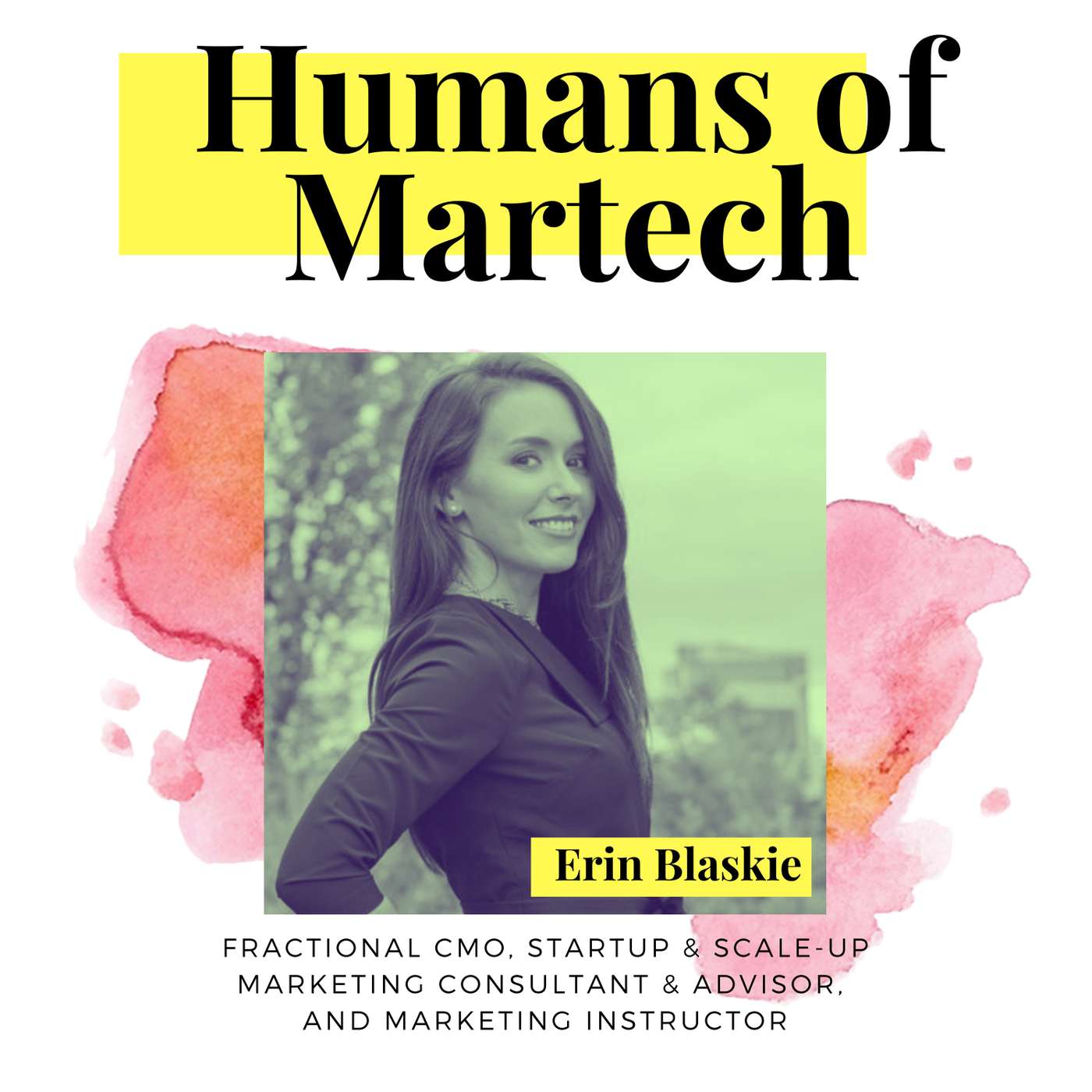
Today we are joined by the powerful Erin Blaskie. Erin is currently a fractional CMO advising startups and scaleups, currently working with Jamieson Law, Ridgebase, Heirlume and Staffy. Before going back to freelance, Erin spent 4 years leading marketing teams at Fellow, a SaaS platform for meeting productivity as well as L-SPARK, a SaaS accelerator. But Erin’s start in marketing goes further than that. in 2004 she launched a virtual assistant business (one of the firsts) and later pivoted that to a marketing agency where she worked with brands like Disney, Microsoft, Ford, she’s worked with Hollywood actors, authors and speakers helping them craft their brands. She runs a no fluff-tactical newsletter with 10k+ subscribers, she has a huge Twitter audience topping 36k.She’s a TEDx speaker, her writting’s been featured in Forbes, entrepreneur, adweek and the wall street journal.She’s also a post grad intructor, an entrepreneur mentor and a mental health advocate. Holly shit, Erin, how do you find time to appear on podcasts with all the stuff you have going on haha?Here are the questions our listeners submitted!FreelancingWhat do you wish someone would have prepared you for before starting your digital marketing career?I would especially love to learn her tips on setting expectations and boundaries with clients in her freelance/agency work. Do you feel like you’re more sales than marketer? Do you spend more hours working freelance? more than startup?All things being equal, do you think that as a freelancer, you can learn faster? more clients, more projects, more breadth of problems and tools.Startup in-houseCurious what Erin would say about which marketing roles/functions are better to hire in-house versus hiring freelance.What are some of the biggest tactical marketing mistakes you see startups make? I say tactical because I think the de facto answer is based on not having a strategy in place. What are the best marketing strategies for early stage companies when budgets are sparse?Show notesCheck out Erin's site.--Intro music by Wowa via Unminus

26: Melissa Ledesma: Women of Martech
Today's episode features a call-to-action for our listeners: take a few moments, check out Women of Martech, and share it with someone you think could benefit. We're joined by Melissa Ledesma, Executive Director of Women of Martech. Here's an overview of her bio: Melissa Ledesma Director Of Content & Comms at DMS (Digital Media Solutions), a leading global ad-tech enabled performance advertising companyShe's also Executive Director of Women of MartechBefore the ad world, she spent several years in real estate, mortgage and entertainment playing different PR/event, email marketing roles.she works out of New Jersey and spends a good chunk of her time giving back, recently being named to the Board of Directors of her local Boys and Girls Clubs to enrich education and training of at risk children and teensWomen of Martech's mission is concrete and actionable: to raise the profile of the women and their achievements in the world of Martech. Melissa walks us through how the Women of Martech community is helping women at all stages of their career to reach that next level. From member spotlights and insider resources to connecting with a vast network of 800+ martech pros, this community is like a superpower for your career.--Intro music by Wowa via Unminus

25: Naomi Liu: How to ace your first marketing job
Naomi is Director, Global Marketing Operations at EFI, a 3,000+ person tech company in the printing industry. She’s based in Vancouver but she’s been working remotely long before it was cool. She has 12+ years of experience leading high-performing global B2B demand generation teams. Before EFI she ran Marketing Ops at Sophos a cybersecurity enterprise company. Naomi is also one of the founding members of “MO-Pros”, the biggest Slack community for marketing Ops pros and recently launched a platform/site. She’s been interviewed by prominent podcasts for her efforts spearheading a large scale enterprise migration to Marketo. David Lewis, the godfather of marketing ops podcasts says that Naomi is in his top 10 marketing ops people he’s ever worked with. Noami dives into the 3 things that stand out in most marketing operations profesionals: ask a lot of questions and think outside the boxability to explain complex technical concept to non tech peoplemulti task skills, sometimes the sky is fallingMost marketing job postings should be read as a guideline and not taken as a prescription. The most important thing to demonstrate is your ability to learn something. When Naomi is hiring on her team she’s looking for a balance between:- technical chops- cultural fitIn the interview process, it's key to get to chat with people from other business units to assess that cultural fit. Take home assignments are not super common for entry level roles, you can get a ton from how someone answers a question. Naomi values curiosity, looking for data opinions. How do you test that in an interview, what attributes shine?The attribute that allows you to suceed is you have to be curious and always ask why. You have to be willing to break things down and rebuild it better fast and stronger. Open ended questions get interesting conversations. Let candidates explain problem solving. Look for condidates that demonstrate personal bias recognition. What's it like being a Director level MOPs at an enterprise company?Aside from lots of meetings (lol), understand where business partners want to go, can our current tech stack support those goals. Tech adoption, get everyone to use Marketo to most potential.How can people who want to stay in the IC path develop a long term career growth?Naomi sets up her team with subject matter experts. Things change too fast, having experts on specific pieces, web, email, data, so they can stay on top of those areas and bring it back to the team and educate the rest, share knowledge.Here are key elements of Naomi's onboarding strategy: Marketo university 1-1s with key stakeholders Viydyard videos for short training Make sure person is plugged in and fits in Training the data model, week by weekWhat should marketers do in their first job: always asking questions how can we do this better or not why do we do this this wayIf you're interested in marketing tech and you aren't a member of The MOPros community, you can signup here.--Intro music by Wowa via Unminus

24: Why marketers should learn to code
Ever get stuck waiting on a dev to update a small piece of code to fix a form/email/webpage? How about the confidence that comes from speaking at eye-level with development? Marketers have so much to gain from learning even a baseline of code. In this episode, JT is going to make the case on why you should learn some code, and I’m going to introduce you to a new community focused on helping marketers learn to code. Dude, you are always talking to me about coding. Share with our listeners your own journey.What is unique about marketers wanting to learn how to code?How hard is it to learn coding?It’s going to take time to learn to code. How do you stay motivated over the long-haul? Detach learning to code form your career -- make it a side-hobby with no implications on your jobDevil’s advocate: why not just spin up a webflow website or some other no-code option? I know you’re itching to introduce it: tell our listeners about the community.--Intro music by Wowa via Unminus

23: Don Draper style storytelling in your presentations #topmartechprospects
In this series we profile a recent marketing grad or a current student and answer some of their most pressing questions about the world of martech and how to be happy in your future marketing career.Sonya Gankina, listener and recent University of Ottawa graduate joins the show as our fourth and final #topmartechprospect.Sonya's question for us: Do you think there is still a place for Don Draper-style verbal presentations in the 2021 remote marketing world? I'm mildly ashamed to adminit I've watched all 92 Mad Men episodes at least twice. This is my favorite scene out of all the episodes. The Kodak carousel is the perfect example of how to tell a compelling story. Your average marketer would've described the new Kodak product as a NEW revolutionary slide projector. You can take a TON of pictures and put them into slides and you can share them with a room of people.But instead, Don took a different approach."This device is not a spaceship, it’s a time machine. It takes us to a place we ache to go again. It lets us travel around and around and back home again, a place we know we are loved."The full clip is worth the watch to get the full emotional punches.--Show notes:Reach out to Sonya on LinkedIn for a coffee or to connect You can visit Sonya's website and check out her digital marketing services and creative portfolio--Intro music by Wowa via Unminus

22: 6 Things recent marketing grads should STOP doing #topmartechprospects
In this series we profile a recent marketing grad or a current student and answer some of their most pressing questions about the world of martech and how to be happy in your future marketing career. Milan Fatoric, listener and recent University of Ottawa graduate joins the show as our third featured #topmartechprospect.Milan's question for us: What are the top 3 things you would tell every marketing student or recent grad to STOP doing?Here's some of the takeaways:1. Stop chasing a salary, chase interesting problems to solve, the money will follow2. Stop trying to establish yourself as an expert right out of school, instead, get a job and a side hustle and build credibility. Let others call you an expert.3. Stop relying on job boards to get a job you really want, instead, reach out to and hangout with people that are in jobs you want. --Show notes:Reach out to Milan on LinkedIn for a coffee or to connect: https://www.linkedin.com/in/milanfatoric/--Intro music by Wowa via Unminus

21: How to balance personal branding and privacy #topmartechprospects
In this series we profile a recent marketing grad or a current student and answer some of their most pressing questions about the world of martech and how to be happy in your future marketing career. Augustine Karczmarczyk, listener and University of Ottawa student joins the show as our second featured #topmartechprospect.Augustine's question for us: When it comes to building a personal brand, how can one balance publicity and privacy? Can you be credible while concealed, or is being out in the open something you simply must embrace until you’ve established a presence?Check out the episode for JT's full rant on why you don't need to be an influencer. --This is next part is from Augustine: Hey, thanks for being one of six people in the world to look at podcast show notes! You’re probably a librarian or simply here by mistake – but EITHER way, I’m glad you’re reading this. I must have been too starstruck during our recording to mention that I welcome LinkedIn connections here: https://www.linkedin.com/in/augustinek/ If you want to talk timber frames, off-grid housing, or a freelance project, please reach out! If you haven’t heard yet, I’m a “top martech prospect” sooo, you might want to act fast! ;) I also can’t pass up the chance to put my personal website https://augustinek.com on here too for a sweet SEO backlink boost. Look out “Saint Augustine of Hippo” – I’ve got your ranking in my sights. All the best & talk soon!--Intro music by Wowa via Unminus

20: The starter pack for new digital marketers #topmartechprospects
In this series we profile a recent marketing grad or a current student and answer some of their most pressing questions about the world of martech and how to be happy in your future marketing career. Justin Silver, listener and University of Ottawa student joins the show as our first featured #topmartechprospect.Justin's question for us: What does your “starter pack” for digital marketers” look like?Check out the meme we used to answer this question.Posting on Reddit: “how do I get a job without experience?”. Don’t post this question on social. Want experience? Market yourself. Build a website. Build a social media audience.Last minute changes. Despite a documented process, there’s always a last minute campaing request to hit quota. You just have to embrace it. Email is fast, but use it wisely. Manager in your title. Everyone is a marketing manager these days. Marketing has it’s own milatiristic understanding of rank. Marketers love to invent titles for themselves. You need to realise that titles are secondary to the things you build. Friendly reminders. Are you really running a marketing operations project if you aren’t sending weekly “friendly reminders” to people who have missed deadlines?ABM. Email everyone in the company, with the same unpersonnalized email, non stop. Don’t. Do. This. Fire extinguisher. Carve out some firefighting time on your calendar if you’re in MOPs. Things break. Things suddenly become priorities. Looking at the martech landscape and thinking “I need one of each”. FOMO in martech is a real thing. I’m not using x or y and I’m missing out. Digital marketing isn’t about having all of the tech. It’s about using your tech to the most that you can. Pocket talk translator for integrating tools together. Your CRM calls them leads, your marketing automation tool calls them people, your analytics tool calls them users. Translation required. Gotta get on . Bernie Mitts expired in what? 2 days? You don’t have to be an early adopter for everything. Loading screens for days. Whether it’s a big Marketo insteance or a long time frame report in GA, marketers battle with slow reports every day. You shouldn’t need a gaming PC to run your automation software.--Show notes:Justin's LinkedIn Profile: www.linkedin.com/in/justin-silver-14b393108Justin's site: https://bit.ly/3cCSMPkConference mentioned: Legacy conference.--Intro music by Wowa via Unminus
19: Steffen Hedebrandt: Reaching B2B attribution nirvana
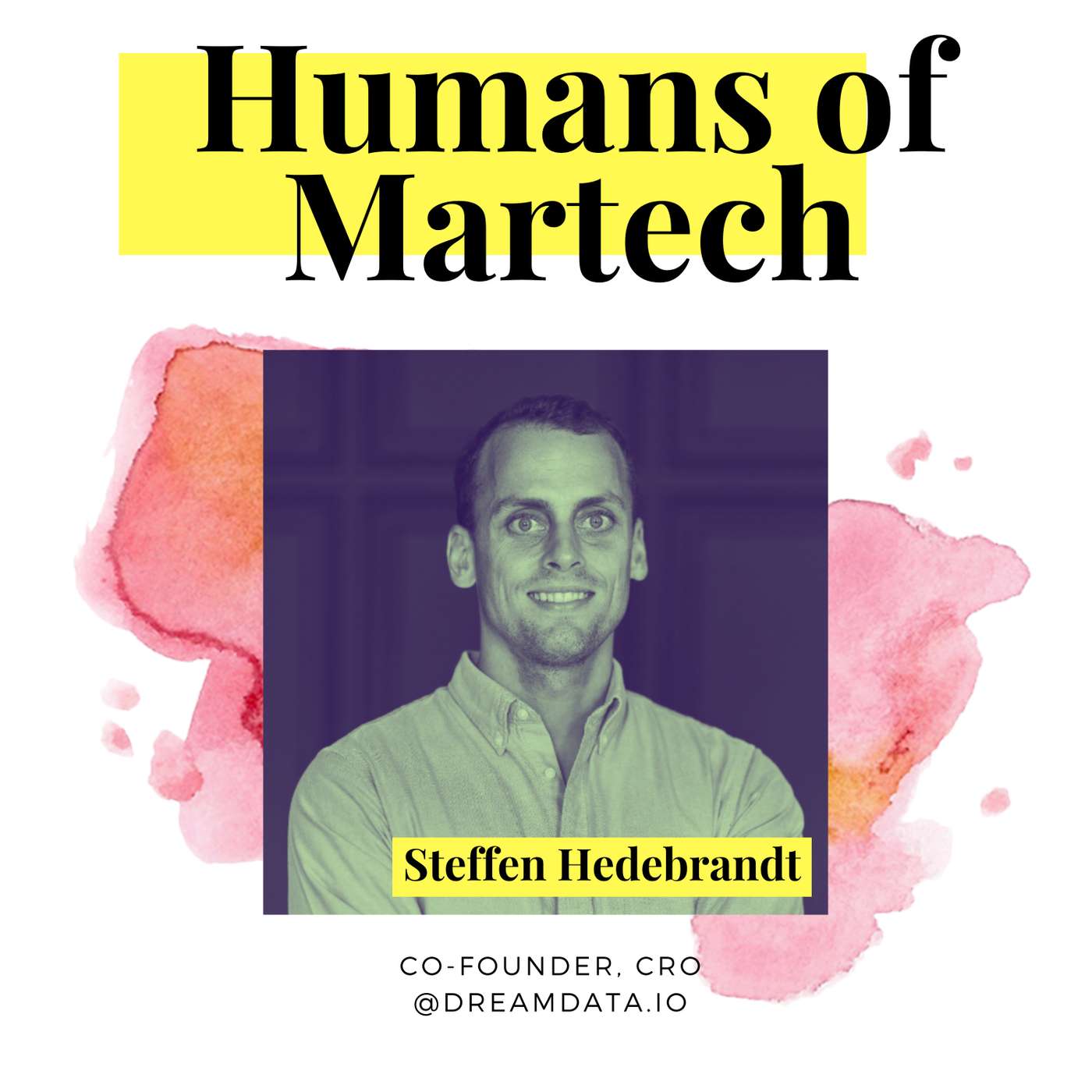
Steffen Hedebrandt is co-founder of Dreamdata.io. Transcripted borrowed from here.For a deep dive into attribution see this article.Phil Gamache:What's up, guys? Welcome to the Humans of MarTech podcast. His name is Jon Taylor, my name is Phil Gamache. Our mission is to future-proof the humans behind the tech so you can have a successful and happy career in marketing.Phil Gamache:Today on the show, we have a super special guest. We're joined by Steffen Hedebrandt. Steffen got his start in the world of marketing doing some SEO and some growth consultancy in the startup world. And he moved to Oslo in Norway to work in sales/BizDev for a company called Elance, which would eventually become Upwork after the oDesk acquisition. And he stayed there for three and a half years and moved back to Copenhagen and took a position as Head of Marketing at Airtame, a wireless HTMI product startup which John and I know very well. And at some point during your time at Airtame, you solved some pretty cool big attribution problems with some custom engines, and you started to get this itch about starting your own company.Phil Gamache:In the summer of 2019, you, Ole and Lars, both former SVPs of Trustpilot made the plunge and started DreamData. So today the main takeaway is going to be that, gone are the days where enterprise companies are the only people who can solve multitouch B2B attribution and tools like DreamData are solving this for startups and SMBs. So Steffen, thanks so much for being on the show, man.Steffen Hedebrandt:Thanks a lot, Phil. Really looking forward to it. We've talked a lot about this topic before. I'm sure we'll get pretty deep pretty fast.Phil Gamache:Like myself, I've evaluated DreamData quite a bit, so I'm super familiar with the platform itself. John, I don't know how much you know about it, but I wanted to kind of start off with your journey a little bit and go back to when you were working at Upwork basically, this big tech role and how different was that from your previous role in the startup world and what did you like most about both roles?Steffen Hedebrandt:From the get-go out of university, I joined the Vintage and Rare, which is basically, or I don't know if they exist anymore, but it was a platform for selling vintage instruments where kind of gathering shops and the shops would then put their instruments up there. And the first craft that I really learned after studying was really SEO because if you have 10,000 instruments, then you really want to have those instruments on top of Google instead of your competitors there. And, I just got super fascinated by actually how big an impact you can have when you understand that Google algorithm and how to friendly manipulate a little bit towards your own business.Steffen Hedebrandt:But, that was an almost bootstrapped kind of project which led me to reading The 4-Hour Workweek by Tim Ferris and dipping my toes into places like Elance and trying to hire people from India and try to connect them with the other freelancers you had in Europe and other freelancers you had in the US and then suddenly you have this web of people all over the world that you have to make work and that's quite a challenge.Steffen Hedebrandt:Fun story, my first job was, I put up a job for a person to add people on Myspace that's set with a guitar in their profile image. Super non valuable, but it was just to test down. So our vintage and rare profile had more followers. I learned a ton there and we didn't make any money, but we were greatly successful on Google and having been there for I don't know how long the was, three years or so. I actually got approached by Elance as they were setting up their European office and asked whether I wanted to join that and try to promote Elance in Europe. And, me being a big fan of the platform, I thought, okay, well, I haven't made any money in the last three years, so, let me go get a real job for a period.Steffen Hedebrandt:So, the music instrument platform was really fixing anything digital, this ads, SEO, et cetera, where Elance's and Upwork was much more the traditional business development like doing PR, doing events, handing over a list of keywords that you would like to have targeted. And so it's a much more you can, say hands-off than the nitty gritty of running your own a platform, but it was really interesting to try to be part of this classical California tech company and see that from the inside. It also got big so I think we were 70 when I started at Elance. And then, when it was Upwork, it was maybe 500. I think my true love lies around the smaller companies where it's bigger from thought action, and you see the impact of your work much faster.Phil Gamache:Something we talk with so much about on the show is the value of small companies. And well, just knowing what you like and the environment that works best for you. You touched on the SEO front. I think, as we talk more and more about attribution in this episode, SEO and a

18: Make the most of your welcome email in your onboarding campaign
Try to send your welcome emails on behalf of coworkers who live in the same shoes as your target users. If you’re in B2B, chances are you’re using your own product, at least a coworker is. Let them write the welcome email for new users. This is especially powerful when you serve many different verticals. Example: if you sell to marketers and sales. Ask all new users to identify with sales/marketing in the signup process. Send the welcome email to marketers from a marketer at your company who showcases how they use the product for marketing use cases. Send the welcome email to sales reps from someone on your sales team who showcases how they use the product for sales use cases. JT: Okay Phil, you showed me a screenshot of this question you answered in a Slack community. PG: Yeah shoutout to Elite Marketers and Founders Slack community that was started by Joel Musambi and Tomas Kolafa, two Ottawa-Toronto marketers. JT: So the question was about building email onboarding flows for b2b products and any great resources or things that have worked well. I know that during our time together at Klipfolio we experimented a lot with emails but in your past you’ve done a bit of freelancing and moonlighting in email onboarding land.What’s this magic welcome email that works extremely well?PG: So I want to preface this by saying that this really only works if your product sells to different segments of users. And this is usually the case right?If you only sell to marketers for example, there might still be segments in the decision makers, so you could talk to the marketing manager who’ll be using the product, you might talk to the marketing ops person who needs to integrate new tools and you might need sign off from the Director who’s the decision maker. JT: yeah we could do a full episode on segmentation, maybe we should. Okay so let’s actually use an example here, let’s go with a popular name and let’s pick a tool that tons of verticals can use, lots of use cases. PG: Yeah let’s go with Basecamp. Project management tools. There’s so many of them. In part because everyone can use a project management or todo list type of tool.Basecamp sells to a bunch of different roles. Marketers, sales, product teams, finance, you name it, there’s a use case for it. JT: So I’m on their site now, when you start a trial, there’s a few questions they ask you up front, did you go through this already?PG: haha yeah I did a bit of prep for this.When you start a trial of Basecamp they ask you for name and email, then company name and job title/role. They then ask if your company has these departments/anyone that works in these roles, they list sales, rnd, marketers, finance and managers. Then they even ask for a use case, if you’re working on any of these projects, site build, event, new product launch or rebrand. JT: That’s actually quite a lot of info to ask upfront. I’m okay with it if companies are doing something with that info though.So you finished creating an account, Welcome emails come in about 5 mins later. Are you happy? PG: I’m actually really sad haha. Basecamp is a tiny team so email segmentation and onboarding is probably super low on their list. I remember when they hired a head of marketing their job posting said something like “this job isn’t about email nurturing, though very important, the scope of this role is much broader”. And that makes a ton of sense. Small team, you gotta prioritize. JT: So the welcome email wasn’t segmented?PG: Sent from support@ and there’s no segmentation content in there despite knowing my role and my use case. They are probably using that data to inform other decisions, but I didn’t get any segmented content that could’ve boosted engagement.JT: Okay, let’s say I’m Jason or Andy at Basecamp and we hire you to upgrade our email onboarding and you need to impress the shit out of these guys. What does the welcome email look like?PG: Yeah so let’s go back to some of the questions Basecamp asks users in the signup process.By asking for job title, they could lookup specific words and put me in a role bucket. Something really cool that they do in the onboarding is ask what departments you have setup and to invite someone from that team. In this case Basecamp knows if someone is from rnd or finance. JT: So user signs up, you know they fit into 1 of 5 role buckets:MarketingSalesRndFinancemanagersPG: So then next step is nominating 1 person in your company for each of those role buckets. And you help them write the welcome email from their perspective and share how they use the product.So the welcome email to marketers comes from Andy, their head of marketing, he shows Basecamp in action for a product launch he completed recently and walks through his daily process for running marketing through basecamp.Rnd email comes in from DHH, their famous CTO. He probably reminds you that he created ruby on rails in the welcome email haha but he’s probably able to craft something totally different for a technical u

17: Julie Beynon: Making marketing analytics not intimidating
We’ve got a super special guest today. Julie Beynon was born and raised in Ottawa, currently lives in Toronto.Got her start in marketing in - Kanata North’s - tech valley- with a company called Protus IP. She then spent nearly 5 years at Conceptshare, an agency startup that pioneered creative proofing software and was acquired by Deltek. She then freelanced for a bit, discovered the benefits of working remotely. Landed a gig on the marketing team at Customerio for 3 years. Working remotely. On the Ops and analytics side. For the past 2+ years, she’s head of analytics at Clearbit – a badass saas company with an awesome story of grit and one of the smartest growth teams in SaaS. Julie is the brain behind the scenes. She’s a powerhouse data analyst with a marketing lense at heart.And today she’s going to share why data Warehousing no longer needs to be intimidating for marketers. We can’t NOT start by talking about your journey. Western U grad, born and raised in Ottawa. Started in Kanata, worked for a startup/agency. Now you’re head of analytics at one of the coolest SaaS companies in the world. How and why did you make the leap to remote and working for a us saaa?What’s the top skill a fresh marketer should be learning if they want to work in marketing analytics? Why do you choose to work at a small smb sized company, when you could be a Director at an enterprise company. What keeps you in the startup/smb space?Let’s talk about your day to day, you’re head of analytic.. What’s that like, what are the highs and lows?When do you know it’s time to upgrade from spreadsheets. Gotta love a good Google sheet. Size of dataset, at some point it becomes clunky, slow.To run formulas or use large spreadsheets, you're using your computer’s hardware capabilities. dwh doesn’t have row limits, not limited by your laptop’s processing power. The analysis, reports you run off of a dwh are run inside the tool instead of on your laptop. so it’s way faster.How to convince your startup eng team that you need a DW for marketing data?What are the steps someone needs to take to go from I don’t have a DW for marketing data, my data is all over the place… to: I have account level aggregate data of all the touchpoints and I can share them across all my tools.How do you pick a dwh solution?Microsoft azure ecosys; native ML + powerBI Amazon redshift runs on awsSnowflake provides their own spin on dwhGoogle bigquery, simple, flexible,--Intro music by Wowa via Unminus

16: Lifecycle: A Martech Saga part 5: No sales people were harmed in the making of your lifecycle
It's super easy to over-engineer lifecycle and to underthink sales component.JT you've done this project a ton in HubSpot & Marketo both client-side and in-house. Who usually leads this internally (sales, marketing, other functions)?I can explain it to you but not understand it for you; this project is a distraction to sales; sales sees themselves as revenue drivers — and who in your organization is closer to putting 0’s on your paycheck?Common concern of sales is the limited bandwidth and massive distraction, not too mention refactoring their daily rhythm. If sales isn’t bought in, it’s because it’s not valuable // full-stop. If you can’t get a partner in sales, then you need to see that as feedback. It’s painful but sales has got to see the value in this or you’ll never get this off the ground. (we then dive into some examples of going off the rails).Deeper dive into lifecycle stages and contact status // road map versus traffic light analogy.Thanks for checking out our lifeycle martech saga! Let us know what we should dive into for our next saga!--Intro music by Wowa via UnminusPodcast artwork font by StarJedi Special Edition by Boba Fonts

15: Lifecycle: A Martech Saga part 4: Picking the right MQL model
You once told me you don’t care about the tools. I remember when I started working with you, we talked about pardot and marketo and hubspot, and you said you’d use carrier pigeons and smoke signals if that’s all you had. We’re Martech geeks -- of course you’re going to say to deploy a lead scoring model -- but why is it important to imagine a universe without one? It’s important to understand things in their most basic form. The concept of abstraction in programming is instructive here - basically it means that we build upon the sophistication of the code that came before us to create simpler code. In other words, you don’t need to know binary to write javascript.Same goes for MQLS - we’ve accepted scoring as the definition of MQLs without always thinking it through. For me, an marketing qualified lead is a lead that marketing has qualified. When marketing qualifies a lead, it’s passed to sales, sales follows up with it, and you make more money. Exactly. We get stuck on the how and what too often. Why is this important? Marketing is casting the net -- they build personas, execute on strategy to fill the funnel, often even own the automation systems. Marketing also deals with leads at scale -- one to many communications. It makes a lot of sense organizationally that marketing helps filter leads to sales.By recentering on the why, we can now talk about the how and the what. Let’s start with the what:Marketing could define an MQL as any of the following:A direct response to a marketing campaign through a form or offer acceptanceHand-bombing leads over from a list, for example from a conference boothAutomated scoring!Scoring models:Numeric scoringGrade ScoreFancy AI algorithmYou need a model that builds trust and keeps it. Ideally it provides some sort of feedback mechanism. Need to answer the question: which leads are best to pass to sales? A+ leads, should sales talk to them if they are going to convert already?Most common is numeric. Good start and familiar toolset. Evaluate properties like country, industry, job title, etc. Evaluate behaviour like web and email interactions. Don’t want to get lost here but some amazing touch points that lead to purchase intent like what pages they viewed, pricing page counter, integration pages, where they started they trials.Pros -> Super easy to implement, easy to maintain, easy to understand (and therefore trust). Cons -> Harder to extract insights from, a bit basic in some cases, and sometimes you want more sophistication. Data enrichment tools like Clearbit, not 100% match rate but help you figure out what matters, then you can ask that question instead of inferring it. Grading model: Two axes: Fit & Engagement (or whatever). Get your 1-4 and your A-D. Matrix to plot out where leads land. Lots of precision and predictability. Pros -> Precise, easy to understand, easier to extract insights. Cons -> Harder to implement, harder to train folks on, more technical stuffAI algorithm: Usually you plug in list of best customers, AI looks up common attributes and then sets up predictive model based on those attributes. Usually pretty black box. Pros -> Easy to set up, sophisticated, and uses latest tech. Cons -> Expensive, requires trust.Thanks for listening homies.If you absolutely can't wait 7 days for our finale, part 5, we'll give you a super secret link to the unpublished episode if you sign up for new episode notifications here humansofmartech.com. :)--Intro music by Wowa via UnminusPodcast artwork font by StarJedi Special Edition by Boba Fonts

14: Lifecycle: A Martech Saga part 3: A simple formula for a basic lifecycle
Okay, you’ve got everyone to agree on a flow chart; you look like a wizard for building it all out, now the easy part, right? Is it the easy part?It should be the easy part but what I’ve often seen is that folks deploying lifecycle are doing it for the first time; often they are unsupported except some high level guides from vendors. Once you get it down, it can be highly formulaic. As a marketer, you’re kind of in between your data team/revops/IT/bizops and sales, your end users. I see the role bridging the gap between was possible on the tech side and balancing what the end user wants, not always sales, sometimes marketing. But it can be stressful managing these projects. Some companies have massive programs that are triggered off of lifecycle stage changes. So what’s the formula? First, you need strong stage definitions. Hand-in-hand with this is knowing what constitutes a transition. I think the transition part of lifecycle is often where people get hung up. Mechanism for transition needs to be a data signal of some sort. Moving from Marketing side of the fence to Sales side needs a clear hand off.3 typical mechanisms for transitioning records are: Lead Scoring - MarketingContact Status - Sales handoffsOpportunity Staging - Sales pipelineQuestion - You’ve talked to me quite a bit about the difference between lifecycle stages and contact statuses. This can be super confusing to folks new to automation. What’s the difference and why’s it important? Lifecycle Stage = RoadmapContact Status = Traffic lightsOne of the big value points of deploying a solid lifecycle is reporting. What are you doing during set up to make sure your reporting is top-notch post deployment?Timestamp fields -- super easy!Contact status fields -- review your rejected leadsAttribution fields -- hard code these valuesTake a look at tools within the systems themselves: HubSpot has attribution tools, Marketo has revenue cycle modellerHow simple is all this really? I mean, once you know your way around lifecycle, it’s actually not that hard to deploy? In terms of a technical problem, it’s a solved problem. You can mix and match components, and tailor things to your needs. The real challenge will always be getting buy-in:You might have genius idea for contact status that requires additional data input from sales people.This is a great way to turn people against you, and our finale will dive deeper into this! Thanks for listening! Make sure you check out part 1 and 2 in the previous two episodes and stay tuned for part 4 and 5.If you absolutely can't wait 7 days for the next episode, we'll give you a super secret link to unpublished episodes if you sign up for new episode notifications here humansofmartech.com.--Intro music by Wowa via UnminusPodcast artwork font by StarJedi Special Edition by Boba Fonts

13: Lifecycle: A Martech Saga part 2: Don’t overthink lifecycle
You want to keep your project neatly scoped and deliver this project on time. Give a skinny MVP and build upon it rather than starting with a complex model that no one will ever use.We've seen these types of projects be it scoring or lifecycle go into dark rabbit holes and never emerge.You build a 5 step process, but somewhere in the depths of the definition of a picklist value in step 1.15 has erupted this debate between sales and product……… Let's preface the value of project management for these types of projects, and even talk about why a lot of marketers don’t really work on these skills enough.Project management is key to getting lifecycle off the ground.How do you organize projects to ensure they don’t go down the rabbit hole? I used to think that anybody could manage projects and it wasn’t a great skill to specialize in. And then I discovered how bad I was at it. I’ve gotten pretty hardcore about projects, particularly when I’m working as a consultant. I like a 5 stage model based on Discovery, Design, Build, Deploy, and Review. Each stage has clear deliverables so that we know when to leave that stage. I’m also pretty hardcore on timelines. I’d rather we hit a timeline and reduce scope than expand timelines to keep scope.One thing I’ve seen ops people obsess about a bit too much is these micro stages in between stages. Your main stages are Lead to MQL but along that path a lead might get confirmed and engaged. How many micro stages is too many? At the end of the day it’s about conversion rates and you don’t want to muddy your table with too many percentages. Lifecycle really allows for measurement of conversion points.Question: JT, I know you’ve worked in Marketo and HubSpot. Marketo gives you unlimited freedom, but HubSpot’s default lifecycle stage is fixed. What model do you like better? Yeah, I’ve used Marketo for 7 years before I started working HubSpot. At first, I was like, of eff this noise with HubSpot. But I’m a little more lenient - HubSpot forces you to simplify and focus on really key stages. Going from MQL to SQL is a big change - one that can trigger insights if you’ve got your analytics tuned properly. Also, no one is making you use HubSpot’s properties - you can totally spin up your own. I think as a mental exercise, it’s better to lean more toward the HubSpot model than completely reinventing the wheel.This is the type of trivial details that bogs down the project. You want to customize things, but you don’t overcomplicate things. We talk about the importance of alignment in this endeavour and something I’ve wrestled with a lot has been the best vehicle to communicate to my team what is happening along the lifecycle. The scoring, the micro stages, the touch points, the segments, the emails the in app messages. Like as much of that story as possible.How do you prevent this type of scope creep that’s bound to happen as everyone starts to unpack things?I think it’s so important to use a visualization tool like a flowchart -- LucidChart, Mural, or whatever -- to show your lifecycle. People are resistant to complexity when you start to chart things out for them. No one wants a complex process but we often arrive at complex solutions before we’re trying to compromise. By using a flow chart, you start to grind away at the concerns folks have that this stage isn’t represented or whatever. It also allows you to show that there’s a lot that goes into each stage. Like an MQL stage that depends on scoring also requires building a scoring program. The concept of an MVP is so important here. It gives us unrivaled permission to push something that isn’t 100% what we want. It’s a forcing function that gets something out the door. It’s like conversion rate testing -- everyone just leaves you alone as soon as you say, “oh, I’m testing this.”You do need two things before this magic trick grows old: 1) you need to follow up with future deliverables; 2) you need to show data. For lifecycle, it’s getting an initial report into your stakeholders hands. This isn’t a PhD dissertation - it’s something you need to do and deploy.Thanks for listening folks. Doon't forget to check out part 1 in the last episode.If you absolutely can't wait 7 days for the next episode, we'll give you a super secret link to unpublished episodes if you sign up for new episode notifications here humansofmartech.com.--Intro music by Wowa via UnminusPodcast artwork font by StarJedi Special Edition by Boba Fonts

12: Lifecycle: A Martech Saga part 1: Future-proof your Martech with lifecycle
Main takeaway:Set yourself up for long term success with a solid Lifecycle program. Not only does it help you exert control and mastery over your reporting, it provides a framework for having tough discussions between sales & marketing.It opens up career opportunities - average salary according to glassdoor and others for lifecycle marketing manager is $80-$120K - yeah, you unlock big value for your own career.This topic is too big for a single post, so here’s what’s in store:This episode, episode 1: the what & why of lifecycleEpisode 2: How to avoid overthinking implementing a lifecycleEpisode 3: How to design a basic lifecycle that actually worksEpisode 4: Picking the right MQL & scoring model for lifecycleEpisode 5: No sales people were harmed in the making of lifecycleTraditionally, a lot of companies refer to leads as if you’re taking their temperature. Hot medium and cold leads. The system isn’t really based off of metrics and is not an effective way to sort leads for sales. There’s no consideration for a lead’s progression from first visit to conversion then to customer. In this scenario, marketing and sales often clash because there’s no system in place to create alignment. Sales isn’t tackling leads in the most optimal way. Marketing is generating leads that sales might not care about. What is lifecycle, JT? How do you define it?Lifecycle is the journey contacts in your database take to become a customer. It mirrors your typical funnel journey and operates in much the same way. Unlike funnel, lifecycle is a bit more specific to conditions in your database. Your funnel has basic stages that describe the buyer’s journey: awareness through interest, evaluation, purchase, etc. They are totally compatible! But lifecycle requires data properties or fields in your marketing automation platform to track. Everyone gets lost in acronym land. Enterprise teams largely follow the standards from the SiriusDecisions waterfall model. What are the standard stages as you see it, and do you think they have to be customized/adapted for each company?Let’s run through them quick:Lead - Yeah, someone in your databaseMQL - a marketing qualified lead -- literally exactly as it sounds -- marketing qualifies leadsSAL - sales accepted lead - leads that sales agrees to work withSQL - sales qualified - leads that sales qualifies - common in team where front-line sales reps qualify leads to send to account executivesOpportunity - it’s got an open opportunity Customer - they’ve purchased! Of course, you can do whatever you want! I’m not your mother!This is a cross section of the database. To me, this is table stakes for any MAP.Benefits are huge but can be summed up in two points:Mastery over your contact DBA common language for sales & marketingSo I’m putting my startup hat on, maybe the ops person on that team is wearing many other hats and doesn’t have time to build all these fields and time stamps and create all this alignment. If you don’t have the cycle, at lest start with master lifecycle lists. Some kind of way to get a sense of what stage people are in your db. Because this is a big project, there’s no getting around that.Multiple teams agreeing on definitions and standard operating procedures. So like every problem, there’s a systems and tech side, how to implement what's possible, but there’s the human side, if we build this, will it be used, is this helping people? Do people even want this?What makes this project so hard?Lots of stakeholders, the people side is so much harder. Lots of things that need to be agreed upon. Can be sprawling and daunting if your DB is a mess. Needs long term follow up after deployment to be successful. Traditional sales folks who have a process that works well enough often see this as as theoretical or not as important as revenue driving activities. One thing I’ll say here is that this can never be pitch as a marketing idea, it can never be pitched as a top down initiative. This has to be something that is built through the alignment of sales and marketing. Dual buy-in, common languages. JT, I know you’ve done this in Marketo and HubSpot for clients and in-house -- it’s potentially a huge project… Why on earth should anyone take on this project?It’s 101 for anyone looking to go deep into marketing operations and opens up a super cool avenue for your career. It will allow you to attain mastery over your database. It opens up career opportunities - average salary according to glassdoor and others for lifecycle marketing manager is $120K - yeah, you unlock big value for your own career.Stay tuned for part 2/5 next week.If you absolutely can't wait 7 days for the next episode, we'll give you a super secret link to unpublished episodes if you sign up for new episode notifications here: www.humansofmartech.com.--Intro music by Wowa via UnminusPodcast artwork font by StarJedi Special Edition by Boba Fonts

11: Jonathan Simon: Do you still need a degree to have success in marketing?
Our guest today is Jonathan Simon. Jonathan is Director of Marketing and Professor of Digital Marketing at Telfer School of Management - University of Ottawa. He teaches an undergrad and a master’s level course. Before that, he also taught at Algonquin college for almost 4 years. So he’s been teaching marketing for a while, since 2014. But he hasn’t always been a prof… He’s worked in-house before, best known in Ottawa for his expertise in mobile marketing and the gaming industry. He was Director of Marketing at Magmic – a leading publisher of mobile games working with global brands like Hasbro and Mattel. He’s an extremely well networked marketer, he’s found more jobs for marketing students in Canada than any other prof in history, ever.It's not every day you get to interview a Professor. Some of the topics we cover in the episode:How do you teach while also being a Director of marketing?Do you still need to do a degree out of highschool to have a successful and happy career in marketing? What are some of the best side projects students can take on to help get them jobs early on? How do you manage interns and fresh marketers? How do you stay happy in your career while managing multiple hobbies and being a father?--Intro music by Wowa via Unminus
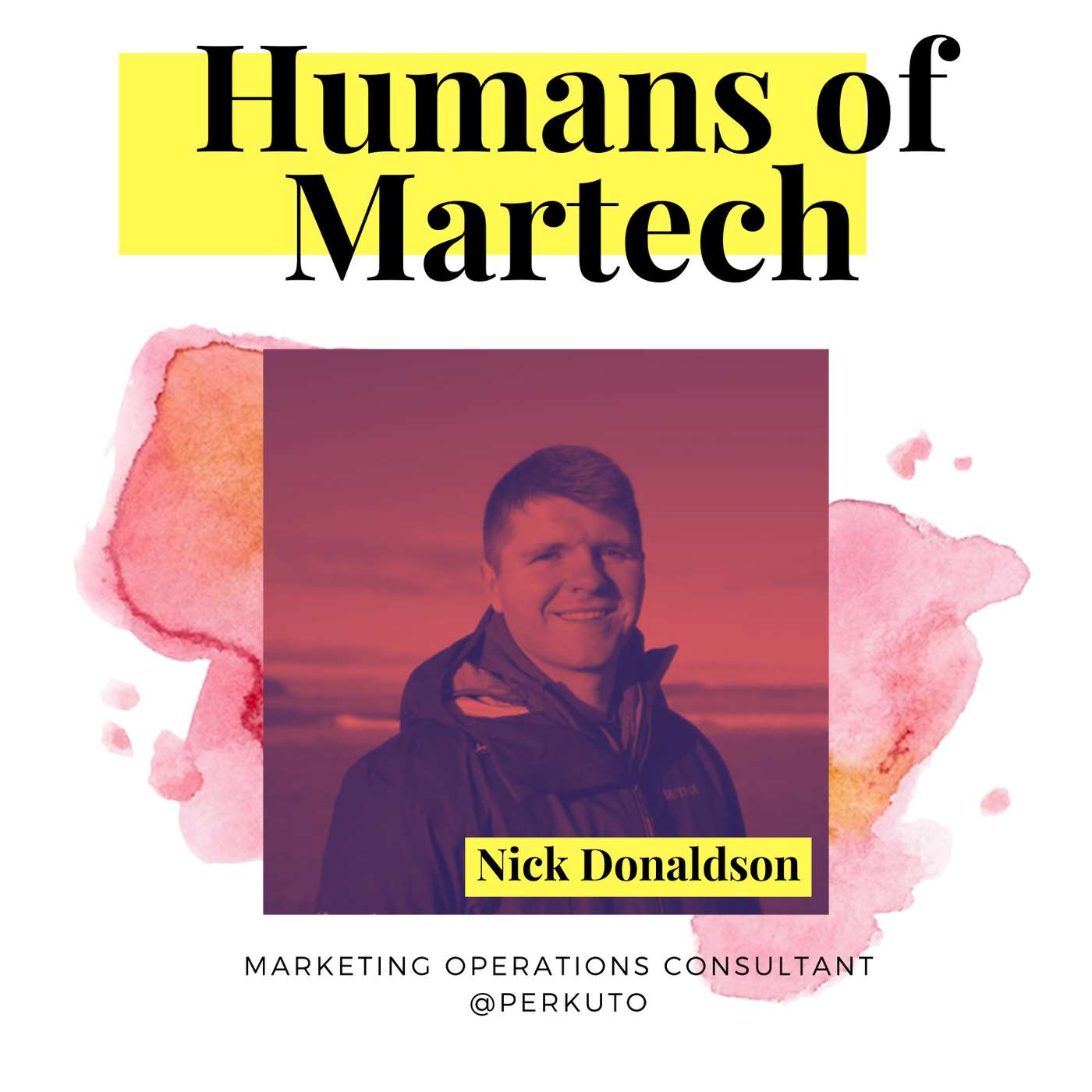
10: Nick Donaldson: Curiosity, learning & success in your MOPs career
E- MOPs is an amazing career, and the number 1 skill you need is curiosity. Nick got his start owning a Marketo instance and rapidly acquired the skills required to be a MOPs leader in one of Canada’s hottest startups- From a strong foundation in-house, Nick has moved consulting side, and will compare notes about why the switch may be one you should think about in your careerNick is a highly talented marketing ops professional.He started his career in marketing with a quick stint in a creative agency before spending the better part of the next 6 years of his career working in-house for companies of different sizes and different industries. Nick brings a lot of passion and enthusiasm to his work which has helped him rapidly learn the world of martech.Nick really came into his own working at Solace in the tech industry where he picked up Marketo and hasn’t looked back since. Nick recently made the move back to the agency world where he’ll be a Consultant at Perkuto--Intro music by Wowa via Unminus

09: Dynamic areas are your conversion secret weapon
Marketers are wasting energy deciding the ideal CTA to add to a landing page. Let’s vote on it, or let’s test it.The ideal CTA is based on who the visitor is and where they are in their lifecycle, not what your A/B tests are showing or your internal debates.Instead of obsessing about picking the best CTA per page for all your visitors, you should be serving different CTAs to different visitors.Let's start by painting a picture: When a person lands on a homepage you have multiple options for getting them to the next step. We call this the call to action; the CTA. It’s best to limit the number of CTAs in most things you do. But it’s hard to pick. What’s the best CTA to put on your blog? Newsletter? Ebook? Trial? Demo? Webinar? What about your homepage?The ideal CTA depends on who the visitor is more than what you think should be their next step. So why not show a different CTA to different users?Area snippets or dynamic areas or dynamic content, there's different buzzwords for it. They allow you to do this.Instead of picking just one CTA.You can show; an education call to action to new visitorsa product tutorial call to action to existing trial usersand a onboarding call to action to new customersAll on the same page, using the same line of code.JT: In a lot of cases, forms are tied to the website and you need some front end help. HTML, little side of CSS. It can be tricky to completely own forms for marketers.PG: Many ways to do this, common way is to use form handlers, or you build the native form in your MAP and you build a custom HTML form on your site, you connect the two forms via API + javascriptJT: However you do it, Zapier or JS, when someone fills out the HTML form it triggers a form submission event in your MAP.PG: If you have an eng team, you’re probably doing something custom, gives you more control over the look and feel of the site.If you don’t have technical support, Zapier can basically hook up to any api. So you can use a third party form tool like convertflow, formkeap, typeform, you can send events from Zapier to your MAP. JT: Okay so you mentioned a few tools there, let's say you work in a smaller company, don't have marketo or pardot or maybe even hubspot, what form builders do you recommend?PG: I'm a big fan of convertflow. More than just a form platform. Coolest ability is using dynamic areas of your site to show different forms to different people. They call them area snippets. Traditionally, forms and content upgrades are static and specific to a page, they are hard coded in the html of your page. But what convertflow does is lets you place a dynamic area code in your body, and CF will display a different form based on who the user is. So you can show a trial form to a content lead and a webinar form to customers.But you can also create a new form for your email course on how to start a podcast for example, and instead of manually injecting that code in a bunch of pages, you can set your new form to show up in every area snippet on pages where URL contains (how-to) or has tags=top of funnel.And once users have seen that form already, you can show them a new form. JT: I guess Marketo has some of that functionality right? It’s a bit messier. You can use dynamic content and embed that on your site or use a Marketo lp entirely. But I guess not everyone is using a Marketo. Convertflow certainly looks cooler.What are some of the other tools that do something similar? I know you're big on site personalization tools.PG: Yeah that's when we get into tools like Proof or Mutiny. They got hot onto the scene when they claimed AB testing was dead. And it's a really interesting take we could probably do a whole episode on.JT: Ohh yeah I've heard this. This is the, why launch an AB test on your site for ALL visitors, when you can test only the audience you care about.PG: Exactly. Most A/B tests today have very muddied results but are thrown around like gospel. Imagine the homepage. If you're launching an AB test on your homepage, a bunch of people you don't care about are muddying the results of your test. Customers, students.JT: So what are some of the most common playbooks for this? Like how can someone use tools like these to drive revenue? PG: I see vertical segmentation as the most popular. So that would be like Transistor showing e-commerce podcasts on their homepage to potential ecommerce visitors.But company size and industry is also really powerful. Doing things like showing different customer logos based on whether the person viewing your site is enterprise or startup. Or showing an H1 of "The best podcast tool for Real estate pros" to real estate leads but to retail leads they see "The best podcast tool for Retail leaders".JT: That's super cool. But I know some folks would find this creepy.PG: Yeah for sure. There's a line. and A way to do it well.You want to try to provide value without being creepy.Instead of having your homepage saying Hey Jonathan Taylor. Welcome back. Here’s how othe

08: Why your job is better than getting eaten by lions
It’s a funny visualization but I find it always grounds me in what matters: why am I at work, what is really important to me, and why being happy is more important to us than anything else.It’s easy to let work get to you and invade your happy space; I’m going to share my strategies for staying happy wherever I work.Work / Life BoundaryClear boundaries between work & lifeDisconnect all work tools from my phone. I’m unreachable unless you text or phone.How do you develop this balance?Having a healthy and disciplined routine and schedule. My Monday’s are no meeting days and have several focus periods, team meetings are on Tuesdays and I try to schedule other meetings then. I walk my dog at the end of each work day. It’s my queue and my reset button.I have an office upstairs with a work laptop that stays up there. When my work hour is done I leave that room and leave the laptop there as well. All my work for the podcast or hobbies is using a personal laptop. Letting GoYou can’t control everything, certainly not what other people doIt’s hard AF sometimes if you’re like me and your passion is your strengthHow do you practice letting go?Being able to let go. Give less fucks. Don't over think things. Good work is important. Perfection will haunt you. It's okay to be invested in your work and care deeply about it. But it's healthy to try to not being emotionally attached to work.Similar to your lion analogy, something that grounds me in times of stress is a quote by Stanley Kubrick. “Whenever you have a dreadful day, take a moment to consider how small we are as humans in this galaxy. In the grand scale of it all, that bad day is virtually meaningless.”Part of this mental state is the product of almost a decade of personal growth and hard work. It’s a gift to not worry about finding employment. So patience is key here. This won’t be instant. Investing in your career over your jobFind what you love about your career and invest in thatYour job is just a job; it could change; your employer may lay you off tomorrow and despite all the fucks you give, they’ll continue on without youYour career will continue to grow; besides your job will benefit from investing in your career.How do you invest in your career?Building a network. It used to be going to events, speaking at meetups. Now it's more virtual groups, paid memberships and private Slack communities. But it's so important to reach out to other humans and make connections. Your goal is to help progress as many people so that some of them can help you in turn.Being CandidFirst, be compassionate and empathetic. Develop these skills. Be interested in what makes people tickSecond, be honest when you’re not happy or uncomfortable or frustrated - don’t sit on that shit because in my experience 98% of people just don’t know your upset if you don’t say something.Why is being candid so important?Getting positive feedback. Getting good results. Surpassing expectations. Helping a colleague, solving a problem. It makes me happy at work. One of my colleagues described me as someone who takes mysteries, smashes them into pieces, and turns the remnants into answers. Being well liked by coworkers and management is a big part of happiness. I find that easier in smaller companies.Eggs in more than one basketAdvice I got years ago and now follow is having more interests than just my careerUsed to read non-stop business booksNow I have hobbies completely unrelated to work, coding, and hobbies that are career related, like this podcast.Quit shitty jobsMy landscaping story - shit people, but I ‘toughed’ it out to prove a point. Now have sworn I won’t endure something awful ever again (not that I’ve had to).Alex shoutout, Shopify inspiration story. Hated construction industry. Quit, learned to code, applied and failed a few times, kept trying and getting better, now he works there. Never seen someone’s job satisfaction rate go up that high.--Intro music by Wowa via Unminus

07: Brian Leonard: Be friends with engineering with open source Martech
You reached out to us to come on and talk about the world of open source martech and other than knowing that Mautic was an OS automation tool, I didn’t really know much else about the space.So I’ve gotten down some rabbit holes prepping for this episode so pumped to dive in with you today. Why don’t we start with the big differences between martech and open source martech.I know that normal software does not include the source code while open source does and modifications and customizations are encouraged, but what does that mean in a martech context? Brian: For me, open source is about control and trust.You have the ability to control how your customer data is handled and where it is stored. We’ve seen this lead to people taking advantage of more data in their marketing efforts.So then, you can see the code. You can control the data. This leads to trust. Only give the external tools what you want to share. Privacy and compliance get easier. We are talking with lots of medical companies, for example.JT: What’s the advantage of this business model, like why make Grouparoo Open source vs. the tried and tested SaaS model?Brian: I don’t think the world needs another marktech SaaS solution. There are already thousands of those and yet these problems (integrating tools) persist. So we wanted to do something different. We think that working closer to the engineering level (and making it super easy) will disrupt how these tools get implemented.Because there are so many tools to integrate with, open source will also help us build up those connections. We will actively engage with the more popular ones, but it’s exciting to see others interested in contributing connections to the long tail of tools.Finally, there is cost. These SaaS solutions tend to be quite expensive and the incentive structure doesn’t line up between the company and the SaaS tool. For example, with Segment you send it a lot of events and more or less get charged per event. Then you pair back what you send. But then, later it turns out that you needed that. Doing all of this and owning that data is great for not only for privacy, flexibility, but also for cost.Phil:Martech today has an awesome article on open source tools, I’ll add it in the show notes, but in there, they make the case that the Open source model is not ideal for Martech.The most successful open source projects tend to be developer oriented—developers building tools for other developers, but in this case, the end user is often a marketer. I’m guessing you disagree?Brian:It would certainly seem so.When you want to integrate with Marketo, it’s the engineers that do that. I’ve talked with companies with millions of users that have been paying for Braze for a year and haven’t automated anything. I’ve met marketers that come in as CMO and demand tool X because they like it. A few quarters later, it’s more like “I just want to send a cart abandonment email! VPE, whatever you want to use is fine.”I think there is a lot lost when we think of marketers and engineers as separate things and not the organization as a whole. The right thing to do is engage with the engineers that power your marketing tech stack. And meet them where they are. Open source helps with that.If we can get the engineers excited about setting up the right architecture in an open way, then it will be easier to get more data later to existing and new tools.JT: Couple years ago Acquia acquired Mautic. They said in their press release that it was the start of a new generation of open source communities and projects to reinvent the martech stack. Do you see an evolution of open source tools in the automation space?Brian: Mautic was an ambitious project to do everything - to replace the tools you are using now. The evolution is about more target solutions.A notable one is that there are even more marketing tools and they specialize, so Mautic would have to do everything. And maybe it didn’t do drip campaigns or push better than Iterable.There’s a similar trend in the engineering world, especially on data teams. Data teams are growing and getting their own budgets. They are getting their own set of specialized tools. One example is Fivetran. That will store everything from Hubspot in your data warehouse. The missing piece, as we see it, is to make that actionable in the best tools for use cases in an efficient way.Phil:I want to finish with integration of data in between platforms, and I know you guys solve this problem. Adobe Microsoft and SAP launched the Open Data Initiative that aims to standardize data across platforms. The problem still isn’t fixed though. If you’re using 14 martech tools, chances are several aren’t Adobe products.What’s the solution?Brian:(open source community, and a standard by which data can flow between any set of systems, not just into one. You need the community to build all the connectors and adaptors between those tools, so you don’t have to custom build and code everything.”I’m focused on build
06: The best email program you'll ever build
Gating vs ungating isn't something we're going to get into today. There's arguments to both, I prefer not gating as much as possible. But it's a necessary evil.Always trying to be buyer centric instead of seller centric, don't push sales too much at the top of the funnel, let leads show you when they are ready.What are some of your favorite lead magnets?Tools, quizzes, website grader. Email courses as the best content upgrade. Newsletter when possible but consider testing an email course offer.The email courses are way more popular now but I remember you building the first ones at Klipfolio. What's the playbook for putting one of these together?Step 1 - what are you teaching Go in GA, find the most popular content topic from your blog, maybe it's 4-5 blog posts. (example transistor) How to come up with a concept, how to record, tools, how to publish, etc. Top blog posts are likely all related to how to start a podcast. Step 2 - pillar page: Take your best content related to your topic/what you’re teaching, so for transistor, how to start a podcast - combine those posts into one big ‘pillar page’. Step 3 - 5 lessons trim Break up the pillar page into 5 lessons and cut the fat. Really go in and highlight the key takeaways and cut the fluff. Aim for 2-3 minute read. Make it super skimmable. Paragraph headers. That’s pretty much it. Last step is adding your CTA to those top blogs.So on your top pages, the ‘How to come up with a concept, how to record, tools, how to publish’ you add a CTA on those with your email course offer. Hey instead of aimlessly reading these long blog posts on our site:Learn how to start a podcast in 5 minutes, delivered to your inbox every morning for 5 days.So these programs have really good engagement metrics. But blabla vanity metrics. How do email courses help companies make money?The beauty is you can create courses for different stages of your funnel.(example transistor) TOFU: how to start a podcast (all the steps)Next up: MOFU: how to record edit, tools (all the tools)Next up: BOFU: how to host/publish your podcast (tutorials using transistor). Tutorials on uploading, RSS feed, pushing to podcast apps, integrationsNext up: Free trial?At this point, you’ve built a ton of trust and credibility with the reader. You gave them a bunch of value in a short amount of timeOkay so main points here is finding content that's already getting eye balls, connect it to other peices, then you have one big peice and your goal is cutting it up into bite sized lessons.yeah the brevity of the lessons is what works. People are highly engaged with these emails. They are expecting them and they know it's only take 5 mins to read and they know there's insights in there.So having done a bunch of these now. For the folks in the audience that are saying, okay cool you didn’t invent email courses, I’ve had some for years. What do you say to those people to level up their courses?Ways to improve your courses are to ask for feedback at the end of a course. Experiment: takeaway for each lesson, images, GIFs, get next lesson right now, homework and activities, templates, tutorials… time zone, receive at specific time.So why do they work so well?Quality, brevity, opt-in expectation.--Intro music by Wowa via Unminus

05: Lauren Sanborn: Happiness at the intersection of sales & marketing
Describe the opposite of sales & marketing alignmentSales is pushing hard to meet their number (revenue, arpu, customer count). Marketing is pushing hard to meet their targets (marketing qualified leads). Not talking to each other and working as a single unit.There is a big discrepancy in what types of leads convert and become workable by sales. The lack of alignment equates to marketing dollars that are spent frivolously and sales ignoring what they’re being fed from marketingWhat does marketing need to know about sales?Sales folks aren’t lazy. They have a lot on the line with a big portion of their compensation based on hitting sales numbers. However, they will always take the quickest and easiest route to make the sale. Keep that in mind. Think about how they work and put yourself in their shoes when you are communicating new marketing initiatives.What does sales need to know about marketing?Marketing folks are not ‘out of touch.’ They are expected to generate demand in a world full of email overload, ad overload, content overload. Being in marketing is not an easy job. Keep that in mind. Think about how they work and put yourself in their shoes when you are communicating new sales initiatives where you need marketing’s help to be successful.For listeners who heard you paint that picture of misalignment and are thinking… shit that’s totally me. What are some ways to remedy this?Meeting frequently and often between marketing leaders and sales leaders - talk about what is working, what is not working. Allow both sides to voice frustrations (I’m generating leads, why aren’t you working them…you’re generating leads, they aren’t any good).Work together and in coordination with operations to create a scalable engine by using a revenue lifecycle and scoring methodology that is adaptable.From top of funnel leads all the way down to revenue, what's at the intersection of sales and marketing?The sweet spot is sales accepted leads.- so it’s not just what leads became ‘qualified’ but what leads were actually accepted into the sales pipeline to be worked.If you stop at MQLs (marketing qualified leads), then you don’t see what leads are worked. If you go to far down the funnel (ie revenue), you start to get into a gray area beyond what marketing has control overHow do you achieve that alignment? Brute force? Culture?Set the expectation at the leadership level. Put regular cadences in place. Create metrics and report on them.This takes TIME - I’d say 12 months to fully get folks into the motion where they understand their numbers, where infrastructure is tweaked on the operations side to enable accurate reporting.Why is Revenue Operations so important? And why give it a separate name?Revenue Operations is still relatively new in the marketplace, but it is the direction we are headed in. It makes a lot of sense because working in silos is ineffective. It all ties back to the customer. All companies have this utopia whereby everything they do enables the best customer experience.Operations play an important role in accomplishing this goal because without the appropriate infrastructure that’s scalable, data points informing marketing decisions and sales conversations, visibility into post-sales and upset opportunities - it isn’t truly possible. How do you get Sales & Marketing talking in a common language?Setting a baseline for success metrics and holding folks accountable to those metrics. Having open, transparent and frequent conversations around how close we are to hitting those success metrics and what can we do as a TEAM to pivot if we are falling shortTeaching less experienced folks how to do this. In a lot of organizations, some people have never done this before, so they have to be taught and coached on how to get there. That’s where strong leadership comes into play.As a RevOps leader, how do you foster great communication?Communicating how what you are doing as a RevOps leader solves a business problem. This isn’t the easiest thing to do for technical people because a lot of RevOps stakeholders are not technical. The most successful people I’ve seen in the RevOps role can take a business problem, go down into the technical details/build, but only share that is relevant to their stakeholders that solves a problem.Creating a dialogue that is frequent and transparent, where feedback is welcome, is best.Lastly, make it part of your regular cadence for any new implementation - whether its an entirely new tool, new feature set, or initiative - making sure you and your team are communicating progress/challenges and working with the training team.What advice do you have for people in terms of having a happy career?Happiness is all perspective. It’s about 25% your situation and 75% your outlook. If you don’t like your job, get as much experience as you can and then change it. If you don’t like your career, get as much experience as you can that is helpful in where you want to go and use your network to pivot. For

04: Handwriting makes better digital marketers
EDitch your keyboard as often as possible. Make handwriting your default medium even when it’s counter-intuitiveMeetings:* Ditch your phone/laptop if and when we get back to office lifeRemote:* Turn off all your other apps, including and especially slack and email* No other tabs open* Video-on, hands off mouse and keyboardWrite a landing page by hand; write an email nurture by hand; write out strategy; write out your to do list or projects. You can’t erase easily so you get all your ideas down in a true, unfiltered first draft.Okay so I get all the benefits of remembering shit more but if I start hand writing all my emails my process seems longer with typing my work up. So the argument is that the time you spend focused handwriting that email, combine that with the digitizing part, is still faster and if more quality than starting in Google Docs. Of course you’ll end up typing it, and if you think it’s crazy onerous, think that the average person types 45 words or 200 character per minute; i bet you’ll be faster and your ideas will beg to be put on the pageAnecdote, I find hand-writing unlocks my creative process and actually makes me the final product come together much quickerReading internet articles? Want to actually retain that information? Handwrite your notesTons of research proving that retention is better with handwritten notes.The gist is that your macbook impairs or negativaly impacts learning or quality work because your keyboard typing involves shallower processing compared to handwriting. So, more parts of your brain are used when handwriting vs. just typing, so you're able to store it more accurately.Anecdote, learning coding and it definitely doesn’t come natural; I started with online tutorials, multiple screens, and my IDE; When I started handwriting, I actually started to comprehend the material; took summer off and found that I retained information better than i expected; I’m taking this even further and literally writing all my code by hand; typing code is like driving a racecar after riding a bicycle; my comprehension and confidence is actually improvingNext time you need to write something, try Outline with paper, write draft in keyboard.--Intro music by Wowa via Unminus
03: Why you need a computer sign-in sheet
EWe’re not responsible enough to have unregulated internet usage. We need to be deliberate about our tool usage. We use the tool, not the other way around.One of the main points Cal Newport makes in his book DM is that the key to thriving in our high-tech world is to spend much less time using technology.A carpenter uses a hammer, the hammer doesn’t use them. Is the same true of digital marketers? We get sucked into our device and end up providing value to social media platforms, news site, content providers; not to ourselves, not to our employers.Digital minimalism could mean something different to different people. For some, it has nothing to do with the amount of tools you use but rather it's about how you make space to create and learn and be happy. But for some, and I think this is the case for you, it has everything to do with the amount of tools you use. It's getting rid of some of that clutter so you can focus on what's important.Think how much more productive you’d be if you had to go to a library to access the internet.I love the library analogy. It lends very well to the idea that it would force us to focus your online time on a small number of specific activities. And then happily miss out on everything else.As part of my digital declutter, I started a computer sign-in sheet to regular and filter my access. Here's how I set it up:* 4 columns; time, purpose, sites/apps, satisfaction* I fill in first 3 before every session. This forces me to really think about what I’m going to do during a work session; I plan my work and what tools I need to accomplish my job* After my work session, I rate my satisfaction. 10 is simple to get - I complete the task I set out to do and didn’t look at any other sites* Noticed my lower scores all came from session interrupted by Slack & Email; very interesting, when I scheduled that time on Slack & Email, I could still attain a 10; realized the problem wasn’t the tool, it was my relationship to it.I’m super productive and hitting all my deadlines; I only work 3 days a week and have rarely felt this type of sustained productivity, and I’d say I’m usually pretty productive and never miss deadlines.Biggest change for me was forcing me to spend time to plan out what to do in a work session. I'm good about planning my week, sometimes by days, but never tried work sessions.It’s really easy for me to tell when I need to think strategically about my priorities and refocus my to do list.Your computer is just a tool, and you should wield it with the same finesse and care as a carpenter; A carpenter always has a hammer in his or her belt but they’re don’t use it for anything other than pounding nails.What about those periods of time where you’re fucking around on reddit and you see something badass and it inspires you. You save it to your pocket, maybe you go back to it, maybe you don’t. But it’s it’s swipe file of shit that’s only there because of browsing. And you might be thinking cool but you can just schedule this reddit browsing time. But maybe the quality comes from the quantity of browsing. Maybe it’s just an excuse for using Reddit.Content is not king; your behaviour on the internet is; if your behaviour is different than your intentions when it comes to internet usage, it’s worth paying attention to.How can you be more intentional about your use of technology? Try a sign in sheet.--Intro music by Wowa via Unminus

02: The right questions can get you a job
EHow do you decide what type of company you want to work for? Figure out who your dream companies are in that size, space, industry by trying new things.In college, I worked for a startup sized agency, a public enterprise, a governement department. I knew I would be likely happier in smaller companies.The most important part of an interview is not to be prepared for what they will ask, but rather making sure you ask the right questions. One of my favs: Totally ask the company what the salary range is for this position. Usually it's just the candidate forced giving a range. Doesn't have to be the case.Questions to ask based on size of company (Startup) Data/technical support, is there a data warehouse (Scale up) What's the plan/reporting structure, ops report to marketing or revenue, examples of projects (Enterprise) Ask biggest problems right now, ask about tech stack, ask about change resistance, age of staff.Questions to ask regardless of company size: Ask people what they love the most about the job. What they think of manager. what are the big upcoming projects, make sure they match your KPIs. What sod you see as the biggest hurdle for this role.How to show your passion: pick a project you loved, and go deep into the details and why you loved it.Idea: Send a cover letter via video; play on the remote factor. If it's an email job, tell the manager you wrote an email series for them as an introduction to your experience and background. If it's a lifecycle role, send them your favorite workflow template.How to differentiate yourself: show how much you learn on your own, not just in your day to day, talk about mentors, courses, Slack groups, favorite authors and thought leaders.--Intro music by Wowa via Unminus

01: Why you're better off being an individual contributor
EChoosing between being an individual contributor or a managerIt’s a common dilemma across all fields: the top contributors are most likely to get promoted to a management position. The issue is that not all contributors make good managers, while almost all managers need to have some subject matter expertise acquired through being an individual contributor. In this episode, Jon and Phil break down the differences between each career track and make a case that most people would be happier as an individual contributor. Will you be happier as an individual contributor?Most people will be happier as an individual contributor. Everyone is different, but many individual contributors seek management roles because it’s perceived as the only path to promotion within an organization.This is a dilemma faced by many individuals across different types of roles: the top individual contributor is flagged as for promotion to management. But the skill of managing people is quite different from being a great contributor. The other question is will contributors be happy spending their time managing people?Think about it: if what you love about martech is figuring out how to set up automation, workflows, testing new tools, working with teams to solve problems, and getting your hands dirty, the shift to management is going to draw a stark contrast. Managers in martech, like Directors of Marketing Operations, are responsible for their team, the strategy, and overseeing all those moving parts. The skills required to be excellent at marketing operations are different from being great at management. One could make the argument that you could be excellent at management without actually being a great contributor. Just consider one skill all managers need: emotional intelligence. People issues arise all the time in management and require a thoughtful, considerate manager to resolve. Understanding team chemistry and paying close attention to the needs of individual team members is critical, but a skill many of us need to cultivate. Consider the quiet team member who struggles in silence with the team dynamics, maybe never feeling the opportunity or encouragement to bring their ideas up in team meetings. Then, one day, they leave the team because they found a better opportunity. Benefits of being an individual contributorBeing an individual contributor can be a fulfilling and rewarding career choice. Here’s why individual contributors love their work:Deep work and flow stateTime managementSpecialization and be true expertsAutonomy in daily tasksAligned with strength and interestsDeep work and flow stateFor individual contributors it’s possible to achieve that zen-like state of flow where time flies by as you just enjoy completing your work. For creators, this might be writing a blog post or designing an image; for marketing ops folks, it may be designing workflows, setting up automation, or auditing a system. Hitting this state as a manager is nearly impossible with a need for managing team members, triaging requests, and communicating across multiple channels. The dream of turning off Slack and checking out of email seems like a distant one when you’re in management. Managers face continuous waves of interruptions that drown any chances of deep work.But for individual contributors, this heightened state of focus isn’t the ideal, it’s the norm. Time managementAs a manager, your calendar is a wall of one-on-ones, team meetings, strategy meetings with leadership, and ad-hoc-have-to-meet-now meetings. If this sounds like hell, well, this is a taste of a manager’s life. Entire books have been written about making meetings less hellish, such as one of our favorites “Death by Meeting“.While it’s commendable to make the most of meetings and we’re not going to deny how important they are to business, the best way to avoid meeting hell is to not have any meetings. It’s not avoidance; it’s focus. Individual contributors need time to work on their projects and deliverables. Meetings where individual contributors are involved should be quick, painless, and to the point. A common complaint of managers is the desire to get back to doing what they love doing.Specialization and masteryTo get that first promotion to management, most marketers need to demonstrate some skills and chops. Being a Director of Marketing Operations, for example, would be a tough job if you’d never managed a marketing automation instance before. But over time, your skills as a marketing ops contributor are less important than enabling members on your team to flourish and become experts.Managers begin to lose that “edge” that made them so easy to promote in the first place. They spend less time in the tools and more time directing strategy. And, let’s be clear: this role is extremely important and valuable. That’s not what we’re saying.But for individual contributors considering management, they need to understand that the opportunities to become deep experts in their field dimin
Official Trailer - Welcome to The Humans of Martech
trailerHis name is Jon Taylor, my name is Phil Gamache. Our mission is to future-proof the humans behind the tech so you can have a successful career in marketing. Here's a quick preview of the show. I think we're both empathetic and compassionate leaders, we actually look to understand what's happening on the other side of eyes across from us. What I'm super excited about is getting into less just the tech and the strategies and the tactics, but also behind the scenes of what it's like to be a b2b marketer. When to quit your job. When to take a break. What does it take to get promoted? How do you ask for raises? I think our podcast is focused on the humans behind the tech. But there's a lot of tech out there I mean that we need to unpack that tech. What is the value of manual versus automated reporting? What does it mean to be a technical marketer? How to setup lifecycles. What is lead scoring all about? We are going to be your guides on a journey across the Martech landscape of doom. If you only listen to a minute of our podcast, I want you to feel like you could get a snippet of intelligence. Credits and notes:Intro music by Wowa via Unminus.