Humans of Martech
235 episodes — Page 1 of 5
234: How to run a marketing ops audit and turn it into a roadmap with Kelsie Dube
233: 4 Mindsets that modern marketing leaders need for unpredictable markets, with author Kathleen Schaub
232: How taste can be codified into systems and is no longer a durable skill, and what's next with Sharon Gai
231: Why Lattice careers and communication skills are built for the AI era, with Michele Martin from Ticketmaster
230: Zero-click marketing broke the measurement layer, so what should ops teams do now, with Amanda Natividad
229: The Privacy lawsuits coming for every marketing team, with Cara Caruso and Dustin Taylor
228: The Dispatch tower (The Dungeon of martech architecture, part 4)
227: The Correlation masquerade (The Dungeon of martech architecture, part 3)
226: The Eye of context (The Dungeon of martech architecture, part 2)
225: The Fall of CRM gravity (The Dungeon of martech architecture, part 1)
224: Keith Jones: How OpenAI’s GTM leader structures teams and spots standout candidates
223: Lindsay Rothlisberger: How Zapier uses a shared brain to manage AI context and skills
222: Ashley Langford: How Senior MOps Practitioners Are Navigating the 2026 Job Search
221: Jason Dobbs: You need Minimum Viable Readiness for AI because perfect data doesn't exist
220: Alex Halliday: How to build content engineering systems that get cited and scale without slop
219: Elizabeth Dobbs: Inside Databricks' stack with 3 AI agents, 1 lakehouse, and 6 years of data work
218: Tata Maytesyan: Build a marketing career that survives AI as a deep generalist
217: How to interview a company before you take the job (The Martech job hunt survival guide, part 3)
216: How to stand out as a candidate with AI prep, portfolios and tools (The Martech job hunt survival guide, part 2)
215: How to find hidden job opportunities (The Martech job hunt survival guide, part 1)
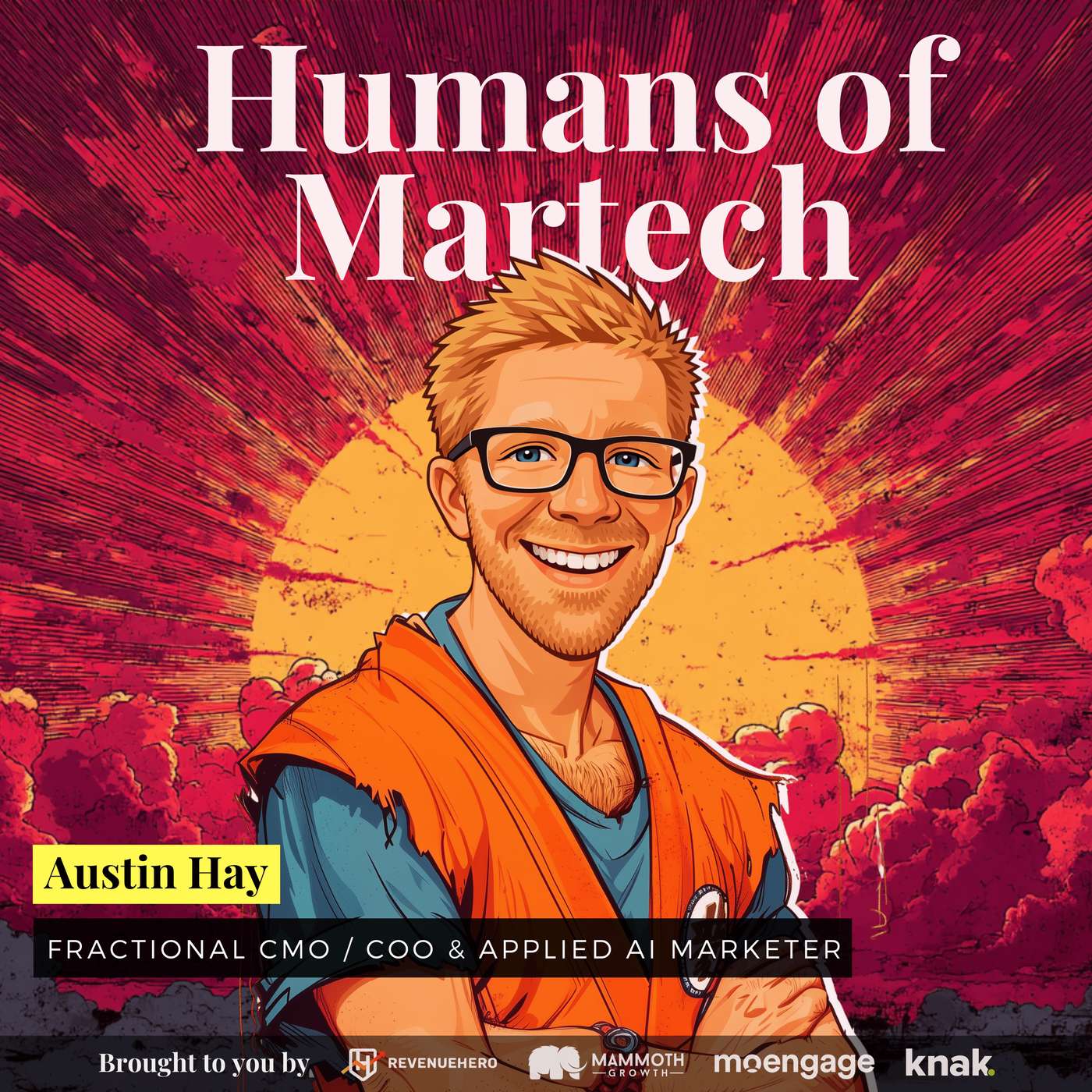
214: Austin Hay: Claude Code is creating a new class of elite marketers and the mental models that make it click
What's up everyone, today we have the pleasure of sitting down with Austin Hay, Martech, Revtech, and GTM systems advisor, AND – AI builder, writer, and ex-founder. In This Episode:(00:00) - Austin-audio (01:16) - In This Episode (01:54) - Sponsor: RevenueHero (02:48) - Sponsor: Mammoth Growth (04:09) - How Code-Driven AI Workflows Outperform Chat-Based Prompting (14:55) - How to Start Building With Claude Code When You Have No Time (19:45) - The Programming Concepts Non-Developers Need to Build With Claude Code (23:49) - How to Turn Repeating Prompts Into Automations That Run Themselves (31:11) - Sponsor: MoEngage (32:07) - Sponsor: Knak (33:37) - Why Spending All Your Time in Meetings Is a Career Liability (36:28) - Why the Best First Claude Code Project Is the Task That Already Annoys You (40:22) - Why T-Shaped Marketers With Claude Code Will Cover the Work of Entire Teams (46:27) - Why Marketing Taste Matters More Than Technical Skill in the AI Era (49:43) - How Early-Career Professionals Build Judgment When Entry-Level Work Gets Automated (53:14) - How Austin Hay Runs His Career as a Flywheel Austin Hay has spent 15 years moving between the technical and strategic ends of marketing, starting as the 4th employee at Branch, building and selling a mobile growth consultancy that was acqui-hired by mParticle, and eventually rising to VP of Growth before moving on to Ramp as Head of Martech. He later co-founded Clarify, a CRM startup he took from zero to $100K+ ARR while completing a Wharton MBA. Today he works as a fractional advisor to scaling companies on martech, revtech, and GTM systems, teaches thousands of practitioners through his Martech course at Reforge, and writes the Growth Stack Mafia newsletter on Substack.Austin spent months as a chatbot skeptic before Claude Code changed his view entirely. In this conversation, he maps the gap between using AI through a chat interface and wielding it as code in your actual environment, explains why meeting-heavy schedules are a compounding career liability, and makes the case for a new class of professional he calls the white collar super saiyan.---## How Code-Driven AI Workflows Outperform Chat-Based PromptingMost marketers use AI the same way they used Google in 2005. Open the interface, type something in, read what comes back, copy it somewhere. Austin Hay did this for months. He was not an early Claude Code adopter. He says this upfront, almost as a confession. He thought it was another chatbot.What broke him was specific. He was querying financial data at his startup, Clarify, through Runway, an FP&A platform connected to QuickBooks. Every SQL change required the same round trip: write the query in terminal, copy it to Claude, get feedback, paste it back, run it. He built a folder just to manage the back-and-forth. The model couldn't see his local files. The chat UI had upload limits. He was stuck in what he calls a world of calling and answering. Functional. But slow. And bounded in a way you eventually stop ignoring.Claude Code gave him access. When you type claude in a terminal, the model reads your actual files — the data as it lives in your repository, not a paste you copied, not a summary you wrote. It runs commands against your system, observes what happens, and acts on the result. The round trip ends. You stop relaying information and start working in the same environment. That is a different thing than a smarter chatbot.The shift combined with several unlocks arriving at once: Opus as a model, MCPs that worked reliably, a Max plan that made unlimited credits economical, and an agent architecture built around memory files and commands. All of it hit critical mass for Austin in January. He says the last 6 months felt like 3 years. You can hear in how he talks about it that he means it.The 2 chasms he had written about in his newsletter turned out to be real and distinct. Adopting AI at all is chasm 1. Crossing from chat to code is chasm 2. Most practitioners have cleared the first. Almost none have cleared the second. And the view from the other side, Austin says, is unrecognizable.> "It's this culmination of many things that I think really hit this critical mass in about January of this year."Key takeaway: Install Claude Code, open a terminal, point it at a folder with files you actually work with — SQL queries, drafts, data exports, notes — and run a real task on them. The gap between giving AI access to your environment and describing your environment through a chat window is immediate and felt, and that feeling is what changes the mental model.---## How to Start Building With Claude Code When You Have No TimeThe time problem is real. You have a 9-to-5. Your weekends disappear. Nobody at your company is running AI hackathons. "Learn the command line" is not advice you can act on between your Thursday syncs.Austin doesn't dismiss this. But he points at the part most people miss: they know step 1 (chat interface) and they see step 3 (Clau

213: John Whalen: The next marketing advantage is pre-testing ideas on synthetic users
What’s up everyone, today we have the pleasure of sitting down with Dr. John Whalen, Cognitive Scientist, Author, and Founder at Brilliant Experience.Summary: John has spent his career studying how people actually think, and his conclusion is uncomfortable for anyone who believes their marketing decisions are more rational than they are. In this episode, John explores how synthetic users built from cognitive science principles can fill the massive research gap that most teams quietly ignore, and why removing the human interviewer from the room might be the fastest way to finally hear the truth.In this Episode…(00:00) - Intro (01:13) - In This Episode (04:31) - What Are Synthetic Users and Why Do They Matter? (10:00) - How Synthetic Users Make Stakeholders Hungry for Real Human Research (15:56) - Pre-Testing on Synthetic Users: Shortcut or Smart Step? (18:53) - How to Actually Build a Synthetic User: Tools, Layers, and Agentic Systems (40:51) - Is the Average Persona Dead? Scale, Diversity, and the World Model (43:01) - Asking the Uncomfortable Questions: What AI Agents Reveal That Humans Won't (49:30) - Ending the Quant vs. Qual Debate with Statistically Relevant Qualitative Data (56:37) - Mining the 'Why' Behind Silent Behavioral Data with Synthetic Users (01:02:31) - Designing for Agent Users: The Coming Shift to Human-and-Machine-Centered Design (01:05:28) - The Happiness Question: Dogs, Nature, and Staying Analog About JohnDr. John Whalen is a Cognitive Scientist, Author, and Founder of Brilliant Experience, where he applies cognitive science principles to help organizations design products and experiences that align with how people actually think and make decisions. He’s also an educator, teaching two AI customer research courses on Maven.His work explores the intersection of human psychology and marketing, including the emerging practice of pre-testing ideas on synthetic users to give brands a faster and more informed competitive edge. He is also the author of a book on the science of designing for the human mind, bringing academic rigor to practical business challenges.How Synthetic User Research Works and When to Trust ItSynthetic user research sounds like something creepy out of a dystopian science fiction film, and John is the first to admit the terminology does nobody any favors. When asked about what synthetic users actually are and what they mean for research, he admited: if he had been on the branding team, he would have pushed hard for something like “dynamic personas” instead. The name creates unnecessary friction before the conversation even starts. And that friction matters when you’re trying to get skeptical executives or methiculous researchers to take the whole thing seriously.Under the hood, specialized AI tools simulate how a defined audience segment would respond to a question, concept, or stimulus, without recruiting, scheduling, incentivizing, or waiting on real human participants. John runs a class where he collects genuine human data first, then feeds comparable inputs into these tools to benchmark accuracy head-to-head. The results are pretty wild. AI-generated responses align with real human findings somewhere between 85% and 100% of the time on major topics and consumer needs. That is not a peer-reviewed clinical trial, and John is not pretending otherwise. But 85% alignment is enough signal to stop reflexively dismissing the method and start asking harder, more specific questions about exactly where it fits into a research stack.So what does this mean for you and your company though? Think all the decisions that currently live in a black hole of zero structured input. How many product calls, campaign concepts, and messaging pivots happen with nothing more than a conference room full of people who all read the same talking heads on LinkedIn? John argues that low cost, round-the-clock accessibility, and minimal public exposure make these tools a natural fit for precisely those moments: pressure-checking a hypothesis at 11pm, testing whether a pitch direction even makes sense before it touches a client, or deciding whether a concept deserves the time and money required for proper validation.“If these are only going to keep getting better and better, which they are, then logically, what kinds of decisions right now go completely by gut and no research, and what could we use to help us frame that?”One of the more underappreciated angles John raises is global inclusivity. Large organizations routinely test in the US and Western Europe, then extrapolate those findings to markets in Southeast Asia, Latin America, or Sub-Saharan Africa because local research budgets simply do not exist. Big nono. Synthetic personas trained on broader, more representative data could at minimum provide directional signals for those markets, making research more geographically honest without a proportional spike in spend.The early AI bias problem, where models essentially mirrored the worldview of a narr
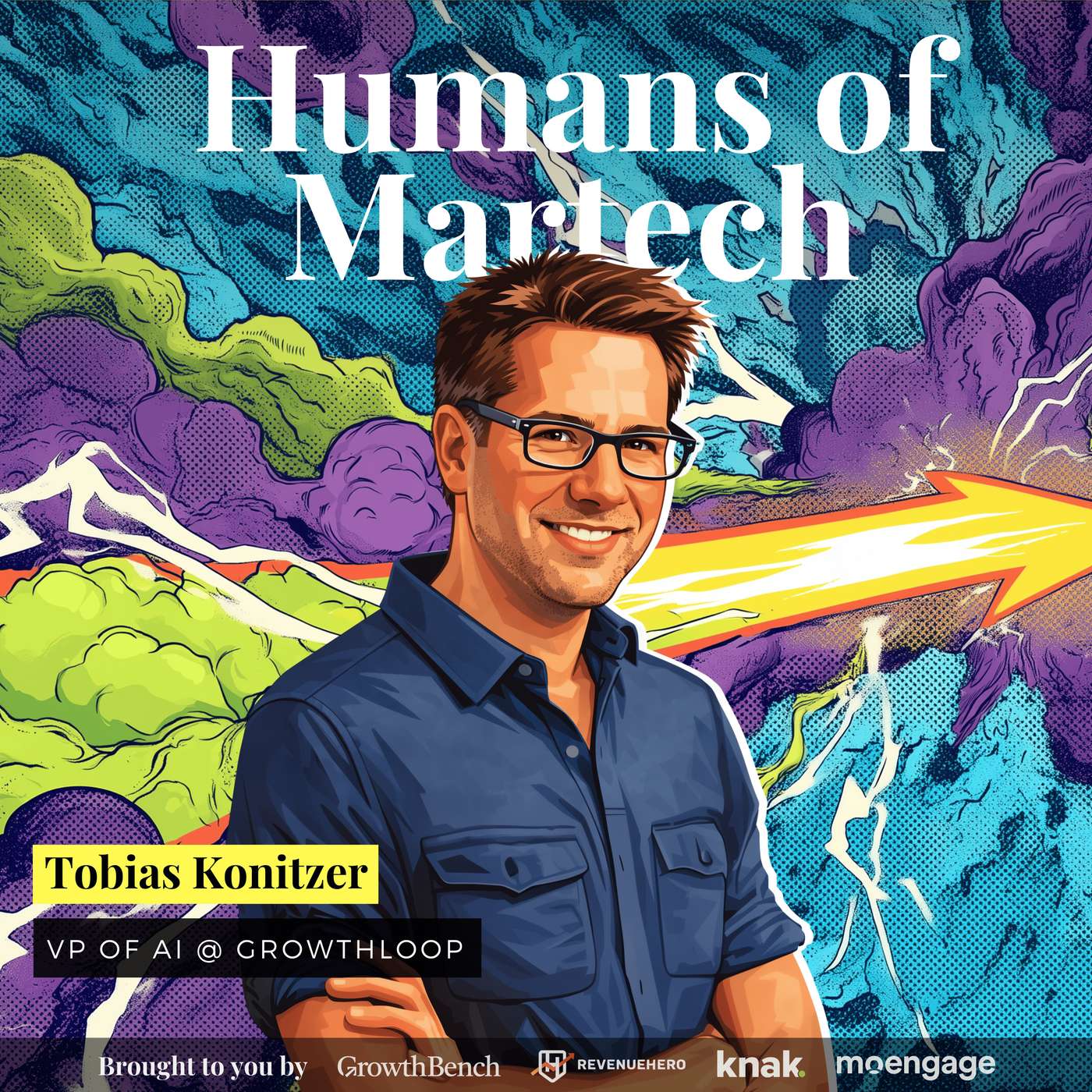
212: Tobias Konitzer: The Causal AI revolution and the boomerang effect in marketing decision science
Summary: Tobi challenged marketing’s fixation on prediction. He has built highly accurate LTV models, but accuracy alone does not move revenue. Marketing is intervention. Correlation shows patterns; causality tells you what happens when you pull a lever. That shift reshapes experimentation, explains why dynamic allocation can outperform static A B tests, and highlights how self learning systems can backfire or get stuck in local maxima. It also fuels his skepticism of unleashing agentic AI on historical data without a causal layer. If you want to change outcomes instead of forecast them, your systems need to understand levers and log decisions you can actually audit.(00:00) - Intro (01:22) - In This Episode (04:07) - Why Predictive Models Fail Without Causal Inference (09:49) - How to Validate Causal Impact on Customer Lifetime Value (13:04) - Reducing Uncertainty Around Causal Effects by Optimizing Levers, Not Labels (17:01) - Why Dynamic Allocation Works Better Than Fixed Horizon A B Testing (31:54) - The Boomerang Effect and Why Uninformed AI Sabotages Early Results (40:15) - Escaping Local Maxima and The Failure of Randomly Initialized Decisioning (44:04) - Why Agentic AI Trained on Data Warehouse Correlations Reinforces Bias (49:00) - The Power of Composable Decisioning (53:06) - How Machine Decisioning Transcends Marketing (01:01:41) - Why Clear Priority Hierarchies Improve Executive Decision Making About TobiasTobias Konitzer, PhD is VP of AI at GrowthLoop, where he’s chasing closed-loop marketing powered by reinforcement learning, causality, and agentic systems. He’s spent the past decade focused on one core problem: moving beyond prediction to actually influencing outcomes.Previously, Tobi was Chief Innovation Officer at Fenix Commerce, helping major eCommerce brands modernize checkout and delivery with machine learning. He also founded Ocurate, a venture-backed startup that predicted customer lifetime value to optimize ad bidding in real time, raising $5.5M and scaling to $500K+ ARR before its acquisition. Earlier, he co-founded PredictWise, building psychographic and behavioral targeting models that drove over $2M in revenue.Tobi earned his PhD in Computational Social Science from Stanford and worked at Facebook Research on large-scale ML and bias correction. Originally from Germany and based in the Bay Area since 2013, he writes frequently about causal thinking, machine decisioning, and the future of marketing.Why Predictive Models Fail Without Causal InferencePrediction dominates most marketing roadmaps. Teams invest months refining churn models, tightening confidence intervals, and debating which threshold deserves a campaign. Tobi built an entire company on that logic. His team produced highly accurate lifetime value predictions using deep learning and granular event data. The forecasts were sharp. The lift curves were clean. Buyers were impressed.Then lifecycle marketers asked a more uncomfortable question: what action should follow the score?A predictive model encodes the current trajectory of a customer under existing policies. It describes what will likely happen if nothing changes. Marketing changes things constantly. The moment you intervene, you alter the system that generated the prediction. The forecast reflects yesterday’s conditions, not tomorrow’s strategy.> “Prediction tells you the future if you do nothing. Causation tells you how to change it.”Consider the Prediction Trap.On the left, the status quo labels a person as high churn risk. The function is observation. The outcome is a description of what happens if you leave the system untouched. On the right, a lever gets pulled. The function is intervention. The outcome is directional change.That shift in function changes how you work.Prediction thinking centers on segmentation:Who is likely to churn?Who is likely to buy?Who looks like high LTV?Causal thinking centers on levers:Which incentive reduces churn?Which sequence increases repeat purchase?Which offer raises lifetime value incrementally?Tobi often uses an LTV example to expose the trap. Suppose high LTV customers frequently viewed a specific product early in their journey. A team might redesign the onboarding flow to feature that product more aggressively. The correlation looks persuasive. The causal effect remains unknown.Several alternative explanations could drive the pattern:The product may correlate with a specific acquisition channel.The product may have been highlighted during a limited campaign.The product view may signal prior brand familiarity.Only an intervention test can estimate incremental impact. Correlation can guide hypothesis generation, but it cannot validate the lever itself.Tobi also highlights a deeper issue. Acting on predictions introduces compounding uncertainty across multiple layers:The predictive model carries statistical variance.The translation from model features to campaign strategy introduces interpretation bias.The experiment introduces
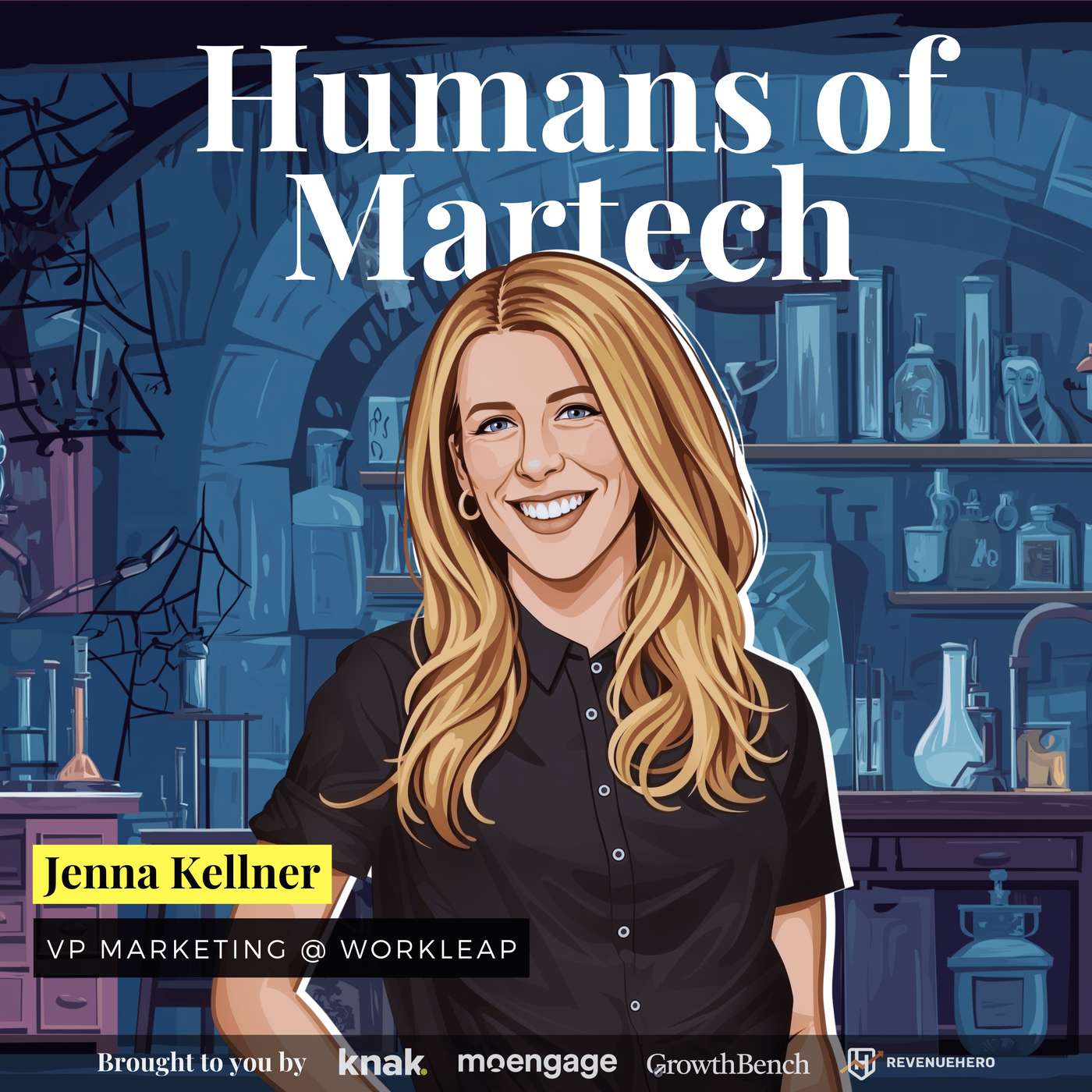
211: Jenna Kellner: Overcoming frankenstacks and AI uncertainty with first principles and business judgement
What’s up everyone, today we have the pleasure of chatting with Jenna Kellner, VP Marketing at Workleap.(00:00) - Intro (01:14) - In This Episode (04:30) - How to Manage Marketing Tech Debt During Rapid Growth (10:10) - How to Prioritize RevOps Tech Debt Without Perfect ROI Models (14:23) - Reasoning Through Broken Systems and Imperfect Data (19:23) - How High Performers Progress Anyway (24:28) - How to Build Confidence With AI Through Small Experiments (33:06) - How to Use Exit Planning and Cost Benefit Analysis for AI Tool Selection (35:57) - First principles matter more than tools (38:59) - Why Staying Close to Execution Improves Marketing Leadership (45:13) - Why Critical Thinking Skills Drive Marketing Career Growth (49:33) - How to Build Business Judgment in Technical Marketing Roles (53:03) - Why Confidence Without Humility is Dangerous (55:47) - How Revenue Leaders Prioritize Daily Energy (59:49) - Growing up (01:01:10) - Book rec Summary: Jenna is a VP of marketing that can talk about the weeds of messy systems, uncertain decisions, and personal growth. You can’t hide from it, every company accumulates tech debt as teams rush to hit revenue targets. She frames tech debt as a leadership responsibility and urges executives to reinvest in core systems when patchwork begins to outweigh building. If leadership doesn’t get it, the best way to prioritize it is to shape it as an opportunity cost and lost leverage that will drain revenue the longer we wait. In the face of AI uncertainty, she argues that judgment compounds faster than technical knowledge, and that the marketers who become indispensable blend business awareness, proximity to execution, and decisive action grounded in humility.About JennaJenna Kellner is Vice President of Marketing at Workleap and a revenue-focused marketing leader who has spent more than a decade building marketing teams and scaling companies. She brings experience across Enterprise, SMB, D2C, SaaS, two-sided marketplaces, venture studios, and other high-growth environments.Her career spans senior leadership roles at Minerva, On Deck, RBCx, and Ownr, where she led marketing, growth, and revenue functions inside complex, evolving organizations. At RBCx, she served as Chief Growth Officer for Ampli and directed marketing and growth initiatives within a large financial institution setting. She has also co-founded communities such as GrowthToronto and Little Traders, reflecting her commitment to building networks and businesses in parallel.Jenna operates with a strong sense of ownership and accountability, grounded in her belief that every challenge ultimately becomes her responsibility to solve. Recognized as a WXN Top 100 Women in Canada, she focuses on developing high-performing teams that connect strategy to execution and translate marketing into measurable revenue impact.The Frankenstein Reality of Managing Tech Debt: How to Manage Marketing Tech Debt During Rapid GrowthYou know it.. Most marketers are operating inside half-connected systems. No company has a pristine, perfectly synchronized tech stack. Even if they think they do, it doesn’t last. Growth creates pressure, and pressure produces shortcuts. Jenna has seen the same cycle in startups and enterprise environments. In the early days, teams build whatever gets the job done. They start in spreadsheets, layer on point solutions, wire tools together with lightweight integrations, and move fast because revenue matters more than architecture.Those early decisions never disappear. They compound. Years later, larger organizations inherit layers of systems that were added at different stages of maturity. Tools do not scale in sync. One platform gets upgraded. Another stays frozen because a team depends on it. Reporting becomes an exercise in orchestration. Jenna recalls walking into an organization where a sales leader pulled her weekly report from eight separate tools. That routine consumed time, drained energy, and normalized operational friction.“You have to Frankenstein your way through them to get the answers you need.”That sentence captures the daily reality inside many marketing and revenue teams. Quarter-end reporting still happens. Board decks still go out. The numbers get assembled through exports, CSV files, manual joins, and late-night reconciliation. Leadership often tolerates the strain because revenue continues to land. But the cost isn’t super visible:Reporting cycles stretch longer each quarter.Forecast confidence erodes.Team morale dips as manual work expands.Strategic decisions rely on partial or inconsistent data.So how do we get out of this mess? Jenna views this as a leadership obligation. Someone has to decide that cleaning house earns priority alongside pipeline generation. She describes working with a founder who paused other initiatives to repair core systems. The work moved slowly. It required budget discipline and uncomfortable trade-offs. It rebuilt trust in data and freed leaders from cobbled-to

210: Ronald Gaines: 6 Things the next generation of marketing ops leaders must learn
What’s up folks, today we have the pleasure of sitting down with Ronald Gaines, Digital Transformation & Marketing Ops Leader at Sunbelt Rentals, Inc.(00:00) - Intro (01:12) - In This Episode (06:18) - 1. Learning to Operate Without Formal Authority (13:59) - 2. Stop Waiting for the Org to Define Your Marketing Ops Role (22:53) - 3. The Hidden Cost of Self Taught Ops and Minimum Viable Discipline (31:46) - 4. Thinking in Products Instead of Tasks (39:15) - 5. Data Discipline Outlasts Any Platform (48:38) - 6. How to Design a Marketing Ops Intake Process That Protects Team Capacity (52:18) - Personal Energy Allocation Framework For Marketing Ops Leaders Summary: Ronald shares a framework for marketing operations leaders to move from reactive support into proactive systems authority by building influence through measurable credibility, structured intake processes, and disciplined governance. It argues that operational work should be managed like a product with clear boundaries, documented standards, and strong data discipline, which protects team capacity, prevents burnout, and makes impact visible to the business. By defining their own role and communicating value in commercial terms, operators convert technical execution into durable strategic leverage.About RonaldRonald Gaines is a Digital Transformation and Marketing Operations leader who builds scalable revenue engines across complex enterprise environments. He combines strategic direction with hands-on expertise in marketing automation, data architecture, analytics, and customer experience optimization.As Senior Manager of MarTech and Data Analytics at Sunbelt Rentals, he leads the enterprise martech roadmap, governs lead management and data integrity, and aligns marketing technology with measurable revenue outcomes. His experience across Cisco, Dell, and global consulting engagements reflects a consistent focus on operational rigor, system design, and performance-driven growth.Outside of work, Ronald is a dedicated fan of comic books and graphic novels, with a particular appreciation for mech stories and towering kaiju battles. He is also launching a nonprofit focused on building youth leaders and strengthening communities, speaks at career days to introduce young people to digital marketing, and is committed to serving families and helping the next generation build a path toward a thriving, stable quality of life.1. Learning to Operate Without Formal AuthorityMarketing ops leaders operate at the center of execution. Campaigns depend on them for tracking, lifecycle depends on them for clean product data, and growth teams depend on them for accurate reporting. Work flows through their systems every day. Authority often sits somewhere else.We describe this tension as an authority paradox. You touch everything. You own very little. Influence becomes the mechanism that moves work forward.Ronald believes influence grows from operational credibility. Ops leaders who become indispensable demonstrate rigor and produce dependable outcomes with quantifiable business impact. They can show how their work reduces launch time, decreases system incidents, improves data accuracy, or drives measurable revenue lift. When the numbers are visible, stakeholders treat the function differently.“If you cannot quantify the work that you’re doing for the business and the impact that it is making, it becomes very hard to have the influence and authority you need to push back and protect your bandwidth.”That perspective shifts the conversation from personality to proof. Relational influence still matters. Cross functional trust smooths collaboration. Operational influence carries more weight because it compounds. When a team consistently delivers outcomes that are measured and shared, credibility grows with each cycle.Ronald points to structure as the starting point. A centralized intake process creates visibility and discipline. A mature intake process includes:A required business outcome for every request.An estimated level of effort based on real sizing.A defined metric tied to revenue, cost savings, risk reduction, or speed.A transparent prioritization rubric that stakeholders can review.When every request moves through this filter, conversations become sharper. Trade offs move from hallway debates to documented decisions. You protect capacity because the impact is visible. You prioritize high value work because the math supports it.He also encourages ops leaders to create formal deliverables that showcase impact. Publish a quarterly ops impact report. Share a dashboard that tracks launch velocity. Track incident reduction over time. Circulate a capability roadmap tied to revenue targets. These artifacts signal accountability. Accountability grants the authority to set priorities and allocate resources.Influence grows when stakeholders associate your involvement with consistent business gains. Teams start asking for your perspective earlier in the planning process. Leader
209: Maria Solodilova: Why Adtech is really a marketplace with its own economics
What’s up everyone, today we have the pleasure of sitting down with Maria Solodilova, Head of Business Development at Yango Ads.(00:00) - Intro (01:17) - In This Episode (04:23) - Mobile Ad Mediation Business Development Explained (09:58) - AI Credibility In Ad Tech Sales (18:42) - Why Adtech is Really a Marketplace With Its Own Economics (30:30) - Programmatic Ad Auctions And Inventory Dynamics (35:22) - Building Trust in Programmatic Advertising Transparency (43:39) - The Future of Contextual Advertising (46:47) - Buy-in Tip (48:03) - Books Recommendations (51:07) - Happiness System Summary: Maria takes us on a guided tour across the adtech landscape from a bird’s-eye view, describing a real-time marketplace where mobile ad mediation converts app usage into revenue through auctions that price every impression. She explains how supply-side work at Yango Ads centers on SDK integration, auction behavior, and performance tradeoffs that directly shape earnings once systems operate in production. The conversation frames adtech as a market governed by supply, demand, and incentives, which explains why performance shifts often outrun planning models and attribution frameworks. She grounds AI and transparency in observable mechanics, showing how reconciled data, clear ownership, and contextual execution support trust and durable monetization.About MariaMaria Solodilova leads global business development at Yango Ads, where she oversees revenue growth and strategic partnerships for an AI-driven mobile ad monetization platform. She manages distributed teams across the United States, China, Southeast Asia, and Latin America, with consistent delivery of seven-figure quarterly revenue and sustained performance above enterprise sales targets.Her career spans more than a decade across North America, Europe, and Latin America, with senior roles in AdTech, SaaS, and LegalTech. Before joining Yango Ads, Maria led international business development at Yandex, where she launched AI-based B2B products into APAC, LATAM, and MENA markets, shortened sales cycles through stronger qualification, and increased average contract value.Earlier roles at BrandMonitor and KidZania placed her in direct collaboration with Fortune 500 brands and executive leadership teams on complex, multi-market commercial partnerships. Her work consistently centers on enterprise sales execution, partner ecosystems, and monetization strategy in competitive mobile and platform-driven markets.Mobile Ad Mediation Business Development ExplainedMobile ad mediation explains how free apps generate revenue without charging users directly. The system converts attention into income through auctions that run inside apps every time an impression becomes available. Maria frames the work in plain terms when she talks to people outside adtech. Users open familiar apps, skip payment screens, and still participate in a transaction. Attention becomes the currency, and ads become the exchange mechanism.“When you are not paying for the product, chances are you might be one. You are paying with your attention.”Mediation platforms sit at the center of that exchange. Multiple ad networks bid for each impression in real time, and the highest bid wins access to a specific user. Maria’s role focuses on the supply side at Yango Ads, where her team works with mobile app developers and game studios. They integrate the SDK, tune performance, and make sure the auction behaves in ways that maximize revenue without degrading the app experience.The work demands technical fluency because developers expect concrete answers. A normal week includes discussions about factors that materially affect earnings, such as:SDK weight and its impact on app performance.Latency and how slow auctions affect fill rates.Competition density across ad networks.User experience tradeoffs that influence retention and ad tolerance.These conversations move quickly from high-level strategy to implementation details. Credibility depends on understanding how the auction behaves in production, not how it sounds in a pitch.The revenue dynamics often surprise people. Large payouts do not always come from enterprise publishers with recognizable logos. Maria has seen individual developers build a single game, monetize through ads, and generate seven-figure income. These outcomes come from timing, execution, and exposure to competitive bidding, rather than procurement cycles or brand recognition. That possibility keeps many operators engaged in the space, even as the vocabulary around ads grows tired and recycled.Business development in mediation operates as a bridge between market mechanics and human outcomes. The role connects developers who want predictable income with systems that price attention at scale. Clear explanations, technical competence, and realistic expectations shape long-term partnerships more than lofty promises ever could.Key takeaway: Mobile ad mediation monetizes attention through real-time auctions betw
208: Anthony Rotio: Exploring causal context graphs and machine customers, starting in retail media networks
What’s up folks, today we have the pleasure of sitting down with Anthony Rotio, Chief Data Strategy Officer at GrowthLoop.(00:00) - Intro (01:10) - In this episode (04:05) - Journeying From Robotics to Modern Marketing Systems (11:05) - Most Marketing Systems Don’t Learn Because They Lack Feedback Loops (16:10) - The Martech Engineering Talent Gap (19:51) - AI Will Amplify Whoever Has the Cleanest Causal Feedback Loop (29:17) - Agent Context Graphs for Drift Detection in Marketing Systems (31:51) - Humans Will Set Hypotheses, AI Will Accelerates Iteration (35:50) - The Evolution of Retail Media Networks (45:07) - How Commerce Networks Redefine Targeting With Governed Data (48:26) - How Agent to Agent Commerce Operates Inside Marketing Funnels (53:04) - Google Universal Commerce Protocol Explained (54:43) - Personal Happiness System (56:30) - Favorite Books Summary: Anthony traces a path from robotics and computer science to his current role where he approaches marketing as an engineering system. He explains how execution-first marketing stacks weaken feedback loops and fragment data, which slows learning and iteration. He introduces the agent context graph as a causality model that lets AI simulate and predict customer behavior with greater confidence. The conversation also covers retail media networks, first-party data monetization through governed access, and a shift toward zero-to-zero marketing driven by agent-to-agent transactions. He closes by stressing that strong data foundations determine who can compete as marketing becomes more automated and agent-driven.About AnthonyAnthony Rotio is the Chief Data Strategy Officer at GrowthLoop, where he leads partnerships and builds generative AI product features for marketers, including multi-agent systems, AI-driven audience building, and benchmarking and evaluation work. He previously served as GrowthLoop’s Chief Customer Officer, where he built and led teams across data engineering, data science, and solutions architecture while supporting product development and strategic sales efforts.Before GrowthLoop, Anthony spent nearly six years at AB InBev, where he led a $100M owned retail business unit with full P&L responsibility and drove major growth through operational and digital transformation work. He also led U.S. marketing for Budweiser, Bud Light, Michelob Ultra, Stella Artois, and other brands across music, food, and related consumer programs. He earned a B.A. in computer science from Harvard, played linebacker on the Harvard football team, founded the consumer product Pizza Shelf, and holds a Google Professional Cloud Architect certification.Journeying From Robotics to Modern Marketing SystemsAnthony’s career started far away from marketing. He trained as a computer scientist and spent his early years working with robotics and reinforcement learning. His first exposure to a learning agent left a lasting impression because the system behaved less like traditional software and more like something adaptive. That experience shaped how he would later think about work, systems, and feedback. He learned early that progress comes from loops that learn, not static instructions.That mindset followed him into an unexpected chapter at AB InBev. Anthony entered a world defined by scale, brands, and operational complexity. He treated his technical background like a carpenter treats tools, useful only when applied to real problems. Running marketing across major beer brands taught him how value is created inside large organizations. It also exposed a recurring issue. Marketing teams had ambition and data, but execution moved slowly because ideas had to travel through layers of translation before anything reached customers.That friction became impossible to ignore. Audience definitions moved through tickets. Campaigns waited on queries. Data teams became bottlenecks through no fault of their own. Anthony felt the pull back toward technology, where systems could shorten the distance between intent and action. That pull led him to GrowthLoop, where he joined early and worked directly with customers. The appeal was immediate. The product connected straight to cloud data and removed several layers of mediation that marketing teams had accepted as normal.As language models improved, Anthony recognized a familiar pattern. Audience building behaved like a translation problem. Marketers described people and intent in natural language, while systems demanded structured logic. Early experiments showed that natural language models could close that gap. Anthony framed the idea clearly.“Audience building is a translation problem. You start with a business idea and you end with a query on top of data.”Momentum followed quickly. Customers like Indeed and Google responded because speed changed behavior. Teams experimented more often and refined audiences based on results instead of assumptions. Conversations with Sam Altman and collaboration with OpenAI reinforced that this capab
207: Building a career that doesn't hollow you out (50 Operators share the systems that keep them happy, part 3)
"Hey – So what do you do?” Why is it that we always default to work when we get this question. its like many of us have let our jobs become the center of how we see ourselves. This slowly happens to many of us, as work occupies more mental and emotional space.I asked 50 people in martech and operations how they stay happy under sustained pressure. This 3 part series – titled “50 Operators share the systems that keep them happy” explores each of these layers through the lived experience of operators who feel the same pressure you probably feel right now.Today we close out the series with part 3: meaning. We’ll hear from 19 people and we’ll cover:(00:00) - Teaser (01:08) - Intro / In This Episode (04:27) - Rich Waldron: Auditing Whether Work Is Actually Moving (06:49) - Samia Syed: Tracking Personal Growth (08:33) - Jonathan Kazarian: Tracking Growth Across Life Health and Work (10:11) - Kim Hacker: Choosing Roles With Daily Visible Impact (12:21) - Mac Reddin: Checking Work Against 3 Personal Conditions (14:11) - Chris Golec: Choosing Early Stage Building Work (15:19) - Hope Barrett: Feeding curiosity across multiple domains (17:45) - Simon Lejeune: Treating work like a game (19:52) - Ana Mourão: A mental buffer between noticing and doing (21:46) - Tiankai Feng: Anticipation planning (25:30) - István Mészáros: Choosing Who You Are When Work Ends (29:52) - Danielle Balestra: Feeding Interests Unrelated to Work (31:42) - Jeff Lee: Continuing to Build Personal Projects After the Workday Ends (33:23) - John Saunders: Keeping a builder practice outside of work (34:41) - Ashley Faus: Group Creative Rituals Outside of work (37:40) - Anna Aubucho: Maintaining a second self through solo creative practice (39:56) - Ruari Baker: Preserving Identity Through Regular Travel (42:15) - Guta Tolmasquim: Building a personal product roadmap (45:37) - Pam Boiros: Feeding identities that have nothing to do with work (47:52) - Outro All that and a bunch more stuff after a quick word from 2 of our awesome partners.A lot of the operators I chatted with don’t talk about happiness like it suddenly arrives. They describe it as something you feel when things actually start to move. Our first guest gets there right away by tying happiness directly to progress, the kind that tells you you’re not stuck.Rich Waldron: Auditing Whether Work Is Actually MovingFirst up is Rich Waldron, Co-founder and CEO at Tray.ai. He’s also a dad, and a mediocre golfer.Progress sits at the center of Rich’s definition of career happiness. He treats it as a felt sense rather than a dashboard metric. When work advances in a direction that makes sense to him, his energy steadies. When that movement slows or stalls, frustration surfaces quickly and spreads into everything else. That feeling becomes a cue to examine direction rather than effort.“Happiness is mostly driven by progress.”That framing resonates because it names something many operators struggle to articulate. Long hours can feel sustainable when the work moves forward. Light workloads can feel draining when days repeat without traction. Progress gives work narrative weight. It answers a quiet internal question about whether today connects to something that matters tomorrow.Rich also points to patterns that erode meaning over time.Roles with little challenge dull attention, even when the pay is generous.Constant activity without visible change breeds irritation that lingers after work ends.Both conditions interrupt momentum. The mind keeps searching for movement that never arrives. Rest stops working because unresolved motion occupies every quiet moment.Progress also shapes identity beyond work. When things move in the right direction, attention releases its grip on unfinished problems. Rich links that release to showing up better at home. He describes being more present as a parent because mental energy is no longer trapped in work that feels stuck. Forward motion restores proportion. Work keeps its place as one part of a full life rather than the dominant one.Balance emerges as a byproduct of this orientation. You choose problems that move. You notice when progress fades. You adjust before frustration hardens into burnout. That rhythm preserves meaning over long career arcs and keeps work aligned with the person you want to remain.Key takeaway: Track progress as a signal of meaning. When your work moves in a direction you respect, it stays contained, your identity stays intact, and the rest of your life receives the attention it deserves.Samia Syed: Tracking Personal GrowthThat’s Samia Syed, Director of Growth Marketing at Dropbox. She’s also a mother, outdoor fanatic, and an avid hiker.Progress became the scorecard Samia relies on to keep her career from consuming her sense of self. Early professional years trained her to chase perfection, because perfection looked measurable, respectable, and safe. That mindset quietly tightened the frame around what counted as a good day. Effort increased, expecta

206: The people who keep you standing (50 Operators share the systems that keep them happy, part 2)
Pressure at work rarely stays contained within the job. It spills into family life, friendships, and daily relationships. I asked 50 operators how they stay happy while managing responsibility at work and at home. This 3 part series – titled “50 Operators share the systems that keep them happy” explores each of these layers through the lived experience of operators who feel the same pressure you probably feel right now. Today we continue with part 2: connection, the relationships that recharge you and keep you standing when the work would otherwise knock you sideways.We’ll hear from 17 people and we’ll cover:(00:00) - Teaser (02:00) - In This Episode (04:30) - Eric Holland: Limiting Slack and Prioritizing Family Time (05:33) - Meg Gowell: Shared Family Routines (08:31) - David Joosten: Filtering Reactive Work So Time Stays With Family (10:30) - Aboli Gangreddiwar: Designing Work to Enable Family Travel (12:01) - Kevin White: Separating Career Drive From Family Identity (13:42) - Joshua Kanter: Daily Family Rituals (18:07) - Gab Bujold: Daily Check-Ins With a Trusted Work Partner (22:30) - Anna Leary: Treating Workload Stress as a Shared Problem (24:31) - Angela Rueda: Shared Problem Solving Conversations (26:50) - Blair Bendel: Using In Person Conversations to Stay Grounded (29:28) - Matthew Castino: Work Satisfaction Correlates Strongly With Team Relationships (33:17) - Aditi Uppal: Connection as a Feedback Loop (35:48) - Alison Albeck Lindland: One Social System Across Work and Life (37:34) - Rajeev Nair: Human Bonds Absorb Pressure Before Burnout (40:12) - Chris O’Neil: Filtering Work Through People and Problems That Matter (42:24) - Rebecca Corliss: Creativity as a Shared Emotional Outlet (44:24) - Moni Oloyede: Teaching as a Living Relationship (45:50) - Outro Connection starts with who you protect time for. Our first guest begins there, shaping his work around people who refill him and drawing hard lines around anything that steals those moments away.Eric Holland: Limiting Slack and Prioritizing Family TimeFirst up is Eric Holland, a fractional PMM based in Pennsylvania, and the co-host of the We’re not Marketers Podcast. He’s also a dad and runs a retail apparel startup. Eric shapes his happiness around people before tasks. He pares his work down to projects shared with colleagues he enjoys being around, and that choice changes the texture of his days. Conversations feel easier. Meetings end with momentum instead of fatigue. You can hear a quiet confidence in how he describes work that feels relational rather than transactional.Family anchors that perspective in a very physical way. Nearly every weekend, from late November through Christmas, belongs to his ten-month-old son. These are not abstract intentions. They are mornings that smell like coffee and pine needles, afternoons on cold sidewalks, and evenings defined by routine rather than inboxes. Time with his son creates emotional weight that carries into the workweek and keeps priorities visible when deadlines start to blur.Eric also draws a firm boundary around digital proximity. Slack does not live on his phone, and that decision protects the moments where connection needs full attention. The habit most people recognize, checking messages during dinner or while holding a child, never has a chance to form. Presence becomes simpler when tools stay in their place.The system he describes comes together through a few concrete moves that many people quietly avoid:He limits work to collaborators who feel generous with energy.He reserves weekends for repeated family rituals that mark time.He removes communication tools from personal spaces where they dilute focus.Eric captures the point with a line that carries practical weight.“Delete Slack off your phone.”That sentence signals care for the relationships that actually hold you upright. Attention stays where your body is, and connection grows from that consistency.Key takeaway: Strong connections protect long-term happiness at work. Choose collaborators who give energy, protect repeated time with family and friends, and keep work tools out of moments that deserve your full presence.Meg Gowell: Shared Family RoutinesNext up is Meg Gowell, Head of Marketing at Elly and former Director of Growth Marketing at Typeform and Appcues. She’s also a mom of 3.Remote work compresses everything into the same physical space. Meetings happen steps away from the kitchen. Notifications follow you into the evening. Meg treats that compression as something that requires active design. She and her husband both work remotely, so separation never happens by accident. It happens because they decide when work stops and family time starts, and they repeat that decision every day.That discipline shows up in how she leads at Typeform. An international team creates constant overlap and constant absence at the same time. Someone is always offline. Someone is always mid-day. Ideas surface at inconvenient hours. Meg sends messages w

205: The daily infrastructure behind sustainable careers (50 Operators share the systems that keep them happy, part 1)
Careers place a ton of demand on energy and attention way before results start to stabilize. Many operators discover that health and routine determine how long they can operate at a high level.I spoke with 50 people working in martech and operations about how they stay happy under pressure. This 3 part series – titled “50 Operators share the systems that keep them happy” explores each of these layers through the lived experience of operators who feel the same pressure you probably feel right now.Today we start with part 1: stability through routines, boundaries, and systems that protect the body and mind. We’ll hear from 15 people:(00:00) - Teaser (01:05) - Intro (01:30) - In This Episode (04:09) - Austin Hay: Building Non Negotiables (08:06) - Sundar Swaminathan: Systems That Prevent Stress (12:33) - Elena Hassan: Normalizing Stress (14:32) - Sandy Mangat: Managing Energy (16:31) - Constantine Yurevich: Designing Work That Matches Personal Energy (19:05) - Keith Jones: Intentional Work Rhythms (23:58) - Olga Andrienko: Daily Health Routines (26:06) - Sarah Krasnik Bedell: Outdoor Routines (27:21) - Zach Roberts: Physical Reset Rituals Outside Work (28:57) - Jane Menyo: Recovery Cycles (31:56) - Angela Vega: Chosen Challenges and Recovery Cycles (36:09) - Megan Kwon: Presence Built Into the Day (37:50) - Nadia Davis: Calendar Discipline (39:36) - Henk-jan ter Brugge: Planning the Week as a Constraint System (43:15) - Ankur Kothari: Personal Metrics (44:07) - Outro Austin Hay: Building Non NegotiablesOur first guest is Austin Hay, he’s a co-founder, a teacher, a martech advisor, but he’s also a husband, a dog dad, a student, water skiing fanatic, avid runner, a certified financial planner, and a bunch more stuff... Daily infrastructure shows up through repetition, discipline, and choices that protect energy before anything else competes for it. Austin grounds happiness in curiosity, but that curiosity only thrives when supported by sleep, movement, and time that belongs to no employer. Learning stays fun because it is not treated as another performance metric. It remains part of who he is rather than something squeezed into the margins of an already crowded day.Mental and physical health shape his schedule in visible ways. Austin treats them as operating requirements rather than aspirations. His days include a short list of behaviors that carry disproportionate impact:Regular sleep with a consistent bedtime.Exercise that creates physical fatigue and mental quiet.Relationships that exist entirely outside work.Hobbies and games that feel restorative rather than productive.These habits rarely earn praise, which explains why they erode first under pressure. In his twenties, Austin chased work, clients, and money with intensity. He told himself the rest would come later. That promise held eventually, but the gap years carried a cost. He remembers moments of looking in the mirror and feeling uneasy about the life he was assembling, despite checking every external box.Trade-offs now anchor his thinking. Austin frames decisions as equations involving time, energy, and outcomes. Goals demand inputs, and inputs consume limited resources. Avoiding that math leads to exhaustion and resentment. Facing it creates clarity. Many people resist this step because it forces hard choices into daylight. The industry rewards the appearance of doing everything, even when the math never works.“I view a lot of decisions and outcomes in life as trade-offs. At the end of the day, that’s what most things boil down to.”Sleep makes the equation tangible. Austin aims for bed around 9 or 9:30 each night because his mornings require focus, training, and sustained energy. He needs seven and a half hours of sleep to function well. That requirement dictates the rest of the day. Social plans adjust. Work compresses. Goals remain achievable because the system supports them.He defines what he wants to pursue.He calculates the energy required.He locks in non negotiables that keep the math honest.That structure removes constant negotiation with himself. The system holds even when motivation dips or distractions multiply.Key takeaway: Daily infrastructure depends on non negotiables that protect sleep, health, and energy. Clear priorities, visible trade-offs, and repeatable routines create careers that stay durable under pressure.Sundar Swaminathan: Systems That Prevent StressNext up is Sundar Swaminathan, Former Head of Marketing Science at Uber, Author & Host of the experiMENTAL Newsletter & Podcast. He’s also a husband, a father and a well traveled home chef, amateur chess master.Stress prevention sits at the center of Sundar’s daily system for staying happy and effective at work. A concentrated period of personal loss collapsed any illusion that stress deserved patience or tolerance. Three deaths in three weeks compressed time, sharpened perspective, and forced a reassessment of what stress actually costs. Stress drains energy first, then

204: Phyllis Fang: Trust infrastructure and freakish curiosity as career growth levers
What’s up everyone, today we have the pleasure of sitting down with Phyllis Fang, Head of Marketing at Transcend.(00:00) - Intro (01:23) - In This Episode (04:13) - Uber Safety Marketing Shaped A Trust First Marketing Playbook (10:12) - How Permissioned Data Systems Power Personalization at Scale (15:22) - How Consent Infrastructure Improves Personalization Performance (19:20) - How to Audit Consent and Compliance in Marketing Data (23:24) - What Consent Management Does Across AI Data Lifecycles (28:29) - How to Build a Marketing Trust Stack (30:49) - Consent Management as a Revenue Lever (35:10) - Designing Marketing Teams for Freakish Curiosity (41:19) - Skills That Define Great Marketing Operations (45:33) - Why System Level Marketing Experience Builds Career Leverage (50:13) - System for Happiness Summary: Phyllis learned how fragile marketing becomes when systems move faster than trust while working between lifecycle execution and product marketing at Uber. Safety work around emergencies, verification, and COVID forced messages to withstand scrutiny from riders, drivers, regulators, and the public. That experience shapes how she approaches consent and personalization today. Permission signals decide what data moves and how confidently teams can act. When those signals stay connected, work holds. When they drift, confidence erodes across systems, teams, and careers.About PhyllisPhyllis Fang leads marketing at Transcend, where enterprise growth depends on clear choices about data, consent, and accountability. Her work shapes how privacy becomes part of how companies operate, communicate, and earn confidence at scale.Earlier in her career, she spent several years at Uber, working on global product marketing for safety during periods of intense public scrutiny. She helped bring new safety features to market at moments when user behavior, policy decisions, and brand credibility were tightly linked. The work required precision, restraint, and an understanding of how people respond when stakes feel personal.Across roles in e-commerce, lifecycle marketing, and platform strategy, a pattern holds. Fang gravitates toward systems that must work under pressure and messages that must hold up in practice. Her career reflects a belief that marketing earns its place when it reduces uncertainty and helps people move forward with confidence.Uber Safety Marketing Shaped A Trust First Marketing PlaybookTrust-focused marketing depends on people who can move between systems work and narrative work without losing credibility in either space. Phyllis built that fluency by operating inside lifecycle programs while also leading product marketing initiatives at Uber. One side of that work lived in tools, triggers, and delivery logic. The other side lived in rooms where progress depended on persuasion, alignment, and patience. That dual exposure trained her to see how fragile big ideas become when they cannot survive real execution.Lifecycle and marketing operations reward control and repeatability. Product marketing inside a global organization rewards influence and restraint. Phyllis describes moments where moving a single initiative forward required negotiation across regions, channels, and internal politics. Every message faced review from people who owned distribution and reputation in their markets. Messaging tightened quickly because weak logic did not survive long. Campaigns became sharper because every assumption had to hold up under pressure.“We were all in the same company, but I still had to convince people to resource things differently or prioritize a message.”Safety marketing pushed that pressure even further. The work focused on features designed for rare, high-stakes moments, including emergency assistance and large-scale verification during COVID. Measurement shifted away from habitual usage and toward confidence and credibility. The audience expanded well beyond active users. Phyllis had to speak clearly to riders, drivers, regulators, and the general public at the same time. Each group carried different fears, incentives, and consequences. Messaging succeeded only when it respected those differences without creating confusion.That mindset carries directly into her work at Transcend. Privacy and consent buyers often sit in legal or compliance roles where personal and professional risk overlap. These buyers read closely and remember details. Phyllis explains that proof needs to operate on two levels at once. It must withstand careful review, and it must connect to human motivation. Career safety, internal credibility, and long-term reputation shape decisions more than feature depth ever will.“You have to understand the human behind the role, because their motivation usually has very little to do with your product.”Many martech teams still lean on urgency and fear to move deals forward. That habit collapses quickly in trust-driven categories. Buyers trained to manage risk respond to clarity, evidence, and empathy.

203: Jordan Resnick: How to distinguish fake traffic from real machine customers
What’s up everyone, today we have the pleasure of sitting down with Jordan Resnick, Senior Director, Marketing Operations at CHEQ.(00:00) - Intro (01:10) - In This Episode (03:47) - Demystifying Go-to-Market Security (06:14) - The Fake Traffic Surge (08:14) - How the Dead Internet Theory Connects to Bot Traffic Growth (12:31) - How to Detect Bot Traffic Through Behavioral Patterns (16:13) - How Go To Market Teams Reduce Fake Traffic And Lead Pollution (30:03) - Preventing Fake Leads From Reaching Sales (34:17) - How to Calculate Revenue Impact of Fake Traffic (38:09) - How to Report Marketing Performance When Bot Traffic Skews Metrics (43:58) - Trust Erosion From Fake Traffic (49:49) - How Marketing Ops Should Adapt Systems for Machine Customers (53:59) - Funnel Audits With Security Teams to Reduce Bot Traffic (57:47) - Detachment as a Career Survival Skill Summary: Distinguishing fake traffic from real machine customers starts where metrics break down. Jordan shows how AI-driven bots now scroll, click, submit forms, and pass validation while quietly filling dashboards with activity that never turns into revenue. The tell is behavioral texture. Sessions move too fast. Paths skip learning. Engagement appears without intent. Real machine customers behave with rhythm and purpose, returning, evaluating, integrating. Teams that recognize the difference lock down the conversion point, block synthetic demand before it reaches core systems, keep sales calendars clean, and only report once traffic has earned trust.About JordanJordan Resnick is Senior Director of Marketing Operations at CHEQ, where he leads the systems, data, and workflows that support go-to-market security across a global customer base. His work sits at the intersection of marketing operations, revenue operations, attribution, automation, and analytics, with a clear focus on building infrastructure that holds up under scale and scrutiny.Before CHEQ, Jordan led marketing operations at Atlassian, where he supported complex GTM motions across multiple business units and global markets. Earlier roles at Perkuto and MERGE combined hands-on execution with customer-facing leadership, integration design, and process ownership. His career also includes more than a decade as an independent operator, delivering marketing operations, automation, content, and technical solutions across a wide range of organizations. Jordan brings a deeply practical, execution-driven perspective shaped by years of building, fixing, and maintaining real systems in production environments.Demystifying Go-to-Market SecurityGo-to-market security shows up when growth metrics look strong and revenue outcomes feel weak. Marketing operations teams live in that gap every day. Jordan describes GTM security as a business-facing discipline that protects the integrity of acquisition, funnel data, and downstream decisions that depend on clean signals. The work sits inside marketing operations because that is where traffic quality, lead flow, and revenue attribution converge.When asked about how GTM security differs from traditional fraud prevention, Jordan frames the difference through decision-making pressure. Security teams historically focus on defending infrastructure and minimizing exposure. Marketing ops teams focus on maintaining momentum while spending real budget. GTM security evaluates risk in context, with an eye toward revenue impact, forecasting accuracy, and operational trust across teams that rely on shared data.Jordan grounds the concept in specific failure points that operators recognize immediately. GTM security examines where bad inputs quietly enter systems and multiply.Paid traffic that inflates sessions without creating buyers.Analytics skewed by automated interactions that look legitimate.Form submissions that pass validation and still never convert.Sales pipelines filled with activity that drains time and morale.Each issue compounds because systems assume the data is real. Teams keep optimizing against numbers that feel precise and still point in the wrong direction.“You are putting money into driving people to your website, and the first question should be how many of those people are real and able to buy.”Invalid traffic behaves like a contaminant. It flows from acquisition into attribution models, forecasting tools, CRMs, and revenue dashboards. Marketing celebrates growth, sales chases shadows, and finance questions confidence in the entire funnel. The problem rarely announces itself as a security incident. It surfaces as confusion, missed targets, and internal friction.GTM security matters because it gives marketing ops teams a framework to protect the inputs that shape every downstream decision. The work runs alongside traditional security while staying anchored in go-to-market outcomes. That way you can spend with confidence, trust your reporting, and hand sales teams signals grounded in real buying behavior.Key takeaway: Treat go-to-market security as part of yo

202: Aleyda Solís: AI search crawlability and why your site’s technical foundations decide your visibility
What’s up everyone, today we have the honor of sitting down with Aleyda Solís, SEO and AI search consultant. (00:00) - Intro (01:17) - In This Episode (04:55) - Crawlability Requirements for AI Search Engines (12:21) - LLMs As A New Search Channel In A Multi Platform Discovery System (18:42) - AI Search Visibility Analysis for SEO Teams (29:17) - Creating Brand Led Informational Content for AI Search (35:51) - Choosing SEO Topics That Drive Brand-Aligned Demand (45:50) - How Topic Level Analysis Shapes AI Search Strategy (50:01) - LLM Search Console Reporting Expectations (52:09) - Why LLM Search Rewards Brands With Real Community Signals (55:12) - Prioritizing Work That Matches Personal Purpose Summary: AI search is rewriting how people find information, and Aleyda explains the shift with clear, practical detail. She has seen AI crawlers blocked without anyone noticing, JavaScript hiding full sections of sites, and brands interpreting results that were never based on complete data. She shows how users now move freely between Google, TikTok, Instagram, and LLMs, which pushes teams to treat discovery as a multi-platform system. She encourages you to verify your AI visibility, publish content rooted in real customer language, and use topic clusters to anchor strategy when prompts scatter. Her closing point is simple. Community chatter now shapes authority, and AI models pay close attention to it.About AleydaAleyda Solís is an international SEO and AI search optimization consultant, speaker, and author who leads Orainti, the boutique consultancy known for solving complex, multi-market SEO challenges. She’s worked with brands across ecommerce, SaaS, and global marketplaces, helping teams rebuild search foundations and scale sustainable organic growth.She also runs three of the industry’s most trusted newsletters; SEOFOMO, MarketingFOMO, and AI Marketers, where she filters the noise into the updates that genuinely matter. Her free roadmaps, LearningSEO.io and LearningAIsearch.com, give marketers a clear, reliable path to building real skills in both SEO and AI search.Crawlability Requirements for AI Search EnginesCrawlability shapes everything that follows in AI search. Aleyda talks about it with the tone of someone who has seen far too many sites fail the basics. AI crawlers behave differently from traditional search engines, and they hit roadblocks that most teams never think about. Hosting rules, CDN settings, and robots files often permit Googlebot but quietly block newer user agents. You can hear the frustration in her voice when she describes audit after audit where AI crawlers never reach critical sections of a site."You need to allow AI crawlers to access your content. The rules you set might need to be different depending on your context."AI crawlers also refuse to process JavaScript. They ingest raw markup and move on. Sites that lean heavily on client-side rendering lose entire menus, product details, pricing tables, and conversion paths. Aleyda describes this as a structural issue that forces marketers to confront their technical debt. Many teams have spent years building front-ends with layers of JavaScript because Google eventually figured out how to handle it. AI crawlers skip that entire pipeline. Simpler pages load faster, reveal hierarchy immediately, and give AI models a complete picture without extra processing.Search behavior adds new pressure. Aleyda points to OpenAI’s published research showing a rise in task-oriented queries. Users ask models to complete goals directly and skip the page-by-page exploration we grew up optimizing for. You need clarity about which tasks intersect with your offerings. You need to build content that satisfies those tasks without guessing blindly. Aleyda urges teams to validate this with real user understanding because generic keyword tools cannot describe these new behaviors accurately.Authority signals shift too. Mentions across credible communities carry weight inside AI summaries. Aleyda explains it as a natural extension of digital PR. Forums, newsletters, podcasts, social communities, and industry roundups form a reputation map that AI crawlers use as context. Backlinks still matter, but mentions create presence in a wider set of conversations. Strong SEO programs already invest in this work, but many teams still chase link volume while ignoring the broader network of references that shape brand perception.Measurement evolves alongside all of this. Aleyda encourages operators to treat AI search as both a performance channel and a visibility channel. You track presence inside responses. You track sentiment and frequency. You monitor competitors that appear beside you or ahead of you. You map how often your brand appears in summaries that influence purchase decisions. Rankings and click curves do not capture the full picture. A broader measurement model captures what these new systems actually distribute.Key takeaway: Build crawlability for AI search with i

201: Scott Brinker: If he reset his career today, where would he focus?
What’s up everyone, today we have the honor of sitting down with the legendary Scott Brinker, a rare repeat guest, the Martech Landscape creator, the Author of Hacking Marketing, The Godfather of Martech himself.(00:00) - Intro (01:12) - In This Episode (05:09) - Scott Brinker’s Guidance For Marketers Rethinking Their Career Path (11:27) - If You Started Over in Martech, What Would You Learn First (16:47) - People Side (21:13) - Life Long Learning (26:20) - Habits to Stay Ahead (32:14) - Why Deep Specialization Protects Marketers From AI Confusion (37:27) - Why Technical Skills Decide the Future of Your Marketing Career (41:00) - Why Change Leadership Matters More Than Technical AI Skills (47:11) - How MCP Gives Marketers a Path Out of Integration Hell (52:49) - Why Heterogeneous Stacks are the Default for Modern Marketing Teams (54:51) - How To Build A Martech Messaging BS Detector (59:37) - Why Your Energy Grows Faster When You Invest in Other People Summary: Scott Brinker shares exactly where he would focus if he reset his career today, and his answer cuts through the noise. He’d build one deep specialty to judge AI’s confident mistakes, grow cross-functional range to bridge marketing and engineering, and lean into technical skills like SQL and APIs to turn ideas into working systems. He’d treat curiosity as a steady rhythm instead of a rigid routine, learn how influence actually moves inside companies, and guide teams through change with simple, human clarity. His take on composability, MCP, and vendor noise rounds out a clear roadmap for any marketer trying to stay sharp in a chaotic industry.About ScottScott has spent his career merging the world of marketing and technology and somehow making it look effortless. He co-founded ion interactive back when “interactive content” felt like a daring experiment, then opened the Chief Marketing Technologist blog in 2008 to spark a conversation the industry didn’t know it needed. He sketched the very first Martech Landscape when the ecosystem fit on a single page with about 150 vendors, and later brought the MarTech conference to life in 2014, where he still shapes the program. Most recently, he guided HubSpot’s platform ecosystem, helping the company stay connected to a martech universe that’s grown to more than 15,000 tools. Today, Scott continues to helm chiefmartec.com, the well the entire industry keeps returning to for clarity, curiosity, and direction.Scott Brinker’s Guidance For Marketers Rethinking Their Career PathMid career marketers keep asking themselves whether they should stick with the field or throw everything out and start fresh. Scott relates to that feeling, and he talks about it with a kind of grounded humor. He describes his own wandering thoughts about running a vineyard, feeling the soil under his shoes and imagining the quiet. Then he remembers the old saying about wineries, which is that the only guaranteed outcome is a smaller bank account. His story captures the emotional drift that comes with burnout. People are not always craving a new field. They are often craving a new relationship with their work.Scott moves quickly to the part that matters. He directs his attention to AI because it is reshaping the field faster than many teams can absorb. He explains that someone could spend every hour of the week experimenting and still only catch a fraction of what is happening. He sees that chaos as a signal. Overload creates opportunity, and the people who step toward it gain an advantage. He urges mid career operators to lean into the friction and build new muscle. He even calls out how many people will resist change and cling to familiar workflows. He views that resistance as a gift for the ones willing to explore.“People who lean into the change really have the opportunity to differentiate themselves and discover things.”Scott brings back a story from a napkin sketch. He drew two curves, one for the explosive pace of technological advancement and one for the slower rhythm of organizational change. The curves explain the tension everyone feels. Teams operate on slower timelines. Tools operate on faster ones. The gap between those curves is wide, and professionals who learn to navigate that space turn themselves into catalysts inside their companies. He sees mid career marketers as prime candidates for this role because they have enough lived experience to understand where teams stall and enough hunger to explore new territory.Scott encourages people to channel their curiosity into specific work. He suggests treating AI exploration like a practice and not like a trend. A steady rhythm of experiments helps someone grow their internal influence. Better experiments produce useful artifacts. These artifacts often become internal proof points that accelerate change. He believes the next wave of opportunity belongs to people who document what they try, translate what they learn, and help their companies adapt at a pace that competitors cannot eas
200: Matthew Castino: How Canva measures marketing
What’s up everyone, today we have the pleasure of sitting down with Matthew Castino, Marketing Measurement Science Lead @ Canva.(00:00) - Intro (01:10) - In This Episode (03:50) - Canva’s Prioritization System for Marketing Experiments (11:26) - What Happened When Canva Turned Off Branded Search (18:48) - Structuring Global Measurement Teams for Local Decision Making (24:32) - How Canva Integrates Marketing Measurement Into Company Forecasting (31:58) - Using MMM Scenario Tools To Align Finance And Marketing (37:05) - Why Multi Touch Attribution Still Matters at Canva (42:42) - How Canva Builds Feedback Loops Between MMM and Experiments (46:44) - Canva’s AI Workflow Automation for Geo Experiments (51:31) - Why Strong Coworker Relationships Improve Career Satisfaction Summary: Canva operates at a scale where every marketing decision carries huge weight, and Matt leads the measurement function that keeps those decisions grounded in science. He leans on experiments to challenge assumptions that models inflate. As the company grew, he reshaped measurement so centralized models stayed steady while embedded data scientists guided decisions locally, and he built one forecasting engine that finance and marketing can trust together. He keeps multi touch attribution in play because user behavior exposes patterns MMM misses, and he treats disagreements between methods as signals worth examining. AI removes the bottlenecks around geo tests, data questions, and creative tagging, giving his team space to focus on evidence instead of logistics. About MatthewMatthew Castino blends psychology, statistics, and marketing intuition in a way that feels almost unfair. With a PhD in Psychology and a career spent building measurement systems that actually work, he’s now the Marketing Measurement Science Lead at Canva, where he turns sprawling datasets and ambitious growth questions into evidence that teams can trust.His path winds through academia, health research, and the high-tempo world of sports trading. At UNSW, Matt taught psychology and statistics while contributing to research at CHETRE. At Tabcorp, he moved through roles in customer profiling, risk systems, and US/domestic sports trading; spaces where every model, every assumption, and every decision meets real consequences fast. Those years sharpened his sense for what signal looks like in a messy environment.Matt lives in Australia and remains endlessly curious about how people think, how markets behave, and why measurement keeps getting harder, and more fun.Canva’s Prioritization System for Marketing ExperimentsCanva’s marketing experiments run in conditions that rarely resemble the clean, product controlled environment that most tech companies love to romanticize. Matthew works in markets filled with messy signals, country level quirks, channel specific behaviors, and creative that behaves differently depending on the audience. Canva built a world class experimentation platform for product, but none of that machinery helps when teams need to run geo tests or channel experiments across markets that function on completely different rhythms. Marketing had to build its own tooling, and Matthew treats that reality with a mix of respect and practicality.His team relies on a prioritization system grounded in two concrete variables.SpendUncertaintyLarge budgets demand measurement rigor because wasted dollars compound across millions of impressions. Matthew cares about placing the most reliable experiments behind the markets and channels with the biggest financial commitments. He pairs that with a very sober evaluation of uncertainty. His team pulls signals from MMM models, platform lift tests, creative engagement, and confidence intervals. They pay special attention to MMM intervals that expand beyond comfortable ranges, especially when historical spend has not varied enough for the model to learn. He reads weak creative engagement as a warning sign because poor engagement usually drags efficiency down even before the attribution questions show up.“We try to figure out where the most money is spent in the most uncertain way.”The next challenge sits in the structure of the team. Matthew ran experimentation globally from a centralized group for years, and that model made sense when the company footprint was narrower. Canva now operates in regions where creative norms differ sharply, and local teams want more authority to respond to market dynamics in real time. Matthew sees that centralization slows everything once the company reaches global scale. He pushes for embedded data scientists who sit inside each region, work directly with marketers, and build market specific experimentation roadmaps that reflect local context. That way experimentation becomes a partner to strategy instead of a bottleneck.Matthew avoids building a tower of approvals because heavy process often suffocates marketing momentum. He prefers a model where teams follow shared principles, run experiments respo
199: Anna Aubuchon: Moving BI workloads into LLMs and using AI to build what you used to buy
What’s up everyone, today we have the pleasure of sitting down with Anna Aubuchon, VP of Operations at Civic Technologies.(00:00) - Intro (01:15) - In This Episode (04:15) - How AI Flipped the Build Versus Buy Decision (07:13) - Redrawing What “Complex” Means (12:20) - Why In House AI Provides Better Economics And Control (15:33) - How to Treat AI as an Insourcing Engine (21:02) - Moving BI Workloads Out of Dashboards and Into LLMs (31:37) - Guardrails That Keep AI Querying Accurate (38:18) - Using Role Based AI Guardrails Across MCP Servers (44:43) - Ops People are Creators of Systems Rather Than Maintainers of Them (48:12) - Why Natural Language AI Lowers the Barrier for First-Time Builders (52:31) - Technical Literacy Requirements for Next Generation Operators (56:46) - Why Creative Practice Strengthens Operational Leadership Summary: AI has reshaped how operators work, and Anna lays out that shift with the clarity of someone who has rebuilt real systems under pressure. She breaks down how old build versus buy habits hold teams back, how yearly AI contracts quietly drain momentum, and how modern integrations let operators assemble powerful workflows without engineering bottlenecks. She contrasts scattered one-off AI tools with the speed that comes from shared patterns that spread across teams. Her biggest story lands hard. Civic replaced slow dashboards and long queues with orchestration that pulls every system into one conversational layer, letting people get answers in minutes instead of mornings. That speed created nerves around sensitive identity data, but tight guardrails kept the team safe without slowing anything down. Anna ends by pushing operators to think like system designers, not tool babysitters, and to build with the same clarity her daughter uses when she describes exactly what she wants and watches the system take shape.About AnnaAnna Aubuchon is an operations executive with 15+ years building and scaling teams across fintech, blockchain, and AI. As VP of Operations at Civic Technologies, she oversees support, sales, business operations, product operations, and analytics, anchoring the company’s growth and performance systems.She has led blockchain operations since 2014 and built cross-functional programs that moved companies from early-stage complexity into stable, scalable execution. Her earlier roles at Gyft and Thomson Reuters focused on commercial operations, enterprise migrations, and global team leadership, supporting revenue retention and major process modernization efforts.How AI Flipped the Build Versus Buy DecisionAI tooling has shifted so quickly that many teams are still making decisions with a playbook written for a different era. Anna explains that the build versus buy framework people lean on carries assumptions that no longer match the tool landscape. She sees operators buying AI products out of habit, even when internal builds have become faster, cheaper, and easier to maintain. She connects that hesitation to outdated mental models rather than actual technical blockers.AI platforms keep rolling out features that shrink the amount of engineering needed to assemble sophisticated workflows. Anna names the layers that changed this dynamic. System integrations through MCP act as glue for data movement. Tools like n8n and Lindy give ops teams workflow automation without needing to file tickets. Then ChatGPT Agents and Cloud Skills launched with prebuilt capabilities that behave like Lego pieces for internal systems. Direct LLM access removed the fear around infrastructure that used to intimidate nontechnical teams. She describes the overall effect as a compression of technical overhead that once justified buying expensive tools.She uses Civic’s analytics stack to illustrate how she thinks about the decision. Analytics drives the company’s ability to answer questions quickly, and modern integrations kept the build path light. Her team built the system because it reinforced a core competency. She compares that with an AI support bot that would need to handle very different audiences with changing expectations across multiple channels. She describes that work as high domain complexity that demands constant tuning, and the build cost would outweigh the value. Her team bought that piece. She grounds everything in two filters that guide her decisions: core competency and domain complexity.Anna also calls out a cultural pattern that slows AI adoption. Teams buy AI tools individually and create isolated pockets of automation. She wants teams to treat AI workflows as shared assets. She sees momentum building when one group experiments with a workflow and others borrow, extend, or remix it. She believes this turns AI adoption into a group habit rather than scattered personal experiments. She highlights the value of shared patterns because they create a repeatable way for teams to test ideas without rebuilding from scratch.She closes by urging operators to update their decision cycle. T
198: Pam Boiros: 10 Ways to support women and build more inclusive AI
What’s up everyone, today we have the pleasure of sitting down with Pam Boiros, Fractional CMO and Marketing advisor, and Co-Founder Women Applying AI.(00:00) - Intro (01:13) - In This Episode (03:49) - How To Audit Data Fingerprints For AI Bias In Marketing (07:39) - Why Emotional Intelligence Improves AI Prompting Quality (10:14) - Why So Many Women Hesitate (15:40) - Why Collaborative AI Practice Builds Confidence In Marketing Ops Teams (18:31) - How to Go From AI Curious to AI Confident (24:32) - Joining The 'Women Applying AI' Community (27:18) - Other Ways to Support Women in AI (28:06) - Role Models and Visibility (32:55) - Leadership’s Role in Inclusion (35:57) - Mentorship for the AI Era (38:15) - Why Story Driven Communities Strengthen AI Adoption for Women (42:17) - AI’s Role in Women’s Worklife Harmony (45:22) - Why Personal History Strengthens Creative Leadership Summary: Pam delivers a clear, grounded look at how women learn and lead with AI, moving from biased datasets to late-night practice sessions inside Women Applying AI. She brings sharp examples from real teams, highlights the quiet builders shaping change, and roots her perspective in the resilience she learned from the women in her own family. If you want a straightforward view of what practical, human-centered AI adoption actually looks like, this episode is worth your time.About PamPam Boiros is a consultant who helps marketing teams find direction and build plans that feel doable. She leads Marketing AI Jump Start and works as a fractional CMO for clients like Reclaim Health, giving teams practical ways to bring AI into their day-to-day work. She’s also a founding member of Women Applying AI, a new community that launched in Sep 2025 that creates a supportive space for women to learn AI together and grow their confidence in the field.Earlier in her career, Pam spent 12 years at a fast-growing startup that Skillsoft later acquired, then stepped into senior marketing and product leadership there for another three and a half years. That blend of startup pace and enterprise structure shapes how she guides her clients today.How To Audit Data Fingerprints For AI Bias In MarketingAI bias spreads quietly in marketing systems, and Pam treats it as a pattern problem rather than a mistake problem. She explains that models repeat whatever they have inherited from the data, and that repetition creates signals that look normal on the surface. Many teams read those signals as truth because the outputs feel familiar. Pam has watched marketing groups make confident decisions on top of datasets they never examined, and she believes this is how invisible bias gains momentum long before anyone sees the consequences.Pam describes every dataset as carrying a fingerprint. She studies that fingerprint by zooming into the structure, the gaps, and the repetition. She looks for missing groups, inflated representation, and subtle distortions baked into the source. She builds this into her workflow because she has seen how quickly a model amplifies the same dominant voices that shaped the data. She brings up real scenarios from her own career where women were labeled as edge cases in models even though they represented half the customer base. These patterns shape everything from product recommendations to retention scores, and she believes many teams never notice because the numbers look clean and objective."Every dataset has a fingerprint. You cannot see it at first glance, but it becomes obvious once you look for who is overrepresented, who is underrepresented, or who is misrepresented."Pam organizes her process into three cycles that marketers can use immediately.The habit works because it forces scrutiny at every stage, not just at kickoff.Before building, trace the data source, the people represented, and the people missing.While building, stress test the system across groups that usually sit at the margins.After launch, monitor outputs with the same rhythm you use for performance analysis.She treats these cycles as an operational discipline. She compares the scale of bias to a compounding effect, since one flawed assumption can multiply into hundreds of outputs within hours. She has seen pressure to ship faster push teams into trusting defaults, which creates the illusion of objectivity even when the system leans heavily toward one group’s behavior. She wants marketers to recognize that AI audits function like quality control, and she encourages them to build review rituals that continue as the model learns. She believes this daily maintenance protects teams from subtle drift where the model gradually leans toward the patterns it already prefers.Pam views long term monitoring as the part that matters most. She knows how fast AI systems evolve once real customers interact with them. Bias shifts as new data enters the mix. Entire segments disappear because the model interprets their silence as disengagement. Other segments dominate because they participate
197: Anna Leary: The Art of saying no and other mental health strategies in marketing ops
What’s up everyone, today we have the pleasure of sitting down with Anna Leary, Director of Marketing Operations at Alma.(00:00) - Intro (01:15) - In This Episode (04:38) - How to Prevent Burnout (05:46) - What Companies Can Do Better (07:50) - Agility of Planning (08:53) - Why Saying No Strengthens Marketing Operations (13:48) - How to Decide When to Push Back (18:03) - Hill To Die On (20:03) - How to Handle Constant Pushback (29:55) - Wishlist (37:06) - How to Use Asynchronous Communication to Reduce Stress (44:24) - How To Evaluate Martech Tools Based On Real Business Impact (48:45) - Why Marketing Ops Needs Visible Work Systems (51:24) - Health Awareness (52:56) - How to Recognize and Prevent Burnout in Marketing Operations Summary: Anna built systems to keep marketing running smoothly, but the real lesson came when those same systems failed to protect her. In this episode, she shares how saying no became her survival skill, why visibility is the antidote to burnout, and how calm structure (not constant hustle) keeps teams sharp and human. It’s a story about boundaries, balance, and learning to lead without losing yourself.About AlmaAnna Leary is the Director of Marketing Operations at Alma, where she builds scalable systems that help marketing teams work smarter. With a focus on lead flow, data architecture, and enablement, she’s known for creating centers of excellence that turn fragmented operations into cohesive, measurable programs. As a Marketo Certified Solutions Architect and Marketo Measure (Bizible) specialist, Anna brings a rare balance of technical depth and strategic clarity to every initiative she leads.Before joining Alma, Anna spent more than a decade shaping marketing operations strategies for brands like Uber, Teamwork, Sauce Labs, and Bitly. Whether optimizing attribution models or training teams to adopt new workflows, Anna’s work always centers on efficiency, empowerment, and driving impact across the full marketing ecosystem.Burnout and BalanceMarketing ops work demands constant precision. Teams juggle system integrations, data cleanups, and new tech rollouts, often all before lunch. The job requires mental endurance and a tolerance for chaos. Anna understands this well. “Everyone’s trying to be the person who knows the newest tech,” she said. “It’s hard to keep up, and that adds to the mental load.” The competition to stay relevant has turned into a quiet stress test that too many operators fail without noticing.The strange part is that ops teams often create systems designed to protect their organizations but rarely use those same systems to protect themselves. Anna explained how Service Level Agreements (SLAs) can lose their meaning when teams treat them as flexible. Urgent requests push through, exceptions pile up, and structure dissolves. Each “quick favor” chips away at the purpose of having defined processes. She put it plainly:“If we’re making an exception for everything, then we’re not respecting the process.”When teams stop respecting their own boundaries, burnout follows quickly. SLAs exist to create stability, and stability is what keeps people sane. Following process is not bureaucracy; it is protection. It gives operators time to think clearly, plan ahead, and make fewer reactive decisions. That way you can build predictability into your week instead of letting other people’s emergencies define it.Anna also shared how her team reworked its entire planning system to reduce stress. “We used to do quarterly capacity planning,” she said, “but half the projects fell apart by week four.” She scrapped the process and replaced it with smaller, rolling cycles that fit the unpredictable nature of marketing requests. For someone who identifies as Type A, letting go of that much structure felt risky, but the tradeoff was worth it. Her team now works with more energy, less anxiety, and a better sense of control.“Giving up some of that control is actually good in the end because it’s less stressful.”Her story shows how burnout prevention depends on structure that adapts. Ops professionals do their best work when their systems reflect real life, not an idealized version of it. Boundaries, planning, and discipline should support humans, not box them in.Key takeaway: Protect your team’s mental health by enforcing the systems you build. Treat SLAs as promises, not preferences. Review your planning cycles regularly and adjust them to match the actual pace of work. Stability in ops comes from building rules that people respect and structures that evolve as the business changes.The Power of NoSaying no is one of the hardest and most necessary skills in marketing operations. Every week brings a new request, a “quick fix,” or a last-minute idea that someone swears will only take five minutes. Anna treats these moments as boundary checks. They test whether her team can protect their focus without losing trust or influence across the company.“Boundaries in your personal life mirror boundaries

196: Blair Bendel: The World of casino marketing and the tech that brings it to life
What’s up everyone today we have the pleasure of chatting with Blair Bendel, Senior Vice President of Marketing at Foxwoods Resort Casino.(00:00) - Intro (00:49) - In This Episode (03:39) - Evolution of Casino Martech (06:11) - Customer Loyalty & Personalization (09:36) - Using the Right Marketing Channel for the Right Goal in Hospitality (12:38) - Foxwood’s Martech and Customer Data Migration to MoEngage (15:05) - Picking MoEngage (20:07) - Why Change Tools?? (22:46) - Implementing a New Platform (24:58) - Building Structure for 24/7/365 Casino Marketing (31:20) - Key Things to Track (33:15) - Fail Fast, Learn Faster (37:25) - Balancing Big Data with Privacy (40:23) - Why AI Will Not Fix Casino Marketing Overnight (43:23) - Exploring AI (46:59) - Human Experience Drives Long-Term Casino Revenue (49:05) - Human Side (52:12) - Why Face-to-Face Conversations Strengthen Marketing Teams Summary: The casino floor never sleeps. Lights hum, cards shuffle, and people come not just to gamble but to feel alive. While other industries went digital overnight, casinos stayed grounded in human moments, and Blair’s mission has been to connect those experiences through smarter tech. At Foxwoods, he replaced a maze of disconnected martech with a single platform, giving his team one clear view of every guest. Push messages became quick nudges, emails carried depth, and silence built trust. In a business that runs 24/7/365, his team moves fast, learns constantly, and protects what matters most: guest privacy. About BlairBlair Bendel has spent nearly two decades shaping brands that make casinos feel alive. As SVP of Marketing at Foxwoods Resort Casino, one of the world’s largest gaming and entertainment destinations, he leads strategy across brand, digital, loyalty, and guest experience for a property owned by the Mashantucket Pequot Tribal Nation.Before Foxwoods, Blair drove marketing for Boyd Gaming and Pinnacle Entertainment, guiding multi-property teams through high-stakes launches and rebrands. Known for blending data and instinct, he’s built campaigns that turn foot traffic into fandom and moments into measurable growth.The Evolution of Casino MartechCasinos thrive on the energy of real people in real spaces. Blair has spent his career in that environment, where the hum of slot machines and the rhythm of foot traffic define success. He points out that while other industries rushed to digitize, gaming and hospitality focused on the on-property experience that drives most of their revenue. Technology in this world serves the guest standing in front of you, not a distant audience online.“There’s a lot of innovation, but it’s all centered around that customer and that on-property experience,” Blair said.Walk across a modern casino floor and you see how far that innovation has gone. Slot machines now reach twelve feet high, lit by curved screens that feel more like immersive art installations than games. Even bingo, once a paper-and-pen ritual, lives on tablets. These changes reflect more than aesthetic upgrades. They mark the blending of digital personalization with in-person entertainment. Each new machine and experience collects data, interprets patterns, and helps casinos understand what keeps players coming back.Blair sees the next phase of progress in the pairing of martech systems and artificial intelligence. Casinos have long collected data on player habits, but much of it stayed locked in isolated databases. AI now connects those dots, linking preferences, visit frequency, and loyalty activity into one living profile. That way you can predict what a guest wants before they ask for it. Personalized dining offers, targeted game promotions, or well-timed follow-up messages all become part of a continuous loop that strengthens engagement.Still, Blair focuses on the human side of this transformation. “People assume tech makes everything easier, and it doesn’t,” he said. Each new platform requires training, integration, and trust. Martech without people who know how to use it becomes clutter. Blair spends much of his time ensuring his team understands the technology deeply enough to keep the guest experience effortless. The strategy depends on teams who can think like data analysts and act like hosts.Key takeaway: Martech and AI can elevate on-property hospitality when used to deepen human connection instead of replacing it. Integrate systems that unify guest data, but prioritize training and comfort among your team. When your people trust the tools and your guests feel known, technology quietly fades into the background while loyalty takes center stage.Customer Loyalty and Personalization in Casino MarketingCasino marketing has operated on autopilot for too long. Guests still get dropped into massive segmentation buckets, treated as if their weekend habits, entertainment tastes, and spending patterns are interchangeable. Blair describes it bluntly: “We still send show offers to guests who’ve never been to a concert in
195: Megan Kwon: How One of Canada’s largest retailers orchestrates messaging, and structures martech
What’s up folks, today we have the pleasure of sitting down with Megan Kwon, Director, Digital Customer Communications at Loblaw Digital.(00:00) - Intro (01:26) - In This Episode (04:11) - Building a Career Around Conversations That Scale (06:25) - Customer Journey Pods and Martech Team Structures (09:08) - Martech Team Structures (11:23) - Customer Journey Martech Pods (12:54) - How to Assign Martech Tool Ownership and Drive Real Adoption (14:54) - Martech Training and Onboarding (17:30) - How To Integrate New Martech Into Daily Habits (19:59) - Why Change Champions Work in Martech Transformation (24:11) - Change Champion Example (28:25) - How To Manage Transactional Messaging Across Multiple Brands (32:35) - Frequency and Recency Capping (35:59) - Why Shared Ownership Improves Transactional Messaging (41:50) - Why Human Governance Still Matters in AI Messaging (47:11) - Why Curiosity Matters in Adapting to AI (53:08) - Creating Sustainable Energy in Marketing Leadership Summary: Megan leads digital customer communications at Loblaw Digital, turning enterprise-scale messaging into something that feels personal. She built her teams around the customer journey, giving each pod full creative and data ownership. The people driving results also own the tools, learning by building and celebrating small wins. Her “change champions” make new ideas stick, and her view on AI is grounded; use it to go faster, not think for you. Curiosity, she says, is what keeps marketing human.About MeganMegan Kwon runs digital customer communications at Loblaw Digital, the team behind how millions of Canadians hear from brands like Loblaws, Shoppers Drug Mart, and President’s Choice. She’s part strategist, part systems thinker, and fully obsessed with how data can make marketing feel more human, not less.Before returning to Loblaw, Megan helped reshape how people discover and trust local marketplaces at Kijiji, and before that, she built growth engines in the fintech world at NorthOne. Her career has been a study in scale; from scrappy e-commerce tests to national lifecycle programs that touch nearly every Canadian household. What sets her apart is the way she leads: with deep curiosity, radical ownership, and a bias for collaboration. She believes numbers tell stories, and that the best marketing teams build movements around insight, empathy, and accountability.Building a Career Around Conversations That ScaleRunning digital messaging at Loblaw means coordinating communication at a scale that few marketers ever experience. Megan oversees the systems that deliver millions of emails and texts across brands Canadians interact with daily, including Loblaws, Shoppers Drug Mart, and President’s Choice. Her team manages both marketing and transactional messages, making sure each one aligns with a specific stage in the customer journey. The workload is immense. Each division has its own priorities, and every campaign needs to fit within a shared infrastructure that still feels personal to the customer.“We work with a lot of different business divisions across the entire organization. Our job is to make sure their strategies and programs come to life through the customer lifecycle.”Megan’s team operates more like a connective tissue than a broadcast engine. They bridge the gaps between marketing, product, and data teams, translating disconnected strategies into a unified experience. That work involves building systems capable of:Managing multiple brand voices while keeping messaging consistentTriggering real-time communications that respond to customer behaviorIntegrating old and new technologies without breaking operational flowEvery campaign becomes part of a continuous conversation with the customer. Each message is one step in a long dialogue, not a one-off announcement.Megan’s perspective comes from experience earned in very different industries. She began her career at Loblaw during the early days of online grocery, a time when digital operations were experimental and resourceful. She later worked across fintech, marketplaces, and paid media before returning to Loblaw. That journey helped her understand every layer of the customer funnel, from acquisition through retention. It also taught her how to combine growth marketing tactics with enterprise-level communication systems, that way she can scale personalization without losing humanity.Most large organizations still treat messaging as a collection of isolated programs. Megan treats it as an ecosystem. Her work shows that when lifecycle and acquisition efforts operate within a shared framework, communication becomes more coherent and far more effective. Alignment between data, channels, and teams reduces noise and builds trust with customers who engage across multiple brands.Key takeaway: Building a unified messaging ecosystem starts with structure, not volume. Create systems that connect channels, data, and brand voices into one coordinated experience. Treat messaging as a relation
194: Jane Menyo: How Gong democratized customer proof with AI research and standardized prompts
What’s up everyone today we have the pleasure of sitting down with Jane Menyo, Sr. Director, Solutions & Customer Marketing @ Gong.(00:00) - Jane-audio (01:01) - In This Episode (04:43) - How Solutions Marketing Turns Customer Insights Into Strategy (09:22) - Using AI to Mine Real Customer Intelligence from Conversations (13:18) - Why Stitching Research Sequences Works in Customer Marketing (17:09) - Using AI Trackers to Uncover Buyer Behavior in Sales Conversations (23:21) - How Standardized Prompts Improve Sales Enablement Systems (29:43) - Building Messaging Systems That Scale Across Industries (34:15) - How Gong’s Research Assistant Slack Bot Delivers Instant Customer Proof (38:26) - Avoiding Mediocre AI Marketing Research (43:42) - Why Customer Proof Outperforms AI-Generated Marketing (45:41) - Why Rest Strengthens Creative Output in Marketing Summary: Jane built her marketing practice around listening. At Gong, she turned raw customer conversations into a live feedback system that connects sales calls, product strategy, and messaging in real time. Her team uses AI to surface patterns from the field and feed them back into content that actually reflects how people buy. She runs on curiosity and recovery, finding her best ideas mid-run. In a world obsessed with producing more, Jane’s work reminds marketers to listen better. The smartest strategies start in the quiet moments when someone finally hears what the customer’s been saying all along.About JaneJane Menyo leads Solutions and Customer Marketing at Gong, where she’s known for fusing strategy with storytelling to turn customers into true advocates. She built Gong’s customer marketing engine from the ground up, scaling programs that drive adoption, retention, and community impact across the company’s revenue intelligence ecosystem.Before Gong, Jane led customer and solutions marketing at ON24, where she developed go-to-market playbooks and launched large-scale advocacy initiatives that connected customer voice to product innovation. Earlier in her career, she helped shape demand generation and brand strategy at Comprehend Systems (a Y Combinator and Sequoia-backed life sciences startup) laying the operational groundwork that fueled growth.A former NCAA All-American and U.S. Olympic Trials contender, Jane brings a rare blend of discipline, creativity, and competitive energy to her leadership. Her approach to marketing is grounded in empathy and powered by data; a balance that turns customer stories into growth engines.How Solutions Marketing Turns Customer Insights Into StrategyJane’s role at Gong evolved from building customer advocacy programs to leading both customer and solutions marketing. What began as storytelling and adoption work expanded into shaping how Gong positions its products for different personas and industries. The shift moved her from celebrating customer wins to architecting how those wins inform the company’s broader go-to-market strategy.Persona marketing only works when it goes beyond demographics and titles. Jane treats it as an operational system that connects customer understanding with product truth. Her team studies how real people use Gong, where they get stuck, what outcomes they care about, and how their teams actually make buying decisions. Those details guide every message Gong sends into the market. It is a constant feedback loop that keeps the company close to how customers think and work.Her solutions marketing team functions like a mirror to product marketing. Product marketers focus on what the product can do, while Jane’s team translates that into why it matters to specific audiences. They do not write from feature lists. They write from the field. When a sales manager spends half her day in Gong but still struggles to coach reps efficiently, Jane’s team crafts stories and materials that speak directly to that pain. The goal is to make every communication feel like it was written from inside the customer’s daily workflow.“Our work is about meeting customers where they are and helping them get to outcomes faster,” Jane said.That perspective only works when every team in the company has equal access to the customer’s voice. Gong’s own technology makes that possible. Conversations, feedback, and usage patterns are captured and shared automatically, so customer knowledge is no longer limited to those on the front lines. Jane’s group uses that visibility to deepen persona profiles, test new positioning, and identify emerging trends before they reach scale. It makes the company more responsive and keeps messaging grounded in real behavior instead of assumption.For anyone building customer marketing systems, the lesson is practical. Treat persona development as a live system, not a static report. Use customer data to update your understanding regularly. Create tools that let everyone in your company hear what customers say in their own words. That way you can write content, sales materials, and product messaging th
193: David Joosten: The Politics and architecture of martech transformation
What’s up everyone, today we have the pleasure of sitting down with David Joosten, Co-Founder and President at GrowthLoop and the co-author of ‘First-Party Data Activation’.(00:00) - Intro (01:02) - In This Episode (03:47) - Earning The Right To Transform Martech (08:17) - Why Internal Roadshows Make Martech Wins Stick (10:52) - Architecture Shapes How Teams Move and What They Believe (16:25) - Bring Order to Customer Data With the Medallion Framework (21:33) - The Real Enemy of Martech is Fragmented Data (28:39) - Stop Calling Your CRM the Source of Truth (34:47) - Building the Tech Stack People Rally Behind (38:18) - Why Most CDP Failures Start With Organizational Misalignment (44:18) - Why Tough Conversations Strengthen Lifecycle Marketing (55:15) - Why Experimentation Culture Strengthens Martech Leadership (01:00:00) - How to Use a North Star to Stay Focused in Leadership Summary: David learned that martech transformation begins with proof people can feel. Early in his career, he built immaculate systems that looked impressive but delivered nothing real. Everything changed when a VP asked him to show progress instead of idealistic roadmaps. From that moment, David focused on momentum and quick wins. Those early victories turned into stories that spread across the company and built trust naturally. Architecture became his silent advantage, shaping how teams worked together and how confidently they moved. About DavidDavid is the co-founder of GrowthLoop, a composable customer data platform that helps marketers connect insights to action across every channel. He previously worked at Google, where he led global marketing programs and helped launch the Nexus 5 smartphone. Over the years, he has guided teams at Indeed, Priceline, and Google in building first-party data strategies that drive clarity, collaboration, and measurable growth.He is the co-author of First-Party Data Activation: Modernize Your Marketing Data Platform, a practical guide for marketers who want to understand their customers through direct, consent-based interactions. David helps teams move faster by removing data friction and building marketing systems that adapt through experimentation. His work brings energy and empathy to the challenge of modernizing data-driven marketing.Earning The Right To Transform MartechEvery marketing data project starts with ambition. Teams dream of unified dashboards, connected pipelines, and a flawless single source of truth. Then the build begins, and progress slows to a crawl. David remembers one project vividly. His team at GrowthLoop had connected more than 200 data fields for a global tech company, yet every new campaign still needed more. The setup looked impressive, but nothing meaningful was shipping.“We spent quarters building the perfect setup,” David said. “Then the VP of marketing called me and said, ‘Where are my quick wins?’”That question changed his thinking. The VP wasn’t asking for reports or architecture diagrams. He wanted visible proof that the investment was worth it. He needed early wins he could show to leadership to keep momentum alive. David realized that transformation happens through demonstration, not design. Theoretical perfection means little when no one in marketing can point to progress.From then on, he started aiming for traction over theory. That meant focusing on use cases that delivered impact quickly. He looked for under-supported teams that were hungry to try new tools, small markets that moved fast, and forgotten product lines desperate for attention. Those early adopters created visible success stories. Their enthusiasm turned into social proof that carried the project forward.Momentum built through results is what earns the right to transform. When others in the organization see evidence of progress, they stop questioning the system and start asking how to join it.Key takeaway: Martech transformations thrive on proof, not perfection. Target high-energy teams where quick wins are possible, deliver tangible outcomes fast, and use that momentum to secure organizational buy-in. Transformation is granted to those who prove it works, one visible success at a time.Why Internal Roadshows Make Martech Wins StickAn early martech win can disappear as quickly as it arrives. A shiny dashboard, a clean sync, or a new workflow can fade into noise unless you turn it into something bigger. David explains that the real work begins when you move beyond Slack celebrations and start building visibility across the company. The most effective teams bring their success to where influence actually happens. They show up in weekly leadership meetings for sales, data, and marketing, and they connect their progress to the company’s larger mission. That connection transforms an isolated result into shared purpose.“If you can get invited to those regular meetings and actually tie the win back to the larger vision, you’ll bring people along in a much bigger way,” David said.The mechanics of this mat
192: Angela Vega: Expedia’s Martech leader on ADHD, discernment, and the art of picking battles in martech
What’s up everyone, today we have the pleasure of sitting down with Angela Vega, Director, Capabilities and Operations at Expedia Group.(00:00) - Intro (01:18) - In This Episode (04:55) - Building an ADHD Techstack (11:11) - Why ADHD Shapes Better Decision-Making in Marketing Operations (19:06) - How to Turn ADHD Patterns Into Martech Leadership Strengths (23:38) - Why ADHD Helps Marketers Build Better Systems (31:25) - Building a Bridge Between Strategy and Execution in Marketing Ops (37:21) - Execution Defines Whether Ideas Live or Die (41:19) - Why Recent Execution Experience Builds Better Marketing Leaders (46:09) - How to Build Discernment in Martech Leadership (52:52) - Energy Economics for Marketing Ops Leaders (01:00:39) - How to Build a Personal Growth Formula in Marketing Leadership Summary: Angela built her ADHD tech stack as a way to survive the noise in her own head, turning distraction into design. Her workflow (Offload, Shape, Prototype, Loop, and Anchor) channels restless thought into motion through AI tools like Whisper and GPT. After her second pregnancy and a diagnosis that reframed her chaos, Angela stopped fighting her wiring and built systems that worked with it. Her fast, pattern-driven brain now thrives in marketing operations, where complexity rewards connection. She reads emotion like data, earning trust through clarity and transparency, and reminds leaders that execution, not strategy decks, moves companies forward. These days she measures success in energy and her mantra is “It’s just marketing, we’re not in the ER”.About AngelaAngela Vega has spent over 13 years in FinTech, health, and travel, she has unified global martech stacks, accelerated execution ninefold, and led CRM for Expedia, Vrbo, and Hotels.com, supporting over a billion monthly customer interactions. Her leadership grows both teams and ideas. She blends creative intuition with operational rigor, translating insight into systems that last. As a late-diagnosed ADHD professional, she experiments with AI to help neurodivergent leaders thrive, proving that marketing can be both human and scalable.Building an ADHD TechstackAngela built her ADHD Tech Stack to make her brain an ally instead of a hurdle. The system blends ADHD science with AI practicality, turning common executive function challenges into structured momentum. Each part of her workflow (Offload, Shape, Prototype, Loop, and Anchor) acts as a circuit for channeling mental noise into clarity. It is both a workflow and a survival strategy for people who juggle too many tabs at once, whether they are digital or mental.Her starting point came from frustration. Lists, sticky notes, and phone alarms worked for a while but always hit a ceiling. The real struggle was never remembering to do things but figuring out where to start. Executive function is about getting from idea to action, and for ADHD professionals, that gap can feel massive. Angela found her bridge in AI tools that could listen, capture, and organize her thinking in real time. Whisper transcribes her thoughts. GPT shapes them into frameworks. Gemini helps her plan and communicate with clarity.“I talk out loud all the time. Instead of saying things into the abyss, I say them into AI,” Angela said. “One system holds my to-dos, another handles updates for my boss, and another helps me break big goals into smaller steps.”Her stack follows five steps that anyone can adapt:Offload: Speak or type ideas into AI to clear mental clutter.Shape: Ask AI to sort and group ideas into logical categories.Prototype: Turn thoughts into quick drafts or mockups to trigger dopamine and action.Loop: Use AI for feedback, reflection, and gentle nudges that replace self-criticism.Anchor: Set reminders, templates, and adaptive systems that help you return to projects smoothly.Angela’s framework works because it aligns tools with real human behavior instead of forcing people into rigid systems. The design rewards momentum over perfection. It gives permission to think out loud, change direction, and experiment without shame. Every ADHD brain operates differently, so every system should too. AI’s flexibility makes that possible by turning scattered thoughts into structured workflows without losing the spark that drives creativity.Key takeaway: Treat productivity as a design challenge, not a discipline test. Use AI to capture ideas before they vanish, shape them into usable form, and build adaptive anchors that forgive interruptions. That way you can create a personal martech system that channels ADHD energy into consistent output, steady progress, and fewer moments of paralysis.Why ADHD Shapes Better Decision-Making in Marketing OperationsADHD rewires how people handle complexity, and marketing operations thrive on complexity. Angela discovered that her diagnosis reframed everything about her work and leadership. Years of restless multitasking, late-night thought spirals, and endless side projects suddenly made sense. Her mind was
191: Aboli Gangreddiwar: Self healing data agents, hivemind memory curators and living documentation
What’s up everyone, today we have the pleasure of sitting down with Aboli Gangreddiwar, Senior Director of Lifecycle and Product Marketing at Credible. (00:00) - Intro (01:10) - In This Episode (04:54) - Agentic Infrastructure Components in Marketing Operations (09:52) - Self Healing Data Quality Agents (16:36) - Data Activation Agents (26:56) - Campaign QA Agents (32:53) - Compliance Agents (39:59) - Hivemind Memory Curator (51:22) - AI Browsers Could Power Living Documentation (58:03) - How to Stay Balanced as a Marketing Leader Summary: Aboli and Phil explore AI agent use cases and the operational efficiency potential of AI for marketing Ops teams. Data quality agents promise self-healing pipelines, though their value depends on strong metadata. QA agents catch broken links, design flaws, and compliance issues before launch, shrinking review cycles from days to minutes. An AI hivemind memory curator that records every experiment and outcome, giving teams durable knowledge instead of relying on long-tenured employees. Documentation agents close the loop, with AI browsers hinting at a future where SOPs and playbooks stay accurate by default. About AboliAboli Gangreddiwar is the Senior Director of Lifecycle and Product Marketing at Credible, where she leads growth, retention, and product adoption for the personal finance marketplace. She has previously led lifecycle and product marketing at Sundae, helping scale the business from Series A to Series C, and held senior roles at Prosper Marketplace and Wells Fargo. Aboli has built and managed high-performing teams across acquisition, lifecycle, and product marketing, with a track record of driving customer growth through a data-driven, customer-first approach.Agentic Infrastructure Components in Marketing OperationsAgentic infrastructure depends on layers that work together instead of one-off experiments. Aboli starts with the data layer because every agent needs the same source of truth. If your data is fragmented, agents will fail before they even start. Choosing whether Snowflake, Databricks, or another warehouse becomes less about vendor preference and more about creating a system where every agent reads from the same place. That way you can avoid rework and inconsistencies before anything gets deployed.Orchestration follows as the layer that turns isolated tools into workflows. Most teams play with a single agent at a time, like one that generates subject lines or one that codes email templates. Those agents may produce something useful, but orchestration connects them into a process that runs without human babysitting. In lifecycle marketing, that could mean a copy agent handing text to a Figma agent for design, which then passes to a coding agent for HTML. The difference is night and day: disconnected experiments versus a relay where agents actually collaborate.“If I am sending out an email campaign, I could have a copy agent, a Figma agent, and a coding agent. Right now, teams are building those individually, but at some point you need orchestration so they can pass work back and forth.”Execution is where many experiments stall. An agent cannot just generate outputs in a vacuum. It needs an environment where the work lives and runs. Sometimes this looks like a custom GPT creating copy inside OpenAI. Other times it connects directly to a marketing automation platform to publish campaigns. Execution means wiring agents into systems that already matter for your business. That way you can turn novelty into production-level work.Feedback and human oversight close the loop. Feedback ensures agents learn from results instead of repeating the same mistakes, and human review protects brand standards, compliance, and legal requirements. Tools like Zapier already help agents talk across systems, and protocols like MCP push the idea even further. These pieces are developing quickly, but most teams still treat them as experiments. Building infrastructure means treating feedback and oversight as required layers, not extras.Key takeaway: Agentic infrastructure requires more than a handful of isolated agents. Build it in five layers: a unified data warehouse, orchestration to coordinate handoffs, execution inside production tools, feedback loops that improve performance, and human oversight for brand safety. Draw this stack for your own team and map what exists today. That way you can see the gaps clearly and design the next layer with intention instead of chasing hype.Self Healing Data Quality AgentsAutonomous data quality agents are being pitched as plug-and-play custodians for your warehouse. Vendors claim they can auto-fix more than 200 common data problems using patterns they have already mapped from other customers. Instead of ripping apart your stack, you “plug in” the agent to your warehouse or existing data layer. From there, the system runs on the execution layer, watching data as it flows in, cleaning and correcting records without waiting for human approva
190: Henk-jan ter Brugge: The Head of Martech at Philips thinks martech has outgrown marketing and it’s time we lead like pirates
What’s up everyone, today we have the pleasure of sitting down with Henk-jan ter Brugge, Head of global digital programs and Martech at Philips.(00:00) - Intro (01:17) - In This Episode (05:11) - Embracing the Digital Pirate Mindset in Martech (16:18) - Why Clean Data Is the Real Treasure Map for AI in Marketing Ops (19:20) - Why Composable Martech Stacks Work in High Seas Regulated Enterprises (24:35) - Rethinking Martech as People Tech (32:51) - Elevating Martech Teams Beyond Button Pushing (37:16) - Where Martech Should Report in the Organization (42:58) - Unlocking Innovation Through the Long Tail of Martech (47:42) - The Limits of Vendor Isolation in Martech (52:12) - Philips Digital Marketing & e-Commerce Stack (55:10) - How to Use Weekly Prioritization to Protect Energy Summary: Henk-jan works like a pirate inside the navy, exposing inefficiency with data, redesigning roles around real capabilities, and breaking AI promises into measurable wins backed by clean data and clear standards. He treats composability as an operating model with budgets tied to usage, gives local teams autonomy within guardrails, and measures martech by how it serves people and drives revenue. Ops leaders earn influence by pulling in allies and securing executive sponsorship, while reporting debates matter less than accountability and outcomes. Real innovation comes from embracing the long tail of smaller tools, working with vendors who integrate into the ecosystem, building adoption models with champions, and protecting energy through ruthless prioritization.About Henk-janHenk-jan ter Brugge is Head of Digital Programs and Martech at Philips, where he leads the global digital marketing and ecommerce technology team. With over a decade at Philips, he has driven transformation across CRM, ecommerce, sales enablement, web experience, ad tech, analytics, and AI innovation. Henk-jan is a lean and agile certified leader who believes technology is an enabler, but it’s people who create the real impact. His career spans international experience in Seoul, Paris, and Shanghai, and he is a frequent keynote speaker on martech, salestech, and digital transformation. Passionate about improving health and wellbeing through meaningful innovation, he connects strategy, technology, and change management to deliver customer value at scale.Embracing the Digital Pirate Mindset in MartechPirates were early system hackers. They rewrote rules on their ships, experimented with shared decision-making, and introduced ideas like equal pay centuries before they reached land. That spirit of rewriting norms has carried into Henk-jan’s work in martech. He frames the pirate as someone inside the navy, pushing the big ship to move differently, rather than a rogue causing chaos on the outside.Corporate inertia creates its own myths. Vendor onboarding still takes 12 to 18 months in some organizations. Translation cycles hold content hostage for weeks. Colleagues accept these delays as culture, with a shrug and a “that’s just how we do things.” Henk-jan refuses to let tradition dictate output. He arms himself with data and turns it into proof. If a team claims a translation cycle takes three months, he presents the real number: 10, 15, maybe 20 days.“Everything we say can be data driven. If someone tells me translation takes three months, I can show with data that it takes 10, 15, maybe 20 days. The data talks there.”The pirate mindset works only when it builds coalitions. Lone rebels fade out in corporate structures. Movements form when people across teams share the same impatience for inefficiency and the same hunger for progress. That is why Henk-jan focuses on allies who welcome change. With them, he introduces controlled experiments that rewire expectations step by step until the new way becomes the default.One of his boldest moves came in team design. He rebranded product owners as platform managers. They stopped acting like ticket clerks and became capability builders, consultants, and business partners. They handled strategy, education, and enablement, while still owning the backlog. A time study revealed that 70 percent of team energy had been going into internal operations. After the shift, 60 percent went directly into business-facing work. The lesson was clear: titles shape behavior, and behavior shapes impact.Key takeaway: The digital pirate mindset thrives when you expose inefficiency with data, recruit allies who share your appetite for change, and redesign roles so teams build capabilities instead of servicing tickets. Work inside the system, use transparency to gain trust, and experiment in controlled steps. That way you can redirect energy from internal bureaucracy toward direct customer value, creating momentum that compounds over time.Why Clean Data Is the Real Treasure Map for AI in Marketing OpsSpeaking of chasing treasures… AI has forced leadership teams to finally pay attention to the quality of their data. Henk-jan described it with
189: Aditi Uppal: How to capture, activate and measure voice of customer across go to market efforts
What’s up everyone, today we have the pleasure of sitting down with Aditi Uppal, Vice President, Digital Marketing and Demand Generation at Teradata.(00:00) - Intro (01:15) - In this Episode (04:03) - How to Use Customer Conversations to Validate Marketing Data (10:49) - Balancing Quantitative Data with Customer Conversations (16:14) - Gathering Customer Insights From Underrated Feedback Channels (22:00) - Activating Voice of Customer with AI Agents (29:09) - Voice of Customer Martech Examples (34:48) - How to Use Rapid Response Teams in Marketing Ops (39:07) - Building Customer Obsession Into Marketing Culture (43:44) - Why Voice of Customer Works Differently in B2B and B2C (48:26) - Why Life Integration Works Better Than Work Life Balance Summary: Aditi shows how five honest conversations can reshape how you read data, because customer language carries context that numbers miss. She points to overlooked signals like product usage trails, community chatter, sales recordings, and event conversations, then explains how to turn them into action through a simple pipeline of capture, tag, route, track, and activate. Tools like BrightEdge and UserEvidence prove their worth by removing grunt work and delivering usable outputs. The system only works when culture supports it, with rapid response channels, proposals that start with customer problems, and councils that align leaders around real needs. Blend the speed of B2C listening with the discipline of B2B execution, and you build strategies grounded in reality.About AditiAditi Uppal is a data-driven growth leader with over a decade of experience driving digital transformation, product marketing, and go-to-market strategy across India, Canada, and the U.S. She currently serves as Vice President of Digital Marketing and Demand Generation at Teradata, where she leads global strategies that fuel pipeline growth and customer engagement. Throughout her career, Aditi has built scalable marketing systems, launched partner programs delivering double-digit revenue gains, and led multi-million-dollar campaign operations across more than 50 technologies. Recognized as a B2B Revenue Marketing Game Changer, she is known for blending strategy, operations, and technology to create high-performing teams and measurable business impact.How to Use Customer Conversations to Validate Marketing DataDashboards create scale, but they do not always create confidence. Aditi explains that marketers often stop at what the model tells them, without checking whether real people would ever phrase things the same way. Early in her career she spent time talking directly to retailers, truck drivers, and mechanics. Those interactions were messy and slow, filled with handwritten notes, but they gave her words and patterns that no software could generate. That language still shapes how she thinks about campaigns today.She argues that even a small number of conversations can sharpen a marketer’s decisions. Five well-chosen interviews can give more clarity than months of chasing analytics dashboards. Once you hear a customer describe a problem in their own terms, the charts you already have feel more trustworthy. As Aditi put it:“If you get an insight that says this is their pain point, it helps so much to hear a customer saying it. The words they use resonate with them in ways marketers’ words often do not.”She points out that B2C teams benefit from built-in feedback loops since their channels naturally keep them closer to customers. B2B teams, on the other hand, often hide behind personas and assumptions. Aditi suggests widening the pool by talking to students and early-career professionals who already use enterprise software. They may not be buyers today, but they become decision makers tomorrow. Those conversations cost almost nothing and create raw material more valuable than agency-produced content.She frames the real task as choosing the right method for the right question. If you want to refine messaging, talk to your most active customers. If you want to understand adoption patterns, run reports. If you want to pressure test a product roadmap, combine both and compare the results. Decide upfront what you need and when you need it. Then continue adjusting, because customer understanding is not a one-time project, it is an ongoing discipline.Key takeaway: Use customer conversations as a validation layer for your data. Pair five direct interviews with your dashboards, and you gain language, context, and trust that numbers alone cannot provide. Always define why you need an insight, then pick the method that gets you there fastest. That way you can build messaging, campaigns, and roadmaps grounded in reality rather than in assumptions.Balancing Quantitative Data with Customer ConversationsMarketers keep adding dashboards, yet confidence in the numbers rarely grows. Aditi argues that a few customer conversations often do more to build certainty than a warehouse of metrics. Early in her career she

188: Rebecca Corliss: Why lifecycle marketers will thrive in the agentic marketing org
What’s up folks, today we have the pleasure of sitting down with Rebecca Corliss, VP Marketing at GrowthLoop. (00:00) - Intro (01:20) - In This Episode (03:46) - The Future Agentic Marketing Org (07:59) - The Rise of the Marketing Dispatch Layer (14:47) - Lifecycle Marketers Belong at the Center of Every Agentic Org (21:19) - Why Channel Specialists Must Shift to Journey Orchestration (25:06) - How To Actually Become More Strategic (29:28) - This Team Promoted ChatGPT to Director of Product Marketing (32:55) - What it Means to Be a Specialist in the Moment Works (37:12) - How Systems Thinking Helps Lifecycle Marketers Shine in Agentic AI (40:10) - How AI Expands the Role of Marketing Ops (43:37) - The Speculative Future of Marketing With Compute Allocation and Machine Customers (46:35) - Mesh of Agents Coordinating Across Departments (50:07) - The Rise of Machine Customers (53:55) - How to Stay Energized as a Marketing Leader Summary: Rebecca imagines a future marketing org built on three layers: leadership fluent in data and AI, a dispatch control tower staffed by engineers and privacy experts, and pods that design customer journeys while agents handle scale. Lifecycle marketers are essential to this dispatch layer and provide the “heart,” keeping campaigns authentic. Her own path as a “specialist in the moment” shows the power of adaptability, diving deep where it counts and moving on with impact. The marketers who thrive will be those who pair technical fluency with empathy and judgment.About RebeccaRebecca is a veteran marketing executive known for building engines that drive outsized growth. She is currently VP of Marketing at GrowthLoop, shaping the go-to-market for its Compound Marketing Engine. Previously, she scaled VergeSense from Series A through Series C with over 8X ARR growth, and at Owl Labs she took the company from launch to 35,000 customers worldwide while establishing it as a future-of-work leader. She also spent eight years at HubSpot, where she grew demand generation to 60K leads per month, doubled blog-driven leads, and built leadership programs that developed the next generation of marketers. Across every role, Rebecca has consistently turned early-stage momentum into durable, scalable growth.The Future Agentic Marketing Org and the Rise of the Marketing Dispatch LayerRebecca lays out a future where marketing org charts gain an entirely new layer. She predicts three core structures: leadership, dispatch, and pods. Leadership continues to steer strategy, but the demands on CMOs change. They will need fluency in data systems, architecture, and AI operations. Rebecca explains that “CMOs have to flex their technical chops and their data systems and architecture chops,” a shift for leaders who have historically leaned on brand or budget narratives.The dispatch layer functions as the operational hub for campaigns. This group manages data flows, AI orchestration, and channel activations. It operates like a control room for all outbound communication. Dispatch is staffed with people who rarely sat in marketing orgs before. Data engineers move in from IT, privacy specialists join the table, and Rebecca even describes “traffic cops” who arbitrate which campaigns reach a customer when multiple business units compete for the same audience.“Imagine this new dispatch layer, the group that is thinking about the systems, the data, the AI, the architecture, and campaign activation for the entire marketing org holistically.”Pods sit at the edge of this system, each one tasked with a specific objective. A retail pod might obsess over repeat purchases and next best product recommendations. Pods shape customer journeys, creative work, and product presentation. They do not execute campaigns directly. Instead, they work with dispatch to push scaled, AI-driven activations that tie back to their mission. This structure gives pods focus while ensuring campaign execution remains coordinated and efficient.Rebecca stresses that humans remain responsible for organizing this system. Agents will handle execution, but people set goals, decide structures, and elevate the skills required to manage AI effectively. The companies that thrive will be the ones that invest in human fluency now, especially in data architecture and cross-functional collaboration. Marketing leaders cannot wait for agents to make the org smarter. They have to build teams ready to use agents well.Key takeaway: Treat dispatch as a new operational hub inside marketing. Staff it with cross-functional talent such as data engineers, privacy experts, and campaign traffic managers. Align pods around clear business outcomes, and let them focus on customer journeys and creative execution. Give dispatch responsibility for scaling campaigns through AI agents. Start by training CMOs and their leadership peers to speak the language of data and AI strategy. That way you can prepare your organization to actually run an agentic structure instead of scrambling wh
187: John Saunders: Building the ultimate operating engine for a modern agency
What’s up everyone, today we have the pleasure of sitting down with John Saunders, VP of Product at Nova / Power Digital Marketing. Power Digital is a San Diego-based growth marketing firm. Nova is their proprietary marketing technology. (00:00) - Intro (01:15) - In This Episode (03:26) - How an Agency Operating System Reduces Silos (05:47) - Why Context Driven Analytics Replaces Dashboards (09:15) - Building a Single Source of Truth in Marketing Data (16:00) - Building an AI Cockpit Before AI Copilots (18:26) - Why Data Accuracy and Transparency Build AI Trust (28:28) - Building Internal Data Products for Agencies (34:09) - Reducing Complexity in Martech Product Development (39:16) - How To Tell If An AI Tool Is More Than A Wrapper (46:49) - How to Build Client Portals That Clients Actually Use (49:50) - Finding Happiness in Building and Experimentation Summary: Agencies are drowning in tools, dashboards, and AI gimmicks, but John Saunders has spent years building something that actually works. Nova started as an internal fix and grew into an operating system that strips away noise, delivers context with every number, and gives AI a cockpit filled with real operational data. Along the way John learned that trust comes from accuracy, speed, and transparency, and that adoption only happens when products remove steps instead of adding them. From client portals to analytics to AI, his story shows how clarity beats complexity and why agencies that chase it finally get technology that feels like leverage instead of liability.About JohnJohn Saunders is the Vice President of Product at Power Digital Marketing. He leads strategy, UX, operations, and AI for nova, the agency’s enterprise marketing technology platform that connects with more than 2,000 integrations. Since 2021, he has grown the technology team from 2 to 40 members, delivered more than 20 production-ready applications, and developed intelligence tools that improve client retention and increase lifetime value. He has also built partnerships with Google, Meta, TikTok, and Amazon that resulted in multi-million-dollar funding and new product capabilities.Prior to his current role, John served as Vice President of Technology. He built the first applications that became the foundation of nova and improved scalable systems, API integrations, cloud performance, and automation for the firm. He previously worked as Software Development Project Manager at Internet Marketing Inc. (now REQ), and Co-Founder of Brightside Network Media, a platform that combined technical design with storytelling to highlight culture and music.John has also mentored students at the Lavin Entrepreneurship Center at San Diego State University. He guided undergraduates in UX, product strategy, and agile workflows while encouraging leadership and collaboration in a hands-on environment.How an Agency Operating System Reduces SilosAgencies are drowning in tools. CRMs handle sales, project boards track tasks, invoicing software manages billing, and analytics dashboards measure performance. Each tool may solve a specific problem, but together they create a scattered system where every team works in isolation. John Saunders has seen this problem repeat across agencies, and his solution is direct. Build a single operating system that reflects how the agency actually works rather than relying on disconnected platforms that never sync.John described Nova as that system. Instead of forcing teams to reinvent contracts or pricing every time, Nova uses a service library with set rates and guidelines. Automation handles the repetitive work, so teams spend less time drafting proposals and more time serving clients. Nova acts as a hub for the agency’s real workflows. It connects sales, operations, and delivery into one shared environment where everyone can see the same information."With an agency OS, we are trying to fix this problem where there are so many tools and platforms that people work on, and that inherently creates silos. With one system focused on operations, it provides a central spot for everybody to work from, which creates efficiency and alignment."The need for this kind of system is obvious once you look closely at agency life. Account managers keep their own spreadsheets, sales leaders adjust pricing rules on the fly, and creative teams use tools that never connect with operations. The result is misalignment, duplicated effort, and wasted hours. An operating system forces the agency to define its rules and then codify them into the platform. That way you can cut the daily noise and create repeatable workflows that scale.Agencies often assume the next SaaS subscription will solve their problems. The reality is that the core problems are internal. Building an operating system like Nova does not replace tools, it makes them work together. It creates one place where every team operates from the same playbook. That way you can reduce inefficiency, strengthen alignment, and free people to foc
186: Olga Andrienko: Ex-VP at Semrush left her 35-person brand team to build AI for marketing ops
What’s up everyone, today we have the pleasure of sitting down with Olga Andrienko, Former VP of Marketing Ops at Semrush. (00:00) - Intro (01:24) - In This Episode (03:55) - How AI Agents Reshape Marketing Ops Roles (08:53) - How To Beat AI Imposter Syndrome And Start Using Custom GPTs (13:28) - How AI Content Agents Generate Drafts Using Internal Context (24:29) - How to Use a Risk and Reward Grid to Prioritize AI Projects (33:19) - How To Use Google Workspace To Skip AI Vendor Approvals (40:00) - How To Decide Which AI Agent to Use (46:44) - How To Build an AI-First Reflex in Marketing Ops (51:59) - AI’s Endgame: Play-to-Earn and Mandatory Human Quotas (01:03:58) - What Happens When You Optimize Your Body Like a Martech Stack Summary: Olga thought she was ahead of the AI curve, but a weekend course on autonomous systems showed her she was thinking too small. She pitched a shared internal AI stack at Semrush, built systems off APIs, skipped procurement by using already-approved tools, and tracked hours saved instead of promising vague ROI. She started with the work she already knew, made it faster, and used that time to build better systems. Now she’s looking ahead, watching work blur into participation, prepping for human quotas, and making sure ops teams aren’t caught off guard while the rest of the company is still testing prompts.About OlgaOlga Andrienko spent nearly 12 years at Semrush, where she helped build one of the strongest B2B marketing brands in tech. She started by leading social media, then expanded into global marketing, eventually becoming VP of Brand and later VP of Marketing Operations. She helped guide the company through its IPO, launched brand campaigns that drove massive reach, and scaled AI systems that saved her teams hundreds of hours. Most recently, she built out a marketing and AI ops function from scratch, automating reporting, content feedback, and influencer analytics across the org. Recently, Olga announced she was leaving Semrush to go out on her own. She’s now building a marketing SaaS product while advising companies on how to use AI agents to rethink marketing operations from the inside out.How AI Agents Reshape Marketing Ops RolesOlga had already logged countless hours with Claude and ChatGPT. She was building chatbots, fine-tuning prompts, and staying sharp on every update. Then she joined a weekend course on agent-based AI. At first, it felt like overkill. By the end of day two, she had completely changed direction. That course forced her to realize she had been spending time in the shallow end. Agent AI wasn’t just a smarter assistant. It was a structural overhaul. It changed what could be automated and who was needed to do it.Agent AI builds systems instead of just responding to inputs. Olga described a clean divide between tools that help you finish tasks faster and agents that actually run the tasks for you. How agent AI differs from task-level tools:Traditional tools require manual input for each useAgent systems operate autonomously and initiate actionsTools accelerate individual workAgents orchestrate end-to-end processesTools help you move fasterAgents help you step away entirelyShe saw use cases stacking up that didn’t fit inside marketing’s current playbook. Systems could now operate without manual checkpoints. Processes that once relied on operators could be built into fully autonomous loops.“I went into panic mode. Even with our tech stack at Semrush, I realized we were behind. Every company is behind.”The realization came with a cost model. Internal adoption of Claude and ChatGPT was rising fast. Olga noticed growing subscription bills across teams, with everyone spinning up individual accounts. She ran the numbers and saw the future expense curve. Giving each person their own sandbox didn’t scale. What made sense was building shared tools through APIs, designed to solve repeatable tasks. That way you can maintain quality, cut costs, and still give everyone access to powerful AI systems.Timing mattered. Olga was coming off a quarter where she had high visibility, internal trust, and a direct line to leadership. Instead of waiting for AI priorities to come down from the top, she used that leverage to move. She pitched a new team and made the case for shifting from brand to ops. She had technical interest, political capital, and an urgent belief that velocity mattered more than perfection.Key takeaway: Marketing ops leaders are uniquely positioned to build agent-level systems that scale across teams. Instead of waiting for strategy teams to greenlight AI plans, use cost data to make the case for shared infrastructure. Build with APIs, not individual tool access. Push for automation at the system level, not just task-level assistance. If you understand the workflows, know the tools, and already have trust inside the org, you are the one who should be building what comes next.How To Beat AI Imposter Syndrome And Start Using Custom GPTsAI imposter syndrome sh
185: Jonathan Kazarian: Platforms vs point solutions and the marketing operator’s dilemma
What’s up everyone, today we have the pleasure of sitting down with Jonathan Kazarian, Founder & CEO of Accelevents.(00:00) - Intro (01:35) - In This Episode (03:41) - Are Point Solutions Actually a Distraction for Marketing Teams? (09:32) - Data Models Can Decide Platforms or Point Solutions (14:20) - Contact Based Pricing Skews Platform Versus Point Solution Costs (19:44) - Integration Depth Can Decide Platforms Versus Point Solutions (31:32) - Point Solutions Provide Faster and Smarter Support Than Platforms (37:28) - Documentation Shapes Point Solution Stacks (42:01) - How to Manage Shiny Object Syndrome in Marketing Ops (49:35) - A Founder's Admiration for Marketing Operators (54:42) - Why Continuous Growth Keeps Founders Balanced Summary: Jonathan framed point solutions as late-night distractions that add baggage, while Phil argued they solve real constraints platforms can’t touch, like global routing or multilingual campaigns. Darrell pulled the lens to data models, showing how shared schemas keep stacks clean but warehouse-native teams lean on composability for speed and control. Money made the tradeoffs clear when Phil cut HubSpot costs from $150k to $70k with Ghost, ConvertFlow, and Zapier, and Jonathan countered that the problem was platform fit, not price alone. Support stories added texture, with Phil praising startups that fix issues in Slack within hours and Jonathan noting how urgency and empathy thrive in smaller teams. The thread ran through every topic: platforms provide coherence and stability, point solutions unlock lift when constraints demand it, and the operator’s job is knowing which moment they are in.About JonathanJonathan Kazarian is the Founder & CEO of Accelevents, an all-in-one event management platform trusted by over 12,500 organizations worldwide. Since launching in 2015, he has led the company’s growth into a leader in powering in-person, virtual, and hybrid events with enterprise-grade features and 24/7 customer support. Before Accelevents, Jonathan worked in investment management and business development at Windham Labs and Windham Capital, where he supported strategy and client relationships across $1.5B in global assets. Based in Miami, he’s passionate about building technology that makes life easier for event organizers.Are Point Solutions Actually a Distraction for Marketing Teams?We all know the cycle of startups and enterprise. Point tools surge to fix sharp pains, a small group wins, platforms acquire them, founders spin out, and the next crop floods your feed. Jonathan thinks that those shiny tools pull teams off the work that actually moves numbers. He describes a scene every operator recognizes, the glow of a laptop at 3 a.m. and a to-do list that did not get shorter by sunrise.“I will see something, get excited about it, and then I am up until 3 a.m. playing with it. It distracts me from the things that actually matter.”Jonathan sets a firm bar for focus. Ship on a platform first, then layer selectively when a real constraint shows up. He treats events as a pillar beside CRM and marketing automation, so his platform must deliver value on day one without a four-tool puzzle. He stays explicit about the work that pays the bills:Tighten positioning so buyers understand you in one scroll.Communicate with customers in their language, not vendor speak.Make the core stack usable for sales, finance, and ops, not only for marketing.That way you can add niche tools later without freezing adoption while integrations sprawl.Phil takes the other corner and argues for composability with lived examples. He respects HubSpot and has shipped plenty on it, but real constraints demand specialists. Example: territory routing across pooled rep availability needs a product built for that job, which is why RevenueHero exists. Example: global email collaboration with dozens of languages and brand guardrails needs serious template control, which is why Knak clears roadblocks. Phil speaks to the operator who needs real lift:Match routing logic to the sales org rather than bending the org to the tool.Scale content production with permissions, templates, and translation workflows that teams actually follow.“I have built stacks that blended platform basics with pointed upgrades for specific constraints, and those upgrades paid off when growth demanded it.”Jonathan agrees on the destination, then anchors the sequence. Buy, go live, and prove value within weeks. Add point tools only when a named constraint blocks revenue or customer experience. Keep the stack boring where it should be boring. Run a simple playbook that your team can execute:Stand up your platform baseline and drive daily use from sales and marketing.Write down the first constraint that limits revenue or adoption.Choose one specialist that removes that constraint end to end.Set a 14-day integration target with one success metric tied to pipeline or retention.Move to the next constraint when the metric shows lift.Key ta