
How Humans Work Podcast
Conversations that Deepen our Connection to Being Human.
Jef Szi
Show overview
How Humans Work Podcast has been publishing since 2020, and across the 6 years since has built a catalogue of 71 episodes, alongside 10 trailers or bonus episodes. That works out to roughly 70 hours of audio in total. Releases follow a monthly cadence, with the show now in its 5th season.
Episodes typically run thirty-five to sixty minutes — most land between 52 min and 1h 7m — and the run-time is fairly consistent across the catalogue. The publisher flags most episodes as explicit, so expect adult themes or strong language throughout. It is catalogued as a EN-language Education show.
The show is actively publishing — the most recent episode landed 2 weeks ago, with 8 episodes already out so far this year. The busiest year was 2021, with 18 episodes published. Published by Jef Szi.
From the publisher
Join Jef Szi—renaissance acupuncturist and insatiably curious show host—as he guides us into the labyrinths of human nature. Each season and each episode explores a central theme through conversations with guests from diverse traditions: thinkers like Robert Sapolsky, Deb Dana, and Michael Meade, alongside artists, activists, and explorers such as Luis J. Rodriguez, Orin Carpenter, and Dossie Easton. Together, we uncover personal stories and timeless wisdom—insights that stir, resonate, and inspire. Tune in and journey into the forces that shape who we are and how we live as we navigate the personal and the profound. Consider yourself invited to walk the winding path with the How Humans Work Podcast.
Latest Episodes
View all 71 episodes#60: Eugenia Bone - Microbia: The Unseen Ecology of Cohesion
Bonus Episode #11: The Inner-Life of Men - with Eliyahu Sills
#59: Laura Spinney - Proto: The Language that Runs Through Us
#58: African Solutions to African Problems - Reaching the Forgotten
#57: Ryan Balch - The Psychology of Social Friction
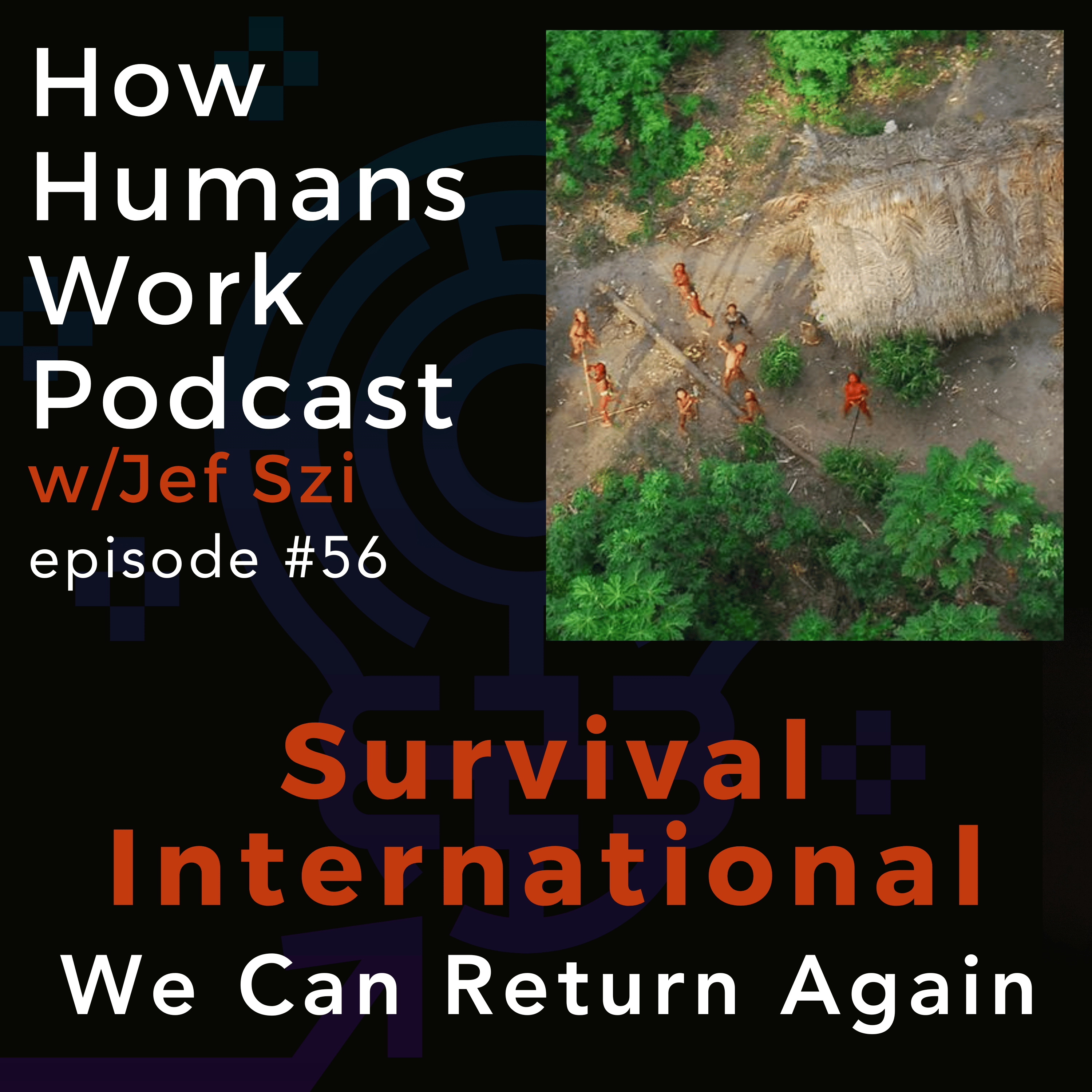
S5 Ep 56#56: Survival International - We Can Return Again
EWe Can Return Again is a powerful episode that explores the critical work of Survival International, an organization dedicated to protecting indigenous and uncontacted peoples worldwide. Hal Russell, Asia and Pacific Research and Advocacy Officer with Survival, joins host Jef Szi to guide us through the many threats indigenous and uncontacted communities face.Along the way, we come to understand the extreme vulnerability and survival pressures these communities have. Whether it is illegal logging, deforestation, nickel mining, drug traffickers, governmental indifference, or self-centered influencers, each of these forces is putting our contemporaries, who have chosen a self-sufficient lifestyle to avoid the historical and ongoing traumas of colonialism, into real danger.With great facility and immense dedication, Hal walks us through the serious challenges while also offering a powerful ethos and meaningful obligation, inviting us to recognize these communities' fundamental rights to continue to exist and what we can do individually and collectively to support them.This conversation helps us wake up to an unpublicized tragedy, the irreplaceable loss of people, their cultures rich with long-held knowledge. At the heart of the show, we come to find the best guardians for the land and the people who depend on healthy ecosystems for their well-being. The episode concludes by looking at the work of Paul Rosolie, an increasingly popular advocate for the people of the Amazon.About Survival International: Founded in 1969, Survival International is a global movement campaigning for the rights of indigenous and uncontacted peoples. They advocate for the fundamental right of these communities to be "different and free," prioritizing land rights as the most critical factor for their survival. The organization challenges destructive practices that displace indigenous peoples from their lands. Survival stands in solidarity with indigenous peoples, ensuring their voices are heard and their ancestral territories are protected for generations to come.Resources and Links:Survival International Website (Join and Donate!)Read the PDF: Uncontacted Indigenous Peoples: At the Edge of Survival Video Report documenting nickel mining on Hongana Manyawa lands.More on Uncontacted Peoples
S5 Ep 55#55: Chris Burris - Healing with Others
EChris Burris is a Senior Lead IFS Trainer and a clinical consultant with decades of experience in mental health and group work. Chris is based in North Carolina and leads training for the IFS Institute and his Creating Healing Circles work worldwide.Last month, Chris joined Jef Szi for an in-depth conversation that illuminates the power, purpose, and benefits of healing with others. Along the way, we get to know the variety of influences and the backstory to Chris's group work, including a need to help his clients have real spaces to work on their social challenges, and Chris's interest in finding new models of authenticity that don't require being hijacked by reactive emotions.You can learn more about his work through his terrific how-to book, Creating Healing Circles.With tremendous kindness and boatloads of reference points, Chris helps us understand why healing circles are an essential tool for healing from traumas and for offsetting the hyper-individualism found in most personal-growth work.Chris teaches us that most traumas arise in relationships and are also healed through supportive, non-threatening contexts where participants can experience others as advocates and allies. He also shows us that well-run Healing Circles can allow participants to test new ways of being that are more cohesive and less isolating.Throughout Healing with Others, Chris offers his grounded perspectives; whether it's on the Internal Family Systems model, the pros and cons of Men's work in the 1980's and 1990's, or how nature is another kind of healing force, we are well instructed by Chris and his extensive knowledge on group work and the healing process.Perhaps the heart of Chris's teaching is the Internal Family Systems (IFS) model. In this conversation, he breaks down the model, showing how IFS is a constraint-and-release model whose core notion of an innate Self is characterized by calmness, curiosity, and compassion, and how the various "parts" play a role in protecting the Self. We also learn from Chris and kind way of thinking about our parts, and how these protective and often reactive voices within us frequently eclipse our core energy, leading us to relate to ourselves and others in harsh or critical ways.With Chris, we take another step forward in imagining what it takes to be more cohesive as a society. In this case, the path forward is to challenge our assumptions about the do-it-alone approach. Instead, we are encouraged towards the chance to be with others, dropping in deeply, where trauma and social connections can be transformed as a community. Few are better positioned to show what this path looks like than the heart-centered and wise Chris Burris.Thank you for being on the show, Chris!About Chris Burris: Chris is a Clinical Consultant and Senior Lead Trainer for the Center for Self Leadership. Chris has been a psychotherapist since 1989, working with diverse populations in community agencies, intensive residential centers, institutions of higher learning, and in private practice.He began training in the Internal Family Systems model in 1999 and is currently a Senior Lead Trainer for the Internal Family Systems Institute, where he teaches Level 1, Level II, and Level III trainings and serves as a trainer and mentor for new IFS training staff.Resources:Get On Chris's Mailing ListOrder Chris's BookTry the Exercise Spoken About in the Show
Bonus Episode #10: The Unapologetic American with Jef Szi
bonusEEpisode Summary:Recent events in America from Minneapolis to Washington D.C., show us that unapologetic postures and political strategies are attractive to some who are interested in power.In this special bonus episode, Jef Szi shares his recent essay about this unapologetic trend on full display not just in the terrible shootings of Renee Good and Alex Pretti, but in the Trump administrations response to those events.Jef show us how empathy and social care are essential tools as we aim to stay human in inhumane times. An important reminder that our feelings are not just difficult, but part of the solution.Finally, Jef shares his most recent poem. It imagines Adam apologizing to Eve in The Garden of Eden.
S5 Ep 54#54: East Forest - The Soul is Smiling
EEast Forest joins the How Humans Work Podcast for a special Winter Solstice episode. With a generous mind and grounded heart, East walks us through how his Music For Mushrooms Documentary was birthed, as well as the creative gifts and challenges that came along with that project.Special Note: WATCH it FOR FREE ON YOUTUBE 12-21-2025 to 12-31-2025 Additionally, this conversation explores East's connection to ceremony, elders, influential indigenous traditions, and his subtle nuances and commitments it takes to honor the creative process.Finally, this show weaves bits of East Forest's remarkable music as he reminds us to remember the power of intention, of community, of retreat, of simple presence, and that curating spaces to listen to our soul are gifts that allow us to find the smile inside our soul. #eastforest #musicformushrooms #psychedelicmedicines #music #ambient #courtjohnson #ramdass #lorraineweiss #ceremony #ayahuasca #esalen #bigsur #healing #humannature #jefszi #howhumanswork

S5 Ep 53#53: Nina Chase - It's Not For You
Episode SummaryLandscape Architect Nina Chase, sits down with Jef Szi for a terrific exploration of her work imagining and designing public spaces. Nina’s easy and honest expertise deepens our view on what fosters Social Cohesion. She helps surface the amazing, often understated, network of relationships connected to an everyday discipline shaping our lives. With an abundance of talent and inspiration, Nina teaches us the important role architects of public spaces play in our history and our future. With her unique understanding of cities and communities across Middle-America, she exemplifies the powerful capacity landscape architecture has to subtly re-imagine and redefine the common spaces that anchor us.What we ultimately find in Nina’s work are the seeds for better-connected communities, healthier and more well-adjusted humans, and a closer connection with the natural world—especially the crucial role of trees. In It’s Not For You, we find a refreshing power in good-hearted folks like Nina, and her colleagues, who are endeavoring to shape what comes next, designing with clear-eyed care for the web of life and a sensible commitment to the needs of future generations. We find a sober reminder, our role is to plan and plant for a future that will carry on beyond our us. *****About Nina Chase:Nina Chase is a landscape architect and Founding Principal of Merritt Chase. Her work focuses on creating meaningful, public spaces across Middle America. Born and raised in West Virginia, Nina graduated from West Virginia University and Harvard’s Graduate School of Design. She spent her early career in Boston designing and planning notable public parks and open spaces. Today, Nina leads Merritt Chase’s urban work, planning and designing public parks, plazas, waterfronts, and cultural districts. Nina is dedicated to the design community through teaching, writing, and advocacy. She frequently lectures and serves as a design critic nationally and internationally. Nina is formerly an adjunct faculty member at Carnegie Mellon's School of Architecture and an emeritus board member of the Landscape Architecture Foundation. Nina is currently the Co-Chair of the Harvard Graduate School of Design Alumni Council and a member of the Harvard Alumni Association Board.
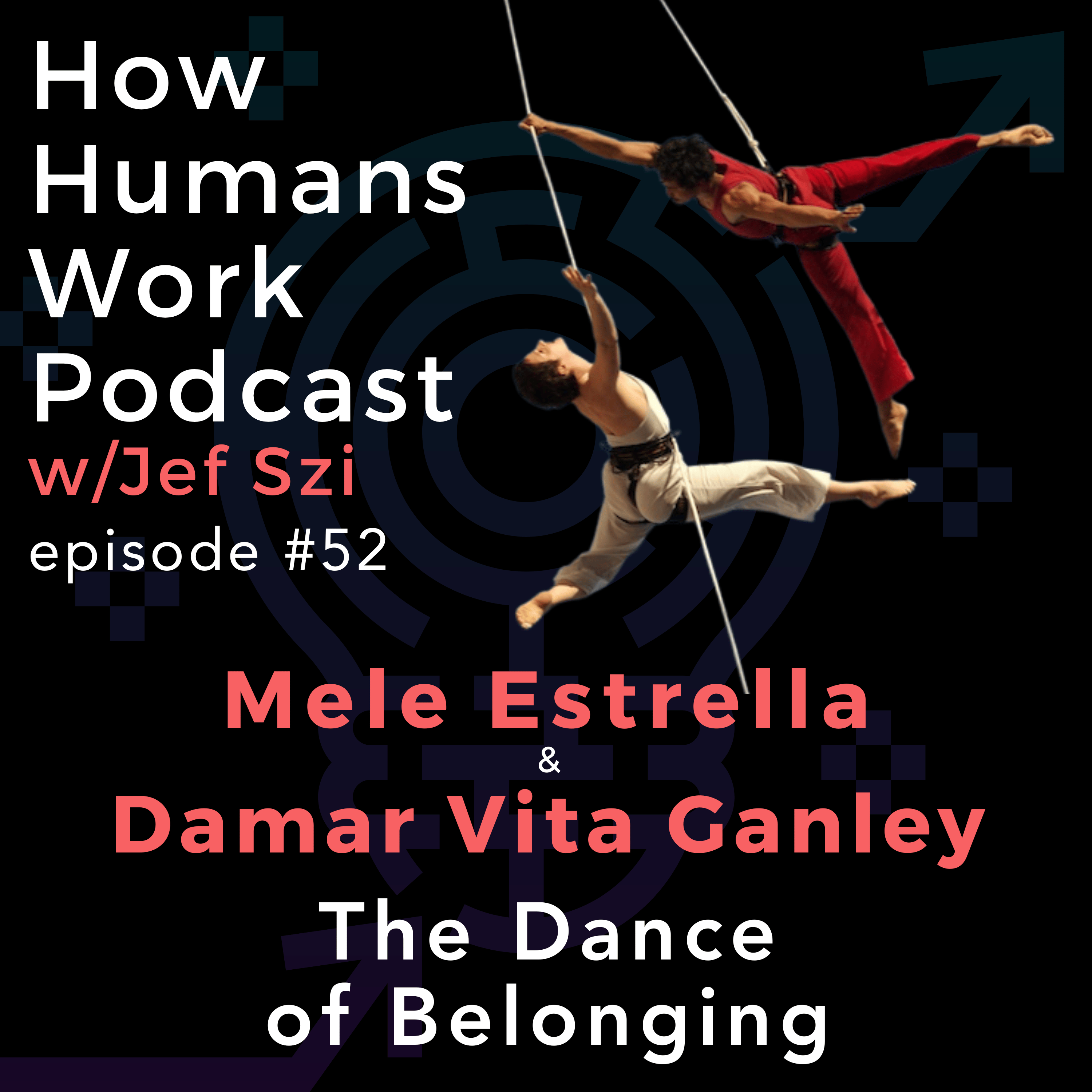
S5 Ep 52#52: Mele Estrella & Damara Vita Ganley - The Dance of Belonging
EEpisode SummaryDance artists Mele Estrella and Damara Vita Ganley join show host Jef Szi and the How Humans Work Podcast for an illuminating conversation that explores the rich terrain of their artistic work. Throughout this remarkable episode, we learn about Mele and Damara’s intensive creative ethics, efforts to engender trust, dedication to playfulness, and deep curiosity about the hidden stories around them. As dedicated movement artists, they are a powerful example of how attuning with one’s body, relationships, and the performance spaces acts as a cohesive force. Their craft and their commitment to the process of art is the foundation for their dance, and we are well-instructed by listening to them. In particular, we hear the fascinating backstory to their recent project, Flock. Flock intertwines animal and human migration stories with ecological awareness, showing the importance of belonging through the metaphor of “flocking.” The Dance of Belonging also explores their “Vertical Dance” Bandaloop Project. Using rope and harnesses to dance on the sides of massive objects, like granite faces or skyscrapers, this innovative dance form is a uniquely stunning display of how art can inspire wonder in all of us. Naturally, we discuss the teachings that come with encountering fear as part of the artistic path. We come to find how Mele and Damara use fear as a guide for deeper connection and support, finding confidence in creative belonging.Many thanks to Mele and Damara for helping us see Social Cohesion in action. Through their creative efforts and commitment to authentic connection, we find that social cohesion is not so much a product of external forces but instead begins with our connection to our own bodies and the group of people we create the story of our lives with.*****About Melecio “Mele” Estrella:Mele Estrella is a director, choreographer, and educator who has been with BANDALOOP since 2002. As Artistic Director, Mele brings 2 decades of practice weaving vertical dance, dance theater, somatic facilitation. and ecological belonging to BANDALOOP’s dance making. Mele’s work bridges the everyday personal/social body with the dream body, proposing expanded possibility and awe in our time of poly-crisis. Mele also co-directs Fog Beast, a cross-disciplinary group that affirms ecological connectedness in landscape, live arts and education. He is a longtime member of the Joe Goode Performance Group. Passionate about creating space and sustainability for artists, Mele serves on the advisory boards for the Artists Space Trust and for Arts in California State Parks. He was a Cultural Space Ambassador for the Community Arts Stabilization Trust (CAST), a Leadership Fellow for the Association of Performing Arts Professionals (APAP), and is currently a Lucas Artes Fellow at the Montalvo Center for the Arts.About Damara Vita Ganley:About Damara Vita Ganley:Damara Vita Ganley (she/they) is a movement artist and embodiment guide dedicated to alchemical creativity and connection practices. She meets her work in the world with deep humility, curiosity and a verdant lostness while drawing on extensive national and international creation, performance and teaching experience. She bows in profound gratitude for her long time creative collaborations with Melecio Estrella, Artistic Director of BANDALOOP which include Flock at The Momentary (2025), Somewhere to Oakland (2025), and serving as Associate Choreographer for Melecio in Vertical Choreography for Tina Landau and Idina Menzel’s new musical Redwood ( Broadway 2025), Downstream (2024) at Sonoma State, Resurgam (2023) at St. Paul’s Cathedral in London.Melecio and Damara also weave many years together in Fog Beast and Joe Goode Performance Group Following degrees in Anthropology, Critical Feminist Theory and Performance, Play and Design, Damara has had opportunities to perform with Mel Wong, Ellen Webb, Nancy Karp and Jo Kreiter/Flyaway Productions, Gerald Casel Dance Cid Pearlman, Holcombe Waller, Erin Mei-ling Stuart/emspace dance, Manuelito Biag/Shift Dance Theatre, and Lisa Townsend. She currently shares movement practices as a lecturer at UCSC in Play, Performance and Design, with people with Parkinson’s, Veterans, Care Providers, at Bay Area High Schools, with SFArtsEd Middle School performers and as a leader of JGPG’s signature movement methodology, Movement for Humans. She enjoys offering embodiment practices and somatic sessions for individuals as well. About Damara Vita Ganley:Damara Vita Ganley (she/they) is a movement artist and embodiment guide dedicated to alchemical creativity and connection practices. She meets her work in the world with deep humility, curiosity and a verdant lostness while drawing on extensive national and international creation, performance and teaching experience. She bows in profound gratitude for her long time creative collaborations with Melecio Estrella, Artistic Directo

S5 Ep 51#51: Chris Skidmore - The Astrology of Self-Love and Society
EEpisode SummaryIn episode #51, wisdom keeper and astrologer Chris Skidmore, joins the podcast for a profound conversation exploring the intersection of myth, astrology, and social cohesion. Chris and podcast host, Jef Szi, delve into the the 12 House System of Astrology as a "mythic language" and ancient teaching device that can provide guidance for exploring human nature and our social realities. After framing astrology not so much as a predictive tool or literal science, but rather as a rich, symbolic framework for understanding the human condition, Chris and Jef discuss the organization and significance of the 12 house system. Along the way they highlight various features of this "medicine wheel" as an archetypal ally for personal and social development. From there, the conversation homes in on the critical axis of the Fifth and Eleventh houses. Jef and Chris connect this house-system polarity to Jef's recent experience at the Grateful Dead's (Dead and Company) 60th anniversary shows in San Francisco. The performer-audience relationship become the metaphor they use to examine the dynamics between our "individual fire" (the Fifth House's focus on creative self-expression) to "collective connection" (the Eleventh House's domain of community and social contribution). Later on, Jef and Chris call upon a rarely mentioned Greek Olympian God, Hephaestus, to further illuminate to the 5th/11th House axis. Hephaestus is a figure of both woundedness and masterful craftsmanship and lore surrounding his disfigurements.Both The Dead and the Hephaestus become pertinent tales through which the various connections and tensions that occur between the creative soul and social responsibilities can be known—how our personal struggles and creative passions of doing what we love can be supported or troubled by mass, social pressures of our times. What Chris and Jef land on is these matters of love, creativity, shame, and community are not isolated, but are integral to how we navigate our human condition. Ultimately, there's a consequential dance taking place between a life that finds its real loves and pleasures and finding our place and contribution to society. In the beginning, middle, and end, The Astrology of Self-Love, & Society masterfully links personal emotional experiences to a broader, archetypal framework, offering a new way to view our creative lives and the pressures of mass society. I hope you enjoy this conversation and it’s implications as much as I did getting to interview Chris. About Chris Skidmore:Chris Skidmore is the host of On The Soul's Terms Podcast. He is also a practicing psychotherapist, astrologer, biodynamic cranial-sacral therapist who currently resides in Bali. Be sure to drop into Chris's podcast to follow his work on the 12 Houses, or call upon him for an astrology reading.*****
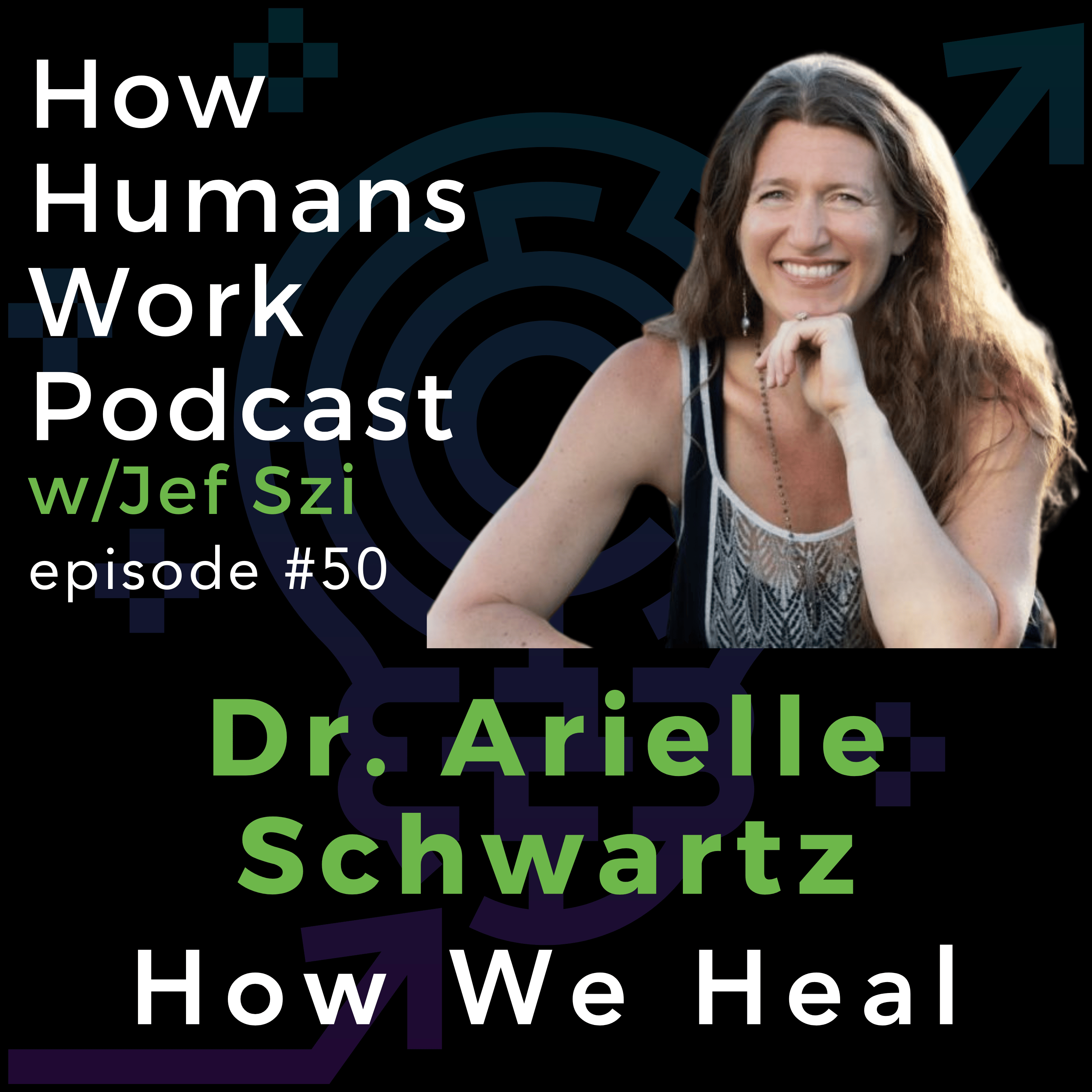
S5 Ep 50#50: Dr. Arielle Schwartz - How We Heal
Episode SummaryDr. Arielle Schwartz, Ph.D, is a clinical psychologist, internationally respected teacher, and leading voice in the healing of PTSD and complex trauma. For more than twenty years, Dr. Schwartz has guided therapists in the how-tos of trauma treatments—including EMDR, somatic psychology, parts work therapy, and applied polyvagal theory in yoga and other embodiment practices.In How We Heal, Dr. Schwartz brings her rich expertise of trauma and healing to the podcast. With equal portions of precision and compassion, she provides essential insights into the nervous system, the kinds of stress that drive trauma, and orientations we can embody in the face of today’s social divisiveness. In particular Arielle talks us through Dan Siegel’s “Window of Tolerance” and how we can use awareness of our nervous system tone to improve our mental health. She shows us how isolation is both a source and consequence of trauma, and provides multiple, nuanced distinctions that clarify matters like developmental trauma in childhood, Big T trauma, complex trauma, and the “trauma time” of PTSD. Consider yourself invited to listen-in, as Dr. Schwartz gracefully illuminates the intersection where trauma and society meet. With her wisdom, we come find how trauma-informed communities can foster the heart of goodness, allowing us to mend the frays of our social fabric. *****Books by Dr. Schwartz: The Complex PTSD Treatment ManualThe Polyvagal Theory Workbook for TraumaSomatic Oriented Therapies: Embodiment, Trauma, and Polyvagal PerspectivesApplied Polyvagal Theory for YogaFind a full list of books, trainings, and more at her website.Follow Dr. Schwartz on IG * FB*****
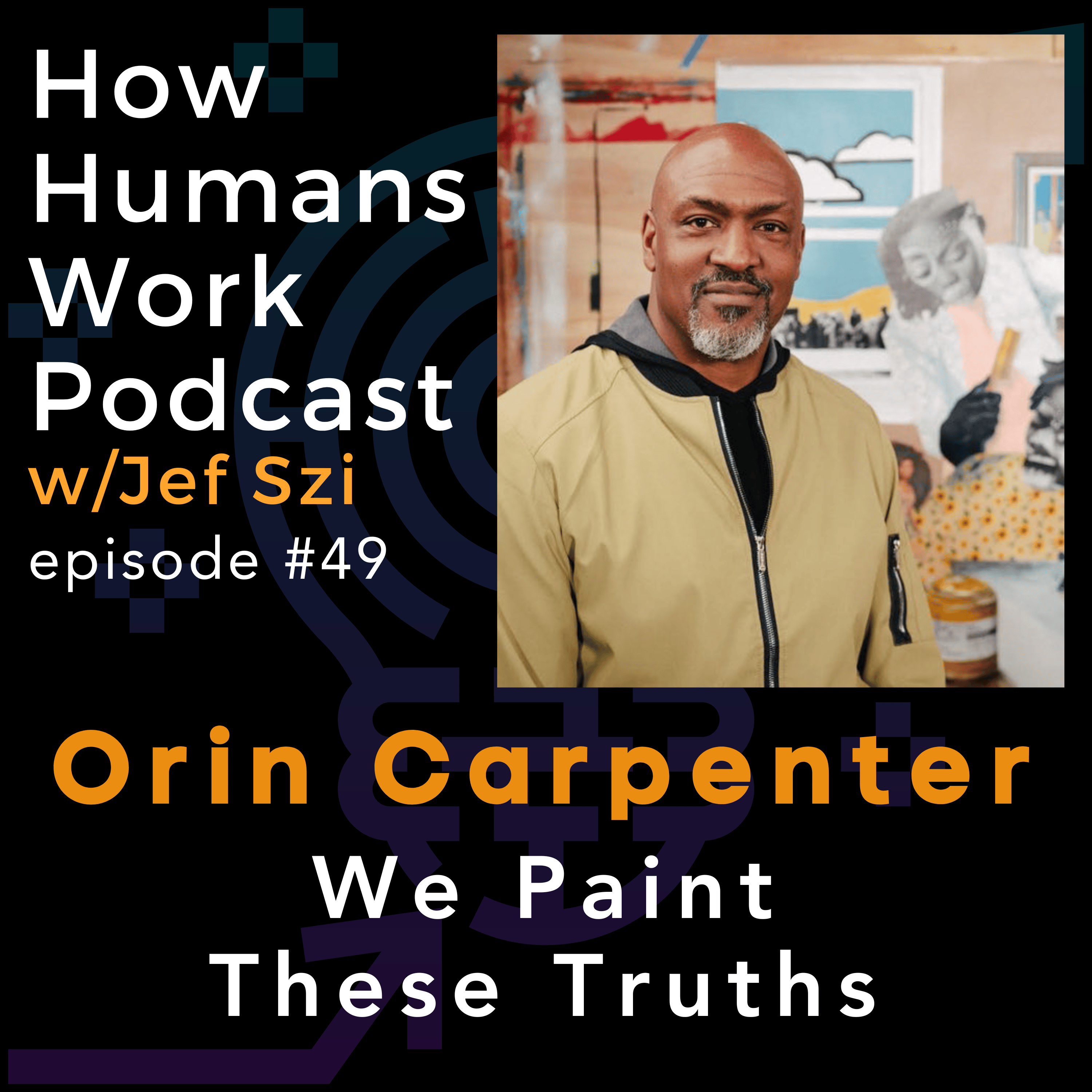
S5 Ep 49#49: Orin Carpenter - We Paint These Truths
EEpisode SummaryThe good-hearted and visionary Orin Carpenter joins the podcast this week to explore the connection between art and society. As a fine artist who uses mixed media to make evocative and abstract art with social commentary, Orin carries a rich sense of the artist's social function. Orin's pieces are journeys into the layers of personal experience and American truths. His art deals with themes of identity, race, conflict, change, and healing.Orin's abundant passion for art’s ability to initiate dialogue is the heart of our conversation today, and as we take our next steps in our meditations on Social Cohesion, Orin is a delightful gift and an authentic voice to have in the mix. His wise and creative soul brings body and shape to our adventure, bringing us to new ground and new thought as we consider human nature and America's social contours.We Paint These Truths (Yes, it is meant to echo 'We Hold These Truths') begins with Orin recounting how art entered his life. By providing a compelling portrait of the influences and circumstances that awakened the artist within him, we come to understand the forces that shaped his early life and the incredible response he had to them. Growing up in a black family in the South, being born just a few months after the assassination of Dr. King, finding black characters in Marvel comic books that he could relate with, the local library trips with his mother, the legacies of the Harlem Renaissance, and jazz music and their album covers were all pieces in his purpose puzzle.Along the way, we experience the energy and passion of Orin's art ethos. For him, art is both personal and social. It acts as a medium and metaphorical space that connects people, fosters dialogue, and helps us see each other in ways that debate alone cannot. For Orin, art serves as a conduit for restoring dignity, a means to acknowledge uncomfortable truths and a platform for honest conversations about justice and equity. In a moment of profound honesty, Orin shares the lived truths he navigates in his American experience and the way dualities of belonging have driven his expressions.Throughout the conversation, we find that Orin is a valuable guide, not just in his connection to the power of artistry but also in his rich sense and vision of art as both expression and activism. Orin's spirit of "artivism" encourages us to reconsider the role art plays in shaping our outlook and in its power to create a more compassionate and cohesive society.You're heartily invited to listen in as we journey with Orin and turn the philosopher's stone over together on this matter of Social Cohesion.*****About Orin Carpenter: Orin is a fine artist, high school art teacher, and Doctor of Philosophy in Education. He lives, creates, and works in Northern California.Check out Orin's art and get in touch with him about workshops at his webpage.

S5 Ep 48#48: Robin Dunbar - Friends, Tribes and Social Cohesion
EEpisode SummaryRenowned evolutionary psychologist Robin Dunbar returns for part two of his conversation with Jef Szi and the How Humans Work Podcast, diving deeper into the limits and leaps of human social patterns.In this episode, Professor Dunbar expands on the evolutionary foundations of human relationships, moving beyond social grooming and the endorphin system to explore kinship and the deeper nature of our social lives.He begins by examining the cost and time investment required to maintain our inner circle of intimate friends. From there, he maps out the concentric layers of more peripheral friendships and the behaviors and expectations that characterize them. Dunbar emphasizes the vital role our closest five friends play in our wellbeing and longevity.We then explore how humans scaled up from the group sizes typical of primates to the now-famous “Dunbar’s Number” of 150. This leap—central to the Social Brain Hypothesis—reveals how brain size in primates correlates with social group size, due to the cognitive demands of managing complex, stable relationships.Dunbar illustrates these ideas through compelling examples—courtship, language, and religion—showing how humans have creatively repurposed existing biological mechanisms to sustain cohesion in increasingly larger groups.He also sheds light on how cultural practices like laughter, feasting, ritual, and storytelling serve to bind people together into broad, loosely connected “supergroups.”Ultimately, Dunbar offers a concentric model of our social world, illuminating the patterns, breakthroughs, and constraints of human sociality. This conversation helps us better understand our evolutionary journey and how we might draw on both embodied emotion and cognitive insight to navigate a highly uncertain future.***** About: Robin Dunbar: Robin Dunbar is Emeritus Professor of Evolutionary Psychology at Oxford University. His work in the Experimental Psychology department at the Magdalen College is concerned with ‘trying to understand the behavioral, cognitive and neuroendocrinological mechanisms that underpin social bonding in primates (in general) and humans (in particular).’ Robin is the author of several books, including The Social Brain, Human Evolution, and Friends: Understanding the Power of Our Most Important Relationships. Professor Dunbar is known for advancing the Social Brain Hypothesis with Dunbar’s Number. *****Episode #48 TakeawaysDunbar's number suggests humans can maintain 150 relationships.Time investment is key to strong friendships.Friendships provide emotional support during crises.Social interactions can be as beneficial as medical interventions.Volunteering can substitute for friendships in terms of social exposure.Cohesion in larger groups requires superficial cues and shared knowledge. Friendship layers are assessed within the first four weeks.Common interests determine the depth of friendships.Intuition plays a key role in evaluating relationships.Institutions help manage social cohesion and relationships.Shared knowledge and folklore create larger communities.Religion serves as a stabilizing force in communities.Top-down structures provide discipline, while bottom-up structures foster local identity.Population density poses significant future challenges.Humans have historically found solutions to problems.Optimism is essential for navigating future uncertainties.

S5 Ep 47#47: Robin Dunbar - The Chemistry of Connection
EEpisode SummaryThe equally erudite and jovial Robin Dunbar joins Jef Szi and the How Humans Work Podcast for the first of a two part conversation about limits and leaps of social patterns in primates and humans. An Oxford University professor of evolutionary psychology and someone with a facile grasp of multiple sciences and histories, Professor Dunbar offers us a fascinating account of the social roots of human nature. In part 1—The Chemistry of Connection—we dive deeply into the endorphin system and the how it functions to stabilize social bonds in groups. We come to see freshly how critical a role endorphins play in our day to day reality. Drawing on his rich understanding of touch, primates, and the wildly comprehensive health benefits endorphins, Dunbar illustrates the connections between chemistry, evolution, and the roots of social blueprint—translating it into the very familiar ‘raw feels’ of relationships that inform how we see, think, and feel about the world. In particular, Robin clarifies how and why social grooming assists us in dealing with unique social stresses that accompany a group survival strategy that primate species have. Further, Robin mirthfully shows us the unique elements of the human social tool kit, which activates social glue of endorphins without the time intensive work of touch. Indeed, the social tool kit of humans relies on the beautiful elements of laughter, dancing, singing, feasting, storytelling, and rituals to foster social cohesion. The Chemistry of Connection helps us in on our search for to understand what Social Cohesion is and how we can more successfully find it. Thank you Robin, it was a brilliant blessing to learn so much about human nature and our human story with you!***** About: Robin Dunbar: Professor Dunbar is Emeritus Professor of Evolutionary Psychology at Oxford University. His work in the Experimental Psychology department at the Magdalen College is concerned with ‘trying to understand the behavioral, cognitive and neuroendocrinological mechanisms that underpin social bonding in primates (in general) and humans (in particular).’ Robin is the author of several books, including The Social Brain, Human Evolution, and Friends: Understanding the Power of Our Most Important Relationships. Professor Dunbar is known for advancing the Social Brain Hypothesis with Dunbar’s Number. *****Episode #47TakeawaysSociality is a key evolutionary adaptation for survival.Group living helps solve problems of reproduction and defense.Primates invest heavily in maintaining social relationships.Social grooming triggers the endorphin system, promoting bonding.Humans have developed social tools like singing and dancing to bond.The endorphin system acts as a natural antidepressant.Addiction to opiates can diminish social engagement.Oxytocin plays a role in mother-infant bonding and romantic relationships.Endorphins provide pain relief and promote feelings of well-being.The evolution of sociality is complex and multifaceted. Endorphins enhance social bonding and immune function.Quality friendships are crucial for mental and physical health.Five close friends are optimal for well-being.Social grooming is vital for maintaining relationships.

S5 Ep 46#46: Amy Emerson - Breaking the Stigma: Psychedelics in Society
EEpisode SummaryThe highly informed and deeply compassionate Amy Emerson joins Jef Szi and the How Humans Work Podcast for a remarkable conversation about the evolving landscape of psychedelics. With her extensive involvement and leadership in the Multidisciplinary Association of Psychedelic Studies (MAPS)* and their multi-year effort to get MDMA approved by FDA as a therapeutic medicine for PTSD. There are few better than Amy who can speak to the state of psychedelics for medical use in society. Not only does Amy share her honest appraisal about FDA drug approval process and members of congress on the Hill, she gives us the little known and fascinating history of MDMA. Some highlights are Sasha and Ann Shulgin’s groundbreaking contributions, the reputational damage MDMA suffered in the 90’s, the long-game efforts of Rick Doblin and others, the powerful way MDMA works on the brain, and the remarkable promise MDMA has shown to help people suffering with PTSD. Put together as a whole, Emerson offers us a destigmatized and inspiring view of MDMA beyond the common street descriptions of Ecstasy and Molly. From MDMA and the Medical Model, Amy then helps us see the many other use-cases for psychedelics that have a long and varied history. Building on issues of trauma and the importance of spiritually reconnecting with ourselves, we walk through the psychological benefits that can come with right-use of psychedelics.Finally, this conversation opens the visions of what future of psychedelic use in society through thoughtful contexts that track safety concerns and how, much like meditation, these ‘medicines’ can have a place in our society like Buddhist and meditation practices have entered our culture. All in all, Breaking the Stigma is a podcast of significance, as it invites us to reconsider our biases around psychedelics at a time when our society is challenged by mental health matters like trauma and the pervasive disconnection from nature and spiritual renewal. ***** About: Amy Emerson is a highly respected leader in the field of psychedelic-assisted therapy. She was Lykos Therapeutics (formerly MAPS PBC) CEO for an important period in advancing MDMA-assisted psychotherapy for post-traumatic stress disorder (PTSD) as a drug with the FDAShe earned a Bachelor of Science in Genetics and Cell Biology from Washington State University and spent the early career involved in roles at pharmaceutical companies, where she contributed to the development of therapies in immunology, oncology, and vaccines .In 2003, she began volunteering with the Multidisciplinary Association for Psychedelic Studies (MAPS), assisting with clinical research monitoring. Her expertise was instrumental in establishing MAPS' clinical department and managing the MDMA Clinical Development Program. When MAPS founded its Public Benefit Corporation (MAPS PBC) in 2014 to develop and commercialize MDMA-assisted therapy, Emerson was appointed CEO .Under her leadership, the organization, later rebranded as Lykos Therapeutics, completed multiple Phase 2 and Phase 3 clinical trials and raised approximately $150 million in funding. The company grew to over 120 employees, all working toward the goal of obtaining FDA approval for MDMA-assisted therapy for PTSD .Amy resigned form her CEO role in September 2024. Currently she is a senior advisor to Lykos and an independent psychedelic research consultant, awaiting the next big adventure.*****Chapters00:00 Introduction and Setting the Stage02:40 The Evolution of Psychedelic Research06:10 Understanding Stigma and Its Origins10:54 MDMA: From Therapy to Recreation16:33 Therapeutic Applications of MDMA20:28 Navigating the FDA and Drug Development24:45 Challenges in the Approval Process30:31 The Future of Psychedelics in Mental Health37:11 Navigating FDA Interactions and Support for Mental Health42:24 The Broader Movement of Psychedelics in Society46:51 Reconnecting with Ourselves and Others52:31 Healing Systems: The Impact of Trauma on Relationships58:50 The Importance of Lineage in Psychedelic Work01:02:01 Safety and Ethics in Psychedelic Practices#psychedelics #MDMA #therapy #FDA #mentalhealth #drugdevelopment #MAPS #psychedelicresearch #healing #AmyEmerson #HHW #podcast #howhumanswork #JefSzi #HHWPod #SashaShulgin #RickDoblin #Spirituality

S4 Ep 45#45: Christine Olivia Hernandez - The Ancestral Heart
EEpisode SummaryAuthor, healer, and ceremonialist Christine Olivia Hernandez joins the show for an in-depth conversation on the transformative power of gratitude, the wisdom that flows out of Mayan traditions, and the gifts to the heart and body in cacao. Through the lens of her newest book, Remember Your Roots, we dive into the relevance and importance of ancestral lineages, personal stories of loss and healing, the profound value of reclaiming our histories.We begin with Christine introducing us to the beautiful, heart-opening practices of cacao. She shares its ceremonial significance in Mayan and other cultures, highlighting its capacity to reconnect us with our health and gratitude. She also addresses the larger challenges of reconnecting with one’s roots, emphasizing the need to honor both the light and shadow of ancestral histories. We talk through her three-phase model and what the framework offers to us for finding genuine reconciliation and growth in the process of returning to our roots.Later, Christine reflects on her late father’s life and legacy, sharing how her healing journey has been marked by poignant encounters with crows, vivid dreams, and serendipitous events. One powerful moment came when she discovered that her father, Tony “Crow” Hernandez, had helped to build the cultural center where her Remember Your Roots book launch was held!With a deep sense of magic and authentic optimism, Christine embodies what the path of gratitude and a renewed connection to the ancestral heart can look like. For her this is found in her offering, the Maltyox Method, which blends ceremonial use of cacao, meditation, movement, and gratitude. You can learn more about her work here. You are invited into The Ancestral Heart, where we find that a grateful heart is deeply intertwined with the heart of the Earth, where a profound sense of belonging and wholeness returns when we remember our roots and reconnect to the immeasurable depths of the human heart.Christine Olivia Hernandez is the author of Remember Your Roots and ten other books. She is a second-generation immigrant, whose teachers the Maltyox Method, offers cacao ceremonies, and provides spiritual mentorship.

S4 Ep 44#44: Deb Dana - The Polyvagal Connection
EEpisode SummaryDeb Dana L.C.S.W. joins the How Humans Work Podcast to illuminate how our nervous systems dance between the ancient survival responses and the instinct to be in states of connection and safety. As an author, renowned Polyvagal Theory lecturer, Deb expertly and compassionately guides us through the ins-and-outs of Polyvagal Theory (PVT), and how it can help us find a more regulated nervous system. At the core, we explore the powerful, bottom-up role of our vagal nerves play in our ability to find safety and connection. Consequently, this show is also a profound conversation about the role of our nervous systems in healing, relationships, stress, and trauma.Throughout a delightful episode, Deb offers heartfelt insight into our human experience as she emphasizes the need for co-regulation and the impact of trauma on our nervous system responses as well as the intersection of Internal Family Systems and Polyvagal Theory. Together. Finally, we explore how environments and collective aspects challenge the nervous systems across contemporary society. Here Deb highlights the importance of creating safe environments for healing and connection has in changing how society handles. In this episode you will learn: How Polyvagal Theory provides a framework for understanding our nervous system. What Neuroception is and how our nervous system perceives safety and danger through neuroception. What the vagus nerve is and how it plays a crucial role in regulating our emotional states. Why Regulation is essential for accessing curiosity, play, and connection. The difference between Stress and Trauma responses, and how we can work with them. How the vagal break helps manage heart rate and emotional responses. Why understanding the nervous system can lead to more effective therapy. Insight into the influences on the collective nervous systems, societal dynamics and healing. Why creating safe environments is key to facilitating healing personally and societally. Deb Dana L.C.S.W., is a renowned clinician, consultant, author, and international lecturer specializing in the application of Polyvagal Theory to trauma treatment and therapy. With a deep understanding of the autonomic nervous system and its role in shaping human behavior and relationships, she has become a a leader in brining PVT insights into practical tools for therapists, healthcare providers, and individuals seeking healing.Deb is also the developer of the Rhythm of Regulation clinical model, which integrates Polyvagal Theory into therapeutic practices, emphasizing safety, connection, and co-regulation as the foundation for emotional and psychological well-being. Additionally, Deb has authored several influential books, including The Polyvagal Theory in Therapy: Engaging the Rhythm of Regulation and Anchored: How to Befriend Your Nervous System Using Polyvagal Theory, as well as the co-edited work Polyvagal Exercises for Safety and Connection.YouTube Chapters:00:00 Introduction and Background 02:11 The Role of the Nervous System in Human Experience 08:25 The Vagus Nerve: Anatomy and Function 14:28 The Connection Between Body and Mind 20:19 Distinguishing Trauma from Stress 28:12 Understanding Nervous System Regulation 34:08 The Role of the Vagal Break 41:06 Exploring the Sympathetic and Dorsal States 46:04 Mindset and Nervous System Responses 50:44 Collective Nervous Systems and Societal Healing

S4 Ep 43#43: Jai Uttal - Hanuman's Ripples
EEpisode SummaryThe storied and kind-hearted Jai Uttal drops into the show for an extended conversation about music, monkey gods, gurus, India, sobriety, family, and ultimately the spiritual path of healing through love. We begin with an exploration of Jai’s current practice of hyper-local kindness in a world where that resource is becoming increasingly scarce. From there we dive into Jai’s latest musical offering, Hanuman Chalisa for World Peace. Not only does Jai share with us the intimate practice he’s had with this widely venerated chant for over five decades, but he walks us through the creative context in which his first published recording of the Chalisa came to life. In his telling we gather the rich array of inspirations that bring about his creative gifts.Gradually, Jai invites us into the richness of his life, as he retells how the winding threads that have made up the fabric of his life came to be. We come to understand the overlapping events and energies of kirtan, India, gurus, dreams, drugs, anxieties, singing, but mostly love and family, have been ripples of his life. Along the way we hear about his intersections with Steve Jobs, Ali Akbar Khan, Neem Karoli Baba, Ram Das, and others. We hear about his initiation into kirtan, Indian classical music, and his profound relationships that unfolded with musical and spiritual masters. We also hear about the struggles with finding his voice, performing, and managing the pains of life with drugs and alcohol before he found his true loves in his wife Nubia and in becoming a father to his son, Ezra. In the beginning, middle, and end, the beloved monkey god, Hanuman, walks with us, serving as a back-drop of Jai’s own spiritual journey as he realizes the profound and ordinary teachings love and devotion have in his, just like every other human life. A beautiful conversation that bares the heart in a way that we can’t help but be moved by. About: Jai Uttal is a husband, father, neighbor, and friend. He’s more widely know for being a Grammy nominated sacred music composer, recording artist, multi-instrumentalist, and ecstatic vocalist. Jai combines influences from India with influences from American rock and jazz, creating a stimulating and exotic multi-cultural fusion that is truly world spirit music.Jai has been leading, teaching and performing kirtan around the world for close to 50 years, creating a safe environment for people to open their hearts and voices.