
Show overview
Horns of a Dilemma has been publishing since 2018, and across the 8 years since has built a catalogue of 309 episodes. That works out to roughly 220 hours of audio in total. Releases follow a fortnightly cadence.
Episodes typically run thirty-five to sixty minutes — most land between 36 min and 49 min — and the run-time is fairly consistent across the catalogue. None of the episodes are flagged explicit by the publisher. It is catalogued as a EN-language News show.
The show is actively publishing — the most recent episode landed 1 weeks ago, with 18 episodes already out so far this year. Published by Texas National Security Review.
From the publisher
Brought to you by the Texas National Security Review, this podcast features lectures, interviews, and panel discussions at The University of Texas at Austin.
Latest Episodes
View all 309 episodesVirtuous Violence and the Psychology of Nuclear Escalation
How the Soviet Collapse Shaped North Korea
Deep Ocean Danger: Unveiling the Threats to Global Connectivity
25 Years of the US-China Commission: Taiwan, Tech Competition, and Over-the-Horizon Risks
Iran's Nuclear Tightrope: Between Power and Peril
New Tech, Old Traps: The Persistent Pitfalls in Military Innovation
The Balance of Control and Vulnerability: Cyber and Nuclear Risks
Challenges and Opportunities for AI in Military Systems
Beyond the Hype: The Reality of Precision-Strike Weapons in Ukraine
Psychological Biases in the Era of Nuclear Weapons and AI

Understanding Schelling's Nuclear Paradigms with Francis J. Gavin
Francis J. Gavin, chair of the TNSR editorial board, joins us to discuss his article, "Strategic Stability and Its Limits: Reflections on Schelling." Gavin explains why Thomas Schelling remains foundational to nuclear strategy despite being an economist, and argues that "strategic stability" is often invoked without clear definition. He highlights tensions between mutual vulnerability and US extended deterrence and nonproliferation goals, and describes contradictions between Schelling's writings on arms control and coercion. Gavin critiques simplified historical lessons about surprise attack and inadvertent war shaping stability theory, traces how Cold War political constraints drove US nuclear posture, and urges policymakers to put politics and state interests first when assessing nuclear risks and emerging technologies such as AI, cyber, autonomy, and biotechnology. Hosts: Sheena Chestnut Greitens and Ryan Vest Producer: Jordan Morning

Strategic Stability in a Rapidly Changing World
Harold Trinkunas, the Deputy Director of the Center for International Security and Cooperation, and a senior research scholar at the Freeman Spogli Institute for International Studies at Stanford University, recently helped assemble our special issue on emerging technologies and strategic stability. In this episode, he previews the issue by explaining how Cold War deterrence assumptions rooted in a bilateral US–Soviet relationship no longer hold amid more nuclear-armed actors, wider access to AI, cyber, hypersonics, and the possibility that these tools can threaten second-strike forces or create effects once associated with nuclear weapons. Our discussion highlights risks of preemption, inadvertent escalation driven by automation and bad data, and psychological and organizational biases intensified by time compression and increasingly personalist regimes. Article: "Emerging Technologies and the Future of Strategic Stability" Hosts: Sheena Chestnut Greitens and Ryan Vest Producer: Jordan Morning

A Dystopian Take on Rising Authoritarianism and Resistance
Melissa Chan joins to discuss her career reporting across Asia and why she pivoted from journalism to co-creating the graphic novel "You Must Take Part In Revolution" with activist-artist Badiucao. We discuss the book's visual style (Chinese watercolor influences, Frank Miller's Sin City palette, and manga elements), the subversive Mao-derived title, and a near-future plot spanning Hong Kong to a 2035 war over Taiwan amid surveillance, drones, and AI. Chan describes choices around depicting resistance, representation, and hidden "Easter eggs," and reflects on the book's strong reception. Hosts: Sheena Chestnut Greitens and Ryan Vest Producer: Jordan Morning

Navigating a World Adrift with Shivshankar Menon
We host Shivshankar Menon to discuss his recent article, "A New World Order? Be Careful What You Wish For." Menon, the former national security advisor to the Indian prime minister, examines the historical rarity of stable world orders and the dangers of contemporary nostalgia for a perceived "golden age" of stability. The conversation explores the tension between a globalized economy and fragmented local politics, questioning whether the current distribution of power can support a formal international order. Menon characterizes the present era as a "world adrift" and argues that progress often emerges from such periods of political disorder. We also address India's strategic role in navigating this environment through issue-based coalitions rather than traditional spheres of influence. Hosts: Sheena Chestnut Greitens and Francis J. Gavin Producer: Jordan Morning

The Principle of Distinction in the Autonomous Age
Nathan Wood, author of "Bombs, Bots, and the Principle of Distinction: The Law of Armed Conflict and Contemporary Warfare," speaks on the principle of distinction in an age of autonomous warfare. He argues that while some concerns about these technologies are valid, we must move beyond general debates to address the specific legal and operational realities of concrete systems. Our conversation explores how the US military can utilize these advancements while maintaining a fundamental, felt sense of human responsibility. Hosts: Sheena Chestnut Greitens and Ryan Vest Producer: Jordan Morning
Ensuring US Military Readiness in the Indo-Pacific
Eyck Freymann and Harry Halem, co-authors of "The Arsenal of Democracy: Keeping China Deterred in an Age of Hard Choices," join us to cover a range of topics, including US–China military balance, defense procurement, and the critical need for aligned industrial capacity, technological R&D, and military doctrine. Through historical models, potential reforms, and the importance of logistics and innovation, this episode offers a comprehensive look at how the US can strategically deter China into the 2030s. Hosts: Sheena Chestnut Greitens and Ryan Vest Producer: Jordan Morning
US Military Primacy and Alliance Resilience
We speak with Bence Nemeth from King's College London about his article, "How a US 'Suez Moment' Could Hollow the US Alliance System." The discussion covers the historical context, theoretical framework, and potential scenarios that could unfold if US military primacy were to decline. Hosts: Sheena Chestnut Greitens and Ryan Vest Producer: Jordan Morning

Conventional Options Theory in the New Nuclear Era
Tyler Bowen from the US Naval War College joins us to discuss his recent TNSR article "Threading the Needle: The Logic of Conventional Coercion in Nuclear Crises." We discuss the renewed interest in nuclear deterrence given recent global security developments such as Russia's war in Ukraine and China's nuclear expansion. The conversation also explores the challenges and frameworks, particularly Bowen's "conventional options theory," key historical case studies involving nuclear crises, and their lessons for modern policymakers.
The Art and Science of Grand Strategy
Dr. Marina Henke, a professor at the Hertie School in Berlin and visiting professor at SAIS Johns Hopkins, discusses the motivations for writing her article "Best Practices in Grand Strategy Design," inspired by Germany's strategic reorientation post-Russia's invasion of Ukraine. She delves into the definition of grand strategy, its critical components, real-world applications, and the importance of continuous strategic updates. The discussion also critiques common flaws in recent grand strategy documents and emphasizes the essential role of public engagement in strategic discourse. Hosts: Sheena Chestnut Greitens and Ryan Vest Producer: Jordan Morning
Trade, Technology, & the US–Korea Alliance: A Conversation with Ambassador Kang
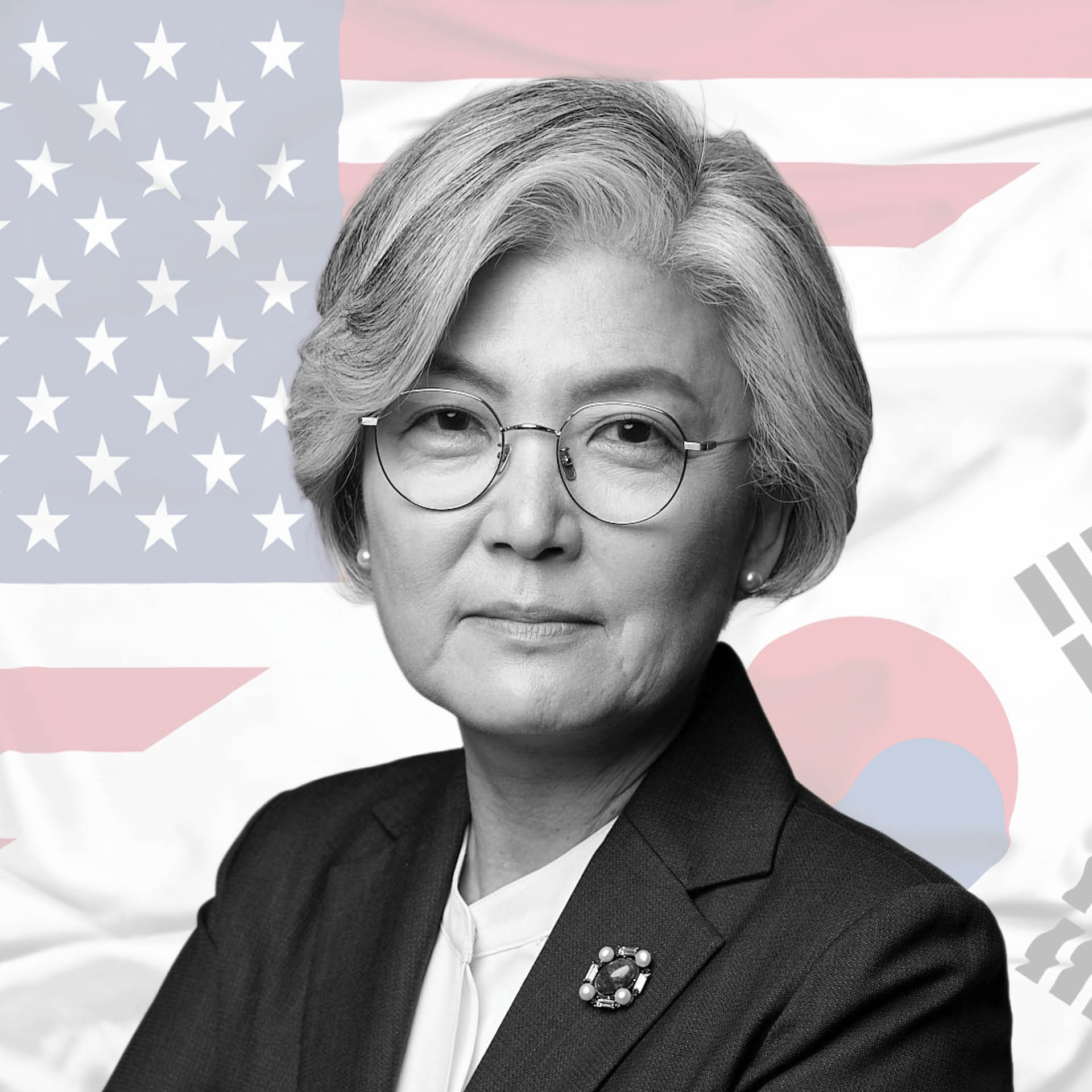
Sheena Chestnut Greitens sat down with Ambassador Kang Kyung-wha, the Republic of Korea's ambassador to the United States. Recorded before a live audience at The University of Texas at Austin on December 3, the conversation explores the deepening alignment between Seoul and Washington. Ambassador Kang and Dr. Greitens discuss the implementation of the recent $350 billion Korean government-led investment in the United States, focusing on seven key sectors including shipbuilding, semiconductors, and nuclear energy. The discussion addresses the challenges of workforce training and visa policy following recent immigration enforcement actions in Georgia. The conversation also covers the shifting geopolitical landscape, specifically the implications of deepened military cooperation between North Korea and Russia. Finally, the ambassador outlines priorities for modernizing the alliance, including the transfer of wartime operational control and cooperation on nuclear fuel cycles and nuclear-powered submarines. This event was supported by the Asia Policy Program at The University of Texas at Austin, the Clements Center for National Security, the Strauss Center for International Security and Law, the LBJ School of Public Affairs, and the Korea Economic Institute of America.