
Honestly with Bari Weiss
The most interesting conversations in American life happen in private. This show brings them out of the closet. Stories no one else is telling and conversations with the most fascinating people in the country, every week from *The Free Press*, hosted by former *New York Times* and *Wall Street Journal* reporter Bari Weiss.
Bari Weiss
Show overview
Honestly with Bari Weiss launched in 2025 and has put out 42 episodes in the time since. That works out to roughly 5 hours of audio in total. Releases follow a fortnightly cadence.
Episodes typically run under ten minutes — most land between 3 min and 5 min — though episode length varies meaningfully from one episode to the next. None of the episodes are flagged explicit by the publisher. It is catalogued as a EN-language Society & Culture show.
There hasn’t been a new episode in the last ninety days; the most recent episode landed 8 months ago. The busiest year was 2025, with 41 episodes published. Published by Bari Weiss.
From the publisher
The most interesting conversations in American life happen in private. This show brings them out of the closet. Stories no one else is telling and conversations with the most fascinating people in the country, every week from *The Free Press*, hosted by former *New York Times* and *Wall Street Journal* reporter Bari Weiss. www.thefp.com
Latest Episodes
View all 42 episodes
A Note from Bari on Honestly
Honestly is taking a pause. We’ll be back soon. This is a public episode. If you'd like to discuss this with other subscribers or get access to bonus episodes, visit www.thefp.com/subscribe
CBS News Presents: A Town Hall with Erika Kirk
This is a free preview of a paid episode. To hear more, visit www.thefp.comLast week, Bari sat down with Erika Kirk for an hour-long town hall in front of a live audience on CBS.It was an extremely powerful conversation. Erika and Bari spoke about a lot—rising political violence in this very divided country; the way some people justified or excused Charlie’s murder; what Erika thinks about some of the controversial things Charlie said in his lifetime; her response to Candace Owens and the conspiracy theories Owens and others are peddling; the growing antisemitism on the right; and her decision to forgive Charlie’s killer.They also talked about the posthumous release of Charlie’s last book, Stop, in the Name of God: Why Honoring the Sabbath Will Transform Your Life.This town hall was the first of many conversations and debates Bari will be bringing to CBS News about the things that matter most. Which, of course, are often the hardest to talk about. We really hope you will tune in. In case you missed this first one with Erika Kirk, we’re thrilled to share the conversation here on Honestly. And we can’t wait for you to catch the next one on CBS News.The Free Press earns a commission from any purchases made through all book links in this article.
Should We Legalize Assisted Suicide?
This is a free preview of a paid episode. To hear more, visit www.thefp.comOne of the most complex medical, ethical, moral, and religious questions of our era is that of physician-assisted suicide—also known as Medical Aid in Dying, or MAID.Eleven U.S. states and Washington, D.C. have legalized some form of MAID for terminally ill patients. And New York might join them.Over the summer, a Medical Aid in Dying Act passed New York’s state legislature. It is now sitting on Governor Kathy Hochul’s desk as she decides whether to sign it into law.Under the proposed New York bill, terminally ill adults with a prognosis of six months or less to live would be able to access a prescribed, self-administered life-ending medication.Supporters argue that this is a compassionate option—one that can relieve people of immense pain and suffering, allowing patients to choose when and where they die, and to do so surrounded by loved ones.Opponents see this as a violation of physicians’ fundamental oath to do no harm. They also worry that while access may begin narrowly, it could expand over time to include people seeking death for reasons other than terminal illness—such as mental suffering or simply a desire to stop living. Cases like this have already occurred in Belgium, the Netherlands, Canada, and Switzerland.Rafaela Siewert sat down with two experts who see this topic very differently for a heated debate.David Hoffman is a healthcare attorney, clinical ethicist, and professor of bioethics at Columbia University. He argues that hypothetical future abuses of MAID shouldn’t outweigh the needs of terminal patients who need this option now.Dr. Lydia Dugdale is a physician, medical ethicist, and professor of medicine at Columbia University. In her view, legalizing this practice of physician-assisted suicide risks undermining the responsibilities of governments, medical systems, and families to care for the mentally ill, the poor, and the physically disabled. And she fears that the potential for excessively expanded access over time is too great.We are among the many Americans who do not know what the right answer is. We see both sides—which is why grappling with the nuances of this subject is so important.This is a debate you won’t want to miss.On how MAID works in theory vs. how it works in practice:Lydia Dugdale: So you have to be 18 years of age. You have to be able to consent. You have to have a terminal diagnosis understood as six months or less to live. You have to be able to self-ingest.David Hoffman: Some of the criteria vary from state to state with subtle nuance. For example, Oregon initially had a residency requirement that you had to be a resident of Oregon. Why? Because they feared—at the time I can understand why they would—that people would travel from around the world to Oregon, get their prescription for a lethal medication, go to the beach, watch the sunset, take the medication, and bodies would litter the shoreline. Well, that never happened. So Oregon eliminated its residency requirement. . .LD: As did Vermont.
Would America Be Safer Without the Second Amendment?
This is a free preview of a paid episode. To hear more, visit www.thefp.comThere are more civilian-owned firearms in the United States than in any other nation on earth. To many, gun ownership is the ultimate expression of our freedom and of the promise that power ultimately resides with the people, not the state. But they are also part of the reason that we have more gun deaths than anywhere else in the developed world.The debate on guns in America stems from a single sentence from our Bill of Rights, written in 1791: “A well regulated militia, being necessary to the security of a free state, the right of the people to keep and bear arms, shall not be infringed.”That sentence—the Second Amendment of our Constitution, and the question of whether America would be safer without it—was the focus of our final live debate of 2025, held before a packed house at Chicago’s Studebaker Theater. On stage were two formidable debaters: attorney and law professor Alan Dershowitz, and Dana Loesch, radio host, author, and former spokesperson for the National Rifle Association.“If I were grading the framers for how they drafted the Second Amendment,” Dershowitz quipped, “they get a C+ with grade inflation.”
Kids Don’t Need Phones with Jonathan Haidt
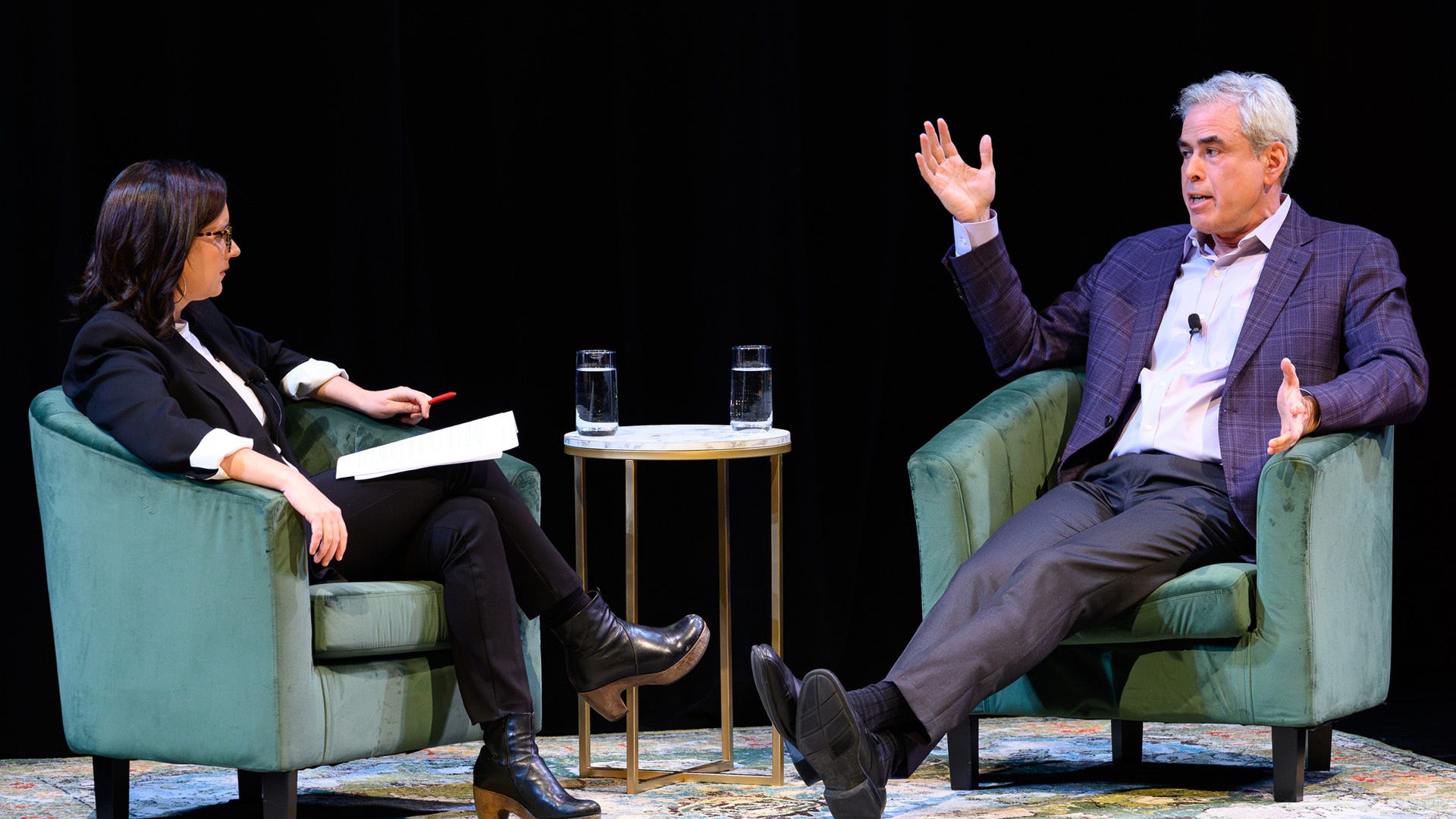
This is a free preview of a paid episode. To hear more, visit www.thefp.comYou probably know Jonathan Haidt as the guy trying to save your kids from smartphones and social media apps. Likely you’ve read The Anxious Generation, which has been translated into 44 languages and sold nearly 2 million copies. One might say that Jon is Elvis for 21st-century moms who don’t understand Discord.But when Haidt gets written about decades from now, it will be for much more than this book and the powerful movement that came from it. I think he will be regarded as one of the most important writers of this epoch.Because he has the remarkable ability to understand—and explain—our social condition. He holds up a mirror to us.He did it with his book The Righteous Mind, which explained why people are so passionately divided over politics and religion. He did it again with The Coddling of the American Mind, co-written with Greg Lukianoff, which explored why young people—especially on college campuses—can become totally intolerant of opposing views. And in his latest book, The Anxious Generation, he asked the obvious question: Why are teens suddenly so unhappy? Why are they losing attention, self-confidence, and the ability to socialize? Perhaps it has something to do with the mesmerizing device in their hands.In a world gone mad, Haidt has turned common sense into a radical mission. I sat down with him in front of a live audience in New York City to talk about how we got to this point—and where we go from here.On the fatal dangers of social media:Bari Weiss: There are two major calls to action in your book and in the movement around it: One is banning phones in schools; the second is making sure kids aren’t on social media before the age of 16. I want to allow you to talk about two stories that I think bring the necessity of those two policies to life. I’ve heard you speak to a mom named Kirsten, whose daughter developed a pretty serious eating disorder after she was bombarded with content on her TikTok’s “For You” page. Can you tell me a little bit about her and her daughter, and why that story is so emblematic to you?
Democratic Dissident John Fetterman
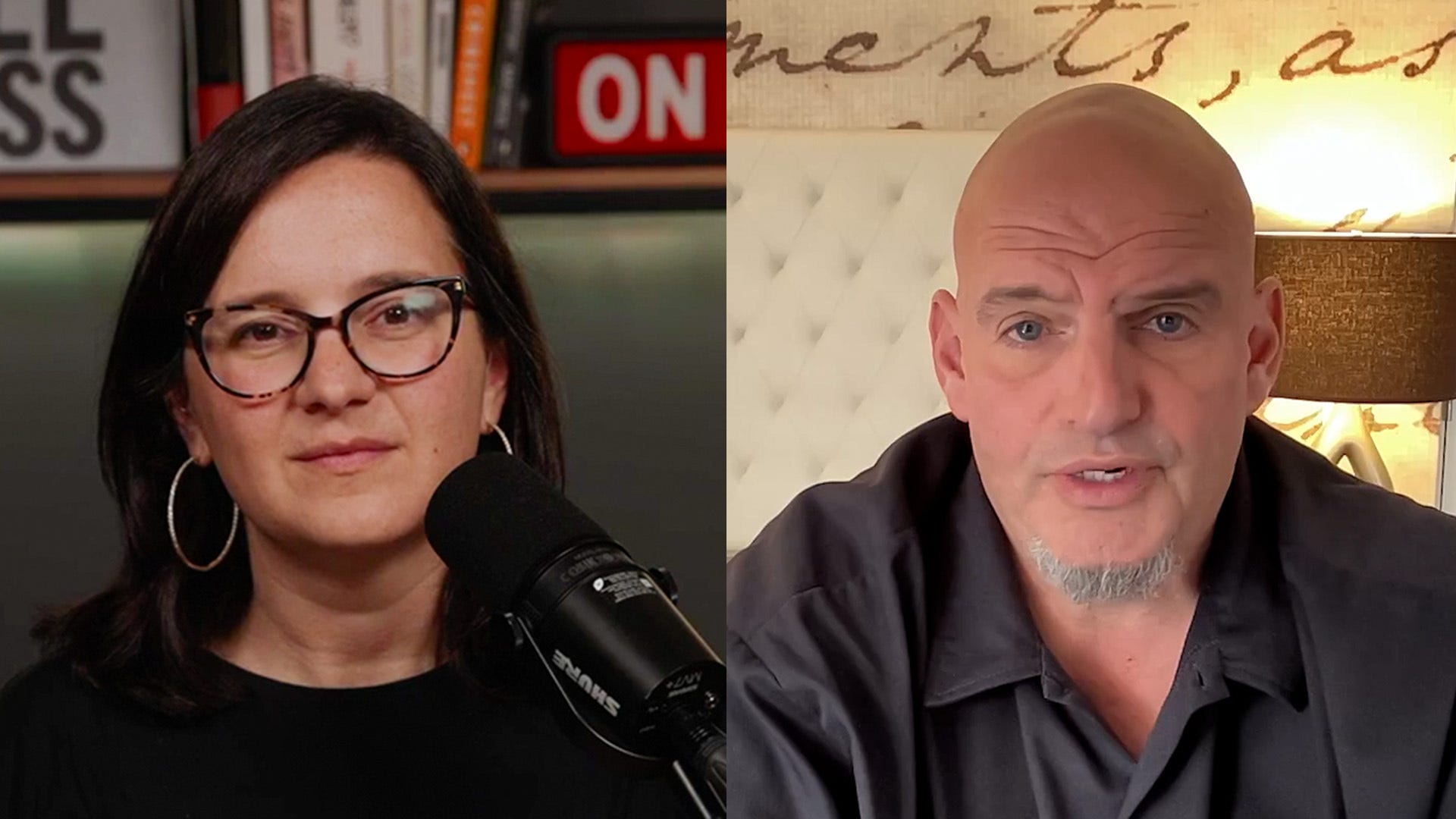
This is a free preview of a paid episode. To hear more, visit www.thefp.comWho owns the future of the Democratic Party?That’s the question on everyone’s mind since last Tuesday night—when the richest city in America elected 34-year-old democratic socialist Zohran Mamdani as its mayor.You can see Mamdani’s win as a one-off—a charismatic contender facing a rival mired in controversy. But the other way to see it is as emblematic …
How We Lost Ourselves to Technology—and How We Can Come Back
This is a free preview of a paid episode. To hear more, visit www.thefp.comDo you feel uneasy? Do you feel a level of ambient anxiety? Do you feel despair, despite the fact that we live in the most luxurious time and place in human history? And did my producer offer to give me a Klonopin today? That one I won’t answer.The point is, you are not crazy. If you feel these things, you are simply attuned to reality—and it’s not a problem that’s solvable with less screen time or with meditation, red light, or sea moss.My brilliant guest, Paul Kingsnorth, argues that the reason you feel this way is not this or that social media app or algorithm or culture war issue. That these are all superficial expressions of a thousand-year battle with what he calls “the Machine.” What exactly that means, he’ll explain tonight.To personally fight the Machine, Paul has moved his family out of urban England to live off the land in rural Ireland, where his family grows their own food, draws water from a well, and homeschools their children. To learn more about his life, you’ll have to go back and listen to the Honestly episode I did with him in 2024.In his new book, Against the Machine, Paul makes the argument that what this moment requires is something of a rebellion. He says the West is not dying, but already dead. And this book is an attempt to understand how we got to this profound feeling of disquiet—and how we might return to true peace. It’s being billed as a “spiritual manual for dissidents in the technological age.”Click below to listen to our conversation, or scroll down for our favorite moments.On finding meaning in the technological age:Bari Weiss: How can we live a life of meaning? How can we maintain our humanity in the age that we happen to be living in right now—short of becoming monastic?Paul Kingsnorth: We’re living in this time, and this is the time we’re made to live in. So you better get through it, and you better just deal with it, girlfriend, as I believe they say in these parts. There’s no five-point plan to save the world, because it doesn’t work like that, but there are a number of ways you can think about how to live your life. We all live completely different lives. There’s no manifesto for everybody. But the first thing to do is to start asking yourself what this story is.
How Katie Herzog Drank Her Way to Sobriety
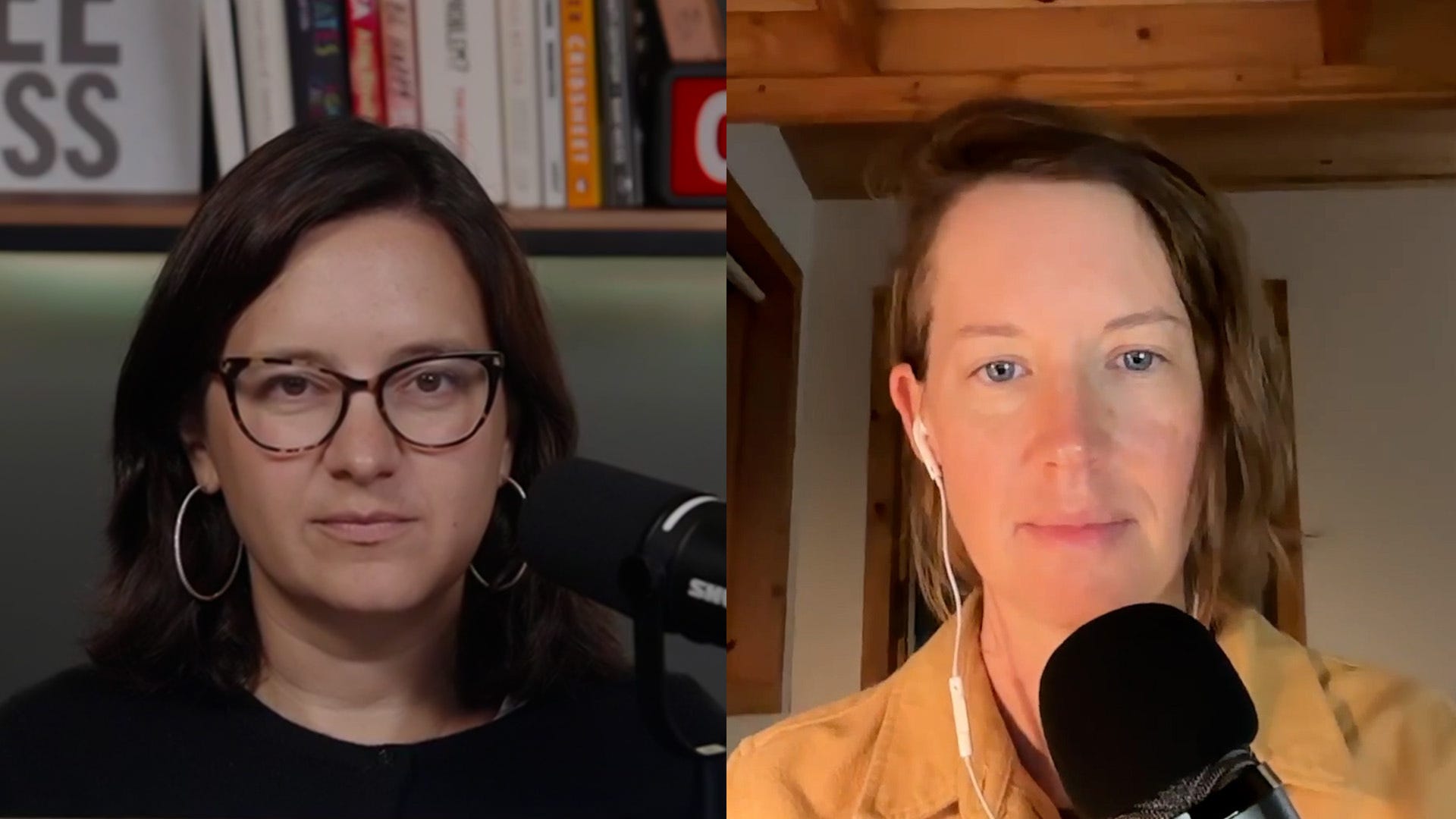
This is a free preview of a paid episode. To hear more, visit www.thefp.comIf you’re listening to this, you probably know someone who has struggled with alcohol addiction, or maybe you’re an alcoholic yourself. It’s one of the most universal human experiences. In 2023, 10 percent of the U.S. population met the criteria for alcoholism. That’s 30 million people.And throughout the past hundred or so years, there’s basically been one solution: total sobriety, talk therapy, and Alcoholics Anonymous. And yes, there are countless people ready and eager to say, “AA saved my life.” I know and love many of those people.But as Katie Herzog writes: “The dominance of AA obscures the fact that other options exist too.” Okay, so what are these other options? One of them is a drug called naltrexone that can let alcoholics keep drinking—yes, you heard me right. Katie describes it as a chemical safety net that makes you want to drink less.And in order for the drug to work, you actually have to drink—at least at the beginning. The goal with this method is not necessarily abstinence. It’s reformed, moderate, responsible drinking.Is this all starting to sound like snake oil—or worse, even dangerous? We understand. Over 175,000 Americans die each year from excessive drinking. It causes heart disease, cancer, domestic violence, and suicide. It costs the U.S. economy nearly $250 billion in healthcare expenses. There’s loss of productivity, criminal justice fees, vehicle wrecks—I could go on. And living with alcoholism, or being close to someone who struggles with addiction, can be devastating.So when someone comes along and says, “Your alcoholic loved one can actually drink with naltrexone,” the knee-jerk reaction is to say: “Hell no.”But Katie Herzog, in her new book Drink Your Way Sober, argues that AA—and our traditional thinking—has not worked, and will not work, for everyone. And she makes the case that we should be more open to alternative forms of treatment like naltrexone.You’ll know Katie from her hit podcast Blocked and Reported, which she co-hosts with Free Press contributor Jesse Singal—though she likes to say she is “the only host of the only podcast.”And today, I ask her how she got sober using naltrexone—and a program called the Sinclair Method—how the drug actually works, why it’s been shunned by the medical community, and whether she thinks society will buy into it.Click below to listen to our conversation, or scroll down for our favorite moments.On “booze noise” and defining addiction:Katie Herzog: For me, the defining feature of my addiction was mental obsession, so I had a compulsion to drink. I had an overwhelming mental obsession. And there’s a term that I actually heard your sister Suzy say, when talking about Ozempic—she used the term food noise. That’s what it was like: It was booze noise. And the booze noise never, ever stopped, for 20 years. In the back of my mind was always this question: When can I drink? That was the defining feature of it. It wasn’t how it got in the way of my life, my job, my relationships. The closest thing I can compare it to is new love, when you’ve got this intense crush on another person and that’s the only thing you can think about—it feels crazy and obsessive.

How One Man Overcame His Autism
This is a free preview of a paid episode. To hear more, visit www.thefp.comLeland Vittert is one of America’s most recognizable television correspondents. You’ll know his face from years of frontline reporting in places like Egypt, Libya, Israel, and Ukraine.You may have followed his tumultuous exit from Fox News in 2021, after clashing with the network over its coverage of Donald Trump—and then his redemption arc, becoming th…
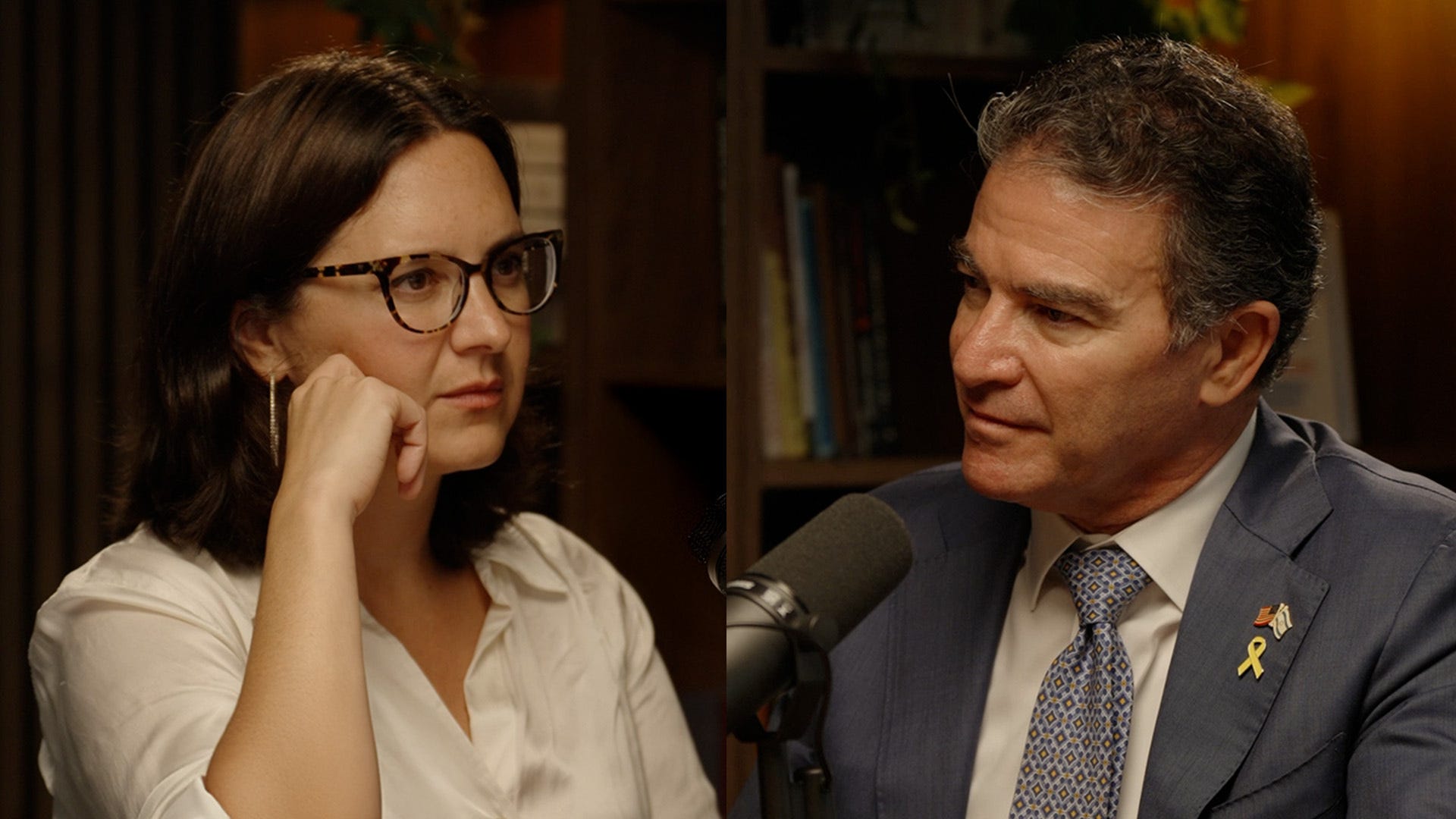
Inside the Mossad
This is a free preview of a paid episode. To hear more, visit www.thefp.comIf you’re anything like me, you’re a sucker for a good spy show: Homeland, Tehran, Fauda, The Bureau. I am fascinated by the life of spies—the secret meetings in Beirut cafés, the wigs and false identities, the double and triple lives, always one step away from exposure, risking everything for their country.Most of the time, those TV characters are pure…
Woody Allen on Life and Death
This is a free preview of a paid episode. To hear more, visit www.thefp.comYou know the name Woody Allen. Everyone does. He’s made some of the most acclaimed films ever made: Annie Hall, Hannah and Her Sisters, Crimes and Misdemeanors—the list goes on and on and on. He’s made an astonishing 50 movies.You see his influence everywhere, from sitcoms to stand-up to just about every rom-com made since Annie Hall premiered in 1977. And in the process, he turned himself into America’s most unlikely leading man: short, thinning hair, bespectacled, and exceptionally neurotic.Now, at age 89, Allen is out with his first novel, What’s With Baum? Its protagonist is an anxious, smart Jewish writer with a messy personal life who gets himself in a great deal of trouble. Yes, it’s like a Woody Allen movie in book form. It’s also funny and delightful, and touches on a major theme of our age: the idea that an accusation, once made, is as good as a conviction.Allen knows something about that. In 1992, his longtime romantic partner Mia Farrow discovered that Allen had begun a relationship with her adopted daughter, Soon-Yi Previn. Allen was in his 50s at the time, Previn was just 21. All hell broke loose, with Farrow accusing Allen of grooming and preying on her daughter.The scandal became fodder for tabloids and late-night talk shows but soon took a much darker turn, with Farrow accusing Allen of molesting their 7-year-old daughter Dylan in August 1992. The charges were never proven in court—indeed they were twice dismissed—but the court of public opinion was another matter.Today on Honestly, we get into everything about Allen—from the accusations to his subsequent cancellation in the MeToo era to his childhood in Brooklyn and his climb from Flatbush to the commanding heights of American comedy, film, and culture. We delve into how he’s changed and the many ways in which he hasn’t. We talk about his marriage to Previn, which is still going strong after 28 years. He shares his thoughts on President Donald Trump, NYC mayoral candidate Zohran Mamdani, The New York Times, and American politics more broadly. We’ll hear what he thinks about life, death, and aging as he approaches 90, and much, much more.Click below to listen to our conversation, or scroll down for our favorite moments.
Conversations with Coleman: Three Hostages Families Disagree on How to Get Their Loved Ones Home
Everyone wants the war in Gaza to end. The reason the war is not over is because about 50 people are still being held hostage by Hamas.Twenty of them are alive, but on the brink of death. About 30 of them have already been killed, and their bodies remain in Hamas captivity.There are differing opinions on the best way to bring them home: continue the ground war in Gaza, or take the partial deal put forward by Qatar and Egypt—which includes a 60-day ceasefire and the release of 10 living hostages and 18 bodies in exchange for hundreds of security prisoners.This war is one where everyone has an opinion. But in my view, no opinion matters more than those of the families whose loved ones, including their children, are living in Hamas terror tunnels. These families are in a collective debate about the best way to bring their loved ones home.So I want to play a really special episode from Conversations with Coleman that illuminates these differences, and showcases arguably the largest debate in Israeli society today.Coleman Hughes sat down with three hostage families: Tzvika Mor, the father of Eitan Mor, a 23-year-old security guard at the Nova Music Festival taken by Hamas; Talik Gvili, the mother of Ran Gvili, who on October 7 leaped into action and fought Hamas terrorists in Kibbutz Alumim; and Dalia Cusnir, the sister-in-law of brothers Iair and Eitan Horn. Iair Horn was released, and Eitan Horn remains in Hamas custody.Today, their families tell their stories and explain what they think is the best way to bring their family members home. This is a public episode. If you'd like to discuss this with other subscribers or get access to bonus episodes, visit www.thefp.com/subscribe
Why Amanda Knox Forgave the Man Who Sent Her to Prison
This is a free preview of a paid episode. To hear more, visit www.thefp.comOn November 1, 2007, a man named Rudy Guede broke into a random home in Perugia, Italy, then raped and killed Meredith Kercher—a 21-year-old exchange student from the University of Leeds.You might not even remember the names Rudy Guede and Meredith Kercher. But one name you will remember is Meredith’s roommate, Amanda Knox, a 20-year-old exchange studen…
Why Unions Went for Trump
This is a free preview of a paid episode. To hear more, visit www.thefp.comThe question of who represents the working class is probably the hottest debate in American politics. Is it Republicans? Democrats? Or socialists like Zohran Mamdani?Pundits can debate that question all they want, but the undeniable test is: Who do the unions believe stands for working people?For a century, unions were undeniably Democratic. And in 2021…
Jeffrey Epstein and Conspiracy America
This is a free preview of a paid episode. To hear more, visit www.thefp.comHere’s one fun question to ask at a dinner party: What is your favorite conspiracy theory?There’s the idea that the CIA killed John F. Kennedy. The moon landing was fake, and 9/11 was an inside job. Covid was designed by the Gates Foundation to control the world—and the Covid vaccine had a microchip. There’s the deep state. Chemtrails. QAnon. The Illuminati. Reptilian overlords. Pizzagate—which says that high-ranking Democrats were running a child sex-trafficking ring out of a D.C. pizzeria.That one, Pizzagate, is rivaled only by the idea that there is a group of Satan-worshipping globalists and Hollywood celebrities who traffic children in order to harvest adrenochrome, a chemical which, in this scenario, is extracted from their blood. Why? It’s obvious: They inject it in order to stay young.It’s easy to joke about these theories. It’s much harder to reckon with the fact that many Americans believe them sincerely—and their justification is grounded in the fact that some conspiracy theories turn out not to be theories, but fact.The government was poisoning alcohol during Prohibition. The FBI was illegally spying on civil-rights activists like MLK. The U.S. government did let some few hundred black men with syphilis go untreated to study the effects. And Covid likely came from a lab in Wuhan, China.The question is how to tolerate and even encourage healthy speculation and investigation? How do we allow for skepticism of received wisdom, which may actually be wrong, without it leading to reptilian Jewish overlords?In the past few weeks, the speculation surrounding Jeffrey Epstein’s life and death is a perfect example of this conundrum. It’s a story filled with smoke and unanswered questions: How did Epstein get so rich in the first place? Was his wealth connected to his crimes? Was he acting alone? Was there a client list—and if so, who was on it? Why did he get such a sweetheart deal? And on and on.And then things get more far-fetched: Was Epstein’s suicide faked? Who could have killed him? Was he connected to foreign intelligence? And my favorite: Was he running a Jewish cabal?To help us understand why conspiracy theories are so compelling—and how we might better engage with those who believe them—is Ross Douthat.Ross Douthat is an opinion columnist at The New York Times and host of the Interesting Times podcast. He has been covering conspiratorial thinking—how to understand it, and what to do about it—for years.In 2020, he wrote: “It’s a mistake to believe most conspiracy theories, but it’s also a mistake to assume that they bear no relation to reality. Some are just insane emanations or deliberate misinformation. But others exaggerate and misread important trends rather than denying them, or offer implausible explanations for mysteries that nonetheless linger unexplained.” Which I thought perfectly encapsulated the conundrum of handling conspiracy theories today.So today on Honestly, I ask Ross: What is the state of conspiracy theories in America? How do we dispel conspiracy theories that are clearly false—without relying on establishment sources the public no longer trusts? And what are the consequences when these theories go unchecked?Click below to listen to our conversation, or scroll down for an edited transcript.
Could Rahm Emanuel Be Our Next President?
This is a free preview of a paid episode. To hear more, visit www.thefp.comRahm Emanuel is giving every indication that he’s running for president in 2028—including by coming on Honestly yesterday.Emanuel, now 65 years old, has spent decades making a name for himself as one of the Democratic Party’s fiercest and most effective partisans—a true knife fighter, and you’ll see that spiciness in this interview.But can the dealmaker, the guy so adept at pulling the levers of power behind the scenes, really become the front man? And as the party continues to pull leftward, is there really room for an old-school moderate liberal like Rahm to be the standard-bearer? And lastly, but perhaps most importantly, does he have the bedside manner to be president? Or will people love his blunt nature and find it refreshing?He certainly has a résumé to run on. While still in his early 30s, he became a key adviser to Bill Clinton’s 1992 campaign, and before he was 40, his career was already the stuff of legend, thanks to stunts like sending a dead fish to a Democratic pollster who had upset him. And after Clinton won the White House in 1992, when staffers met around a picnic table to celebrate their accomplishments, Rahm instead picked up a knife and began listing Democrats he felt were insufficiently supportive of the campaign. “Dead man!” he yelled after each name, jabbing the knife into the table.His nickname—“Rahm-bo,” after Sylvester Stallone’s fearsome commando—became so pervasive that even his mom started calling him that. Meanwhile, in Hollywood, Rahm became the inspiration for Josh Lyman, a leading character on The West Wing.He spent five years as a top White House aide following Clinton’s victory. Rahm then returned to his native Illinois and was elected to Congress in 2002. In 2006, he was the mastermind of the Democratic Party’s wildly successful effort to retake the House of Representatives, making Nancy Pelosi speaker. In 2008, Barack Obama made Rahm his first White House chief of staff. He guided the new president through his tumultuous first two years in office, a period when Obama signed Dodd-Frank, a massive stimulus package, and the Affordable Care Act, into law.Then, in 2011, Rahm was elected to the first of his two terms as Chicago’s mayor. And when Joe Biden won the White House, he made Rahm his ambassador to Japan, giving the maybe–presidential contender direct foreign policy experience in what some would argue is America’s most important ally.Now the question is whether a man who ran Chicago and served every living Democratic president is too conservative for Democrats.Today on Honestly, I ask Rahm how moderates on the left and the right can get elected. I ask him about free trade, China, Israel, Iran, Trump, Biden, Obama, Zohran Mamdani, and the American dream—and what his party needs to do to win back Congress in the midterms next year, and the White House in 2028. And more deeply, if the Democrats can ever win a national election again after losing the trust of the American people.It’s a fascinating conversation with one of the most unique, knowledgeable, and—dare I say—zesty figures in politics today.Click below to listen to our conversation, or scroll down for an edited transcript.
Giga-Yachts, Flo Rida, and Bunkers. . . What Could Go Wrong?
This is a free preview of a paid episode. To hear more, visit www.thefp.comDepending on who you ask, some would call the ultrarich “shameless”; others might say “aspirational.” Here’s what I mean: Mukesh Ambani, the Indian centibillionaire, has a room of snow in the Indian tropics—to say nothing of his skyscraper home, 168-car garage, and 600-person-staff. And celebrations for his kids’ weddings featured Rihanna and Beyoncé.This is nothing new. Aristotle Onassis had whales’ teeth carved into pornographic scenes from The Odyssey, and stools upholstered in whale foreskins which he kept aboard his yacht—because where else would you keep that?And one hedge fund billionaire—whose name you won’t even know—bought a 14-foot shark preserved in formaldehyde. Why? Why not?These opulent displays of wealth just scratch the surface. There are blood boys, Basquiats, and bunkers, many of them in New Zealand for the end of the world.From the Kochs to the Kardashians—most of us cannot look away. But one question remains: Do Americans loathe or love the ultrarich?That’s one of the questions raised by Evan Osnos’s new book, The Haves and Have-Yachts.Evan is a staff writer at The New Yorker and an author—several times over. In his newest book, he investigates how this class of people—the “Have-Yachts”—got their money, how they spend it, and how they fight to keep it. It all paints a fascinating picture not just about America and capitalism, but about human nature and the status games we play.The book feels eerily relevant in this moment of social and political breakdown, fueled—perhaps above all—by rage at the economic picture and economic inequality. As Zohran Mamdani—the self-proclaimed socialist and likely future mayor of New York City—says, “Billionaires should not exist.” And anti-elite sentiment grows on the right, too—through voices like Tucker Carlson and Marjorie Taylor Greene.Today on Honestly, I ask Evan Osnos what this level of income inequality means for America, if a revolt or a revolution is in our future, and how AI is going to supercharge an already precarious status quo.Click below to listen to our conversation, or scroll down for an edited transcript.
Why Young People Are Voting to Burn It All Down
This is a free preview of a paid episode. To hear more, visit www.thefp.comJust two weeks ago, New Yorkers voted en masse for a self-proclaimed socialist—someone who once called for “seizing the means of production.”This is, of course, Zohran Mamdani, who dominated in the Democratic primary for New York City mayor with a definitive victory over Andrew Cuomo.He has called for rent freezes, free buses, and even government-run grocery stores.He won 56 percent of the vote in a campaign fueled by young, highly educated, wealthy people—many of whom believe in reviving socialism here in America, in 2025.According to a Cato Institute poll from May: 62 percent of Americans aged 18 to 29 say they hold a “favorable view” of socialism. And 34 percent have a positive view of communism.Polls by Emerson and Marist from May and June had shown Mamdani leading with voters under 45 by as much as a 2:1 ratio against the former governor.This phenomenon has left many people wondering: Why are so many young people embracing a failed economic system? Is it their university education? Is it the influence of social media? Is it just “cool”? Is it a desperate call for anything to fix wealth inequality? Or is it something else?Here to help us understand are Tyler Cowen and Kyla Scanlon.Tyler Cowen is an economist and Free Press columnist who just wrote an important essay for us called “Why Won’t Socialism Die?”Kyla Scanlon is a writer, economic commentator, and educator—and, importantly for this conversation, a member of Gen Z. She is 28, and her new book is In This Economy? How Money & Markets Really Work.This conversation was originally a Free Press livestream—and you’ll hear throughout this conversation that I take lots of questions from people who joined us live. Click below to listen to our conversation, or scroll down for an edited transcript.
Is Anyone a Genius?
This is a free preview of a paid episode. To hear more, visit www.thefp.comLove him or hate him, many consider Elon Musk to be a modern-day genius. He co-founded PayPal, which transformed how people purchase things. He became the CEO of Tesla, which revolutionized electric vehicles—and made it cool to drive them. He founded SpaceX, accomplishing what only superpower nation-states have previously. And he is working to make our species interplanetary—maybe in a few years, we’ll be doing this podcast on Mars.To many, these acts make Elon Musk a genius, perhaps the most important genius in history.But it’s worth asking: What exactly makes him a genius? Is it a particular set of qualities, or is Elon Musk just particularly adept at playing the role of genius? Or at least what we’ve come to expect of geniuses? Is his offensive behavior excused by his genius, or the result of it? And why do human beings value genius, even to the point of deifying it?All of these questions are raised in Helen Lewis’s new book, The Genius Myth. And not just with regard to Musk, but to so many of the figures our culture venerates as geniuses: Leonardo da Vinci, Galileo, William Shakespeare, Isaac Newton, Pablo Picasso, Albert Einstein, and Steve Jobs. Lewis asks: Were these people actually geniuses? Or was their genius based on a myth? And more importantly, how does our perception of “genius” confuse and distort our understanding of success—and how we value, or don’t value, other human beings?Today on Honestly, Bari asks Helen Lewis if some people belong to a special and superior class, what it means to be a genius, and if she believes in geniuses at all.Click below to listen to our conversation, or scroll down for an edited transcript.
The Words That Made America
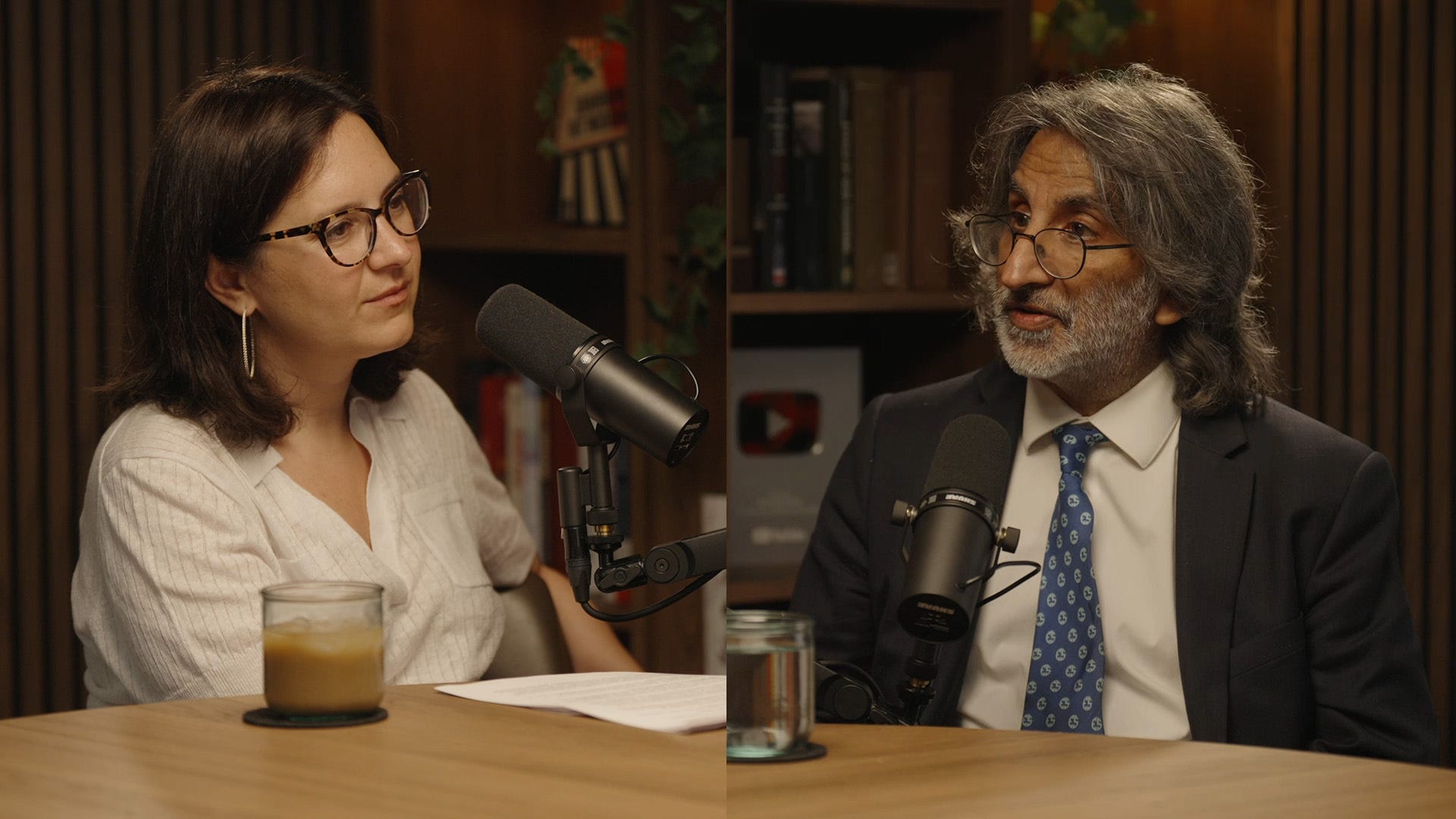
This is a free preview of a paid episode. To hear more, visit www.thefp.comAmerica is turning 250. And we’re throwing a yearlong celebration of the greatest country on Earth. The greatest? Yes. The greatest.We realize that’s not a popular thing to say these days. Americans have a way of taking this country for granted: A Gallup poll released earlier this week shows that American pride has reached a new low. And the world at large, which is wealthier and freer than it has ever been in history thanks to American power and largesse, often resents us. We get it. As journalists, we spend most of our time finding problems and exposing them. It’s what the job calls for.But if you focus only on the negatives, you get a distorted view of reality. As America hits this milestone birthday, it’s worth it to take a moment to step back and look closely at where we actually are—and the reality of life in America today compared to other times and places. That reality is pretty spectacular.Could Thomas Jefferson and the men gathered in Philadelphia who wrote down the words that made our world—“We hold these truths to be self-evident, that all men are created equal, that they are endowed by their Creator with certain unalienable Rights, that among these are Life, Liberty and the pursuit of Happiness”—ever have imagined what their Declaration of Independence would bring?The Constitution. The end of slavery. The defeat of Hitler. Astonishing wealth and medical breakthroughs. Silicon Valley. The most powerful military in the world. The moon landing. Hollywood. The Hoover Dam. The Statue of Liberty (a gift from France). Actual liberation (a thing we gave France). Humphrey Bogart and Tom Hanks. Josephine Baker and Beyoncé. Hot dogs. Corn dogs. American Chinese food. American Italian food. The Roosevelts and the Kennedys. The Barrymores and the Fondas. Winston Churchill (his mom was from Brooklyn). The Marshall Plan and Thurgood Marshall. Star Wars. Missile-defense shields. Baseball. Football. The military-industrial complex. Freedom of religion. UFO cults. Television. The internet. The Pill. The Pope. The automobile, the airplane, and AI. Jazz and the blues. The polio vaccine and GLP-1s, the UFC and Dolly Parton.The list goes on because it’s really, truly endless. Ours is a country where you can hear 800 languages spoken in Queens, drive two hours, and end up among the Amish in Pennsylvania. We are 330 million people, from California to New York Island, gathered together as one.Each of those 330 million will tell you that ours is not a perfect country. But we suspect most of them would agree that their lives would not be possible without it. So for the next 12 months, we’re going to toast to our freedoms on the page, on this podcast and in real life. And we’re doing it the Free Press way: by delving into all of it—the bad and the good and the great, the strange and the wonderful and the wild.And today—on America’s 249th birthday—we’re kicking off this yearlong event with none other than Akhil Reed Amar. Akhil has a unique understanding of this country—and our Constitution. Akhil is a Democrat who testified on behalf of Brett Kavanaugh, is a member of the Federalist Society, he’s pro-choice but also anti-Roe—and these seeming contradictions make him perfectly suited to answer questions about the political and legal polarization we find ourselves in today.Akhil is a constitutional law professor at Yale and the author of the brilliant book The Words That Made Us: America’s Constitutional Conversation, 1760–1840. He also hosts the podcast Amarica’s Constitution, and you might recognize his name from his work in The Atlantic. I ask him about the unique history that created our founding document, the state of the country, our political polarization, the American legal system, and what this country means to him.Click below to listen to our conversation, or scroll down for an edited transcript.On Thomas Jefferson’s glaring contradiction:Bari Weiss: When we think about that core line—We hold these truths to be self-evident, that all men are created equal, that they are endowed by their creator with certain unalienable rights—it makes me cry to even say, it’s so beautiful. And yet it was written by a man who owned hundreds of slaves—I think 600 over the course of his life.How did they, in that moment, write those lines and then go back to a house full of slaves? How did they understand the contradiction?