History Unplugged Podcast
1,129 episodes — Page 22 of 23
How Was Alexander Able to Supply His Army Deep Into Asia?
It's one thing to conquer the known world and beyond without the benefit of modern communications like Alexander the Great did. It's another thing to supply tens of thousands of soldiers deep into hostile territory when home is half a world away. How did Alexander manage to provision his army, and how did he do so for over a decade? TO HELP OUT THE SHOW Leave an honest review on iTunes. Your ratings and reviews really help and I read each one. Subscribe on iTunes or StitcherSee omnystudio.com/listener for privacy information.
Daily Life During the Civil War for Non-Combatants
More soldiers died in the Civil War than any other American conflict. But how did non-combatants fare? It depends on where you were and your life station. A northerner may barely know a war was going on at all if he did not read the newspaper or supply the foodstuffs to the Union army. But he definitely would if he lived in Missouri—claimed by both the Union and the Confederacy—and was subject to frequent guerilla attacks. A southerner would face impoverishment, the collapse of the regional economy, a flood of refugees, and see whole cotton crops rot. And it only got worse as the war got underway. Learn about everyday life for civilians during the Civil War in this episode. TO HELP OUT THE SHOW Leave an honest review on iTunes. Your ratings and reviews really help and I read each one. Subscribe on iTunes or StitcherSee omnystudio.com/listener for privacy information.
Why Gutenberg Didn’t Kick Off the Reformation
Gutenberg’s moveable type printing press was the prime mover of the Renaissance. From his machine came millions of books, leading to the democratization of knowledge, the fall of the papacy, and the rise of reason. But what if this wasn’t Gutenberg’s goal? What if he was a happy client of the papacy? What if he worked directly with the medieval church to sell indulgences? Turns out he did. Learn more in this episode. TO HELP OUT THE SHOW Leave an honest review on iTunes. Your ratings and reviews really help and I read each one. Subscribe on iTunes or StitcherSee omnystudio.com/listener for privacy information.
What if Japan Hadn’t Surrendered After Nagasaki?
The Allied Forces hoped the atomic bombings of Hiroshima and Nagasaki would finally convince Imperial Japan to end the war. If not, they were prepared to launch Operation Downfall—the proposed plan for the invasion of Japan in November of 1945 and the spring of 1946. If Downfall had taken place, it would have been the largest amphibious operation in history. It also would have meant millions of Japanese and Allied casualties from gunfire, bombings, and suicide attacks. TO HELP OUT THE SHOW Leave an honest review on iTunes. Your ratings and reviews really help and I read each one. Subscribe on iTunes or StitcherSee omnystudio.com/listener for privacy information.
Genghis Khan, Attila the Hun, and the Barbarian Empires of the Steppe—Kenneth Harl
Attila the Hun and Genghis Khan loom large in Western popular consciousness as two of history’s most fearsome warrior-leaders. Chroniclers referred to them as “The Scourge of God” and “Universal Lord” both fascinate and repel. But few people today are aware of their place in a succession of nomadic warriors who used campaigns of terror to sweep across the Eurasian steppes. They toppled empires and seizing control of civilizations. Today Professor Kenneth Harl joins us to talk about the effects of these steppe empires on world civilization. From antiquity through the Middle Ages, nomadic warriors repeatedly emerged from the steppes, exerting direct and indirect pressure on sedentary populations and causing a domino effect of displacement and cultural exchange. Dr. Harl and I discuss these turning points in history set into motion by steppe nomads: The fall of the Roman Empire can be blamed at least in part on the Huns. Christians of Asia Minor converted to Islam after the clergy fled the nomadic Turks. The Mongol sack of Baghdad destroyed the city and its role in the Muslim world. China’s modern-day Great Wall was constructed in response to the humiliation of Mongol rule. The spread of Buddhism and trade followed the Silk Road, which allowed cultural exchange between nomads and settled zones across Eurasia. Russia’s preemptive expansion into the northern regions was a reaction to the horror of being conquered by Mongols. RESOURCES MENTIONED IN THIS EPISODE Kenneth's course “The Barbarian Empires of the Steppes” ABOUT KENNETH HARL Dr. Kenneth W. Harl is Professor of Classical and Byzantine History at Tulane University in New Orleans, where he teaches courses in Greek, Roman, Byzantine, and Crusader history. He earned his B.A. from Trinity College and his M.A. and Ph.D. from Yale University. An expert on classical Anatolia, he has taken students with him into the field on excursions and to assist in excavations of Hellenistic and Roman sites in Turkey. Professor Harl has also published a wide variety of articles and books, including his current work on coins unearthed in an excavation of Gordion, Turkey, and a new book on Rome and her Iranian foes. TO HELP OUT THE SHOW Leave an honest review on iTunes. Your ratings and reviews really help and I read each one. Subscribe on iTunes or StitcherSee omnystudio.com/listener for privacy information.
Why the Galileo Affair is Completely Misunderstood
There are few episodes in history that are so misunderstood as the condemnation of Galileo. His trial has become a stock argument to show the fundamental clash between science and dogmatism. Turns out the whole affair was actually a giant clash of egos, with churchmen and scientists on both sides of the argument. TO HELP OUT THE SHOW Leave an honest review on iTunes. Your ratings and reviews really help and I read each one. Subscribe on iTunes or StitcherSee omnystudio.com/listener for privacy information.
Did Medieval Women Really Wear Chastity Belts?
According to legends of the Middle Ages, knights used the chastity belt on their wives as an anti-temptation device before embarking on the Crusades. When the knight left for the Holy Lands, his Lady would wear a chastity belt to preserve her faithfulness to him. The metal teeth that surrounded her "credentials" would also tear to shreds the member of any would-be seducer. However, there is no reliable evidence that chastity belts existed before the 15th century. Any reference to them is likely symbolic or a satirical drawing. No actual medieval chastity belt survives, and those that appear in museums are forgeries. Were they ever in use at all? If not, how did the legend appear? TO HELP OUT THE SHOW Leave an honest review on iTunes. Your ratings and reviews really help and I read each one. Subscribe on iTunes or StitcherSee omnystudio.com/listener for privacy information.
Why is Louis Such a Popular Name for French Kings?
If you want to be a French king who is also named Louis, then you have to slap enough Roman numerals at the end of your name to look like an encrypted message. Why are so many French kings named Louis? What significance does the name have for the French people? TO HELP OUT THE SHOW Leave an honest review on iTunes. Your ratings and reviews really help and I read each one. Subscribe on iTunes or StitcherSee omnystudio.com/listener for privacy information.
Did People in the Past Get 8 Hours of Sleep a Night?
Doctors love to say that eight hours of nightly rest is vital to good health. But did people in the past get this much sleep, more, or less? And how did the lack of a lightbulb affect their sleep cycles. Turns out quite a bit. People actually hit the hay very early and woke up a few hours each night—sort of a reverse midnight siesta. Important cultural activity took place during this time, including scheduled prayers, visits to neighbors, and doctors orders that children be conceived at this time. Learn more about how your ancestors slept, or didn't sleep. TO HELP OUT THE SHOW Leave an honest review on iTunes. Your ratings and reviews really help and I read each one. Subscribe on iTunes or StitcherSee omnystudio.com/listener for privacy information.
The Real-Life Pirates of the Caribbean—Matt Albers from The Pirate History Podcast
Pirates are popular these days: they adorn our favorite brands of bargain-basement rum and populate beloved Disneyland rides and multibillion-dollar film franchises. But who were these men and women who actually inhabited the Caribbean of the 1700s and made a living preying off trade vessels? How much of the myth of piracy is based on fact? And how much high seas adventure, myth and magic, voodoo, and treachery were there? Joining us to discuss these topics is Matt Albers, host of the Pirate History Podcast. We will talk about the golden age of piracy and the real men and women that threatened the trade and stability of the Old World empires, the forces that led them to piracy and the myths and stories they inspired. Famous names that come up include Captain Henry Morgan, Henry Avery, Charles Vane, Mary Reed, Anne Bonny, Black Bart Roberts, Ned Low, and Edward 'Blackbeard' Teach. They rub elbows with Queens, Kings, Popes, rebellious monks, Caribbean Natives, African Slaves and notorious governors like Woodes Rogers. RESOURCES MENTIONED IN THIS EPISODE The Pirate History Podcast Matt on Twitter (@blackflagcast) TO HELP OUT THE SHOW Leave an honest review on iTunes. Your ratings and reviews really help and I read each one. Subscribe on iTunes or StitcherSee omnystudio.com/listener for privacy information.
Would You Rather Be An Average Person Today or a Billionaire 100 Years Ago?
It's good to be as rich as a Rockefeller. John—the patriarch of the family—rose from a lowly Ohioan bookkeeper to the leader of Standard Oil, which owned 90 percent of America's petroleum until it was broken up by the Sherman Anti-Trust Act in 1911. He was the world's first billionaire, owning mansions in New York, Florida, and Ohio, along with several golf golf courses. But was all that money really all that great without modern conveniences? Let's look in to the conveniences of an ultra-wealthy man 100 years ago and see how they compare to an average person today. TO HELP OUT THE SHOW Leave an honest review on iTunes. Your ratings and reviews really help and I read each one. Subscribe on iTunes or StitcherSee omnystudio.com/listener for privacy information.
Why Wasn’t There a Scientific Revolution Under the Romans?
Scientific progress has moved steadily forward across much of the world for centuries, with few examples of abatement. The Scientific Revolution is often considered to have begun at Copernicus's 1543 publication of On the Revolutions of the Heavenly Spheres. Here moderns challenged the ideas of ancient scholars, rather than accepting them at face value. Most fault the so-called Dark Ages for this millenium-long lull in human intellectual progress lasting from the fall of Rome to the Renaissance. But why didn't Rome kick off the age of scientific discovery? What did they lack that the early modern world had? TO HELP OUT THE SHOW Leave an honest review on iTunes. Your ratings and reviews really help and I read each one. Subscribe on iTunes or StitcherSee omnystudio.com/listener for privacy information.
What if the Nazis Had Won World War Two?
This episode is fifth in our Alternate History Week series, where I look at famous books of alternate history and discuss why I think their alternate timelines aren't plausible. The Man in the High Castle is Phillip K. Dick's most chilling book and the most famous example of alternate history. It's set in 1962, fifteen years after the Axis Powers emerge triumphant in World War Two and rule over the former United States. Germany and Japan were victors in the war and divide the world between themselves. The book is fantastic, but I don't see any scenario in which Germany and Japan could control a post-war world. In fact, I don't see how the Axis had any chances of winning the war, short of an alien invasion. I explain why in this episode. TO HELP OUT THE SHOW Leave an honest review on iTunes. Your ratings and reviews really help and I read each one. Subscribe on iTunes or StitcherSee omnystudio.com/listener for privacy information.
If I Were Sent Back in Time to the Roman Empire, How Would I Take Over?
This episode is fourth in our Alternate History Week series, where I look at famous books of alternate history and discuss why I think their alternate timelines aren't plausible. Lest Darkness Fall, written in 1939 by L. Sprague de Camp, is one of the classics of the alternate history genre. American archeologist Martin Padway gets sent back to Rome in 535 AD. He introduces new technology to the Italo-Ostrogothic kingdom, such as the telegraph, printing press, and brandy; wards off a Byzantine attack; introduces a constitution; and emancipates the serfs. Great story. It would never work. In this episode I explain why. TO HELP OUT THE SHOW Leave an honest review on iTunes. Your ratings and reviews really help and I read each one. Subscribe on iTunes or StitcherSee omnystudio.com/listener for privacy information.
A Vietnam POW’s Story of 6 Years in the Hanoi Hilton — Amy Shively Hawk
A single death is a tragedy; a million deaths is a statistic. -Joseph Stalin When consider major historical events that involved millions of people— World War 2, the Great Depression, the Cold War—it's easy to forget that real people with their own stories were part of those events. Today we're zeroing in on one story. And that's the story of James Shively, an Air Force Pilot who was shot down over North Vietnam in 1967 and spent six years in the infamous Hanoi Hilton POW camp. To talk with us is Amy Shively Hawk, Jim's stepdaughter and author of the new book Six Years in the Hanoi Hilton: An Extraordinary Story of Courage and Survival in Vietnam. After being shot down, Shively endured brutal treatment at the hands of the enemy in Hanoi prison camps. But despite unimaginable horrors in prison, the contemplation of suicide, and his beloved girlfriend moving on back home, he somehow found hope escaping prison and eventually reuniting with his long-lost love – proving, in his words, that “Life is only what you make of it.” In this interview we discuss: How Capt. Shively was shot down, what happened when he was captured, and his fate at the hands of Vietnamese villagers What kept Captain Shively hopeful during his six years as a prisoner of war What happened to the whole prison when two fellow inmates escaped but were captured the next day How prisoners built a full prison communications system using Morse code, toilet paper, and hidden messages even though cell blocks were forbidden from speaking to each other under threat of torture About Amy: Amy Shively Hawk is the stepdaughter of James Shively, who married Amy’s mother after his release from a Hanoi prison when Amy was five years old. Amy’s background is in journalism, speaking, and advertising/marketing. RESOURCES MENTIONED IN THIS EPISODE Amy's book Six Years in the Hanoi Hilton Amy's website Headstrong: Healing the Hidden Wounds of War TO HELP OUT THE SHOW Leave an honest review on iTunes. Your ratings and reviews really help and I read each one. Subscribe on iTunes or StitcherSee omnystudio.com/listener for privacy information.
What if Byzantium Had Never Fallen?
This episode is third in our Alternate History Week series, where I look at famous books of alternate history and discuss why I think their alternate timelines aren't plausible. Today's book is Harry Turtledove's wonderful book Agent of Byzantium. In this book, Turtledove imagines that the Prophet Muhammed, instead of developing Islam, converted to Christianity and became a celebrated prelate and saint. Without the Muslim conquests, the Eastern Roman Empire remained the pre-eminent power in the Mediterranean and remains locked in a centuries-long cold war with Zoroastrian Persia to the East. I don't think Persia would have remained Zoroastrian that long. I explain why in this episode. TO HELP OUT THE SHOW Leave an honest review on iTunes. Your ratings and reviews really help and I read each one. Subscribe on iTunes or StitcherSee omnystudio.com/listener for privacy information.
What if China Had Discovered the New World?
This episode is second in our Alternate History Week series, where I look at famous books of alternate history and discuss why I think their alternate timelines aren't plausible. Today's book is Kim Stanley Robinson's 2002 book The Years of Rice and Salt. It explores how world history would have developed if the Black Death had killed 99 percent of Europe's population, with the Islamic world, the Chinese, and American Indians filling in the void. One section discusses China discovering and colonizing the New World. Here's why I think China would have never done so. TO HELP OUT THE SHOW Leave an honest review on iTunes. Your ratings and reviews really help and I read each one. Subscribe on iTunes or StitcherSee omnystudio.com/listener for privacy information.
Could One Marine Corps MEU Destroy the Entire Roman Army?
This episode is the first of a five-part series in our Alternate History Week—our version of Shark Week, if you will. We are looking at famous books of alternate history, and I'm discussing why I think their alternate timelines aren't plausible. The first book in this series is 1632. Eric Flint's book imagines that a West Virginia town gets sent back to 1632 Germany, during the Thirty Years War, and gradually comes to dominate European politics of the age. I'm going to twist the premise of this book—a small group of technologically advanced soldiers conquers a much larger force—and discuss the question of whether a Marine Corps MEU take out the Roman military. TO HELP OUT THE SHOW Leave an honest review on iTunes. Your ratings and reviews really help and I read each one. Subscribe on iTunes or StitcherSee omnystudio.com/listener for privacy information.
The Bronze Age Collapse of 1177 BC: The Most Catastrophic Event in History
There was an event in history worse than World War I, worse than the Mongol invasions that killed 40 million, worse than the little Ice Age that triggered famines and rebellions across the medieval world. This event was the "Dark Ages before the Dark Ages." It was the Bronze Age Collapse of 1177 BC, and it was so monumental that it inspired Homer’s ‘The Iliad’ TO HELP OUT THE SHOW Leave an honest review on iTunes. Your ratings and reviews really help and I read each one. Subscribe on iTunes or StitcherSee omnystudio.com/listener for privacy information.

Is There a Roman City in Present-Day China?
Since the 1950s, many classicists and military historians have believed that an ancient Roman bloodline lives on in a Chinese village. The town of Liqian sits on the edge of the Gobi desert, and 4,500 miles from Rome. They have tried to prove that the ruddy-skinned, light-eyed, and fair-haired residents of Liqian are lost relatives of a missing Roman battalion of mercenaries that fought against the Chinese 2,000 years ago. Let's look into this theory and see if a piece of Rome still lives on in China. TO HELP OUT THE SHOW Leave an honest review on iTunes. Your ratings and reviews really help and I read each one. Subscribe on iTunes or StitcherSee omnystudio.com/listener for privacy information.

Why The Irish May Have Really Saved Civilization
Thomas Cahill argues in his best-selling book How the Irish Saved Civilization that Ireland played a critical role in Europe's evolution from the classical age of Rome to the medieval era. Is his narrative correct? Without Ireland, he argues, the transition could not have taken place. Not only did Irish monks and scribes maintain the very record of Western civilization -- copying manuscripts of Greek and Latin writers, both pagan and Christian, while libraries and learning on the continent were forever lost -- they brought their uniquely Irish world-view to the task. Let's discuss how Ireland gave more to the modern world than Guinness and Bono. TO HELP OUT THE SHOW Leave an honest review on iTunes. Your ratings and reviews really help and I read each one. Subscribe on iTunes or StitcherSee omnystudio.com/listener for privacy information.

Did Rome And China Know of Each Other?
Rome and China were the two poles of the Silk Road. One sent precious porcelain, spices, and silks, the other sent out glassware and high-quality cloth. As Rome expanded into the Near East and China into Central Asia, did the two empires learn much of each other? Furthermore, did the two empires ever attempt direct contact? TO HELP OUT THE SHOW Leave an honest review on iTunes. Your ratings and reviews really help and I read each one. Subscribe on iTunes or StitcherSee omnystudio.com/listener for privacy information.
Americana: The Brazilian City Where the Confederacy Lives On
The United States has accepted immigrants throughout its history, but America has its emigrants as well. Did you know there is a city in Brazil founded by Confederates who wanted to flee the U.S. during Reconstruction? Welcome to Americana, Brazil. TO HELP OUT THE SHOW Leave an honest review on iTunes. Your ratings and reviews really help and I read each one. Subscribe on iTunes or StitcherSee omnystudio.com/listener for privacy information.
Curtis Lemay: World War II’s Greatest Hero or Worst War Criminal?—Warren Kozak
General Curtis LeMay is perhaps the most misunderstood general of the 20th century, despite the fact that he played a major role in so many important military events of the last century: he turned the air war in Europe from a dismal failure to a great success, he helped defeat Japan without a costly land invasion, he commanded the start of Berlin Air Lift, and he was on the Joint Chiefs during the Cuban Missile Crisis. However, the LeMay legacy that has survived into the 21st century paints LeMay as a crude, trigger-happy, cigar-chomping general who joined political forces with one of the most famous racists in American history, George Wallace. Today's guest Warren Kozak argues that Lemay was an overlooked general who made the difficult but necessary decisions that eventually helped the United States win World War II and the Cold War, as well as strengthen our military forces when we needed them most. LeMay is most often remembered for two minor marks in his life: a statement he did not actually make (about bombing North Vietnam back to the Stone Age) and a brief political affiliation with George Wallace despite their deep disagreements over racial politics. Unfortunately, these parts of Curtis LeMay’s life have overshadowed many more years of military success. According to Kozak, these accomplishments include: LeMay devised the plan to use incendiary bombs over Japan that, while killing hundreds of thousands, saved millions from an impending ground invasion of Japan LeMay turned the air war over Europe around and he was the only general to lead his troops, insisting on flying the lead bomber on every dangerous mission. He championed the creation of an independent Air Force, as well as the improvement of American military planes He turned the Strategic Air Command from a dismal failure into the deadliest fighting force in history RESOURCES MENTIONED IN THIS EPISODE Curtis LeMay: Strategist and Tactician ABOUT WARREN Warren Kozak is an author and journalist who has written for television’s most respected news anchors. Winner of the prestigious Benton Fellowship at the University of Chicago in 1993, he was an on-air reporter for NPR and his work has appeared on PBS and in the Washington Post, the New York Sun and The Wall Street Journal as well as other newspapers and magazines. Warren Kozak was born and raised in Wisconsin and lives in New York City with his wife and daughter. TO HELP OUT THE SHOW Leave an honest review on iTunes. Your ratings and reviews really help and I read each one. Subscribe on iTunes or StitcherSee omnystudio.com/listener for privacy information.

If the Moon Landings Weren’t Fake, Why Haven’t We Been Back?
Conspiracy theorists have many "reasons" for why we've never been to the moon: the Van Allen radiation belts are too deadly, the challenges are too difficult, re-entry into the atmosphere is too hot. But Jason Funk, who asked today's question, points out that the cranks have at least one point—if we did go to the moon in 1960s, why haven't we been back after five decades of technological evolution? Good question. Let's dive in. TO HELP OUT THE SHOW Leave an honest review on iTunes. Your ratings and reviews really help and I read each one. Subscribe on iTunes or StitcherSee omnystudio.com/listener for privacy information.
An Interview With Jerry Yellin, the 93-Year-Old Vet Who Flew WW2’s Last Combat Mission
I had the extraordinary pleasure to talk with Captain Jerry Yellin, a 93-year-old World War Two vet who flew the final combat mission in World War Two's Pacific Theatre. Yellin piloted for the 78th Fighter Squadron and was part of the 1945 bombing campaigns that ultimately triggered Japan's surrender. From April to August of 1945, Yellin and a small group of fellow fighter pilots flew dangerous bombing and strafe missions out of Iwo Jima over Japan. Even days after America dropped the atomic bombs on Hiroshima on August 6 and Nagasaki on August 9, the pilots continued to fly. Though Japan had suffered unimaginable devastation, the emperor still refused to surrender. Nine days after Hiroshima, on the morning of August 14th, Yellin and his wingman 1st Lieutenant Phillip Schlamberg took off from Iwo Jima to bomb Tokyo. By the time Yellin returned to Iwo Jima, the war was officially over—but his young friend Schlamberg would never get to hear the news. Yellin joined the war efforts when he was 19 and jumped directly into action. The stench of death, the rain of bullets, and the minute-to-minute fight for survival faced young Captain Jerry Yellin when he landed on Iwo Jima in in 1945. Little did Capt. Yellin know that his life would be turned upside down during a routine flight, which turned out to be the last combat mission of WWII. Flanked by his devoted comrades, Yellin was a flight leader in the final fight for freedom—a mission that will forever leave its mark on the history of the world. TO HELP OUT THE SHOW Leave an honest review on iTunes. Your ratings and reviews really help and I read each one. Subscribe on iTunes or StitcherSee omnystudio.com/listener for privacy information.
What Were Rome’s Persian Borderlands Like?
Being a Roman isn't easy. Running an intercontinental empire across hundreds of languages, customs, and ethnic groups without the benefit of telegraphs or steam power requires constant vigilance or the whole enterprise will fall apart. Let's look at the Roman borderland's with Persia to see what life was like on the periphery of the empire. TO HELP OUT THE SHOW Leave an honest review on iTunes. Your ratings and reviews really help and I read each one. Subscribe on iTunes or StitcherSee omnystudio.com/listener for privacy information.
German POWs in the US During WW2
Did you know that over 400,000 German POWs were settled in the United States during World War II? Did you know that they may have built some of the stone buildings that make up your town square? Or that they were responsible for bringing in America’s harvest in the fall of 1945 when most men were still off to war? Learn about this fascinating but understudied part of America’s history. TO HELP OUT THE SHOW Leave an honest review on iTunes. Your ratings and reviews really help and I read each one. Subscribe on iTunes or StitcherSee omnystudio.com/listener for privacy information.
How Emperor Justinian Changed the World—Robin Pierson from The History of Byzantium Podcast
Justinian I of Byzantium is among the most towering figure of the ancient and medieval periods. His innovations in governance, architecture, law, and welding together religion with imperial power were blueprints of governance for the next thousand years of kings and emperors. He rose to imperial power in 527 AD and reacquired Roman lands in Europe that were lost a century ago to Vandal and Ostrogothic invasions. He removed the rotting branches of his administration, replacing bureaucrats from the aristocracy with independent counselors.Justinian also rewrote the Roman law, the Corpus Juris Civilis. He gathered together legal commentaries and laws of the Roman legal system into a single text that would hold the force of law. It was composed in Latin and is still the basis of civil law in many of the empire's descendant states. To talk with us about how Justinian changed the world is Robin Pierson, host of the History of Byzantium Podcast. Here are five parts of history that Justinian irrevocably changed: Laws Hagia Sophia Christianizing culture Slavs Islam ABOUT ROBIN PIERSON Robin Pierson is from London in the UK. He writes about American TV shows at thetvcritic.org and works for his father (an actor). Robin created the show to continue the narrative established by Mike Duncan’s wonderful podcast “The History of Rome.” He uses the structure of half-hour instalments told from a state-centric perspective. He pauses the narrative at the end of each century to take time to cover wider issues to do with Byzantium RESOURCES MENTIONED IN THIS EPISODE The History of Byzantium: A podcast telling the story of the Roman Empire from 476 AD to 1453See omnystudio.com/listener for privacy information.
How Texas Almost Became German
Like much of the United States, Texas has a large popular whose ancestors originated in Germany. But Texas takes it a step further. In the 1840s a massive immigration of Germans arrived when the Adelsverein (The Society for the Protection of German Immigrants in Texas) organized at Biebrich on the Rhine near Mainz. It assisted thousands in coming to Central Texas and establishing such settlements as New Braunfels and Fredericksburg. So many arrived that Texas practically became an outpost of Germany. TO HELP OUT THE SHOW Leave an honest review on iTunes. Your ratings and reviews really help and I read each one. Subscribe on iTunes or StitcherSee omnystudio.com/listener for privacy information.
Did America Switch from Tea to Coffee Due to the Boston Tea Party?
In mid-December 1773 a force of colonists, dressed up as Mohawk Indians, boarded the three boats and dumped 342 chests of tea into the Boston Harbor. The protest later became known as the Boston Tea Party, but many historians (and coffee afficionados) believe it also sparked an anti-tea (read anti-British) sentiment in the colonies. John Adams wrote to Abigail on July 6, 1774 that "...I have drank Coffee every Afternoon since, and have borne it very well. Tea must be universally renounced. I must be weaned, and the sooner, the better." Did Americans really ditch tea for coffee due to the American Revolution? Find out in this episode. The inspiration for this episode came from Black Rifle Coffee Company, a coffee roaster owned and operated by U.S. Veterans. Their stuff is really good; you should check it out. TO HELP OUT THE SHOW Leave an honest review on iTunes. Your ratings and reviews really help and I read each one. Subscribe on iTunes or StitcherSee omnystudio.com/listener for privacy information.
Did a 6th-Century Irishman Really Reach America?
Archeological evidence proves that Leif Ericsson, the Icelandic Viking, arrived in the New World centuries before Columbus. But what if he was in turn beaten by an Irish monk a full five extra centuries. St. Brendan the Navigator is celebrate for his legendary journey to the "Island of the Blessed," described in the ninth-century work Voyage of St Brendan the Navigator. It tells of how he set out onto the Atlantic Ocean with dozens of pilgrims, accidentally camped out on a whale, and may have reached New England. For centuries historians dismissed his account as fiction. But true accounts sneak here. There are factual descriptions of sheep on the Faroe Islands. Volcanos and icebergs of Iceland are observed. Some archeologists even think there is evidence of a medieval Celtic church in New England. Find out in this episode if Leif Ericsson has lost his status as the first Westerner to reach the New World. TO HELP OUT THE SHOW Leave an honest review on iTunes. Your ratings and reviews really help and I read each one. Subscribe on iTunes or StitcherSee omnystudio.com/listener for privacy information.
Emperor Norton I of the United States
Emperor Norton is San Francisco's original oddball. In 1859 he proclaimed himself "Norton I, Emperor of the United States." He later expanded his pretense by claiming to be "Protector of Mexico" as well. But rather than get in trouble with authorities for sedition, he became a beloved celebrity. Newspapers printed his imperial edicts. Local police paid for his uniform. He became the basis for some of Mark Twain's characters. To this day locals have petitioned to name bridges in his honor. Find out how a few delusions of grandeur can go a long way. TO HELP OUT THE SHOW Leave an honest review on iTunes. Your ratings and reviews really help and I read each one. Subscribe on iTunes or StitcherSee omnystudio.com/listener for privacy information.
Dorsey Armstrong on the Legend of King Arthur: From Noble Knight to Guy Ritchie’s 'Excalibro'
For a guy that lived 1,500 years ago, King Arthur has remarkable staying power. He became a stock figure in Welsh and Latin chronicles of Britain by the 800s. His story spread to France, Germany, Scandinavia, and Iceland after the Norman conquest of England in 1066 and books on him were best-sellers there. Cathedrals across Western European featured stained-glass Arthurian scenes. In modern times Arthur has been on the big screen non-stop. They include Camelot (1967), Monty Python and the Holy Grail (1975), the Clive Owen flick King Arthur (2004), and this year's Guy Ritchie-directed King Arthur: Legend of the Sword, dubbed by critics for its tough-guy swagger as “Excalibro.” Even the new Transformers film features Arthur fighting directly alongside the Autobots (don't ask). Arthur's ongoing legend is even more remarkable considering he may very well have never existed. Historians speak of an “Arthur-like figure” when trying to pin down his origins because they are so obscure. The Gododdin and many other later poems speak of something important that happened in sixth-century Britain, when the Saxon advance was halted by a warlord. It may have been Arthur himself. Archeological and historical evidence supports the existence of an Arthur-like figure in early Britain, most famously Cadbury Castle in Cornwall, which was the center of operations for a leader of great military and logistical skill who thwarted the Saxon invasion. But many other researches think that “Arthur” was actually succession of warlords that tried, and utimately failed, to halt the Saxon onslaught. The Celtic monk Gildas wrote extensively of the Saxon invasion in The Ruin and Conquest of Britain, citing the critical siege at Badon Hills, and makes no mention of Arthur at all. But whatever historians say about Arthur or an Arthur-like figure, they all agree that Arthur, King of the Britons, never existed. For that, we have Arthurian legend to thank. Dorsey Armstrong, professor of medieval literature at Purdue University who has published extensively on Arthur discusses with us why the Arthurian narrative—despite, or because of, its tenuous connection to historical fact—has enthralled writers, artists, and a limitless audience in countries spanning the Western world and beyond for all these centuries. With origins in the exploits of a 5th-century Celtic warrior, the legend of a noble king and his knightly cohort caught fire across Europe, spawning a vast literary tradition that reached its height in the Middle Ages, with major contributions from writers both in Britain and throughout the Continent. By the 12th century Geoffrey of Monmouth added Merlin to the legend in his History of the Kings of Britain. Guinevere first appears here also, and French poet Chrétien de Troyes added Lancelot to the canon in 1177. But the appeal of the saga far outlived the medieval era. It remained dynamically alive in folk culture and theater through the Renaissance, only to see an epic literary and artistic resurgence in the 19th century. It continues to the present day in multiple forms—from fiction writing and visual arts to film and popular culture. No other heroic figure in literature compares with King Arthur in terms of global popularity and longevity; today, each year sees literally thousands of new versions of the story appear across diverse media. What does this amazing phenomenon tell us about our culture, our civilization, and ourselves? What is it about this particular story that has so deeply gripped the human imagination for so many centuries, in so many places? Find out in this episode RESOURCES MENTIONED IN THIS EPISODE Dorsey Armstrong's course King Arthur: History and Legend The Camelot Project Arthuriana: The Journal of Arthurian Studies The New Arthurian Encyclopedia TO HELP OUT THE SHOW Leave an honest review on iTunes. Your ratings and reviews really help and I read each one. Subscribe on iTunes or StitcherSee omnystudio.com/listener for privacy information.
What Can We Learn from the Kurds About Nationalism and Nation Building?
The Kurdish people are arguably the largest stateless people on Earth. An estimated 35 million live in Turkey, Syria, Iraq, Iran, and elsewhere, but do not have a nation to call their own. Despite this they have been critical power brokers in the military and political conflicts of the Middle East. What can we learn from the Kurdish people about nationalism and nation building even if they do not have a nation of their own? To answer this question I have called upon the help of Djene Bajalan, professor of history at Missouri State and specialist of the Kurdish regions of the Ottoman Empire. I can think of nobody who is more qualified to answer this question. TO HELP OUT THE SHOW Leave an honest review on iTunes. Your ratings and reviews really help and I read each one. Subscribe on iTunes or StitcherSee omnystudio.com/listener for privacy information.
Had Native Americans Been Resistant to Old World Diseases How Different Would the New World Have Been?
Smallpox is arguably the deadliest weapon in history. Ninety percent of some Native American tribes were wiped out by this disease when they first encountered Western explorers. But what if they hadn't been wiped out? Would Native American groups have been able to successfully repel Western powers and keep North America for themselves? Or would colonial history largely have played out the same? TO HELP OUT THE SHOW Leave an honest review on iTunes. Your ratings and reviews really help and I read each one. Subscribe on iTunes or StitcherSee omnystudio.com/listener for privacy information.
What Is the Biggest Forgery in History?
You probably haven't heard of the Donation of Constantine. It was a fake letter that represented one of the biggest real estate scams in history. How did an anonymous medieval clergyman try to forge a letter from Emperor Constantine to Pope Sylvester justified all the land holdings of the Roman Catholic Church? Find out in today's podcast. TO HELP OUT THE SHOW Leave an honest review on iTunes. Your ratings and reviews really help and I read each one. Subscribe on iTunes or StitcherSee omnystudio.com/listener for privacy information.
How Did the Ottoman Imperial Harem Operate?
Nothing fascinated Europeans about the Ottoman Empire quite like the harem. Since no foreigners were permitted to enter it themselves, imaginations ran while about what sort of licentiousness happened behind the doors of Istanbul's Topkapi palace. But even though a sultan could have four wives and limitless concubines, the harem wasn't a sensual fantasy land. It was more of an imperial cadet academy, where foreign girls were turned into the wives of aristocrats and even future sultans. The harem was a large section of private apartments located on the grounds of Topkapi Palace. It consisted of more than 400 rooms. There the girls took lessons in theology, mathematics, embroidery, music, and literature. The most important lesson they gained, however, was in politics. The harem staff held enormous powerful as state administrators. They were typically eunuchs that supervised the female's quarters but also had influence on the palace. When the harem "cadets" entered the palace, they were placed at the lowest rung of a viciously competitive hierarchy in which one earned a promotion by attracting the attention of the Sultan. They began as a concubine and was not allowed to leave the palace without the permission of the Queen Mother (valide sultan), the reigning sultan's mother and a former concubine herself. If a girl managed to share a bed with the sultan, she became a gözde (the favorite). If she continued to curry his favor, then she became ıkbal (the fortunate). A woman to whom the sultan wanted a permanent union would become one of his four wives (kadın). If she birthed him a son who went on to become sultan, she became the next Queen Mother. Learn more about harem life in this episode. TO HELP OUT THE SHOW Leave an honest review on iTunes. Your ratings and reviews really help and I read each one. Subscribe on iTunes or StitcherSee omnystudio.com/listener for privacy information.
Where Did Sea Monsters From the Edge of Medieval Maps Come From?
Have you ever seen a picture of an old map of the world and wondered why they contained enormous serpents, giant squids, Krakken, and other terrifying creatures drawn on its edges? What is the purpose of these creatures? Obviously oceans of the past were not infested with mythological creatures in the past. What function did they serve for the artist and for the consumer? Click here to read more about this topic via an article from the Smithsonian, which inspired me to record this episode. TO HELP OUT THE SHOW Leave an honest review on iTunes. Your ratings and reviews really help and I read each one. Subscribe on iTunes or StitcherSee omnystudio.com/listener for privacy information.
What Are Some Inventions That Are Much Older Than We Think?
Many of us assume that cars, computers, and batteries are modern inventions. Before that time we lived in a technological dark age too barbaric and boring to contemplate. But what if the 21st century's most important inventions aren't all that recent? What if pioneering artisans and craftsmen created functional cars centuries earlier? What if we had batteries in the Roman empire? Find out in this episode. TO HELP OUT THE SHOW Leave an honest review on iTunes. Your ratings and reviews really help and I read each one. Subscribe on iTunes or StitcherSee omnystudio.com/listener for privacy information.
Who Was the Most Powerful Woman in the Middle Ages? 2/2
Joan of Arc has one of the most incredible stories in history. Consider this: How did an illiterate peasant lead an army into victory against England in the Hundred Years War? Learn about her upbringing, her visions from God, how she learned years of military strategy in a matter of weeks, and why she convinced King Charles VII to give her command of the army even though she had no combat experience. TO HELP OUT THE SHOW Leave an honest review on iTunes. Your ratings and reviews really help and I read each one. Subscribe on iTunes or StitcherSee omnystudio.com/listener for privacy information.
Who Was The Most Powerful Woman in the Middle Ages? 1/2
Eowyn, the Shieldmaiden of Rohan, is one of the best characters from the “Lord of the Rings.” But J.R.R. Tolkien didn't invent her out of thin air. Ever the scholar of Anglo-Saxon England, Tolkien based is based on a real person who lived in the war-infested realm of Mercia. Learn about Aethelflaed, Lady of the Mercians, ruler of part of England in the 900s, and slayer of Vikings. This is the first in a two-part series on the most powerful women in the Middle Ages. TO HELP OUT THE SHOW Leave an honest review on iTunes. Your ratings and reviews really help and I read each one. Subscribe on iTunes or StitcherSee omnystudio.com/listener for privacy information.
How One Man Ruled 1920s Kansas City Like a Caesar—Jason Roe
America attempted to legislate morality in the 1920s by outlawing the production, sale, and transport of intoxicating liquors through the Volstead Act. But that didn't stop the drinks from flowing during the “dry” years. Famous organized crime networks formed to meet the demand, and we all know about the Prohibition-era mobsters like Chicago's Al Capone and New York's Lucky Luciano. But did you know about one of the darkest, most corrupt, most lawless corner of the United States at this time? That's right. Kansas City. Kansas City of the 20s and 30s was ruled with an iron fist by Tom Pendergast. He controlled the city without holding elected office. The “Pendergast Machine” ran local government and the Democratic Party in Kansas City and Jackson County, Missouri, during the Progressive Era and Great Depression. Political offices were bought. Ballot boxes were stuffed. He grew his empire by trading favors, building constituencies one precinct at a time, controlling votes, controlling politicians, and later controlling city government and the police department. His office at 1908 Main Street was called the unofficial capital of Missouri. The city's poor and working class lined out in front for several blocks, seeking help from Pendergast. He granted it like a king holding court, offering jobs or retributive justice to those who needed it. To talk with us about the Pendergast Machine is Dr. Jason Roe. He is a digital history specialist and editor for the Kansas City Library’s digitization and encyclopedia website project. But the Pendergast years weren't all bad. The libertine spirit of the city made it a magnet for artists and musicians. Jazz and other cultural milestones thrived in the “Wide Open” environment of Kansas City. Musicians such as Charlie Parker said jazz was born in New Orleans but grew up in KC. Most of all, Pendergast single-handedly launched the career of an obscure Missourian World War One vet into public office. He then orchestrated his rise to Missouri Senator. The young man then fell into the vice presidency. Then, after the death of America's longest-serving president, into the Oval Office. That man's name was Harry Truman. RESOURCES MENTIONED IN THIS EPISODE Jason's writings on the KC Public Library website Jason's project Civil War on the Western Border TO HELP OUT THE SHOW Leave an honest review on iTunes. Your ratings and reviews really help and I read each one. Subscribe on iTunes or StitcherSee omnystudio.com/listener for privacy information.
Was There a Real-Life Dr. Frankenstein?
Was there a real life Dr. Frankenstein who tried to bring the dead back to life by science and alchemy? Yes there was, and his name was Johann Dippel. He lived in the transitional period between alchemy and modern science. He may have experimented on bringing dead animals back to life, but because of these daring experiments modern chemistry, biology, and even the medical sciences owes him much. TO HELP OUT THE SHOW Leave an honest review on iTunes. Your ratings and reviews really help and I read each one. Subscribe on iTunes or StitcherSee omnystudio.com/listener for privacy information.
Who is the Bravest Person Who Ever Lived?
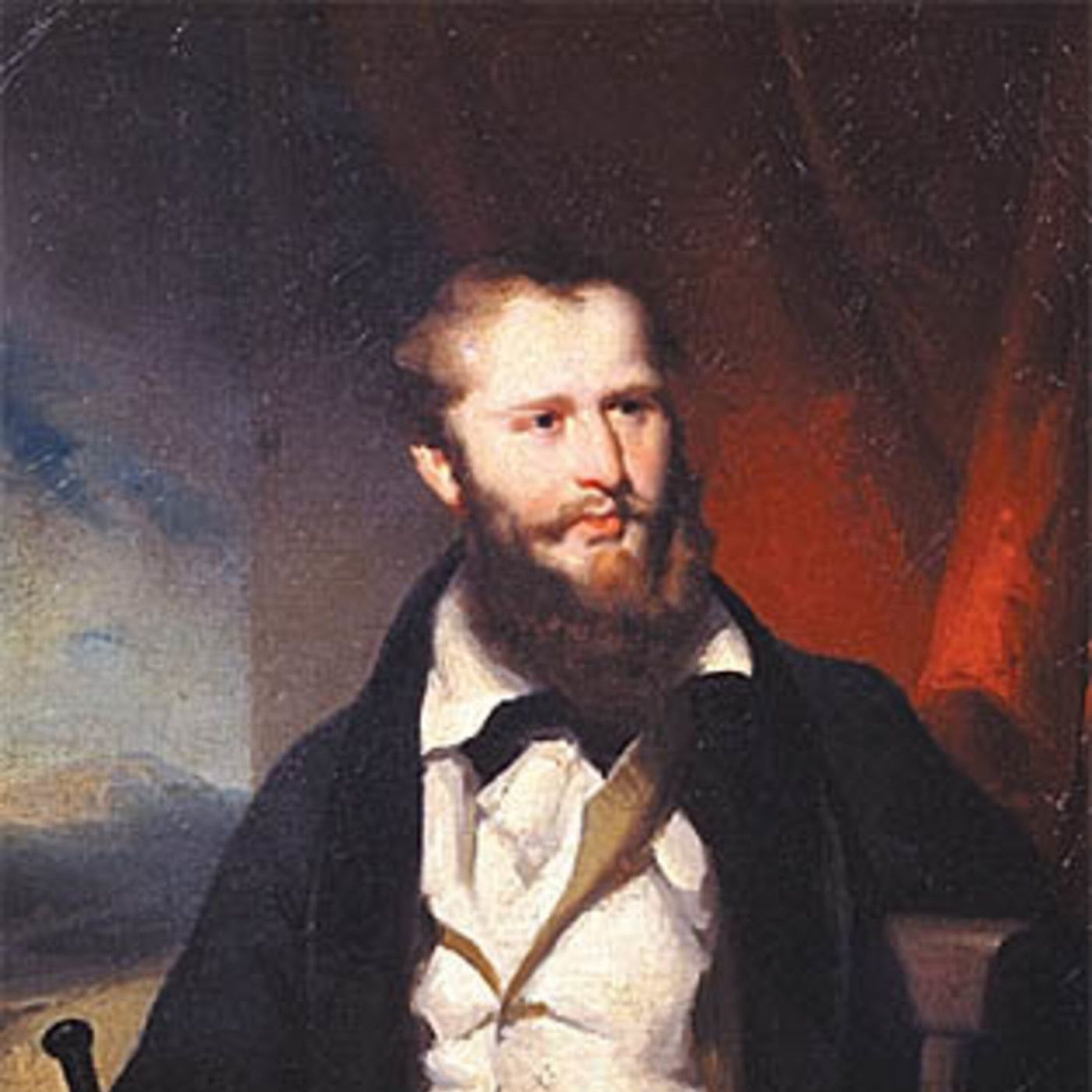
In the early 1800s there was no English explorer greater than James Holman. He covered a distance almost twenty times farther than Marco Polo on foot or cart—almost never using trains or steamships. He travelled among 200 different cultures, charted undiscovered parts of Australia, and by October 1846 had visited every inhabited continent. He did all this despite being completely blind. How did Holman travel the world when any sort of international exploration was exceptionally dangerous? Learn how in this episode. TO HELP OUT THE SHOW Leave an honest review on iTunes. Your ratings and reviews really help and I read each one. Subscribe on iTunes or StitcherSee omnystudio.com/listener for privacy information.

Does China Really Have a 5,000-Year-Old History?
Few will dispute that China has one of the most ancient cultures on earth, but is there any truth to the claim—made by many residents of China—that there is a 5,000-year-long line of continuity in its culture? Would an inhabitant of present-day China from five millennia ago really have anything in common with a bullet-train-riding businessman from Guangzhou drinking a Starbucks while on his way to Beijing? The answer, as always, is tricky, but there is some truth to the claim. Or at least more truth to the claim than almost any other culture could make. TO HELP OUT THE SHOW Leave an honest review on iTunes. Your ratings and reviews really help and I read each one. Subscribe on iTunes or StitcherSee omnystudio.com/listener for privacy information.
Why Is July 4 Celebrated The Way It Is (Fireworks n’ Hot Dogs)?
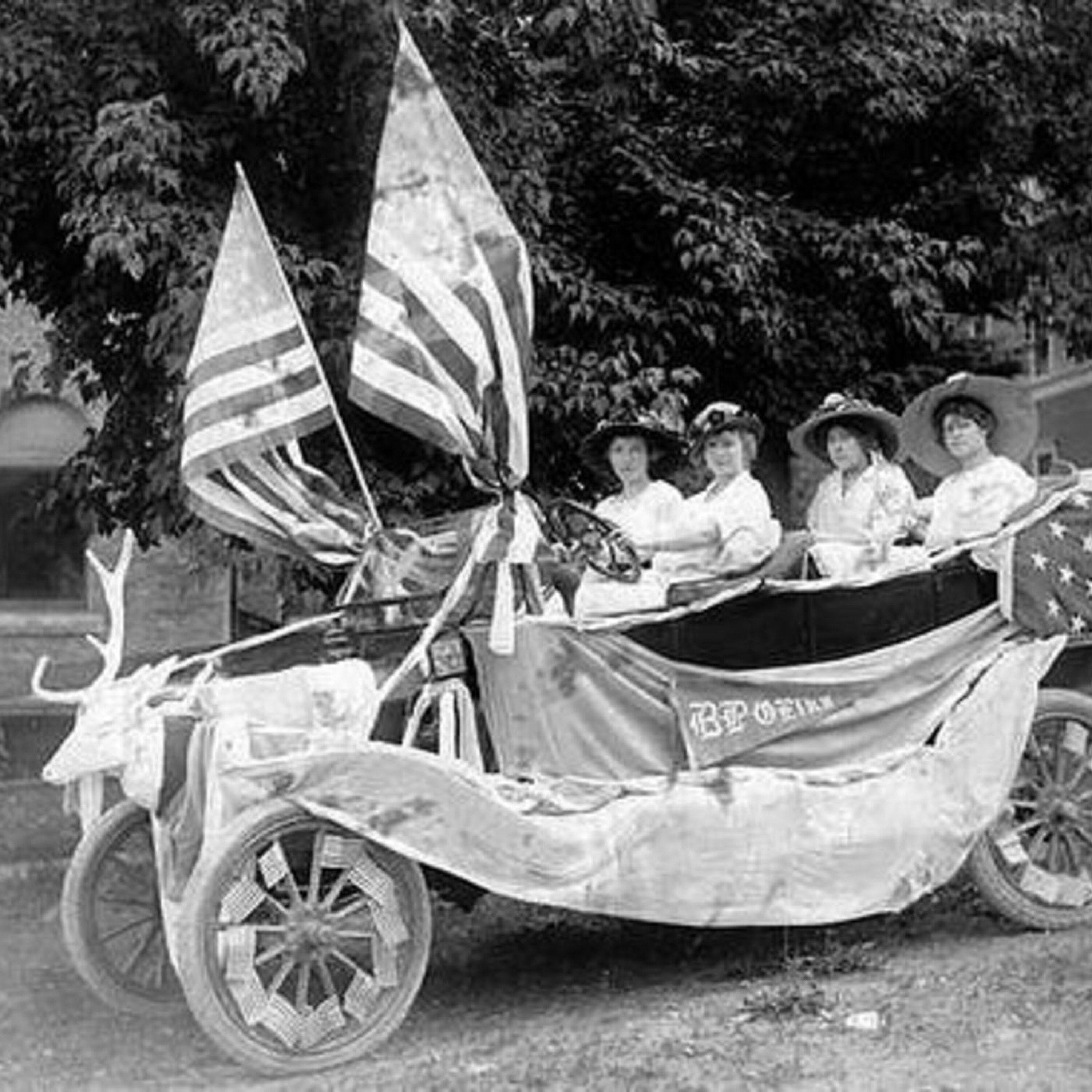
Why do Americans celebrate the Fourth of July with fireworks? Are we trying to take the National Anthem as literally as possible, creating “Bombs Bursting in Air”? Or is there another reason? It turns out that much of the festival trappings of the Fourth of July date way further back than most realize. They even predate the founding of the United States. Many of the most cherished "American" traditions go back to Renaissance Italy. Some even extend back to Imperial China. However, hot dogs are still pure U, S, and A. Nothing can change that. TO HELP OUT THE SHOW Leave an honest review on iTunes. Your ratings and reviews really help and I read each one. Subscribe on iTunes or StitcherSee omnystudio.com/listener for privacy information.
Is There Any Language In Use Today That Could Be Used 1,000 Years Ago?
Any fan of Shakespeare knows how much the English language has changed over the last 400 years. A student of Chauncer knows even better. A brave student of Beowulf knows almost better than anyone else. You literally have to be a scholar to read "English" of 1,000 years ago. But are there any languages that haven't changed to this degree? Languages that a normal citizen can pick up a text from a millenium ago and understand perfectly? The answer is yes. Listen to this episode to learn which one. TO HELP OUT THE SHOW Leave an honest review on iTunes. Your ratings and reviews really help and I read each one. Subscribe on iTunes or StitcherSee omnystudio.com/listener for privacy information.
When Did The Roman Empire Really End?
Rome didn’t fall in 476 when Romulus, the last of the Roman emperors in the west, was overthrown by the Germanic leader Odoacer, who became the first Barbarian to rule in Rome. Nor did it fall in 1453 when the Ottoman Empire conquered Constantinople. Depending on how you define ‘Rome,’ it didn’t fall until the Napoleonic Wars. Or the end of hostilities following World War I. If you visit Turkey, you might meet somebody who still calls himself a Roman. Listen to this episode to learn more. TO HELP OUT THE SHOW Leave an honest review on iTunes. Your ratings and reviews really help and I read each one. Subscribe on iTunes or StitcherSee omnystudio.com/listener for privacy information.
Why Did Hitler Hate the Jews?
The horrors of the Holocaust are as vivid now as they were in 1945 when the world discovered the horrors of Nazi Germany's atrocities. But why did Hitler hate the Jews so vehemently? Furthermore, why did he shift precious resources away from the war effort and toward the eradication of an ethnic group that posed no military threat to Nazi Germany? To answer this question I called up Richard Weikart, a scholar of 20th century Europe and author of the book Hitler's Religion. Check out Richard’s book by clicking here. ABOUT THE AUTHOR Richard Weikart is a professor of modern European history at California State University, Stanislaus, and Senior Fellow at the Discovery Institute’s Center for Science and Culture. He has published numerous scholarly articles, as well as five previous books including The Death of Humanity: and the Case for Life (Regnery, 2016) and From Darwin to Hitler: Evolutionary Ethics, Eugenics, and Racism in Germany. He has appeared in several documentaries, including Expelled: No Intelligence Allowed. In addition to scholarly journals, his work has been featured and discussed in the Washington Post, the Philadelphia Inquirer, National Review, Christianity Today, World magazine, BreakPoint, Citizen, various radio shows, and other venues. Weikart lives in Snelling, CA, with his wife and children. TO HELP OUT THE SHOW Leave an honest review on iTunes. Your ratings and reviews really help and I read each one. Subscribe on iTunes or StitcherSee omnystudio.com/listener for privacy information.