History Unplugged Podcast
1,129 episodes — Page 21 of 23
The Scopes Monkey Trial, HL Mencken, and Religion in Public Life—Darryl Hart
If you’ve seen the 1960 Spencer Tracy movie Inherit the Wind, you know about the Scopes Monkey Trial. In this real-life 1925 case, John Scopes was accused of violating Tennessee’s Butler Act, which had made it unlawful to teach human evolution in any state-funded school. The case became an enormous media sensation. It was reported on like a boxing match, science vs. fundamentalism. But oddly enough, Scopes was not originally brought to trial by any fundamentalists. The trial was deliberately staged to attract publicity to the small town of Dayton, Tennessee, where it was held. Scopes was unsure whether he had ever actually taught evolution, but he purposely incriminated himself so that the case could have a defendant. In this episode Hillsdale Professor Darryl Hart discusses the Scopes Monkey Trial, the legal parameters of religion in American public life, and the larger-than-life figures of early 20th century America like HL Mencken.See omnystudio.com/listener for privacy information.
The Reformation Happened 500 Years Ago, But It's More Timely Than Ever—Benjamin Wiker
Secularism, radical Islam, and nationalism all sound like buzzwords pulled straight from today’s headlines. But you might be surprised to know that 500 years ago they were at the epicenter of one of the greatest religious and political convulsions in western history—the Reformation. Today I talk with Prof. Bejamin Wiker, author of the new book The Reformation 500 Years Later: 12 Things You Need to Know. He brings to light the enduring relevance of one of the most significant events in history—and the surprising things about it you probably never learned in history class. We discuss... How Luther inspired radical reformers whom he actually despised How bad popes were even worse than you think Why nationalism was as much a force in the Reformation as religious reform was How the Catholic Church was in dire need of reform—and how it had benefited from continual reform over the course of its then 1,500-year history How the invention of the printing press both helped and harmed the Reformation Why another Reformation is inevitable—and what course it might takeSee omnystudio.com/listener for privacy information.
How Did You Call the Police Before the Phone Was Invented?
Dialing 9-1-1 is a new innovation (at least in the sense of the scope of human history), but the need for emergency services goes back to the earliest settlements. How did a pre-modern civilization call for help when there were no phone lines?See omnystudio.com/listener for privacy information.
All the Presidents Who Owned Slaves and How They Treated Them
A whole bunch of presidents owned slaves considering they took an oath to uphold the rights of their citizens. But how many of the pre-Civil War presidents actually owned slaves? And how did they treat them?See omnystudio.com/listener for privacy information.
Who Were Worse—The Spanish Conquistadors or the Aztecs?
The Spanish conquistadors have rightly been called out for their brutal treatment and enslavement of native populations. But did they behave worse than the Aztecs?See omnystudio.com/listener for privacy information.
The Lives of Slaves, Heretics, Cave-Dwellers, and Other People Ancient History Never Tells You About—Robert Garland
The 19th-century historian Thomas Carlyle wrote, “The history of the world is but the biography of great men.” In a sense that's true. We have plenty of biographies of emperors, popes, kings, queens, and leaders of the ancient world. But what about those who made up 99.999% percent of the population and didn't have such illustrious lives? Professor Robert Garland has focused on the world of history’s anonymous citizens. We discuss daily life for workers, the poor, the elderly, the sick, the disabled, refugees, women, children, slaves, and soldiers. This includes a Greek soldier marching into battle in the front row of a phalanx. Or a Celtic monk scurrying away with the Book of Kells during a Viking invasion. Or celebrity-worshiping Romans who all had their favorite gladiatorial contender. For Garland, The true joy of studying everyday lives lies in seeing what life was like for ordinary people—and therefore what life would have been like for most of us if we had been born in a different era. Through archaeological evidence and literary records, we try to connect with a wide range of people over the ages and experience life from their perspectives. We see that although they lived in a different world, these people, loved, lost, fought, and died much like we do today. RESOURCES MENTIONED IN THIS EPISODE Robert's course The Other Side of History: Daily Life in the Ancient World Robert's faculty page at Colgate UniversitySee omnystudio.com/listener for privacy information.
What Did Entertainment Do To The Romans?
You can point to hundreds of factors that led to the decline and fall of the Roman Empire (which Edward Gibbon and many others have been doing for centuries). Decadence and frivolous entertainment are among the main culprits. But did bread and circuses really do in the Romans? TO HELP OUT THE SHOW Leave an honest review on iTunes. Your ratings and reviews really help and I read each one. Subscribe on iTunes or StitcherSee omnystudio.com/listener for privacy information.
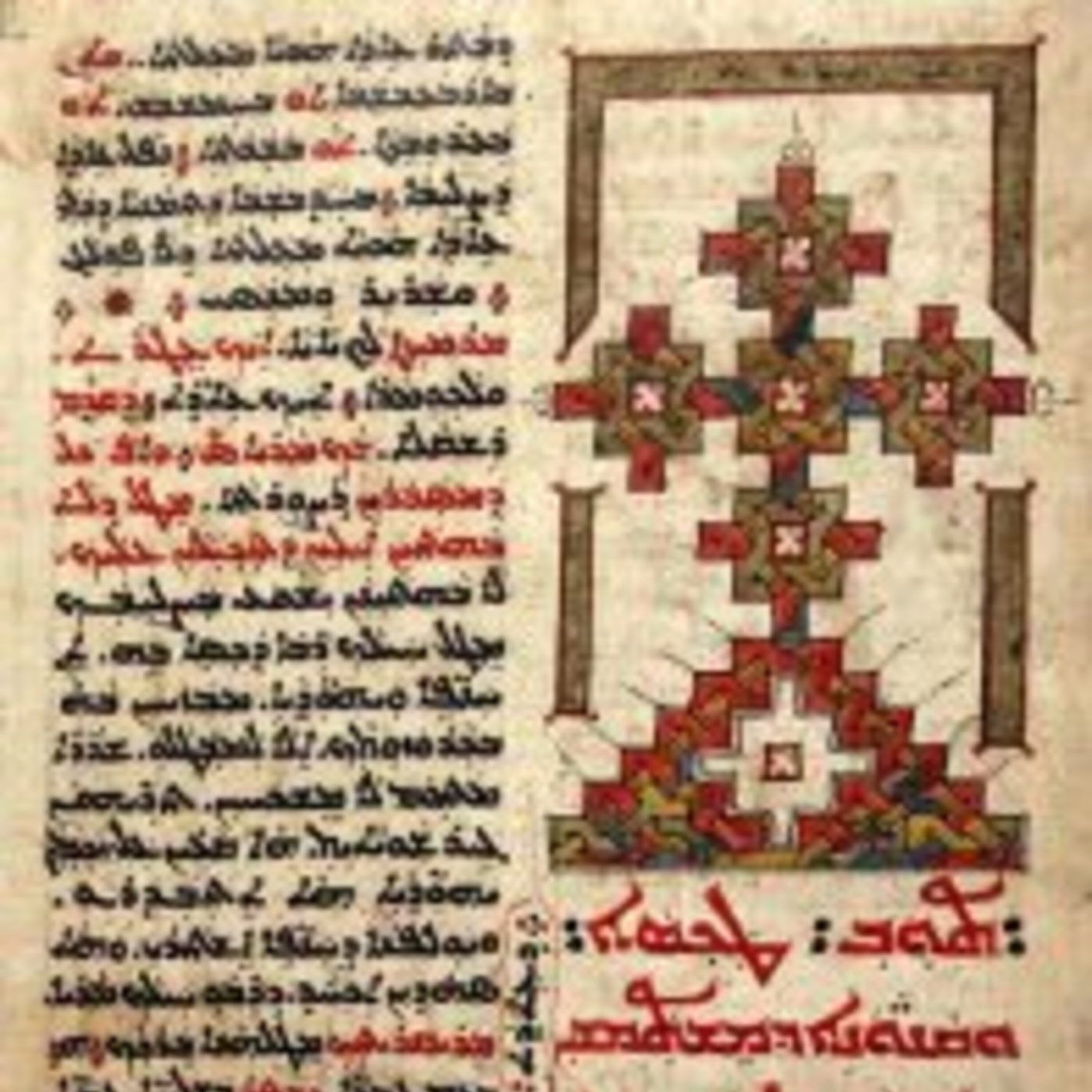
Syriac-The Best Language for Conquering The Ancient World
If you were transported to the ancient world, there's only one language that could be used in Roman Briton and China alike. It was Syriac: the lingua franca of the Silk Road and your best language to learn to conquer the ancient world. TO HELP OUT THE SHOW Leave an honest review on iTunes. Your ratings and reviews really help and I read each one. Subscribe on iTunes or StitcherSee omnystudio.com/listener for privacy information.
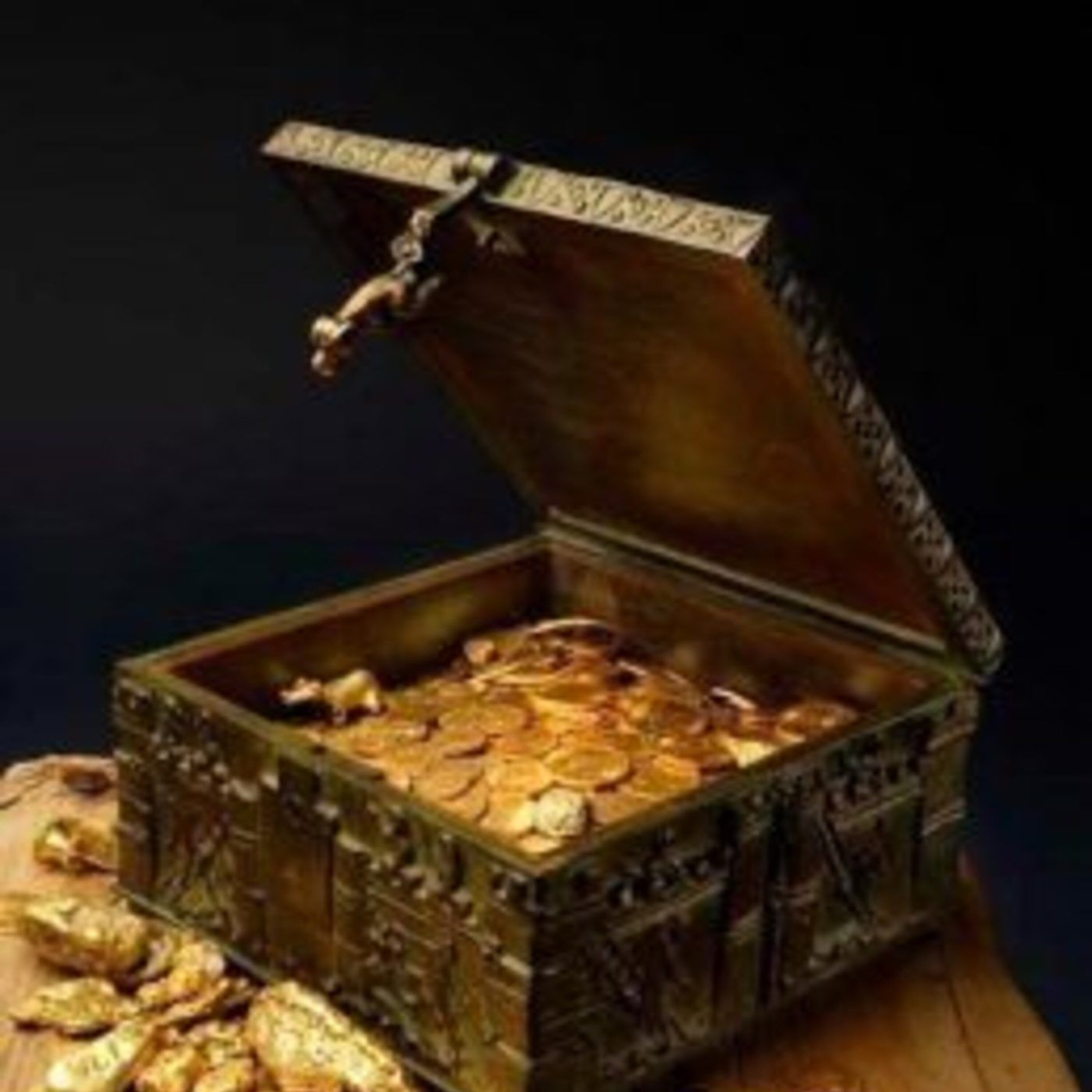
The Most Valuable Lost Treasure That Still Exists
As Imperial Spain transported literal tons of gold from the New World to the motherland, hurricanes sunk much of it to the bottom of the Atlantic. Find out about the most valuable treasure that is likely still out there. TO HELP OUT THE SHOW Leave an honest review on iTunes. Your ratings and reviews really help and I read each one. Subscribe on iTunes or StitcherSee omnystudio.com/listener for privacy information.

Did Vikings Have Tattoos?
Vikings left behind nearly no writings, except for Runic scripts on rocks. New burial site excavations show they also left them behind on their bodies. TO HELP OUT THE SHOW Leave an honest review on iTunes. Your ratings and reviews really help and I read each one. Subscribe on iTunes or StitcherSee omnystudio.com/listener for privacy information.
Call of Duty: WW2's Historical Advisor Marty Morgan on Bringing the War to Life
Call of Duty is top best-selling first-person shooter series based on real events, but lately it has veered into futuristic sci-fi country. Call of Duty: World War II is an attempt to go back to the games WW2 roots. And historian Marty Morgan is there to make sure they get it right. He's an expert in military history who specializes in the World Wars. Morgan is a consultant for Sledgehammer Games. He has also has led hundreds of tour groups at the battle sites of D-Day, the Battle of the Bulge, and Hürtgen Forest. Marty makes sure that everything is right in the series. He focuses on which guns should be used on the Western Front or insignia on soldier's uniform. He makes sure that snipers are actually using the rifles they would have at that time (don't get him started on the erroneous use of weapons in Saving Private Ryan). He led Glen Schofield and Michael Condrey, co-founders of Sledgehammer, through the battlefields of Europe in the middle of winter to get a real feel of the soldiers' wartime experience. There they faced three or four feet of snow. There were still foxholes and trenches in the middle of nowhere. In the forest they saw a 60-ton King Tiger tank left by the Germans because it was too heavy to move. He worked with the creative team to give historical accuracy to the most Hollywood of scenes in the game. At point point the writers wanted a scene with a train. They asked Marty, 'What sort of train would be transporting important equipment in April 1944 that we could crumple?” He came up with a German military train carrying a V2 Rocket that ends in a climactic crash. RESOURCES MENTIONED IN THIS EPISODE Marty Morgan on Youtube www.martinkamorgan.com TO HELP OUT THE SHOW Leave an honest review on iTunes. Your ratings and reviews really help and I read each one. Subscribe on iTunes or StitcherSee omnystudio.com/listener for privacy information.

The Codpiece—The Worst Fashion Trend in History
A wealthy man in the 1500s wore a large flap on the front of his trousers to accentuate his "credentials," which looked like an exterior athletic cup. How did this bizarre fashion trend take off, why did it end, and will it make a comeback? TO HELP OUT THE SHOW Leave an honest review on iTunes. Your ratings and reviews really help and I read each one. Subscribe on iTunes or StitcherSee omnystudio.com/listener for privacy information.

Why Almost No Medieval Peasant Cottages Survive Today
Archeological findings have led to breakthroughs in our understand of the Roman and ancient Near Eastern worlds, but little survives from the 500s-900s. Why weren't medieval buildings made to last? TO HELP OUT THE SHOW Leave an honest review on iTunes. Your ratings and reviews really help and I read each one. Subscribe on iTunes or StitcherSee omnystudio.com/listener for privacy information.

How a Nikita Khruschev Mistranslation Threatened Nuclear War
When Nikita Khruschev pounded his shoe on a podium, declaring "We will bury you!" many feared imminent nuclear war. Turns out a better translation of his original Russian completely changes the meaning of the phrase TO HELP OUT THE SHOW Leave an honest review on iTunes. Your ratings and reviews really help and I read each one. Subscribe on iTunes or StitcherSee omnystudio.com/listener for privacy information.
British Girl, Nazi German POW—A Love Story
Were there any British women who fell in love with German POWs living in England in the mid-1940s? Despite the extreme cultural taboo, the answer is yes. Love always finds a way. TO HELP OUT THE SHOW Leave an honest review on iTunes. Your ratings and reviews really help and I read each one. Subscribe on iTunes or StitcherSee omnystudio.com/listener for privacy information.
Assassin's Creed's Resident Historian Maxime Durand on Mixing Fact with Fiction
Like it or not, far more millennials will learn about Renaissance and medieval history through Assassin's Creed than they ever will through a history book. That can be dispiriting on the one hand —the game, after all, seems like a completely ahistorical look on the Nizaris—or Assassin's as they are known in the West—and the knights Templar. Plenty of flipping and stabbing but little in the way of fact. But what if Ubisoft, the creators of Assassin's Creed, actually take their history very seriously? What if they are providing a truly mass-scale historical education? I figured if you can't beat 'em, join 'em. So I talked to Maxime Durand, Ubisoft's in-house historian. Maxime helps to ensure the accuracy of the gameplay and story around the historical events and aspects of that time period. The games have taken in Renaissance Italy, Constantinople, Revolutionary America, Revolutionary France, the pirate-infested Caribbean, and Ancient Egypt. He tries to give cameos to real historical figures, such as the French Revolution's Babriel Riqueti, the comte de Birabeau (he was seen as the father of the revolution but at the end it was proven he was talking to the king and queen in secret). But the game also takes liberties with the past in order to tell a give story and give it license to include folk legends. An example is the The Scarlet Pimpernel or the Little Red Ghost—a paranormal inhabitant of a palace where Napoleon was based. It was said that the ghost told every king and monarch -- even Napoleon -- that they would die at a certain point. The ghost said to them he would protect them up until the point of their death. Find out how fact and fiction merge together in this interview with Maxime Durand. RESOURCES MENTIONED IN THIS EPISODE Assassin's Creed Maxime Durand TO HELP OUT THE SHOW Leave an honest review on iTunes. Your ratings and reviews really help and I read each one. Subscribe on iTunes or StitcherSee omnystudio.com/listener for privacy information.

Cruel and Unusual (Medieval) Punishment
An inquisitor thirsty for a confession had plenty of medieval tools of torture at his disposal: the iron maiden, the judas cradle, the rack, or the brazen bull. Turns out many of these devices are fabrications from hundreds of years later made for museums that wanted to display the barbarism of the "Dark Ages." TO HELP OUT THE SHOW Leave an honest review on iTunes. Your ratings and reviews really help and I read each one. Subscribe on iTunes or StitcherSee omnystudio.com/listener for privacy information.

The Easter Uprising of 1916
Learn about one of the most important events in modern Irish history. On Easter Monday, April 24, 1916, a group of Irish nationalists proclaimed the establishment of the Irish Republic. They, along with some 1,600 followers, staged a rebellion against the British government in Ireland. It all started at a modest post office in Dublin and led to a direct clash with British troops. TO HELP OUT THE SHOW Leave an honest review on iTunes. Your ratings and reviews really help and I read each one. Subscribe on iTunes or StitcherSee omnystudio.com/listener for privacy information.
Misattributed Quotes—No, Mark Twain Didn't Say That
Thomas Jefferson once said you can't believe everything you read on the Internet. With those extremely true words in mind, let's look at other quotes that are widely believed to be authentic but totally false. TO HELP OUT THE SHOW Leave an honest review on iTunes. Your ratings and reviews really help and I read each one. Subscribe on iTunes or StitcherSee omnystudio.com/listener for privacy information.
How to Build a 13th-Century Castle From Scratch
In a remote forest clearing in Burgundy, France, a 13th-century castle is slowly being constructed using only the tools, techniques, and materials that would have been available to the builders of the day. It’s archaeology in reverse. What started out as an eccentric pipe dream is now an established enterprise, drawing in tens of thousands of visitors from around Europe every year. Learn what it took to build a castle in 13th-century France in this podcast episode. If you want to learn first-hand, go to Burgundy and check it out! TO HELP OUT THE SHOW Leave an honest review on iTunes. Your ratings and reviews really help and I read each one. Subscribe on iTunes or StitcherSee omnystudio.com/listener for privacy information.
Telling Japan’s Story in The Last Samurai, Letters From Iwo Jima, and Medal of Honor—Dan King
The Japanese military of World War Two has a nasty reputation—kamikaze pilots, baby killers, and brain-washed, honor-obsessed soldiers who threw away their lives for a lost cause. Parts of this reputation is earned but much of the stereotype has come out of World War Two films. Depicting WWII Japan fairly in film and television while humanizing its people isn't easy, but Dan King is up to the job. King is a WWII Pacific war historian who reads, writes and speaks Japanese. After returning to the US he worked on several dozen movies and historical documentaries as a technical advisor, historical & language consultant and re-enactment coordinator. He was the assistant military advisor for Tom Cruise's The Last Samurai (he had a cameo as a German officer), a researcher for Clint Eastwood's Letters From Iwo Jima/Flags Of Our Fathers, and technical consultant for Nicolas Cage's Windtalkers. His passion for the subject of the war in the Pacific has also led him to seek out over 250 Japanese WWII veterans and personally interview 97 of them, in their own language. He has also been interviewed on several radio programs and has spoken to hundreds of people about Japanese aviation. Dan King was also employed by EA GAMES as the WWII Japanese technical consultant for the worldwide best selling "Medal of Honor" video game series. His basic task was to provide information to the game creators in order to make the game as accurate as possible. This included providing examples of Japanese WWII uniforms and gear; infantry weapons; tanks, large guns, ships and aircraft; Japanese language supervision during VO recording; and battle tactics and hand signals. RESOURCES MENTIONED IN THIS EPISODE Dan's Site Historical Consulting A Tomb Called Iwo Jima The Last Zero Fighter: Firsthand Accounts from WWII Japanese Naval Pilots TO HELP OUT THE SHOW Leave an honest review on iTunes. Your ratings and reviews really help and I read each one. Subscribe on iTunes or StitcherSee omnystudio.com/listener for privacy information.
Teddy Roosevelt’s Journey Through Uncharted Amazonian Jungle
Teddy Roosevelt was not afraid to tempt death. He hiked the Matterhorn during his honeymoon. He arrested outlaws on the Dakota Frontier. He hunted rhinos in Africa. But his most dangerous journey came after his failure in 1912 to retake the presidency as a third-party candidate on the Bull Moose ticket. He choose to shake off the blues in an extremely dangerous journey to South America. Roosevelt did not merely want a repeat of his African safari: a well-provisioned hunt to a foreign land that was little more than an exotic form of sight seeing. Roosevelt wanted to join the ranks of explorers who were pushing the boundaries of scientific knowledge: the arctic explorers discovering the Northwest passage or the African trekkers locating the source of the Nile River. His guide, the Brazilian explorer Col. Candido Rondon, suggested they survey the River of Doubt, an uncharted capillary of the Amazon that ran through treacherous terrain of the rainforest. Many told him the journey would end in his death. Ignoring the warnings of field naturalists with experience in the Amazon, Roosevelt said, “If it is necessary for me to leave my bones in South America, I am quite ready to do so.” Learn in this episode how he almost did. TO HELP OUT THE SHOW Leave an honest review on iTunes. Your ratings and reviews really help and I read each one. Subscribe on iTunes or StitcherSee omnystudio.com/listener for privacy information.
How Teddy Roosevelt Gave a 90-minute Speech After Being Shot
Theodore Roosevelt was hell bent on becoming president in 1912. He ran as a third-party candidate for the Progressive Party, a splinter group of Republicans dissatisfied with William Howard Taft. He was so committed to winning that he gave a 90-minute speech…immediately after being shot in the chest by a would-be assassin. How did he do it without passing out? What did his audience think as he bled out before their eyes? TO HELP OUT THE SHOW Leave an honest review on iTunes. Your ratings and reviews really help and I read each one. Subscribe on iTunes or StitcherSee omnystudio.com/listener for privacy information.
When Teddy Roosevelt Arrested Three Boat Thieves
Perhaps no president has as many unbelievable stories about his life than Teddy Roosevelt. He was an amateur boxer. He was the first American politician to learn judo. He summited the Matterhorn during his honeymoon. He joined an expedition to log data about an unchartered river in the Amazon. But perhaps no story matches his pursuit of three boat thieves in the Dakotas in the 1880s. Learn how Roosevelt travelled 300 miles in the bitter cold to arrest three thieves… all to prove to other ranches that he wasn’t a week Easterner who came out to to the frontier to play cowboy. TO HELP OUT THE SHOW Leave an honest review on iTunes. Your ratings and reviews really help and I read each one. Subscribe on iTunes or StitcherSee omnystudio.com/listener for privacy information.
Carrie Nation—The Hatch-Wielding Prohibitionist
Nothing supports the Prohibition movement like a hatchet-wielding radical ready to smash in a Midwestern saloon. Carrie Amelia Nation would know. She made a career out of physical assaulting the alcohol industry in the years before Prohibition (1920). TO HELP OUT THE SHOW Leave an honest review on iTunes. Your ratings and reviews really help and I read each one. Subscribe on iTunes or StitcherSee omnystudio.com/listener for privacy information.
Discovering Embarrassing Family Secrets and Famous Third Cousins with Genealogist Crista Cowan From Ancestry.com
Shake a family tree long enough and something embarrassing secret is sure to drop out: a felon uncle here, an illegitimate nephew there, a grandfather arrested for indecent exposure there. Genealogy can reveal all sorts of unexpected surprises. But it can also help you find second and third cousins that you didn't know were famous. To talk about the wonders of genealogy and how to do it right is Crista Cowan. Crista is the corporate genealogist for Ancestry.com. She was the indexing manager for the company and helped them archive more than 17 billion records. She has found records in libraries, archives, and courthouses. Recently she has used DNA as a powerful tool to locate and connect biological family members. Crista has been involved in family history research for more than 25 years and has been a professional genealogist since 2002. She specializes in descendancy research, Jewish Immigration, and sharing family history with the genealogically challenged. Crista regularly teaches Family History classes at her local LDS Family History Center and at conferences and genealogy societies around the country. She has been employed at Ancestry.com since 2004 and is known as The Barefoot Genealogist. RESOURCES MENTIONED IN THIS EPISODE Crista's Youtube Series: The Barefoot Genealogist TO HELP OUT THE SHOW Leave an honest review on iTunes. Your ratings and reviews really help and I read each one. Subscribe on iTunes or StitcherSee omnystudio.com/listener for privacy information.
Why Does American Give Automatic Birthright Citizenship?
Anyone born on American soil gets automatic citizenship. This isn't true in the rest of the world. Few other nations in the world practice jus soli (right of the soil). Rather, your parents have to be citizens. Why is this the case? It has to do with New World senses of identity and belonging. TO HELP OUT THE SHOW Leave an honest review on iTunes. Your ratings and reviews really help and I read each one. Subscribe on iTunes or StitcherSee omnystudio.com/listener for privacy information.
What Was It Like To Be Enrolled at the University of Constantinople?
The Pandidakterion (University of Constantinople) was the empire's imperial school. It can trace its origins to 425 AD to Emperor Theodosius II. Learn what it was like to be enrolled in the ancient world's premier "university." TO HELP OUT THE SHOW Leave an honest review on iTunes. Your ratings and reviews really help and I read each one. Subscribe on iTunes or StitcherSee omnystudio.com/listener for privacy information.
John Birch-The First Death in the Cold War
The first death of the Cold War quickly became an anti-communist icon and symbol of the American far right from the 1950s onward. TO HELP OUT THE SHOW Leave an honest review on iTunes. Your ratings and reviews really help and I read each one. Subscribe on iTunes or StitcherSee omnystudio.com/listener for privacy information.
George Washington Wasn’t the First President. He Was the Ninth
George Washington was the First President of the United States. This is the most basic fact that an American school child can learn. Only it isn't true. He wasn’t the first. Nor the second. He was actually the ninth president of the United States. How can that be? It all has to do with the ad hoc, make-it-up-as-you-go nature of the United States government between the Declaration of Independence in 1776 and the signing of the Constitution in 1789. TO HELP OUT THE SHOW Leave an honest review on iTunes. Your ratings and reviews really help and I read each one. Subscribe on iTunes or StitcherSee omnystudio.com/listener for privacy information.
Anthony Esolen on Translating Dante’s Divine Comedy and Dan Brown’s Supercilious Stupidity
‘Dante and Shakespeare divide the modern world between them: there is no third’ —T.S Elliot The most towering epic poem in Western literature, save perhaps the works of Homer, is Dante's Divine Comedy. In this episode we are going to talk about the history of the poem, how it was understood across the centuries, and what it has to say to 21st man today. And our guest is perhaps the most qualified person on the planet to do so. Anthony Esolen is a literature professor and Dante scholar who released an acclaimed translation of Inferno, Purgatory, and Paradise. He has been praised for marrying sense with sound, poetry with meaning, capturing both the poem’s line-by-line vigor and its allegorically and philosophically exacting structure. In our interview we discuss Esolen's translation decision to ditch systematic line-by-line rhyming in favor of blank verse to retain the poem's original “meaning and music,” why Dan Brown's Inferno is so transcendentally terrible a book, and what Dante has to say to a modern world that has exchanged an authentic culture for mindless mass entertainment. ABOUT ANTHONY ESOLEN Anthony Esolen is a professor of English Renaissance and classical literature, a writer, social commentator, and translator of classical poetry. He has taught at the university level for decades and joined Thomas More College of Liberal Arts this fall. Besides Dante, he has translated Lucretius' On the Nature of Things, and Torquato Tasso's Jerusalem Delivered. Along with his academic work he has written more than 500 articles forThe Claremont Review of Books, First Things, and Touchstone magazine. RESOURCES MENTIONED IN THIS EPISODE Anthony Esolen's translation of Inferno, Purgatory, and Paradise “Out of the Ashes: Rebuilding American Culture” “Dan Brown's Infernal Fiction” TO HELP OUT THE SHOW Leave an honest review on iTunes. Your ratings and reviews really help and I read each one. Subscribe on iTunes or StitcherSee omnystudio.com/listener for privacy information.
Christopher Columbus Wasn’t as Good—Or as Terrible—As You Think
Depending on which account you hear, Columbus was either the bravest explorer of the early Renaissance or a mass murdered who subjected the indigenous population of the new world to death or slavery. Learn in this episode how Columbus was both and neither of these descriptions. TO HELP OUT THE SHOW Leave an honest review on iTunes. Your ratings and reviews really help and I read each one. Subscribe on iTunes or StitcherSee omnystudio.com/listener for privacy information.
How the 1565 Siege of Malta Led to the Golden Age of Piracy
The Knights Hospitaller were kicked out of Jerusalem following the Third Crusade, but they found a new home on the Mediterranean island of Malta. Their defense fortifications were so strong that nobody could invade, not even the might Ottoman navy in the late 16th century. Learn how this warrior order helped piracy thrive in the Eastern Mediterranean. TO HELP OUT THE SHOW Leave an honest review on iTunes. Your ratings and reviews really help and I read each one. Subscribe on iTunes or StitcherSee omnystudio.com/listener for privacy information.
Europeans in the Far East Before Marco Polo
Marco Polo is the most famous European explorer to the Far East, but he definitely wasn’t the first. His father and uncle came there years before. And they found a small colony of Europeans who lived permanently in China. Perhaps the most famous pre-Polo European in the Far East is William of Rubruck. This plucky monk did his best to convert the Great Khan to Christianity. He made his effort by debating Muslims and Buddhists as to which religion was the true one. See how that turns out in today's episode. TO HELP OUT THE SHOW Leave an honest review on iTunes. Your ratings and reviews really help and I read each one. Subscribe on iTunes or StitcherSee omnystudio.com/listener for privacy information.
The Lost Technology of Damascus Steel
Damascus swords, which were generally made in the Middle East anywhere from 540 A.D. to 1800 A.D., were sharper, more flexible and harder/stronger than other contemporary blades. According to legend, the blades can cut a piece of silk in half as it falls to the ground and maintain their edge after cleaving through stone, metal, or even other swords. However nobody knew exactly how it had been produced, and the last Damascus Steel had been produced in the early 1800s. How was the technology lost? TO HELP OUT THE SHOW Leave an honest review on iTunes. Your ratings and reviews really help and I read each one. Subscribe on iTunes or StitcherSee omnystudio.com/listener for privacy information.
Alexander Hamilton’s Broadway Musical is Great, but Brion McClanahan Thinks He Screwed Up America
He’s the subject of a hit Broadway musical, the face on the ten-dollar bill, and one of the most popular Founding Fathers. But what do you really know about Alexander Hamilton? In this interview with author and historian Brion McClanahan, he argues that Hamilton was no American hero. Brion says that America’s beloved Hamilton actually spent most of his life working to make sure citizens and states could not hold the federal government accountable. His policies set a path for presidents to launch secret and illegal wars, and he wanted to make sure American citizens couldn’t do a thing to stop the government’s overreach. Hamilton was a duplicitous man whose personality and ambition led to an America and a Constitution at odds with the one he publicly supported in 1788 and that the American public bought as a result. RESOURCES MENTIONED IN THIS EPISODE How Alexander Hamilton Screwed Up America Brion's website TO HELP OUT THE SHOW Leave an honest review on iTunes. Your ratings and reviews really help and I read each one. Subscribe on iTunes or StitcherSee omnystudio.com/listener for privacy information.
Timur the Tatar’s Revenge on Bayezit—When an Emperor Literally Made a Sultan His Footstool
One of the most chilling stories of revenge is Timur the Tatar's defeat of Ottoman Sultan Bayezit and literally making him his footstool. The humiliation likely led to his death. Learn about the clash of these two Middle East titans and what drove Timur to pursue revenge so ruthlessly. TO HELP OUT THE SHOW Leave an honest review on iTunes. Your ratings and reviews really help and I read each one. Subscribe on iTunes or StitcherSee omnystudio.com/listener for privacy information.
A Revolutionary-Era Soldier Fights a Modern One Hand-to-Hand. Who Wins?
If we were to have a battle royale with American soldiers from its different eras all duke it out, who would win? Would a Revolutionary-era soldier win due to his scrappy toughness, or would the modern soldier win with his superior training? Let's take a stab at this question (pun intended). TO HELP OUT THE SHOW Leave an honest review on iTunes. Your ratings and reviews really help and I read each one. Subscribe on iTunes or StitcherSee omnystudio.com/listener for privacy information.
The Origin of the Middle Finger Insult
We’ve all done it in moments of anger. But why do we use our middle finger to express anger? And why do we call it “the bird.” Suggestions range from The Battle of Agincourt in 1415 to Ancient Rome. We find out the history everyone’s favorite one-finger salute in this episode. TO HELP OUT THE SHOW Leave an honest review on iTunes. Your ratings and reviews really help and I read each one. Subscribe on iTunes or StitcherSee omnystudio.com/listener for privacy information.
Why the Battle of Hastings in 1066 and the Norman Conquest of England Changed Everything—Jennifer Paxton
If you were to ask a scholar about one critical moment after which the history of the English-speaking world would never be the same again, it would undoubtedly be the year 1066. I know that because I asked Prof. Jennifer Paxton of the Catholic University of America this very question. She chose that year because during this pivotal time an event occurred that would have untold ramifications for the European continent: the Norman Conquest of England. This year matters deeply for two key reasons. It turned England away from a former Scandinavian orientation toward an orientation with mainland Europe, making the island nation a major player in Europe's political, social, cultural, and religious events. It created a rich hybrid between English and French culture that had a profound impact on everything from language and literature to architecture and law. In our discussion we talk about a world of fierce Viking warriors, powerful noble families, politically charged marriages, tense succession crises, epic military invasions, and much more. But it was the Battle of Hastings in 1066 that forever enshrined in the pages of history the name of William the Conqueror, whose military and political prowess made the Norman Conquest a success. After that England was never the same. RESOURCES MENTIONED IN THIS EPISODE Jennifer Paxton's Great Courses history course:—1066: The Year That Changed Everything ABOUT JENNIFER PAXTON, PHD Dr. Jennifer Paxton is Director of the University Honors Program and Clinical Assistant Professor of History at The Catholic University of America. The holder of a doctorate in history from Harvard University, Professor Paxton is both a widely published award-winning writer and a highly regarded scholar. Professor Paxton's research focuses on England from the reign of King Alfred to the late 12th century, particularly the intersection between the authority of church and state and the representation of the past in historical texts, especially those produced by religious communities. TO HELP OUT THE SHOW Leave an honest review on iTunes. Your ratings and reviews really help and I read each one. Subscribe on iTunes or StitcherSee omnystudio.com/listener for privacy information.
The Daily Schedule of a Samurai
Samurai were the military nobility and officer cast of feudal Japan, serving an important role of social stability until their functions ceased in the 19th century. But what did a samurai exactly do every day? Did he roam the countryside, looking to engage in a duel? Or was his life much more mundane than that? TO HELP OUT THE SHOW Leave an honest review on iTunes. Your ratings and reviews really help and I read each one. Subscribe on iTunes or StitcherSee omnystudio.com/listener for privacy information.
Why Did British Men Wear Wigs in the 1700s?
You’ve seen the look in historical dramas. You laughed at the foppish dandies that appear on Masterpiece Theater. In grade school you sneered at pictures of King George with his powdered wig, adjusting it ever so slightly while drinking a cup of tea with his pinky finger extended, wondering how he further extort colonists with new taxes. You didn’t know that we call important people “bigwig” due to the aristocracy tradition of fancy wigs. But where does the powdered wig come from? Why was such a peculiar look the sign of nobility in England during the 1500s-1700s? It all has to do with syphilis, head lice, the shame of male-pattern baldness, and the fashion tastes of Louis XIV. TO HELP OUT THE SHOW Leave an honest review on iTunes. Your ratings and reviews really help and I read each one. Subscribe on iTunes or StitcherSee omnystudio.com/listener for privacy information.
Who Had the Worst Flatulence in History?
The goal of this podcast is to answer any question that you have about history... and I mean anything. To prove it, I am answering a question from a listener named Raj about who had the worst flatulence in history. I hope this episode is very educational. TO HELP OUT THE SHOW Leave an honest review on iTunes. Your ratings and reviews really help and I read each one. Subscribe on iTunes or StitcherSee omnystudio.com/listener for privacy information.
Constantinople’s Walls—The Strongest Fortress Ever Built
There are many contenders for the strongest fortress in history (Malumat in Iran or the island fortifications of Malta to name a few). But nothing can compare to the Theodosian City Walls of Constantinople. Built in 440 AD, they repelled over a dozen invasions, from Atilla the Hun to the Umayyad Caliphate to the Avars to the Russians. And they allowed Constantinople to develop into one of the richest cities of the ancient world. TO HELP OUT THE SHOW Leave an honest review on iTunes. Your ratings and reviews really help and I read each one. Subscribe on iTunes or StitcherSee omnystudio.com/listener for privacy information.
How Religion Has Influenced Politics Across History, From Ancient Sumeria to the 21st Century—Paul Rahe
In our interview, Prof. Paul Rahe says that a liberal democracy that guarantees the rights of all citizens needs the guarantee that no one religion is established as the official state belief system. At the same time, if a society doesn't have some sort of transcendent belief system, then politics will rush to fill the void left by religion (or any sort of communal belief) and metastasize into fascism or totalitarianism. We start with the relationship between religion and the political community in the pagan world – Sumeria, Akkad, Babylonia, the Hittite Empire, ancient Persia, Greece, and Rome. Then, we discuss how Christianity changed everything. For three centuries, it was independent of the political community and, in a sense, in opposition. Then, it became entangled with the political community under Constantine and, instead of being persecuted, it did the persecution. To this one can add that as a religion of faith it quite naturally gave rise to quarrels over doctrine, that these were bitter in late Antiquity, and that there was a second round of bitterness in the wake of the Reformation. The modern separation of church and state is a response to the violence that erupted, and it is a remarkable experiment. Finally, Rahe discusses Islam – which is a religion of holy law different in its ambitions from (orthodox) Judaism which is also a religion of holy law. Put simply, insofar as it is center on shari’a, Islam is ineluctably political – which means that it cannot easily be privatized. RESOURCES MENTIONED IN THIS EPISODE Free Hillsdale Online Course—Public Policy from a Constitutional Viewpoint American Heritage—From Colonial Settlement to the Current Day TO HELP OUT THE SHOW Leave an honest review on iTunes. Your ratings and reviews really help and I read each one. Subscribe on iTunes or StitcherSee omnystudio.com/listener for privacy information.
Why The Potato Led to the Rise of Modern Europe
The humble potato has done more for Old World peasants than any other food. Famine plagued the lower class from time immemorial. But once the potato was introduced to Europe in the 1500s and widely planted in the 1700s, it nearly wiped out malnutrition. Learn why this tuber is the hero of the modern age. TO HELP OUT THE SHOW Leave an honest review on iTunes. Your ratings and reviews really help and I read each one. Subscribe on iTunes or StitcherSee omnystudio.com/listener for privacy information.
When Churchill Experimented with Chemical Weapons—Giles Milton of the Unknown History Podcast
Winston Churchill is consistently ranked as the greatest leader in British History. But like any complex historical figure, he has his dark side. Most notoriously, but least well known, is his interest in chemical weapons. “If it is fair war for an Afghan to shoot down a British soldier behind a rock and cut him in pieces as he lies wounded on the ground, why is it not fair for a British artilleryman to fire a shell which makes the said native sneeze? It is really too silly.” —WSC, 1919 Churchill favored and/or used “poison gas” from World War I through World War II, notably on the Indians and Bolsheviks in 1919, and the Iraqis in the 1920s. What’s more, he wanted to “drench” German cities with gas in 1943. To discuss this issue in greater depth with us is Giles Milton. He is the host of the History Unknown Podcast and author of “The Ministry of Ungentlemanly Warfare”: a book about a secret inner circle within the British government that planned all of the most audacious sabotage attacks of the Second World War. RESOURCES MENTIONED IN THIS EPISODE www.gilesmilton.com Unknown History Podcast ABOUT GILES Giles Milton is the internationally best-selling author of nine works of popular history, including Nathaniel’s Nutmeg. His books have been translated into more than twenty languages and have been serialized on both the BBC and in British newspapers. The Times described Milton as being able ‘to take an event from history and make it come alive’, while The New York Times said that Milton’s ‘prodigious research yields an entertaining, richly informative look at the past. Giles Milton's latest book, The Ministry of Ungentlemanly Warfare, became a Sunday Times bestseller in the first week of publication. TO HELP OUT THE SHOW Leave an honest review on iTunes. Your ratings and reviews really help and I read each one. Subscribe on iTunes or StitcherSee omnystudio.com/listener for privacy information.
Dan Carlin of Hardcore History on Why the German Military Was Better in WW1 Than WW2
I was honored on this episode to interview Dan Carlin, whose podcast Hardcore History is the biggest history podcast in existence. It regularly features shows of 5-6 hours in length covering everything from the Mongol invasions to doomsday prophets of the Reformation. I met up with Dan at the Podcast Movement conference in August 2017. Since he had a six-part series on World War 1 (Blueprint for Armageddon), I wanted to ask Dan about a comment he made in the podcast, that Germany's army in World War 1 was superior to its army in World War 2. He elaborated in this episode, and as always, brings the goods. TO HELP OUT THE SHOW Leave an honest review on iTunes. Your ratings and reviews really help and I read each one. Subscribe on iTunes or StitcherSee omnystudio.com/listener for privacy information.
The History of Pig Latin (ig-pay atin-lay)
Everyone's favorite code (it's not a language) has quite a storied history. Learn how Pig Latin became the fastest, most convenient way to sound intelligent when you didn't know any ancient languages. It goes back to Shakespeare, like much does, but Pig Latin as a concept can be found in languages across the world. TO HELP OUT THE SHOW Leave an honest review on iTunes. Your ratings and reviews really help and I read each one. Subscribe on iTunes or StitcherSee omnystudio.com/listener for privacy information.
Wait, Nixon Was Innocent?—Geoff Shepard
Richard Nixon left the White House over 40 years ago, yet he remains embedded in American pop culture like no other ex-president. He was the body-less leader of Earth in Futurama, the five-time president in Alan Moore's Watchmen, and arguably the most awkward guest star in Laugh-In's history. Part of the reason is that he is thought to represent America's political id: the dark, paranoid side of politics that keeps an enemies list and never forgives. After all, Watergate was the biggest political scandal of the 20th century, leading to the only presidential resignation in American history. But what if Nixon was innocent? That's exactly the point that today's guest, Geoff Shepard, argues. He was not an outsider to Watergate: Shepard joined John Ehrlichman’s Domestic Council staff at the Nixon White House, where he served for five years, first as a staff assistant and ultimately as associate director. He also worked on President Nixon’s Watergate defense team, where he was principal deputy to the President’s lead lawyer, J. Fred Buzhardt. In that capacity, he helped transcribe the White House tapes —which run 3,400 hours—ran the document rooms holding the seized files of H. R. Haldeman, John Ehrlichman and John Dean, and staffed White House counselors Bryce Harlow and Dean Birch. Working from internal documents he recently uncovered at the National Archives, Shepard exposes what he calls judicial and prosecutorial misconduct that has remained hidden for four decades with his book, “The Real Watergate Scandal: Collusion, Conspiracy, and the Plot That Brought Nixon Down.” He describes it as the following: an aging judge about to step down. Aggressive prosecutors friendly with the judge. A disgraced president. A nation that had already made up its mind. The Watergate trials were a legal mess—and now, with the discovery of new documents that reveal what he calls shocking misconduct by prosecutors and judges alike, Shepard says the wrongdoing of these history-making trials was actually a bigger scandal than the Watergate scandal itself. RESOURCES MENTIONED IN THIS EPISODE The Real Watergate Scandal: Collusion, Conspiracy, and the Plot That Brought Nixon Down Geoff Shepard's website TO HELP OUT THE SHOW Leave an honest review on iTunes. Your ratings and reviews really help and I read each one. Subscribe on iTunes or StitcherSee omnystudio.com/listener for privacy information.