HISTORY This Week
353 episodes — Page 7 of 8

S1 Ep 49The Crown Steps Down
December 11, 1936. Just yesterday, King Edward VIII of England officially abdicated the throne. And tonight, some ten million people will hear the reason from the man himself. He tells the country in a radio address, “I have found it impossible to carry a heavy burden of responsibility, and to discharge my duties as king as I would wish to do, without the help and support of the woman I love”. This “woman” is a twice-divorced American. The country is shocked. Edward VIII has become the first monarch to voluntarily abdicate the throne in British history. How did Edward VIII cause trouble for England before, during, and after his reign? And how does his legacy continue to shape the fate of the royals to this day? Thank you to our guests: Adrian Phillips, author of "The King Who Had to Go: Edward Vlll, Mrs Simpson and the Hidden Politics of the Abdication Crisis" Anna Pasternak, author of "The Real Wallis Simpson: A New History of the American Divorcée Who Became the Duchess of Windsor' Hosted on Acast. See acast.com/privacy for more information. To learn more about listener data and our privacy practices visit: https://www.audacyinc.com/privacy-policy Learn more about your ad choices. Visit https://podcastchoices.com/adchoices
S1 Ep 49Wartime Weapon Turned Medical Miracle
December 2, 1943. World War II is raging throughout Europe, but in the Allied port city of Bari, Italy, things have remained relatively quiet. The Allies are offloading tanks, guns and other equipment when on this night, the Nazis attack. They bomb the port, killing 2,000 soldiers and civilians, and sinking 28 Allied ships. One of those ships holds a secret cargo, a chemical weapon that leaks into the harbor where soldiers are swimming for their lives. What happened when those soldiers were exposed to this deadly toxin? And how did the investigation of this incident revolutionize the way we treat cancer? Special thanks to Jennet Conant, author of The Great Secret: The Classified World War II Disaster that Launched the War on Cancer Hosted on Acast. See acast.com/privacy for more information. To learn more about listener data and our privacy practices visit: https://www.audacyinc.com/privacy-policy Learn more about your ad choices. Visit https://podcastchoices.com/adchoices

S1 Ep 48A Toxic Turkey Day
November 24, 1966. Millions of spectators flood Broadway in New York City to watch the Macy’s Day Parade on Thanksgiving morning. The iconic floats – Superman, Popeye, Smokey the Bear – are set against a grey sky that can only be described as noxious. A smog of pollutants is trapped over New York City, and it will ultimately kill nearly 200 people. How did the 1966 Thanksgiving Smog help usher in a new era of environmental protection? And how have we been thinking about environmental disasters all wrong? Special thanks to our guest Professor Frank Uekotter, author of The Age of Smoke. Hosted on Acast. See acast.com/privacy for more information. To learn more about listener data and our privacy practices visit: https://www.audacyinc.com/privacy-policy Learn more about your ad choices. Visit https://podcastchoices.com/adchoices

S1 Ep 47The Inca's Last Stand
November 16, 1532. Atahualpa, the king of the Inca Empire, marches towards the city of Cajamarca in modern-day Peru, surrounded by 80,000 soldiers. Once he arrives, Atahualpa expects the Spanish conquistador Francisco Pizarro to surrender in the town square. But Pizarro has a plan of his own. With just 168 men, he will unleash a trap that destroys the Inca Empire, and brings thousands of years of indigenous rule to a violent end. What was happening in the Andes before Pizarro arrived that allowed this to take place? And when history is written by the victors, how do we know what’s really true? Special thanks to Professor R. Alan Covey, author of "Inca Apocalypse: The Spanish Conquest and the Transformation of the Andean World" (https://bit.ly/2UhbbXw) Hosted on Acast. See acast.com/privacy for more information. To learn more about listener data and our privacy practices visit: https://www.audacyinc.com/privacy-policy Learn more about your ad choices. Visit https://podcastchoices.com/adchoices
S1 Ep 46The Muppet Revolution
November 10, 1969. It’s a Monday. Across the US, parents and babysitters and grandparents and aunts and uncles are turning on the TV, because there's a new show out today for kids: Sesame Street. The show has now been on the air for more than 50 years. It’s been viewed by 80 million Americans, and it’s aired in 120 countries. Some people call it the most influential show in the history of TV. How was Sesame Street born? And how did it help change the way millions of children learn? Thank you to our guest, Michael Davis, author of "Street Gang: The Complete History of Sesame Street." Thank you also to Sesame Street, whose 51st season releases November 12th, 2020 on HBO Max. Sesame Street excerpts provided courtesy of Sesame Workshop, New York, New York. © 2020 Sesame Workshop. Sesame Street® and associated characters, trademarks and design elements are owned and licensed by Sesame Workshop. All Rights Reserved. Hosted on Acast. See acast.com/privacy for more information. To learn more about listener data and our privacy practices visit: https://www.audacyinc.com/privacy-policy Learn more about your ad choices. Visit https://podcastchoices.com/adchoices
Stealing the Presidency
November 7, 1876. A little before midnight on election night, the Republican candidate Rutherford B. Hayes admits defeat and goes to bed. The Democrat Samuel J. Tilden has swept the electoral college, and by morning, he will almost certainly have the votes he needs to win the presidency. But overnight, the Republicans manage to change their fate and go on to steal the election. How did a one-legged Civil War veteran, a handful of telegrams and some of the filthiest politics in American history flip the election? And how did Hayes’ fateful compromise with the Democrats set back suffrage for over a century? Special thanks to Dr. Richard White, Professor Emeritus of American History and author of The Republic for Which It Stands. Hosted on Acast. See acast.com/privacy for more information. To learn more about listener data and our privacy practices visit: https://www.audacyinc.com/privacy-policy Learn more about your ad choices. Visit https://podcastchoices.com/adchoices

It Was Said - Season 1
trailerIt Was Said, a limited documentary podcast series, looks back on some of the most powerful, impactful and timeless speeches in American history. Written and narrated by Pulitzer Prize winning and best-selling author-historian Jon Meacham, and created, directed and produced by Peabody-nominated C13Originals Studios in association with The HISTORY® Channel, this series takes you through 10 speeches for the inaugural season. Meacham offers expert insight and analysis into their origins, the orator, the context of the times they were given, why they are still relevant today, and the importance of never forgetting them. Each episode of this documentary podcast series also brings together some of the top historians, authors and journalists relevant to each respective speech and figure. Hosted on Acast. See acast.com/privacy for more information. To learn more about listener data and our privacy practices visit: https://www.audacyinc.com/privacy-policy Learn more about your ad choices. Visit https://podcastchoices.com/adchoices

S1 Ep 144Crisis in Cuba
October 27, 1962. 72,000 feet above Cuba, an American U2 spy plane flies over the island, capturing photo intelligence. It’s been 13 days since the CIA discovered Soviet nuclear missiles stationed in Cuba, pointed directly at the US. Soviet defense forces on the ground catch the spy plane on their radar. They name it Target Number 33. The lower-level Soviet officers are getting nervous that this spy is capturing critical intelligence. Unable to reach their general, they make the call: destroy Target Number 33. In that moment, the pilot becomes the first casualty of the Cuban Missile Crisis. How, at the peak of the Cold War, did a combination of political choices and bad luck push the world to the brink of nuclear war? And how did leadership, diplomacy and chance pull us back to safety? Thank you to our guest, Michael Dobbs, author of "One Minute to Midnight: Kennedy, Khrushchev, and Castro on the Brink of Nuclear War" Hosted on Acast. See acast.com/privacy for more information. To learn more about listener data and our privacy practices visit: https://www.audacyinc.com/privacy-policy Learn more about your ad choices. Visit https://podcastchoices.com/adchoices
S1 Ep 43Land of the Free?
October 19, 1814. An eager audience files into the Holliday Street Theater in Baltimore, about to see a debut performance, described as a “much-admired new song.” The composer of this song, Francis Scott Key, had written the lyrics during a recent battle in Baltimore, trapped on a British ship as he watched the rockets red glare from afar. Key wasn’t a professional songwriter – a prominent lawyer in Washington D.C., he specialized in cases related to slavery, both defending enslaved people and slave catchers. But his real legacy became this song, entitled “The Star-Spangled Banner.” How did Key come to watch the Battle of Baltimore play out from the deck of an enemy ship? And how did his relationship with race and slavery shape the song we now call our national anthem? Special thanks to authors Marc Leepson (https://www.marcleepson.com/) and Tim Grove (https://timgrove.net/) for sharing their voices and expertise for this episode. Hosted on Acast. See acast.com/privacy for more information. To learn more about listener data and our privacy practices visit: https://www.audacyinc.com/privacy-policy Learn more about your ad choices. Visit https://podcastchoices.com/adchoices
S1 Ep 42Anthrax Attacks
October 15, 2001. Senate Majority Leader Tom Daschle receives an innocuous-looking letter. It has childlike handwriting and an elementary school return address. When an intern opens the envelope, white powder spills all over her clothes and wafts into the air. Soon after, the confirmation comes: Anthrax. This attack is one in a series of letters that arrive at media offices all over the country, just weeks after 9/11. The letters prove to be untraceable, and the investigation becomes one of the hardest and most complex in FBI history. How did investigators close this impossible case? And what remains unsolved to this day? Special thank you to our guest, R. Scott Decker, retired FBI supervisory special agent and author of Recounting the Anthrax Attacks. And thank you to our sources for this episode: David Willman, author of The Mirage Man. We also consulted an article in Wired Magazine by Noah Shachtman, and reporting by Propublica, PBS Frontline, and McClatchy. Hosted on Acast. See acast.com/privacy for more information. To learn more about listener data and our privacy practices visit: https://www.audacyinc.com/privacy-policy Learn more about your ad choices. Visit https://podcastchoices.com/adchoices

S1 Ep 41Becoming the Dalai Lama
October 8, 1939. In the Tibetan city of Lhasa, thousands of people have flooded into the streets to welcome the next Dalai Lama, a young boy of 4 years old. He doesn't know it yet, but he'll become the spiritual and political leader of the Tibetan people at the age of 15, right in the middle of a war. How does someone so young prepare for something so big? And what can the Dalai Lama's very unusual life teach the rest of us about what it means to be a leader? Thank you to our guest, Thomas Laird, author of "The Story of Tibet: Conversations with the Dalai Lama". Hosted on Acast. See acast.com/privacy for more information. To learn more about listener data and our privacy practices visit: https://www.audacyinc.com/privacy-policy Learn more about your ad choices. Visit https://podcastchoices.com/adchoices

S1 Ep 40No Representation, No Peace
September 30, 1765. Almost a decade before the American Revolution, delegates from four colonies gather in the first, unofficial meeting of the Stamp Act Congress. The congress has been called to respond to a new British tax on the colonies, the Stamp Act. It’s essentially a tax on paper, and Congress’ response will be the first official act of dissension by the colonies against the British. Unofficially though, the people are rioting in the streets. And it’s this popular protest, more than Congress’ tempered response, that will bring the Stamp Act down. How did the Stamp Act riots become a spark that would ignite the American Revolution? And what does it mean that we’ve been protesting for change since before America’s founding? Special thanks to our guest, Dr. Christopher R. Pearl, Associate Professor of History at Lycoming College and author of Conceived in Crisis: The Revolutionary Creation of an American State. Hosted on Acast. See acast.com/privacy for more information. To learn more about listener data and our privacy practices visit: https://www.audacyinc.com/privacy-policy Learn more about your ad choices. Visit https://podcastchoices.com/adchoices

S1 Ep 39The Diet Wars
September 24, 1955. President Eisenhower is asleep in his bed at his in-laws’ house in Denver. At around 2 AM in the morning, he’s jolted awake by chest pains. No one realizes it until the morning, but Eisenhower has had a heart attack. His cardiologist calms the public and tells them that their President will be alright – with some lifestyle changes partially inspired by new, cutting-edge research from a little-known scientist: Ancel Keys. And that very research will change the way Americans, and the world, will eat forever. How did Keys, an oceanographer-turned-nutrition-scientist, end up changing the world’s relationship with fats? And was this a change for the better? Thank you to our guests (in order introduced): Dr. Steven Nissen, Chief Academic Officer, Sydell and Arnold Miller Family Heart, Vascular & Thoracic Institute at the Cleveland Clinic. Sarah Tracy, Edith Kinney Gaylord Presidential Professor, History of Medicine and Food Studies at University of Oklahoma. Nina Teicholz, investigative science journalist and author of The Big Fat Surprise. Hosted on Acast. See acast.com/privacy for more information. To learn more about listener data and our privacy practices visit: https://www.audacyinc.com/privacy-policy Learn more about your ad choices. Visit https://podcastchoices.com/adchoices

S1 Ep 38Grapes for Change
September 16, 1965. Cesar Chavez and the National Farmworkers Association have been plotting a Mexican-American labor strike for years, concentrating their efforts in the farming community of Delano, California. But just one week earlier, Filipino farmworkers decided to strike on their own, disrupting these carefully organized plans. So Mexican-American farmworkers and their families gather at a local church in Delano to hear whether Chavez has made a decision: will they join the Filipinos and strike, even if they might not be ready? The answer is a resounding yes. What happened when the Filipinos and Mexicans joined forces? And how did a labor movement started by farmworkers in a small California town take the nation by storm? Special thanks to Matthew Garcia, author of "From the Jaws of Victory: The Triumph and Tragedy of Cesar Chavez and the Farm Worker Movement." Hosted on Acast. See acast.com/privacy for more information. To learn more about listener data and our privacy practices visit: https://www.audacyinc.com/privacy-policy Learn more about your ad choices. Visit https://podcastchoices.com/adchoices
S1 Ep 37Global Seed Vault
September 10, 2002. Thieves have broken into basements in two cities in Afghanistan to steal plastic containers. Those containers were holding seeds – extremely vital seeds. But the thieves didn’t want the seeds and so they dump them. With that, a critical natural resource, one of the most important on Earth, is lost forever. Today, we are in a race to save the world’s seeds. How has an international coalition of scientists worked to conserve the world’s seeds? And why might they be the key to protecting the future of humanity? Thank you to our guest, Cary Fowler, former executive director for the Global Crop Trust and one of the founders of the Global Seed Vault. Hosted on Acast. See acast.com/privacy for more information. To learn more about listener data and our privacy practices visit: https://www.audacyinc.com/privacy-policy Learn more about your ad choices. Visit https://podcastchoices.com/adchoices
Introducing: It Was Said
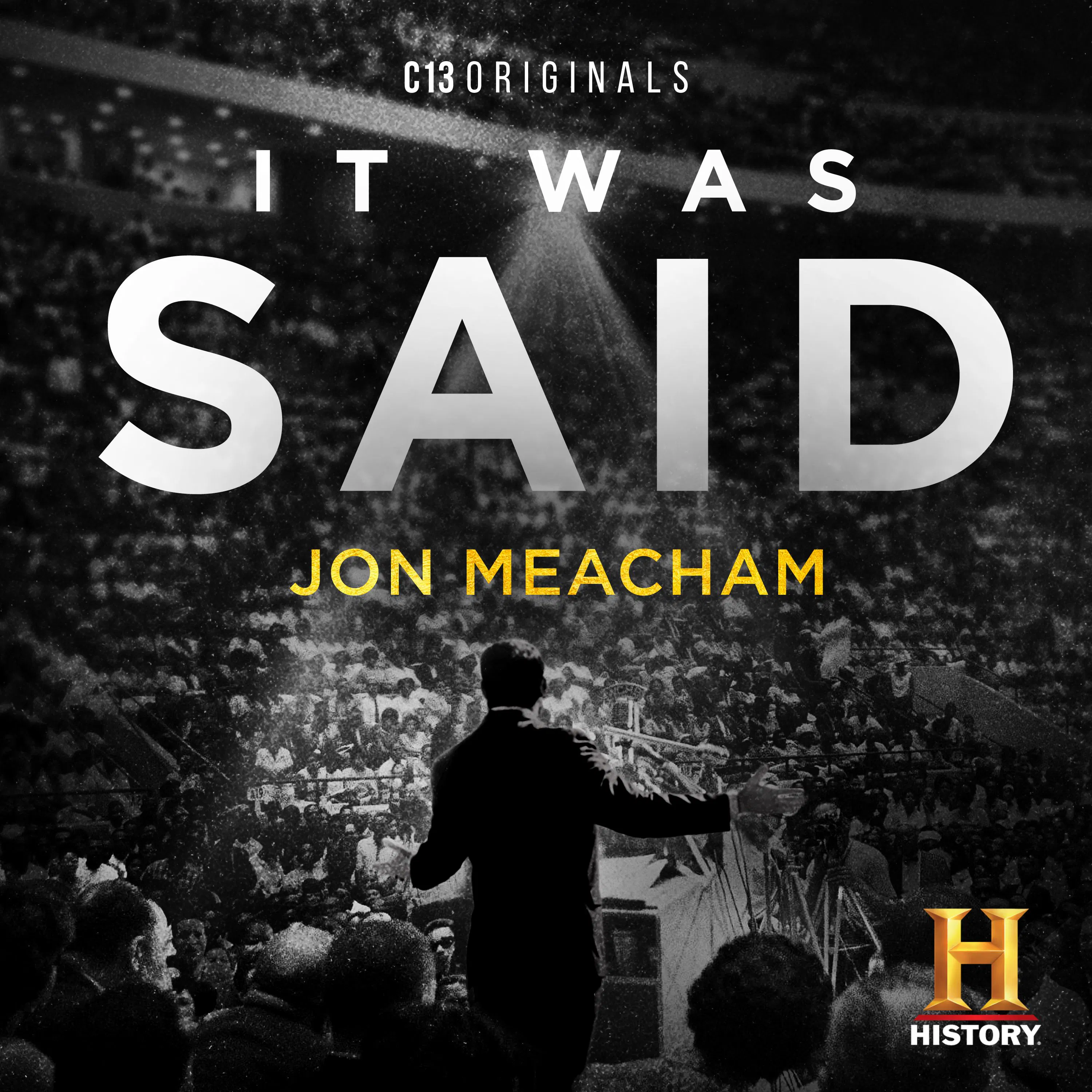
trailerWords move humankind for good and for ill, and in the American experience, our most important public speeches have been both mirrors and makers of the nation's manners and morals at key moments in our common life. Written and narrated by Pulitzer-Prize winning author, Jon Meacham, It Was Said tells the stories of those crucial words, taking listeners back to inflection points ranging from the McCarthy era to our present time through the real-time rhetoric that shaped and suffused America as the country struggled through storm and strife. It Was Said captures the nation we've been, and points ahead to the nation we hope to become. Created and produced by the Peabody-Award nominated documentary studio C13Originals, in partnership with HISTORY. Hosted on Acast. See acast.com/privacy for more information. To learn more about listener data and our privacy practices visit: https://www.audacyinc.com/privacy-policy Learn more about your ad choices. Visit https://podcastchoices.com/adchoices
S1 Ep 36Shaving Russia
Sept 5, 1698. Tsar Peter the Great of Russia returns home from a year-long European tour. When noblemen, religious figures and friends gather to welcome him home, Peter pulls out a straight razor, holds it to their throats and…forcibly shaves their beards. This event will go down in history as a first step toward Russian geopolitical power. Before Peter’s reign, Russia was an isolated nation that was largely ignored by the rest of the world. How did Peter the Great almost single-handedly drag Russia onto the world stage? And how did his great beard-shaving endeavor lead to the Russia we know today? Special thank you to our guest Lynne Hartnett, Ph.D., professor of History, Villanova University and Understanding Russia: A Cultural History. Hosted on Acast. See acast.com/privacy for more information. To learn more about listener data and our privacy practices visit: https://www.audacyinc.com/privacy-policy Learn more about your ad choices. Visit https://podcastchoices.com/adchoices

S1 Ep 35The First American Sex Scandal
August 25, 1797. Alexander Hamilton, the former Secretary of the Treasury, has published a new pamphlet. At first, readers assume this is going to be another one of Hamilton’s pro-Federalist, ideological screeds. But soon, the whole country will realize that this is something very different: an admission of guilt. This wasn’t about a crime, but an affair – the first sex scandal in the history of American politics. Why did Alexander Hamilton openly confess to his extramarital activities? And if he hadn’t, how might American History have unfolded differently? Hosted on Acast. See acast.com/privacy for more information. To learn more about listener data and our privacy practices visit: https://www.audacyinc.com/privacy-policy Learn more about your ad choices. Visit https://podcastchoices.com/adchoices
S1 Ep 34Suffrage isn't Simple
August 18, 1920. In the third row of the legislative chamber in Nashville, Tennessee, 24 year-old Harry Burn sits with a red rose pinned to his lapel. He's there to vote on the 19th Amendment, which will determine if women nationwide will be able to vote. Burn’s shocking, unexpected vote, “yes,” will turn the tides of history. But women had already been voting for decades before 1920, and many women still won't be able to vote for decades after 1920. So, what did the 19th Amendment actually do for women in America? And what, on this 100th anniversary, does it show us about our own right to vote today? Thank you to our guest, Professor Lisa Tetrault, author of The Myth of Seneca Falls: Memory and the Women's Suffrage Movement, 1848-1898 (University of North Carolina Press, 2014) https://bit.ly/33pmYZR To our listeners, thank you for subscribing to History This Week. We want to hear your feedback: https://bit.ly/3a4FGqJ Hosted on Acast. See acast.com/privacy for more information. To learn more about listener data and our privacy practices visit: https://www.audacyinc.com/privacy-policy Learn more about your ad choices. Visit https://podcastchoices.com/adchoices

S1 Ep 132The Birth of Hip Hop
August 11, 1973. At 1520 Sedgwick Avenue in the Bronx, 18-year-old DJ Kool Herc plays his first New York City party. The dance floor is packed, the energy is wild, and Herc gives the performance of a lifetime featuring one very specific innovation on the turntables. Herc and the partygoers don’t know it yet, but this event will go down in history as the birth of one of the most popular musical genres—hip hop. How did this party give way to a multi-billion dollar industry? And how has hip hop become so much more than the music? Special thanks to our guest, Dr. Mark Anthony Neal and to DJ Silva Sirfa and D-Nasty Tha Master for the music in this episode. To our listeners, thank you for subscribing to History This Week. We want to hear your feedback: https://bit.ly/3a4FGqJ Hosted on Acast. See acast.com/privacy for more information. To learn more about listener data and our privacy practices visit: https://www.audacyinc.com/privacy-policy Learn more about your ad choices. Visit https://podcastchoices.com/adchoices

S1 Ep 32Killing Fairness
August 4, 1987. The Federal Communication Commission’s leadership has come together in Washington D.C. to decide the fate of a vital issue: fairness. For the previous 40 years, the FCC has attempted to ensure that TV and radio broadcasters present both sides of the political issues discussed on their airwaves. But by the 1980s, the political landscape has changed, and the Fairness Doctrine will soon be no more. Today, we talk to two of the major players who fought on both sides of this great debate to explain what the Fairness Doctrine actually did, why it died, and where exactly that leaves us today. To our listeners, thank you for subscribing to History This Week. We want to hear your feedback: https://bit.ly/3a4FGqJ Hosted on Acast. See acast.com/privacy for more information. To learn more about listener data and our privacy practices visit: https://www.audacyinc.com/privacy-policy Learn more about your ad choices. Visit https://podcastchoices.com/adchoices

S1 Ep 31Convert or Leave
July 31, 1492. In cities, towns and villages across late medieval Spain, whole districts have emptied out. Houses abandoned, stores closed, and synagogues—which until recently had been alive with singing and prayer—now sit quiet. Exactly four months earlier, the King and Queen of Spain issued an edict: by royal decree, all Jewish people in Spain must convert to Catholicism or leave the country -- for good. Why were the Jews expelled from Spain? How did Spaniards, and then the world, start to think of religion as something inherited, not just by tradition, but by blood? And how does this moment help us understand the challenge of assimilation today? Thank you to our guest, Professor Jonathan Ray from Georgetown University and author of "After Expulsion: 1492 and the Making of Sephardic Jewry" (2013). To our listeners, thank you for subscribing to History This Week. We want to hear your feedback: https://bit.ly/3a4FGqJ Hosted on Acast. See acast.com/privacy for more information. To learn more about listener data and our privacy practices visit: https://www.audacyinc.com/privacy-policy Learn more about your ad choices. Visit https://podcastchoices.com/adchoices

S1 Ep 30Public Enemy #1
July 22, 1934. John Dillinger, America's most famous outlaw, is gunned down by federal agents outside the Biograph Theater in Chicago. Dillinger's death is the final act in a crime spree that involved multiple prison breaks, dozens of bank robberies, and more than one violent shootout. But despite all the money Dillinger stole and the deaths he caused along the way, the public still adored him. How did a man named “Public Enemy #1” become a national darling? And how did the pursuit of John Dillinger make way for the modern FBI? Special thanks to Elliott Gorn, author of Dillinger's Wild Ride. To our listeners, thank you for subscribing to History This Week. We want to hear your feedback: https://bit.ly/3a4FGqJ Hosted on Acast. See acast.com/privacy for more information. To learn more about listener data and our privacy practices visit: https://www.audacyinc.com/privacy-policy Learn more about your ad choices. Visit https://podcastchoices.com/adchoices

S1 Ep 29Destroyer of Worlds
July 16, 1945. It happened within a millionth of a second. In the New Mexico desert in the early morning hours, a group of scientists watched in anticipation as the countdown began. It was silent at first, yet hot and unbelievably bright. Then came the sound. The first-ever atomic bomb explosion... was a success. How did scientists working on the Manhattan Project create what was then the most powerful weapon in history? And how did the bomb’s existence forever change our sense of what human beings are capable of? Thank you to our guest Dr. Jon Hunner, a professor emeritus of U.S. history at New Mexico State University and author of Inventing Los Alamos: The Growth of an Atomic Community and J. Robert Oppenheimer, the Cold War, and the Atomic West. To our listeners, thank you for subscribing to History This Week. We want to hear your feedback: https://bit.ly/3a4FGqJ Hosted on Acast. See acast.com/privacy for more information. To learn more about listener data and our privacy practices visit: https://www.audacyinc.com/privacy-policy Learn more about your ad choices. Visit https://podcastchoices.com/adchoices

S1 Ep 28Operation Mincemeat
July 10, 1943. 150,000 British and American soldiers storm the beaches of Sicily in the first Allied invasion of Nazi-controlled Europe. But the Nazis…aren’t really there to put up a fight. Hitler thought the invasion was coming for Greece. The Nazis have been tricked by two British Intelligence officers and a covert deception plan. How did their operation— which involved a corpse, a false identity and a single eyelash—change the course of WWII? Special thanks to Nicholas Reed, author of The Spy Runner. To our listeners, thank you for subscribing to History This Week. We want to hear your feedback: https://bit.ly/3a4FGqJ Hosted on Acast. See acast.com/privacy for more information. To learn more about listener data and our privacy practices visit: https://www.audacyinc.com/privacy-policy Learn more about your ad choices. Visit https://podcastchoices.com/adchoices
S1 Ep 27The Great Stink
June 30th, 1858. London is a world city, a global center of trade and commerce. But there’s something less glamorous going on in this bustling metropolis: the smell. Every inch of the city smells like rotting, human waste. And this smell is actually killing people. But no one is doing anything about it – until today. How did short-term thinking lead to a deadly problem? And how did an unlikely leader finally get London out of this very literal mess? Thank you to our guest, Professor Rosemary Ashton, author of One Hot Summer: Dickens, Darwin, Disraeli, and the Great Stink of 1858. To our listeners, thank you for subscribing to History This Week. We want to hear your feedback: https://bit.ly/3a4FGqJ Hosted on Acast. See acast.com/privacy for more information. To learn more about listener data and our privacy practices visit: https://www.audacyinc.com/privacy-policy Learn more about your ad choices. Visit https://podcastchoices.com/adchoices

S1 Ep 26Pride & Protest
June 28, 1970. Hundreds of people start to gather on Christopher Street in Manhattan’s West Village for an anniversary celebration. One year earlier, in that very same spot, the Stonewall Inn was raided by police, sparking a revolution. Now, LGBTQ+ people have come here again, not to riot but to march in celebration of who they are and just how far they have come – something that might have been unthinkable if Stonewall hadn’t taken place. How did the Stonewall riot have such a huge impact on queer activism, and how did the community go from raid to parade in just a year? Archival sound taken from the film "Gay & Proud" – produced and directed by Lilli Vincenz, part of the Library of Congress' Lilli M. Vincenz Collection, with permission from the Mattachine Society of Washington, D.C. To our listeners, thank you for subscribing to History This Week. We want to hear your feedback: https://bit.ly/3a4FGqJ Hosted on Acast. See acast.com/privacy for more information. To learn more about listener data and our privacy practices visit: https://www.audacyinc.com/privacy-policy Learn more about your ad choices. Visit https://podcastchoices.com/adchoices

S1 Ep 25Freedom Summer, 1964
June 21, 1964. James Chaney, Michael Schwerner and Andrew Goodman, three civil rights activists in their early twenties, are reported missing in Mississippi. They are part of the first wave of Freedom Summer, a massive voter registration campaign in the racist heart of the South, Mississippi. The first interracial movement of its kind, the project was led by black southern organizers and staffed by both black and white volunteers. The movement’s leader, Bob Moses, joins this episode to explain how the disappearance of those three men brought the Civil Rights movement into the homes of white Americans – and what Freedom Summer can teach us about moving the wheels of progress today. To our listeners, thank you for subscribing to History This Week. We want to hear your feedback: https://bit.ly/3a4FGqJ Hosted on Acast. See acast.com/privacy for more information. To learn more about listener data and our privacy practices visit: https://www.audacyinc.com/privacy-policy Learn more about your ad choices. Visit https://podcastchoices.com/adchoices
S1 Ep 124"Have You No Decency, Sir?"
June 9, 1954. Senator Joseph McCarthy has accused the United States Army of having communists within its midst. After rising to power during a time of great fear in America, McCarthy's name has become synonymous with anti-communism – and with baseless, life-ruining accusations. But today, five simple words will take down one of the most notorious men in American political history. What made McCarthy so powerful in the first place? And how did that very same thing eventually bring him down? Thank you to our guest, Ellen Schrecker, historian, author and expert on McCarthyism. https://www.ellenschrecker.com/ Thank you to Thomas Doherty, Professor of American Studies at Brandeis University, for speaking with us for this episode. He is the author of "Cold War, Cool Medium: Television, McCarthyism, and American Culture". To our listeners, thank you for subscribing to History This Week. We want to hear your feedback: https://bit.ly/3a4FGqJ Hosted on Acast. See acast.com/privacy for more information. To learn more about listener data and our privacy practices visit: https://www.audacyinc.com/privacy-policy Learn more about your ad choices. Visit https://podcastchoices.com/adchoices
S1 Ep 23A Century of Stigma for Black America and Mental Health
June 1, 1840. U.S. Marshals are going door to door conducting the sixth-ever census in the United States. This year something is different – this is the very first time the U.S. government is asking a question about mental health. But the results are tragic, and long-lasting. Twenty-one years before the Civil War, with over two million slaves in America, this question will uphold a racist and pernicious lie that is already spreading throughout America: that freedom causes black people to go insane. To our listeners, thank you for subscribing to History This Week. We want to hear your feedback: https://bit.ly/3a4FGqJ Hosted on Acast. See acast.com/privacy for more information. To learn more about listener data and our privacy practices visit: https://www.audacyinc.com/privacy-policy Learn more about your ad choices. Visit https://podcastchoices.com/adchoices
S1 Ep 22A Gilded Age Apocalypse
May 31, 1889. It’s raining in Johnstown, PA, causing some small flooding. But the townsfolk were used to it – this city of 30,000 was nestled in a valley between two rivers. What happened next was something every person in Johnstown feared, but hoped would never come true. The old dam at the millionaires’ resort, high up in the mountains, had failed... and unimaginable destruction was on its way. Special thanks to Neil M. Coleman, author of Johnstown’s Flood of 1889: Power Over Truth and The Science Behind the Disaster (https://amzn.to/2LY8B4N) --- "Antonín Dvořák - Humoresque Op. 101 No. 7" arranged for piano and viola by Elias Goldstein is licensed under CC BY-SA 2.0 (https://bit.ly/36qEMmK) Hosted on Acast. See acast.com/privacy for more information. To learn more about listener data and our privacy practices visit: https://www.audacyinc.com/privacy-policy Learn more about your ad choices. Visit https://podcastchoices.com/adchoices

S1 Ep 21Captain Kidd and the Nazis
May 23, 1701. Captain William Kidd is hanged at Execution Dock in London. His death sentence cements his legacy as one of history’s most notorious pirates, but he went to the gallows claiming to be an innocent man. And he may have been telling the truth. Nonetheless, his execution began a worldwide ripple effect that would change the high seas forever and ultimately help prosecute one of the most infamous Nazis that ever lived. Special thanks to Richard Zacks, author of The Pirate Hunter: The True Story of Captain Kidd. To our listeners, thank you for subscribing to History This Week. We want to hear your feedback: https://bit.ly/3a4FGqJ Hosted on Acast. See acast.com/privacy for more information. To learn more about listener data and our privacy practices visit: https://www.audacyinc.com/privacy-policy Learn more about your ad choices. Visit https://podcastchoices.com/adchoices

S1 Ep 20To Fight a Virus, and Win
May 14, 1796. Edward Jenner puts a theory to the test: can contracting one disease save you from another? Jenner goes down in history as the man who brought us one of the greatest advances in modern medicine: the vaccine. Its discovery led to the eradication of smallpox, a virus that killed an estimated 300 million people in the 20th century alone and one of two diseases to ever be defeated. But the story of that first vaccine begins long before Jenner was even born. How did an unlikely trio in colonial America pave the way for Jenner’s life-saving innovation? And how did a strange sequence of events help us defeat one of the oldest and deadliest diseases in human history? Special thanks to our guest, Stephen Coss. You can find his book here: http://www.stephencoss.com/ Thank you also to Dr. Nathaniel Hupert for speaking with us about vaccines and epidemics. To our listeners, thank you for subscribing to History This Week. We want to hear your feedback: https://bit.ly/3a4FGqJ Hosted on Acast. See acast.com/privacy for more information. To learn more about listener data and our privacy practices visit: https://www.audacyinc.com/privacy-policy Learn more about your ad choices. Visit https://podcastchoices.com/adchoices

S1 Ep 19Beethoven's Silent Symphony
May 7, 1824. One of the great musical icons in history, Ludwig Van Beethoven, steps onto stage at the Kärntnertor Theater in Vienna. The audience is electric, buzzing with anticipation for a brand new symphony from the legendary composer. But there’s a rumor on their minds, something only a few know for certain... that Beethoven is deaf. He is about to conduct the debut of his Ninth Symphony—featuring the now-famous ‘Ode to Joy’—yet Beethoven can barely hear a thing. How was it possible for him to conduct? And more importantly, how could he have composed one of the greatest works in the history of classical music? Special thanks to Jan Swafford, author of Beethoven: Anguish and Triumph (https://amzn.to/2KZIZDS). Audio from Beethoven’s Ninth Symphony is provided courtesy of the Chicago Symphony Orchestra and Chorus (https://bit.ly/2KZvyUM) and Riccardo Muti Music (https://bit.ly/3dbOVWC). "Beethoven - Piano Concerto No.3, Op.37 - III. Rondo. Allegro" by Stefano Ligoratti is licensed under CC BY 3.0 (https://bit.ly/35uhbRw) "Beethoven - Symphony No. 9 in D minor, Op. 125 - IV. Presto - Allegro Assai (For Recorder Ensemble and Chorus - Papalin)" by Papalin is licensed under CC BY 3.0 (https://bit.ly/2YukIxM) Hosted on Acast. See acast.com/privacy for more information. To learn more about listener data and our privacy practices visit: https://www.audacyinc.com/privacy-policy Learn more about your ad choices. Visit https://podcastchoices.com/adchoices

S1 Ep 17The Hunt for the Hunley
May 3, 1995. The Hunley has been missing for over 100 years. This Civil War submarine and all eight of her crew disappeared after completing the first successful submarine attack ever. When a team of divers finally locates the wreck in the mid ‘90s, it seems the mystery has been solved, but what they find is more perplexing than the sub’s disappearance. The boat is undamaged, and the crew are still at their battle stations. What sank the Hunley? And why didn’t her crew try to escape? Special thanks to Rachel Lance, author of In the Waves: My Quest to Solve The Mystery of A Civil War Submarine https://bit.ly/2VOa5mG Thank you also, Dr. Ken Nahshon and Michael Scafuri. To our listeners, thank you for subscribing to History This Week. We want to hear your feedback: https://bit.ly/3a4FGqJ Hosted on Acast. See acast.com/privacy for more information. To learn more about listener data and our privacy practices visit: https://www.audacyinc.com/privacy-policy Learn more about your ad choices. Visit https://podcastchoices.com/adchoices

S1 Ep 17Introducing: Hope, Through History
Welcome to Hope, Through History with Jon Meacham. This limited series explores some of the most historic and trying times in American history, and how this nation dealt with these moments, the impact of these moments and how we came through these moments a unified nation. Season One takes a look at critical moments around the 1918 Flu Pandemic, the Great Depression, World War II, the Polio Epidemic and the Cuban Missile Crisis. Hosted on Acast. See acast.com/privacy for more information. To learn more about listener data and our privacy practices visit: https://www.audacyinc.com/privacy-policy Learn more about your ad choices. Visit https://podcastchoices.com/adchoices

S1 Ep 16When the Environment United Us
April 22, 1970. Nearly 20 million Americans come out in solidarity for one of the largest mass movements of the century. It was called Earth Day. And 50 years later, we still celebrate this day. But in 1970, this call to action crossed the aisle and brought major change to Washington, a feat that seems almost impossible today. Why did that first-ever Earth Day bring such a huge number of Americans—from across the political spectrum—out into the streets? And what might it take to unite the country again? Special thanks to our guests: Adam Rome, author of "The Genius of Earth Day: How a 1970 Teach-In Unexpectedly Made the First Green Generation" and professor of Environment and Sustainability at the University at Buffalo. Jerry Yudelson, MS, MBA, LEED Fellow Emeritus and Author of "The Godfather of Green: An Eco-Spiritual Memoir" To our listeners, thank you for subscribing to History This Week. We want to hear your feedback: https://bit.ly/3a4FGqJ Hosted on Acast. See acast.com/privacy for more information. To learn more about listener data and our privacy practices visit: https://www.audacyinc.com/privacy-policy Learn more about your ad choices. Visit https://podcastchoices.com/adchoices

S1 Ep 15"Houston We’ve Had a Problem”
April 14, 1970. Apollo 13 is a quarter million miles from Earth, speeding towards the Moon, when a sudden explosion rocks the ship. Against all odds, the astronauts pull off one of the most remarkable survival missions in NASA history. On the 50th anniversary of this harrowing flight, Apollo 13 Commander Jim Lovell explains exactly what it took to save his spaceship. Special thanks to Captain Jim Lovell, Steven Barber and Vanilla Fire Productions, www.vanillafire.com. To our listeners, thank you for subscribing to History This Week. We want to hear your feedback: https://bit.ly/3a4FGqJ Hosted on Acast. See acast.com/privacy for more information. To learn more about listener data and our privacy practices visit: https://www.audacyinc.com/privacy-policy Learn more about your ad choices. Visit https://podcastchoices.com/adchoices

S1 Ep 14The First Flight Around the World
April 6, 1924. Four planes rest in the water, preparing for take-off. At 8:30 AM, they pick up speed and hit the air. Eight pilots have begun a dangerous mission: to be the first to fly around the world. This will change our future in a way that few could see in 1924. What did it take to complete this historic flight? And, when this new technology went global, what were the unintended consequences? Special thanks to our guest, Jeremy Kinney, Chair of the Aeronautics Department at the Smithsonian National Air and Space Museum. Additional thanks to Tim Grove, author of "First Flight Around the World: The Adventures of the American Fliers Who Won the Race" To our listeners, thank you for subscribing to History This Week. We want to hear your feedback: https://bit.ly/3a4FGqJ Hosted on Acast. See acast.com/privacy for more information. To learn more about listener data and our privacy practices visit: https://www.audacyinc.com/privacy-policy Learn more about your ad choices. Visit https://podcastchoices.com/adchoices

S1 Ep 13The Deadliest Pandemic in Modern History
April 5, 1918. The first mention of a new influenza outbreak in Kansas appears in a public health report. That strain, later called the Spanish Flu, would go on to kill at least 50 million people worldwide. In a time before widespread global travel, how did this disease spread so far, so fast? And what does it teach us about fighting pandemics today? Special thanks to Dr. Jeremy Brown, author of Influenza: The 100-Year Hunt to Cure the Deadliest Disease in History. To our listeners, thank you for subscribing to History This Week. We want to hear your feedback: https://bit.ly/3a4FGqJ Hosted on Acast. See acast.com/privacy for more information. To learn more about listener data and our privacy practices visit: https://www.audacyinc.com/privacy-policy Learn more about your ad choices. Visit https://podcastchoices.com/adchoices

S1 Ep 12When Basketball Meets Jim Crow
March 28, 1939. Two teams are facing off for the final game of World Professional Basketball Tournament in Chicago, the first professional tournament to feature both white and black basketball teams. This is several years before the start of the NBA, and Jim Crow segregation was still the law of the land in many parts of the country. The New York Rens, an all-black team, have made it to this championship, but their road to the top was anything but easy. Who were the Rens? And how did they fight segregation and change the history of basketball? Special thanks to Susan Rayl, African American Sports Historian & Associate Professor at the State University of New York at Cortland. To our listeners, thank you for subscribing to History This Week. We want to hear your feedback: https://bit.ly/3a4FGqJ Hosted on Acast. See acast.com/privacy for more information. To learn more about listener data and our privacy practices visit: https://www.audacyinc.com/privacy-policy Learn more about your ad choices. Visit https://podcastchoices.com/adchoices

S1 Ep 11How Lady Luck Saved Vegas
March 19, 1931. Las Vegas is a small, desert town of a few thousand. And it’s not doing so well. In fact, people are worried it might turn into a ghost town. But then something big happens: Nevada decides to legalize gambling. And the ground begins to shift beneath the city...but no one notices, at least not at first. So, how did Vegas become Vegas? Special thanks to our guest Professor Michael Green from UNLV's Department of History. To our listeners, thank you for subscribing to History This Week. We want to hear your feedback: https://bit.ly/3a4FGqJ Hosted on Acast. See acast.com/privacy for more information. To learn more about listener data and our privacy practices visit: https://www.audacyinc.com/privacy-policy Learn more about your ad choices. Visit https://podcastchoices.com/adchoices

S1 Ep 10The Real Assassination of Caesar
The Ides of March, 44 BC. Ancient Rome’s most powerful dictator, Julius Caesar, is running late to a senate meeting. When he arrives, senators surround him and stab him 23 times. The assassination of Caesar has been told and re-told for centuries, but the facts are wilder than the legend. What really happened on the Ides of March? And why do we tell this story over and over? Special thanks to Professor Barry Strauss, historian and author of The Death of Caesar and Ten Caesars. To our listeners, thank you for subscribing to History This Week. We want to hear your feedback: https://bit.ly/3a4FGqJ Hosted on Acast. See acast.com/privacy for more information. To learn more about listener data and our privacy practices visit: https://www.audacyinc.com/privacy-policy Learn more about your ad choices. Visit https://podcastchoices.com/adchoices

S1 Ep 9Lionel, Stevie and Tina Walk into a Studio…
March 7th, 1985. “We Are the World” hits the shelves. It's an instant hit, breaking the top of the charts and making music history. This one song has the star power of 45 of the biggest singers of the era: Lionel Richie, Stevie Wonder, Tina Turner, Michael Jackson, Diana Ross, Bruce Springsteen, Bob Dylan - just to name a few. And with their power combined, the song raised millions of dollars to help combat a devastating famine in Ethiopia and Sudan. What did it take to bring all these icons together, and did this song actually make a difference? Special thanks to our Guests: Ken Kragen, creator and organizer of "We Are the World" and USA For Africa Alex de Waal, Executive Director, World Peace Foundation at The Fletcher School of Law and Diplomacy, Tufts University To our listeners, thank you for subscribing to History This Week. We want to hear your feedback: https://bit.ly/3a4FGqJ Hosted on Acast. See acast.com/privacy for more information. To learn more about listener data and our privacy practices visit: https://www.audacyinc.com/privacy-policy Learn more about your ad choices. Visit https://podcastchoices.com/adchoices

S1 Ep 8The DNA Debate
February 28, 1953. Two scientists, James Watson and Francis Crick, burst into a bar and exclaim that they have discovered the secret of life. But there was another person involved in the discovery of DNA’s double helix, a scientist named Rosalind Franklin. Why didn’t she get any credit, and what does her story tell us about the politics of discovery itself? Special thanks to Michelle Gibbons, Ph.D., author of "Reassessing Discovery: Rosalind Franklin, Scientific Visualization, and the Structure of DNA". To our listeners, thank you for subscribing to History This Week. We want to hear your feedback: https://bit.ly/3a4FGqJ Hosted on Acast. See acast.com/privacy for more information. To learn more about listener data and our privacy practices visit: https://www.audacyinc.com/privacy-policy Learn more about your ad choices. Visit https://podcastchoices.com/adchoices

S1 Ep 7A Mole in the CIA
February 21, 1994. Early in the morning, FBI agents assemble near the home of Aldrich Ames. They wait for him to leave his house and then they pounce, arresting one of the deadliest double agents in CIA history. He received almost $2 million from the KGB, selling CIA secrets and lethally betraying undercover agents for years. Who is the real Aldrich Ames? And why does a spy turn on their own country? Thank you to our guest, Pete Earley, author of "Confessions of a Spy: The Real Story of Aldrich Ames". Find it here: https://amzn.to/31SYUfd To our listeners, thank you for subscribing to History This Week. We want to hear your feedback: https://bit.ly/3a4FGqJ Hosted on Acast. See acast.com/privacy for more information. To learn more about listener data and our privacy practices visit: https://www.audacyinc.com/privacy-policy Learn more about your ad choices. Visit https://podcastchoices.com/adchoices

S1 Ep 6The Legacy of an Oscar
February 11, 1940. Hattie McDaniel becomes the first-ever African American to be nominated for, and then win, an Oscar. Her legacy is complicated. And the Oscar itself has been missing, mysteriously, for almost fifty years. What did it take for McDaniel to win? And, 80 Oscar ceremonies later, how do we understand her legacy today? Thank you to our guest, Professor Emeritus of Law, W. Burlette Carter. You can read her article about searching for the missing Oscar here: https://bit.ly/2OF5cts Thank you also to Hattie McDaniel's biographer, Jill Watts for speaking with us for this episode. To our listeners, thank you for subscribing to History This Week. We want to hear your feedback: https://bit.ly/3a4FGqJ Hosted on Acast. See acast.com/privacy for more information. To learn more about listener data and our privacy practices visit: https://www.audacyinc.com/privacy-policy Learn more about your ad choices. Visit https://podcastchoices.com/adchoices

S1 Ep 5When Black Men Won the Vote
February 3, 1870. The 15th Amendment is ratified, which establishes the right to vote for black men in America. While Jim Crow laws would grip the south by 1877, there was a brief, seven-year window of opportunity. Half a million black voters turned out at the polls, and 2,000 black officials are estimated to have been elected during this time. What did this moment of progress look like? And how do those votes still impact our lives 150 years later? Special thanks to our guest, historian and professor Yohuru Williams. To our listeners, thank you for subscribing to History This Week. We want to hear your feedback: https://bit.ly/3a4FGqJ Hosted on Acast. See acast.com/privacy for more information. To learn more about listener data and our privacy practices visit: https://www.audacyinc.com/privacy-policy Learn more about your ad choices. Visit https://podcastchoices.com/adchoices

S1 Ep 4Surviving Auschwitz
January 27, 1945. This week, we commemorate the 75th Anniversary of the liberation of Auschwitz, one of Nazi Germany's largest concentration and extermination camps. Auschwitz has since become a symbol for the Holocaust itself, but what did liberation actually mean for its survivors - and is the full story being forgotten? Thank you to Mindu Hornick and Bill Harvey for sharing their personal story of surviving Auschwitz and to Fulwell 73 for helping make it happen. Thank you to Jeremy Dronfield, author of the Boy Who Followed his Father into Auschwitz, and to the work of Robert Jan Van Pelt, curator for the international exhibit, "Auschwitz. Not Long Ago. Not Far Away." Archival material accessed at United States Holocaust Memorial Museum, courtesy of The Steven Spielberg Jewish Film Archives of the Hebrew University of Jerusalem, United States Holocaust Memorial Museum, courtesy of National Archives & Records Administration and United States Holocaust Memorial Museum, gift of Thomas P. Headen. To our listeners, thank you for subscribing to History This Week. We want to hear your feedback: https://bit.ly/3a4FGqJ Hosted on Acast. See acast.com/privacy for more information. To learn more about listener data and our privacy practices visit: https://www.audacyinc.com/privacy-policy Learn more about your ad choices. Visit https://podcastchoices.com/adchoices
S1 Ep 3The Apple Ad That Changed the World
January 22, 1984. Apple launches the first Macintosh computer, with a showstopping Super Bowl commercial. The ad itself was revolutionary, but the product it launched almost single-handedly brought computers into the mainstream, changing the world as we know it. Special thanks to Alex Soojung-Kim Pang, author and producer of the “Making the Macintosh” digital archive. To our listeners, thank you for subscribing to History This Week. We want to hear your feedback: https://bit.ly/3a4FGqJ Hosted on Acast. See acast.com/privacy for more information. To learn more about listener data and our privacy practices visit: https://www.audacyinc.com/privacy-policy Learn more about your ad choices. Visit https://podcastchoices.com/adchoices