HISTORY This Week
353 episodes — Page 5 of 8

Star Trek Premieres
September 8, 1966. For the first time, the USS Enterprise appears on screen. It is the premiere of a strange new futuristic TV show. Star Trek will introduce the world to a cast of characters that push the boundaries of TV. Why did NBC take a chance on a writer who had already once gotten them in trouble with none other than the US military? And how did Star Trek go where no show had gone before? Special thanks to our guests, David A. Goodman and Michelle Sauer. Goodman’s latest film, Honor Society, is now streaming on Paramount Plus. Sauer is the author of Gender in Medieval Culture. To learn more about listener data and our privacy practices visit: https://www.audacyinc.com/privacy-policy Learn more about your ad choices. Visit https://podcastchoices.com/adchoices
Love, Betrayal, and the Battle for Rome
September 2, 31 BCE. Two camps prepare for battle off the coast of Greece. On one side is Octavian, Julius Caesar’s heir apparent. On the other, Marc Antony and his lover, the Egyptian queen Cleopatra. This battle won’t just determine the leader of Rome, but the fate of global civilization. How did Cleopatra wind up in the middle of a Roman game of tug of war? And how did the Battle of Actium change our world forever? Special thanks to our guest, Barry Strauss, author of The War That Made the Roman Empire: Antony, Cleopatra, and Octavian at Actium. To learn more about listener data and our privacy practices visit: https://www.audacyinc.com/privacy-policy Learn more about your ad choices. Visit https://podcastchoices.com/adchoices

The Deadly Puzzle of Yellow Fever
August 27, 1900. Dr. Jesse Lazear, a U.S. Army surgeon, walks into Las Animas Hospital Yellow Fever ward in Havana Cuba, toting a brood of mosquitos. He has the system down: remove the cotton stopper that keeps the mosquito penned in its glass vial, turn the vial over, and seal it against a consenting infected patient’s skin. Chasing the source of Yellow Fever, scientists try to understand this deadly plague by running a high-stakes medical experiment on human subjects. But today, those subjects will include themselves. Why did ordinary people—and the doctors running the experiment—willingly and knowingly consent to take part in this study? And when we look back, should we be horrified... or impressed? Special thanks to our guests: Dr. Kathryn Olivarius of Stanford University and author of, Necropolis: Disease, Power, and Capitalism in the Cotton Kingdom, as well as Molly Crosby author of, The American Plague: The Untold Story of Yellow Fever the Epidemic That Shaped Our History. To learn more about listener data and our privacy practices visit: https://www.audacyinc.com/privacy-policy Learn more about your ad choices. Visit https://podcastchoices.com/adchoices
Dirty Dancing in the Borscht Belt
August 17, 1987. On the red carpet in New York City, it’s the premier of a new movie: Dirty Dancing. The story is set in the sunburnt Shangri-La of New York’s Catskills resort region. The movie will introduce millions to the place that some call the Jewish Alps. "Disneyland with knishes." The Sour Cream Sierras. The Borscht Belt. Ironically, Dirty Dancing arrives as the heyday of the Catskills resort is ending. But how does its culture live on? And how did its signature style of Jewish humor make the leap to Hollywood, where it would fundamentally change American comedy? Special thanks to our guests: Julie Budd, John Conway, Jeremy Dauber, Elaine Grossinger Etess, Bill Persky, Larry Strickler, and Alan Zweibel. You can learn more about Jewish humor in Dauber’s book, Jewish Comedy: A Serious History. To learn more about listener data and our privacy practices visit: https://www.audacyinc.com/privacy-policy Learn more about your ad choices. Visit https://podcastchoices.com/adchoices
Pop Music Pirates (Replay)
August 14, 1967. Off the coast of England, a group of pirate ships has been fighting to stay afloat. These are pirates of a particular kind—less sword fighting and treasure hunting, more spinning records and dancing late into the night. For the past few years, these boats have made it their mission to broadcast popular music from international waters. But at the stroke of midnight, a new law will make these pirate radio DJs criminals. Some of them, aboard Radio Caroline, are willing to risk it. How did a group of young rebels launch an offshore radio station that gave the BBC a run for its money? And how did they change the course of music history? Special thanks to our guests, former Caroline pirates Nick Bailey, Gordon Cruse, Roger Gale, Patrick Hammerton, Keith Hampshire, Dermot Hoy, Colin Nichol, Paul Noble, Ian Ross, Chris Sandford, and Steve Young. To learn more about listener data and our privacy practices visit: https://www.audacyinc.com/privacy-policy Learn more about your ad choices. Visit https://podcastchoices.com/adchoices
The Web Goes World Wide
August 6, 1991. On an Internet news board, a memo appears, describing a new project that some scientists have been developing: “The WorldWideWeb (WWW) project.” It’s meant to help ordinary people use the Internet—which at the time is only being used by a small group of experts. How did a group of scientists and coders even conceive of something like the Web? And how did they bring it not just to coders and other specialists, but to the rest of us—for better or for worse? Special thanks to our guests: Robert Cailliau, Jean-François Groff, Peggie Rimmer, Ben Segal, and Marc Weber, Web historian and curator at the Computer History Museum. To learn more about the Web’s story, visit the Internet History Program page on the Museum’s website: computerhistory.org/nethistory. To learn more about listener data and our privacy practices visit: https://www.audacyinc.com/privacy-policy Learn more about your ad choices. Visit https://podcastchoices.com/adchoices
Convert or Leave (Replay)
7/31/1492. In cities, towns and villages across late medieval Spain, whole districts have emptied out. Houses abandoned, stores closed, and synagogues—which until recently had been alive with singing and prayer—now sit quiet. Exactly four months earlier, the King and Queen of Spain issued an edict: by royal decree, all Jewish people in Spain must convert to Catholicism or leave the country, for good. Why were the Jews expelled from Spain? How did Spaniards, and then the world, start to think of religion as something inherited, not just by tradition, but by blood? And how does this moment help us understand the challenge of assimilation today? Thank you to our guest, Professor Jonathan Ray from Georgetown University and author of "After Expulsion: 1492 and the Making of Sephardic Jewry" (2013). To learn more about listener data and our privacy practices visit: https://www.audacyinc.com/privacy-policy Learn more about your ad choices. Visit https://podcastchoices.com/adchoices
Walt Whitman's First Fan Mail
July 21, 1855. Literary lion Ralph Waldo Emerson writes a letter to an unknown Brooklyn journalist named Walt Whitman. He’s just read Whitman’s first published poems, which have both startled him and caused him to rejoice. Emerson congratulates the poet on having produced “the most extraordinary piece of wit & wisdom that America has yet contributed.” So why, just five years later, will Emerson be urging him to delete the “scandalous” passages from a new edition of the poems? And how did Walt Whitman’s exuberant sensuality help recast America’s relationship to the body? Special thanks to our guests, Karen Karbiener, professor of literature at NYU and president of the Walt Whitman Initiative, and Jerome Loving, author of Emerson, Whitman, and the American Muse and Walt Whitman: The Song of Himself. Karbiener published a new edition of Whitman’s Live Oak, With Moss poems along with illustrator Brian Selznick. You can find out more about the Walt Whitman Initiative’s programming, including efforts to preserve the Whitman home at 99 Ryerson Street, on their website: WaltWhitmanInitiative.org. To learn more about listener data and our privacy practices visit: https://www.audacyinc.com/privacy-policy Learn more about your ad choices. Visit https://podcastchoices.com/adchoices

The Games to Win Ancient Rome
July 13, 44 BCE. Julius Caesar is dead, stabbed by a trusted friend. With Rome shaken, the Senate meets to decide next steps. They're confronting the brutal power struggle already breaking out among three men: Brutus, the deadly friend; Marc Antony, Caesar's gifted military commander; and Octavian, Caesar's teenaged heir. First, Brutus and Octavian will square off with a clash of festivals designed to sway popular opinion to their side... while the wily Antony bides his time. Today, the final day of the Ludi Apollinares, the games that Brutus arranges to sway the people of Rome. Will mounting the wildest spectacle be the key to grabbing the reins of the entire empire? And how does a bolt of lightning reshape Rome's destiny? Special thanks to Dr. Geoffrey Sumi of Mount Holyoke College, author of Ceremony and Power: Performing Politics in Rome Between Republic and Empire. To learn more about listener data and our privacy practices visit: https://www.audacyinc.com/privacy-policy Learn more about your ad choices. Visit https://podcastchoices.com/adchoices
The Colosseum Becomes a Wonder
July 7, 2007. In a dramatic ceremony featuring pop stars, fireworks, and smoke canons, the Colosseum is named one of the seven new wonders of the world. It’s an appropriately over-the-top blowout for an arena which, centuries before, was home to its own lavish events. How did spectacles once unfold on the floor of this ancient arena? And how did the Romans use games to entertain people, and to control them? Special thanks to our guests, Alison Futrell, co-editor of The Oxford Handbook of Sport and Spectacle in the Ancient World, and Barry Strauss, author of The War That Made the Roman Empire: Antony, Cleopatra, and Octavian at Actium. To learn more about listener data and our privacy practices visit: https://www.audacyinc.com/privacy-policy Learn more about your ad choices. Visit https://podcastchoices.com/adchoices
Mutiny on the Black Sea
June 27, 1905. It’s the last morning of Ippolit Gilyarovsky’s life. He wakes up in a battleship on the Black Sea. The Potemkin. He’s a despised Russian naval officer who doesn’t care that his sailors are refusing to eat their lunch of rotten borscht. They’ll do it because he says so. And if they don’t, he’ll hang them. Why did these sailors, many of them peasants accustomed to abuse from high-born men like him, decide on this day to rise up instead and mutiny? And how would their rebellion help take down the Czar of Russia? Special thanks to our guests; Neal Bascomb, author of Red Mutiny: Eleven Fateful Days on the Battleship Potemkin and Russian Revolution; and historian Dr. Mark Steinberg of the University of Illinois Urbana-Champaign. His most recent book is Russian Utopia: A Century of Revolutionary Possibilities. To learn more about listener data and our privacy practices visit: https://www.audacyinc.com/privacy-policy Learn more about your ad choices. Visit https://podcastchoices.com/adchoices

Introducing: Sports History This Week
June 23, 1972. President Richard Nixon’s men broke into the Watergate complex just six days earlier. He’s attempting some damage control, but in between meetings with his staff, Nixon signs a new bill into law – the Educational Amendments of 1972. He isn’t aware of it at the time, but Title IX of this law will change women’s sports forever. The bill’s passage comes after years of campaigning, and the most prominent face of this movement is one of the great athletes of her era: Billie Jean King. Today, Billie Jean King sits down with Sports History This Week to unpack her role in this monumental legislation. How did she use her platform to fight for gender equality in athletics? And after the passage of Title IX, how did she literally battle for women everywhere? Special thanks to our guests: Billie Jean King, a champion of tennis and of equality, and Susan Ware, historian and author of Game, Set, Match: Billie Jean King and the Revolution in Women's Sports. To learn more about listener data and our privacy practices visit: https://www.audacyinc.com/privacy-policy Learn more about your ad choices. Visit https://podcastchoices.com/adchoices
The Church Kidnaps Edgardo Mortara
June 23, 1858. A knock at the door—it’s the papal police. For the Mortaras, a Jewish family living in Bologna, this is not a good sign. And soon, the officers break the agonizing news: “You have been betrayed.” The Mortaras’ six-year-old son, Edgardo, has been secretly baptized, and the Church has ordered him to be taken away. Why did the Catholic Church order a young Jewish boy to be kidnapped? And how would that decision end up re-making the map of modern Europe? Special thanks to our guest, David Kertzer, author of The Kidnapping of Edgardo Mortara and The Pope at War. To learn more about listener data and our privacy practices visit: https://www.audacyinc.com/privacy-policy Learn more about your ad choices. Visit https://podcastchoices.com/adchoices
Watergate from the Inside (Replay)
June 17, 1972. In the early morning hours, five men are caught after breaking into the Watergate building in Washington, DC. The failed break-in that night will eventually lead to the unraveling of a major American scandal that reaches the highest levels of government. Why did President Nixon and the men around him believe that they could get away with something so obviously illegal? And how - for one of our producers - did this episode hit close to home? Thank you to our guest expert, Michael Dobbs, author of King Richard: An American Tragedy. Thank you also to Ken Hughes and Michael Greco from The Miller Center at UVA for speaking with us for this episode. To learn more about listener data and our privacy practices visit: https://www.audacyinc.com/privacy-policy Learn more about your ad choices. Visit https://podcastchoices.com/adchoices

Bayard Rustin Marches Free
June 11, 1946. Bayard Rustin walks out of the Lewisburg Federal Penitentiary after serving a sentence for conscientiously objecting to WWII. A pacifist organizer, his efforts reach the ears of Mahatma Gandhi, who invites him to India. And Rustin never looks back. Soon he’s mentoring a young Alabama preacher, Dr. Martin Luther King Jr., as Rustin thrust into the middle of a Civil Rights Movement. But Rustin’s enemies want him gone, and the entire movement along with him. So how does this one man become responsible for the national reach and spread of active nonviolent resistance? And why, as the chief architect of the historic 1963 March on Washington, is his name not more known? Special thanks to Walter Naegle, Bayard Rustin's partner and the current executor of his estate, and John D'Emilio, professor emeritus of history and gender and women's studies at the University of Illinois at Chicago and author of Lost Prophet: The Life and Times of Bayard Rustin. To learn more about listener data and our privacy practices visit: https://www.audacyinc.com/privacy-policy Learn more about your ad choices. Visit https://podcastchoices.com/adchoices
Anna May Wong Steps into the Spotlight
June 4, 1939. Anna May Wong steps off an ocean liner to greet her fans in Australia. In many ways, she is a classic Hollywood actor. Glamorous and famous. She’s made some sixty movies that have been seen around the world. But in other ways, Anna May Wong is singular. She’s the first–and at this time only–Chinese American movie star. But behind the scenes...she is reaching the end of her rope. How did a Chinese American girl from a poor family defy expectations to become an international star? And what is now fueling her Hollywood rebirth? Thank you to our guests: Professor Shirley Lim, author of Anna May Wong: Performing the Modern; and actor Michelle Krusiec, from Netflix's "Hollywood." To learn more about listener data and our privacy practices visit: https://www.audacyinc.com/privacy-policy Learn more about your ad choices. Visit https://podcastchoices.com/adchoices
Reconstruction IV: Voting Rights At Last
May 26, 1965. One hundred years after the Civil War, Congress is debating a bill whose goal is to enforce the 15th amendment, which, in 1870, promised the right to vote regardless of race. But that’s not what happened. Now the Civil Rights movement is saying: It’s time to make real the promises of the Constitution for all Americans. The forces that undermined the First Reconstruction, and gutted the 15th Amendment, are resisting those demands. In the middle stands Lyndon B. Johnson, a Southern Senator with a record of opposing civil rights. Robert Caro, acclaimed journalist and Johnson biographer, tells us, what will change Johnson’s mind and turn him into a champion of the Voting Rights Act? And how will he manage the impossible task of getting it passed when so many Southern Senators are hellbent against it? Visit History.com/Reconstruction for more. To learn more about listener data and our privacy practices visit: https://www.audacyinc.com/privacy-policy Learn more about your ad choices. Visit https://podcastchoices.com/adchoices
Reconstruction III: Eric Foner and Henry Louis Gates Jr. on Du Bois’ Black Reconstruction
In 1935, famed Black sociologist and scholar W.E.B. Du Bois published Black Reconstruction, a revolutionary reassessment of the period of Reconstruction after the Civil War. The book was also a critique of the flawed way others had been telling the story—including leading scholars of the day. Sally Helm sits down with professors Eric Foner and Henry Louis Gates Jr. to discuss Du Bois’ insights. They hone in on his argument that a biased portrayal of Reconstruction was used for over a century to justify the oppression of Black Americans. Visit History.com/Reconstruction for more. To learn more about listener data and our privacy practices visit: https://www.audacyinc.com/privacy-policy Learn more about your ad choices. Visit https://podcastchoices.com/adchoices

Reconstruction II: The First Presidential Impeachment
May 16, 1868. The Capitol is filled with spectators, anxiously trying to predict how each Senator will vote. It’s the first presidential impeachment trial in American history, and its outcome will have profound effects on Reconstruction, the great project of rebuilding the nation after the Civil War. What made many members of Congress declare President Andrew Johnson unfit to lead that effort? And what motivated this former ally of Abraham Lincoln to declare himself an enemy of true Reconstruction? Visit History.com/Reconstruction for more. To learn more about listener data and our privacy practices visit: https://www.audacyinc.com/privacy-policy Learn more about your ad choices. Visit https://podcastchoices.com/adchoices
Reconstruction I: Secession on Trial
May 10, 1865. Jefferson Davis is awakened by gunshots. The president of the defeated and disbanded Confederate States of America is on the run, and today, federal troops finally catch him. His arrest puts the face of the Confederacy behind bars. But it also creates a problem for federal officials: what exactly do we do with this guy? How will they hold Davis accountable for his acts without turning him into a martyr for his cause? And then there’s the larger question: how can they piece a shattered nation back together? Visit History.com/Reconstruction for more. Hosted on Acast. See acast.com/privacy for more information. To learn more about listener data and our privacy practices visit: https://www.audacyinc.com/privacy-policy Learn more about your ad choices. Visit https://podcastchoices.com/adchoices
HTW Presents: Reconstruction
trailerIn this miniseries, HISTORY This Week takes listeners from the Civil War to Civil Rights to uncover the true cost of putting the country back together. Premiering May 9. To learn more about listener data and our privacy practices visit: https://www.audacyinc.com/privacy-policy Learn more about your ad choices. Visit https://podcastchoices.com/adchoices
Beethoven's Silent Symphony (Replay)
History repeats itself this week with an episode from the HISTORY This Week archives: May 7, 1824. One of the great musical icons in history, Ludwig Van Beethoven, steps onto stage at the Kärntnertor Theater in Vienna. The audience is electric, buzzing with anticipation for a brand new symphony from the legendary composer. But there’s a rumor on their minds, something only a few know for certain... that Beethoven is deaf. He is about to conduct the debut of his Ninth Symphony—featuring the now-famous ‘Ode to Joy’—yet Beethoven can barely hear a thing. How was it possible for him to conduct? And more importantly, how could he have composed one of the greatest works in the history of classical music? Special thanks to Jan Swafford, author of Beethoven: Anguish and Triumph. Audio from Beethoven’s Ninth Symphony is provided courtesy of the Chicago Symphony Orchestra and Chorus and Riccardo Muti Music. "Beethoven - Piano Concerto No.3, Op.37 - III. Rondo. Allegro" by Stefano Ligoratti is licensed under CC BY 3.0 (https://bit.ly/35uhbRw). "Beethoven - Symphony No. 9 in D minor, Op. 125 - IV. Presto - Allegro Assai (For Recorder Ensemble and Chorus - Papalin)" by Papalin is licensed under CC BY 3.0 (https://bit.ly/2YukIxM). To learn more about listener data and our privacy practices visit: https://www.audacyinc.com/privacy-policy Learn more about your ad choices. Visit https://podcastchoices.com/adchoices
Dividing the Desert
April 25, 1859. About 150 people have gathered on the shores of Lake Manzala in Egypt. And one of them, a mustachioed, retired French diplomat, steps forward. He raises his pickaxe and strikes a ceremonial blow. The audacious goal is to cut through the desert to connect the Mediterranean Sea with the Red Sea, creating a new trade route between the East and the West. Changing global trade and geopolitics forever. Today: the Suez Canal. Why did the tremendous efforts of a Frenchman end up enriching the British Empire? And how, decades later, did the canal play an unexpected role in the birth of modern Egypt? Thank you to our guests, Ibrahim El-Houdaiby and Professor Aaron Jakes for speaking with us for this episode. Thank you also to Dr. Bella Galil for talking with us. If you want to read more about the Suez Canal, Zachary Karabell's "Parting the Desert: The Creation of the Suez Canal" is a great resource. To learn more about listener data and our privacy practices visit: https://www.audacyinc.com/privacy-policy Learn more about your ad choices. Visit https://podcastchoices.com/adchoices
The Luddites Attack
April 20, 1812. An angry crowd approaches a mill in Lancashire, England. They’re fed up with what’s happening to their knitting industry, and they’re here to smash the machines taking their jobs. They call themselves the Luddites. Today, their name is invoked when talking about anyone who is anti-technology. But what actually drove this group of knitters to take up arms against their employers? And what does their struggle show us about the relationship between workers and employers today? Thank you to our guest, Dr. Richard Gaunt from the University of Nottingham in the United Kingdom.Thank you also to Dr. Kevin Binfield, Professor and Director of Graduate Studies in English at Murray State University, for speaking with us for this episode. To learn more about listener data and our privacy practices visit: https://www.audacyinc.com/privacy-policy Learn more about your ad choices. Visit https://podcastchoices.com/adchoices
Jackie Robinson Tries Out for the Majors
April 16, 1945. Jackie Robinson is ready. He’s won a tryout with the Boston Red Sox, and if he makes the team, he will become the first player to break baseball’s long-standing racial divide. Robinson puts his supreme athletic skills on full display… but never hears back from the Red Sox. The tryout was just for show. It’s not the first deception or indignity that Robinson has endured because of his race. But ultimately, nothing could stop him from breaking baseball’s color line. What does his experience reveal about the history of race in America? And how did Robinson’s life prepare him for his historic achievement? Special thanks to Howard Bryant, senior writer for ESPN and author of Full Dissidence: Notes from an Uneven Playing Field; Ralph Carhart, baseball historian and editor of the upcoming book Not an Easy Tale to Tell: Jackie Robinson on the Page, Stage, and Screen; and Amira Rose Davis, assistant professor of history and African American studies at Penn State and co-host of the sports podcast Burn It All Down and host of season three of American Prodigies: Black Girls in Gymnastics. Discover the incredible stories of the athletes who continued the change Robinson began on After Jackie, Saturday, 6/18 at 8/7c only on HISTORY. To learn more about listener data and our privacy practices visit: https://www.audacyinc.com/privacy-policy Learn more about your ad choices. Visit https://podcastchoices.com/adchoices

The Titanic’s First and Last Voyage
April 10, 1912. As the RMS Titanic pulls away from a crowded port on the south coast of England, it almost crashes. Just in time, it’s able to turn off its engines and prevent a collision with a smaller ship. Four days later, though, a serious disaster will not be avoided, and the Titanic’s first voyage will be her last. But during her brief life, the vessel is a microcosm of the Gilded world around her. How did this opulent luxury liner come to exist? And how did it foretell the dangers of wealth, technology, and arrogance that shaped the world around it, and the world we live in now? Special thanks to our guests, Susie Milar and Gareth Russell, author of The Ship of Dreams: The Sinking of the Titanic and the End of the Edwardian Era. To learn more about listener data and our privacy practices visit: https://www.audacyinc.com/privacy-policy Learn more about your ad choices. Visit https://podcastchoices.com/adchoices
Ethel Rosenberg's Day in Court
March 29, 1951. The world is waiting for the jury’s verdict. Ethel and Julius Rosenberg have been accused of spying for the Soviet Union, conspiring to send atomic secrets to America’s enemy in the Cold War. Ethel and Julius are tried in court together, and after the jury finds both Rosenbergs guilty, they receive the same punishment – the death penalty. But while they were treated the same, these two individuals have very different stories. Today, who was Ethel Rosenberg, the only woman executed for espionage in U.S. history? And why is her guilt still a topic of debate today? Special thanks to Anne Sebba, author of Ethel Rosenberg: An American Tragedy; Michael and Robert Meeropol, the sons of Julius and Ethel Rosenberg; and Steven Usdin, journalist and author of Engineering Communism: How Two Americans Spied for Stalin and Founded the Soviet Silicon Valley. To learn more about listener data and our privacy practices visit: https://www.audacyinc.com/privacy-policy Learn more about your ad choices. Visit https://podcastchoices.com/adchoices
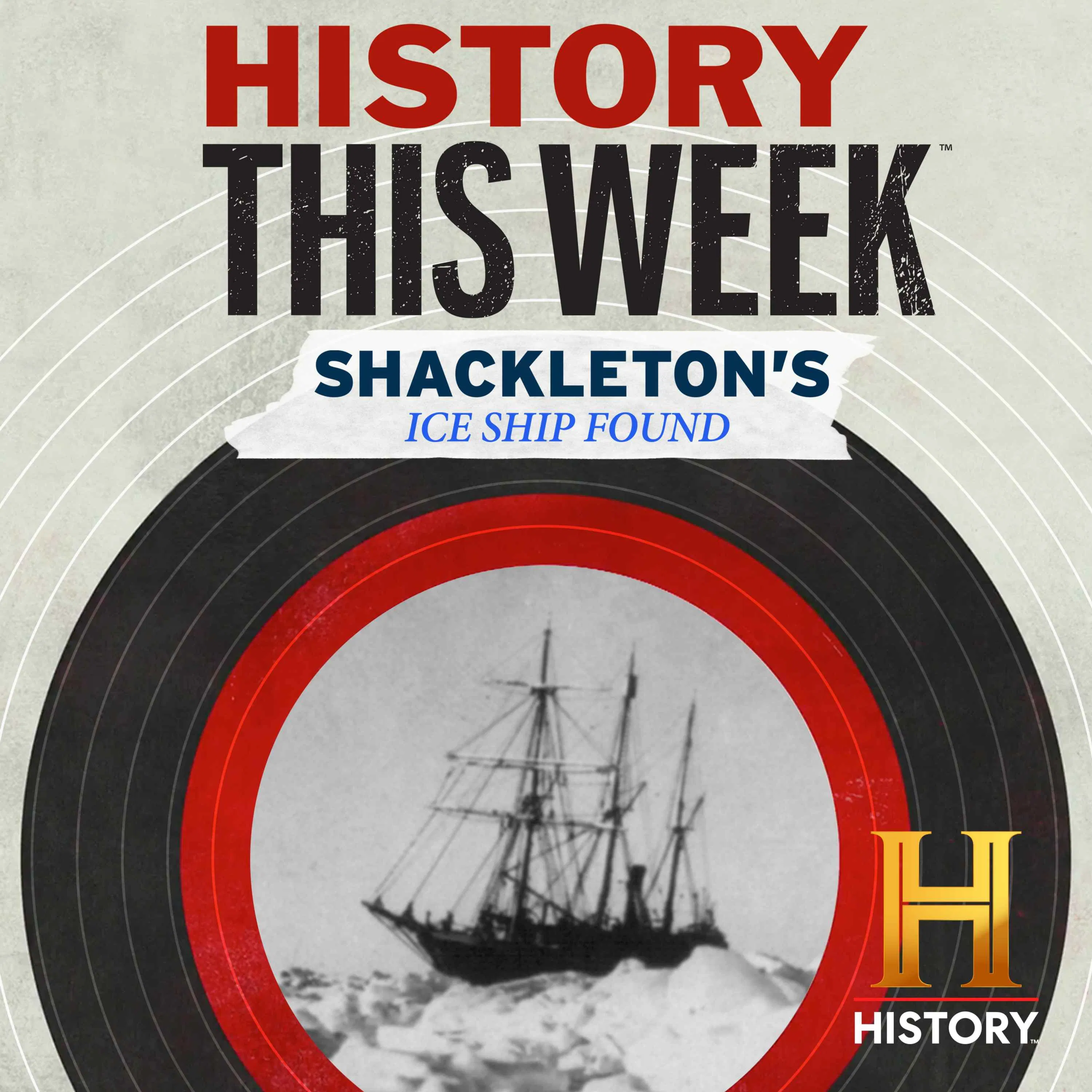
Shackleton’s Ice Ship Found
bonusMarch 5, 2022. After 107 years, explorer Ernest Shackleton’s ship, the Endurance, has been found two miles under the icy Antarctic waters. Shackleton had set out to be the first to walk across Antarctica, but ran into trouble almost immediately. The Endurance became stuck in the polar ice, which gradually crushed the ship until it sank below the surface. This sparked one of the great survival stories in history, and now that the ship has been discovered, this epic tale is once again coming to light. We sat down with Brad Borkan, an expert on the history of Antarctic exploration to understand who Shackleton was, how his mission evolved, and what we can learn from this groundbreaking discovery. Don’t forget to tune in to Shackleton’s Endurance: The Lost Ice Ship Found, Tuesday, March 22 at 10/9c on HISTORY. To learn more about listener data and our privacy practices visit: https://www.audacyinc.com/privacy-policy Learn more about your ad choices. Visit https://podcastchoices.com/adchoices
First Antiwar Teach-In
March 25, 1965. The US is bombing North Vietnam. On the University of Michigan’s campus, students and professors are gathered for a first-of-its kind protest event. They’re holding a “teach-in,” staying up all night to discuss what’s going on in Vietnam. How did the classroom become a powerful tool for protest? And what impact did this “teach-in” have in shaping the antiwar movement on college campuses—and around the world? Special thanks to our guests: Zelda Gamson, Alan Haber, Susan Harding, Richard Mann, Stan Nadel, Gayl Ness, Jack Rothman, Howard Wachtel, and Michael Zweig. Thanks also to Ellen Schrecker, author of The Lost Promise: American Universities in the 1960s, and to Greg Kinney at the Bentley Historical Library at the University of Michigan. To learn more about listener data and our privacy practices visit: https://www.audacyinc.com/privacy-policy Learn more about your ad choices. Visit https://podcastchoices.com/adchoices
A Serial Killer Helps Abolish the Death Penalty
March 20, 1953. A middle-aged man named John Christie packs up a suitcase and leaves his apartment in Notting Hill, London. No one knows where he’s gone. But a few days later, people realize why he left… a new tenant makes an unsettling discovery: bodies, hidden in the walls of the kitchen. Today: the case of serial killer John Christie. Why, decades later, are parts of his story still a mystery? And how did that very mystery play into a big change in the UK – the abolition of the death penalty? Thank you to our guests: Professor Kate Winkler Dawson, author of the book Death in the Air and the forthcoming book All That is Wicked. Jonathan Oates, author of the book John Christie of Rillington Place: Biography of a Serial Killer. And Sir Julian Knowles, author of The Abolition of the Death Penalty in the United Kingdom; How it Happened and Why it Still Matters. To learn more about listener data and our privacy practices visit: https://www.audacyinc.com/privacy-policy Learn more about your ad choices. Visit https://podcastchoices.com/adchoices
New York Goes Underground
March 12, 1888. There’s been a blizzard in New York. Wind, ice, and snow have brought the city to a halt. Stagecoaches are stuck, elevated trains are frozen. By the time the storm is over, 400 New Yorkers will die. The public outrage is severe, and many blame New York City’s faulty transportation network for the deaths. Suddenly, a solution that had been ignored in the past comes to the forefront – traveling under the earth. Today, the story of the New York City subway. How did an epic snowstorm drive the city to try a dangerous and daring idea? And why was the subway such a unique invention from the very start? Special thanks to Concetta Bencivenga, director of the New York City Transit Museum; John Morris, author of Subway: The Curiosities, Secrets, and Unofficial History of the New York City Transit System; and Clifton Hood, professor of history at Hobart and William Smith Colleges and author of 722 Miles: The Building of the Subways and How They Transformed New York. To learn more about listener data and our privacy practices visit: https://www.audacyinc.com/privacy-policy Learn more about your ad choices. Visit https://podcastchoices.com/adchoices
Claudette Colvin Doesn’t Give Up Her Seat
March 2, 1955. Claudette Colvin and her classmates are let out early from school. They hop on a bus heading toward downtown Montgomery and sit in the back section, reserved for Black riders. Before long, there’s a white woman standing in the aisle, expecting them to give up their seats. 15-year-old Colvin refuses, and she’s arrested that day—nine months before an almost identical act of defiance from activist Rosa Parks will ignite the Montgomery bus boycott and the modern Civil Rights movement. Who is Claudette Colvin? And how does her story reveal the broader picture behind a protest that would change the nation? Special thanks to our guests, Nelson Malden; Dr. Kimberley Brown Pellum, author of Black Beauties: African American Pageant Queens in the Segregated South; and Dr. Bettye Collier-Thomas, author of Jesus, Jobs, and Justice: African American Women and Religion. Thanks also to Philip Hoose, author of Claudette Colvin: Twice Towards Justice. To learn more about listener data and our privacy practices visit: https://www.audacyinc.com/privacy-policy Learn more about your ad choices. Visit https://podcastchoices.com/adchoices
Hitler Stands Trial
February 26, 1924. 10 Defendants enter a courtroom in Munich. They are being charged with an attempted coup. They tried to overthrow the government of the Weimar Republic…and almost succeeded. All eyes are on the second defendant to enter the room. When the judge reads this man’s name into the record, he identifies him as a Munich writer named Adolf Hitler. Today: Hitler’s first attempt to seize power. How did his 1923 coup fail? And why would Hitler later say that this failure was “perhaps the greatest good fortune of my life?” Thank you to Thomas Weber for speaking with us for this episode, author of the book “Becoming Hitler: The Making of a Nazi”. Thank you also to our guest Peter Ross Range, author of “1924: The Year that Made Hitler”. We also read David King’s book “The Trial of Adolf Hitler” in researching this episode–it’s a great resource if you want to learn more about this story. To learn more about listener data and our privacy practices visit: https://www.audacyinc.com/privacy-policy Learn more about your ad choices. Visit https://podcastchoices.com/adchoices
The Capitol Attack of 1861 (Replay)
bonusToday, we return to a favorite episode from Season 2 in honor of the new three-part documentary, "Abraham Lincoln", premiering on The HISTORY Channel starting Sunday, February 20th, 2022. February 13, 1861. The city of Washington DC is waiting. Bracing itself. For weeks, there have been threats that this day is going to get violent because pro-slavery voters feel the recently elected president, Abraham Lincoln, is a threat to their way of life. Today, Lincoln is supposed to be affirmed when the electoral votes are counted in the US Capitol building, but on the morning of the count, hundreds of anti-Lincoln rioters storm the building. Their goal: to stop the electoral count. What happened when a mob of anti-Lincoln rioters tried to take over the US Capitol? And how did American democracy handle the test? Thank you to our guest, Ted Widmer, distinguished lecturer at the Macaulay Honors College at CUNY and author of Lincoln on the Verge: Thirteen Days to Washington. Correction: The Emancipation Proclamation only freed enslaved people in the Confederacy, not throughout the country. To learn more about listener data and our privacy practices visit: https://www.audacyinc.com/privacy-policy Learn more about your ad choices. Visit https://podcastchoices.com/adchoices
The Lincoln County War
February 18, 1878. A group of men is leading their horses along a New Mexico mountain trail. This is the Wild West, and danger is never that far away. In fact, before they reach their destination, the leader of their group will be shot. The rest of the cowboys watch the scene unfold in horror, including a future notorious outlaw: Billy the Kid. Over their boss’s dead body, Billy and the others vow to avenge his murder. In the next five months, as much as a quarter of the county's population will be killed. How did this murder turn a community into a battlefield? And what does this conflict reveal about how we understand the Wild West? Special thanks to Gwendolyn Rogers, president of the Lincoln County Historical Society, and Paul Hutton, whose most recent book, The Apache Wars, tells the story of another war that played out during this time in the Southwest. To learn more about listener data and our privacy practices visit: https://www.audacyinc.com/privacy-policy Learn more about your ad choices. Visit https://podcastchoices.com/adchoices
Black Baseball Goes Pro
Feb 13, 1920. For over thirty years, Black baseball players have been locked out of the major leagues. So on this day in Kansas City, Rube Foster, a former pitcher and now a team owner, is trying to make his own league just for Black players. He has gathered owners of other Black baseball teams, who currently play each other in one-off matchups or face independent teams in random games around the country. But Foster wants them to get organized, and soon, the Negro National League would be born. But up to this point, how did Black baseball survive after segregation became the unofficial policy of the major leagues? And how did Black players, owners, and managers join together to create something that no baseball fan could ignore? To learn more about listener data and our privacy practices visit: https://www.audacyinc.com/privacy-policy Learn more about your ad choices. Visit https://podcastchoices.com/adchoices
The Great Comic Book Scare
February 4, 1955. In a New York courtroom, the Comics Czar takes the stand. He’s in charge of enforcing a new code, meant to keep comic books from corrupting America’s youth, and he’s here to prove that his work has cleaned up the industry. But that afternoon, a noted psychologist named Fredric Wertham argues that his work has not nearly gone far enough. When the hearing comes to a close, the committee is left to decide: what is the future of the comic book? Why did one of the country’s leading psychologists see them as a major threat to American children? And what can the Great Comic Book Scare teach us about moral panics? Special thanks to our guests, David Hajdu, author of The Ten-Cent Plague, and Jeremy Dauber, author of American Comics. To learn more about listener data and our privacy practices visit: https://www.audacyinc.com/privacy-policy Learn more about your ad choices. Visit https://podcastchoices.com/adchoices
Surviving Auschwitz (Replay)
History repeats itself this week with an episode from the HISTORY This Week archives: January 27, 1945. Four Russian soldiers arrive at Auschwitz, one of Nazi Germany's largest concentration and extermination camps. The soldiers have come to liberate the survivors inside, but they are not met with the celebration and rejoicing they expect. On this day, what did liberation actually mean for its survivors - and is the full story being forgotten? Thank you to Mindu Hornick and Bill Harvey for sharing their personal story of surviving Auschwitz and to Fulwell 73 for helping make it happen. Thank you to Jeremy Dronfield, author of the Boy Who Followed His Father into Auschwitz, and to the work of Robert Jan Van Pelt, curator for the international exhibit, "Auschwitz. Not Long Ago. Not Far Away." Archival material accessed at United States Holocaust Memorial Museum, courtesy of The Steven Spielberg Jewish Film Archives of the Hebrew University of Jerusalem, United States Holocaust Memorial Museum, courtesy of National Archives & Records Administration and United States Holocaust Memorial Museum, gift of Thomas P. Headen. To learn more about listener data and our privacy practices visit: https://www.audacyinc.com/privacy-policy Learn more about your ad choices. Visit https://podcastchoices.com/adchoices
The Apple Ad That Changed the World (Replay)
History repeats itself this week with an episode from the HISTORY This Week archives: January 22, 1984. Apple launches the very first Macintosh computer, unveiling the machine to the public in a showstopping Super Bowl commercial. Not only was the ad itself revolutionary, but the product it launched almost single-handedly brought computers into the mainstream. The Macintosh PC would change technology, and the world as we know it forever. Special thanks to Alex Soojung-Kim Pang, author and producer of the “Making the Macintosh” digital archive. To learn more about listener data and our privacy practices visit: https://www.audacyinc.com/privacy-policy Learn more about your ad choices. Visit https://podcastchoices.com/adchoices
The Great Boston Molasses Flood (Replay)
History repeats itself this week with an episode from the HISTORY This Week archives: January 15, 1919. Boston PD receives a call: “Send all available rescue personnel...there's a wave of molasses coming down Commercial Street." The bizarre flood decimated Boston's North End. How did it happen? And why does it still affect us all today? Special thank you to our guest Stephen Puleo, author of Dark Tide: The Great Boston Molasses Flood of 1919. To learn more about listener data and our privacy practices visit: https://www.audacyinc.com/privacy-policy Learn more about your ad choices. Visit https://podcastchoices.com/adchoices
Declaring War on Poverty (Replay)
History repeats itself this week with an episode from the HISTORY This Week archives: January 8, 1964. In his State of the Union address, Lyndon Johnson unveils his War on Poverty, an effort to tackle subpar living conditions and create jobs across the United States. Johnson discovers that declaring war—even one on an idea—always comes with great costs. Why did LBJ pick poverty as one of his major initiatives? And what issues did he face in waging this war? This episode features Doris Kearns Goodwin (presidential historian and executive producer of The HISTORY Channel’s documentary series, Lincoln and Roosevelt) and Guian McKee (associate professor in Presidential Studies at UVA’s Miller Center)." To learn more about listener data and our privacy practices visit: https://www.audacyinc.com/privacy-policy Learn more about your ad choices. Visit https://podcastchoices.com/adchoices

S2 Ep 53Best Stories of 2021
In this year-end episode, Sally interviews the rest of the HISTORY This Week team about their favorite stories of the year and the most interesting information that didn’t make it into the episodes. We’ll be bringing you some of our favorite classic History This Week episodes throughout the month of January and will be back with season three in February 2022. Episode links: Watergate from the Inside More Than a Home Run Pop Music Pirates To learn more about listener data and our privacy practices visit: https://www.audacyinc.com/privacy-policy Learn more about your ad choices. Visit https://podcastchoices.com/adchoices

S2 Ep 52Twenty Thousand Hertz: The Gift
December 24, 1906. It’s Christmas Eve, but inventor Reginald Fessenden is working. Tonight, instead of sending a typical radio message in morse code, he broadcasts something new: music. It's the first in a series of breakthroughs in audio reproduction—a story that takes us from World War II home radios to the acoustics lab of another pioneer: Dr. Amar Bose. How did we get from tapped dots and dashes to the high-quality speakers we use today? This episode comes from the podcast Twenty Thousand Hertz. You can listen to more episodes of Twenty Thousand Hertz at https://apple.co/3pWdq29. To learn more about listener data and our privacy practices visit: https://www.audacyinc.com/privacy-policy Learn more about your ad choices. Visit https://podcastchoices.com/adchoices
S2 Ep 51Pursuing Trivia with Ken Jennings
(EPISODE 100!) December 15, 1979. Two Canadian journalists are hanging out, drinking a beer, when they come up with an idea for a new game to test random knowledge – Trivial Pursuit. But this is far from the first time trivia has been gamified, and to explore the history behind these quizzing contests, we turned to the expert: Jeopardy! legend Ken Jennings. What are the origins of trivia? And what is it about recalling trivial facts that keeps people coming back for more? Special thanks to Ken Jennings, author of Brainiac: Adventures in the Curious, Competitive, Compulsive World of Trivia Buffs and the host of the podcast Omnibus. Thanks also to Professor Peter Burke, author of What is the History of Knowledge? Hosted on Acast. See acast.com/privacy for more information. To learn more about listener data and our privacy practices visit: https://www.audacyinc.com/privacy-policy Learn more about your ad choices. Visit https://podcastchoices.com/adchoices
S2 Ep 50How Lincoln Almost Lost it All
December 11, 1862. Union Army engineers are urgently constructing a bridge, one that will carry soldiers into the town of Fredericksburg, Virginia, a Confederate stronghold. Union leaders are banking on the element of surprise and are desperate for a victory. But, by the time it’s over, more than a thousand Union soldiers will perish in one of the worst defeats of the Civil War. How does the failed Battle of Fredericksburg threaten the future of the Emancipation Proclamation and Abraham Lincoln’s very presidency? And how does Lincoln manage to save both? Special thanks to our guest Professor John Matteson, author of "A Worse Place Than Hell: How the Civil War Battle of Fredericksburg Changed a Nation." Hosted on Acast. See acast.com/privacy for more information. To learn more about listener data and our privacy practices visit: https://www.audacyinc.com/privacy-policy Learn more about your ad choices. Visit https://podcastchoices.com/adchoices
S2 Ep 49A Secret Mission to Cross the Pacific
December 1, 1564. Spanish vessels left a secret port in Mexico about two weeks ago. Their goal: to sail across the Pacific and back, charting a new route for international trade, and giving Spain an edge against its chief colonial rival, Portugal. But today, when a storm hits, the smallest ship is separated from the rest of the fleet. Now, that ship, the San Lucas, is on its own. The following year, when the San Lucas makes it back to Mexico, against all odds, its pilot—a Black mariner—is accused of treason. How did the San Lucas—the smallest ship in the fleet—complete a near-impossible journey that would connect the world? And how did the trailblazing mariner Lope Martín get erased from the story? Special thanks to our guest, Andrés Reséndez, author of Conquering the Pacific: An Unknown Mariner and the Final Great Voyage of the Age of Discovery. Hosted on Acast. See acast.com/privacy for more information. To learn more about listener data and our privacy practices visit: https://www.audacyinc.com/privacy-policy Learn more about your ad choices. Visit https://podcastchoices.com/adchoices
S2 Ep 48Thanksgiving Reconsidered
November 26, 1970. In Plymouth, Massachusetts, on the 350th anniversary of the Pilgrims’ arrival, protestors gather under a statue of Massasoit, the Wampanoag leader who had made peace with the Pilgrims, and partook in the legendary Thanksgiving meal. This protest was organized by Wamsutta Frank James, a Wampanoag activist who wanted to draw attention to the full story of Thanksgiving – a story of fear, violence, and oppression that spanned generations. America’s reckoning with the truth of Thanksgiving, James argued, would empower indigenous people to fight for their equal rights. This protest – a National Day of Mourning – continues to this day, now led by James’s granddaughter. So what is the true story of Thanksgiving? And why is it so important for us to remember? Special thanks to Kisha James, Paula Peters, and David Silverman, author of This Land Is Their Land: The Wampanoag Indians, Plymouth Colony, and the Troubled History of Thanksgiving. Hosted on Acast. See acast.com/privacy for more information. To learn more about listener data and our privacy practices visit: https://www.audacyinc.com/privacy-policy Learn more about your ad choices. Visit https://podcastchoices.com/adchoices
S2 Ep 47Defying Gravity and Monarchy
November 21, 1783. The garden at the Chateau de la Muette is full of expectant Parisians, looking up at the sky. They’re waiting to watch the first two human beings ever take free, untethered flight. After a gust of wind nearly derails the entire operation, some volunteer seamstresses help repair the 75 foot tall hot air balloon. Finally, two Frenchmen step into their wicker baskets and take off. This first human balloon flight is more than just a landmark in aviation history. For the crowds of huddled French masses looking up from below, it's a revolution in and of itself. How did two sons of a papermaker create the first successful aviation device in history? And how did the balloon come to symbolize the French Revolution? Special thanks to our guests, Tom Crouch, author of Lighter Than Air: An Illustrated History of Balloons and Airships, and Mi Gyung Kim, author of The Imagined Empire: Balloon Enlightenments in Revolutionary Europe. Hosted on Acast. See acast.com/privacy for more information. To learn more about listener data and our privacy practices visit: https://www.audacyinc.com/privacy-policy Learn more about your ad choices. Visit https://podcastchoices.com/adchoices
S2 Ep 46The Last Battle of the First World War
November 11, 1918. At exactly 11 AM local time, the shooting stops. It’s eerily quiet for the first time in a long time. World War I has finally come to an end today after Germany and the Allied nations signed an armistice not long before. The final battle of the war, known today as the Meuse-Argonne Offensive, saw an unexpected turn of events and a surprising victory. Today: the battle that ended the first world war. How did an inexperienced American army help turn the tides? And how did the Meuse-Argonne Offensive change the way America would fight future wars? Thank you to our guest, Professor Mitchel Yockelson, author of “Forty-Seven Days: How Pershing's Warriors Came of Age to Defeat the German Army in World War I.” Primary source letter from army doctor Stanhope Bayne-Jones can be found on the website of the Historical Collections of the US National Library of Medicine. Hosted on Acast. See acast.com/privacy for more information. To learn more about listener data and our privacy practices visit: https://www.audacyinc.com/privacy-policy Learn more about your ad choices. Visit https://podcastchoices.com/adchoices

S2 Ep 45Remember, Remember the 5th of November
November 4, 1605. The king's men are conducting a search. They're making their way through the storerooms and cellars and vaults that cluster around and beneath the Palace of Westminster. They've gotten a tip in the form of a mysterious, anonymous letter that something bad is going to happen at the House of Lords tomorrow. And shortly before midnight, they find a ton of firewood, a suspicious man, and 36 barrels of gunpowder. What brought a group of conspirators together in a plot to kill the king? And in the 400 years since, how has an annual celebration of the failed plot, and the story of one of the plotters—Guy Fawkes—come to stand for something else entirely? Special thanks to our guests: James Sharpe, author of Remember Remember: A Cultural History of Guy Fawkes Day, and Mark Nicholls, author of Investigating Gunpowder Plot. Hosted on Acast. See acast.com/privacy for more information. To learn more about listener data and our privacy practices visit: https://www.audacyinc.com/privacy-policy Learn more about your ad choices. Visit https://podcastchoices.com/adchoices