
History on Fire
144 episodes — Page 3 of 3

S1 Ep 42EPISODE 42: Joan of Arc (Part 4)
“It is true that I wished and still wish to escape, as is lawful for any captive or prisoner.” Joan of Arc “I have greater fear of failing my voices in saying something that displeases them than I have of answering you.” Joan of Arc addressing a group of theologians in charge of deciding whether to burn her alive “Tear me limb from limb. I would rather have you cut my throat than tell you all I know.” Joan of Arc “I am the vine; you are the branches. Whoever abides in me and I in them, will produce much fruit. For apart from me you can do nothing. If anyone does not abide in me he is thrown away like a branch and withers; and the branches are gathered, thrown into the fire, and burned.” Jesus quoted in John 15:5-6 “There had been unjust ecclesiastical trials before, but Joan’s was one of the most unjust trial ever undertaken in any ecclesiastical court.” Timothy Wilson-Smith By 1429, the heir to the French throne was about to give up and flee in exile. The English and their Burgundian allies controlled huge parts of the country. With Orleans likely to fall in a not too distant future, the path was open for the English to conquer the rest of France. It looked like the game was up for him. As much as he tried, he couldn’t see any logical path to victory. But little did he know that help was on its way—a kind of help that didn’t seem to be logical, reasonable or likely. Help was coming in the form of an illiterate teenage peasant—a female at that—who was going to change his fortunes; a young woman who through sheer willpower would radically change the course of the war. She arrived at the royal court during France’s darkest hour with news that God had sent her to lift the siege of Orleans, and make sure the heir to the throne would be crowned King of France. The young woman was Joan of Arc, and she was one of the most unusual individuals in history. At 13 years old, her life was turned upside down when she began hearing voices and having visions of angelic figures delivering her messages. The voices told her that no one on earth—neither knight nor king—could restore the kingdom of France. No one could—no one that is… except for her. In this final episode of this four-part series, Joan challenges the law of gravity and loses, King Charles’ betrayal, Bishop Pierre Cauchon lacking the guts to be a proper savage, 70 clerics vs. a teenage girl, Cauchon doing his best Darth Vader impersonation, institutions vs. mystics, food poisoning & a trip to the torture chambers, forcing a confession, entrapment, burning at the stake, impersonators, the retrial, the end of the Hundred Years’ War, surviving an assassination attempt thanks to layers of fat, Joan becoming a saint, and the mystery of Joan of Arc’s visions. Learn more about your ad choices. Visit megaphone.fm/adchoices

S1 Ep 41EPISODE 41: Joan of Arc (Part 3)
“We know that everything that she has said has come to pass, that her words are always confirmed by the event—she has in truth come to achieve great things in this world.” Antonio Morosini “Go and camp for today, because it is quite late. But tomorrow, at the pleasure of God and Our Lady, we will look more closely at you.” Joan of Arc By 1429, the heir to the French throne was about to give up and flee in exile. The English and their Burgundian allies controlled huge parts of the country. With Orleans likely to fall in a not too distant future, the path was open for the English to conquer the rest of France. It looked like the game was up for him. As much as he tried, he couldn’t see any logical path to victory. But little did he know that help was on its way—a kind of help that didn’t seem to be logical, reasonable or likely. Help was coming in the form of an illiterate teenage peasant—a female at that—who was going to change his fortunes; a young woman who through sheer willpower would radically change the course of the war. She arrived at the royal court during France’s darkest hour with news that God had sent her to lift the siege of Orleans, and make sure the heir to the throne would be crowned King of France. The young woman was Joan of Arc, and she was one of the most unusual individuals in history. At 13 years old, her life was turned upside down when she began hearing voices and having visions of angelic figures delivering her messages. The voices told her that no one on earth—neither knight nor king—could restore the kingdom of France. No one could—no one that is… except for her. Ok, so we have a possibly insane girl hearing voices, This is hardly the stuff that makes the history books. At best, this would be an interesting case study for the history of mental illness. But that’s not what happened here—because the girl and her voices did change the course of the Hundred Years War between France and England. The voices propelled this young woman away from the typical existence of farm girls in the 1400s, and transformed her into a force of nature who embraced a heroic and tragic destiny that was entirely beyond what anyone from her gender, social class, and age could legitimately expect. According to logic and common sense, none of the things that happened in our story should have been able to happen. A untrained peasant leading an army of knights? A young woman succeeding where the entire French nobility had failed? What she accomplished would have been exceptional if done by an aristocratic, seasoned male leader. But it seems downright impossible for someone like her. The world she lived in was hyper patriarchal and very class conscious, so on the surface there should have been no chance whatsoever that a young peasant girl could pull it off. She belonged to the wrong gender, wrong social class, and wrong age to achieve what she dreamed of. And yet she did. In this third episode of this four-part series, we see Joan turning around a routing army with only the power of her voice, saving the Duke of Alencon, the alliance with Arthur de Richemont, how a gigantic stag helped the French crush the English army, apocalyptic preachers, the coronation of Charles VII, the dilemma of what to do when you have achieved everything and you are still only a teenager, rebelling against the King, failure at Paris, resurrecting the dead, a suicide mission, the day Joan was captured. Learn more about your ad choices. Visit megaphone.fm/adchoices

S1 Ep 40EPISODE 40: Joan of Arc (Part 2)
“Help me, Obi-Wan Kenobi. You’re my only hope.” Star Wars “… No one else, neither a king nor a duke nor the daughter of the king of Scotland, nor any other who can recover the kingdom of France, and he will have no help, if not through me…” Joan of Arc “You know as little of war as that Hobbit. When the fear takes him, and the blood, and the screams, and the horrors of battle take hold, do you think he would stand and fight? He would flee. And it would be right to do so. War is the province of Men, Éowyn.” Eomer in The Lord of the Rings “I do not permit a woman to teach or to assume authority over a man; she is to keep silent.” St Paul “King of England, do justly by the King of Heaven. Return to the Maid sent by God to restore the royal blood the keys of all the good cities that you have taken and violated in France… King of England, if you do not do this, I am Chef de Guerre [Commander of War], and in whatever place I shall find your people in France, I will make them flee whether they want to or not; and if they will not obey I will have them all killed. I am sent here by God, the King of Heaven, to drive you, body for body, out of all France. If you don’t leave, we will make so great a war cry that none like it has been heard in France in a thousand years.” Joan of Arc “You, Duke of Bedford, the Maid begs you not to make her destroy you.” Joan of Arc By 1429, the heir to the French throne was about to give up and flee in exile. The English and their Burgundian allies controlled huge parts of the country. With Orleans likely to fall in a not too distant future, the path was open for the English to conquer the rest of France. It looked like the game was up for him. As much as he tried, he couldn’t see any logical path to victory. But little did he know that help was on its way—a kind of help that didn’t seem to be logical, reasonable or likely. Help was coming in the form of an illiterate teenage peasant—a female at that—who was going to change his fortunes; a young woman who through sheer willpower would radically change the course of the war. She arrived at the royal court during France’s darkest hour with news that God had sent her to lift the siege of Orleans, and make sure the heir to the throne would be crowned King of France. The young woman was Joan of Arc, and she was one of the most unusual individuals in history. At 13 years old, her life was turned upside down when she began hearing voices and having visions of angelic figures delivering her messages. The voices told her that no one on earth—neither knight nor king—could restore the kingdom of France. No one could—no one that is… except for her. In this second episode of this four-part series, we see guest appearances by Luke Skywalker from Star Wars, Miracle Max from The Princess Bride, Tyrion Lannister from Game of Thrones, Eomer from The Lord of the Rings. Among the key topics, Joan and her voices; Joan’s father planning on drowning his daughter and winning the Taliban father of the year award; Joan’s meeting with the Dauphin; Taoism and victory in battle; the letter to the King of England; the disturbing tale of Gilles de Rais; Joan takes an arrow to the chest, and gets back into battle; the miracle at Orleans. Learn more about your ad choices. Visit megaphone.fm/adchoices

S1 Ep 39EPISODE 39: Joan of Arc (Part 1)
“No person in the Middle Ages, male or female, has been the subject of more historical studies than Joan of Arc.” Kelly Devries “The life of Joan is such a flagrant beating of the odds that no facts sufficiently explain the course of it. She was born during one of the most corrupt, demoralized periods of French history; she is considered a religious and military hero, but she had neither religious nor military training.” Mary Gordon By 1429, the heir to the French throne was about to give up and flee in exile. The English and their Burgundian allies controlled huge parts of the country. With Orleans likely to fall in a not too distant future, the path was open for the English to conquer the rest of France. It looked like the game was up for him. As much as he tried, he couldn’t see any logical path to victory. But little did he know that help was on its way—a kind of help that didn’t seem to be logical, reasonable or likely. Help was coming in the form of an illiterate teenage peasant—a female at that—who was going to change his fortunes; a young woman who through sheer willpower would radically change the course of the war. She arrived at the royal court during France’s darkest hour with news that God had sent her to lift the siege of Orleans, and make sure the heir to the throne would be crowned King of France. The young woman was Joan of Arc, and she was one of the most unusual individuals in history. At 13 years old, her life was turned upside down when she began hearing voices and having visions of angelic figures delivering her messages. The voices told her that no one on earth—neither knight nor king—could restore the kingdom of France. No one could—no one that is… except for her. Ok, so we have a possibly insane girl hearing voices, This is hardly the stuff that makes the history books. At best, this would be an interesting case study for the history of mental illness. But that’s not what happened here—because the girl and her voices did change the course of the Hundred Years War between France and England. The voices propelled this young woman away from the typical existence of farm girls in the 1400s, and transformed her into a force of nature who embraced a heroic and tragic destiny that was entirely beyond what anyone from her gender, social class, and age could legitimately expect. According to logic and common sense, none of the things that happened in our story should have been able to happen. A untrained peasant leading an army of knights? A young woman succeeding where the entire French nobility had failed? What she accomplished would have been exceptional if done by an aristocratic, seasoned male leader. But it seems downright impossible for someone like her. The world she lived in was hyper patriarchal and very class conscious, so on the surface there should have been no chance whatsoever that a young peasant girl could pull it off. She belonged to the wrong gender, wrong social class, and wrong age to achieve what she dreamed of. And yet she did. In this first episode of this four-part series, we tackle: -Joseph Campbell and the Hero’s Journey -The Passion of Joan of Arc by Carl Theodor Dreyer -How a baby’s gender caused the Hundred Years War -Black Death & pillaging mercenaries -The Mad King -John the Fearless and his political murders -Agincourt, 1415 -The Dauphin and the bridge = Michael Corleone and the restaurant -Civil wars and English invasions -The siege at Orleans begins Learn more about your ad choices. Visit megaphone.fm/adchoices
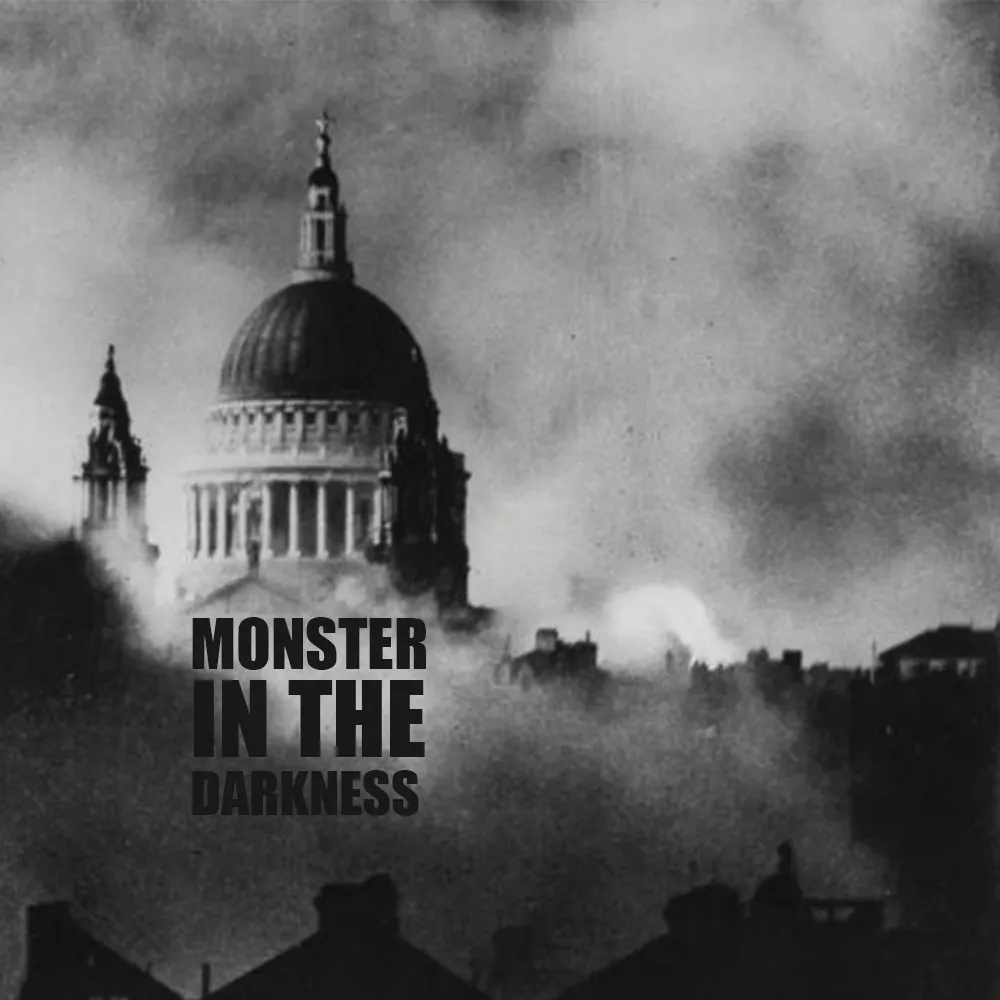
S1 Ep 38EPISODE 38 Monster in the Darkness
“Not since the panic-ridden days in 1888, when Jack the Ripper was abroad in the East End, had London known such a reign of terror as that which existed in this wartime February...” Scotland Yard Chief Superintendent Fred Cherrill What I am going to tell you is one of the craziest serial killer stories that you have never heard of. And there are very good reason why most people have never heard of this. In 1942, Death stalked London. Death came from the sky in the form of German bombs. And on the ground it came in the form of the blackout ripper—this is the name by which the monster came to be known. But publicizing the infamous activities of the Blackout Ripper is not something that was in the best interest of the nation at that time. The reaction of the citizens of London in the face of the German Blitz, the bombing campaign unleashed by the German Luftwaffe, has always been portrayed in heroic terms. The traditional version tells us that tough British people took the bombing in strides. They’d get bombed all night only to emerge with a smile in the morning ready to go to work as if nothing had happened. In part this was certainly true, many British people displayed incredible courage and resilience in the face of the German attacks. And this was a great propaganda weapon for the British government. It allowed them to tell Germany ‘your bombs can’t shake our resolve. They are having no effect on us, so feel free to stop any time you want and spare yourself further embarrassment.’ There clearly is something powerful in the ability to take your enemy’s best shot and smile back at them. It discourages them, and forces them to reconsider their strategy. So, of course, the last thing you want is to let them know that their strikes are hurting you. If you were to admit that the blackout is giving rise to a huge black market, if you were to talk too loudly about the doubling of the murder rate in your city, if you were to discuss how the bombing campaign indirectly gave a perfect cover for an incredibly brutal serial killer, then it’d be like admitting that bombs were working in opening fissures in British society. And if you were to admit that, then you could be sure that the bombs would keep on falling. And thousands would keep on dying. So, the Blackout Ripper was not just any other serial killer. He was a potential propaganda weapon in the hands of the enemy. For this reason, he had to be stopped, and stopped quickly. And better yet, he should be talked about as little as humanly possible. So, if you are wondering why his Ripper-colleague, Jack the Ripper, is pretty much a household name, whereas few have heard of the Blackout Ripper, you don’t have to wonder no more. The context of WWII made burying this tale a wartime necessity. This is simply not a story that anyone in Britain at the time had any interest in publicizing. Learn more about your ad choices. Visit megaphone.fm/adchoices
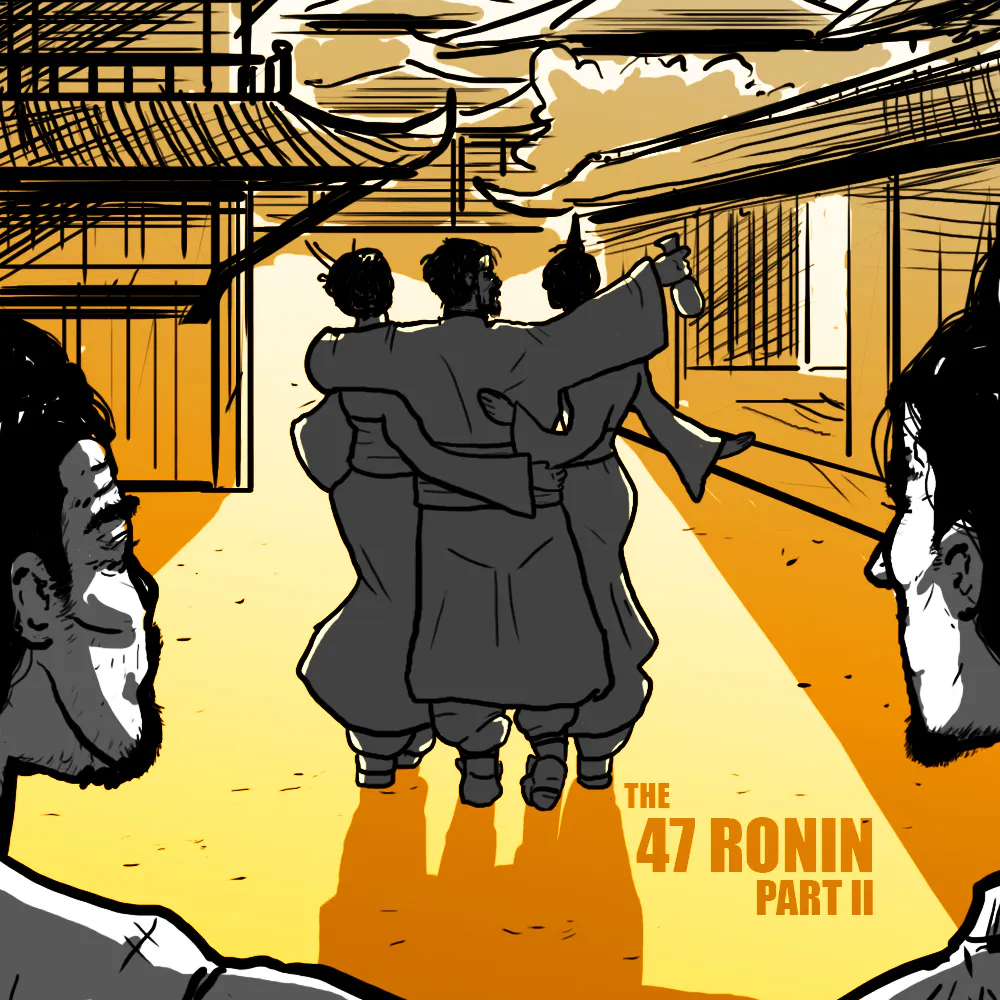
S1 Ep 37EPISODE 37 The 47 Ronin (Part 2)
“Among other things, the Way of the Samurai requires that he realize that something may occur at any moment to test the depth of his resolution, and day and night he must sort out his thought and prepare a line of action. Depending on the circumstances, he may win or lose. But avoiding dishonor is quite a separate consideration from winning or losing.” Hagakure “It would not befit a samurai wife to shed sorrowful tears, so please be strong. Of course I will miss you, but this is what a warrior must do.” Kamisaki Norisuke The tale of the 47 Ronin is one of the most renowned revenge tales to ever come out of Japan. It is the subject of countless books, plays, and movies. It is also a story that has ignited never-ending debates. Some people argue that the 47 Ronin were paragons of virtue—perfect embodiments of the loyalty and honor that should be expected from the samurai. They offered the answer to the riddle that was plaguing the samurai at the beginning of the 1700s: what does being a member of a warrior class at a time of enduring peace? Other people instead look at the same story and walk away feeling like the 47 Ronin were violent thugs animated by questionable motives. In this two-part series of History on Fire, we dive deep into legend & history to find answers. In this episode: -The conflict between the author of the Hagakure and the 47 Ronin -Oishi’s long con -Zen master Hakuin and social reputation -Cutting family ties and getting ready to die -The raid in the snow -Giving a pep talk to a guy trying to cut your head off Learn more about your ad choices. Visit megaphone.fm/adchoices
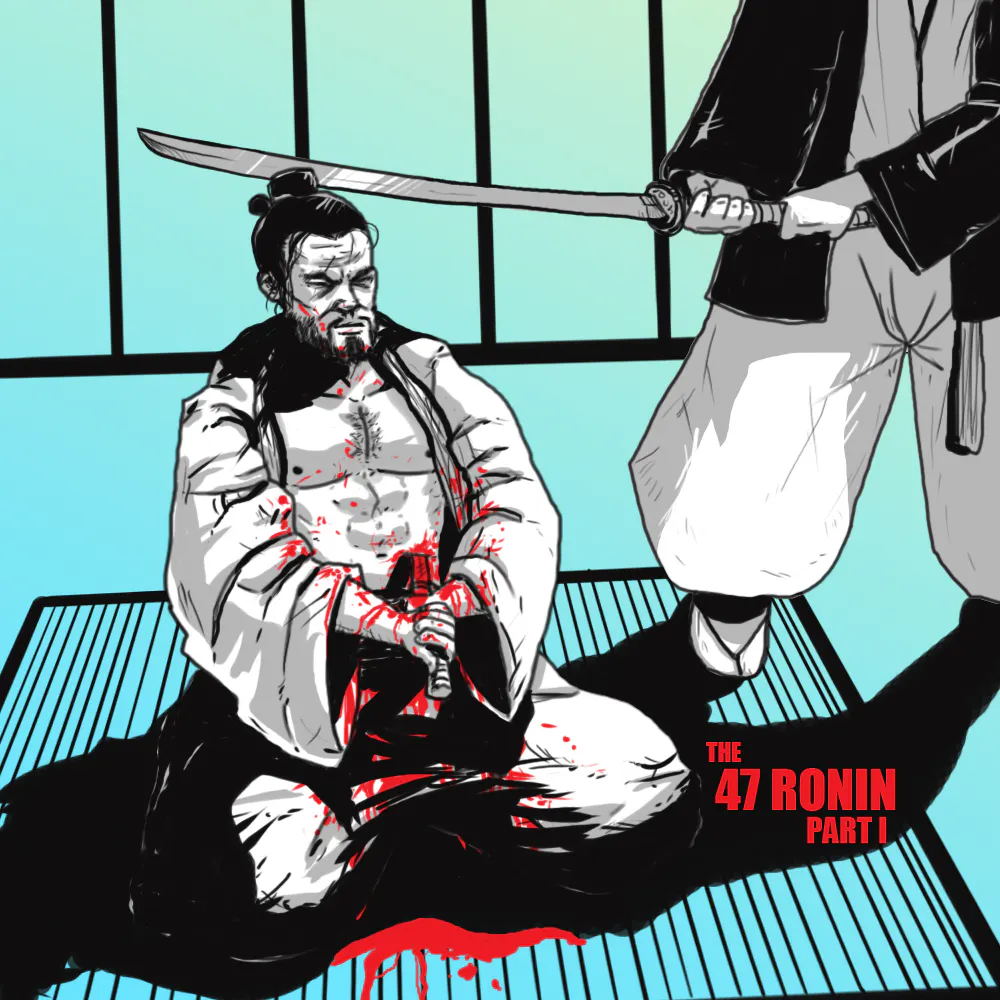
S1 Ep 36EPISODE 36 The 47 Ronin (Part 1)
“Death poems Are a delusion. You just die.” Zen monk Kanzawa Toko The tale of the 47 Ronin is one of the most renowned revenge tales to ever come out of Japan. It is the subject of countless books, plays, and movies. It is also a story that has ignited never-ending debates. Some people argue that the 47 Ronin were paragons of virtue—perfect embodiments of the loyalty and honor that should be expected from the samurai. They offered the answer to the riddle that was plaguing the samurai at the beginning of the 1700s: what does being a member of a warrior class at a time of enduring peace? Other people instead look at the same story and walk away feeling like the 47 Ronin were violent thugs animated by questionable motives. In this two-part series of History on Fire, we dive deep into legend & history to find answers. In this episode: -A crash course in Japanese history -The transformation of the status of the samurai -The curious institution of seppuku -Ritual disembowelment as a way to say ‘sorry’ -Death poems -The ‘Kaishakunin’—a pal who would cut your head off to spare you the prolonged agonies of ritual disembowelment -The “Dog Shogun” -Asano Naganori: “Given to pleasure in preference of the sober business of government.” -The consequences of pulling a blade inside the Shogun’s palace -Bonus revenge story: two angry sisters against a samurai Learn more about your ad choices. Visit megaphone.fm/adchoices
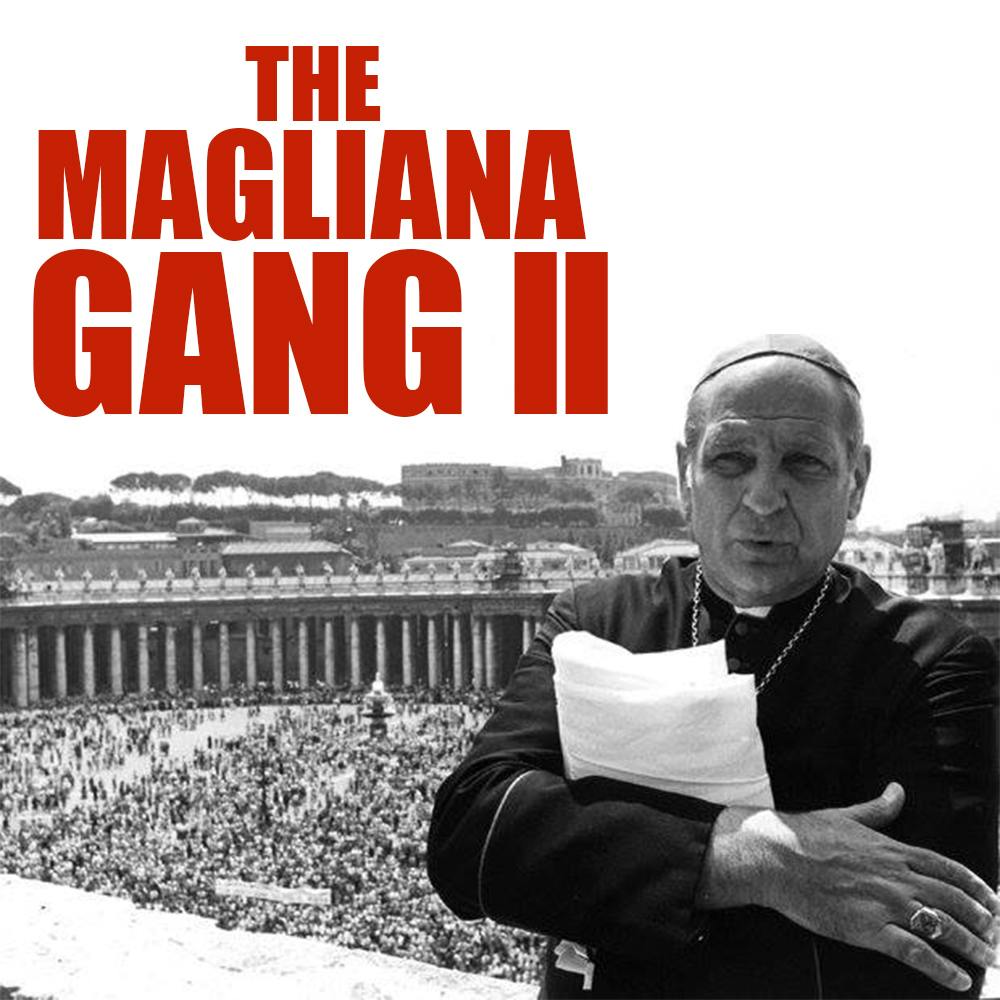
S1 Ep 35EPISODE 35 The Magliana Gang (Part 2)
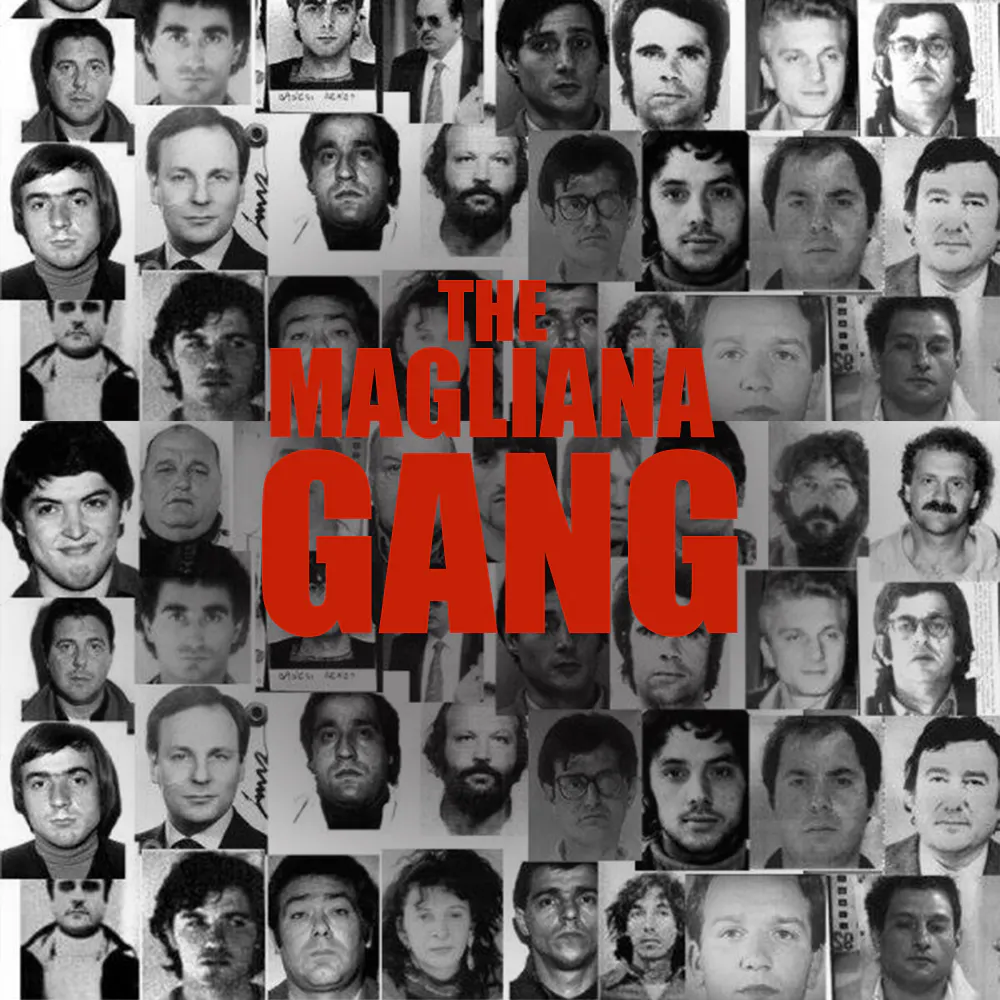
“There was money that wasn’t coming back and the choice was between leaving some cardinal dead on the street or to strike someone close to the Pope. We chose the second path.” Antonio Mancini “We of the Magliana gang were street bandits. We loved robberies, without asking anyone’s permission, without compromises. I wanted a Ferrari? One hit and I’d buy it. Cops would take it from me? Another robbery and I’d buy it again. I enjoyed all my money. De Pedis instead would buy night clubs, restaurants, houses. He was the boss of Campo dei Fiori.” Antonio Mancini “Of course you realize, this means war!” Bugs Bunny This series is about the rise of a street gang that took over Rome in the 1970s and 1980s. The Magliana gang was not just one of many criminal organizations who operated in Italy. Among their business partners, they counted Italy’s most important politicians, bankers, secret services, and possibly the Vatican itself. The gang left an indelible mark on Italian history. The story of their rise to power and of the heyday of their rule truly is stranger than fiction. It’s the kind of story that makes you think that the Godfather 3 perhaps was a documentary after all. There are lots of books and documentaries about this story but they are nearly all in Italian, so it looks like I’m your man if you wanna hear this story in English—or whatever approximation of English I speak. In this episode: -Some disturbing glimpses at how power operates away from the spotlight -Corrado Carnevale “The Sentence Slayer”—the Supreme Court Justice most loved by the Mafia -Fascist psychiatrist Aldo Semerari loses his head (in more ways than one) -How the killing of journalist Mino Pecorelli was probably connected to one of Italy’s most powerful politicians -The death of Franco Giuseppucci and the revenge war it ignited -If life is a box of chocolates, Nicolino Selis got a very bad chocolate -Abbruciati and the Banco Ambrosiano shootout just 1/3 of a mile from where I grew up -Why banking for the Vatican is not good for your health: Michele Sindona and Roberto Calvi -The Vatican Bank, money laundering for the Mafia, anti-communism and missing money -The split in the gang: Testaccini vs. Magliana -The Emanuela Orlandi kidnapping -The Magliana internal war: Toscano, De Pedis, and informants -Cooperative vs. competitive systems Learn more about your ad choices. Visit megaphone.fm/adchoices
S1 Ep 34EPISODE 34 The Magliana Gang (Part 1)
“A lifetime serving one machine Is ten times worse than prison” The Clash (from the song Bankrobber) “We were treated like movie stars with muscle. We had it all, just for the asking… Anything I wanted was a phone call away. Free cars. The keys to a dozen hideout flats all over the city…When I was broke, I would go out and rob some more. We ran everything. We paid off cops. We paid off lawyers. We paid off judges. Everybody had their hands out. Everything was for the taking.” From the movie Goodfellas “Drugs are power” Antonio Mancini This series is about the rise of a street gang that took over Rome in the 1970s and 1980s. The Magliana gang was not just one of many criminal organizations who operated in Italy. Among their business partners, they counted Italy’s most important politicians, bankers, secret services, and possibly the Vatican itself. The gang left an indelible mark on Italian history. The story of their rise to power and of the heyday of their rule truly is stranger than fiction. It’s the kind of story that makes you think that the Godfather 3 perhaps was a documentary after all. There are lots of books and documentaries about this story but they are nearly all in Italian, so it looks like I’m your man if you wanna hear this story in English—or whatever approximation of English I speak. In this episode, we’ll see one of bloodiest gangsters in the late 20th century being buried among Cardinals; why law-abiding citizens are fascinated with gangsters; the genesis of the Banda della Magliana; the kidnapping of the Duke Massimiliano Grazioli Lante della Rovere; how the gang took over Rome; the gang becoming the liaison to the criminal underworld for Church and State; the story of The Years of Lead; Italian Prime Ministers being kidnapped by Communist guerrillas; the killing of Franchino Nicolini, and much more. Learn more about your ad choices. Visit megaphone.fm/adchoices
S1 Ep 33EPISODE 33 On Good and Evil: From My Lai to Sand Creek
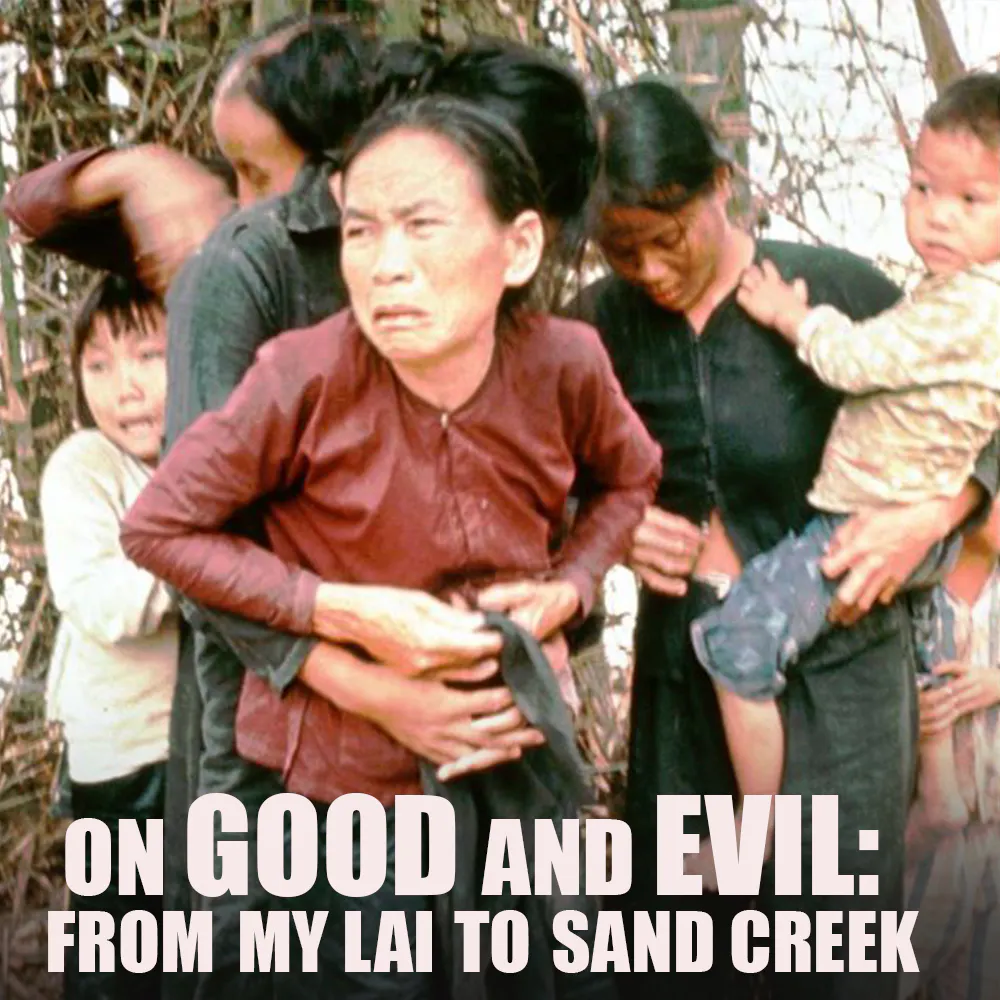
“Most people are not evil. Most people are weak. And weakness is fertile ground where evil can thrive.” DB "Every Day/ On our fellow man we prey/ Dog eat Dog/ To Get by/ Hope you like my genocide” The Offspring “Hello darkness, my old friend…” Simon and Garfunkel What makes seemingly normal men commit horrific acts against civilians during war? What allows some people to act heroically in the darkest circumstances and what makes others turn into monsters? How does training and leadership play into this? After discussing the stories of Sand Creek and My Lai in Episodes 32A and 32B, in this episode Darryl Cooper (The Martyrmade Podcast) and I sit down with retired Navy Seal, author and podcaster Jocko Willink (The Jocko Podcast) to tackle these questions. Learn more about your ad choices. Visit megaphone.fm/adchoices
S1 Ep 32EPISODE 32B Anything That Moves (Part 2): The Parallel Stories of Sand Creek and My Lai
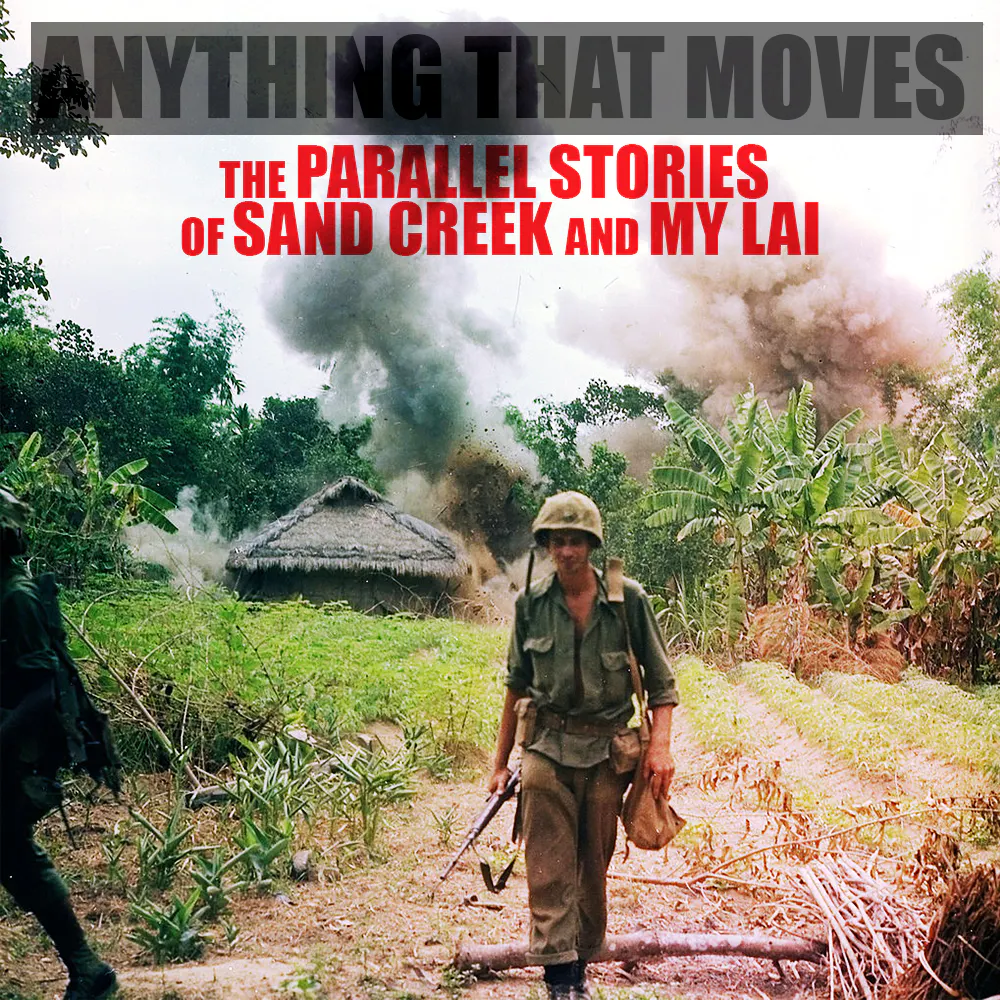
"Because I felt like I was ordered to do it, and it seemed like that, at the time I felt like I was doing the right thing." Private First Class Paul Meadlo explaining his role in the My Lai Massacre. "How do you shoot babies?" Meadlo was then asked. His reply... "I don't know. It's just one of them things." "I felt then and I still do that I acted as I was directed, and I carried out the order that I was given and I do not feel wrong in doing so." Lieutenant William Calley Jr. addressing his own leadership during the action. "Every Day/ On our fellow man we prey/ Dog eat Dog/ To Get by/ Hope you like my genocide” The Offspring “Hello darkness, my old friend…” Simon and Garfunkel I’m not going to lie. This is one of the darkest episodes of History on Fire. But there are reasons for this journey into the heart of darkness. The stories of Sand Creek and My Lai offer an opportunity to explore human agency, the choices separating good and evil, and how some individuals can choose to become sources of light even in the most horrible circumstances. In part B, I hand the microphone to my friend and master podcaster Darryl Cooper (from The Martyrmade Podcast.) Darryl explores the context of the Cold War in order to come to terms with what happened at My Lai, in Vietnam, in 1968. Horror abounds, but if you are looking for heroes in the midst of the horror, you can do a lot worse than hear about the story of Hugh Thompson. Learn more about your ad choices. Visit megaphone.fm/adchoices

S1 Ep 32EPISODE 32A Anything That Moves (Part 1): The Parallel Stories of Sand Creek and My Lai
"Every Day/ On our fellow man we prey/ Dog eat Dog/ To Get by/ Hope you like my genocide” The Offspring “Hello darkness, my old friend…” Simon and Garfunkel “I believe now it is but the commencement of war with this tribe, which must result in their extermination.” Major Jacob Downing “Damn any man who sympathizes with Indians! ... I have come to kill Indians, and believe it is right and honorable to use any means under God's heaven to kill Indians. ... Kill and scalp all, big and little; nits make lice.” Quote attributed to Colonel John Chivington “They were so honorable and so strong, but I felt like they were alone and sometimes when you want to do the right thing, the people that want to do the right thing suffer… even today.” Lorraine Waters about Silas Soule and Joseph Cramer “It was hard to see little children on their knees… having their brains beat out by men professing to be civilized.” Silas Soule I’m not going to lie. This is one of the darkest episodes of History on Fire. But there are reasons for this journey into the heart of darkness. The stories of Sand Creek and My Lai offer an opportunity to explore human agency, the choices separating good and evil, and how some individuals can choose to become sources of light even in the most horrible circumstances. In this first part, we will explore the events that in Colorado in the late 1850s and early 1860s led to a dramatic clash between the Cheyenne tribe and the United States. Within the context of this painfully ugly story, 26-year-old Captain Silas Soule offers a shining example of heroism. Learn more about your ad choices. Visit megaphone.fm/adchoices
S1 Ep 31EPISODE 31 Gladiators in Ancient Rome (Part 2): The Spirit of the Gladiator
“It’s the steel that they love” Juvenal “I needed money for wine” Titus Pullo in HBO’s series Rome “We can live vicariously through that moment, or use it to fuel what we desire in life.” Jake Rossen "You must die erect and invincible. What difference will it make if you gain a few more days or years? We are born into a world in which no quarter is given." Seneca “He who has learned how to die has learned how not to be a slave.” Seneca "Joy... is the victim's revolt and revenge against dishonor and powerlessness." Carlin Barton Ancient Romans were obsessed with gladiatorial combat. In this two-part series, we time-travel back to get a sense of what the Games (of which gladiatorial combat was the main attraction) were like. In this episode: how gladiators were both superstars and despised outcasts at the same time, gladiators’ groupies, Marcus Aurelius’ wife taking a bath in gladiator’s blood, Commodus and his 620-0 record in the arena, the clash between Christianity and gladiators, the evolution of MMA in the early 1990s, having your violent cake and eating it too, gladiatorial video games, Titus Pullo’s badassery, Conan’s prayer (The video of my daughter mentioned in this episode: https://www.youtube.com/watch?v=jJIh5zNfmm8), the Red Hot Chili Peppers, MMA fighter Enson Inoue, gladiatorial combat as a master course on Stoicism in action… Learn more about your ad choices. Visit megaphone.fm/adchoices
S1 Ep 30EPISODE 30 Gladiators in Ancient Rome (Part 1): Are You Not Entertained?
"The stupid crowd is waiting eagerly For the two valiant heroes to contend. No farther than their noses can they see; A spectacle is all they comprehend.” Ludovico Ariosto, Orlando Furioso, 30.27 Ancient Romans were obsessed with gladiatorial combat. In this two-part series, we time-travel back to get a sense of what the Games (of which gladiatorial combat was the main attraction) were like. In this episode: the origins of gladiators, human sacrifice, Achilles and the Iliad, feeding the dead with blood, who were the gladiators, female gladiators, the ludus, the different types of gladiators, the battles among the damnati, the naumachia, executions and ‘snuff plays’, the venatio, crushed by elephants or eaten by lions, the collapsing arena that killed over 20,000, the editor of the games, poor Romans eating lion for dinner, thumbs (up and down)... Learn more about your ad choices. Visit megaphone.fm/adchoices

S1 Ep 29EPISODE 29 I Drink and I Know Things (Where History and Game of Thrones Intersect)
“No matter how much I make up, there’s stuff in history that’s just as bad, or worse.” George R.R. Martin “Though I would treasure your friendship, I am mainly interested in your facility with murder” Tyrion Lannister “That’s what I do. I drink and I know things.” Tyrion Lannister “If we don’t put aside our enmities and band together, we will die. And then it doesn’t matter whose skeleton sits on the Iron Throne.” Ser Davos Seaworth Sansa “Now, I’m sure cutting off heads is very satisfying, but that’s not the way you get people to work together.” Sansa Stark I always say that history is really no different from Game of Thrones (minus the dragons). The passion, brutality, the joys and heartbreak, human greatness and human pettiness… it’s all there. And as it turns out the connection between history and the world created by George R.R. Martin’s run deep. In this episode, I am joined by Aziz Al-Doory from The History of Westeros Podcast, and together we discuss some (definitely not all) of the ways in which history has influenced Game of Thrones. In this episode we’ll tackle: The Wall & Hadrian’s Wall, flaying, human sacrifice, feeding enemies to dogs, Agamemnon and Stannis Baratheon, parallels with the Bible, the Dothraki and nomadic steppe peoples, execution by molten gold, the real life examples of the High Sparrow, the walk of shame, the inquisition, the Red Wedding, the siege of Constantinople & the battle of Blackwater Bay, and much more. Learn more about your ad choices. Visit megaphone.fm/adchoices
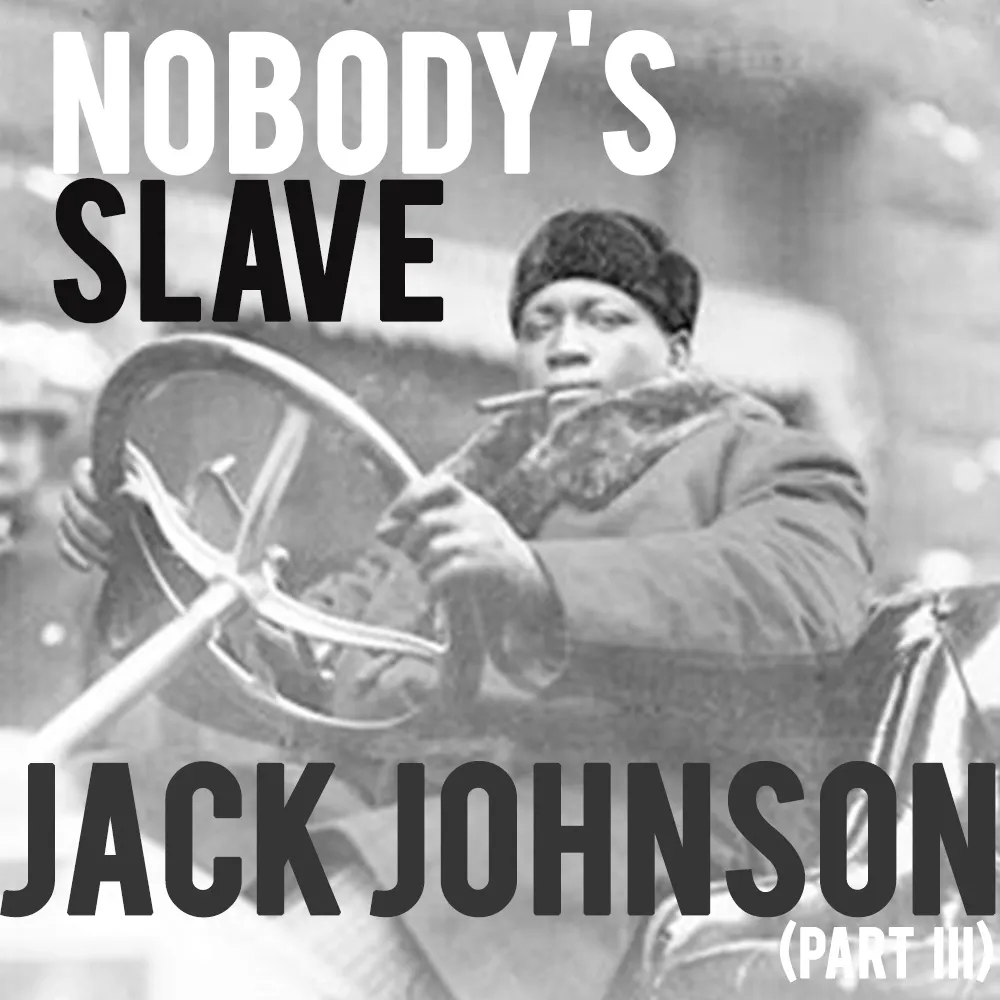
S1 Ep 28EPISODE 28 Jack Johnson (Part 3): Nobody’s Slave
“He refused to allow anyone—white or black—or any laws and customs—to dictate his place in society or the manner in which he should live.” Al-Tony Gilmore “This negro, in the eyes of many, has been persecuted. Perhaps as an individual he was. But it was his misfortune to be the foremost example of the evil in permitting the intermarriage of whites and blacks.” Asst Atty. Gen. Harry Parkin “No brutality, no infamy, no degradation in all the years of Southern slavery, possessed such a villainous character and such atrocious qualities as the provision of the laws of Illinois, New York, Massachusetts, and other states which allow the marriage of the negro, Jack Johnson, to a woman of Caucasian strain… Intermarriage between whites and blacks is repulsive and averse to every sentiment of pure American spirit. It is abhorrent and repugnant to the very principles of a pure Saxon government. It is subversive to social peace. It is destructive of moral supremacy, and ultimately this slavery of white women to black beasts will bring this nation to a conflict as fatal and as bloody as ever reddened the soil of Virginia or crimsoned the mountain paths of Pennsylvania… Let us uproot and exterminate now this debasing, ultrademoralizing, un-American and inhuman leprosy.” Congressman from Georgia Seaborn Roddenberry “It comes down, then, after all to this unforgivable blackness.” W.E.B. Du Bois “I loved him because of his courage. He faced the world unafraid. There wasn't anybody or anything he feared.” Irene Pineau “I would rather listen to you than hear an oration from a professional politician. I can learn more from you.” Mexican President Venustiano Carranza By 1900, the federal government had long abandoned Reconstruction, and white supremacy was returning to the South with a vengeance. Jim Crow was in full swing. Segregation was the law of the land. And Fifty years before Jackie Robinson challenged segregation in baseball, there was Jack Johnson. Lynching was a weekly event. Any black man in the South not acting subservient could find himself dangling from a tree. Even African American leaders like Booker T. Washington preached that accepting segregation, keeping one’s head down, and working hard were the best options for black people. Jack Johnson clearly didn’t get the memo. At this time when simply looking a white man in the eyes, or talking to a white woman, could get one lynched, Jack Johnson made a living beating the hell out of white men in the ring. Living defiantly as if prejudice didn’t exist—he felt—was the best way to defeat racism. It would be easy to mistake Jack Johnson’s story simply as a tale of standing up to racism. It’s about that—sure. But it’s also about a lot more. Because as much Jack Johnson stared down white supremacy, he also battled those black people who insisted that he behaved like a hard-working, God-fearing role model. But JJ wasn’t about to trade a cage for another. He wouldn’t be anyone’s puppet. He would have no master telling him how to live—not white ones, but no black ones either. His story is the tale of a man who, in spite of a time and place that would not allow it, was on a defiant quest to be free, and live life on his own terms. In this episode: -The campaign to ban boxing -Grappling with the demons of success -Jack Johnson vs. Winston Churchill -Marriage and suicide -Legal persecution and marriage # 2 -The Police Gazette calling him “the vilest, most despicable creature that lives… he has disgusted the American public by flaunting in their faces an alliance as bold as it was offensive.” -The paranoid hysteria at the roots of the Mann Act -Running from the Law -The title defense against Frank Moran -At a party with Rasputin -Rubbing elbows with Pancho Villa -Jess Willard -Prison life -Marriage # 3 Learn more about your ad choices. Visit megaphone.fm/adchoices
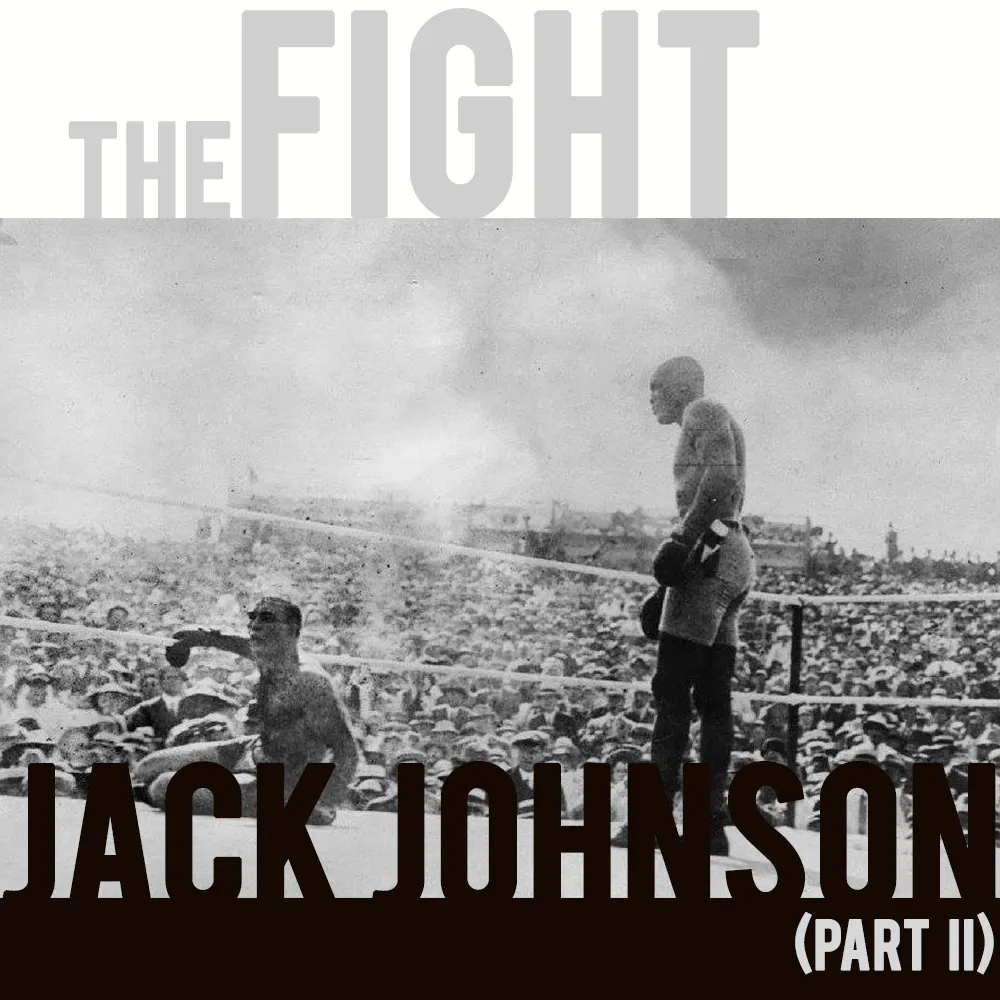
S1 Ep 27EPISODE 27 Jack Johnson (Part 2): The Fight
“And it was fast cars and whiskey Long legged girls and fun I had everything that money could bring And I took it all with a gun” from the song I’ve Never Picked Cotton “Johnson did not care. He had no use for the bourgeois values of thrift and respectability.” Randy Roberts “You don’t catch Jim Jeffries losing to a colored man.” Jim Jeffries “Quite conceivably there had never been a more important athletic event in American history.” Randy Roberts “Even those who have an absurdly exaggerated horror of prize fighting as a ‘brutal’ sport should gently warm in their sensitive minds a little hope that the white man may not lose, while the rest of us will wait in open anxiety the news that he has licked the—well, since it must be in print, let us say the negro, even though it is not the first word that comes to the tongue’s tip.” New York Times By 1900, the federal government had long abandoned Reconstruction, and white supremacy was returning to the South with a vengeance. Jim Crow was in full swing. Segregation was the law of the land. And Fifty years before Jackie Robinson challenged segregation in baseball, there was Jack Johnson. Lynching was a weekly event. Any black man in the South not acting subservient could find himself dangling from a tree. Even African American leaders like Booker T. Washington preached that accepting segregation, keeping one’s head down, and working hard were the best options for black people. Jack Johnson clearly didn’t get the memo. At this time when simply looking a white man in the eyes, or talking to a white woman, could get one lynched, Jack Johnson made a living beating the hell out of white men in the ring. Living defiantly as if prejudice didn’t exist—he felt—was the best way to defeat racism. It would be easy to mistake Jack Johnson’s story simply as a tale of standing up to racism. It’s about that—sure. But it’s also about a lot more. Because as much Jack Johnson stared down white supremacy, he also battled those black people who insisted that he behaved like a hard-working, God-fearing role model. But JJ wasn’t about to trade a cage for another. He wouldn’t be anyone’s puppet. He would have no master telling him how to live—not white ones, but no black ones either. His story is the tale of a man who, in spite of a time and place that would not allow it, was on a defiant quest to be free, and live life on his own terms. In this episode: -Public Enemy Number One -At home in the integrated criminal underworld -Ladies and fast cars -Jack Johnson’s intellectual side -The Great White Hope -Knocking out and befriending Stanley “The Assassin” Ketchel -“I am going into this fight for the sole purpose of proving that a white man is better than a negro.” Jim Jeffries -Why the Governor of California prohibited the fight -Death threats and attempted poisonings -Jack Johnson’s eerie calm under pressure -A spectator: “He’ll kill you, Jack.” Jack Johnson: “That’s what they all say.” -The verbal fight with Jim Corbett -Triumph and riots in over 50 cities Learn more about your ad choices. Visit megaphone.fm/adchoices

S1 Ep 26EPISODE 26 Jack Johnson (Part 1): Bad To The Bone
Back in the day when you could still pay your ticket on the spot in cash, a cop pulled over Jack Johnson for speeding. “Hey boy—said the cop—This is going to cost you $ 50!” Johnson handed him $ 100. The cop tried to protest he didn’t have change, but Johnson waved him off. “I will be coming back this same way, and I’ll be driving at the same speed, so I’m just paying you in advance.” “His story is one of the great dramas not just of American sports, but of all American history.” New York Times “This fellow Johnson is a fair fighter, but he is a black. And for that reason, I will never fight him.” Heavyweight Champion Jim Jeffries By 1900, the federal government had long abandoned Reconstruction, and white supremacy was returning to the South with a vengeance. Jim Crow was in full swing. Segregation was the law of the land. And Fifty years before Jackie Robinson challenged segregation in baseball, there was Jack Johnson. Lynching was a weekly event. Any black man in the South not acting subservient could find himself dangling from a tree. Even African American leaders like Booker T. Washington preached that accepting segregation, keeping one’s head down, and working hard were the best options for black people. Jack Johnson clearly didn’t get the memo. At this time when simply looking a white man in the eyes, or talking to a white woman, could get one lynched, Jack Johnson made a living beating the hell out of white men in the ring. Living defiantly as if prejudice didn’t exist—he felt—was the best way to defeat racism. It would be easy to mistake Jack Johnson’s story simply as a tale of standing up to racism. It’s about that—sure. But it’s also about a lot more. Because as much Jack Johnson stared down white supremacy, he also battled those black people who insisted that he behaved like a hard-working, God-fearing role model. But JJ wasn’t about to trade a cage for another. He wouldn’t be anyone’s puppet. He would have no master telling him how to live—not white ones, but no black ones either. His story is the tale of a man who, in spite of a time and place that would not allow it, was on a defiant quest to be free, and live life on his own terms. In this episode: -How a man who would be among the best fighters in the world grew up as a wimp having his sisters protecting him -The color line in boxing -The 1900 Galveston Flood -Joe Choynski: first KOs Jack Johnson and then teaches him how to fight… in jail -JJ’s complicated fascination with white women -The curious story of Saverio Giannone (aka Joe Grim): “I am Joe Grim and I fear no man” -Chasing Tommy Burns around the world -Jack Johnson’s defiant smile -“Jim Jeffries must emerge from his alpha alpha farm, and remove that golden smile from Jack Johnson’s face. Jeff, it’s up to you. The White Man must be rescued.” Jack London Learn more about your ad choices. Visit megaphone.fm/adchoices
S1 Ep 25EPISODE 25 Roman History with Mike Duncan
Mike Duncan is one of the pioneers of historical podcasting. His “History of Rome” is iconic. And his current “Revolutions” is equally compelling. In this episode, we sit down to chat about Roman history, Rome in cinema, the inevitable comparisons between Ancient Rome and the United States, the factionalism and corruption that brought down the Republic, the connection between ‘The Walking Dead’ + ‘Game of Thrones’ and Roman history, his upcoming book “The Storm Before the Storm,” and the future of his “Revolutions” podcast. PATREON NEWS: I have just started a Patreon account!!!! If you feel in a generous mood, please, check it out at www.patreon.com/historyonfire Learn more about your ad choices. Visit megaphone.fm/adchoices
S1 Ep 24EPISODE 24 The Pirate Queen
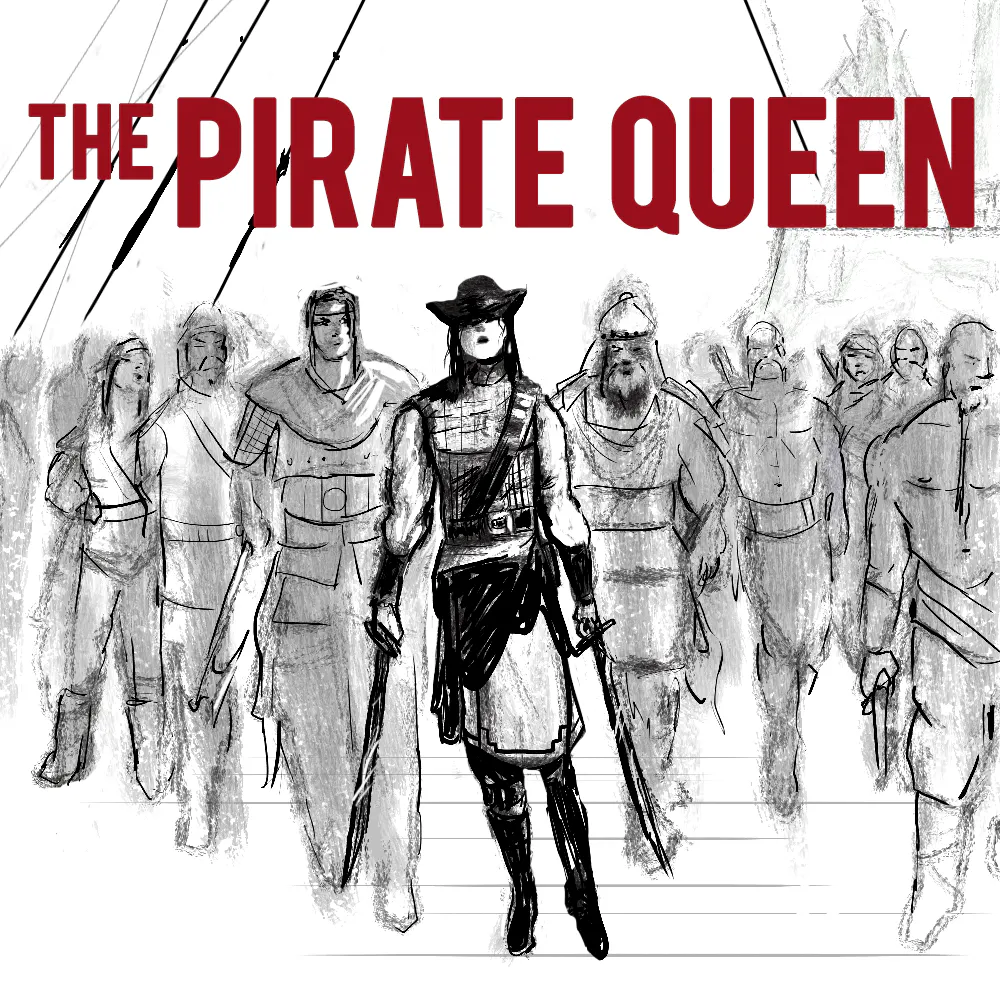
“I never planted wheat and never will, so long as there are other harvests to be reaped with the sword.” Robert E. Howard (from ‘Beyond the Black River’) “In the rough and violent world of seafaring, mariners could not afford to always abide by the niceties of the law or proper etiquette.” Robert J Anthony “There is no greater calamity than not knowing what is enough”. Tao Te Ching At the very beginning of the 1800s, a Chinese woman went from being employed as a prostitute in the floating brothels close to Canton to becoming the leader of the biggest pirate confederacy in modern history. Despite ending up as one of the most successful pirates ever, little is known about her. Today, we dive into the mystery and explore her story. In this episode: -The three waves of piracy -Piracy as a family business -The boat people -“People are not born sea bandits, but drift into brigandage because they can no longer support themselves.” Wang Zhiyin governor of Fujian -The Tay-Son rebellion -Death by a thousand cuts -The seven pirate bosses and the creation of the biggest pirate confederacy in modern history -When pirates invite you to join their crew, saying ‘no’ is not an option -A pirate’s life for me: opium, prostitutes, gambling, fights -The rise of Cheng I Sao, and her saving the Confederacy -Chang Pao -Cheng I Sao’s law: “Off with his head!” -Former prostitute, full time pirate leader and part time shaman -Straight out of Game of Thrones: fireboats -Cheng I Sao and the Taoist talent of knowing when to stop PATREON NEWS: I have just started a Patreon account!!!! If you feel in a generous mood, please, check it out at www.patreon.com/historyonfire Learn more about your ad choices. Visit megaphone.fm/adchoices
S1 Ep 23EPISODE 23 The Conquest of Mexico (Part 4): Tenochtitlan Or Bust
“After getting this information, he had the arms, feet, and heads of our unfortunate companions cut off, and sent them round to various towns of our allies and those who had made peace with us, with the message that he did not think one of us would be left alive to return to Texcoco. Then he offered their hearts and blood to his idols.” Bernal Diaz “Eat the flesh of your brothers, for we are full. You can stuff yourselves with our leftovers.” Mexica warriors addressing the Spaniards “It is better that we should all die fighting in the city than see ourselves in the power of those who would enslave us and torture us for gold.” From a speech attributed to a Mexica captain “The people of the city had to walk upon their dead while others swam or drowned in the waters of that wide lake… so great was their suffering that it was beyond our understanding how they could endure it.” Hernan Cortes In the 1500s, two highly militaristic peoples fueled by religious ideologies requiring bloodshed clashed with one another. This is the tale of what happened when a band of Spaniards run into the Mexica (Aztec) empire. By the time the dust will settle, out of the 25 million indigenous inhabitants of Mexico, little over a million will be left standing. In this fourth episode: -Cortes’ charge at the battle of Otumba -The Tlaxcalan fateful choice -Branding POWs in the face with the letter G for Guerra -Smallpox was better than any army for the Spaniards -Cortes holds a rape auction -The master carpenter Martin Lopez, and his ships sealed with boiling human fat taken from dead Mexica warriors -A plot against Cortes ends with a hanging -Cortes on top of the pyramid at Xochimilco sees 2,000 canoes coming to kill him -Xicotenga and Led Zeppelin’s Gallows Pole -The siege of Tenochtitlan -Cortes flirting with death -The human sacrifice that gave Bernal Diaz permanent PTSD -Eating the plaster off your walls and still fighting on -The city of the dead -The Mexica emperor being introduced to the expression “holding the feet to the fire” -Ramsay Bolton would have loved both Mexica and Spaniards -The aftermath of the Conquest Learn more about your ad choices. Visit megaphone.fm/adchoices

S1 Ep 22EPISODE 22 The Conquest of Mexico (Part 3): Tenochtitlan Syndrome
“And when we saw all those cities and villages built in the water, and other great towns on dry land, and that straight and level causeway leading to Mexico, we were astounded. These great towns and cues and buildings rising from the water, all made of stone, seemed like an enchanted vision from the tale of Amadis. Indeed, some of our soldiers asked whether it was not all a dream. It is not surprising therefore that I should write in this vein. It was all so wonderful that I do not know how to describe the first glimpse of things never heard of, seen or dreamed of before… But today all that I then saw is overthrown and destroyed; nothing is left standing.” Bernal Diaz “Have confidence, Montezuma. Fear nothing. We love you greatly.” Hernan Cortes “What is the use of all these words? Either we take him or we knife him.” Juan Velazquez de Leon “They ran in among the dancers, forcing their way to the place where the drums were played. They attacked the man who was drumming and cut off his arms… Some attempted to run away, but their intestines dragged as they ran; they seemed to tangle their feet in their own entrails… So great was the bloodshed that blood ran through the courtyard like water in a heavy rain.” In the 1500s, two highly militaristic peoples fueled by religious ideologies requiring bloodshed clashed with one another. This is the tale of what happened when a band of Spaniards run into the Mexica (Aztec) empire. By the time the dust will settle, out of the 25 million indigenous inhabitants of Mexico, little over a million will be left standing. In this third episode: -The massacre at Cholula -The drunken man’s vision -The splendor of Tenochtitlan -Kidnapping an emperor -Burning people at the stake in front of the Great Pyramid -Why the Stockholm Syndrome should be renamed Tenochtitlan Syndrome -A battle between Spaniards and Spaniards -Alvarado’s bloody choices -La Noche Triste: the end of the Spaniards? Learn more about your ad choices. Visit megaphone.fm/adchoices

S1 Ep 21EPISODE 21 The Conquest of Mexico (Part 2): The Dogs of War
“My advice is not to allow into your house someone who will put you out of it.” Cuitlahuac “He added that we could look for no help or assistance except from God, for now we had no ships in which to return to Cuba. Therefore we must rely on our own good swords and stout hearts.” Bernal Diaz “We knew that they had come determined to leave none of us alive except those who were to be sacrificed to their idols.” Bernal Diaz In the 1500s, two highly militaristic peoples fueled by religious ideologies requiring bloodshed clashed with one another. This is the tale of what happened when a band of Spaniards run into the Mexica (Aztec) empire. By the time the dust will settle, out of the 25 million indigenous inhabitants of Mexico, little over a million will be left standing. In this second episode: -The first battle ever featuring horses in Mexico -Enormous, angry dogs wearing armor and trained to eat human flesh -Malintzin and her choices -From slavery to becoming one of the most important women in Mexico -The tale of Quetzalcoatl -“If the Spaniards want to eat you, let them” -Apparently, the Spaniards don’t appreciate food sprinkled with a sauce of human blood -Rescuing five sacrificial victims before returning them to be sacrificed -Cortes deserved an Academy Award for best political theater -The Fat Chief -Cortes and his ships -Moctezuma and his Blues Brothers excuses -War and peace in Tlaxcala Learn more about your ad choices. Visit megaphone.fm/adchoices
S1 Ep 20EPISODE 20 The Conquest of Mexico (Part 1): People Of The Sun
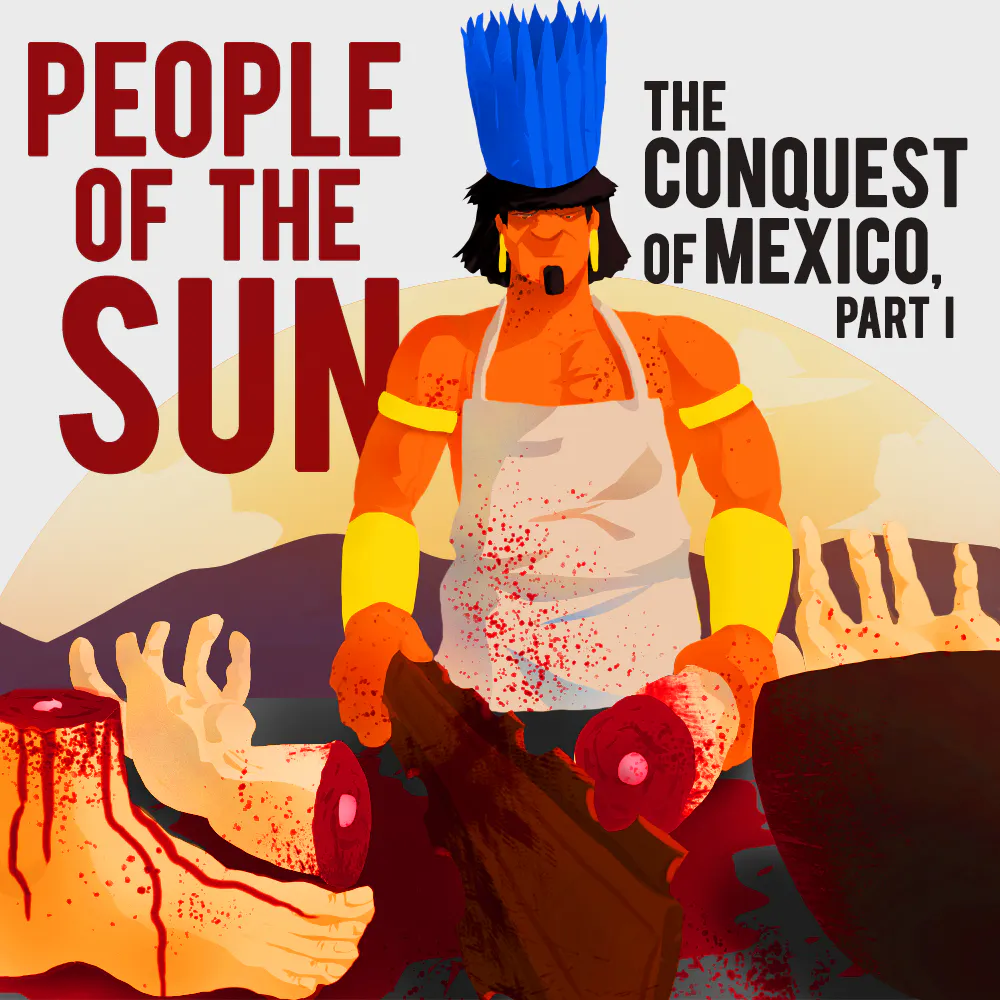
“We came to serve God and get rich”—Bernal Diaz “Behold this torch which we will light and place between our armies. If you do not make haste and retreat before the torch is burned, you will die. We do not want you as guests.” Maya warning to the Spaniards in 1518 “Do not lose your soul for the sake of an Indian woman” Geronimo de Aguilar to Gonzalo Guerrero In the 1500s, two highly militaristic peoples fueled by religious ideologies requiring bloodshed clashed with one another. This is the tale of what happened when a band of Spaniards run into the Mexica (Aztec) empire. By the time the dust will settle, out of the 25 million indigenous inhabitants of Mexico, little over a million will be left standing. In this first episode: -The development of Mesoamerican civilizations leading up to the Mexica -An unfortunate misunderstanding between the Mexica and their neighbors involving a flayed princess -The toughest mercenaries in the Valley of Mexico -Serving the God of War -A ballgame to settle a dispute on the meaning of creepy omens -The Cordoba expedition -The Grijalva expedition -Pedro de Alvarado and his gangsta rap taste in jewelry -Hernan Cortes and his playboy ways -If you drop out of law school, at least conquer an empire -The ballad of Gonzalo Guerrero Learn more about your ad choices. Visit megaphone.fm/adchoices
S1 Ep 19EPISODE 19 Featuring Dan Carlin
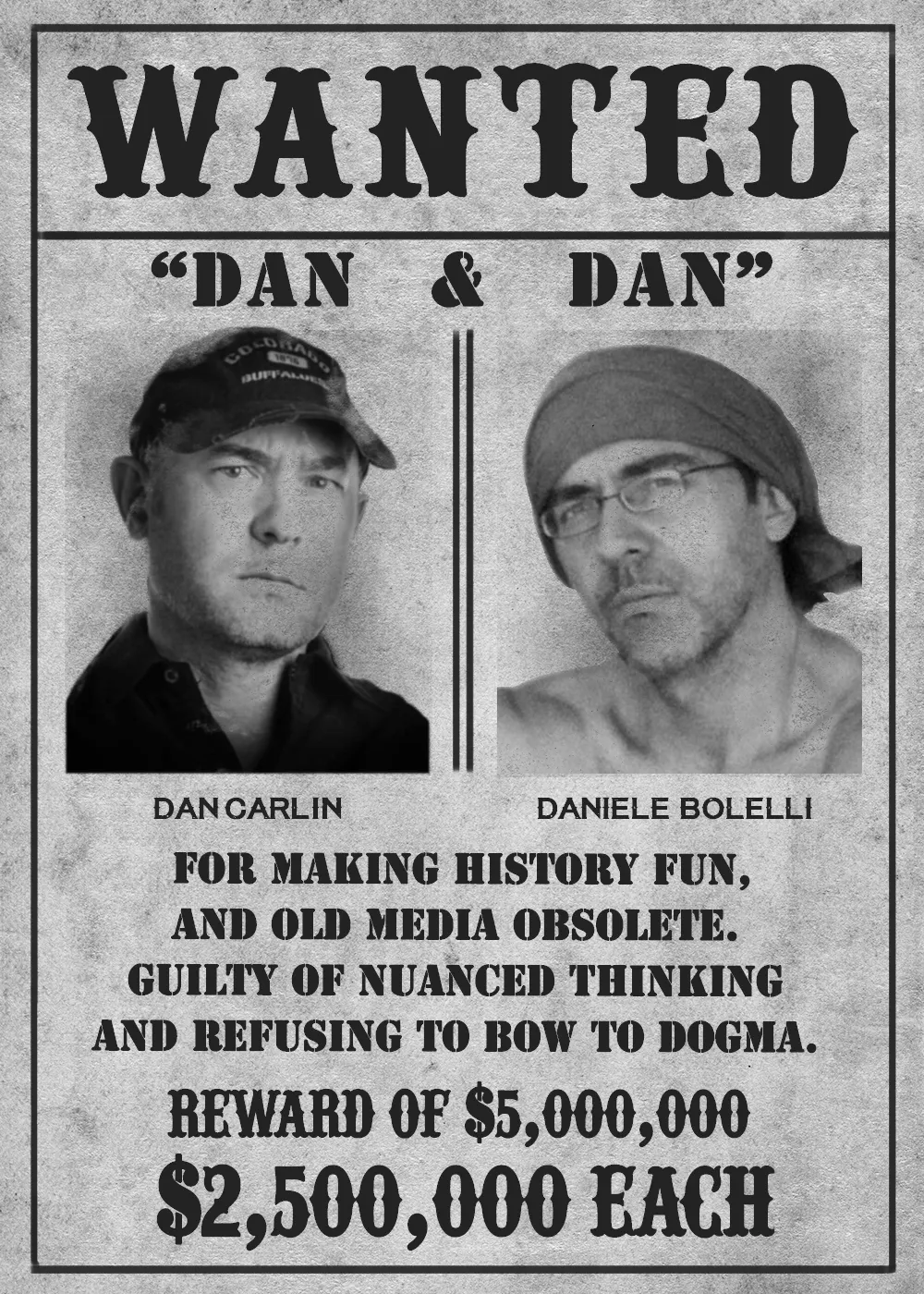
"If I can add some nuance and complexity and some context and compassion. If I can get people to think about walking a mile in the other guy's moccasins, or pretend like you want to, I can feel like I'm adding something that is unusual. And it's a little bit shocking and upsetting to me that it is unusual. When people say it's so refreshing, you wonder why it's refreshing to try to see the other person's viewpoint? Shouldn't that just be how we are?" Dan Carlin “It’s an uplifting story with millions of dead people” Dan Carlin My favorite podcaster and one of my favorite humans joins me for an epic chat ranging across topics including: -Nuanced Thinking -Ideological Prisons -Understanding vs. justifying -Judging the past -Hitler & Genghis Khan, Nazis & Communists -Spaniards, Aztecs, human sacrifice -Taoism -Twisted SOBs -Why do we focus so much on war? -The three elements of Hardcore History -Conflict-driven story -Sex -Gladiators for World Peace as the antidote to a nuclear holocaust -Hunting and gathering peoples -Graham Hancock and history before history -Gobekli Tepe -Old school toughness and the arc of civilizations -Dan Carlin for President! Learn more about your ad choices. Visit megaphone.fm/adchoices
S1 Ep 18EPISODE 18 The War for the Black Hills (Part 3): Last Stand
“It made my heart bad. After that, I killed my enemies with the hatchet.” Lakota leader Gall, upon finding out his family had been killed “If we’ve got to die, let’s die here like men.” Lieutenant Luther Hare “We were terribly alone on that dangerous hilltop. We were a million miles from nowhere. And death was all around us.” Charles Windolph “Only Earth and the Heavens last long, Uncle. If we four can stop the soldiers from taking our camp, our lives will matter little.” Bobtail Horse “Hokahey, brother! This life will not last forever” White Bull addressing Crazy Horse “I am a Fox. I am supposed to die. If there is anything difficult, If there is anything dangerous, It is mine to do.” Kit Fox warrior society song To the Lakota people, the Black Hills of South Dakota were—and still are—‘the heart of everything that is.’ To the United States, they were a goldmine, and Manifest Destiny’s next target. It was for the Black Hills that the Lakota went to war against the United States for the last time. In this episode: -Reno’s attack -Moving Robe Woman gets her revenge -Bloody Knife and his nieces -The Throwing-Them-Off-Their-Horses game -Equine sexual passion can’t be restrained by humans and their battles -Benteen’s choices -The long night -A handful of Cheyenne warriors and the meaning of bravery -White Bull, Crazy Horse and the ‘suicide boys” -The one who (almost) got away -Cheyenne women helping Custer to improve his hearing -Custer’s smile -Setting up Custer -Defiant smile and raised middle finger Learn more about your ad choices. Visit megaphone.fm/adchoices
S1 Ep 17EPISODE 17 The War for the Black Hills (Part 2): The Long Defeat
“…And together through ages of the world we have fought the long defeat.” J.R.R. Tolkien “I shall have glory by this losing day.” William Shakespeare “Oyate kin ninpi kta ca lecamu yelo” (“I do this so that the people may live.”) Lakota song “My mind was occupied mostly by such thoughts as are regularly uppermost in the minds of young men. I was eighteen years old, and I liked girls.” Wooden Leg To the Lakota people, the Black Hills of South Dakota were—and still are—‘the heart of everything that is.’ To the United States, they were a goldmine, and Manifest Destiny’s next target. It was for the Black Hills that the Lakota went to war against the United States for the last time. In this episode: -When he is not attacking camps full of women and children, Custer is a sensitive guy who cries at the theater -How Grant, Sheridan, and Co. engineered their own version of the Gulf of Tonkin incident -Frodo, the destiny of Middle Earth and Sitting Bull -Custer decides to challenge Grant over corruption -Lost in presidential dreams, Custer probably never realized he was being set up -An American army that wasn’t really American -A soldier’s scalp in an abandoned village -The Battle Where the Girl Saved Her Brother -Cross-dressing Crow warriors -Custer: “Why are you doing all this?” Half Yellow Face: “Because you and I are going home today—by a trail that is strange to both of us.” Learn more about your ad choices. Visit megaphone.fm/adchoices
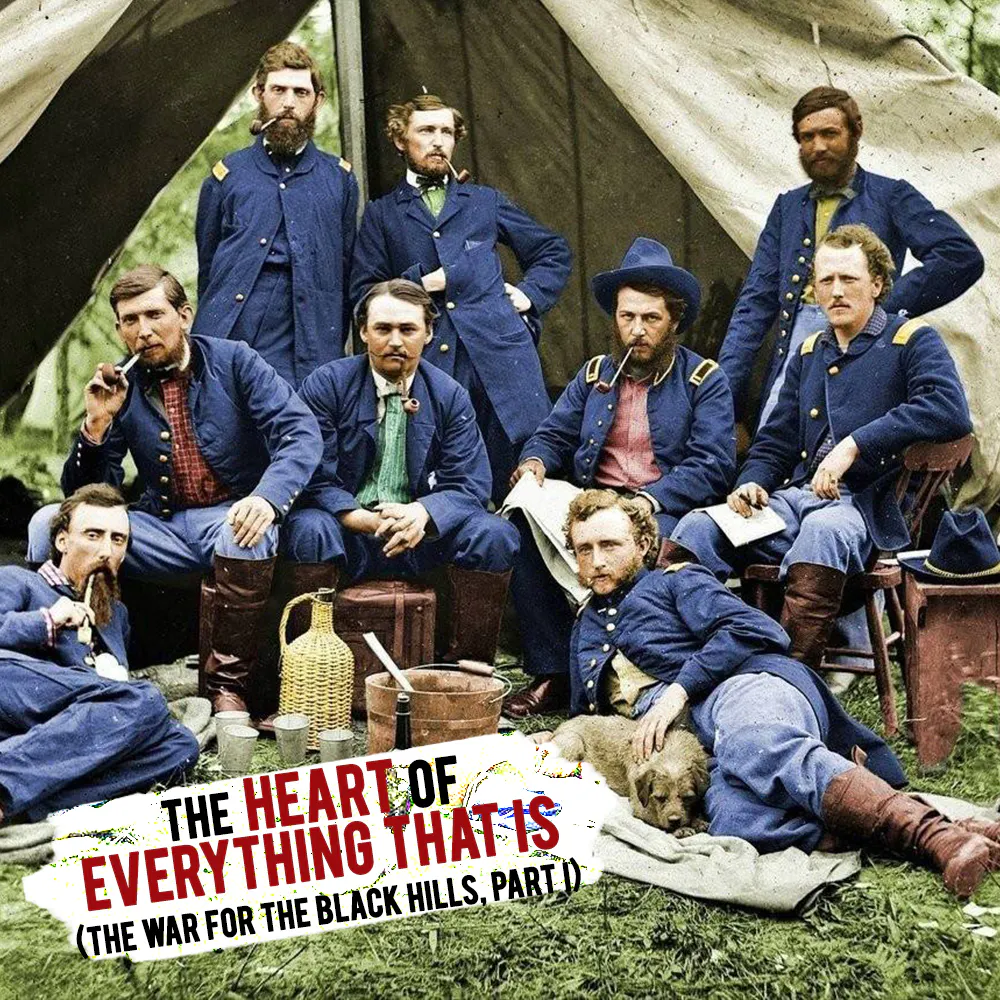
S1 Ep 16EPISODE 16 The War for the Black Hills (Part 1): The Heart of Everything That Is
“The Black Hills is my land and I love it. And whoever interferes will hear this gun.” Lakota song “Came to the Hills in 1833… got our gold in 1834. Got all the gold we could carry. Our ponys got by Indians. I have lost my gun and nothing to eat and Indians hunting me.” Ezra Kind To the Lakota people, the Black Hills of South Dakota were—and still are—‘the heart of everything that is.’ To the United States, they were a goldmine, and Manifest Destiny’s next target. It was for the Black Hills that the Lakota went to war against the United States for the last time. In this episode: -We become acquainted with one of this story’s key characters: George Armstrong Custer -“In years long numbered with the past when I was verging upon manhood, my every thought was ambitious—not to be wealthy, not to be learned, but to be great.” Custer -Custer’s key role at the Battle of Gettysburg -Reckless and proud -AWOL -Washita -‘Garry Owen’ was Custer’s version of Apocalypse Now -The genesis of the hatred between Benteen and Custer -Raping POWs -Lack of money makes President Grant a peaceful man -The Mafia of the railroads -The Yellowstone expedition and the economic collapse of 1873 -The Thieves’ Road, and Charley Reynolds’ ride Learn more about your ad choices. Visit megaphone.fm/adchoices
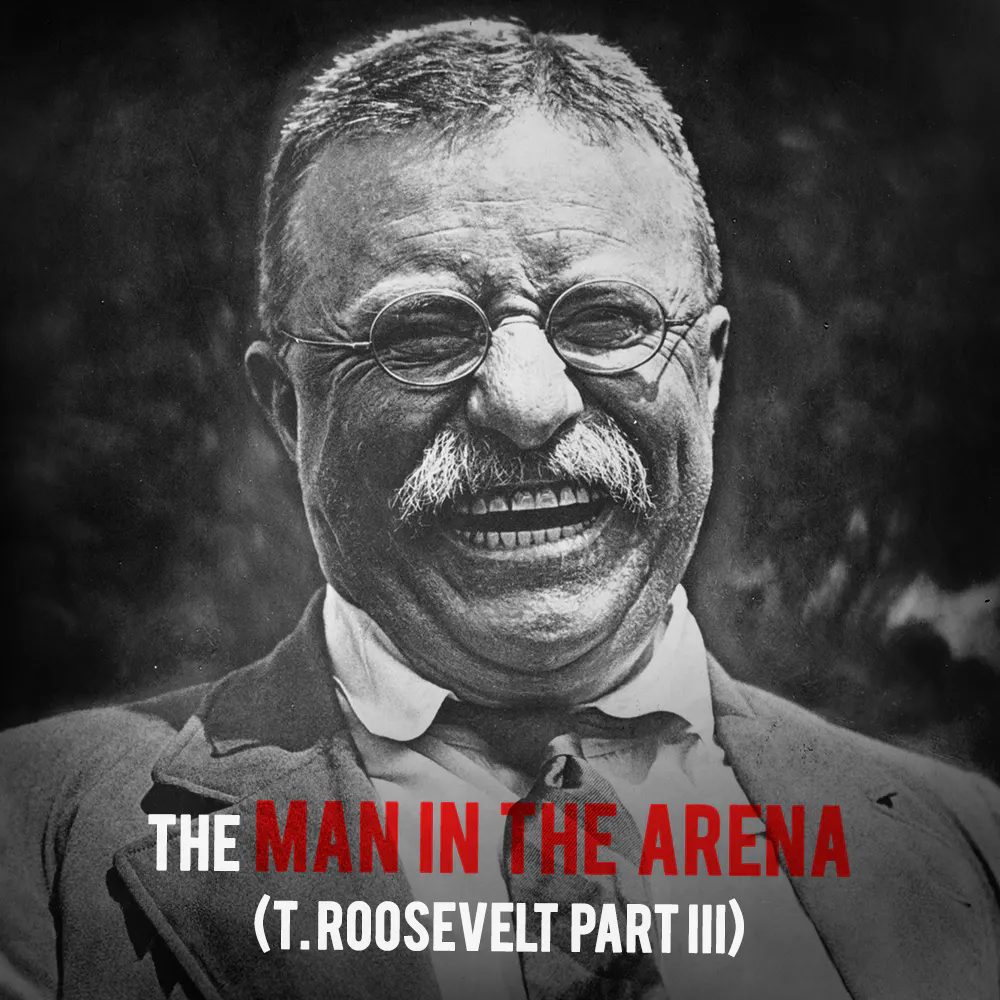
S1 Ep 15EPISODE 15 Ted Roosevelt (Part 3): The Man In The Arena
"Ladies and gentlemen, I don't know whether you fully understand that I have just been shot, but it takes more than that to kill a Bull Moose.” Theodore Roosevelt He was the first American to receive a brown belt in Judo. He won the largest percentage of the vote ever by a third-party candidate. He once took a bullet to the chest shot at point blank range, and rather than going to the hospital went to deliver a 90 minute speech. He survived tragedies that would break lesser men. He spent his life fighting against the inner demons trying to destroy him. He was a perfect embodiment of what Nietzsche probably had in mind when he wrote, “You must still have chaos in yourself to be able to give birth to a dancing star." He was a warmonger with a diplomatic tact. He was a hunter and an environmentalist. He was a nerd and an athlete. He flirted with white supremacist ideas and yet was very progressive about race by the standards of his day. He was a big proponent of personal responsibility and supported quasi-Socialist policies. Love him or hate him, he was larger than life. He was Theodore Roosevelt. In this episode: -“I am really sorry for Taft… I am sure he means well, but he means well feebly.” -The end of a friendship -“To destroy this invisible government, to dissolve the unholy alliance between corrupt business and corrupt politics is the first task of the statesmanship of the day.” -“My hat is in the ring. The fight is on and I’m stripped to the buff.” -“The Republican Party must stand for the rights of humanity, or else it must stand for special privilege.” -TR’s relationship with Socialism -A bullet in the chest -Challenging the two party system -The trip in the Amazon: “I had to go. It was my last chance to be a boy” -“I need not grumble about fate; I had my day, and it was a good day.” -Heartbreak in WW I -Roosevelt and the limits of binary thinking -“It is not the critic who counts; not the man who points out how the strong man stumbles, or where the doer of deeds could have done them better. The credit belongs to the man who is actually in the arena, whose face is marred by dust and sweat and blood; who strives valiantly; who errs, who comes short again and again, because there is no effort without error and shortcoming; but who does actually strive to do the deeds; who knows great enthusiasms, the great devotions; who spends himself in a worthy cause; who at the best knows in the end the triumph of high achievement, and who at the worst, if he fails, at least fails while daring greatly, so that his place shall never be with those cold and timid souls who neither know victory nor defeat.” Learn more about your ad choices. Visit megaphone.fm/adchoices
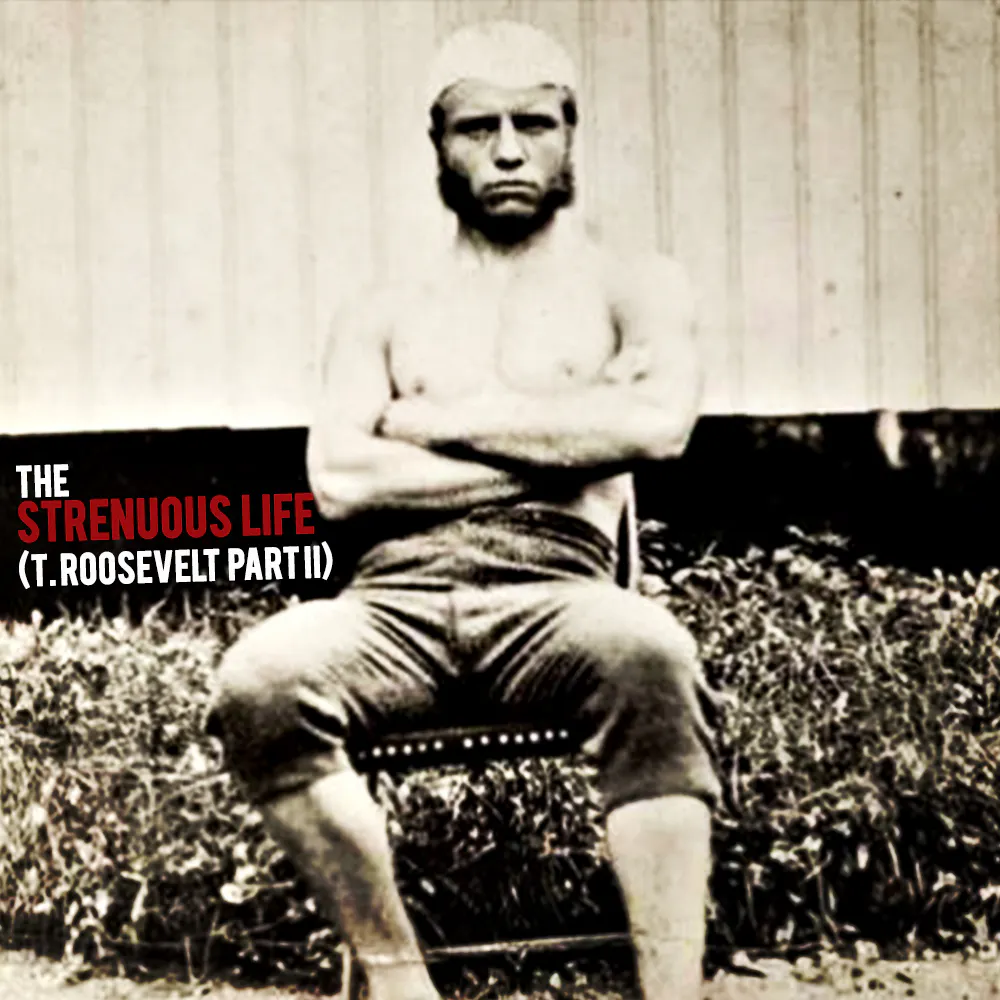
S1 Ep 14EPISODE 14 Ted Roosevelt (Part 2): The Strenuous Life
“The poorest way to face life is to face it with a sneer,” he said. “A cynical habit of thought and speech, a readiness to criticize work which the critic himself never tries to perform, an intellectual aloofness which will not accept contact with life's realities—all these are marks, not ... of superiority but of weakness.” Theodore Roosevelt He was the first American to receive a brown belt in Judo. He won the largest percentage of the vote ever by a third-party candidate. He once took a bullet to the chest shot at point blank range, and rather than going to the hospital went to deliver a 90 minute speech. He survived tragedies that would break lesser men. He spent his life fighting against the inner demons trying to destroy him. He was a perfect embodiment of what Nietzsche probably had in mind when he wrote, “You must still have chaos in yourself to be able to give birth to a dancing star." He was a warmonger with a diplomatic tact. He was a hunter and an environmentalist. He was a nerd and an athlete. He flirted with white supremacist ideas and yet was very progressive about race by the standards of his day. He was a big proponent of personal responsibility and supported quasi-Socialist policies. Love him or hate him, he was larger than life. He was Theodore Roosevelt. In this episode: -The Youngest American President: Juvenile and Proud -Roosevelt and Racism -“Unless we keep the barbarian virtues, gaining the civilized ones will be of little avail.” -Losing sight in one eye while sparring, and Judo days -Going to battle with JP Morgan. The 1902 Coal Strike. At war with Congress over environmental preservation -When the President camped outdoors in the Yosemite snow with John Muir -“…a small bunch of shrill eunuchs…” -Why American Football may not exist had it not been for Roosevelt -“We bought the son of a bitch, and then he didn’t stay bought” -Jumping naked in the frozen waters of the Potomac River -The Media Queen: Alice Roosevelt; “a young wild animal that had been put into good clothes” -The Nobel Peace Prize -War in the Philippines; The Panama Canal; The Brownsville Incident -William Howard Taft and his S&M marriage -Eating an elephant’s heart Learn more about your ad choices. Visit megaphone.fm/adchoices

S1 Ep 13EPISODE 13 Ted Roosevelt (Part 1): The Rough Rider and His Demons
“You must still have chaos in yourself to be able to give birth to a dancing star” Friedrich Nietzsche “History as well as life itself is complicated—neither life nor history is an enterprise for those who seek simplicity and consistency.” Jared Diamond He was the first American to receive a brown belt in Judo. He won the largest percentage of the vote ever by a third-party candidate. He once took a bullet to the chest shot at point blank range, and rather than going to the hospital went to deliver a 90 minute speech. He survived tragedies that would break lesser men. He spent his life fighting against the inner demons trying to destroy him. He was a perfect embodiment of what Nietzsche probably had in mind when he wrote, “You must still have chaos in yourself to be able to give birth to a dancing star." He was a warmonger with a diplomatic tact. He was a hunter and an environmentalist. He was a nerd and an athlete. He flirted with white supremacist ideas and yet was very progressive about race by the standards of his day. He was a big proponent of personal responsibility and supported quasi-Socialist policies. Love him or hate him, he was larger than life. He was Theodore Roosevelt. In this episode: -A sickly child discovers the joys of the strenuous life -Defeating fear by facing fear -Having the woman you love die in your arms; into the Dakota wilderness -“A six year old child on steroids” -"Black care rarely sits behind a rider whose pace is fast enough" -“Theodore had to hold on to his optimism very tight, otherwise he couldn’t get through the shadows, the darknesses, surrounding him” -Marriage # 2 -Why telling Roosevelt “It will break you. You will yield. You are but human;” is a bad idea -The Rough Riders -Going to war against his own party -How Thomas Platt’s plan to eliminate Roosevelt gave him the presidency Learn more about your ad choices. Visit megaphone.fm/adchoices
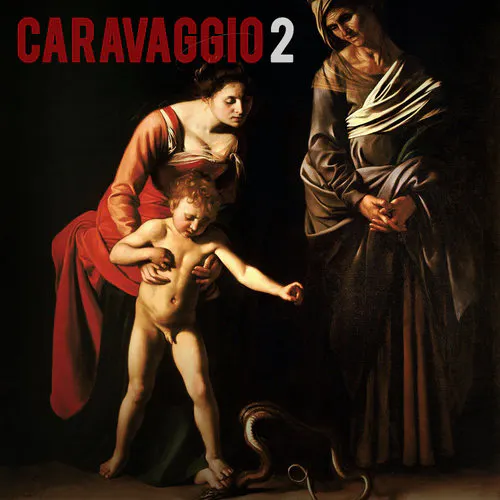
S1 Ep 12EPISODE 12 Caravaggio (Part 2): Folsom Prison Blues
During a visit to a church in Sicily, a priest offered Caravaggio “holy water”. Caravaggio asked the old priest what it was for. “It will cancel your venial sins, my son,” replied the priest. “Then it’s no use—Caravaggio commented—My sins are all mortal.” Giles Lambert about Caravaggio and his friends “They provoked the Papal police, hung around with the many Roman women of easy virtue, drank excessively and frightened the bourgeoisie.” He was the greatest artist of his age, and also an outlaw whose passion for hookers was only second to his propensity for ending up in jail. Caravaggio was equally talented with paint and canvas as he was with the sword and with the art of breaking out prison. With the same hand with which he painted the most amazing masterpieces of the Renaissance, he stabbed pimps and bludgeoned cops. His art was as scandalous as his life: he brought a lowbrow brand of violent realism and sexuality to the traditional religious subjects that were commissioned by the Church: imagine Quentin Tarantino painting scenes from the Bible. But the more the elite hated him, the more the common people adored him. No painter of his day—and probably ever—was able to have such a magnetic effect on masses of people. This second and last part of the tale includes battles in the streets of Rome, Caravaggio’s revolutionary take on the origins of Christianity, the rivalry with Giovanni Baglione, Renaissance diss tracks, attempted murder over artichokes, the dubious diplomatic tact of using prostitutes as models for the Virgin Mary, the parallels between Caravaggio and Tupac, Caravaggio settling a grievance… with an ax, “Madonna dei Palafranieri”—Caravaggio’s middle finger to the Vatican, the duel with Ranuccio Tommassoni, a death sentence, ending up on the run, becoming a Knight of Malta, Mafia art thefts, breaking out jail, the attack in Naples, and becoming a legend. Caravaggio would have been able to relate to Johnny Cash’s “Folsom Prison Blues.” Learn more about your ad choices. Visit megaphone.fm/adchoices
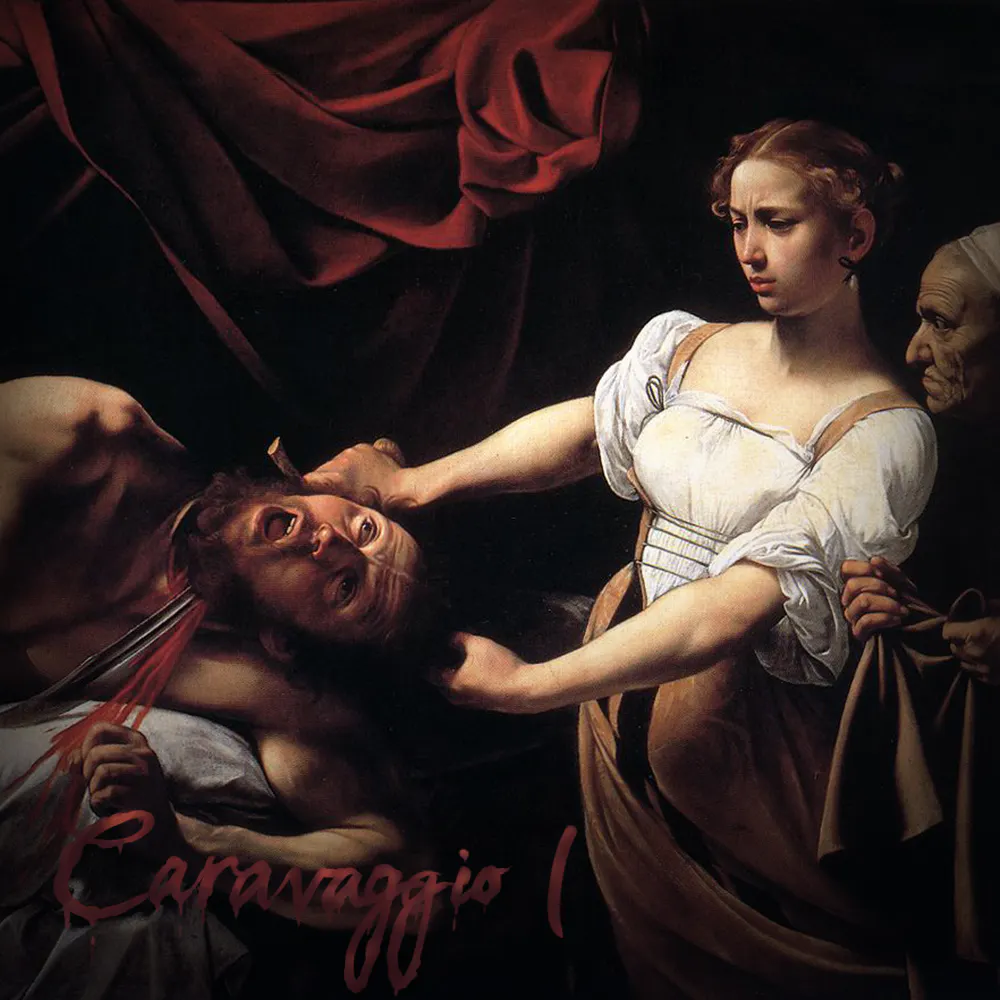
S1 Ep 11EPISODE 11 Caravaggio (Part 1): Light and Darkness
During a visit to a church in Sicily, a priest offered Caravaggio “holy water”. Caravaggio asked the old priest what it was for. “It will cancel your venial sins, my son,” replied the priest. “Then it’s no use—Caravaggio commented—My sins are all mortal.” Giles Lambert about Caravaggio and his friends “They provoked the Papal police, hung around with the many Roman women of easy virtue, drank excessively and frightened the bourgeoisie.” He was the greatest artist of his age, and also an outlaw whose passion for hookers was only second to his propensity for ending up in jail. Caravaggio was equally talented with paint and canvas as he was with the sword and with the art of breaking out prison. With the same hand with which he painted the most amazing masterpieces of the Renaissance, he stabbed pimps and bludgeoned cops. His art was as scandalous as his life: he brought a lowbrow brand of violent realism and sexuality to the traditional religious subjects that were commissioned by the Church: imagine Quentin Tarantino painting scenes from the Bible. But the more the elite hated him, the more the common people adored him. No painter of his day—and probably ever—was able to have such a magnetic effect on masses of people. This first part of the tale features a plague killing most of Caravaggio’s family, attempts at theocracy in the Milan of the late 1500s, the Italian Robin Hood Marco di Sciarra, street life in Rome, “no hope-no fear”, the Cenci execution, and Caravaggio becoming a superstar of the Roman art scene. Learn more about your ad choices. Visit megaphone.fm/adchoices
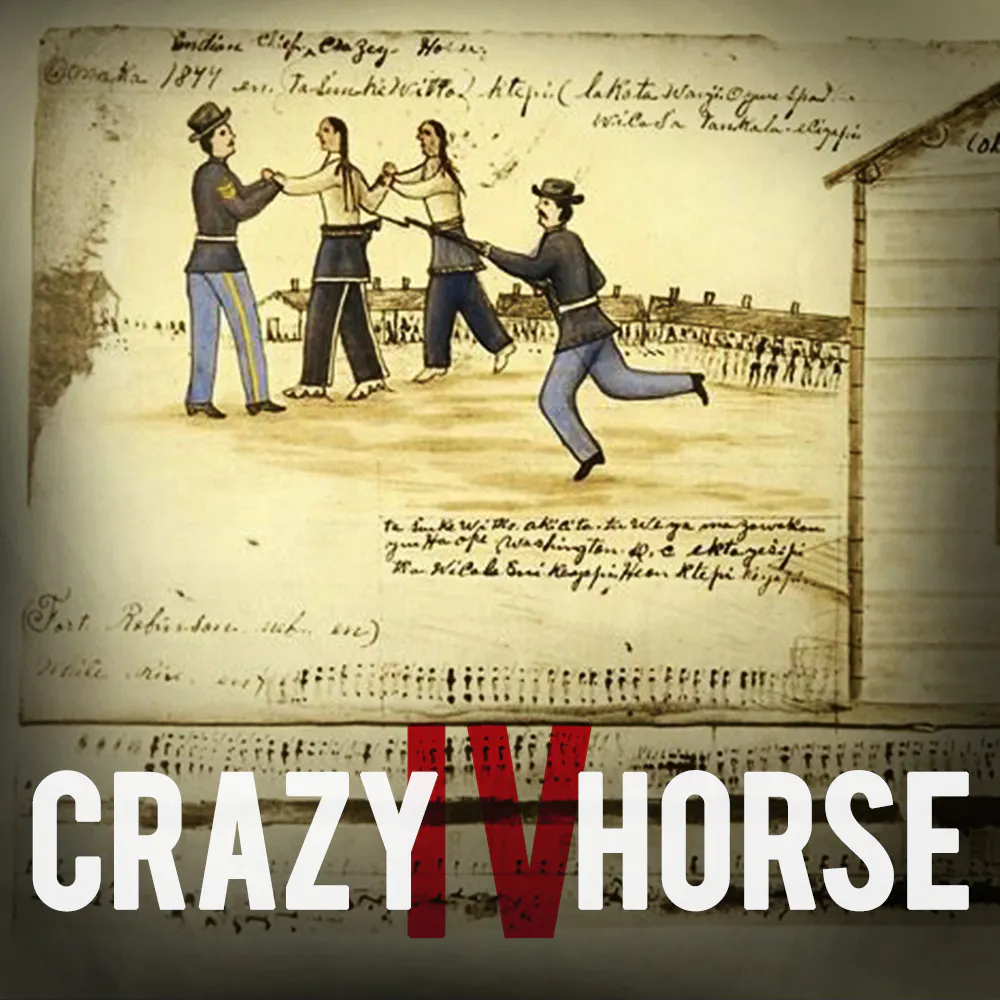
S1 Ep 10EPISODE 10 Crazy Horse (Part 4)
“In your presence they feel small, and their baseness glimmers and glows against you with hidden vengeance.” Friedrich Nietzsche “Let me go, my friend—you have hurt me enough.” Crazy Horse In this last chapter of the Crazy Horse series, we’ll see Crazy Horse hunting miners in the Black Hills, a Lakota leader shaking hands with one hand while holding his guts in with the other, fighting at Slim Buttes, cutting horses open and hiding babies inside them to keep them from freezing, saying farewell to Sitting Bull, surrendering, Crook and his lies, the jealousy of petty chiefs, a hot ‘brown eyed girl’, a shining example of Lakota-American cooperation in setting up a murder, the end of history, Crazy Horse Mountain. This Crazy Horse series is dedicated to James R. Weddell (“Ista To’paicagopi”), a great friend and the subject of http://www.amazon.com/Dakota-Warrior-Story-James-R-Weddell/dp/1495963853 Learn more about your ad choices. Visit megaphone.fm/adchoices
S1 Ep 9EPISODE 9 Crazy Horse (Part 3)
“Hold on, my friends! Be strong! Remember the helpless! This is a good day to die!” Crazy Horse Everything we have seen so far in Crazy Horse’s life was a warm-up. In Episode 9, things really heat up: leadership, a legend in intertribal warfare, a bison apocalypse, Black Buffalo Woman, a bullet in the face, heartbreak sets up home in Crazy Horse’s tepee, drowning pain into an ocean of blood, taking on the Northern Pacific Railroad, round one with George Armstrong Custer, the thieves’ road, fighting on—in the face of hopelessness, Sun Dancing, against the Army at Rosebud and at the Little Bighorn. Plus, the story of the poor man who decided it was a good day to go hunting ducks, and instead run into Crazy Horse. This Crazy Horse series is dedicated to James R. Weddell (“Ista To’paicagopi”), a great friend and the subject of http://www.amazon.com/Dakota-Warrior-Story-James-R-Weddell/dp/1495963853 Learn more about your ad choices. Visit megaphone.fm/adchoices

S1 Ep 8EPISODE 8 Crazy Horse (Part 2)
“There were many bullets, but there were more arrows—so many that it was like a cloud of grasshoppers all above and around the soldiers” Fire Thunder In Episode 8, we pause the blow by blow narration of Crazy Horse’s life to focus on the larger context: the war between Lakota & Cheyenne and the United States in the mid-1860s. In this episode: things heat up with battles at Platte River Station and Red Buttes, “the yellow metal that makes the wasichus crazy”, just for fun Crazy Horse lets soldiers shoot at him, the 1866 State of the Union address misses the target by a mile, painting the Bozeman Trail red with blood, the head of a photographer rolling in a wagon, Captain Brown’s obsession with scalps, the winkte prophet, spirits could use math tutoring, making arrowheads from a frying pan, Lakota warriors honoring a soldier they killed, and after the battle… a dreadful silence, Hieronymus Bosch, and coyotes & crows. Also, General Sherman’s diplomatic reaction (“We must act with vindictive earnestness against the Sioux even to their extermination—men, women and children”), the 1868 Fort Laramie Treaty, and setting fire to the forts. This Crazy Horse series is dedicated to James R. Weddell (“Ista To’paicagopi”), a great friend and the subject of http://www.amazon.com/Dakota-Warrior-Story-James-R-Weddell/dp/1495963853 Learn more about your ad choices. Visit megaphone.fm/adchoices

S1 Ep 7EPISODE 7 Crazy Horse (Part 1):
"What good is power if you cannot protect the ones you love?" muses Cersei Lannister in Game of Thrones. I can’t think of a more appropriate question to discuss the life of 19th century Lakota hero Crazy Horse. His undeniable power as a warrior, in fact, didn’t spare him from having tragedy visit him time and time again. Taking place against the backdrop of the Lakota-U.S. conflict in the second half of the 1800s, his life was the quintessential tale where epic, heartbreak, bravery, and horror mix freely. His people were one of the last Native American tribes to stand in the face of American expansion. And Crazy Horse was always in the thick of the action, throughout over twenty years of intermittent warfare. In the first of this four-part series, we’ll cover the first couple of decades of Crazy Horse’s story, the first dramatic clash between Lakota warriors and the U.S. Army, vision quests, thunder-dreaming, earning the ‘Crazy Horse’ name, Sand Creek Massacre, and calling for revenge. This Crazy Horse series is dedicated to James R. Weddell (“Ista To’paicagopi”), a great friend and the subject of http://www.amazon.com/Dakota-Warrior-Story-James-R-Weddell/dp/1495963853 Learn more about your ad choices. Visit megaphone.fm/adchoices
S1 Ep 6EPISODE 6 The Duel
On July 11, 1804, the vice-president of the United States (Aaron Burr) and the first Secretary of the Treasury (Alexander Hamilton) decided to settle their grievances by drawing their pistols and trying to shoot each other dead. This is the story of the events leading Burr and Hamilton to stop exchanging words and begin exchanging lead. Also, in this episode: the good old days when killing people in a duel was no obstacle to gaining high political office (just ask Andrew Jackson), Abraham Lincoln and his freakish long reach, when the Senate floor was washed in blood, Hamilton’s mom was “whoring with everyone”, Burr’s obsession for women, “Great souls have little use for small morals”, Thomas Jefferson and Vito Corleaone’s advice, Plan B: take over Mexico, when the President wanted to hang his former vice-president, a perfect plan to get Americans more interested in politics. Learn more about your ad choices. Visit megaphone.fm/adchoices
S1 Ep 5EPISODE 5 The 10,000 (Part 2)
In this second and last part of this two-part series, we find out why it is a very bad idea to get on the wrong side of Parysatis, one of the most ruthless queens of the ancient world. We will also run into betrayal, prophetic dreams, epic battles, Xenophon’s rise to leadership, heartbreaking moments, tribal guerrillas in the mountains, poisoned honey, athletic competitions, sweet revenge, and the planting of the seeds for Alexander the Great’s campaigns. Learn more about your ad choices. Visit megaphone.fm/adchoices
S1 Ep 4EPISODE 4 The 10,000 (Part 1)
Legendary historian Will Durant has described the subject of this episode as “One of the great adventures in human history”. In the first part of this two-part series, we meet the main characters of our tale, when a band of over 10,000 Greek mercenaries agree to serve under the Persian prince Cyrus the Younger in a fratricidal civil war against Cyrus’ brother, King Artaxerxes II. This episode will also include a brief history of the Persian empire, tattooed, head-hunting + marijuana-consuming + sweat lodge-partaking tribal peoples, plagues, a cameo by Socrates, Machiavellian political games, the great battle of Cunaxa, and a eunuch worthy of Game of Thrones. Learn more about your ad choices. Visit megaphone.fm/adchoices
S1 Ep 3EPISODE 3 The Iceman
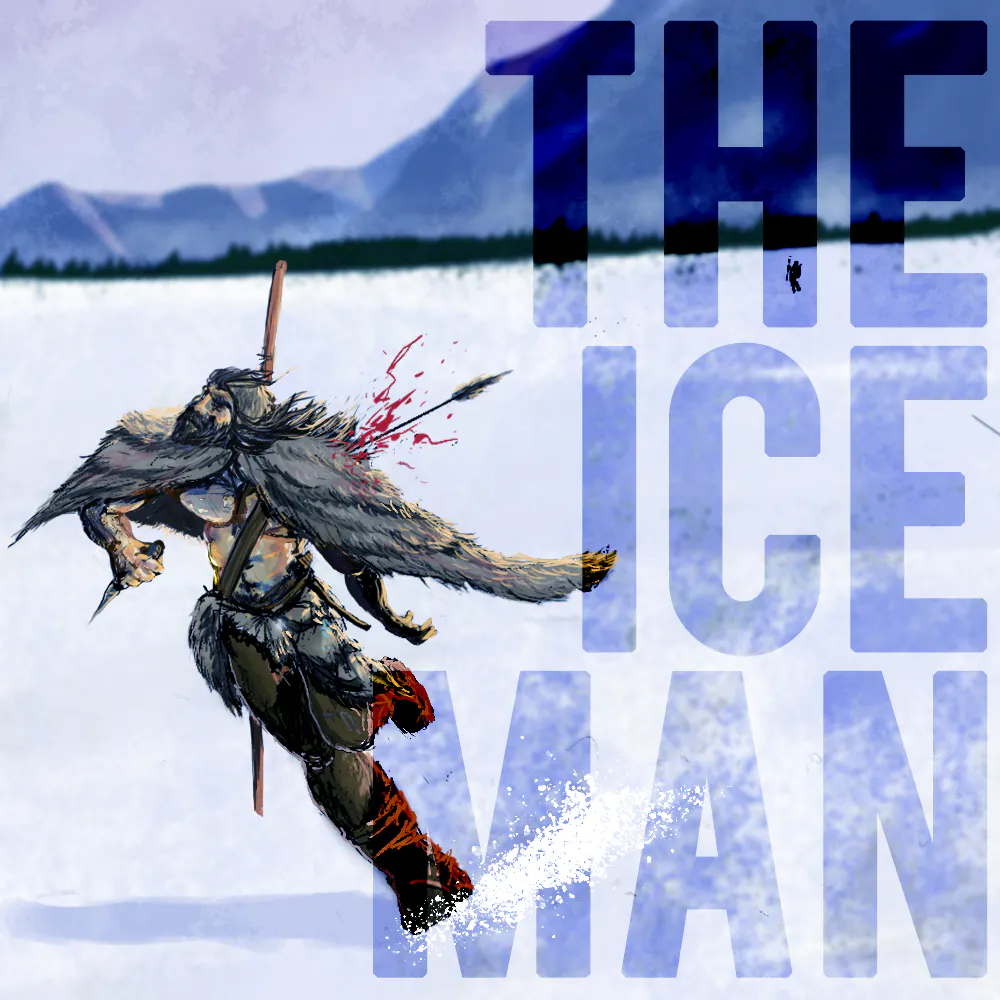
This episode focuses on one of the greatest archaeological discoveries of the late 20th century: the oldest, fully preserved human body ever found. The man emerged from the ice in the Alps over 5,000 years ago after his death. The more archaeologists discovered about him, the more haunting the mystery of his fate became. This is a tale of murder, Neolithic battles, the possibly European origins of acupuncture, the best mountain climber who ever lived, Brad Pitt’s tattoo, and one of the oldest cold cases ever. This is what history looks like when you have no written sources. Learn more about your ad choices. Visit megaphone.fm/adchoices
S1 Ep 2EPISODE 2 The Slave Wars (Part 2: Spartacus)
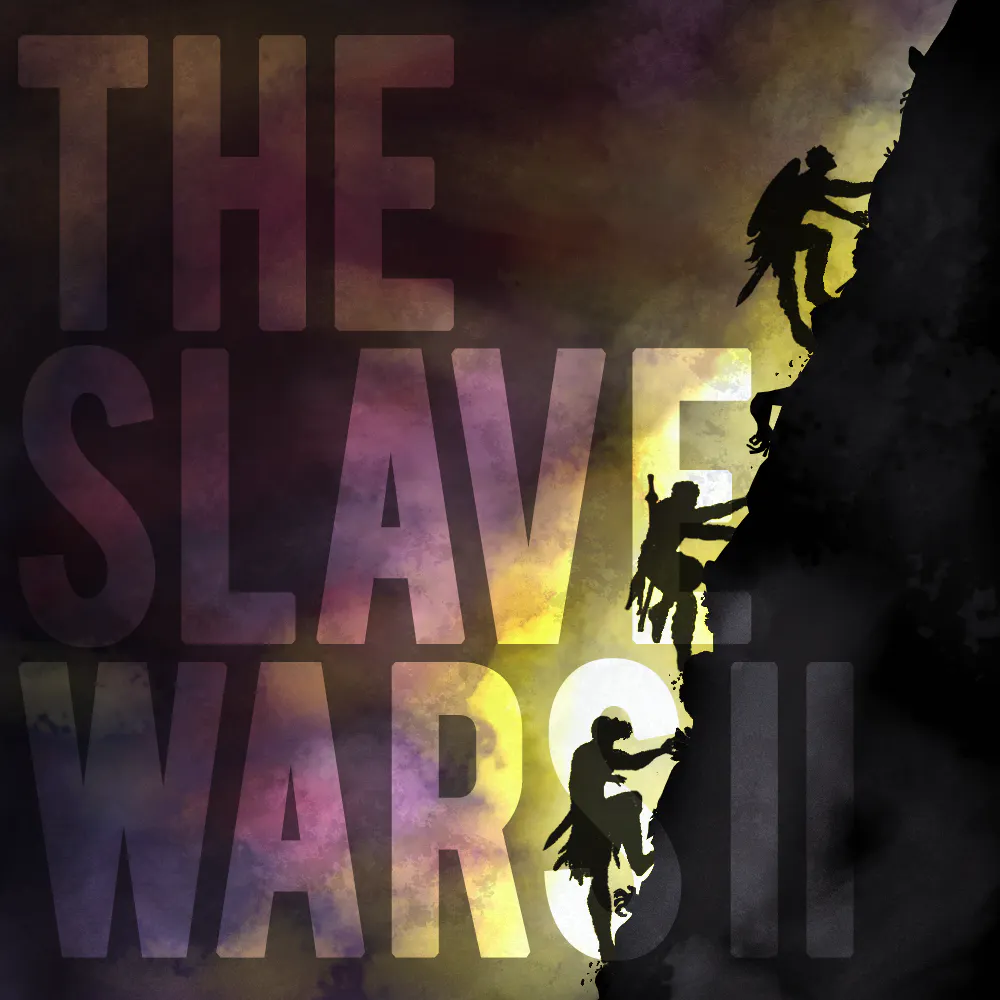
One of the most legendary characters in history comes to visit us in this episode: Spartacus was an auxiliary soldier in the Roman army, a deserter, an outlaw, a gladiator, and the leader of one of the greatest slave rebellions in history. Under his leadership, over 70,000 people defeated the Roman legions multiple times. This episode features mass crucifixions, Dionysian orgies, a master course in guerrilla warfare, walls built with corpses, the most brutal punishment in military history, pirates, and overambitious Romans losing their heads. Learn more about your ad choices. Visit megaphone.fm/adchoices

S1 Ep 1EPISODE 1 The Slave Wars (Part 1)
In the space of a few decades, three major slave wars threatened the Roman Republic. In this episode, we see how the greed of land speculators, tax collectors and slave owners unleashed an orgy of bloodshed as tens of thousands of escaped slaves went to battle against Rome’s armies. Part I of this story covers the first two of the servile wars, and features political intrigues, fire-breathing Syrian prophets, cannibalism, love struck aristocrats arming their slaves, and heroic mass suicides. Learn more about your ad choices. Visit megaphone.fm/adchoices

EPISODE 0 Introduction to History on Fire Podcast
In this quick intro, we explore the guiding philosophy of the podcast, Dan Carlin’s influence, and future plans. Learn more about your ad choices. Visit megaphone.fm/adchoices