
Heavy Or Not - The O.G. Swim Guide
116 episodes — Page 1 of 3
Launch & Gifting Coach Mark's Public Policy Playbook: Aquatics and Recreation 4 Yinzers
Navigating Federal and Provincial Sport Funding: Barry Healy's Fight for Local Recreation in BC, Canada - sorta like PPS needs
ISCA Hall of Fame Tribute video for IU's Ray Looze
ISCA Hall Of Fame Tribute -- Heavy Or Not, episode #112 -- Matt Kredich of Univ of Tennessee
#111 - Doug Cornish on the Swimming Coach Crisis: Why Passion No Longer Pays the Bills
Digital Swimming Passport: Valentin Milkov and Zlix - episode #110
Shitty Best: Redefining Athletic Failure with Unconditional Self‑Acceptance and Neural Science
Shitty Best Explained: How Known, Unknown, and Unknowable Variables Shape Performance (part 1)
World Drowning Prevention Day Highlights New Free Open‑Water Course and Upcoming East Coast Festival
Open water swimming is poised to grow with new competitive opportunities for college teams
For the frustrated swimmers and creators - Hear from author, Brian Holliday, of the UK who talks of the mind-body connection
How OrcaVision Powers Coaches, Parents and Broadcasters with 20‑40 Data Points Per Second
Kate Lundsten's Hall of Fame Induction: Stories of Impact, Humility, and Lifelong Swimming Family
Coach Speaks to City Council in Buffalo, NY, - AI Moonshot in PPS Arsenal - and asking a favor with a link
Pitt Swimming Coach Resigns Amid Strategic Shift. Move Brings Athlete Uncertainty. Resignation in Serbia too.
Unconditional Love and Guidance: A Parent's Role in Shaping Young Athletes
From Perfection to Excellence: How Coaches Inspire Daily Improvement and Belonging

S2 Ep 98Building a Culture of Trust and Clear Accountability with Krista Hawkins, former PAWW swimmer
Truth About Leadership & Why Collaboration Beats a Lone Wolf Mentality In Heavy or Not, The OG Swim Guide, episode #98, we're blessed to pick up a few flash-back comments as well as present leadership insights from a former competitive swimmer who makes us all proud. Way to go Krista! Scott Grates sits down with performance coach, Krista Hawkins, to cover leadership truths, accountability systems, and the importance of holistic self‑care. Her athletic background and the coaching perspectives apply to everyone — from the wee swimmers to CEOs. Krista explains the important elements that coaches, families and humans should deploy. Get straight‑forward, actionable insights drawn from Krista's journey from a shy student just joining the team to a Division‑I athlete and business leader. Why the "leader must know everything" myth is a lie and why collaboration matters. How clear communication and a solid accountability framework drive consistent results. The difference between training (skill‑building) and development (growth) and why both are essential. Why physical health, mental wellness, and spiritual practices are non‑negotiable for effective leadership. Krista's step‑by‑step accountability process: role clarity, goal alignment, regular check‑ins, and actionable feedback. This is part two in a sequence from another podcast, Referrals Done Right with Scott Grates. See Scott's site, show and the original, full interview, #122 https://podcasts.apple.com/us/podcast/122-krista-hawkins-the-leader-you-are-becoming/id1738602897?i=1000758278572 Krista Hawkins' Links: Linkedin - https://www.linkedin.com/company/future-legacy-partners Personal FB - https://www.facebook.com/krista.hawkins.9 Business FB - https://www.facebook.com/FUTURELEGACYPARTNERS Instagram - https://www.instagram.com/_kristahawkins_

S2 Ep 97From Shy Student to Swimmer to Executive Coach: How Coaches Build Unshakable Mental Resilience
Krista and our PAWW Swim Team - flashback with AI In episode #97 of the podcast, Heavy Or Not, The OG Swim Guide, we rejoice in the discovery and shout out of another podcast. Years ago, Krista's journey to the PAWW swim team went from a terrified 12‑year‑old student, to age-group swimmer, to Division I athletes to today's high‑level executive advisor. Come along for the ride and enjoy the flashback with coaching tactics and a story debrief with aid from Notebook AI. Krista's growth to and confidence happened, in part, on the team — with Head Coach, Mark Rauterkus. The mental‑skill system translated from the pool deck to the boardroom — and appeared in a podcast episode elsewhere. Learn: How a competitive swim program became the catalyst for Krista's confidence boost. The specific mindset and accountability framework Coach Mark taught her. Why raw physical talent alone isn't enough for peak performance. How Krista now applies similar principles to coach thousands of business leaders. The broader lesson: elite youth coaching methods can be scaled into powerful executive leadership strategies. Thanks to Scott Grates, and his Referrals Done Right podcast, episode #122 for the interview with Krista. Hear their voices in Heavy Or Not, #98. Show link https://podcasts.apple.com/us/podcast/122-krista-hawkins-the-leader-you-are-becoming/id1738602897?i=1000758278572 Krista's Links: Linkedin - https://www.linkedin.com/company/future-legacy-partners Personal FB - https://www.facebook.com/krista.hawkins.9 Business FB - https://www.facebook.com/FUTURELEGACYPARTNERS Instagram - https://www.instagram.com/_kristahawkins_ How Early Sports Psychology Shapes Future Leaders and Influences Whole Industries

S2 Ep 96Transform our new book into Custom Practice Plans in Seconds with the New Coaching Tool
Coach's Secret Weapon: Quick, Privacy‑First Lesson Plans Tailored to Sport, Age, and Time To the Lesson Generator for Mental Skills for Young Athletes. Break the Closed‑Loop Coaching Hierarchy with Independent Oversight and Transparent Performance Structure In episode #96 of Heavy Or Not, The OG Swim Guide, you'll get a quick introduction to the brand‑new mental‑skills resource for parents, teachers and youth coaches. The lesson generator is a free website that support the book, Mental Skills for Young Athletes. Get the quick how‑to on turning a book into ready‑made practice plans and learn why structural safeguarding is now non‑negotiable. In the second part of the episode, hear of the latest findings on abuse in Canadian sports — swimming included. The free mental‑skills lesson generator: pick a chapter, sport, age group, and time to get a custom 15‑minute practice plan. How the tool integrates Dr. John Hogg's animal‑character stories while keeping all data private—no accounts, no tracking. Quick overview of the "Mental Skills for Young Athletes" book and pricing options for individuals and whole teams. Key takeaways from the Future of Sport in Canada Commission report on systemic maltreatment in competitive swimming. Recommended safety reforms: independent safeguarding officers and decoupled oversight to protect athletes and coaches. Future of Sport in Canada Commission Final Report Transforming Sport in Canada: Time for Action Link to the full report: https://www.canada.ca/en/canadian-heritage/campaigns/future-sport/participate/final-report.htm

S2 Ep 95Preview - Public Policy Playbook for Aquatics and Recreation
Coming soon!

S2 Ep 94Building a Winning Team Culture: Lessons from Elite International Coach, Harkai Hunor
Pillars of Team Success: Consistency, Trust, Adaptability, and Coach Leadership Episode #94 of Heavy or Not, we hear from elite coach Harkai Hunor's playbook for building a winning team culture. Learn the concrete steps you can apply to any sport or organization today. What you'll learn: The seven non‑negotiable pillars of on‑court discipline and consistency. Why off‑court community building is as crucial as X's and O's. Quick‑win tactics for gaining player trust and boosting performance. How to adapt coaching philosophy to players, leagues, and local culture. The coach's ultimate role: embodying the culture and earning respect through character. The difference between a good team and a great team has almost nothing to do with drills or tactics! In a WAFSU.org seminar, international coach Harkai Hunor explains why the real work of coaching happens off the court—through consistency, culture, mentorship, and the small psychological moves that help athletes believe in themselves. Drawing on experience coaching in eight different countries, he shares practical lessons about building team culture, developing players, motivating teams, and avoiding the biggest mistakes young coaches make. If you coach athletes, or plan to, this talk is packed with ideas you can apply immediately. Watch the full seminar at either: https://wafsu.org/course/building-team-culture-lessons-from-a-coach-across-eight-countries/ or on Substack at: Heavy Or Not - The OG Swim Guide Building Team Culture: Lessons from a Coach Across Eight Countries Read more 4 days ago · 2 likes · 1 comment · Mark Rauterkus Download the PDF Transcript: https://wafsu.org/wp-content/uploads/2026/03/build-team-culture-transcript.mp3.pdf

S2 Ep 93Join the Lifeguard Movement: Protect Communities, Oceans, Lakes, Rivers and Swim Pools
Lifeguard Recruiting Campaign: Serve, Train, and Inspire While Safeguarding Water Activities Nationwide Check out the lifeguard recruiting film and the behind‑the‑scenes work that keeps our waters safe, and a bonus fortune insight. We also share a visual preview of the ISCA Senior Cup teams. This episode, #93, is very visual. Those with an audio only feed are missing out on the graphics of the short film and the logos of the teams. What it really takes to be a lifeguard – training, skills, and purpose How to apply through your local lifeguard agency (USLA & Ben Carlson Memorial and Scholarship Fund) Watch the full video on YouTube at https://YouTube.com/@ucanswim Fortune segment: "Don't expend energy trying to be someone you're not" and its link to Mental Skills for Young Athletes, https://swimisca.com Sneak peek of the ISCA Senior Cup 2026 team logos (to gather in St. Petersburg, FL) https://www.usla.org/ https://www.bencarlsonfoundation.org/ https://SwimISCA.org

S2 Ep 92Water: Drowning Prevention Strategies: Community Action, Grants, and Lifesaving Swim Programs
Education, Safety Barriers, and Collaborative Funding Initiatives From Grants to Lifeguards: Building a Safer Water Environment for All Ages Reducing Drowning Risks: Parents, Schools, and Policy Working Together for Water Safety In episode #92, we break down the stark reality of drowning worldwide and explore practical steps to keep kids and communities safe around water. We also discuss emerging grant opportunities in Florida and how local leaders can turn them into sustainable swimming programs. Listen in as Barry and Mark aim to make an impact around the water. Eye‑opening drowning statistics and the WHO's top recommendations for prevention. Why barriers, constant supervision, and basic survival swimming are essential for children of all ages. How Florida's new grant program aims to get every child in the state to learn to swim and what it means for local clubs. Strategies for building multi‑stakeholder coalitions—councils, First Nations, schools, and sponsors—to fund and manage community pools. Tips for linking high‑school pools to instructor training, revenue generation, and sponsor outreach to create lasting impact. Join the club as we aim for harnessing Community Support to Fund Swim Lessons and Prevent Water‑Related Tragedies Water saves lives, but it can also silently kill – 23,000 drownings a year in the WHO European Region, 63 per day. Prevention starts with barriers and constant supervision for children; a moment's lapse can be fatal. Teaching basic survival swimming to all ages builds confidence, not Olympic ambition, and saves lives. Lifeguard and bystander rescue training must prioritize personal safety; one rescue shouldn't become two victims. Coordinated community plans—schools, councils, First Nations, sponsors—turn grants and facilities into lasting drowning‑prevention programs.

S2 Ep 91Urgency, Authority, Call to Action w Marshall & Hall of Fame
Last Splash and Exit of Women Swim and Dive Team at Marshall University, episode #91 Open, Closing, Exit and Calls to Action for WPIAL Swimmers, Broadcasters and the ISCA Hall of Fame Tribute They CUT Women's Swimming and Diving at Marshall University just as the team was departing for its conference meet. Ugh squared. Nobody is explaining the Title IX confusion. In this episode, I break down what's really happening, how you can take action, and why this affects every program in the country. Swim Community: Your urgent steps are necessary on various fronts. If you care about swimming, broadcasting, or protecting women's sports, you cannot skip this episode. I'm unboxing a new book Mental Skills for Young Athletes, calling out a blundering hurd issue, seeking bio insights for WPIAL athletes and asking YOU to help shape the future Hall of Fame Tribute for the class of 2026. Pointer: Jackie Johnson, a voice for women's sports at Facebook reels at https://www.facebook.com/jackie.johnston.5220. https://SwimISCA.com for the book, Mental Skills for Young Athletes WPIAL Show Insights at https://ISCA.blue Upload for Hall of Fame Tributes to https://UCANSwim.WeTransfer.com Broken Hurd. Kate Lundsten Matt Kredich Ray Looze

S2 Ep 89Why College Football's Looming Collapse Endangers All Youth Sports and How to Prevent It
Coach Mark Rauterkus worries that the looming crisis in college football will create a ripple effects across all college sports. He outlines a reform plan, highlights recent program cuts, and offers a path forward. You'll learn in episode #89 of Heavy Or Not, The OG Swim Guide: The urgent need to reform college football before it collapses and drags other sports down. Key takeaways from Coach Nick Saban's interview (Episode 88) and the reform package available at 4rs.org. The fallout from Cal Baptist cutting its men's Division I swimming & diving team and the disappearing full‑time diving coach. How a "pod" system with promotion/relegation could replace money‑driven conference moves (e.g., North Dakota, Sacramento State). The risk of a 30‑team super league ("JV NFL") and why equitable, merit‑based structures are essential for the sport's future. Let's put equity over money. A New, Tiered Model to Preserve College Football's Future needs your help. Here is your call to action. Subscribe. Suggest. Comment. Share. This Heavy Or Not podcast is pushing for a Merit‑Based, Pod System to Safeguard College Sports Are you in?

S2 Ep 88Nick Saban's Five Enemies of Greatness via My New Best Friend at The 7 Minute Leadership Pod
How Entitlement, Discipline, and Complacency Undermine Teams – Insights From Saban Inside Penn State's Quarter‑Billion Dollar Athletic Budget and Its Profit Margins In episode #88 of Heavy Or Not, The OG Swim Guide, you'll meet my new best friend, Paul Falavolito and a snip from his show, The 7 Minute Leadership Podcast. He shares Nick Saban's "Five Enemies of Greatness." Paul's Site, The 7 Minute Leadership Podcast Plus, we'll break down the money behind a powerhouse college athletic department. You'll get practical leadership takeaways and a raw loo k at Penn State's finances. The five hidden threats to performance: entitlement, lack of discipline, choosing circumstance over vision, self‑pity, and complacency. How Saban's "standards over hype" mindset translates to everyday leadership. A step‑by‑step walkthrough of Penn State's $254 M athletic budget – where the cash comes from and where it goes. Why football alone generates 57% of the department's revenue and the impact on other sports. The razor‑thin profit margin and why college‑football reform (promotion/relegation, entry‑fee changes) matters now. Outline 1. Podcast Introduction & Teasers Host – Mark Rauterkus introduces his "new best friend" in podcasting, Paul Falavolito. Mentions Paul's own show "7 Minute Leadership." Announces upcoming content: A deep‑dive with Nick Saban. "A bunch of sports news in college swimming and college sports" that will appear in Episode 89. 2. Leadership Lesson: Nick Saban's Five Enemies of Greatness (7 Minute Leadership) a. Who Is Nick Saban? Most successful modern‑sports leader; multiple national championships. Built dominant programs at several schools over decades. Known for selling standards, not hope – discipline, consistency, daily execution. b. The Five Enemies (each broken down) Entitlement Success whispers "you deserve comfort." Leaders stop preparing, teams rely on reputation. Rent‑based metaphor: respect, trust, results are "rented daily." Lack of Discipline Doing the work when no one's watching; showing up on time. Small lapses (late meetings, cutting corners, ignoring safety steps). Sloppy habits ⇒ sloppy outcomes. Choosing Circumstances Over Vision Letting conditions dictate effort. Great leaders hold the line regardless of budget, morale, or external pressure. Avoids "meteorocracy" (followers drifting with every change). Self‑Pity "No one appreciates us" mindset; excuses become the norm. Kills ownership and responsibility. Leads to rapid decline. Complacency Thinking you've "arrived" – winning becomes expected, effort drops. Turns champions into former champions. Blind spots, reduced hunger, maintenance mindset. c. Overarching Takeaway Enemies sneak in quietly, sound reasonable, and cause damage before they're noticed. Saban's dynasties were built by refusing to tolerate these enemies. Call‑to‑action: Which enemy are you allowing right now? 3. Coaching Reflection & Mental‑Skills Prompt (Fortune Segment) Quote: "Coaches become more knowledgeable by immersing themselves patiently in the systematic teaching of the mental and emotional skills." Presented as a reflection prompt: apply to training, competition, coaching, or life beyond the pool. Suggests writing about the insight to turn ideas into habits. Source: Mental Skills for Young Athletes – John Hogg, PhD (link: swimisca.com). 4. Nick Saban on Player Development & NFL Draft Process Development First: Emphasizes "development as a person, student, and player" over money. Draft Call Statistics: 35 early‑exit players → >1,000 calls from NFL teams. No calls ask about freshman playing time; focus is on development into a player. Character Over Athleticism: Teams ask about character, fit, teammate qualities, leadership. Trustworthiness and ability to represent the organization are paramount. Advice: "Create value for yourself in all those areas." 5. NIL (Name, Image, Likeness) Resources Website & Email List: nil.cloh.org – a hub for NIL information and community. 6. Penn State Athletic Department Financial Deep Dive (Guy Moderator) a. Revenue Overview – Where the ~$254 M Comes From Donations: $64.5 M (pure donor power). Media Rights: >$58 M (Big Ten TV contracts). Ticket Sales: >$50 M (fan attendance). Zero funding from university tuition, state taxes, or student fees. b. Expense Overview – Where the Money Goes Personnel (Salaries & Benefits): >$84 M – the single biggest expense. Athlete‑Related Costs: ~$48 M total, broken into: Scholarships / Athletic Aid: >$24 M. NIL Payments: >$18 M. Educational Awards: ~ $5 M. Facilities & Operations: Significant portion (second‑largest bucket). c. Football Program As the Financial Engine Generates ≈$147 M in revenue – >4 × the combined revenue of all other men's sports and >16 × women's sports. Accounts for 57 % of total department income. d. Bottom‑Line Result & Sustainability Question Total revenues vs. total expenses differ by only ≈$223 K – essentially a "rounding‑error" profit. Highlights the razor‑thin margin model

S2 Ep 90Heavy or Not? The Doping Crisis No One Wants to Talk About | OG Swim Guide #90
Doping at 69?! The Ugly Truth About Recreational Sports. Say "No" to Enhanced Athletes and Their Games In Episode 90 of Heavy Or Not, The OG Swim Guide, we peek into two shocking doping cases. One is involving a 69-year-old Masters athlete and the other is with a 41-year-old cyclist busted at a Gran Fondo. No prize money. No fame. Just ego, insecurity, and a culture obsessed with optimization. When does "biohacking" become cheating? Is TRT just wellness… or is it performance enhancement? And what happens to sport when authenticity gets replaced with chemistry? This episode dives deep into the ethics of performance-enhancing drugs, the rise of anti-aging clinics, and why racing with the body you've earned still matters. If this conversation hit home, make sure to subscribe and share this episode with a teammate who needs to hear it. Strong performance doesn't start with talent — it starts with awareness. You wake up at 4:30 a.m., squeeze in your workout before work… and the guy who beats you brought a pharmacy to the start line. Is that the future of sport? Did you hear of the 69-year-old athlete who just got busted for steroids… and it wasn't for money, fame, or contracts — just ego? Keywords masters athletics doping Gran Fondo doping scandal TRT in sports testosterone replacement therapy athletes performance enhancing drugs amateur sports cycling doping news enhanced games controversy World Anti-Doping Agency rules anti-aging clinics athletes integrity in sports amateur athlete steroids sports psychology and cheating
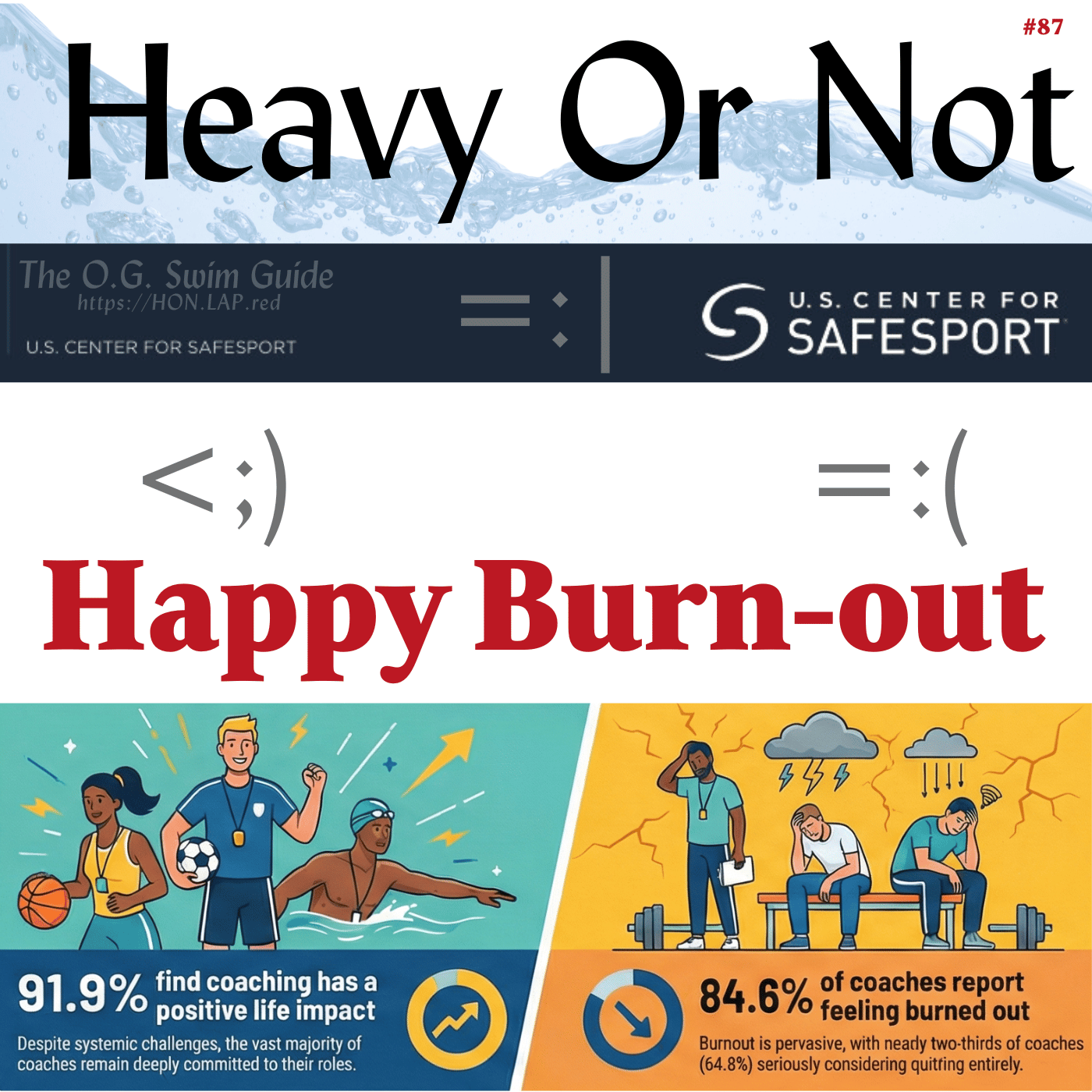
S2 Ep 87Coaching Burnout and Safety: Uncovering the Hidden Crisis in Our Sports Culture
Survey says, 91.9% of coaches say they love what they do… so why are nearly 85% of them facing burnout and ready to quit? The Coaching Crisis is here, now. Few are talking about it — but Barry Healey of BC Canada is. A SafeSport report on its coaches survey began by exposing the hidden crisis in U.S. sports — where passion for coaching is crushed by politics, pressure, and lack of support. Parents, Politics & Pressure = Burnout The biggest burnout driver for coaches? It's not the kids. It's the parents, the politics, and the impossible pressure. Coaches Are Quitting in Droves National survey data uncovers the truth: Coaches are quitting, and it's not because they stopped caring. Verbal harassment, retaliation fears, and racial + gender disparities — sports coaches are under fire. It's time we talked about it. Episode #87 of Heavy Or Not, The OG Swim Guide, examines the U.S. National Coaches Survey from SafeSport. The stark paradox of love‑filled coaching plus crushing burnout is woven in the today's profession. We want you to consider what it means for the future of athletics. 91.9% of coaches say coaching positively impacts their lives, yet ≈ 85% report burnout in the past five years. Safety culture gaps: athletes are prioritized, coaches' well‑being is largely ignored; 96% feel prepared to react to harm, but only ~50% hold proactive prevention talks. Disparities by gender, race, and disability: female and disabled coaches face higher burnout and fear of retaliation; Asian and Black coaches report almost 1‑in‑4 fear retaliation. Parent dynamics: verbal harassment from parents (and peers) tops the list of burnout drivers; coaches call it "worse than children." Recommendations from the field: stronger top‑down leadership and accountability, concrete support for dealing with parents, and expanded training/educational resources. The full PDF report is within a lesson at the course, CYA as part of the Learning Management System of the International Swim Coaches Association at Read.SwimISCA.org. Direct link to the report, PDF, 4.3mb, 94 pages. https://iscaart.sirv.com/wp/pdf/Coaches-Survey-Report-SafeSport-1-28-26.pdf Direct link to the CYA course. Direct link to Read.SwimISCA.org. Link to the Headquarters site for ISCA.org.
S2 Ep 84If you're a new coach, this is your unfair advantage…
The path to elite swim coaching isn't what you think—mentors, conversations, and unspoken rules are more powerful than any degree or software. Episode #84 of Heavy Or Not, The OG Swim Guide explores truths behind elite swim coaching with insights from a 2023 international survey of 123 top coaches. Discover how these pros actually learn, coach, and use (or ignore) technology. And, we wonder have things changed so much in the past few years. Peer‑to‑peer learning dominates – 89% say conversations with other coaches are their primary knowledge source. Mentorship matters – 81% have a mentor; over three‑quarters rate that relationship as "extremely influential." Coaching philosophies evolve – 97% report their approach changes over time, driven by reflection and "episodic" experiences. Technical expertise over communication – Hard‑skill knowledge tops the list of coach priorities; communication ranks near the bottom. Tech and education split – Only ~52% use performance‑analysis software, while university‑educated coaches are far more likely to read research, adopt LTAD models, and employ advanced tools. You'll be shocked how elite swim coaches actually learn—it's not through certifications, but a surprising underground network of mentorship and peer wisdom. Even though swimming feels ultra‑individual in the water, self‑discipline (62.3%) and self‑confidence (58.4%) outrank "team mentality" as the top life‑skills coaches want their athletes to develop. In a sport where you're literally alone in a lane, those inner traits are the real secret sauce. Discipline ranks high. Communication ranks low. The world's top swim coaches are flipping everything we thought we knew about leadership on its head. Soak in the episode now. Then join the conversation – hit reply with your thoughts, questions, or a coaching story you want us to explore next. Become an ISCA member (just $75) for unlimited access to our Global Library at Read.SwimISCA.org, exclusive content, and the learning laboratory we're building with WAFSU.org. Thanks for being part of the swim‑coach community. Your curiosity fuels the next lap! Stay warm and buoyant, Mark Rauterkus Host, Heavy Or Not – The OG Swim Guide International Swim Coaches Association (ISCA) P.S. Got a friend who'd love these insights? Forward this link -- HON.LAP.red —let's keep the ripple effect rolling!

S2 Ep 86Athletic Matrix Formulation - From General Prep to Taper
Heavy Or Not, The OG Swim Guide, episode #86, goes to the realm of a TRACK coach. Much of the planning is similar to swimming and other sports. Unlock the secret behind elite performance: a step‑by‑step guide to building a winning training matrix. Learn how to turn a chaotic schedule into a precise, adaptable roadmap for any athlete. The three‑tier hierarchy: training plan, program, and matrix explained Coach Jose's 8‑week sprint matrix: phases, intensity, volume, and recovery How to progress workouts safely while boosting performance When and how to adjust the matrix for real‑world athlete needs Core coaching principles: athlete‑centered design, balanced structure, and recovery importance The full seminar is available, for free, at the website, https://WAFSU.org. A course there is called, Bygone Seminars. Login and pay nothing. Dennis and Coach Mark host weekly seminars on Saturdays. Join in and then you can ask your questions to the expert coaches. 1. Why a Structured Plan Is Critical for Athletes "Wing‑it" = high risk of overtraining, injury, and uneven development Inconsistent performance when peak condition is left to chance Planning hierarchy: Training Plan → Training Program → Training Matrix 2. The Three Levels of Planning Training Plan – 30,000‑foot view; season‑long roadmap, ultimate goal, timeline Training Program – Detailed roadmap; phases (general prep, pre‑competition, etc.), weekly objectives Training Matrix – Day‑to‑day "coach's bible"; specific exercises, reps, intensities for each session 3. Building an 8‑Week Matrix – Coach Jose Case Study Six basic steps Start with competition date, work backward Set phase‑specific goals Choose key skills to develop Plan intensity, volume, recovery Assemble high‑level program Populate the matrix Four clear phases General Preparation – Build foundation Specific Preparation – Hone speed Pre‑Competition – Sharpen race rhythm Taper – Reduce workload, maximize recovery Week 1 (General Prep) sample matrix Monday: High‑intensity acceleration Tuesday: Lower‑intensity tempo run (active recovery) Wednesday: Hard max‑velocity work Thursday/Friday: Rest days Saturday: Full‑body circuit (moderate load) Week 2 – Progressive Overload Same exercises, but: Acceleration effort ↑ to 100% Jump repetitions increased Phase 3 (Pre‑Competition) shift Goal moves from building fitness → sharpening skills & race rhythm Volume ↓ to limit fatigue; intensity stays very high CNS kept "firing" for peak performance Taper Week Workouts become almost rest‑like Light activities to keep CNS primed Primary aim: full physical & mental recovery for race day 4. Flexibility & Real‑World Adjustments Matrix is a guide, not a set of immutable commandments Coach must watch for warning signs: excessive fatigue, aches/pains, external stress (e.g., school exams) If red flags appear → adjust matrix immediately Two core coaching principles: Know the athlete as an individual (age, history, life context) Avoid classic pitfalls – e.g., treating recovery days as optional 5. Key Takeaways / Coaching Principles Balance structure with flexibility – a solid plan + the ability to adapt Athlete‑centered planning – design around the person, not just the goal Recovery is a training component, not the absence of training Evolve the plan alongside the athlete – continuous monitoring & tweaking 6. Seminar Context & Call‑to‑Action Concepts presented at a recent UCSSC & WAFSU seminar (Saturday) Invitation to attend future seminars; resources available at wafsu.org Archived seminars (track & field, aquatics) also on the site Closing note: thanks for subscribing & encouraging peers to explore "Heavy or Not."
S2 Ep 85AI Coaching Wizard: Grant Application for Transforming Youth Swimming into a Community‑Driven Learning Lab
See the proposal on the web at https://lap.red/moonshot-grant-2026/ Reimagining Pool Coaching: AI Connects, Learns, and Empowers Young Athletes Welcome to episode 85 of Heavy Or Not, The OG Swim Guide, where we reveal a grant proposal to the Remake Learning Network to build an AI‑powered Coaching Wizard for youth swimming programs. We'll explain the vision, the tech, the partnership model, the budget, and the roadmap to launch. The core concept: AI as a connector, not a director, to spark reflection and conversation. How the Coaching Wizard works: personalized prompts, voice/text reflections, and 3‑D avatar feedback. The ecosystem of partners: schools, nonprofits, tech developers, national coaching networks, and media. Funding breakdown: $92 K total, $50 K grant request, $42 K in‑kind partner contributions. 12‑month rollout plan: co‑design workshops, pilot launch, storytelling phase, and final evaluation. Turning Pools into Learning Laboratories with AI‑Guided Reflection and 3D Avatars If you love swimming, tech, or just the idea of turning a pool into a learning laboratory, this one's for you. Key Takeaways AI as a Connector, Not a Director We flip the usual AI‑fear script. The Coaching Wizard isn't a boss—it sparks conversation, reflection, and real‑world connections between kids, coaches, and mentors. See Learning in 3‑D Imagine a digital avatar that mirrors a swimmer's stroke in real time. Those visual cues make progress tangible—no more "I feel I'm getting better" guesswork. Co‑Design From Day One The project runs a summer co‑design workshop where middle‑schoolers actually help build the tool. Their voice shapes the AI, not the other way around. Kids Become Teachers One of the biggest shifts? Youth teaching youth. The plan trains middle‑school swimmers to mentor younger kids, creating a confidence‑boosting feedback loop. Tech That Serves People The Coaching Wizard is built for connection—it prompts reflection, guides dialogue, and fuels empathy, proving tech can be a bridge rather than a surveillance device. Fun Fact The total first‑year budget is $92K, but $42K of that comes from in‑kind partner support. Talk about a true "village" effort! Ready to help? Catch the full video in the link above and also on our YouTube channel, Spotify, or wherever you get your podcasts. We've also dropped a quick link to the proposal on LAP.red if you want to see the grant application yourself.

S2 Ep 83College Football Is Broken — This Radical Fix Might Save It
With chaotic realignments, rigged outcomes, and rising costs — this proposal might present the best hope to save the sport we love. This episode breaks down a bold proposal to reset everything — from the playoff system to who even gets to compete. The NCAA system is broken — and Heavy Or Not, episode #83, lays out the urgent blueprint to fix it. From rigged playoff paths to disappearing rivalries, NCAA Division I football has become less about performance and more about power. In this summary of the 4Rs.org reform proposal, we explore a bold new structure: 80 top teams, regional pods, and real accountability with promotion and relegation. Whether you love or hate the idea, this plan puts fairness, geography, and competition back at the core of the game. Comment your thoughts — would your school survive under this system? Share this with fellow fans, athletic directors, or anyone in the college football world. Full source materials and visuals: [4Rs.org] Episode #83 – Heavy or Not: The OG Swim Guide

S2 Ep 82Relegation Revealed: How Promotion Can Revitalize American Sports and College Football
Relegation & Promotion as part of Sports Reform, especially for NCAA Football D1 Pods In Episode 82 of Heavy or Not, Mark Rauterkus and Barry Healey break down how relegation and promotion work in European soccer and why these concepts could transform American sports. They dive into the mechanics, incentives, and how a U.S. version might look. How parachute payments soften the financial blow for relegated clubs The playoff system that lets teams 3‑6 fight for promotion Real‑world examples: Wolves beating Man U, Canadian owners climbing from the bottom Why a tiered "two‑tier" college football model could succeed in the U.S. Applying relegation concepts to MLB and other American leagues to curb public‑funded stadium builds and keep competition fierce. Details of the college football reform structure elsewhere at the Substack and also with the Sports Reform web site, https://4Rs.org. Also see: https://rauterkus.substack.com/p/fsb-regional-pods-explainer https://4Rs.org

S2 Ep 81Steps for Fixing NCAA DI Football: Structure Changes Begin by Blowing Up the Conferences. Return to Regional Rivals
College football needs a structural reset, and Mark Rauterkus lays out a clear, geography‑first plan for a top‑flight "pod" system. In this episode we break down the proposed 80‑team tier, regional pods, and how promotion and relegation would work. The 80‑team "top tier" built on performance, not brand prestige. Eight regional pods (Gridiron, Trench, Tackle, Pressure, Block, Blitz, Huddle, Grandstand) and their member schools. Promotion/relegation: yearly movement of five teams between the top tier and sub‑tiers. Preserving traditional rivalries and reducing travel through geographic clustering. How the model controls spending, improves competitive balance, and gives every program a pathway forward. Rethinking College Football: A Geographic Pod System for Competitive Balance and Tradition "Imagine a season where every game matters, every rivalry lives, and the only thing that moves you up or down is what happens on the field—welcome to the pod‑powered future of college football."
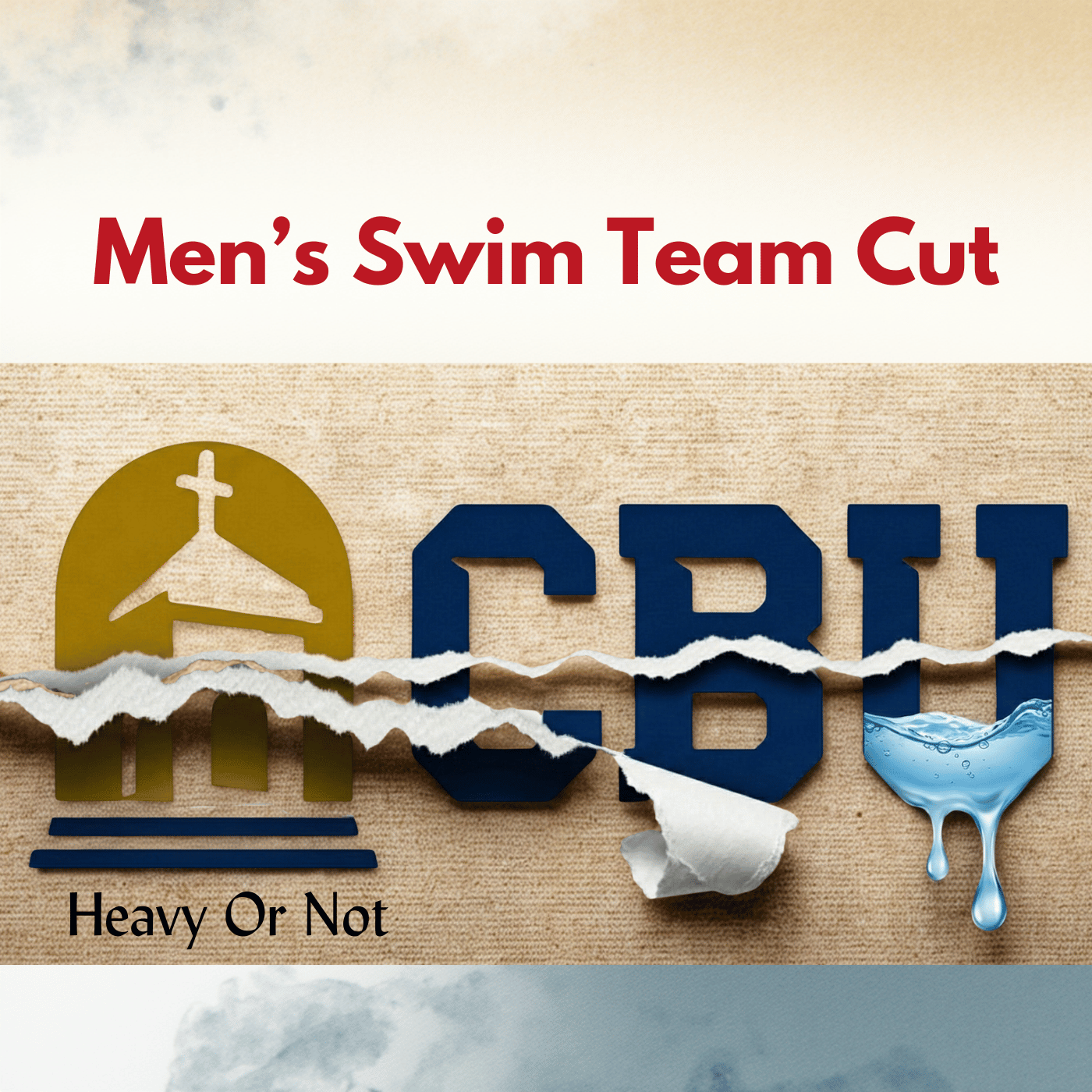
S2 Ep 80Cal Baptist Cuts Men's Swim & Dive Team: A Costly Consequence of Division I Ambitions
From NAIA Champions to Elimination: The Rise and Fall of CBU Men's Swimming Coach Steve Friederang Speaks Out on Lost Opportunities for Male Swimmers at CBU The Cal Baptist men's swim team has been cut, sparking debate over Division I moves, Title IX, and the future of smaller collegiate sports. Hear coach Steve break down what went wrong and why it matters. In this episode you'll learn: The history of Cal Baptist's swim program from NAIA champs to Division I. How facility decisions and budgeting errors contributed to the cut. The impact of Title IX and NCAA rules on men's non‑revenue sports. Coach Friederang's perspective on recruiting, performance analytics, and athlete development. Community reactions and ideas for preserving swimming opportunities (club teams, alumni support, etc.). Hey Heavy Or Not Community, We hit "publish" on an episode with newsworthy significance that covers the shocking cut of Cal Baptist University's men's swim & dive program. Hear from longtime CBU coaching helper, Steve Friederang, the episode unpacks the history, the politics, and the human stories behind a decision that's shaking the college‑swim world. A Quick History Lesson From NAIA champions to Division II glory and the bold leap to Division I—discover how CBU's rapid ascent set the stage for today's dilemma. Why the Axe Fell on the Men's Team Steve explains the "budget‑vs‑Title IX" crunch, the ripple effect of big‑sport revenue, and why the women's program survived while the men's didn't. The Hidden Cost of Going Division I Learn how NCAA rules forced CBU to treat all sports as Division I, inflating compliance costs and squeezing smaller programs. What You Can Do About It From sharing your own stories on our site to joining upcoming webinars, see concrete ways you can amplify the voice of "cut" programs and help protect future teams. The Future of Swimming at CBU (and Beyond) Hear about the club‑team proposal, alumni‑run training groups, and why some coaches argue the university should re‑evaluate its Division I status altogether. We hate to report on this type of story again. It is more than just a single sports team. Here is another sad snapshot of how athletics, finances, and policy intersect in today's collegiate world. Enough is enough. Whether you're a swimmer, a coach, a parent, or just a curious fan, there's something in here for you. And, we're putting out a call to action with some webinars where you can share your comments. Call to Action Watch the episode now: Join the conversation: Head over to HON.LAP.red, drop your name, email, and a comment. We'll add you to our mailing list and keep you in the loop for the next webinars. Share your story: Got a personal experience with a program cut or a club team thriving? Submit it on the form—your voice could be featured in a future episode! Spread the word: Forward this email to teammates, coaches, or anyone who cares about keeping swimming (and all sports) alive on campus. Thanks for being part of the Heavy Or Not community. Your curiosity and passion keep the dialogue flowing. Stay safe and buoyant, Mark Rauterkus Editor, Heavy Or Not, The OG Swim Guide podcast HON.LAP.red and this Substack!

S2 Ep 79School Sports Saved -- past position paper turned the tide of massive cuts
In episode #79 of Heavy Or Not, The OG Swim Guide, we break down a prior war with the Pittsburgh school‑district's Superintendent of Schools. She had a proposal to slash $600 K in sports programs and the comprehensive counter‑proposal helped keep those programs alive. It wasn't a victory, but it wasn't a defeat. Coach Mark walks through the financial, strategic, and community arguments that turned a budget cut into a reform opportunity. The district's cut list (high‑school swimming, tennis, golf; middle‑school volleyball, wrestling; all intramurals) and the $600 K savings claim. Highlights from the 45‑page "Alternative to Fewer Sports" position paper that challenged the cuts. How the paper reframed athletics as a revenue source—e.g., the PPSH2O citywide aquatics model. The three‑step reform plan: community‑led task force, an Olympic‑sports incubator, and lobbying for flexible state rules. The broader value of sports: scholarship dollars, academic gains, attendance boosts, and community pride. More and more we're going to focus upon the road-blocks to sports participation. Sadly, the biggest blocks come from those at the top of the organizational chart — the superintendent of schools, the mayor, the athletic directors, the league administrators. https://aforathlete.fandom.com/wiki/Fewer_Sports_Alternatives_(position_paper) https://notebooklm.google.com/notebook/8afb93c2-e0db-43be-92af-0c7c45a22211

S2 Ep 78Level 1 Swim Secrets from Suriname and Coach Yash
Coach Yash Daryanani shares his Goldwater Sports coaching system, from philosophy to day‑to‑day session management. Learn the core principles that helped him build national teams and clinics. What you'll learn in this episode, #78 of Heavy Or Not, The OG Swim Guide: Coaching philosophy: discipline, patience, and individual attention as the foundation for swimmer development. Essential safety & pool‑management practices (pre‑session checks, shadowing, emergency preparedness). Setting clear parent‑coach boundaries and communication rules. Teaching fundamentals for 10‑and‑under swimmers: water confidence, breathing, kick drills, and fun‑based skill games. Sample 60‑minute session structure and effective motivation/ethics strategies for young athletes. The full seminar is available at the site, WAFSU.org, in a lesson. See https://wafsu.org/course/swim-coaching-for-instructors-level-1-from-coach-yash-daryanani-of-suriname/ Tune into and download the two shorter Public Service Announcements at the Substack site. Mastering Youth Swimming: Discipline, Fun, and Fundamentals with Coach Yash Daryanani Building Confident Swimmers: Goldwater Coaching Philosophy, Safety, and Parent Boundaries From Pool Deck to Olympics: Coach Yash's Blueprint for Developing Young Athletes Discipline, Patience, Individual Attention: Core Values for Successful Swim Coaching Essential Safety Checks and Pool Management Tips for Youth Swim Programs Fun Games, Agility Drills, and Technique Fundamentals for Under‑10 Swimmers Managing Parent‑Coach Boundaries and Maintaining Professional Ethics in Competitive Swimming Effective Communication Strategies to Motivate and Protect Young Swimmers Goldwater Level One Coaching: Structured Sessions, Technique Reviews, and Progress Tracking Overcoming Common Beginner Mistakes: Kicking, Breathing, and Body Position Solutions
S2 Ep 77Steps along the pathway for a coach's wellness journey
Barry Healey cares about the coaching profession and aims to improve sports In this candid conversation, episode #77 of Heavy Or Not, The OG Swim Guide, coaches Barry Healey and Mark Rauterkus discuss the real‑world challenges of running a swim program. Wellness matters to those on the pool decks. Burnout to compliance…. They sharing practical tricks that actually work. Learn how small changes can protect coaches, calm parents, and boost program growth. What you'll discover: The hidden costs of coach burnout and why many lack a support system. Proven strategies for managing young swimmers and easing parental stress on race day. How a simple "whistle‑and‑wait" routine cuts chaos and keeps kids on schedule. Designing bite‑sized, interactive coach training that fits busy lives. Using the LAP (Lifestyle Aquatics Programming) platform to turn swimmers into repeat, paying customers Discussion Questions – "The Realities of Coaching & Growing a Swim Program" What are the biggest hidden costs (time, emotional, financial) that coaches like Barry experience, and how can clubs help mitigate them? Barry mentions that many coaches feel "stubborn" and resistant to change. What strategies could a swim program use to foster a culture of openness and continuous improvement among staff? How does the lack of a formal support system (e.g., a "chaperone" or mental‑health resource) affect coaches, athletes, and parents, and what low‑cost solutions could fill that gap? The story about the senior referee orchestrating a calm "first‑year" session demonstrates a simple yet powerful intervention. What other "small‑scale" practices could be replicated to reduce stress for young swimmers and their families? Barry talks about coaches being sued for either bullying or "lack of attention." How can a swim club create clear policies and documentation that protect both coaches and athletes while still encouraging a supportive environment? In what ways do mandatory requirements (CRB checks, first‑aid certification, etc.) serve as a quality‑control model for swim programs, and how might those standards be leveraged to market the program to parents? The conversation touches on the need to break down online courses into bite‑size chunks for busy coaches. What are the most effective formats (micro‑learning, webinars, interactive PDFs, etc.) for delivering professional development in this context? How can swim programs balance the tension between keeping fees affordable and maintaining high‑quality, "must‑have" resources that justify a premium price point? Barry and Mark discuss the importance of "win‑win" outcomes for both coaches and the organization. What specific metrics or feedback loops could be implemented to measure and reinforce these mutually beneficial results? Considering the moderator's "playbook" (capture swimmers → generate leads → convert → get reviews → reactivate), what role should community building and storytelling play in each stage, and how can clubs authentically integrate them into daily operations?

S2 Ep 76Challenge Accepted: Filling the Big Data Void in Aquatics
Nicole's heavy lift. A vision for data collection for swimming instruction. Nicole Fairfield explains why the aquatic education field lacks solid research data and how her Joyful Waters curriculum craved that data. She aims to fill the research gap and is planting seeds for scientific validation for all types of aquatic developmental benchmarks. She also outlines the vision for a secure, comprehensive database to track developmental and adaptive outcomes. In this episode, #76, of Heavy Or Not, The OG Swim Guide, you'll hear from the ambitious instructor in Georgia and learn: Why current swim‑lesson reporting (e.g., Red Cross) misses critical information like caregiver involvement and birth order. How Joyful Waters combines trauma‑aware, developmentally‑informed methods for babies, kids, and adults. The plan to build a secure, national database that collects detailed learner and instructor data for IRB‑level research. Real‑world applications: adaptive swimming for children with special needs and preparation for Customs & Border Patrol swim tests. Steps instructors and parents can take today to start contributing data and improving aquatic education outcomes.

S2 Ep 75This Polo Coach Cracked the Code to Athlete Growth (No Pool Needed)
The 30-Day System That's Transforming Young Athletes – Here's How "Everyone says hard work is the key… but what if that's not enough? In this episode, we unpack a 30-day system that's turning water polo players into unstoppable athletes — and it might just change how you train forever." In this episode of Heavy Or Not, we dive deep into Coach Ron Usher's 30-day growth system built for young water polo players but powerful for any athlete striving to improve. From mindset to skill development to daily habits, this episode unpacks the core principles behind real athletic progress — consistency, clarity, and character. Whether you're in the pool, on the field, or chasing personal goals, this playbook offers a step-by-step approach to getting better without burning out. 🧠 Discover how to: Take an honest self-assessment Turn vague dreams into actionable goals Build daily momentum through check-ins Make progress that actually sticks SUBSCRIBE to the Heavy Or Not Podcast for more elite mindset and training insights 📤 Send this episode to a teammate or coach who needs to hear it 📘 Grab the journal Coach Usher created → Link in the show notes! Buy the ebook on Gumroad.com.

S2 Ep 74400 IM - How Phelps and Marchand set records and insights from India's Coach Partha. Negative SPLIT
Unlock the secrets behind mastering the 400 IM with elite coach from India, Partha Pratim Majumdar. Learn the strategic, aerobic, and mental tools that power world‑record swims like Phelps and Marchand. In this video you'll discover: Why the 400 IM is a strategic race, not just brute strength nor conditioning, and how the "lactate penalty" impacts performance. How to build a massive aerobic engine by focusing on long‑axis strokes (freestyle & backstroke). The "200‑meter rule" and why mastering each 200 -meter stroke guarantees a smoother 400 IM. Training methods for negative splits, including progressive 400 IM intervals and race‑pace simulations. Mental‑strength drills that turn physical training into unstoppable confidence for race day. The full seminar and clinic on the 400 IM is in the course of bygone sessions at WAFSU.org. Be sure to check out and subscribe to the World Aquatic Federation of Schools & Universities at WAFSU.org -- supported by the International Swim Coaches Association at SwimISCA.org and also by UCSSC.
S2 Ep 73Rich Coach or Poor Coach -- Get a Learn To Swim Lesson Program and UCANSwim.org can help
"From Drowning Stats to Million‑Dollar Swim Schools: How Coaches Turn Pools into Profit (and Safety)‑First Empires" Swim Coaches Can Earn Six Figures by Adding Structured Lesson Sessions The Australian Success Secret: Integrated Lesson Programs Drive Performance and Profit In this episode, Steve Friederang breaks down why every swim coach should run a lesson program—and how it can become a serious revenue stream while boosting safety and recruitment. He shares real‑world numbers, proven strategies, and the pitfalls to watch out for. Why lesson programs are essential for recruiting elite swimmers and keeping kids safe. The financial upside: a simple model that can generate six‑figures annually. How to structure lessons (group size, pricing, scheduling) for maximum profit. Leveraging partnerships with organizations like ASCA and the American Swim Teachers Association. Navigating insurance and legal hurdles to set up a successful swim school. See: https://UCANSwim.org

S2 Ep 72Negotiated Surrender - Vote‑of‑No‑Confidence for the Head Coach Highlights Team's end-of-season Banquet
Safety Dilemma and League Issues. Have mercy on the Foxes as they are sly! In episode #72 of Heavy or Not we break down the bizarre "vote‑of‑no‑confidence" resignation tactic of a Fox Chapel Area high‑school coach and its athletic department. Sure, there is a deeper safety and fairness crisis driving it. Plus, I'm certain some wire pullers are lurking like sly foxes do. We also explore the district's league‑restructuring proposal and why athletic reform matters now more than ever. What you'll learn: How a coach's "negotiated surrender" forces parents to vote on his job. The safety risks caused by extreme roster size mismatches in high‑school football. Fox Chapel's three‑step data‑driven plan to create balanced, safer leagues. Why some districts are considering alternative fall sports like water polo and swim. Ongoing calls for broader athletic reform—from high‑school leagues to college‑level playoffs.

S2 Ep 71How Insurance Gaps and Governance Failures Threaten Swim Coaches' Careers
How Insurance Gaps and Governance Failures Threaten Swim Coaches' Careers Uninsured. Unheard. Undervalued. Real challenges facing swim coaches are pondered. Why they're left out of the decision‑making table, the insurance maze, and what's needed to keep the sport of swimming (and others) thriving. Coach Barry Healey, BC, Canada, and Mark Rauterkus, International Swim Coaches Association in the USA, break down the roadblocks and propose concrete steps. Why coaches aren't at the table with health and policy makers. The tangled insurance landscape (LEI, Lloyd's, Marker, SwimBC, Swim Canada, Club Policies) and coverage gaps. Three major risks for professional coaches: intimidation, defamation, and performance issues. Strategies for coach retention, education, and making the profession sustainable. Action items: advocacy, quizzes, and partnerships to drive change in the swimming community. More at the course, CYA at Read.SwimISCA.org. Inside the Coaching Crisis: Insurance Loopholes, Board Exclusion, and the Fight for Fairness. Free CYA Course with additional details is at https://Read.SwimISCA.org

S2 Ep 70Swimming's Geo Political $.02 - Tiny snip of a conversation with Jonty, Dennis and Mark
Take a peek at Coach Jonty's holistic approach to athlete development and the geopolitical factors shaping swimming. This clip highlights a few insights from Jonty Skinner's recent WAFSU seminar. In this video you'll learn: How Coach Jonty connects with kids and leverages holistic development. The genetic and regional patterns that produce world‑class runners and swimmers. South Africa's historical impact on elite athletics and its modern swimming scene. Emerging swimming talent from Tunisia and broader African nations. Where to watch the full two‑hour seminar on wafsu.org and how to stay updated. https://WAFSU.org

S2 Ep 68Christmas Break Just Got Lit - AI generated anthem to launch your holiday training with serious vibes. (#Plan Now)
The Swim Team Song You Didn't Know You Needed An AI Made This Swim Team Song You won't believe what happens when AI writes a holiday anthem for swim teams heading into Christmas break! Christmas Break Planning Happens NOW. Swimmers, this one's for YOU. Episode #68 of Heavy Or Not, The OG Swim Guide drops a brand new AI-generated song to launch your holiday training with serious vibes! This AI-generated track is about to become your new favorite swim team anthem for winter break. Okay, we let AI take over the studio. Do you have room on your holiday training playlist, for travels, for guilt trips, for staying motivated? Happy to give you all something fun to kick off your Christmas season. Don't skip this episode. AI + swim culture = a podcast moment you'll never forget. Steve Friederang drops in to share his wisdom. Thanks to Coach Kile for raising this concern of winter breaks in a prior episodes.

S2 Ep 67Hire Coach Terry Smith, says a PSU fan, because ... (Know your why) Heavy Or Not, #67
Matt made signs and took them to the recent games and sent a letter to the President of Penn State University to support Terry Smith. It seems like you are under a lot of pressure to deliver a national championship. You may not remember me, but we met briefly in the Marriott lobby the day before the Rose Bowl. You were kind enough to record a quick, encouraging message for my friend's wife while she was battling cancer. That moment stayed with me—and with my friend—for a very long time. That video meant more to their family than you could ever know. From a fan of over 30 years who embodies what it means to be a true Penn State supporter, I'll be brave enough to say this: it is okay if we do not win a national championship. If we define success solely—or even primarily—by that single standard, we risk losing the joy, purpose, and identity of what it truly means to be a Penn Stater. If we stay true to the mission and values Penn State Football has always stood for, the results—and the championships—will come in time. I say that not because I don't want to see Penn State win a national championship in my lifetime. I absolutely do. I say it because of what I've observed across the college football landscape—the game I love—where an unreasonable belief has taken hold among countless fan bases, a belief that has distorted—and in many cases captured—the love, enjoyment, and true purpose of what college football is all about. There is a growing notion that because of the transfer portal and constant player movement, national championships can be won overnight. And if they are not, then the season—and even the purpose of a football program—is labeled a failure. That belief is utterly false. Would it be the worst thing in the world to pause for a moment and reflect on what our true mission is for Penn State Football in this process? Is it to win at all costs? Is it to make every last penny possible? Or is it to build something we can proudly tell our kids—and the next generation—about, something "We Are" proud to protect and build? I've been a Penn State fan for over 30 years. I've collected more than 100 game-worn jerseys, flown all over the country for bowl games, and flown back several times a year while living in Hawaii—often a 35-hour round trip—just to be in Beaver Stadium supporting my team. I also took my son to his first Penn State game at just five months old—the Rose Bowl. Along the way, I've formed genuine relationships with other fans, coaches, and players because my support has always been authentic and rooted in love for this program. Some people know me simply as Matt from pennstatejerseys on Instagram. After tough losses, I still find myself asking a familiar question: Why do I watch Penn State Football? The answer never changes—it's the people, not just the outcome. Every fall Saturday, Beaver Stadium is packed, and "We Are" chants unite this community in a way nothing else can. I also want to be transparent. I am the individual who printed 150 "Hire Terry Smith" signs and personally handed them out at the Nebraska game—followed by another 500 signs at the Rutgers game. I did this for one reason only: to show visible, genuine support for a man who has spent his career serving Penn State without fanfare, leverage, or entitlement. This was not about attention, pressure, or influence. It was about standing up for a coach who does not have a powerful agent shaping his narrative, who is not represented by a major agency, but who has consistently served this university with humility and loyalty—without asking much of anything in return. It was a simple gesture of respect—for service, commitment, and belief in what Penn State Football is supposed to represent. I want my children to care deeply about things—and to see that their father did everything he could to stand up for someone he believed needed a true voice, simply to get the conversation started about being seriously considered for this job. Over time, the bigger picture has become clearer to me, and that clarity has only made Penn State Football more meaningful. Purpose Before Position: We tell Penn State students—and our kids—all the time: find something you truly love, and you'll never work a day in your life. When someone is driven by passion and purpose, that energy leads not only themselves, but everyone around them, toward success. The opposite is also true. When someone is motivated primarily by money, titles, promotions, or simply the next job on the résumé, they often find themselves stuck in a constant cycle—one that is never fully satisfying and never deeply purposeful. When I look around college football today, that is exactly what I see in many coaching searches and coaching careers. Too often, coaches are not building something—they are chasing something. The result is constant turnover, fractured locker rooms, and programs that never quite know who they are. Purpose matters. Motivation matters. And who a leader is when no one is watc

Recruiting Heart Over Hype
Episode #66 of Heavy Or Not, The OG Swim Guide Small-school recruiting, inspiring youth through swimming, international outreach, and Kyle's unique journey in swim development. UPJ Might Be the Best Kept Secret in College Swimming. D2 schools can attract elite talent, and Coach Kile Zimmer is building at UPJ. He might change your mind about the value of a branch campus! From Dubai to Johnstown – This Coach is Recruiting Worldwide too. Coach Kile Zimmer isn't just building a swim team, he's crafting a campus community. Hear how he's reaching athletes from India, France, Brazil, and beyond. Many Coaches Don't Talk About This. Understand what makes a coach go from good to unforgettable. Coach Zimmer reveals the one thing most coaches overlook, but he lives by. The #1 Cause of Death for Kids Under 8… And What This Coach is Doing About It This episode goes deeper than college competition. Coach Zimmer is on a mission from God to prevent childhood drowning. In his past position in an assistant at a rural college campus, he taught 200 kids to swim. How a Small Swim Team went on a Pathway to National Recognition One of his prior club swim teams, with just 48 swimmers, produced elite athletes who dominated at Spring Juniors? Coach Zimmer shares how he built a powerhouse in a tiny town. Now he is gearing up for the next challenge of building a program at D2 UPJ. The one thing Coach Kile Zimmer seems to live by, and emphasizes throughout the interview, is this: "Serve selflessly and inspire through swimming." This philosophy shows up repeatedly in his words and actions: He volunteers with USA Swimming and values giving back without expecting anything in return. He emphasizes building relationships, not just recruiting stats. He talks about instilling a love of swimming and helping others reach their potential—whether that's coaching kids, mentoring coaches, or serving underserved communities. He refers to his mission as a "calling from God" to help people through swimming—from preventing childhood drownings to developing elite athletes. In his own words: "When you're blessed to help people… you instill the love of swimming and inspire them. It's my mission from God. That's what I do in life.". That's the heartbeat of his message—and it's powerful.
S2 Ep 65Navigating Division Shifts: Swim Coach, Kile Zeller on St. Francis's Move from D1 to D3
Now at UPJ and focused on recruiting with a local priority but international hopes. Building a Competitive Swim Program at UPJ: Scholarships, Recruiting, and Team Culture From Tears to Triumph: How St. Francis Swimmers Stayed Strong After Division Change There is no playbook on that heavy administrative downgrade. The Coach‑Athlete Relationship: Trust, Recovery, and Performance in Collegiate Swimming Balancing Academics and Athletics: Affordable Tuition and Scholarship Strategies at UPJ Recruiting with Heart: Why Coach Zeller Prioritizes Team Fit Over Finances Taper Strategies Across Sports: Lessons from Wrestling Applied to Swimming Success Embracing D3 Opportunities: Why St. Francis's Division Drop May Benefit Swimmers Inside a Growing Swim Team: Challenges, Bus Rides, and Community Support at UPJ Staying Present in a Distracted World: Coach Zeller's Advice for Young Athletes Coach Kile Zeller talks about the heavy news from the shift and St. Francis' move to Division III. He was in the process of getting hired as the new and original coach at Univ of Pittsburgh Johnstown, of D2. Learn how a funds its swim team, and what his day‑to‑day coaching philosophy looks like. He also shares insights on recruiting, athlete‑coach relationships, and campus collaboration. The transition of St. Francis from D1 to D3 and its impact on swimmers UPJ tuition costs, academic aid, and the limited athletic scholarships available Recruiting approach: honesty, fit, and keeping athletes on campus for the long term Coaching style: trust, communication, recovery work, and individualized stroke analysis Cross‑sport support at UPJ: working with wrestling, soccer, compliance, and campus resources