
Show overview
Hanselminutes with Scott Hanselman has been publishing since 2006, and across the 20 years since has built a catalogue of 1,014 episodes. That works out to roughly 570 hours of audio in total. Releases follow a weekly cadence.
Episodes typically run twenty to thirty-five minutes — most land between 32 min and 36 min — and the run-time is fairly consistent across the catalogue. None of the episodes are flagged explicit by the publisher. It is catalogued as a EN-US-language Technology show.
The show is actively publishing — the most recent episode landed 2 months ago, with 26 episodes already out so far this year. Published by Scott Hanselman.
From the publisher
Hanselminutes is Fresh Air for Developers. A weekly commute-time podcast that promotes fresh technology and fresh voices. Talk and Tech for Developers, Life-long Learners, and Technologists.
Latest Episodes
View all 1,014 episodesCompile after Class Crossover Episode
Robots, Nukes, and AI: A Career at the Frontier with Maynard Holliday
Language Model Builder with Felix Rieseberg
AI and the Software Supply Chain with Endor Lab's Varun Badhwar
Stack Overflow for the Agent Era - with VP of Product Alex Lato
Who is left behind when AI moves fast? with Dr. Chinasa T. Okolo
The space between the Commits with Zed and DeltaDB's Nathan Sobo
Braille Is Freedom with Bristol Braille's Ed Rogers
"Observabilitying" the Future of Software with Charity Majors
Cloud Commitments Without the Lock-In with Archera's Aran Khanna
How IBM Z Is Modernizing Mainframes with Skyla Loomis
Making opinionated AI tooling decisions with Nimbalyst's Greg Hinkle
The Joy of Unplugging Cables: Kelly Shortridge on Security Resilience
Why Tori Westerhoff says we should talk to strangers

Ep 1041Building the Internet with sendmail's Eric Allman
In this episode, in association with the ACM ByteCast, Scott talks with Eric Allman, one of the foundational figures of the early internet. Best known for creating Sendmail, the mail transfer agent that powered a large portion of global email infrastructure through the formative years of the network, Allman helped shape how messages move across the internet. Their conversation explores the origins of internet email, the messy realities of building software that must operate at planetary scale, and what lessons today’s engineers can learn from the systems and design decisions that quietly underpin modern computing.

Ep 1040A cognition engine for science with Allen Stewart
Scott Hanselman sits down with Allen Stewart, Partner Director of Software Engineering at Microsoft, to explore how AI agents with persistent memory are transforming scientific research and software engineering. Allen explains how his team built an AI system that learns from every investigation turning a 12-day autonomous drug discovery run into reusable knowledge that makes future research exponentially faster. Instead of starting from scratch each time, the AI inherits hypotheses, methodologies, and findings from previous work, saving hundreds of millions of tokens and weeks of effort.

Ep 1039Agentic Workflows with Don Syme
In this episode, Scott talks with Don Syme about the emerging world of agentic developer workflows and what it means when coding tools move from autocomplete helpers to collaborators. They explore how modern tools like GitHub Copilot and GitHub Agentic Workflows are evolving into systems that can plan, execute, and iterate on tasks across a codebase, and what that means for software design, type systems, and developer responsibility. https://github.github.com/gh-aw/

Ep 1038Inference Engineering with Baseten's Philip Kiely
This week on the show, Scott talks to Philip Kiley about his new book, Inference Engineering. Inference Engineering is your guide to becoming an expert in inference. It contains everything that Philip has learned in four years of working at Baseten. This book is based on the hundreds of thousands of words of documentation, blogs, and talks he's written on inference; interviews with dozens of experts from our engineering team; and countless conversations with customers and builders around the world. https://www.baseten.co/inference-engineering/

Ep 1037That's good Mojo - Creating a Programming Language for an AI world with Chris Lattner
What does it take to design a programming language from scratch when the target isn’t just CPUs, but GPUs, accelerators, and the entire AI stack? In this episode, I sit down with legendary language architect Chris Lattner to talk about Mojo — his ambitious attempt to rethink systems programming for the machine learning era. We trace the arc from LLVM and Clang to Swift and now Mojo, unpacking the lessons Chris has carried forward into this new language. Mojo aims to combine Python’s ergonomics with C-level performance, but the real story is deeper: memory ownership, heterogeneous compute, compile-time metaprogramming, and giving developers precise control over how AI workloads hit silicon. Chris shares the motivation behind Modular, why today’s AI infrastructure demands new abstractions, and how Mojo fits into a rapidly evolving ecosystem of ML frameworks and hardware backends. We also dig into developer experience, safety vs performance tradeoffs, and what it means to build a language that spans research notebooks all the way down to kernel-level execution.
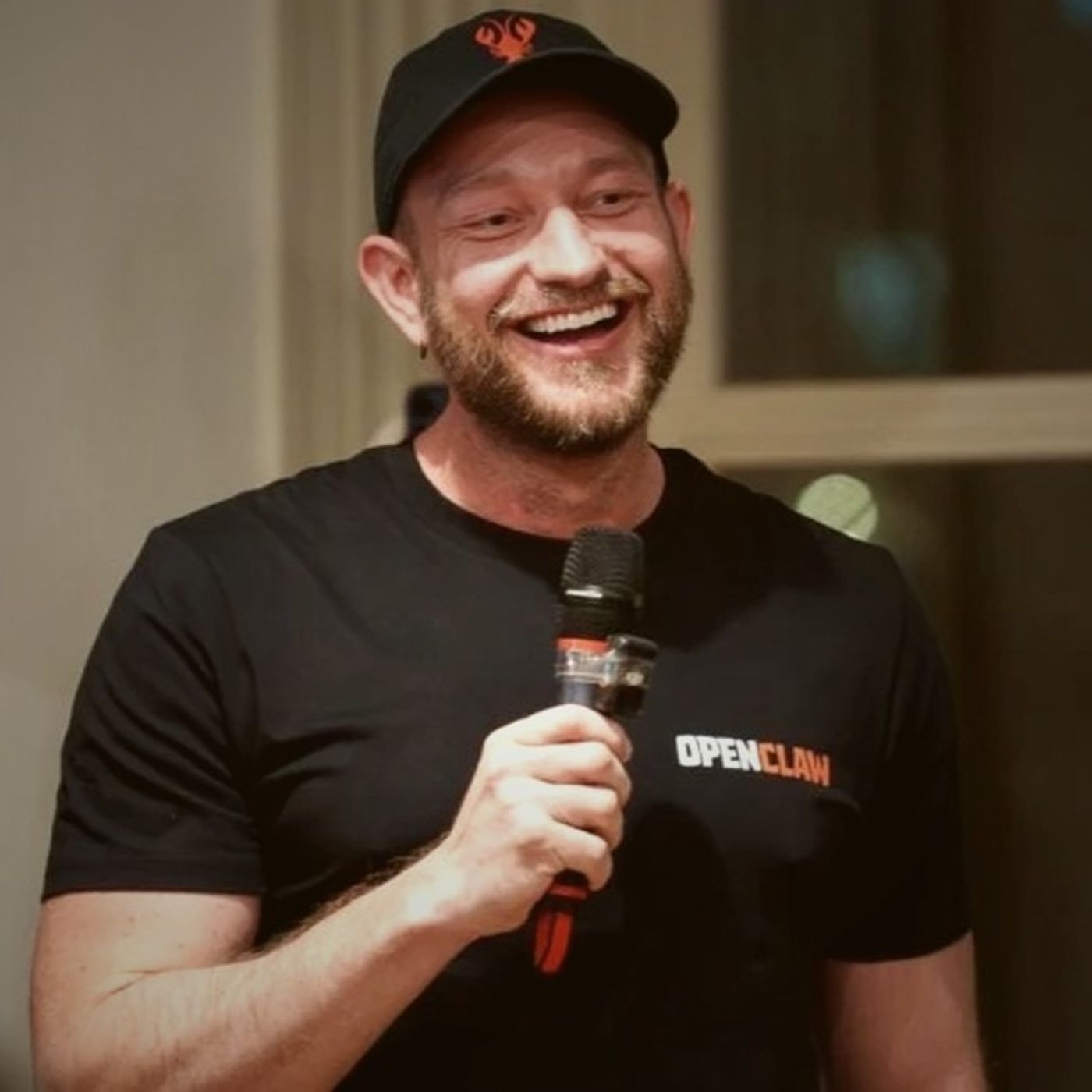
Ep 1036The Rise of The Claw with OpenClaw's Peter Steinberger
There’s a new wave of AI tools that don’t just live in the cloud, don’t just autocomplete code, and don’t just sit in a browser tab. They reach into your local environment, understand your context, and act more like a thinking companion than a chatbot. In this episode, I talk with Peter Steinberger, founder of OpenClaw, about the rise of “The Claw” and what it means to build AI that feels fast, personal, and deeply integrated into your workflow. We explore why OpenClaw is having a moment, how developer expectations are shifting from prompts to agents, and what it takes to design tools that balance power, safety, and usability. Peter shares the architectural choices behind OpenClaw, the tradeoffs between local and cloud inference, and his perspective on privacy, ownership, and latency in a world of ever-larger models. This is a conversation about control. Who owns your context? Where does your data live? And what happens when AI stops being a destination and starts becoming an ambient layer across everything you do?