
Groundings
73 episodes — Page 2 of 2
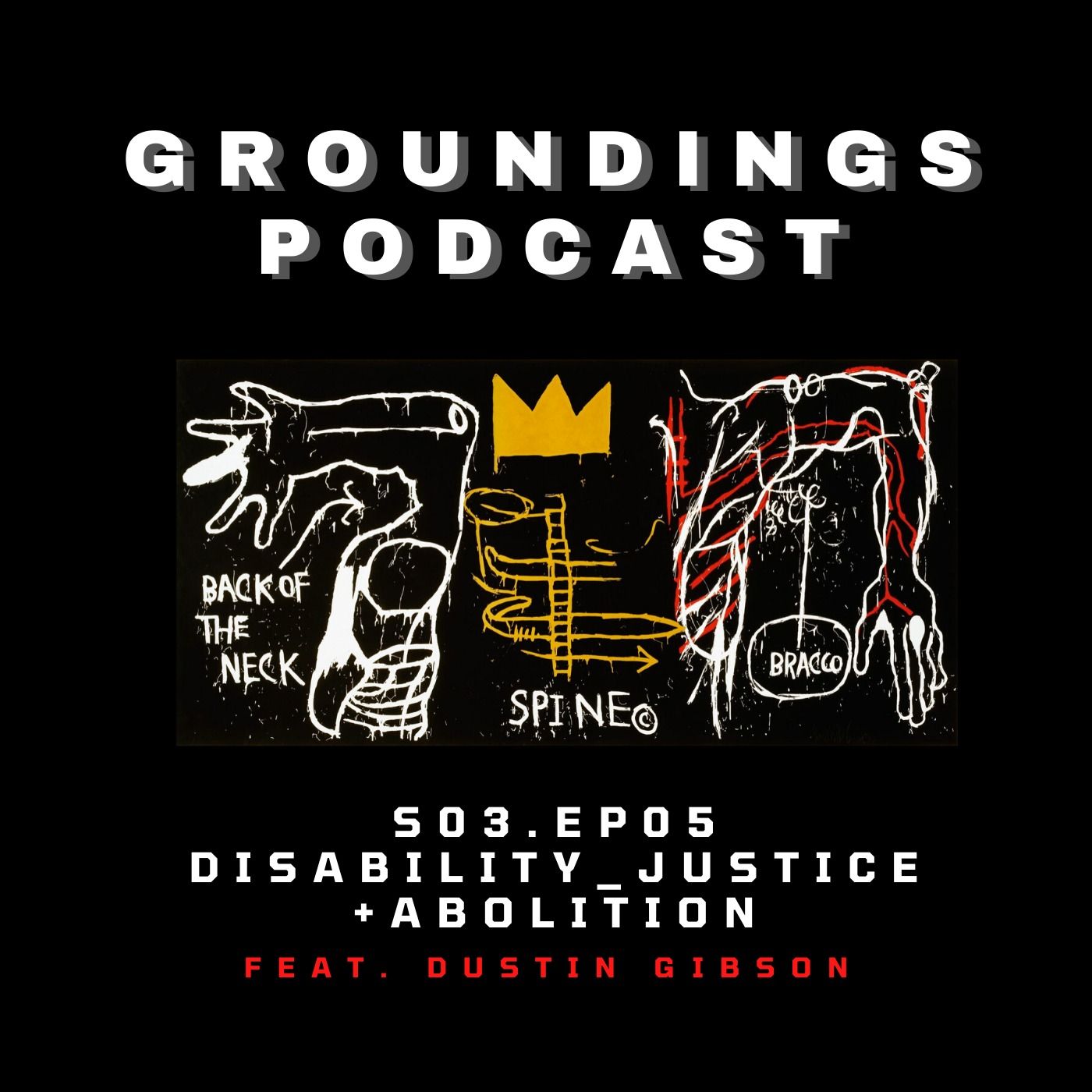
S3 Ep 5The Anti-Black Pinnings of Ableism
Community organizer and educator Dustin Gibson discusses the white supremacist, colonial, capitalist roots of ableism which structures capitalist society, why a disability justice framework must be abolitionist, and why "the state always has a carceral response to disabled Black people."Throughout the episode, you will hear the following audio clips:Leroy Moore discussing the erasure of Emmett Till's disability Members of Fairfax County, Virginia, at a public forum following the killing of Natasha McKennaJennifer Msumba describing the abuse faced at the Judge Rotenberg Center in Canton, Mass.Cover image: “Back of the Neck,” (1983) by Jean-Michel Basquiat
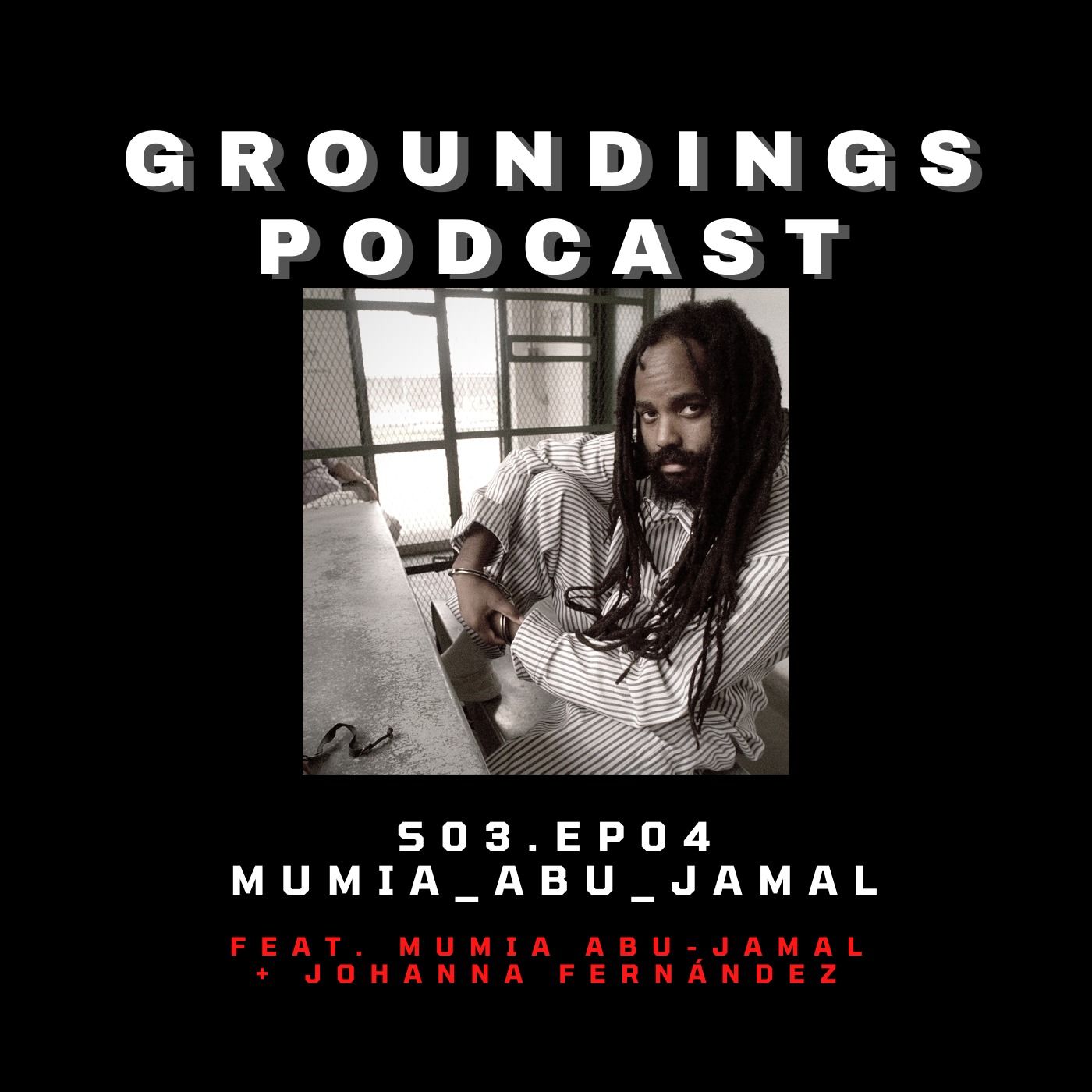
S3 Ep 4The Political Prisoner: From Mumia Abu-Jamal To Palestine
Mumia Abu-Jamal, world-renowned political prisoner, former Black Panther, and award-winning journalist, gives me his opinion on the movement taking place in the streets right now against police violence, the outpouring of international solidarity we've witnessed, and more. Because he is incarcerated, our interview was cut very short, but he still manages to pack intense amounts of wisdom into only a few minutes.Then we hear from author, professor, and longtime activist Johanna Fernández, who has spent nearly two decades working on the campaign to free Mumia and all political prisoners. We discuss what it is about Mumia specifically that makes millions around the world demand his freedom, why this new generation of activists and everyone else has a moral duty to free political prisoners, and why the creation of political prisoners inevitably means the ruling class shooting themselves in the foot.Mumia is arguably the most recognized political prisoner in the world, having served three decades on death row for a crime he was framed for. Millions across the world have read and engaged with his writings, listened to his audio analyses from incarceration, and found clarity in the always stellar commentary in his multiple top telling books. As we discuss abolition, tearing down prisons, defunding the police, and all related topics, it's imperative that we continue to uplift the fight to free all political prisoners, including Mumia. You can find out how to donate, write letters to, and spread the word for Mumia's freedom here. You will hear an audio interlude which includes clips from old news coverage of the cases of Mumia Abu-Jamal, Assata Shakur, Jamil Al-Amin, Herman Bell, and Angela Davis.// Transition music produced by 23djTbone

S3 Ep 3The Intellectual Life Of Du Bois
I spoke with scholar, writer, and professor Charisse Burden-Stelly about W.E.B. Du Bois. Charisse recently co-authored the new book W.E.B. Du Bois: A Life in American History with historian Gerald Horne, and has an extensive amount of insight, knowledge, and research on the life of Du Bois. Moreover, she's apt to think deeply on the intellectual, political, and ideological history within his life trajectory.We speak about Du Bois, the many ways his ideological positions shifted over the century (!) he lived, where Du Bois fell short and where he accelerates, how to position him between Pan-Africanism, communism, and Black Nationalism, his internationalist politic, and much more!Throughout the episode you will hear excerpts from his speech "Socialism and the American Negro" given in 1960. You can read the speech here. You can purchase Charisse's book here.

S3 Ep 2The Revolution Can't Be Quarantined
Philadelphia based community organizer and writer Steven Powers helps run a community based, free, socialist gym, the People Power Gym, and is involved in a number of other community survival projects. In this episode we discuss how his organization was able to turn these survival programs into a Covid-19 mutual aid grocery program, delivering free groceries throughout their neighborhood. We also discuss how capitalism has exacerbated this pandemic into a crisis with blood on its hands, the need for community organizing, a cautious understanding of 'mutual aid', and Sock'em Boppers. Support their fundraiser here. You can read Safiyah Bukhari's The War Before here, and George Jackson's Soledad Brother here. Audio samples used:Assata Shakur, Eyes of the RainbowMumia Abu-Jamal, Safiyah Bukhari: Lioness for LiberationFred Hampton, On the Importance of EducationEricka Huggins, On Meditation
S3 Ep 1The Young Lords: A Radical History
Professor Johanna Fernandez introduces listeners to the Young Lords, a revolutionary Puerto Rican organization that radically shifted international discourse on Puerto Rican politics.Fernandez recently publish The Young Lords: A Radical History, a groundbreaking and foundational new book which compiles 20 years of research to create the authoritative history of the Young Lords. In our conversation we discuss the roots of the Young Lords organization, how they transformed from a street gang to revolutionary socialist organization, the political and ideological motivations of the group, why they took a specific, relevant focus on health issues, and much more. The poem you hear recited throughout the episode is titled "Puerto Rican Obituary", written and performed by the late Pedro Pietri, poet, activist, former Young Lord, and one of the founding members of the Nuyorican Movement. If you enjoyed this episode, consider purchasing Johanna's book and support her work, and you can also support the host on Patreon as well.
S2 Ep 9The Gentrification of Atlanta
I speak with community organizer, researcher, and writer Taiza Troutman to discuss urban development, trap music, Tyler Perry, activism, homelessness, neoliberalism, displacement and, above all else, gentrification in Atlanta. Audio used throughout the episode was provided graciously by Eva Dickerson, activist, educator, and all around comrade. Watch the full video in which this audio is from here. Some of the books mentioned in the episode:Rashad Shabazz, Spatializing Blackness: Architectures of Confinement and Black Masculinity in ChicagoLester K. Spence, Knocking the Hustle: Against the Neoliberal Turn in Black PoliticsSaidiya Hartman, Wayward Lives, Beautiful Experiments: Intimate Histories of Social Upheaval
S2 Ep 8The Philosophy of Amílcar Cabral's Actions
We explore the philosophy and theoretical work behind the actions of Amílcar Cabral, African revolutionary from Guinea-Bissau who helped lead a succesful anti-colonial movement against the Portugese in Guinea-Bissau and Cape Verde.Reasearcher, writer, and organizer Zeyad El Nabolsy discusses Cabral's approach to culture and cultural liberation, dispels some eurocentric and racist myth surrounding Cabral's legacy, and looks at Cabral's relationship to Marxism.You can find Zeyad's essays we reference here, as well as the essay by Blaut here which he mentions towards the end.Intro/outro audio: Angela Davis on Amilcar Cabral, 1973You can support me at Patreon.com/HalfAtlanta, and follow me on Twitter @halfatlanta.
S2 Ep 7The State VS Keith Davis Jr.
If you don't know the story of #KeithDavisJr., make sure you listen to this episode of the #GroundingsPodcast. Keith is being framed for murder by the Baltimore police and the state of Baltimore. Police shot at Keith over 44 times, hitting him in the face and neck. Keith has been in jail for a crime he didn't commit since 2015. Keith has been through FOUR trials because Marilyn Mosby, the state attorney, is determined to see him behind bars. Keith was the first high-profile police in shooting in Baltimore since Freddie Gray, and because Marilyn Mosby gave the allusion (at the time) of accountability for Freddie Gray's murder, she's now being as hard on Keith as possible to win back the trust of police, police unions, and prosecutors. Virtually all evidence — surveillance footage, ballistics reports, firearms reports, firearms registries, witness testimonies — show that Keith is innocent. Keith's wife, Kelly, was on the phone with him when police began to fire over 44 rounds at him. She has fought relentlessly to free him since that day. We get into all of these details, the context for his involvement, who he is, the lies and scandal and coverup surrounding his case, in this episode. You can donate to Keith's family here. You can follow Bilphena and Amelia as well.
S2 Ep 6The School To Prison Pipeline
In this episode, activist and writer Bilphena Yahwon get into the nitty gritty details of the school-to-prison pipeline, racial disparities in school disciplinary actions, how these disparities send Black children to prison, and the ways she uses restorative justice processes to combat it.
S2 Ep 5The (Current) Uprising Happening In Haiti
Haiti is an island in perpetual revolution, and over the past few months massive island-wide mobilizations have been taking place as Haitians protest to oust their corrupt, neo-colonial, U.S.-installed government. I speak with lawyer, activist, and director of the Institute for Justice & Democracy in Haiti Brian Concannon, who gives a general overview of why Haitians are protesting, and how the corrupt and violent Moïse government has remained in power with support from Western empires like the US. Then we discuss the connection between the protests in Haiti and the imperialist aggression on Venezuela, and we compare the stark differences in Western media attention to both situations. The struggle in Haiti is ongoing, and independent media outlets like the Haiti Info Project are critical to understanding what's happening on the ground there. Please follow and support their work! If you like the podcast, make sure you subscribe, share it, and tweet at @halfatlanta to let Devyn know! You can also support the podcast efforts at Patreon.com/HalfAtlanta.
S2 Ep 4The Politics of Food and Blackness in Venezuela (Part 2)
This is part two of a special report on Venezuela, in collaboration with Venezuelanalysis.com. First I speak with Christina Schiavoni, scholar and activist who deals with issues of food, food sovereignty, and agriculture. Her work in Venezuela has been very important to dispelling misinformation about food, food shortages, and agricultural production in Venezuela, as well as the great strides towards food sovereignty that the Bolivarian Revolution has made. We specifically reference an essay of hers titled "The Politics of Food in Venezuela" that masterfully combats myths and intentional misinformation surrounding the subject. Then Jeanette Charles of Venezuelanalysis.com interviews Dr. Akinyele Umoja, head of Georgia State University's Black Studies department and co-founder of the Malcom X Grassroots Movement. Akinyele is a friend of the Walter Rodney Foundation and has an incredible ability to tie relevant historical information in Black history with the social, political, and cultural movements of today. In this interview he discusses the long history of the Malcolm X Grassroots Movement doing solidarity work with Afro-Venezuelans, how the Bolivarian Revolution was a Black revolution, and how the government has taken great strides to help African people both in Venezuela and throughout the entire diaspora. Dr. Umoja has traveled several times to Venezuela, including for the International Meeting on Reparations for African peoples which was held in Caracas. A very special thank you to Jonathan Chai-Chang Azterbaum, who did post-production for this episode, as well as part 1. If you missed part 1, where we cover the grassroots activist perspectives of the importance of the Bolivarian Revolution and elections in Venezuela, you can listen here.
S2 Ep 3The Bolivarian Revolution, Venezuela's Fight Against US Imperialism (Part 1)
In collaboration with Venezuelanalysis.com, this is part one of a two-part special on current events in Venezuela, as well as the historical developments which have led to the country being the target of an international imperialist campaign, conducted by the U.S., to remove the popularly elected President Maduro and install a Western puppet via a coup. We remove the imperialist propaganda dominating the news and interview four different people whose analyses are key to understanding Venezuela, the Bolivarian Revolution, U.S. imperialism, grassroots activism, sanctions, race, gender and agriculture in the country, and so much more. For part one, you will hear an interview with Jeanette Charles from Venezuelanalysis.com, who gives a general overview of what is occurring in Venezuela: Western governments, lead by the U.S., supporting a coup attempt by an unelected representative of an elite opposition party. Then we speak with human rights lawyer and author Dan Kovalik, who was an official observer of Venezuela's elections, who discusses the important process of elections and the trend of U.S. election meddling across the world. Intro sound: "La Alborada" Interview with Jeanette Charles Transition sound: "La Alborada" Interview with Dan Kovalik
S2 Ep 2The Green New Deal & Agrarian Revolution
Writer, academic, and activist Max Ajl discusses his critique of the Green New Deal, which particularly looks at the ways in which the Green New Deals intentionally leaves out the Global South and functions to preserve a "green" version of industrial capitalism. Then he explains what ecological catastrophe like global warming could mean for the Global South if left in our current state of global capitalism, and we explore revolutionary, agricultural alternatives to the Green New Deal that have emerged from the Third World. In short, full decolonization marks the future of hope in combating global ecological catastrophe. Finally, we end on a conversation about food and agricultural sovereignty before Samir Amin's 'delinking' theory, which Ajl wrote about here, and says can be a powerful model for moving forward.
S2 Ep 1The Linkages of Black, Jewish, and Palestinian Solidarity
Documentary filmmaker, activist, and writer Rebecca Pierce discusses her work documenting the resistance of those most oppressed by the Israel apartheid state. We discuss the ways her work highlights the oppression and resistance of African migrants in Israel, how Palestinians exercise solidarity with those migrants, and how many groups that are oppressed by Israel form linkages of solidarity and action. We also discuss the recent mass shootings at a synagogue in Pittsburgh and a Kroger in Kentucky, specifically how these two incidents are connected by similar white supremacist violence and how Rebecca, as someone who is both Jewish and Black, was impacted by these events. Then we briefly cover the legacy of Black-Palestinian solidarity. You can find Rebecca's documentary work here, follow her on Facebook here, and on twitter @Aptly_engineerd.
S1 Ep 10The (un)Logic of Afro-Pessimism and Anti-Blackness
Organizer and academic Annie Olaloku-Teriba discusses her recent essay, which is a critique of Afro-Pessimism, "anti-blackness" theory, and how these two things often negatively impact organizing spaces. We try to break down lots of academic jargon and wordy concepts to dive into a conversation which is crucial right now for Black studies and the movements it represents. This is one of my favorite episodes yet; a conversation which dives deep into the world and currently contemptuous debates occurring in Black Studies, however discussed without leaving unfamiliar listeners behind—we make sure at every step to explain the contexts and meaning to what we're discussing. A few of the books mentioned: Black Star, Crescent Moon by Sohail Daulatzai Racecraft: The Soul of Inequality in American Life by Karen & Barbara Fields Black Skin, White Masks by Frantz Fanon
S1 Ep 9The Anti-Indigenous, Imperialist, Racist Marketing of Coca-Cola
(This episode was a Patreon exclusive for several days prior to release elsewhere. ) In this episode, Native activist and writer Dani Miller breaks down the various ways that the brand identity of Coca-Cola, a brand known and admired worldwide, is built on a mountain of anti-Indigenous tropes, racism, and what she calls "conglomerate imperialism." She then discusses the need for a Native anti-imperialist perspective, connecting Indigenous struggles in the U.S. to struggles globally, and explores how normalizing the racist, imperialist marketing tactics of corporations like Coca-Cola has material impacts on Indigenous communities everywhere. You can support this podcast on Patreon, follow Devyn on Twitter, and make sure to subscribe to stay updated on the latest episodes. If you or someone you know would make a great guest for an episode, send a tweet to Devyn and let them know!
S1 Ep 8The Praxis of Abolition & Prison Strikes
Co-host of Millennials Are Killing Capitalism Jared Ware joins me for a conversation on the material practice of prison abolition. Prison abolition is such an imaginative theory, but beyond simply discussing Abolition as an idea, we target the question of what does abolitionist organizing look like, and what are we doing to work towards abolition? More than just this, we discuss what abolition means on a global scale, especially given the colonial and imperialist roots of the global prison-industrial-complex. Then Jared discusses prison strikes, both the ways they come about and how incarcerated revolutionaries sustain them. Finally, Jared gives us the context of the upcoming nationwide #August21 prison strike. Then, Jared gives context to the #August21 nationwide prison strike and how folks can find ways to get involved. This episode is in collaboration with and cross-posted between the #GroundingsPodcast (which you can support here) and Millennials Are Killing Capitalism (which you can support here).
S1 Ep 7The Critique of TLGBQ "Inclusion"
In this episode I speak with writer, activist, and academic Yasmin Nair, who is highly critical of liberal narratives of "diversity" and TLGBQ+ "inclusion" inside of violent and imperialist institutions like the US military. Recently, Nair co-wrote a piece with Eli Massey which gave a radical left and queer critique of the mainstream push for trans inclusion in the military, and that serves as the basis for our discussion. Then, we discuss the intentional erasing of the legacy of radical queer anti-capitalist/anti-imperialist organizing, the problematic nature of reactionary gay politics like "legalize gay" and how they serve a white/capitalist class. Finally, we discuss the book "Against Equality", which she co-wrote.
S1 Ep 6The Experiences of Detained Immigrants, In Their Own Words
In this special interview, we speak over the phone with two Black immigrants who are detained in Atlanta City Detention Center, as well as Kevin Caron, a local Atlanta organizer and abolitionist that does tremendous work with immigrant communities. Throughout the interview you will notice difficulties with telephone connection and communication; we decided not to edit these things out, and instead to leave these various difficulties in the audio as to expose the listeners to the vast difficulties that often come with trying to communicate with incarcerated people. Mohammed, who is from Ghana, discusses his journey of coming to the US, the difficulties he has faced being a Black, Muslim immigrant in jail, the impact incarceration has on mental health, and the impossible challenges he has faced in trying to navigate the US immigration system. The Richard, from Jamaica, discusses the inhumane conditions they face within the jails/detention centers, the legal battles that he has endured, and how these issues of immigration specifically impact African and Caribbean immigrants. Finally we end with an interview with Kevin Caron, a local Atlanta organizer and abolitionist who does tremendous work with detained immigrants and throughout many immigrant communities. Kevin works with both Georgia Detention Watch and A World Without Police. [DISCLAIMER: This interview was recorded in the beginning of May, and a few weeks after this interview was recorded we got word that Mohammed was freed in June and has safely returned to his home in Ghana.] listen to our other episodes at Groundings.Simplecast.fm follow Devyn on Twitter @HalfAtlanta and check out Christopher's radio show Rhythm & Resistance on WRFG.
S1 Ep 5The Way Capitalism Underdevelops Hip-Hop
Multi-disciplinary artist Bocafloja, one of Mexico's first rappers, discusses global politics and capitalism where they intersect with hip-hop. He also discusses his documentary Nana Dijo which explores anti-Blackness in Latin America. Along with this, we also have an in-depth conversation on navigating the capitalist music industry, cultural hegemony, and the social construct of the "conscious rapper."
S1 Ep 3The Assassination of Walter Rodney
"Your consciousness can come from anywhere. but the point is, it needs to come urgently." — Asha Rodney An Interview with Asha Rodney, scholar-activist, lawyer, and youngest child of Walter Rodney. Asha discusses the assassination of her father by the hands of an immensely repressive Guyanese government in 1980, describes what a "groundings" session is, and gives us suggestions for how to implement her father's work and legacy in our organizing today. Asha Rodney, along with the rest of the Rodney family, has spent many years seeking justice for the assassination of her father, the revolutionary Walter Rodney. Walter Rodney was assassinated in 1980 by an explosive device which was hidden in a walkie-talkie, provided to him by Gregory Smith who was later revealed to have been an operative for the Guyanese government. Asha covers not only meticulous details of her father's assassination, but describes the political climate and context in which it occurred: an incredibly repressive, western-backed regime eliminating and outlawing all forms of dissent. Along with covering the assassination, Asha also teaches us about the process of investigation surrounding the assassination; the decades it took to have an official commission of inquiry into Walter's murder, the hundreds of Guyanese people who testified for the commission of inquiry, how incredibly damning the results of the investigation are, and just how hard the Guyanese government has tried to suppress this information. Finally, Asha brings this fight for justice to the current day and discusses why the commission of inquiry, as well as Walter Rodney's assassination, are very important for activists and organizers around the world. We then discuss the 'groundings' concept, and putting Walter's theories into practice.
S1 Ep 2The Democratic People's Republic of Korea Beyond Propaganda
Organizer and educator Derek Ford gives a historical context for the current imperialist aggression surrounding the DPRK, explains the 'Juche' ideology, and recounts some firsthand propaganda-shattering experiences from his travels inside the country. The day after US Secretary of State Rex Tillerson announced the travel ban for US citizens to North Korea, Derek Ford traveled to the country on a fact-finding delegation. In this episode, he shares many of those firsthand experiences with me, and discusses how what he saw in person was quite different from the propaganda he'd been told in the US. Along with this he discusses the 'Juche' ideology, which is essentially the guiding philosophical ideology of the Democratic People's Republic of Korea, and gives a quick history lesson on both the Juche ideology and the country itself.
S1 Ep 1The Black Arts Movement
Revolutionary Pan-Africanist writer, artist, and organizer Sobukwe Shakur gives a first-hand account of the history of the Black Art Movement, a movement which took place in the 1960s and 1970s and ran parallel to the Black Power Movement. Sobukwe Shukur is a multi-media cultural worker, the host of the Revolutionary African Perspectives radio show on Georgia's independent WRFG station, a cadre and organizer in Nkrumah’s brainchild, the All-African People’s Revolutionary Party (A-APRP) and a former chair of the National Network On Cuba (NNOC). The conversation begins with Sobukwe setting the context for the Black Arts Movement, one of global Black political consciousness at its height, before diving into first-hand experiences as a school student during the early 1960s before transforming into an organizer and cultural worker within the movement itself. In discussing the politics of the Black Arts Movement, he discusses how various ideologies existed simultaneously, at times in conflict, and how this was embraced and seen through the act of a multi-plural cultural revolution that took place. In the final third of the interview we discuss the legacy of the Black Arts Movement; how it has influenced us today compared to the Harlem Renaissance, and how Black arts of today reflect a deeply different dominant ideology being reflected in the art.