
Groundings
73 episodes — Page 1 of 2
The Worldwide Family of Militant Women
The Imperialist Health System: An Insider Perspective (Part 1)
The Radical Practice of Harm Reduction
The Long Attica Revolt
S7 Ep 3The Class Warfare In Black Atlanta Primer
Dr. Augustus Wood discusses his book "Class Warfare in Black Atlanta," defining class warfare and the “Black worker,” arguing gentrification is tied to labor, policing, surveillance, and repression, and criticizing the idea that gentrification equals development. The conversation highlights the role of Black women in grassroots struggles, the impact of the Olympics and metro-area displacement, and Wood’s use of radical newspapers and archives to tell the story from working-class perspectives. - Purchase: Class Warfare In Black Atlanta [Purchase Here] Support the Groundings Podcast on Patreon [Support Here]
Michael Parenti, Media Manipulation & Imperialist Propaganda (January 12, 2026)
bonusJanuary 12, 2026 - In this broadcast, hosts Leyla, Musa, and taylor discussed the ways capitalist media is weaponized as propaganda in support of imperial interests. Using Michael Parenti's framework from Inventing Reality as a key framework, the hosts analyzed current events to discern how media tactics are being deployed in coverage of US aggression across the Global South. We cover 5 mechanisms colonial media uses to promote imperialist propaganda: (1) Stenographer for the State, (2) Selective Reporting, (3) Active vs Passive Language, (4) Dehumanizing Reporting, and (5) Information Control.You can find the helpful "Don't Be A Copagandist!" resource at: https://www.interruptingcriminalization.com/projects-all/dont-be-a-copagandist-series-Revolutionary African Perspectives (RAP) is a public affairs program on WRFG 89.3 Atlanta. Broadcasting politics, community, and revolutionary analysis every Monday 7-8 PM ET. The show features guests ranging from cultural workers, political organizers, authors, and community members covering local, national, and international news. The hosts provide fresh and critical perspectives on the politics affecting the everyday lives of Black/African people. RAP was originally founded by former WRFG airshifter, longtime activist and cultural worker Sobukwe Shukura, in 2002. Listen live or check out old RAP episodes at: WRFG.ORG/RAP
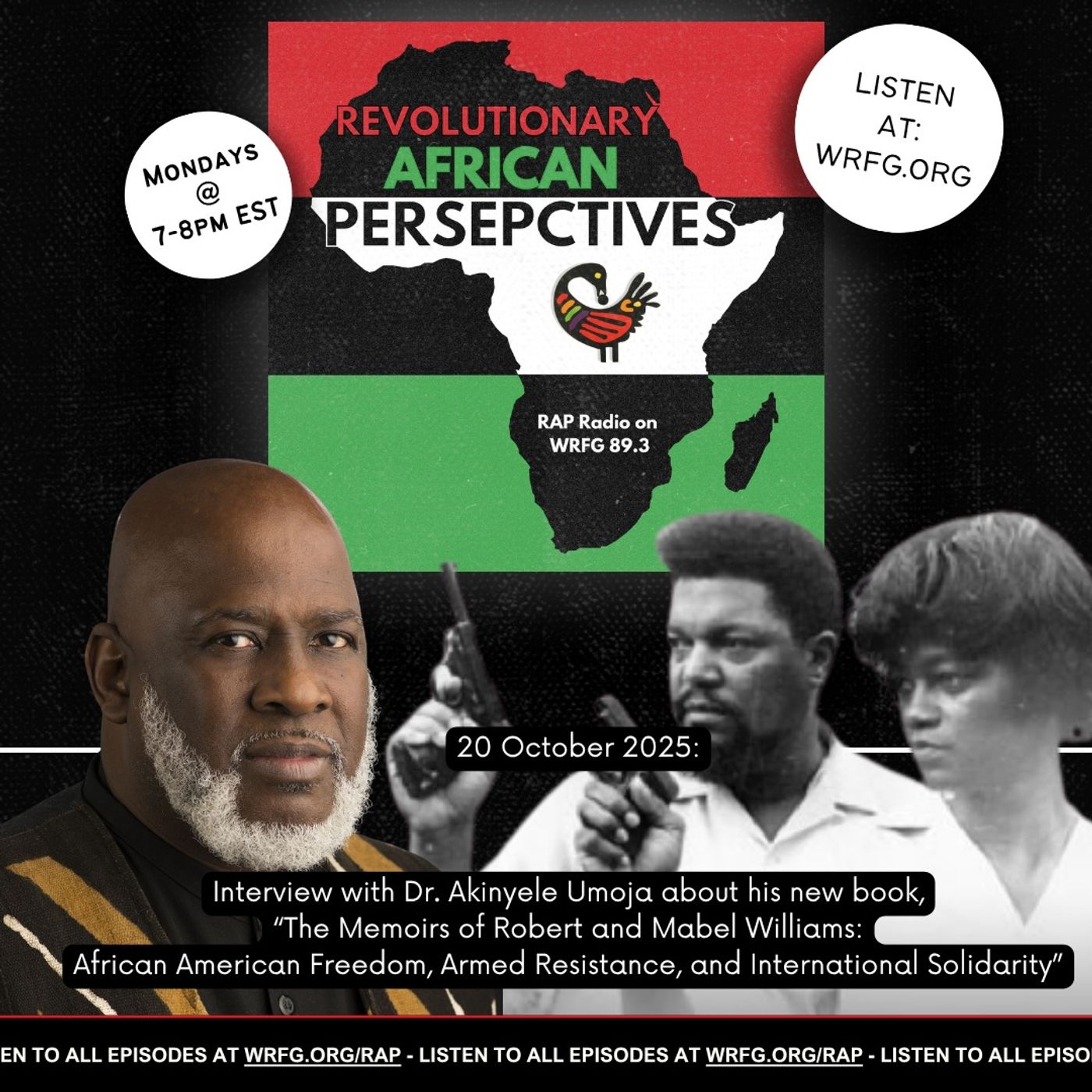
The Memoirs of Robert & Mabel Williams w/ Dr. Akinyele Umoja
bonusIn this broadcast, co-hosts taylor, Leyla, and Dartricia discuss the ongoing Atlanta city council elections and the theft of the Crown Jewels from the Louvre Museum in France. They are joined by guest Dr. Akinyele Umoja to talk about the book he co-edited, The Memoirs of Robert and Mabel Williams: African American Freedom, Armed Resistance, and International Solidarity. They cover topics such as the Williams’ political and personal lives, and their exile in Cuba and China. The collaboration it took to bring this book the fruition and propaganda as a tool for liberation. They also talk about armed self-defense and the people involved in that movement during the Civil Rights Movement. To view a list of past programs, visit: https://wrfg.org/show/rap/
The New Jewel Movement and Grenada's Revolution
bonusIn this broadcast, co-hosts Dartricia and Musa give a history of the New Jewel Movement and the Grenada Revolution and the U.S. Invasion and overthrow in 1983 under the Reagan Administration. The discussion includes wins of revolution including a powerful literacy campaign, better healthcare, and the construction of an airport. They also make connections to the U.S. Monroe Doctrine and U.S. imperialism across the Caribbean and Latin America including Nicaragua, Guatamala, and Haiti. The show includes an inciting speech give by former Prime Minister Maurice Bishop. To view a list of past programs, visit: https://wrfg.org/show/rap/
S7 Ep 2The Black Scare, Red Scare & So-Called Terrorism
We explore the historical strategies of black radicals to resist repression, the evolution of fascism and what it means today, and the importance of mutual comradeship in sustaining movements. The discussion includes an analysis of where anti-communism and anti-Blackness intersect, the Biden administration's role in facilitating repression, the historical context of fascistic practices in the U.S., and the global implications of labeling resistance movements as 'terrorist.' The conversation also touches upon the neglected histories of colonial fascism in places like Namibia. 00:00 Crackdown on Foreign Students Supporting Terrorism01:09 Domestic Terrorism Charges and High-Profile Cases01:40 Controversial Arrests and Accusations of Terrorism02:18 US Government's Stance on Terrorism02:58 Debates on Innocence and Terrorism in Gaza04:57 US Counterterrorism Policies and Global Impact11:15 Repression of Black and Palestinian Resistance18:34 Introduction to Groundings Podcast20:20 Discussion on Black Scare and Red Scare22:58 US Capitalist Racist Society Explained32:05 True Americanism and Marginalization43:09 Legacy of Black Scare and Red Scare49:25 Intersection of Palestinian and Black Resistance50:27 The Rise of Domestic Terrorism51:57 The 1979 Turning Point52:49 The Evolution of Terrorism Discourse57:32 Anti-Communism as Governance01:03:07 Believing Our Own Analysis01:07:09 Defining Fascism and Its Implications01:19:07 Strategies of Black Radical Resistance01:23:05 Mutual Comradeship in Revolutionary Organizing01:27:49 Closing Remarks and Shoutouts
S7 Ep 1The Stono Rebellion
In this episode of Groundings, we talk to guest Erica about the Stono Rebellion. We commemorate the rebellion on its anniversary, explore the harsh conditions faced by our enslaved African ancestors in colonial South Carolina, and their struggle for freedom. Erica provides insights into the role of heritage interpretation, the impact of African cultural retention, and the drastic shifts in laws and slavery practices following the mass rebellion, such as the Negro Act of 1740. The episode underscores the importance of reclaiming and teaching this history to understand ongoing struggles for African American liberation, and to understand the importance of studying and honoring African uprisings across our diaspora. --Follow: Find more from Erica [Follow Here]Support the Groundings Podcast on Patreon [Support Here]Support: Lowcountry Action Committee [Follow Here]Follow: Black & Brown Interpreters Network [Follow Here]Song: "I Remember, I Believe" by Sweet Honey In The Rock [Listen Here]Speech: Malcolm X, "We Are Africans" [Watch Here]Poem: "The Language Poem" by Obi Egbuna Jr. [Watch Here]--00:00 - Song & Introduction 03:52 - Meet Erica: Community Organizer and Heritage Interpreter05:57 - The Role of Heritage Interpreters09:34 - Historical Context of the Stono Rebellion10:09 - Catalysts and Conditions Leading to the Rebellion18:42 - Risks and Consequences of the Uprising22:48 - Cultural Retention and African Ancestry35:23 - Timeline of Events of the Stono Rebellion35:54 - The March Southward and Encounters and Resistance41:22 - Legal Repercussions: The Negro Acts of 174044:44 - Mulatto Class and Social Dynamics51:52 - Commemoration and Erasure of the Stono Rebellion01:00:14 - Closing Thoughts and Reflections
The Groundings (Re)Introduction
trailerHost Musa and new co-host Dartricia Rollins discuss our backgrounds and motivations for the podcast, our excitement for the upcoming season, and highlight some key episodes and guests we've got coming up. Dartricia introduces herself as an oral historian, archivist, and organizer, and Musa talks about the educational mission and origins of Groundings. Also... how Musa hates podcasts. We tease upcoming episodes on topics like class warfare in Black Atlanta, harm reduction organizing, and historical African uprisings. The audio you hear at the end is Safiya Bukhari speaking in 1998 at the Jericho98 March On Washington [full speech here]. Provide feedback and suggestions at: [email protected] the pod: Patreon.com/HalfAtlanta
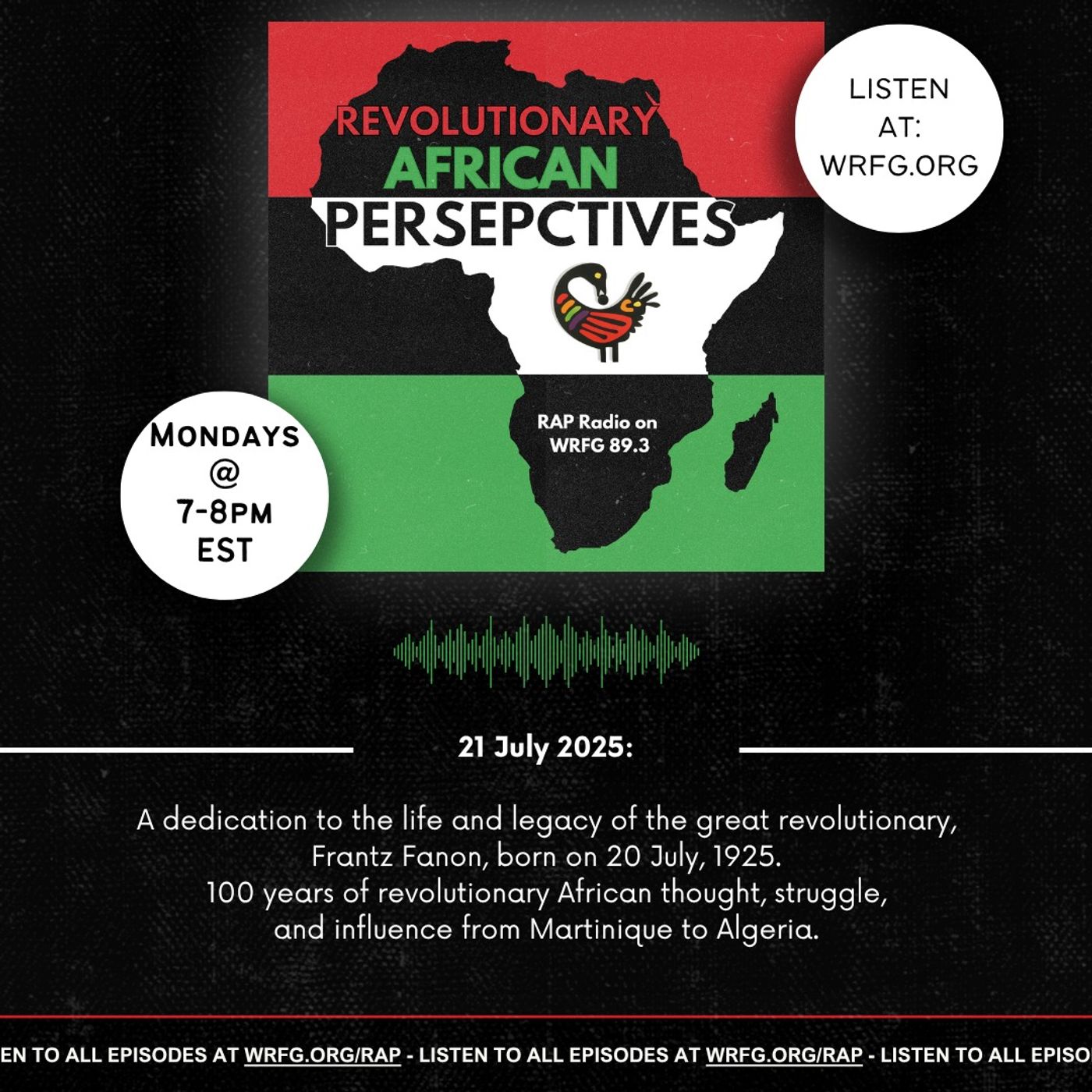
The 100th Birthday of Frantz Fanon
bonusIn commemoration of Fanon's centennial, the interview covers his biography, many writings, including his books A Dying Colonialism, Wretched of the Earth, Black Skin, White Masks, and more. As well as Fanon’s participation in the Algerian revolutionary struggle and his theories of violence and decolonization. The broadcast also features the news of Fanon's daughter, Mirelle Fanon, being banned from the Caribbean Philosophical Association conference due to her Palestine advocacy on her fathers birthday. The news segment also includes a discussion of immigration agents demanding tenant information from landlords, stirring questions and confusion and the Georgia Division of the Sons of Confederate Veterans suing to stop a new exhibit that wants to tell a broader story about Stone Mountain.Find all past episodes of RAP or listen live Mondays at 7pm EST at: https://wrfg.org/rap/Clip:Kwame Ture on Frantz Fanon and Pan-Africanism Music:Manzel Tala by Edmond MondésirFrantz Fanon 1952 by Jacques Coursil
The 'Middle East' is On Fire Because Israeli and US Imperialism Lit the Match
bonusIn this episode of Revolutionary African Perspectives — RAP — the co-hosts discuss the US and Israel’s most recent acts of imperial violence against Iran. They provide a historical timeline of how we got here before interviewing geopolitical analyst and journalist, Ajamu Baraka to provide additional context and analysis on why this is happening in the Middle East how it compares to previous interventions, as well as the over-stretching of empire with war in Ukraine and the desired pivot to China. Ajamu talks about why this is relevant to Black people specifically and what we can expect in the future. The Middle East is On Fire Because Israeli and U.S. Imperialism Lit the Match — The Black Alliance for Peace [Statement]
The Khamansha Raphael album, cultural work, and state repression
bonusThis episode includes reflections on the historic tactics to counter the Confederate Memorial Day Rally at Stone Mountain. It also features co-host Musa's recent targeting and detainment by the Department of Homeland Security (DHS) in early April. RAP interviewed special guest, Atlanta rapper Khamansha Raphael and played exclusive unreleased tracks from his forthcoming album. The show concluded with a lifting up of Political Prisoner, Imam Jamil Al-Amin, who is suffering from poor health in prison for fighting for the liberation of all-oppressed peoples.______This audio is from a live recording on Monday, April 21, 2025 from 7pm to 8pm on WRFG Atlanta 89.3 FM.Co-hosts: Dartricia, Steven, and MusaCo-producer: Leyla and TaylorThis episode includes reflections on the historic tactics to counter the Confederate Memorial Day Rally at Stone Mountain. It also features co-host Musa's recent targeting and detainment by the Department of Homeland Security (DHS) in early April after international travel. RAP interviewed special guest, Atlanta rapper Khamansha Raphael and played exclusive unreleased tracks from his forthcoming album. The show concluded with a lifting up of Political Prisoner, Imam Jamil Al-Amin who is suffering from poor health in prison for fighting for the liberation of all-oppressed peoples.For more information, including an archive index of past RAP programs, please visit https://wrfg.org/rap/
The Revolutionary African Perpectives ReLaunch
bonusThis audio is from a live recording on Monday, March 17, 2025 from 7pm to 8pm on WRFG Atlanta 89.3 FM.Hosts: Dartricia, Musa, and StevenProducers: Leyla and TaylorRAP, Revolutionary African Perspectives, is a public affairs program airing every Monday from 7pm to 8pm EST.For more information, including an archive index of past RAP programs, or to listen to episodes live each week, visit https://wrfg.org/rap/--In this episode we talk about the Bowen Homes housing projects, Andre Dickens' run for reelection, Walter Rodney's How Europe Underdeveloped Africa, and Cuba's initiative for sustainable power grid.

S6 Ep 7The U.S. Out Of Korea Campaign
In this episode of Groundings, I speak with professor Haruki Eda to discuss the Korean struggle for sovereignty, the impact of U.S. imperialism on the Korean Peninsula, and the ongoing U.S. Out of Korea campaign by Nodutdol. Haruki provides a deep historical and political analysis, drawing connections between the Korean struggle and global anti-imperialist movements, including Palestinian liberation, African decolonization, and resistance to U.S. hegemony worldwide.The conversation covers:✔️ The history of U.S. involvement in Korea, from colonial division to present-day occupation✔️ The U.S. Out of Korea campaign and its goals✔️ How Korea remains a key front in U.S. imperialist strategies against China and the Global South✔️ The economic and social impact of U.S. military presence in South Korea✔️ The role of South Korea in supporting Zionism vs. the DPRK’s solidarity with oppressed peoples✔️ How listeners can support Korean sovereignty and anti-imperialist struggles globallyKey Timecodes & Highlights[00:02:10] – Guest introduction: Haruki Eda’s background as a third-generation Zainichi Korean[00:06:35] – Introduction to Nodutdol for Korean Community Development and its mission[00:10:20] – The launch of the U.S. Out of Korea campaign: reasons, objectives, and demands[00:18:50] – The staggering U.S. military presence in Korea: 28,500 troops & 73 bases[00:25:40] – How the U.S. uses war games and economic subjugation to control Korea[00:32:15] – The Korean War: A genocidal attack on Korea’s sovereignty[00:40:30] – The IMF crisis: How U.S.-imposed neoliberal policies shaped modern South Korea[00:47:50] – U.S. military crimes in Korea and the role of the UN Command[00:54:05] – The attempted martial law in South Korea: what happened & why it matters[01:02:15] – The role of South Korea in supporting Zionism and military-industrial expansion[01:10:50] – How the DPRK has historically supported African, Palestinian, and anti-imperialist struggles[01:18:40] – Why the Korean struggle is central to the broader fight against U.S. imperialismResources & Further Reading📌 U.S. Out of Korea Campaign – Website here📌 Groundings: Juche & Firsthand Account of DPRK episode – Listen here📌 BDS Korea – Website here📌 Korea Peace Now Report on U.S. Sanctions – Read hereSupport the Podcast💰 Become a patron at: Patreon.com/halfatlanta🎧 Share this episode with five friends who need to hear it⭐ Rate the episode 5 stars, to help boost it in the algorithm

S6 Ep 6The Panthers & Armed Struggle
This episode was recorded in the first week of August, 2024. Dr. Gerald Horne discusses his new book, "Armed Struggle: Panthers and Communists, Black Nationalists and Liberals in southern California, Through the Sixties and Seventies."Please forgive the minor audio issues here and there. Onyesonwu Chatoyer joins as a co-host .

S6 Ep 5The Carribean, Haiti, and U.S. Imperialsm
Activist and professor Tamanisha John joins Musa and Erica to discuss U.S. and Western imperialism in the Caribbean, the U.S.-backed invasion of Haiti by Kenyan forces, and the genocidal U.S. blockade of Cuba. The Walter Rodney speech can be found in full here. Check out Liberation Through Reading here.

S6 Ep 4The Legacy of Baba Masai Ehehosi
Activist, journalist, and lawyer Anoa Changa joins to talk about her father, Black Liberation Army (BLA) member and former political prisoner Baba Masai Ehehosi, who transitioned on April 1, 2024. The conversation touches Baba Masai's lifelong commitment to Black liberation, sovereignty, freeing political prisoners, and the abolition of the prison-industrial complex. Anoa shares personal reflections on her father's impact and experiences on life and activism, as well as his influence within organizations like Critical Resistance, The Jericho Movement for Political Prisoners, and the Republic of New Afrika.Listeners will gain insight into Baba Masai's enduring dedication to justice, his role in shaping movements against political repression, and his advocacy for prisoners' rights. We talk about the examples he set in his actions, the importance of inter-generational knowledge community, and how we can continue to honor and uplift his legacy through our organizing."Masai worked for the liberation of his people for over 50 years, and held a profound presence in the multiple organizations he was in. A co-defendant of Safiyah Bukhari captured by police in 1973 as a BLA member, Masai began working with the American Friends Services Committee (AFSC) and was staff of the AFSC’s Criminal Justice Program in Newark, NJ after being released from 14 years of prison in Virginia. At AFSC, Masai worked to close security housing units and end torture against imprisoned people through AFSC’s Prison Watch Program. At the time of his passing, Masai was also the current Co-Minister of Information for the Provisional Government of the Republic of New Afrika, an advisory board member ofThe Jericho Movementworking on the Jericho Medical Project for both state and federal prisoners, and was supporting the Prison and Gang Program of Al-Ummah and the Imam Jamil (Al-Amin) Action Network." — Critical Resistance You can read more about Baba Masai here. You can find Anoa here.You can find the Jericho Movement for Political Prisoners here.

S6 Ep 3The Jericho Movement for Political Prisoners
Political organizer, community worker, and former political prisoner Jihad Abdulmumit discusses his life, and the Jericho Movement for Political Prisoners.

S6 Ep 2The Palestinian Prisoner Solidarity Network
Hussein Al-Rahman Samidoun Palestinian Prisoner Solidarity Network discusses the struggle for Palestinian prisoners, some of the resistance tactics imprisoned Palestinians have used, and the importance of uplifting Palestinian prisoners. They also discuss the case of popular Palestinians figure Walid Daqqa, who wrote the episode's opening story, "Uncle, Give Me A Cigarette," read by comrade Bisan. Learn more about how you can support Samidoun here. Check out the Palestinian Youth Movement here. Read "Uncle, Give Me A Cigarette" here. Support the podcast at Patreon.com/HalfAtlanta or by purchasing a copy of Alive & Paranoid for an incarcerated comrade.

S6 Ep 1The Nonprofit Industrial Complex
How did we get to an entire grassroots "industry" dominated by billionaire philanthropists? How do they influence and politically limit the "organizing", activism, and advocacy that thousands of people engage in? And most importantly, how does the Nonprofit Industrial Complex act as a force of counter-insurgency against the working, organizing masses?These are just a handful of important questions that Hiram Rivera, Executive Director at the Community Resource Hub for Safety & Accountability answers in his conversation with co-hosts Erica Caines and Musa Springer. Support Erica's Patreon here. Support Musa's Patreon here. Intro/Outro Music: "Black History Year" prod. by Epik The Dawn.

'The Movement Underestimates Fascism' - Gerald Horne
bonusThe goat 🐐 himself Dr. Gerald Horne joined me for a special bonus episode of the groundings podcast. We discuss the current state of global politics, imperialism in crisis, the potential for a new multipolar world,,growing contradictions and splits among European colonizers,,and the rising fascism across the west. He also answers some questions submitted by Patreon subscribers! If you enjoyed this 'bonus' episode, consider checking out our Patreon at Patreon.com/Halfatlanta, where more of these special episodes are posted every month, and where subscribers can submit questions to podcast episodes. Tune in, let me know you're thoughts, and share + rate the episode 5 stars if you enjoyed it.

The Artists Against Apartheid
bonusThis is audio from a panel discussion about the role of artists against imperialism and apartheid, that took place on November 29, 2023 in Atlanta, GA. Our focus was on the genocide unfolding in Palestine, however the topic spans many relevant points related to art, revolutionary movements, and more. We expected about 40 people to show up, and instead nearly 100 did, and we had people sitting on the floors, in people's laps, and even 4 rows of chairs outside the room in the hallway listening. The panel was hosted by WRFG, Artists Against Apartheid, Atlanta Radical Art Collective, and the Black Alliance for Peace Atlanta. The audio has been lightly edited for time purposes, and to make it a better listening experience. We opened up with a series of readings from poets, which I unfortunately had to condense due to time constraints. If yall would like a 'bonus' episode with the full poetry readings, let me know.Poets: Stephen Foster Smith, W.J. Lofton, Aurielle MariePanelists: Lulu Ali Amar, Umaymah, Rozina Shiraz Gilani, Musa Springer, Jasmine Nicole Williams (moderator) Enjoy!

the apocalypse
bonus"the apocalypse" by Musa Springer, Protean Magazine, Nov. 3, 2020

S5 Ep 8The Framing of Leonard Peltier
Nick joins the show to provide a comprehensive and riveting breakdown of the struggles faced by Leonard Peltier, one of the longest held political prisoners in the world, incarcerated for almost five decades. We dive into the history of the American Indian Movement (AIM), the blood counter-insurgency war waged by the U.S. government against AIM, the critical implications of Peltier's case, and the broader context of Indigenous resistance in the United States.In a recent article, Nick writes: "The way Leonard Peltier tells it, he was a criminal the day he was born — but not by choice. The seventy-eight-year-old Anishinaabe and Dakota elder says his “aboriginal sin” was being born Indian in a country founded on Indians’ forced disappearance."Nick Estes is an Indigenous organizer, journalist, and historian, and a citizen of the Lower Brule Sioux Tribe. He is a co-founder of The Red Nation and Red Media, and the author of Our History Is the Future: Standing Rock Versus the Dakota Access Pipeline, and the Long Tradition of Indigenous Resistance.Check out the International Leonard Peltier Defense Committee and get involved here. Consider supporting the Groundings Podcast at Patreon.com/HalfAtlanta.

S5 Ep 7The COINTELPRO war
In this episode of the Groundings podcast, host Musa Springer talks with Dr. Akinyele Umoja, a scholar, activist, and author, about the notorious COINTELPRO program. This program was led by the FBI and local police departments, and was an all-out war on Black organizers. This episode delves into the history, consequences, and the struggle led by Black organizers to expose the violent program.Dr. Umoja provides a comprehensive understanding of the COINTELPRO program, its inception, and first-hand account of its impact on Black liberation movements in the US. The episode begins with a discussion about Assata Shakur, a prominent figure within the Black Panther Party and the Black Liberation Army, and her experiences with COINTELPRO.Dr. Umoja shares his insights on the counterintelligence and counterinsurgency tactics used by the FBI to disrupt and neutralize Black nationalist movements, and how these tactics are relevant and still in use today. He also discusses the discovery of the COINTELPRO program and the subsequent congressional hearings that confirmed its existence.

S5 Ep 6The U.S. and Cuba during Slavery and Jim Crow
Dr. Gerald Horne, the 🐐historian and author of "Race to Revolution: The U.S. and Cuba during Slavery and Jim Crow”, discusses the intricate history of race and slavery between the U.S. and Cuba, the profound influence of U.S. slavery on Cuban society and politics, and the ongoing consequences brought on by the U.S. Blockade.Dr. Horne discusses what slave resistance in Cuba looked like, the Haitian Revolution's deep significance and far-reaching impact on the Caribbean, and the surprising connections between Confederate slaveowners and the white Cubans who fled the island following the revolution in 1959. We also discuss the African nature of the Cuban Revolution (yes, it was an African revolution), the result of anti-communism and anti-Blackness on the island prior to the Cuban Revolution, and the long history of strong solidarity from Cuba to the African world.This episode invites you to reflect on the historical threads that continue to weave the contemporary social and political fabrics, not only in Cuba but in the broader context of African liberation and international relations. Check out Dr. Horne's book "Race to Revolution" here and "The Dawning of the Apocalypse: The Roots of Slavery, White Supremacy, Settler Colonialism, and Capitalism in the Long Sixteenth Century" here. The clip you hear at the end of El-Hajj Malik El-Shabazz describing his meeting with Fidel Castro can be found here. Considering support Groundings on Patreon here.

S5 Ep 5The Legacy of Imam Jamil Al-Amin
Activist and musician Baba Bilal Sunni-Ali, of the Jamil Al-Amin Action Network, joins Groundings to discuss the life, legacy, and impact of current political prisoner Imam Jamil Al-Amin.Formerly known as H. Rap Brown, Imam Jamil Al-Amin was once one of the Amerika's most well-known Black revolutionary activists. A former member of SNCC, Jamil Al-Amin was framed for a crime in 2000, and despite a mountain of evidence showing his innocence, he's sat as a political prisoner ever since. Baba Bilal Sunni-Ali discusses the legal matters related to Al-Amin's case, the current movement to free him, and the impact he had on several communities, including Atlanta's West End neighborhood. To get involved and support the campaign to free Imam Jamil Al-Amin, check out: www.imamjamilactionnetwork.orgAlso, consider supporting the podcast at Patreon.com/HalfatlantaYou can access the clip you hear of Jamil Al-Amin speaking here.

S5 Ep 4The Jailhouse Lawyer Known As Sundiata Jawanza
In this episode, we discuss the story of Sundiata Jawanza, who has been in prison since 1995 on a life sentence. Sundiata has spent the last 28 years working towards self-development and has become a beacon of hope for others in prison; he's a selfless advocate for prisoners' rights, is a peer counselor where he supports the mental health of fellow incarcerated people, and provides legal aid and education through his work as a founder of the organization Jailhouse Lawyers Speak. He has also served as the Imam, providing spiritual guidance to the entire prison Muslim population.Jay and Rock discuss the recent movement to free Sundiata, as his parole approaches, what his organizing and activism has looked like, who he is as a person, the role of jailhouse lawyers, and how the listeners can get involved to bring him home. Visit SundiataJawanza.com for more information and to get involved. Visit Patreon.com/Halfatlanta to support the podcast.

S5 Ep 3The Pendleton 2
EIn this episode, poet and activist Too Black joins to discuss the incredible story of the Pendleton 2. We dive into the details of the 1985 uprising at the Pendleton Correctional Facility and explore the factors that led to this critical event: racial tensions and a violent prison environment created by guards who were part of a KKK splinter group, the "Sons of Light," pushed John 'Balagoon' Cole and Christopher 'Naeem' Trotter to take a courageous stand against racist prison abuse.Too Black gives us a play-by-play of the day's events, highlighting the importance of unity among prisoners in making the rebellion, and we learn how Cole and Trotter managed to bring everyone together and prevent the situation from escalating into something much worse. We also discuss their decision to call Black radio stations and newspapers for help, warning them that their lives were in danger if they didn't intervene; examine the 14 demands they issued which were eventually met; and why this event became known as "Indiana's Attica." Despite their heroic actions to save a Black man's life from racist prison guards, both Cole and Trotter remain incarcerated to this day. As we wrap up our conversation, we share resources for listeners who want to learn more about the Pendleton 2 and get involved in supporting their cause. Please visit Pendleton2.com to learn more, watch the new documentary, and get involved. Please consider supporting the podcast on Patreon at patreon.com/halfatlanta.

S5 Ep 2The 'Nation Time' Sound
We sit down with Slank and Sunny Ture to discuss their new album, "Nation Time." Throughout the episode, we delve into the creative process behind "Nation Time," discussing the themes, concepts, and inspirations that shaped the album. We examine the samples used throughout the project, including speeches from influential figures like Amiri Baraka, Malcolm X, Tupac Shakur, and Edward Onaci. Additionally, we take a closer look at the album's bibliography and its connection to the politically conscious roots of hip-hop, with standout tracks like "Black Belt Thesis" and "Devil in the Details."Read the full Nation Time bibliography.Check out more music from the PushSoul Collective.Support the Groundings podcast on Patreon.Buy prints from Musa's shop, which helps support the podcast.

S5 Ep 1The #StopCopCity Movement
In this episode of Groundings, host Musa Springer is joined by Atlanta organizer Tunde Osazua as co-host; they sit down with local organizer and lawyer Kamau Franklin to discuss the ongoing struggle surrounding the development of Cop City in Atlanta. Kamau provides insightful analysis on the background and larger political context of Cop City, the response from organizers and residents, and what makes this specific movement so important.We dive into Cop City origins, Kamau explains that the idea of the facility started prior to the 2020 uprisings, but after the uprisings, it was brought forth and rushed to the public. The name "Cop City" was coined by local organizers and residents who saw the development as a form of repression and response to the uprisings. We then look at the many organizing efforts against Cop City, and Kamau emphasizes that the community has been active in opposing the development and has formed various coalitions to mobilize against it. This is the first time that 'domestic terrorism' charges have been used against protesters in this way, and it's also the first time an environmental activist, young Tortuguita, has been killed by polcie in the U.S. We talk about the incredibly damning legal and political implications of all this. Patreon.com/HalfAtlantaCommunity Movement Builders - Stop Cop City Intro audio by Big Twen#StopCopCity Week of Action11Alive audio clipAndre Dickens doesn't like being called a "sellout"Atlanta Mayor Sleeping During Cop City ForumFebruary 4th Statement from Tortuguita's FamilyOn James Baldwin and the Atlanta Child MurdersPigs Have Higher Rates of Domestic Violence Than Other Professions

S4 Ep 6The Revolutionary Life of Jalil Muntaqim
Just two months before his 20th birthday, Black Panther and Black Liberation Army members Jalil Muntaqim was captured by enemy forces along with Albert “Nuh” Washington, and made into one of the longest-held political prisoners in U.S. history.Muntaqim joins the show to discuss his revolutionary life, his long history of organizing for incarcerated people, and his own political incarceration. We also get into a crucial paradox: the imagery of the Black Panthers is very popular now, with capitalists like Beyonce and Marvel profiting from the aesthetics of the organization, while the actual lives of surviving Black Panthers themselves are disregarded. We also discuss the Mutual Aid for Veteran Black Panther Party Members fund that Muntaqim organized alongside Kamau Franklin, which helps give material support to veterans of the Black liberation struggle each month. [This episode was originally recorded in February, so some dates and time-sensitive mentions may be outdated.] Support the Mutual Aid for Veteran Black Panther Party Members here. Support the podcast on Patreon here.Read the findings of the 2021 International Tribunal On U.S. Human Rights Abuses Against Black, Brown, and Indigenous Peoples here. Purchase of a copy of the third edition of We Are Our Own Liberators: Selected Prison Writings here. Visit the Jericho Movement website here. Intro audio sourced from the 2002 documentary by Eve Goldberg and Claude Marks, based on an interview done in August 2000 by John O'Reilly and Nina Dibner, Jalil Muntaqim - Voice of Liberation.Music by the homie JayOhAye.

S4 Ep 5The Decolonial Feminist Collective
In this conversation from March 2022, reproductive justice practitioner, organizer, researcher, and educator Jalessah Jackson speaks about decolonial feminism, a framework that forges material feminist solidarities through an examination of the relationship between gender and colonialism. We discuss the origins of this intellectual and organizing framework, its relationship to bourgeois and carceral feminisms, material international solidarity work, and the role of scholar-activism. Get into it! Check out the decolonial feminist collective at instagram.com/decolonialfeministcollective / The music you hear was produced by the homie JayOhAye , support them at www.jayohaye.com / Support Groundings on Patreon at patreon.com/Halfatlanta / Support ARC-Southeast at arc-southeast.org/ /
The Struggle For Reproductive Justice
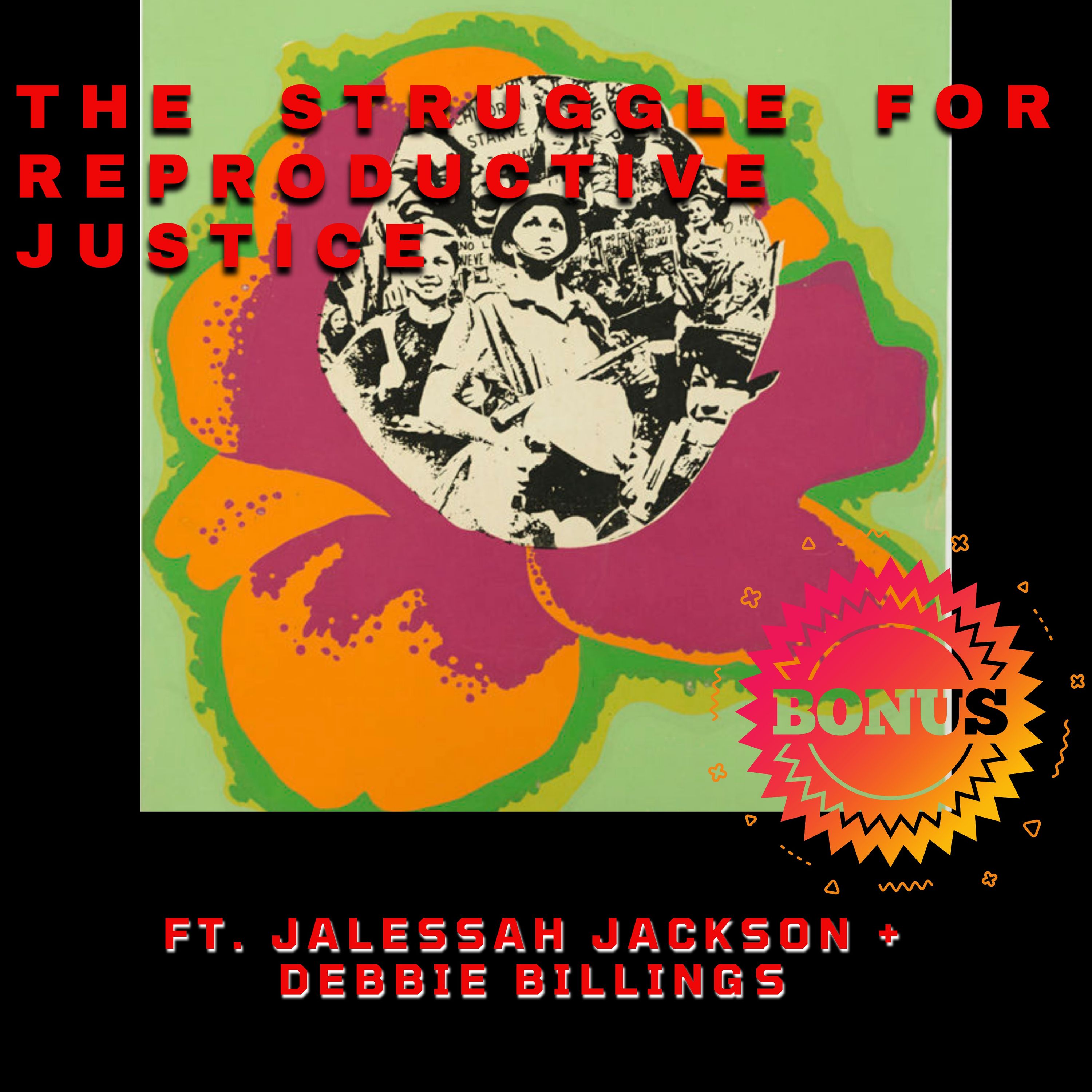
bonusReproductive justice practitioner Jalessah Jackson and public health professional Debbie Billings join us to discuss the recent leak by SCOTUS, which showed they are prepared to overturn abortion rights in the U.S.We put this decision by SCOTUS into the overall political context, discussing how it relates to other fascist assaults on TLGBQ rights, and is part of a larger fascist 'backlash.' We also discuss maternal health internationally, why a people-centered human rights framework is vital, and the power of mutual aid and other grassroots organizing in the face of state violence. ARC-SoutheastPalmetto State Abortion FundLas LIBRES: La Historia Después (Documentary)Accompaniment (Documentary)What Is People(s)-Centered Human Rights?Decolonial Feminist Collective
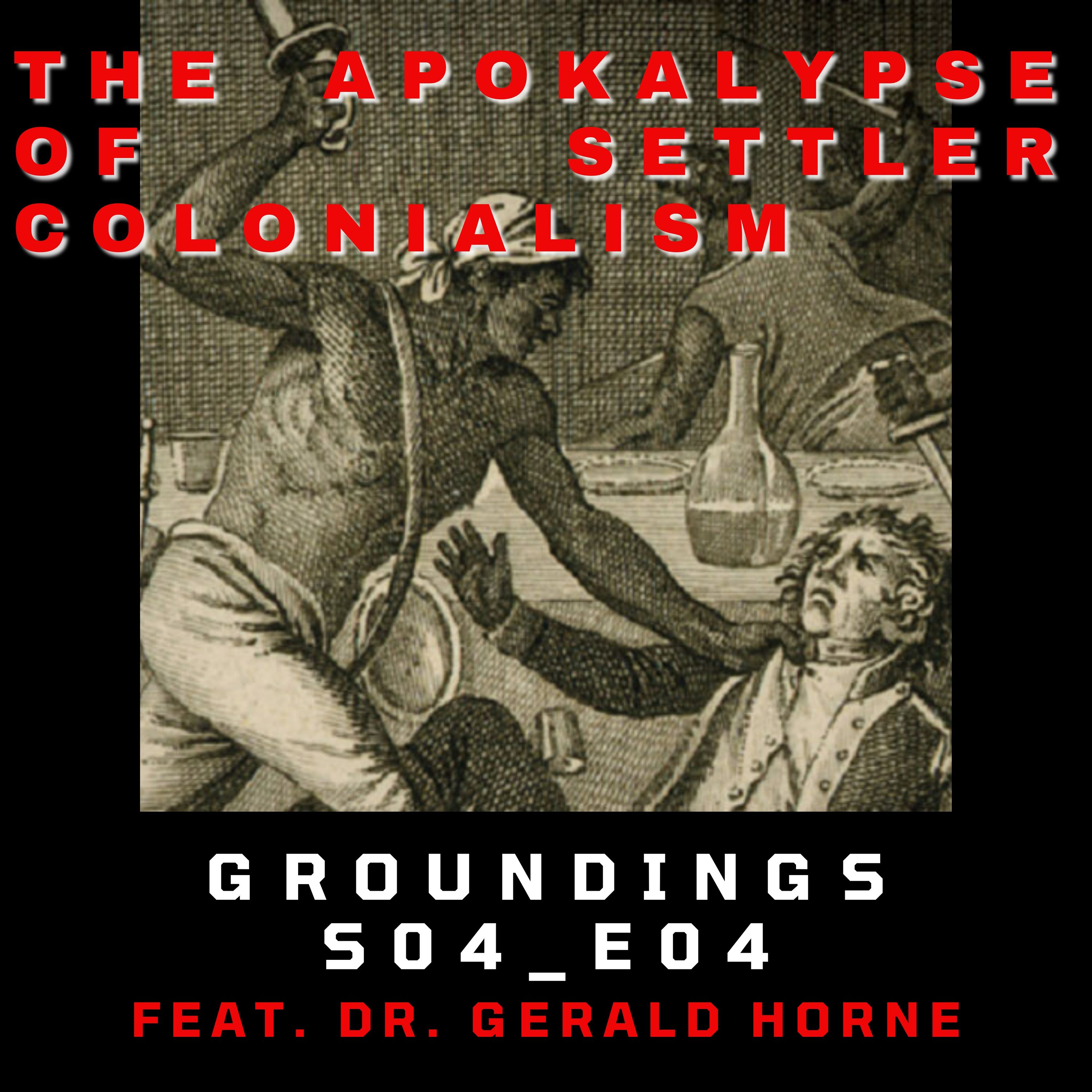
S4 Ep 4The Apokalypse of Settler Colonialism
Dr. Horne’s books ‘The Apocalypse of Settler Colonialism’ and ‘The Dawning of the Apocalypse’ are essential readings in understanding the original sins of empire, the worlds that settler colonialism precluded, and the apokalyptic transformation the world is experiencing today. Our conversation moves across subjects of colonial technology and weaponry, Africa's underdevelopment, and how our material conditions within empire are directly tied to the material conditions across the African continent and diaspora.Dr. Horne also candidly reflects on his own writing process, how he’s such a prolific and productive writer and activist, and the stakes of doing rigorous work as a peoples historian. Give it a listen and let us know your thoughts in the comments!Audio snippets heard in the episode:Kwame Ture on The History of Pan AfricanismWalter Rodney - Crisis in the Periphery: Africa and the Caribbean-If you enjoyed the episode, consider subscribing to Dev's Patreon [here] to support the show and get access to extras. Music by the comrade JayOhAye.
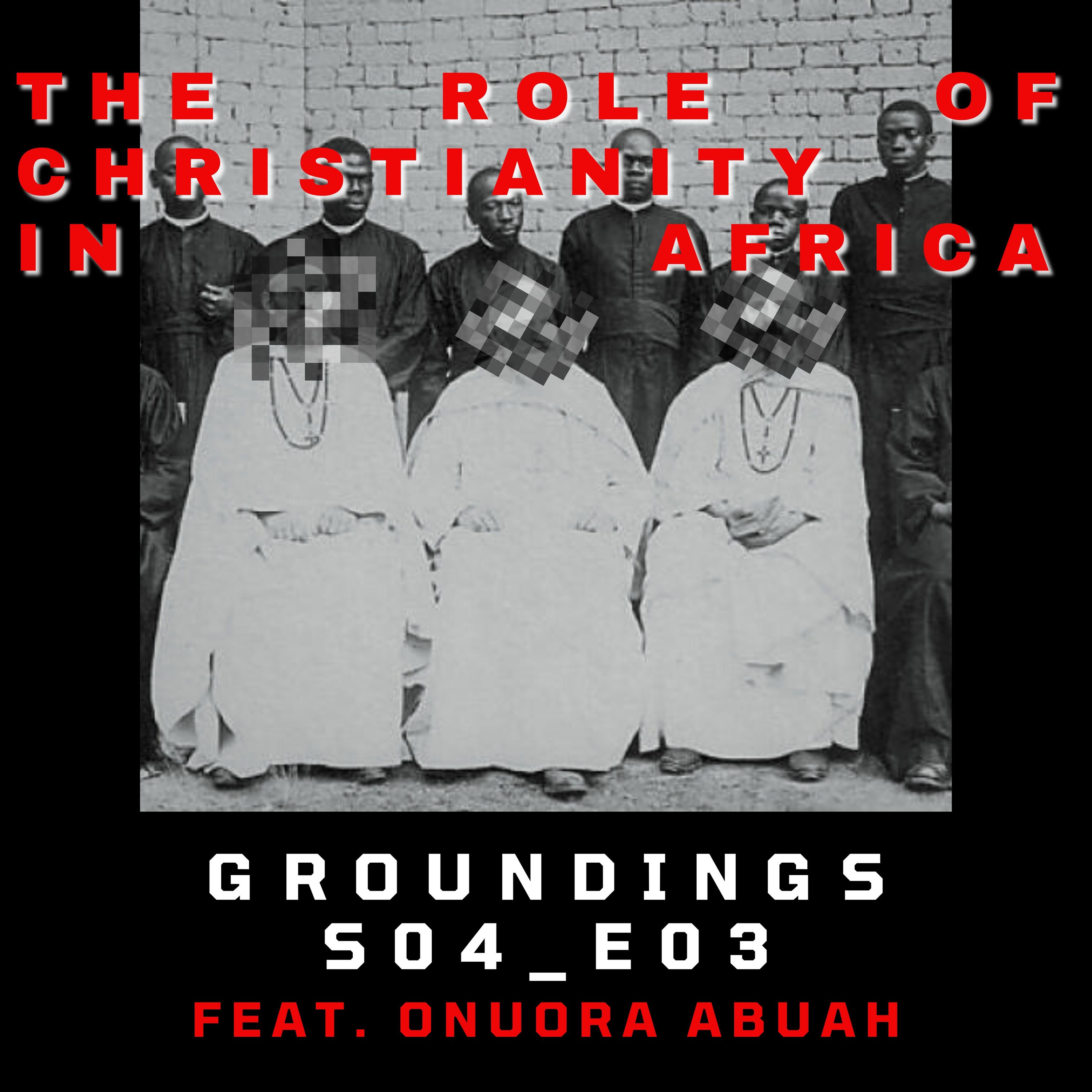
S4 Ep 3The Role of Christianity In African Colonization
Christian churches are found on virtually every corner across the African world, from the continent to its expansive diaspora, and their role in the affairs of Africans have long been called into question. How did a foreign religious practice gain so much influence across Africa, and why are millions of Africans devoutly following the religion even at the expense of their own indigenous practices? How do the legacies of enslavement and colonization inform Christian thinking, and how do these legacies influence the neo-colonialism of the African world today? How do other religious or spiritual practices, like Islam or Voudou, fit into this historical arc?Actor, director, and producer Onuora Abuah helps us make sense of all this and much more in this conversation. You can find Onuora's outstanding documentary work on YouTube here, or at KweliTV here. If you enjoyed the episode, consider subscribing to Dev's Patreon here to support the show. Music by the comrade JayOhAye.

S4 Ep 2The Legacy of Black Communist Women
From Claudia Jones and Safiya Bukhari, to Assata Shakur and Dr. Patricia Rodney, the impact of Black women radicals has created monumental shifts in the way we think, organize, and survive. In this episode we're joined by community organizer and writer Erica Caines and professor Charisse Burden-Stelly, who dive into a deep history of important Black communist women figures like Claudia Jones. We discuss what makes their work so important, why they have such lasting relevance, how we should engage their work, and why there's a battle going on to dissociate them from their communist politics. In the opening, you will hear an excerpt from a speech given by Shirley Graham Du Bois in 1970 at UCLA. You can listen to the full speech here. To support the podcast, consider becoming a monthly patron at Patreon.com/Halfatlanta. To support Erica Caines, consider becoming a monthly patron at Patreon.com/Rickii.Shout out to the homie JayOhAye for providing music for season 4 of Groundings; check out more of their work here. This episode was recorded using SquadCast.
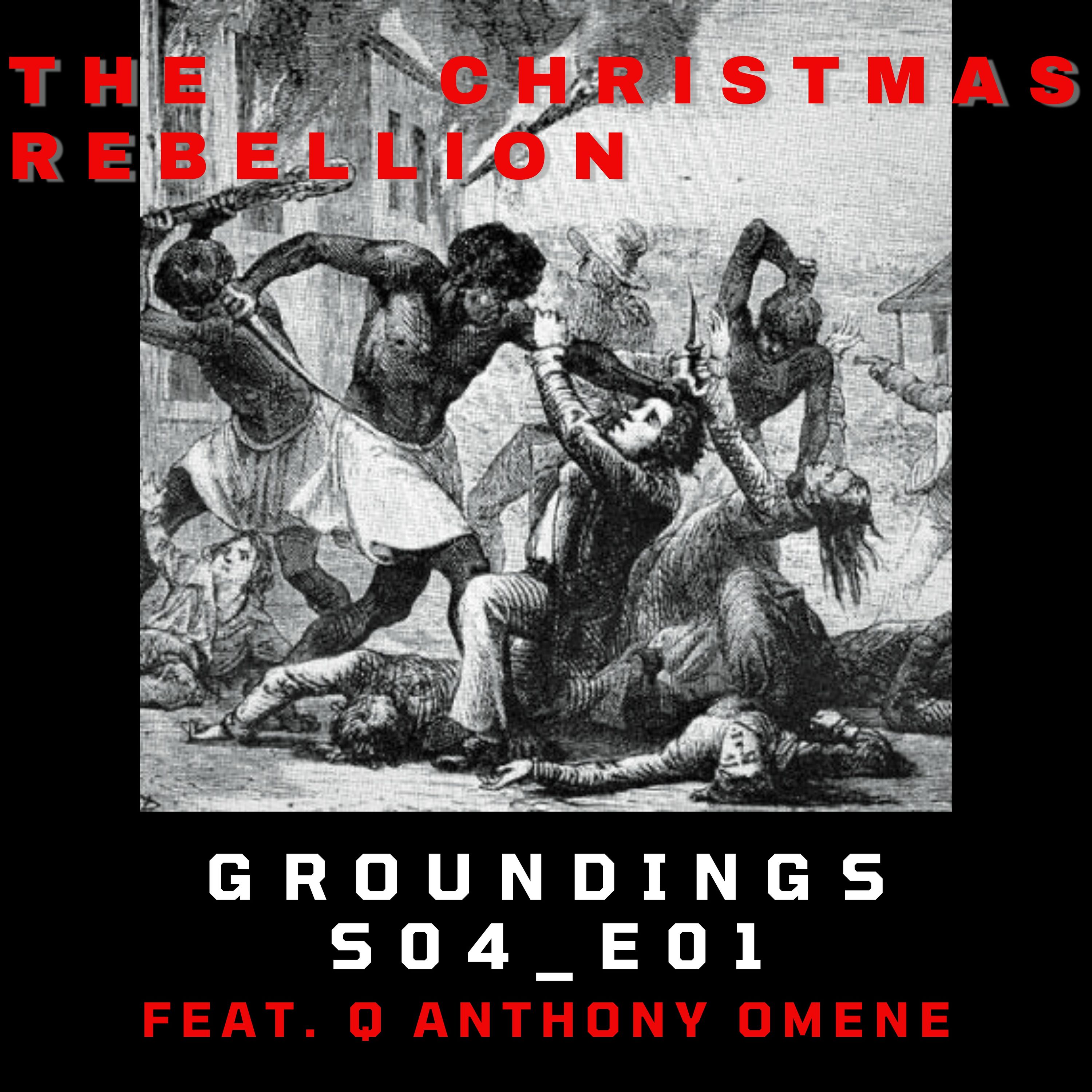
S4 Ep 1The Christmas Rebellion
Armed uprisings across the Caribbean can often be portrayed as spontaneous and isolated events that were largely unsuccessful. In fact, these efforts have informed each other across time and can reshape how we think about imperial domination in Africa and across the Americas. The Christmas Rebellion, sometimes called the Baptist Uprising, is the largest rebellion in Jamaica's history, and it reveals the importance of continued resistance and pushes us to rethink what we call ‘successful’ revolts by the enslaved. Writer and organizer Q. Anthony Omene joins us to discuss this and much more, in the first episode of Groundings season 4. You will also hear archival audio from Walter Rodney, which can be found in full here.Hosts:DarienDevSupport:Patreon.com/Halfatlanta
The US Blockade & Cuban Protests
bonusOn this episode, we talk about the US blockade against Cuba, which we define as a weapon of economic, political, racist, colonial warfare against the Cuban people. We hear from Belly of the Beast producer Daniel Montero, who explains the main character behind these mysterious protests, and then we dive into some historical context. Finally, we discuss the blockade in detail, and Luna tells us some of the important documentary projects they're working on. Make sure you check out Belly of the Beast's work on YouTube here, and follow them on Twitter as well here. #EndTheBlockade #UnblockCuba #CubaSíBloqueoNo Music: "(DRILL) CUBAN DRILL - LATIN Brass Sax by Dios Mio Beats"
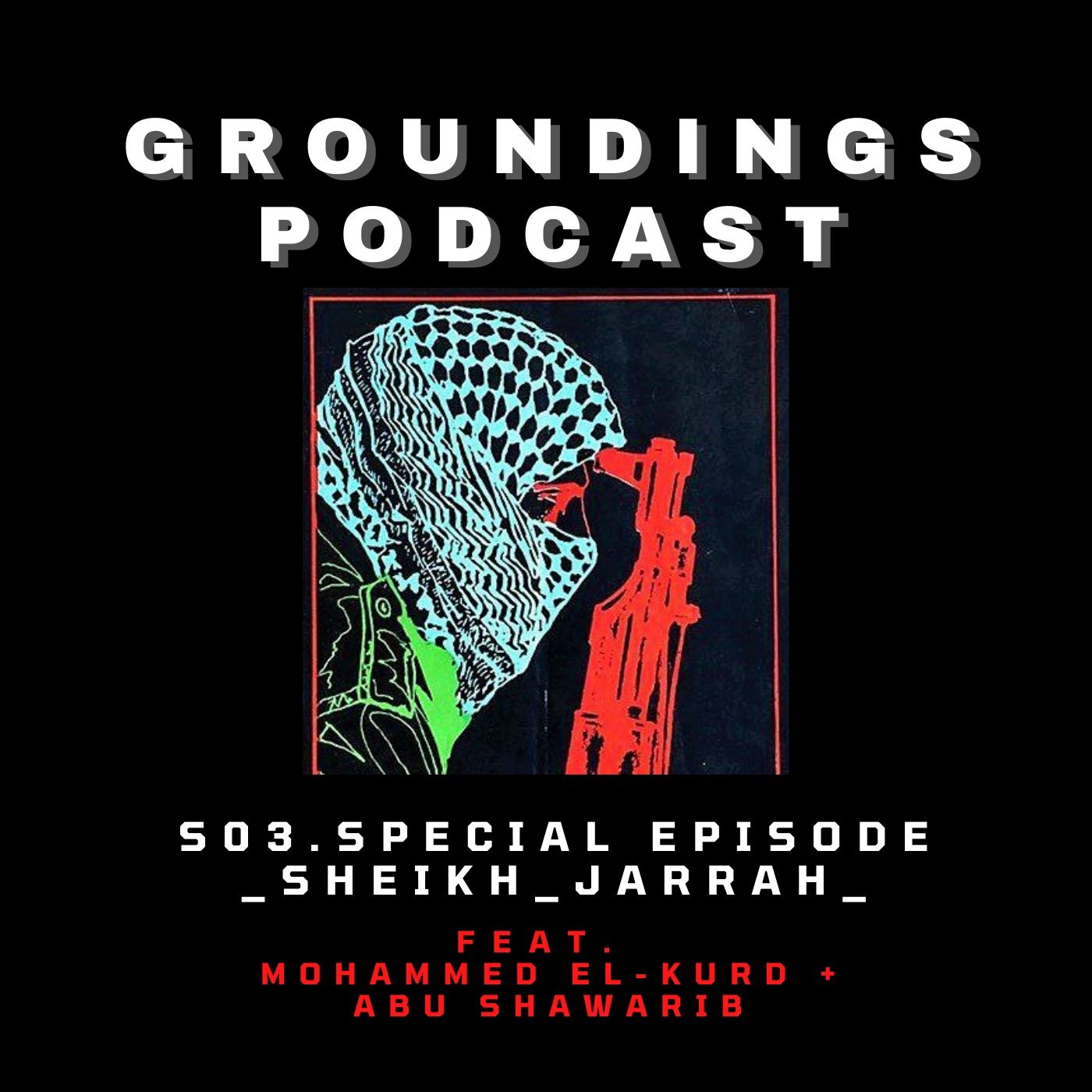
The Palestinian Resistance & Sheikh Jarrah
bonusThe entire world has witnessed israel's naked colonial violence in Sheikh Jarrah, Palestine, where countless Palestinians have been brutalized and forcefully removed from their homes. Palestinian writer and activist Mohammed el-Kurd joins the show to discuss the latest round of ethnic cleansing in his home neighborhood of Sheikh Jarrah, the many ways that Palestinians are resisting israel colonial domination, and why we're seeing unprecedented resistance from Palestinians. We also discuss those who only support Palestinians when they appear to be 'perfect victims' but are quiet when they are resisting iraeli state violence, and how international media is complicit in ongoing israeli apartheid. Palestinian-American medical worker and community organizer Abu Shawarib joins as co-host. This is a special bonus episode of season 3 in collaboration with Mondoweiss, an independent website devoted to informing readers about developments in occupied Palestine and related US foreign policy.
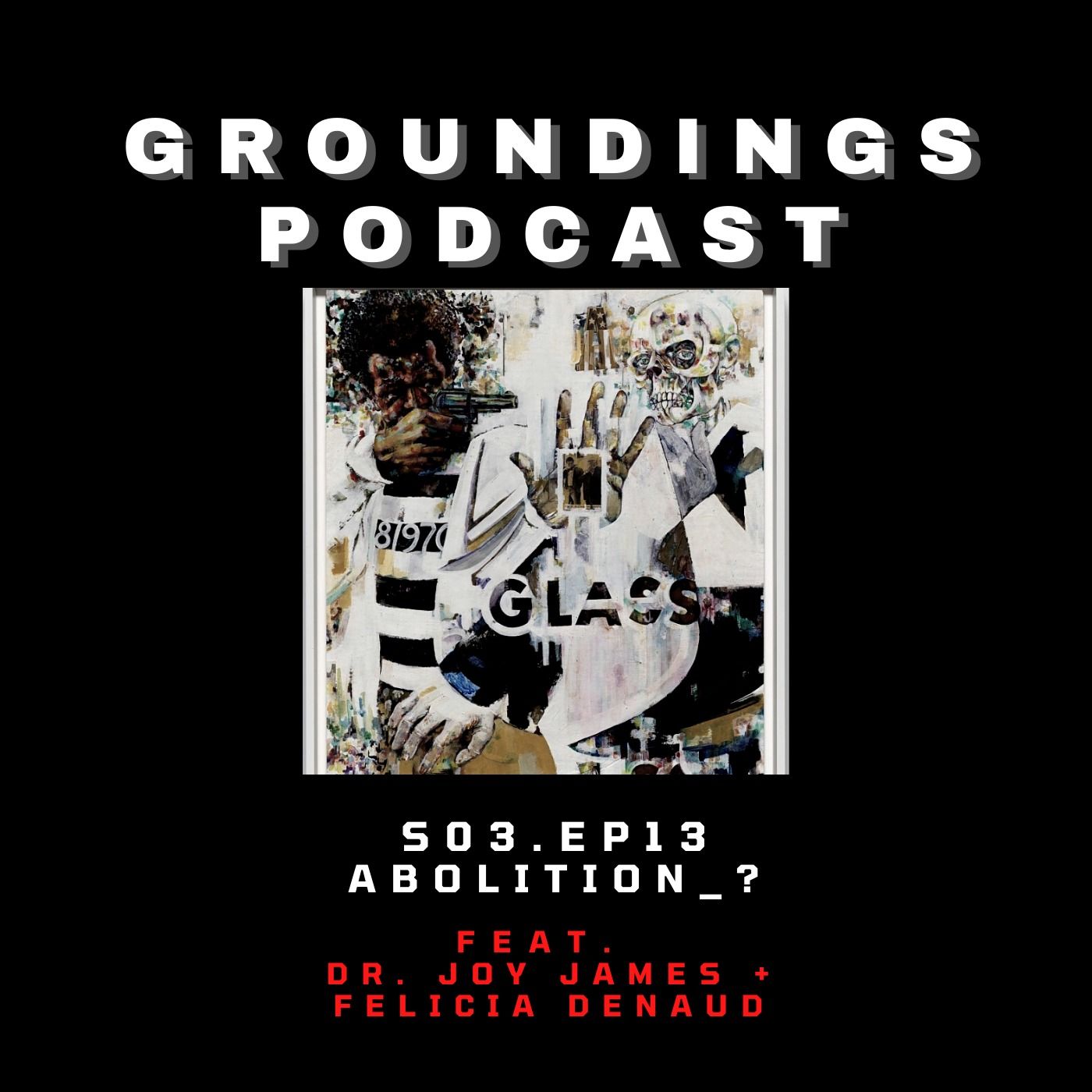
S3 Ep 13The Plurality of Abolitionism
Professor, writer, and activist Dr. Joy James joins the show to discuss her work around abolition. More specifically, we look at what Dr. James calls "academic abolitionism", the role that academics play in halting or co-opting revolutionary organizing, the current state of the prison abolition movement, and why it is revolutionary to start our political organizing with one simple question: what do Black children need?Felicia Denaud joins as co-host. The beat you hear was produced by JayOhAye, and you can hear more here. The painting on the cover art is "J.D. McClain’s Day in Court" (1970) by Jeff Donaldson.If you enjoyed the episode, consider supporting on Patreon here.
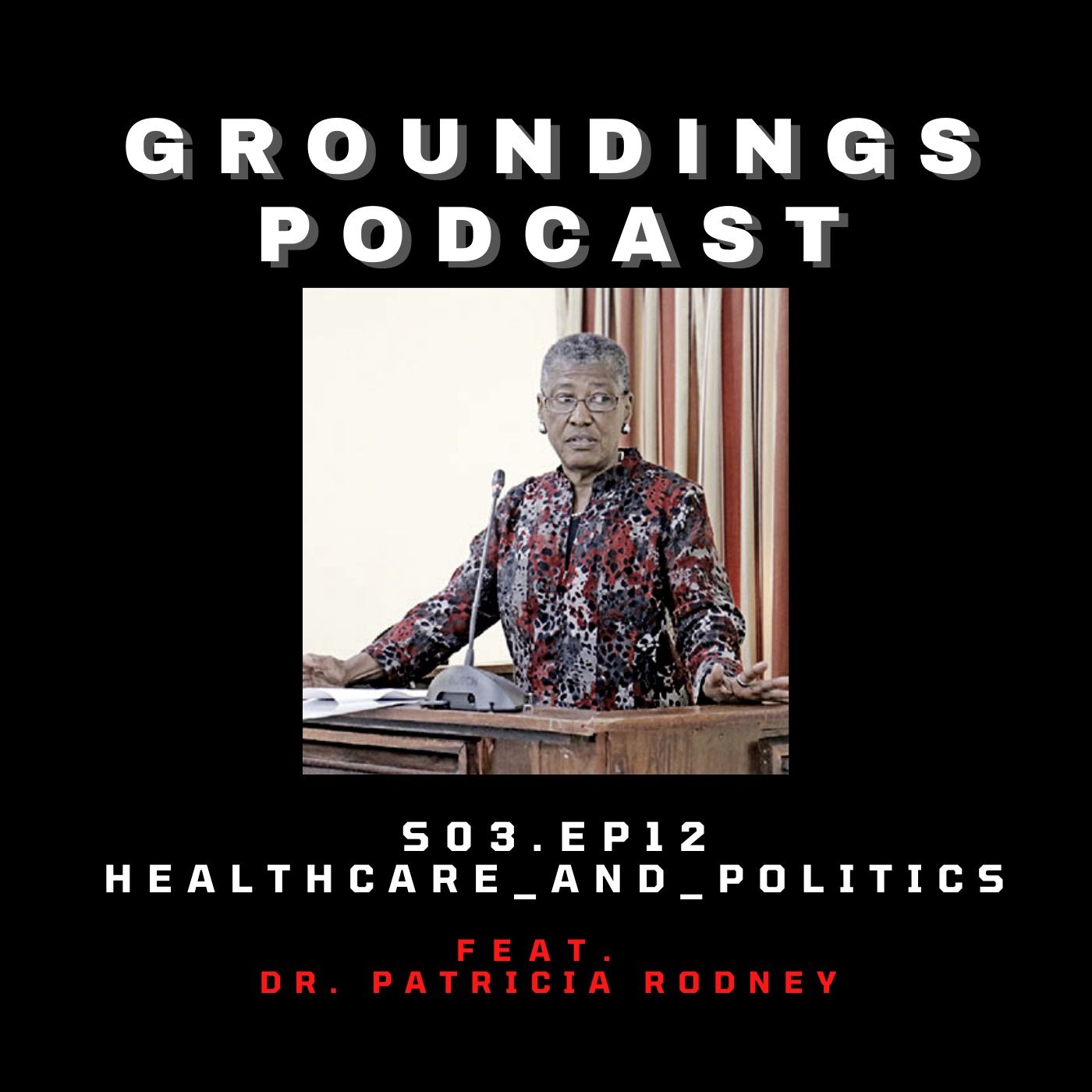
S3 Ep 12The Work of Dr. Patricia Rodney
Patricia Rodney, public health expert, researcher, activist, and wife of the late Dr. Walter Rodney, discusses her 1998 book, "The Caribbean State, Health Care, and Women: An Analysis of Barbados and Grenada." We talk about her analysis of Caribbean state healthcare as it relates to women, the Cuban healthcare system, and how her analysis remains incredibly relevant during our current pandemic. We then speak on her decades-long work in preserving Walter Rodney's legacies, as well as the trouble that sometimes comes along with that.
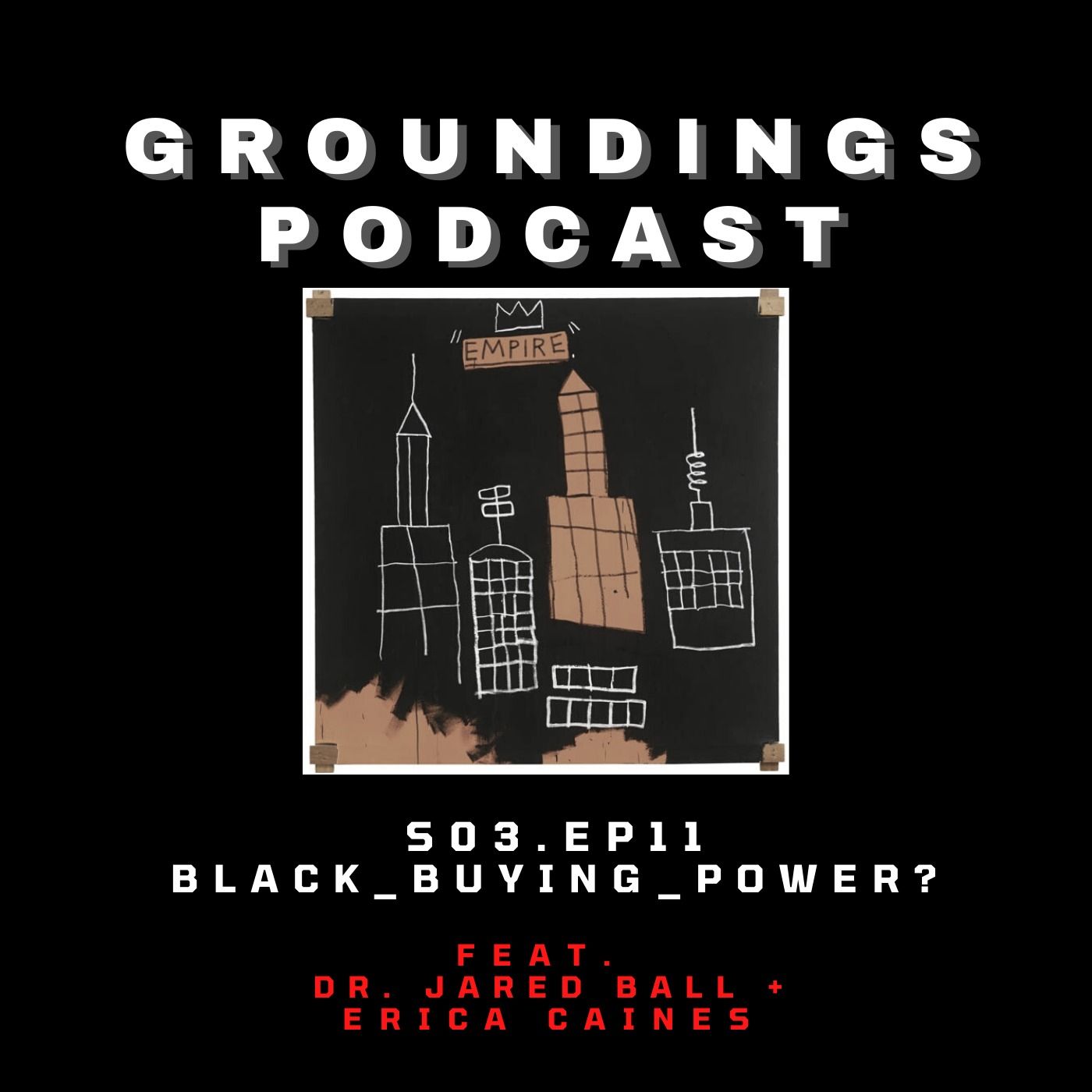
S3 Ep 11The Myth of Black Buying Power
Dr. Jared Ball joins the show to discuss his new book, The Myth and Propaganda of Black Buying Power. We discuss the propaganda used to perpetuate the supposed trillion-dollar "buying power" myth, Black capitalism, and the Black misleadership class of rappers. Writer and organizer Erica Caines just as guest co-host for the conversation. The first audio you will hear is a scene from the Malcolm X movie, the second audio clip is Angela Davis discussing the relationship between capitalism and racism.

S3 Ep 10The Role Of Artists Beyond Celebrity
ERapper and poet Noname has spent a bulk of her career rejecting celebrity, and is now taking a turn towards the left to embrace anti-imperialist, anti-capitalist, and radical politics. Dr. Charisse Burden-Stelly and Devyn Springer speak with her to find out what the trajectory towards political activation has been like, who inspires her, where she sees the state of hip-hop today, how she hopes to continue on her political path, voting, and much more. You will hear interlude audio of Nina Simone discussing the role of artists, and of a clip contrasting the political orientations of Tupac Shakur and Young Thug. If you enjoy the episode make sure to rate it 5 stars, subscribe and share. Also, consider supporting patreon.com/HalfAtlanta.
S3 Ep 9The 'Residue' of Gentrification
Guest hosts Yasmina and Tarik interview filmmaker Merawi Gerima, who discusses his new film Residue. The film puts the spotlight on gentrification in DC, and all the racist, violent baggage and displacement that accompanies it. They discuss the process of 'community filmmaking' that helped create the film, the role of capital in dictating creative directing choices, the importance of Black film and narrative-shaping, the Gerima legacy of filmmaking and community building, the power of DC's go-go music, and much more.
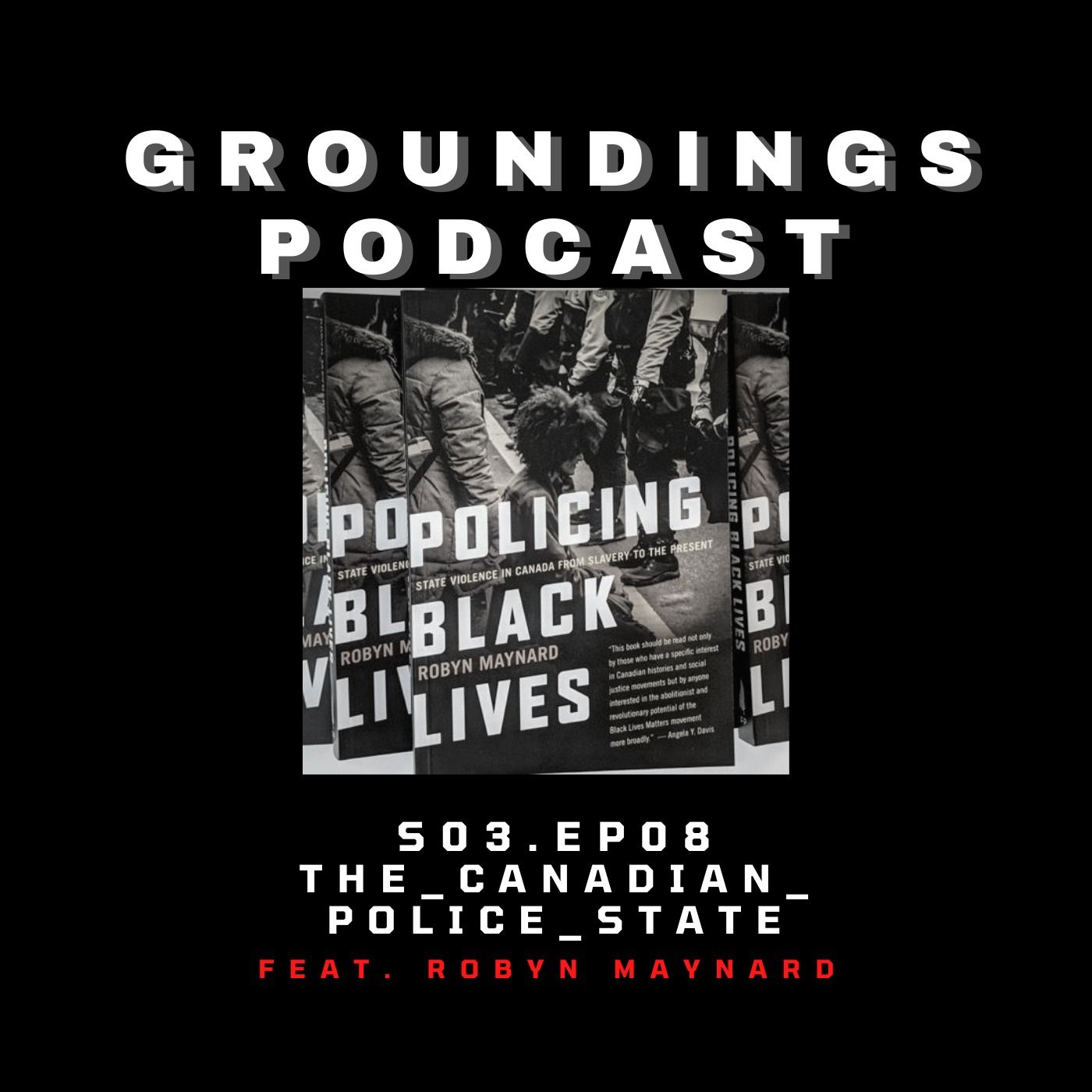
S3 Ep 8The Canadian Police State
Writer, educator, and author of Policing Black Lives: State violence in Canada from slavery to the present, Robyn Maynard joins me to discuss policing, state violence, and prisons in Canada, as well as the connections between Indigenous and Black struggles against state violence. We also talk about the 'post-racial' mythmaking which is synonymous to Canada, despite its centuries-long history of enacting structural and systemic violence on colonized communities globally.

S3 Ep 7The Anti-Black, Anti-Communist Academia
Dr. Charisse Burden-Stelly discusses the history and institutionalization of Black Studies, the often overlapping relationship between anti-communism and anti-Blackness, and the 'elision' of political economy in capitalist academia. Moreover, she also talks about 'academic McCarthyism', academic celebrities, ideological battles, and the current state of Black Studies. [cover image: student activist Don McAllister beaten bloodied and arrested by pigs during San Francisco State College protests, 1968]
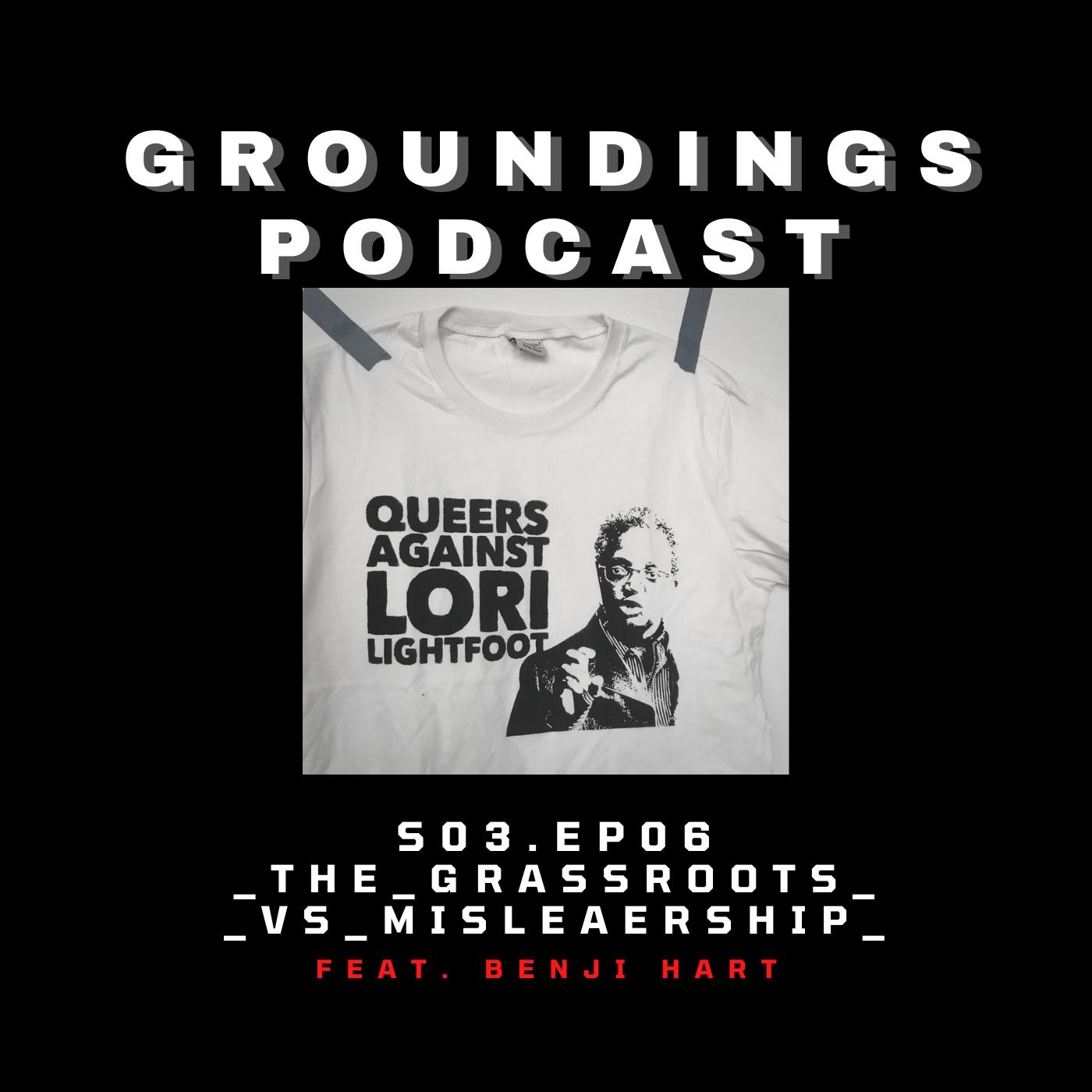
S3 Ep 6The Grassroots VS The Misleadership Class
Writer and activist Benji Hart discusses the multitude of ways grassroots movements against police in Chicago are challenging the Black misleadership class. We discuss the struggle around the struggle against the construction of a $95 million cop academy in Chicago, the many movements and educational moments birthed from this struggle, and how individuals like Mayor Lori Lightfoot represent the 'Black misleadership class'.You will here audio from a 2017 Chicago City Council meeting which can be found here. In this audio clip you will also hear chants stating "NTA is here to stay" - you can find out more details about that chant and the struggle surrounding it here. You can also learn more about LVEJO's ight against environmental racism here. You can find more of Benji's work at Benjihart.com.If you enjoyed the episode, consider supporting the podcast on Patreon here. Money goes to transcription of episodes (releasing soon!), production assistance, equipment, and more to keep the show running.