Gravity Assist
98 episodes — Page 1 of 2
S5 Ep 32Season 5, Episode 32: Finale: Thanks for All the Gravity Assists
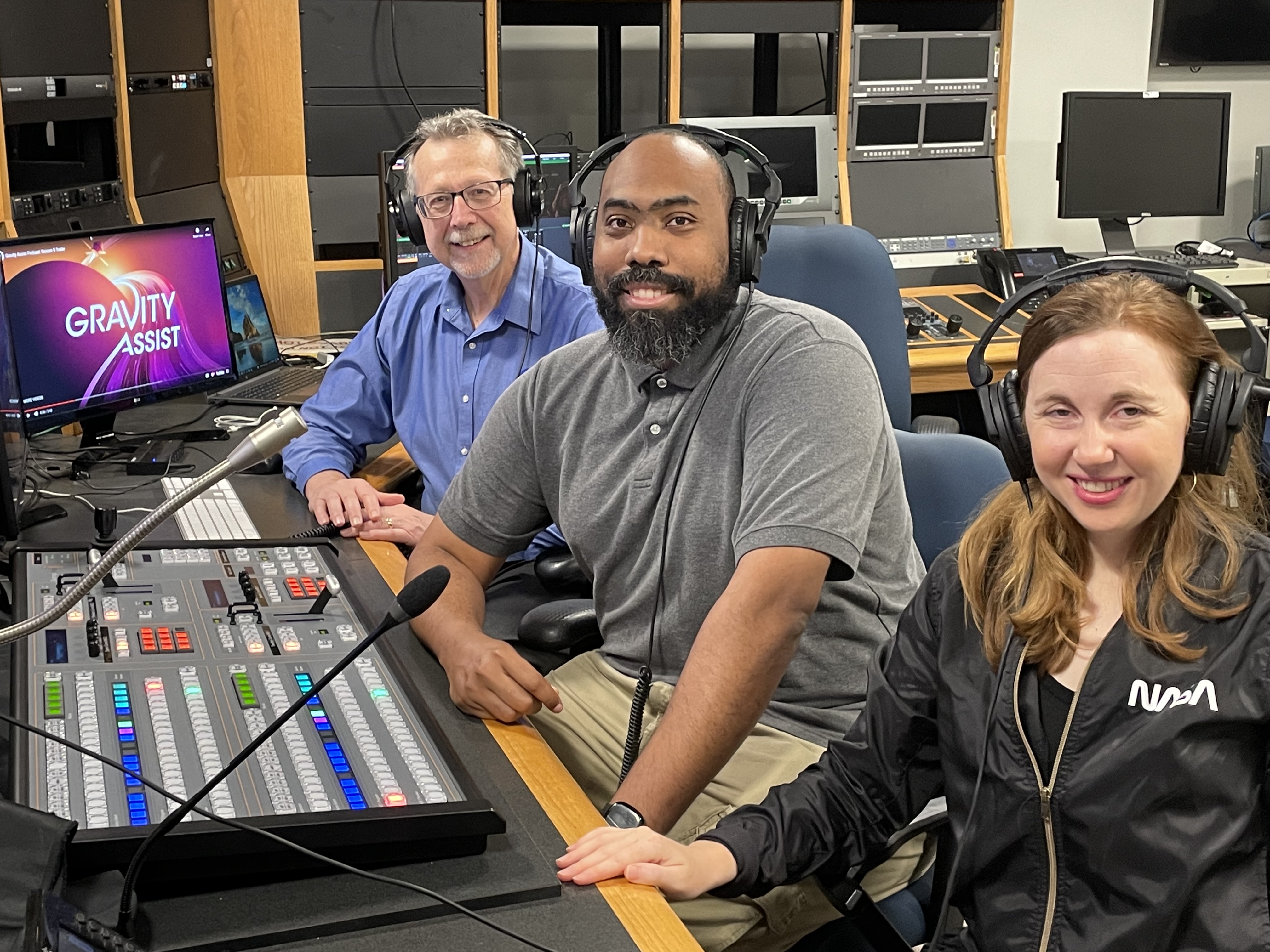
On the Gravity Assist podcast we have interviewed dozens of scientists, engineers, and others dedicated to the mission of NASA space exploration. After five years, the show is coming to a close. Here are some final thoughts and episode highlights from the podcast team.
S5 Ep 31Season 5, Episode 31: Meet a Webb Scientist Who Looks Back in Time
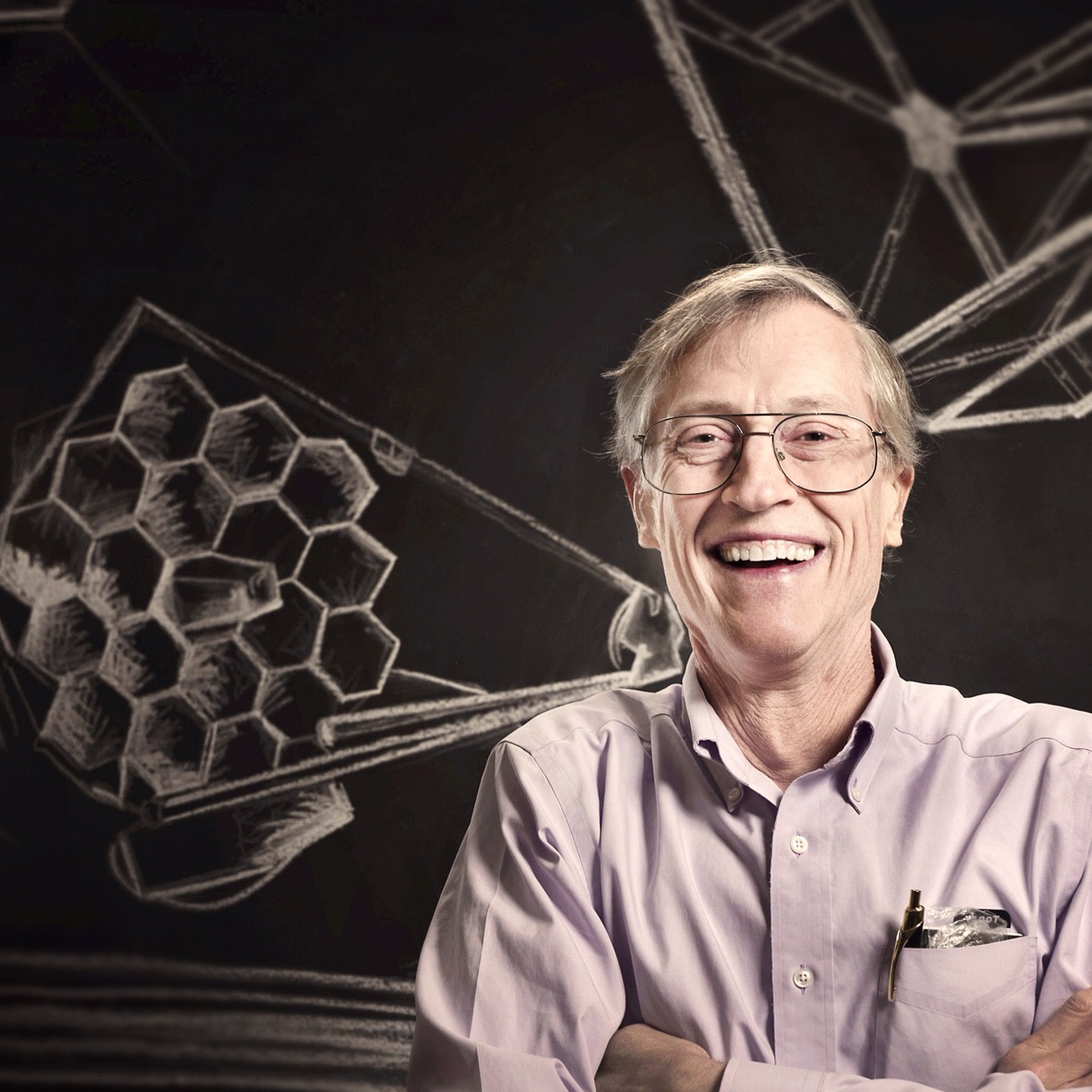
The James Webb Space Telescope awed the world on July 12 with its first images and data. And it’s just getting started with its exploration of the cosmos. Dr. John Mather, the observatory’s senior project scientist, has been working toward this milestone for more than 25 years.

S5 Ep 30Season 5, Ep. 30: Gravity Assist: How We Make Webb (and Hubble) Images
The world will get a first glimpse of the universe as never before when the first images from the James Webb Space Telescope come out on July 12. And this is only the beginning — the telescope will deliver all kinds of insights about galaxies, planets, and more, for years to come.
Gravity Assist: It’s Raining Diamonds on These Planets
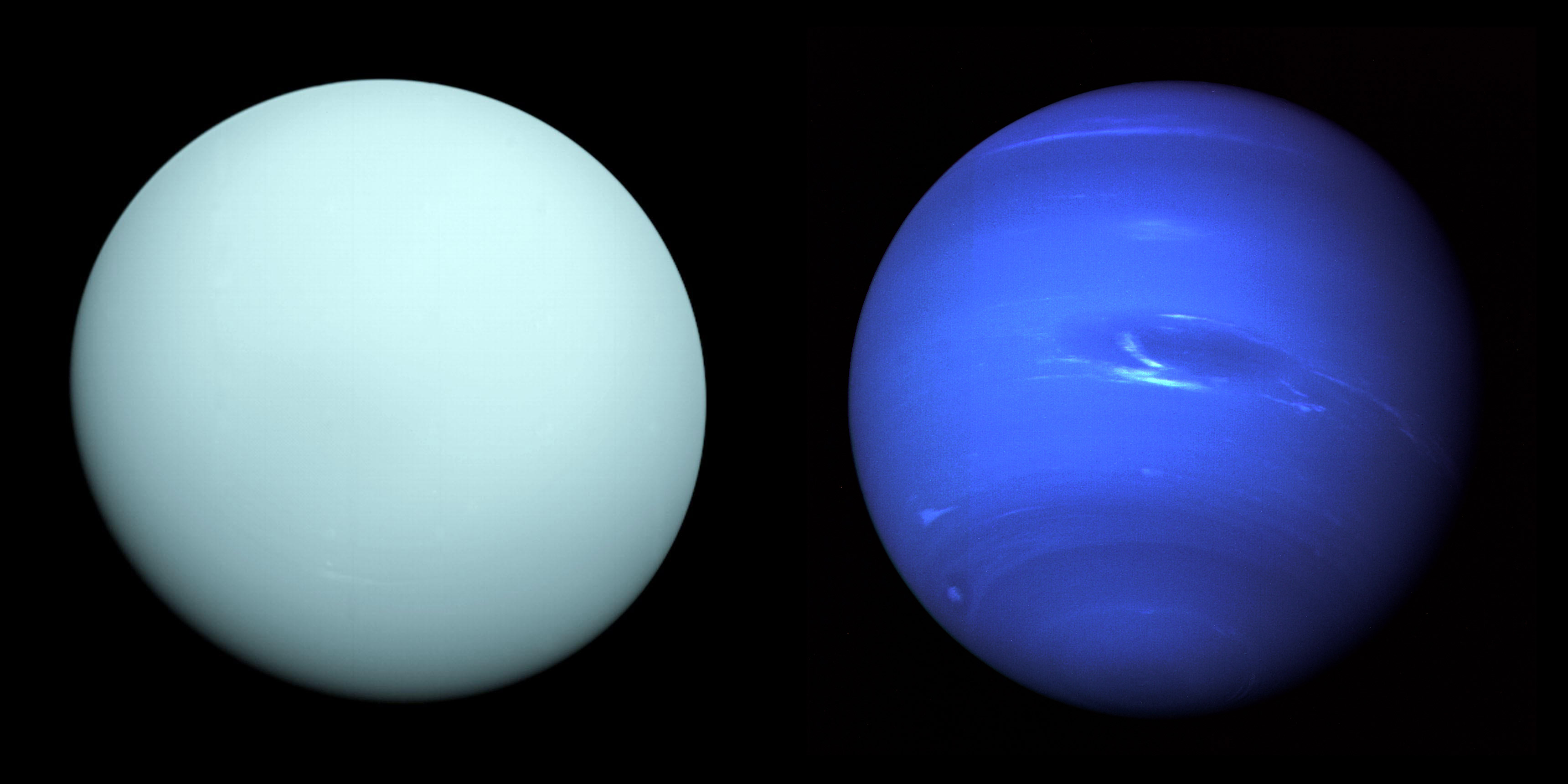
Uranus and Neptune are two of the many exciting and mysterious objects in our universe that the James Webb Space Telescope will soon begin to explore. Learn more about these planets and the Webb telescope’s upcoming observations from astrophysicist Naomi Rowe-Gurney, our guest on this week’s Gravity Assist.
S5 Ep 28Season 5, Episode 28: This is What Mars Sounds Like, with Nina Lanza
With two microphones aboard the Perseverance rover, we can listen to Mars from its surface like never before. In addition to hearing how wind sounds on Mars, we can also listen to Perseverance driving on the surface, the Ingenuity helicopter flying nearby, and more.
S5 Ep 27Season 5, Episode 27: What Will We Eat on Mars?
Astronauts on the International Space Station have been conducting experiments to grow food, including peppers and radishes. Christina Johnson, a NASA postdoc fellow at NASA's Kennedy Space Center in Florida, has been working on a variety of techniques to grow food in space. Learn what she thinks about the future of growing food beyond our planet.
S5 Ep 26Season 5, Episode 26: How to Grow Food on the Moon
Space botanists are working on strategies to grow crops on the lunar surface, as NASA makes strides toward sending astronauts to the Moon through the Artemis program.
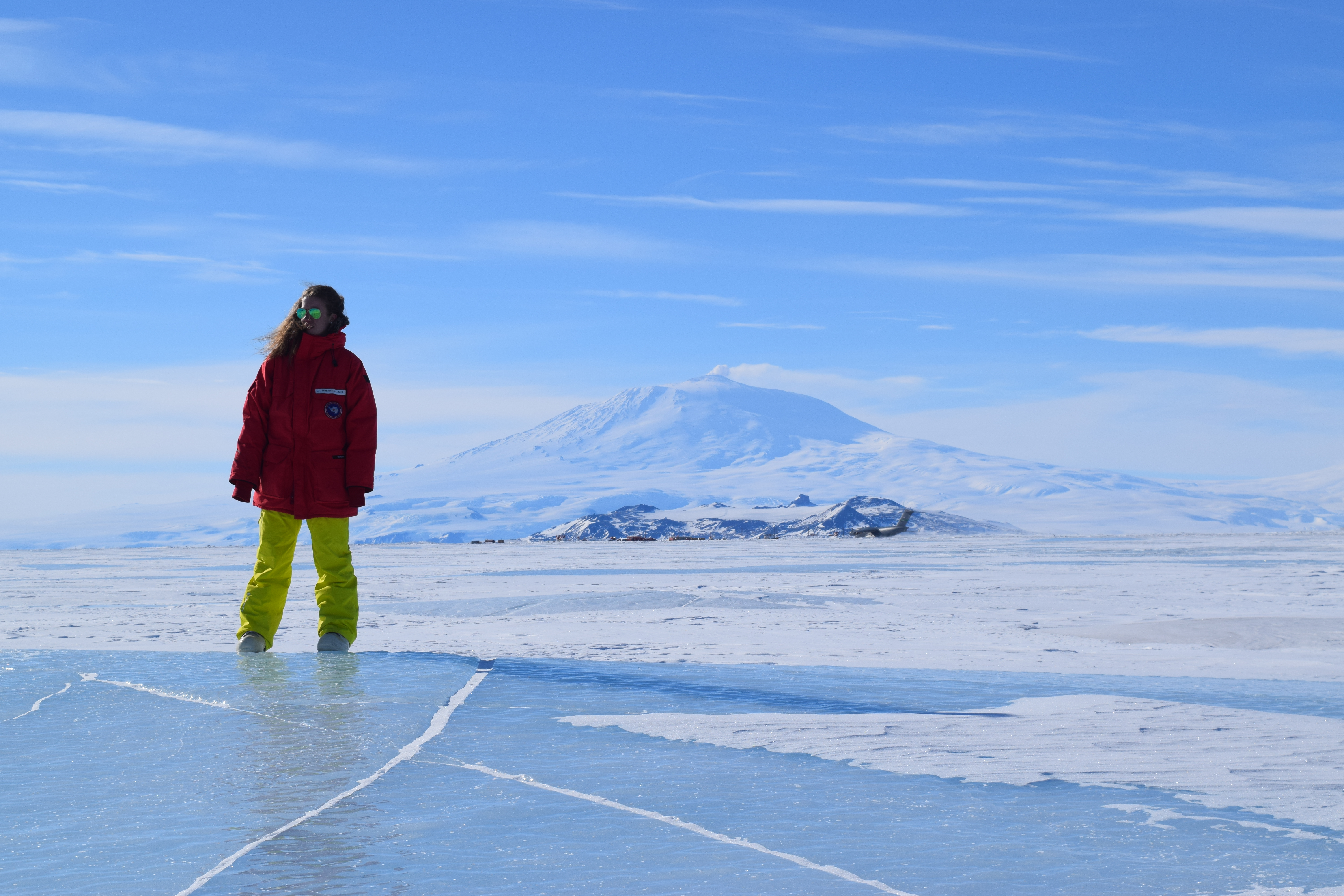
S5 Ep 25Season 5,Episode 25: Walking on Broken Ice, with Catherine Walker
An ice shelf collapsed in East Antarctica in March 2022, concerning scientists who track melting glaciers, sea level rise, and other effects of climate change.
S5 Ep 24Season 5, Episode 24: Do Other Planets Make Pollution?
On a quest to find out if we are not alone in the universe, Ravi Kopparapu at NASA Goddard studies how we could use telescopes to detect signs of life beyond our solar system.
S5 Ep 23Season 5, Episode 23: These Space Rocks Have Seen It All
How do we know if a rock came from the Moon, Mars, or an asteroid? Planetary scientist Neyda Abreu has looked inside all kinds of meteorites to understand where they came from and what’s inside them. She also traveled to Antarctica to hunt for space rock treasure.
S5 Ep 22Season 5, Episode 22: Using Webb to Trace Galactic Histories
The James Webb Space Telescope, which launched Dec. 25, will allow us to see the farthest galaxies and better understand the origins of the Milky Way. Aaron Yung at NASA’s Goddard Space Flight Center is preparing for these historic observations by simulating what Webb will see in the early universe.
S5 Ep 21Season 5, Episode 21: In Case of Space Station Emergency
In space, we have to expect the unexpected. Sunny Panjwani of NASA’s Johnson Space Center shares how he got thrown into an emergency situation on his first day as a flight controller. His team makes sure that astronauts have a safe environment on board the International Space Station.
Gravity Assist: Meet NASA’s New Chief Scientist, Kate Calvin
Climate change is one of the most important issues facing our planet, and NASA has lots of space missions and programs in the works to monitor and understand its drivers and effects. Kate Calvin, NASA’s new chief scientist, is also the agency’s senior climate advisor. In this episode, Kate previews upcoming Earth science missions and discusses cut
S5 Ep 19Season 5, Episode 19: A New Set of X-Ray Eyes is Launching
NASA is about to launch a new spacecraft to look at the universe in X-ray light. The Imaging X-Ray Polarimetry Explorer, IXPE, will look at extreme objects such as black holes, neutron stars, and supernovae, asking fundamental questions about how high-energy light gets produced.
S5 Ep 18Season 5, Episode 18: How to Move an Asteroid, with Nancy Chabot
NASA’s Double Asteroid Redirection Test Mission, or DART, will deliberately impact a small asteroid called Dimorphos to deflect its orbit around a bigger object, Didymos. Nancy Chabot, planetary scientist at the Johns Hopkins University Applied Physics Laboratory, has the details.
S5 Ep 17Season 5, Episode 17: Solar Power for the Moon
As NASA prepares to send astronauts to the Moon through the Artemis program, engineers are working on technologies that will give these explorers power – solar power, that is. In space, the harsh radiation and huge temperature changes make for a challenging environment.
S5 Ep 16Season 5, Episode 16:Meet a Space Weather Scientist
Yaireska Collado-Vega leads a team at NASA’s Goddard Spacecraft Center that is studying the solar weather environment so that robots and people exploring space can be protected. In this episode of Gravity Assist, she describes the excitement and challenges of understanding space weather, and how she got to be a NASA scientist.
S5 Ep 15Season 5, Episode 15: Lucy and the Space Fossils, with Hal Levison
To get a more complete understanding of the full history of our solar system, NASA is sending a spacecraft called Lucy to investigate the Trojans, mysterious small objects that share an orbit of the Sun with Jupiter. Principal investigator Hal Levison of the Southwest Research Institute
S5 Ep 14Season 5, Episode 14: Goodbye Saturn, Hello Earth
Janelle Wellons likes to say that she operates “fancy space cameras.” At NASA’s Jet Propulsion Laboratory, she creates commands that allow spacecraft to take valuable scientific data in our solar system and here at planet Earth.
S5 Ep 13Season 5, Episode 13: Freaky Physics on the Space Station
The laws of physics get very, very weird in the realm of particles too small for the eye to see. Aboard the International Space Station, an experiment called the Cold Atom Laboratory (CAL) is exploring how the universe works .
S5 Ep 12Season 5, Episode 12: Diving Into NASA History
In honor of National Intern Day, Gravity Assist features Felicia Ragucci, an undergraduate at Dartmouth College who recently completed an internship with NASA’s History Office and the Office of the Chief Scientist. During her time at NASA, Felicia researched the history of the Neutral Buoyancy Simulator, an underwater training facility where astron
S5 Ep 11Season 5, Episode 11: Onward to Venus, with Lori Glaze
NASA is sending two missions to Venus this decade and participating in a European Space Agency mission there, too. Lori Glaze, director of planetary science at NASA, discusses these missions and why she’s so excited about what we’re about to learn.
S5 Ep 10Season 5, Episode 10: A Chance to Fly on Mars, with MiMi Aung
The idea for NASA’s Mars Ingenuity helicopter began at the Jet Propulsion Laboratory with a team of dedicated engineers who believed in something seemingly impossible. MiMi Aung served as the project manager on the helicopter, which has now achieved nine flights on Mars.
S5 Ep 9Season 5, Episode 9: This Asteroid Is Metal
Scientists will soon have the opportunity to visit a unique object in the asteroid belt called Psyche, which may be the exposed metallic core of a planetary body that stopped growing before it became a big planet like Earth. Dr. Lindy Elkins-Tanton explains.
S5 Ep 8Season 5, Episode 8: Let’s Talk About Climate Change
What’s the difference between climate and weather? How does NASA monitor changing sea levels, melting glaciers, and other effects of climate change? Gavin Schmidt, NASA’s acting senior climate advisor, explains how rising temperatures lead to many complex changes both in the oceans and on land.
S5 Ep 7Season 5, Episode 7: From Space Camp to Mission Control
How do astronauts exercise on the International Space Station? How do they train underwater? Tara Ruttley, associate chief scientist for microgravity research at NASA Headquarters, has worked on a lot of fascinating projects to support the human spaceflight program.
S5 Ep 6Season 5, Episode 6: Before You Launch: Practice, Practice, Practice
When future astronauts explore the surfaces of the Moon, Mars, or beyond, they’ll have big challenges communicating with Mission Control back on Earth.
S5 Ep 5Season 5, Episode 5:Listening to the Universe, with Kim Arcand
NASA spacecraft deliver stunning visual imagery of the cosmos, but we can also experience that data by turning it into sound.
S5 Ep 4Season 5, Episode 4: Always an Astronaut, with Ken Bowersox
In some ways, spaceflight changes you forever,” says Ken Bowersox. Since he was 7 years old, Ken knew he wanted to become an astronaut. In his astronaut career, he participated in many exciting missions, including an extended stay on the International Space Station.
S5 Ep 3Season 5, Episode 3: Breaking Barriers, with Dana Bolles
Dana Bolles has worked in many exciting areas of NASA including assuring the safety of experiments and spacecraft going to space, managing environmental programs, and thinking about the possibility of life beyond Earth.
S5 Ep 2Season 5, Episode 2: Talking to Ingenuity and Other Space Robots
The Ingenuity helicopter made history on April 19, 2021, with the first powered, controlled flight of an aircraft on another planet. How do engineers talk to a helicopter all the way out on Mars? How about other spacecraft? We’ll hear about it from Nacer Chahat of NASA’s Jet Propulsion Laboratory ...
S5 Ep 1Season 5, Episode 1: Black Hole Mysteries, with Jeremy Schnittman
What is a black hole? How do we study them when we can’t see them? Astrophysicist Jeremy Schnittman from NASA’s Goddard Space Flight Center joins NASA Chief Scientist Jim Green for a fascinating conversation about the latest black hole research.
Season 5 Trailer – What’s Your Gravity Assist?
Go behind the scenes at NASA with Chief Scientist Jim Green in the Gravity Assist podcast.
S4 Ep 25Season 4, Episode 25: Driving on Mars, with Sophia Mitchell
What does it take to drive a rover that’s more than 100 million miles away? Sophia Mitchell at NASA’s Jet Propulsion Laboratory has been driving the Mars Curiosity rover since 2018.
S4 Ep 24Season 4, Episode 24: Your Questions About Life Out There & Down Here
Why don’t we go live on Saturn’s moon Titan? What would it mean if we found life elsewhere? How did life get its start on Earth? NASA’s chief scientist Jim Green and astrobiologist Lindsay Hays discuss these and other audience questions from social media.
S4 Ep 23Season 4, Episode 23: The Bright Spot of the Asteroid Belt
Between the orbits of Mars and Jupiter is a mysterious dwarf planet called Ceres. Its surface is dark and muddy, but has hundreds of patches of bright material.
S4 Ep 22Season 4, Episode 22: Set Sail for Europa, with Bob Pappalardo
NASA’s Europa Clipper mission will give us the most detailed look yet at Jupiter’s extraordinary moon Europa.
S4 Ep 21Season 4, Episode 21: Mars Takes a Breath, with Jen Eigenbrode
The Curiosity rover has been probing the secrets of Mars since its arrival in 2012. Its discoveries include chemical signatures that could be related to life – or, alternatively, to geological processes.
S4 Ep 20Season 4, Episode 20: The History of the Future, with Steven Dick
Astronomer and historian Steven Dick tells us there are many approaches to consider and many questions we should ask ourselves to get ready, in case extraterrestrial life is found.
S4 Ep 19Season 4, Episode 19: Life in the Clouds, with David J. Smith
While more research is needed, Smith and others are fascinated by the possibility that airborne microbes could also be found elsewhere in the solar system, and beyond.

S4 Ep 18Season 4, Episode 18: Why Icy Moons are So Juicy
A great era of exploration of the icy moons is about to begin. Athena Coustenis of the Paris Observatory talks about missions to the icy moons of the outer solar system and international collaborations with NASA and ESA.
S4 Ep 17Season 4, Episode 17: Is Artificial Intelligence the Future of Life?
If astrobiologists find life beyond Earth in the solar system, it will most likely be in the form of tiny organisms called microbes – nothing that would talk to us.
S4 Ep 16Season 4, Episode 16: Our Sun, Our Life, with Vladimir Airapetian
Vladimir Airapetian, scientist at NASA’s Goddard Space Flight Center, explains what researchers hope to find as they gaze beyond our solar system.
S4 Ep 15Season 4, Episode 15 Looking For Life in Ancient Lakes
As the Perseverance Rover flies toward Jezero Crater on Mars, which once hosted water, astrobiologists are interested in places on Earth that are similar to the rover landing site.
S4 Ep 14Season 4, Episode 14: Gardens at the Bottom of the Sea
Laurie Barge, an astrobiologist at NASA’s Jet Propulsion Laboratory, studies how plant-looking mineral structures called chimneys grow from chemicals found at the deepest depths of the ocean. In her lab she has glass vials and bulbs full of different chemical mixtures that simulate undersea conditions.
S4 Ep 13Season 4, Episode 13: She Protects Other Planets from Our Germs
As we explore Mars and other places in the solar system that might have life, scientists who work in Planetary Protection are busy making sure that we don’t contaminate them.
S4 Ep 12Season 4, Episode 12: The Search for Technosignatures
Jason Wright, professor of astronomy and astrophysics at Penn State, has been thinking about the different technosignatures we could pick up using the telescopes we already have, and the telescopes that we could develop in the future.
S4 Ep 11Season 4, Episode 11: Where are the Goldilocks Stars? With Giada Arney
Giada Arney, astrophysicist at NASA’s Goddard Space Flight Center, is looking at the potential for K stars to host habitable worlds. Learn about how stars affect planetary environments and why complex life on early Earth was impossible.
S4 Ep 10Season 4, Episode 10: Puffy Planets, Powerful Telescopes
NASA astrophysicist Knicole Colon describes her work on the Kepler, Hubble, TESS and Webb missions, and takes us on a tour of some of her favorite planets.
S4 Ep 9Season 4, Episode 9: Is Our Solar System Weird?
We now know there are more planets than stars in the galaxy. Many of them are very different from ours. How would we know if any of them had life? Shawn Domagal-Goldman, astrobiologist at NASA’s Goddard Space Flight Center, discusses these strange and wondrous worlds beyond our Sun.