Show overview
Gravity Assist has been publishing since 2017, and across the 5 years since has built a catalogue of 98 episodes. That works out to roughly 35 hours of audio in total. Releases follow a monthly cadence, with the show now in its 5th season.
Episodes typically run twenty to thirty-five minutes — most land between 21 min and 25 min — and the run-time is fairly consistent across the catalogue. None of the episodes are flagged explicit by the publisher. It is catalogued as a EN-US-language Science show.
The catalogue appears to be on hiatus or wound down — the most recent episode landed 4.1 years ago, with no new episodes in over a year. The busiest year was 2020, with 25 episodes published. Published by Brian Dunbar.
From the publisher
NASA’s interplanetary talk show, hosted by former Chief Scientist Jim Green, introduces you to space professionals working to take exploration into the future.
Latest Episodes
View all 98 episodes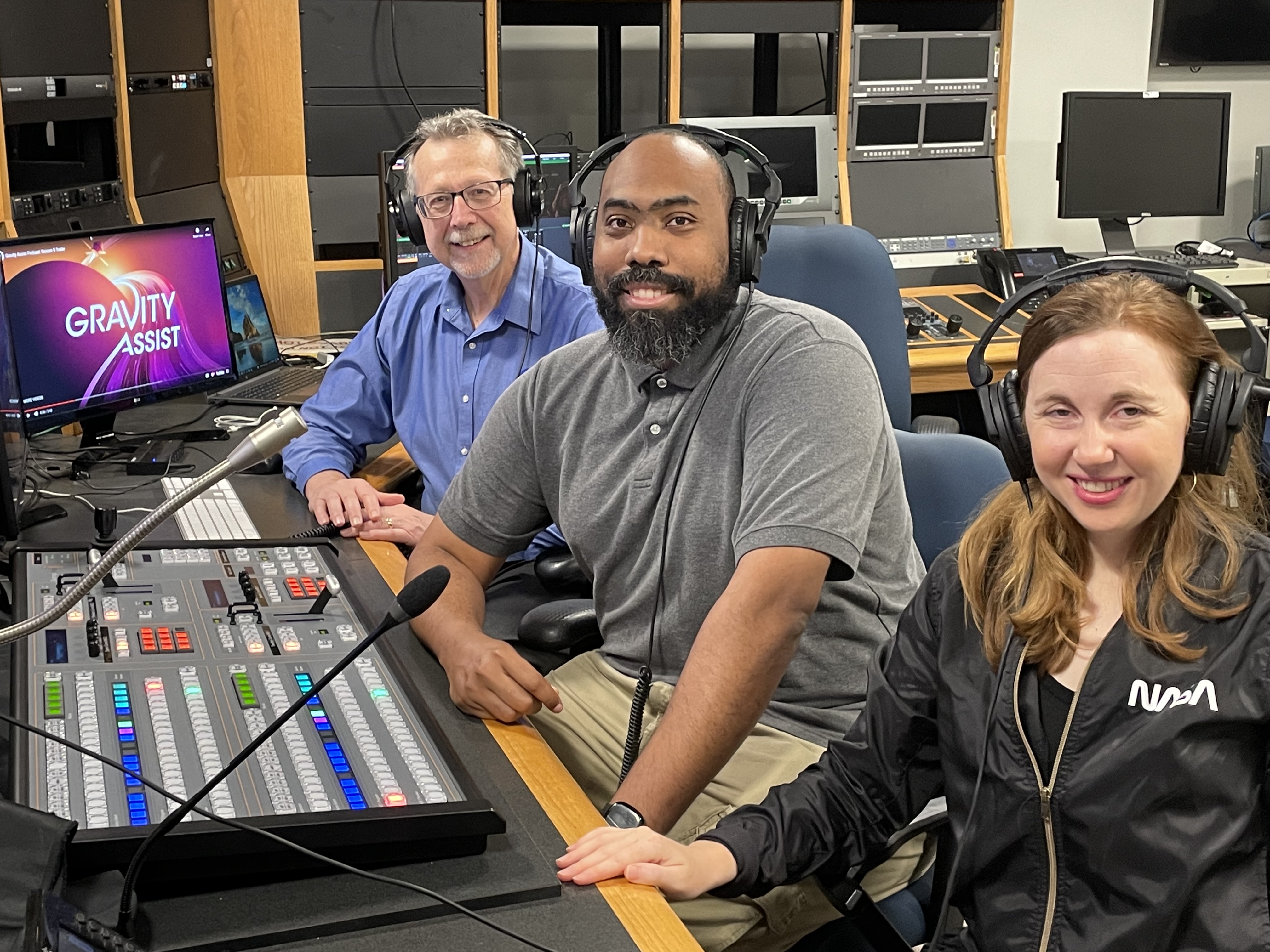
S5 Ep 32Season 5, Episode 32: Finale: Thanks for All the Gravity Assists
On the Gravity Assist podcast we have interviewed dozens of scientists, engineers, and others dedicated to the mission of NASA space exploration. After five years, the show is coming to a close. Here are some final thoughts and episode highlights from the podcast team.
S5 Ep 31Season 5, Episode 31: Meet a Webb Scientist Who Looks Back in Time
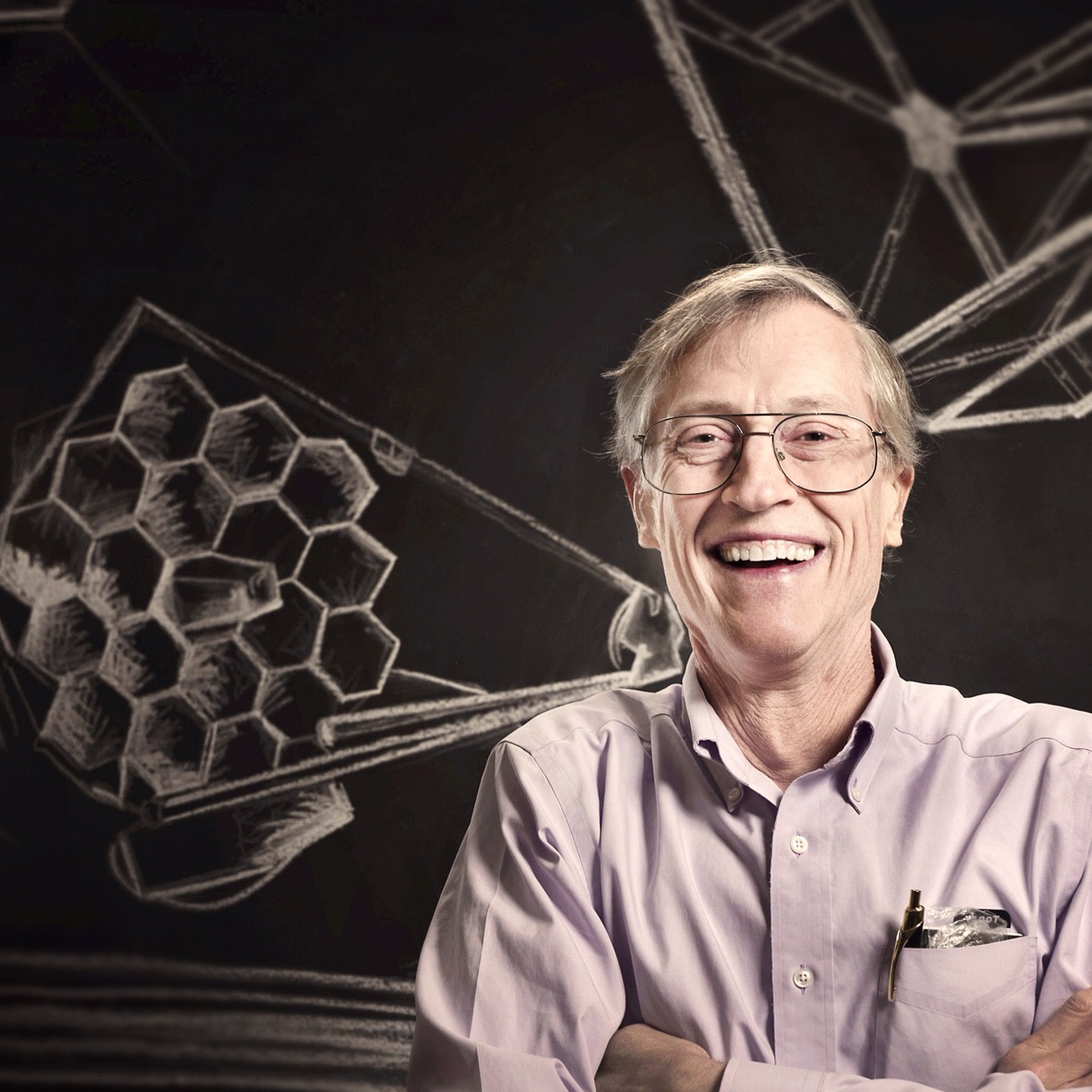
The James Webb Space Telescope awed the world on July 12 with its first images and data. And it’s just getting started with its exploration of the cosmos. Dr. John Mather, the observatory’s senior project scientist, has been working toward this milestone for more than 25 years.

S5 Ep 30Season 5, Ep. 30: Gravity Assist: How We Make Webb (and Hubble) Images
The world will get a first glimpse of the universe as never before when the first images from the James Webb Space Telescope come out on July 12. And this is only the beginning — the telescope will deliver all kinds of insights about galaxies, planets, and more, for years to come.
Gravity Assist: It’s Raining Diamonds on These Planets
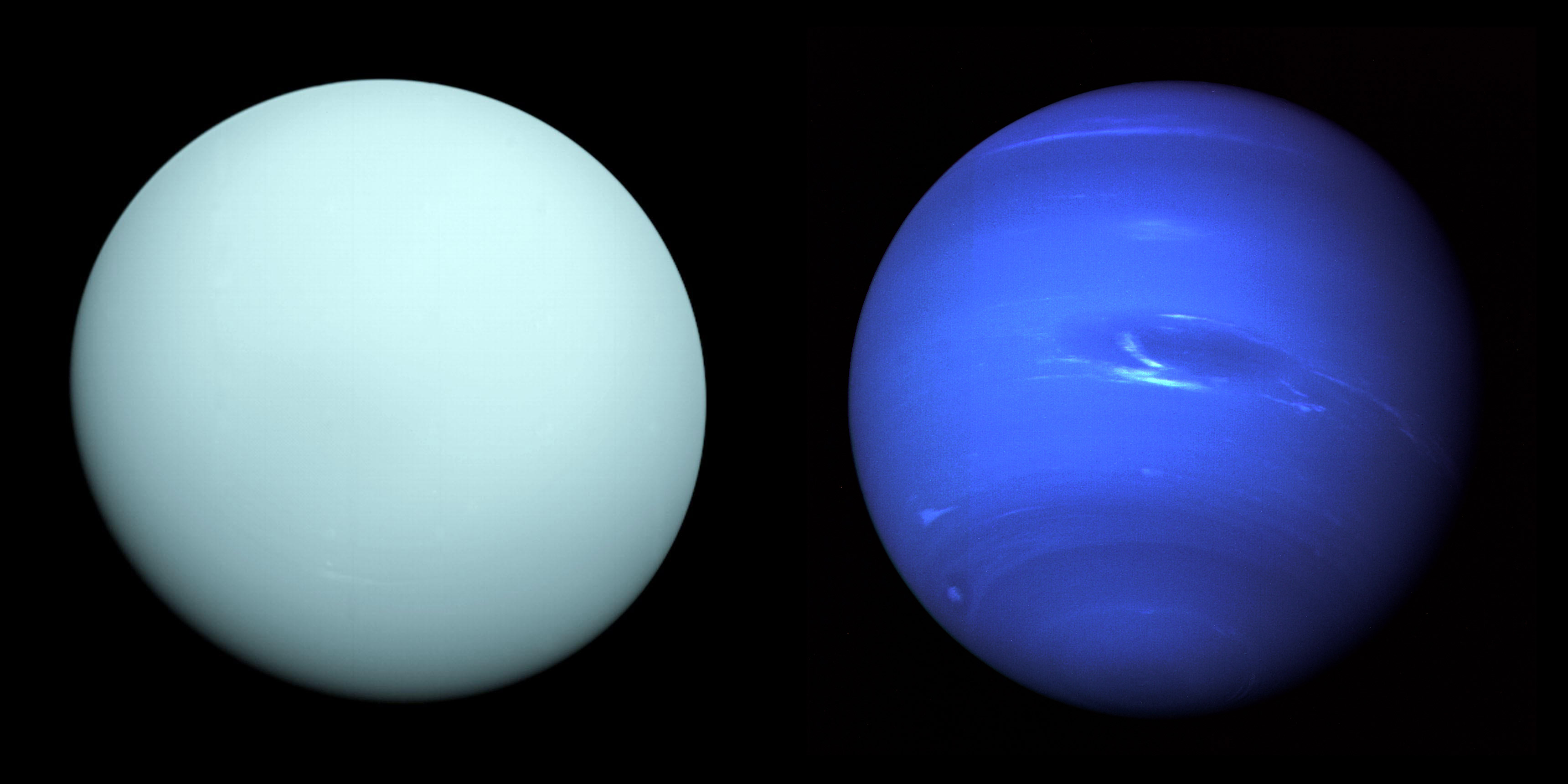
Uranus and Neptune are two of the many exciting and mysterious objects in our universe that the James Webb Space Telescope will soon begin to explore. Learn more about these planets and the Webb telescope’s upcoming observations from astrophysicist Naomi Rowe-Gurney, our guest on this week’s Gravity Assist.
S5 Ep 28Season 5, Episode 28: This is What Mars Sounds Like, with Nina Lanza
With two microphones aboard the Perseverance rover, we can listen to Mars from its surface like never before. In addition to hearing how wind sounds on Mars, we can also listen to Perseverance driving on the surface, the Ingenuity helicopter flying nearby, and more.
S5 Ep 27Season 5, Episode 27: What Will We Eat on Mars?
Astronauts on the International Space Station have been conducting experiments to grow food, including peppers and radishes. Christina Johnson, a NASA postdoc fellow at NASA's Kennedy Space Center in Florida, has been working on a variety of techniques to grow food in space. Learn what she thinks about the future of growing food beyond our planet.
S5 Ep 26Season 5, Episode 26: How to Grow Food on the Moon
Space botanists are working on strategies to grow crops on the lunar surface, as NASA makes strides toward sending astronauts to the Moon through the Artemis program.
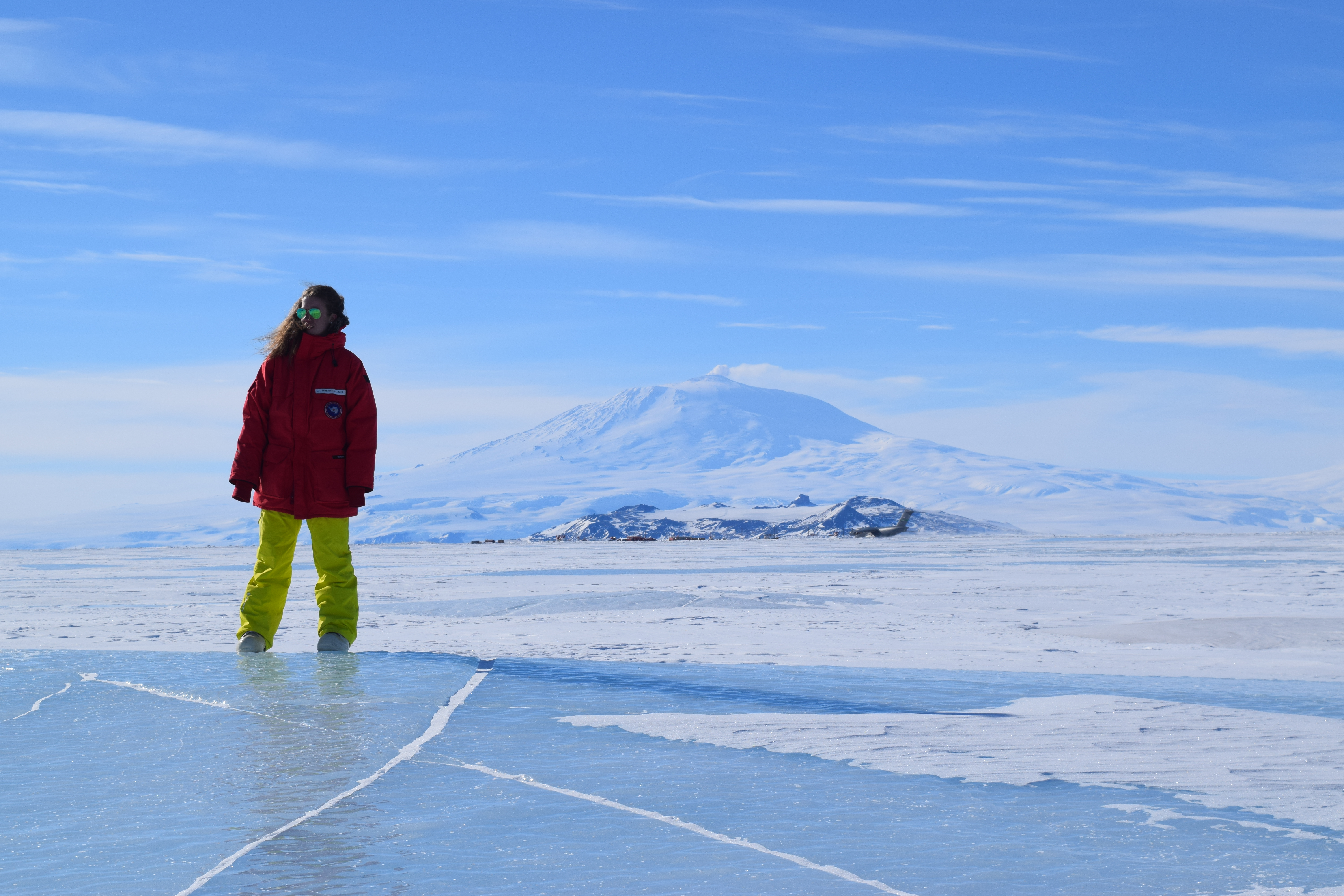
S5 Ep 25Season 5,Episode 25: Walking on Broken Ice, with Catherine Walker
An ice shelf collapsed in East Antarctica in March 2022, concerning scientists who track melting glaciers, sea level rise, and other effects of climate change.
S5 Ep 24Season 5, Episode 24: Do Other Planets Make Pollution?
On a quest to find out if we are not alone in the universe, Ravi Kopparapu at NASA Goddard studies how we could use telescopes to detect signs of life beyond our solar system.
S5 Ep 23Season 5, Episode 23: These Space Rocks Have Seen It All
How do we know if a rock came from the Moon, Mars, or an asteroid? Planetary scientist Neyda Abreu has looked inside all kinds of meteorites to understand where they came from and what’s inside them. She also traveled to Antarctica to hunt for space rock treasure.
S5 Ep 22Season 5, Episode 22: Using Webb to Trace Galactic Histories
The James Webb Space Telescope, which launched Dec. 25, will allow us to see the farthest galaxies and better understand the origins of the Milky Way. Aaron Yung at NASA’s Goddard Space Flight Center is preparing for these historic observations by simulating what Webb will see in the early universe.
S5 Ep 21Season 5, Episode 21: In Case of Space Station Emergency
In space, we have to expect the unexpected. Sunny Panjwani of NASA’s Johnson Space Center shares how he got thrown into an emergency situation on his first day as a flight controller. His team makes sure that astronauts have a safe environment on board the International Space Station.
Gravity Assist: Meet NASA’s New Chief Scientist, Kate Calvin
Climate change is one of the most important issues facing our planet, and NASA has lots of space missions and programs in the works to monitor and understand its drivers and effects. Kate Calvin, NASA’s new chief scientist, is also the agency’s senior climate advisor. In this episode, Kate previews upcoming Earth science missions and discusses cut
S5 Ep 19Season 5, Episode 19: A New Set of X-Ray Eyes is Launching
NASA is about to launch a new spacecraft to look at the universe in X-ray light. The Imaging X-Ray Polarimetry Explorer, IXPE, will look at extreme objects such as black holes, neutron stars, and supernovae, asking fundamental questions about how high-energy light gets produced.
S5 Ep 18Season 5, Episode 18: How to Move an Asteroid, with Nancy Chabot
NASA’s Double Asteroid Redirection Test Mission, or DART, will deliberately impact a small asteroid called Dimorphos to deflect its orbit around a bigger object, Didymos. Nancy Chabot, planetary scientist at the Johns Hopkins University Applied Physics Laboratory, has the details.
S5 Ep 17Season 5, Episode 17: Solar Power for the Moon
As NASA prepares to send astronauts to the Moon through the Artemis program, engineers are working on technologies that will give these explorers power – solar power, that is. In space, the harsh radiation and huge temperature changes make for a challenging environment.
S5 Ep 16Season 5, Episode 16:Meet a Space Weather Scientist
Yaireska Collado-Vega leads a team at NASA’s Goddard Spacecraft Center that is studying the solar weather environment so that robots and people exploring space can be protected. In this episode of Gravity Assist, she describes the excitement and challenges of understanding space weather, and how she got to be a NASA scientist.
S5 Ep 15Season 5, Episode 15: Lucy and the Space Fossils, with Hal Levison
To get a more complete understanding of the full history of our solar system, NASA is sending a spacecraft called Lucy to investigate the Trojans, mysterious small objects that share an orbit of the Sun with Jupiter. Principal investigator Hal Levison of the Southwest Research Institute
S5 Ep 14Season 5, Episode 14: Goodbye Saturn, Hello Earth
Janelle Wellons likes to say that she operates “fancy space cameras.” At NASA’s Jet Propulsion Laboratory, she creates commands that allow spacecraft to take valuable scientific data in our solar system and here at planet Earth.
S5 Ep 13Season 5, Episode 13: Freaky Physics on the Space Station
The laws of physics get very, very weird in the realm of particles too small for the eye to see. Aboard the International Space Station, an experiment called the Cold Atom Laboratory (CAL) is exploring how the universe works .